30 Small Space Storage Ideas for Bedrooms That Actually Work in Real Homes
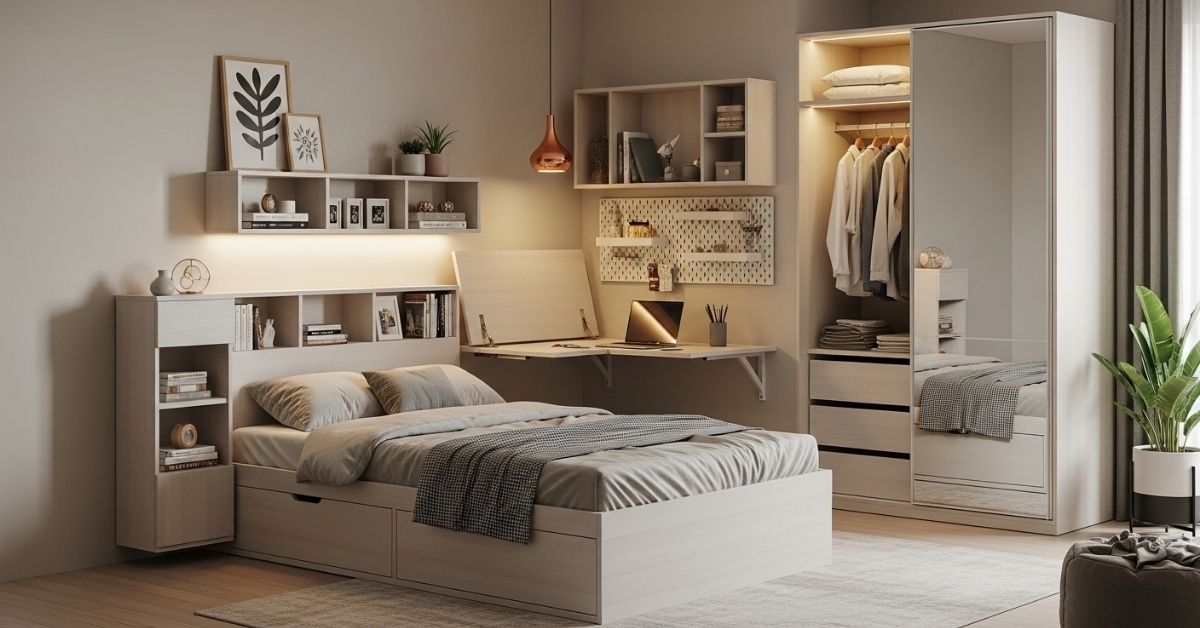
The ideas here are for bedrooms under 150 square feet, awkward layouts, rentals without built-ins, and anyone tired of feeling like their room is working against them. Small space storage in a bedroom isn’t just about adding more bins, Small Space Storage Ideas Bedrooms it’s about rethinking how the existing square footage is used vertically, functionally, and without making the room feel like a storage unit.
If your style leans minimal or your space is a studio or small apartment bedroom, this list was built with you in mind.
Lift the Bed, Reclaim the Floor Under-Bed Storage Done Right
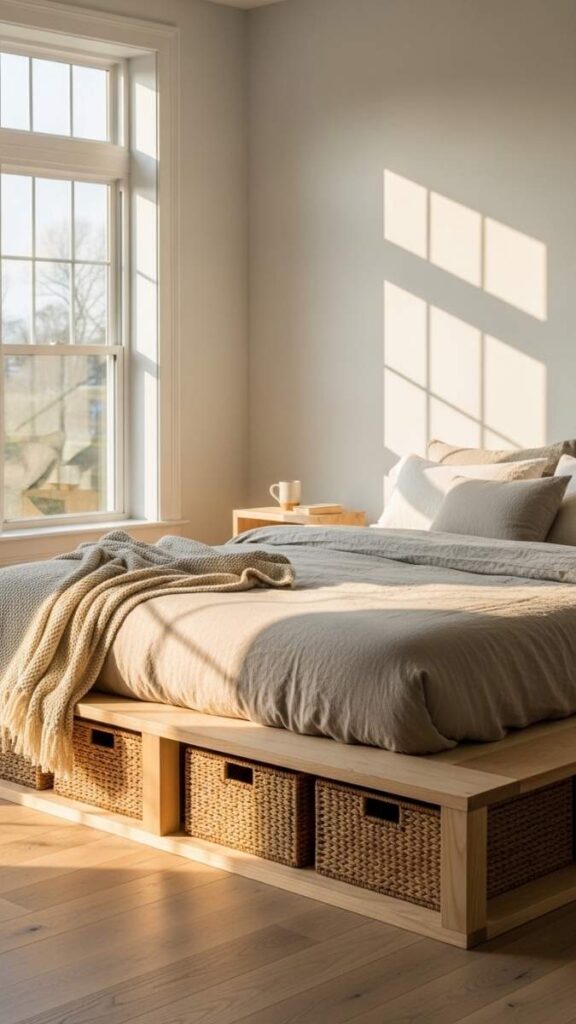
Most beds sit 6–8 inches off the floor, not enough for proper storage. Swapping to a bed frame with 12–14 inches of clearance (or adding bed risers opens up what is effectively a free storage zone beneath you.
Use low-profile, lidded bins for seasonal clothing or extra bedding, and flat rolling drawers for everyday items like gym gear or extra towels. The reason this works so well in small rooms is that it moves storage off visible surfaces entirely. Nothing on your dresser, nothing on your floor. The room reads as cleaner even when it isn’t. Best for renters who can’t do built-ins and for anyone whose bedroom doubles as a guest room.
Floor-to-Ceiling Shelving Along One Wall Instead of a Dresser
A single dresser uses floor space and maxes out around four or five drawers. One tall shelving unit floor to ceiling, 12 inches deep offers dramatically more capacity while using the same or less floor footprint.
Style it with closed baskets at mid-level (for folded clothes or underwear and use the upper shelves for things you rarely reach.
In my experience, this setup works best when you mix open and closed storage exposed shelves at eye level for books or décor, baskets above and below for actual clothing. This layout is especially useful in bedrooms where there’s no closet at all, or where the closet is already overtaxed.
The Floating Nightstand Shelf Nightstand + Storage Without Touching the Floor
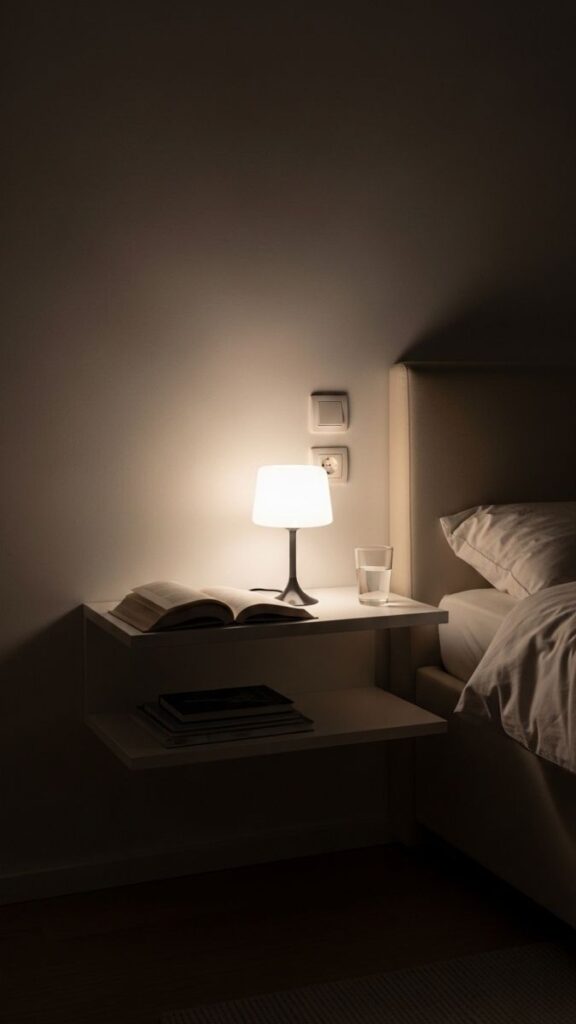
Standard nightstands sit on the floor, and in a small bedroom, every piece of furniture touching the ground adds visual weight.
A wall-mounted floating shelf does the same job as lamp, book, phone charger while keeping the floor beneath it completely clear.
That uninterrupted floor line makes the room feel physically wider than it is. Go for a shelf with a small lower bracket or lip
where you can hang a charging cable or tuck a small basket. This is one of the few upgrades that costs under $30, installs in an afternoon, and genuinely changes how the room feels spatially.
Read Mor About: 24 Coastal Wall Decor Ideas That Actually Work in Real Homes Not Just Beach Houses
Pegboard Behind the Door or on a Narrow Wall Panel
The back of a bedroom door is almost always wasted space.
A pegboard panel either freestanding or mounted turns it into a functional wall that doesn’t eat into the room. Hooks for bags and jewelry, small shelves for books, fabric pouches for accessories.
The visual effect is organized but personal, which reads well in bedrooms that need to feel lived-in without looking cluttered. This is especially practical for renters because a pegboard can be mounted with minimal wall damage, or leaned against the wall without mounting at all.
A Storage Ottoman at the Foot of the Bed
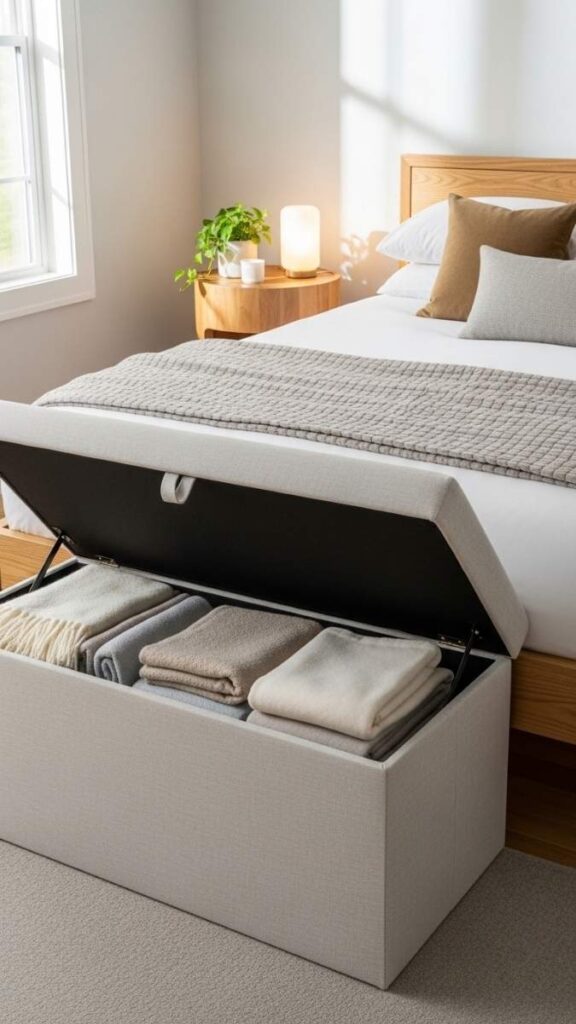
The foot of the bed is a surface most people ignore or pile things on. A storage ottoman there solves two problems simultaneously: it gives you a place to sit while putting on shoes, and it holds a meaningful amount of blankets, pillows, or off-season items inside.
Choose one that’s upholstered in a fabric that reads as part of the room rather than a functional add-on linen, boucle, or a simple cotton blend.
Honestly, this is one of the easier wins in a small bedroom because it adds storage without adding visual bulk. The key is keeping the lid clear; the moment it becomes a dumping ground for clothes, the room starts to feel messy fast.
Vertical Drawer Units in the Closet Instead of Shelves
Most closets come with one hanging rod and one shelf which is almost never enough. Adding a vertical drawer tower inside the closet (on the side where you’d otherwise have dead space below shorter hanging items can double the effective storage.
This works because most shirts, jackets, and folded items don’t need full floor-to-ceiling height. The lower zone below knee-level on hanging clothes is often completely unused. A 6-drawer tower fits there perfectly.
This setup is especially effective for bedrooms where getting dressed needs to happen quickly, since everything has a designated drawer rather than sitting in visible stacks.
Wall-Mounted Hooks at the Entry Point of the Room
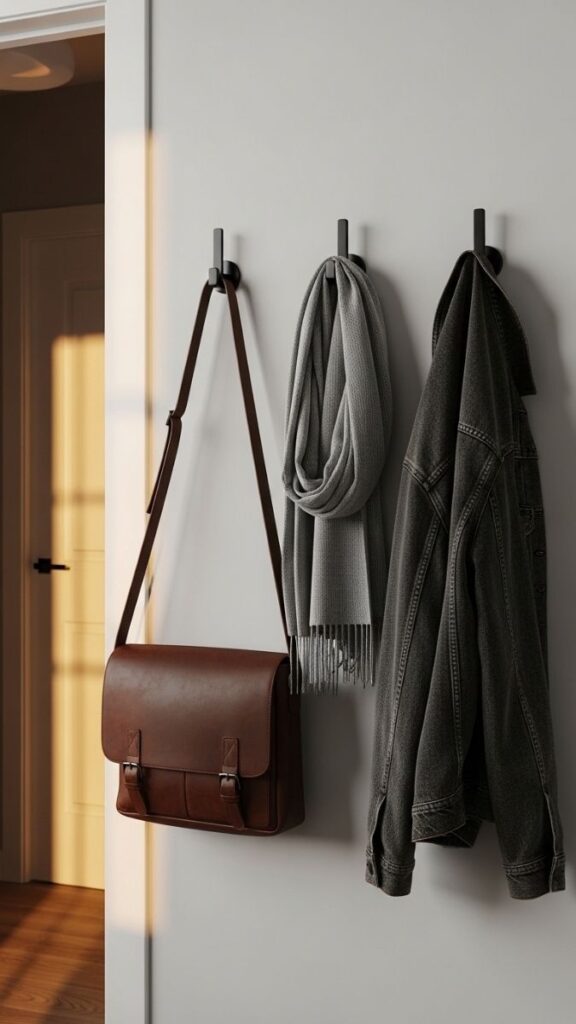
What comes off first when you walk into the bedroom? Usually a jacket, a bag, or something you intend to put away later and never do.
A small row of hooks near the door, not a full coat rack, just 2–3 hooks at chest height intercepts that habit and gives it a home. This reduces the amount that lands on the bed or chair. It’s a small intervention with a disproportionate effect on daily tidiness.
In a rental, command hooks rated for 5+ lbs work without wall damage. In a permanent setup, wall-mounted brass or matte black hooks add a bit of visual intention to what would otherwise be a blank wall section.
Read More About: 29 Vintage Wall Decor Ideas for Your Living Room That Actually Work in Real Homes
A Narrow Bookcase Used as a Room Divider + Storage Wall
In studio apartments or open-plan bedrooms, a freestanding bookcase used perpendicular to the wall defines the sleeping zone without closing it off entirely. The shelves face both directions: the bed side can hold books and personal items, the other side can face a desk or sitting area. This creates a room-within-a-room effect that’s both functional and spatial. The shelf itself becomes the storage system, so you’re not adding furniture, you’re repositioning it to do double duty. Go for a unit that’s 60–72 inches tall so it creates visual separation without blocking light entirely.
Luggage as In-Closet Storage for Off-Season Items
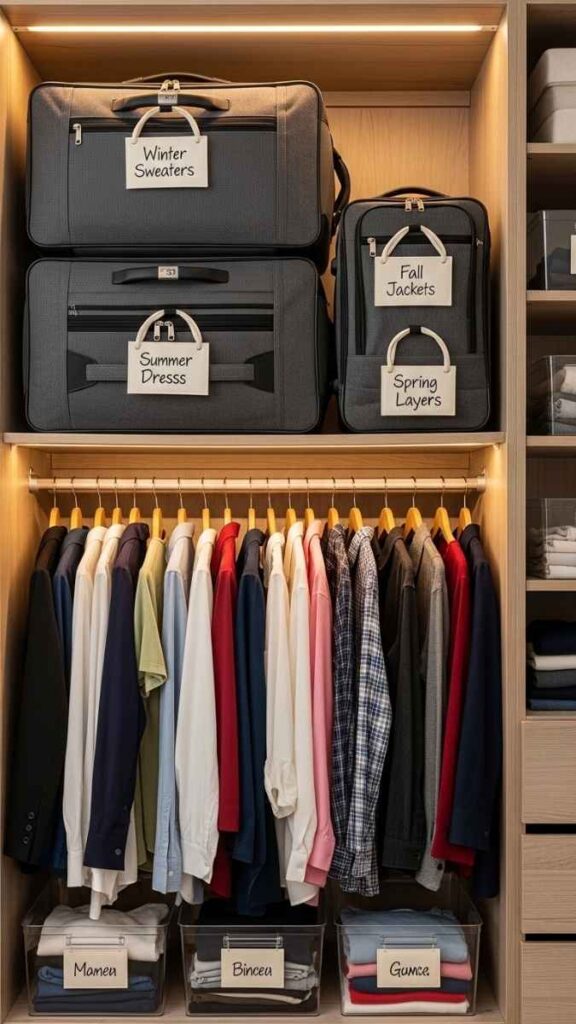
Luggage takes up space in a closet or under the bed anyway it might as well be working. Suitcases that sit empty are using square footage without contributing anything. Fill them with off-season clothing, heavy sweaters, or extra bedding, and store them on the top shelf of the closet or under the bed.
This is one I’d actually recommend trying first because it costs nothing and frees up drawer or shelf space immediately. Use packing cubes inside the luggage to keep things organized so pulling something out doesn’t mean digging through a pile.
Floating Corner Shelves in Dead Corner Space
Corners are structurally awkward and often left empty. A pair of staggered floating shelves, not corner shelves mounted at the same angle, but two regular shelves installed on adjacent walls at different heights creates a visual diagonal that draws the eye and puts the corner to work.
Use the upper shelf for décor or books you want visible, and the lower shelf for a basket with functional items.
The stagger avoids the boxy look of standard corner units and feels more intentional. This works especially well in bedrooms where the walls are plain and the room needs visual anchoring without added furniture.
Drawer Dividers That Actually Get Used
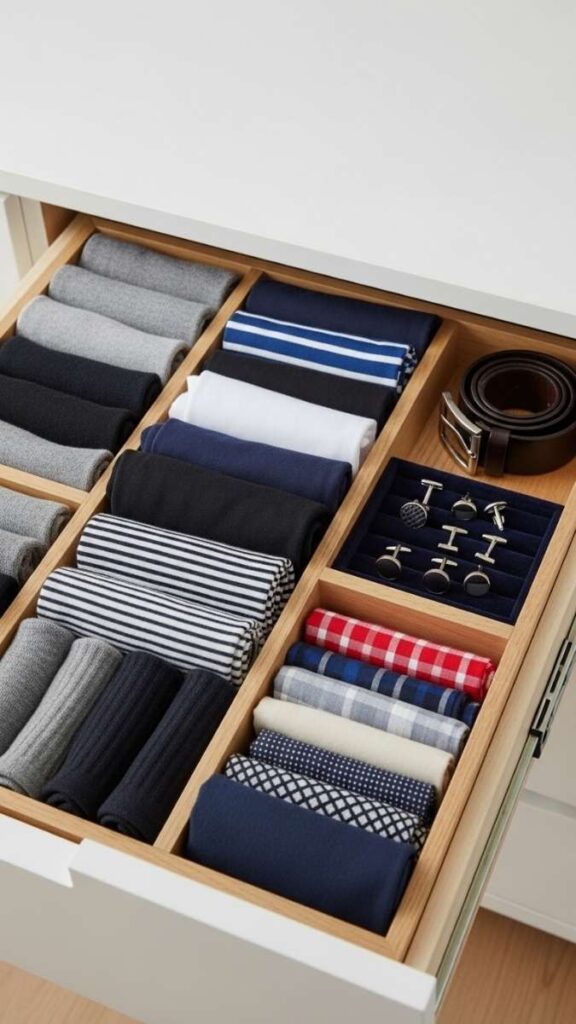
Most dresser drawers become chaotic within a week because nothing has a fixed location. Drawer dividers, even inexpensive bamboo or adjustable plastic ones, create sections that force things back to the same spot.
The spatial result isn’t just neatness; it’s that drawers close properly, you can see what you have, and getting dressed takes half the mental energy.
This is more of a systems fix than a decor fix, but in small bedrooms where every surface matters, it directly reduces what ends up on the nightstand or the floor.
A Bed With Built-In Drawers on the Side (Not Just the Foot
Under-bed storage via risers or bins is useful, but beds with integrated side drawers are more functional for daily access. You don’t have to crouch down or pull bins out when the drawer comes to you.
These are especially effective for clothing you reach for regularly jeans, gym clothes, loungewear. In bedrooms without a dresser, a storage bed with side drawers can replace one entirely. Look for frames where the drawer is on the side you exit from, not the wall side, so it actually gets used.
Read More About: 20 Vintage Kitchen Decor Ideas That Make Older Homes Feel Intentional and Modern Kitchens Feel Warmer
Open Closet With a Curtain Panel Instead of Doors
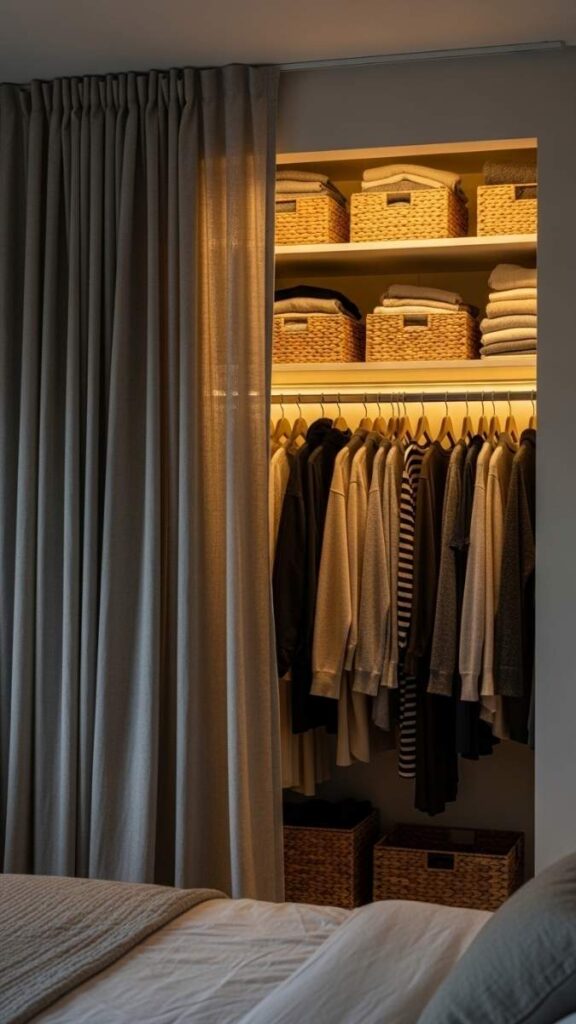
Closet doors, especially bifold doors eat into the room when open and block access when half-open. Replacing them with a floor-to-ceiling curtain panel on a simple ceiling-mounted track removes that footprint entirely.
The curtain closes the visual mess, opens fully with one motion, and makes the room feel taller because the track goes all the way to the ceiling.
In small bedrooms, this can add 3–5 square feet of usable floor space back to the room just from how the door swings. Use a medium-weight fabric like linen or cotton canvas so it holds its shape without looking flimsy.
Magnetic or Adhesive Storage Strips Inside Closet Doors
The inside face of a closet door is almost always unused. Adhesive mounting strips, magnetic organizers, or over-door pocket systems turn it into functional real estate for jewelry, accessories, sunglasses, or small items that otherwise clutter a dresser top.
This is a particularly good renter solution because nothing needs to be drilled in. The spatial benefit is indirect but real when small items have a dedicated home inside the closet, the surfaces visible in the room stay cleaner.
A Murphy Bed With Integrated Shelving for True Dual-Use Rooms
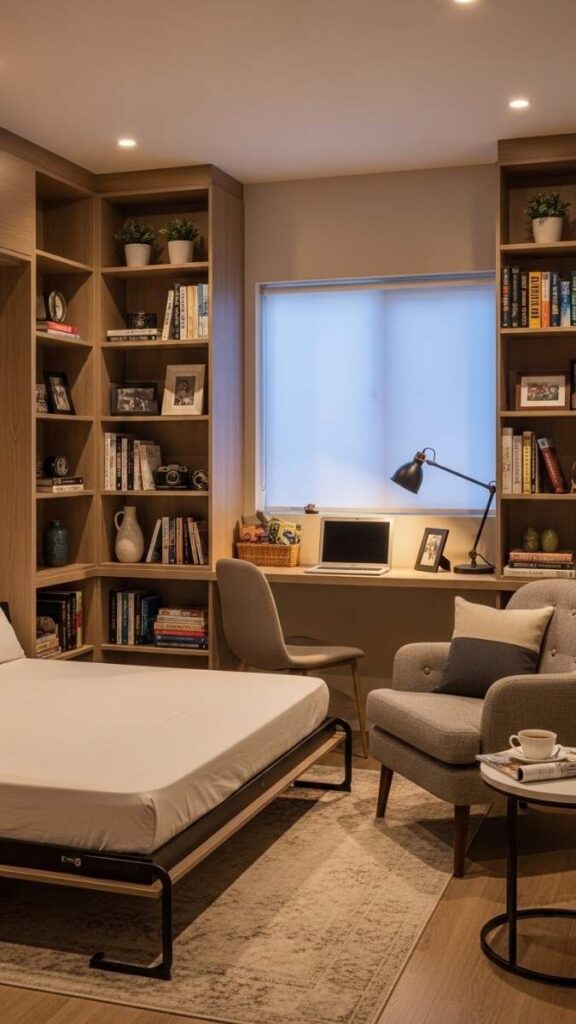
If the bedroom also functions as a home office, guest room, or creative space, a Murphy bed with integrated side shelving is the structural solution.
The bed folds up to reveal a full living or working wall. The side units which stay fixed while the bed moves hold books, décor, or work equipment on one side and bedroom items on the other. This isn’t a budget option, but for studio apartments or multipurpose rooms where the bed genuinely dominates the space, it’s the only solution that fully reclaims the room.
I’ve noticed this style is trending upward in 2026 as more people treat their bedroom as a full-time living space rather than just a sleeping room.
Over-the-Bed Floating Shelf System Headboard Alternative
A floating shelf above the bed at approximately the height a headboard would end replaces the headboard entirely while adding functional surface space. Use it for reading books, a small lamp with a wall plug, and a plant or two
. The visual effect is similar to a built-in alcove, purposeful, architectural, and space-positive. This setup works best in bedrooms where the wall above the bed is otherwise blank and where you want the room to feel more intentional without adding furniture. Keeping items minimal up there the shelf works as a design element as much as storage.
A Slim Console Table Behind the Door for Folded Items
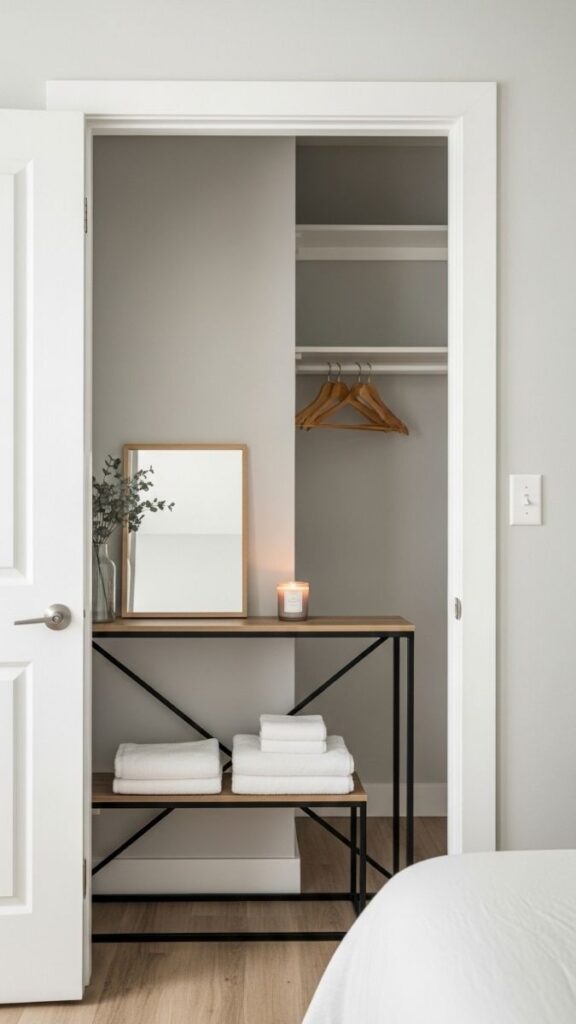
The wall directly behind an open bedroom door is usually dead space; you can’t put art there, and it’s easy to forget it exists. A very shallow console table (8–10 inches deep fits in that zone without blocking the door’s swing.
Use it for folded items, a small tray for things you carry daily, or even a compact laundry bin. Because it’s behind the door, it stays visually hidden when the door is open, which is most of the time.
This is one of those ideas that sounds too simple to matter but consistently solves the “where does this go” problem in tight bedrooms.
A Ladder Shelf Beside the Bed for Books and Bedside Items
A ladder shelf leaning beside the bed uses minimal floor space usually 18–24 inches wide while creating several display and storage levels. The bottom rung holds books or a small basket for charging cables.
The middle holds whatever you reach for at night. The top functions more as a display ledge. Unlike a standard nightstand, it doesn’t feel like furniture, it reads more like an architectural accessory. This is a solid option for renters because it requires no mounting, moves easily, and works against virtually any wall color.
Labeled Baskets on Open Shelves for Fast, Organized Access
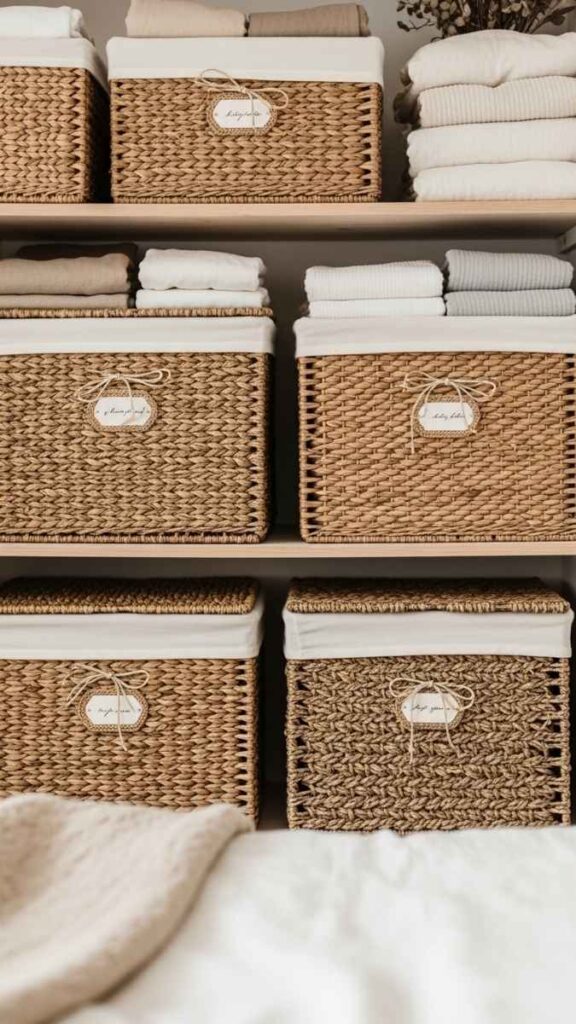
Open shelving looks clean when it’s curated and chaotic when it isn’t. The fix is simple labeled baskets that give every category a fixed home. Labels don’t need to be fancy, even a folded piece of paper or a small tag works.
The value is that anyone in the house (including you at 7am knows exactly where things go without decision-making.
In small bedrooms where open shelving replaces a dresser, this system is what keeps it from looking like a pile. IMO, this one change assigning every basket a category and sticking to it has more impact on daily bedroom function than almost any other organizational move.
Stack Storage Vertically With Cube Organizers in Tight Spots
Cube organizers are modular, affordable, and work in almost any configuration. A 2×4 or 2×6 stack in a corner or beside the closet creates a significant amount of storage while taking up only about 24 inches of wall width.
Mix open cubes for things you want visible with fabric-insert drawers for things you don’t. The modular format also means you can reconfigure it if the room layout changes, useful in apartments where you’re not staying forever.
Tension Rod Systems Inside Drawers for Upright File-Style Storage
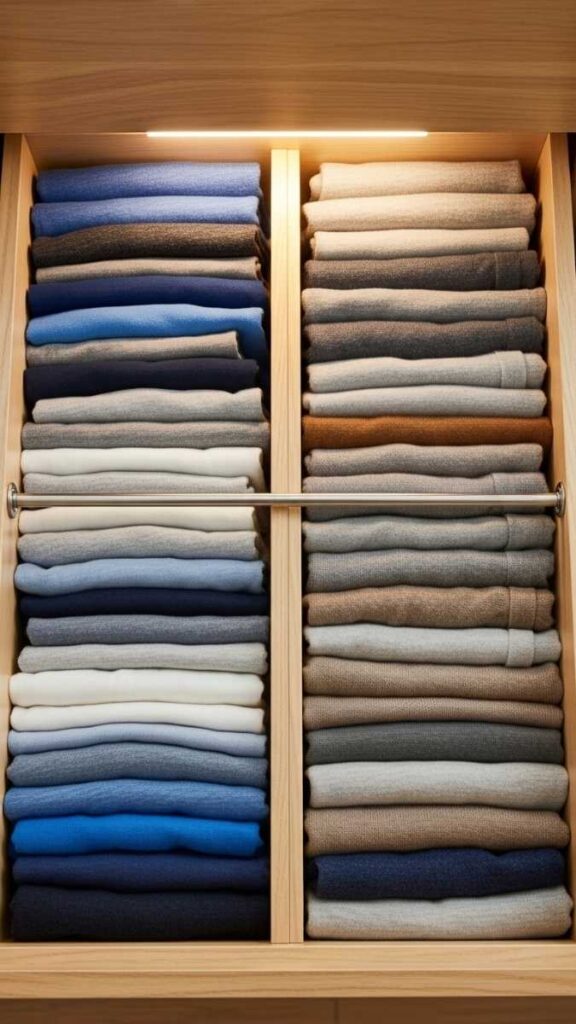
Stacking clothes in drawers means you can only see the top item which leads to digging and re-digging the same mess. Storing folded items vertically, file-style, lets you see every piece at once without unfolding anything.
A tension rod across the center of a wide drawer creates two sections and keeps items from tipping over. This is a small thing that changes how a drawer functions entirely. It works especially well for t-shirts, jeans, and leggings, the items most likely to live in a pile otherwise.
A Wardrobe With Mirrored Doors Instead of Solid Panels
In bedrooms without a built-in closet, a freestanding wardrobe is the storage solution but solid-door wardrobes can visually shrink the room further.
Mirrored wardrobe doors reflect light and the opposite wall, creating the perception of depth that doesn’t exist. The mirror itself also doubles as a full-length dressing mirror, eliminating the need for a separate piece of furniture.
In rooms where natural light comes from one direction, a mirrored wardrobe positioned to reflect the window can meaningfully brighten the space without adding any lighting fixtures.
Hanging Organizers From the Closet Rod for Bags and Accessories
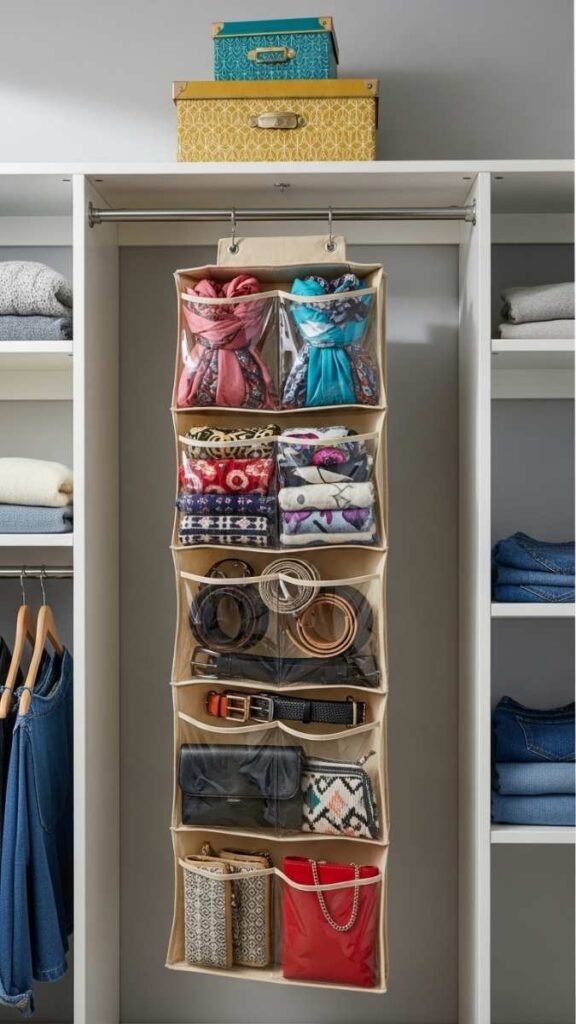
Closet rods are typically used only for clothes on hangers, leaving a lot of organizational potential untapped. Hanging organizers fabric panels with multiple pockets or shelves that suspend from the rod use that vertical closet space without touching the floor or walls.
They’re especially useful for accessories, bags, scarves, and folded items that don’t hang. This is a renter-perfect solution because it requires nothing installed and moves with you.
A Floating Desk That Folds Flat Against the Wall When Not in Use
For bedrooms that need to function as a workspace, a wall-mounted fold-down desk is the most space-efficient option. Closed, it sits flush against the wall and can be styled as a narrow display ledge.
Open, it provides a proper work surface usually 18–24 inches deep. When paired with a wall-mounted shelf above it for a monitor or books, it creates a complete workstation that disappears completely after hours. This setup requires two or three wall anchors, which is well within renter-repair territory when moving out.
Double-Hang the Closet Rod for Short Items
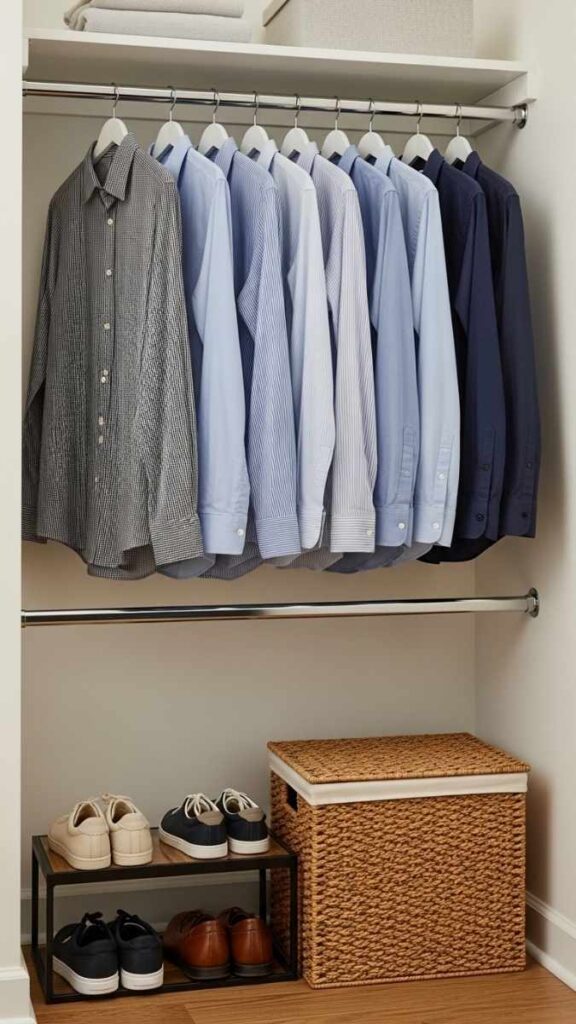
Most closets hang everything on one rod from floor to ceiling which wastes the vertical space below shorter garments.
Adding a second rod halfway down, directly beneath the first, doubles the hanging capacity for shirts, blazers, jackets, and folded pants on hangers.
The original rod stays for dresses and long pants. The floor space below the lower rod is now free for a shoe rack, a storage bin, or a small drawer unit. This is one of the highest-return closet upgrades available; it costs under $20 in hardware and doesn’t require a carpenter.
A Slim Rolling Cart Between the Nightstand and the Wall
The gap between furniture and a wall is usually an inch or two not enough for anything purposeful. But in bedrooms where there’s a 6–10 inch gap beside the bed or dresser, a slim rolling cart fits perfectly and adds 3–4 shelves of storage.
Use it for reading materials, phone chargers, skincare items, or anything that tends to pile on the nightstand. Roll it out to access the lower shelves, push it back when not in use.
This works particularly well in bedrooms with a window or radiator that limits where the nightstand can go.
Pegboard or Slatwall Panel as a Bedroom “Functional Wall
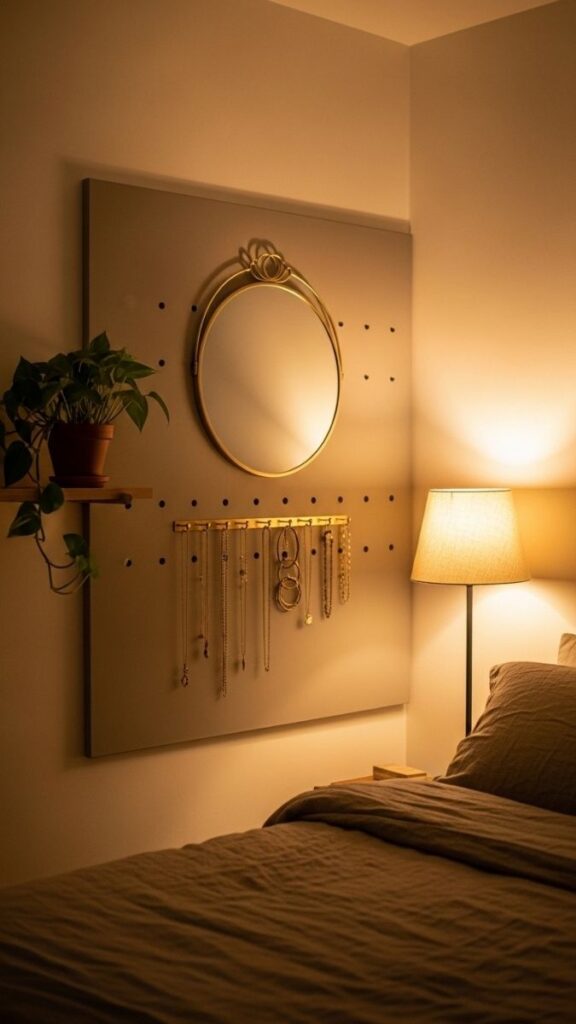
A pegboard doesn’t have to look like a garage. Painted to match the wall color and fitted with intentional accessories, a mirror, a few hooks, a small shelf, it disappears into the room while doing meaningful organizational work.
This approach works best on the wall across from the bed, where it functions as a focal point that’s actually useful.
The key is treating the pegboard like a wall installation rather than a storage fixture: keep it edited, space things intentionally, and avoid loading it to capacity.
What Actually Makes Small Bedroom Storage Work
The ideas above cover a lot of territory, but a few principles show up in every effective small bedroom storage setup.
Vertical space is almost always underused.
Most bedrooms use furniture that tops out at 48–60 inches when the ceiling is 96 inches or higher. The space above eye level from roughly 60 inches to the ceiling is available for storage that doesn’t need daily access.
Seasonal items, extra bedding, luggage, infrequently used accessories. Getting these items off the main storage surfaces frees up the accessible zones for what you actually use daily.
Closed storage reads as cleaner than open storage, even when both are organized.
If visual calm is the goal, prioritize doors, baskets, and drawers over open shelves even when the shelves are tidy. Open shelving works well when what’s on it is intentional and minimal. But in most real bedrooms, closed storage is more forgiving.
Storage doesn’t solve itself, systems do.
A labeled basket that gets used is more valuable than an expensive organizer that gets bypassed. The best small bedroom storage setups succeed because they match how the people using them actually behave, where they drop things, what they reach for first, which habits are realistic to maintain.
Small Space Bedroom Storage Setup Comparison Guide
| Storage Idea | Best For | Space Type | Problem Solved | Budget Level |
| Under-bed bins/drawers | Seasonal + overflow items | Any bedroom | Floor clutter, no closet space | Low–Mid |
| Floor-to-ceiling shelving | Closet-free bedrooms | Small/medium | No dresser space | Mid |
| Floating nightstand shelf | Visual lightness | Very small rooms | Floor clutter, scale issues | Low |
| Murphy bed + shelving | Dual-use rooms | Studios | Full daytime takeover | High |
| Double-hang closet rod | Clothing storage | Any closet | Wasted vertical closet space | Low |
| Storage ottoman | Everyday essentials | Any bedroom | Foot-of-bed dead zone | Mid |
| Wardrobe with mirrors | Closet-free spaces | Dark/small rooms | Storage + light + mirror | Mid |
| Rolling slim cart | Tight gaps, bedside | Very small rooms | Unused furniture gaps | Low |
| Fold-down wall desk | Work-from-bedroom | Small apartments | Dual-use space needs | Mid |
Common Small Bedroom Storage Mistakes That Keep the Room Feeling Cluttered
Buying storage before auditing what you actually have.
Most small bedrooms aren’t short on storage, they’re short on systems. Before adding a new dresser or shelving unit, spend 20 minutes removing everything that doesn’t belong in the bedroom. Bedrooms collect objects that have no purpose there tools, paperwork, gym equipment that migrated in. Removing those first almost always reveals usable space that was hidden.
Matching furniture height to eye level instead of ceiling height.
A dresser at 48 inches feels normal but in a bedroom with 9-foot ceilings, it leaves 5 feet of vertical space completely unused above it. Adding a shelf above the dresser, or choosing a taller unit, uses that zone without adding floor footprint. The room actually feels less cluttered when vertical storage is used, because the eye reads height as spaciousness.
Treating the closet as a separate system from the room.
In small bedrooms, the closet is part of the room; it needs to be organized as part of the same overall storage strategy. A well-organized room with a chaotic closet still feels stressful because the chaos is always one open door away. Prioritizing closet organization often has more impact on how the bedroom feels than any surface-level decor change.
Using too many different storage containers.
Mismatched bins, baskets in different sizes, organizers from three different systems it visually reads as disorganized even when the items inside are sorted. Choosing two or three consistent container styles (matching baskets, consistent drawer inserts makes the same amount of stuff look significantly more organized.
FAQ’s
What is the best storage solution for a small bedroom with no closet?
A floor-to-ceiling open shelving unit or a freestanding wardrobe with mirrored doors are the two most effective options. Pair either with under-bed storage for off-season items, and use a storage ottoman at the foot of the bed for everyday essentials. Together, these three elements can replace a full closet system without requiring built-ins.
How do I store clothes in a small bedroom without a dresser?
Use a floor-to-ceiling bookcase with labeled baskets for folded clothing, or invest in a storage bed with integrated side drawers. Hanging organizers inside a wardrobe or closet rod can also handle folded items, scarves, and accessories without needing drawer furniture at all.
Does under-bed storage make a small bedroom feel more cluttered?
Only if the bins are visible and mismatched. Use a bed skirt or a low-profile bed frame with a solid base to hide under-bed storage completely. When it’s out of sight, it adds significant capacity without affecting how the room looks.
Is open shelving or closed storage better for small bedrooms?
Closed storage (drawers, baskets with lids, wardrobes with doors tends to make small bedrooms feel calmer because it removes visual clutter from the room. Open shelving works well when items are minimal and intentional books, a plant, a few curated pieces but can backfire quickly in everyday use. A mix of both, with more closed than open, is the most practical approach.
How do you maximize vertical space in a small bedroom?
Use tall shelving units that reach within 12 inches of the ceiling, add floating shelves above existing furniture like dressers or desks, and store rarely used items (seasonal clothing, luggage, extra bedding at the highest accessible level. Wall-mounted hooks and pegboard panels also use vertical wall space without adding floor furniture.
What’s the easiest small bedroom storage upgrade that actually makes a difference?
Adding a second hanging rod inside the closet is consistently one of the highest-return, lowest-effort upgrades. It doubles the hanging capacity for short items in about 30 minutes, costs less than $20, and immediately frees up floor and shelf space inside the closet.
Can renters do any of these storage upgrades without damaging walls?
Yes most of the ideas here work without permanent modifications. Command hooks, tension rods, over-door organizers, freestanding shelving, storage ottomans, rolling carts, and bed risers all require zero wall drilling and are fully reversible.
Conclusion
A small bedroom doesn’t need more furniture to feel organized, it needs better use of the space that already exists. The setups here work across different room sizes, budgets, and living situations, and most can be implemented gradually rather than all at once.
Start with one or two ideas that address your most persistent pain point whether that’s closet overflow, a cluttered nightstand, or no-man’s-land under the bed. Small, targeted changes tend to have more lasting impact than a full room overhaul, because they fit into how you actually use the space rather than how you imagine you might.