20 Vintage Kitchen Decor Ideas That Make Older Homes Feel Intentional and Modern Kitchens Feel Warmer
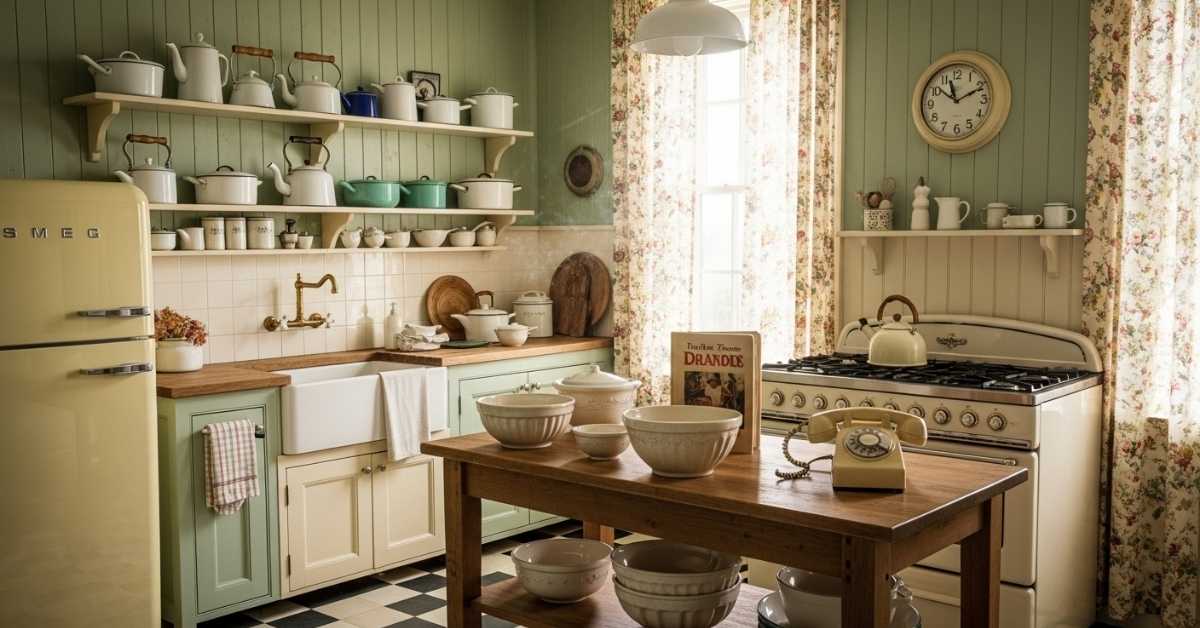
If your kitchen feels a little too sterile, or the opposite, a little too chaotic vintage decor can actually solve both problems.Vintage Kitchen Decor Ideas The key is using old-world visual cues strategically: the right materials, the right lighting, a few well-placed objects that anchor the room. It’s not about making everything match. It’s about making everything feel collected.
For anyone working with a small kitchen, a rental, or a tight budget these ideas are built for real spaces. You won’t find anything here that requires demolition or a custom build.
Open Shelving with Mismatched Ceramic and Stoneware
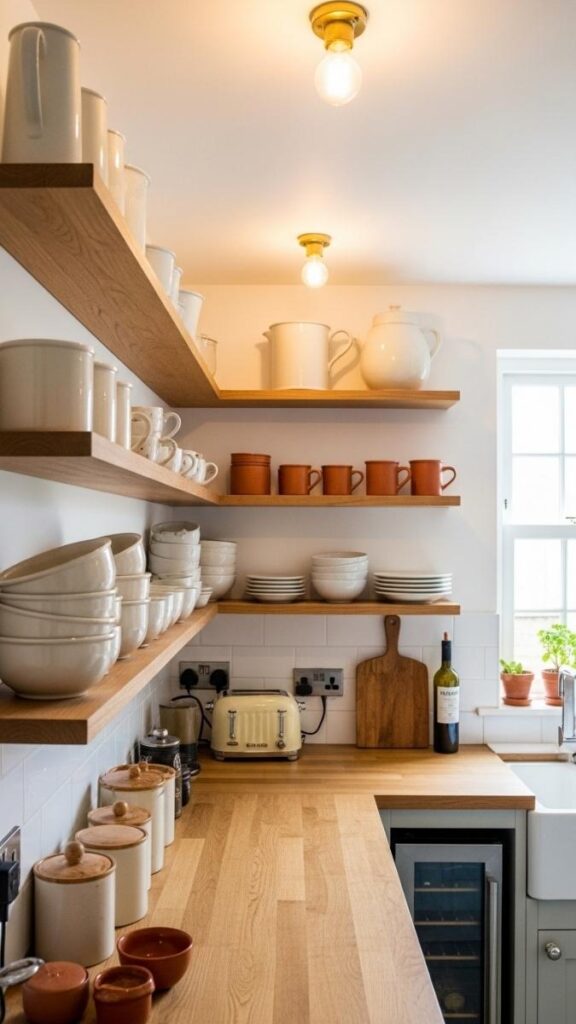
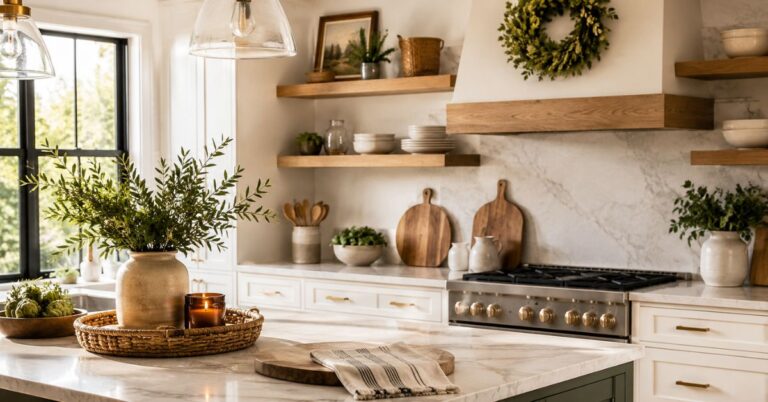
Open shelving works in vintage kitchens because it breaks the visual monotony of cabinet doors while putting your most character-rich items on display. Stack mismatched stoneware bowls, a few hand-thrown mugs, and older ceramic pitchers on two floating shelves rough-hewn wood brackets add to the effect. The unevenness is the point. What makes this work spatially is contrast pale walls behind darker or textured pieces create visual depth without feeling heavy. This setup is especially good for renters who can’t paint cabinets, because the shelves become the focal point. It solves the problem of small kitchens that feel box-like as the eye moves across varied objects instead of landing on a flat, closed surface.
A Butcher Block Countertop or Cutting Board Insert
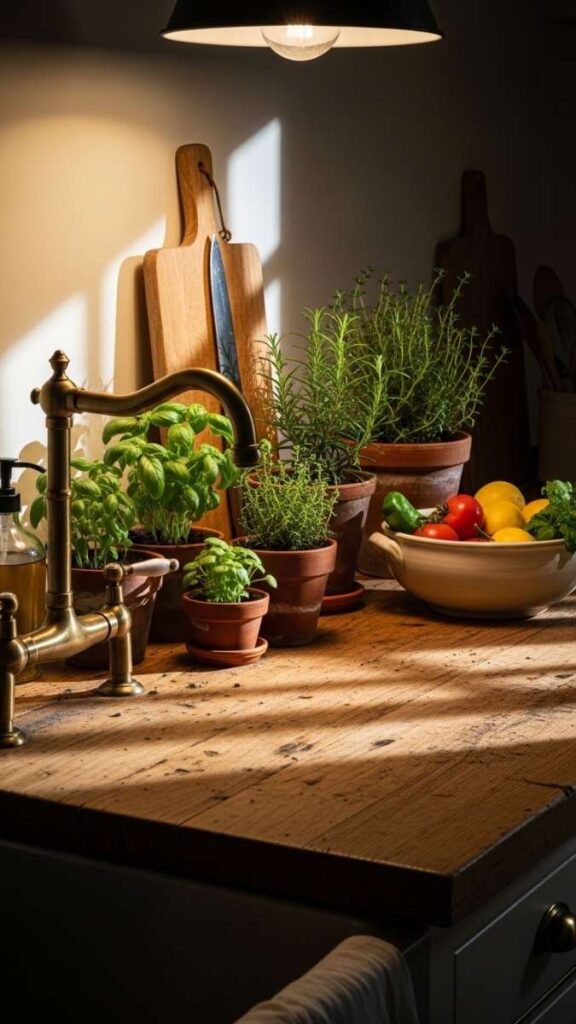
Butcher block is one of the few materials that actually gets better-looking with use. The warmth it adds to a kitchen especially one with white or pale cabinetry is immediate. If a full countertop isn’t in budget or isn’t feasible in a rental, a large freestanding butcher block island or a wide rolling cart achieves the same effect. The natural grain and honey tone act as a thermal counterpoint to cooler elements like tile or stainless. In my experience, this works best when it’s the only wood surface in the kitchen. Too many competing wood tones get busy. It solves the sterility problem without requiring any permanent changes.
Read More About: 23 Antique Home Decor Ideas That Make Any Room Feel Collected, Not Cluttered
Vintage-Inspired Pendant Lights Over a Work Surface
Lighting is the fastest way to shift the mood of a kitchen, and pendants with amber or smoked glass shades do more heavy lifting than almost anything else. Hung low over a kitchen island or peninsula, they create a warm pool of light that makes the whole space feel more intimate. Look for cage-style pendants, schoolhouse globes, or ribbed amber glass all of which read as vintage without being precious. The key is scale pendants that are too small over a wide surface to look timid. Aim for a shade diameter of at least 8–10 inches for a standard 36-inch island. This works in kitchens of almost any size and requires only a basic pendant swap.
A Farmhouse Apron Sink
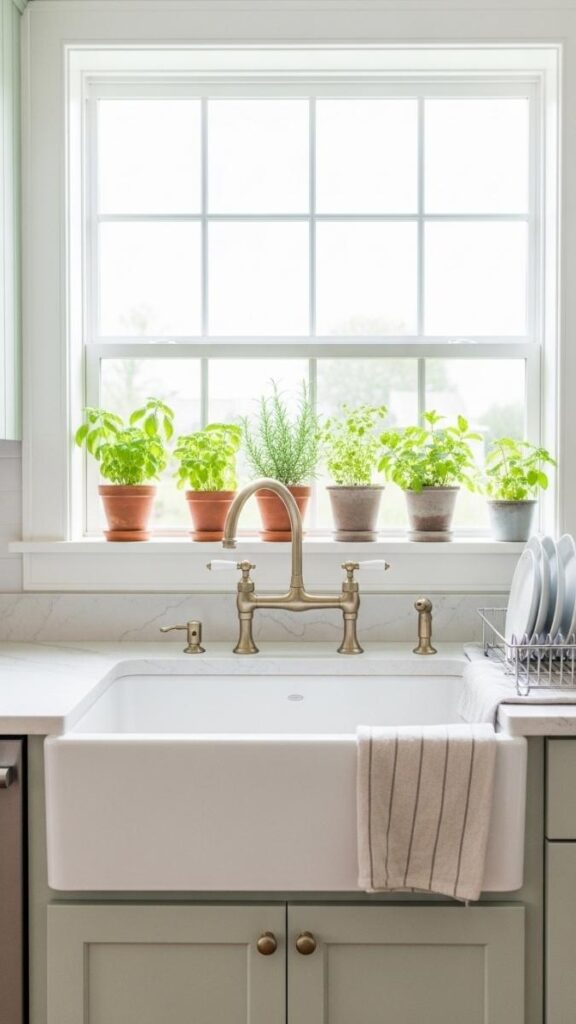
Few things signal vintage kitchen more clearly than an apron-front sink and in 2026, the farmhouse sink is showing no signs of going anywhere. The exposed front panel adds visual weight at the base of the run, which actually helps low-ceiling kitchens feel more grounded. White fireclay is the classic choice; it pairs well with almost any cabinetry tone from sage to navy to cream. Paired with an unlacquered brass faucet that will patina over time, the whole setup builds character naturally. This is a bigger investment than most ideas on this list, but it’s one I’d actually recommend prioritizing if you’re already planning a partial renovation; nothing else delivers the same period-appropriate foundation.
Painted Cabinetry in Warm Heritage Tones
Not all vintage kitchens are white. In fact, some of the most interesting ones lean into deep, muted hues, dusty sage, off-white cream, warm terracotta, or forest green. If your cabinets are solid and in good condition, repainting them is the single highest-impact change available. The trick is keeping the upper cabinets lighter (cream, linen, or a pale warm white) to maintain ceiling height, while grounding the lower run with a deeper color. Hardware matters here aged brass, oil-rubbed bronze, or unlacquered iron all read as vintage without feeling theatrical. This works particularly well in kitchens with wood floors; the tonal warmth ties the room together from floor to ceiling.
Vintage Enamel Canisters and Containers on the Counter
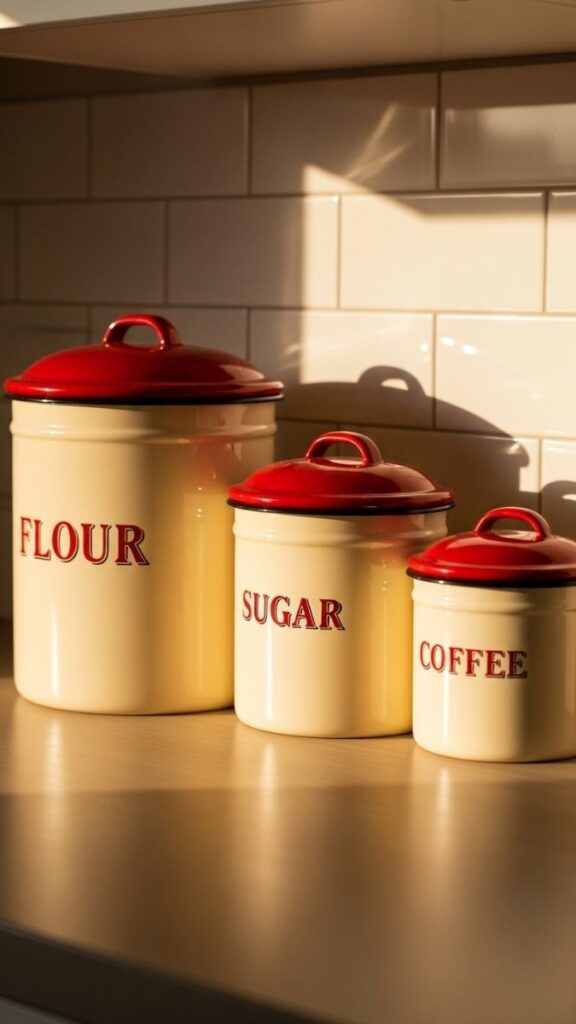
A row of enamel canisters is one of the more underrated counter displays in a vintage kitchen. They solve the problem of visual clutter by replacing a dozen mismatched bags and boxes with a unified set of objects that look intentional. Cream with red or navy lettering, or white with black trim, both have strong period references to early 20th century American farmhouses. The containers are also functional; they store dry goods properly and free up cabinet space. For small kitchens, choosing matching canisters and limiting the set to 3–4 pieces keeps the counter from feeling busy. This is one of the most budget-friendly ideas on the list and requires no permanent changes.
A Vintage-Style Range or Range Hood
A statement range in a vintage style whether that’s a cream Aga-inspired unit or a retro 1950s-style freestanding cooker becomes the visual anchor of the entire kitchen. Brands like SMEG, Big Chill, and Elmira make modern appliances with period-accurate profiles. The rounded corners, chrome trim, and bold color options pull the room backward in time in the best way. If a vintage-style appliance isn’t in budget, a range hood with character can achieve a similar result a hand-hammered copper hood, a chunky plaster box hood, or a shiplap-covered hood with open shelves on either side all read as period-appropriate and become a focal point without requiring new equipment. This works best in kitchens that have at least one strong view axis typically from the dining area or entrance.
Subway Tile with Dark Grout
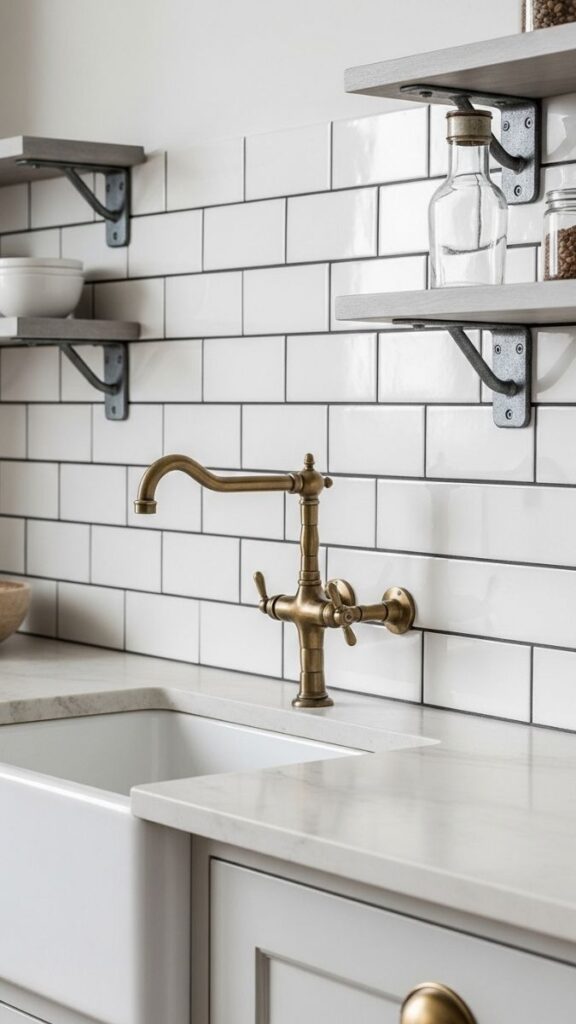
Subway tile is not new and that’s exactly why it works so well in a vintage kitchen. It’s a reference, not a trend. The difference between subway tile that reads as modern and subway tile that reads as vintage usually comes down to grout color. Dark grout charcoal, slate, or warm brown emphasizes the individual tile units and gives the wall a graphic, almost graphic-print quality. It also hides staining better than white grout over time. Paired with brass or black fixtures, this backsplash treatment works in small kitchens where a busy pattern would overwhelm the walls. The contrast of the grid against neutral cabinetry is enough visual interest on its own.
A Freestanding Dresser or Hutch Used as Kitchen Storage
One of the more creative solutions for kitchens that lack built-in storage is repurposing a vintage dresser or hutch. A glass-front upper section becomes display space for ceramics; the lower drawers and shelves handle everyday storage. Painted in a heritage tone to match or complement the cabinetry, it reads as an intentional design choice rather than a makeshift fix. This is especially good for renters who can’t modify existing storage and for open-plan kitchens where the boundary between kitchen and dining room is soft. The freestanding nature of the piece also means it moves with you. I’ve noticed this style tends to work best when the piece is painted raw or natural wood can look too furniture-like and break the kitchen’s visual language.
Read More About: 27 High End Bedroom Decor Ideas That Make Your Space Feel Like a Luxury Hotel
Copper Pots and Pans on a Wall-Mounted Rack
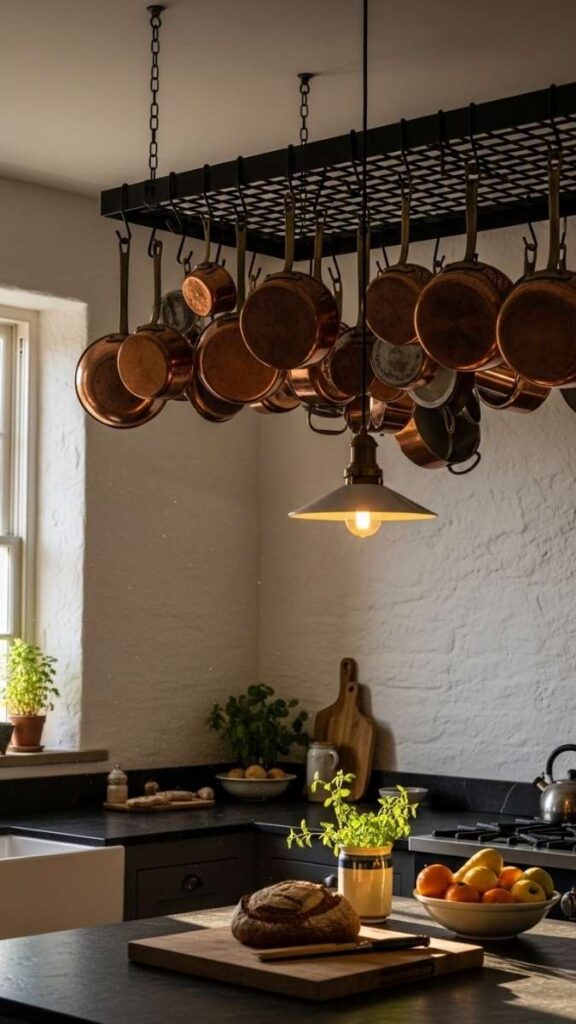
Hanging cookware is functional and decorative in equal measure. Copper is the vintage-kitchen standout because its warm reddish tones pick up light and add richness against white or pale walls. A simple ceiling-mounted pot rack industrial pipe style or a more classic oval keeps the pots accessible and becomes a strong vertical element in a room that might otherwise feel flat. The patina that develops on copper over time only improves the effect. For kitchens with lower ceilings (under nine feet), wall-mounted rails are a better option than ceiling racks. This works especially well over islands or near the range where pots are frequently used.
Vintage Printed Tea Towels as Counter and Wall Accents
Tea towels are one of those details that seem minor but accumulate into something meaningful. Botanical prints, French market typography, hand-illustrated vegetables, or classic red-and-white stripes all carry period references that reinforce a vintage kitchen aesthetic. Drape one over an oven handle, fold another on the counter near the sink, and hang one from a ladder or wall hook for a relaxed, collected look. This costs almost nothing and is immediately reversible but it’s also one of those things that makes the whole kitchen feel more intentional without any large-scale changes.
Reclaimed Wood Floating Shelves
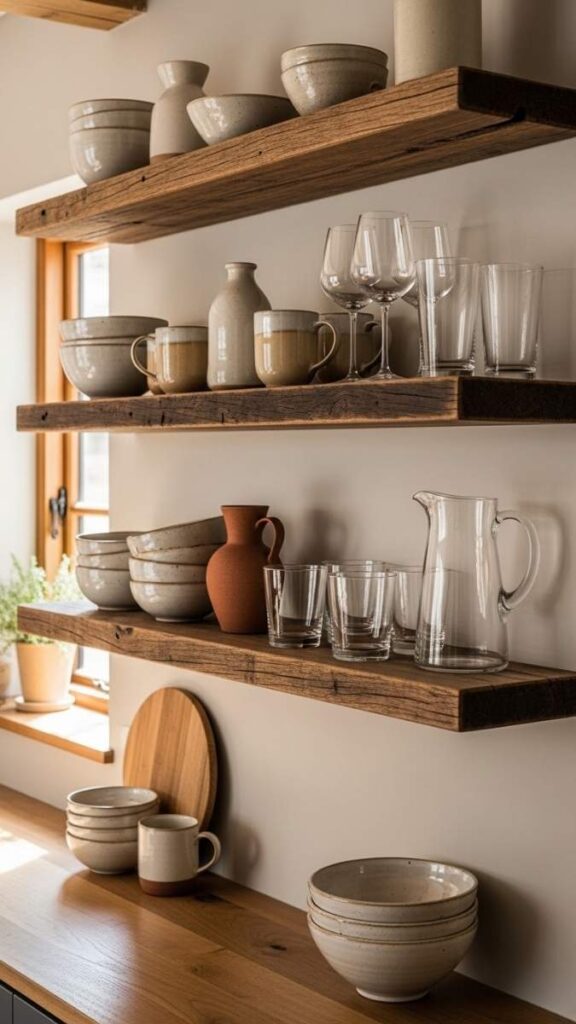
There’s a clear difference between new wood shelves and reclaimed ones, and it’s visible from across the room. Reclaimed wood carries the marks of its previous life: nail holes, grain variation, patches of darker tone which give shelves an authenticity that brand-new materials can’t mimic. For a vintage kitchen, one or two well-positioned reclaimed shelves above a counter or to the side of the range create a layer of history. Keep the objects on them simple and organise a few stacked bowls, some bottles, a plant. The shelf is the feature, not the display. Suitable for renters if mounted properly in load-bearing walls.
Beadboard Paneling on Cabinet Fronts or Walls
Beadboard the narrow vertical paneling associated with late 19th and early 20th century American kitchens is one of the most recognizable vintage signals you can add to a kitchen. Applied to the lower cabinet fronts as a DIY panel overlay, it transforms flat-door cabinets without replacement. Painted in a period-appropriate color (cream, sage, or navy), the texture adds depth that flat-door cabinets lack. It also works well as a backsplash material in kitchens where tile isn’t an option, particularly in rentals where peel-and-stick solutions exist. The vertical lines have a mild height-stretching effect in low-ceiling kitchens.
A Chalkboard Wall or Panel for Menu and Grocery Lists
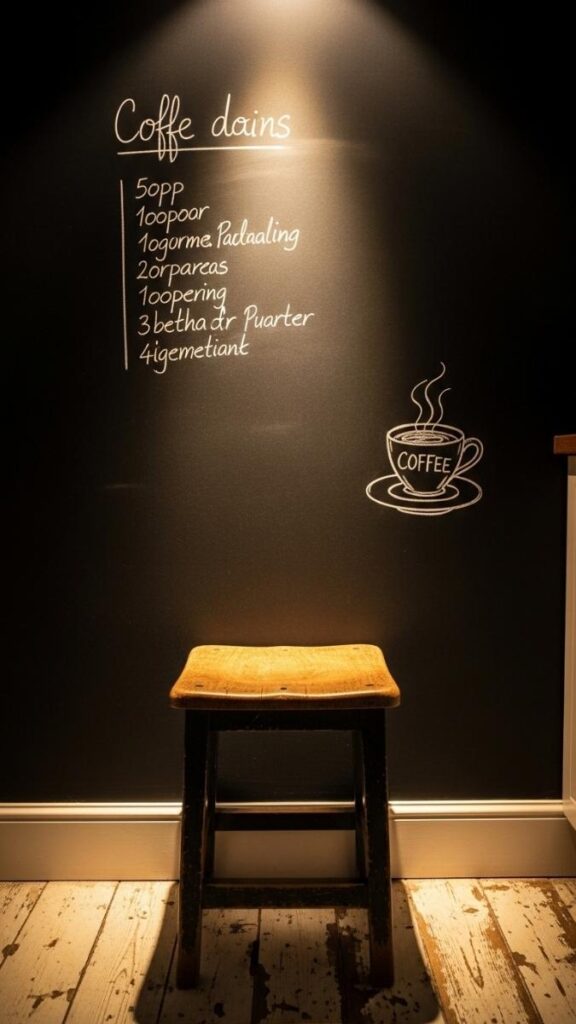
Chalkboard walls in kitchens come with built-in vintage associations the kind you’d find in an old café or European market stall. In a home kitchen, a chalkboard panel (rather than a full wall) works well as a functional and decorative element grocery lists, weekly menus, reminders. It solves the problem of unused wall space between the countertop and upper cabinets, turning a blank surface into something active. Chalkboard paint is inexpensive and can be applied over existing paint with minimal prep. In dark kitchens, this works best on a wall that receives some natural light otherwise the dark surface can absorb what little brightness exists.
Vintage-Inspired Wallpaper on a Single Accent Wall
One patterned wall in a kitchen can do an enormous amount of work especially if every other surface is kept relatively quiet. Vintage-inspired patterns, large-scale florals, botanicals, toile, or geometric tile prints from the 1930s–60s add personality without requiring any major material changes. Behind open shelves, a patterned wall works as a backdrop that makes even simple, everyday objects look more considered. For renters, high-quality removable wallpaper has gotten significantly better in recent years; it’s now a legitimate option rather than a compromise. Use one wall only; in a small kitchen, more than that tips from curated into clutter.
Unlacquered Brass Hardware on Every Cabinet and Drawer
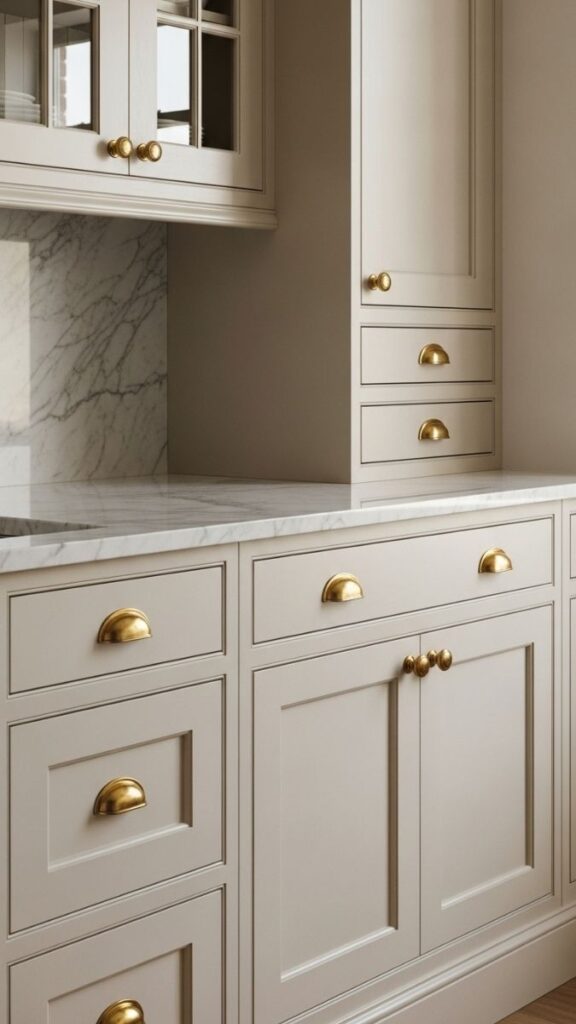
Hardware is the lowest-cost, highest-impact vintage upgrade available. Unlacquered brass as opposed to polished or satin brass will develop a natural patina over months, shifting from shiny gold toward a warmer, more complex amber tone. That aging process is the whole point: it’s what makes the hardware look collected rather than purchased. On cream or painted cabinetry, brass reads as warm and period-appropriate. On dark cabinetry like navy or forest green, it becomes a highlight that draws the eye. A full kitchen hardware swap typically takes one afternoon and a screwdriver.
A Round Pedestal Table in the Kitchen Eating Area
If your kitchen has a small dining area or breakfast nook, a round pedestal table is almost always the right choice over a rectangular one. The pedestal base (single central column rather than four legs) allows chairs to tuck in from any angle, which matters in tight spaces. It also creates unobstructed legroom all the way around a significant functional improvement. Vintage styles are plentiful here tulip-base tables in white or marble, turned-wood Victorian pedestals, or café-style bistro tables all carry the right period character. A round table in a small kitchen also improves movement flow; there are no corners to navigate around.
Read More About: 21 Vintage Bedroom Decor Ideas That Feel Curated, Not Cluttered
Display of Vintage Recipe Books and Cookware as Décor
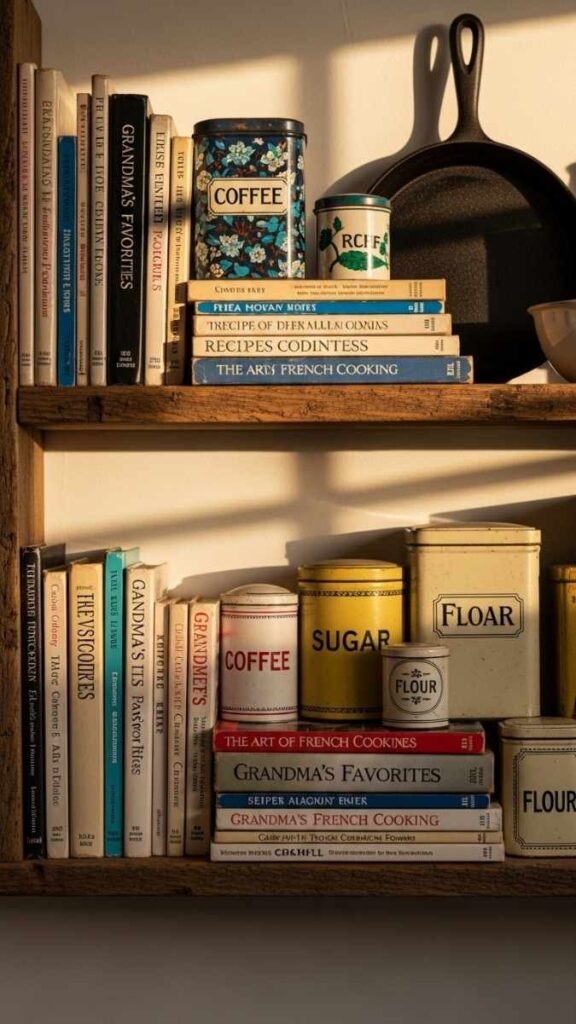
Books and tools used as objects rather than stored away is a specifically vintage move; it communicates that the kitchen is a place of real use, not just a showcase. A stack of older cookbooks (cloth spines, worn covers), an upturned cast iron skillet leaning against a wall, and a few lidded tins create an instantly layered surface that requires no expensive investment. The key is to rest five or six objects, not twenty. This works well on a shelf above the refrigerator, at the end of a kitchen island, or in a small corner nook. It also solves the problem of awkward corners that are too small for appliances but too visible to leave bare.
Hessian, Linen, or Cotton Roman Blinds at the Kitchen Window
Window treatments in kitchens are often an afterthought but they have a notable effect on how warm or cool the space feels. Natural fabric Roman blinds in hessian, linen, or cotton add softness to what is usually a hard-surface room. In a vintage kitchen, this choice also reads as period-appropriate, similar to what you’d find in a 1920s–1940s British cottage or Scandinavian farmhouse. The key functional consideration is to choose a fabric that tolerates humidity and can be wiped down near the sink. Roller blinds in the same fabric work equally well if Roman folds aren’t your preference the material matters more than the style.
A Wooden Ladder Used as a Pot or Tea Towel Rack
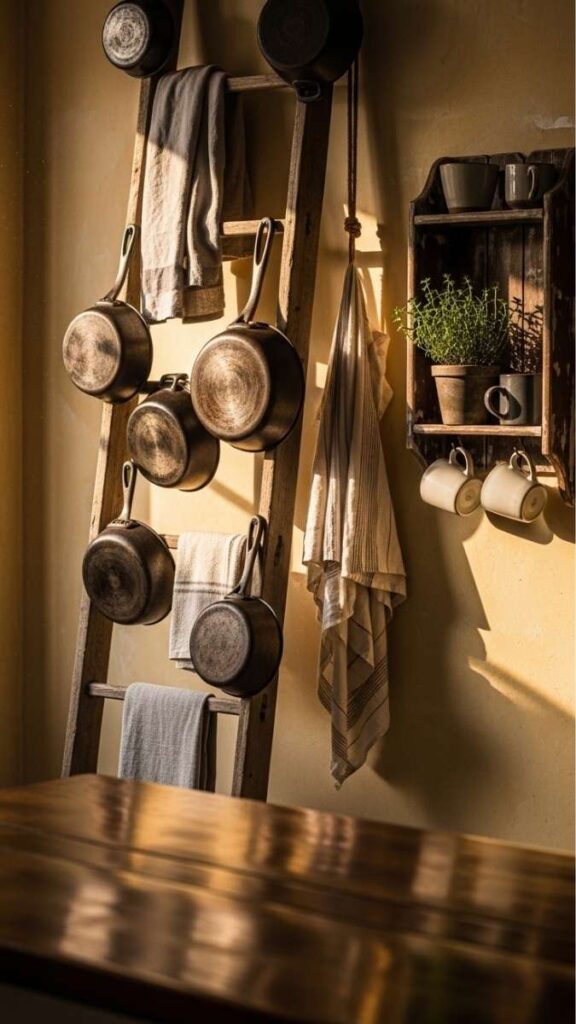
A wooden ladder leaning against a wall is one of those functional-decorative objects that earns its place in a vintage kitchen. Hung with cast iron pans, copper pots, or simply a row of linen tea towels, it becomes a vertical display element without requiring any mounting hardware. Reclaimed or unfinished wood has the right rough quality; painted or polished ladders lean more modern. This works especially well in narrow kitchens with vertical wall space that can’t accommodate shelving, and it’s completely renter-friendly.
A Tin Ceiling or Tin Ceiling-Look Panels
Pressed tin ceilings have roots in 19th century American architecture, originally used as affordable alternatives to plaster moldings. Reproductions are now widely available as lightweight panels that can be installed directly over an existing ceiling. In a vintage kitchen, tin ceilings do two useful things: they create a strong period reference point for the whole room, and they add visual texture overhead that breaks the monotony of a flat white ceiling. This works best in kitchens with at least nine-foot ceilings. Lower ceilings with a patterned surface can feel heavy. Good for homeowners only, as this is a semi-permanent change.
A Patina-Finish or Antique-Look Tile Floor
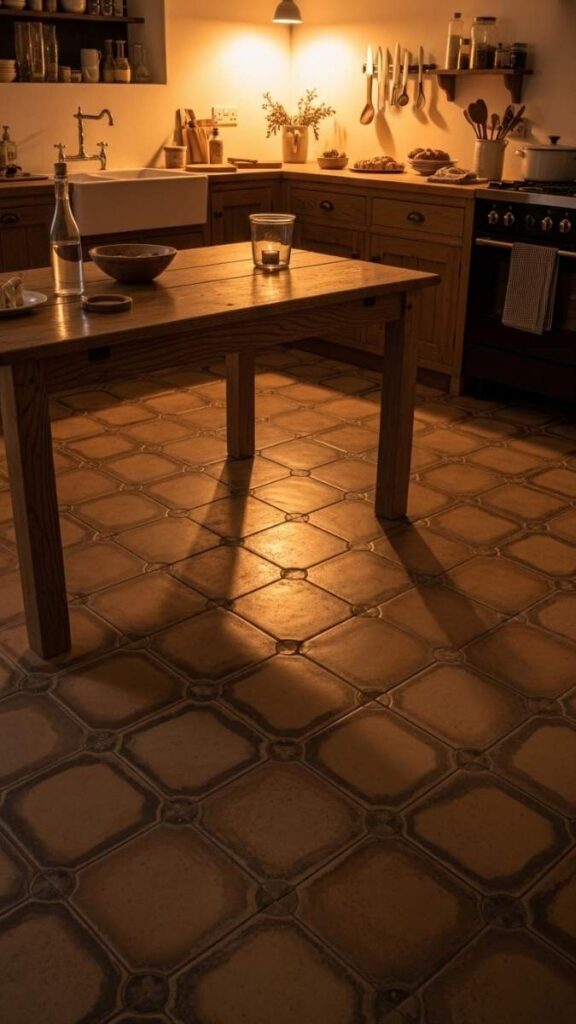
Floors are one of the most underused vintage levers in a kitchen. Terracotta tiles, encaustic cement tiles with simple geometric patterns, or aged stone-effect porcelain all communicate the kind of slow, old-world craft that reads as authentically vintage. For renters, large-format vinyl tile in a terracotta or encaustic pattern has improved dramatically and can be installed without permanent adhesive. The floor’s warmth both in color and in the organic quality of its pattern grounds the entire kitchen and makes everything above it feel more considered. This is one of the few changes that makes a small kitchen feel larger by extending the warm color palette from wall to floor.
Vintage Lighting Fixtures in the Pantry or Under-Cabinet Areas
Most vintage kitchen renovation focuses on the main room but the pantry, under-cabinet areas, and inside glass-front cabinets are worth addressing too. A simple filament-bulb pendant inside a walk-in pantry adds a warm, functional glow and turns a utilitarian space into something that feels private and considered. Under-cabinet lighting with a warm (2700K) bulb temperature does the same for the counter area during evening cooking. These layered light sources eliminate the flatness that overhead fluorescent lighting creates, and they’re often the reason one kitchen feels warmer than an identical one.
Glass Jar Storage for Dry Goods on Open Shelves
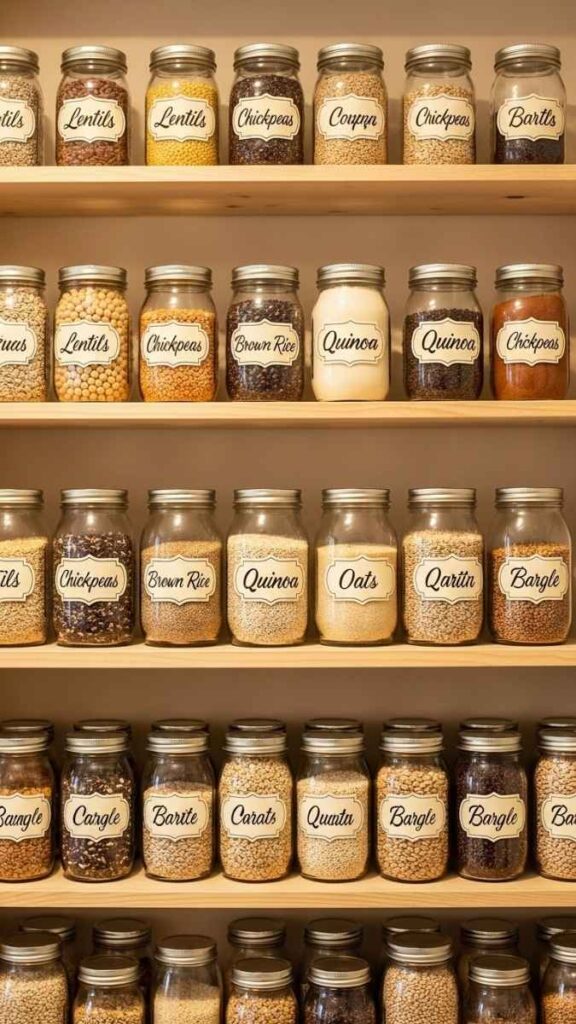
Mason jars and wide-mouth glass containers for dry goods storage have a long utilitarian history and in a vintage kitchen, they also serve as decorative elements. The visibility of the contents (different colored grains, pulses, pasta shapes) creates an organic, layered display that would look out of place in a sleek modern kitchen but completely at home in a vintage one. Hand-labeled tags in kraft or cream paper lean into the aesthetic further. This works well on open shelves and solves the dual problem of storage and surface decoration in one move.
A Cast Iron Skillet as a Wall-Mounted Display Piece
A cast iron skillet on a wall hook is both functional and quietly beautiful: the matte black surface, the slight sheen of a well-seasoned pan, the weight visible even when stationary. In a vintage kitchen, this is a natural choice. Mount two or three skillets of different sizes on plain iron hooks against a plaster or subway-tiled wall. The practical advantage is real cast iron is heavy and awkward to store in deep cabinets. On the wall, it’s within reach and becomes part of the room’s visual language. This works in any kitchen size and requires only two hook installations.
A Vintage Map, Print, or Botanical Poster in the Kitchen
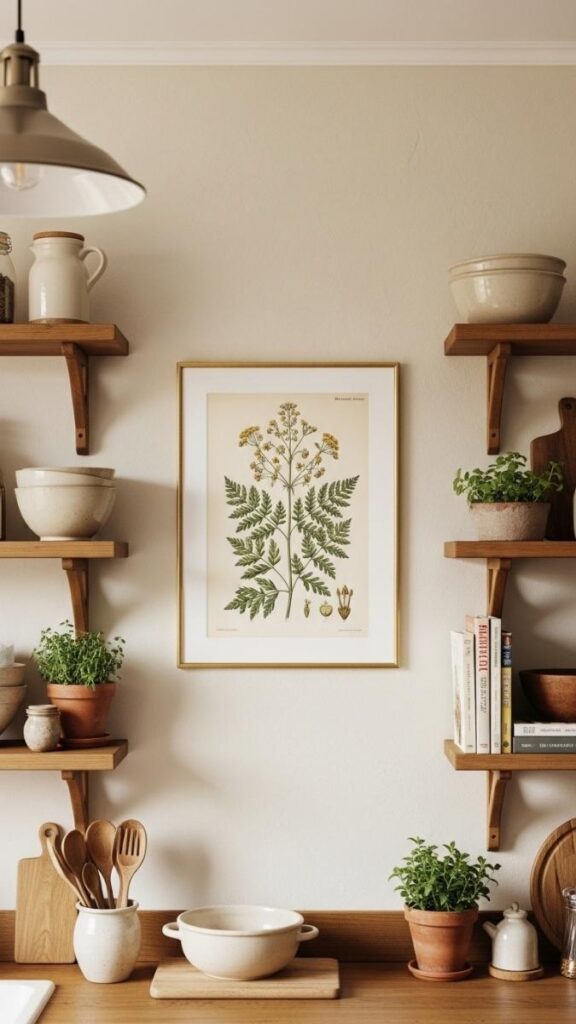
Art in kitchens is often an afterthought most people stop at a chalkboard or a clock. A framed vintage botanical print, antique map, or seed catalogue illustration adds a layer of personality that feels considered rather than collected. The frame matters as much as the print thin brass or black iron frames both read as period-appropriate without overpowering. Position it where there’s a natural wall axis opposite the sink, at the end of a galley run, or centered between two open shelves. In a small kitchen, a single well-placed piece does more than several smaller ones scattered around.
An Enamel or Ceramic Butler’s Pantry Sink as a Second Sink or Bar Sink
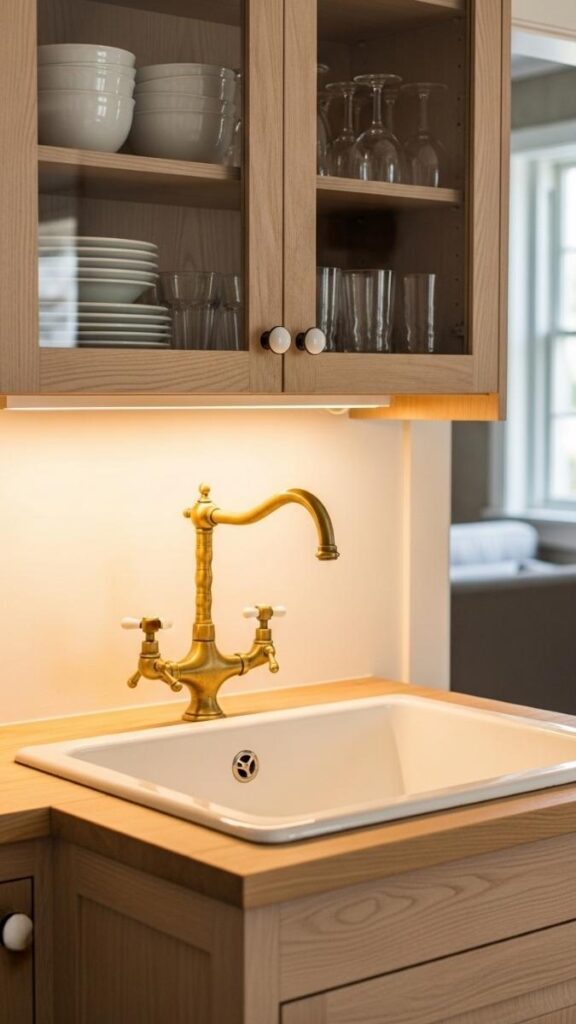
If your kitchen has a bar area, butler’s pantry, or an island with plumbing access, a small enamel or ceramic sink in a vintage profile is one of the most satisfying details you can add. The low basin, the simple tap with cross-head handles, and the ceramic or enamel finish all carry period references that feel genuine rather than decorative. This is a niche addition that requires plumbing but in a kitchen that’s already leaning vintage in its material palette, it becomes one of those finishing touches that makes the whole design feel coherent and complete.
What Actually Makes These Vintage Kitchen Ideas Work
The common thread across all of these ideas is the relationship between material quality and time. Vintage kitchens feel authentic when the materials have histories or when they’re designed to develop one. That’s what separates an unlacquered brass tap from a polished chrome one, or a worn butcher block from a brand new one.
A few things to keep in mind when applying these ideas
Start with light.
Warm pendant lighting and under-cabinet sources have the broadest impact of anything on this list. Even without any other changes, shifting from overhead fluorescent or cool-white LED to warm-white (2700K) pendant and task lighting will make a kitchen feel markedly more vintage-leaning and more hospitable.
Limit your material palette.
The kitchens that feel most cohesive tend to work with two or three materials: wood, ceramic, and metal, for example and repeat them through the space. Too many competing textures and finishes create visual noise, regardless of their individual quality.
Layer in stages.
The most convincing vintage kitchens were assembled over time and you can simulate that by adding pieces incrementally rather than all at once. A counter covered in enamelware, copper pots, stoneware, and vintage tins in one day looks staged. The same objects placed over weeks look collected.
Vintage Kitchen Decor Layout and Setup Comparison
| Idea | Space Type | Best For | Problem Solved | Budget Level |
| Open shelving with ceramics | Small to medium | Renters, apartment kitchens | Visual flatness, closed feel | Low |
| Butcher block counter | Medium to large | Homeowners, partial renovations | Sterile, cold surface feel | Medium |
| Pendant lighting swap | Any | All kitchen types | Poor ambiance, flat lighting | Low–Medium |
| Farmhouse apron sink | Medium to large | Homeowners, renovation | Lack of focal point | High |
| Heritage paint color | Any | Homeowners with solid cabinets | Generic, dated cabinetry | Low |
| Freestanding dresser/hutch | Open plan or large | Renters, low-storage kitchens | Lack of storage + character | Medium |
| Vintage range or hood | Large, well-lit | Homeowners, full remodels | Lack of visual anchor | High |
| Reclaimed wood shelves | Small to medium | Homeowners and renters | Empty walls, no texture | Medium |
| Tin ceiling panels | Large, high-ceiling | Homeowners | Flat, featureless ceiling | Medium–High |
| Encaustic or terracotta floor | Any | Homeowners and renters (vinyl) | Cold, generic flooring | Medium |
Common Vintage Kitchen Mistakes That Work Against the Look
Over-matching everything.
The appeal of a vintage kitchen is that it looks assembled, not purchased as a set. If every object matches in color, material, and finish, the room will read as a themed showroom rather than a genuine space. Intentional mismatches a cream canister next to a terracotta one, wood shelves alongside painted cabinetry create the layered quality the aesthetic depends on.
Going too dark without a light source.
Deep cabinet colors, dark grout, and reclaimed wood are all valid vintage choices but they require compensating light sources. A kitchen with dark cabinetry and no warm pendant or task lighting will feel oppressive rather than cozy. The warmth that vintage kitchens are famous for is largely a lighting phenomenon, not just a material one.
Overcrowding the counter.
Vintage kitchens often have more objects on the counter than modern ones but those objects should serve a purpose or be visually strong on their own. Five enamel canisters plus a copper kettle plus a bread bin plus a fruit bowl plus a cutting board becomes visual noise quickly. Edit down. Every surface object should earn its place.
Ignoring the floor.
New-build kitchens often have generic grey or cream ceramic tile that works against any vintage effort. If the floor is contributing a cold, modern note, it will undercut the rest of the work. Even a large vintage-style rug (in natural fiber or cotton) under the table will soften the effect significantly.
Using brass hardware that’s too shiny.
Polished brass reads as 1980s, not 1930s. The vintage-appropriate choices are unlacquered brass (which ages naturally), oil-rubbed bronze, or antique iron. The difference matters more than most people expect when the hardware is first installed.
FAQ’s
What makes a kitchen look vintage?
A vintage kitchen is typically defined by the use of natural materials (wood, ceramic, stone, and metal), warm lighting, and objects that have or simulate age unlacquered brass, worn finishes, stoneware, and open shelving. The overall effect is a room that looks assembled gradually, rather than designed all at once.
Can I achieve a vintage kitchen look without renovation?
Yes. The highest-impact, non-permanent changes include swapping cabinet hardware to unlacquered brass, changing light bulbs to warm-white (2700K), adding enamel or ceramic counter objects, replacing window treatments with natural linen, and adding open shelves with period-appropriate displays. None of these require structural changes.
What colors work best for a vintage kitchen?
Cream, warm white, dusty sage, forest green, terracotta, navy, and soft yellow are the most commonly used. The key is choosing paint with a slightly matte or eggshell finish, high-gloss reads as modern, while chalky or eggshell finishes have a more period-appropriate quality.
Is open shelving practical in a vintage kitchen, or mostly aesthetic?
Both. Open shelving works well for items used daily plates, bowls, mugs, glasses because it keeps them accessible without requiring cabinet doors. The practical limitation is that items collect grease and dust near the range, so placement matters. Shelves on walls away from the cooking area stay cleaner longer.
Vintage vs. farmhouse kitchen: what’s the difference?
Farmhouse kitchens are one subset of the broader vintage aesthetic defined specifically by apron sinks, shiplap, open shelving, and a country-cottage feel. Vintage kitchens can also encompass 1950s retro, European bistro, or Arts and Crafts styles. Farmhouse is more rustic and rural; vintage is a wider umbrella that includes urban, craft-influenced, and period-specific references.
How do I make a small kitchen look vintage without making it feel cluttered?
Limit counter objects to a curated set of three to five pieces, use wall-mounted storage (hooks, shelves, rails) to keep surfaces clear, and choose one or two strong material references like reclaimed wood shelves and unlacquered brass hardware rather than trying to include everything. The vintage feel comes from quality of choice, not quantity of objects.
What’s the best first step for adding vintage character to a new kitchen?
Hardware and lighting. Swapping out standard chrome or brushed nickel hardware for unlacquered brass and replacing overhead bulbs with warm-white pendants will shift the visual temperature of the room immediately; both changes can be made in a single afternoon at relatively low cost.
Conclusion
A vintage kitchen isn’t defined by age, it’s defined by intention. The ideas above all work toward the same goal: a space that feels warm, material-rich, and genuinely used rather than staged. Even one or two changes from this list can shift the feel of a kitchen significantly, especially if you start with the foundational elements lighting and hardware.
Start with what fits your space and your current situation whether that’s a hardware swap, a linen roman blind, or a row of enamel canisters on the counter. Build from there. The most convincing vintage kitchens developed over time, and yours can too.