11+Apartment Living Room Aesthetic Ideas That Actually Work in Real Spaces
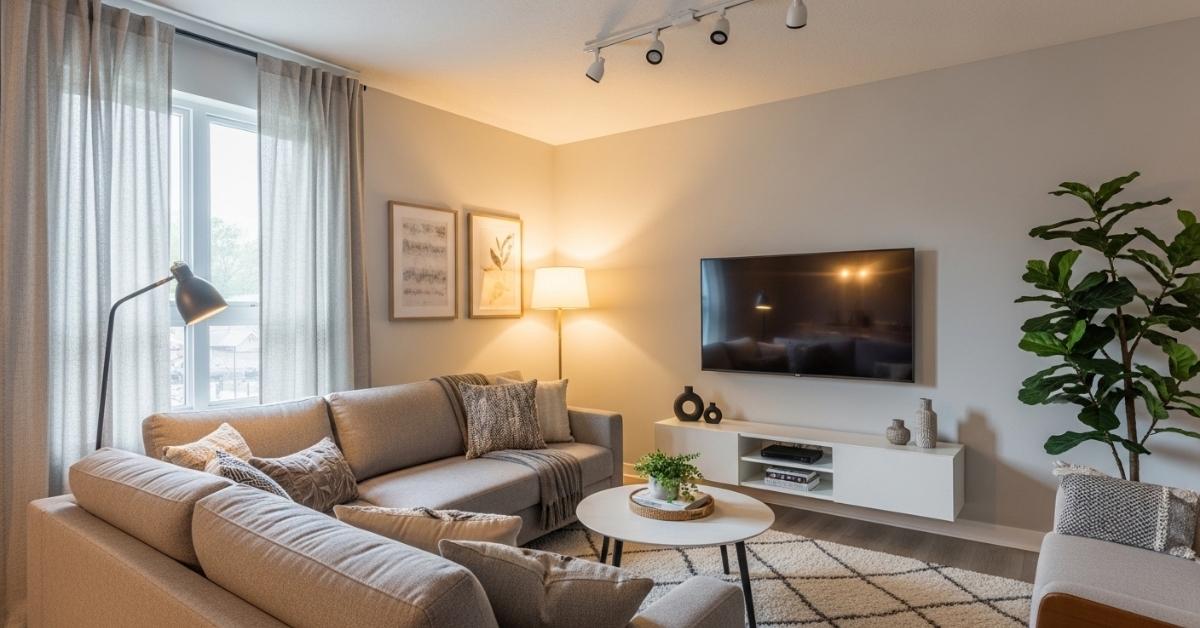
Small apartment living rooms have a reputation for being tricky, not enough wall space, awkward layouts, windows in the wrong spots, furniture that never quite fits. But the real issue usually isn’t the size. Apartment Living Room Aesthetic It’s that most decor advice is written for houses, not apartments.
If you’re working with a compact living room in a rented space, the goal isn’t to make it look like a Pinterest board. It’s to make it feel livable, pulled-together, and genuinely yours without drilling into walls or blowing a furniture budget.
The ideas here are built around that reality. Each one works within actual apartment constraints: limited square footage, neutral landlord walls, awkward corners, and layouts that weren’t designed with aesthetics in mind. Let’s get into it.
The Low-Profile Sofa Setup That Opens Up Any Apartment Living Room
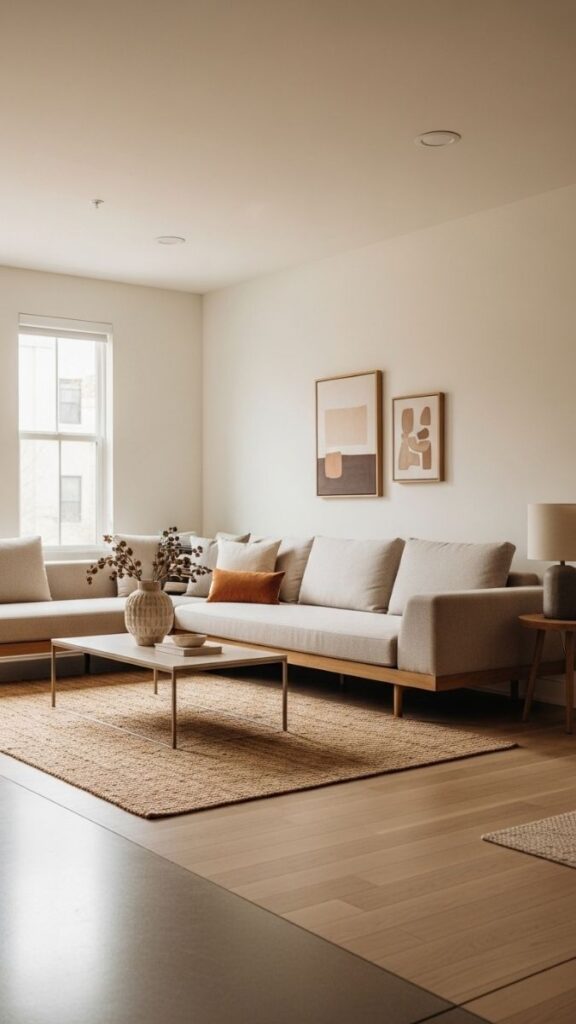
A sofa with low arms and a low back does something a bulky sectional never can: it gives the room breathing room above the seating line. Pair it with a slim wooden coffee table (legs visible, not a solid block) and you’ve essentially lifted the visual ceiling of the whole room.
The key is keeping the area rug sized correctly, front legs on, back legs off, so the sofa feels anchored without the rug eating up the walkable floor. This setup works especially well in living rooms under 300 square feet where standard-height furniture makes the walls feel like they’re closing in.
A Neutral Base With One Textured Layer That Gives the Room Personality
Neutral doesn’t mean boring, it means your base is flexible. Start with a white, cream, or warm greige sofa, then introduce one layer of actual texture: a chunky knit throw, a boucle pillow, a jute rug with visible weave.
That contrast between smooth and rough is what makes a neutral room feel designed rather than bland. Honestly, one textured piece does more visual work than five decorative items in the same material. This approach is ideal for renters who rotate decor seasonally without replacing furniture.
The Corner Floor Lamp Trick That Fixes Harsh Overhead Lighting
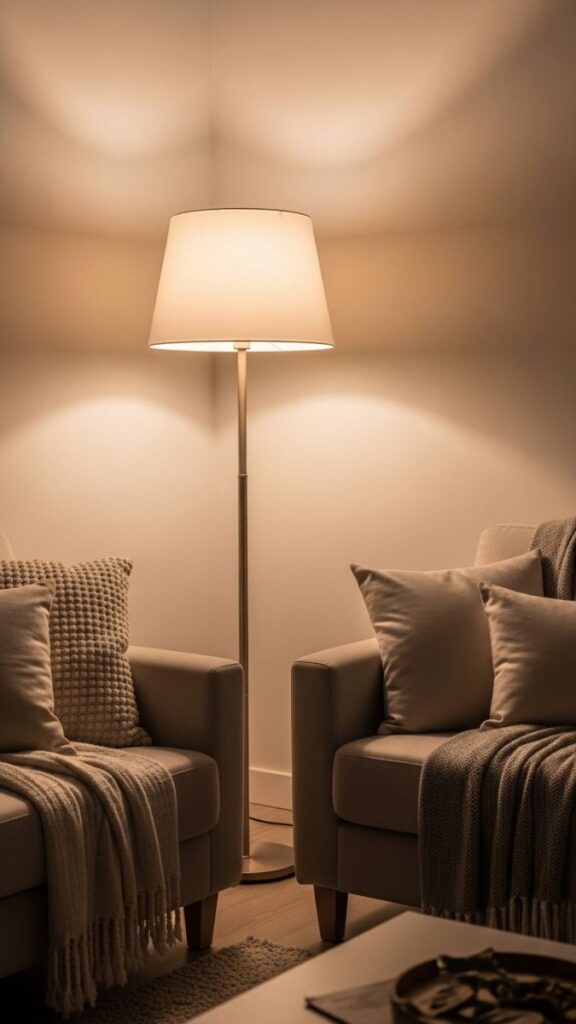
Most apartment living rooms have one ceiling fixture positioned directly above the center of the room and it makes everything look flat. Replacing overhead lighting with a floor lamp angled into the corner bounces light off two walls instead of one, which fills the room more evenly and removes harsh shadows.
An arc lamp that extends over a sofa or chair creates a natural reading zone without requiring a side table. In my experience, this single swap changes the feel of a room more than any new piece of furniture. Works in any rental because no hardwiring is needed.
A Gallery Wall Sized to the Sofa, Not the Wall
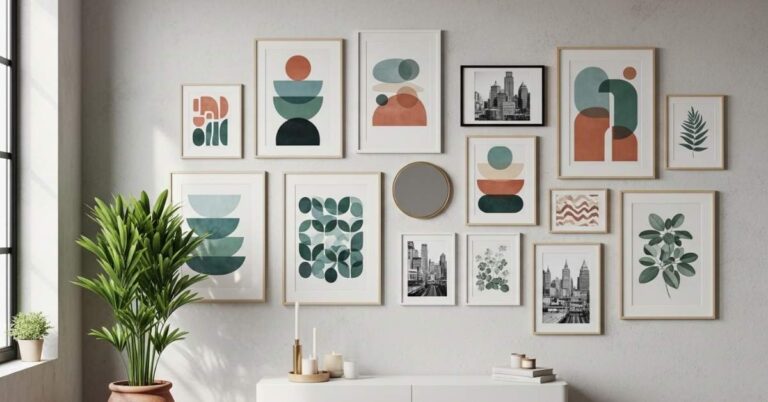
The most common gallery wall mistake in apartment living rooms is scaling to the wall instead of the furniture beneath it. A gallery arrangement should sit about 6–8 inches above the sofa and span roughly the same width no wider.
When the art extends far past the sofa edges, the furniture looks like it drifted away from the wall. Keep frames in two tones max (black + wood, or all one finish) to avoid visual noise. This creates a real focal point without any permanent changes to the wall beyond a few small nails.
Read More About: 41+Amazon Finds Room Decor Ideas That Actually Work in Real Homes
Floating Shelves as Storage and Visual Structure
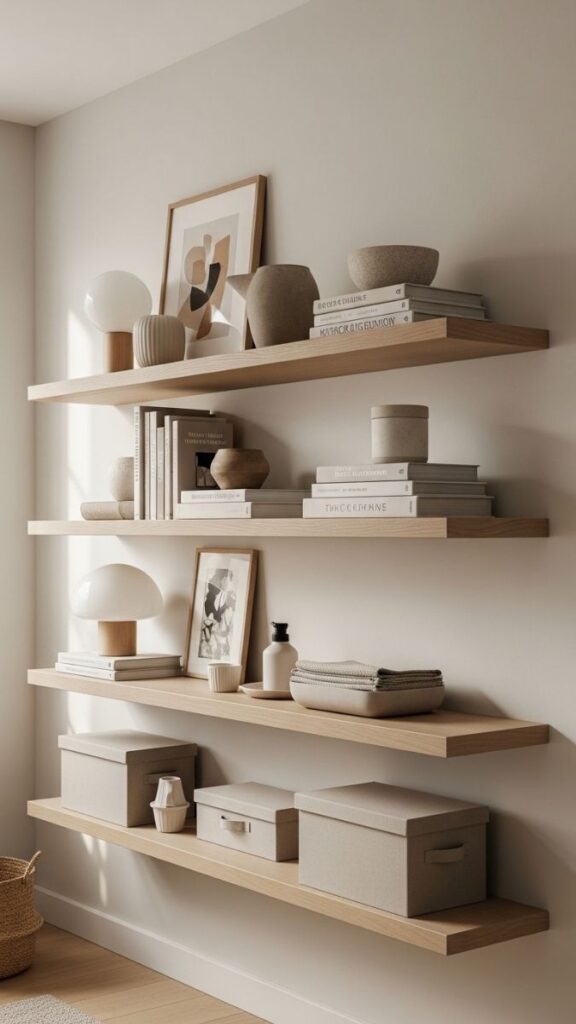
In apartments without built-ins, floating shelves solve two problems at once: they add vertical storage and give the room a structured, layered look. The key is leaving space between items about 30% of each shelf should be empty. Style in groups of odd numbers, mix object heights, and keep one shelf more functional (books, remotes) and one more visual (small plant, a vase, one framed photo).
Staggering two shelves at different heights also draws the eye upward, which works well in rooms with low ceilings.
The Two-Rug Method for Open-Plan Apartment Layouts
Open-plan apartments often have the opposite problem of small rooms with too much floor space with no natural division. Two rugs in the same color family but different textures or patterns can define a seating zone and a secondary area (reading corner, small desk setup) without furniture barriers.
The rugs don’t need to match, but they should share at least one color so the space reads as cohesive. This method avoids the need for room dividers, which in small apartments usually just create visual clutter.
A Sofa Placed Away From the Wall to Create Flow
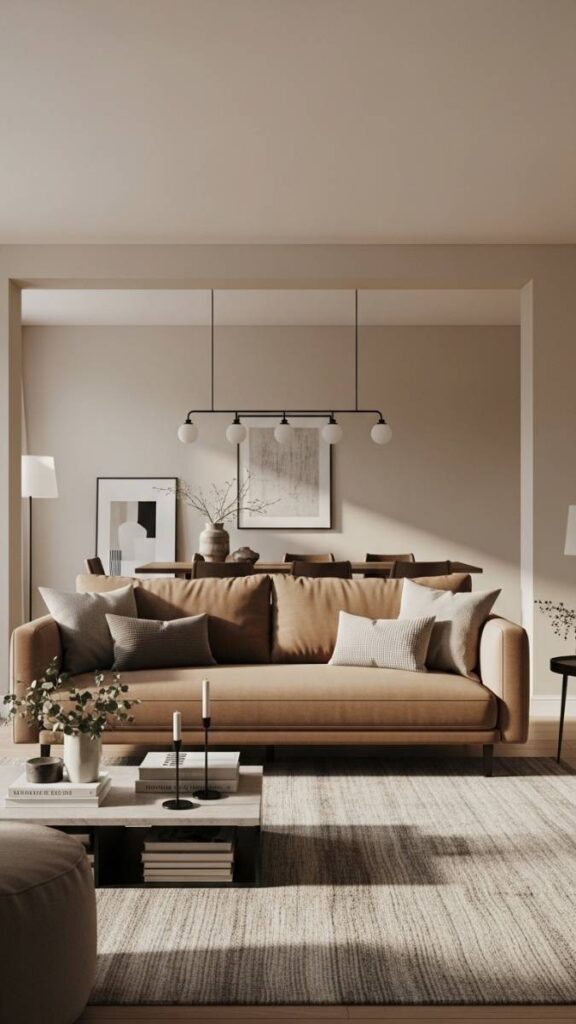
Pushing every piece of furniture against the wall is one of the most common apartment instincts and it usually backfires. Pulling the sofa 10–12 inches from the wall immediately creates a sense of depth.
The gap behind the sofa can be filled with a slim console table (great for lamps, books, or trailing plants) which adds a layer of function. This layout works well when there’s at least 8–9 feet of usable floor space between the sofa and the TV or focal wall.
Warm Toned Curtains Hung at Ceiling Height
Curtains hung at actual window height are one of the most underused opportunities in apartment aesthetics. Mounting a curtain rod as close to the ceiling as possible even if the window itself is mid-wall makes the ceiling feel higher and the window feel larger.
Linen or linen-blend fabrics in oat, warm white, or dusty sage filter light softly and work with almost any furniture palette. This is especially effective in apartments with standard 8-foot ceilings that feel low.
A Single Statement Plant That Does More Than Decor
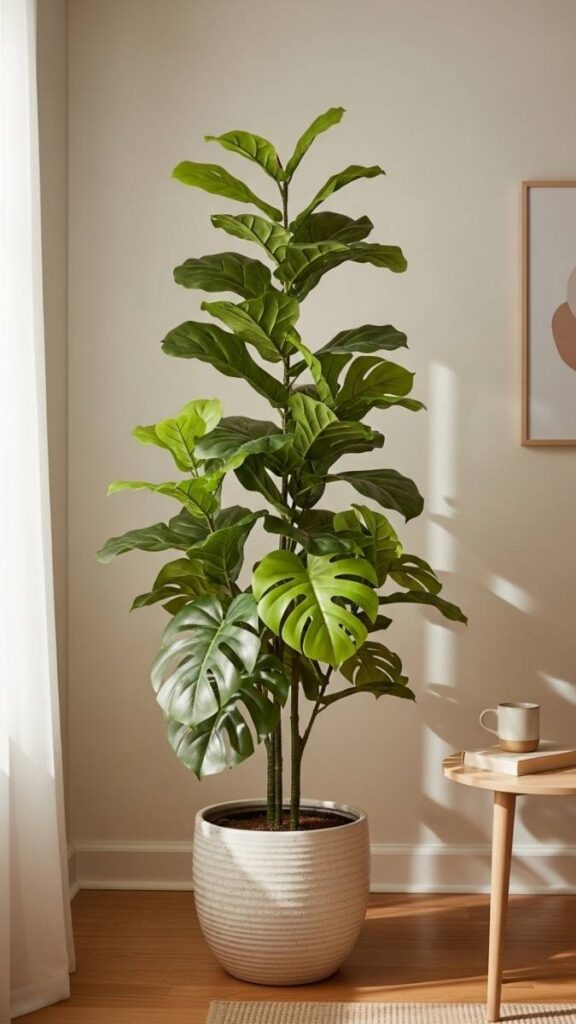
A large plant in a living room corner pulls together a space in a way small decorative plants simply don’t. The height adds a natural vertical element, and the organic shape softens hard furniture lines.
A fiddle leaf fig, monstera, or olive tree in a substantial pot (terracotta, matte ceramic, or woven basket) works as a living design element not just decoration. Go for one large plant over three small ones; the visual weight is more intentional and the floor space stays cleaner.
The Minimalist TV Wall Setup Without a Bulky Media Unit
A wall-mounted TV with a slim floating media console below it removes the visual bulk of a traditional TV unit. The strip of wall visible between the TV and the console keeps the room feeling open, and the console’s low profile doesn’t block sightlines across the room.
Keep cables managed with a cable cover in the same paint color as the wall. This setup is particularly useful in narrow living rooms where a large media unit would dominate the available floor space.
Read More About: 42+Vintage Living Room Ideas That Feel Collected, Not Costumey
Layered Lighting With Three Sources Instead of One
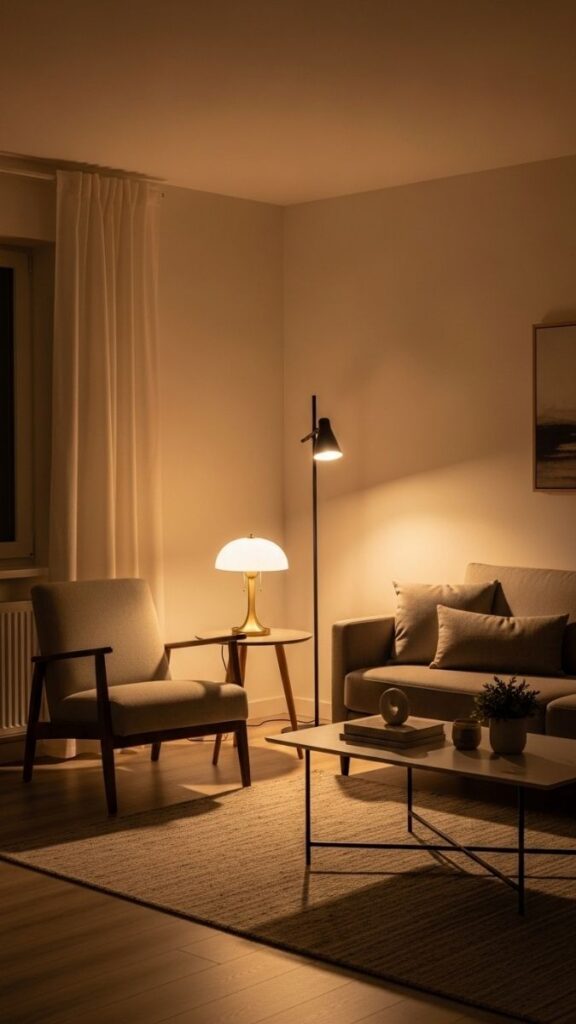
A well-lit apartment living room uses at least three light sources at different heights overhead (or a tall floor lamp), mid-level (a table lamp or wall sconce), and low-level (a shelf lamp, LED strip, or candle grouping). This layered approach removes the flat, clinical feel of a single ceiling light and replaces it with warmth and dimension.
The low source even something as simple as LED tape behind a TV console anchors the room visually at night. This is one I’d actually recommend trying first because the difference is immediate and it costs very little.
A Bookshelf Used as a Room Divider in Studio Apartments
In studio apartments, an open-back bookshelf placed perpendicular to a wall separates the living area from the sleeping zone without closing off the space. Because it’s open on both sides, light passes through and the room doesn’t feel divided, just organized.
Style one side facing the living area with books, objects, and a trailing plant; keep the other side more personal. This approach works especially well with KALLAX-style cube shelving or IKEA BILLY units, which are deep enough to be stable freestanding.
A Murphy Bed Living Room Setup That Stays Stylish
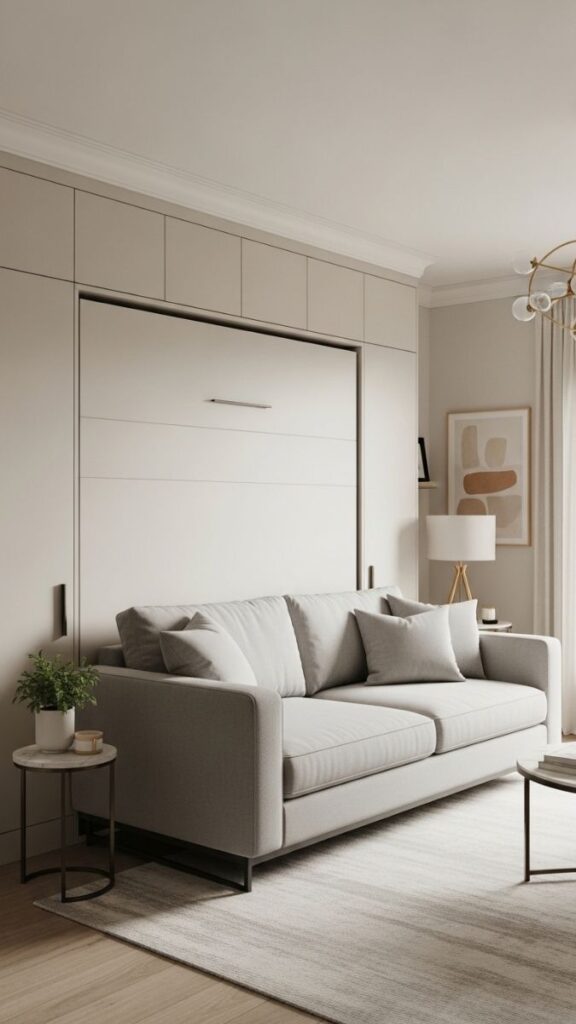
Murphy beds have evolved well past their awkward fold-down origins. Modern wall bed units integrate flush with shelving and cabinetry, so when folded up, the room reads as a full living room with no evidence of the bed.
The space in front works as a normal seating area with a lightweight coffee table and compact sofa. For apartments where the living room doubles as a guest room (or where the studio has no separate bedroom), this is one of the most functional dual-purpose setups available.
Vintage or Thrifted Furniture Pieces That Break Up a Fast Furniture Look
One vintage or thrifted piece in a room full of newer furniture adds the one thing flat-pack aesthetics can’t replicate irregularity. A curved wooden armchair from a thrift store, a mid-century side table, or a retro floor lamp introduces a layer of visual interest that makes a room feel collected rather than assembled.
The contrast between older patina and newer clean lines actually strengthens both pieces. I’ve noticed this style tends to work best when the vintage piece is in a natural material wood, rattan, leather rather than upholstery that may show its age poorly.
A Monochromatic Color Scheme With Tonal Variation
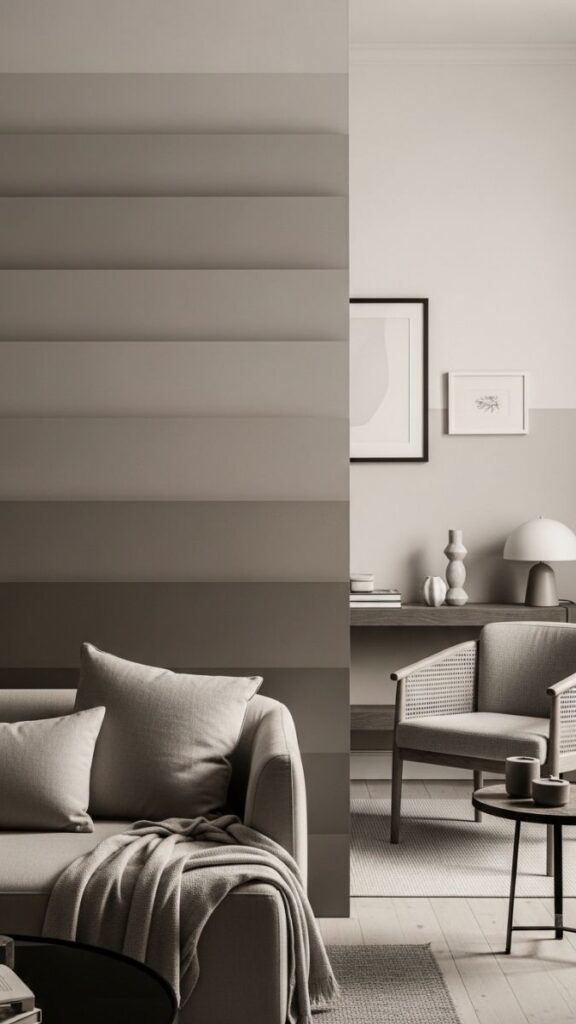
A single color family across walls, furniture, and decor doesn’t mean the room has to look flat. The trick is varying the tone and finish with warm white walls, cream sofa, oat rug, natural wood accents.
Each piece sits in the same color family but at a different shade or saturation. The result is a room that feels calm and cohesive without being stark. This works particularly well in apartments with little natural light because the tonal variation keeps the space visually active without darkening it.
An Accent Wall Using Paint, Wallpaper, or Limewash Texture
Not all rentals allow full repaints, but most landlords are fine with a single accent wall especially if you use removable wallpaper or agree to repaint before leaving. A warm clay tone, a deep forest green, or a soft terracotta behind the sofa immediately creates a focal point and gives the room a sense of intention.
Limewash paint in particular has a texture and depth that photographs beautifully and looks elevated in person. Even in a neutral-heavy room, one wall with real color or texture changes the entire spatial experience.
Small Coffee Table Pairs Instead of One Large Table
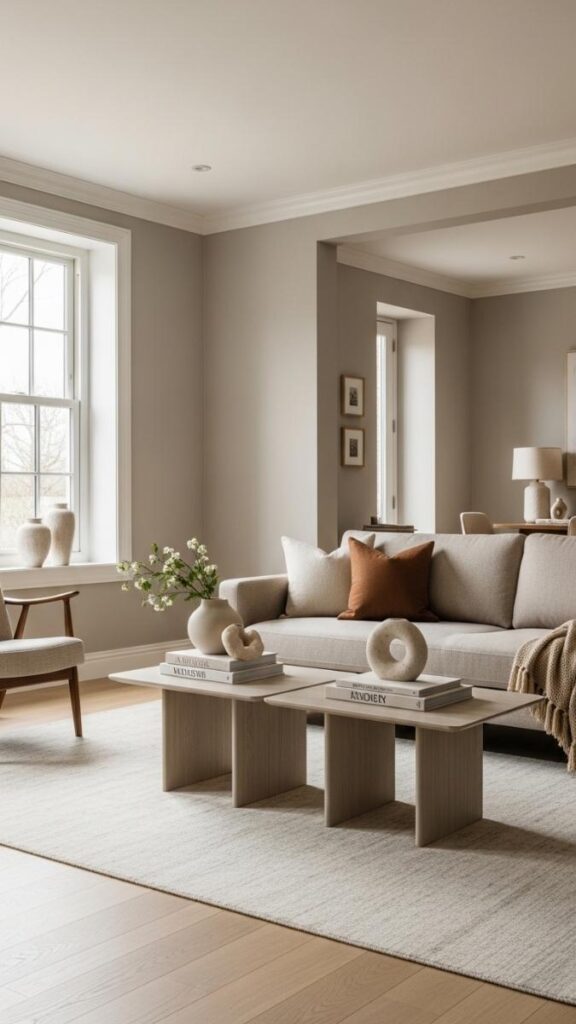
A single large rectangular coffee table in a small apartment living room eats up movement space and makes the room feel cramped. Two smaller round tables of the same height, or slightly staggered offer more flexibility, are easier to move, and create a more open walking path through the room.
Style them asymmetrically a small tray with a candle on one, a stack of books and a plant on the other. Round edges are also safer in tight spaces where furniture corners tend to become obstacles.
A Reading Corner Carved From an Unused Wall Nook
Most apartment living rooms have at least one underused corner, the awkward space beside a window, or the dead zone between a wall and the TV unit. A compact armchair, a slim side table, and a floor lamp convert that unused area into a functional reading corner.
The chair doesn’t need to be large; a barrel chair or a small curved accent chair fits without stealing usable floor space. This setup also gives the room a second seating point, which makes the whole layout feel more considered.
Read More About: 19+Living Room Decor Ideas That Actually Work in Real Homes Not Just on Pinterest
Open Shelving Styled With a Rule of Three
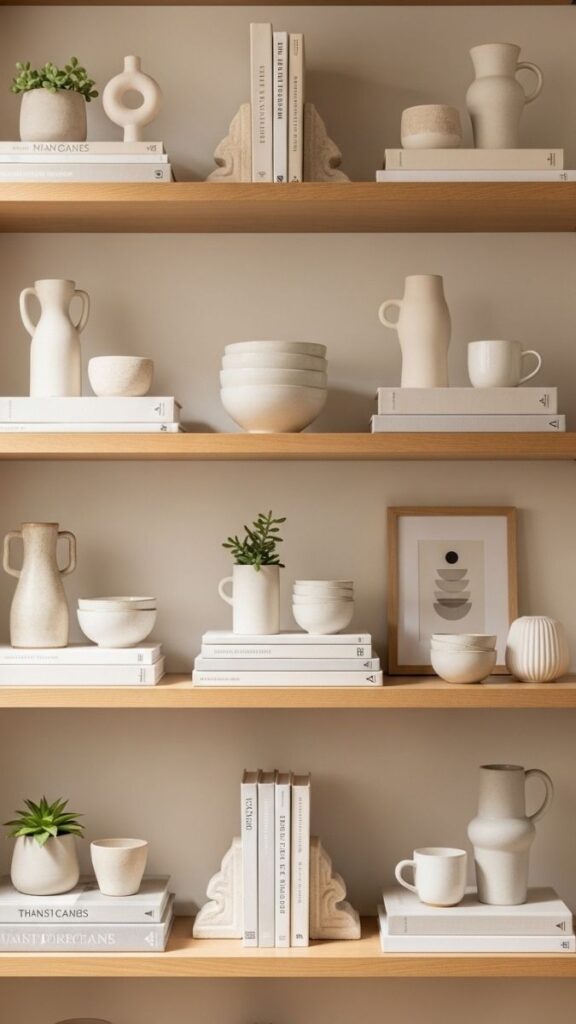
Open shelving in a living room only works when it’s deliberately styled and the rule of three is the most reliable shortcut. Group objects in sets of three at varying heights: a tall plant, a medium-height vase, and a small decorative object. Repeat this loosely across shelves, varying the objects themselves but keeping the grouping logic.
Books add mass and color; don’t stand all of them upright, lay a few flat and stack them for visual variation. Empty space is part of the composition, not a gap to fill.
A Curtain Partition to Separate Zones in a Studio
A ceiling-mounted curtain track is one of the most renter-friendly ways to divide a studio without building anything. A linen or sheer curtain in a neutral color provides a soft visual separation enough to mentally define the sleeping zone from the living area without blocking light or making the space feel smaller.
When pulled back, it disappears completely. This setup also gives the bedroom zone a sense of enclosure without walls, which most people find genuinely affects how restful the space feels.
Integrated Desk Setup That Doesn’t Look Like a Home Office
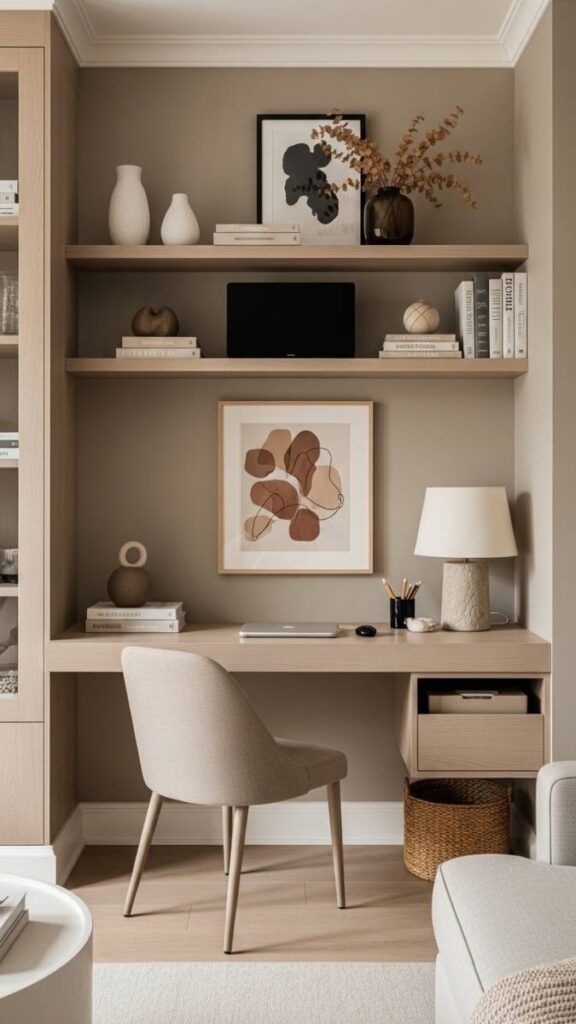
Working from home in a studio or one-bedroom means the desk often ends up in the living room and it usually disrupts the aesthetic. A wall-mounted fold-down desk in a matching wall color essentially disappears when not in use. When open, keep the surface minimal laptop, one lamp, and a small plant.
Avoid a full office chair; instead use a dining chair or a small upholstered stool that blends with the room’s existing furniture. The goal is a workspace that reads as part of the living room rather than an intrusion into it.
What Actually Makes These Apartment Living Room Aesthetics Work
The common thread across all these ideas isn’t a specific style, it’s proportion. Apartment living rooms fail aesthetically most often because of scale mismatches furniture too large for the floor plan, art too small for the wall, lighting too harsh for the ceiling height.
Getting proportion right means measuring before buying, choosing furniture with visible legs to keep the visual floor clear, and treating every corner as purposeful rather than a leftover. It also means resisting the urge to fill space. In smaller rooms, restraint is a design tool; the empty floor in front of a sofa is what makes the sofa feel intentional, not lonely.
Lighting is the second most important factor, and it’s the one most apartment renters ignore. Overhead-only lighting flattens texture, kills warmth, and makes even well-decorated rooms look like storage spaces at night. Three light sources, at three heights, change the entire character of a room after dark.
Apartment Living Room Aesthetic Setup Guide
| Idea | Space Type | Primary Benefit | Problem It Solves | Renter-Friendly |
| Low-profile sofa | Small/medium living room | Visual openness | Ceiling feels low | ✅ Yes |
| Ceiling-height curtains | Any apartment | Height illusion | Short windows | ✅ Yes |
| Gallery wall above sofa | Rentals with bare walls | Focal point | Empty wall syndrome | ✅ Yes |
| Floating shelves | Small space, no built-ins | Vertical storage | Clutter on surfaces | ✅ Yes |
| Sofa pulled from wall | Medium/larger rooms | Depth and flow | Flat, furniture-against-walls look | ✅ Yes |
| Two-rug method | Open plan / studio | Zone definition | No natural room division | ✅ Yes |
| Curtain room divider | Studio apartments | Zone separation | No bedroom privacy | ✅ Yes |
| Layered lighting | Any living room | Warmth and depth | Harsh overhead lighting | ✅ Yes |
| Murphy bed setup | Studios / guest rooms | Dual function | Space wasted on single use | ⚠️ Requires wall mount |
| Accent wall | Any with landlord approval | Visual anchor | Room feels undefined | ⚠️ Check lease |
Common Apartment Living Room Mistakes That Make the Space Feel Smaller
Buying a sofa based on how it looks in the showroom, not how it fits your floor plan.
Most apartment sofas should be under 85 inches wide. Anything larger and you’re sacrificing the walking path between the sofa and the TV wall, which is usually the primary movement corridor in the room.
Using one large overhead light as the only source.
This is the single most common reason apartment living rooms feel uninviting after dark. The fix is inexpensive: a floor lamp and a plug-in table lamp but it genuinely changes the atmosphere of the space.
Choosing a rug that’s too small.
A rug that only fits under the coffee table (not under any sofa legs) makes the seating area float visually. The minimum size for most living rooms is 8×10 feet. If budget is a constraint, a 5×8 placed correctly with front legs on still works better than a smaller rug centered in the room.
Overcrowding surfaces.
Every surface coffee table, side table, shelf tends to accumulate objects over time. A practical rule is if you can’t clean around it in under 30 seconds, there’s too much on that surface. Visual clutter in a small room compounds faster than in a larger one.
Ignoring the ceiling.
In apartment living rooms, the ceiling is underused real estate. A pendant light on a cord from the ceiling, a macramé or woven hanging, or even painted ceiling trim draws the eye up and makes the room feel larger without touching a single wall.
FAQ’s
What is the best aesthetic for a small apartment living room?
The most functional aesthetic for small apartments is a warm minimal or Scandinavian-neutral approach, low-profile furniture, a limited color palette, and intentional layering of textures rather than decorative objects. It keeps the room visually calm and maximizes the sense of floor space without requiring significant changes to the space itself.
How do I make my apartment living room look more aesthetic without buying new furniture?
Start with rearranging what you have, pull the sofa away from the wall, add a floor lamp in the corner, and clear at least 30% of your visible surfaces. Swapping out cushion covers, adding one large plant, and hanging curtains higher than the window frame are all low-cost changes that shift the look significantly.
What size rug works best for an apartment living room?
An 8×10 rug is the practical minimum for most apartment living rooms with a sofa and coffee table. The front legs of the sofa should sit on the rug; this anchors the seating area without requiring a rug large enough to cover the entire floor. In very small rooms, a 6×9 can work if placed correctly.
Is a sectional sofa a good idea in a small apartment?
Generally, no unless the sectional is specifically designed for small spaces (under 90 inches on the long side, with low arms). A standard sectional in an apartment living room under 350 square feet typically blocks traffic flow and eliminates the ability to arrange other furniture meaningfully. A regular two or three-seater with a separate accent chair gives more layout flexibility.
How do I make my apartment living room look less like a rental?
The most effective changes are ceiling-height curtains (which draw the eye up and reduce the visual impact of standard landlord walls), a large area rug (which defines the space and hides rental flooring), and layered lighting to replace or supplement the standard overhead fixture. These three changes address the most visually obvious signs of a generic rental space.
Can I create different zones in a studio apartment living room?
Yes using rugs, curtain dividers, or open shelving placed perpendicular to the wall. Each method defines zones without physical walls. A curtain track on the ceiling is the most flexible option; it can be opened completely when you want the space to feel open, and closed when you want separation. The key is keeping the same color palette across both zones so the room reads as unified.
What lighting setup works best for apartment living rooms in 2026?
Layered lighting is the current standard one tall floor lamp (often arc-style), one table lamp on a side table, and a low-level accent source such as an LED strip behind a media console or a shelf lamp. Warm white bulbs (2700–3000K) across all three sources create a cohesive, inviting atmosphere that overhead apartment lighting rarely achieves on its own.
Conclusion
Apartment living rooms don’t need a complete overhaul to feel genuinely good to be in. Most of what makes a space feel unfinished or uncomfortable comes down to a few fixable things lighting that doesn’t work after dark, furniture scaled wrong for the room, and surfaces with too much on them. Addressing those three things alone changes the entire character of the space.
Start with one or two ideas that match your current layout and budget whether that’s adding a floor lamp, pulling the sofa off the wall, or hanging curtains higher than the window. Small, specific changes compound quickly in smaller spaces, and you’ll get a much clearer sense of what the room actually needs once you’ve made a couple of intentional adjustments.