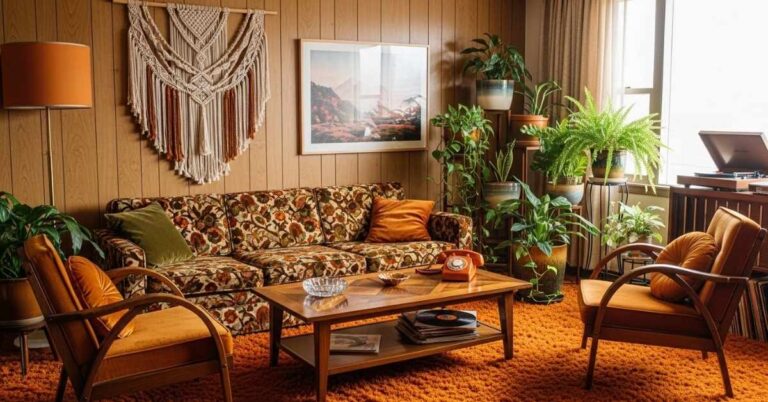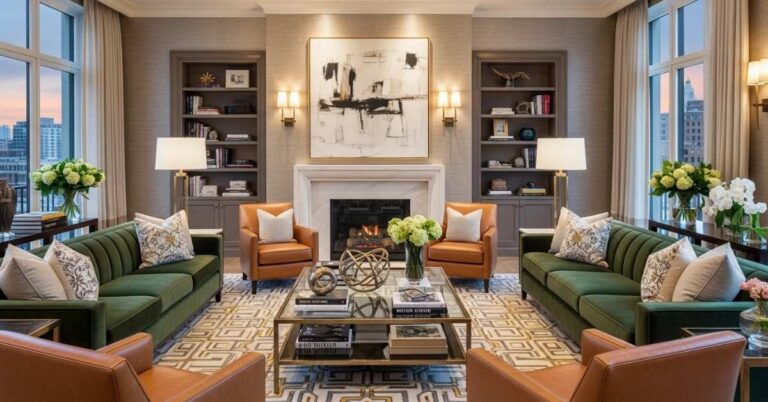
19+Living Room Decor Ideas That Actually Work in Real Homes Not Just on Pinterest
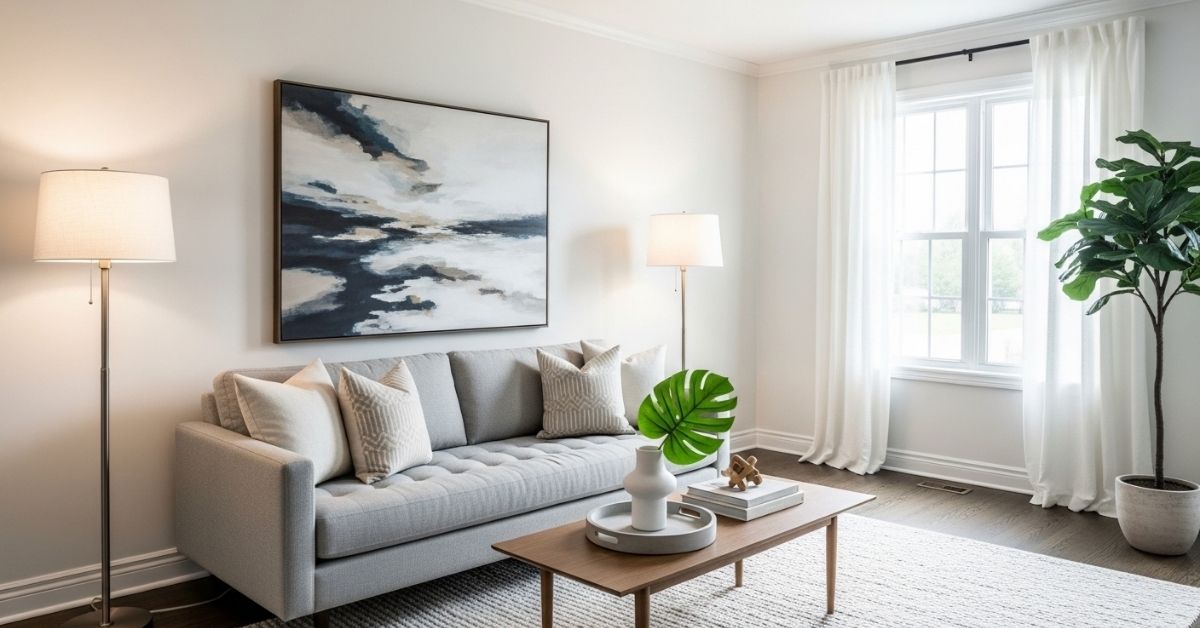
Soft lighting, a low-profile sofa, a textured rug anchoring the seating area, and just enough negative space to make the whole room breathe. That’s the kind of living room that photographs beautifully and feels good to come home to. The problem? Living Room Decor Ideas Most decor advice stops at the aesthetic and skips the part about whether it actually works in a 12×14 room with one awkward window and a radiator in the corner.
If your living room feels off too cluttered, too bare, too dark, or just weirdly laid out the issue usually isn’t your furniture. It’s how the space is being used. These living room decor ideas are built around that reality: real constraints, real layouts, and real homes that aren’t staged for a photoshoot.
Whether you’re working with a compact apartment, a rental you can’t paint, or a mid-sized room that just refuses to feel cohesive, there’s something here worth trying.
Anchor the Room With a Rug That’s Actually Big Enough
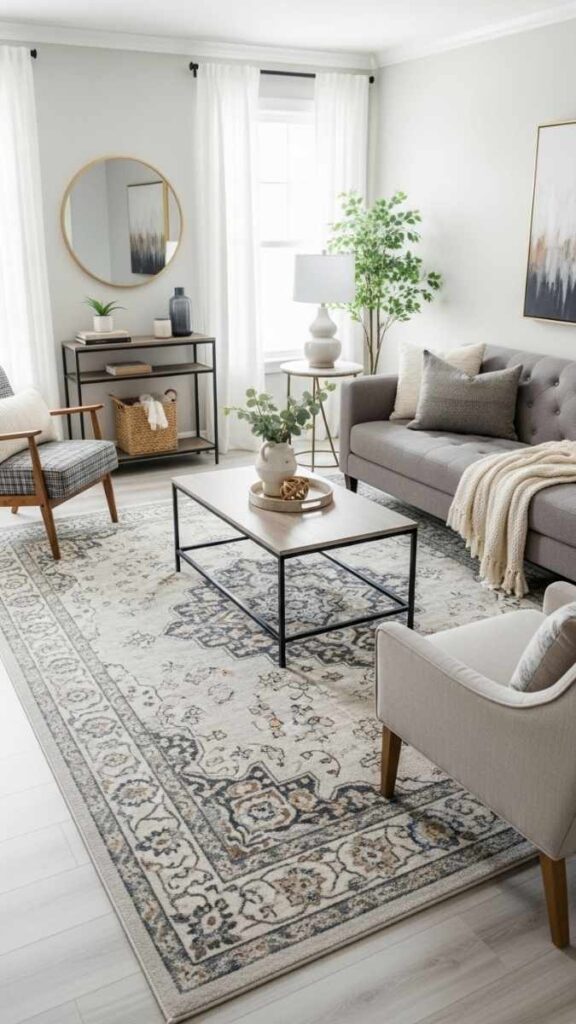
The single most common layout mistake in living rooms is a rug that’s too small; it ends up floating in the middle of the room like a decorative afterthought instead of defining the space. A rug should fit under the front two legs of every major seat, at minimum. In smaller rooms, going wall-to-wall or close to it creates visual continuity that makes the space read as larger and more intentional. The floor becomes part of the design, not just the background. In my experience, this one change does more for a room’s overall feel than almost any piece of furniture.
Use a Low Profile Sofa to Open Up Vertical Space
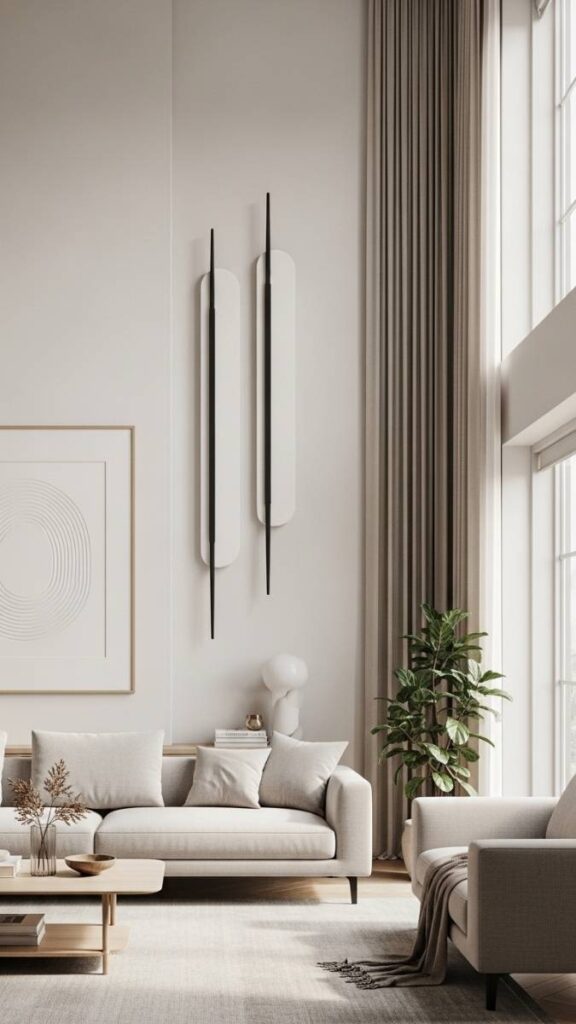
In rooms with standard 8-foot ceilings, a sofa with tall arms and a high back can make the space feel compressed. A low-profile sofa typically 28–32 inches in total height keeps the sight lines open and draws the eye horizontally rather than upward, which makes the room feel wider. This works especially well in studio apartments and open-plan spaces where the living area is visible from the kitchen or entry. It’s not about the look being trendy (though it is, in 2026); it’s about what happens to the visual weight of the room when you remove bulk from eye level.
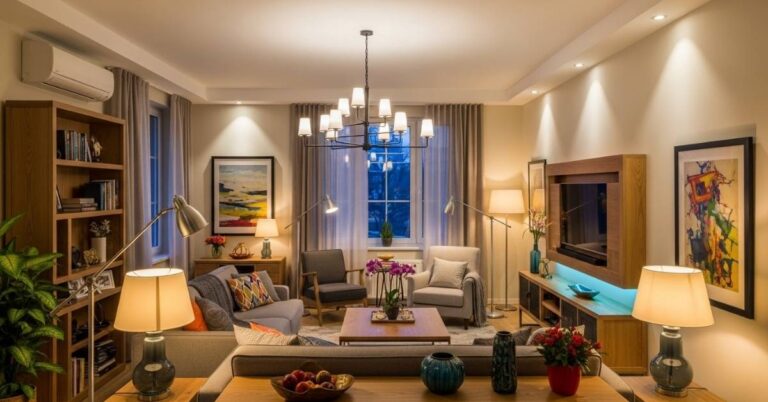
Layer Lighting Across Three Levels Instead of Relying on One Overhead
A single overhead light makes every living room feel like a waiting room. Layered lighting overhead for general use, a floor lamp for reading, and a table lamp for warmth gives the room flexibility depending on the time of day and what you’re doing in it. The key is choosing bulbs in the 2700K–3000K range for all three sources so the warmth feels consistent. This setup costs less than most people expect, and the difference between a one-source lit room and a three-source lit room is immediately noticeable. Go for this if your room currently feels flat or uninviting in the evening.
Float the Furniture Away From the Walls
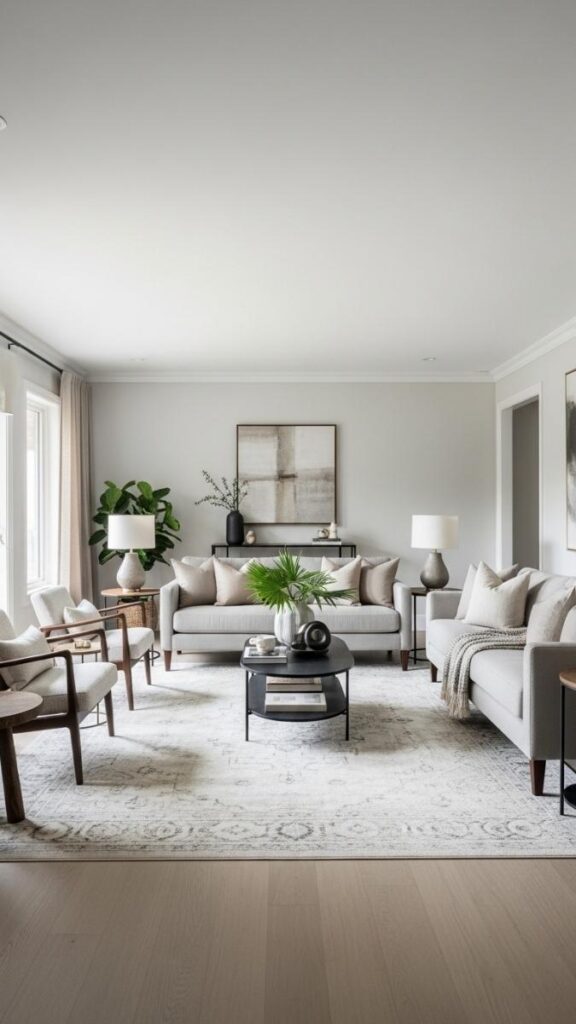
Pushing every piece of furniture against the wall is a reflex in small rooms; it feels logical, like it “saves” space. But it usually does the opposite visually, leaving an awkward dead zone in the middle and making the room feel like a hallway with cushions.
Pulling the sofa 6–12 inches off the wall and creating a defined conversation zone in the center actually makes the room look bigger because the negative space becomes part of the design. This layout is especially useful in square or near-square living rooms where the proportions are hard to work with.
Read More About: 18+Kitchen Lighting Ideas That Make Every Inch of Your Space Work Harder
Add a Console Table Behind the Sofa to Define Zones
In open-plan apartments or combined living-dining spaces, a sofa floating in the middle of the room can look unanchored. A narrow console table (12–14 inches deep) placed directly behind it gives the seating area a visual boundary without adding mass. You can style it simply with two lamps and a plant, or a stack of books and it doubles as a natural divider between functional zones. This is one of the most practical living room decor ideas for studio layouts where walls can’t do the work of separating spaces.
Choose a Coffee Table With Storage and Open Legs
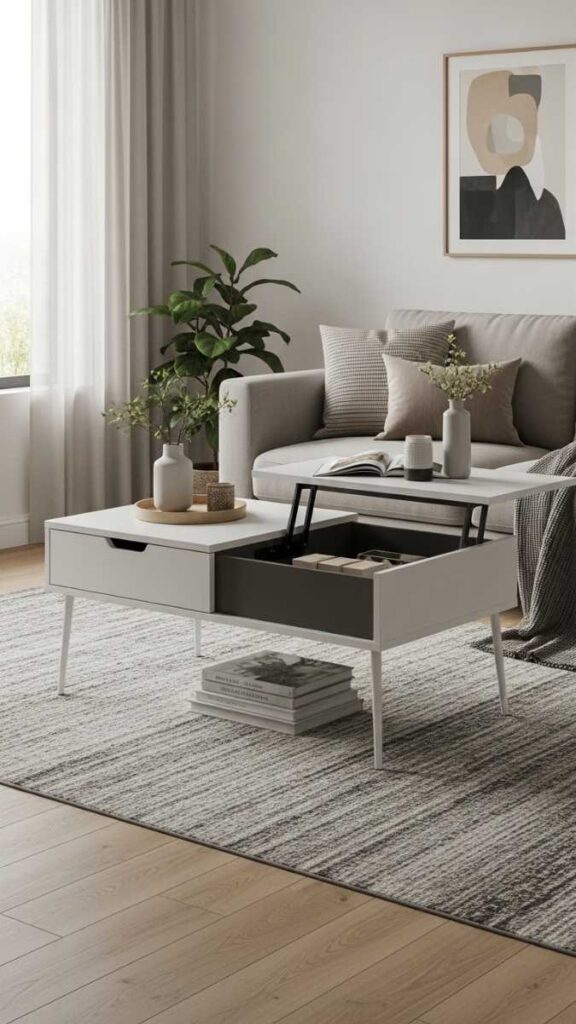
A solid-base coffee table in a smaller living room creates a visual block in the center of the space your eye hits it and stops. A table with visible legs keeps the floor line continuous, which makes the room feel more open. An open lower shelf adds functional storage for books, remotes, and throws without adding height. Round options work particularly well in rooms where the sofa and chairs are close together, since there are no sharp corners interrupting movement paths.
Use Tall Bookshelves to Draw the Eye Upward
In a room with average or low ceilings, tall vertical storage pulls the eye upward and creates the impression of more height. This works with freestanding bookshelves styled to the ceiling or floating shelves arranged in a column format. The key is not overcrowding them; a shelf that’s 60–70% full with a mix of books, objects, and small plants reads as intentional rather than cluttered. For renters, freestanding floor-to-ceiling shelving units (the tension-mount style) achieve the same effect without drilling.
Treat One Wall as a Focal Point, Not Every Wall
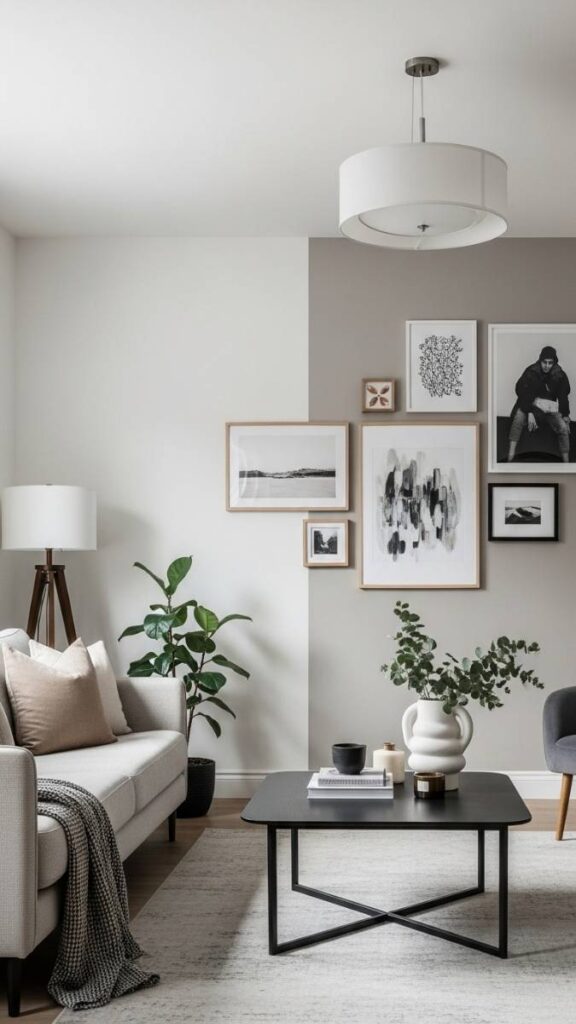
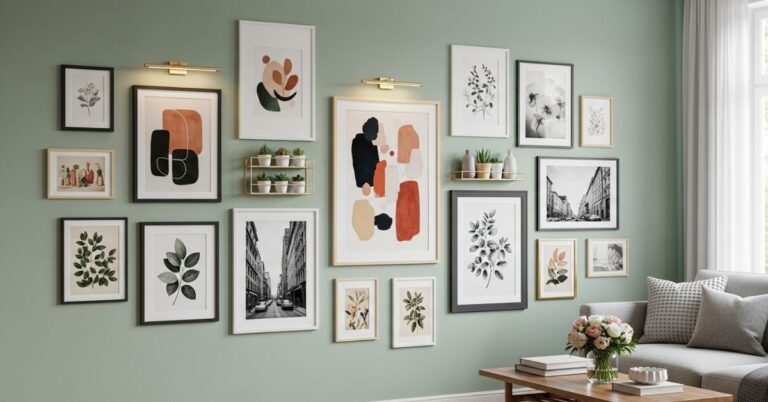
One of the more common living room layout problems is visual noise, too many things competing for attention across multiple walls. Designating one wall as the focal point (usually the wall your sofa faces or the one the sofa backs up to) and keeping the others relatively clear gives the room a natural hierarchy. The focal wall could be a gallery arrangement, a single oversized print, or even a bold paint color. The other walls stay calm. The result is a room that feels edited rather than busy.
Read More About: 16+Apartment Bathroom Decor Ideas That Make Small Spaces Feel Intentional
Add a Curtain Rod Mounted Close to the Ceiling
Curtains hung at window height make a room feel shorter. Curtains mounted 4–6 inches below the ceiling line with panels that drop all the way to the floor visually extend the wall height and make windows look significantly larger than they are. This works in rentals with tension rods and command hooks rated for the curtain weight. Linen, cotton, or sheer fabrics in white, off-white, or warm beige work best because they soften light rather than blocking it.
Use a Mirror to Borrow Light From Across the Room
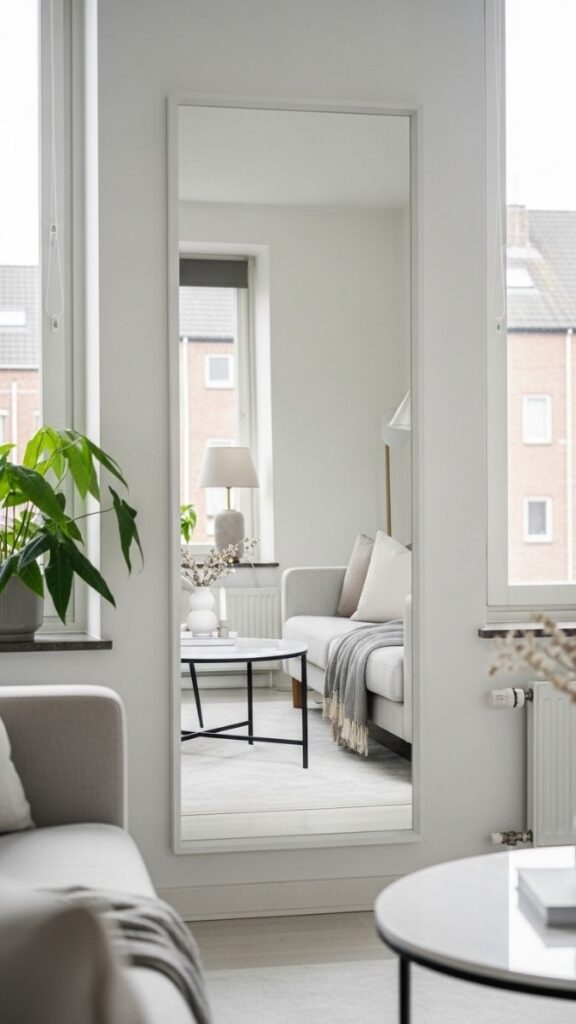
A mirror placed directly across from a window reflects daylight back into the room. It’s a practical light-borrowing technique that works in north-facing or single-window rooms where natural light is limited. The size matters: a mirror that’s too small reads as decorative but doesn’t actually affect the room’s brightness. Aim for at least 24 inches in diameter for a round mirror, or a full rectangular piece above a console or sofa. Honestly, this is one of the most underused living room decor ideas, especially in apartment layouts where adding a window isn’t an option.
Create a Reading Corner With a Chair, Lamp, and Side Table
A designated reading corner turns an underused area of the room, usually a corner or an awkward wall gap, into a functional zone. An armchair angled slightly toward the window, a floor lamp positioned over the shoulder (left or right, depending on where you typically sit), and a small side table at armrest height is all it takes. The arrangement doesn’t need to be large; a 4×4-foot footprint is enough. This setup is particularly useful in open-plan rooms where the living space needs visual segmentation.
Keep the Sofa Neutral and Build Color Through Accessories
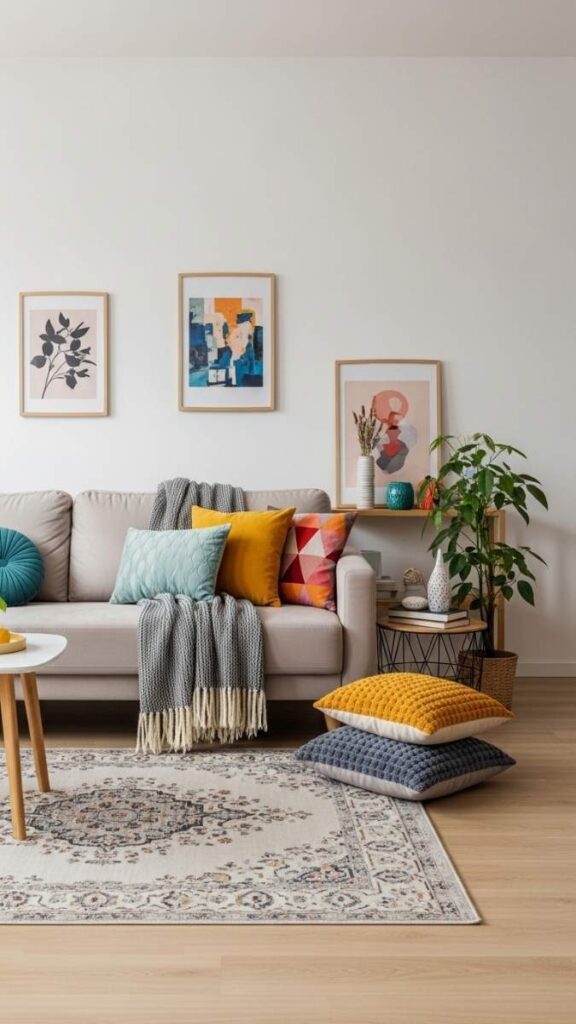
A neutral sofa beige, light grey, warm white is genuinely one of the more practical decisions in a living room because it stays relevant across seasonal changes, trend cycles, and styling shifts. Color and pattern can come in through pillows, throws, and a rug, all of which are easy and relatively affordable to swap. The key is mixing textures (velvet, linen, knit, cotton) at the same tonal range so the color feels layered rather than mismatched. I’ve noticed this approach tends to hold up far longer visually than building the room around a statement sofa.
Use Plants at Multiple Heights to Add Structure
Plants placed at just one level usually all on tabletops or all on the floor can feel monotonous or decoratively flat. Distributing them vertically: one floor-level plant (a fiddle leaf fig, a snake plant, or a large trailing pothos) in a corner, one mid-level on a shelf or console, and one small variety on a coffee table or side table creates a sense of movement and dimension. The corner floor plant is particularly effective at softening the sharp geometry of a room’s edges, which makes the space feel less boxy.
Replace a TV Stand With a Media Unit at the Right Height
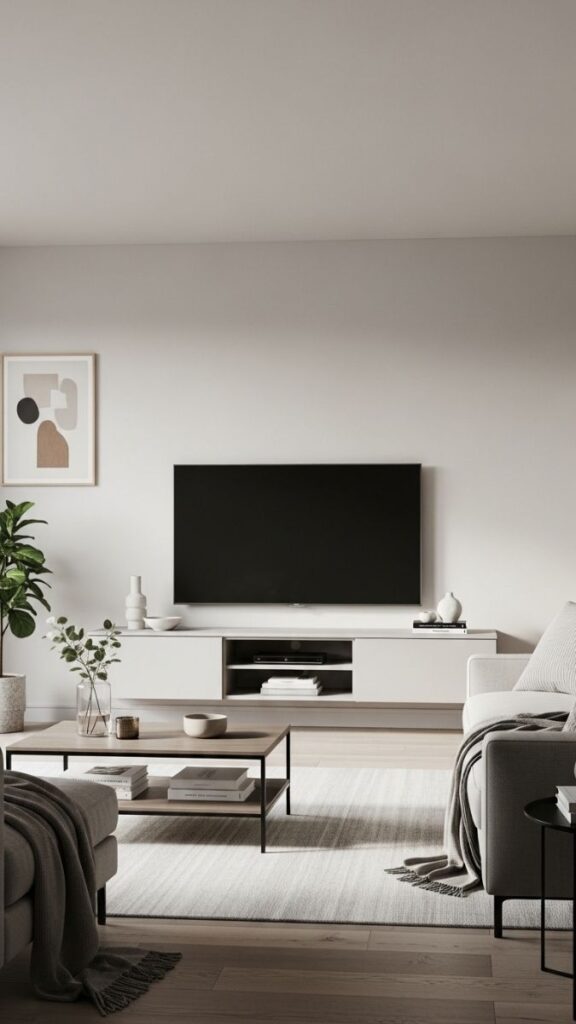
The TV should sit roughly at eye level when you’re seated, which in most living rooms means the center of the screen should be around 42–48 inches from the floor. A media console that’s too tall pushes the screen too high and causes neck strain; one that’s too low leaves awkward empty wall space. A low-profile media unit (18–24 inches tall) with the TV mounted directly above it on the wall hits this height and leaves room for styling on the console surface without cluttering the wall.
Layer a Textured Throw Over the Sofa Arm, Not Flat Across the Back
It’s a small distinction, but it changes the look significantly. A throw draped over one arm in a casual fold rather than smoothed across the sofa back reads as more natural and less staged.
Chunky knit, waffle weave, and bouclé throws add texture at close range without competing with the rest of the room’s styling. In a neutral-palette room, this is often the warmest, most visually interesting element and it costs almost nothing to reposition.
Read More About: 15+Boho Home Decor Ideas for Your Bathroom That Actually Work in Real Spaces
Add a Slim Entryway Moment Even in a Living Room That Doubles as a Foyer
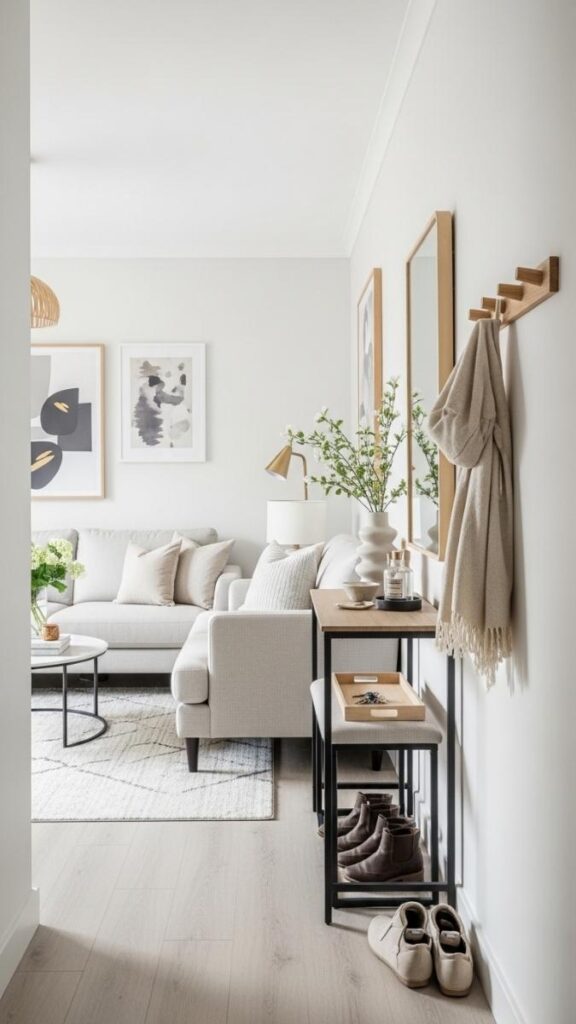
In apartments where you walk directly into the living room, there’s often no visual break between the entry and the sitting area. A slim console or bench near the door even if it’s just 10 inches deep with a small tray on top for keys and a hook above for bags creates a functional entry zone that contains clutter before it spreads. It also gives the eye a place to land when the door opens, rather than immediately landing on the sofa.
Choose Furniture With Exposed Legs for a Lighter Visual Weight
Furniture that sits directly on the floor creates a visual “slab” effect especially in smaller living rooms where the floor is a key part of the visual field. Pieces with exposed legs (even just 4–6 inches) allow the floor to continue visually beneath them, which keeps the room from feeling blocked and low.
This applies to sofas, armchairs, side tables, and even media units. It’s one of the more effective space-expansion techniques that doesn’t require changing the size or arrangement of anything.
Hang Art at Eye Level, Not at Ceiling Level
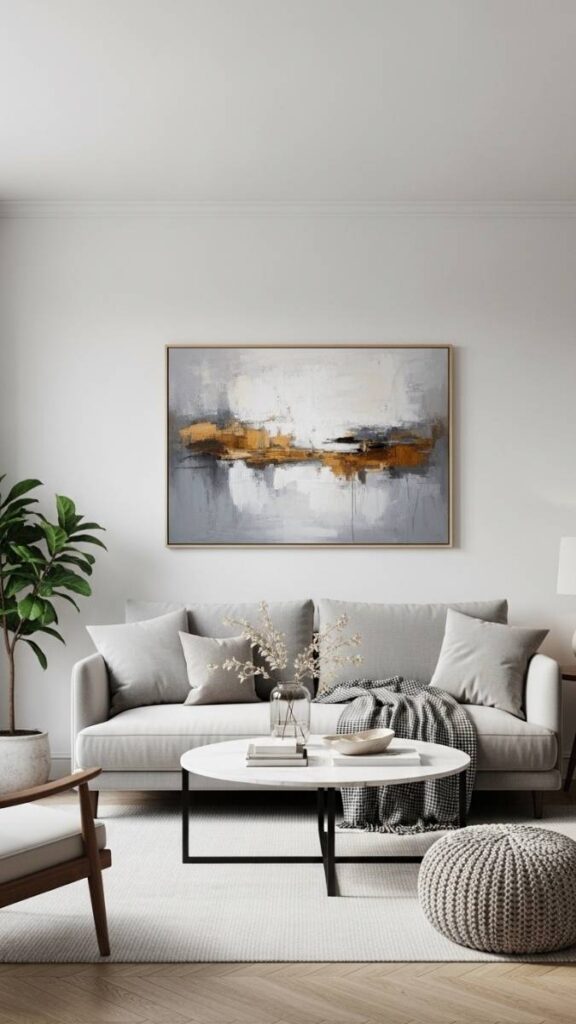
The standard for hanging art is center-of-piece at 57–60 inches from the floor; this is roughly eye level for most adults and what museums use. Art hung too high (which is the most common mistake) makes ceilings feel lower and creates a disconnect between the furniture and the wall above it. For a gallery arrangement above a sofa, the bottom of the lowest frame should sit about 8–10 inches above the sofa back, keeping the relationship between the furniture and the wall tight and intentional.
Use a Daybed or Chaise to Add Seating Without Bulk
In a room that needs more seating but can’t accommodate a second sofa, a daybed or chaise lounge against a wall adds significant seating and lounging capacity with a relatively compact footprint. Styled with a few cushions, it reads as a design choice rather than overflow seating. This is especially useful in rooms that also function as a guest space; the daybed handles both roles without requiring a sleeper sofa.
Create a Gallery Wall With Odd Numbered Groupings
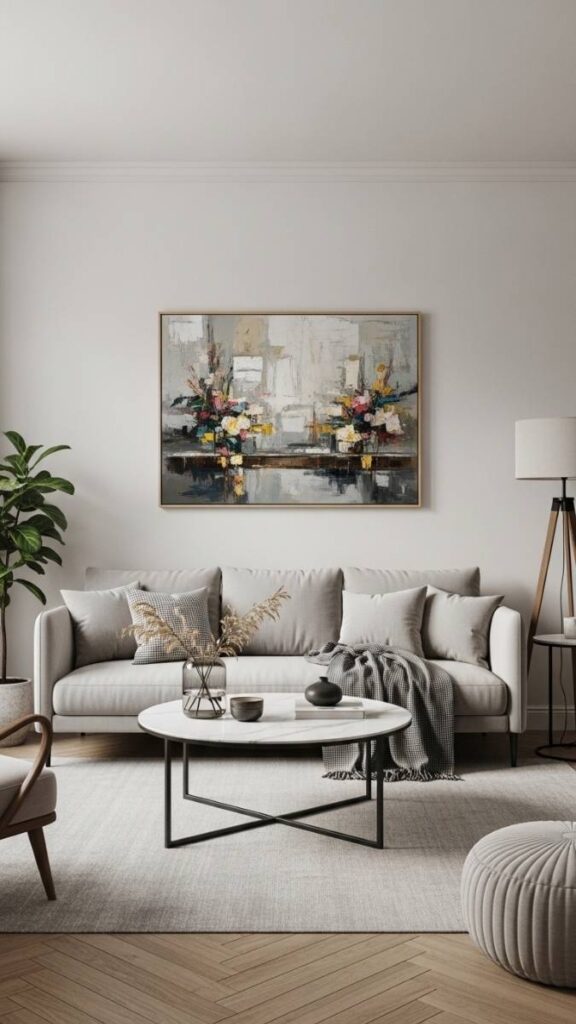
Odd-numbered groupings three, five, or seven pieces have more visual tension and interest than even numbers, which tend to feel symmetrical and static. A gallery arrangement doesn’t need to be perfectly aligned; a mix of sizes with a consistent frame finish (all black, all natural wood, all white) creates coherence without rigidity. The arrangement should have a clear visual center, with larger pieces anchoring the middle and smaller ones radiating outward.
Introduce Warm Metals Through Lighting and Hardware
Brass, antique gold, and warm bronze tones are continuing to dominate living room hardware and lighting choices in 2026 not because they’re trendy for the sake of it, but because warm metals interact well with the neutral palettes most homes are working with. A brushed brass floor lamp, matching cabinet pulls, and a simple metal frame on a mirror can tie together a room that otherwise feels a bit disconnected in its material palette. The key is keeping the metal finish consistent, mixing brass with chrome, for example, tends to make the room look accidental rather than curated.
Use Bookshelves as Room Dividers in Open-Plan Spaces
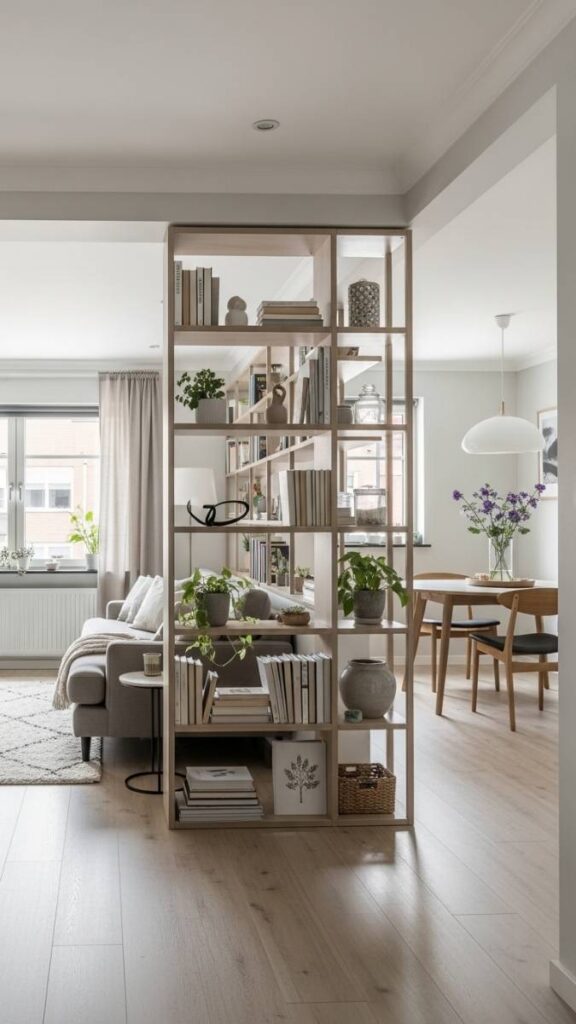
In open-floor-plan homes, the living room often bleeds into the dining or kitchen area without any visual boundary. A freestanding open bookshelf open on both sides, low enough to maintain sightlines (54–66 inches is typically the sweet spot) acts as a soft partition without closing the space off. The shelf can be styled from both sides, doubling as storage and display. This is one of the more practical living room decor ideas for renters who can’t build walls or put up permanent structures.
Use Window Seat Storage to Eliminate a Piece of Furniture
If your living room has a bay window or a wide window ledge, a built-in or freestanding storage bench transforms it into a functional seat with hidden storage below. This allows you to eliminate a side table, reduce the need for a storage ottoman, and gain a seating area with natural light overhead all within the footprint of space you were already losing to the window alcove. For renters, a freestanding storage bench sized to fit the alcove achieves the same result.
Choose a Two Tone Paint Approach for Low Ceilings
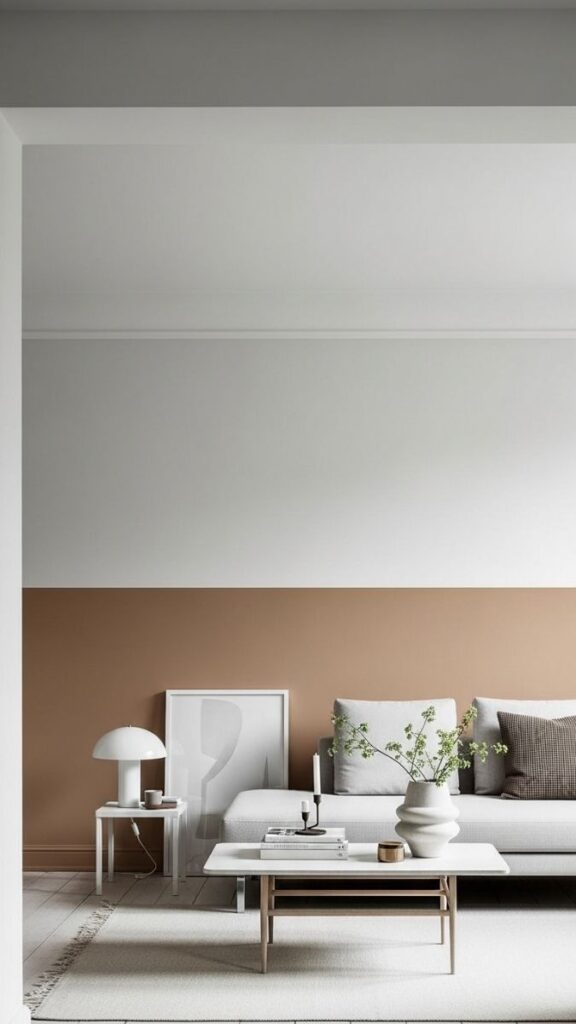
Painting the lower third of the wall in a deeper tone, a warm greige, soft sage, or muted terracotta with the upper portion and ceiling in white creates a horizontal band that makes low ceilings feel like a deliberate design choice rather than a constraint. This technique, often called a “color block” or “dado effect,” draws the eye around the room at furniture level rather than upward, which shifts the visual proportions in a subtle but effective way. It’s particularly useful in rooms under 8 feet.
Add a Pouf or Ottoman for Flexible, Moveable Seating
A pouf or floor ottoman gives the room a third seating option that weighs almost nothing and can be repositioned in seconds. It works as a footrest, an extra seat when guests are over, or a low side table with a tray on top. Woven leather, jute, and knit options tend to age well in living rooms with natural material palettes. This is one of the easier additions for anyone working within a tight budget who still wants the room to feel layered and considered.
Use Vertical Curtain Panels to Widen a Narrow Room
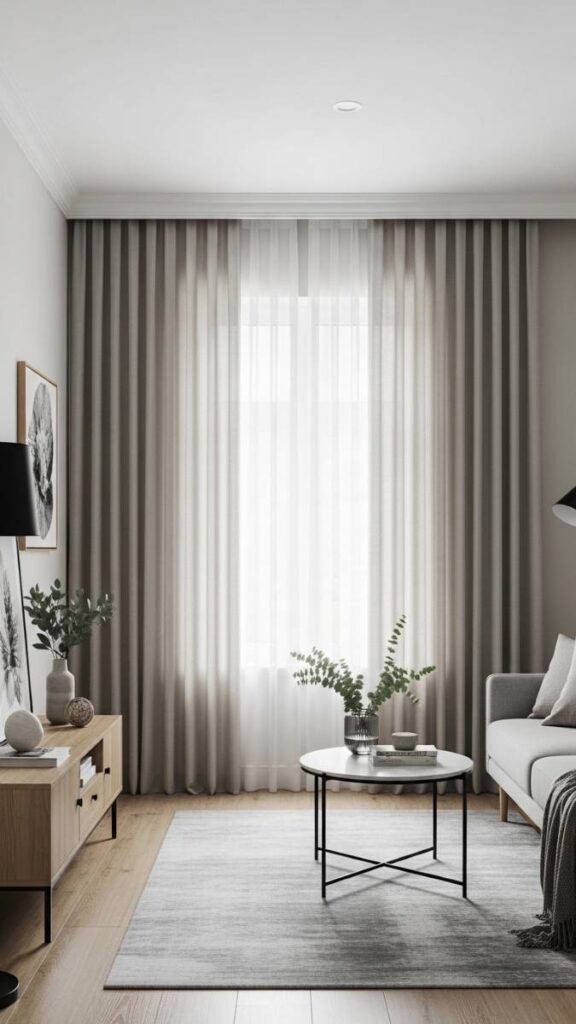
Most people mount curtain rods to match the width of the window frame. Extending the rod 12–18 inches beyond the frame on each side and using panels that stack mostly off the window when open makes the window look significantly wider than it is. In a narrow room, this visual trick draws the eye horizontally, which counteracts the tight proportions. The trick works best with lighter fabrics that let natural light through rather than blocking it.
Use a Statement Light Fixture to Anchor an Open Ceiling
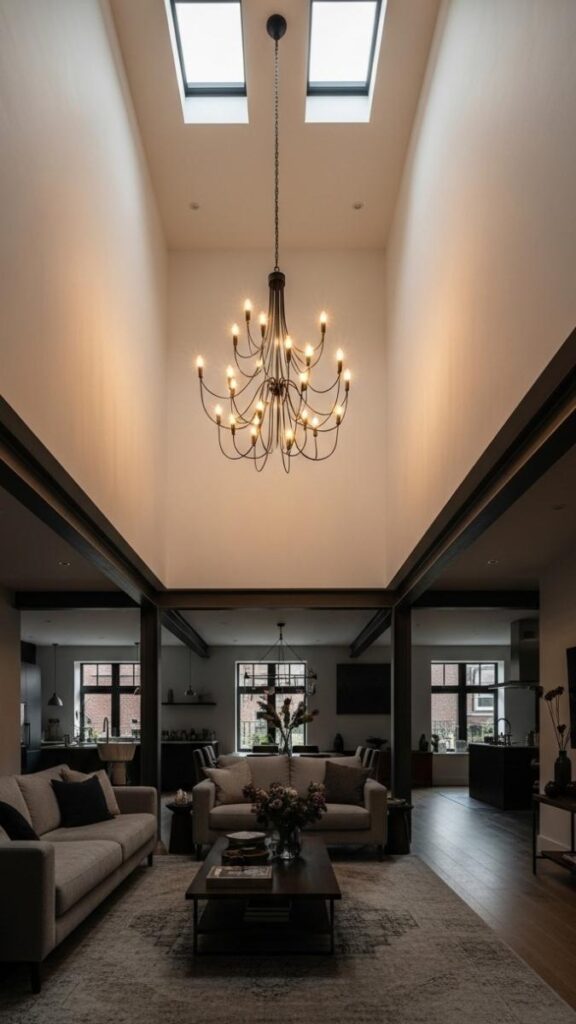
In rooms with vaulted or high ceilings, a decorative pendant or chandelier centered over the seating area gives the room a visual anchor point and stops the space from feeling unresolved overhead. The fixture should be proportionate not undersized, which reads as an afterthought, and not so oversized it overwhelms the furniture below. A general rule: the diameter of the fixture in inches should roughly equal the sum of the room’s length and width in feet. This keeps it in scale without requiring a design degree to figure out.
What Actually Makes These Living Room Decor Ideas Work
Most of these ideas share a common logic: they work with the room’s existing proportions rather than fighting them. The underlying principles are worth understanding so you can apply them to your specific layout.
Scale matters more than style.
A beautiful piece of furniture at the wrong scale disrupts the entire room. Before committing to a sofa, rug, or coffee table, measure how much floor space remains around it with an 18–24 inch clearance for movement paths.
Light is the variable most people underestimate.
A well-lit room at 7pm feels more livable than a beautifully furnished room with flat overhead lighting. Layered lighting even with basic fixtures dramatically shifts how a room feels to be in.
Zones create comfort.
In open-plan spaces or multi-use rooms, visual zoning through rugs, furniture arrangement, and lighting makes each area feel purposeful. Without it, the room can feel large but unsettled.
Edit before you add.
Many living rooms that feel cluttered or visually heavy don’t need more decor; they need fewer pieces used more deliberately. Removing one item is often more effective than adding another.
Living Room Decor Setup Guide
| Idea | Best For | Space Type | Problem Solved | Difficulty |
| Oversized rug | Grounding the layout | All sizes | Floating furniture, lack of definition | Easy |
| Low-profile sofa | Opening vertical space | Small/medium rooms | Compressed ceiling feel | Medium |
| Layered lighting | Evening atmosphere | Any layout | Flat, clinical lighting | Easy |
| Floated furniture | Better flow | Square rooms | Dead center space, wall-hugging look | Easy |
| Console behind sofa | Zone definition | Open-plan apartments | No visual boundary between spaces | Easy |
| Ceiling-hung curtains | Visual height | Low-ceiling rooms | Short, cramped window feel | Easy |
| Mirror across from window | Light borrowing | North-facing/dark rooms | Limited natural light | Easy |
| Bookshelf divider | Room separation | Open-plan layouts | No zone definition | Medium |
| Two-tone paint | Proportion fix | Low-ceiling rooms | Ceiling feels too close | Medium |
| Statement pendant | Ceiling anchor | High-ceiling rooms | Visually unresolved overhead space | Medium |
How to Arrange Your Living Room for Better Flow and Function
Layout is the foundation that every other decor decision sits on and it’s worth thinking through before buying anything new.
Start with the traffic flow.
There should be at least 30–36 inches of clear walkway through the main path of the room. If you’re squeezing past the sofa or stepping around the coffee table to get anywhere, the layout is working against you, not for you.
Define the conversation zone first.
Seats in a living room should face each other, or angle toward each other, within a comfortable talking distance roughly 6–10 feet apart. Beyond that, the room starts to feel like two separate areas without a clear connection.
Place the largest piece first.
The sofa is almost always the anchor. Once it’s positioned ideally facing the focal point (fireplace, TV wall, or primary window) every other piece follows its lead. Working backward from accessories to sofa usually results in a layout that feels inconsistent.
Watch the coffee table clearance.
A coffee table should sit 14–18 inches from the sofa face close enough to reach comfortably from a seated position, far enough to stand without catching your shin. This sounds specific because it matters practically, not just aesthetically.
Consider what the room does at different times of day.
A living room used for work in the morning and watching TV in the evening has different lighting and layout needs than one used purely for relaxing. Multi-use rooms benefit from flexible seating (moveable poufs, adjustable lamps) that can adapt.
FAQ’s
What’s the most effective living room decor idea for a small space?
The highest-impact change for small living rooms is usually the rug size. A rug that’s large enough to anchor the seating area with at least the front legs of every seat resting on it makes the room read as cohesive and larger than it is. Combine it with furniture on exposed legs and ceiling-mounted curtains, and the difference is significant without adding any square footage.
How do I make my living room feel more put-together without buying new furniture?
Start with arrangement and lighting. Pull furniture slightly away from the walls, ensure your lighting works on at least two levels (not just overhead), and remove anything that doesn’t serve a clear visual or functional purpose. Editing what’s already in the room is usually more effective than adding to it.
Is it better to have a sectional or a sofa with chairs in a medium sized living room?
A sofa-plus-chairs setup tends to work better in medium-sized rooms because it allows for a more flexible conversation zone and better movement paths around the space. A sectional works well when the room has a clear L-shape or the primary use is watching TV but it often limits layout options because it can’t be rearranged easily.
How high should I hang artwork in my living room?
Center the piece at 57–60 inches from the floor, which aligns with average eye level. For art hung above a sofa, the bottom of the frame should clear the sofa back by about 8–10 inches. Hanging art too high is one of the most common mistakes in living room decorating and makes the room feel disconnected between the furniture level and the wall above it.
What’s the best way to add storage to a living room without making it look cluttered?
Prioritize storage that doubles as furniture: a coffee table with a lower shelf or lift top, a storage ottoman, a media console with closed cabinets, and built-in or freestanding bookshelves. The goal is keeping frequently used items accessible but out of sight, while displaying only what you actually want seen.
Do I need to match all the wood tones in my living room?
Not exactly but they should be compatible. Mixing very warm (orange-toned) wood with very cool (grey-toned) wood in the same room tends to create visual friction. Staying within a tonal range (all warm, all cool, or a clear warm-dominant palette with one cooler accent) is easier to pull together than trying to match everything exactly.
How do I make a living room work for both lounging and working from home?
Zone it. A desk or work surface positioned away from the main sofa orientation even just perpendicular to it creates a physical and visual separation between the two modes. A separate task lamp for the work area (versus the ambient lamps in the seating zone) helps reinforce that distinction. A small rug under the desk area can further define it as its own zone.
Conclusion
A living room that works well is usually the result of a few well-made decisions, not a full renovation. Getting the rug size right, layering the lighting, and thinking through where people actually move in the space will outperform any amount of accessorizing over a poorly laid-out room. The key is finding what fits your specific constraints: ceiling height, natural light, square footage, how the room is actually used day to day and working with those variables rather than ignoring them.
Start with one or two ideas from this list that match your most pressing issue: too dark, too cluttered, too undefined, or just not quite right. Small adjustments compound quickly in interior spaces. Try repositioning the furniture before buying anything new, add a second light source before repainting, and let the room show you what it actually needs.