54+ Wall Decor Ideas for Living Room That Actually Work in Real Homes
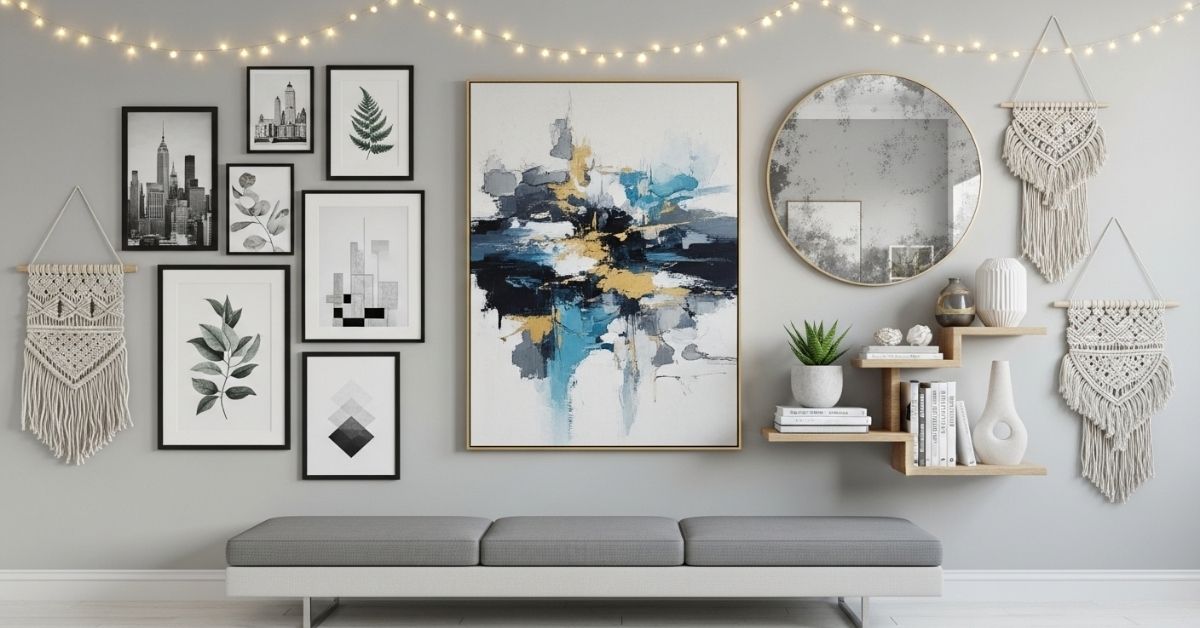
Your living room walls have more influence on how the space feels than most people realize. Not just aesthetically but spatially. A bare wall in a small apartment can make the whole room feel temporary. Wall Decor Ideas for Living Room An overcrowded one in a larger space can kill the visual flow before you’ve even sat down.
This isn’t about following a trend board to the letter. It’s about finding setups that work with your layout, your ceiling height, your light sources, and honestly, your patience level. Whether you’re renting a compact apartment, furnishing a large open-plan room, or just trying to make a living room feel more intentional, these 27 living room wall decor ideas give you real options with real reasoning behind them.
A Grid Gallery Wall with Matching Frames and Neutral Prints
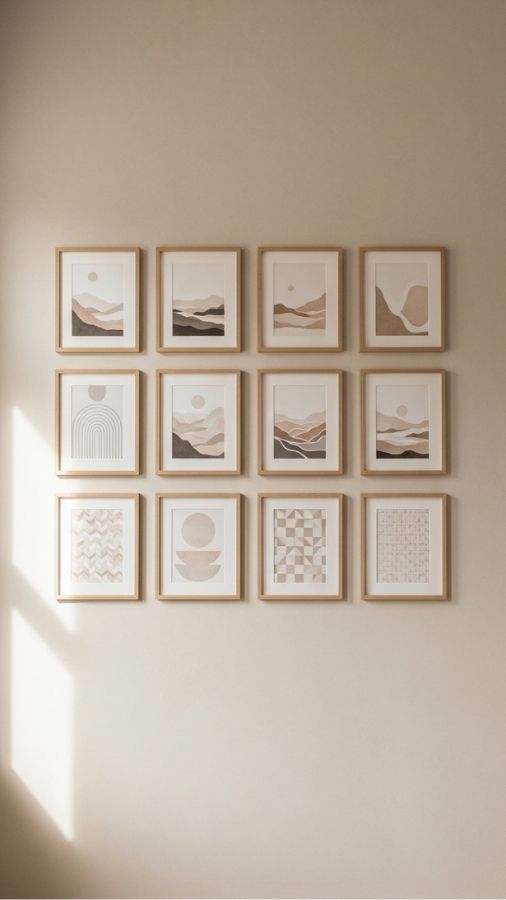
The grid format works because it brings structure to an otherwise blank wall and structure reads as intentional, not empty. Arrange 9 identical frames (5×7 or 8×10 work well in most living rooms) in a 3×3 or 4×4 configuration, keeping consistent spacing of 2 3 inches between each.
This setup works best on wider walls above a sofa or console. The uniformity in frame size means the content carries the visual interest which is why neutral-toned prints (botanicals, line drawings, abstract textures) hold up better here than loud, colorful pieces. For renters, damage-free adhesive strips make this fully reversible.
Oversized Abstract Canvas as a Single Statement Piece
One large piece can do more for a room than six smaller ones if the scale is right. A canvas that spans at least 60% of your sofa’s width visually anchors the seating area and keeps the wall from feeling cluttered.
In smaller living rooms, going big with a single piece paradoxically opens up the space, because it reduces the visual noise of multiple frames.
This works best in rooms with at least 9-foot ceilings where there’s enough vertical space for a 40×50 or larger format. It also solves the “where do I stop adding things” problem by making the answer obvious.
Floating Shelves with a Mix of Books, Plants, and Objects
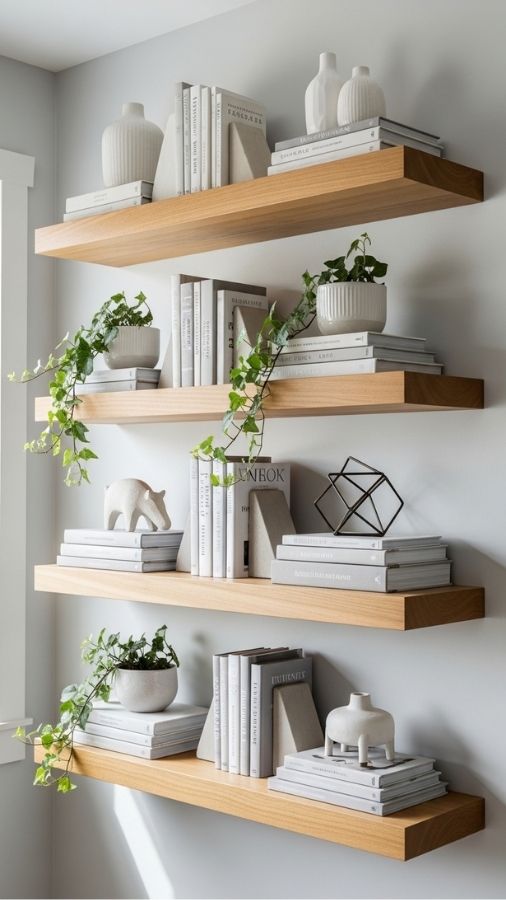
Floating shelves are doing double duty here: they’re storage and decor. The key is layering: stack some books horizontally, prop others vertically, and intersperse with one or two plants and a ceramic or sculptural object.
Avoid filling every inch. The negative space between items is what makes it look curated rather than cluttered. In my experience, three shelves at staggered heights work better than two perfectly parallel ones; the asymmetry draws the eye in a more natural way.
This is especially practical for renters who need functional storage without built-ins.
Arch-Shaped Mirror on a Feature Wall
Arch mirrors have been building momentum over the past two years and they’re not going anywhere 2026 is still very much in the arched-everything era of interior design.
Functionally, a tall arch mirror (ideally 60+ inches) reflects light across the room, which matters significantly in north-facing or lower-light living rooms.
Placed opposite or adjacent to a window, it doubles the natural light in the space. The frame material shifts the whole mood: rattan reads casual and organic, thin metal reads modern, and dark wood reads grounded and moody.
This works especially well on accent walls where you want texture without paint.
Woven Wall Hanging Above Wall Decor Ideas for Living Room
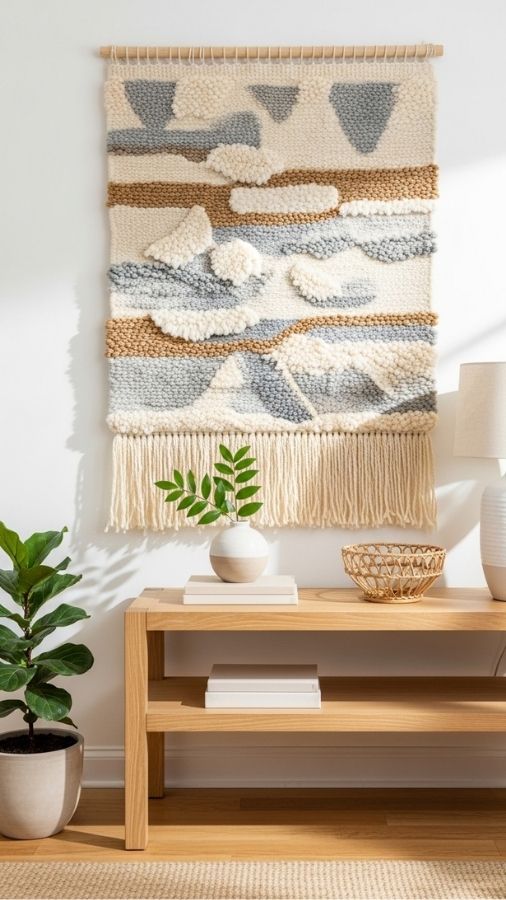
Textile wall art adds a layer of warmth that no framed print can replicate; it absorbs sound slightly, adds tactile contrast to hard walls, and brings in organic texture without requiring power tools. A large woven hanging (36 inches or wider) above a narrow console creates a focal point that feels complete even in a sparsely furnished room.
This setup works well in apartments where you can’t paint the hanging is removable and leaves no visible impact. Pair with warm pendant lighting directly above the console, and the whole vignette reads like a finished design moment rather than a placeholder.
Read More About: 51+ Rustic Wall Decor Ideas That Actually Work in Real Homes Not Just Pinterest
DIY Ledge Shelves for Rotating Art Displays
Picture ledges are one of the most flexible wall decor formats; you can swap prints seasonally, add postcards, prop a plant pot, or layer large pieces behind smaller ones without committing to any holes. Two ledges at different heights (around 36 inches and 60 inches from the floor) create enough vertical range to work on standard and taller walls alike.
The “propped and layered” look feels intentional and editorial, not accidental. For small living rooms where the budget is tight, this is also an easy way to use a mix of frame sizes from different sources without needing them to match.
Painted Arch or Geometric Shape Directly on the Wall
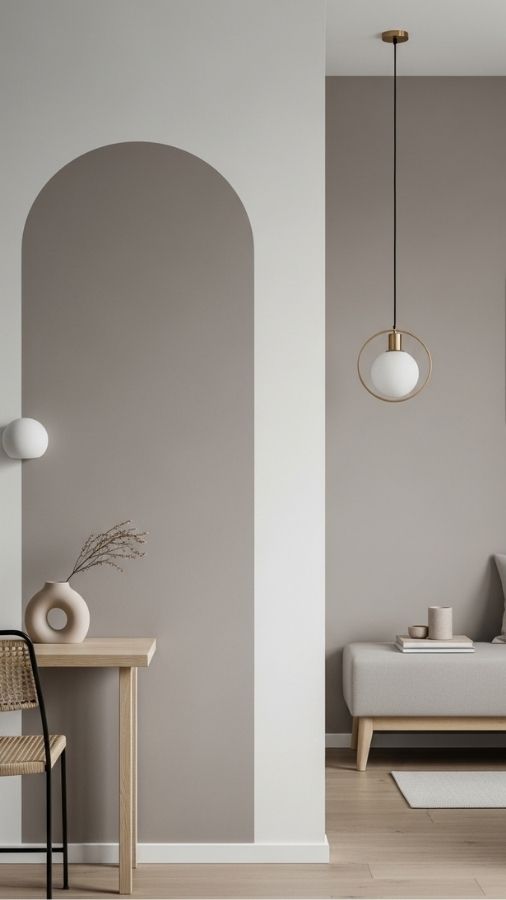
If you own your home (or have a flexible landlord), painting a shape directly onto the wall is a high-impact, low-cost move. A simple half-arch in a muted tone olive, dusty pink, warm terracotta behind a chair or sofa creates a pseudo-accent wall without committing the whole room to a bold color.
It also gives any art hung inside it an instant, built-in frame effect. The visual result is that the space feels more architecturally interesting, particularly in rooms with flat, featureless walls. Tape and a steady hand are all you need, no professional required.
Salon-Style Gallery Wall in Warm Wood Frames
A salon hang mismatched frames, multiple sizes, arranged without rigid alignment works best when you anchor it with one large piece and build outward. The trick most people miss: lay the full arrangement on the floor first, photograph it, then transfer it to the wall starting from the center piece.
Warm wood frames in varying tones (honey, walnut, mahogany) read cohesive even when they don’t match exactly. IMO, mixing photography, illustration, and text-based prints keeps the eye moving and makes the wall feel like it’s been collected over time rather than assembled in one afternoon.
Vertical Planters as Living Wall Decor
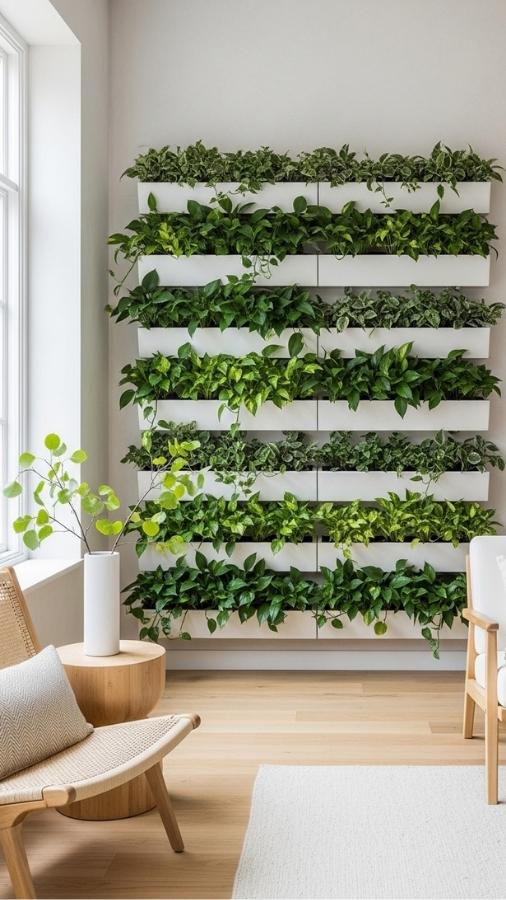
Not all wall decor needs to be flat or framed. Wall-mounted planters especially those designed for trailing plants like pothos or heartleaf philodendrons bring life into the room in a literal sense.
Three planters in a loose vertical column near a window create the impression of a living wall without the maintenance of a full system.
This works particularly well in rooms that feel cold or sterile; the organic shapes and greenery soften hard lines. The plants also improve air quality slightly and add a level of depth to the wall that no print can fully replicate.
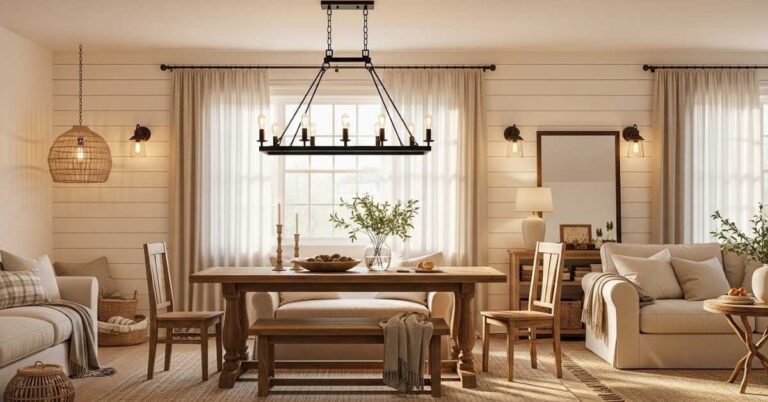
Sconce Lighting Flanking a Mirror or Art Piece
Wall sconces do two things simultaneously: they function as lighting and as decor. Placed symmetrically on either side of a mirror or large artwork, they frame the piece and draw attention to it while also layering the room’s light sources.
This matters in living rooms that rely heavily on overhead lighting adding sconces at mid-wall height creates a warmer, more even ambiance that overhead fixtures alone can’t achieve. Hardwired sconces are a commitment, but plug-in options are widely available and surprisingly convincing, especially when cords are managed with cord covers.
Floating Media Wall with Built In Shelf Display
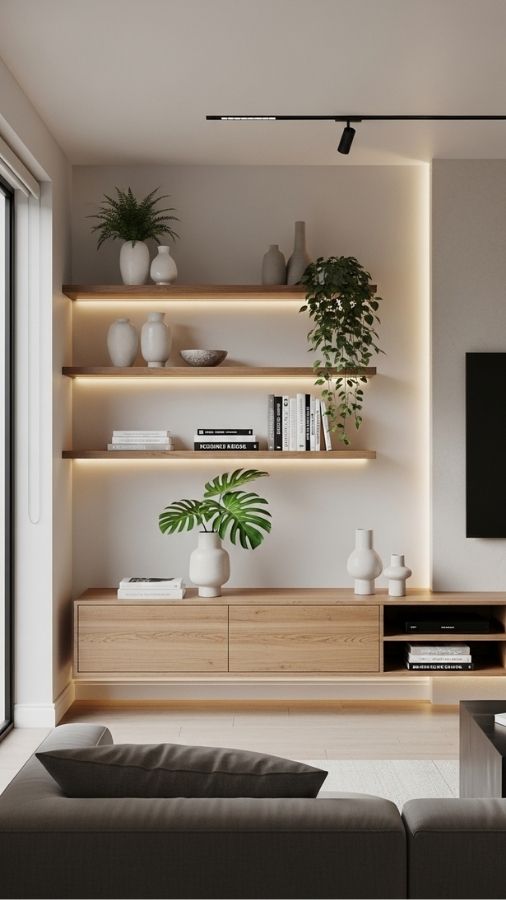
For living rooms where the TV is the dominant wall feature, the wall around it becomes prime decor real estate. Flanking the TV with floating shelves styled with books, plants, and a couple of sculptural objects integrates the screen into the room’s overall design rather than leaving it as a visual interruption.
Keep the shelf height at or above the TV to maintain visual balance. This works well in living rooms where the entertainment wall faces the main seating which is the case in most layouts and it solves the common problem of a TV that dominates a wall without any supporting context.
Tapestry or Printed Textile as a Maximalist Feature
A tapestry can serve as both art and acoustic softening especially in open-plan apartments with hard floors and high ceilings that create an echo effect. A large tapestry (60 inches or wider) effectively anchors the main seating wall without requiring multiple pieces or precise hanging.
For maximalist or globally-inspired interiors, this is often a better choice than a gallery wall because the single large piece reads clearly across a room rather than requiring closer inspection. Mounting options include a wooden dowel or a tension rod, both of which are renter-friendly.
Oversized Clock as a Functional Wall Statement
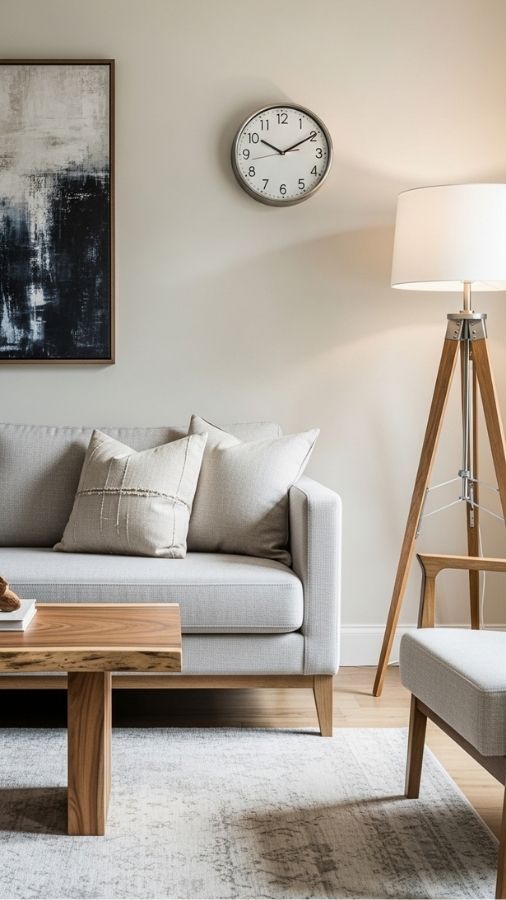
A clock that’s large enough to read as art 24 to 36 inches in diameter sits in useful territory: it’s functional and decorative simultaneously. Minimalist metal designs with clean hands and no numbers work best in modern or Scandinavian-adjacent interiors.
Placed on a wall that faces the seating area, it becomes a natural focal point while also being genuinely useful which is more than most wall decor can claim. This is one I’d actually recommend trying first for anyone who finds gallery walls stressful to execute, because there’s only one piece and one decision.
Read More About: 52+ Cozy Farmhouse Living Room Rustic Decor Ideas That Actually Work in Real Homes
Stone or Brick Cladding Panel as a Texture Feature
Textured wall panels, faux stone, brick veneer, wood slat bring a tactile dimension that paint alone can’t. In living rooms that feel flat or builder-basic, a single textured wall behind the sofa or fireplace breaks the monotony and introduces depth without needing art or accessories.
Real brick is typically a renovation-level commitment, but peel-and-stick brick or lightweight stone cladding panels work as an accessible alternative. The texture adds visual weight to whichever wall it’s applied to, which is useful for balancing rooms where furniture is heavy on one side only.
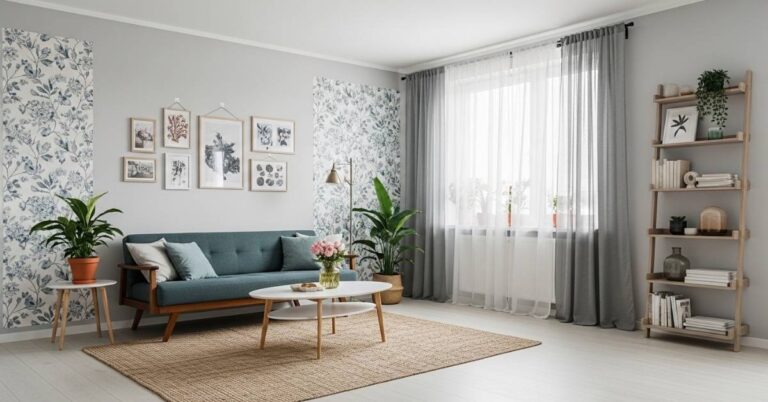
Framed Fabric or Wallpaper as Art
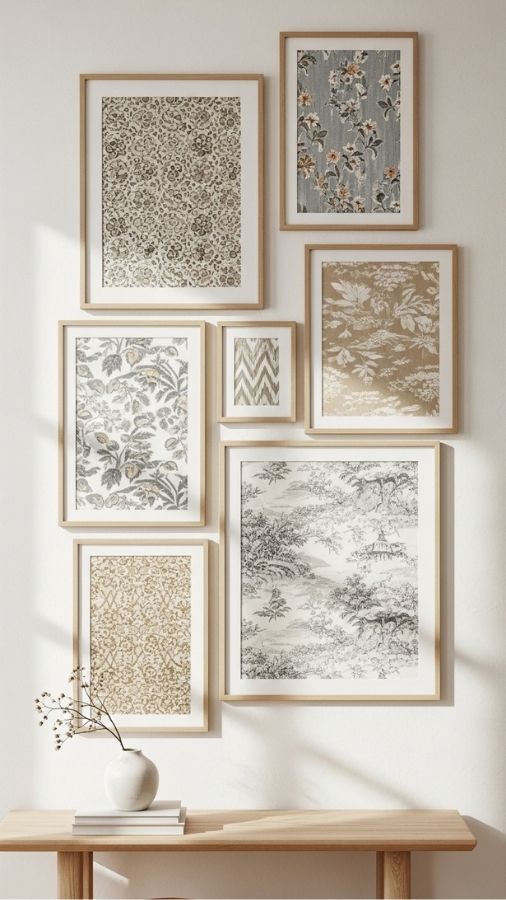
This works especially well for renters or on tight budgets: source fabric samples, vintage wallpaper panels, or even decorative gift wrap, frame them in matching frames, and hang as a coordinated set.
The patterns available in fabric and paper far exceed what you’d find in typical mass-market prints, which means you can get something genuinely original for a fraction of the cost. Three framed panels in a horizontal row above a two-seater sofa fill the wall width proportionately without overwhelming the space.
Black and White Photography in a Cohesive Grouping
Black and white photo collections work because they’re visually unified from the start, no color coordination required. Whether you use your own photography, film prints, or licensed archival images, the monochrome palette keeps even a disparate mix of subjects reading as a cohesive set.
Frame them uniformly (all black, all thin profile) and hang in a loose cluster rather than a rigid grid. This setup suits rooms with a relatively neutral color scheme where you want visual interest without introducing additional color.
Wood Slat Wall Panel for Warm, Modern Texture
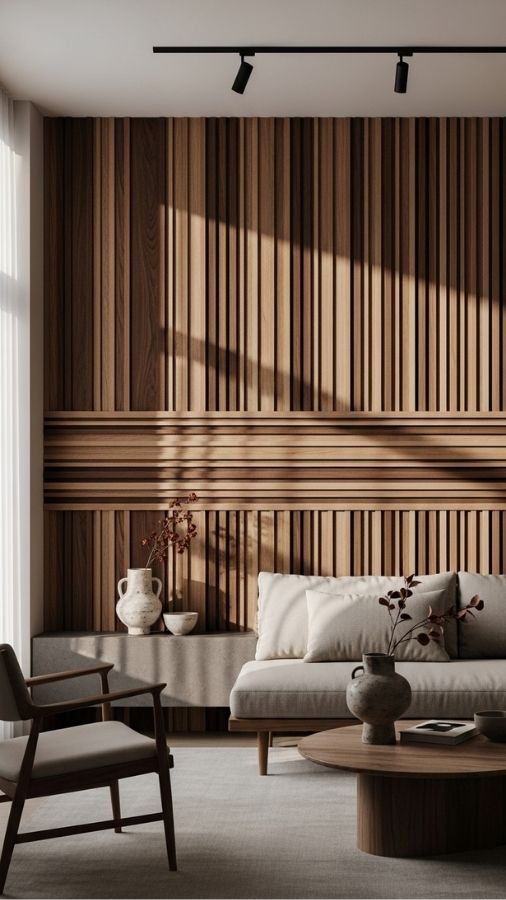
Wood slat panels horizontal or vertical have shifted from hospitality spaces into residential interiors over the last few years, and the reason is straightforward: they add warmth, texture, and a sense of craft to what would otherwise be a flat painted surface.
A partial panel (just the section behind the sofa, not the full wall) gives you the effect without the material cost. The gaps between slats create a shadow-line effect that changes subtly with the light throughout the day, adding a dynamic quality that painted walls simply don’t have. This works best in rooms with warm-toned furniture and flooring.
Chalkboard or Whiteboard Section for Functional Creativity
In studio apartments or living rooms that double as workspaces, a chalkboard or whiteboard wall section adds genuine functionality without eating floor space.
Paint a rectangular section (roughly 3 x 5 feet works well) in chalkboard or dry-erase paint, frame it with a thin painted border or simple wood molding, and it becomes a usable surface that’s also an intentional design element.
This solves the “home office in the living room” problem by making the workspace visible but intentional rather than improvised.
Minimalist Line Art in Thin Metal Frames
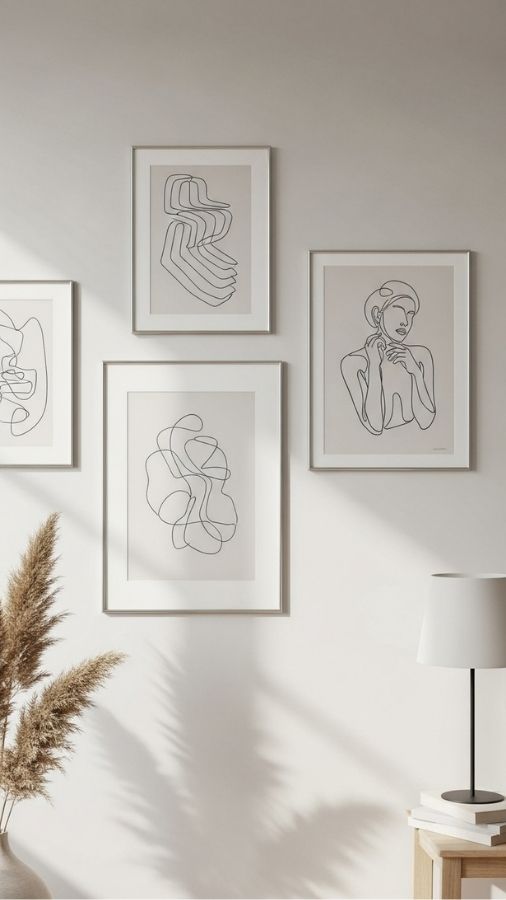
Line art single-stroke illustrations, botanical line drawings, minimalist figure studies reads elegantly at scale without requiring complex composition. Three A2 or A1 prints in matching thin gold or black metal frames, hung in a horizontal row, work well on medium-width walls.
The white or off-white backgrounds mean they integrate into light-colored rooms without visual competition. These are widely available as digital downloads, which keeps costs minimal.
Pegboard with Integrated Display and Storage
Pegboards aren’t limited to garage workshops. Painted the same color as the wall, a pegboard section in a small living room can carry plants, books, small frames, and functional items like keys or headphones essentially acting as a built-in display system.
The visual weight stays low when the pegboard blends into the wall, and the flexibility to reconfigure hooks and shelves without new holes makes it ideal for renters who like to rearrange frequently.
Read More About: 53+ Rustic Farmhouse Decor Ideas That Make Any Room Feel Warm, Lived In, and Pulled Together
Neon or LED Sign as an Intentional Accent
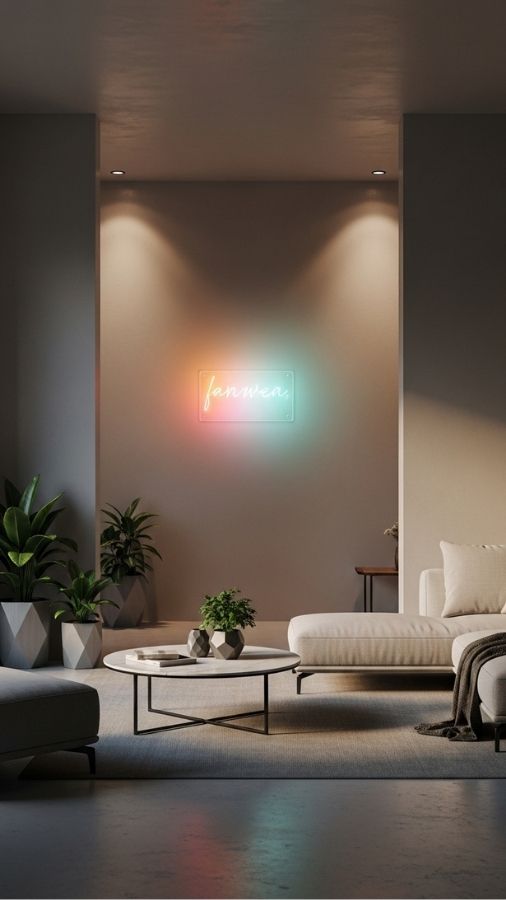
Used carefully, a neon or LED sign can function as ambient lighting and wall art simultaneously. The key is keeping the text or shape simple: a single word, a shape, or a minimal phrase and the tone warm (amber or soft white rather than bright cool white).
In rooms that already have layered lighting, a neon sign adds another dimension to the light environment. In rooms with darker walls, the glow effect is more dramatic. This works best in spaces with a defined personality rather than a generic neutral setup, because the sign needs context to land well.
Vintage Map or Blueprint Print as a Focal Point
A large-format vintage map, city plans, topographic prints, historical navigation charts works as both art and conversation piece.
The detail in old cartographic work means the piece rewards closer inspection, which is why it suits a reading corner or a wall adjacent to a chair rather than a wall viewed only from a distance. At 24×36 or larger, a single map in a wide frame looks intentional and collected rather than generic.
Shadowbox Frames for Three Dimensional Wall Objects
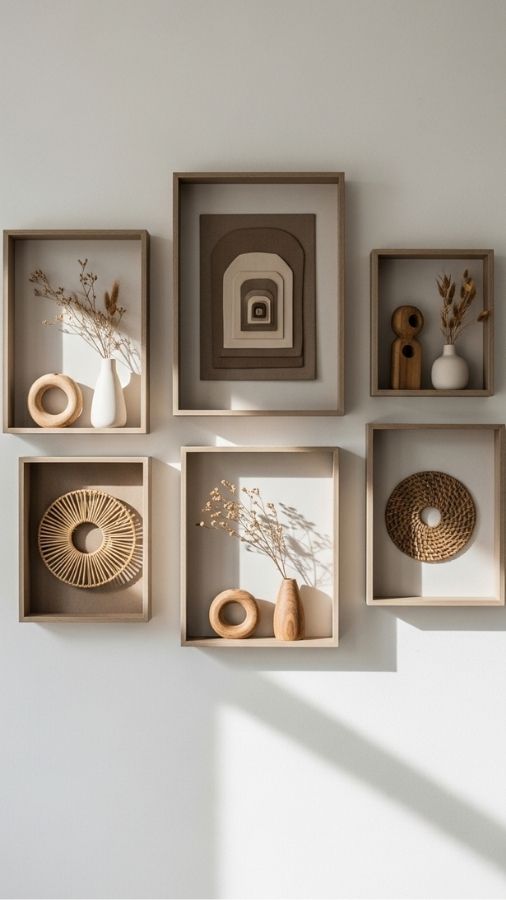
Shadowbox frames deep enough to hold three-dimensional objects let you display things that aren’t flat prints: pressed botanicals, small ceramic pieces, fabric swatches, collected objects. The depth adds a sculptural quality to the wall that regular framed art can’t achieve.
Arranged in a loose cluster of three to five, they read as a collected set without requiring the pieces inside them to match. This works particularly well in eclectic or maximalist interiors where the wall decor is meant to tell a story.
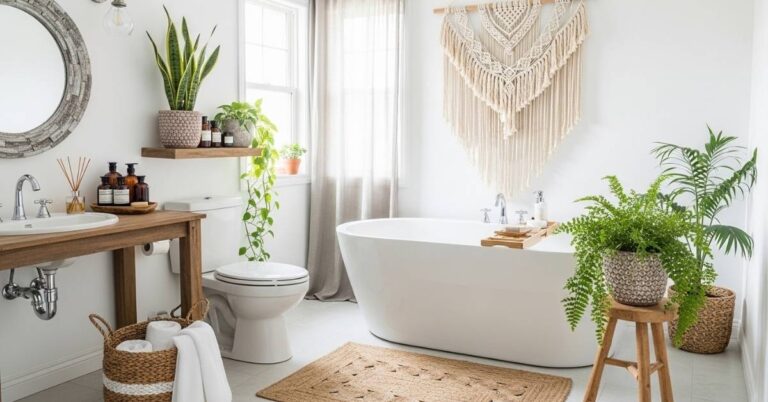
Macramé Knot Panel in a Boho or Coastal Living Room
A well-made macramé panel adds handcraft texture that feels increasingly rare as home interiors trend toward mass production. A wide panel (48 inches or more) with a simple, clean knotwork pattern rather than overly intricate or fringed suits both boho and coastal aesthetics without leaning too far into either.
The natural cotton or jute tones work with white, cream, beige, and soft gray rooms equally well. In rooms where the furniture is mostly smooth surfaces (upholstery, laminates), the tactile contrast of knotted textile adds warmth the furniture alone can’t provide.
Stacked Book Spines as Color Sorted Wall Art
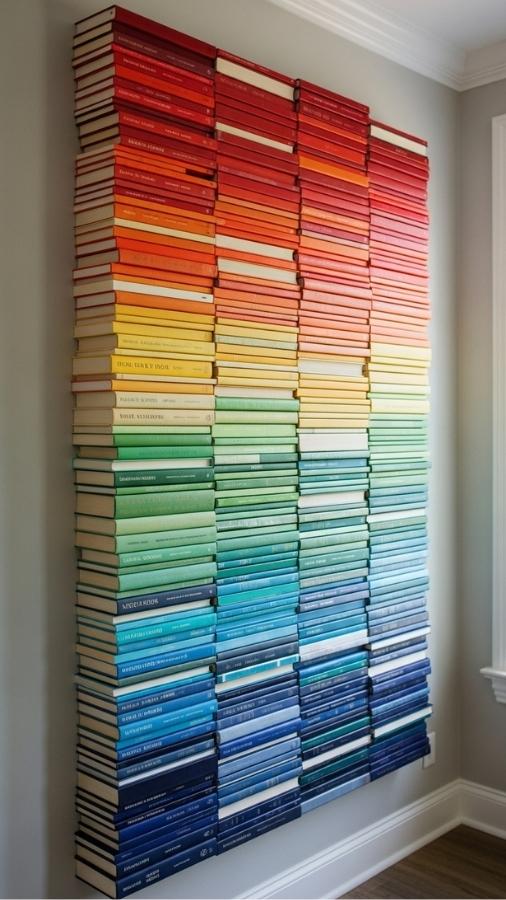
This one’s a bit unconventional, but effective: arrange books by spine color on a shelf or in a built-in to create a color gradient across the whole unit. When photographed or viewed from across the room, the effect reads like a deliberate wall installation rather than a practical book collection.
It works best on a large shelf unit that spans most of a wall. The sorting takes time upfront, but the result is visually cohesive in a way that random book arrangement rarely achieves.
Reclaimed Wood Shelf with Curated Object Display
A single thick reclaimed wood shelf 2 to 3 inches deep reads as an architectural element rather than standard shelving. On a textured wall (exposed brick, limewash, stone), the combination of materials tells a layered visual story.
Keep the objects on the shelf minimal and intentional: three to five items maximum, with variation in height and material. The simplicity is what makes it work. This isn’t a storage shelf, it’s a display ledge, and the distinction matters visually.
Molding or Wainscoting for Architectural Wall Interest
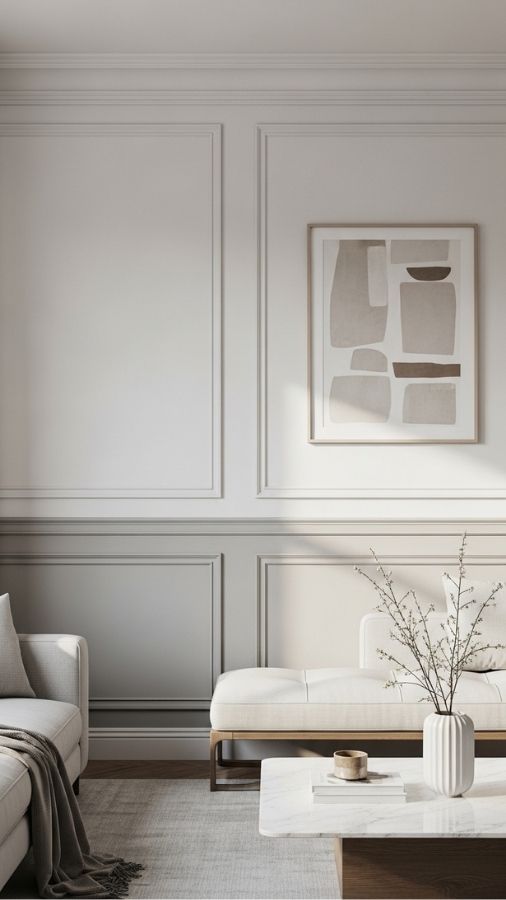
Adding picture rail molding or wainscoting panels to flat walls creates architectural interest that decorating alone can’t replicate. The division of the wall into upper and lower zones often in slightly different tones makes a room feel more finished and considered.
This works especially well in older homes or apartments that have lost original architectural details over time. For a simpler version, stick-on molding panels provide a similar effect without permanent installation, making this accessible for renters as well.
What Actually Makes These Ideas Work: A Practical Guide
The ideas above span a wide range of styles and budgets, but the ones that consistently succeed share a few underlying principles and it’s worth understanding them before you commit to anything.
Scale is the most common mistake.
Artwork and decor that’s too small for the wall it’s on is the single biggest reason a living room wall looks unfinished. A general rule: your primary piece (canvas, mirror, shelf arrangement) should span at least 60-75% of the furniture below it. If it doesn’t reach that threshold, it tends to float visually unanchored and incomplete.
Hanging height matters more than most people expect.
The standard recommendation is eye level approximately 57 to 60 inches from the floor to the center of the piece. But in living rooms where you’re primarily seated, that center point can be lower: 52 to 55 inches often reads better when the main view is from a sofa rather than standing.
Lighting determines whether wall decor reads in the evening.
Natural light helps during the day, but layered artificial lighting, a floor lamp beside a gallery wall, sconces flanking a mirror, a pendant above a console is what makes decor visible and intentional after dark. Many living rooms rely too heavily on overhead lighting, which flattens wall surfaces and reduces the impact of texture and depth.
The “one problem per wall” approach works well for beginners.
Instead of trying to address multiple visual challenges at once, empty wall, bad proportions, no focal point, pick one issue and design around it. A large mirror fixes the light problem. A gallery wall fixes the empty wall problem. A wood slat panel fixes the flat surface problem. Trying to solve all three simultaneously usually results in an overcrowded wall.
Living Room Wall Decor Comparison Guide
| Idea | Best Room Size | Space Type | Problem It Solves | Difficulty |
| Grid gallery wall | Medium Large | Any | Blank wall, lack of personality | Medium |
| Oversized canvas | Small Medium | Any | Empty, unanchored wall | Easy |
| Floating shelves + display | Any | Renter-friendly | No storage, no texture | Easy |
| Arch mirror | Small Medium | Low-light rooms | Dark, small-feeling space | Easy |
| Woven wall hanging | Small Medium | Renter-friendly | Bare wall, no warmth | Easy |
| Picture ledge display | Any | Renter-friendly | Commitment-averse, budget-conscious | Easy |
| Painted arch/shape | Medium Large | Owned homes | Flat walls, no focal point | Medium |
| Salon gallery wall | Medium Large | Any | Empty wall, want collected feel | Medium Hard |
| Vertical planters | Small | Near-window spaces | Cold, sterile feel | Medium |
| Sconce + mirror pair | Any | Dark rooms | Poor lighting, blank wall | Medium |
| Wood slat panel | Medium Large | Modern/warm interiors | Flat, featureless walls | Hard |
| Macramé panel | Small Medium | Boho/coastal | No texture, bare walls | Easy |
| Wainscoting/molding | Any | Traditional/classic | Architecturally flat rooms | Hard |
FAQ’s
What’s the easiest wall decor idea for a small living room?
A single oversized mirror or large canvas is the most effective starting point. Both address the two most common small-room problems: limited light and enclosed feel without adding visual clutter. Avoid clusters of small pieces, which tend to fragment the wall rather than unify it.
How high should wall decor be hung in a living room?
The standard guideline is to hang the center of the piece at 57-60 inches from the floor, which corresponds to average eye level when standing. In living rooms where most viewing happens from a seated position, hanging slightly lower 52 56 inches to center often reads better. The most important factor is that the piece feels connected to the furniture below it, not floating independently.
How do I make a gallery wall look intentional rather than random?
Start with a consistent element matching frames, a unified color palette, or a single subject type (all photography, all botanical prints). Lay the full arrangement on the floor before hanging, photograph it, and transfer it to the wall starting from the center. Leave uniform spacing of 2-3 inches between frames. The cohesion comes from the consistent element, not from identical content.
Can renters do meaningful wall decor without damaging walls?
Yes. Adhesive strips (rated for the weight of your pieces), picture ledges, removable hooks, and hanging systems that use a single anchor point all allow for functional, attractive wall displays without permanent damage. Textile pieces like tapestries and macramé require only a small nail or adhesive hook. The main constraint is that anything over 20 lbs typically needs a proper anchor.
What’s the difference between a statement wall and an accent wall?
An accent wall typically refers to a wall painted or finished differently from the others a bold color, a textured treatment, or wallpaper. A statement wall can be achieved through decor alone: a large mirror, a gallery arrangement, a prominent shelf system. The distinction matters practically because renters can create a statement wall with decor even when they can’t alter paint or materials.
How do I choose between a gallery wall and a single large piece?
If you want flexibility and don’t mind the time investment of arrangement, a gallery wall gives you more visual range and lets you swap pieces over time. If you want something quick, impactful, and lower-commitment to install, a single large piece is the cleaner choice. Large rooms with 9+ foot ceilings often handle both well; smaller rooms usually benefit more from the openness that a single large piece provides.
Is it worth investing in real art for a living room wall?
This depends on what you mean by “real.” Original artwork from emerging artists often available at accessible price points through platforms like Etsy or local art fairs adds something genuinely unique to a space in a way that mass-produced prints can’t fully replicate. That said, a well-chosen print, framed well and hung at the right scale, can achieve almost everything you’d want decoratively. Start with format and scale decisions before the art-versus-print question, because those factors have more visual impact than provenance.
Conclusion
Living room walls are one of the most underused surfaces in a home and one of the highest-leverage places to make a real change. Whether you address lighting through sconces and mirrors, introduce texture through wood panels or textile hangings, or create a visual focal point with a gallery arrangement or statement canvas, the impact of intentional wall decor extends well beyond aesthetics. It affects how spacious the room feels, how the light behaves, and how finished the space reads as a whole.
The key is to start with one wall ideally the one your seating faces most directly and choose an approach that fits your space constraints and confidence level. You don’t need to address every wall at once. One well-executed idea, at the right scale, with thoughtful lighting, will do more than a dozen underdeveloped ones.