52+ Cozy Farmhouse Living Room Rustic Decor Ideas That Actually Work in Real Homes
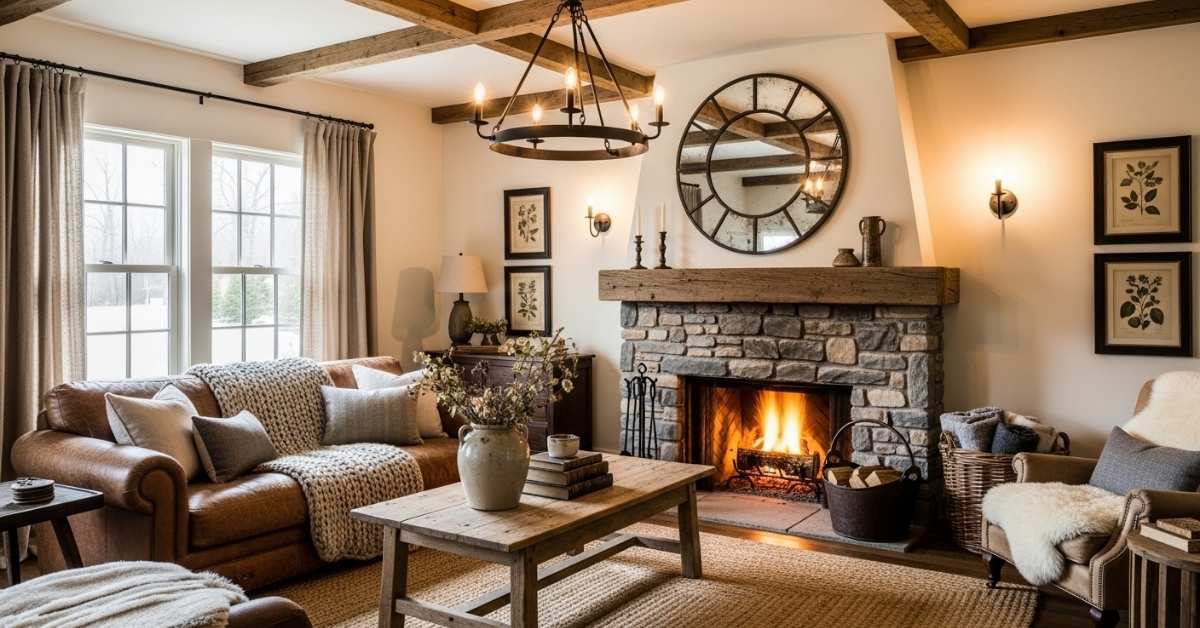
There’s something about a farmhouse living room that feels immediately settled like the space has been lived in for years, even when it’s freshly put together. That combination of worn textures ,Cozy Farmhouse Living Room Rustic Decor warm neutrals, and practical furniture arrangement hits differently than most decorating styles because it’s built around how people actually use a room.
If your living room currently feels too stark, too generic, or just a little cold even after decorating rustic farmhouse decor has a way of filling those gaps. It uses layering, natural materials, and intentional imperfection to make a room feel grounded rather than designed.
For anyone working with an older rental, a small space, or a living room that needs to function for both downtime and hosting, these ideas are rooted in real-world setups that hold up beyond the aesthetic.
Anchor the Room with a Reclaimed Wood Coffee Table on a Jute Rug
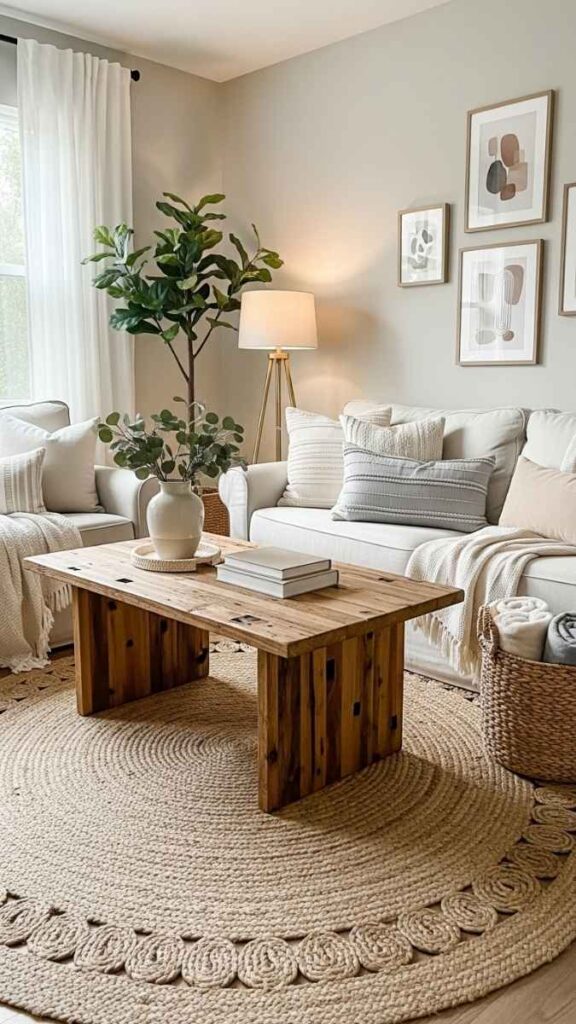
A reclaimed wood coffee table does a lot of work in a farmhouse living room; it brings in warmth, visual weight, and a level of texture that newer pieces simply can’t replicate.
Place it centered on a jute or sisal rug, with the rug extending at least 12 inches beyond each side of the table.
The roughness of the jute balances the grain of the wood without competing, and together they create a grounded focal point the rest of the room can build around.
This works particularly well in neutral rooms that need organic weight without adding more furniture. For smaller spaces, a round reclaimed wood table keeps the floor plan open while still anchoring the seating area.
Layer a Shiplap Accent Wall Behind the Sofa for Depth Without Bulk
Shiplap works because it adds texture and vertical rhythm without consuming floor space; it’s wall decor that also architecturally defines a zone. Install it behind the main sofa wall in horizontal boards, painted in warm white or a light cream rather than stark bright white.
The subtle shadow lines between boards create depth that reads especially well under warm-toned lighting in the evening.
This is one I’d actually recommend trying first for renters who can paint it back, or homeowners who want a high-impact change without reconfiguring the layout. It also makes the sofa wall feel more intentional, which helps in rooms where the furniture placement feels a little flat.
Use a Vintage Style Linen Sofa as the Neutral Base
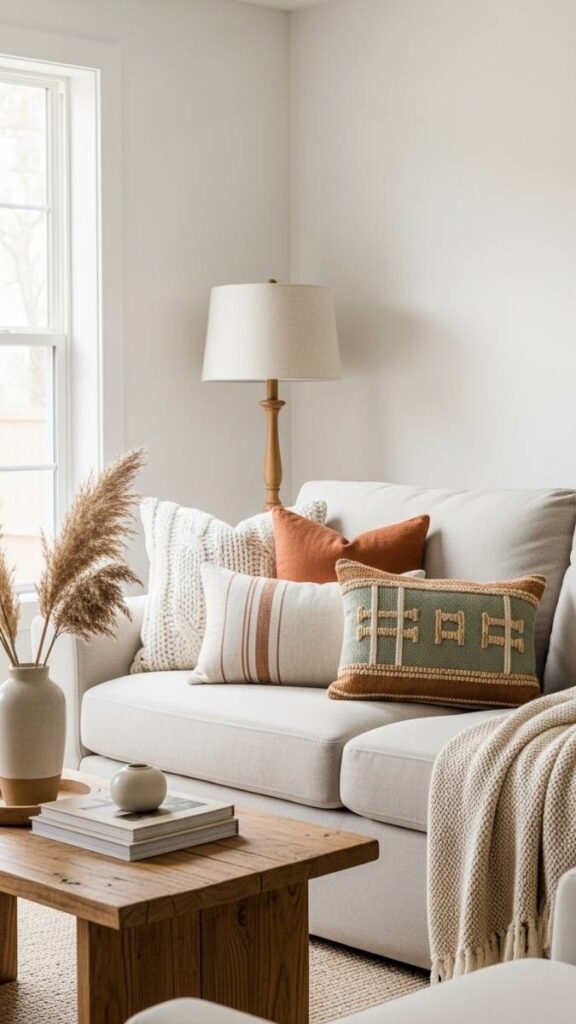
Linen upholstery is the backbone of most well-executed farmhouse living rooms because it’s visually soft without being overly formal. Choose a loose-fitted style over a tight tufted one; the relaxed silhouette reads more authentically rustic and hides wear better over time.
A natural oatmeal or warm greige tone allows you to layer in rust, terracotta, sage, or dark navy through pillows and throws without the sofa fighting for attention.
In my experience, the furniture scale matters more than the fabric choice: a sofa that’s slightly oversized for the room actually adds to the cozy effect, as long as there’s still 30+ inches of walking space around it.
Hang Galvanized Metal Pendant Lights for Rustic Industrial Contrast
The contrast between matte metal and soft textiles is one of the defining details of farmhouse style. A pair of galvanized or aged metal pendants hung at different heights over the coffee table or seating area adds visual structure without the heaviness of a chandelier.
Wire them with Edison or warm LED bulbs (2700K maximum) to keep the light amber rather than white.
This setup works best in rooms with higher ceilings or exposed beams; the vertical drop of the pendants creates an intentional sense of scale. In rooms with lower ceilings, wall sconces with a metal finish achieve the same material contrast without competing with the room’s proportions.
Read More About: 51+ Rustic Wall Decor Ideas That Actually Work in Real Homes Not Just Pinterest
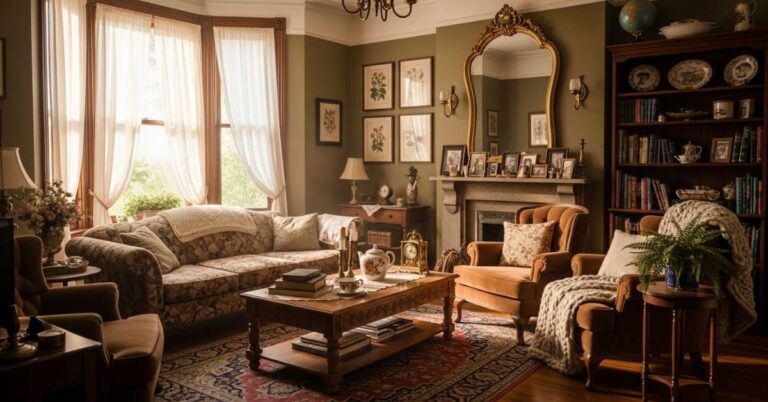
Build a Fireplace Mantel Display with Candlesticks, Greenery, Cozy Farmhouse Living Room Rustic Decor
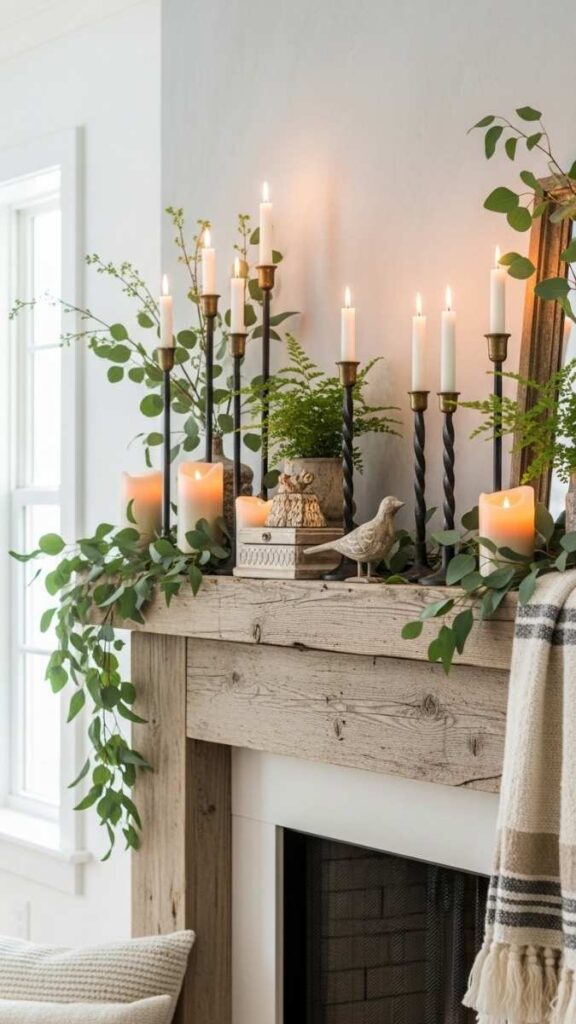
A fireplace mantel gives you one of the most visible surfaces in the living room, and in a farmhouse setup, the goal isn’t symmetry, it’s curated asymmetry.
Anchor one side with a taller element (a wooden frame, a lantern, or a cluster of candlesticks at different heights), then balance the other with something lower and wider (a wooden tray, dried botanicals, or a single ceramic piece).
The key is keeping materials consistent: aged wood, matte ceramic, wrought iron, and dried greenery all belong in the same visual family.
Avoid mixing too many finishes. Shiny metallics or lacquered surfaces immediately read out of place against the weathered warmth of farmhouse decor.
Drape Chunky Knit Throws Over Chair Arms for Texture and Warmth
Chunky knit throws don’t just add warmth they add immediate tactile depth to any seating surface. Drape one loosely over an armchair or sofa corner rather than folding it neatly: the casual drape reads as lived-in, which is exactly the mood farmhouse decor is aiming for.
Stick with natural fiber options like cotton or wool in oatmeal, cream, or warm grey. Avoid faux-fur versions, which tend to look synthetic under natural light and lean more glam than rustic. This works in virtually any size living room and is one of the easiest ways to shift the feel of a space between seasons without any rearrangement.
Add Open Wood Shelving to an Empty Wall for Storage and Display
Empty walls in a farmhouse living room are best filled with open shelving rather than framed art alone; the combination of functional storage and decorative display is very on-brand for this style.
Reclaimed wood planks on black iron brackets are the most common execution, and they work because the contrast between dark hardware and light wood reads with quiet authority. Style shelves in zones: books stacked horizontally, a ceramic piece or two, a small plant, and a woven basket for real storage.
Avoiding overcrowding two-thirds full is the right density for shelves that feel curated rather than cluttered. This setup is especially useful in small living rooms where a bookcase or TV unit would eat too much floor space.
Layer Multiple Rugs to Define Zones and Add Warmth Underfoot
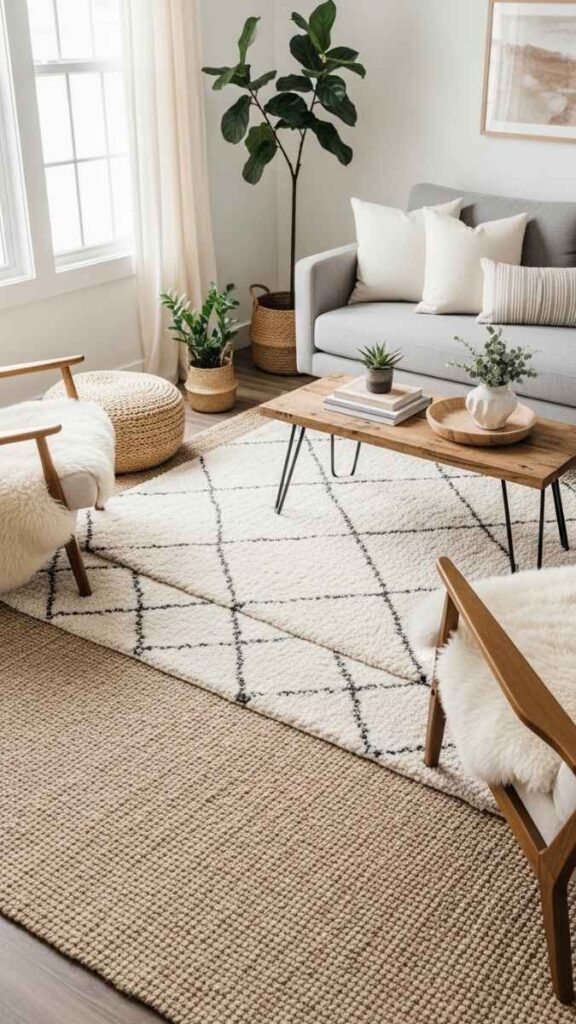
Layering rugs is one of the more useful techniques for defining a seating zone when your living room doesn’t have natural boundaries.
Start with a larger flat-weave jute rug as the base, then layer a smaller patterned cotton or wool rug on top ideally in a muted stripe, check, or simple geometric that doesn’t compete with the furniture.
The size gap between the two creates visual interest at floor level, and the layered texture makes the space feel more finished. In open-plan living rooms where the space flows into a kitchen or dining area, this technique creates a visual boundary without walls or furniture doing the work.
Read More About: 50+ Cabin Decorating Ideas That Make Any Space Feel Warm Cozy and Intentionally Designed
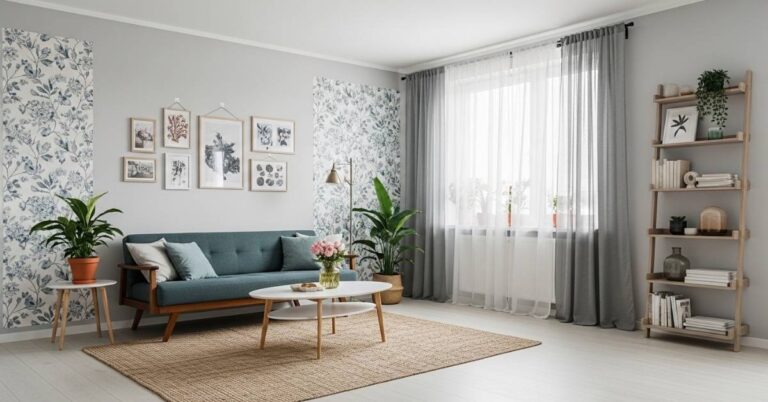
Use Wooden Crates or Ladder Shelves as Flexible Side Storage
A leaning ladder shelf in a corner is one of the more space-efficient storage solutions for farmhouse living rooms because it uses vertical space without requiring wall anchors or installation.
Use the rungs for folded throws, the shelves for books, small plants, and a candle or two. The wood grain keeps it warm, and the ladder silhouette is lightweight enough that it doesn’t visually close off a corner.
This is especially practical for renters or anyone who moves frequently; the shelf is freestanding and can be repositioned or repurposed in a different room entirely. In terms of proportions, a 5-foot or taller ladder reads best in rooms with 8+ foot ceilings.
Style a Tray on the Coffee Table with Candles, Botanicals, and a Textured Bowl
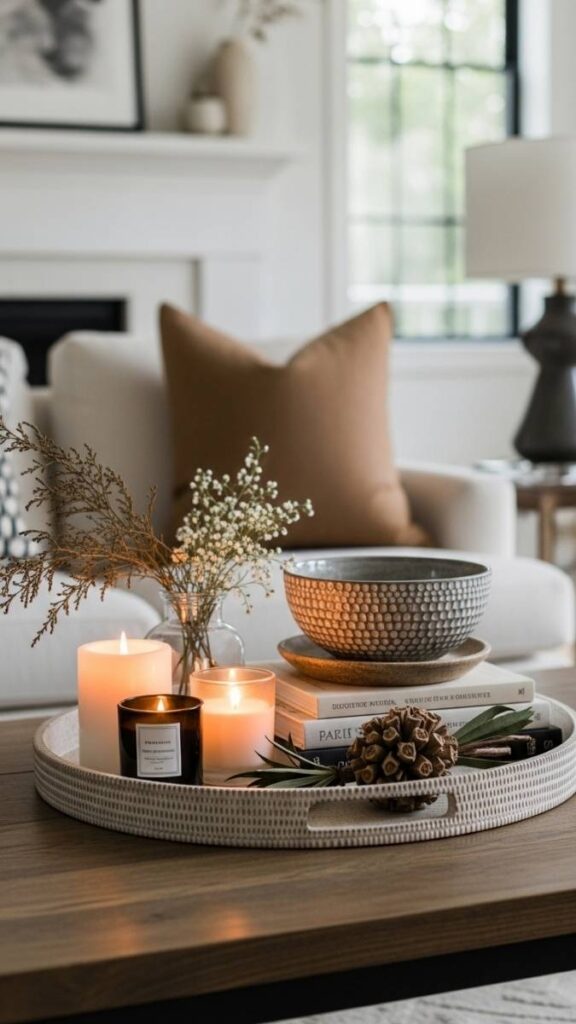
Coffee table styling in a farmhouse room should feel collected, not arranged. A wooden or metal tray pulls disparate objects together and gives the surface a sense of organization without looking fussy. Inside the tray: a chunky pillar candle or two, a small ceramic bowl (ideally matte or textured), and one natural element a dried stem, a smooth river stone, or a sprig of eucalyptus.
Outside the tray, one or two books stacked flat with a small object on top finish the surface. The tray is doing the compositional work, so the individual pieces don’t need to be precious utility and texture matter more than price point.
Incorporate Exposed Brick or Stone as a Textural Backdrop
If your home has any original brick or stone, even a small section leaving it exposed is one of the most effective things you can do for a farmhouse living room. The raw material adds immediate character that no wallpaper convincingly replicates.
If the brick runs along the fireplace wall, keep the surrounding decor minimal so it can speak for itself. If it’s on a side wall, consider positioning a chair or console table against it to make the brick feel intentional rather than unfinished.
Rooms with exposed brick often feel cooler in tone, so counterbalance with warmer textiles and amber lighting to pull the warmth back in.
Mount Vintage or Antique Mirrors to Bounce Light and Expand the Space
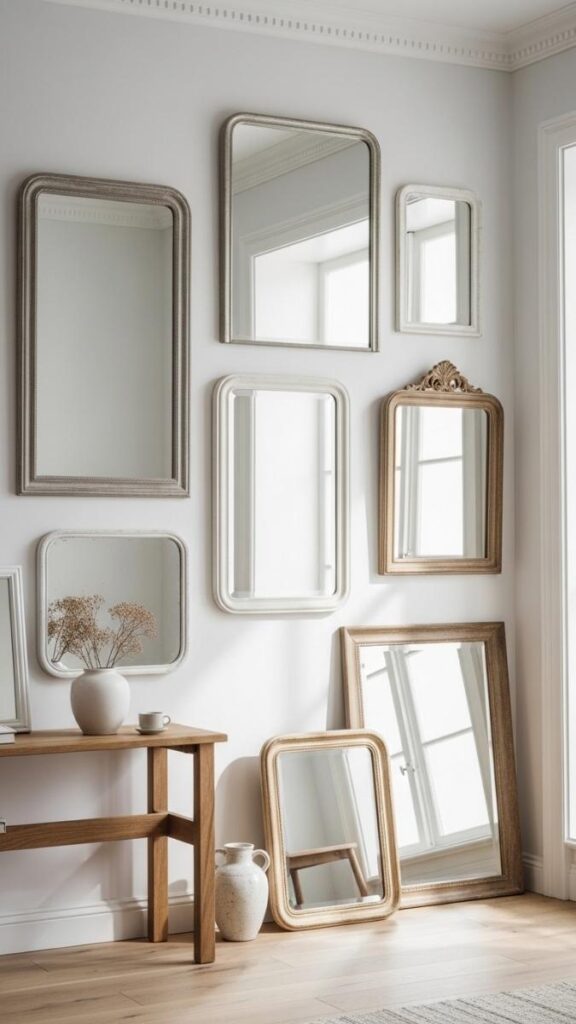
A large mirror in a farmhouse living room does two practical things: it reflects natural light deeper into the room and visually extends the wall space, making even a modest room feel more open. Choose a frame in distressed wood, aged gold, or wrought iron something with visible wear or character.
Avoid sleek modern frames that look too polished against rustic textures. Positioning matters: hang it directly across from a window to maximize light bounce, or above a console table to give the mirror a purpose (like an entryway-style landing zone in the living room).
In my experience, this style tends to work especially well in dark or north-facing rooms where natural light is already limited.
Use Dark Curtains to Ground a Room with Lots of Light Neutral Tones
When a farmhouse living room leans heavily into cream, white, and oatmeal, adding dark curtains is one of the most effective ways to prevent the space from feeling washed out.
Deep charcoal linen, dark olive cotton, or even black French linen panels introduce contrast that visually anchors the room and makes the lighter tones feel brighter by comparison.
Hang the rod close to the ceiling and use full-length panels that just graze the floor; this draws the eye upward and makes the ceiling height feel taller.
For a room that already has enough natural light, the darker curtains also provide practical privacy control without the need for blinds behind.
Read More About: 49+ Rustic Kitchen Ideas That Make Your Space Feel Warm, Lived In, and Actually Functional
Arrange Furniture Around a Central Rug Rather Than Against the Walls
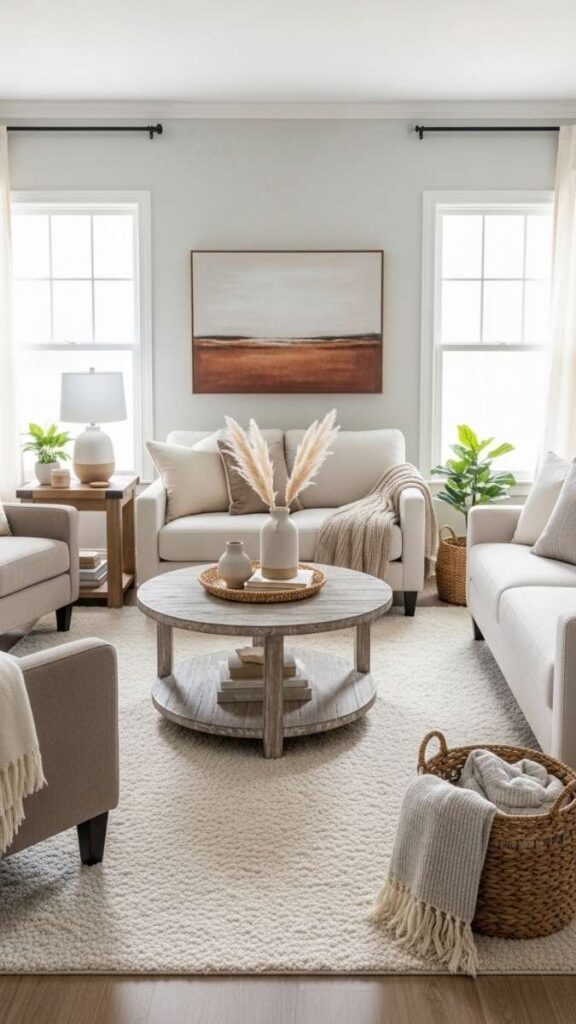
One of the most common layout mistakes in farmhouse living rooms is pushing all the furniture against the walls.
Floating the sofa and chairs around a central rug creates a proper conversation area, makes the room feel more intentional, and counterintuitively makes the space feel larger.
The rug anchors the seating group and defines its boundary without walls doing the work. For this to read well, the sofa’s back legs should be on the rug at minimum, with the front legs touching if possible.
Leave at least 18 inches between the sofa and the coffee table for comfortable use, and keep 30+ inches of clear walking path around the perimeter of the seating area.
Add Woven Baskets for Visible, Functional Storage
Baskets are uniquely useful in farmhouse living rooms because they’re simultaneously storage and decor.
Use them next to the sofa for blankets, under the coffee table for books and remotes, or stacked in a corner for extra visual warmth.
Seagrass, rattan, and wicker all work within the farmhouse material palette; the key is varying the size and shape rather than matching them perfectly.
A row of identical baskets looks more retail than residential. Two or three different-sized baskets grouped together or stacked naturally reads as collected over time, which is exactly the aesthetic farmhouse decor is aiming for.
Bring in a Vintage Wooden Bench as Extra Seating and a Display Surface
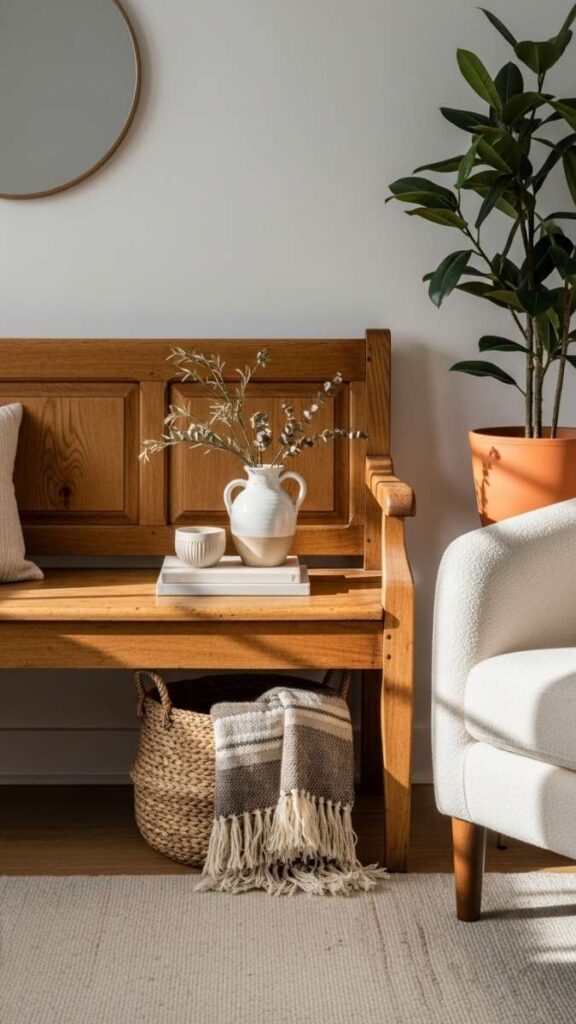
A wooden bench, especially one with worn paint or visible grain adds flexible function to a farmhouse living room.
Place it at the end of the sofa or against a wall as additional seating when you have guests, and use the top surface for a plant, a tray, or a stack of books in everyday life. The patina of older wood is an asset here: the more imperfect the finish, the better it reads in a rustic setup.
New benches can be artificially aged with a light dry-brush of diluted paint or a furniture wax in a darker tone. In smaller rooms, a narrow bench at 16-18 inches deep won’t interrupt the walking flow the way an extra chair would.
Create a Reading Corner with an Armchair, Floor Lamp, and Side Table
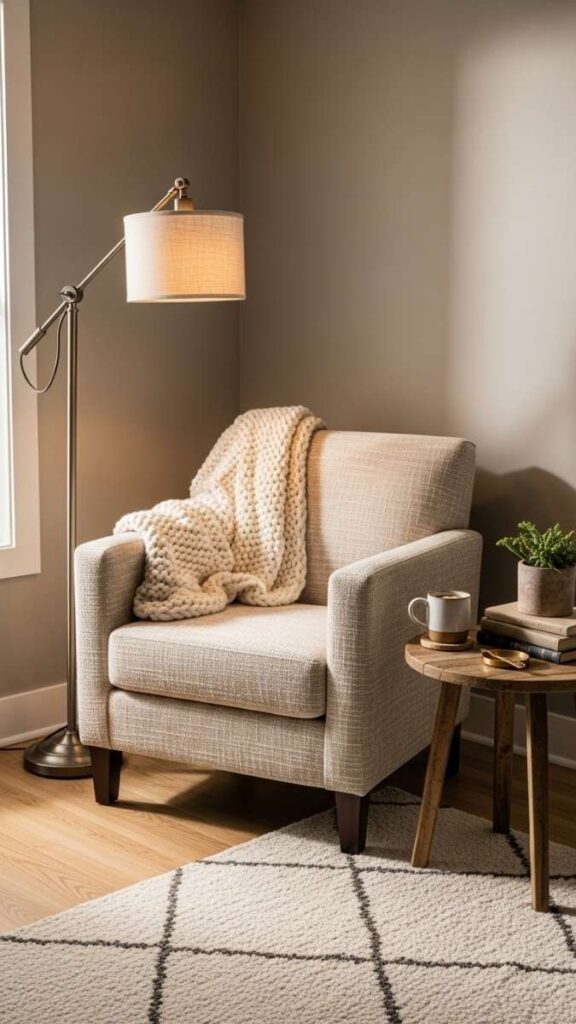
A dedicated reading corner gives a farmhouse living room a sense of purpose beyond the main sofa arrangement. The setup is simple: a comfortable armchair (linen, cotton twill, or velvet in a muted tone), a floor lamp positioned just behind and to the side of the chair for task lighting, and a small side table within reach for a mug or a book.
What makes it feel farmhouse versus generic is the material of the lamp and table aged wood, matte black iron, or an antique-style brass base with a simple linen shade. Avoid modern tripod lamp designs, which tend to look out of place. Position the chair so it faces slightly toward the room, not directly into a corner; this keeps the setup social even while being intentionally cozy.
Farmhouse Living Room Setup Comparison
| Setup | Best For | Space Type | Problem It Solves |
| Reclaimed wood coffee table + jute rug | Neutral rooms needing warmth and weight | Any size | Rooms that feel unanchored or too sparse |
| Floating furniture around central rug | Rooms with awkward wall placement | Medium to large | Furniture pushed against walls, poor flow |
| Shiplap accent wall | Rooms that feel flat or too modern | Any size | Lack of architectural detail or texture |
| Open wood shelving | Rooms needing storage without bulk | Small to medium | Empty walls, floor storage eating space |
| Reading corner with lamp + armchair | Open-plan rooms needing zones | Medium to large | Undefined space, no cozy focal point |
| Layered rugs | Open-plan spaces lacking boundaries | Large or open-plan | No natural visual separation between zones |
| Dark curtains with light neutrals | Rooms that feel washed out | Any size | Lack of contrast, walls blending together |
What Actually Makes a Cozy Farmhouse Living Room Work
The honest answer is restraint. Farmhouse decor looks like it’s doing a lot, but the rooms that read as genuinely cozy rather than Pinterest-cluttered are usually operating on a shorter list of materials, a tighter color palette, and better spatial decisions than they first appear.
Limit your material palette to four or five.
In a well-executed farmhouse living room, you’ll typically find: one natural wood tone (light or medium), one woven texture (jute, rattan, linen), one matte metal (iron, galvanized steel, or aged brass), one ceramic element, and soft textiles (cotton, wool, linen). When everything comes from within that material family, the room has an inherent cohesion even if the individual pieces weren’t bought together.
Light temperature matters as much as the decor.
Overhead lighting in a farmhouse living room almost always looks wrong; it flattens the texture of wood and woven materials and removes the layered shadow depth that makes the style feel cozy.
Use floor lamps, table lamps, and candles to build the lighting from the ground up. Warm bulbs at 2700K are the threshold: anything cooler and the room starts feeling clinical rather than rustic.
Trend note for 2026:
The current farmhouse shift is moving away from all-white shiplap toward warmer, more natural-toned walls; warm taupes, aged limewash, and soft clay tones are increasingly appearing alongside reclaimed wood and vintage pieces. The stark white farmhouse look is giving way to something that reads more like a well-aged European farmhouse than a renovated American barn.
FAQ’s
What is the easiest way to start a cozy farmhouse living room on a budget?
Start with textiles: a jute rug, a chunky knit throw, and two or three linen pillow covers are inexpensive and immediately shift the feel of a room. These three changes require no furniture purchases and can pull a generic rental living room significantly closer to the farmhouse aesthetic.
How do I make my farmhouse living room feel cozy without making it look cluttered?
Work in layers, not additions. Instead of adding more objects, add depth: layer a throw over the sofa arm, place a tray on the coffee table to group existing items, and add a floor lamp to create warm ambient light. The difference between cozy and cluttered is usually organization and material consistency, not quantity.
What colors work best for a farmhouse living room?
Neutral, warm-based tones are the core: cream, warm white, oatmeal, warm greige, and soft taupe for walls and large furniture. Accent colors work best when they’re muted and natural sage green, terracotta, dusty blue, or ochre. Avoid cool grays, bright whites, and saturated tones, which tend to read more contemporary than rustic.
Shiplap vs. exposed brick: which is better for a farmhouse living room?
If you have original brick, keeping it authentic material always reads better than installed paneling. If you’re starting from a standard drywall wall, shiplap is more budget-friendly than brick veneer and achieves a cleaner rustic look that’s easier to maintain. Both work, but exposed brick tends to require more careful lighting and decor curation to avoid feeling dark or heavy.
What type of lighting works best in a farmhouse living room?
Layered lighting from multiple sources is significantly more effective than a single overhead light. Combine a floor lamp near the reading corner, a table lamp on a console or side table, and candles or candlestick-style lighting near the fireplace or on shelves. Keep all bulbs at 2700K or warmer. Avoid recessed lighting as the primary source it removes the ambient warmth that farmhouse decor depends on.
Is farmhouse decor suitable for small living rooms?
Yes, with a few adjustments. In a small farmhouse living room, prioritize vertical storage (floating shelves, ladder shelves) over floor-based storage, use a single large rug rather than layered rugs, and choose furniture with visible legs raised furniture makes a room feel more open. Keep the color palette light and limit the number of natural materials to three maximum to avoid a dense or heavy feel.
How do I mix old and new pieces in a farmhouse living room?
Ground the room with one or two genuinely older or reclaimed pieces, a vintage bench, an antique mirror, a reclaimed wood shelf and fill in with new pieces that share the same material language (linen, wood, iron). The contrast between an imperfect vintage item and clean new textiles actually reads better than a room full of artificially aged pieces. The key is that the older pieces feel authentic, not decorative props.
Conclusion
A well-designed farmhouse living room isn’t about hitting every rustic checkbox, it’s about building a space that feels warm, functional, and grounded in real-world use. The ideas that hold up longest are the ones that solve actual spatial problems: defining zones, managing storage, improving light quality, and giving the room a clear sense of material consistency.
Start with one or two of the setups that match your current space, budget, or biggest frustration whether that’s a flat wall that needs texture, a sofa arrangement that never quite felt right, or a room that looks fine in daylight but loses its warmth by evening. Small adjustments in those areas will shift the feel of the whole room more than a full redecoration would.