Best Zavalio Com Review 2026: Why So Many “Creator Platform” Reviews Don’t Match the Real Site
Type “Zavalio Com review” into Google right now, and you’ll get a strange mix of results. Some articles call it a bold new creator-first platform built to rival Medium and Substack. Zavalio Com Others describe it as a plain content site with articles on business and health. Both can’t be true. And once you dig in, only one of them actually is.
This isn’t a normal case of reviewers disagreeing on opinion. It’s a case where several websites are describing a product that doesn’t exist dressed up with real-sounding features, comparison tables, and confident claims about pricing and security. Here’s what’s actually going on, and how to spot this pattern before it fools you again.
What Zavalio Com Actually Is
The real Zavalio.com is a content website. It publishes articles across a handful of broad topics: business, finance, law, health, technology, and lifestyle. You don’t need an account to read it. There’s no paywall blocking articles. You just open a page and read.
That’s it. That’s the whole platform. There’s no sign-up flow for writers, no dashboard, no monetization system, no subscription tiers, and no mobile app. It functions the way a magazine-style content site has worked since roughly the early 2010s: publish articles, get search traffic, run ads. Nothing wrong with that model. It’s just not a creator platform in any meaningful sense, and it was never built to be one.
The Version That Doesn’t Exist

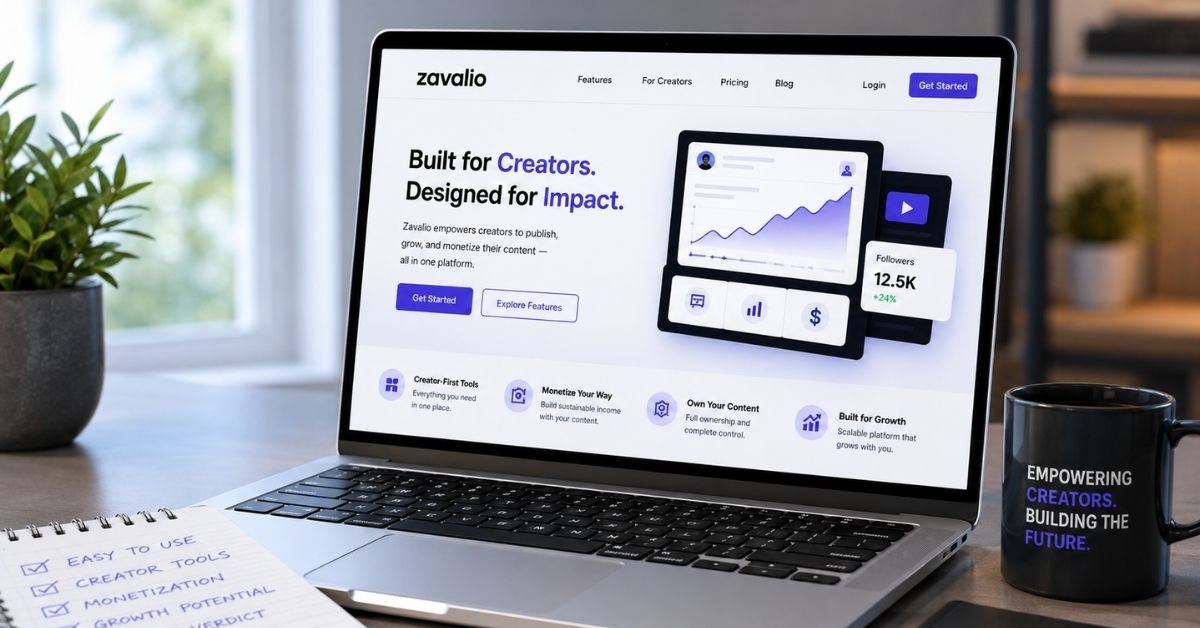
Here’s where it gets interesting. A search for “Zavalio Com” also surfaces a cluster of articles at least six or seven, spread across totally unrelated-looking domains describing something else entirely. In this version, Zavalio Com is a creator-first platform built to challenge Medium and Substack.
It supposedly offers creator monetization tools, creator subscriptions, premium content gating, sponsored posts, brand partnerships, a creator dashboard with analytics, two-factor authentication, encrypted data transmission, and a native app “in development” for iOS and Android.
None of that is real. Search results confirm the actual site has no accounts for writers, no monetization system, and no app. Yet these articles describe it with total confidence, right down to security architecture and feature comparison tables against Medium and Substack. That’s not a minor factual slip. It’s a fully invented product wearing a real domain name.
Read More About: VocalNewsMedia Com Review 2026: Is It Legit, Safe, and Worth Visiting?
How You Can Tell These Are Fabricated
A few patterns show up consistently once you compare these articles side by side, and they’re worth knowing because they show up far beyond just Zavalio Com.
They share suspiciously similar structure.
Nearly identical headings appear across different sites: “What Is Zavalio Com,” “Why Creators Are Switching,” “Zavalio Com vs Medium vs Substack,” “Is Zavalio Com Legit and Safe to Use.” Genuine independent reviewers don’t converge on the exact same outline by coincidence. Templated content does.
They hedge everything.
Phrases like “appears to,” “positions itself as,” “discussions suggest,” and “based on available information” show up constantly. That phrasing lets an article sound informed while never committing to a claim that could be fact-checked. It’s a tell of content written without ever touching the actual product.
No specifics survive contact with scrutiny.
No real pricing numbers. No screenshots of an actual dashboard. No named reviewer who signed up and used it. No quotes from a real creator. Everything stays at the level of a press release for a product that was never shipped.
Read More About: Honest Reviews About Alaikas. com: Is It Legit? Everything Shoppers Should Know Before Buying (2026)
The comparison tables always score too well.
In the fabricated reviews, Zavalio Com beats Medium and Substack on nearly every category, including “creator ownership,” despite having zero track record. A platform with no users and no history doesn’t out-score established players on trust metrics. That’s a marketing copy, not an analysis.
Here’s a side-by-side of what gets claimed versus what search evidence actually shows:
| Claimed Feature (Fabricated Reviews) | What The Real Site Has |
| Creator accounts and sign-up flow | No account needed to read |
| Creator subscriptions and premium content | No subscription or paywall system |
| Sponsored posts and brand partnerships | Not present |
| Creator dashboard with analytics | Not present |
| Native iOS and Android app | Not present |
| Two-factor authentication | Not applicable no accounts |
| Personalized AI content feeds | General topic-based articles only |
Why Someone Would Do This

This isn’t random. It’s a known content strategy called parasite SEO, where writers attach speculative or invented content to a real, growing search term to capture traffic that the term is already generating. Zavalio.
com had been gaining organic visibility in 2026, so its name became a target. Rather than write an honest article about the actual content site, several operators built a more exciting, feature-rich version of “Zavalio Com” designed to rank for buyer-intent keywords like “Zavalio Com login,” “Zavalio Com sign up,” and “Zavalio Com pricing” keywords a real creator platform would attract, and a plain content site never would.
The business logic works even if the article is fiction. Search traffic doesn’t require the claims to be true. It just requires the article to rank, get clicked, and generate ad impressions or affiliate clicks before anyone notices the mismatch. Multiply that across a handful of sites all running the same playbook, and you get exactly what shows up in search results today: a real website buried under a pile of near-identical fake write-ups describing a platform that was never built.
How to Protect Yourself From This Pattern
The good news is this pattern is easy to catch once you know what to check. Before trusting any review of an unfamiliar site or app, visit the actual URL yourself rather than relying only on someone’s description of it. If the review claims a sign-up flow, a dashboard, or a pricing page exists, try to find that page directly and see if it’s real.
Search for the platform name alongside neutral terms like “reddit” or “complaints” to see if actual users are discussing it anywhere outside of SEO articles. And treat any review that never gets specific, no real price, no real screenshot, no named person who used the product as unverified until proven otherwise.
Zavalio.com itself isn’t dangerous. It’s a legitimate, if unremarkable, content site. The real risk sits with the review ecosystem built around it: a small industry of interchangeable articles happy to describe any product you ask about, whether or not that product actually exists.
Read More About: Best Wireless Earbuds Under 200 Dollars 2026: 18 Top Picks for Premium Sound, ANC & Value
Frequently Asked Questions
Is Zavalio Com a real website?
Yes. It’s a functioning content site publishing general articles on topics like business, finance, and lifestyle. What’s fabricated is the separate description of it as a full creator-first platform with monetization tools and an app.
Does Zavalio Com have a login or sign-up for creators?
No. The real site doesn’t require an account to read content, and there’s no evidence of a creator sign-up system, despite what some review articles claim.
Is there a Zavalio Com app?
No confirmed app exists. Claims of an iOS and Android app “in development” appear only in the fabricated review cluster, not in any verifiable source.
Why do search results for Zavalio Com look so inconsistent?
Because multiple unrelated websites have published near-identical, speculative articles describing an invented version of the platform, alongside articles describing the real, much simpler content site. That mismatch is exactly what you’re seeing.
Conclusion
Zavalio Com isn’t a mystery once you separate fact from filler. The real site is a straightforward content hub, nothing more, nothing less. The “creator-first platform” version, with its dashboards, subscriptions, and app, only exists on paper, written by sites chasing search traffic rather than describing what’s actually there.
That gap matters. It’s a reminder that a confident, well-formatted article isn’t the same thing as a verified one. Before you trust a review of any unfamiliar site, check the source yourself. A few minutes of digging is usually all it takes to tell a real product from an invented one.