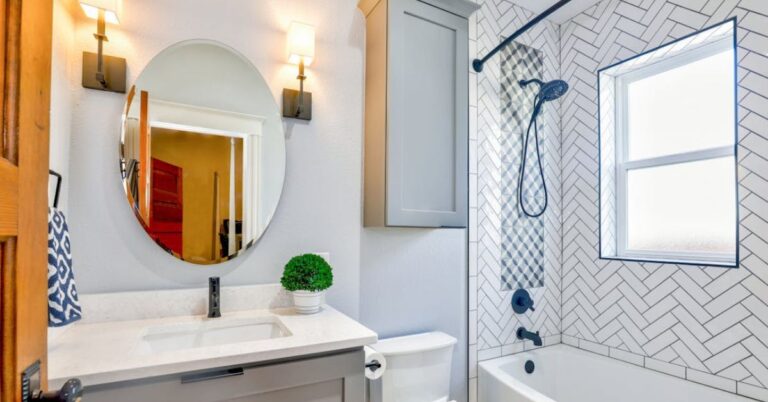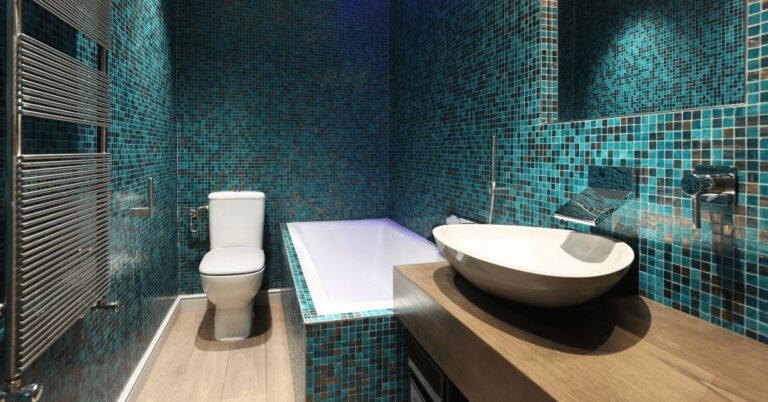
Bathroom Lighting Ideas: 35 Stylish Ways to Brighten Your Space
Good bathroom lighting changes everything. It can turn a dull, flat room into a bright, welcoming space. It can also make your morning routine easier. Shaving gets simpler. Makeup looks better. Even brushing your teeth feels nicer under the right glow.
This guide covers the best bathroom lighting ideas for every home. You’ll learn how to light a bathroom the right way, no matter its size or style. We’ll cover bathroom vanity lighting, bathroom ceiling light fixtures, bathroom sconce ideas, color temperature, energy efficiency, and common mistakes to avoid. By the end, you’ll know exactly which bathroom light fixtures fit your space and your taste.
Best Bathroom Lighting Ideas for Every Style
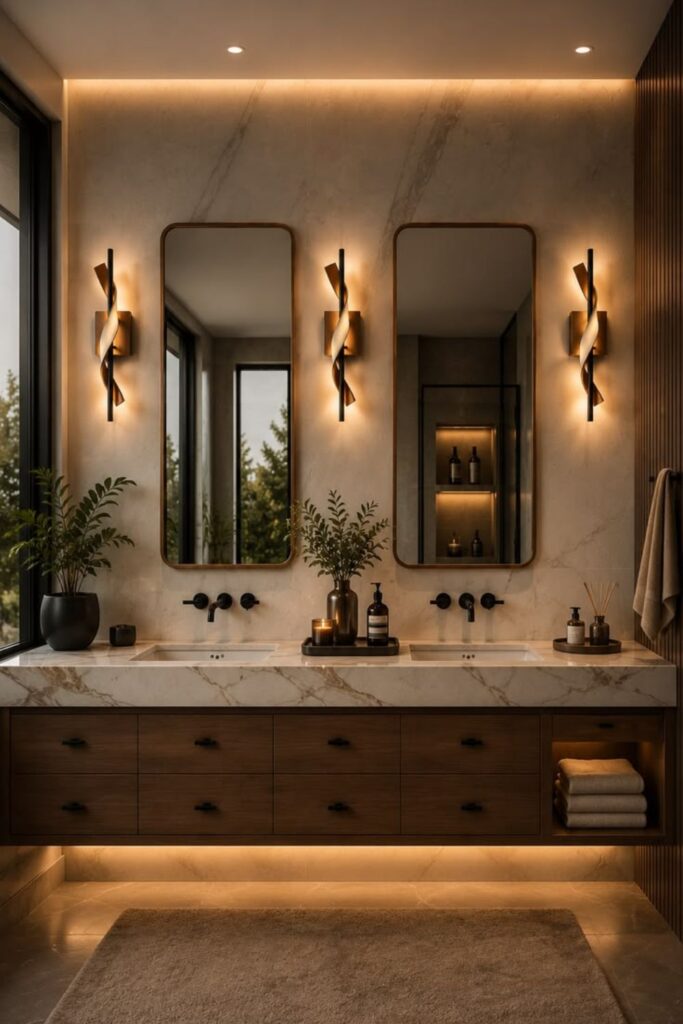
Your bathroom’s style should guide your lighting choices. A sleek, modern space needs different fixtures than a cozy farmhouse bathroom. Matching your decorative lighting to your overall design keeps the room feeling put-together instead of random.
Below, we break down four popular styles. Each one uses different finishes, shapes, and moods. Pick the one that matches your home, or mix elements to create something unique.
Modern Bathroom Lighting Ideas
Modern bathroom lighting favors clean lines and simple shapes. Think matte black bars, geometric sconces, and slim LED bathroom lights built right into mirrors. Finishes stay simple too. Black, white, and brushed nickel dominate this look.
Contemporary bathroom lighting often skips fancy shades altogether. Instead, it uses light itself as the design feature. A glowing edge-lit mirror or a single linear bar over the sink can feel more striking than a dozen small bulbs. This style works well in small bathrooms and large ones alike, since it never overwhelms the space.
Read More About: Bathroom Shelf Ideas: 45 Creative Storage & Shelving Ideas
Farmhouse Bathroom Lighting Ideas
Farmhouse bathroom lighting brings warmth and texture. Mason jar pendants, wagon-wheel fixtures, and aged bronze finishes all fit this style. Wood accents and black metal often pair with these fixtures for a cozy, lived-in feel.
This style pairs naturally with shiplap walls and barn-style mirrors. The lighting should feel a bit rustic, never too polished. Warm bulbs suit this look best, since cool light can clash with the farmhouse mood. If your bathroom has natural wood tones already, farmhouse fixtures will tie the whole room together.
Traditional Bathroom Lighting Ideas
Traditional bathroom lighting leans on classic shapes. Sconces with fabric or glass shades are common. Brass and oil-rubbed bronze finishes add a timeless touch. Symmetry matters a lot in this style, so fixtures usually come in matching pairs.
This approach suits older homes or anyone who prefers a formal, elegant look. Traditional fixtures often use warmer bulbs to match their classic feel. If you already have crown molding, wainscoting, or vintage tile, traditional lighting will feel right at home.
Luxury Bathroom Lighting Ideas
Luxury bathroom lighting goes all in on drama and glow. Picture a crystal chandelier bathroom ceiling fixture, paired with a backlit mirror that dims to your mood. Every layer of light works together to create a spa-like experience.
This style often uses dimmable bathroom lights throughout the room. That way, you can go from bright and functional in the morning to soft and relaxing at night. Spa-style bathroom lighting relies heavily on this flexibility, since the goal is comfort as much as beauty.
Bathroom Vanity Lighting Ideas
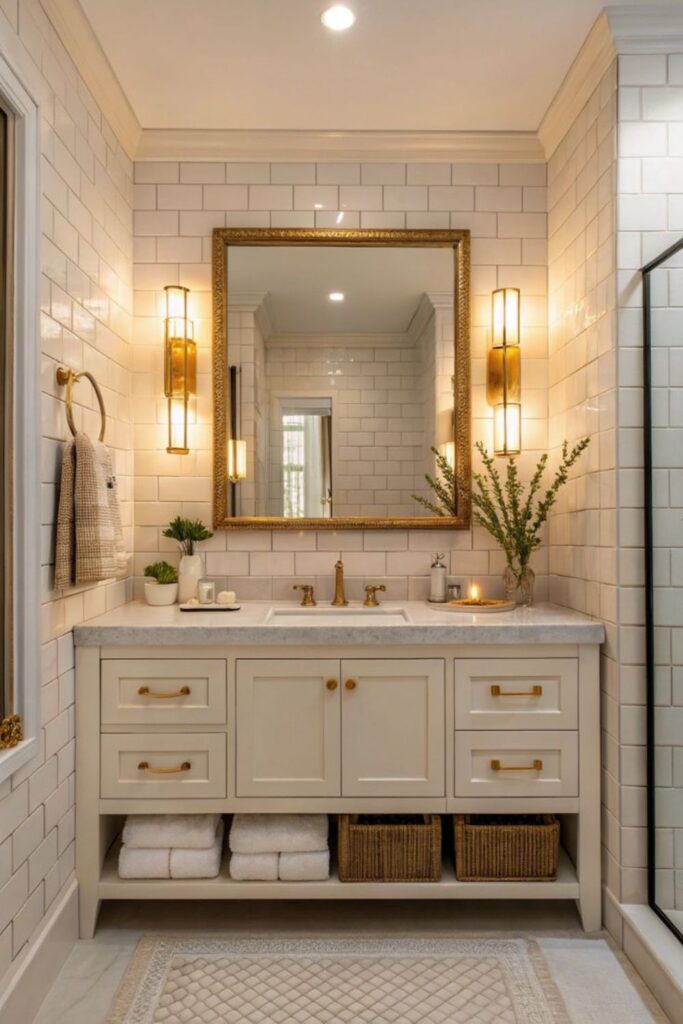
Bathroom vanity lighting matters more than any other fixture in the room. This is where you shave, apply makeup, and check your skin closely. Poor light here creates shadows and makes tasks harder than they need to be.
Good vanity light fixtures spread light evenly across your face. They avoid harsh shadows under the chin, nose, or eyes. Getting this zone right solves most bathroom lighting problems in one move.
Bathroom Lights Over Mirror
Bathroom lights over mirror placement usually falls into two camps: a single horizontal bar, or two vertical sconces on either side. Both work well, but side sconces tend to light the face more evenly, since they avoid casting shadows downward.
Mount your fixture around 78 to 80 inches from the floor for best results. This height keeps the bulbs at eye level without shining directly into your eyes. Bathroom lighting around mirrors should always aim for even, soft coverage rather than one harsh point of light.
Double Vanity Lighting Ideas
Double vanity lighting ideas call for symmetry. If you have two sinks, use matching fixtures spaced evenly above each mirror. This keeps the room balanced and gives each person their own well-lit space.
Spacing depends on your mirror width, but a common rule is centering each fixture over its own sink and mirror. You can also mix overhead lighting with side sconces for extra coverage. This layered approach works especially well in larger primary bathrooms.
Read More About: Bathroom Renovation Ideas: 75 Stylish Ways to Transform Any Bathroom
LED Mirror Lighting
LED bathroom lights built into mirrors have become a huge trend. These built-in, edge-lit mirrors give off soft, even light without visible bulbs. Many models also offer dimming, so you can adjust brightness depending on the task.
Compared to traditional bulbs, LED mirror lighting uses far less energy and lasts much longer. Some models last over 25,000 hours. That means fewer replacements and lower electricity bills over time.
Backlit Bathroom Mirror Ideas
Backlit mirrors create a soft halo effect around the edges. This look feels modern and a little bit luxurious. Many newer models include anti-fog technology, so the mirror stays clear even after a hot shower.
These fixtures work best in spa-style bathroom lighting setups. They’re popular in primary suites and upscale remodels, where the goal is a calm, hotel-like atmosphere rather than bright, clinical light.
Bathroom Ceiling Light Fixtures
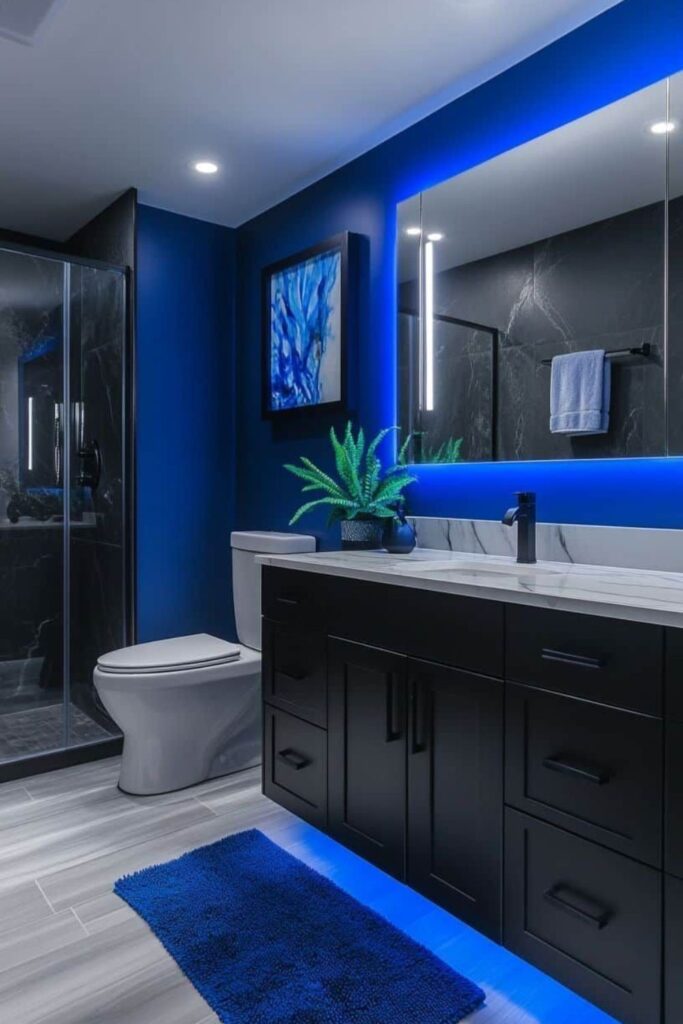
Bathroom ceiling light fixtures provide the base layer of light in the room. This is your ambient lighting, the general glow that fills the whole space. Without it, even the best vanity lights will leave dark corners.
Choosing the right ceiling fixture depends on your ceiling height, room size, and style. Some rooms need a simple flush mount. Others can handle a statement chandelier. We’ll cover both below, along with recessed and pendant options.
Flush Mount Ceiling Lights
Flush mount ceiling lights sit close to the ceiling, making them perfect for low ceilings and small bathrooms. They come in many finishes, including frosted glass, brushed nickel, and matte black.
These fixtures don’t take up visual space, which helps smaller rooms feel bigger. They also work well as a secondary light source in larger bathrooms, paired with recessed or pendant lighting for extra coverage.
Recessed Lighting
Recessed bathroom lighting sits flush inside the ceiling, giving a clean, built-in look. It works well over showers, tubs, and vanity areas. Just make sure any fixture near water uses a moisture-resistant light fixture rating.
Spacing matters here. A common rule is placing recessed lights about 4 feet apart for even coverage. IP-rated bathroom lights are required directly above showers or tubs, since these zones face constant moisture exposure.
Bathroom Chandeliers
Bathroom chandeliers add a touch of glamour. Mini chandeliers suit powder rooms nicely, while larger statement pieces shine in primary bathrooms. A crystal chandelier bathroom fixture instantly elevates the whole room.
If you’re installing a chandelier above a tub, check your local clearance codes first. Most areas require at least 8 feet of vertical clearance and specific wet-rated fixtures for safety.
Pendant Lighting
Bathroom pendant lights work beautifully in pairs, flanking a vanity mirror on either side. A single statement pendant also works well in a powder room, where it becomes the room’s focal point.
Pendant lighting over bathtub areas has become a popular trend too, adding a soft, ambient glow for relaxing soaks. Just be sure any pendant near water carries the proper safety rating.
Bathroom Sconce Ideas
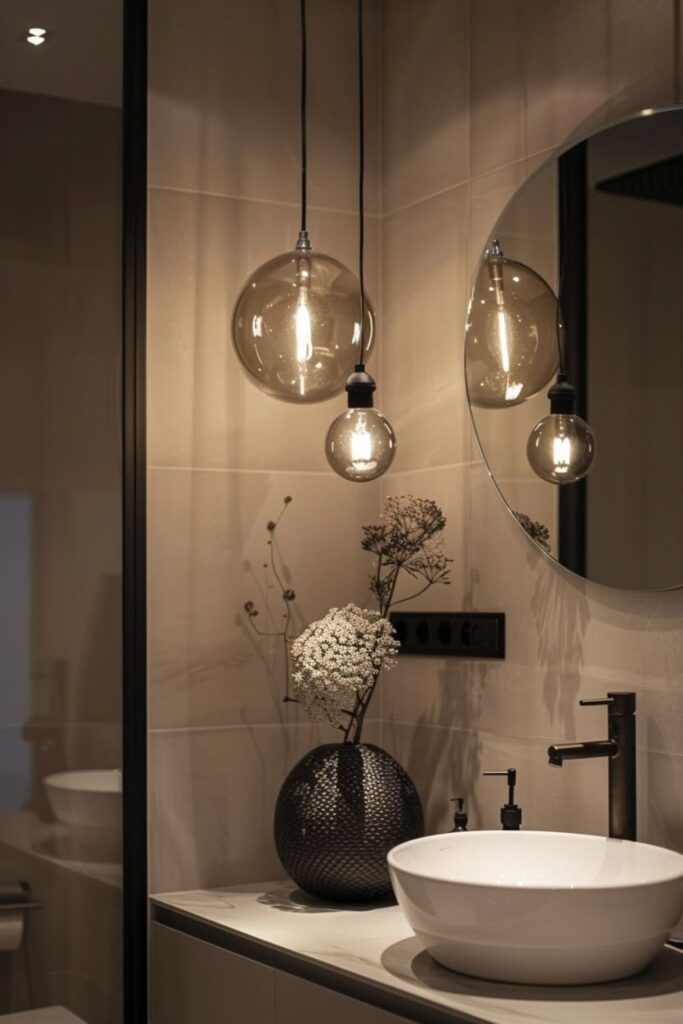
Bathroom sconce ideas add texture and personality beyond basic function. Bathroom wall sconces sit on either side of a mirror or along an empty wall, adding both light and decorative charm.
Sconces come in endless styles, from sleek and modern to warm and vintage. They’re one of the easiest ways to add character to a bathroom without a full remodel.
Black Metal Sconces
Black bathroom sconces pair beautifully with industrial bathroom lights styles and modern farmhouse looks. They create strong contrast against white or light-colored walls, making them a popular choice for bold design statements.
Brass Globe Sconces
Brass bathroom lights in a globe shape give off a warm, ambient glow. This retro-modern look has surged in popularity recently, especially in bathrooms with warm wood tones or vintage-inspired tile.
Vintage & Antique Sconces
Vintage sconces often feature restoration-style glass shades and aged finishes like oil-rubbed bronze. These fixtures suit older homes or anyone chasing a timeless, collected-over-years look.
Bathroom Ceiling Lighting Ideas
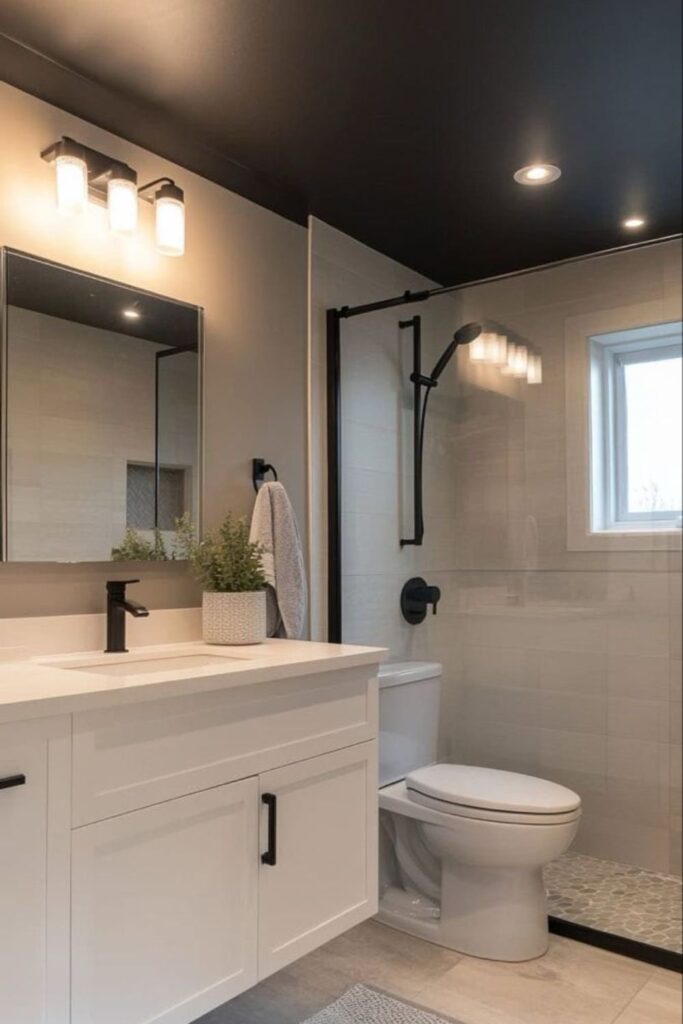
Bathroom ceiling lighting ideas depend heavily on your ceiling height and room size. A fixture that looks great in a tall, spacious bathroom might feel bulky and wrong in a small one.
Getting the scale right keeps your ceiling fixture from overwhelming the room. Below, we cover options for small spaces, low ceilings, and layered ceiling designs.
Small Bathroom Ceiling Lighting
Bathroom lighting for small bathrooms works best with low-profile flush mounts. Avoid oversized fixtures that eat up visual space. A small, simple fixture keeps the ceiling feeling open and airy.
Lighting for Low Ceilings
Ceilings under 8 feet call for flush or semi-flush mounts only. Wide, shallow fixture shapes spread light without hanging down into your line of sight, which matters most in smaller, more compact bathrooms.
Layered Ceiling Lighting
Combining recessed cans with a central fixture creates a layered bathroom lighting effect right at the ceiling level. Adding a dimmer switch lets you adjust brightness for different times of day, from bright morning routines to soft evening baths.
Read More About: 45+ Best Rustic Bathroom Ideas for Small, Modern & Farmhouse Style Homes
Layered Bathroom Lighting Design
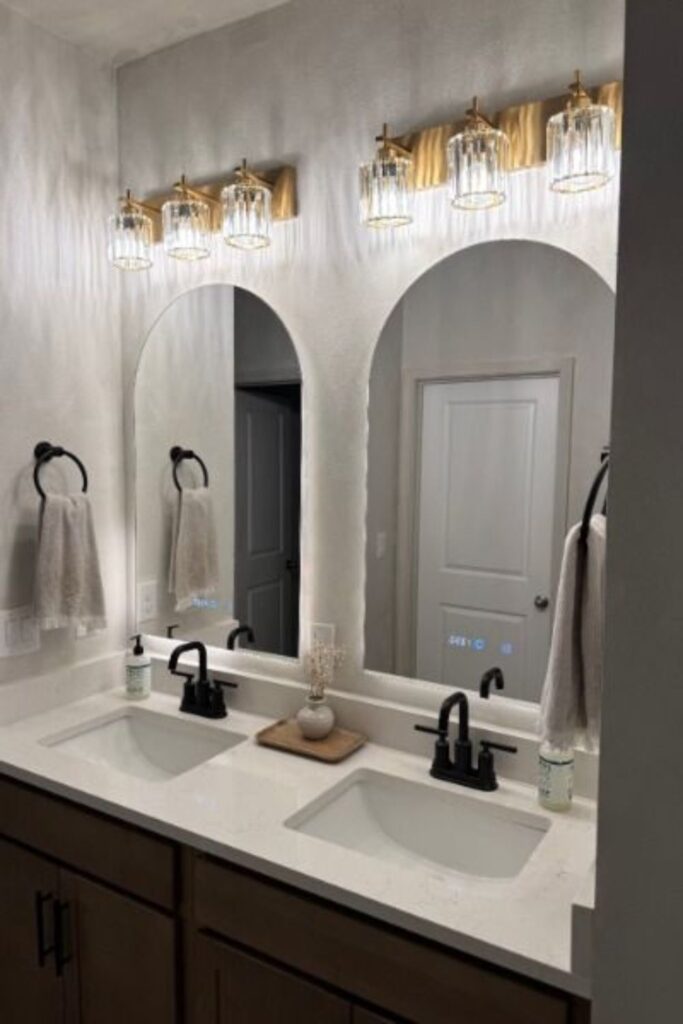
Layered bathroom lighting is the secret that professional designers rely on. Instead of one overhead bulb, they combine three types of light: ambient lighting, task lighting, and accent lighting. Together, they create depth and function.
Relying on just one light source almost always creates a flat, uninviting bathroom. Shadows form. Tasks like shaving or makeup application become harder. Layering fixes this by covering every angle of the room.
Ambient Lighting
Ambient lighting provides overall room illumination. This usually comes from bathroom ceiling light fixtures or recessed bathroom lighting. It sets the base brightness level for the entire space.
Task Lighting
Task lighting focuses on specific activities, like bathroom lighting for makeup or bathroom lighting for shaving. Vanity fixtures handle most of this job, since they light your face directly and evenly.
Accent Lighting
Accent lighting adds mood and depth. Toe-kick LEDs, shelf lighting, or niche highlights all fall into this category. It’s the finishing touch that makes a bathroom feel designed, not just functional.
How to Choose Bathroom Lights
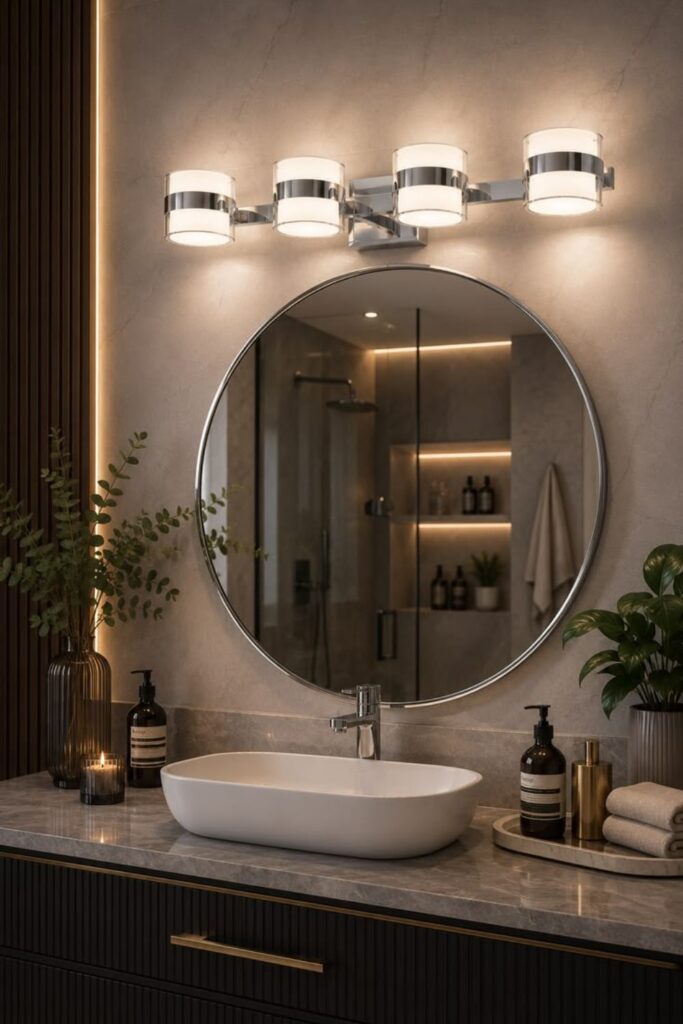
Once you understand styles and lighting zones, the next step is choosing actual fixtures. This part comes down to size, style matching, and safety ratings. Getting these three things right solves almost every lighting problem.
Choosing the right bathroom light fixtures doesn’t have to feel overwhelming. Follow the simple guidelines below, and you’ll narrow down your options quickly.
Choosing the Right Fixture Size
A simple rule helps here: your vanity fixture should measure about two-thirds the width of your mirror. This keeps proportions balanced. Too small, and the fixture looks lost. Too large, and it overwhelms the mirror.
Matching Lighting to Your Bathroom Style
Refer back to the style section above. Modern vanity lights suit sleek, minimal bathrooms. Brass and bronze suit traditional or farmhouse spaces. Mixing metals works fine too, as long as it’s intentional rather than accidental.
Understanding Bathroom IP Ratings
IP-rated bathroom lights protect against moisture damage. The rating uses two numbers, like IP44 or IP65. The second number indicates water resistance level. Here’s a simple breakdown:
| IP Rating | Protection Level | Best Location |
| IP20 | No moisture protection | Dry areas, away from water |
| IP44 | Splash resistant | General bathroom areas, near sink |
| IP65 | Fully water resistant | Inside or directly above shower |
Always check your local electrical code before installing fixtures near water sources.
Best Bathroom Lighting by Bathroom Size
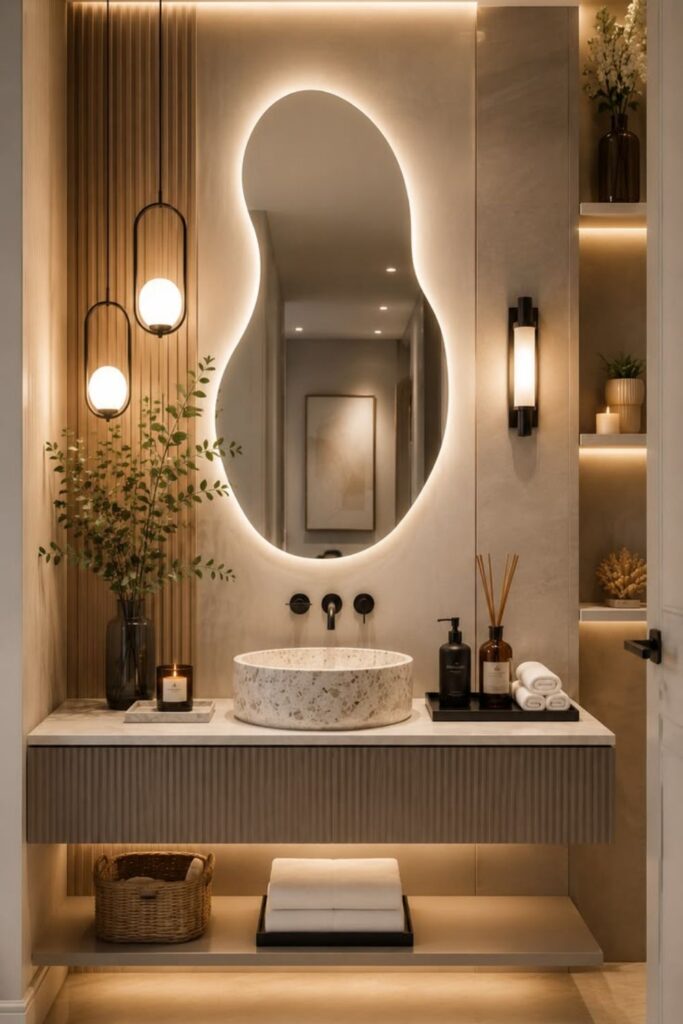
Room size determines both how many fixtures you need and how large they should be. A tiny powder room needs a completely different plan than a sprawling primary suite.
Below, we break down lighting strategies by size, from bathroom lighting for small bathrooms all the way up to bathroom lighting for large bathrooms.
Small Bathroom Lighting Ideas
Small spaces benefit from space-saving flush mounts and slim vanity bars. Mirrors with built-in LED bathroom lights save wall space too, since they skip the need for separate sconces entirely.
Medium Bathroom Lighting
A medium bathroom usually needs a balance: one ceiling fixture plus vanity lighting. Adding a single accent piece, like a small sconce or pendant, rounds out the design without cluttering the space.
Large Master Bathroom Lighting
Luxury bathroom lighting shines here. A chandelier or statement fixture becomes the room’s focal point. Multiple lighting zones cover the tub, shower, vanity, and closet area separately, giving you full control over each part of the room.
Bathroom Lighting Color Temperature Guide
Color temperature affects mood and function more than most people realize. It’s measured in Kelvin (K), and it determines whether your light looks warm and cozy or crisp and bright.
Choosing the right temperature makes a huge difference for everyday tasks. This section covers warm white vs daylight bathroom lighting, plus the technical details behind color accuracy.
Warm White vs Cool White
Warm white, around 2700K to 3000K, creates a cozy, relaxing feel. Cool white, around 4000K to 5000K, feels crisp and energizing. Task areas like the vanity often benefit from cooler light, while ambient fixtures can stay warmer.
Best Kelvin for Bathroom Lighting
The best color temperature for bathroom lights generally falls between 3000K and 4000K. This range balances warmth and clarity, making it easy to see clearly without feeling clinical. Homes with plenty of natural light can lean slightly cooler, while dim rooms benefit from warmer bulbs.
What Is CRI and Why Does It Matter?
CRI stands for Color Rendering Index. It measures how accurately a bulb shows true colors compared to natural sunlight. For bathrooms, aim for a CRI of 90 or higher. This matters a lot for makeup application, since low CRI bulbs can distort how colors actually look.
Energy-Efficient Bathroom Lighting
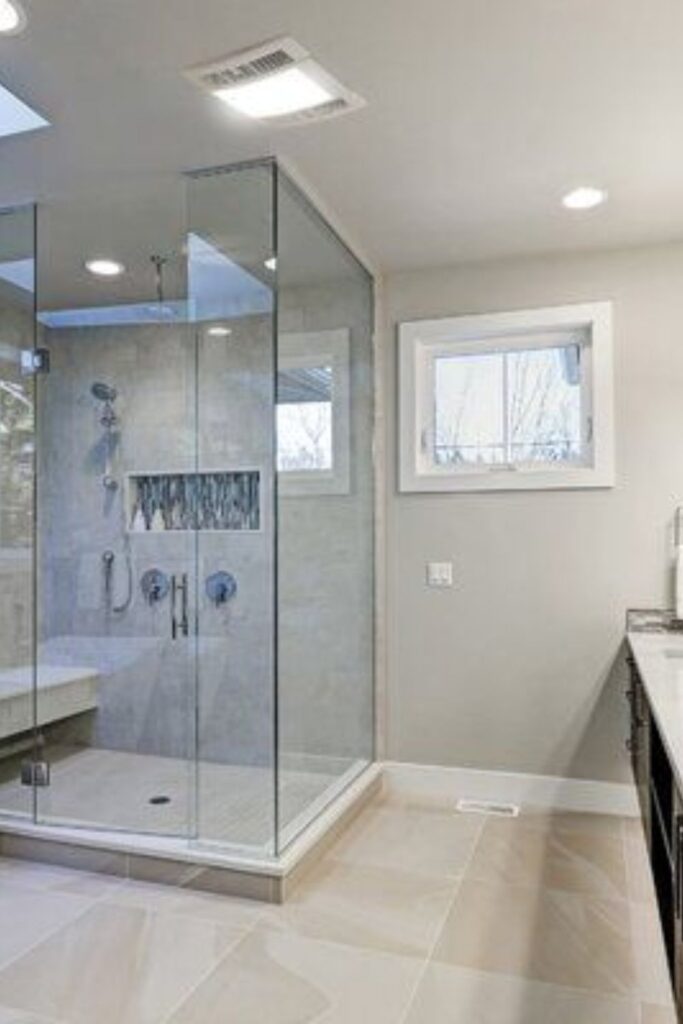
Energy-efficient LED lighting saves money and reduces environmental impact. It also fits naturally into modern smart-home setups, giving homeowners more control than ever before.
Switching to efficient lighting pays off quickly. LED bulbs use up to 75 percent less energy than traditional incandescent bulbs, and they last far longer too.
Integrated LED Lighting
Built-in LED fixtures, like edge-lit mirrors and under-cabinet strips, offer long lifespans and low energy draw. Many last over 25,000 hours, cutting down on maintenance and replacement costs significantly.
Smart Bathroom Lights
Smart fixtures allow app-controlled dimming and color temperature adjustments. Many models also connect to voice assistants, letting you adjust brightness with a simple command. This flexibility supports everything from bright morning light to soft bathroom lighting at night.
Motion Sensor Bathroom Lights
Motion sensors add convenience and save energy automatically. They work well at entry points, under cabinets, or along toe-kick areas. You’ll never fumble for a switch in the dark again.
Bathroom Lighting Mistakes to Avoid
Even well-designed bathrooms can suffer from a few common lighting errors. Avoiding these mistakes saves both frustration and money down the road. Here’s a quick reference table:
| Mistake | Why It’s a Problem | Simple Fix |
| Using only one light source | Creates flat, shadowy lighting | Add layered bathroom lighting with ambient, task, and accent layers |
| Poor mirror lighting | Causes shadows during makeup or shaving | Install fixtures on both sides of the mirror at eye level |
| Choosing the wrong color temperature | Makes colors look off or the room feel cold | Stick to 3000K–4000K for most spaces |
| Ignoring moisture safety | Risks damage or electrical hazards | Use IP-rated bathroom lights near water |
| Installing fixtures at the wrong height | Causes glare or shadows | Mount vanity lights around 78–80 inches high |
Fixing these issues almost always comes back to one idea: layer your light sources instead of relying on a single fixture.
FAQ’s
What type of lighting is best for a bathroom?
The best approach combines three layers: ambient lighting for overall brightness, task lighting for the vanity, and accent lighting for mood. This mix covers every need, from quick tasks to relaxing soaks.
Should bathroom lights be warm white or daylight?
Most bathrooms do best with a range between 3000K and 4000K. This balances warmth with clarity, making tasks like shaving and makeup application easier without feeling too clinical or too dim.
How bright should bathroom lighting be?
A general guideline suggests 70 to 80 lumens per square foot for the whole room. Vanity areas should get more concentrated light, since that’s where most detailed tasks happen.
Conclusion
Great bathroom lighting solutions never come from a single fixture. They come from layering ambient, task, and accent light to match your room’s size and style. Start with your vanity lighting first, since that’s where most daily tasks happen. Then build outward with ceiling fixtures, sconces, and accent pieces.
Whether you’re drawn to modern bathroom lighting, cozy farmhouse bathroom lighting, or full-blown luxury bathroom lighting, the right combination will transform your bathroom illumination completely. Take these bathroom lighting tips, apply them to your own space, and watch your bathroom go from ordinary to genuinely stylish.