Master Bathroom Ideas: 55 Modern, Luxury & Functional Designs for Every Home
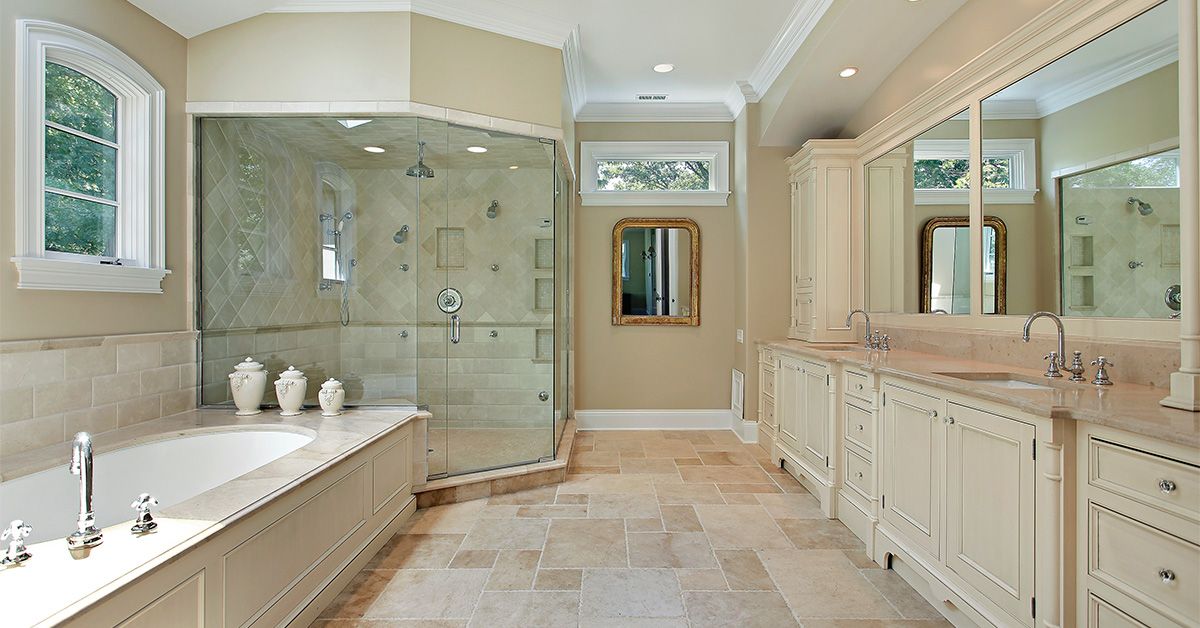
Your master bathroom should feel like the best part of waking up. Not just a room with a sink and a shower. A space that actually makes you feel good. Whether you’re planning a full bathroom renovation Master Bathroom Ideas or just looking for small upgrades that make a big difference, there’s something here for every budget, every style, and every square footage.
This guide covers 55 real, actionable master bathroom ideas spanning modern design, luxury primary bathroom retreats, small-space solutions, tile choices, vanity styles, lighting, decor, and the biggest bathroom design trends for 2026. It doesn’t matter if you’re starting from scratch or just want to refresh what you’ve already got. You’ll find ideas you can actually use.
One quick note before we dive in: you might see “primary bathroom” used alongside “master bathroom” throughout this article. They mean the same thing. The industry has shifted toward “primary” in recent years, but both terms refer to the main private bathroom attached to your bedroom.
What Makes a Great Master Bathroom Design?
A great master bathroom design isn’t just about square footage. Plenty of large bathrooms feel cold, cluttered, or confusing. And some of the most stunning bathrooms in the US are under 80 square feet. What separates good from great comes down to five core pillars working together at once.
Functionality keeps everything running smoothly. Comfort makes the space feel worth spending time in. Aesthetics give it a look that holds up over years, not just months. Lighting layers the mood and the utility together. And storage keeps the whole thing from falling apart visually. When all five work together, you get a timeless bathroom design that still feels fresh a decade later. When even one is missing, the whole space suffers.
| Design Pillar | What It Actually Means |
| Functionality | Smart layout, dual-use fixtures, enough counter space |
| Comfort | Heated floors, soaking tubs, rainfall showerheads |
| Aesthetics | Cohesive style, quality materials, intentional color |
| Lighting | Layered light for tasks, mood, and ambiance |
| Storage | Enough for two people, without visual clutter |
Budget matters too. Great primary bathroom design doesn’t always mean expensive. Some of the sharpest-looking bathrooms in the country came together for under $15,000. It’s more about knowing where to spend and where to save.
Modern Master Bathroom Ideas You’ll Want to Copy
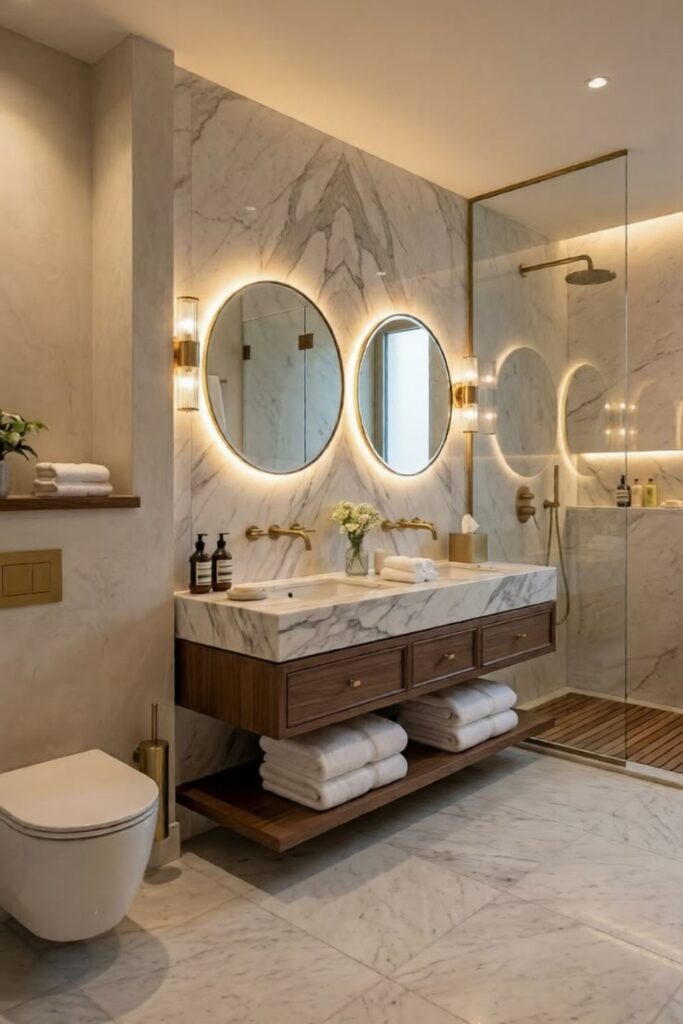
Modern master bathroom ideas are built on one principle: every element earns its place. Clean lines, minimal clutter, and intentional materials. Nothing exists purely for decoration. Everything has a job. The result is a space that feels calm, open, and effortless.
The contemporary bathroom style leans into contrast. Matte surfaces against polished stone. Warm wood tones against cool white tile. Neutral color palette choices dominate creamy whites, warm grays, soft taupes but the fixtures and hardware do the heavy lifting visually. A floating double vanity in matte white with integrated LED strips underneath is one of the most popular moves right now, and for good reason. It opens up the floor, adds ambient glow, and looks custom without the custom price tag.
Here are 10 modern master bathroom ideas worth copying:
Frameless glass walk-in shower with a rainfall showerhead and a linear floor drain
Floating vanity in matte white or warm oak with under-cabinet LED lighting
Large-format porcelain tiles (24×48 slabs) for seamless, expansive floors
Freestanding soaking tub positioned beneath a skylight for maximum drama
Backlit mirrors replacing traditional vanity light bars entirely
Matte black fixtures faucets, towel bars, and hardware as a cohesive accent
Built-in shower niches tiled to match the wall for a clean, integrated look
Monochromatic color palette in warm whites and soft grays throughout
Smart mirrors with built-in dimming, defogging, and Bluetooth connectivity
Open-concept layout that merges the soaking tub zone with the shower area
Luxury Master Bathroom Ideas for a Spa-Like Retreat
The best luxury primary bathroom spaces don’t just look expensive. They feel expensive the moment you step inside. There’s a warmth to the materials, a generosity to the layout, and a quiet confidence to the finishes that you can’t fake with cheap substitutes. A spa-inspired bathroom at home is more achievable than most people think it’s about making smart, high-impact choices rather than spending money on everything at once.
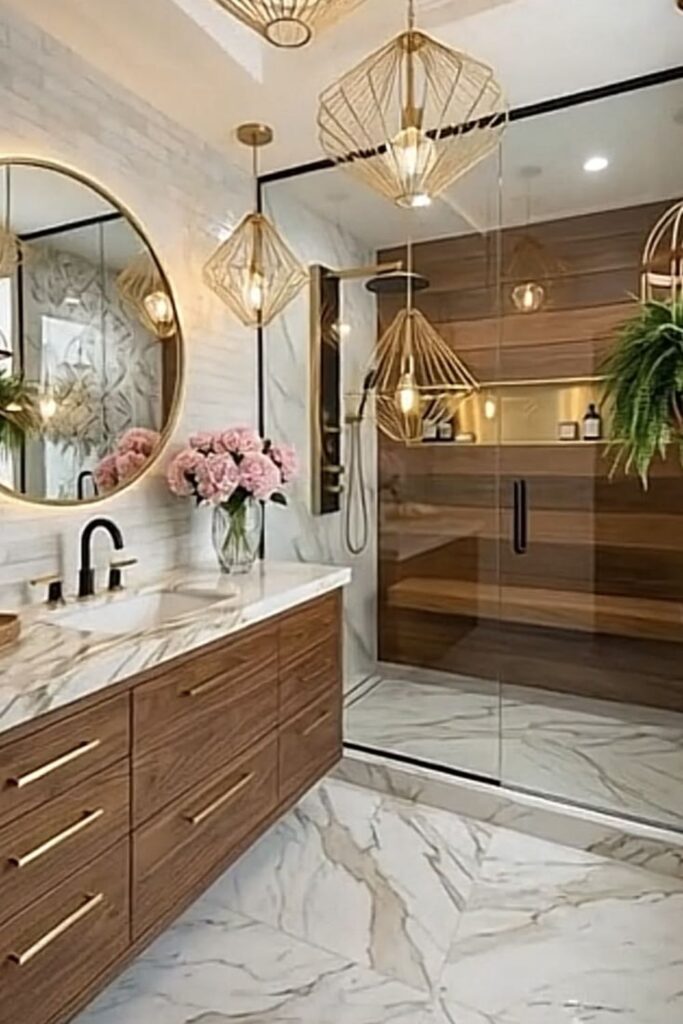
Heated marble floors are one of the single greatest luxuries you can add to a master bathroom. Radiant floor heating beneath marble flooring especially Calacatta marble with its dramatic veining transforms the morning routine from a chore into something genuinely enjoyable. Pair that with a steam shower featuring aromatherapy jets and a built-in teak bench, and you’ve built a cozy bathroom retreat that rivals a five-star spa. These are the kinds of high-end bathroom finishes that hold their value for decades.
| Luxury Element | Avg US Cost | Visual & Functional Impact |
| Heated marble floors | $800–$4,000 | ⭐⭐⭐⭐⭐ |
| Steam shower enclosure | $3,000–$10,000 | ⭐⭐⭐⭐⭐ |
| Chandelier over tub | $500–$5,000 | ⭐⭐⭐⭐ |
| Book-matched marble wall slabs | $10,000–$30,000 | ⭐⭐⭐⭐⭐ |
| Smart shower system | $1,500–$8,000 | ⭐⭐⭐⭐ |
| Japanese soaking tub | $2,000–$12,000 | ⭐⭐⭐⭐⭐ |
A chandelier positioned above a freestanding tub is one of the classic luxury home bathroom power moves. It’s theatrical, unexpected, and it photographs beautifully. For those who want to go all-in, floor-to-ceiling book-matched marble slabs on a feature wall create a level of visual drama that no tile pattern can match. And smart shower systems like the Kohler DTV+ or Moen U let you program exact temperature and spray settings from your phone before you even get out of bed.
These ten ideas define what a luxury master bathroom looks like right now:
Heated Calacatta marble floors with radiant underfloor heating
Japanese soaking tub (Ofuro) freestanding in a windowed alcove
Steam shower with aromatherapy, chromotherapy, and a built-in bench
Dual vanities on opposite walls for a true his-and-hers setup
Chandelier over the freestanding tub as a statement lighting moment
Floor-to-ceiling book-matched marble on a single feature wall
Wet room design with seamless tile and no threshold to step over
Custom built-in cabinetry with soft-close drawers and interior lighting
Natural stone vessel sinks on floating live-edge wood or quartz slabs Smart shower system with programmable temperature and spray profiles
Read More About: Best Interior Design Trends 2026: The Biggest Home Decor Trends
Small Master Bathroom Ideas That Maximize Space
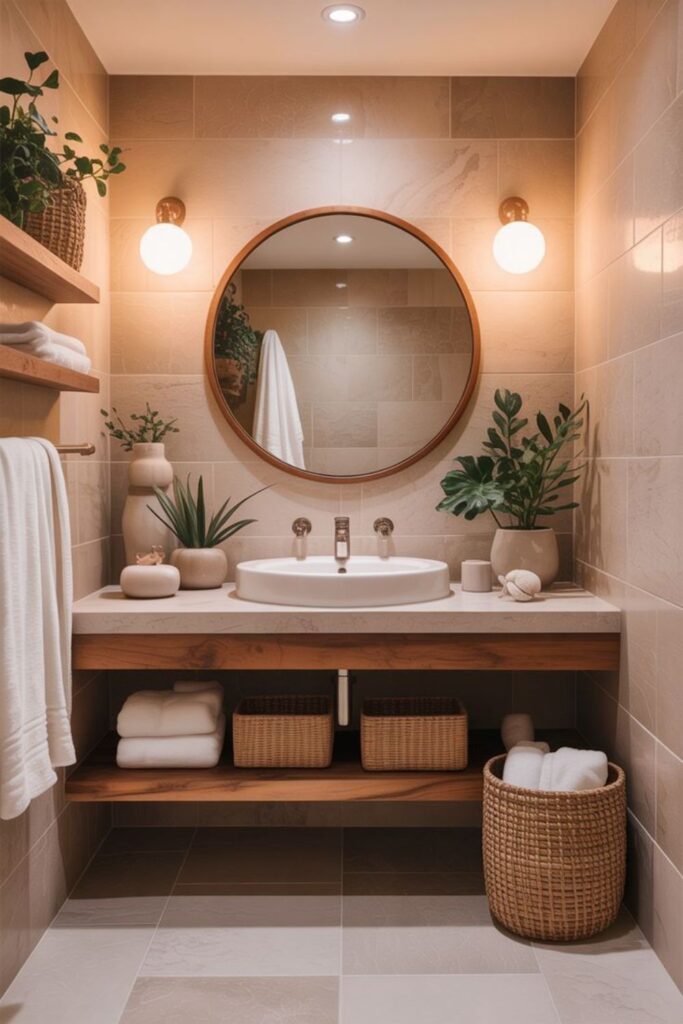
Small doesn’t mean cramped. It means intentional. A well-designed small master bathroom with the right functional bathroom layout can feel just as comfortable and just as luxurious as a space twice its size. The trick is knowing which design decisions make a room feel bigger and which ones accidentally shrink it further.
The single most powerful move in any small primary bathroom ideas project is keeping the color palette consistent throughout. One tile from floor to wall, one color on the vanity and trim, no harsh visual breaks. It sounds simple because it is. But it works every time. Master Bathroom Ideas A monochromatic color palette tricks the eye into reading the space as larger than it actually is. Pair that with a floating vanity, a frameless glass corner shower, and a large mirror, and a 60-square-foot bathroom starts to feel genuinely spacious.
Here are 10 proven small master bathroom ideas that maximize every inch:
Floating vanity to visually open up the floor beneath
Corner walk-in shower with frameless glass to borrow visual space from the rest of the room
Large-format tile on the floor fewer grout lines equal a bigger, cleaner look
Pocket door or barn door instead of a traditional swinging door that eats floor space
Recessed medicine cabinet for storage that doesn’t project into the room at all
Vertical tile on walls to draw the eye upward and add perceived height
Monochromatic color scheme to unify the space without visual interruption
Compact Japanese soaking tub deeper than wide, perfect for tight floor plans
Wall-mounted toilet to free up 6–8 additional inches of floor space
Oversized mirror or mirrored wall to double the perceived depth of the room
Master Bathroom Remodel Ideas Before You Renovate
Planning a bathroom remodel is exciting right up until the moment the contractor hands you the first invoice. The best way to avoid budget shock is to do your homework before a single tile gets pulled. Smart planning doesn’t just save money it saves time, stress, and the frustration of discovering mid-project that the vision in your head doesn’t match the reality of your floor plan.
Bathroom renovation ideas almost always come with hidden costs. Old plumbing, outdated wiring, mold behind the walls these are the surprises that blow budgets open. Keeping a 15% contingency fund is not optional. It’s essential. The national average for a mid-range master bathroom remodel in the US sits between $10,000 and $30,000. A luxury remodel can easily exceed $50,000. Knowing that before you start shapes every decision that follows.
Set Your Budget First
Before you pick a single tile or fixture, set your total budget and break it down by category. This one step prevents more renovation disasters than anything else. Labor typically eats 40–50% of the total budget that’s not negotiable in most markets. Materials, fixtures, and finishes split the rest.
| Budget Category | Recommended % |
| Labor | 40–50% |
| Tile & Flooring | 15–20% |
| Fixtures & Fittings | 15–20% |
| Vanity & Cabinetry | 10–15% |
| Lighting | 5–10% |
| Decor & Accessories | 5% |
Work With Your Existing Plumbing Layout
Moving plumbing lines is one of the fastest ways to add $5,000–$15,000 to a remodel budget. If your current layout puts the sink, toilet, and shower in positions that work reasonably well, design around those wet walls. Save the major plumbing moves for when the visual or functional gain is genuinely worth the cost.
Hire the Right Professionals
A general contractor handles coordination but may not specialize in bathroom work. A bathroom-specific remodeler often delivers better results for this scope. For larger projects, working with a primary bathroom design professional or interior designer pays for itself in avoided mistakes and material savings. You can find vetted pros through the NKBA Find a Pro directory or Houzz Professionals.
Bathroom Interior Design Styles for Every Taste
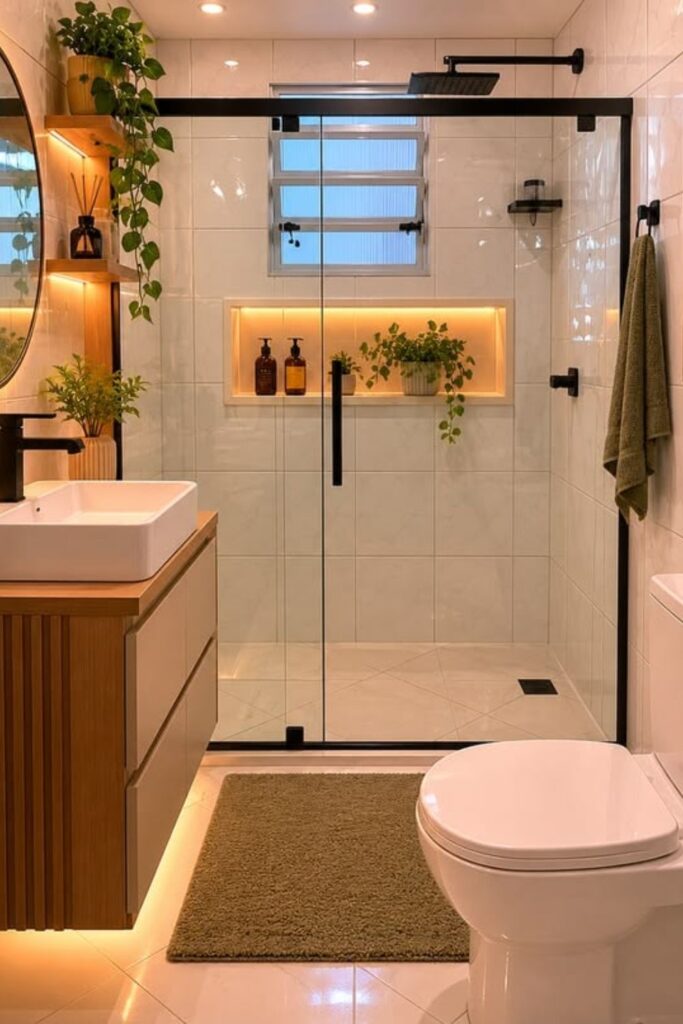
Style clarity is the foundation of every successful bathroom interior design project. Before you choose a single tile, fixture, or color, know the style you’re going after. Mixing aesthetics without intention leads to spaces that feel unresolved. Committing to a direction even a relaxed, eclectic one gives you a filter for every decision. When you’re not sure whether to choose the brushed brass faucet or the matte black one, your style direction answers the question instantly.
These seven styles represent the most searched and most installed bathroom inspiration directions in the US right now. Each one has a distinct set of materials, colors, and fixtures that define it.
Modern Minimalist Bathrooms
Modern minimalist bathrooms strip everything back to what’s necessary and make each element count. The palette is almost always a neutral color palette white, off-white, warm gray, soft beige. Cabinetry is handleless or near-handleless. Countertops are uncluttered. The shower is frameless. Every line is intentional. This style rewards quality materials because there’s nowhere to hide cheap ones.
The key materials in a modern minimalist bathroom are large-format porcelain tiles on the floors, matte surfaces throughout, and integrated sinks that sit flush with the vanity top. The result is a sophisticated bathroom aesthetic that feels calm, ordered, and genuinely timeless. It doesn’t date because it never chased a trend in the first place.
Read More About: 61+ Modern Bathroom Ideas To Create A Stylish Spa Like Retreat
Japanese Zen Bathrooms
Japanese Zen bathrooms are rooted in the concept of ma the beauty of negative space. Less fills more. Natural materials, indirect lighting, and deep soaking tubs create a relaxing bathroom atmosphere that feels worlds away from the stress of daily life. The Ofuro (Japanese soaking tub) is the centerpiece typically made from hinoki wood (Japanese cypress) that releases a calming, cedar-like scent when wet.
Stone basins, wood-look tile flooring, and soft indirect lighting complete the aesthetic. What makes Japanese Zen bathrooms particularly well-suited to small spaces is that the style celebrates simplicity a small, perfectly composed room feels more intentional than a large, cluttered one. This style is especially popular in urban US markets like Seattle, Portland, and San Francisco.
Scandinavian Bathrooms
Scandinavian bathrooms bring the hygge philosophy into the most functional room in your home. Warm whites, light wood tones, terrazzo accents, and carefully chosen storage make the space feel lived-in and genuinely comfortable without sacrificing style. Think IKEA, then elevate every material choice by one level. Better tile, better fixtures, better lighting, and the result is a cozy bathroom retreat that feels both designed and human.
Textured wall tiles in soft off-white tones are a hallmark of the Scandinavian style. So are wood-look tile flooring in light birch or ash tones and open shelving styled with folded linen towels and simple ceramic vessels. This aesthetic works especially well in homes with natural light from large north-facing windows.
Industrial Bathrooms
Industrial bathrooms embrace rawness as beauty. Exposed concrete, matte black pipe fixtures, raw metal shelving, and Edison bulb lighting come together in a look that’s bold, confident, and deeply urban. It works best in converted spaces lofts, warehouses, and older urban homes that have architectural bones worth celebrating.
The secret to making an industrial bathroom feel warm rather than cold is introducing organic elements alongside the raw ones. Warm wood tones, woven textures, and a few indoor plants soften the industrial edge without compromising its identity. This style is particularly popular in cities like Chicago, Brooklyn, and Los Angeles.
Dark & Moody Bathrooms
Dark and moody bathrooms are dramatic, bold, and completely committed. Charcoal, forest green, navy, and deep burgundy dominate the palette. Brushed gold or antique brass fixtures warm up the darkness. The result is a space that feels more like a sophisticated retreat than a utility room.
The key to making dark bathroom colors work is getting the lighting exactly right. Bold bathroom colors absorb light rather than reflect it, so layered artificial lighting is non-negotiable. Recessed dimmers, warm vanity sconces, and accent lighting inside niches all work together to keep the space feeling rich rather than oppressive.
Rustic Luxury Bathrooms
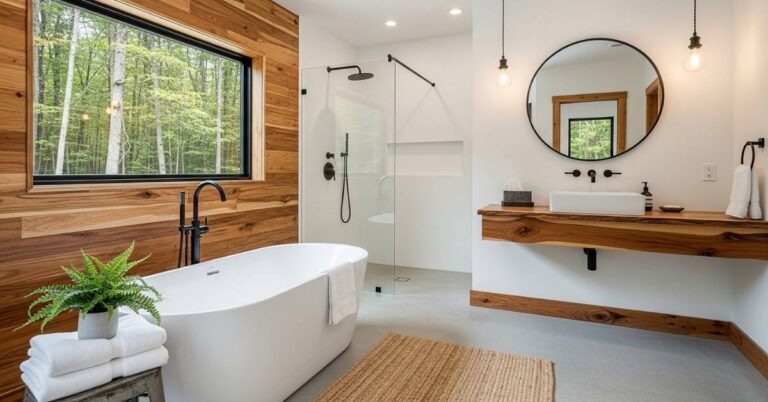
Rustic luxury bathrooms sit at the intersection of warmth and refinement. Reclaimed wood vanities, vessel sinks in natural stone, rough-hewn tile, and copper or oil-rubbed bronze fixtures create a space that feels like a mountain lodge and a five-star hotel simultaneously. This is the warmest, most tactile of all the bathroom interior design styles.
The rustic luxury bathroom leans heavily on natural texture. Wood-look tile flooring with visible grain. Textured wall tiles in warm terracotta or sandy stone. Hand-forged hardware. Linen curtains. Every material choice communicates handcraft and permanence the opposite of the sleek, machine-made quality that defines modern minimalism.
Contemporary Luxury Bathrooms
Contemporary luxury bathrooms exist right now, not tied to any particular decade. They mix textures, materials, and finishes with deliberate confidence. Master Bathroom Ideas Curved forms are replacing hard corners everywhere curved mirrors, arched shower niches, oval soaking tubs, rounded vanity edges. Warm neutrals meet statement tile. Natural materials meet smart technology.
This is the most current expression of sophisticated bathroom aesthetics it feels current without feeling trendy, and personal without feeling accidental. The contemporary bathroom style in 2026 is defined by restraint in some areas (palette, silhouette) and indulgence in others (materials, fixtures, one bold statement element).
Beautiful Bathroom Color Ideas
Color sets the emotional tone of a bathroom before a single fixture is noticed. The right color makes the space feel larger, calmer, warmer, or more dramatic. The wrong one makes every other choice feel slightly off. Choosing a direction early and committing to it is one of the most important decisions in any master bathroom design project.
Bathroom paint colors and tile colors work together to define the room’s character. The five color directions below represent the most popular choices among US homeowners right now, based on paint sales data, interior design search trends, and new construction specifications.
White Bathrooms
White is the most chosen master bathroom color in America for a reason. It’s clean, versatile, and works with virtually every fixture finish and material. But not all whites are equal. Flat, cool pure white can read as clinical and harsh under artificial light. Warm whites Benjamin Moore’s Chantilly Lace, Sherwin-Williams’ Alabaster, or Simply White add a softness that makes the space genuinely inviting.
The best white bathrooms layer texture to prevent the palette from feeling flat. Marble flooring, subway tile bathroom walls, textured wall tiles in a stacked or herringbone pattern these add visual depth without introducing color. Pair with warm wood accents, matte black hardware, or indoor greenery to keep white from reading as sterile.
Blue Bathrooms
Blue bathroom paint colors span an enormous range from the softest powder blue to the deepest midnight navy. Each creates a completely different emotional response. Navy blue vanities with white quartz countertops are one of the most consistently popular combinations on Pinterest and Houzz, and they work in both traditional and modern settings equally well.
Coastal blue tile works especially well in bathrooms with strong natural light. In sun-drenched spaces, blue tile shifts beautifully throughout the day as the light changes. In north-facing bathrooms, go warmer a blue with green or gray undertones rather than cold violet-blue.
Earth Tone Bathrooms
Earth tone bathrooms are the dominant trend in new US home construction right now. Terracotta, warm taupe, clay, sand, and rust create a grounded, organic feeling that connects the space to the natural world. These bathroom paint colors pair brilliantly with natural stone, rattan accessories, and warm brass fixtures.
The popularity of earth tones reflects a broader cultural shift toward biophilic design the use of natural materials, textures, and colors to create a calming environment. Research from the University of Exeter found that biophilic design elements reduce stress and increase feelings of wellbeing. Your bathroom is one of the easiest rooms in your home to bring this principle to life.
Black Bathrooms
Bold bathroom colors don’t get bolder than black, and a well-executed all-black or predominantly black bathroom is genuinely stunning. Matte black walls, black marble tile, black fixtures, and a carefully placed warm accent white stone, light wood, brushed brass create a sophisticated bathroom aesthetic that photographs like a magazine shoot.
The critical factor in dark bathroom colors like black is lighting. Black absorbs light. Without enough of it, the space feels enclosed. Natural lighting through skylights or high windows makes the biggest difference. Layered artificial lighting dimmers, sconces, accent strips handles the rest.
Green Spa Bathrooms
Green spa bathrooms are having a moment that shows no signs of slowing. Sage green, eucalyptus, forest green, and olive all register as calming, natural, and immediately spa-like to the human brain. This is a relaxing bathroom atmosphere color palette that draws on the same psychological principles as biophilic design our brains read green as nature, and nature as safe.
The best green spa bathrooms pair these tones with warm whites, natural stone, and brushed brass fixtures. Avoid cold grays alongside green the combination feels unresolved. Instead, lean into warmth: neutral color palette walls in cream or off-white, warm wood accents, and linen textures.
Bathroom Tile Ideas That Transform Any Space
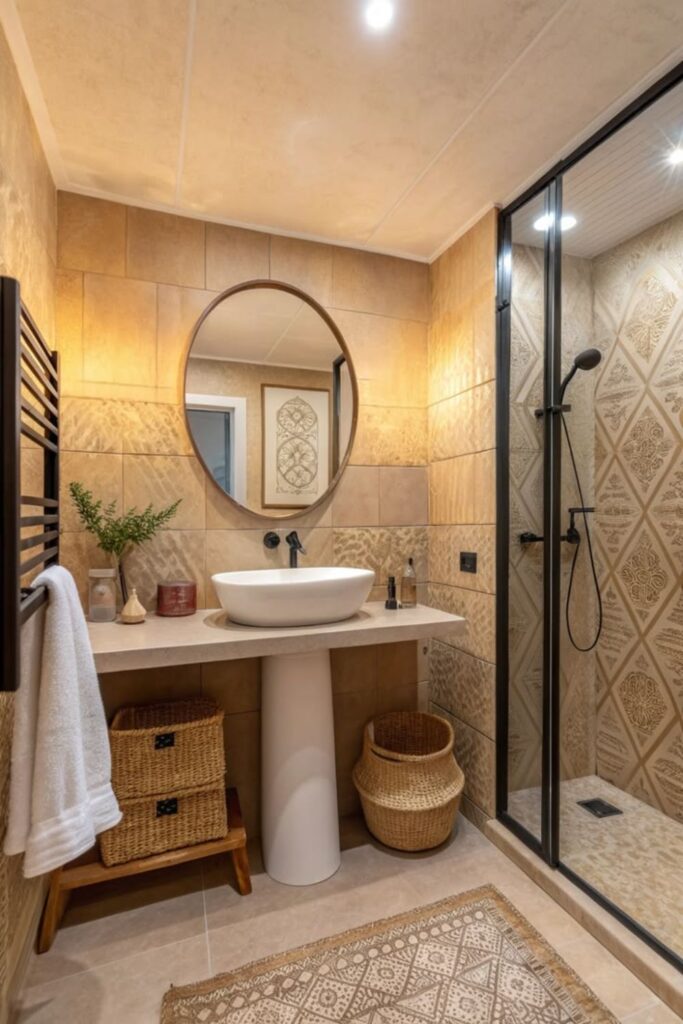
Bathroom tile ideas are the most transformative material decision in any bathroom. Tile sets the style, establishes the color direction, determines the maintenance commitment, and shapes the mood of the entire space. Getting the tile right means everything else falls into place naturally. Getting it wrong means fighting the room for years.
Porcelain tiles and ceramic tiles are the two most popular choices for US bathrooms, and for good reason. Both are durable, water-resistant, and available in an extraordinary range of styles. Porcelain tiles are denser and harder, making them the better choice for floors and high-moisture areas. Ceramic tiles are slightly softer and easier to cut, making them ideal for wall applications and bathroom backsplash ideas. Beyond these two workhorses, six tile directions stand out for their visual impact.
Marble Tile
Marble flooring is the definition of luxury tile designs. Nothing else replicates its depth of veining, its cool-to-warm temperature shift, or the way it catches light. Calacatta marble features bold, dramatic veining on a bright white background. Carrara marble is softer and more subtle the everyday luxury choice. Statuario marble splits the difference with striking gray veining on a whiter field.
The trade-off with marble is maintenance. It’s porous, which means it stains if not sealed properly and annually. It etches in contact with acids citrus, vinegar, some cleaning products. But for homeowners who treat it well, marble flooring develops a patina over time that manufactured alternatives simply can’t fake.
Terrazzo Tile
Terrazzo tile is one of the great comeback stories of contemporary design. Composed of chips of marble, glass, granite, and stone set in cement or epoxy, terrazzo is wildly versatile it works in minimalist, Scandinavian, and contemporary stylish bathroom interiors with equal ease. It’s also genuinely durable and low-maintenance, especially in the polished epoxy version.
The color range in terrazzo tile is nearly unlimited. Pale pink chips in cream cement for a soft, feminine look. Black and white chips in gray cement for a more graphic effect. Warm terracotta and gold chips in warm white cement for an earth-toned bathroom backsplash ideas feature wall. The options are genuinely endless.
Checkerboard Tile
Checkerboard floor tiles are having one of the biggest resurgences in American bathroom design right now. The classic black and white checkerboard pattern works across an enormous range of styles vintage, farmhouse, contemporary, and even modern minimalist when done in large-format tiles with thin grout lines.
Porcelain tiles in checkerboard patterns are more practical than traditional encaustic cement options more durable, easier to clean, and less prone to staining. The pattern adds energy and personality to a floor without requiring a complicated color palette. Keep walls neutral and let the floor do the talking.
Mosaic Tile
Mosaic tiles are best used as an accent rather than a primary surface. The intricate, small-scale pattern of mosaic is visually powerful too much of it overwhelms. But used strategically on a shower floor, inside a shower niche, as a horizontal band on a feature wall, or as a bathroom backsplash ideas element behind the vanity mosaic tile adds handcrafted richness that no other material delivers.
Glass mosaic catches and scatters light in a way that makes a shower feel gem-like and magical. Stone mosaic in natural travertine or slate adds texture and warmth. Both work beautifully in luxury tile designs that aim for bespoke, one-of-a-kind quality.
Floor-to-Ceiling Tile
Floor-to-ceiling tile is the boldest tile commitment in bathroom design and one of the highest-impact moves available. When tile runs uninterrupted from floor to ceiling across every wall, the bathroom takes on an enveloping, spa-like quality that’s hard to achieve any other way. It removes the visual interruption of a paint-to-tile transition and creates a seamless, cocoon-like feel.
This approach works especially powerfully in small bathrooms. An accent wall bathroom in a small space benefits enormously from seamless tile that removes every visual break and confusion. Choose large-format porcelain tiles to minimize grout lines and maintain the clean, expansive effect.
Read More About: 57+Best Bathroom Decor Ideas to Transform Any Bathroom on Any Budget
Patterned Tile
Patterned tile delivers personality in every square foot. Moroccan zellige tiles handmade clay tiles with an irregular, light-catching surface are currently one of the most popular tile choices in high-end US bathroom renovations. Their imperfect, handmade quality gives them a warmth and depth that machine-made tile simply can’t replicate.
Zellige tiles originated in Morocco and have been used in architecture for over a thousand years. In the contemporary American bathroom, they typically appear as accent wall bathroom features, shower surrounds, or backsplash applications. Their gentle color variation within a single tile the result of the handmade firing process catches light differently throughout the day, keeping the space visually alive. Encaustic cement bathroom tile ideas in geometric patterns work similarly, adding graphic energy that elevates the entire space.
Master Bathroom Vanity Ideas
The vanity is the anchor of any master bathroom design. It’s the first thing you look at when you walk in and the surface you interact with every single morning. It sets the style direction for everything around it the fixtures, the mirrors, the lighting, even the tile. Getting the vanity right makes every other decision easier.
Elegant bathroom decor starts at the vanity. Whether you lean toward the clean lines of a floating cabinet or the warmth of a vintage-converted dresser, the vanity tells the story of the whole room. Here are four major directions worth considering.
Double Vanities
Double vanities are the gold standard for any shared primary bathroom. Separate sinks, separate storage, separate mirror zones the morning routine becomes infinitely more peaceful. The standard double vanity runs 60–72 inches wide, which fits comfortably in most master bathrooms built in the last 30 years.
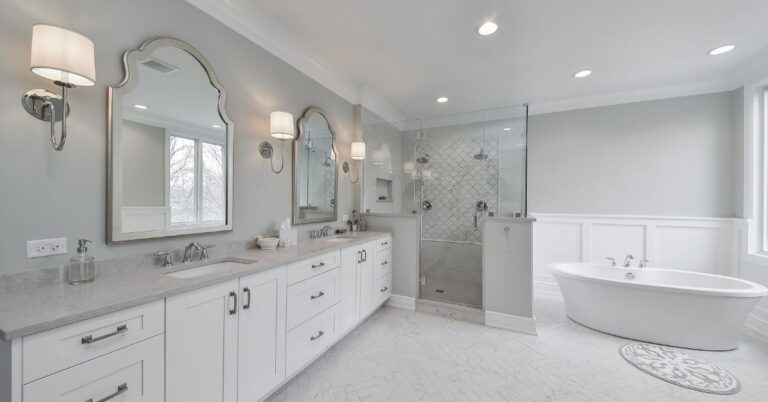
One design tip worth knowing: consider using different mirror shapes above each sink rather than one long horizontal mirror spanning both. An arched mirror above one sink and a rectangular one above the other sounds counterintuitive but creates a curated, collected look that feels personal rather than formulaic.
Floating Vanities
Floating vanities are wall-mounted, floor-clearing, and visually light. They’re the modern choice in almost every contemporary and minimalist primary bathroom design project right now, and for good reason. Cleaning the floor beneath them is easier. The visual effect is airier. And the space under the vanity even a few inches of floor makes the whole room feel less heavy.
Floating vanities work in both small and large master bathrooms. In small spaces, the exposed floor beneath creates breathing room. In large spaces, Master Bathroom Ideas a long floating double vanity with a continuous surface reads as architectural and dramatic. Either way, pair with under-cabinet LED strip lighting to amplify the floating effect after dark.
Custom Vanities
Custom vanities are built to exact dimensions, storage configurations, and style preferences. They cost more than stock or semi-custom options, but for homeowners planning to stay put for 10 or more years, the investment pays itself back in daily satisfaction and resale value.
Custom cabinetry for a personalized bathroom style can incorporate charging stations hidden inside drawers, pull-out organizers for hair tools, interior drawer lighting, and integrated sink solutions that stock options simply don’t offer. Work with a local cabinet maker or kitchen and bath designer to spec exactly what your morning routine actually requires.
Vintage Vanities
Vintage vanities add warmth, character, and one-of-a-kind personality to any primary bathroom. An antique dresser or console table converted to vanity use, with a vessel sink on top and exposed plumbing beneath, creates a bathroom inspiration moment that no store-bought cabinet can deliver.
The practical requirements are real: the furniture piece needs to be waterproofed, sealed, and properly supported. Plumbing rough-in needs to align with the piece’s dimensions. But for homeowners who love the idea of a bathroom that feels collected and personal rather than showroom-generic, a vintage vanity is worth every extra step.
Bathtub & Shower Ideas Master Bathroom Ideas
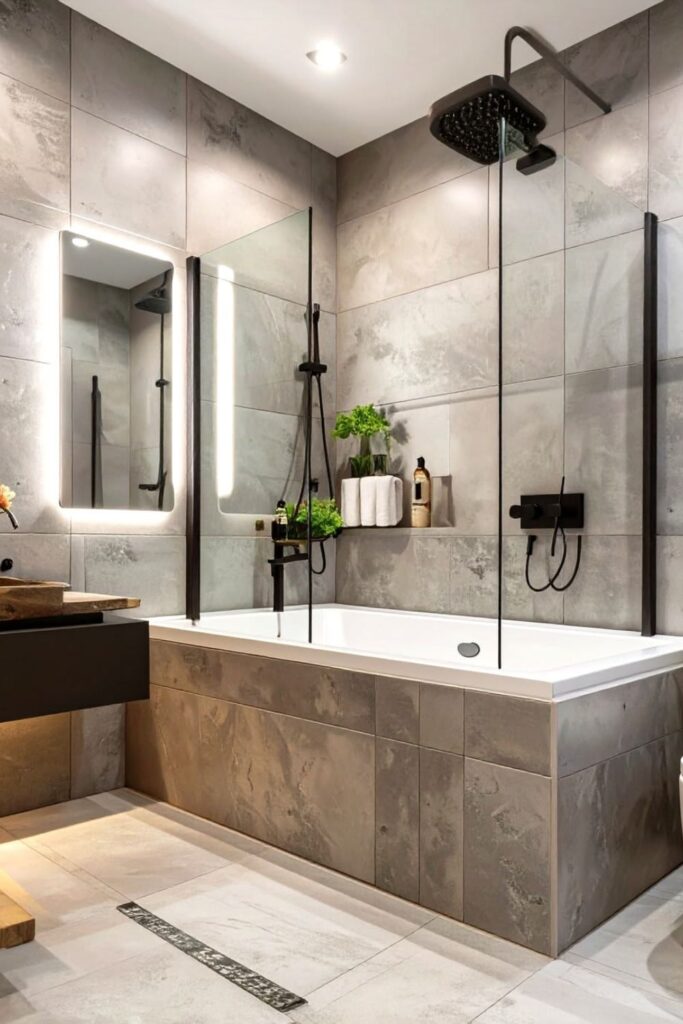
The bathtub and shower together define the experiential core of any master bathroom. They’re the fixtures you invest in most and interact with most. Getting these right in terms of size, style, and placement is more important than almost any other decision in the room.
The relaxing bathroom atmosphere of a spa is largely created by one thing: a bathing experience that feels generous, unhurried, and beautiful. Here’s how to achieve that at home across six distinct fixture directions.
Freestanding Tub
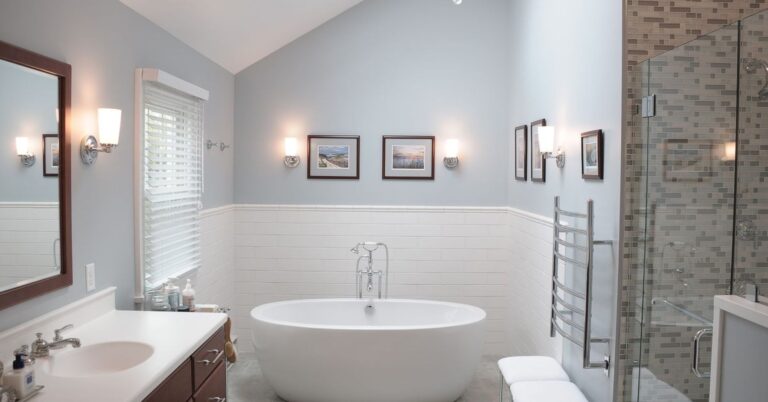
The freestanding tub is the undisputed focal point of any luxury master bathroom. Positioned away from the wall, it commands the space like a piece of sculpture. Master Bathroom Ideas Acrylic tubs are the most affordable option and excellent heat-retainers. Cast iron tubs hold heat even longer and have a satisfying solidity that acrylic can’t match. Stone resin tubs are the current luxury standard incredibly heavy, warm to the touch, and visually stunning.
Position a freestanding tub near a window or beneath a skylight for maximum effect. Pair with a floor-mounted tub filler (the faucet rises from the floor beside the tub) for the cleanest, most spa-like look.
Japanese Soaking Tub
The Japanese soaking tub (Ofuro) is designed for full-body immersion in a smaller footprint than a standard Western bathtub. Where a regular tub prioritizes length, the Ofuro prioritizes depth typically 22–28 inches deep, allowing you to sit upright with water above your shoulders.
This makes the Japanese soaking tub perfect for small master bathroom ideas where a standard freestanding tub would overwhelm the floor plan. Master Bathroom Ideas Hinoki wood versions made from Japanese cypress are the ultimate luxury expression of this fixture. The wood releases a calming, cedar-like aroma when wet that’s been central to Japanese bathing culture for centuries.
Walk-In Shower
The walk-in shower is the most requested feature in US master bathroom remodels right now. Hands down. The appeal is straightforward: no door to clean, no threshold to step over, a feeling of openness and generosity. Go frameless for maximum visual impact. The glass panel simply disappears visually, making the shower feel like part of the room rather than an enclosure inserted into it.
The minimum recommended walk-in shower size is 36×36 inches, but that’s truly a minimum. At 36×36, you can stand and shower. At 42×48, you can move comfortably. At 48×60 or larger, the shower starts to feel genuinely spa-like. If your floor plan allows, go as large as you can. You won’t regret it.
Wet Room
The wet room takes the walk-in shower concept to its logical conclusion: the entire bathroom floor is waterproofed, and the shower flows seamlessly into the rest of the space. No enclosure. No threshold. No glass panel. Just a drain in the floor and a rainfall showerhead above.
Wet rooms feel more spa-like and hotel-like than any other bathroom format because they’re exactly what high-end hotels have been doing for decades. They require careful waterproofing during construction the membrane must be applied correctly to every surface and proper drainage design. But the result is a stylish bathroom interior that’s genuinely unlike anything else.
Glass Shower Partition
A glass shower partition is a single glass panel or a partial glass wall that replaces a full enclosure. It contains water spray while keeping the shower visually open to the rest of the room. It’s a particularly smart solution for bathrooms where a full frameless enclosure would feel too enclosed or too expensive.
Glass partitions work beautifully in modern primary bathroom designs where clean lines and visual openness are priorities. They’re also significantly easier to clean than a full glass enclosure less surface area, fewer tracks, fewer corners for soap scum to accumulate.
Shower Niches
Shower niches recessed shelves built directly into the shower wall solve the shampoo-bottle-on-the-floor problem elegantly and permanently. Plan them during the rough-in phase of a remodel, not as an afterthought. Retrofitting a niche into an existing tiled shower wall is possible but significantly more expensive.
Tile them to match the surrounding wall for a seamless, integrated look. Or tile them in a contrasting material a mosaic tile interior inside a marble flooring shower, for instance to create a jewelry-box detail that elevates the whole space. Niche placement matters: 48–54 inches from the floor is the most ergonomic height for most adults.
Smart Bathroom Storage Ideas
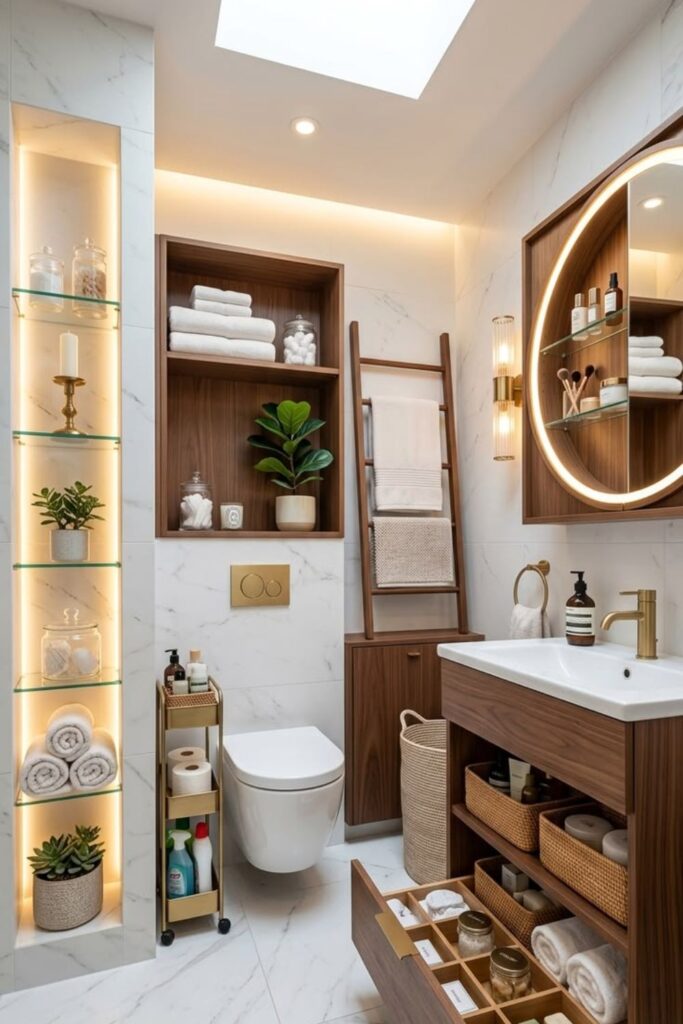
Stylish bathroom interiors live or die by storage. A beautifully designed bathroom that doesn’t have enough places to put things becomes a cluttered, frustrating space within a week. Getting storage right means thinking through every item that will live in the room towels, toiletries, medications, hair tools, cleaning supplies and designing a home for each one.
The good news: bathroom makeover ideas for storage don’t have to be expensive or complicated. Some of the most effective storage solutions cost almost nothing.
Built-in Cabinets
Built-in cabinets are the highest-function, cleanest-looking storage solution in any master bathroom. Floor-to-ceiling built-ins beside the vanity can replace a linen closet entirely, providing space for towels, toiletries, and everything else in a format that looks intentional rather than accumulated.
Interior lighting inside built-in cabinets serves both function and ambiance; it makes finding things easy and adds a warm glow to the room. Soft-close drawers are worth the small upcharge. The quiet click of a properly made drawer is a small luxury that compounds over thousands of uses.
Storage Carts
Storage carts are freestanding, moveable, and affordable, the ideal bathroom makeover ideas solution for renters or anyone who can’t do major construction. Rolling matte black metal carts with multiple tiers have become a modern bathroom staple, particularly in urban apartments. Styled with folded towels, a small plant, and a few glass jars, they look intentional and chic.
The best storage carts for bathrooms have at least one solid shelf for items that need containment and one open tier for display. Look for carts with a non-rust finish powder-coated metal or coated wire since bathroom humidity is hard on untreated surfaces.
Open Shelving
Open shelving works when your towels and products are worth showing off. A single floating shelf in natural wood above the toilet, styled with rolled linen towels, a small succulent, and a ceramic soap dish, adds character to a blank wall without requiring significant investment.
The rule of open shelving in elegant bathroom decor: keep it edited. No more than three or four items per shelf. Everything you put on display should be something you’d be happy for a guest to see. If it’s not beautiful, hide it behind a closed door.
Decorative Storage Jars
Decorative storage jars are the smallest, most affordable way to upgrade a bathroom counter. Glass apothecary jars, ceramic containers with lids, and woven baskets all organize the small daily items cotton rounds, Q-tips, bath salts, Master Bathroom Ideas hair ties while contributing to the room’s visual aesthetic rather than cluttering it.
The key is consistency. Choose one finish or material for your containers and stick to it. Three matching clear glass apothecary jars look designed. Three mismatched plastic containers look neglected. The jars themselves cost almost nothing. The edit they create is priceless.
Bathroom Lighting Ideas That Elevate the Space
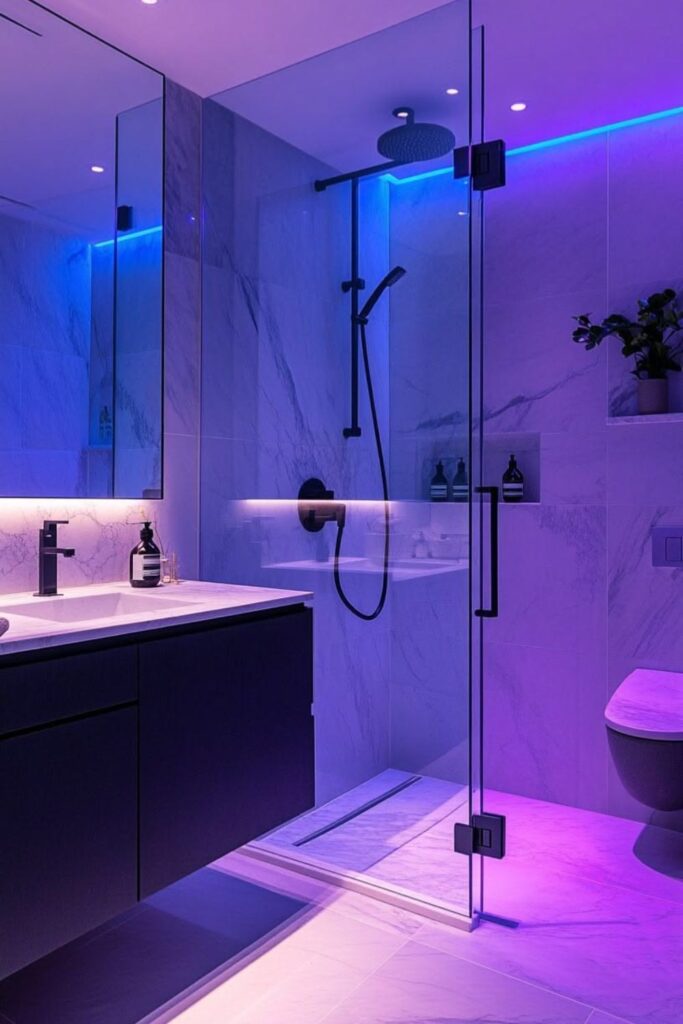
Lighting is the most underestimated design element in most bathrooms. Walk into any average American bathroom and you’ll find one overhead fixture doing all the work washing the room in flat, even light that flatters nothing and sets no mood. Great bathroom lighting works in layers, each layer serving a distinct purpose, and together creating a space that functions perfectly and feels genuinely beautiful.
Decorative ceiling ideas in the bathroom often start with lighting a statement pendant or a thoughtfully placed skylight can change the entire character of a room. But most of the work happens at eye level and below.
Natural Lighting
Natural lighting is the gold standard for any bathroom, and it’s worth prioritizing in both new builds and remodels. Skylights bring diffused, indirect light from above the most flattering possible direction. Frosted glass windows on exterior walls let in natural light while maintaining privacy. High-placement windows above eye level on interior walls solve the privacy problem completely.
North-facing natural lighting is particularly prized by designers because it’s consistent throughout the day no harsh direct sun, no dramatic shadows, just steady, beautiful diffused light that flatters both the room and the faces in it.
Vanity Lighting
Vanity lighting is the most practically critical lighting in the bathroom, and it’s where most designs go wrong. The common mistake is positioning a single light source directly above the mirror. This creates unflattering shadows under the eyes, nose, and chin the same effect as holding a flashlight under your face in the dark.
The correct solution is side-mounted sconces at roughly eye level 65 to 70 inches from the floor to the center of the fixture. This wraps light evenly around the face from both sides, eliminating shadows entirely. Hollywood-style globe bulbs mounted around the perimeter of a large mirror achieve the same effect. Either way, the goal is even, shadow-free illumination that makes getting ready in the morning feel effortless.
Ambient Lighting
Ambient lighting is the foundation layer the general illumination that fills the room when the task lighting isn’t enough on its own. In a primary bathroom, this typically means recessed can lights set on a dimmer. Dimmability is non-negotiable: the same bathroom should be able to shift from bright and functional in the morning to soft and spa-like in the evening.
Color temperature matters enormously for ambient lighting. Warm white (2700–3000 Kelvin) is the right choice for a relaxing bathroom atmosphere. Cool white (4000K+) reads as clinical and harsh. The warm end of the spectrum is more flattering to skin tones and more compatible with the materials stone, wood, warm whites that define most stylish bathroom interiors.
Accent Lighting
Accent lighting is where bathroom inspiration becomes atmosphere. LED strip lights installed beneath a floating vanity create a warm glow that makes the cabinet appear to float more dramatically. The same strips inside shower niches, above cabinetry, or along the toe kick of a vanity add depth, dimension, and a custom-feeling quality that transforms a good bathroom into a great one.
This layer of lighting doesn’t contribute much functional light it’s not designed to. Its job is to create mood, add visual interest, and make the room feel more layered and considered. It’s the difference between a bathroom that looks good in person and one that photographs stunningly.
Bathroom Decor & Styling Ideas
The best elegant bathroom decor doesn’t happen by accident. Every item in the room has been chosen, placed, and edited. The goal is a space that feels collected rather than decorated personal rather than staged. Here are six decor and styling directions that make a real difference.
Great bathroom inspiration often comes from the details. A single beautiful object a hand-thrown ceramic soap dish, a sculptural candle, a perfectly framed print can shift the feeling of an entire room. The following elements do the heavy lifting in most stylish bathroom interiors.
Statement Mirrors
The statement mirror is the single most impactful decor element in any bathroom. Go one size larger than you think you need. An arched mirror above a rectangular vanity. A round mirror above a square sink. An oversized rectangular mirror spanning the full width of a double vanity. Each choice creates a different effect, but all of them have more presence than a standard builder-grade rectangle.
Backlit mirrors combine the decorative impact of a statement mirror with the practical benefit of ambient lighting they’re one of the smartest double-duty investments in bathroom makeover ideas. The soft glow from behind the mirror is deeply flattering and creates an instant spa-like atmosphere.
Wall Art
Art belongs in the bathroom. Absolutely. Large-format prints in humidity-safe frames add personality and sophistication to a room that often goes without. Black and white photography works in virtually any style modern, minimalist, contemporary, transitional. Botanical illustrations add color and reference nature. Abstract prints in earth tones connect with the palette of a warm, organic relaxing bathroom atmosphere.
Scale matters enormously with bathroom wall art. A small print on a large wall looks timid and out of place. Go bigger than feels comfortable. A 24×30 print on a bathroom wall that’s 8 feet wide will feel perfectly balanced. A 5×7 print on the same wall will look like an afterthought.
Indoor Plants
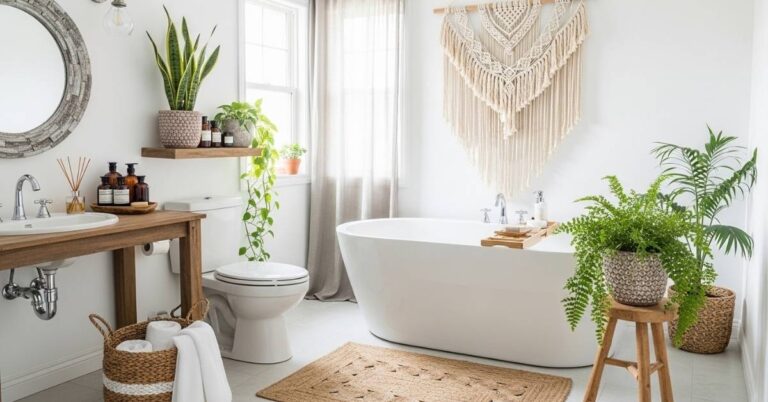
A single healthy plant can transform the atmosphere of a bathroom more dramatically than almost any other design intervention. Pothos, peace lilies, ferns, snake plants, and orchids all thrive in bathroom humidity. A large pothos in a woven rattan basket in a corner adds warmth, texture, and life to the space without requiring a single renovation.
Biophilic design incorporating natural elements into built environments is backed by genuine research. A University of Queensland study found that adding plants to interior spaces increased wellbeing scores by 47% and productivity by 38%. Your bathroom is one of the easiest rooms to practice biophilic design because the humidity supports plants that struggle elsewhere in the home.
Decorative Rugs
A well-chosen bath rug or runner is the fastest way to add warmth, texture, and color to a bathroom floor. Cotton washable rugs are the most practical choice they go in the washing machine regularly and come back looking fresh. Woven jute runners add natural texture and work beautifully in rustic, Scandinavian, and earth-tone bathrooms. Plush memory foam mats add comfort for those who stand at the vanity for extended periods.
In larger master bathrooms, layering rugs is a surprisingly effective styling technique. A runner in front of the vanity, a round mat beside the soaking tub, a small rectangular piece in front of the shower three rugs in coordinating tones and textures create a curated, hotel-inspired feel.
Wallpaper
Wallpaper is having its biggest moment in bathroom design since the 1970s and this time it’s sophisticated, restrained, and genuinely beautiful. Botanical prints in sage green and cream. Geometric patterns in navy and gold. Grasscloth textures in warm tan. Moody dark wallpapers in deep forest green or midnight blue. Each direction creates a dramatically different atmosphere.
Use moisture-resistant, vinyl-coated wallpaper in areas adjacent to wet zones. Standard paper wallpaper can delaminate in high-humidity environments. In shower-adjacent walls, keep wallpaper at least 12–18 inches from the water source and ensure the bathroom has adequate ventilation.
Luxury Accessories
The final layer of elegant bathroom decor is accessories and this is where personalized bathroom style lives. Brushed gold soap dispensers. Monogrammed waffle-weave towels folded in thirds. A lacquered tray corralling everything on the counter into a single composed arrangement. A candle in a heavy glass vessel. A reed diffuser that makes the room smell like a boutique hotel from the moment you open the door.
The rule here is edit, edit, edit. One beautiful tray holding four deliberately chosen items looks designed and intentional. Fifteen products lined up across a counter even all beautiful products looks busy and cluttered. Luxury home bathroom styling is as much about subtraction as addition.
Master Bathroom Layout Ideas
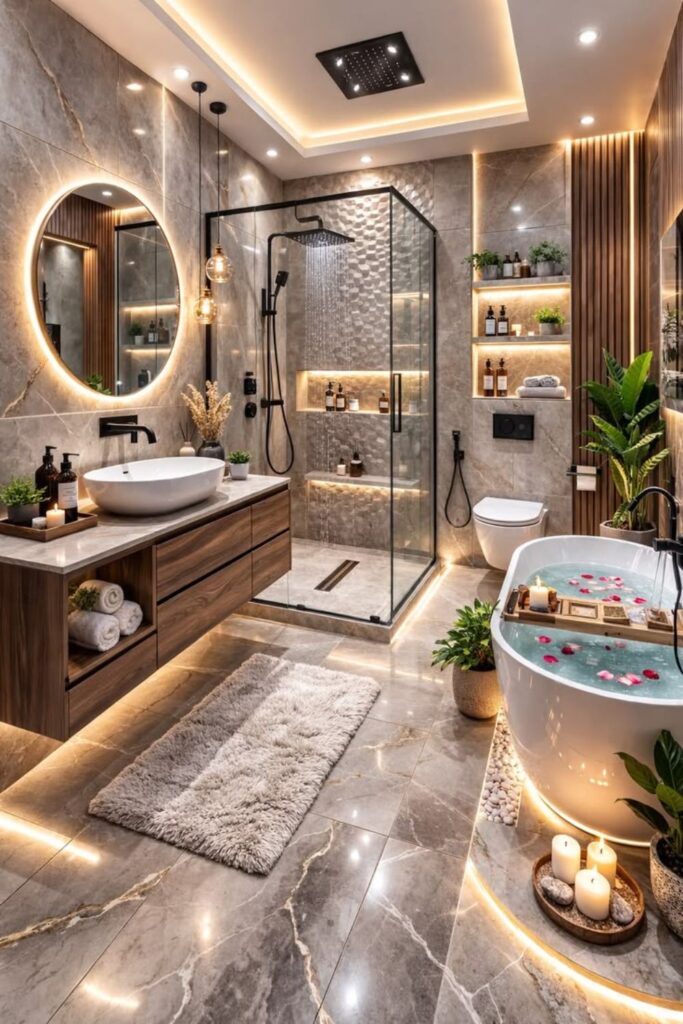
A great functional bathroom layout makes everything else easier. You don’t notice a good layout because everything just flows naturally. You absolutely notice a bad one the vanity door that blocks the toilet, the shower that’s too close to the tub, the single sink that two people are fighting over every morning. Getting the layout right before a single wall comes down is the most important planning step in any master bathroom remodel.
Open Concept Layout
The open concept layout removes walls between the shower, soaking tub, and vanity zones, creating a single continuous space. It requires excellent drainage planning and a heating system that keeps the entire room warm enough to be comfortable in particularly important in northern US states. Master Bathroom Ideas This layout works best in master bathrooms over 100 square feet, where the open expanse feels generous rather than overwhelming.
In an open concept bathroom layout, the positioning of each fixture zone becomes especially important. The tub near the window. The shower in a defined corner. The vanity anchoring the entry end of the room. Each zone has its own identity even without walls separating them.
Double Sink Layout
The double sink layout is the most practical choice for a shared master bathroom. Two sinks, two defined storage zones, and enough counter space for two people to get ready simultaneously without negotiating for territory. The standard minimum is 30 inches of counter space per person, anything less and the layout defeats its own purpose.
Consider defining the two sink zones with different mirror shapes or different sconce styles. This turns a functional storage solution into a design feature each person’s side of the vanity feels individually curated rather than mass-produced.
Tub + Shower Layout
The tub and shower layout separates the freestanding soaking tub from the walk-in shower into distinct zones within the same room. This is the layout found in virtually every high-end luxury primary bathroom built in the US right now. It’s also the most commonly requested layout during master bathroom remodels.
Positioning the freestanding tub near the best window in the room natural light makes soaking feel even more indulgent. Place the shower in a corner or alcove where it can be enclosed without dominating the sightline from the door. This layout works comfortably in master bathrooms over 80 square feet.
Split Vanity Layout
The split vanity layout places vanities on opposite walls or even in separate rooms or zones within the master suite eliminating bathroom congestion entirely. Each person has a complete, private getting-ready zone. No negotiating. No waiting. No elbowing for counter space.
This layout is increasingly common in high-end new construction in the US, where primary bathroom suites often include separate dressing rooms or walk-in closets directly adjacent to the bathroom. It can also be retrofitted during a remodel if the room’s plumbing configuration allows.
Budget-Friendly Bathroom Makeover Ideas
Not every upgrade needs a contractor, a permit, and a three-month timeline. Some of the most transformative bathroom makeover ideas in the country came together for under $500. Knowing where to spend and where to save is the skill that separates a savvy homeowner from an overwhelmed one.
The following ten updates deliver the highest visual return for the least investment. They’re organized from highest to lowest impact, based on what designers consistently see make the biggest difference in real homes.
Swap outdated fixtures new faucets and towel bars transform a space for under $200
Paint the vanity chalk paint in a fresh color plus new hardware equals a new vanity for $50–$75
Replace the mirror swap a builder-grade rectangle for an arched or round statement piece
Update lighting new sconces or a new overhead fixture make an immediate, dramatic difference
Regrout tile fresh white grout makes 20-year-old tile look brand new
Add open shelving one floating wood shelf above the toilet replaces a clunky storage tower
Install peel-and-stick wallpaper removable, renter-friendly, and surprisingly chic
New towels and a bath mat fresh, coordinated textiles instantly elevate the visual baseline
Add one plant a $12 pothos from the hardware store changes the entire atmosphere
Declutter the counter sometimes the most powerful upgrade is simply removing things
| Budget Update | Avg DIY Cost | Visual Impact |
| Paint the vanity | $30–$75 | ⭐⭐⭐⭐ |
| New faucets & hardware | $80–$250 | ⭐⭐⭐⭐ |
| Statement mirror | $100–$400 | ⭐⭐⭐⭐⭐ |
| Peel-and-stick wallpaper | $40–$150 | ⭐⭐⭐⭐ |
| New sconces or overhead light | $50–$300 | ⭐⭐⭐⭐⭐ |
| Fresh grout | $20–$60 | ⭐⭐⭐ |
| Floating shelf + decor | $40–$120 | ⭐⭐⭐⭐ |
Common Bathroom Design Mistakes to Avoid
Even experienced designers make these mistakes. Catching them in the planning phase costs nothing. Correcting them after installation costs a great deal.
Here are eight of the most common bathroom renovation mistakes American homeowners make and how to avoid them.
Choosing tile before fixtures. Always select your fixtures first. The tile should respond to the fixtures, not the other way around. Fixtures set the finish direction (matte black, brushed brass, polished chrome). Tile should harmonize with that direction.
Ignoring ventilation. A great exhaust fan is invisible but absolutely essential. Mold behind tile and in walls is the most expensive mistake to fix after the fact. Install a fan rated for the room’s square footage and run it during every shower and for 30 minutes after.
Under-lighting the vanity. Overhead-only vanity lighting is the number one complaint in completed bathroom remodels. Add side-mounted sconces, even if the budget is tight. The difference in how you look getting ready every morning is significant.
Chasing micro-trends. Bold choices in tile or fixtures date bathrooms quickly when they’re trend-driven rather than style-driven. Choose materials and finishes with 10-year longevity in mind. Timeless bathroom design serves you far better than a bathroom that looked perfect in 2024 and feels dated by 2027.
Skimping on storage. Beautiful bathrooms with inadequate storage become cluttered and frustrating within days. Plan storage as seriously as you plan aesthetics.
Forgetting outlet placement. Plan electrical outlets at counter height on both sides of the vanity and consider one inside a drawer for charging devices and hiding hair tool cords.
Choosing beauty over safety on floors. Polished marble flooring is gorgeous and can be dangerously slick when wet. Choose honed or brushed finishes for floors, or use mosaic tiles the grout lines provide traction.
Waterproofing inadequately. This is the single most expensive mistake to fix after the fact. Proper waterproofing membranes behind tile in wet zones are non-negotiable. Don’t let a contractor cut this corner.
Master Bathroom Design Trends for 2026
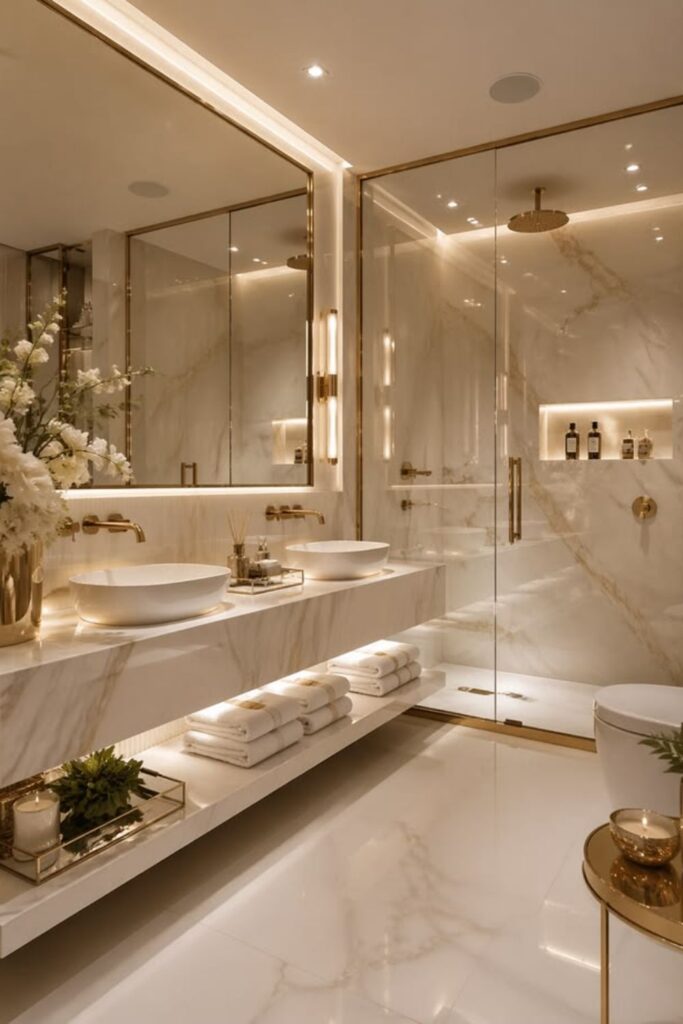
The master bathroom design trends moving from aspirational Pinterest boards into real American homes right now reveal a clear direction: warmth over coldness, texture over smoothness, and humanity over precision. Here’s what’s defining the next chapter of bathroom inspiration in 2026.
Warm minimalism is replacing cold, stark white minimalism across the board. Creamy off-white tones, linen textures, natural wood, and warm stone are the new neutral. The minimalism hasn’t gone anywhere the warmth has simply arrived to make it livable.
Curved forms are overtaking hard corners everywhere. Arched mirrors. Oval soaking tubs. Rounded vanity edges. Curved shower walls. Decorative ceiling ideas with arched plaster details. The geometry of the contemporary bathroom has softened significantly since 2022.
Plaster and limewash walls are replacing flat painted drywall in high-end bathrooms. The soft, organic texture of plaster applied by hand in layers creates an artisanal warmth that paint simply cannot replicate.
Champagne bronze and unlacquered brass are overtaking matte black as the dominant hardware finish. The warmth of these metal tones complements the earth tone bathrooms and warm minimalist palettes that dominate new builds in 2026.
Wet rooms are going mainstream. Once a feature exclusive to luxury builds and boutique hotels, the wet room is increasingly appearing in mid-range renovations as homeowners discover how achievable the waterproofing requirements actually are.
Zellige tile the handmade Moroccan tile with its irregular, light-catching surface, continues its trajectory from trend to staple. It appeared everywhere in 2024 and 2025, and in 2026 it’s settling in as a true design classic rather than a passing moment.
Smart toilets are entering the US mainstream. Japanese-style bidet seats with heated seats, adjustable wash functions, and automatic lids are now available at major retailers for under $500. Full integrated smart toilet systems are increasingly common in luxury primary bathroom remodels.
Spa bathing culture at home is the biggest behavioral trend shaping bathroom design. Cold plunge tubs, chromotherapy lighting, steam showers, and heated bathroom floors are moving from boutique spas into private homes as homeowners invest in wellness environments within their own four walls.
| Trend | Longevity Outlook | Commitment Risk |
| Warm minimalism | 10+ years | Very Low |
| Curved forms | 5–8 years | Low |
| Zellige tile | 5+ years | Low |
| Champagne bronze hardware | 5–7 years | Low–Medium |
| Matte black fixtures | Peaking declining | High |
| Smart toilets | Permanent | Very Low |
| Plaster walls | 5–7 years | Medium |
| Wet rooms | 10+ years | Very Low |
Frequently Asked Questions
What are the best master bathroom ideas for modern homes?
For a modern primary bathroom, start with four core elements and build outward from there: a floating double vanity, a frameless glass walk-in shower, large-format porcelain tiles on the floor, and layered lighting on dimmers. Add matte black fixtures or brushed brass depending on your warmth preference, a statement mirror, and one indoor plant. These six elements together create a modern master bathroom that functions beautifully and photographs even better. The materials do the work; the editing makes it exceptional.
How can I make a small master bathroom look luxurious?
Three things matter most in a small master bathroom: quality materials, excellent lighting, and ruthless decluttering. A small bathroom with marble flooring, well-placed sconces, a floating vanity, and a completely clear counter looks more luxurious than a large bathroom with builder-grade finishes and visual clutter everywhere. Frameless glass on the shower, a large mirror, and a monochromatic color palette do the rest. You don’t need more space. You need better choices within the space you have.
What is the difference between a master bathroom and a primary bathroom?
Nothing functional it’s a terminology shift that the real estate and interior design industries have been making over the last several years. “Primary bathroom” is the increasingly preferred term, replacing “master bathroom” to reflect more inclusive language. Both refer to the largest, most private bathroom in the home, typically attached directly to the main bedroom. The terms are used interchangeably across the US and both appear in MLS listings, design publications, and contractor specifications. This article uses both for the same reason to reflect how the language is actually used in real conversations.
Conclusion
You don’t need a massive budget or 200 square feet to create a bathroom you actually love. What you need is clarity about your style, your priorities, your non-negotiables, and your timeline. Great master bathroom design comes down to intentionality. Clear style direction. Smart material choices. Proper lighting. Enough storage. And one element: a tile, a fixture, a mirror that makes the whole room feel worth walking into.
This guide has covered everything from modern primary bathroom design to luxury primary bathroom retreats, from small master bathroom ideas that maximize every inch to bathroom renovation planning that avoids the mistakes most people make only once (expensively). The ideas here span every style, every budget, and every size of space.
Start with one element. A new mirror. A tile you love. A lighting change. A single indoor plant. Build from there. The best master bathroom isn’t the one with the biggest budget. It’s the one you can’t wait to spend time in.