21 Vintage Bedroom Decor Ideas That Feel Curated, Not Cluttered
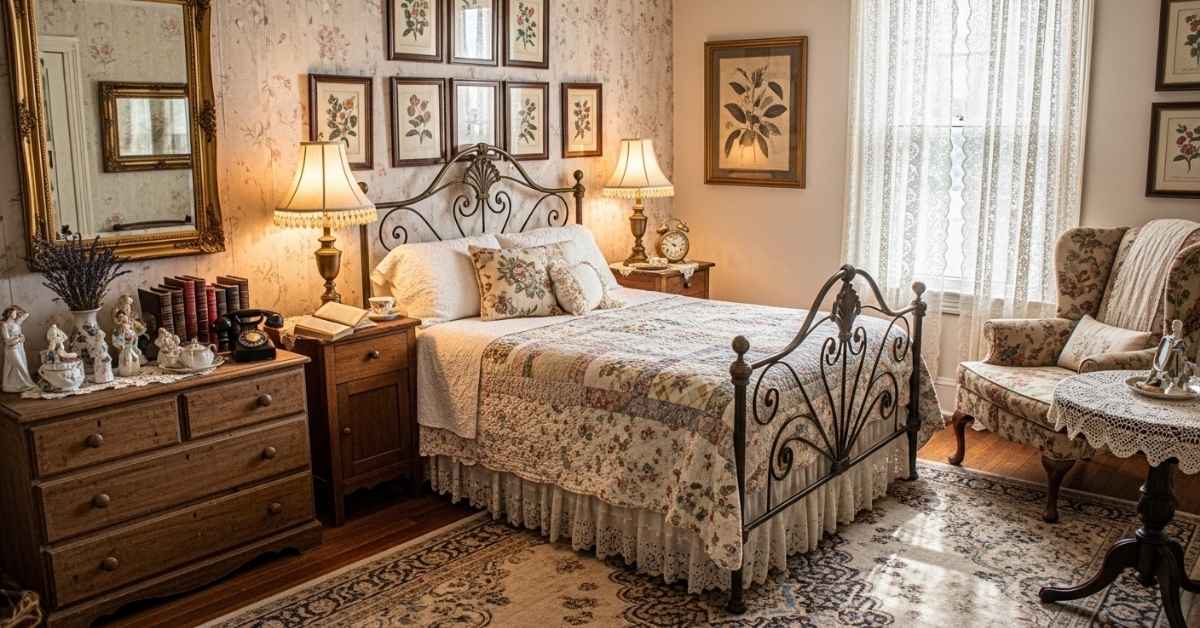
You know that feeling when you walk into a room and it feels like it has a story layered, warm, lived-in in the best possible way? Vintage Bedroom Decor Ideas That’s what good vintage bedroom decor actually does. It’s not about filling a room with old things. It’s about choosing pieces with character and letting them breathe alongside more modern elements so the whole space feels collected rather than chaotic.
The challenge most people run into is tipping too far in one direction. Either the room ends up looking like a thrift store with no clear visual logic, or they play it so safe that the “vintage” touches disappear entirely. The ideas here are designed to help you find middle ground spaces that feel warm, personal, and genuinely interesting without looking like a time capsule.
If your style leans toward antique furniture, warm wood tones, flea market finds, and textiles with history this list is built for you. These ideas work across a range of budgets and room sizes, and most can be layered into a bedroom you already have without starting from scratch.
An Ornate Brass or Iron Bed Frame as the Room’s Centerpiece
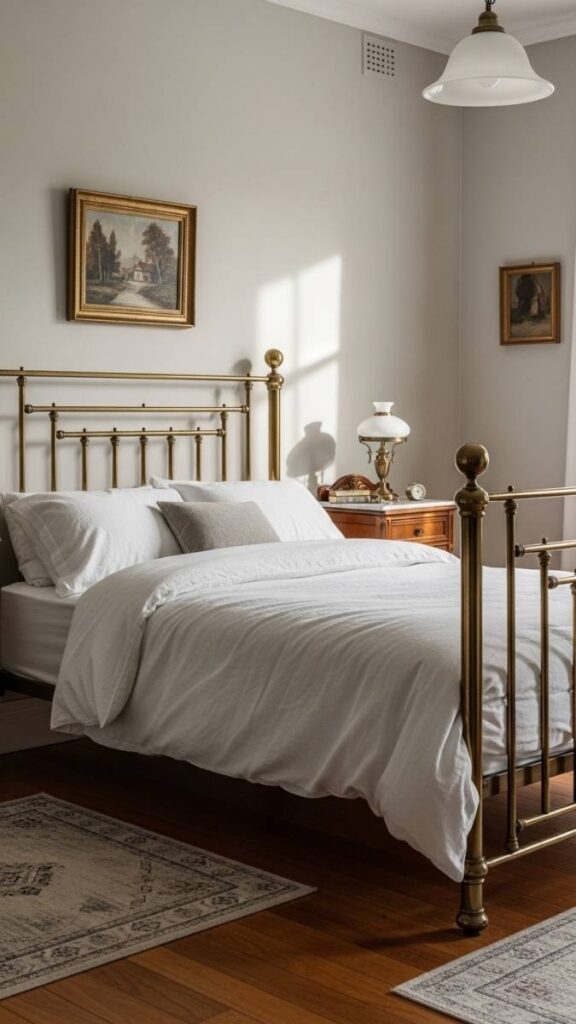
A vintage bed frame cast iron, brass, or wrought metal with decorative detailing does something a modern upholstered frame can’t: it introduces an actual artifact into the room. Position it centered on the main wall with space on both sides, and keep the bedding simple (white or cream linen, minimal pillows) so the frame itself does the visual work. The contrast between an ornate frame and restrained bedding is what stops the room from feeling overdone. This setup works especially well in rooms with wood floors and high ceilings, where the vertical lines of the frame have room to register. It solves the problem of a bedroom that has decent bones but no real focal point.
Warm Wood Furniture With Visible Grain and Age
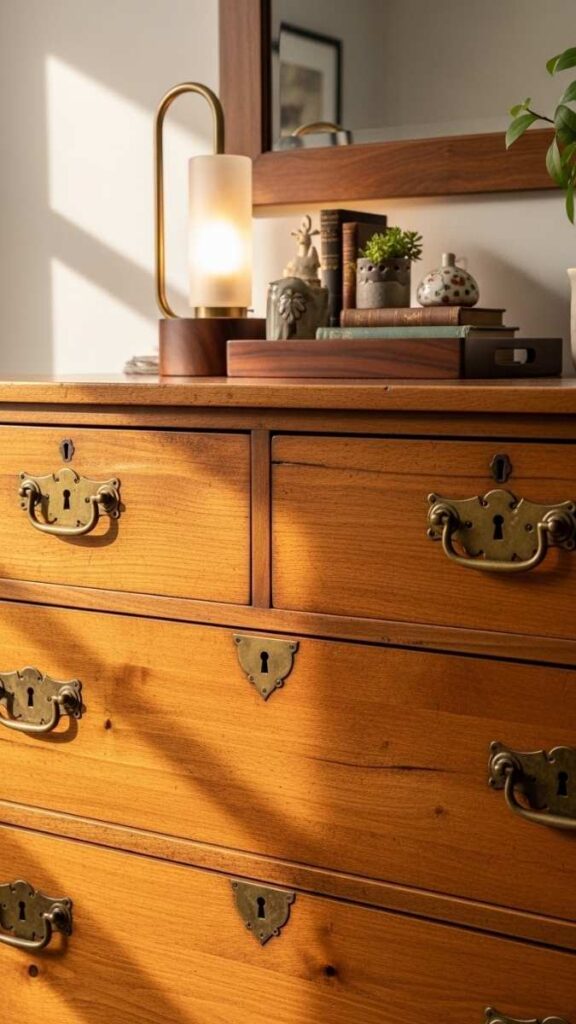
There’s a version of “wood furniture” that reads as modern and clean, and then there’s the kind that has actual depth grain variation, slight color shifts, a surface that’s been oiled and used over decades. The latter is what gives a vintage bedroom its grounded, warm quality. A solid wood dresser, wardrobe, or nightstand in walnut, cherry, or oak with visible aging doesn’t need to be antique; even newer furniture made with traditional joinery and matte oil finishes reads the same way. Hardware matters here: aged brass, ceramic knobs, or blackened iron pulls reinforce the period feel without requiring the furniture itself to be old. Works in almost any bedroom size.
Vintage-Style Wallpaper on the Headboard Wall
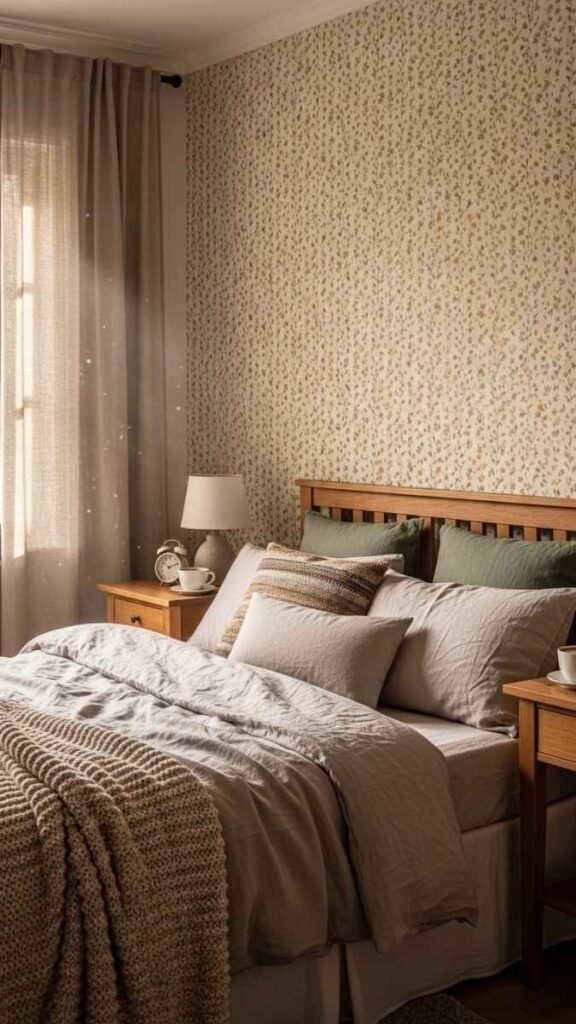
Botanical prints, faded florals, toile, and small geometric repeats are all having a genuine moment in 2026 not as nostalgia, but as a reaction to years of all-white, texture-free interiors. Applied to just the wall behind the bed, vintage-pattern wallpaper frames the entire room without overwhelming it. The key is scale; a small repeat pattern reads as refined, while a large bold print can feel like it’s competing with everything else in the room. Pair the wallpaper with solid, muted bedding and simple wood furniture so the wall stays the visual anchor. Peel-and-stick versions make this viable for renters.
A Vintage Vanity Table With a Round Mirror
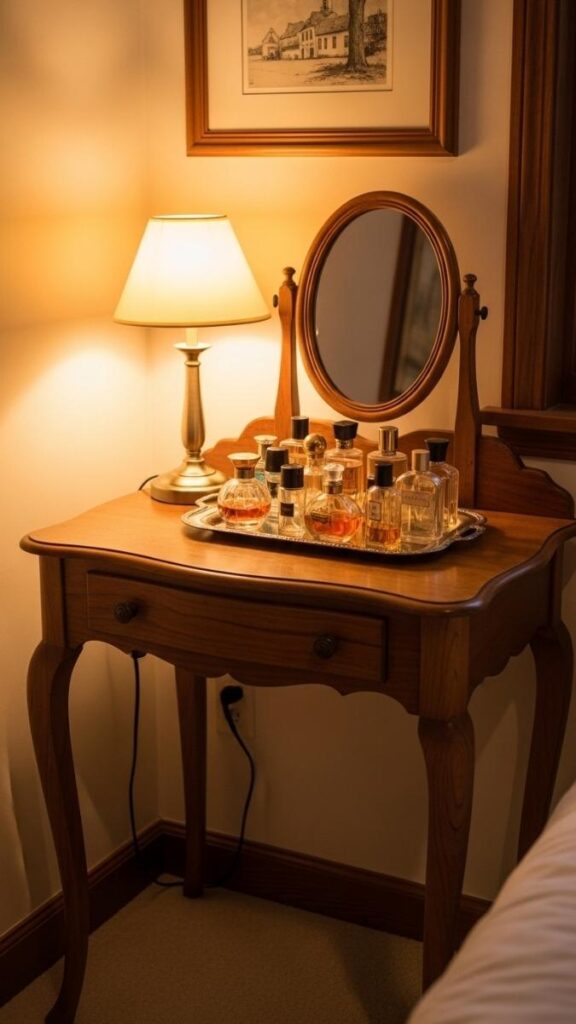
A vintage vanity is one of those furniture pieces that functions as both storage and styling moment simultaneously. The curved legs, the small surface, the round or oval mirror the whole setup creates a vignette in the corner of a bedroom that reads as intentional and personal. Style the surface the way you’d style a shelf: a small tray, a few perfume bottles, one or two meaningful objects, and a lamp for warm directional light. Avoid overcrowding it. In smaller bedrooms, a vanity can replace a full-size dresser if it has a drawer or two, which solves the storage problem while adding far more character than a standard chest of drawers.
Layered Vintage Textiles Quilts, Embroidered Pillows, Woven Throws
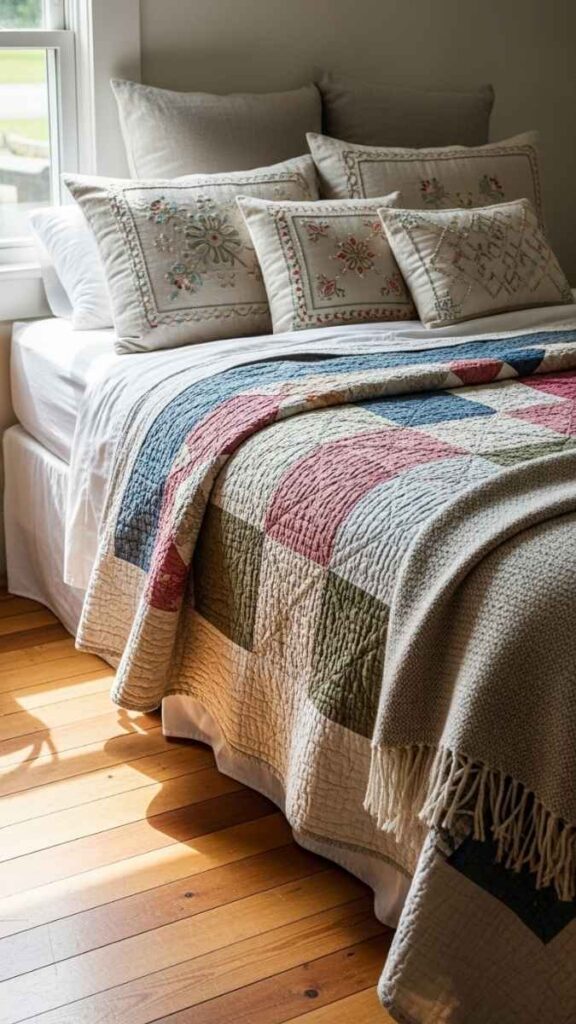
Textiles are the fastest way to introduce vintage character into a bedroom without changing any furniture. A patchwork quilt folded at the foot of the bed, an embroidered linen pillowcase, a hand-woven throw in warm neutral tones layered together, these create a bed that looks genuinely collected rather than purchased as a set. The trick is keeping the base bedding simple (a plain white or cream duvet underneath) so the vintage textiles sit on top as layers rather than competing with everything else. Mix textures freely cotton, linen, wool but keep the palette tonal. Faded indigo, dusty rose, sage, and warm ivory all tend to work well together in this context.
Exposed Wood Beam Ceiling or Faux Beam Treatment
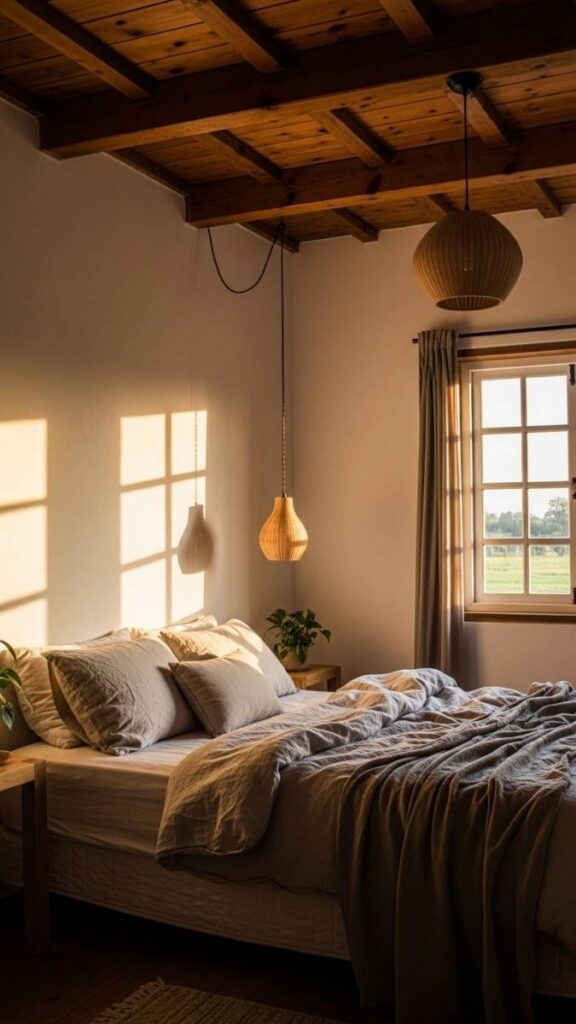
An exposed beam ceiling whether structural or decorative immediately anchors a bedroom in a specific kind of warmth that modern finishes rarely replicate. If your space already has beams, letting them show (and possibly refinishing them in a matte dark stain or whitewash depending on the room’s palette) is one of the highest-impact decisions you can make. For rooms without them, lightweight polyurethane faux beams can be installed without structural work and painted or stained to match. The ceiling becomes an active part of the room’s character rather than just overhead space. Works especially well in bedrooms with lower ceilings in older homes, where the beams reinforce the period architecture of the building.
Antique or Vintage-Style Pendant Lighting Above the Bed
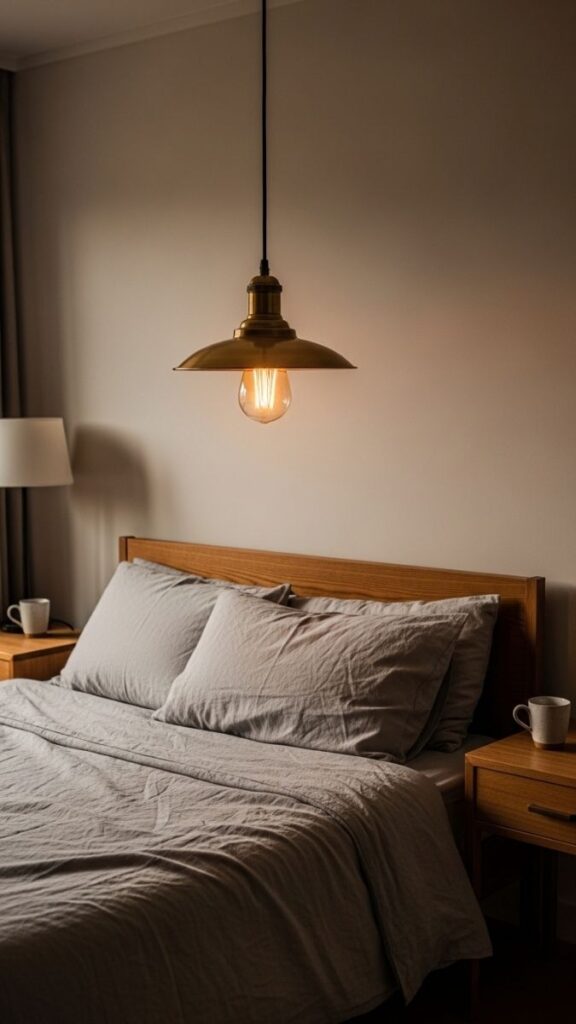
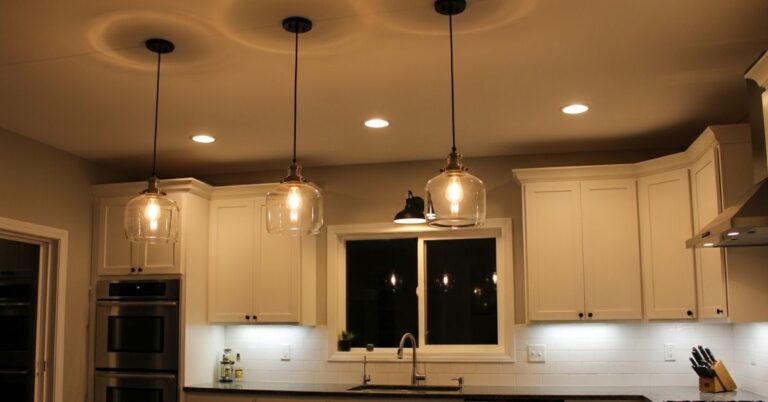
Replacing a builder-grade ceiling fixture with a vintage-style pendant or adding a pendant where there wasn’t one before changes the room’s atmosphere significantly. Edison filament bulbs, aged brass fittings, milk glass shades, and rattan or wicker pendant forms all read as vintage without requiring antique sourcing. Hang the pendant centered above the bed, low enough that the shade sits roughly at the top third of the room’s height. This draws the eye upward in a way that feels architectural rather than decorative. For bedrooms without ceiling wiring directly over the bed, a plug-in pendant with a cord that runs along the ceiling to the nearest outlet can achieve the same effect cleanly.
A Gallery Wall of Vintage Botanical or Antique Map Prints
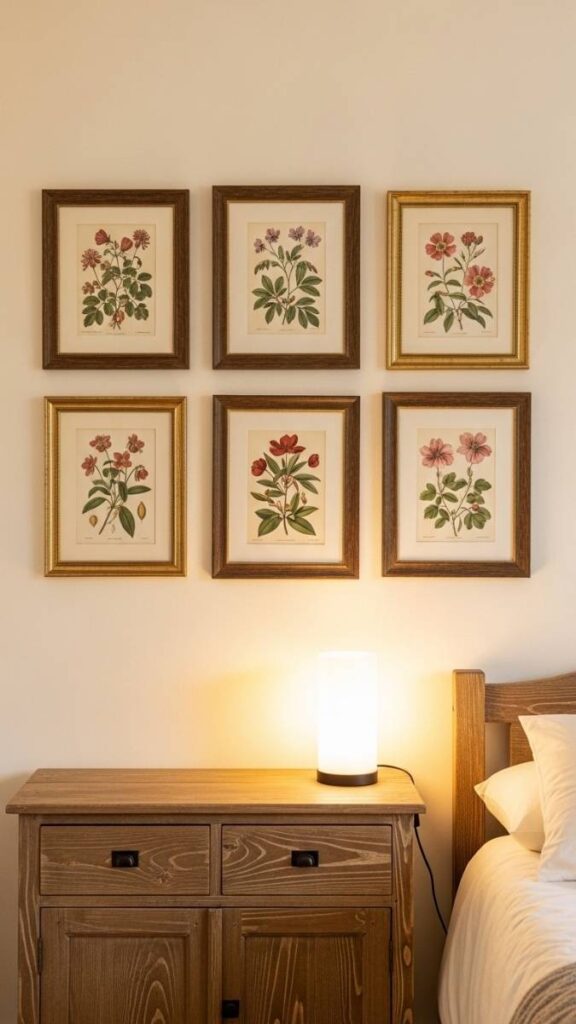
A gallery wall in a vintage bedroom works differently than a modern one; the frames don’t need to match, and that’s intentional. A mix of thin gold, aged wood, and ornate plaster frames, all in similar tonal finishes, creates the kind of collected-over-time quality that matching frames can’t. Choose prints from a consistent category botanical illustrations, antique maps, pressed flower prints, or vintage architectural drawings all hold together thematically even when the frames vary. Keep the print colors muted sepia, sage, faded indigo, cream so the wall reads as a cohesive vignette rather than a random arrangement. Group them tightly, with consistent spacing of 2–3 inches between frames.
A Vintage Armoire Instead of a Built-In Wardrobe
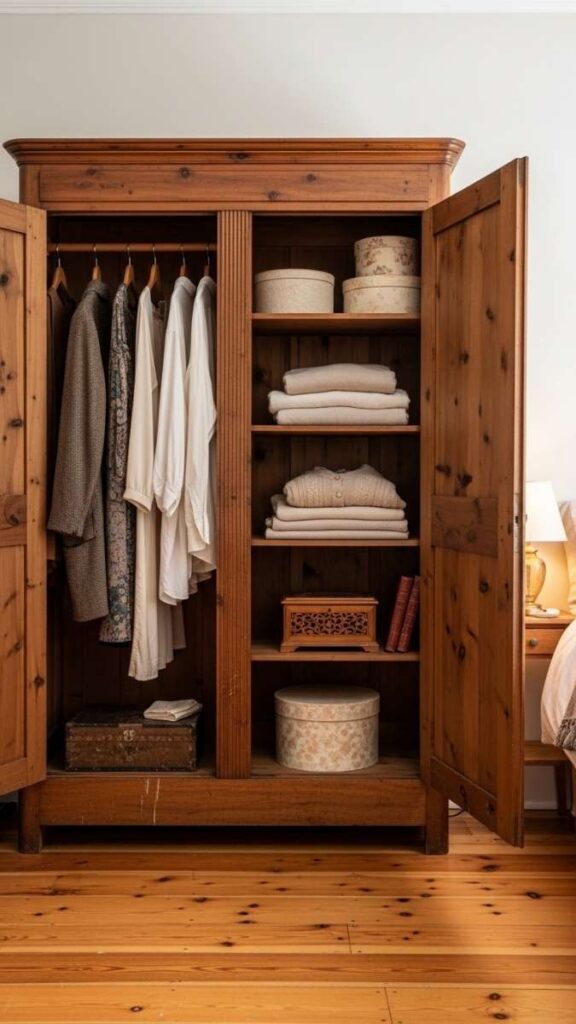
An armoire is one of those furniture pieces that solves a real storage problem while looking nothing like a storage solution. In bedrooms without built-in closets common in older homes and apartments a vintage armoire provides hanging space, shelf storage, and a significant visual presence without requiring any installation. The scale tends to be generous, which works well on a large empty wall that needs anchoring. Look for pieces with working hinges, solid construction, and interiors that can be updated with a new rod or shelf configuration if needed. Paired with a simple bed and minimal other furniture, an armour can carry the entire room’s personality on its own.
Warm Ambient Lighting With Vintage-Style Fixtures
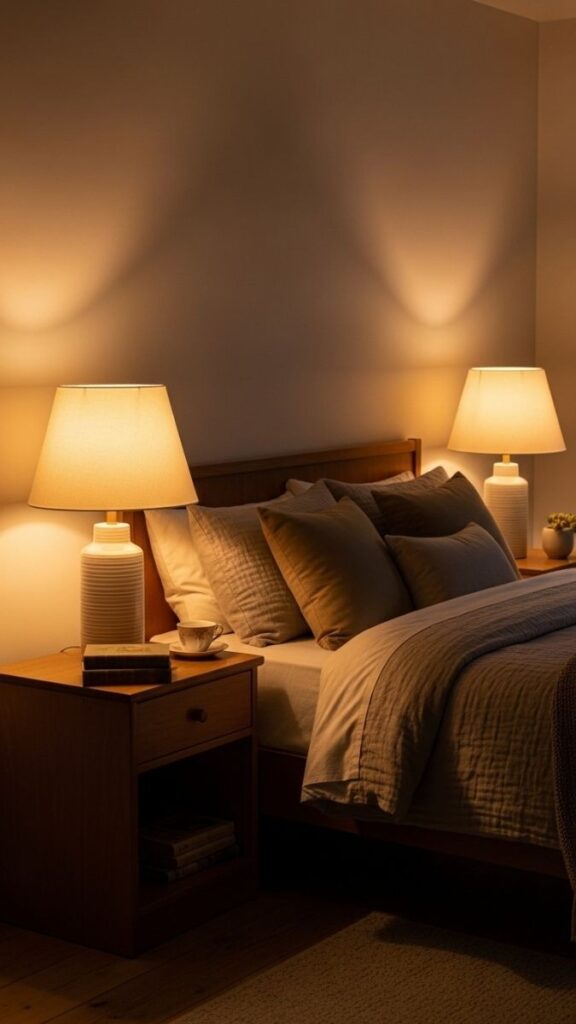
Vintage bedrooms live and die by their lighting. Harsh overhead light is the fastest way to flatten all the warmth that the furniture and textiles are working to create. The fix eliminates or dim the overhead completely and rely instead on table lamps with warm bulbs (2200K–2700K), a floor lamp in the reading corner, and possibly a wall sconce or two. Vintage-style ceramic bases, hand-blown glass, and wrought iron lamp bases all work here. Linen or cotton drum shades in cream or warm white diffuse the light softly. In my experience, this is the single change that most dramatically shifts how a vintage bedroom feels: the lighting either supports the atmosphere or undermines everything else in the room.
Reclaimed Wood Flooring or a Vintage-Style Area Rug
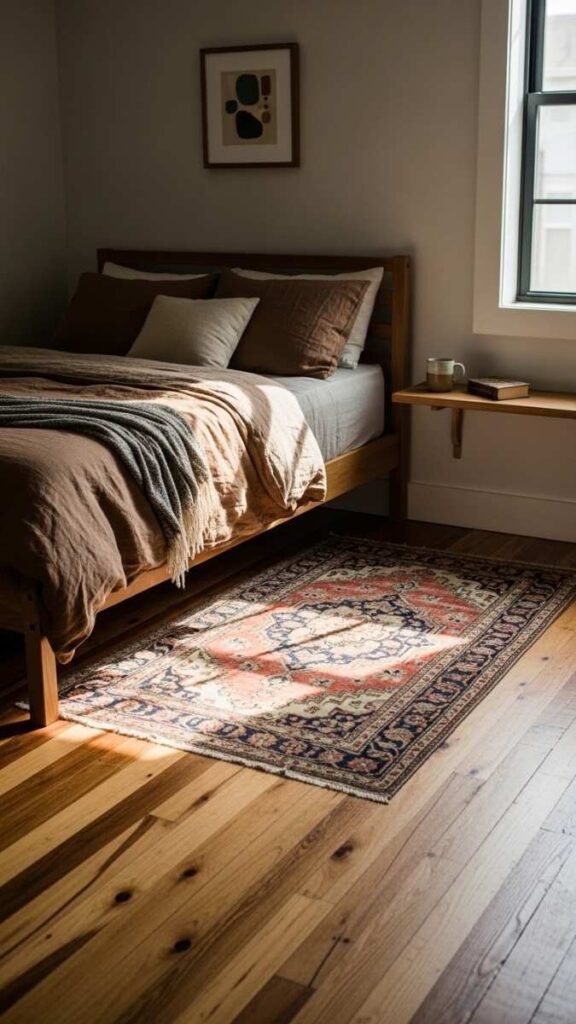
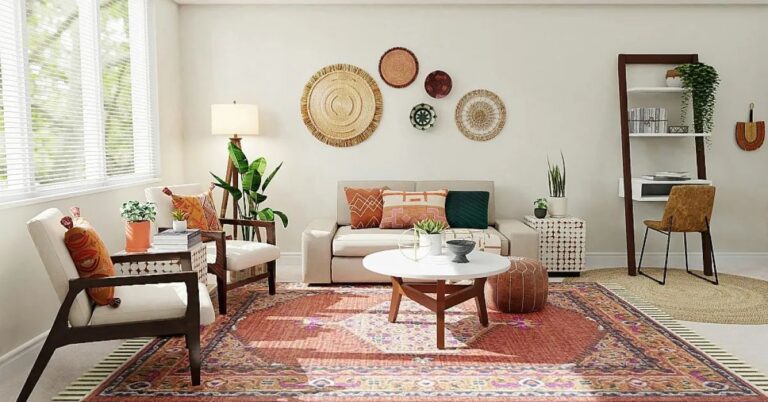
The floor is often the last thing people think about in a bedroom and in a vintage space, it’s one of the most character-defining surfaces. Wide-plank wood floors with visible knots, color variation, and aging are the ideal base. If the floors aren’t changeable, a vintage-style area rug placed beside and under the bed can achieve a similar effect. Persian, Oushak, and distressed kilim rugs in muted jewel tones (faded red, dusty blue, warm gold) layer beautifully over both wood and neutral carpet. Go for a rug large enough that it extends 18–24 inches past both sides of the bed. The scale matters for the room to feel grounded rather than accessorized.
Shiplap or Wainscoting on the Lower Half of the Bedroom Walls
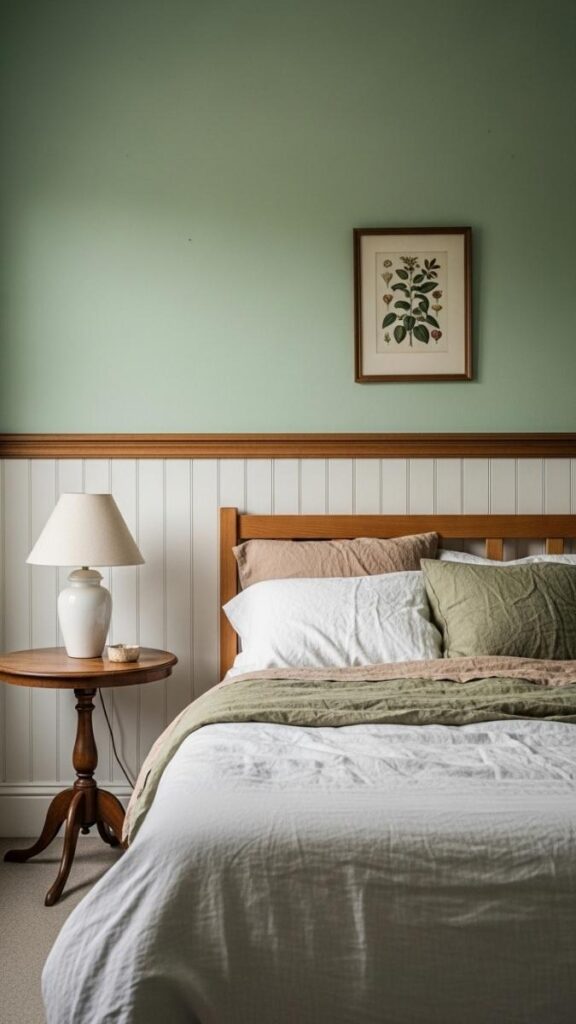
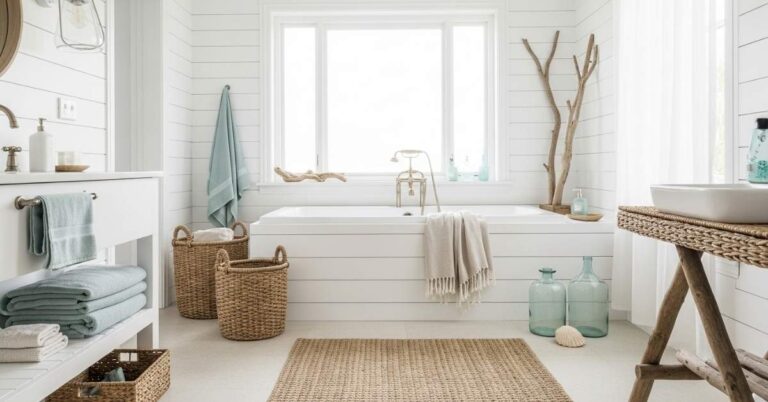
Wall paneling, whether traditional wainscoting with a chair rail, painted shiplap, or vertical board-and-batten adds architectural character to a bedroom that reads as period-appropriate without requiring major renovation. Paint the paneling a soft white or cream, and use a muted color (sage, dusty blue, warm terracotta) on the upper wall section for contrast. This two-tone wall treatment creates visual structure that grounds the room vertically and makes the ceiling feel taller. It’s particularly effective in older homes where the walls are otherwise plain, and it provides a visual reference point for hanging art or shelving that feels more considered than a bare wall.
A Vintage Trunk or Blanket Chest at the Foot of the Bed
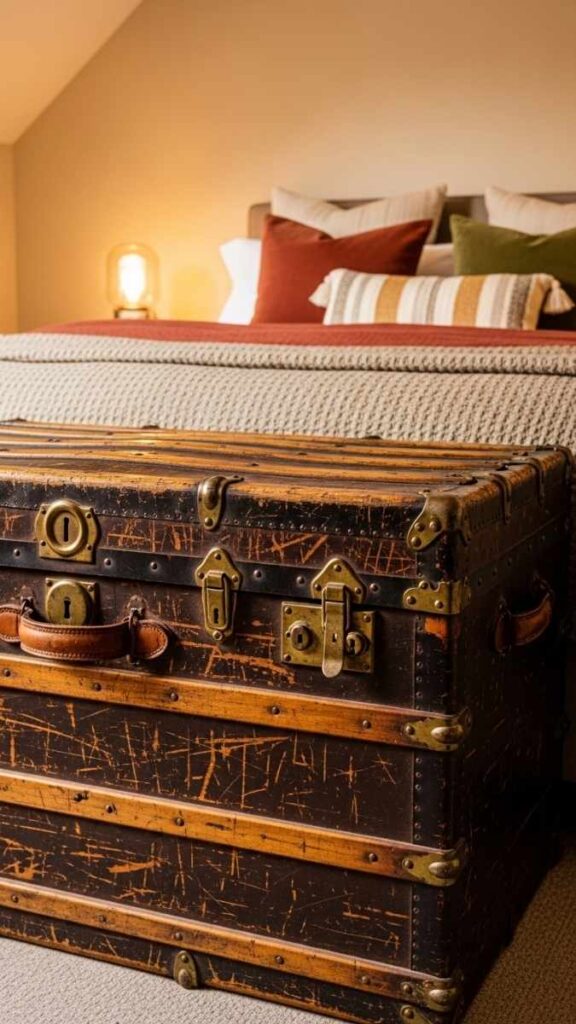
A vintage trunk at the foot of the bed is one of those dual-function pieces that works harder than it looks. It provides storage for extra bedding, seasonal items, or anything that needs to be accessible but out of sight and visually, it completes the bed arrangement in a way that a modern bench often can’t. The worn patina of a leather steamer trunk or a wooden blanket chest adds texture and history to the room without requiring any styling. Look for pieces with solid hinges and a flat top surface; some can also double as a seating surface when the room needs it. This works especially well in smaller bedrooms where every piece needs to earn its place.
Lace, Muslin, or Sheer Vintage-Style Curtains
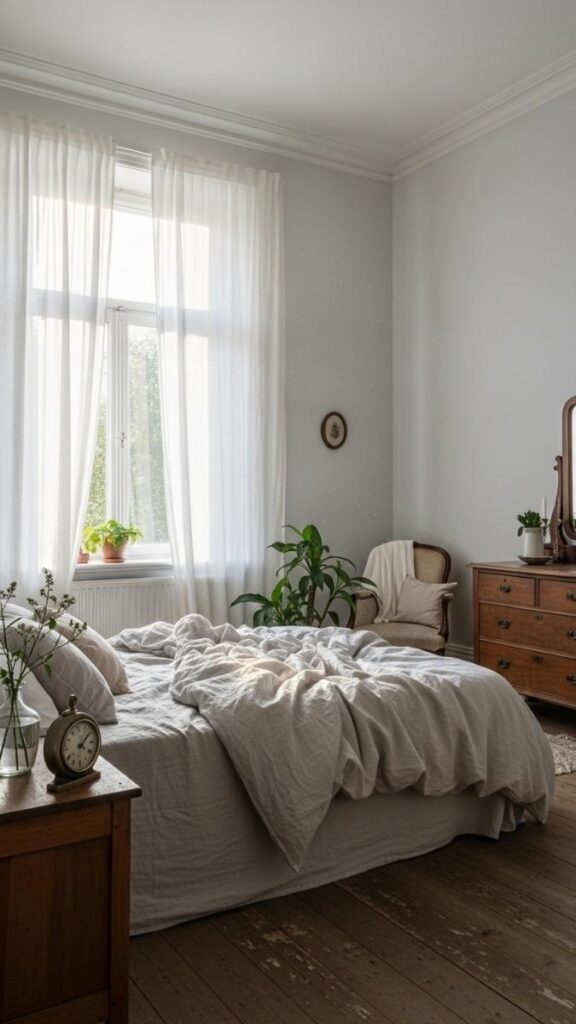
There’s a particular quality of light that comes through unlined sheer curtains diffused, slightly golden, warm without being dim that heavier blackout drapes simply can’t replicate during the day. In a vintage bedroom, lightweight muslin, lace-edged panels, or cotton voile curtains in white or cream let natural light filter through softly while maintaining privacy. The fabric should have enough body to hang straight but enough transparency to diffuse light. Floor-to-ceiling panels make the windows feel taller, and the gentle movement of unlined fabric in a light breeze adds a sensory quality to the room that’s difficult to achieve with any other window treatment.
Antique Mirrors Foxed, Ornate-Framed, or Leaning
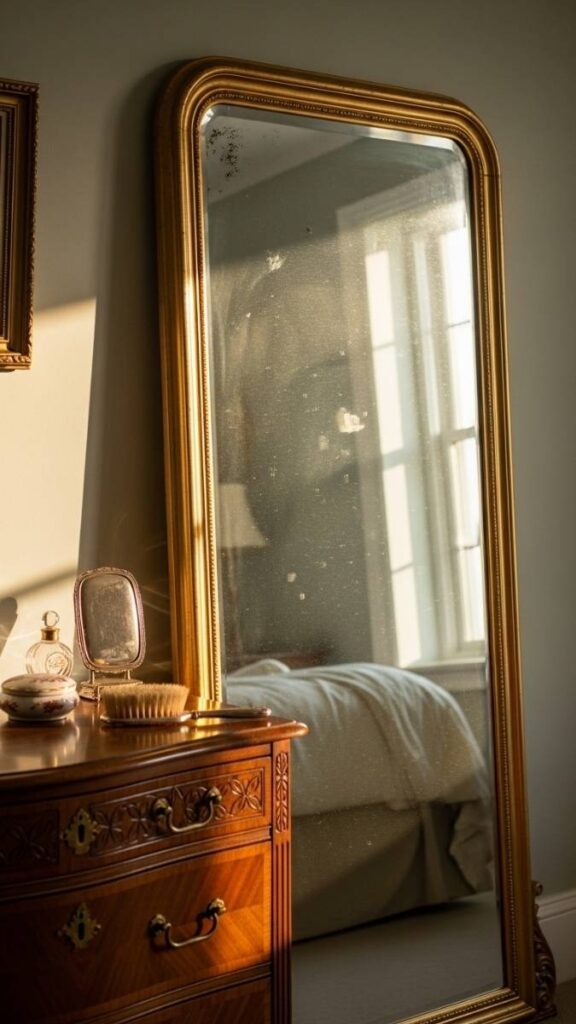
A fixed mirror one where the silver backing has partially oxidized and created dark spots or a slightly smoky quality is one of the most distinctly vintage design objects you can introduce into a bedroom. Leaned against a wall rather than hung, it occupies floor space in a way that feels casual and collected. The ornate frame (carved plaster, distressed gold leaf, or aged wood) contrasts beautifully with simpler furniture around it and reflects light in a way that opens the room. Even a reproduction foxed mirror (widely available) achieves the same visual effect as an antique at a fraction of the cost. Position it to catch natural light from a window for maximum impact.
Open Shelving With Vintage Books, Ceramics, and Plants
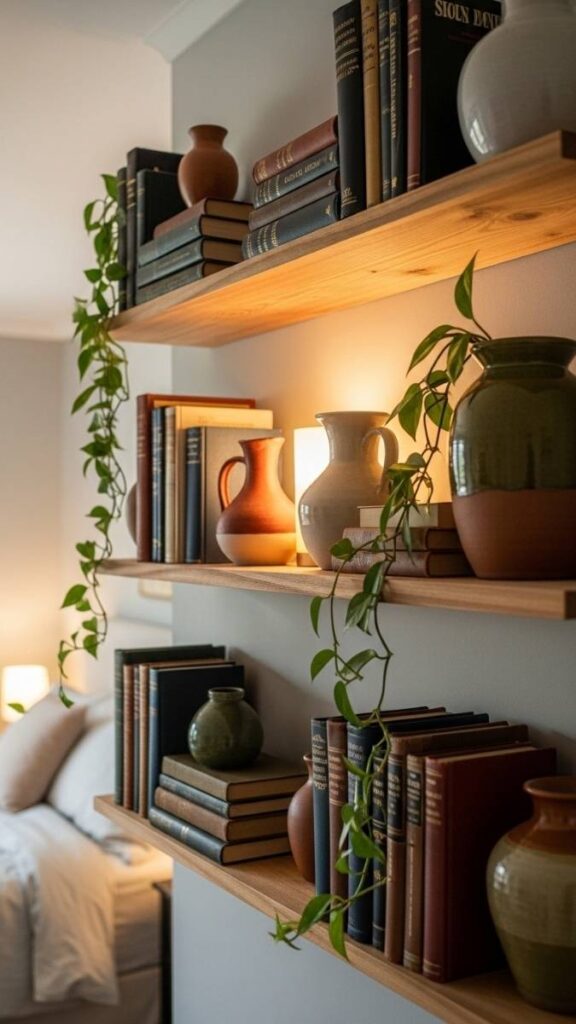
Open shelving in a bedroom works when the styling is deliberate and in a vintage context, that means mixing categories of old hardcover books with worn spines, ceramic vases or pitchers, a small trailing plant, and one or two meaningful objects. The rule for vintage shelf styling is alternating heights and densities: a tall stack of books next to a single ceramic, then a plant, then a smaller stack. Leave some breathing room, a shelf that’s 70% full tends to read better than one that’s packed. This approach works well above a dresser, beside a bed on a single floating shelf, or as a wider built-in unit that anchors a full wall.
A Clawfoot Tub Visible Through an Open Bathroom Door
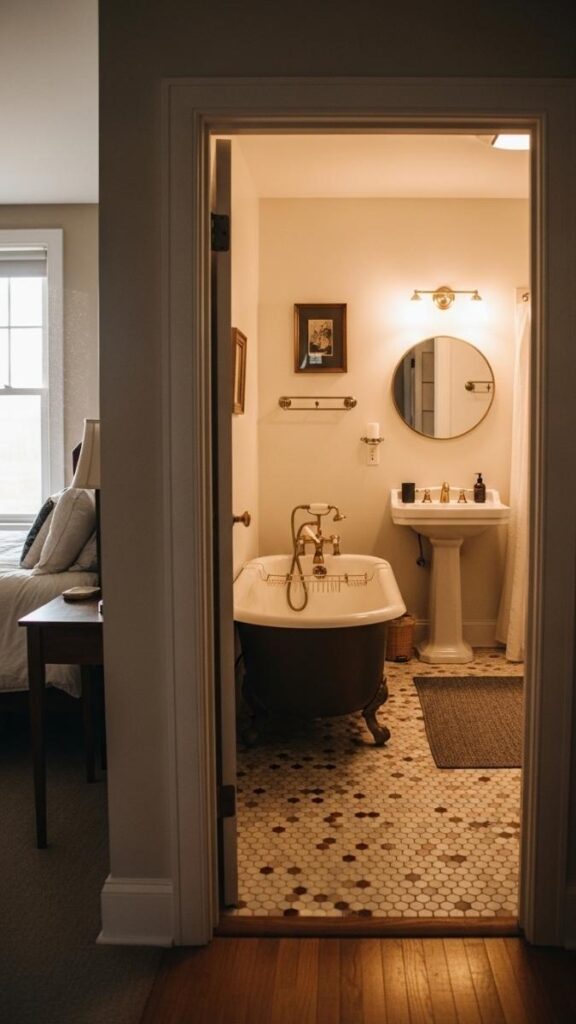
This one is situational but if your bedroom connects to a bathroom with a clawfoot tub, keeping that door open (or replacing it with a curtain or open archway) makes the tub part of the bedroom’s visual landscape. A white or black cast iron clawfoot tub is an unmistakably vintage object, and its presence visible from the bedroom adds a layer of character and intentionality to the overall space. It works particularly well in older homes where the plumbing and architecture already support this kind of open floor plan between sleeping and bathing spaces.
Vintage-Style Wallpaper Border or Dado Rail for Period Detail
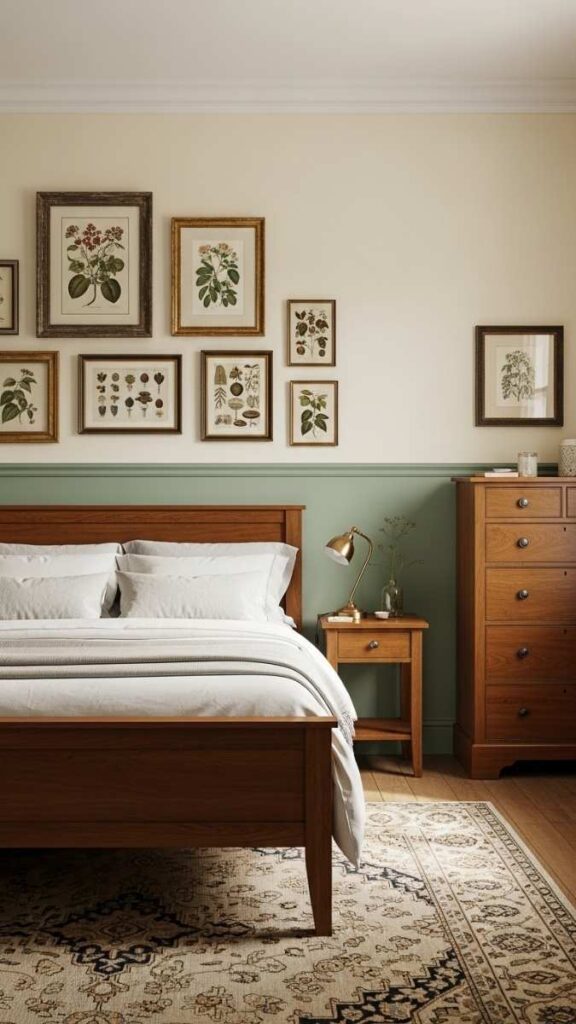
A dado rail, the horizontal molding that runs around the perimeter of a room at roughly chair height is one of those architectural details that signals period character immediately. Paint the wall below the rail in a slightly deeper tone (warm sage, dusty olive, muted terracotta) and the section above in a lighter coordinating shade. Add a simple wallpaper border just above the rail for additional detail. The result is a room that feels architecturally layered in a way that plain painted walls simply don’t achieve. This is especially effective in older homes or apartments where original architectural details still exist and can be complemented rather than covered.
A Freestanding Clothing Rack in Vintage Iron or Brass
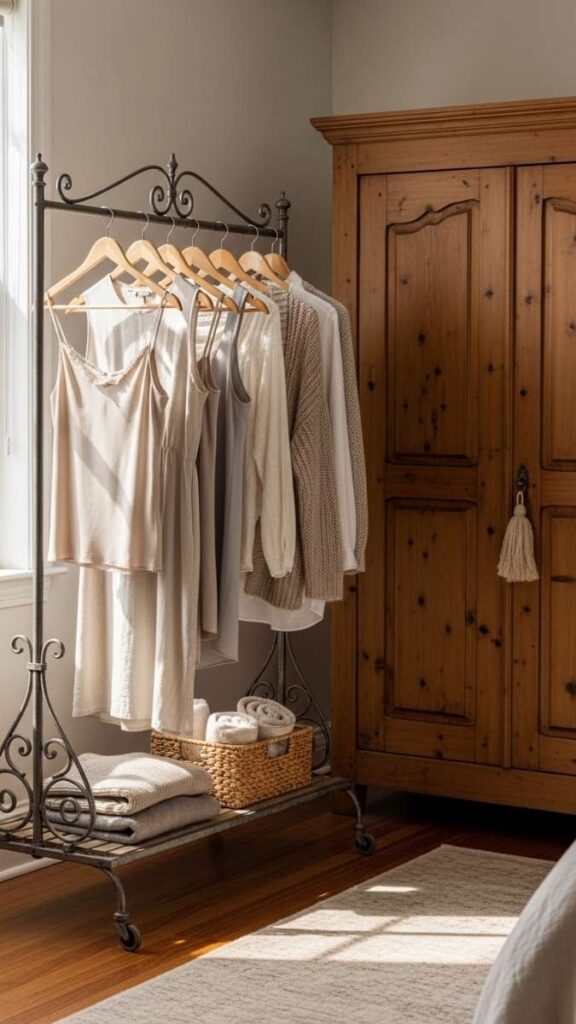
A freestanding clothing rack of the kind with a vintage aesthetic rather than a utilitarian chrome finish bridges the gap between function and decor in a way that works particularly well in smaller bedrooms without adequate closet space. Wrought iron racks with curved detailing, or brass pipe-style frames, are widely available and read as intentional design choices rather than storage overflow. Keep the hanging items curated a small selection of neutral, textured clothing on wooden or velvet hangers, with a woven basket or a small shelf underneath for shoes or accessories. The rack works best in a corner where it’s contained visually and doesn’t interrupt the room’s traffic flow.
Soft, Muted Paint Colors Warm White, Aged Cream, Dusty Sage
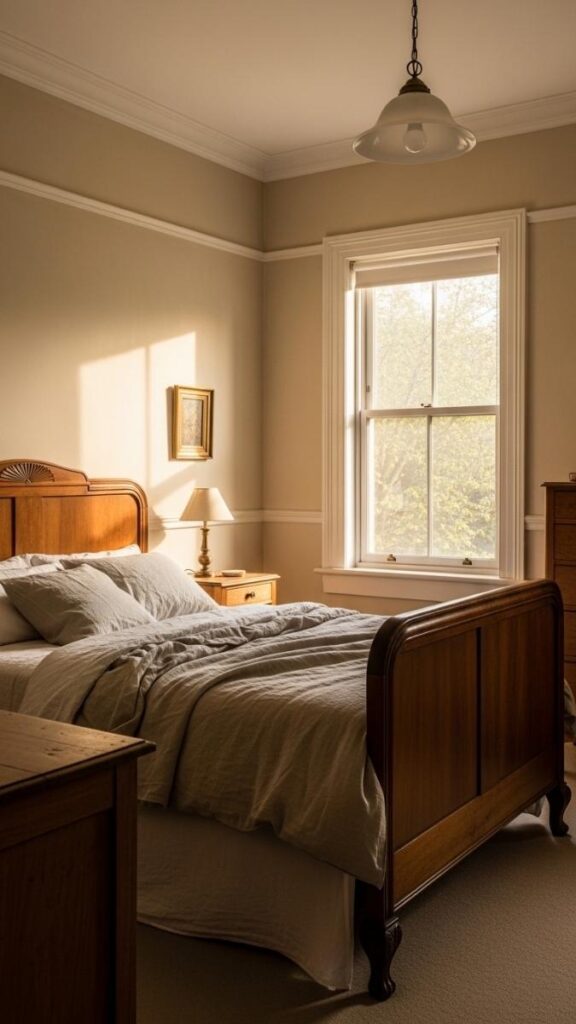
Color choice in a vintage bedroom is as much about what you avoid as what you choose. Bright whites, cool greys, and saturated accent colors all push a room toward contemporary rather than vintage. Warm whites with a yellow or pink undertone, aged cream, dusty sage, soft terracotta, and faded dusty blue all work because they reference historical pigments and feel naturally warm under both natural and artificial light. Paint the trim in a slightly warmer or slightly cooler version of the wall color not stark white for a more period-appropriate finish. The whole palette should feel like it’s been gently softened by time, not newly applied.
A Bedside Table Styled Like a Vintage Nightstand Vignette
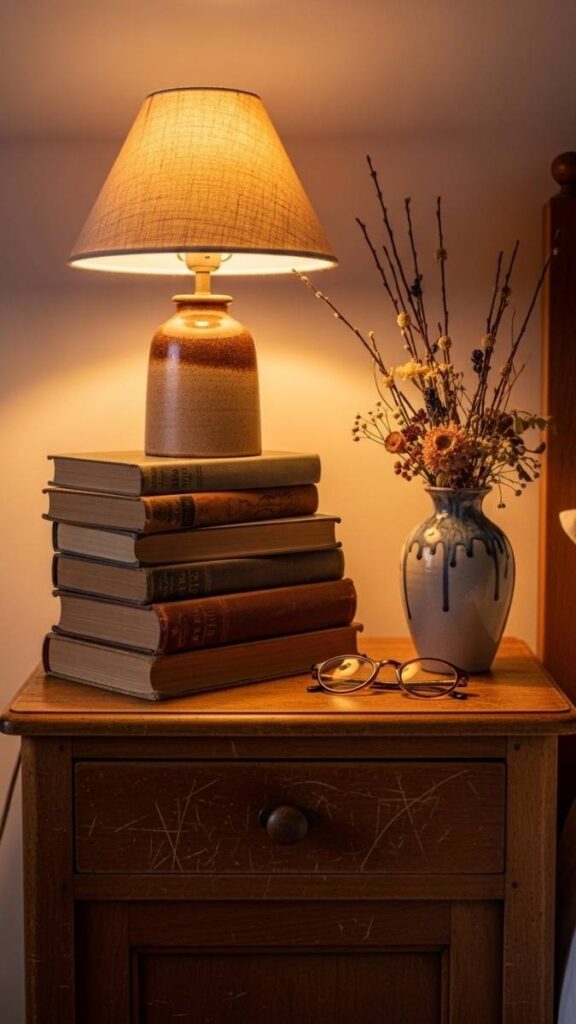
The nightstand is one of the smallest surfaces in a bedroom and one of the most visible. In a vintage bedroom, it’s worth treating it as a curated still life rather than a functional surface. A small stack of hardcover books with visible spines, a ceramic or glass lamp, a tiny vessel with dried flowers or a single stem, and maybe a small tray to anchor the arrangement that’s the formula. The surface itself matters a wooden nightstand with a worn finish, a small painted side table, or even a vintage crate adds to the overall character. Keep the styling to four or five objects maximum so the arrangement reads as intentional rather than accumulated.
How to Choose the Right Vintage Pieces for Your Bedroom
Not every vintage or vintage-style piece works in every room and buying without a framework tends to lead to a bedroom that feels crowded or inconsistent. Here’s how to approach it.
Start with one anchor piece. The bed frame, the armoire, or a statement mirror pick the piece that will define the room’s vintage character and build everything else around it. Trying to introduce multiple statement antiques at once is usually what causes visual chaos.
Match the era loosely, not literally. You don’t need to commit to one specific decade. What works is keeping the furniture within a similar aesthetic family Victorian, early-20th-century farmhouse, mid-century, or French country. Mixing a Victorian iron bed with mid-century modern furniture tends to create tension rather than interest.
Balance old with simple. Every vintage or ornate piece needs something quiet next to it: plain linen bedding, smooth painted walls, and a simple rug. The older, more detailed pieces do their best work when they’re not competing with equally busy neighbors.
Condition matters more than age. A structurally sound vintage dresser with surface wear is a better investment than a delicate antique with failing joints or damage that affects function. In a bedroom, furniture gets daily use it needs to hold up practically, not just visually.
Shop with dimensions in mind. Antique furniture was often made for different room sizes and ceiling heights than modern homes. An armoire that’s too tall for your ceiling, or a bed frame that’s too wide for your wall, will create proportion problems that no amount of styling can fix.
Vintage Bedroom Decor Style and Setup Guide
| Vintage Element | Style Era | Best Room Size | Visual Effect | Budget Range |
| Brass/Iron Bed Frame | Victorian / Industrial | Mid to large | Strong focal point, vertical presence | Mid–High |
| Patchwork Quilt + Layers | Farmhouse / Folk | Any | Warmth, texture, lived-in feel | Low–Mid |
| Botanical Wallpaper | Victorian / Edwardian | Any (one wall) | Pattern, depth, period character | Low–Mid |
| Vintage Armoire | French Country / Victorian | Large | Storage + visual anchor | Mid–High |
| Ornate Foxed Mirror | Victorian / Art Deco | Any | Light reflection, aged elegance | Low–High |
| Wainscoting / Dado Rail | Traditional / Period | Any | Architectural character, height illusion | Mid |
| Vintage Persian Rug | Global / Traditional | Mid to large | Grounding, color, texture | Mid–High |
| Open Shelving With Books | Eclectic / Cottage | Any | Personal character, layered styling | Low |
Common Vintage Bedroom Mistakes That Make the Space Feel Cluttered
Vintage decor is one of the easiest aesthetics to overdo partly because there’s always one more interesting piece to add, and partly because the style tends to accumulate rather than edit. These are the mistakes that consistently push a vintage bedroom from curated to chaotic.
Too many patterns competing at once.
Vintage spaces often involve patterned wallpaper, a patterned quilt, a Persian rug, and printed curtains all in the same room. The result is visual noise that exhausts the eye. The rule is one dominant pattern per room, with all other textiles in solids or very subtle textures.
Ignoring scale when mixing eras.
A delicate Victorian side table next to a heavy 1940s oak dresser next to a wrought iron bed frame doesn’t necessarily create eclectic charm; it often just reads as mismatched. Keep the visual weight of furniture pieces within a similar range, even if the eras differ slightly.
Forgetting that patina needs contrast.
Dark, aged, heavily grained furniture needs something lighter and smoother nearby to make the detail register. A room full of dark wood, worn leather, and deep tones can feel heavy and dim rather than warm. Balance it with light walls, simple linen bedding, or a pale rug.
Overcrowding surfaces.
Vintage styling invites objects, small ceramics, stacked books, framed photos, trinkets. But surface clutter reads as disorganized regardless of how individually interesting each piece is. Edit ruthlessly a surface with three well-chosen objects always reads better than one with ten.
Using cool-toned lighting.
Daylight or cool white bulbs completely undercut the warmth that vintage furniture and textiles are trying to create. Every fixture in a vintage bedroom should use warm bulbs 2200K to 2700K without exception.
FAQs’
What is vintage bedroom decor, exactly?
Vintage bedroom decor refers to a design approach that incorporates furniture, textiles, and objects from past decades or pieces that reference historical styles to create a room that feels warm, layered, and lived-in. It typically draws from eras like Victorian, Edwardian, early-20th-century farmhouse, or mid-century, and works best when balanced with simpler, quieter elements so the space doesn’t feel like a museum.
How do I make a bedroom look vintage without it feeling dated?
The key is mixing vintage pieces with restrained, modern-adjacent basics. Keep the walls simple (solid muted color or one feature wallpaper), use plain linen or cotton bedding as the base layer, and let one or two strong vintage pieces, a bed frame, a mirror, an armoire carry the character. The editing is what makes it feel curated rather than old-fashioned.
What furniture works best for a vintage bedroom?
Iron or brass bed frames, solid wood dressers and nightstands with visible grain and aged hardware, vintage armour, vanity tables with round mirrors, and blanket chests at the foot of the bed are the most reliable anchor pieces. Focus on solid construction and matte or oil finishes rather than lacquered or laminate surfaces.
Can I create a vintage bedroom look on a budget?
Yes and often more successfully than with expensive pieces. Thrift stores, estate sales, Facebook Marketplace, and flea markets are the best sources for genuine vintage furniture at low cost. For textiles, vintage quilts and embroidered pillowcases are usually inexpensive and high-impact. Peel-and-stick wallpaper and paint (limewash or aged cream) handle the walls affordably.
How do I mix vintage and modern in a bedroom without it looking off?
Use modern pieces as the neutral backdrop, simple bed frame, plain walls, minimal overhead lighting and layer vintage elements on top as the character pieces. Avoid mixing two competing statement pieces from different eras. One strong vintage anchor per visual zone (bed wall, dresser area, window area) keeps the room cohesive.
What colors work best in a vintage bedroom?
Warm whites, aged cream, dusty sage, soft terracotta, faded dusty blue, and warm taupe are the most consistent performers. These tones reference historical pigments and read naturally warm under both daylight and lamp light. Avoid cool greys, bright whites, and any saturated accent colors; they push the room toward contemporary rather than vintage.
Is it worth buying actual antiques for a bedroom, or are reproductions fine?
For most pieces, reproductions are fine especially for items like wallpaper, lighting, mirrors, and textiles where the visual effect is identical. For furniture, genuine antiques in good structural condition tend to have better material quality (solid wood, dovetail joinery) than most budget reproductions. Mid-range genuine vintage pieces from the mid-20th century are often the best value, better construction than reproductions, lower cost than true antiques.
Conclusion
A vintage bedroom works when it feels like it evolved rather than was assembled in one go. The warmth, the character, the sense of history; those qualities come from thoughtful layering over time, not from buying everything at once. Even a handful of well-chosen pieces, the right bed frame, a vintage rug, layered textiles, and warm lighting can shift a bedroom’s atmosphere significantly without requiring a full overhaul.
Start with one or two ideas that fit your existing room and budget. Swap the overhead lighting for warm bedside lamps, find one vintage textile to layer onto the bed, or look for a single wood furniture piece with real grain and character. Build from there, edit as you go, and let the room develop its own personality gradually; that’s how vintage spaces actually get their best versions of themselves.