27 High End Bedroom Decor Ideas That Make Your Space Feel Like a Luxury Hotel
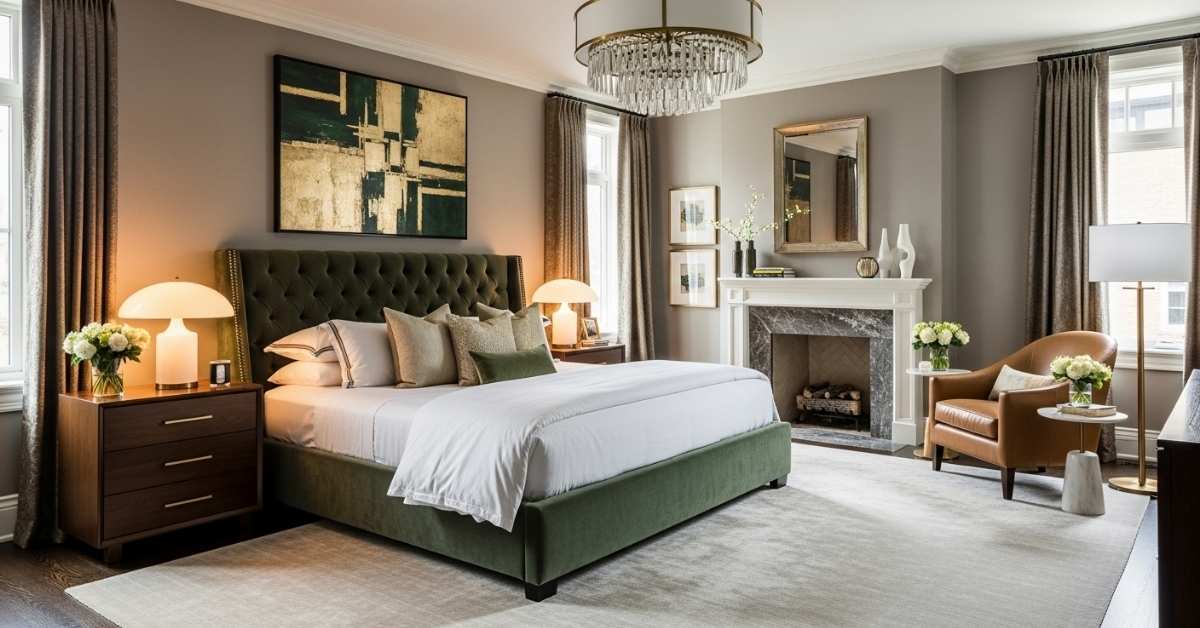
If your bedroom currently feels like it’s missing something personality, warmth, a sense of intention it’s rarely about budget. High End Bedroom Decor Ideas Most high-end bedrooms work because of proportion, material quality, and lighting decisions, not price tags. A few well-placed changes can shift the entire atmosphere of a room.
This list is especially useful if you’re working with a mid-size bedroom that needs to feel more intentional, or if you’ve accumulated decent furniture but the room still doesn’t feel cohesive. These ideas range from structural (layout, lighting) to finishing touches (textiles, styling) and most can be adapted to different budgets.
A Upholstered Bed Frame That Anchors the Entire Room
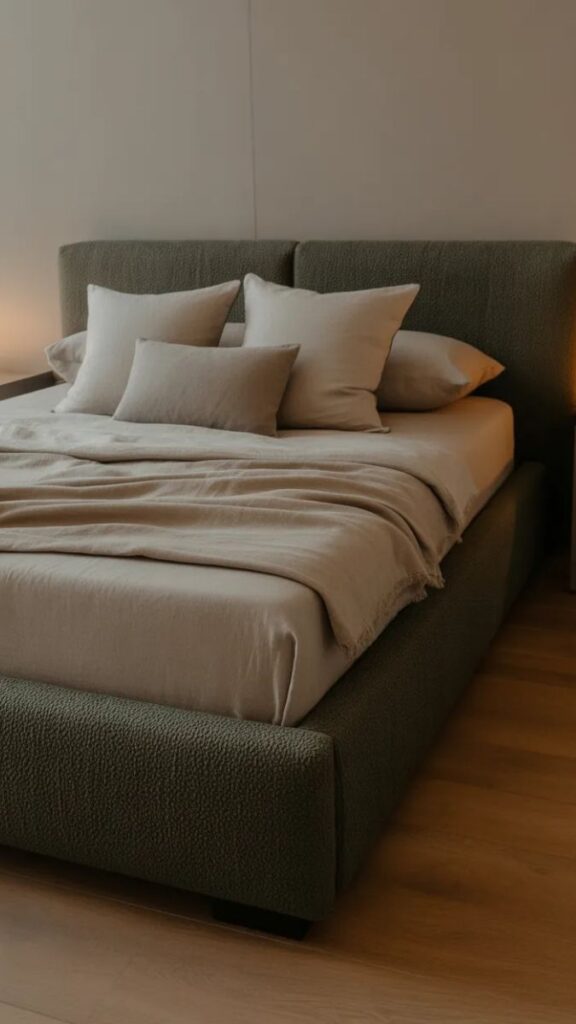
The bed is the focal point of any bedroom and an upholstered frame is one of the most reliable ways to make a room feel finished without adding much else. A floor-to-ceiling headboard in bouclé, linen, or velvet creates an immediate sense of luxury because it introduces both texture and scale. Position it centered on the main wall, with equal nightstand spacing on both sides, and the room starts to feel architecturally intentional. This works especially well in mid-size bedrooms where you want the furniture to do the heavy lifting. It also solves the common problem of a bed that feels too small for the wall behind it.
Layered Bedding in a Tonal Neutral Palette
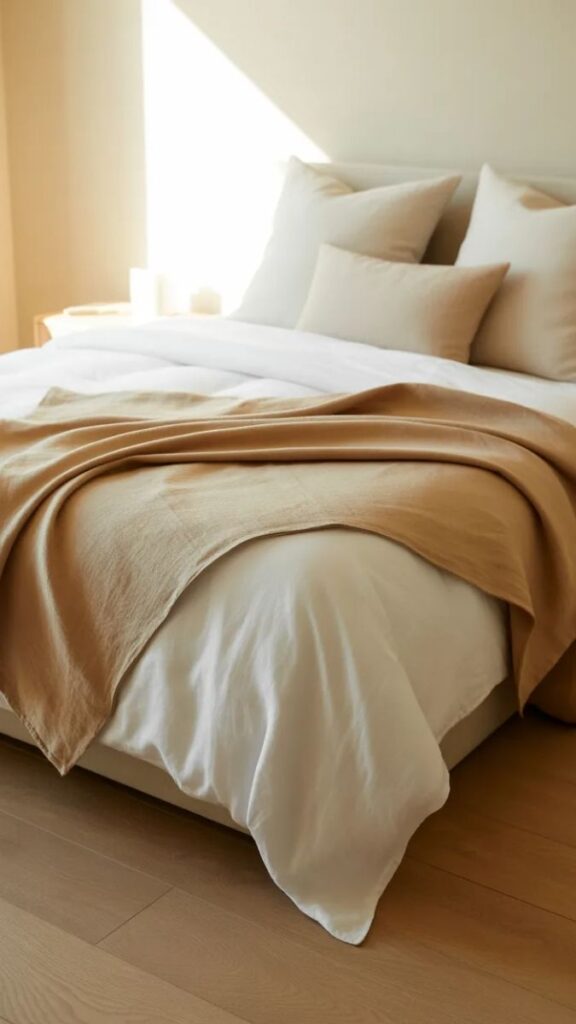
Luxury hotel beds look the way they do because of layering not thread count alone. Start with a fitted sheet, add a duvet with a crisp cover, layer a folded throw at the foot, and stack euro shams behind standard pillows. The key is keeping the palette of tonal whites, creams, warm beiges, or cool greys within the same temperature range. Mixing warm and cool neutrals in the same bed is usually what makes bedding look mismatched, even when each piece is high quality. I’ve noticed this style tends to work best when you limit yourself to two or three textures max linen, cotton, and one knit or boucle throw is usually the sweet spot.
Recessed or Indirect Lighting Along the Ceiling Perimeter
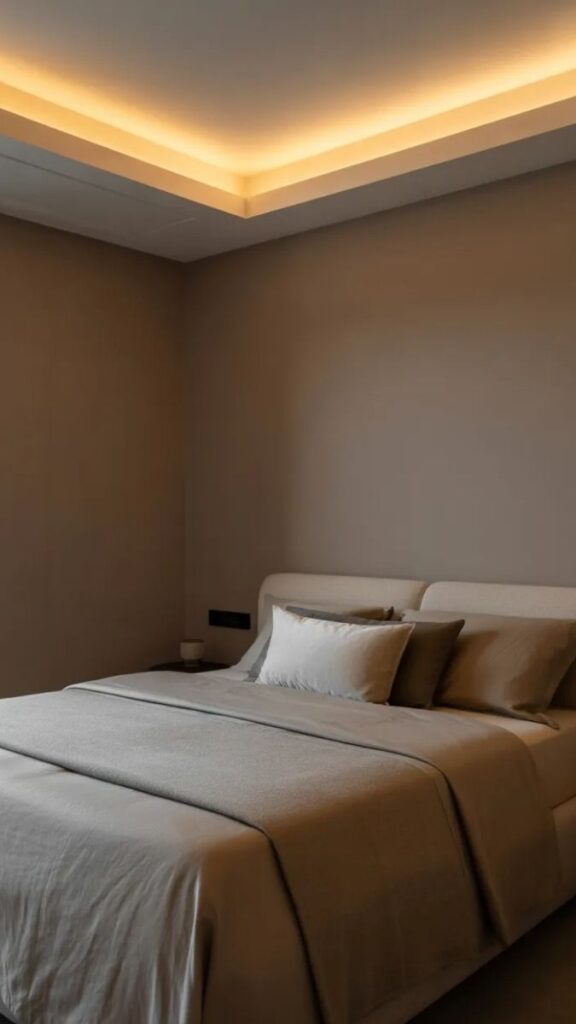
Overhead lighting, especially a single centered ceiling fixture is one of the fastest ways to make a bedroom feel flat and builder-grade. High-end bedrooms almost always use layered, indirect light cove lighting tucked into a ceiling recess, wall sconces at eye level, and maybe a low table lamp on each nightstand. The result is a room that glows rather than one that’s simply lit. This approach is especially effective in rooms with lower ceilings because it creates a sense of depth without drawing attention upward. Even renters can replicate this with plug-in sconces and warm-toned bulbs (2700K or lower).
Matching Nightstands With Intention, Not Just Symmetry
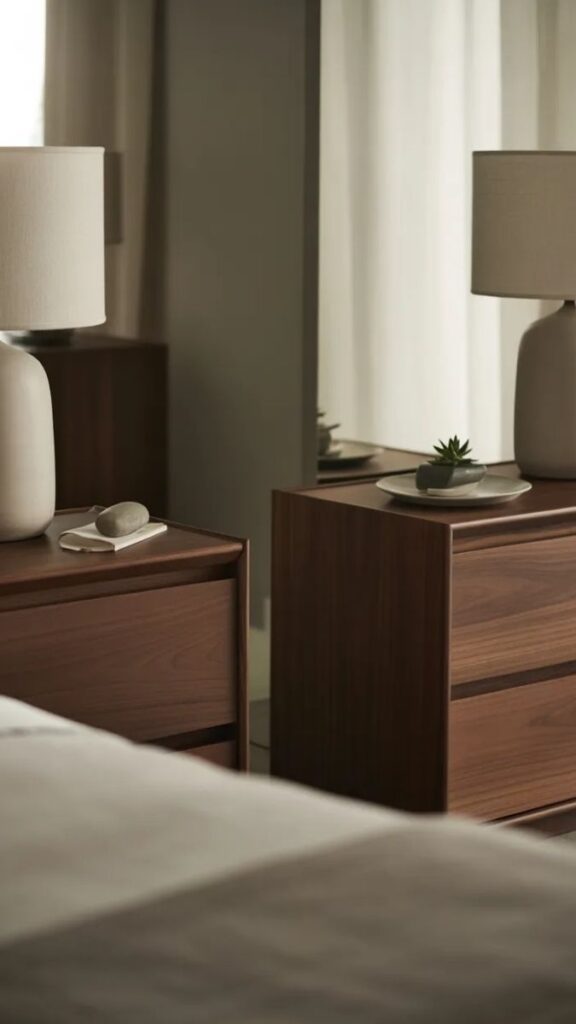
Symmetry in a bedroom creates calm but matched nightstands only work when the proportions are right. The nightstand surface should sit roughly level with the top of the mattress, and the lamp base shouldn’t overwhelm the table surface. Go for nightstands with a drawer or shelf for actual storage (visible clutter on a nightstand immediately reads as unfinished), and style each surface with just two or three objects. A lamp, a small tray, one book, that’s the formula. This setup is especially useful in smaller bedrooms where the nightstands are close to the bed and any visual noise is immediately noticeable.
A Statement Wall in Limewash or Venetian Plaster Finish
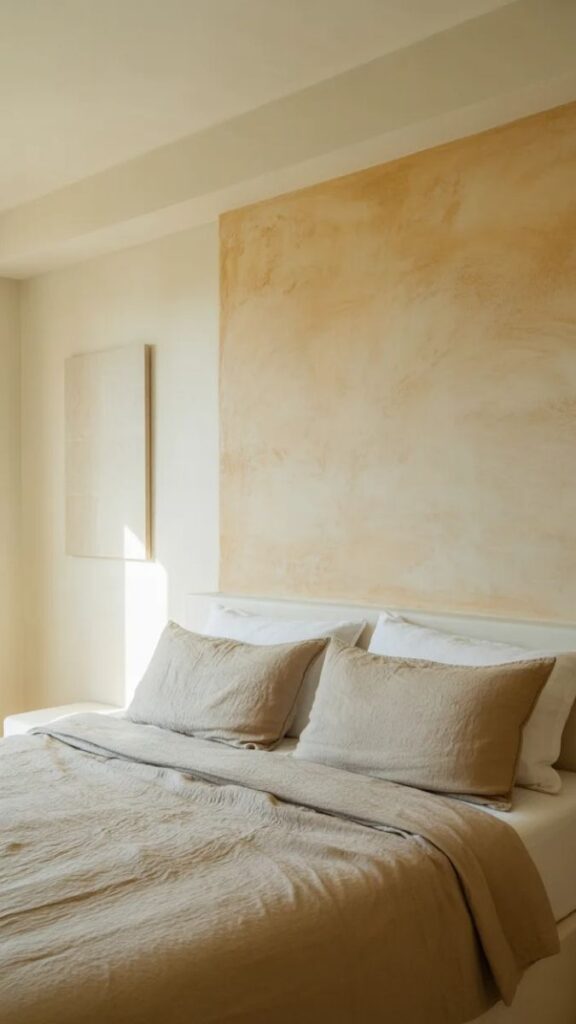
Limewash paint has been one of the biggest bedroom wall trends moving into 2026 and for good reason. Unlike standard matte paint, limewash creates a layered, slightly uneven finish that catches light differently throughout the day, giving walls a depth that reads as high-end without requiring actual plaster or expensive materials. Applied to the wall directly behind the bed, it functions as a soft backdrop that frames the whole setup. Honestly, it’s one of the higher-impact, lower-cost changes you can make if the rest of your room is already in good shape. It works particularly well in rooms with natural light; the texture shifts noticeably depending on the time of day.
A Bedroom Rug That Extends Well Beyond the Bed Frame
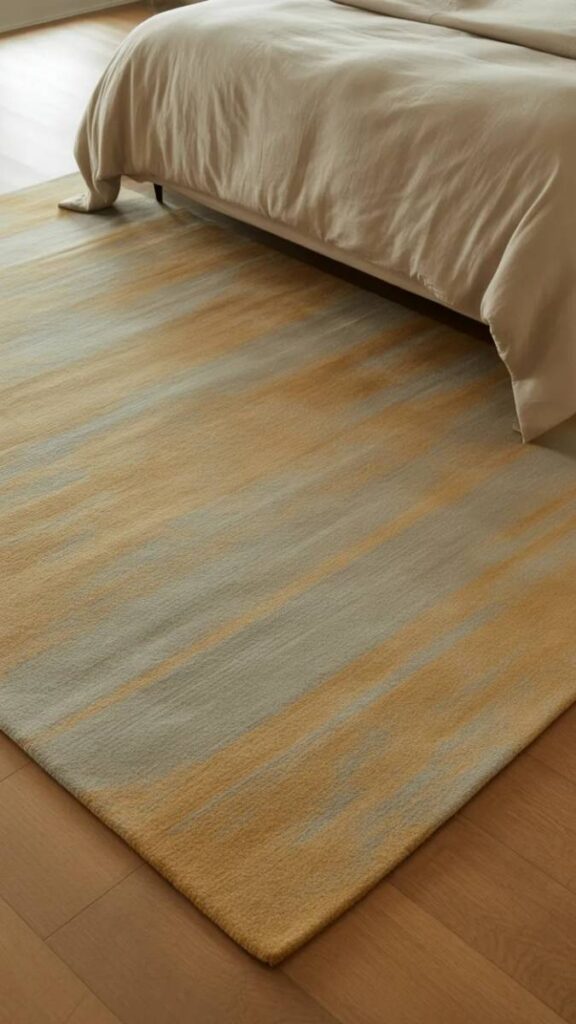
The most common rug mistake in bedrooms is going too small. A rug that only sits under the bed frame or worse, just at the foot breaks the visual flow of the room and makes the space feel disjointed. The right approach to the rug should extend at least 18–24 inches beyond each side of the bed so that when you step out in the morning, your feet land on the rug. In a king-sized bedroom, that usually means a 9×12 or larger. Low-pile wool or a flat-weave in warm neutral grounds the furniture arrangement and adds acoustic softness, which subtly contributes to the calm atmosphere most people associate with high-end spaces.
Integrated Wardrobe or Built-In Cabinetry Along One Full Wall
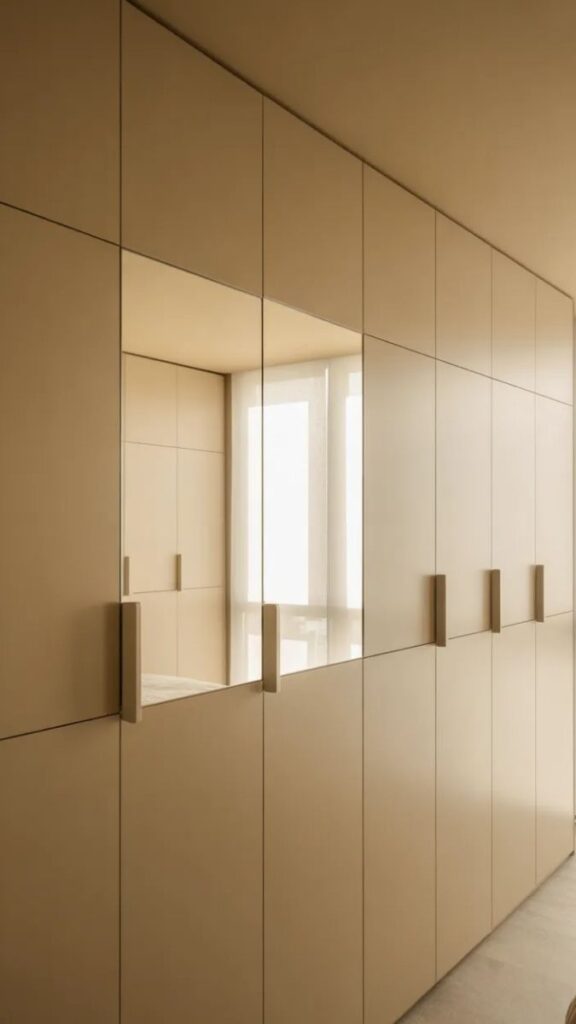
One of the clearest indicators of a high-end bedroom is the absence of freestanding, mismatched storage. A built-in wardrobe along one full wall floor to ceiling, flat-front panels, integrated handles reads as architectural rather than furniture. It doesn’t need to be custom millwork; IKEA PAX systems with upgraded door fronts (Semihandmade or similar) can achieve a nearly identical look at a fraction of the cost. What matters is the continuity of consistent door fronts, the same finish throughout, and no visible gaps between panels and ceiling. This setup works especially well in bedrooms where storage needs are high but square footage is limited, because it maximizes vertical space without projecting into the room.
Wall-Mounted Sconces Instead of Table Lamps
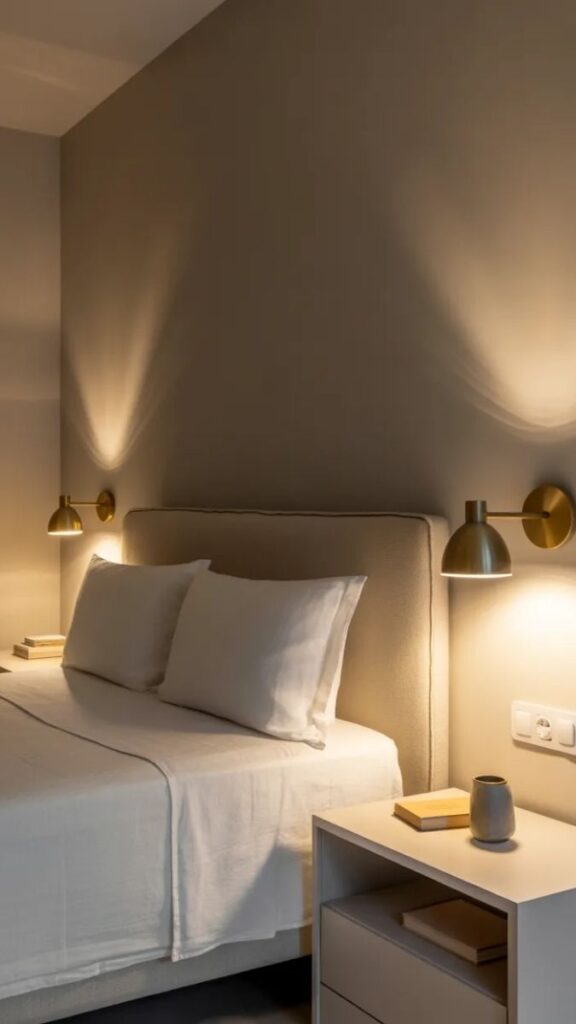
Swapping table lamps for wall-mounted sconces immediately frees up the nightstand surface and creates a cleaner, more intentional look. Sconces also provide directional light better for reading, and easier to control than an overhead fixture. For renters, plug-in sconces with a cord cover or recessed cord channel solve the no-drilling problem while looking nearly identical to hardwired versions. Mount them roughly 60–65 inches from the floor, centered on either side of the headboard. Brushed brass, matte black, or aged bronze all work well in a neutral bedroom just keep both sides matching. This is one I’d actually recommend trying first because the visual change is immediate and the setup is reversible.
A Canopy or Half-Canopy Frame for Vertical Drama
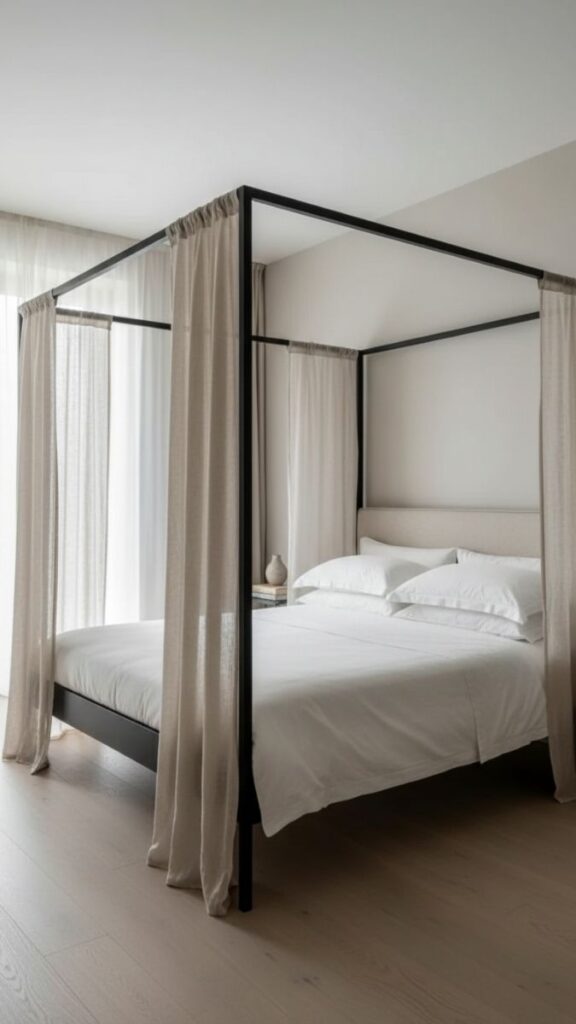
A canopy bed frame adds vertical presence to a room in a way very few other furniture pieces can. In rooms with high ceilings anything above 9 feet a canopy frame with simple sheer linen panels draws the eye upward and creates a sense of enclosure that feels cocooning rather than cramped. Keep the canopy minimal, a simple rectangular frame in matte black or natural wood, with unlined linen or cotton voile panels at each corner. Avoid heavy drapes or ornate carved wood, which tend to read as dated in modern interiors. This works best as a centerpiece in a larger bedroom where it can be appreciated from the doorway.
A Bench or Ottoman at the Foot of the Bed
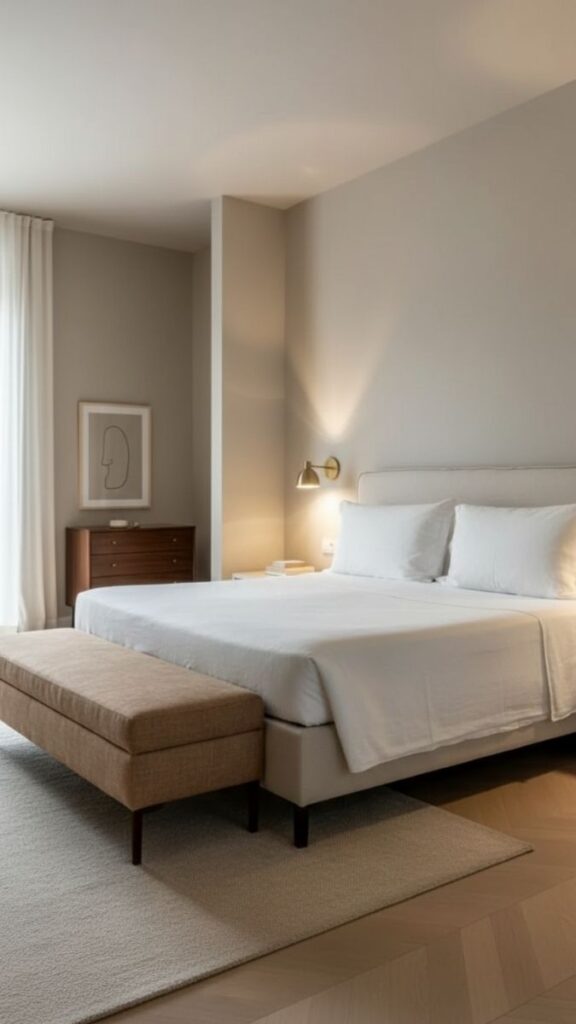
A bench at the foot of the bed serves a dual function: it completes the visual layout of the room and provides a practical surface for laying out clothes, sitting while dressing, or storing extra bedding. In high-end bedrooms, this piece is almost always present; it signals that the room has been designed rather than assembled. Go for a low-profile bench with no arms, upholstered in a solid that either matches or complements the bed frame. Leather, bouclé, and textured linen all work well. Size-wise, the bench should be roughly two-thirds the width of the bed to maintain proportion without blocking movement around the footboard.
Blackout Drapery Floor-to-Ceiling on Every Window
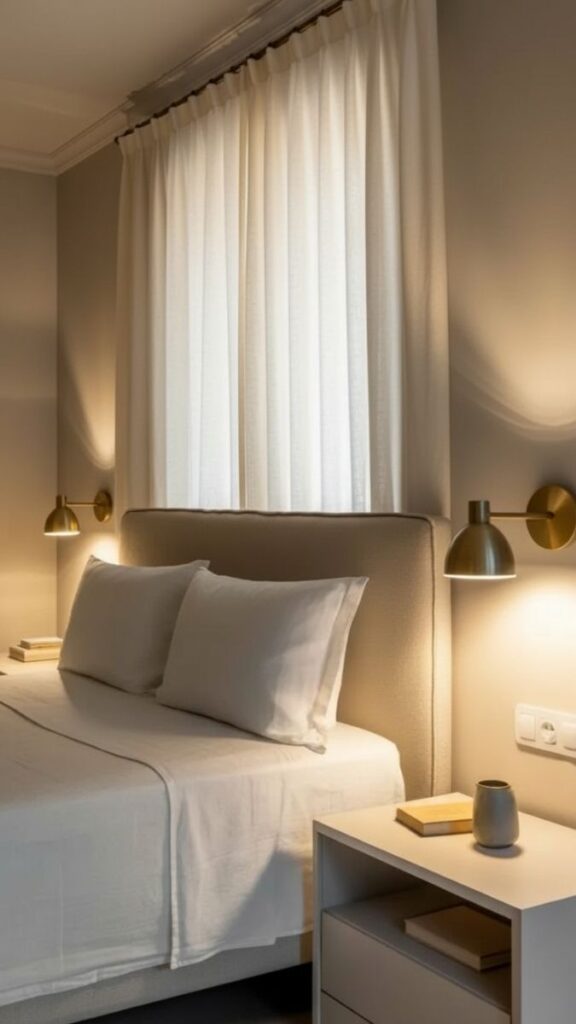
The way curtains are hung does as much for a room as the fabric itself. Mounting the curtain rod close to the ceiling not just above the window frame and letting the panels run all the way to the floor creates the illusion of taller ceilings and larger windows. Blackout lining adds real functionality (better sleep, temperature control) without changing the exterior look of the fabric. Linen, cotton velvet, and heavyweight cotton in muted tones all work well for a high-end feel. One practical note: panels should be wide enough that when they’re open, they stack to the sides of the window and don’t block any natural light. The standard formula is 2–2.5x the window width in total fabric.
An Oversized Mirror That Reflects Light and Opens the Room
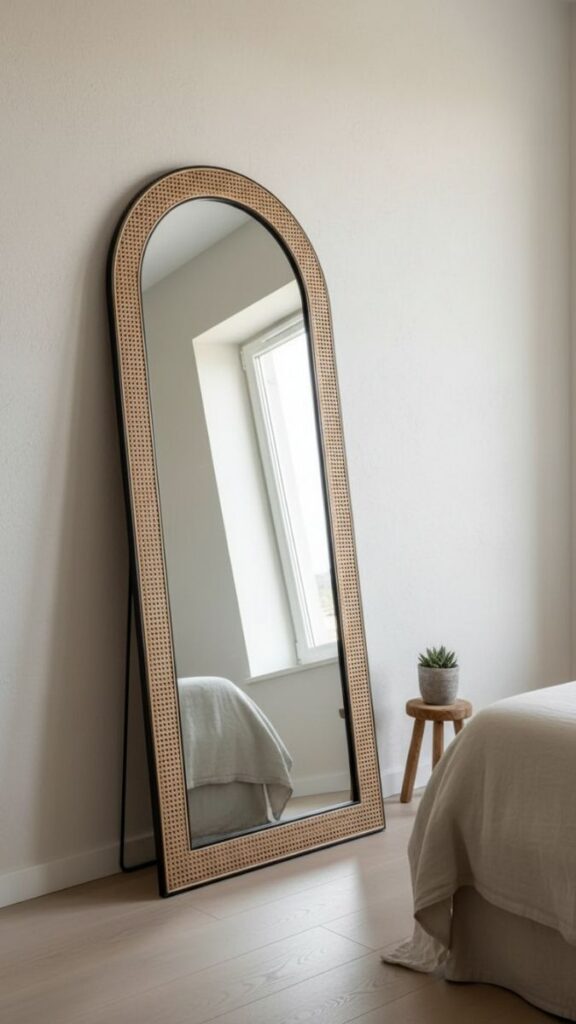
A well-placed mirror can do what square footage can’t. In a bedroom, an oversized floor mirror or a wide wall-mounted mirror positioned opposite a window bounces natural light deep into the room and makes the space feel significantly larger. Arched mirrors are particularly popular right now because the curved line softens the rectangular geometry of most rooms. Lean it against the wall rather than hanging it if you want flexibility. It’s easier to reposition and reads as intentional in most bedroom styles. This is especially effective in bedrooms that lack windows on more than one wall, where light can feel concentrated in one corner.
A Minimalist Gallery Wall With Consistent Framing
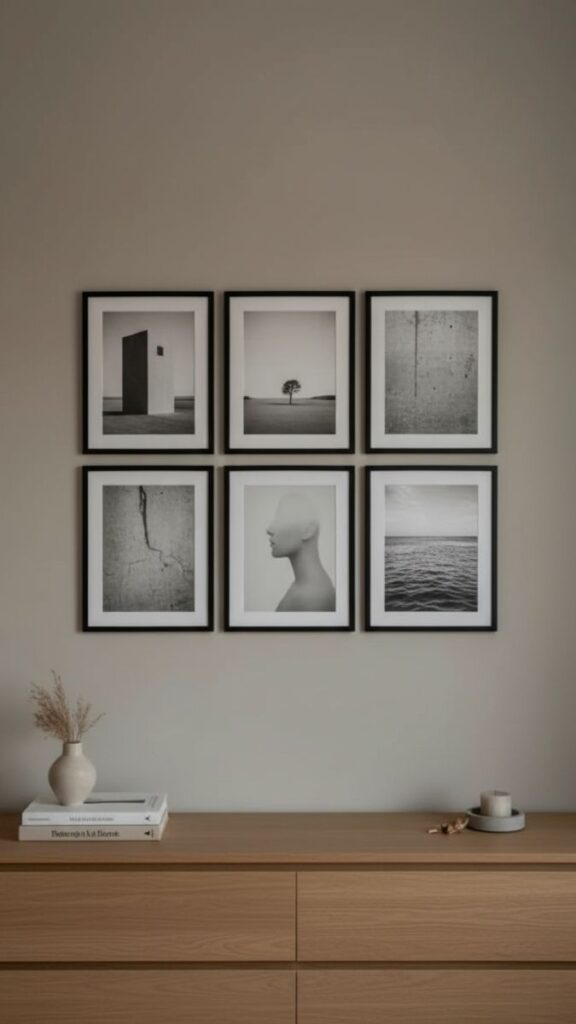
Gallery walls often go wrong because the frames are too varied with different metals, different depths, different mat widths. In a high-end bedroom, the fix is simple: choose one frame style and stick to it. Thin metal frames (black, brass, or silver) in 2–3 consistent sizes, with the same mat color throughout, create a collection that looks curated rather than accumulated. Black and white photography or simple abstract line art works well because it doesn’t compete with the room’s color palette. Group the frames tightly (3–4 inches between each) rather than spreading them far apart tighter spacing reads as intentional, wider spacing can feel random.
Textured Plaster or Grasscloth Wallpaper on the Headboard Wall
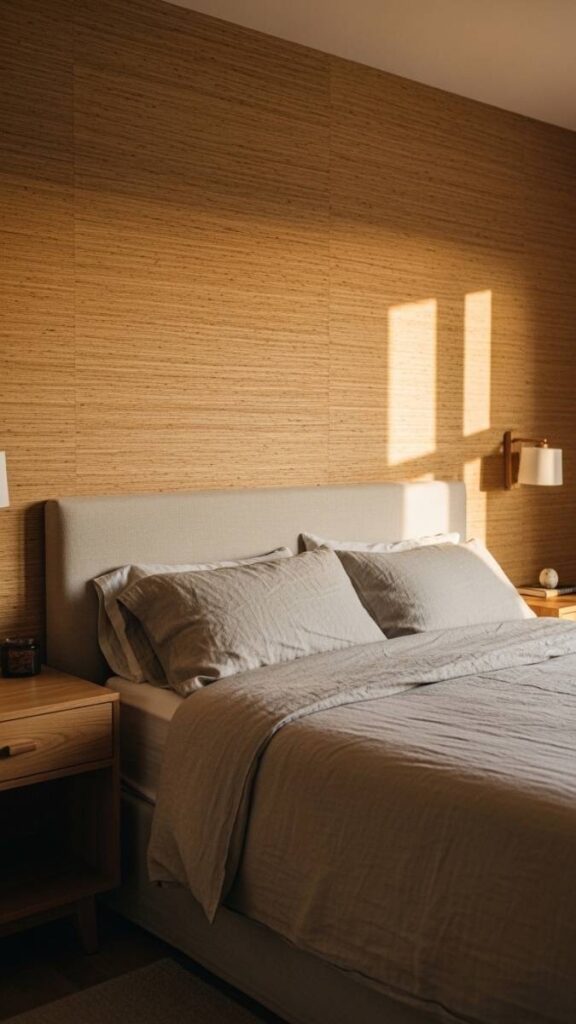
Wallpaper on a single wall, specifically the wall the bed sits against is one of the most effective ways to define the room’s focal point without committing to full-room wallpaper. Grasscloth, linen-textured, or subtle geometric wallpapers add tactile depth that paint alone can’t replicate. The texture catches light and adds dimension, especially in rooms that rely on neutral palettes and need something to stop the eye. In my experience, this works best when the wallpaper is installed floor-to-ceiling (not just to wainscoting height) and the rest of the walls stay in a coordinating solid. The contrast between the one textured wall and the quiet surrounding walls is what makes it feel deliberate.
A Dedicated Reading Corner With Proper Lighting
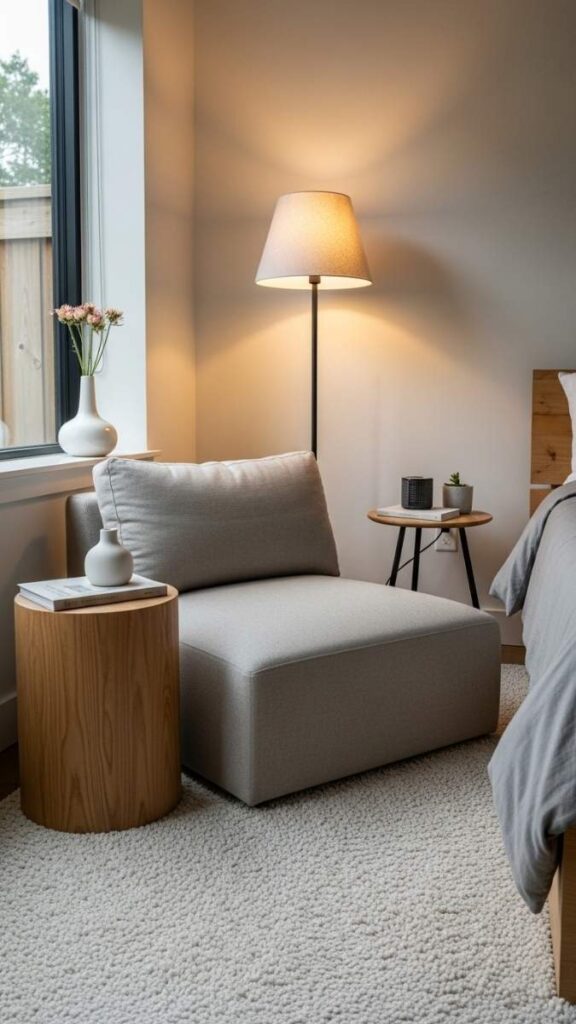
Not every bedroom has the space for this, but if yours does, even a compact corner with a reading chair setup adds a dimension of function that immediately elevates how the room feels and how it’s used. A low-profile armchair (not oversized), a small side table at armrest height, and a floor lamp with a focused, dimmable bulb is the basic formula. The chair should be positioned to use natural light during the day if possible, with the floor lamp as the evening solution. This setup changes how you use the room; it becomes somewhere you actually spend time, not just sleep, which in turn makes it feel more like a considered space rather than a functional one.
Integrated Bedside Charging With Cable Management
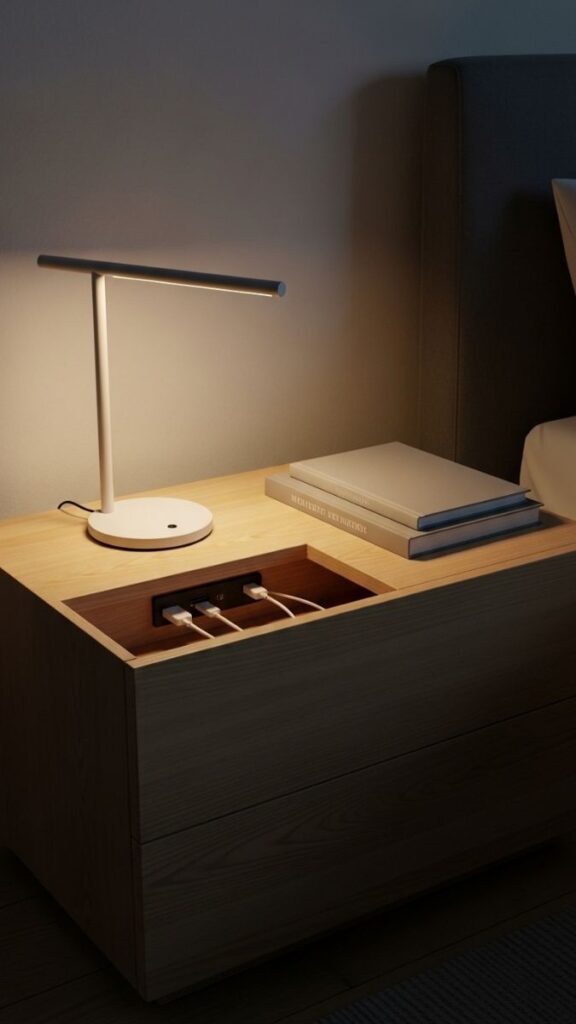
Visible phone chargers, tangled cords, and power bars on a nightstand are some of the smallest details that undercut an otherwise well-designed bedroom. Nightstands with built-in USB ports or wireless charging pads solve this at the furniture level. If your current nightstands don’t have this, a cable management tray mounted to the underside of the surface, or a small charging station kept inside the drawer, keeps everything functional without visual noise. This is a detail that doesn’t show up in photos but changes the everyday experience of the space significantly which is honestly what most “high end” really comes down to.
Sculptural Lighting as a Design Object, Not Just Function
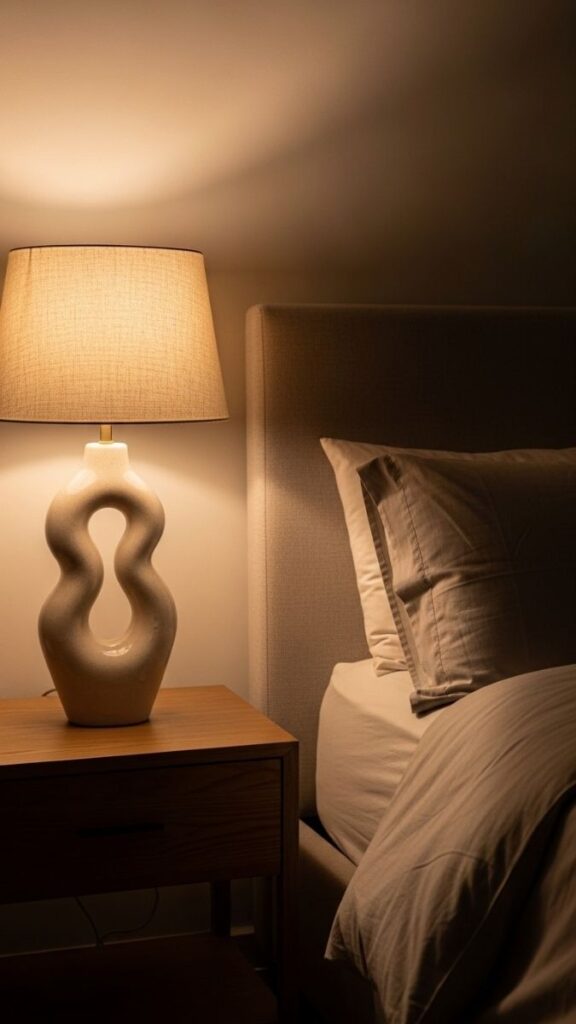
A table lamp that doubles as an art object, a ceramic base in an organic form, a handblown glass piece, a sculptural plaster shape adds a layer of personality that purely functional lighting doesn’t. In a neutral bedroom where most surfaces are understated, the bedside lamp is one of the few places where a slightly unexpected shape or material choice reads as intentional rather than decorative overload. Keep the shade simple (linen or cotton in a neutral) so the base does the visual work. This approach works well in bedrooms that are otherwise minimal because it introduces character without adding clutter.
A Low-Profile Platform Bed for a Modern, Grounded Feel
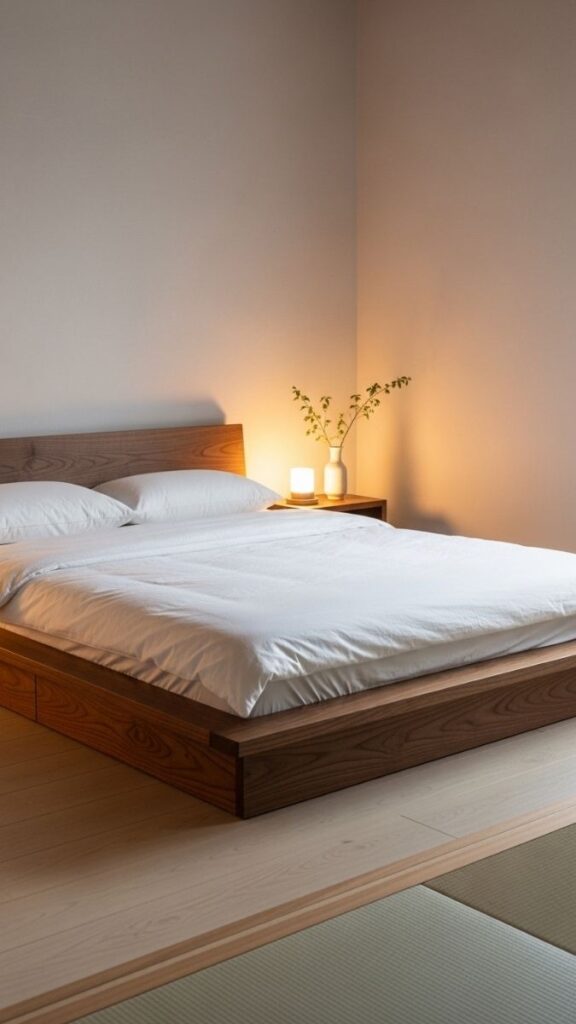
Platform beds sit close to the floor typically 12–18 inches at mattress height which gives the room a grounded, horizontal emphasis that makes ceilings feel taller by contrast. This aesthetic has roots in Japanese and Scandinavian design and has become a defining feature of modern luxury bedrooms. Without the box spring, the bed frame itself becomes the visual statement. Choose frames in solid wood (walnut, oak) or upholstered bases in neutral fabric, and pair with low nightstands to maintain proportion. This works especially well in rooms with lower ceilings, where a high traditional bed frame would make the room feel crowded vertically.
Organic Materials Wood, Stone, Rattan, Linen Mixed Deliberately
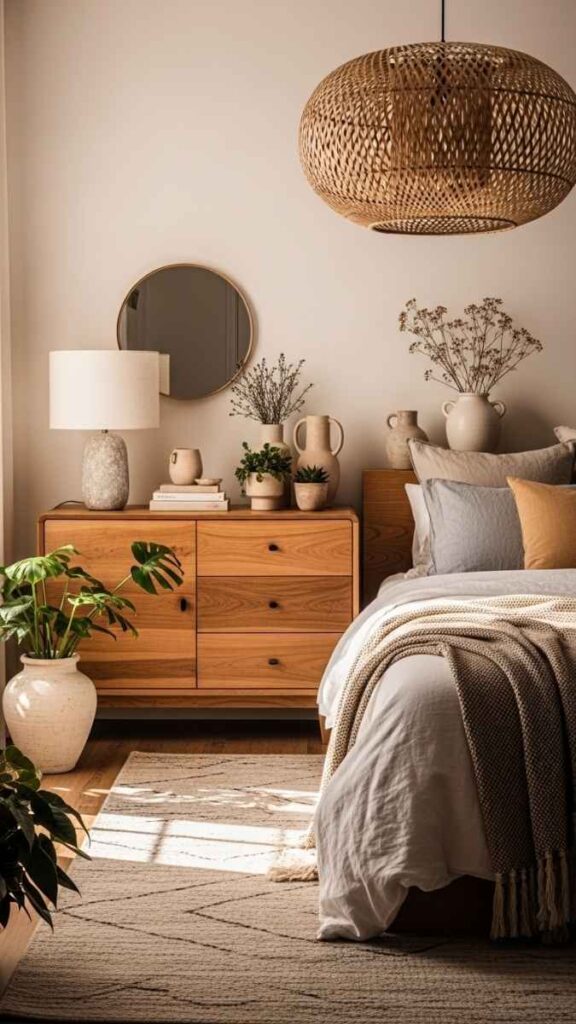
High-end interiors increasingly move away from the all-matching, all-same-finish approach toward a deliberate mix of organic materials that feel collected over time. The key word is deliberate wood grain, natural stone, woven rattan, and linen all work together because they share an earthy temperature and matte quality. What doesn’t mix well are materials with conflicting finishes: matte wood next to high-gloss lacquer, for example, creates tension rather than contrast. A wooden dresser, a stone or ceramic lamp base, rattan accents (a pendant, a small basket), and linen textiles is a starting framework that covers texture, warmth, and visual interest without over-complicating the room.
Custom or Semi-Custom Closet Organization Inside the Wardrobe
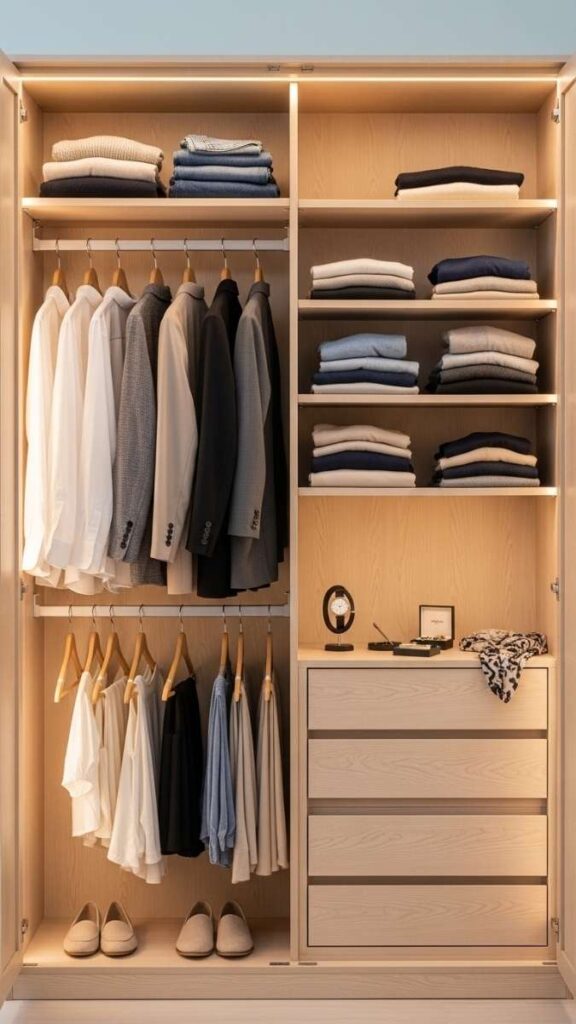
The inside of a closet matters more than people give it credit for. A well-organized closet interior even if the doors are always closed affects how the morning routine feels, which in turn affects how the whole room feels. Uniform velvet hangers, dedicated shelf zones for folded items, small drawer units for accessories, and (if budget allows) interior LED lighting all contribute to a sense of order that carries into the rest of the room. This is especially true in bedrooms where the wardrobe is open-plan or where clothing is stored in a walk-through to a bathroom in those cases, the organization is always visible.
Dimmable Lighting on Every Fixture in the Room
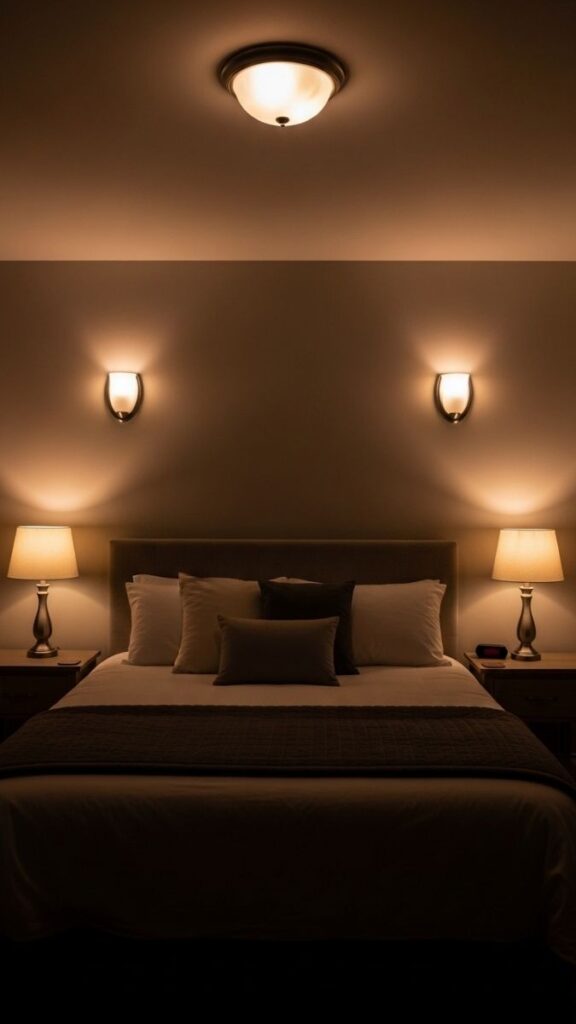
Dimmability is one of those features that separates a genuinely livable bedroom from one that just looks good in photos. When every light source in the room can be dialed down overhead, sconces, bedside lamps you can create completely different atmospheres depending on the time of day or what you’re doing. Morning light for getting dressed, midday brightness for working, low warm glow in the evening. Smart bulbs (Philips Hue, LIFX) let you control everything from one app without rewiring. Pair everything with bulbs in the 2700K–3000K range for warm, flattering light that works in a bedroom context.
A Floating Shelf System as Functional Art Above the Bed
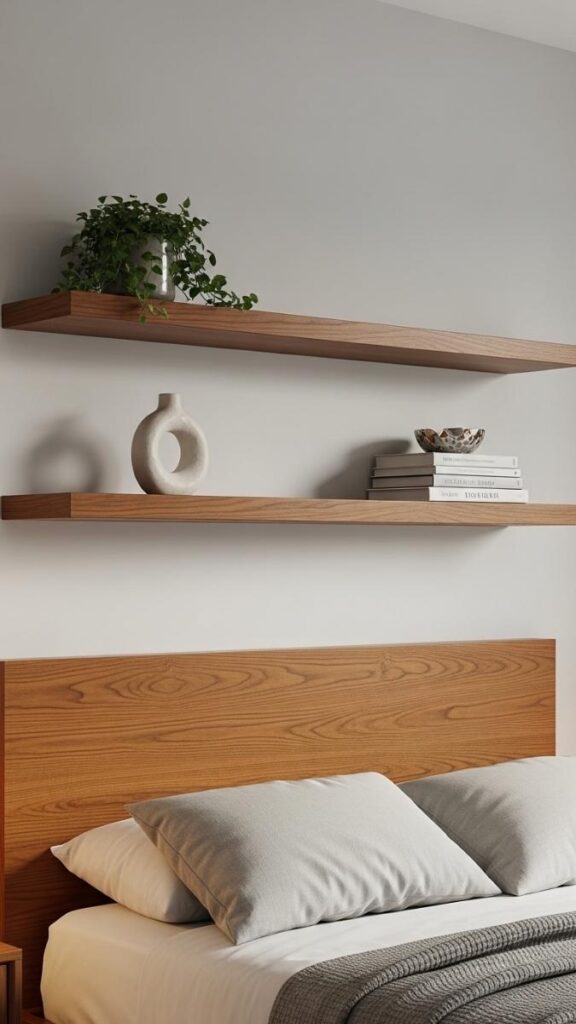
The wall above the headboard is often left blank which works in some rooms, but can make the space feel unfinished in larger bedrooms where there’s significant wall space above the bed. Floating shelves in a matched wood or painted finish give that wall a purpose without going full gallery wall. Keep the styling restrained: a small plant, one art object, a stack of two or three books. The shelves should be proportional to the headboard width not extending beyond it and mounted at a height that feels balanced from the doorway. Avoid overcrowding the shelves; negative space on a shelf reads as intentional in a high-end context.
A Monochromatic Color Scheme With Tonal Variation
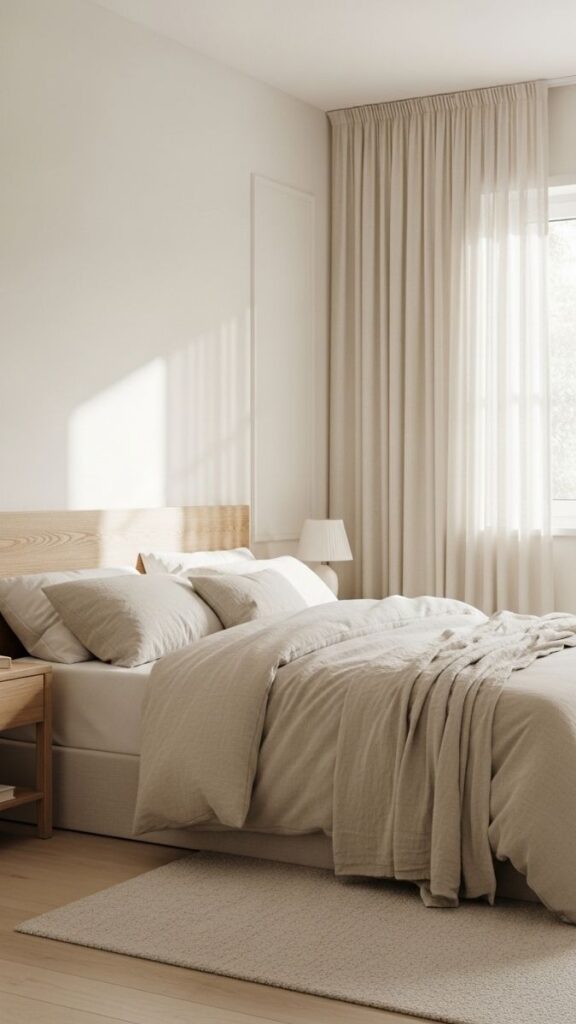
A monochromatic bedroom where walls, bedding, and soft furnishings share the same base color family is one of the most reliable ways to create a calm, high-end atmosphere. The secret is tonal variation, not everything the same exact shade, but everything within the same temperature range. Warm whites with warm cream with warm beige, for example, reads as layered and intentional. The same approach works in grey, dusty sage, or deep navy for a moodier version. What prevents this from feeling flat is texture different weaves, matte vs. slightly sheen fabrics, smooth plaster next to linen drapery. The color does the calming work; the texture does the visual interest.
An Architectural Ceiling Feature Coffered, Beadboard, or Paneled
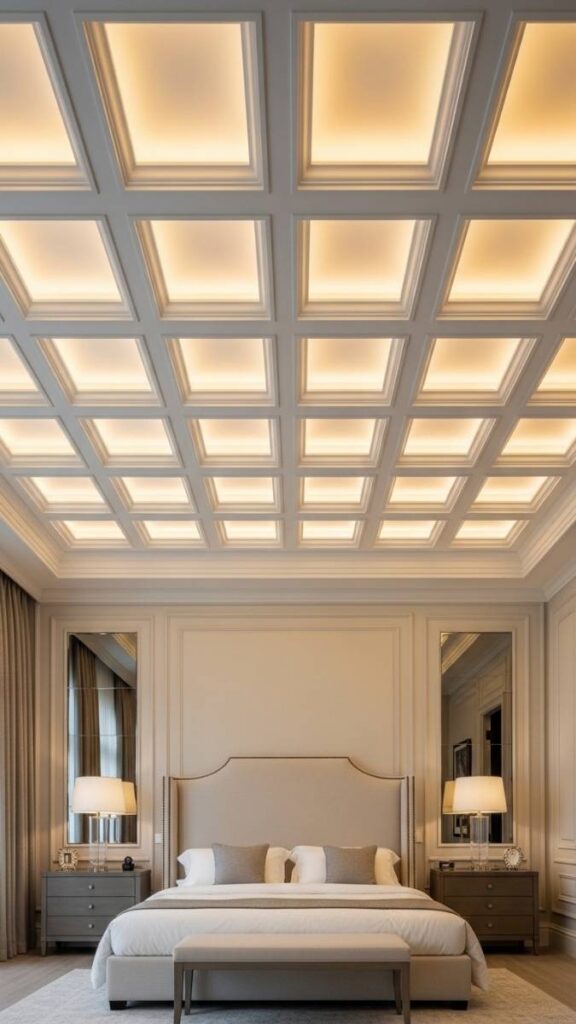
Ceilings are consistently the most underutilized surface in a bedroom. A coffered ceiling, beadboard panel treatment, or even simple painted ceiling moldings add architectural character that immediately distinguishes a room from a standard apartment bedroom. For a DIY-friendly version, lightweight polyurethane ceiling tiles or peel-and-stick wood panels can approximate a coffered or shiplap effect without structural work. Paired with indirect lighting inside the ceiling perimeter or within the coffers themselves, this treatment turns the ceiling into a design element rather than just overhead space. Works especially well in rooms with 9-foot or higher ceilings.
A Dresser That Doubles as a Styling Surface
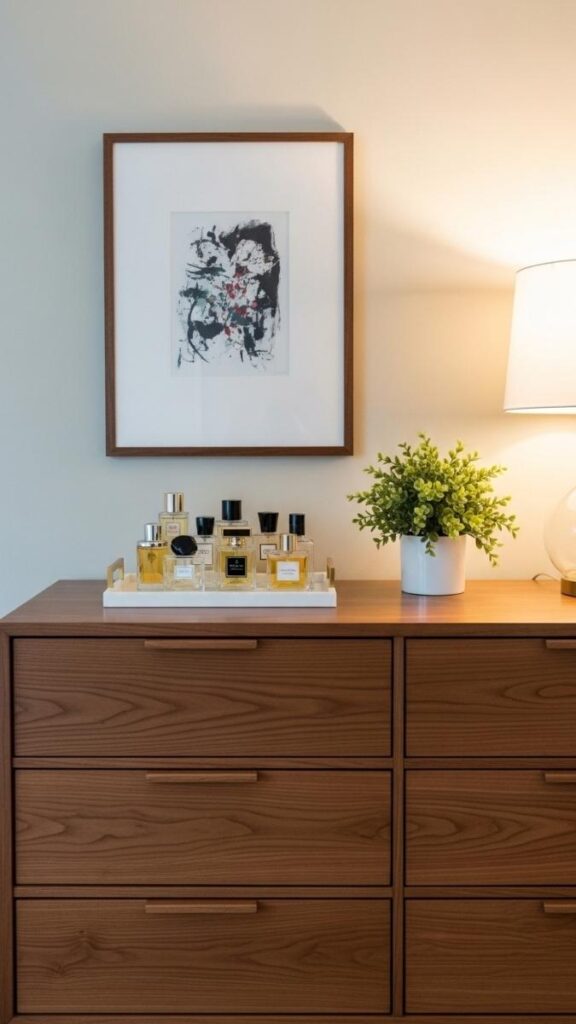
A dresser in a high-end bedroom is never just storage, it’s a styling surface. The top should be treated like a curated shelf, a tray to group smaller objects (perfume, a candle, small figurine), one plant or organic element, and a lamp or piece of art to give it height variation. Keeping at least 30–40% of the surface empty is what makes the arrangement look deliberate rather than cluttered. Position the dresser on a wall that has some breathing room around it, not crammed between two other pieces, so it reads as a standalone design moment within the room.
Curtain Panels in a Fabric With Weight and Movement
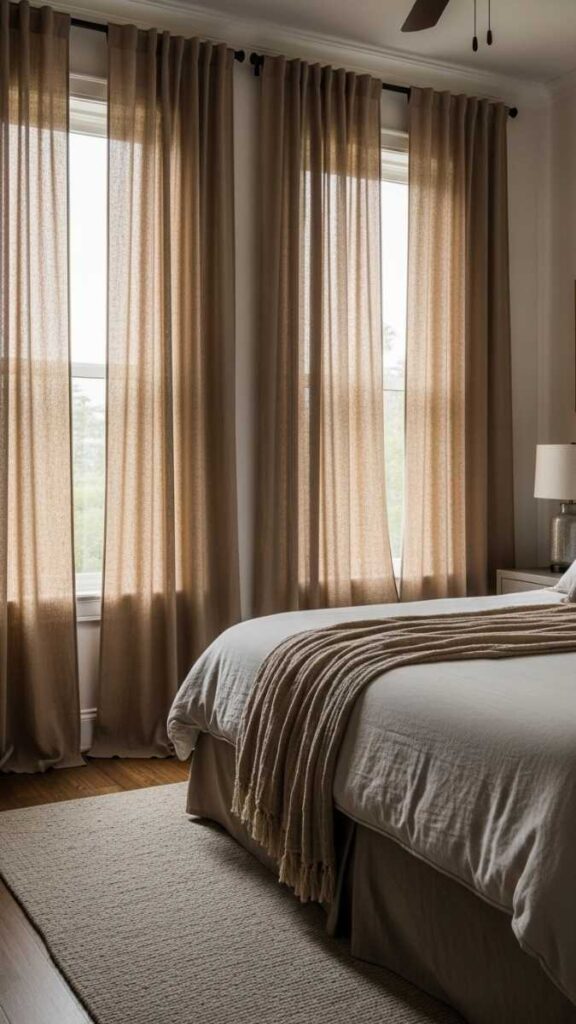
Sheer, flimsy curtain panels undercut a room regardless of how good everything else looks. In a high-end bedroom, the curtains should have enough weight to hang straight and move slowly; heavyweight linen, cotton velvet, or interlined cotton all behave this way. The fabric drape is as important as the color. When panels are full enough (2x the window width) and heavy enough to fall cleanly, they frame the window rather than simply cover it. For color, staying within the room’s palette slightly deeper or slightly lighter than the wall keeps the curtains integrated rather than decorative in isolation.
A Curated Scent and Atmosphere Layer The Detail That’s Felt, Not Seen

This is the layer most people skip and it’s the one that guests notice first without knowing why. A bedroom that has a consistent scent (a reed diffuser, a candle in a ceramic vessel, or a linen spray) feels considered in a way that’s hard to attribute to any specific visual. The scent itself matters less than the consistency: pick one and stay with it so the room has a sensory signature. Style the diffuser or candle on a small tray alongside one or two other small objects (a botanical stem, a smooth stone) so it reads as a vignette rather than a product on a surface. This is a finishing layer and adds it once the room’s layout, lighting, and textiles are already sorted.
What Actually Makes These High End Bedroom Ideas Work
Most high-end bedrooms aren’t more expensive, they’re more intentional. The details that separate a room that feels elevated from one that simply has nice furniture usually come down to three things: scale, material consistency, and lighting control.
Scale means every piece is proportioned correctly for the room. A rug that’s too small, curtains that don’t reach the floor, a headboard that’s dwarfed by the wall behind it; these are the scale errors that prevent a room from feeling finished, regardless of how much each individual piece costs.
Material consistency doesn’t mean everything matches, it means the materials in the room share a temperature and finish quality. Matte textures that reference nature (wood, stone, linen, rattan) tend to work together across styles because they’re visually compatible in a way that mixed metals or conflicting finishes aren’t.
Lighting control is the most commonly overlooked factor. A bedroom with only overhead lighting will always feel flat. Layered, dimmable, warm-toned lighting is what creates the atmosphere that makes people say a room feels like a hotel even when the furniture is entirely mid-range.
High End Bedroom Setup Quick Reference Guide
| Idea | Best For | Space Type | Problem It Solves | Budget Level |
| Upholstered Headboard | Most bedrooms | Mid-size to large | Unfinished focal point | Mid |
| Layered Bedding | All bedrooms | Any | Flat, one-dimensional look | Low–Mid |
| Indirect Ceiling Lighting | Modern + transitional | Any ceiling height | Flat, harsh overhead light | Mid–High |
| Built-In Wardrobe | Storage-heavy rooms | Small to mid | Freestanding storage clutter | Mid–High |
| Limewash Feature Wall | Minimal or earthy style | Any | Blank, lifeless walls | Low–Mid |
| Oversized Rug | All bedrooms | Mid-size to large | Disconnected furniture layout | Mid |
| Platform Bed Frame | Modern / minimal | Low-ceiling rooms | Heavy, outdated furniture look | Mid |
| Wall-Mounted Sconces | Clean, minimal setup | Any | Cluttered nightstand surfaces | Low–Mid |
| Floor-to-Ceiling Curtains | All bedrooms | Any window size | Low ceilings, small windows | Low–Mid |
| Monochromatic Color Scheme | Minimal / calm aesthetic | Any | Visual chaos, lack of cohesion | Low |
Common High End Bedroom Mistakes That Make Your Space Feel Off
Even well-furnished bedrooms can feel incomplete if a few key principles are ignored. These are the most consistent issues I see in rooms that look fine in isolation but don’t quite come together.
Lighting from only one source.
A single overhead fixture, especially a bright, cool-toned one is the fastest way to kill a bedroom’s atmosphere. The fix isn’t complicated: add two bedside lamps or sconces, switch to 2700K bulbs, and put the overhead on a dimmer if possible.
Furniture pushed against every wall.
This is an instinct in smaller rooms to push everything to the perimeter to create floor space in the middle. But floating furniture slightly away from the walls actually creates better visual flow and makes the room feel less cramped. Even 2–4 inches of breathing room between furniture and wall makes a noticeable difference.
Too many accent colors.
A bedroom with three accent colors in pillows, throws, rugs, and art creates visual noise that feels anything but calm. High-end bedrooms typically commit to one accent (or none), letting texture and material variation carry the visual interest instead.
Mismatched scale across furniture.
A large bed with tiny nightstands, or a small dresser against a wide wall scale mismatches signal that the room was furnished gradually rather than designed. It’s worth adjusting one or two pieces before adding more.
The artwork hung too high.
This is extremely common. Gallery walls and single pieces hung at or above eye level rather than centered at eye level create a floating, disconnected look. In a bedroom, art above the headboard should be hung so that the visual center of the piece sits roughly 8–10 inches above the headboard’s top edge.
FAQs’
What makes a bedroom look high end without spending a lot?
The biggest impact comes from three low-cost changes: floor-to-ceiling curtains (hung close to the ceiling), a large enough rug that extends past the bed frame, and layered warm lighting instead of a single overhead fixture. These shifts cost relatively little but change the scale and atmosphere of the room significantly.
What colors work best for a luxury bedroom feel?
Warm neutrals ivory, warm white, soft beige, greige, and dusty taupe are the most consistent across high-end bedrooms because they reflect light evenly and pair well with natural materials. Deeper tones like charcoal, navy, and forest green work well in larger rooms or rooms with good natural light. The key is staying within one temperature range (all warm or all cool) rather than mixing.
How do I make a small bedroom look more luxurious?
Focus on vertical elements floor-to-ceiling curtains, a tall upholstered headboard, and shelving that draws the eye upward. Use a large mirror to reflect light, keep the color palette tonal and light, and eliminate visible clutter. In small bedrooms, organization directly impacts how elevated the space feels.
Upholstered bed vs. wooden bed frame which is more high end?
Neither is inherently more elevated; it depends on the room’s style and the execution. Upholstered frames in textured fabric (bouclé, linen, velvet) tend to feel warmer and work well in neutral, cozy bedrooms. Solid wood frames in walnut or oak read as more architectural and suit modern or Scandinavian-influenced spaces. The quality of the material and the proportion to the room matters more than the category.
What lighting setup works best for a luxury bedroom?
Layered lighting with dimmable controls on every source is the standard in high-end bedrooms. This typically means one ambient source (ceiling fixture or cove lighting), two task sources (bedside sconces or lamps), and at least one accent source (a table lamp on a dresser or a decorative floor lamp). All bulbs should be in the 2700K–3000K warm range.
Is wallpaper worth it in a bedroom?
On a single wall, specifically the wall behind the bed, yes. Grasscloth, linen-textured, or subtle geometric wallpaper on one wall adds a layer of tactile depth that paint alone can’t replicate. It’s a higher-commitment decision than paint, but the visual result in a bedroom context is consistently strong, especially in neutral rooms that need a focal point.
How do I choose the right rug size for a bedroom?
The rug should extend at least 18–24 inches beyond each side of the bed. For a queen bed, that usually means an 8×10. For a king, a 9×12 or larger. The goal is that when you step out of bed, your feet land on the rug not directly on the floor. Placing a rug only under or partially under the bed frame is the most common sizing mistake.
Conclusion
A high-end bedroom isn’t built in one shopping session; it develops through a series of deliberate decisions about scale, material, light, and layout. The ideas here work not because they’re expensive, but because each one solves a real problem or fills a specific gap in how a bedroom functions and feels. Even four or five of these changes, implemented thoughtfully, can shift a room from assembled to designed.
Start with the elements that will have the most visual impact for your specific space, usually lighting, the rug, and the headboard wall. From there, layer in textiles, organization, and finishing details. The key is finding what works for your room’s proportions and natural light before adding more. Small adjustments compound quickly, and a bedroom that actually works for how you live will always feel more elevated than one that simply looks the part.