25 Closet Organization Ideas DIY That Actually Make Small Spaces Work Harder
If your closet is the one spot in your home you quietly close the door if you’re not alone. Most closets weren’t designed with real storage needs in mind,Closet Organization Ideas DIY and the default setupcloset-organization-ideas-diy (one rod, one shelf) fails almost immediately once everyday life takes over. The good news? You don’t need a custom built-in or a renovation budget to fix it.
DIY closet organization is one of the highest-return projects you can do in a home. A few structural tweaks doubling your hanging space, adding a drawer unit, rethinking your shelf layout can genuinely change how a room functions. And for renters or anyone working with a small bedroom, these changes can be done without permanent alterations.
If you’re working with a reach-in closet, a tiny walk-in, or a bedroom with zero closet at all, this list covers setups that fit real constraints. No specialty tools required, no contractor needed.
Double Your Hanging Space With a Second Rod
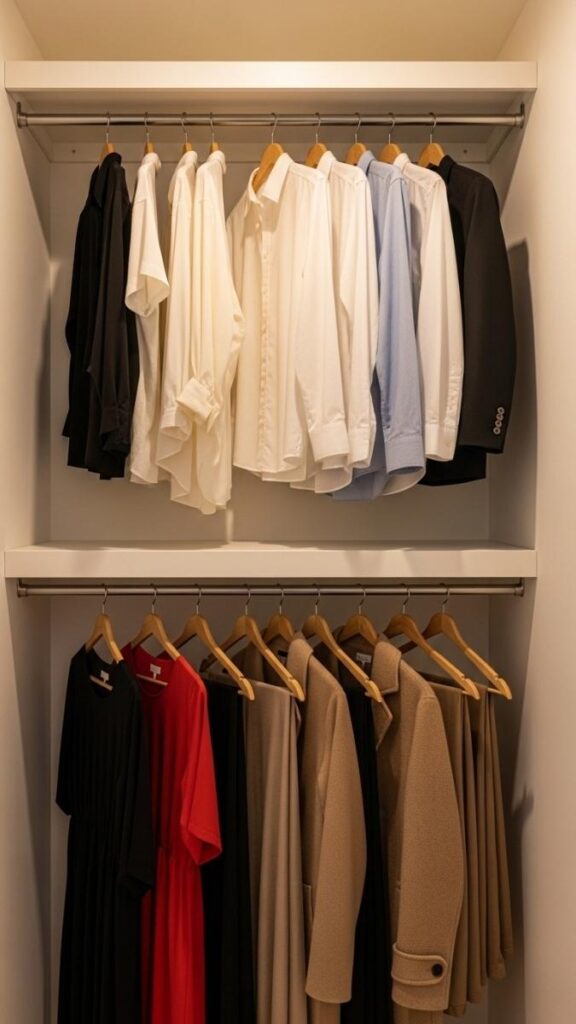
Most standard closets waste the bottom half of hanging space entirely. Adding a second rod below the first positioned about 40 inches from the floor immediately doubles capacity for shorter items like shirts, folded pants, and jackets. The upper rod handles anything that needs full length. This setup works especially well for reach-in closets where floor space is limited, because it keeps everything vertical. It also makes the closet scannable at a glance, which cuts down on the daily “where is that shirt” spiral.
Use a Modular Cube System as a Closet Base
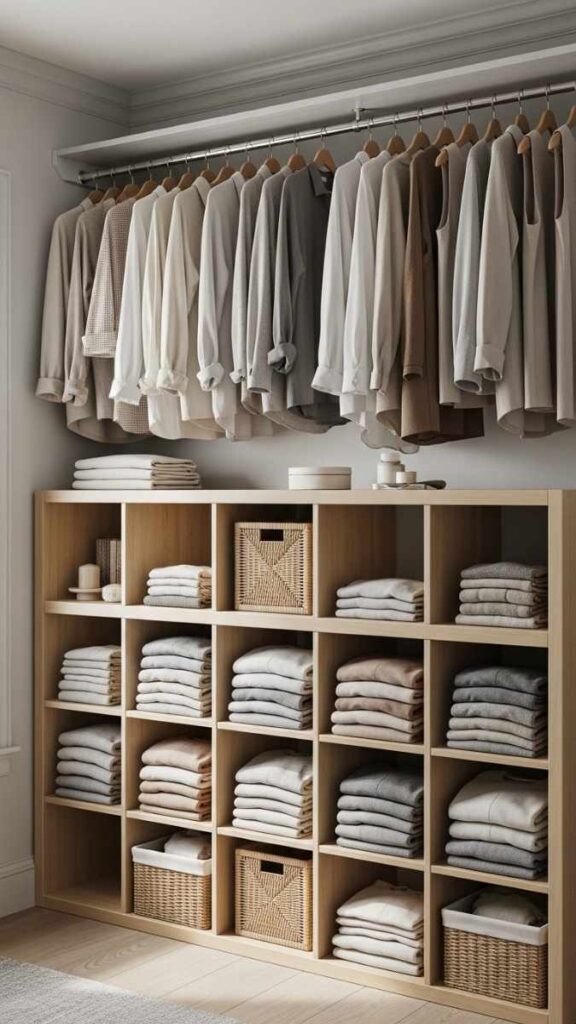
Cube shelving units, the kind you can pick up flat-packed for under $80, are genuinely one of the most flexible tools for closet organization. Stack two rows of cubes along the back or side wall, add a hanging rod above, and you’ve built a custom-looking setup without cutting a single board. The cubes handle folded clothes, shoes, and baskets, while the rod above takes care of hanging pieces. This is a particularly strong option for renters since nothing gets mounted directly to the wall structure. I’ve noticed this layout tends to work better than it looks on paper; the combination of open and closed storage keeps the space feeling organized without being visually heavy.
Read More About: 30 Small Space Storage Ideas for Bedrooms That Actually Work in Real Homes
Mount a Pegboard Inside the Closet Door
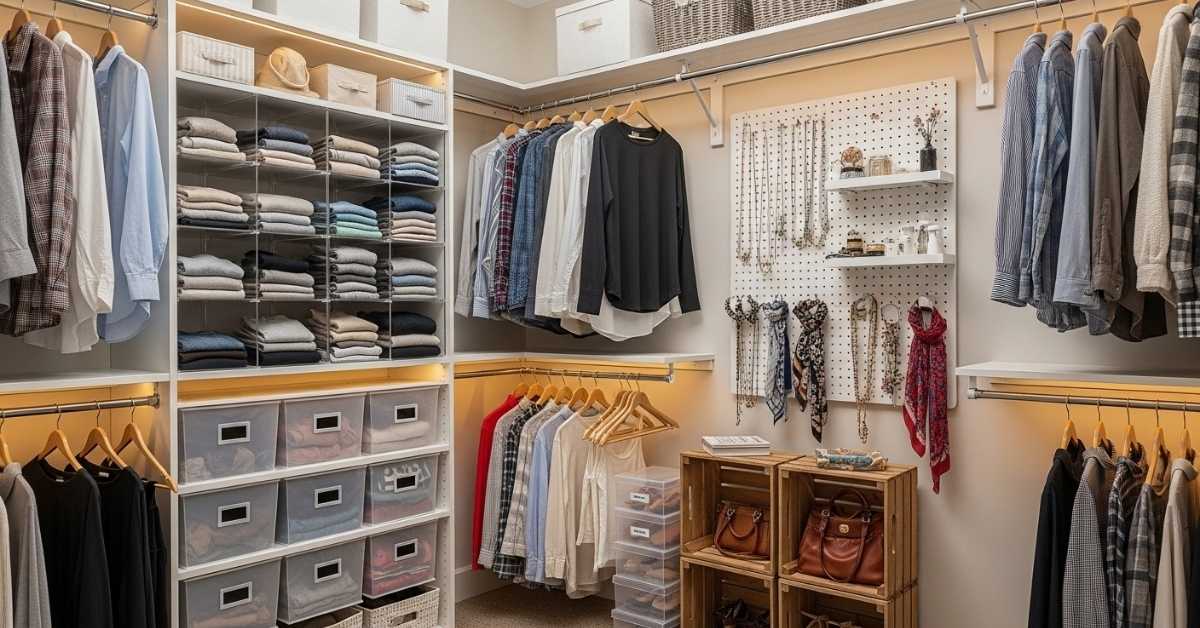
The back of a closet door is almost always wasted space. A pegboard panel cut to fit the door width and mounted with standoffs turns it into a fully functional wall of hooks, small shelves, and holders. Use it for belts, bags, jewelry, scarves, or whatever tends to pile up on your floor or dresser. The modular nature of pegboard means you can rearrange the hooks as your storage needs shift. This works especially well in small bedrooms where floor and wall space are already maxed out.
Add a Slim Rolling Cart for Folded Essentials
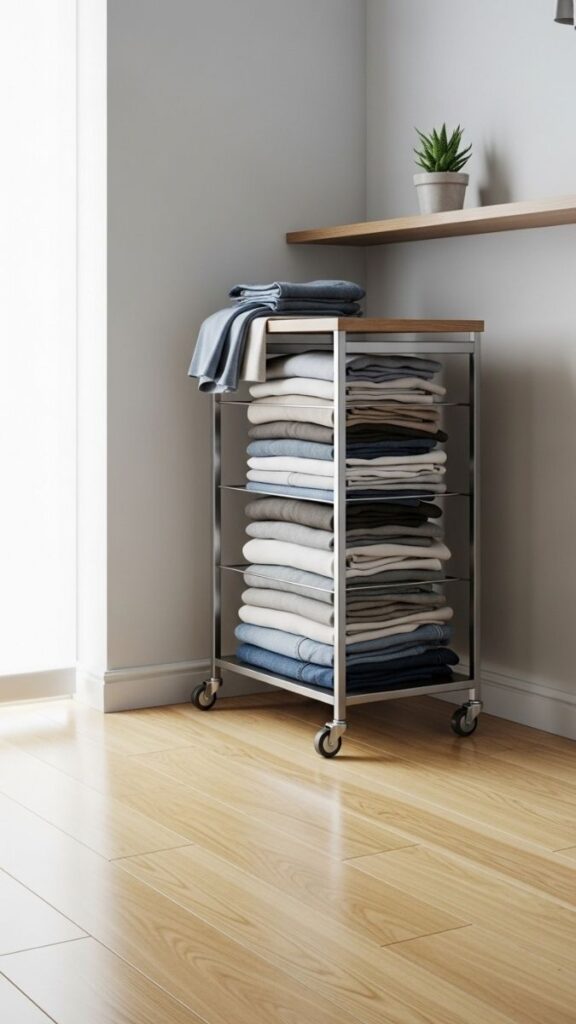
A narrow rolling cart, the kind originally designed for kitchens, slides into tight closet corners or beside a shelving unit and adds instant drawer-style storage without taking up much floor space. It’s particularly useful for everyday basics like workout clothes, pajamas, or undershirts that you need quick access to but don’t want hanging. Rolling it out slightly when you need access, then pushing it back flush with the wall, keeps the closet footprint tight. Honestly, this is one of the first things I’d try in a closet that feels chronically messy. It solves the “stuff without a home” problem fast.
Build a DIY Shelf Divider for Sweaters and Bags
Shelf dividers are a small change with a disproportionate impact. Without them, stacks of folded sweaters lean, collapse, and eventually end up in a pile. A simple L-shaped divider cut from plywood or even thick acrylic slides onto the shelf and keeps each section upright and contained. You can space them based on what you’re storing: wider sections for bags, narrower for folded stacks. This setup is especially useful on deep shelves where things tend to get pushed to the back and forgotten.
Use Tension Rods Vertically to Store Clutches and Bags
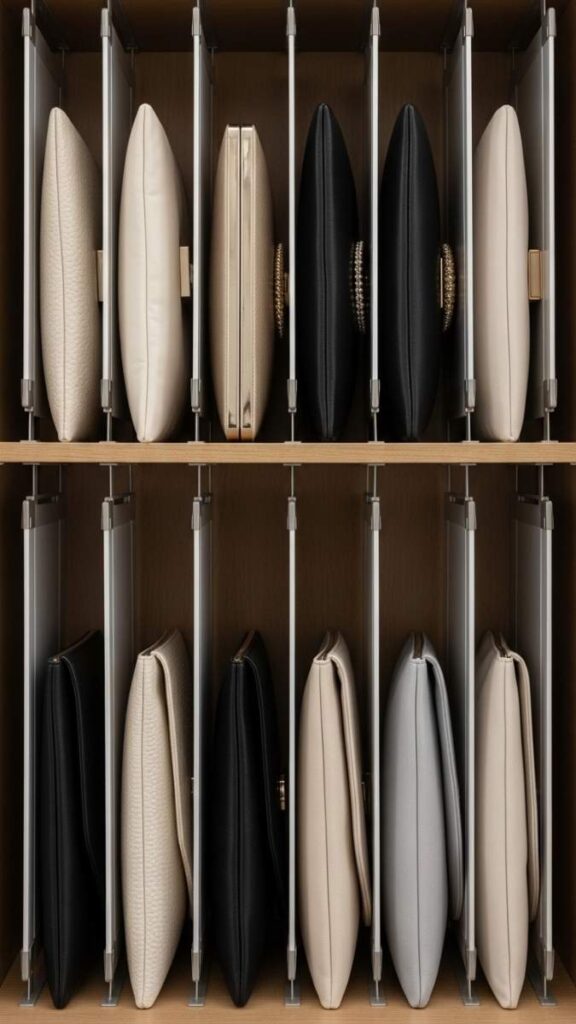
Instead of stacking bags flat (which buries everything at the bottom), tension rods installed vertically on a shelf create individual slots where bags, clutches, and even small purses can stand upright. Each item stays visible and accessible. No drilling required the rods held by pressure alone which makes this one of the easiest renter-friendly hacks in this entire list. The cost is minimal, the setup takes minutes, and the visual effect is noticeably cleaner than a bag pile.
Install a DIY Wood Plank Shelf Above the Closet Rod
The space above a standard closet rod is often underused; most closets have 12 to 18 inches of vertical clearance up there that just collects dust. A single wide plank of pine or MDF, cut to fit the width and depth of your closet, adds meaningful storage for seasonal items, extra blankets, or luggage. Bracket it directly into wall studs for stability. This is a straightforward Saturday project that requires a saw, a drill, and a level, and it’s the kind of thing that quietly makes the closet feel more complete.
Read More About: 24 Coastal Wall Decor Ideas That Actually Work in Real Homes Not Just Beach Houses
Create a Shoe Rack from PVC Pipe
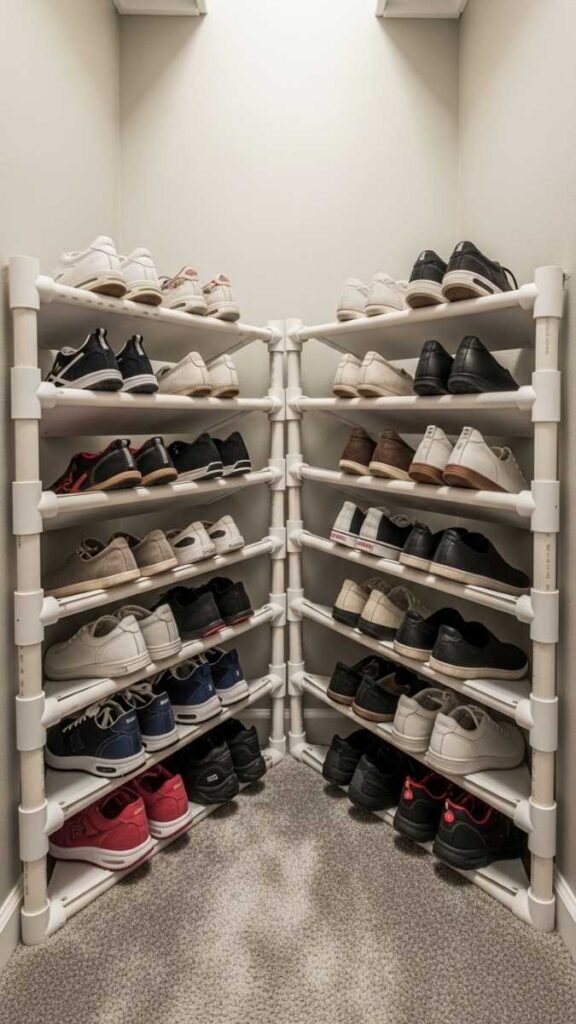
A PVC pipe shoe rack sounds industrial but looks surprisingly clean when assembled. Cut pipes into sections slightly longer than your shoe length, glue them into a grid or angled row, and you’ve got a low-cost rack that stores shoes at an angle taking up less floor space than a flat lineup. This works especially well for sneakers and flats. It’s a strong option if you’re dealing with a closet floor that’s too narrow for standard shoe racks, which tend to require more depth than they let on.
Add a Hanging Fabric Organizer for Shoes or Accessories
Over-the-rod fabric organizers are inexpensive, take no tools, and add a surprising amount of pocket storage instantly. The most effective use isn’t necessarily shoes, it’s the accessories and small items (sunglasses, phone chargers, folded scarves) that otherwise get shoved in random corners. Hang it on the back of the closet rod or on an over-door hook. For small reach-in closets, this is often the single best first step before anything else.
Build a DIY Closet Island from Two Dresser Units
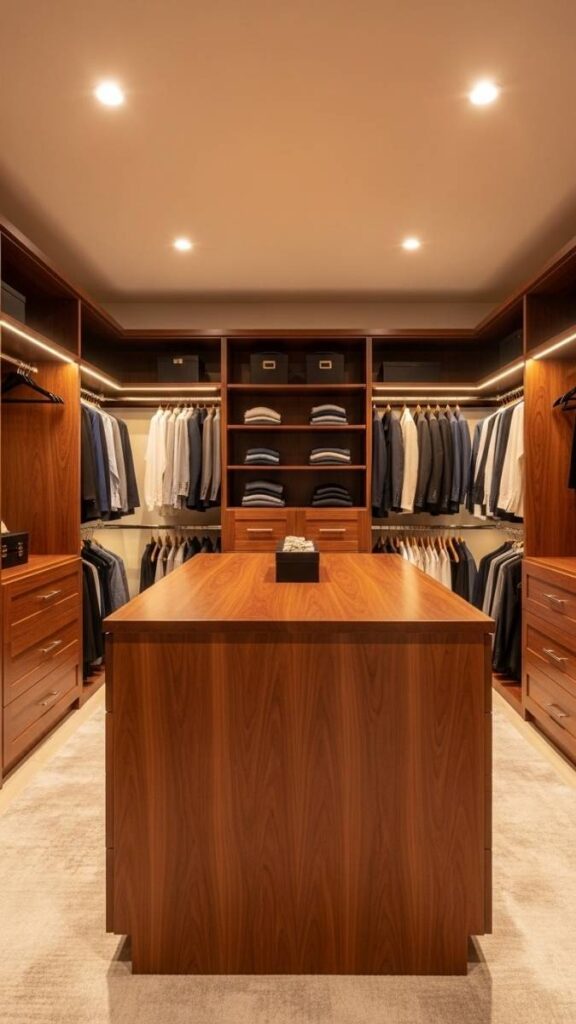
If you have a walk-in with enough floor space, two identical dresser units placed back-to-back (or side by side with a wood top added) create a functional center island. The drawers give you folded storage in the middle of the room, and the top surface works as a folding or staging area. This is significantly cheaper than a built-in island, often 70 to 80 percent less and it’s fully removable. The key is matching the dresser height so the top surface sits level, and using a plank of wood or butcher block to unify them visually.
Use S-Hooks and a Ladder Shelf for a No-Closet Bedroom
For bedrooms with no closet at all, a leaning ladder shelf becomes the entire storage system when you use it right. Hang S-hooks from the rungs for bags, belts, and jackets. Use the flat shelves for folded items and baskets. Add a small hanging rod across two rungs with tension rod hardware to create a narrow hanging section for a few key pieces. It’s not a replacement for a full closet, but it handles a surprising amount when set up thoughtfully and it takes up minimal floor space.
Install a DIY Slanted Shoe Shelf at the Base of the Closet
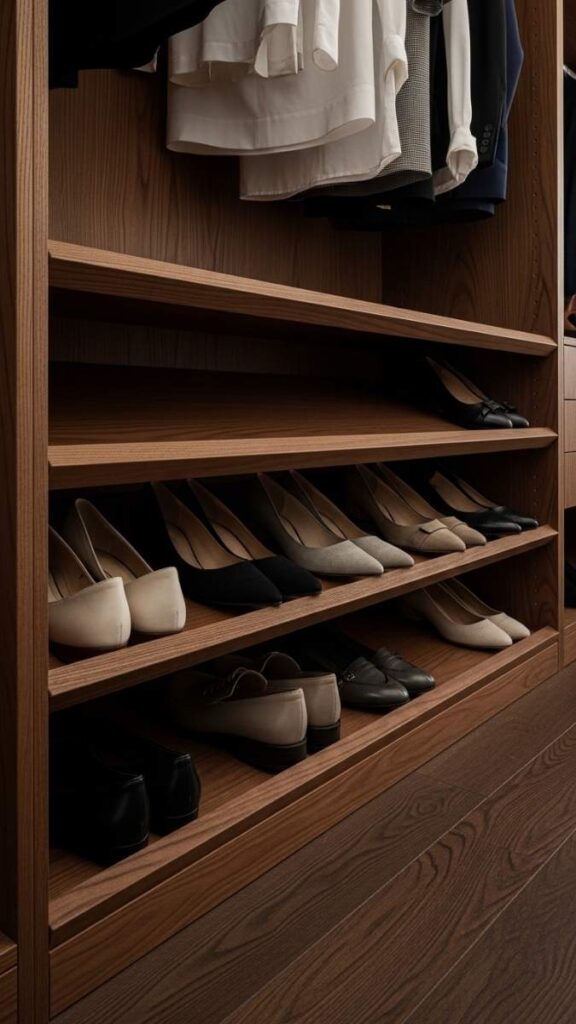
A slanted shelf angled at about 15 to 20 degrees stores shoes more compactly than a flat shelf because the toes tuck under the shelf above. You can build a simple two-tier version with plywood and wooden dowels for support. The visual effect is cleaner than a flat lineup, and you fit more pairs into the same floor space. This is especially useful for reach-in closets where the floor area is narrow and every inch counts.
Use a Belt Hook Rail Inside the Closet Wall
A simple horizontal rail, a piece of dowel or even a curtain rod mounted at eye level with a row of small hooks creates a dedicated belt and tie storage strip. It keeps them flat, untangled, and easy to grab. Mount it on the narrower side wall of the closet, which is often completely blank. The total cost is under $15 if you’re using basic hardware, and it eliminates the belt-pile-at-the-bottom-of-the-closet problem permanently.
Read More About: 29 Vintage Wall Decor Ideas for Your Living Room That Actually Work in Real Homes
Add a Stackable Wire Basket System for Everyday Basics
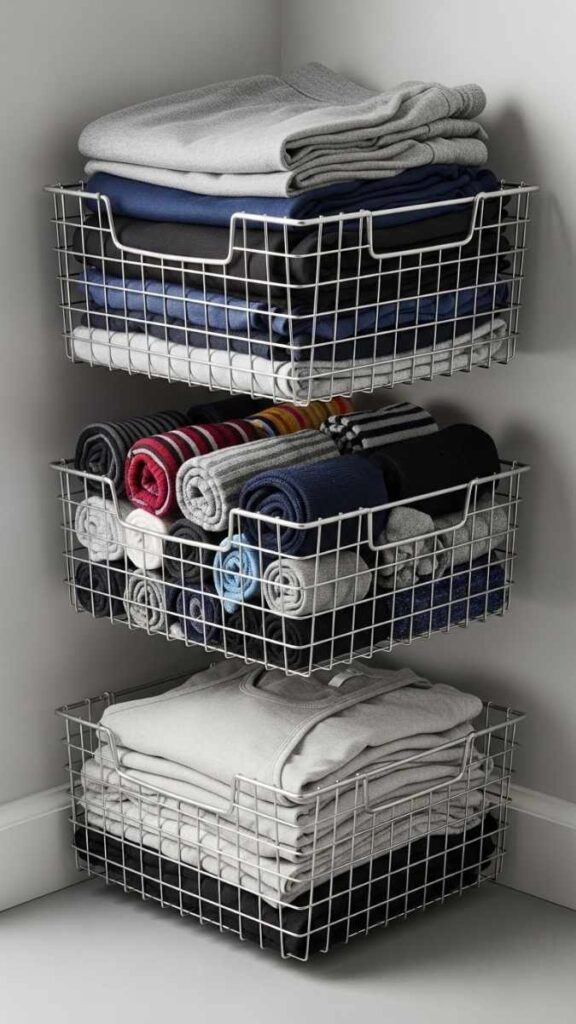
Wire baskets the stackable, open-front kind are excellent for everyday basics you reach for constantly. The open front means you see what’s inside without pulling everything out, which works better than drawers for categories like gym clothes, socks, or workout gear. Stack three or four units vertically, label each basket, and you’ve got a drawer-style system that costs a fraction of an actual dresser. This setup particularly suits active wardrobes where items go in and out frequently.
Build a Simple Floating Shelf System for a Walk-In Closet Wall
Floating shelves installed directly into wall studs give you a fully custom shelf run without the cost of a closet system kit. You control the spacing, depth, and height based on exactly what you’re storing. A standard 12-inch deep shelf works for folded clothes; go to 16 inches for shoes. This is one of the more involved DIY projects on this list, but the result is a clean, built-in look that holds a significant amount and doesn’t eat into floor space. In my experience, this works best when you plan your shelf heights around actual items first rather than guessing.
Hang a Curtain Rod and Use It as a Garment Rack Alternative
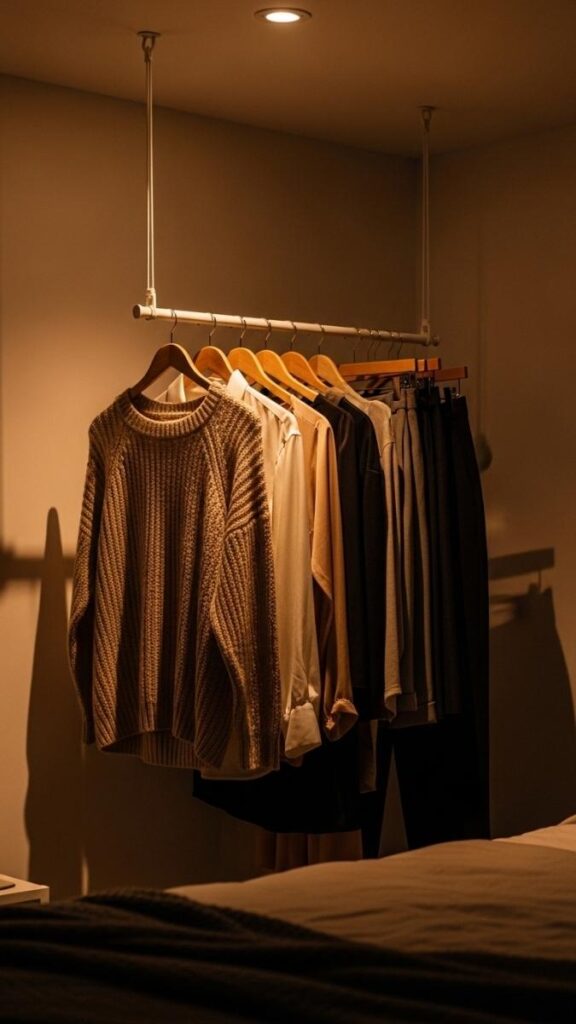
A ceiling-mounted curtain rod the kind used for canopy beds can function as an open garment rack when positioned correctly in a room corner. It’s a particularly useful solution for bedrooms where there’s no closet and adding furniture isn’t practical. Keep the items hung to a curated selection (current season only) to avoid it looking cluttered. Pair it with a small cube shelf or rolling cart beneath it and you’ve essentially built a freestanding wardrobe setup without a single large piece of furniture.
Create a DIY Valet Hook Station for Tomorrow’s Outfit
A small cluster of wall hooks, one or two positioned at shoulder height, one lower creates a dedicated space for tomorrow’s outfit, gym gear, or anything you pulled out and aren’t quite ready to put back. This is a low-cost, high-practicality addition that solves the “clothes on the chair” problem in most bedrooms. Use hooks with a bit of visual weight (brass, matte black, ceramic) and it looks intentional rather than makeshift. Mount it just inside the closet or on a nearby bedroom wall, within arm’s reach of the wardrobe.
Use Over-Door Organizers for Cleaning or Utility Items in a Hallway Closet
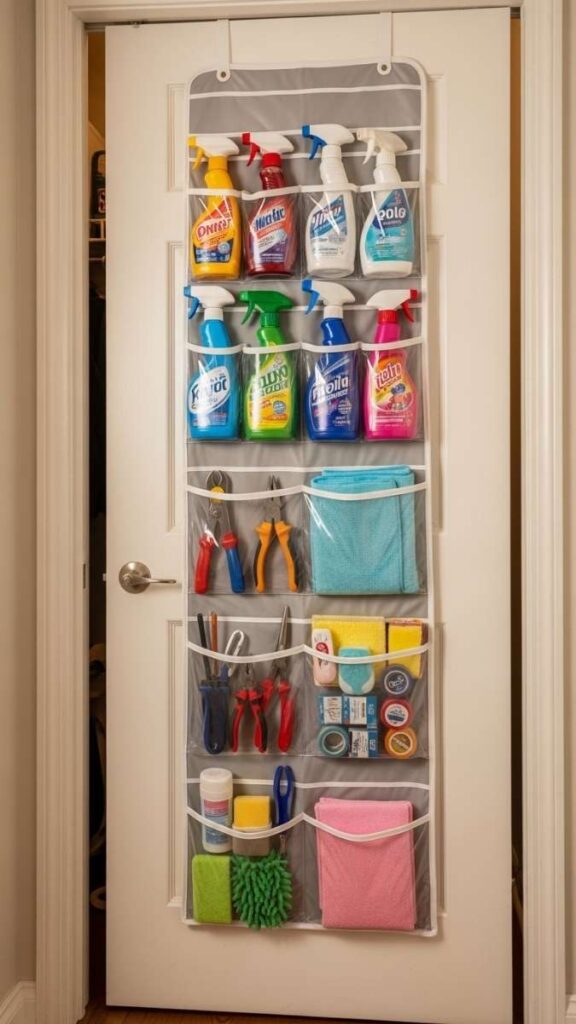
Hallways and utility closets tend to become dumping zones because there’s no system, just a pile. An over-door organizer with deep pockets or individual slots handles spray bottles, small tools, and household supplies without requiring shelf space. The door itself becomes a storage wall. This setup is particularly effective in narrow utility closets where a shelving unit would reduce usable floor space. It also makes cleaning supplies instantly visible and accessible rather than buried at the back of a shelf.
Add a DIY Drawer Unit Under a Short Hanging Section
In a standard reach-in closet, the section below short hanging items (jackets, blazers, folded trousers) is often just open floor space. Sliding a small 3-drawer unit into that gap fills the dead zone with real storage. You can use an existing narrow dresser, or build a simple box with sliding trays from plywood. The drawer unit handles folded items or accessories, while the hanging rod above stays at a height appropriate for the clothes it holds. It’s one of the cleanest ways to maximize a single closet section.
Use Clear Stackable Bins for Seasonal Item Storage
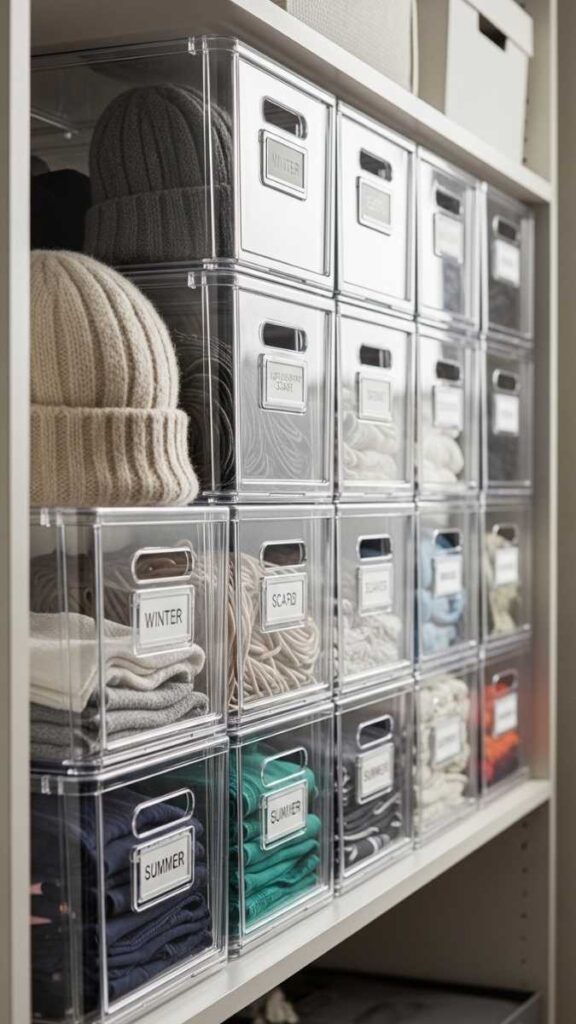
Seasonal storage works best when the bins are uniform in size and clearly labeled. Clear stackable bins rather than opaque boxes mean you can see what’s inside without pulling everything down from a high shelf. Stack them two high, label the front, and use consistent sizing so they sit flush with the shelf edge. This setup keeps seasonal items contained without wasting premium real estate in the main closet section. It’s also significantly easier to rotate seasons when everything has a fixed, labeled spot.
Build a DIY Closet Rod Extender for a Second Hanging Level
A rod extender is a small metal bracket that drops down from the main closet rod to create a second hanging level. You can buy them, or make a version from pipe and pipe clamps. Either way, the result is two tiers of hanging space in one section of the closet ideal for shirts, folded trousers, or shorter dresses. The second rod sits roughly 18 to 20 inches below the first, which leaves just enough clearance for most hanging pieces. This is especially effective for closets where you have more hanging items than flat storage.
Create a Linen Closet System With Basket Labels
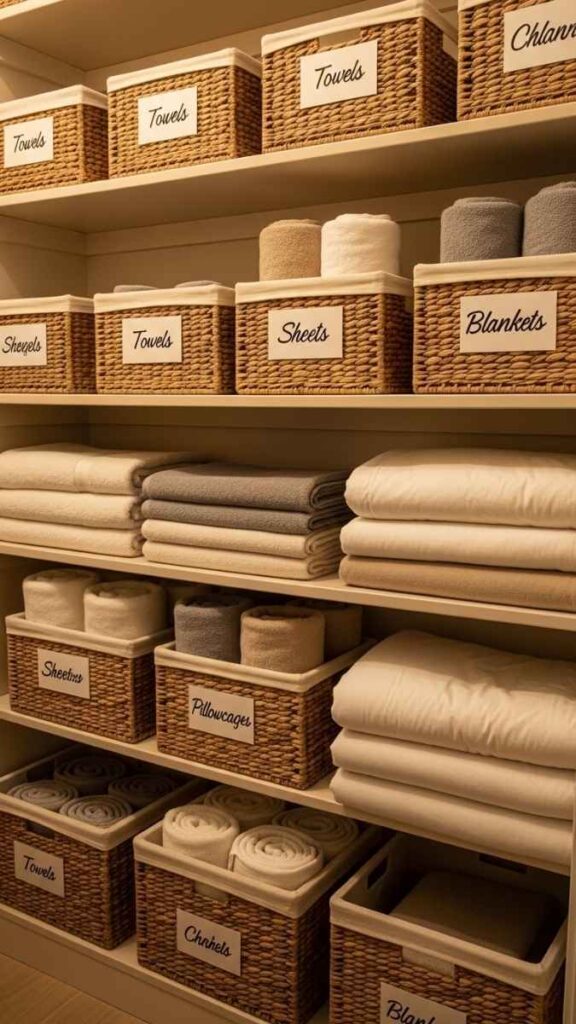
Linen closets tend to work against you because everything looks the same and nothing has a fixed home. The fix is simple: assign each shelf a category, use a basket per category, and label each one. Rolled towels fit better than flat-folded, take up less space, and look cleaner. Bedding sets stored inside one pillowcase of the set stay together automatically. This system works for renters and owners alike because it requires no hardware, just baskets and a labeling method. The result is a closet that stays organized because the structure itself makes disorder harder than order.
Install a DIY Corner Shelf in a Walk-In for Dead Corner Space
Corner space in walk-in closets is frequently ignored in the angled wall section that doesn’t fit a standard straight shelf. A simple corner shelf, a triangular or L-shaped piece of wood mounted on brackets, uses that space without requiring a custom built-in. It’s a natural place for shoes, small bins, or folded accessories. The visual effect is minimal, and the added storage is meaningful in closets where every section of wall is already doing double duty.
Use a Tension Rod to Create a Vertical Divider in a Deep Shelf
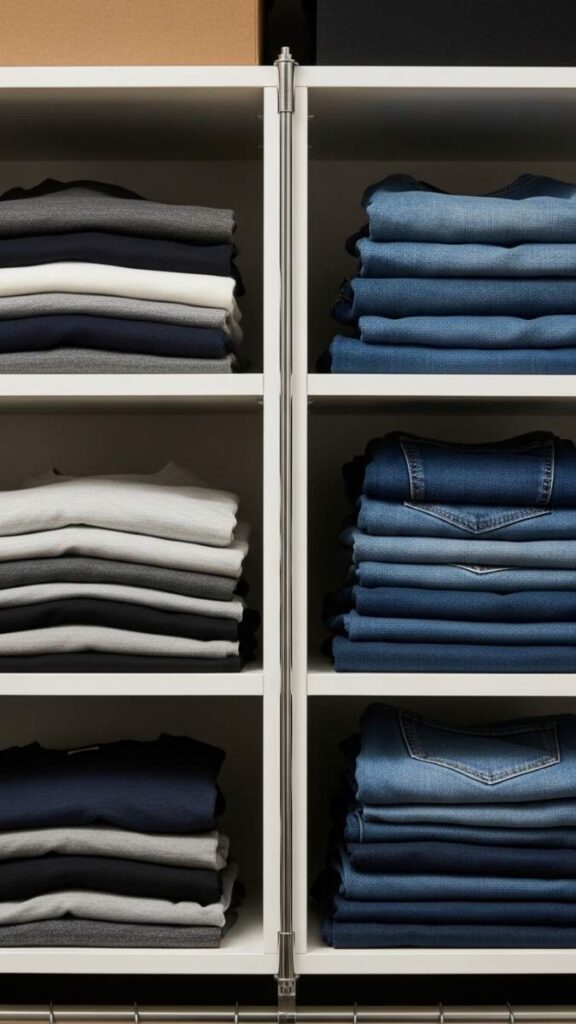
Deep shelves, the kind that go 18 to 24 inches back, are convenient until you lose track of what’s at the back. A tension rod installed vertically across a deep shelf creates a front zone and a back zone, which forces you to actually use both sections intentionally rather than just piling things in front. Use the front section for current-season items, back section for less-used pieces. No drilling required. It’s one of those setups that sounds too simple to matter until the shelf actually stays organized.
Hang a Small Mirror Inside the Closet Door
A full-length mirror mounted to the inside of the closet door does two things: it gives you a getting-dressed station without needing a separate mirror in the room, and it bounces light back into the closet interior, which makes a small or dim closet feel slightly more spacious. For reach-in closets in bedrooms where floor space is tight, this setup removes the need for a standing or wall-mounted mirror elsewhere. The light-reflection effect is particularly useful in north-facing rooms or windowless closets.
Add LED Strip Lighting to Closet Shelves for Visibility
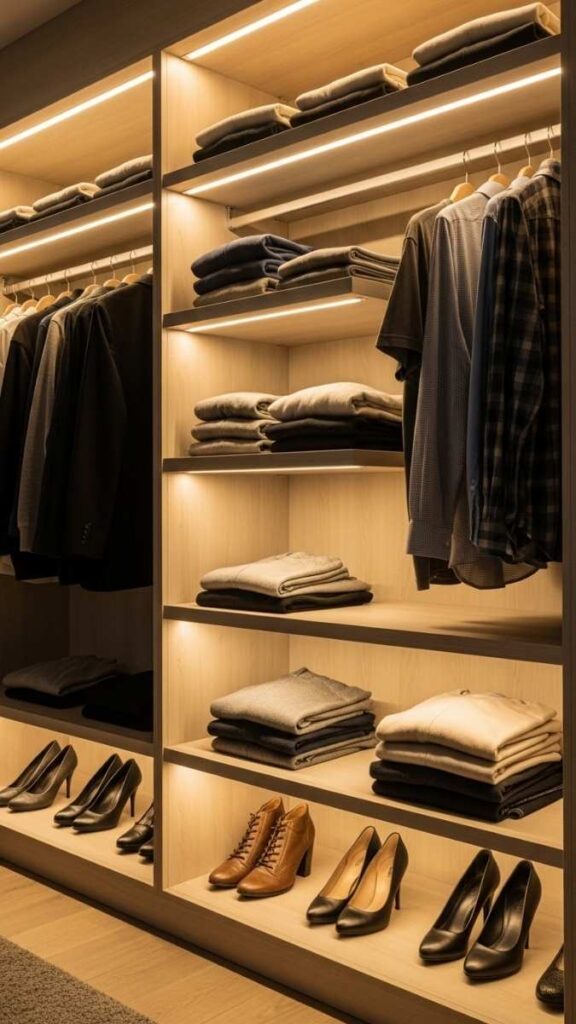
Most closets have a single overhead bulb that creates shadows in exactly the wrong places. LED strip lights mounted to the underside of each shelf with adhesive light up the contents of the shelf below directly. Warm white strips (2700K to 3000K) keep the feel residential rather than clinical. Battery-operated or plug-in versions require no wiring and work in rental spaces. Beyond aesthetics, better visibility directly affects how organized a closet stays. You’re far more likely to put things back in the right spot when you can actually see where that spot is.
Build a Complete DIY Reach-In Closet System From Scratch
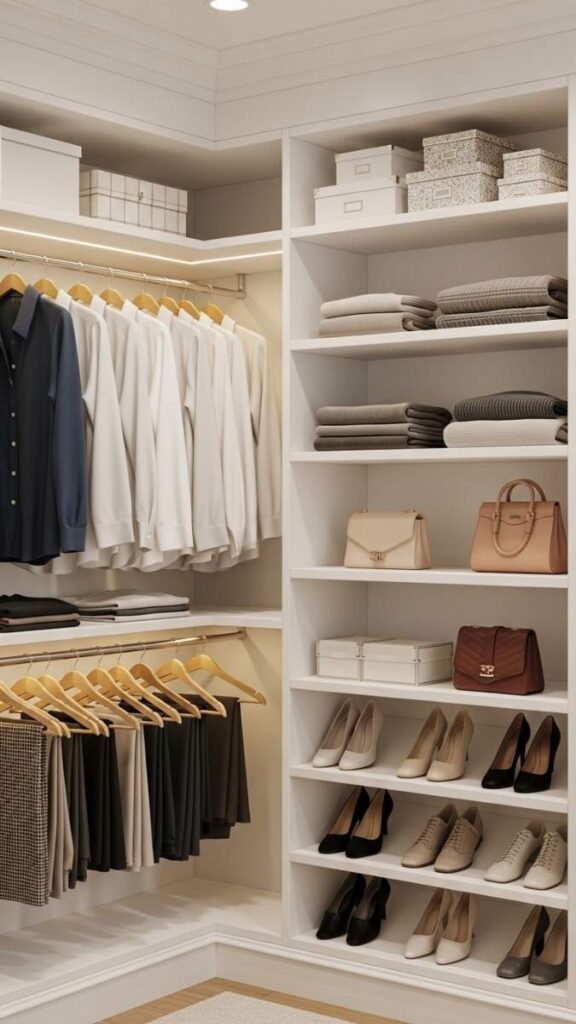
If the closet is fundamentally broken, one rod, one shelf, no real system the most efficient approach is to start from scratch rather than add pieces around a bad base. Clear everything out. Patch and paint the interior (white or a light tone makes a visible difference). Then build in sections: a double-hang zone for shorter items, a single-hang zone for full-length pieces, and a shelf run on one side for folded clothes and shoes. Use basic pine boards, a standard closet rod, and shelf brackets from a hardware store. The material cost for a typical reach-in is often under $150. The result is a closet that actually fits your wardrobe instead of fighting against it.
What Actually Makes DIY Closet Organization Work Long-Term
The difference between a closet that stays organized and one that falls apart in two weeks usually isn’t the products, it’s the structure. A few principles that matter more than aesthetics:
Zone by frequency, not category.
The items you reach for every day should be at eye level and arm’s reach. Seasonal pieces, rarely worn items, and backup supplies belong higher up or further back. Organizing by category (all shirts together, all shoes together) sounds logical, but organizing by frequency of use is more functional.
Leave 15 to 20 percent empty space.
A closet packed to capacity will become disorganized almost immediately. The empty space isn’t wasted; it’s what allows the system to absorb the normal fluctuation of a real wardrobe. New purchases, seasonal additions, laundry that hasn’t been put away all of this needs somewhere to land temporarily without breaking the whole system.
Match storage type to behavior.
If you consistently throw gym clothes in the same spot, give that spot a basket and don’t fight the behavior with a more rigid system. Drawers work well for people who fold; open shelves or hooks work better for people who don’t. A system that fits how you actually behave will hold longer than one that requires you to change your habits entirely.
Avoid too many categories in a small space.
In a reach-in closet, trying to create 12 distinct zones usually results in 12 confused piles. Three to five clear zones hanging, folded, shoes, accessories is enough structure for most wardrobes.
Closet Organization Setup Comparison
| Setup | Best For | Space Type | Problem It Solves | DIY Difficulty |
| Double hanging rod | Large hanging wardrobes | Reach-in, small walk-in | Wasted vertical space | Easy |
| Modular cube system | Renters, mixed storage | Any closet type | No built-in shelving | Easy |
| Floating shelf run | Walk-ins, permanent spaces | Walk-in closet | Lack of structured storage | Moderate |
| Rolling slim cart | Tight corners, small closets | Reach-in, no closet | Dead corner space | Easy |
| DIY island (dresser units) | Walk-ins with center space | Medium to large walk-in | No folded storage zone | Moderate |
| LED strip lighting | All closet types | Any | Poor visibility, shadow zones | Easy |
| Over-door organizer | Utility and linen closets | Any door-facing closet | Wasted door space | Easy |
Common DIY Closet Organization Mistakes That Reduce Your Usable Space
Skipping the purge first.
Organizing around items you don’t wear creates a system built on the wrong foundation. Before any shelving goes in, edit the wardrobe. The goal isn’t to store more, it’s to store what you actually use more efficiently.
Buying storage before measuring.
This is how you end up with a shelf unit that’s two inches too wide, or a shoe rack that doesn’t fit under the hanging section. Measure the interior dimensions width, depth, and height before purchasing anything. Also account for the door swing if you’re working in a reach-in.
Installing the hanging rod too high.
A rod positioned too high to reach comfortably means you’ll avoid using the top section, which defeats the purpose. Standard rod height is 66 to 68 inches from the floor for a single rod. For a double-rod setup, the upper rod sits at 80 to 82 inches, the lower at 40 inches.
Ignoring the door.
The door back panel and surrounding frame is almost always unused. Over-door organizers, mirror panels, and hook rails on the inside of the door can collectively add significant storage without touching the interior at all.
Using opaque bins without labels.
The contents disappear, you forget what’s in them, and eventually the bins just become mystery boxes that slow you down. Use clear bins, or label everything. Either approach keeps the system usable.
Matching aesthetics instead of function.
A beautiful rattan basket that’s too deep for what you’re storing, or a decorative ladder shelf that wobbles under weight looking good in a flat-lay photo and functioning well in a real closet are different things. Prioritize dimensions and usability, then aesthetics.
FAQ’s
What’s the best DIY closet organization system for a small reach-in?
The most effective system for a small reach-in closet uses three zones: a double-hang section for shorter items, a shelf column for folded pieces and shoes, and an over-door organizer for accessories. This layout maximizes vertical space without requiring a large floor footprint or permanent modifications.
How do I organize a closet without drilling into walls?
Use freestanding cube shelving units, tension rod systems, over-door organizers, and leaning ladder shelves all of which require no wall anchoring. Adhesive hook strips rated for heavier loads also work well for lightweight items like belts or bags.
Is it cheaper to DIY a closet system or buy a pre-made kit?
DIY is almost always cheaper if you’re working with basic materials like pine boards, shelf brackets, and a standard closet rod. A full reach-in closet setup can often be built for $100 to $200 in materials, compared to $400 to $1,000 for most branded closet system kits.
How do I make a dark closet feel more functional and easier to use?
LED strip lights mounted under shelves are the most direct fix. Painting the interior white or a light neutral also helps significantly dark walls absorb light and make the space harder to scan. A mirror on the inside of the door adds another layer of light reflection.
Can I organize a closet with no built-in shelving at all?
Yes. A freestanding cube unit against the back wall, a hanging rod mounted to the unit or a freestanding garment rack, and a rolling cart for folded items creates a fully functional wardrobe system without any built-ins. This setup works well for studio apartments, basement bedrooms, or rooms where closets were never added.
How often should I reorganize my closet?
A seasonal refresh twice a year, when switching between warm and cool weather wardrobes is enough if the base system is solid. Use that time to pull out what you didn’t wear, reassess storage allocation, and return anything that migrated to the wrong zone.
What’s the single most impactful change for a disorganized closet?
Adding a second hanging rod. Most closets lose half their hanging capacity to that open space below the main rod. Doubling the rod instantly changes how much the closet can handle, which creates room to organize everything else.
Conclusion
A disorganized closet rarely gets better on its own; it needs a structure that matches how you actually live. The ideas in this list aren’t about making a closet look like a magazine shoot. They’re about building a system that holds up through a real week, with real laundry cycles and real wardrobe decisions.
Start with one or two changes that address your specific friction points. If it’s the pile at the bottom, add a shoe system. If it’s the chaos of folded clothes, try a cube unit or basket system. If the closet is just fundamentally broken, clear it out and rebuild it from scratch it’s a weekend project, not a renovation. Small adjustments, done in the right order, make a closet work harder without requiring more space.