34+Living Room Lighting Ideas That Make Your Space Feel Bigger, Warmer, and More Intentional
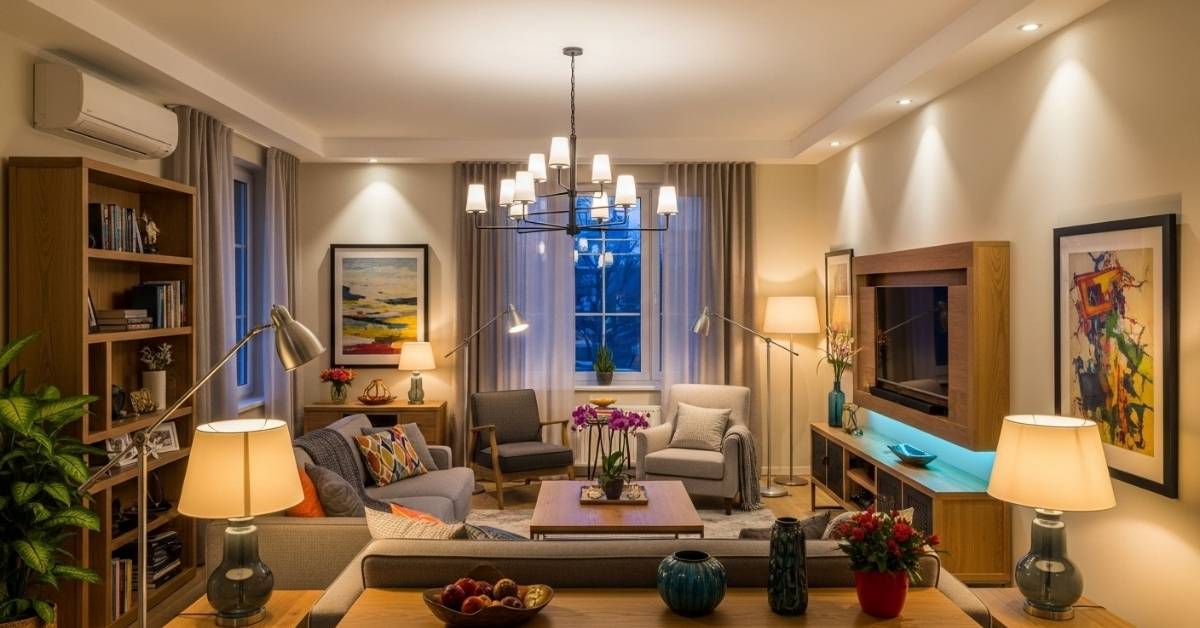
Lighting is probably the most overlooked element in a living room setup and also the one that makes the biggest difference once you get it right. Living Room Lighting Ideas Not “buy an expensive chandelier” right. More like: stop relying on a single overhead fixture and start thinking in layers. Most living rooms feel flat or too harsh because all the light comes from one source, one direction, one temperature. Once you understand how to work with light instead of against it, even a basic rental apartment can feel considerably more considered.
If your living room feels fine but never quite comfortable or it looks fine in daylight but harsh after 6 PM this list is for you. These ideas work across budgets, space sizes, and renter-friendly constraints, so take what applies and ignore the rest.
Layer Three Light Sources Instead of One
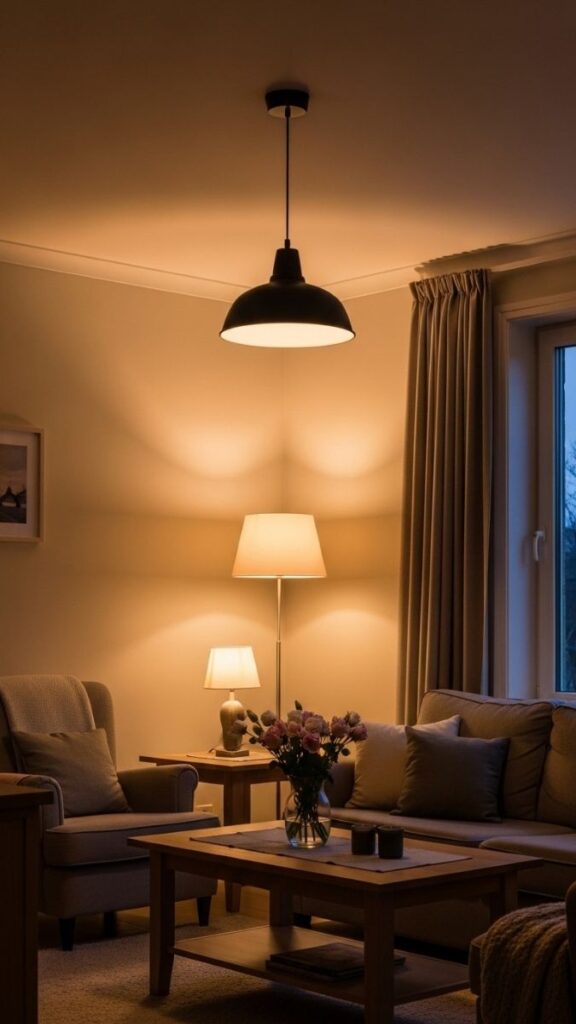
Single overhead lighting flattens everything. It removes shadow, which paradoxically makes a room feel smaller and less textured. The fix is layering: one ambient source (overhead or a large pendant), one task or accent source (floor lamp or table lamp), and one atmospheric source (a small table lamp, LED strip, or candle cluster). Each layer works at a different height and intensity. In my experience, this is the one change that has the most immediate impact especially in evenings when you want the room to feel like a place to actually sit in.
Use a Dimmer Switch on Your Main Light
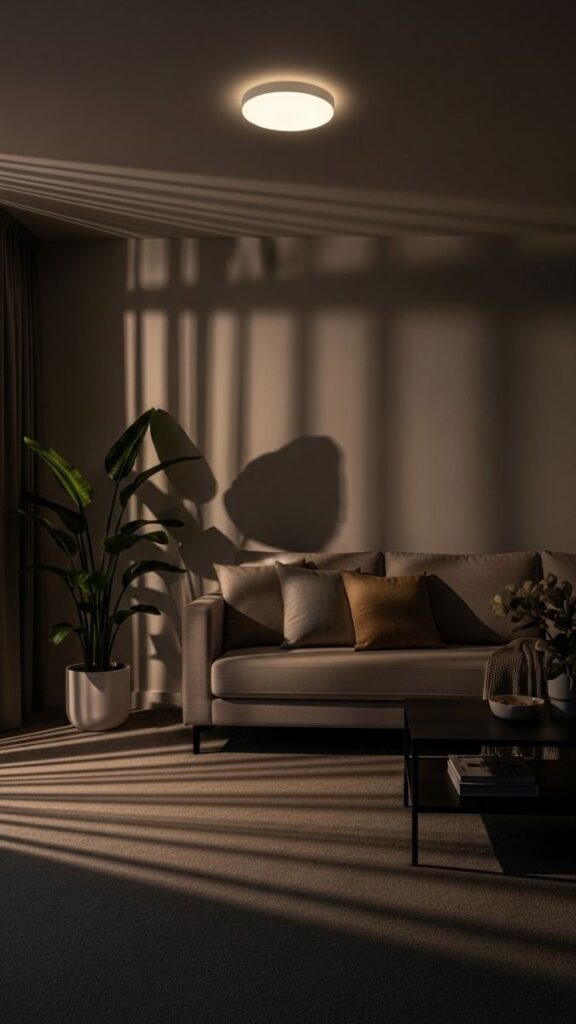
A dimmer switch costs about $15–25 and changes how your living room functions entirely. At full brightness, it’s practical for cleaning or working. At 30–50%, it creates the kind of light that makes conversation feel easy and the room feels smaller in a good way. The key is pairing it with a warm-white bulb (2700K–3000K range) daylight bulbs at 50% dimmed just look like broken daylight, not warmth.
Place a Floor Lamp Behind the Sofa
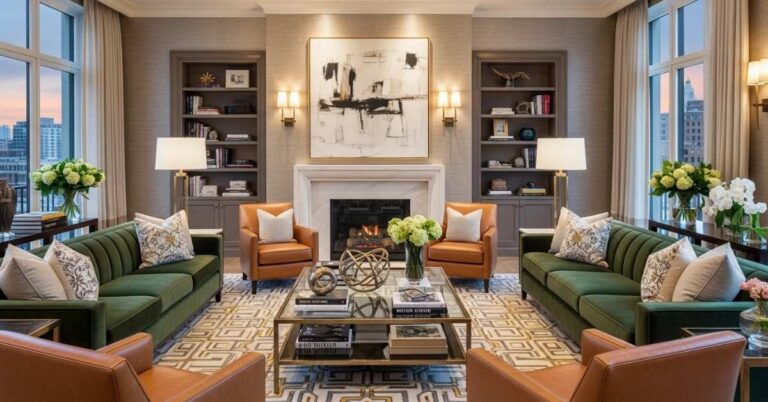
An arc floor lamp positioned behind and slightly to the side of your sofa creates what designers call “backlighting” ; it illuminates the space behind the seating area, adds depth, and makes the sofa itself feel anchored in a pool of light rather than floating. This works especially well in open-plan layouts where the living area needs to feel defined. Go for a lamp with a shade that diffuses the bulb rather than exposes it; bare bulbs create glare, not glow.
Read More About: 32+Large Wall Decor Ideas That Make Every Room Feel Intentional and Complete
Add Uplighting in Empty Corners
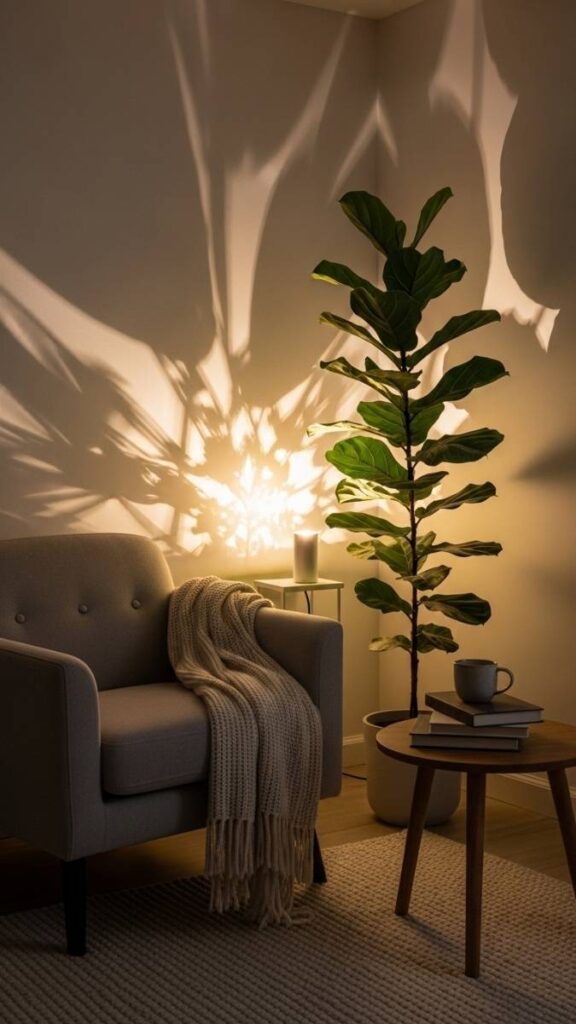
Dead corners are a lighting opportunity most people miss. A simple uplight either a plug-in floor torchiere or a small LED spot placed in the corner and pointed upward bounces light off the ceiling, which visually raises the ceiling height and fills the room with indirect warmth. Pair it with a tall plant and you get shadow patterns on the wall for essentially no cost. This is one I’d recommend trying first if your room feels low or closed off.
Use Table Lamps at Sofa Arm Height
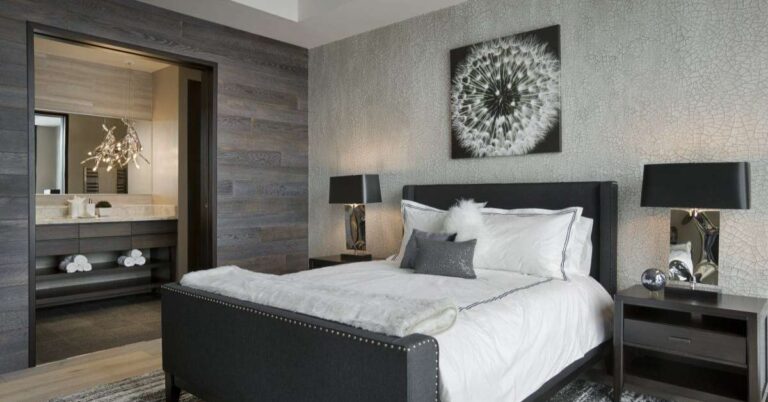
The rule of thumb for table lamps in a seating area: the bottom of the shade should be at eye level when you’re seated roughly 38–42 inches from the floor. Higher than that and the bulb glares in your face; lower and it doesn’t light the space effectively. Matching lamps on both sides of a sofa create symmetry and frame the seating zone, which makes the whole arrangement feel more intentional even in otherwise sparse rooms.
Install LED Strip Lights Behind the TV
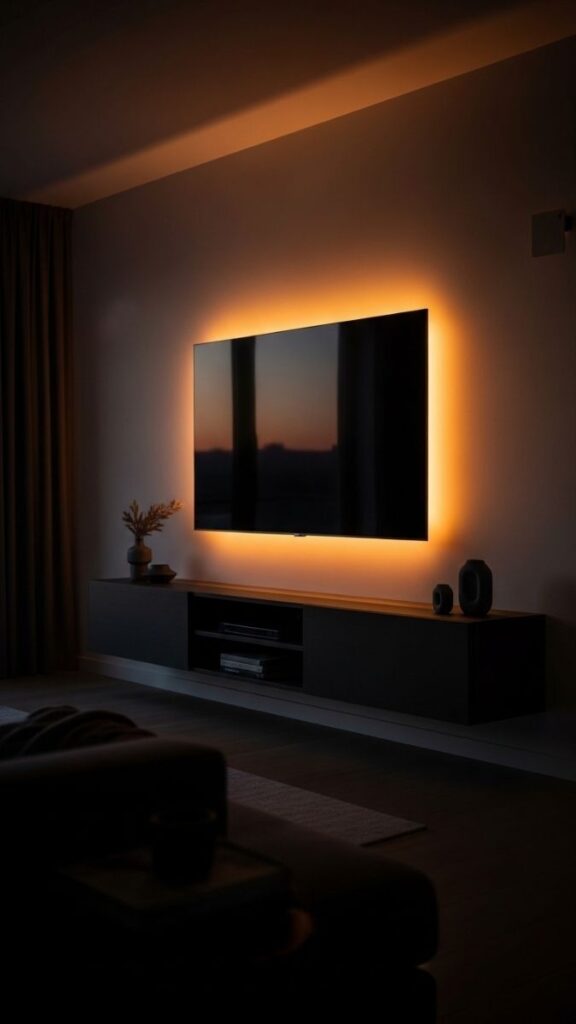
Bias lighting the LED strip that goes around the back of your TV screen reduces eye strain in a darkened room by reducing the contrast between the bright screen and the surrounding darkness. But beyond function, it gives a soft, ambient glow to the whole media wall without requiring an additional lamp. Warm white (around 2700K) or a fixed amber tone works better than RGB color-cycling for actual daily use. Renter-friendly and reversible.
Choose Pendants Over Recessed Lights
Recessed lights distribute light evenly but create zero focal point and zero atmosphere. A pendant hung lower especially over a coffee table or seating area draws the eye down, makes ceilings feel more intimate, and creates a sense of “room within a room” in open floor plans. You don’t need a ceiling electrical box either: plug-in pendant kits are widely available and fully removable.
Go for Warm White, Not Cool White
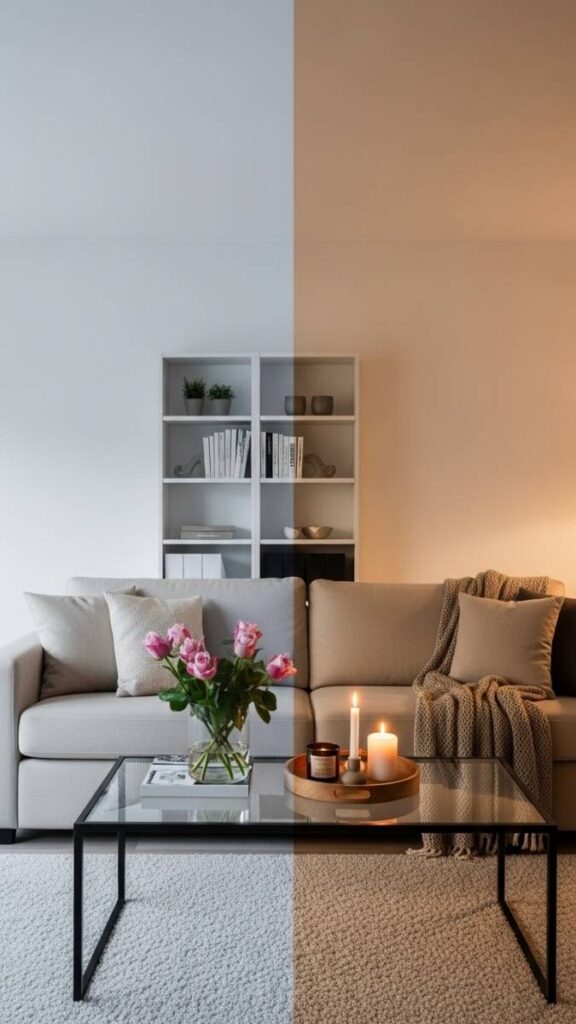
Color temperature is measured in Kelvin. Cool white (4000K+) reads as office lighting bright, efficient, clinical. Warm white (2700K–3000K) reads as residential. Most living rooms that feel too harsh are simply running daylight or cool-white bulbs. Switching to warm white costs nothing if you already have compatible fixtures and makes the biggest single difference to how comfortable a room feels in the evening.
Read More About: 31+Bedroom Wall Decor Above Bed Ideas That Make Your Headwall the Focal Point
Use a Statement Floor Lamp as a Focal Point
If your living room lacks a natural focal point, no fireplace, no dramatic view, no bold art a well-chosen floor lamp can anchor the space visually. The key is choosing one that reads as an object, not just a utility item: an interesting base material (marble, ceramic, brushed brass), a shade that complements the room’s palette. This isn’t about drama for its own sake, it’s about giving the eye a place to land in a room that doesn’t have an obvious one.
Try Wall Sconces for Soft, Indirect Light
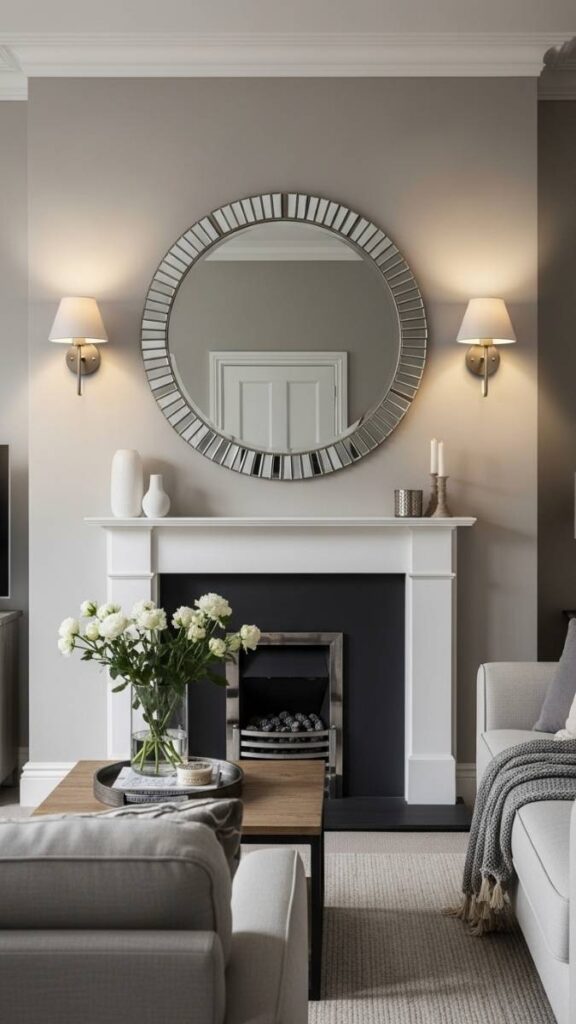
Plug-in wall sconces are one of the most underused tools in renter-friendly lighting. They mount at mid-height (roughly 5–6 feet), cast light sideways and slightly downward, and create the kind of even, diffused glow that’s impossible to achieve with just overhead lighting. Use them flanking a mirror, piece of art, or a television wall. The cord management is usually the only obstacle: a cord cover in the same color as your wall makes them look intentional rather than temporary.
Light the Bookshelves or the Alcove
A lit bookshelf or alcove does two things: it creates a light source that’s already at the “mid-layer” height, and it turns the shelf itself into a visual feature rather than just storage. Small LED puck lights or a strip along the back panel of each shelf are easy to install and battery-operated options exist if you don’t want to run cord. This works especially well in rooms where the wall is otherwise a blank expanse; it adds texture through both the books and the light itself.
Position a Lamp in the Corner Diagonally Opposite the Door
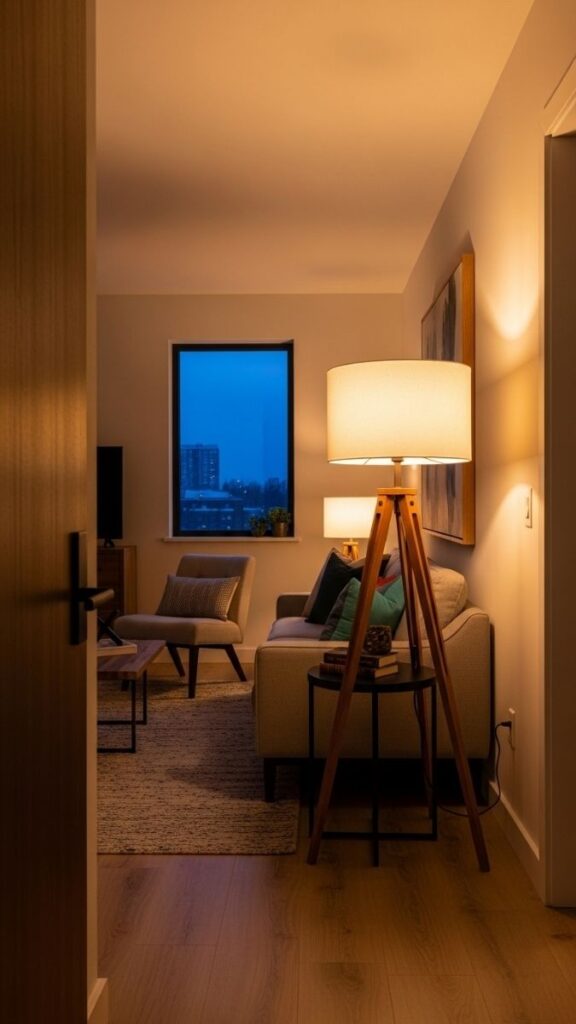
This is a spatial trick more than a lighting one: placing a lit lamp in the corner diagonally opposite from where you enter the room pulls the eye across the full depth of the space. It makes the room read as longer and draws you in rather than stopping your gaze at the nearest wall. In small rooms especially, this single adjustment can make the layout feel more expansive without moving a single piece of furniture.
Use a Woven or Fabric Shade for Texture and Diffusion
The shade material matters almost as much as the bulb inside it. Paper and fabric shades diffuse light softly and cast a warm, even glow. Rattan, bamboo, and woven shades add a texture element; the light filters through the weave and creates a dappled shadow pattern on the ceiling that’s genuinely atmospheric. Metal drum shades direct light up and down but block it sideways, which creates a harder, more defined pool. Match the shade material to how soft or defined you want the light.
Read More About: 28+Gallery Wall Ideas for Your Living Room That Actually Work in Real Homes
Keep One Zone Unlit in the Evening
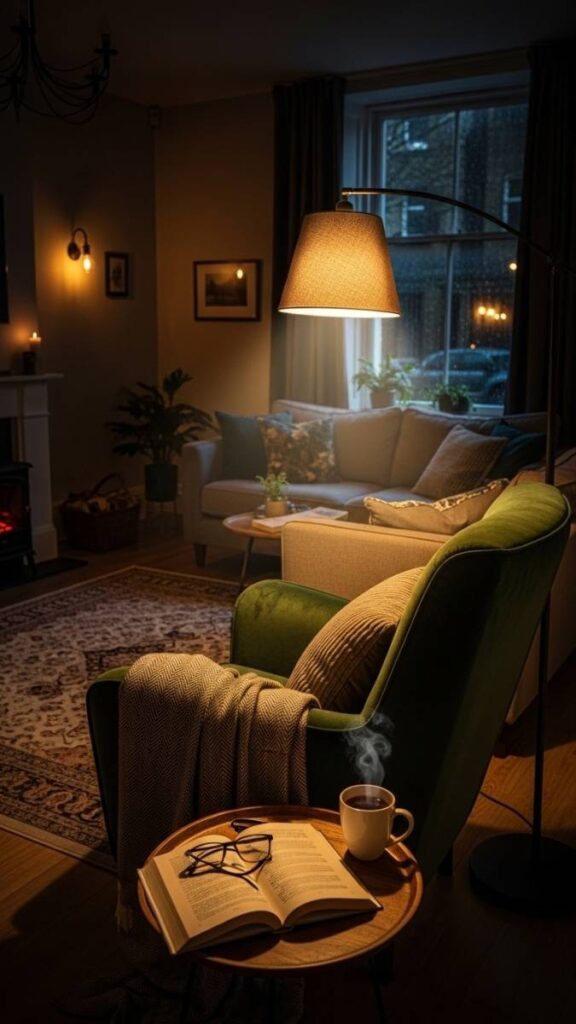
Honestly, this one runs counter to most people’s instinct. Not every part of the room needs to be lit at the same level. Letting one zone, usually the far wall or a secondary corner remain in softer shadow creates depth and makes the lit areas feel more intentional by contrast. It’s the difference between a stage with everything illuminated equally and a room where the seating area feels like a natural gathering point. Try this before adding another lamp.
Add a Small Lamp to a Console or Entryway Shelf
A console table along a wall, even a narrow one, creates an opportunity for a smaller, lower lamp that lights the bottom third of the room. This is the zone that usually gets ignored in favor of ceiling and mid-height sources. A lamp at 24–28 inches tall placed on a 30-inch console lights the surfaces and objects around it rather than casting wide ambient light, which adds warmth and visual weight to an otherwise empty wall.
Try Clip-On or Shelf Lights for Renters
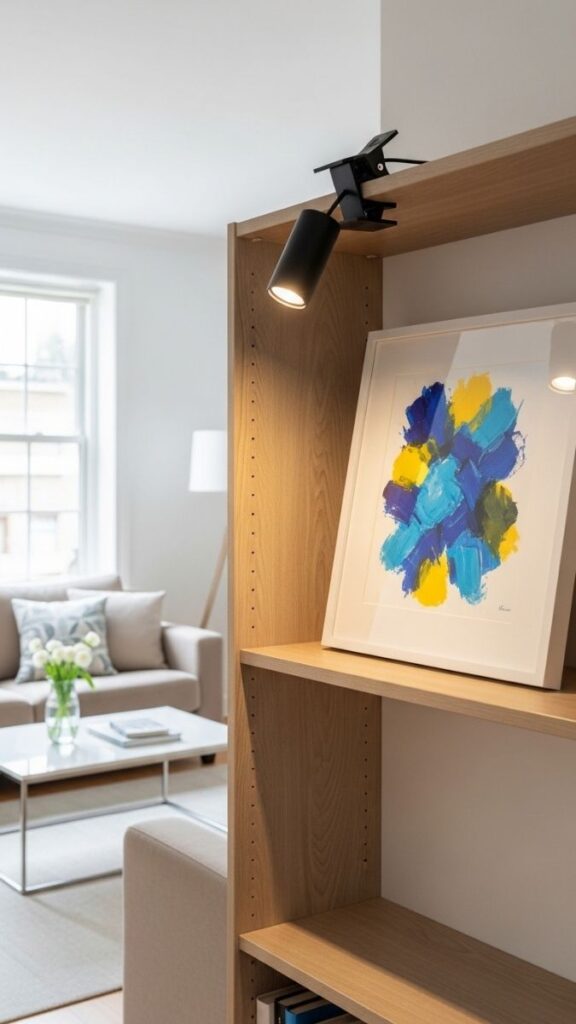
If you can’t drill into walls or install new fixtures, clip-on spotlights, LED shelf lights, and battery-powered puck lights are a workable alternative. They’re not perfect substitutes, but strategically placed clipped to a shelf to spotlight art, tucked behind a plant, or placed on a surface to uplight they fill in the gaps that a single overhead can’t reach. The battery-operated ones have gotten surprisingly good in terms of light quality.
Use Candlelight or Realistic Flameless Candles as Accent Lighting
There’s a reason every warm, inviting café uses candles. The flicker adds a quality of warmth and movement that static LEDs can’t replicate. In a living room, a cluster of candles on the coffee table varies in height. The same color family adds a light source at the lowest level, where almost no other source reaches. Flameless LED candles with realistic flicker modes are a practical alternative for households where open flame isn’t ideal. IMO, this is the easiest way to make an already-decent lighting setup feel noticeably more elevated.
Match Light Placement to Furniture Arrangement
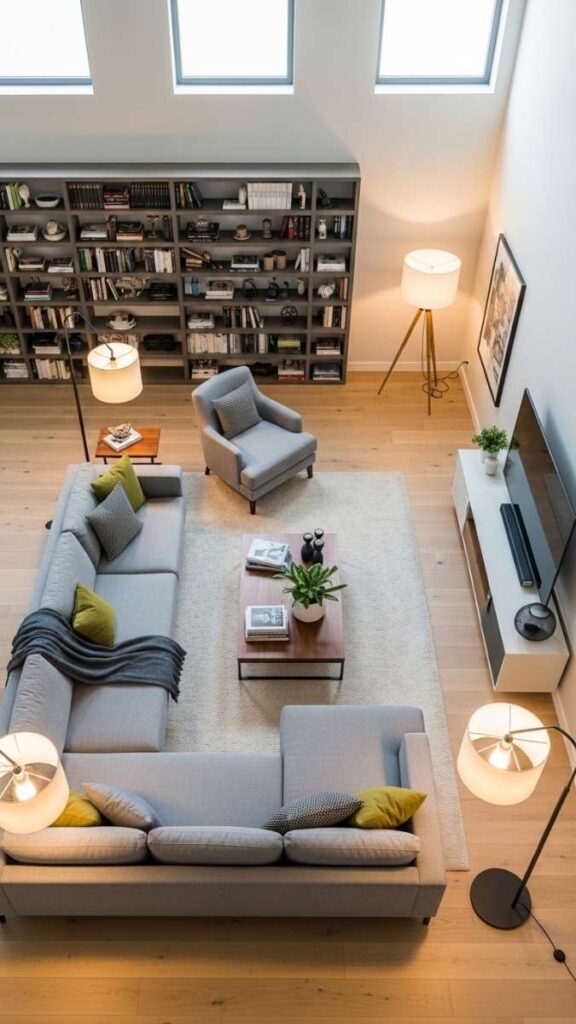
Lighting should follow the furniture, not fight it. If your sofa faces left, your main light source should illuminate the seating from the right or above, not from behind, which creates glare and shadows. As a general rule: one light source per seating zone, placed at the periphery rather than overhead. This sounds obvious but most living rooms have lighting that was installed before the furniture was arranged, which is why it often doesn’t work.
Consider Smart Bulbs for Scene Control
Smart bulbs (LIFX, Philips Hue, or budget-friendly Govee options) let you program different light temperatures and levels for different times of day or activities. Morning: brighter, cooler. Evening: dimmer, warmer. Movie time: off except the bias lighting. The hardware isn’t cheap upfront, but if you’re renting and can’t install dimmers, this is a software workaround for the same outcome.
Use a Mirror to Reflect and Multiply Light
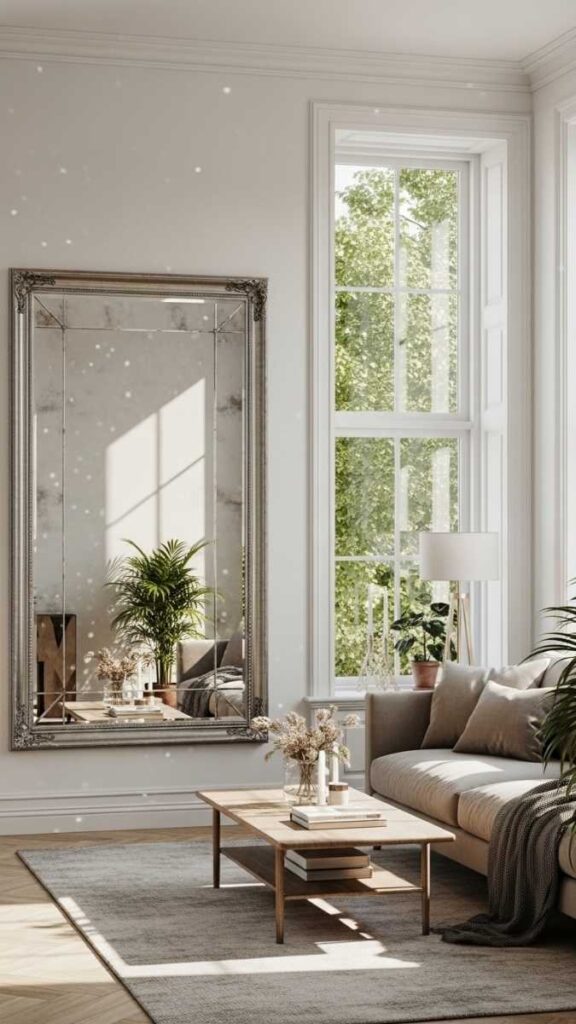
A large mirror placed on the wall perpendicular to your main window reflects natural daylight into the room during the day and lamp light in the evening. The effect is a doubling of perceived light without adding any new fixtures. The mirror also creates the impression of depth particularly in narrow or short rooms by giving the eye a secondary “view” to rest on.
Avoid Overhead Lighting as the Sole Source After Dark
The single overhead fixture was designed for visibility, not comfort. After dark, relying on it alone makes a living room feel like a waiting room. Every shadow is harsh, every face is lit from above, and the room loses any sense of warmth. The fix isn’t to replace the overhead; it’s to stop using it alone. Turn it off, flip on two lamps, and experience the same room differently. Most people don’t believe this until they try it.
Layer Natural Light With Sheer Curtains
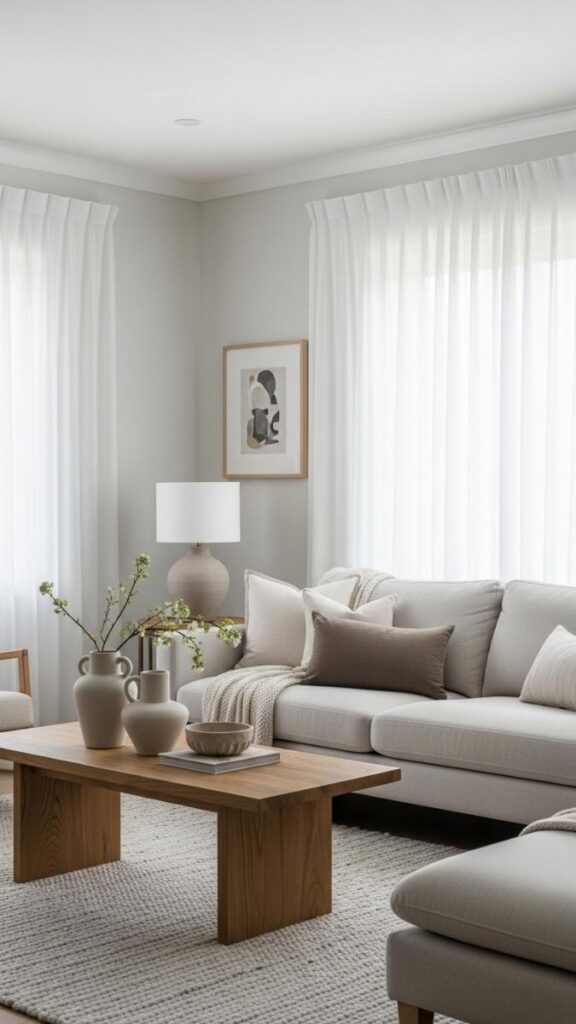
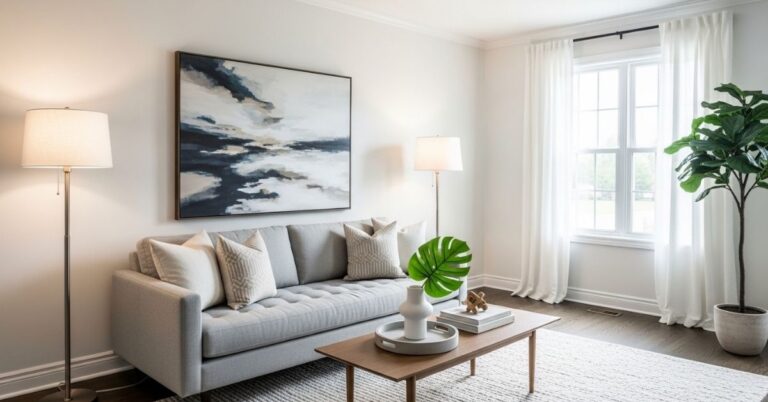
During daylight hours, sheers are one of the most effective tools for getting soft, even light without glare. A direct beam of sunlight creates a harsh bright patch and leaves the rest of the room comparatively dark. Sheer curtains diffuse that beam across the entire window, which evens out the light distribution significantly. As 2026 interior design trends continue moving toward soft, organic textures, linen sheers have largely replaced heavy blackout curtains in daytime living setups.
Use Multiple Lamp Shades in the Same Tone
Mixing lamp shades in wildly different tones creates visual chaos. Sticking to the same general tone cream, white, or warm linen across all shades in the room means each lamp reads as part of a cohesive system rather than a random collection of fixtures. The lamps themselves can vary in base style and height; it’s the shade tone that unifies them.
Try a Torchiere Lamp for Bounced Ceiling Light
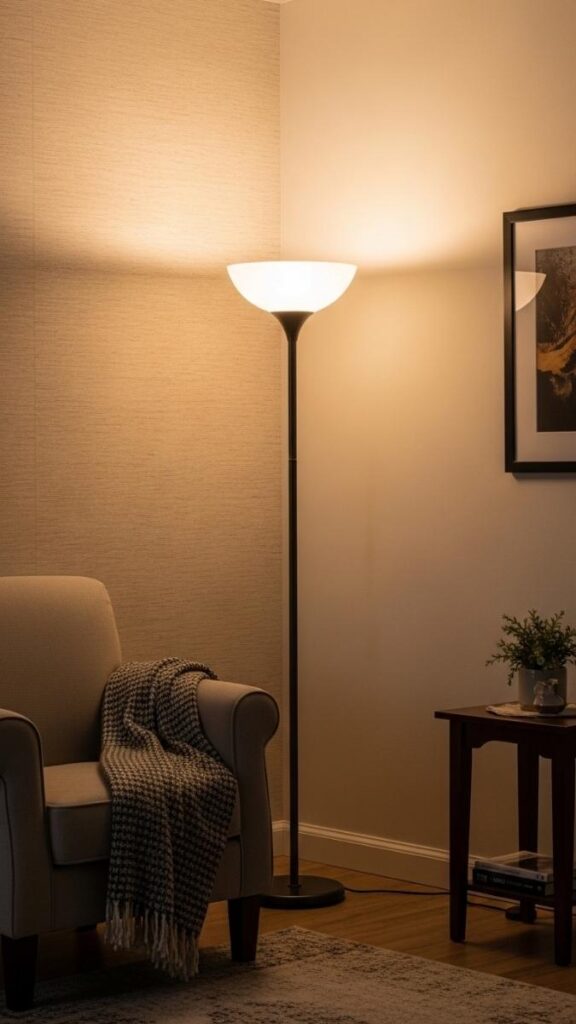
A torchiere directs all its light upward, bouncing it off the ceiling to create a soft, even ambient glow without any direct source glare. It’s one of the most effective tools for rooms that need more general light but don’t have (or can’t install) a ceiling fixture. The ceiling acts as a diffuser and creates what feels like soft overhead light without the harshness. Works especially well in rooms with white or light-colored ceilings.
Scale the Light to the Furniture, Not the Room
A table lamp that’s too small next to a large sectional disappears. A lamp that’s too tall creates awkward proportions. The general rule: the lamp height (base + shade) should be about 1.5 times the height of the surface it sits on. A 28-inch end table works with a lamp that’s roughly 24–28 inches tall. Scale matters more than most people realize a well-lit room with badly proportioned lamps still looks slightly off for reasons people can’t pinpoint.
Add a Reading Light That Doesn’t Serve the Whole Room
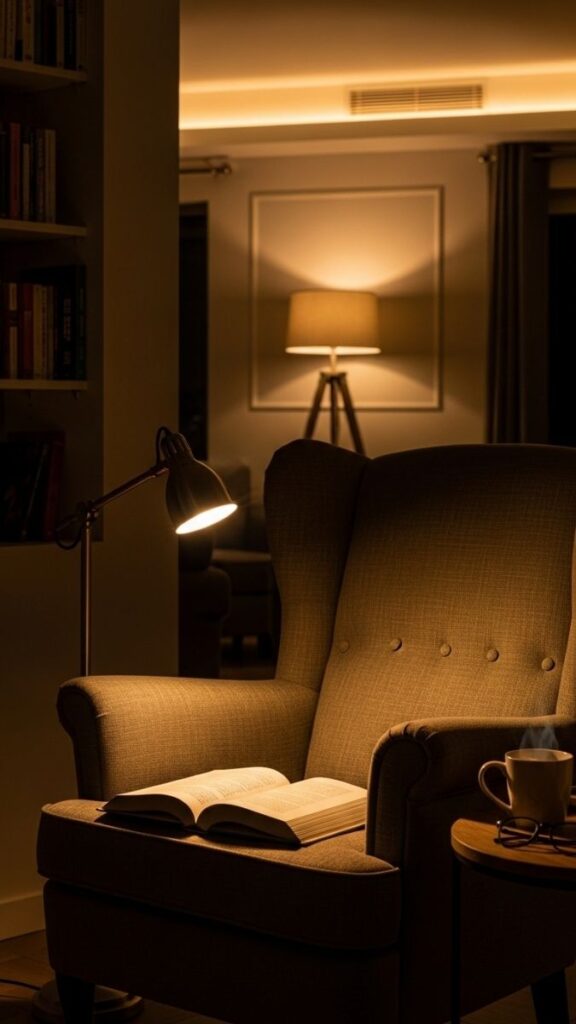
A dedicated reading lamp, a swing-arm wall lamp, clip-on, or adjustable gooseneck style does something general ambient lighting can’t: it puts high-quality, focused light exactly where someone needs it without brightening the whole room. This is especially useful in multi-use living rooms where one person reads while another watches television. The lighting zones stay separate, which improves both experiences.
Finish With Ambient Glow From Low-Level Sources
The final layer of a well-lit living room is the lowest one: light sources that sit below waist height and create a ground-level glow. A small lamp on a low shelf, LED strip under a console or sofa base, or candles on a coffee table all contribute to this. This layer doesn’t light anything functionally, it just makes the room feel inhabited and warm. It’s the difference between a room that’s lit and a room that feels finished.
What Actually Makes These Living Room Lighting Ideas Work
The ideas above cover a range of approaches, but the common thread is this: good living room lighting isn’t about brightness. It’s about distribution, height, and temperature.
Distribution means no single source doing all the work. Light from one point creates strong shadows everywhere else, which flattens the room visually. Multiple sources at different positions fill those shadows and create depth.
Height matters because it determines what gets lit. Overhead lights illuminate the floor. Mid-height sources illuminate surfaces and faces. Low-level sources create ground warmth. A well-layered room has all three.
The temperature is about Kelvin. Warm white (2700K) is residential. Cool white (4000K+) is commercial. Most living rooms that feel harsh or clinical are just running the wrong temperature bulb not the wrong fixture.
The constraint worth noting: not everything on this list works in every room. Small rooms benefit most from wall sconces and floor lamps (which keep floor space clear). Large rooms can accommodate multiple floor lamps and pendants without feeling cluttered. Renters need plug-in and battery-operated solutions. Start from your actual constraints and pick from there.
Living Room Lighting Setup Guide
| Idea | Space Type | Best For | Problem Solved | Difficulty |
| Three-layer lighting | All sizes | Full ambient overhaul | Flat, harsh light | Easy |
| Dimmer switch | All sizes | Evening comfort | Over-bright overhead | Easy |
| Arc lamp behind sofa | Medium–large | Open-plan definition | Undefined seating zone | Easy |
| Uplighting corners | Small–medium | Visual ceiling height | Low, cramped feel | Easy |
| Plug-in wall sconces | Rentals | Indirect ambient glow | No wall fixtures | Moderate |
| LED bias lighting | Any, TV-heavy | Evening eye comfort | Screen contrast | Easy |
| Torchiere floor lamp | Small–medium | Soft ceiling bounce | Lack of overhead | Easy |
| Smart bulbs | Any | Multi-scene flexibility | No dimmer switch | Moderate |
| Mirror placement | Small rooms | Natural light amplification | Dark, narrow rooms | Easy |
| Sheer curtains | Daylight setups | Soft, diffused natural light | Harsh direct sunlight | Easy |
Common Living Room Lighting Mistakes That Make Your Space Feel Smaller or Harsher
Relying on a single overhead fixture.
This is the most common and most impactful mistake. A single ceiling light creates a cone of brightness directly below it and leaves everything at the edges in relative shadow. The result is a room that feels contracted around its center. The fix is adding at least one additional source at a different height.
Using cool-white bulbs in a warm room.
A warm-toned sofa and natural wood furniture will look flat and slightly clinical under 4000K lighting. Swap to 2700K–3000K bulbs across all your fixtures and the materials in the room start to read the way they’re supposed to.
Placing lamps too far from the seating.
A floor lamp in the corner on the opposite side of the room from your sofa lights the corner, not the seating. Lighting should be within the seating zone, not decorating the perimeter of the room.
Ignoring lamp scale.
An oversized shade on a small side table looks awkward and blocks visual flow. An undersized lamp next to a large sofa disappears. Match lamp height and shade diameter to the furniture around it the proportions matter as much as the light output.
Not using a dimmer.
Living rooms serve multiple purposes at different times. A fixed-brightness fixture can’t adapt. If a hardwired dimmer isn’t an option, smart bulbs with an app are the practical workaround.
Matching all lamp styles too perfectly.
A room where every lamp is identical looks curated to the point of feeling showroom-sterile. Varied bases with matching shade tones creates cohesion without rigidity.
FAQ’s
What’s the best lighting setup for a small living room?
Avoid floor lamps that eat floor space opt for wall-mounted plug-in sconces and a slim arc lamp positioned behind the sofa. Uplighting corners and using a large mirror to reflect light both make a small room feel more open. Stick to warm white bulbs (2700K) to add warmth without closing the room in further.
How do I make my living room feel cozier with lighting?
Switch off the main overhead light and rely on two or three lower sources: a table lamp, a floor lamp, and something at ground level like candles or a low shelf lamp. The shift from overhead to mid-and-low light is what creates the “cozy” feeling; it’s about light distribution, not quantity.
How many light sources does a living room need?
A well-layered living room typically uses three types: ambient (main overhead or pendant), accent (floor or table lamp for specific zones), and atmospheric (low-level sources like candles, strip lights, or shelf lighting). That usually means three to five fixtures total, depending on room size.
What color temperature is best for living room lighting?
2700K to 3000K (warm white) is the standard for residential living rooms. This range reads as warm and inviting. 4000K and above trends toward cool white, which suits kitchens and offices better than living areas.
Can I improve my lighting without a landlord’s permission?
Yes. Plug-in wall sconces, floor lamps, arc lamps, LED strip lights (adhesive-backed), smart bulbs (screw-in), and battery-operated puck lights are all renter-friendly options that require no installation and leave no permanent changes.
What’s the difference between ambient, task, and accent lighting?
Ambient lighting = general illumination for the whole room (overhead fixture, torchiere). Task lighting = focused light for a specific activity (reading lamp, desk lamp). Accent lighting = light that highlights objects or architecture (shelf lighting, picture lights, strip lights behind a TV). A good living room uses all three at different intensities.
Is warm or cool lighting better for watching TV?
Warm lighting is better for the room itself, but the key for TV-watching specifically is reducing overall brightness and adding bias lighting behind the screen. This reduces eye strain by narrowing the contrast between the bright display and the surrounding environment.
Conclusion
Good living room lighting rarely comes from a single perfect fixture. It comes from understanding how light behaves in a room where it falls, what temperature it reads as, and how different heights create different atmospheres. Most rooms can be significantly improved by adding one or two thoughtfully placed sources and swapping one wrong-temperature bulb.
Start with what creates the most friction in your current setup: too harsh in the evening, too flat during the day, or no focal point after dark. Pick one or two ideas from this list that address that specific problem, try them before adding anything else, and adjust from there. The key is finding what works for your space, not every room needs the same solution.