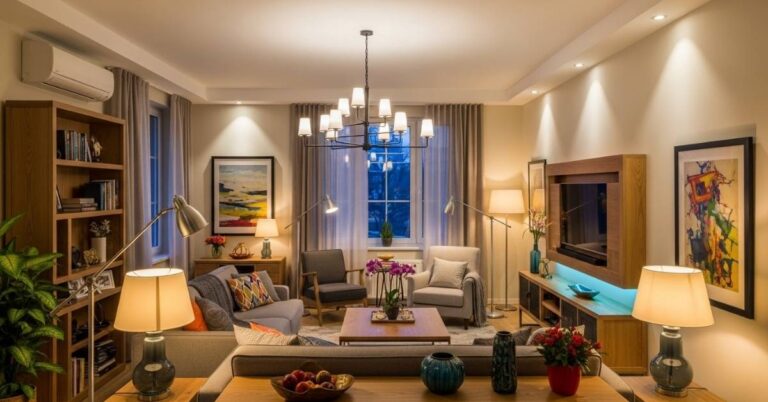
35+Small Living Room Layout Ideas That Actually Make Your Space Feel Bigger
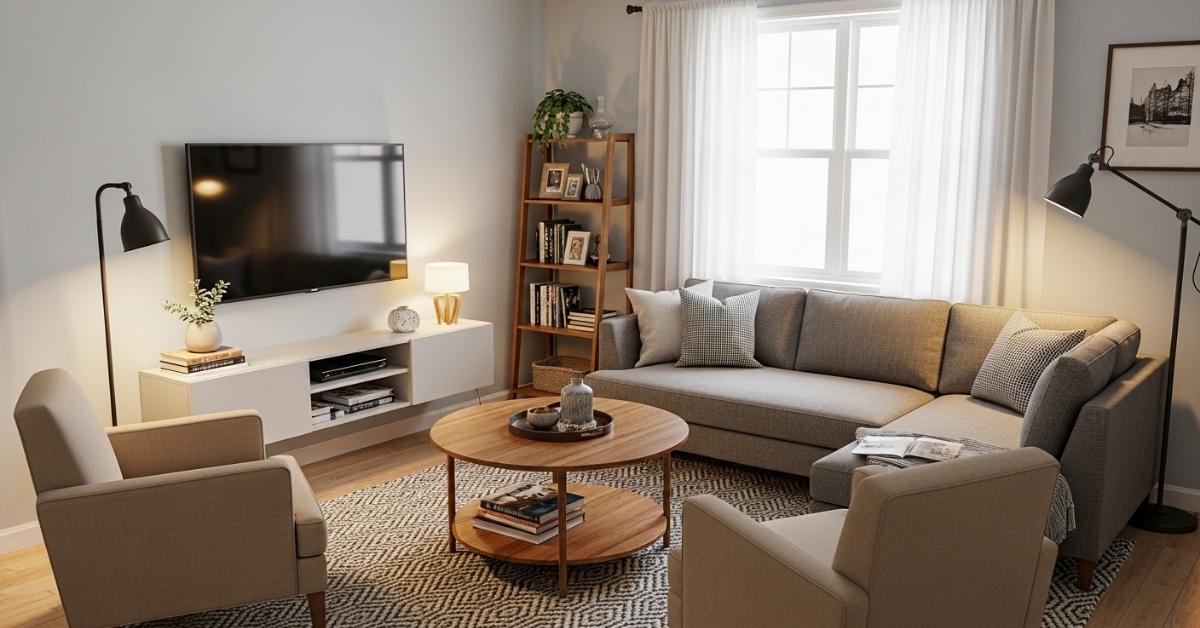
You’ve rearranged the furniture three times and it still doesn’t feel right. The room isn’t terrible, it’s just not working. Maybe it feels choppy, or everything’s pushed against the walls, Small Living Room Layout Ideas or the TV is technically “in” the room but the seating arrangement makes no sense around it. A small living room layout is one of those things that looks obvious in retrospect but is genuinely tricky to figure out from scratch.
If you’re working with a compact living room, think 10×12, a studio corner, or a shared work-and-relax space this list is for you. These aren’t abstract Pinterest aesthetics. They’re real setups that address real spatial problems: poor traffic flow, awkward proportions, insufficient storage, and rooms that look lived-in in the wrong way.
In 2026, the shift toward intentional, furniture-minimal rooms means even tight spaces can look deliberately curated rather than crammed. The key is layout logic, not more stuff.
Float the Sofa Away from the Wall
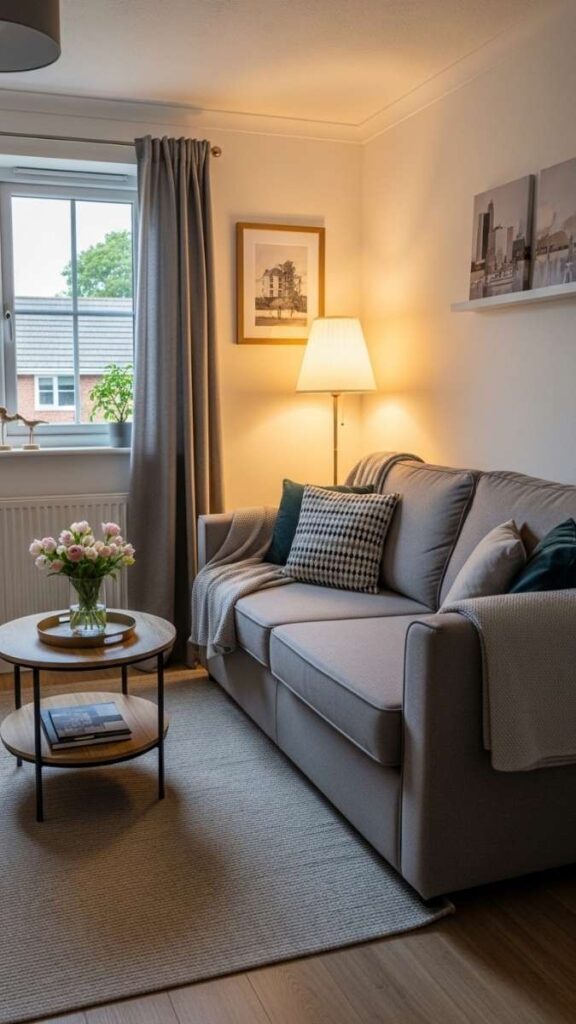
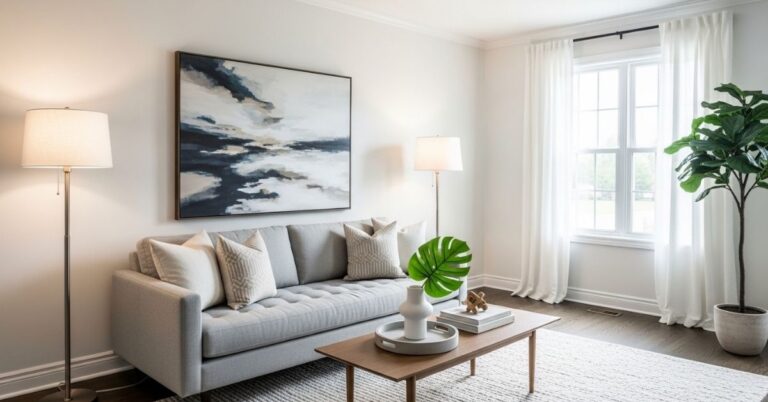
Pushing every piece of furniture against the walls is the most common small-room mistake; it actually makes a room feel more cramped, not less. Pull your sofa 8 to 12 inches off the wall and suddenly the room has breathing room. That small gap creates visual depth and allows light to travel more freely across the floor. It also makes the seating area feel like a deliberate zone rather than furniture lining a perimeter. This works especially well in rectangular rooms where the sofa faces a short wall; the pulled-forward position draws the eye inward and shortens the visual tunnel effect.
Use a Loveseat Instead of a Full Sofa
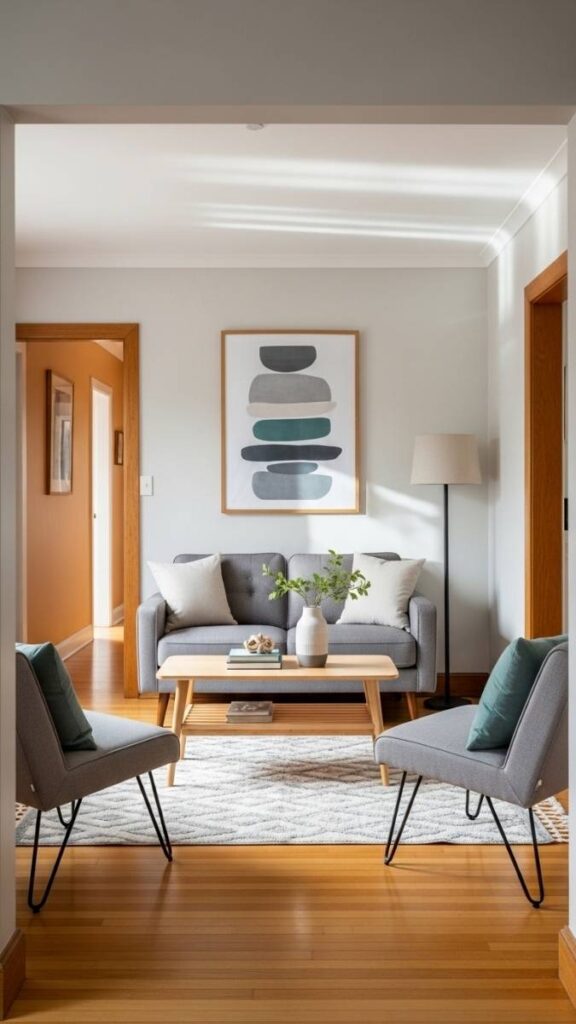
A standard three-seater in a small living room takes up proportionally too much floor space and leaves awkward gaps for everything else. A loveseat paired with one or two accent chairs gives you equivalent seating while allowing better circulation paths around the furniture. You’re not compromising on comfort; you’re trading one oversized piece for a more flexible arrangement. This setup is particularly useful in roughly square rooms where a large sofa tends to dominate visually and leave no clear walking route from the entry to other areas.
Anchor Everything with a Well-Sized Rug
The rug is doing more layout work than most people realize. A rug that’s too small makes furniture look like it’s floating randomly in the room; there’s no visual anchor. Go bigger than feels comfortable. The front legs of the sofa and chairs should sit on the rug, which unifies the seating zone as a single cohesive area. In small spaces, this prevents the room from reading as a collection of disconnected objects. A 5×8 is almost always too small; a 6×9 or 8×10 is usually the right call depending on your seating footprint.
Read More About: 34+Living Room Lighting Ideas That Make Your Space Feel Bigger, Warmer, and More Intentional
Choose a Low-Profile Coffee Table
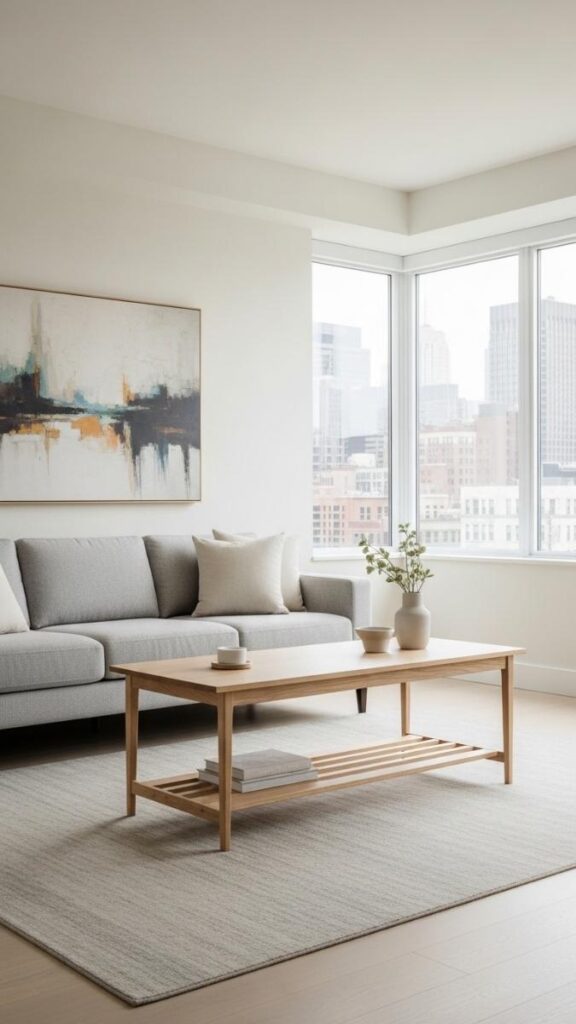
Standard coffee tables are often 18–20 inches tall, which in a small room creates a visual barrier that cuts the space horizontally. A low-profile table around 14 to 16 inches keeps sightlines open and makes the room feel taller than it is. Pair this with a glass or open-frame option and you lose almost no visual floor space at all. This is especially useful when your living area and another zone (dining, desk, hallway) are within the same sight line, as the unobstructed view creates the impression of a longer, more open room.
Try a Corner Sofa in an L-Shape
Corner sofas are counterintuitive in small rooms; they feel like they take up too much space. But a compact L-shape tucked into a corner actually maximizes seating per square foot more efficiently than any other configuration. The furniture fills dead corner space, and the open diagonal through the center of the room stays completely clear. The key is getting the right scale look for sectionals with a chaise on the shorter end rather than a full-width corner piece. This layout works best in roughly square rooms where a traditional sofa-plus-chairs setup would leave walkways too narrow.
Create a Clear Entry Path
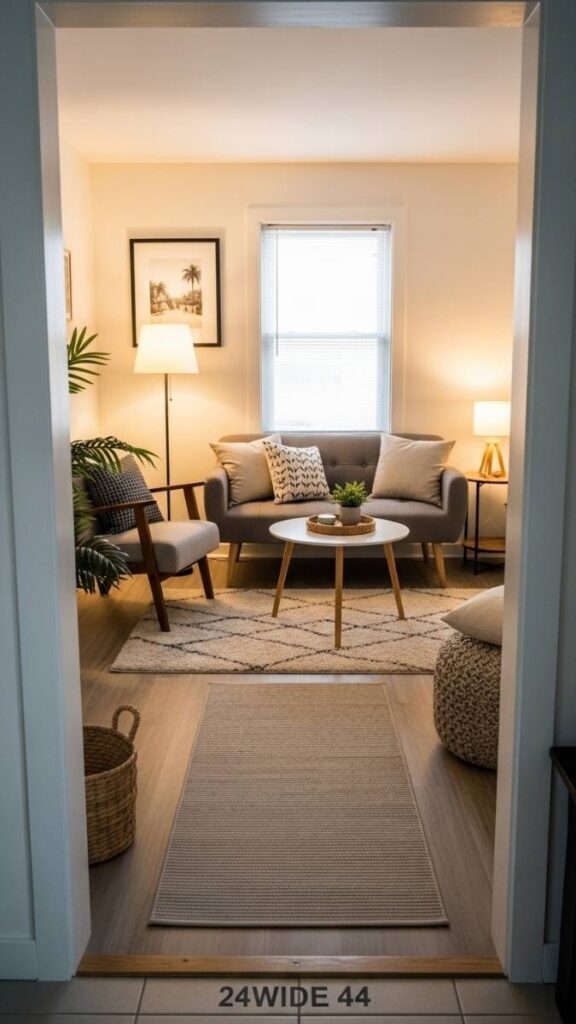
If someone has to navigate around furniture to get from the front door to the sofa, the layout is working against your space. A clear 24–30 inch walkway from the entry point to the main seating area makes the room feel intentional and navigable, two things that translate directly into a feeling of spaciousness. This often means shifting the sofa laterally or swapping a chair for a smaller piece to open the path. It’s less about aesthetics and more about movement logic rooms that are easy to move through feel bigger than rooms that just look bigger.
Mount the TV to Save Floor Space
A TV stand or console with legs sits on the floor and takes up visual real estate even when it’s relatively compact. Wall-mounting the screen and pairing it with a floating media shelf frees up that floor area and draws the eye upward, both of which work in your favor in a small room.
The floor appears larger. The walls appear taller. This setup also works well for renters who can patch the mount holes before moving out; it’s less permanent than it looks. Keep the floating shelf at roughly sofa armrest height so the TV sits at eye level when seated.
Read More About: 32+Large Wall Decor Ideas That Make Every Room Feel Intentional and Complete
Position Seating at an Angle
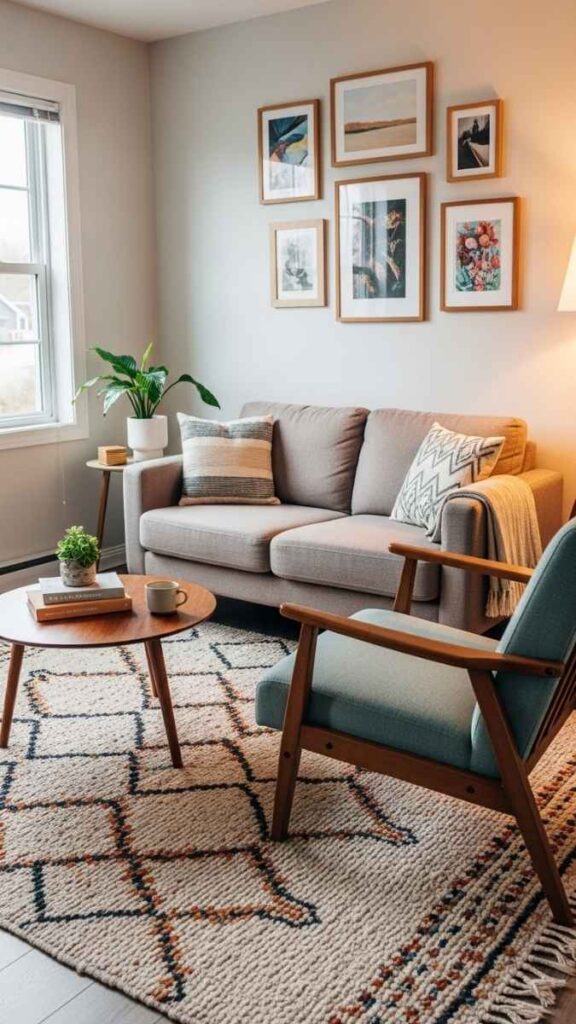
Not every sofa has to sit parallel to the wall. Angling the main seating piece even just 10 to 15 degrees off-axis creates a conversational dynamic between furniture pieces and visually expands the perception of the room’s corners. It also opens the sightline from the entry, so you see the full depth of the space the moment you walk in rather than a wall of furniture. I’ve noticed this works especially well in rooms where one wall is shorter than the others, as the angle softens that boxy, awkward-proportion feeling.
Use Dual-Purpose Furniture Throughout
In a compact living room, every piece of furniture should ideally serve two functions. An ottoman with internal storage replaces the coffee table and adds hidden organization. A storage bench doubles as extra seating. A nesting table set tucks away when not needed and expands for hosting. None of these are new ideas, but the mistake most people make is applying this thinking to one or two pieces rather than evaluating the entire room. When multiple pieces serve dual purposes, you can often eliminate one or two items entirely and that floor space recovered is worth more than any new purchase.
Hang Curtains High and Wide
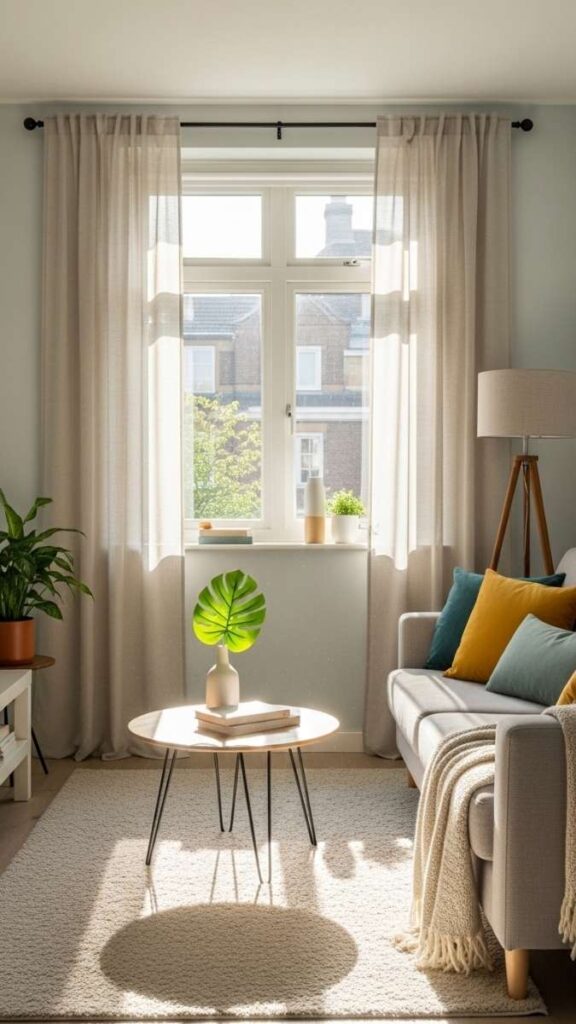
Curtains hung at window height cap the room visually and make the ceiling feel low. Hang them 4 to 6 inches below the ceiling regardless of where the window actually ends and extend the rod 5 to 6 inches past the frame on each side. The window looks larger, the room looks taller, and more natural light gets into the space because the curtain isn’t blocking the frame edges when drawn back. This is one of the few layout-adjacent tweaks that’s genuinely free if you already own curtains; it’s just a matter of remounting the rod higher.
Introduce a Slim Bookshelf as a Room Divider
A full-height slim bookcase can define zones in an open-plan small home without closing off the space the way a wall would. Position it perpendicular to the wall between the living and dining area, and it creates two distinct zones with visual connection between them. The key is choosing an open-back style light passes through, and the room maintains its openness while gaining structure. This is especially practical in studio apartments or combined living-dining spaces where the layout otherwise feels undefined.
Keep the Coffee Table Clearance at 18 Inches
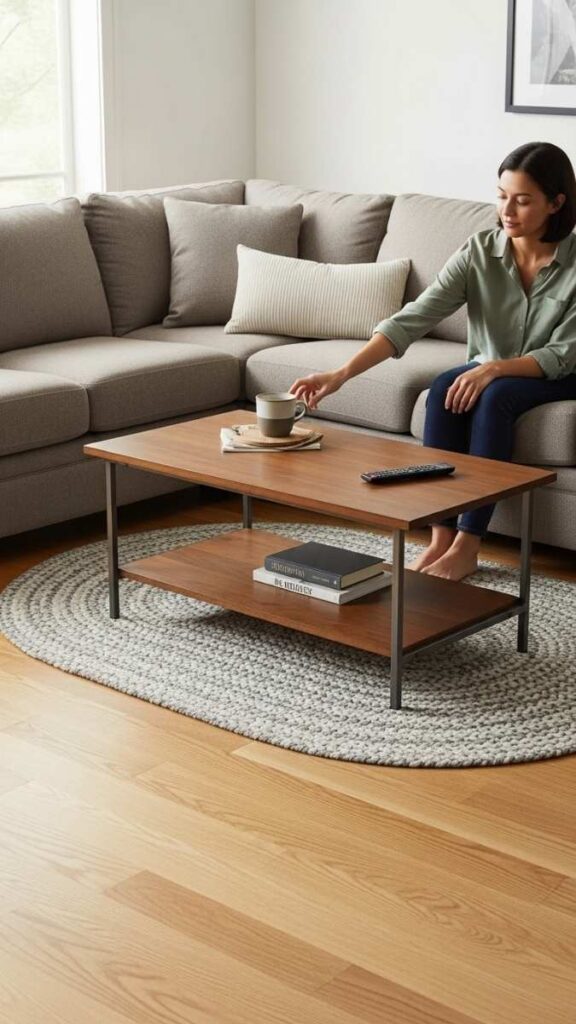
Most people place the coffee table too far from the sofa for it to be functional, or too close for comfortable leg movement. Eighteen inches is the standard clearance that lets you comfortably lean forward from the sofa to reach the surface while also allowing easy passage in front when someone needs to walk through. In small rooms, getting this right means you can use a smaller table and still have it feel proportionate. It’s not the table size that matters most, it’s the relationship between the table and the seating.
Go Vertical with Shelving
When floor space is limited, vertical storage is the logical solution and it also draws the eye upward, which works in the same way that high curtains do. A bookcase that runs from floor to ceiling uses the room’s height efficiently and keeps clutter off the floor where it would compress the walking area. Use the lower third for closed storage (baskets, boxes) and the upper sections for display, so the room doesn’t feel dense and heavy at eye level. This setup works well along a shorter wall where a sofa or TV console would be too dominant.
Opt for Furniture with Exposed Legs
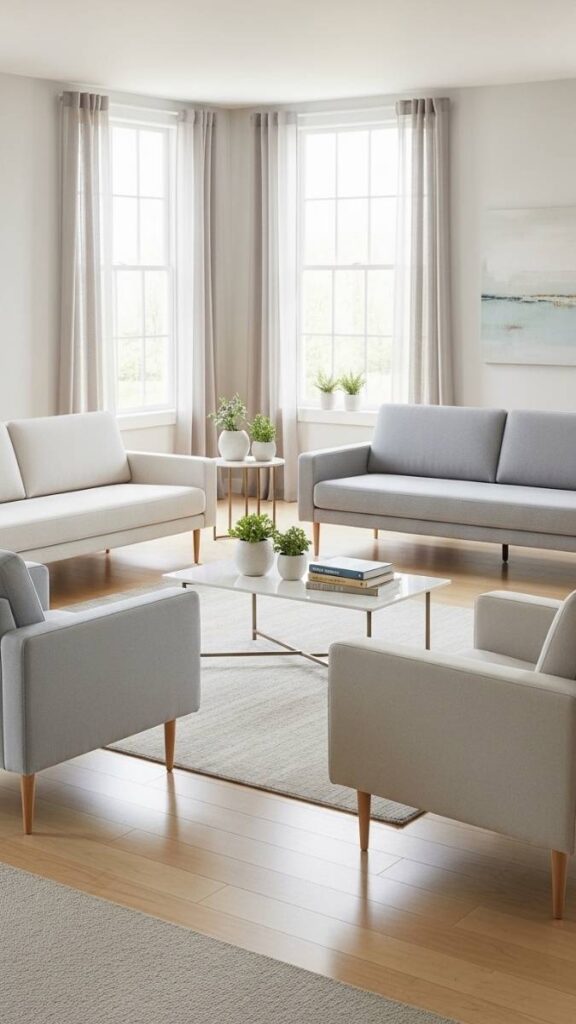
Furniture that sits directly on the floor hides that floor area and makes the room feel heavier than it is. Pieces with exposed legs even just 4 to 6 inches off the ground reveal the floor beneath and add a sense of lightness to the room. The eye reads that visible floor space as part of the room, so the overall impression of square footage increases. This is one of the first things I’d consider when choosing a new sofa for a small space. The leg style matters almost as much as the overall dimensions.
Layer Lighting Instead of Relying on Overhead
A single overhead light flattens a room; everything is evenly lit, which removes the visual depth that makes spaces feel larger and more interesting. In small living rooms especially, overhead-only lighting makes the ceiling feel low and the space feels like a waiting room. Layer in a floor lamp behind the sofa and a table lamp on a side table, and suddenly there’s warmth and dimension.
Different light sources at different heights create zones within the room that make it feel more complex and considered. This is especially effective in the evening, when you want the room to feel cozy rather than compact.
Read More About: 31+Bedroom Wall Decor Above Bed Ideas That Make Your Headwall the Focal Point
Use a Narrow Console Behind the Sofa
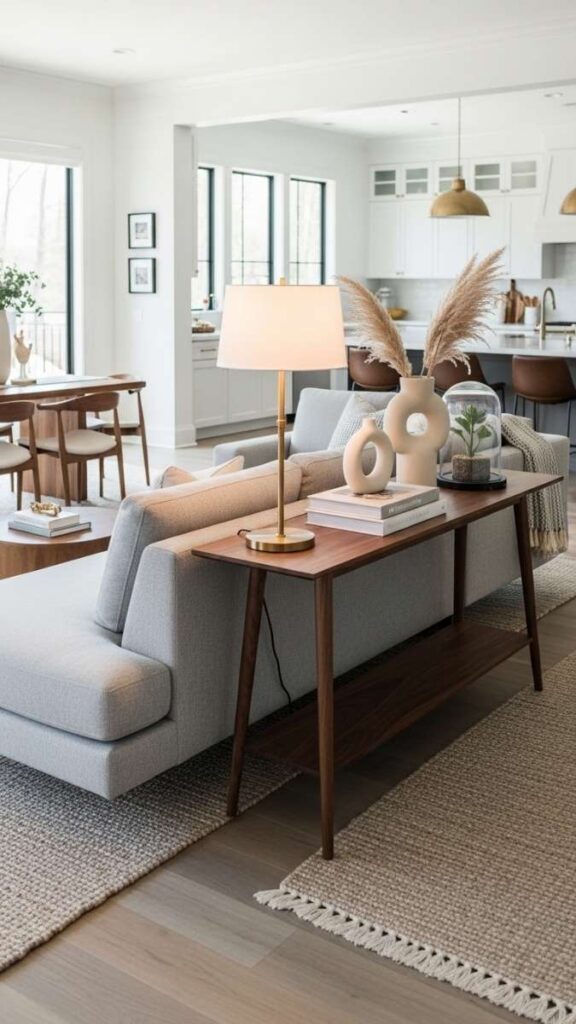
If you’ve floated the sofa off the wall, a narrow console table (10–14 inches deep) placed directly behind the sofa serves multiple purposes at once. It fills the gap between sofa and wall in a useful way, adds a surface for a lamp, and in an open-plan home acts as a soft room divider between the living zone and whatever’s behind it. It also removes the visual void that a floating sofa can sometimes create if the room looks intentional rather than in-progress. This is one of the first things I’d actually recommend trying if you’re nervous about pulling furniture away from the wall.
Limit Accent Furniture to One or Two Pieces
The instinct when decorating a small room is to fill every corner and surface. One side table here, a pouf there, a small plant stand, an extra accent chair each individually reasonable, collectively suffocating. For a small living room to feel open, it needs restraint. Aim for one accent chair maximum (not two), one side table, and one lamp per seating area. Every additional piece should solve a specific problem, not just fill space that feels empty. Honestly, an empty floor is not a problem, it’s part of what makes the room work.
Try a Diagonal Room Layout
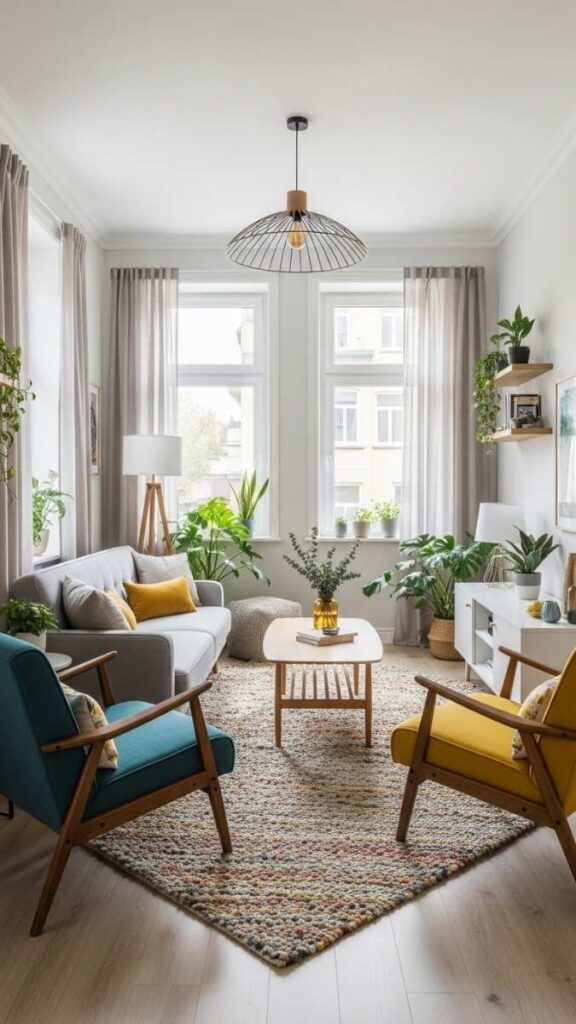
In a square or boxy small room, a diagonal furniture arrangement can be surprisingly effective. Turning the rug 45 degrees and building the seating arrangement around that orientation creates visual energy and makes the room appear wider than it is, because the eye now travels along the longer diagonal rather than across the shorter wall. It requires a bit more confidence to execute and works best when the rest of the room is shelving, TV placement stays rectilinear so there’s a counterpoint. This isn’t the right move in every space, but in a room with frustratingly boxy proportions, it’s worth trying before assuming the room just doesn’t work.
Define Zones with a Rug in an Open-Plan Space
In a studio or open-plan apartment, the living room often bleeds into the kitchen or dining area without any clear boundary. A rug sized correctly to the seating area creates a visual boundary that signals “this is the living zone” without any physical division. The critical part is making sure the rug is large enough to contain the furniture grouping. A small rug in the middle of a large open floor achieves the opposite effect: it makes the space look disjointed. Go up one size from what feels right.
Avoid Matching Everything
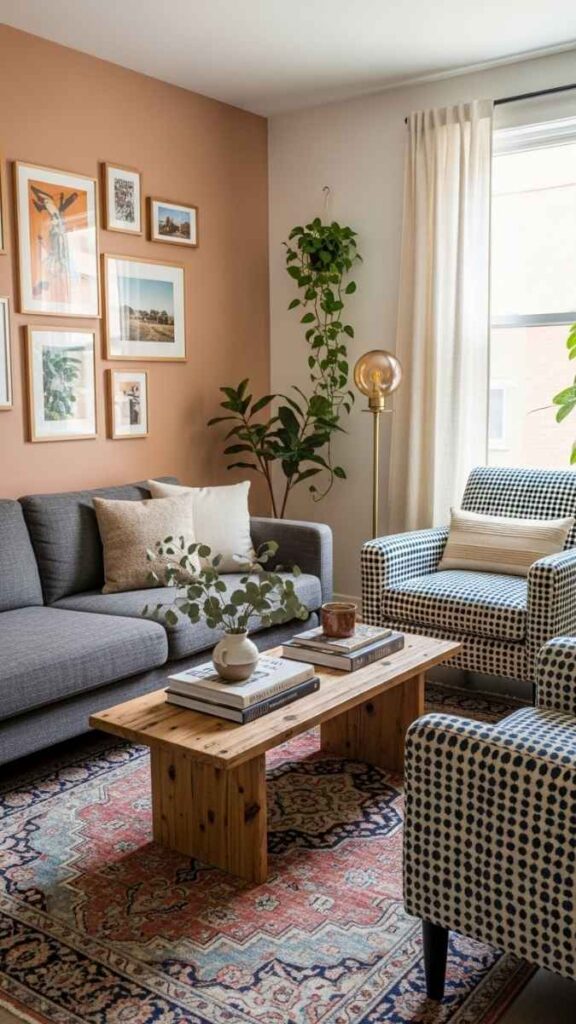
A perfectly matched furniture set in a small living room often makes the space feel like a showroom sample flat and dense. When every piece is the same color and material, the room reads as one large visual block. Mixing materials (linen sofa, wooden chair frames, a metal accent table) breaks up the visual weight and makes the room feel curated rather than furnished-in-one-trip. The caveat stays within a cohesive color palette, even if the materials vary. The variation in texture is what creates depth; the palette is what keeps it from feeling chaotic.
Make the Most of Window Walls
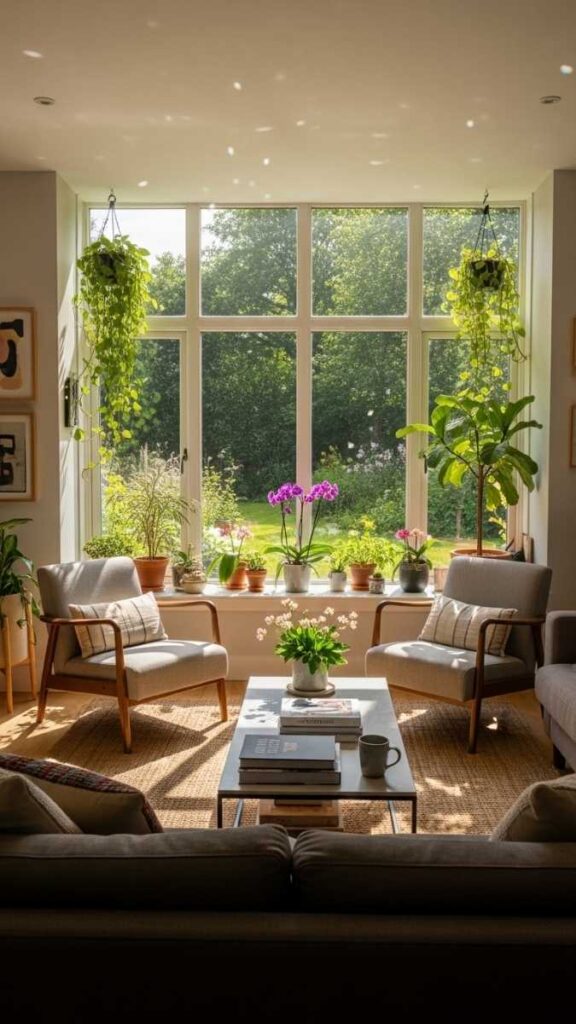
In small living rooms with a window-heavy wall, the instinct is often to center the TV there and let the windows work around it. This is worth reconsidering. Orienting the seating toward the window with a floor lamp or a TV on a shorter side wall brings natural light directly into the seating experience and makes the room feel connected to the outside. It also often improves the overall proportions of the layout, since window walls are usually the longest or most visually active wall in the room. Use lightweight sheers instead of heavy drapes to maintain the light while managing glare.
What Actually Makes These Ideas Work
Small living room layout succeeds or fails based on a few core principles that have nothing to do with aesthetics. First, traffic flow matters more than how the furniture looks. If the path through the room is awkward, the space will feel wrong no matter how well-styled it is. Always identify the primary movement paths (entry to sofa, sofa to kitchen, etc.) before deciding where furniture goes.
Second, proportion governs everything. Furniture that’s too large doesn’t just take up space; it changes how the room feels spatially, making ceilings feel lower and walls feel closer. When in doubt, go slightly smaller with each piece and fill the difference with thoughtful placement.
Third, visual weight is as important as physical footprint. A glass coffee table and a solid wood table might have the same dimensions, but one disappears and one anchors. Being deliberate about where you introduce visual weight and where you keep things light is what separates a room that works from one that just technically fits.
Small Living Room Layout At-a-Glance Guide
| Layout Idea | Best Room Shape | Space Benefit | Works For |
| Float sofa from wall | Rectangular | Creates depth, improves light flow | Renters, any budget |
| Corner L-shape sofa | Square | Maximizes seating, keeps center open | Studio apartments |
| Diagonal furniture layout | Square/boxy | Expands visual width, adds interest | Rooms with awkward proportions |
| Wall-mounted TV | Any shape | Frees floor space, raises eye level | Renters (patchable) |
| Vertical floor-to-ceiling shelving | Narrow or small | Adds storage, draws eye upward | Limited storage homes |
| Dual-purpose furniture | Any shape | Removes need for extra pieces | Budget-conscious setups |
| Layered lighting | Any shape | Adds depth, eliminates flatness | Evening-focused spaces |
Common Small Living Room Layout Mistakes That Make the Space Feel Smaller
Scaling furniture wrong for the room.
A sofa that’s too long for a wall forces everything else into leftover space, and the room never quite balances. Measure before you buy and measure with walking clearance in mind, not just whether it fits against the wall.
Using too many small rugs instead of one large one.
Multiple small rugs fragment the room and make the floor look busier than it is. One appropriately sized rug that anchors the full seating area is almost always better.
Blocking natural light with furniture placement.
A chair in front of a window or a bookcase beside it that shadows the sill kills the single best tool you have for making a room feel bigger. Light is spatial, don’t sacrifice it for a marginally convenient furniture position.
Overcrowding with accent pieces.
Side tables, poufs, plant stands, ottomans each individually useful, collectively chaotic in a small room. The more floors you can see, the bigger the room looks. Every accent piece should justify its floor footprint.
Treating the TV as the room’s only focal point.
In small rooms, organizing everything around the TV often means the layout is dictated by a device rather than by how people actually use the space. Consider whether a secondary focal point, a window, a fireplace, a console with art could create a better layout logic.
FAQ’s
What is the best furniture layout for a small living room?
The most effective layout for a small living room places the sofa as the primary anchor, pulled slightly away from the wall, with seating angled toward a focal point and a clear 24-inch walkway from the entry. Use a rug sized to contain the full seating grouping, keep furniture legs visible for a lighter look, and limit accent pieces to what’s functionally necessary.
How do I make my small living room look bigger without renovating?
Focus on three things: proportion, light, and floor visibility. Choose furniture with exposed legs, hang curtains ceiling-high and wider than the window frame, and use one large rug instead of multiple smaller ones. Avoid pushing all furniture against the walls. A few inches of breathing space around key pieces makes a measurable visual difference.
Is it okay to have a sectional in a small living room?
Yes, provided it’s the right scale. A compact L-shaped sectional that tucks into a corner can actually be more space-efficient than a sofa-plus-chairs combination, because it maximizes seating per square foot while keeping the room’s center clear. Avoid large U-shaped or curved sectionals, which tend to overwhelm compact rooms.
Floating sofa vs. wall-placed sofa which works better in a small space?
Floating works better in most cases, even in small rooms. Wall placement creates a perimeter effect that actually makes rooms feel smaller, not larger. Pulling the sofa 8–12 inches forward creates visual depth and allows light to move more freely around the space. The exception is very narrow rooms where any protrusion into the walkway causes clearance issues.
How do I separate living and dining areas in an open-plan small home?
Use a rug to anchor each zone distinctly one for the living area, one under the dining table and consider a slim open-back bookshelf perpendicular to the shared wall to create a soft boundary. Lighting can reinforce the zones too: a pendant over the dining table and a floor lamp in the living corner signal two separate functions without any physical division.
What’s the ideal coffee table clearance for a small living room?
Eighteen inches between the sofa edge and the coffee table edge. This allows comfortable reach from the sofa and easy passage in front when someone needs to walk through, without pushing the table so far forward that it sits outside the rug or the conversational zone.
Should I use dark or light colors in a small living room?
Light tones are generally more forgiving because they reflect more light and prevent the walls from visually closing in. That said, a dark accent wall behind the sofa can actually add depth if the rest of the room stays light; it creates the impression of a longer room. The mistake is using dark tones uniformly on all walls and heavy furniture simultaneously, which compresses the space visually.
Conclusion
Getting the layout right in a small living room isn’t about buying different furniture or following a single design rule, it’s about understanding how the space functions for the people in it. Traffic flow, furniture scale, light access, and storage logic all work together to determine whether a room feels workable or frustrating. Small adjustments in any one of these areas can shift the whole room.
Start with one or two ideas that address your specific problem whether that’s poor flow, awkward proportions, or not enough storage and work from there. A repositioned sofa, a better rug size, or ceiling-high curtains each cost little or nothing to try. The key is finding what works for your actual room rather than replicating what looks good in a photo.