32+Large Wall Decor Ideas That Make Every Room Feel Intentional and Complete
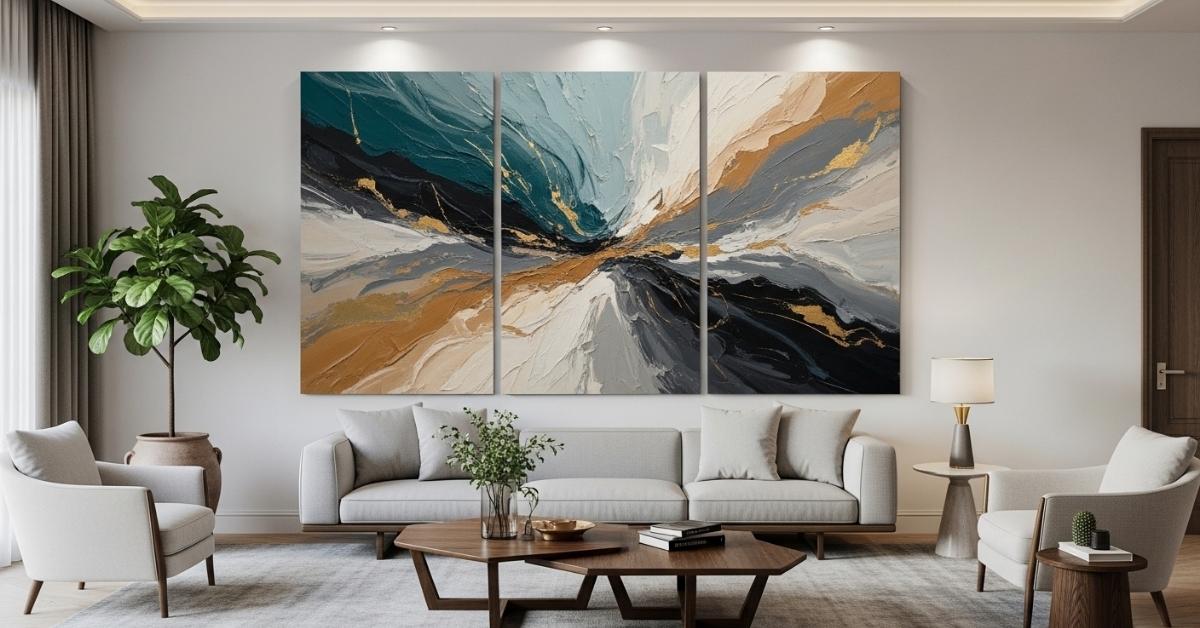
Large, empty walls are one of the most common design challenges in real homes and honestly, one of the easiest to get wrong. You hang something, step back, Large Wall Decor Ideas and it still feels off too small, too centered, too safe. The problem usually isn’t the art itself, it’s scale, placement, and how the piece (or grouping) interacts with the rest of the room.
If you’re working with a room that has high ceilings, wide open walls, or that one awkward stretch above the sofa that nothing seems to fill right, these ideas are built around solving that exactly. Not just what looks good in a Pinterest photo, but what actually works in a lived-in space with furniture, lighting, and real proportions to consider.
Large wall decor in 2026 is moving away from the “one big piece centered above everything” formula. Instead, designers are leaning into layered arrangements, mixed materials, and setups that create visual depth rather than just coverage. The ideas below reflect that shift is practical, scalable, and adaptable to different room sizes and budgets.
Oversized Abstract Canvas Above a Low Profile Sofa
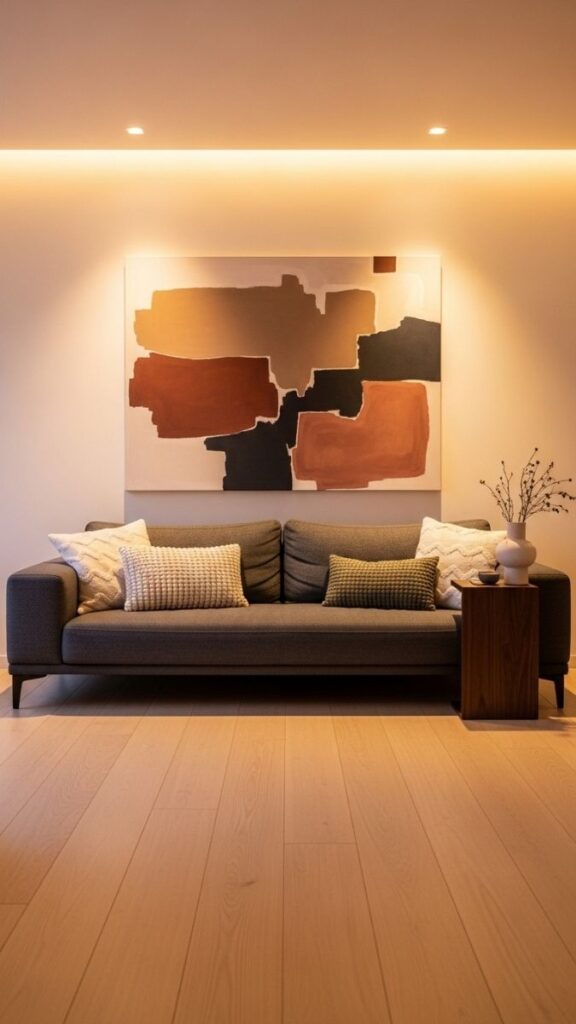
When the sofa sits low and the wall behind it feels disproportionately tall, a single oversized canvas think 60 inches wide or more reestablishes the vertical balance without crowding the space. Choose abstract work in a muted palette warm ochres, dusty terracotta, or soft charcoal. The canvas should span roughly two-thirds of the sofa’s width to feel anchored, not floating. This setup works especially well in open-plan living rooms where the sofa back is visible from multiple angles; the large format reads well from a distance.
Floor to Ceiling Gallery Wall With Varied Frame Sizes
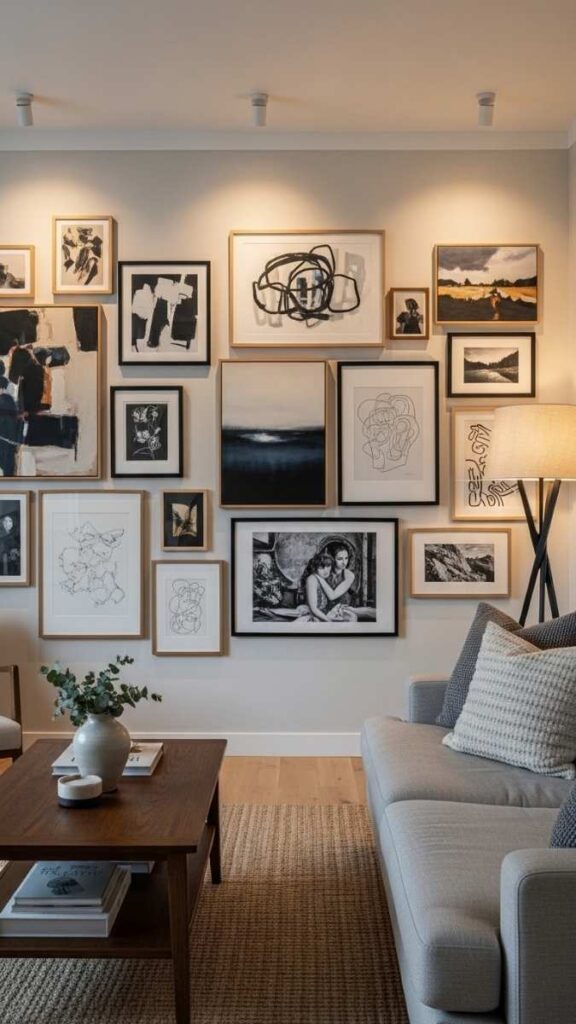
Instead of clustering art at eye level, extend the arrangement from about 12 inches off the floor up to ceiling height. Mix portrait and landscape orientations, vary the frame widths (thin metal with thick wood), and let the spacing breathe around 2–3 inches between frames. This approach draws the eye upward, making the ceiling feel higher and the room feel more curated. It works best in rooms with 9-foot ceilings or higher. The floor-to-ceiling spread also eliminates that awkward decision of where to “start” the gallery.
Woven Textile Wall Hanging in a Bedroom With Neutral Walls
Textile hangings add something flat art can’t texture that catches light differently throughout the day. A large woven piece at least 36 inches wide for a queen bed, wider for king works as both wall decor and a soft alternative to a traditional headboard. Look for natural fibers in undyed cotton, jute, or wool. The layering of texture against a smooth painted wall creates material contrast that makes the space feel warmer without adding visual weight. This is particularly useful in rented spaces where you can’t paint or install heavy hardware.
Read More About: 31+Bedroom Wall Decor Above Bed Ideas That Make Your Headwall the Focal Point
Architectural Salvage Panel as a Focal Wall Feature
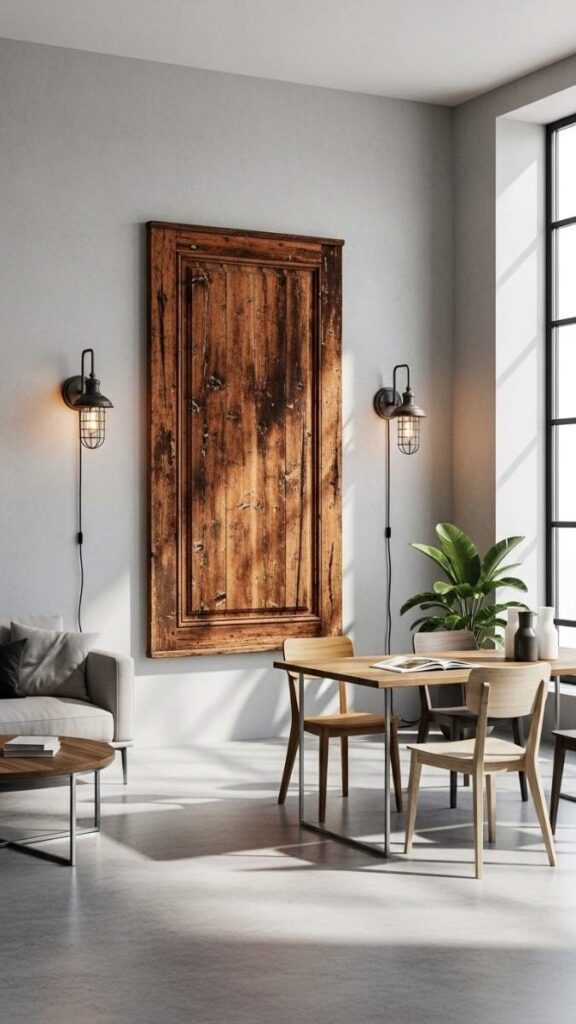
A single reclaimed wood panel, antique shutter set, or architectural fragment can do more for a room than an entire gallery wall because it brings material history into the space. Mount it flat against the wall, centered behind a console or dining table, and flank it with wall sconces for a built-in effect. The depth of the piece (even a few inches) creates actual shadow and dimension, which flat art simply can’t replicate. Best for dining rooms, entryways, or living rooms with a more grounded, organic aesthetic.
Large-Scale Black and White Photography Print
One well-chosen large-format photograph, a landscape, aerial city shot, or abstract nature image in black and white does a precise job it adds visual focus without competing with furniture color or room palette. Print size matters here. In a standard living room, 48×36 inches is the starting point for the piece to read as intentional rather than undersized. Black and white removes the color-matching anxiety entirely, making this one of the most adaptable choices across different interior styles.
Floating Shelf System Used as a Wall Installation
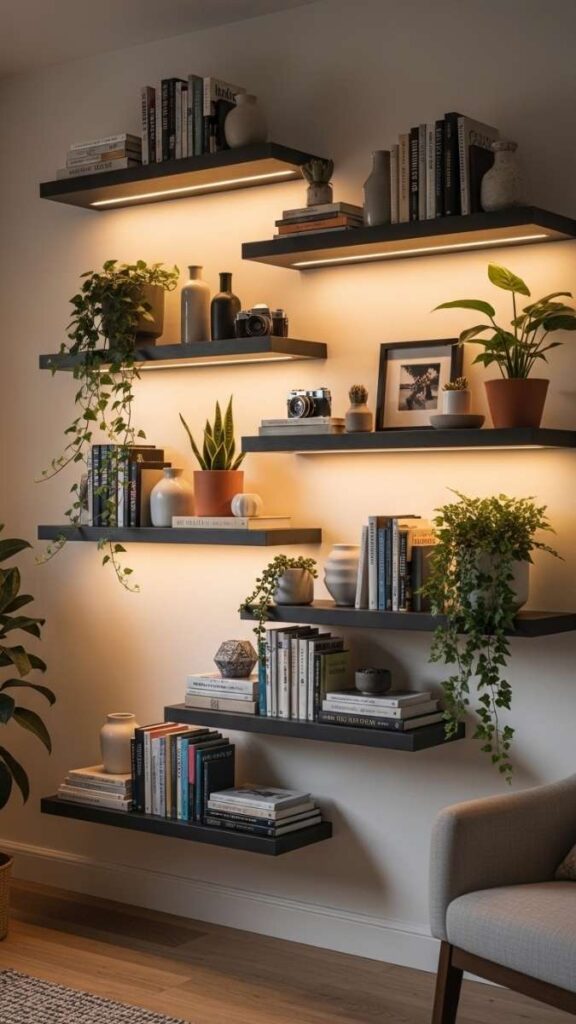
Instead of treating shelves as storage-only, arrange a cluster of floating shelves in a staggered, asymmetric configuration that reads as a wall composition. Vary shelf lengths and heights some at eye level, some lower, one running nearly the full wall width. Style them with a mix of books (spines facing out), small sculptural objects, and one or two trailing plants. This approach fills vertical space with function and visual interest simultaneously. It’s especially useful in home offices or living rooms where you need storage but don’t want the room to feel like a library.
Oversized Round Mirror Paired With Asymmetric Shelf
A round mirror at 30–36 inches diameter feels more architectural than decorative when you treat it as a wall anchor rather than an accessory. Position it slightly off-center above a narrow console or floating shelf, and let it do two jobs reflect light into the room and create the illusion of a window. Pair it with a single small sconce or picture light above to intensify the effect in the evening. Round shapes break the grid of rectangular furniture and doorways, which makes the wall feel more considered. Works well in entryways, hallways, and living rooms with limited natural light.
Read More About: 28+Gallery Wall Ideas for Your Living Room That Actually Work in Real Homes
Vertical Panel Grouping in a Narrow Hallway
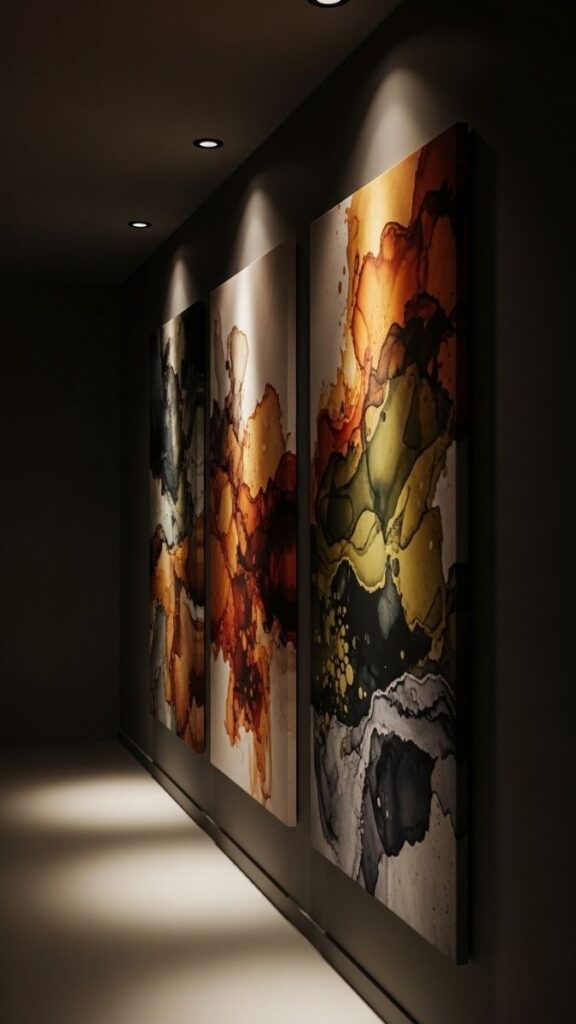
Narrow spaces are often decorated horizontally when they should be decorated vertically. Three tall, narrow canvases (each around 12×40 inches) hung side by side create a triptych effect that elongates the wall and gives the eye something to follow through the space. Choose a cohesive color story across all three same palette, different compositions to keep it unified. This setup specifically addresses the problem of hallways that feel like afterthoughts. The height of the pieces makes the ceiling feel taller, which in turn makes the passage feel less compressed.
Oversized Botanical Print in a Kitchen or Dining Area
Kitchens and dining rooms are often left with bare walls because art feels impractical near cooking or eating zones. A large-scale botanical print of a single dramatic leaf, a detailed plant illustration, or an architectural floral in a sealed frame brings organic warmth to the room without requiring maintenance. Size up a 36×48 inch print makes the right statement in a dining area without overpowering a smaller table. This choice also works with almost any color palette, because botanical subjects carry natural tones that tend to complement food and table settings.
DIY Wood Slat Wall Panel for a Bedroom Feature Wall
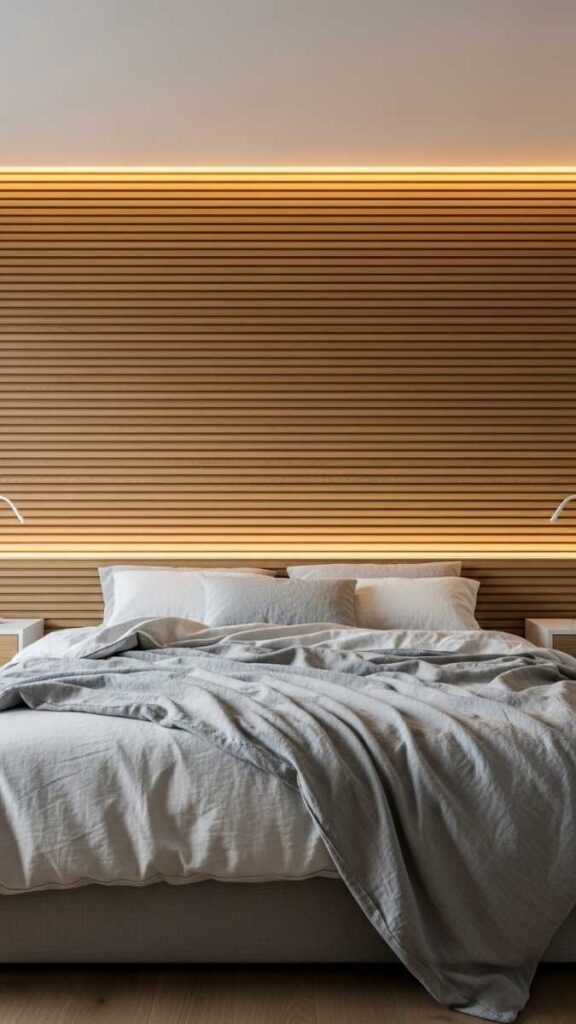
Horizontal wood slats mounted directly to the wall create a built-in architectural feature that functions as large wall decor without requiring any art at all. Use 1×2 or 1×3 pine or oak strips, spaced about 1–2 inches apart, and add a strip of warm LED lighting behind the slats for an ambient glow that reads as designed, not DIY. The horizontal lines draw the eye across the room, which is particularly effective in bedrooms where you want width rather than height. This is one I’d actually recommend trying first if you want a high-impact change with a modest material budget.
Salon-Style Art Arrangement Around a Statement Piece
A salon-style hang where one larger anchor piece is surrounded by a mix of smaller works at varying heights solves the problem of having multiple pieces that don’t quite work independently. Start with the largest piece at roughly eye level (center at 57–60 inches from the floor), then build outward with smaller frames, allowing around 2–3 inches of space between each. Use consistent frame tones to unify what might otherwise be a mismatched collection. This arrangement rewards a wall with height and gives a living room the kind of layered, collected feel that takes years to develop but can be assembled intentionally in an afternoon.
Read More About: 33+Spring Home Decor Ideas That Actually Make Your Space Feel Different
Large Ceramic or Sculptural Wall Piece
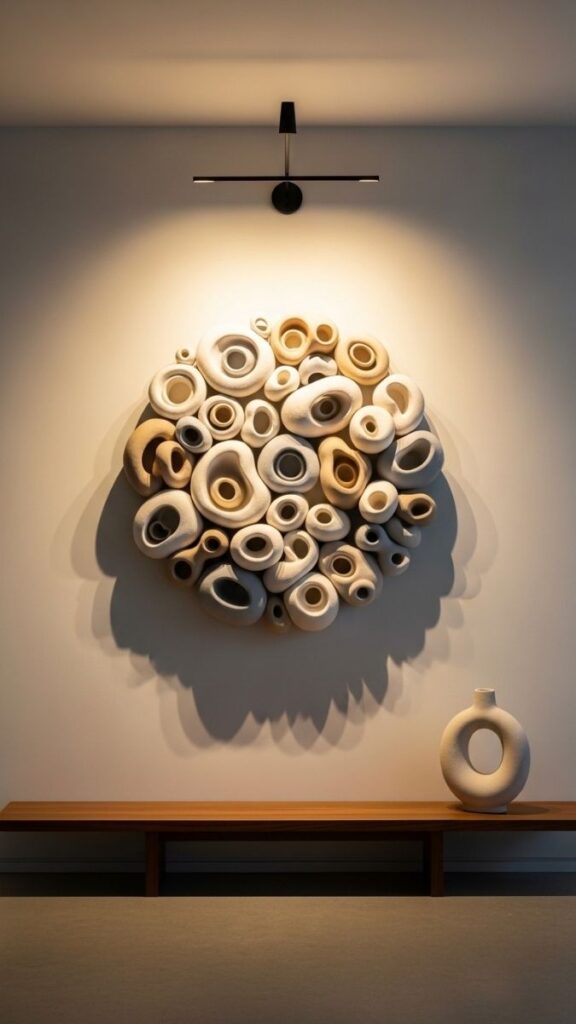
Three-dimensional wall art creates something flat prints can’t actual shadow. A large ceramic piece, metal wall sculpture, or relief panel casts shadows that shift with natural and artificial light throughout the day, making the wall feel alive rather than static. These pieces work best on an otherwise clear wall with directional lighting (a picture light or adjustable spot) to maximize the shadow play. In my experience, this works best when the surrounding decor is kept deliberately minimal because the piece needs visual space to breathe and for the dimensionality to read clearly.
Wallpaper Mural on a Single Feature Wall
A single wall of mural wallpaper functions as room-scale art and in 2026, peel-and-stick mural options have become accurate enough in print quality that they’re a genuine option for renters. Choose a design that extends the room’s visual logic a landscape mural on a wall at the end of a narrow room creates the impression of depth; a botanical pattern on a bedroom’s headboard wall brings organic texture in at a scale that framed art rarely achieves. The key is restraint with the rest of the room when one wall is the visual story, the furniture should act as supporting cast.
Leaning Large-Format Art Against the Wall
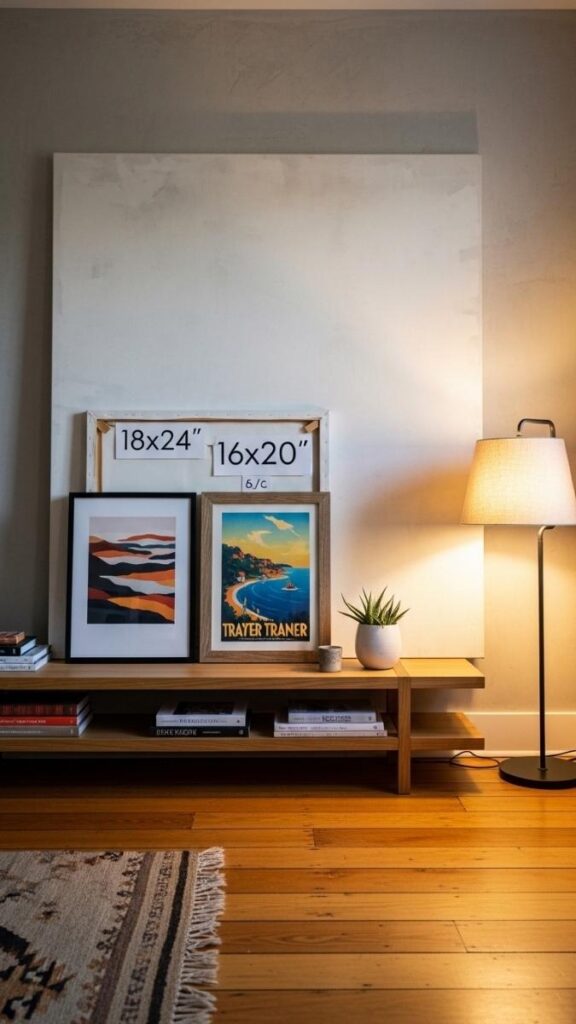
Leaning art instead of hanging it works particularly well with very large canvases (those above 48 inches) because it sidesteps the structural challenge of finding studs and using heavy-duty hardware and it creates an intentionally casual, studio-like aesthetic that feels current. Layer a large canvas against the wall and lean a smaller piece in front of it for depth. A low console or media unit below grounds the composition. This setup also makes it easy to rotate art seasonally without leaving marks on the wall, useful for renters or anyone who likes to refresh their space regularly.
Antique or Vintage Mirror Grid
Four matching or complementary vintage mirrors arranged in a 2×2 grid function very differently from a single large mirror. The reflection fragments across multiple frames, creating a sense of movement and multiplied light that feels more like an art installation than a functional mirror grouping. Use frames with some surface variation aged gold, tarnished silver, or hand-painted details rather than identical frames, so the grouping feels collected rather than bought as a set. This works especially well in powder rooms, entryways, and dining rooms with limited natural light.
Large Chalkboard or Magnetic Wall Panel in a Kitchen or Office
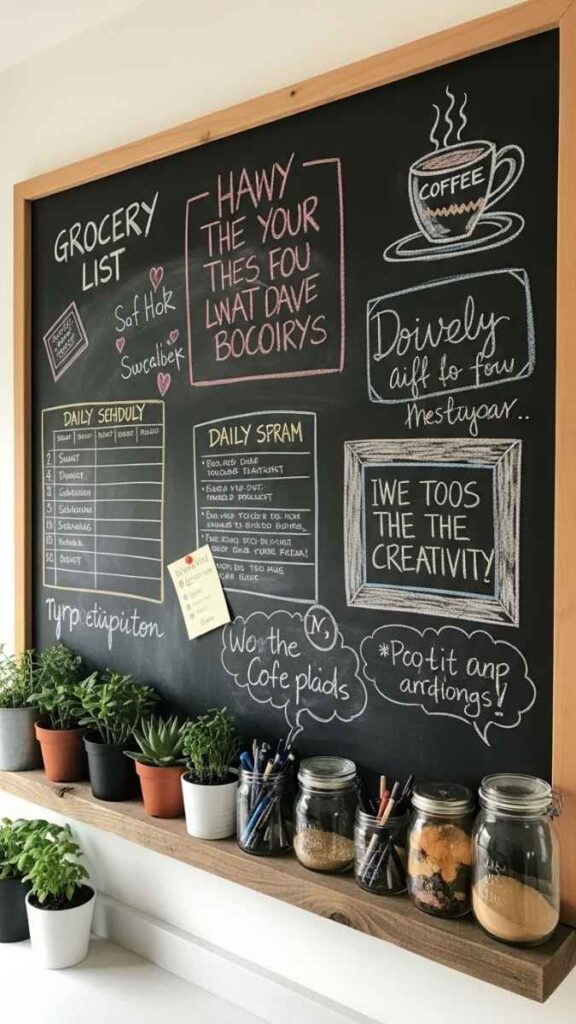
A full-sized chalkboard framed as a wall piece rather than hung as a board serves as large wall decor with a functional layer built in. In a kitchen, it handles weekly menus, shopping lists, and recipe notes. In a home office, it’s a working surface. The key to making it feel decorative rather than institutional is the frame go substantial, at least 3–4 inch width, in a dark wood or matte black finish. The chalkboard surface in a large format also tends to absorb light in a way that makes the wall feel recessed, useful if the wall is close to a seating area and you want to avoid the feeling of walls closing in.
Maximalist Printed Fabric Panel on a Large Blank Wall
Printed fabric stretched over a frame like canvas, or hung from a dowel brings color, pattern, and softness to a large wall in one piece. This is an especially practical option for very large walls (over 80 inches wide) where commissioning a custom print would be expensive, because fabric yardage is significantly more affordable than large-format canvas printing. Choose a bold block print, graphic pattern, or large-scale geometric in colors that anchor the room’s palette. The softness of the fabric also reduces echo in rooms with hard surfaces, which is a practical benefit often overlooked in purely visual decor decisions.
Neon or LED Sign as a Statement Piece in a Living Room or Bedroom
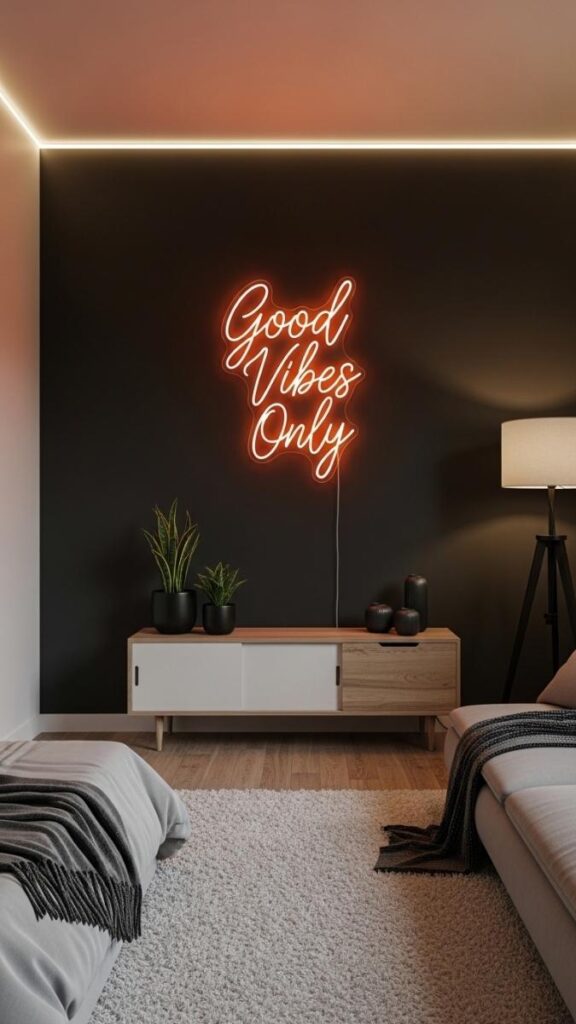
Neon and LED sign decor has matured well past novelty. When the text or shape is deliberately chosen as a single word, a simple graphic form, or a phrase that means something specific to the occupant it reads as intentional rather than trend-driven. Size is important for a large wall, the sign should span at least 30–36 inches to register at the right scale. Mount it against a dark wall for the highest visual contrast, and keep the surrounding decor stripped back so the light becomes the room’s primary mood-setter. This works best in bedrooms, creative studios, and living rooms with a modern or eclectic aesthetic.
Oversized Map or Blueprint Print
A large-format map, whether a vintage city plan, topographical map, or abstract cartographic print, brings intellectual texture to a room in a way that feels specific rather than generic. Frame it generously (a 4-inch mat inside a dark wood frame elevates a digital print significantly) and hang it as the room’s sole wall piece. The fine detail in map prints rewards close viewing, which creates a reason for people to approach the wall; it becomes interactive rather than merely decorative. Works best in home offices, studies, and dining rooms.
Vertical Garden or Living Wall Panel
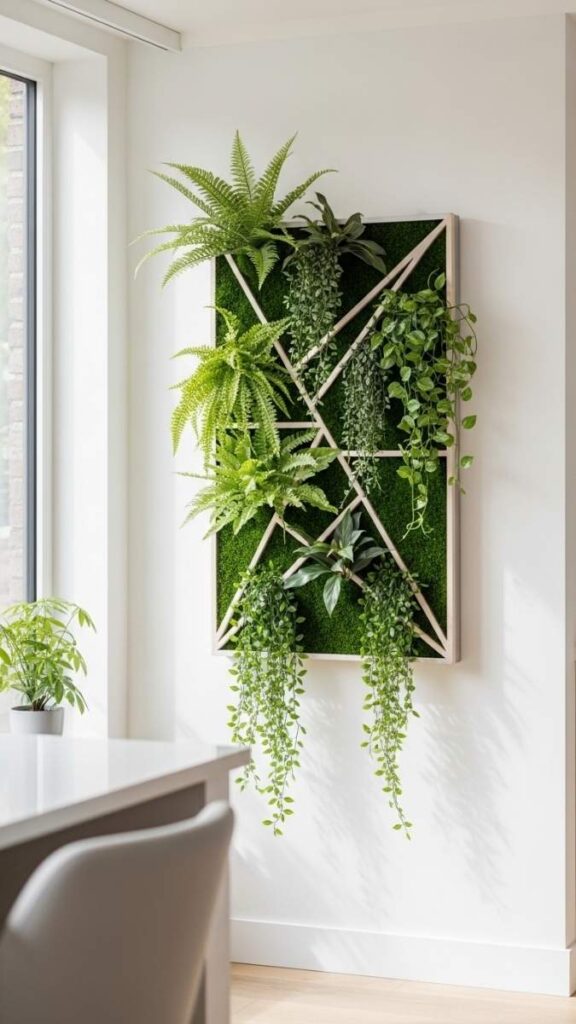
A living wall panel either a self-contained vertical garden unit or a DIY arrangement of wall-mounted planters, brings genuine organic texture to a large wall. For practical maintenance, choose low-light tolerant plants (pothos, ferns, and philodendrons work well) and mount the panel near a natural light source. The visual effect is significant a 3×4 foot living panel on a white wall becomes the room’s dominant element and draws the eye in a way that no flat print can replicate. This is a genuinely functional choice too indoor plants improve air circulation and reduce ambient noise in hard-surfaced rooms.
Layered Tapestry and Shelf Combination
Layering a floating shelf in front of a large tapestry rather than around it creates visual depth that reads as a designed installation rather than two separate decisions. The tapestry provides large-scale wall coverage; the shelf adds a functional layer that projects into the room, breaking the flat plane. Style the shelf simply with two or three objects, a small plant, maybe a candle so the tapestry remains the backdrop rather than getting hidden. This setup works well in living rooms and bedrooms where you want warmth and texture but also need a small display surface.
Abstract Metal Wall Art in a Modern Living Room
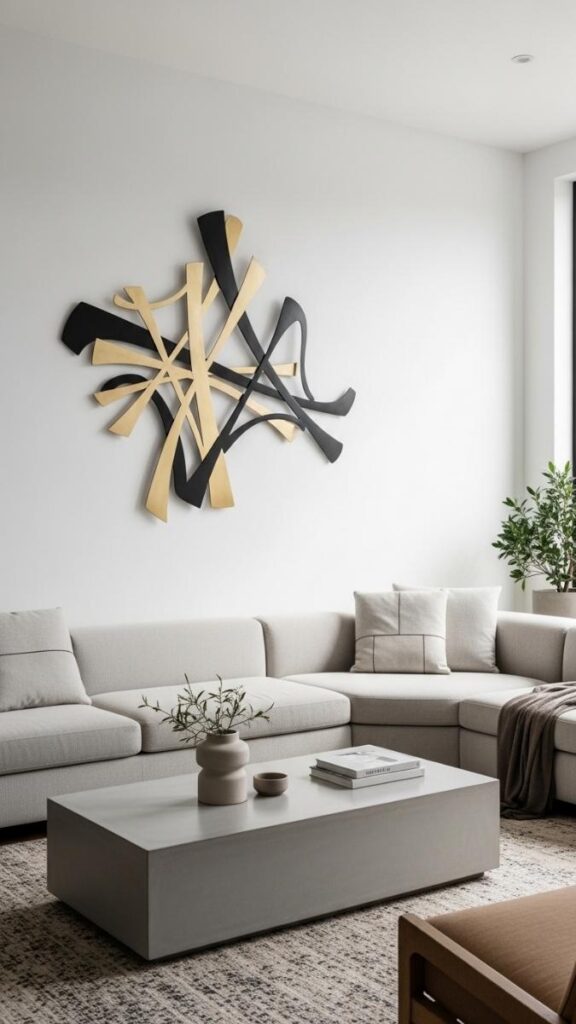
Cut or cast metal wall art abstract panels, geometric forms, or organic shapes offer a material alternative to canvas that holds up in rooms with strong architectural lines. Brushed gold finishes work well in warmer palettes; matte black suits more industrial or minimalist spaces. Look for pieces that extend at least 40 inches in one dimension to register at the scale a large wall requires. The metallic surface picks up and reflects the room’s light sources, which means the piece changes appearance through the day, a quality that static prints don’t have.
Kids’ Room Mural Painted Directly on the Wall
In a child’s bedroom, a hand-painted mural (done by a local muralist or even carefully DIY’d) works as large wall art at a scale that transforms the entire room rather than just decorating one surface. Choose a design that gives the child visual stimulation without visual chaos: a simple sky and cloud scene, a gentle forest, or an abstract color wash. The mural grows with the room over several years, unlike framed prints that often look undersized as children age. Hiring a local muralist is often more affordable than people expect, and the result is genuinely unique.
Floating Frame Arrangement With Pressed Botanicals
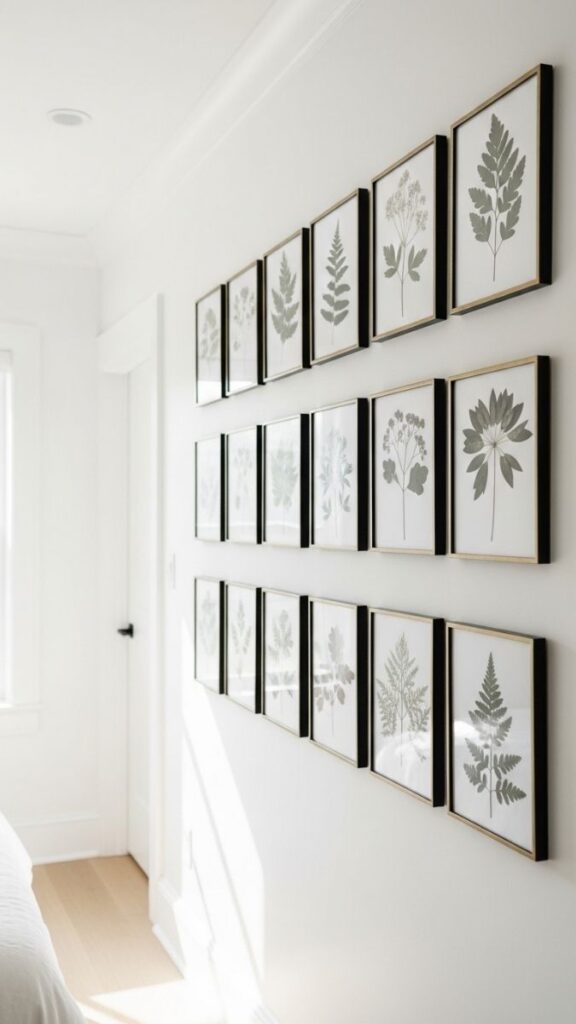
Floating frames where the botanical specimen appears to hover in the frame with visible depth on all sides create a clean, scientific aesthetic that reads as both decorative and considered. Arrange a grid of 9–12 smaller floating frames (8×10 or 10×12) across a large wall section to achieve the scale that a single large piece would, but with more visual complexity. Pressed flowers, ferns, or leaves maintain their color well when UV-protected glass is used. This is one of the more budget-friendly large wall decor ideas: pressed botanicals can be sourced from your own garden or dried flower vendors, and the frames are the primary investment.
Black Painted Accent Wall Used as an Art Surface
Rather than treating the wall as a neutral backdrop, a matte black painted accent wall becomes the art itself and everything mounted on it gains contrast and presence that it wouldn’t have against white or greige. Even modest-sized framed prints read as gallery-quality against a dark wall because the contrast creates visual focus. Add a few small picture lights (brass or brushed nickel) aimed at individual pieces to complete the gallery feel. This approach works best in rooms with other warm tones than leather, warm wood, terracotta to balance the depth of the dark wall.
Large Clock as a Functional Wall Feature
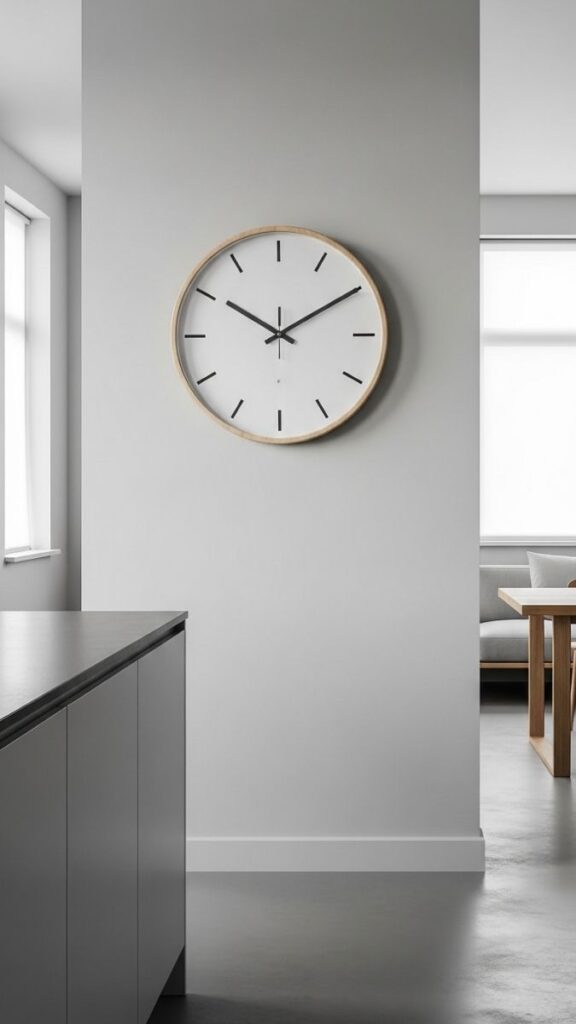
An oversized clock at 30–36 inches in diameter functions as both large wall art and a practical object, which makes it a strong choice for rooms where you want decor that justifies its presence on the wall. In kitchens, it solves the common problem of large walls adjacent to cabinetry that don’t have room for art but feel bare. Choose a clean design a flat face, minimal numerals, and a natural or matte finish. Avoid ornate or heavily styled clock designs, which tend to date quickly. The simpler the clock, the longer it holds up as a room’s anchor piece.
Photographic Grid of Personal or Travel Images
A tightly arranged grid of personal photographs all printed in the same size, all framed identically, creates a wall installation that is both intimate and visually organized. The uniformity of frame and size is what elevates this from a family photo collage to a wall composition every variation in the images (different subjects, different landscapes) is unified by the consistent format. Print at 8×10 minimum, use a 3×3 or 4×3 arrangement, and leave equal spacing (about 2 inches) between frames. This works in almost any room, but especially well in hallways and living rooms where personal connection to the space matters.
What Actually Makes Large Wall Decor Work
Scale is the single most underestimated factor. In my experience, people consistently choose art or decor pieces that are too small for the wall then compensate by adding more pieces, which creates clutter rather than composition. The rule of thumb most interior designers use is that a single piece should occupy 60–75% of the wall width it’s hanging on. For a sofa, that means 60-75% of the sofa’s length, not the full wall.
The second factor is height. Most art gets hung too high. The center of any piece should sit at approximately 57–60 inches from the floor eye level for the average adult standing. When art is hung above that, it disconnects from the furniture below and the wall feels divided rather than unified.
Lighting completes the setup. A piece that looks underwhelming in overhead light often reads completely differently with a directed picture light or angled floor lamp. If a wall arrangement isn’t working and you’ve already got the scale right, check the lighting before you change the art.
Large Wall Decor Ideas Setup Comparison Guide
| Idea | Best Room | Space Type | Problem It Solves | Budget Level |
| Oversized abstract canvas | Living room | Any size | Empty wall above sofa | Mid–High |
| Floor-to-ceiling gallery | Living room | High ceilings | Disconnected, bare wall | Low–Mid |
| Textile wall hanging | Bedroom | Small–Medium | Needs texture, no headboard | Low–Mid |
| Architectural salvage panel | Dining/Entry | Medium–Large | Blank wall needs depth | Mid |
| Large photography print | Hallway/Living | Any size | Color-matching anxiety | Low–Mid |
| Wood slat wall panel | Bedroom | Any size | Bare feature wall | Low–Mid |
| Salon-style arrangement | Living room | Medium–Large | Multiple mismatched pieces | Low |
| Wallpaper mural | Bedroom | Any size | Feature wall lacks identity | Mid |
| Living wall panel | Kitchen/Living | Medium | No organic texture | Mid–High |
| Oversized round mirror | Entryway/Living | Small–Medium | Low light, awkward layout | Mid |
| Metal wall sculpture | Living room | Modern/Large | Needs material variety | Mid–High |
| Personal photo grid | Hallway/Living | Any size | Impersonal or sterile space | Low |
Common Large Wall Decor Mistakes That Make Rooms Feel Unfinished
Hanging art too high.
This is the most consistent issue in real homes. When the center of a piece is at 70+ inches, it floats above the furniture and creates a visual gap that makes the room feel like a hotel corridor. Bring it down to 57–60 inches center height regardless of ceiling height.
Choosing pieces that are too small.
A 20×24 inch print on a 10-foot wall is almost always insufficient. The piece reads as an afterthought rather than a design choice. When in doubt, go one size larger than feels comfortable in a full room with furniture, scale reads differently than it does leaning against a wall in a shop.
Ignoring the wall’s relationship to furniture.
Wall decor should feel connected to what’s below or in front of it, not independent of it. A piece hung with no visual relationship to the furniture beneath creates a disjointed room. The top of a sofa, a console’s surface, or a bed’s headboard height should all inform where the wall piece sits.
Using too many competing focal points.
Two large pieces on adjacent walls in a single room compete with each other and fragment the room’s visual logic. Choose one wall as the primary feature and let the others support it.
Skipping lighting entirely.
Wall decor in a room with only overhead lighting often reads flat. A picture light, directional floor lamp, or angled spot changes how any wall piece reads especially in the evening hours when ambient light drops.
FAQ’s
What size art should I use for a large wall?
For a large wall, a single piece should cover at least 60–75% of the furniture width beneath it so for a standard 84-inch sofa, that means a canvas of roughly 50–63 inches wide. If using a gallery arrangement, the total grouping should span a similar width. Going smaller than this is the most common reason large walls feel unfinished.
How do I fill a very large wall without spending a lot?
Fabric panels, DIY wood slat installations, peel-and-stick murals, and personal photo grids are all effective options at a lower cost. The key is to scale a budget option in the right size to outperform an expensive piece that’s too small for the space.
Should I use one large piece or a gallery wall?
One large piece works better in rooms with strong architectural lines, minimal furniture, or a modern aesthetic where visual clarity matters. A gallery wall suits eclectic collections, rooms with varied ceiling heights, or spaces where you have multiple smaller pieces to unify. Neither is universally better; it depends on what the room needs spatially.
How high should large wall art be hung?
The center of any wall piece should sit at approximately 57–60 inches from the floor. This applies whether the piece is above a sofa, bed, console, or on an empty wall. Art hung significantly above this point disconnects from the room and feels like it’s floating.
Can large wall decor work in small rooms?
Yes and it often works better than small art in small rooms. One appropriately scaled piece anchors the room and gives the eye a clear focal point, which makes the space feel more intentional. Multiple small pieces on the same wall in a small room tend to increase visual clutter and make the space feel smaller. Mirrors at large scale are especially effective in small rooms because they reflect light and expand the perceived depth of the space.
What’s the easiest large wall decor idea for renters?
Leaning large canvases instead of hanging them, peel-and-stick mural wallpaper, and large textile hangings with minimal hardware are the most renter-friendly options. Command strips rated for heavier loads can handle frames up to a certain weight, but for very large pieces, leaning is the most practical no-damage solution.
How do I make a gallery wall look intentional rather than random?
Use a consistent frame tone or material (all black, all wood, all brass) even if the art inside varies. Keep spacing uniform 2–3 inches between frames throughout. Start by laying the arrangement on the floor before committing to the wall. And anchor the grouping with one larger piece rather than building outward from a collection of equally sized frames.
Conclusion
Large walls are genuinely one of the more forgiving design challenges once you understand what actually drives the problem and it’s almost never about finding the “right” piece. It’s about scale, placement, and how the wall connects to the furniture and light around it. Whether you go with a single oversized canvas, a floor-to-ceiling gallery arrangement, or something with real material depth like a wood slat panel or ceramic sculpture, the principle stays the same: the wall should feel like a deliberate part of the room, not an afterthought.
Not every idea here will suit every space, and that’s fine. A maximalist salon wall belongs in a different room than a single leaning canvas and both are valid depending on what your space actually needs. Start with one setup that addresses your specific problem, whether that’s an awkward blank stretch above the sofa, a hallway that feels like a corridor, or a bedroom wall that’s missing warmth and texture. Get the scale right, hang it at the correct height, and add directed lighting before you decide it isn’t working. Most large wall decor problems are solved long before you need to buy anything new.