38+Living Room Luxury Decor Ideas That Feel High End Without the Designer Price Tag
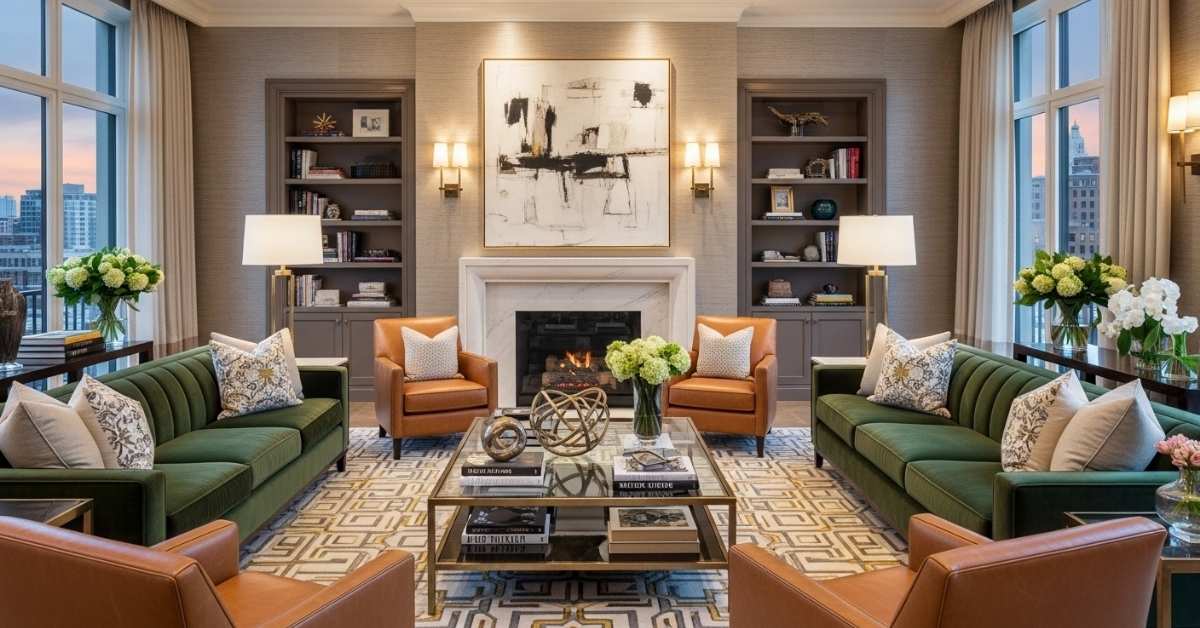
If your living room feels a bit unfinished or like it’s missing something you can’t quite name, the issue is usually one of three things: scale, lighting, or material contrast.Living Room Luxury Decor Ideas Most rooms that feel “off” aren’t under-decorated. They’re under-edited. The ideas here are built around fixing exactly that.
Whether you’re working with a compact apartment layout or a larger open-plan space, these living room luxury decor ideas are focused on what actually changes how a room feels, not just how it photographs.
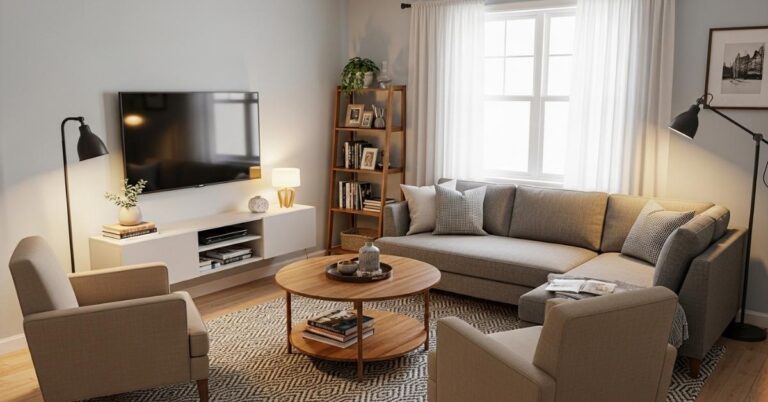
A Sofa With Visible Legs and Low Arms
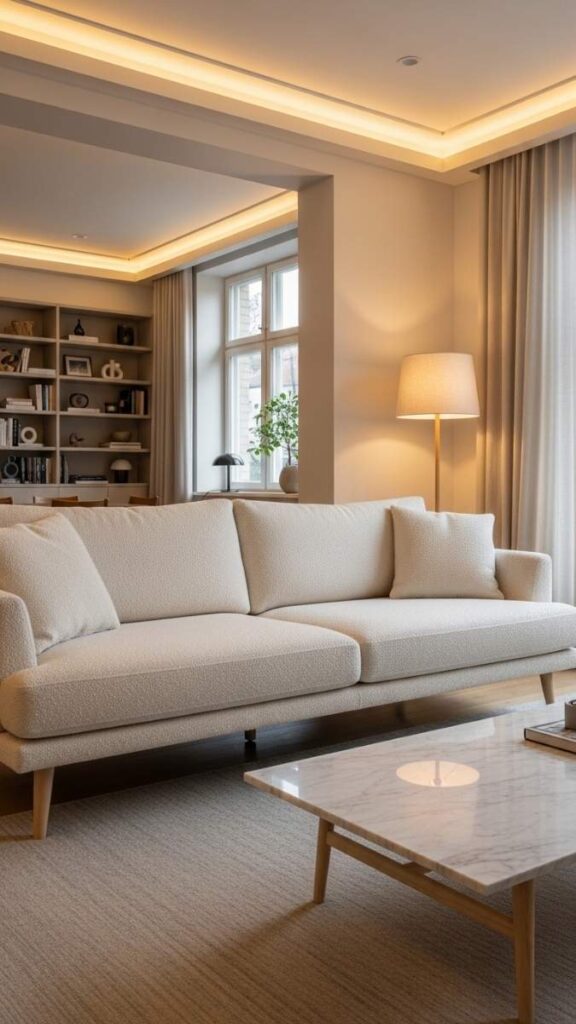
Sofas that sit directly on the floor visually compress a room. A sofa with slender tapered legs even lifted just 6 inches lets light pass underneath, which makes the floor plane feel larger and the room feel less heavy.
Pair low arms with high-quality upholstery like boucle, bouclé-effect fabric, or a tight-weave linen, and the silhouette reads as genuinely elevated. This works particularly well in smaller living rooms where every visual inch counts.
The furniture placement matters too, leaving at least 18 inches between the sofa and the coffee table for a layout that feels spacious rather than cramped.
A Single Oversized Pendant Light as a Focal Point
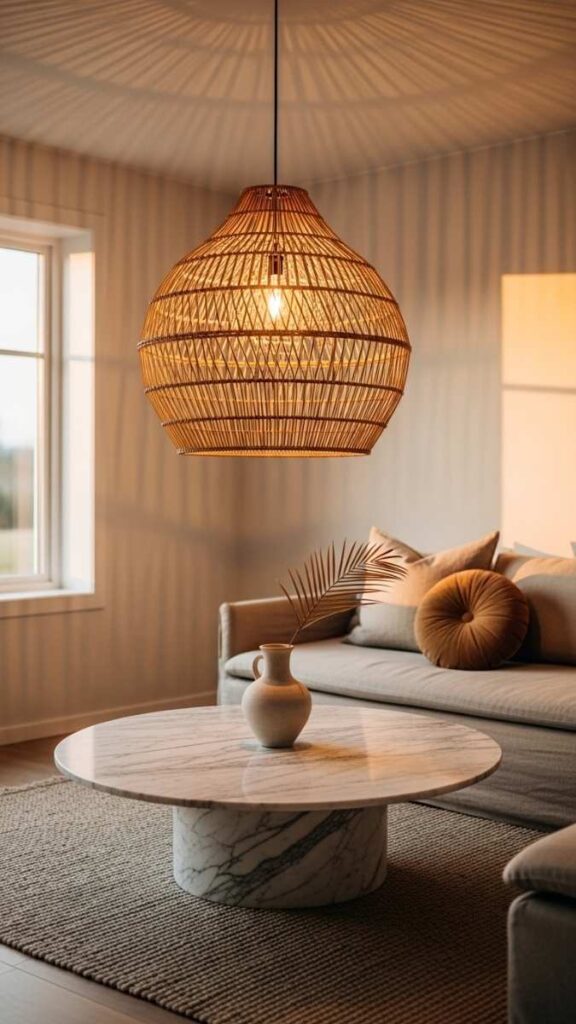
Most living rooms rely entirely on recessed lighting or a basic ceiling fixture and it shows. Swapping in one oversized pendant (think 18–24 inches in diameter) over the coffee table or seating area immediately gives the room a focal point that reads as intentional.
In my experience, this works best when the pendant hangs lower than feels intuitive around 60–66 inches from the floor so it anchors the seating zone rather than floating disconnected near the ceiling.
Materials like aged brass, smoked glass, or hand-woven rattan each bring a different mood: warm and organic vs. cool and structured. This is one I’d actually recommend trying first because it changes the feel of a room without requiring any furniture rearrangement.
A Gallery Wall Built on aLiving Room Luxury Decor Ideas
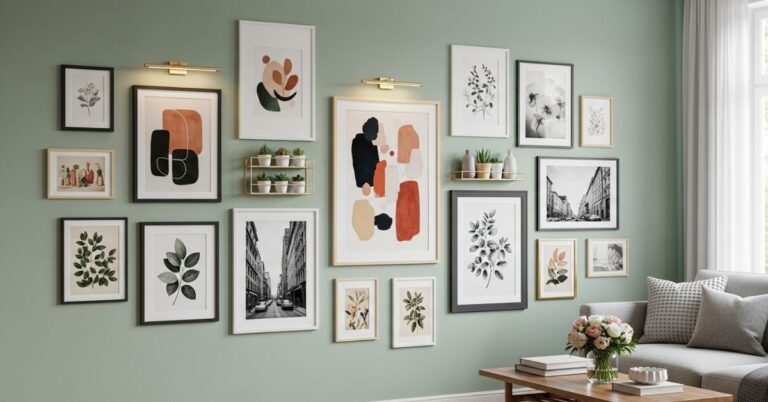
Random gallery walls look busy. A gallery wall built around one tonal family, all warm neutrals, or all earthy greens, or all monochrome reads as curated and deliberate.
The frames matter as much as the art matching thin metal frames in black, brass, or aged bronze create visual consistency that elevates even inexpensive prints.
Arrangement-wise, a tight grid with 2-inch gaps between frames looks more refined than an eclectic scatter. This approach works well on any wall size and is especially useful for renters who want impact without permanent changes.
A Marble or Stone Coffee Table as the Room’s Anchor
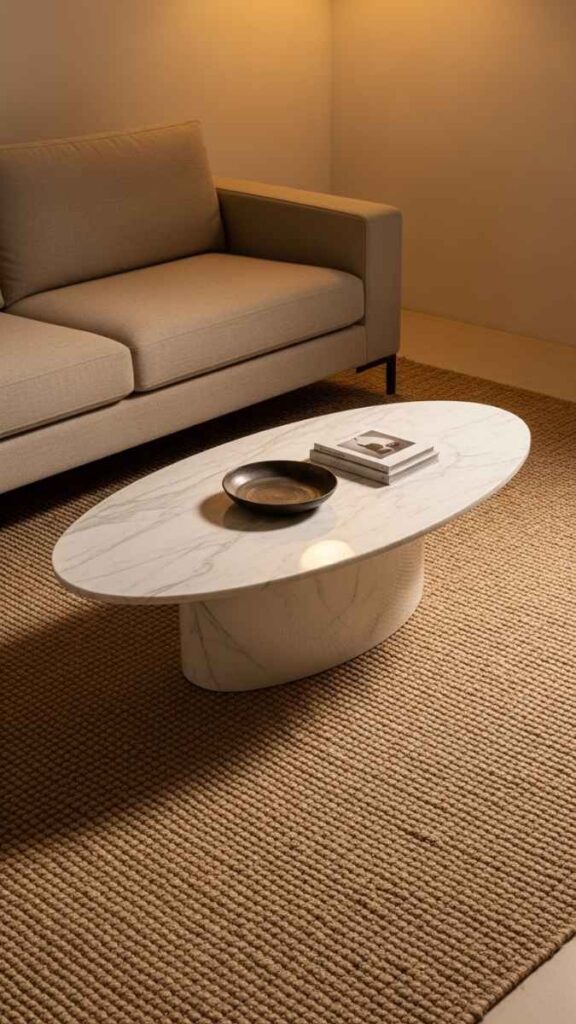
A stone or marble-effect coffee table does something other materials don’t: it adds weight and permanence to the center of the room without visual bulk. The light catches the surface differently throughout the day, which keeps the room feeling dynamic.
Oval or round shapes work better in smaller spaces because they improve walking flow around the seating area. If real marble is out of budget, sintered stone and high-quality ceramic alternatives now convincingly replicate the look and they’re significantly more durable for daily use.
Layered Lighting With Three Distinct Sources
Relying on one overhead light source is the most common reason living rooms feel flat after dark. Layering three types ambient (ceiling), task (table or floor lamp), and accent (shelf or picture lights) creates depth and warmth that overhead lighting alone can’t achieve. The key is dimmable bulbs throughout, so you can adjust the intensity based on time of day.
A tall arc floor lamp behind the sofa adds height to the composition, while a small table lamp on a side table creates intimacy at eye level when seated.
This isn’t just aesthetic, it makes the room genuinely more comfortable to spend time in.
Read More About: 37+Home Office Layout Ideas That Actually Work in Real Spaces
A Large-Scale Area Rug That Extends Under Furniture
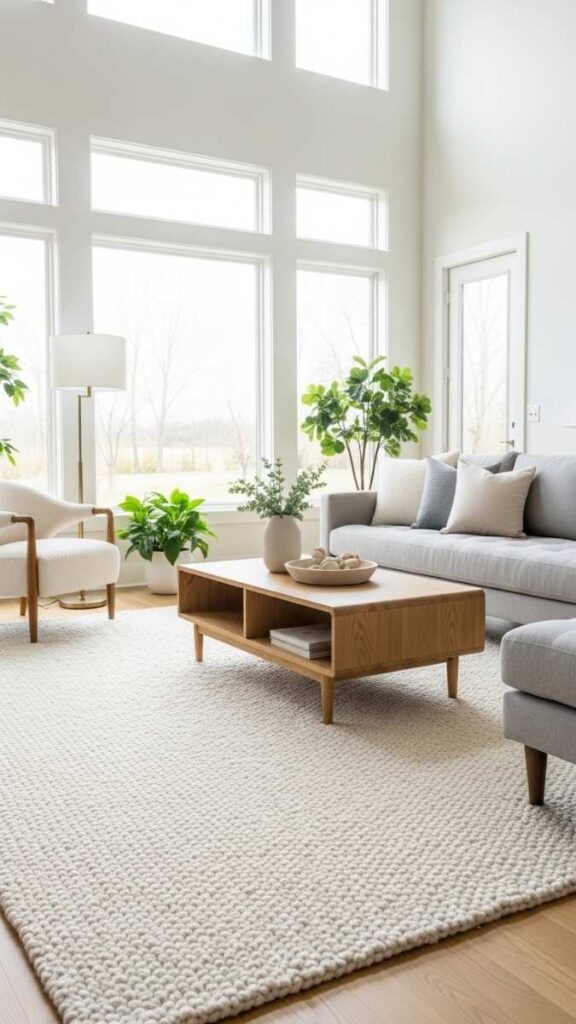
A rug that’s too small floats awkwardly in the center of a room and makes the furniture arrangement look uncertain. A rug that extends under at least the front legs of the sofa, ideally all furniture legs, unifies the seating zone and makes the space feel deliberately composed.
In living rooms under 300 square feet, an 8×10 rug is usually the minimum. For larger spaces, 9×12 or bigger. High-pile wool or a flatweave in a warm neutral (ivory, oat, warm grey) adds texture underfoot without competing with other materials in the room.
Curtains Hung Ceiling-to-Floor
Curtain rods mounted just above the window frame cut a room’s perceived height significantly. Hanging curtains from as close to the ceiling line as possible and letting them puddle or just skim the floor draws the eye upward and makes any ceiling feel taller.
Linen, velvet, and cotton-silk blends all work well; the fabric should be heavy enough to hang with structure rather than floating away from the wall. Width matters too; panels should be at least 2.5x the window width when closed, so they stack generously rather than looking skimpy.
A Statement Armchair in a Contrasting Material
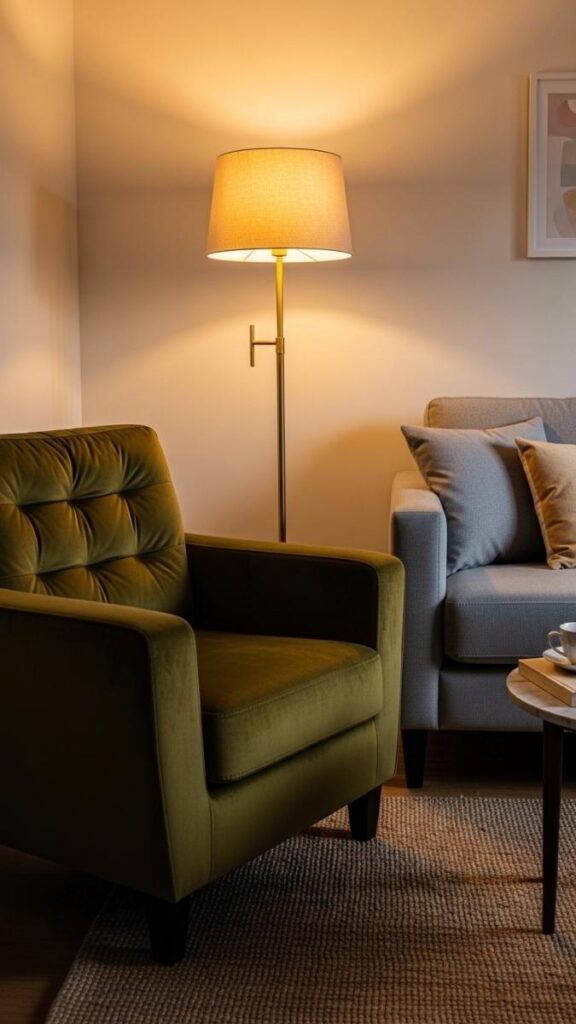
One armchair in a completely different material or color from the sofa introduces tension in the best possible way it keeps the eye moving around the room. A velvet chair against a linen sofa, or a leather chair against a bouclé sofa, creates material contrast that feels intentional rather than mismatched. Placement matters angling the chair at roughly 30–45 degrees toward the sofa rather than pushing it flat against the wall opens up the conversation area and makes the layout feel more dynamic. This works in rooms of almost any size.
Built-In or Freestanding Bookshelves Styled With Restraint
Shelves crammed from edge to edge look chaotic regardless of what’s on them. Pulling everything out and rebuilding with roughly 30% negative space deliberately left empty immediately makes the remaining objects feel considered.
Arrange books horizontally and vertically, mix in one or two small sculptural objects, and add a trailing plant at varying heights. The visual rhythm of full-empty-full across shelf sections is what gives this setup its cohesion. Honestly, less really is more here, the restraint is the point.
Read More About: 36+Studio Apartment Layout Ideas That Make Small Spaces Feel Bigger and More Livable
A Neutral Color Palette With One Deep Accent
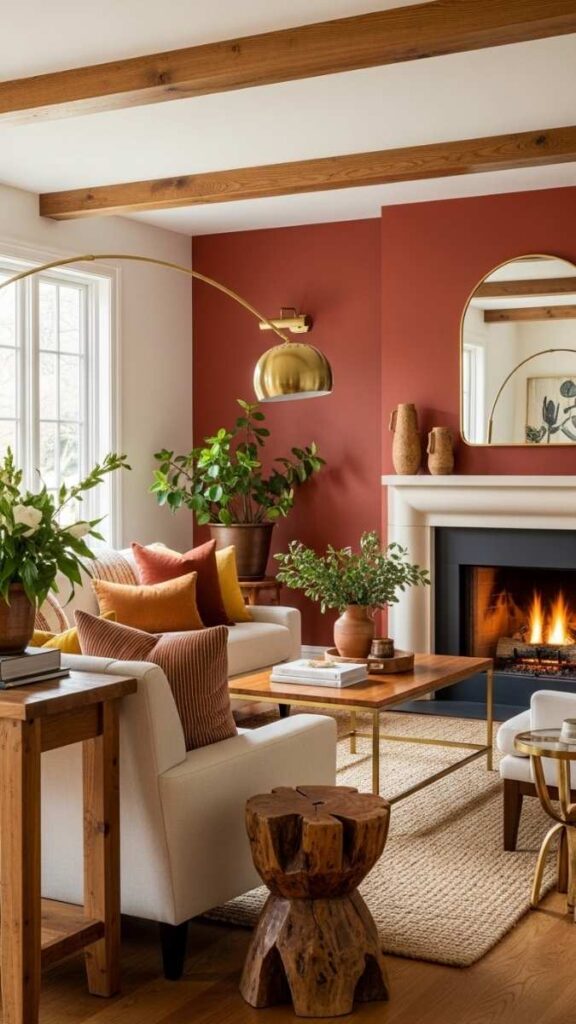
Entirely neutral rooms can feel sterile. Entirely bold rooms can feel exhausting. The balance is a predominantly neutral base wall, sofa, rug with one deep, saturated accent introduced through a single wall color, a set of cushions, or a large-scale artwork.
In 2026, the accent tones that are gaining the most traction are warm terracotta, deep sage, dusty plum, and ochre. These read as sophisticated rather than trendy when they’re used as a supporting note rather than the dominant color.
A Console Table Behind the Sofa
If your sofa sits in the middle of the room rather than against a wall, a narrow console table (12–14 inches deep) behind it solves the problem of the sofa’s exposed back while adding a functional surface for lamps and decorative objects.
This setup is especially useful in open-plan spaces where the living area needs visual definition without a physical wall. Two matching table lamps on the console frame the sofa from behind and add an ambient light layer that reads as symmetrical and finished.
Textured Cushions in Odd Numbers
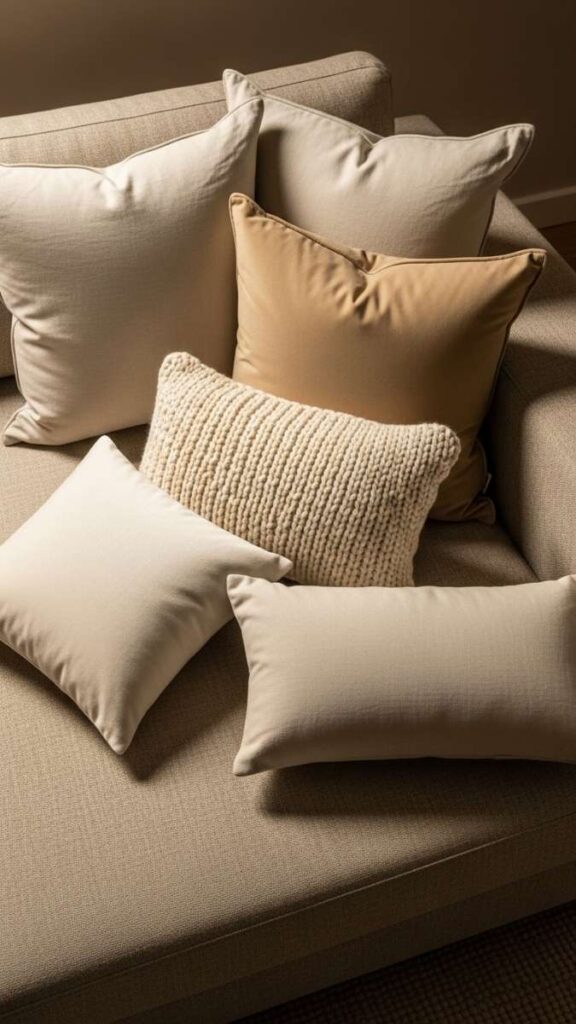
Even numbers of identical cushions look like a showroom. Groupings of three or five, mixing textures (linen, velvet, waffle knit, cotton) while staying within a close tonal range, look like they were assembled over time which is exactly what you want.
One slightly larger cushion in the center, flanked by two smaller ones on each side, creates a natural visual hierarchy. Keep patterns minimal, one subtle texture variation is enough. The restraint signals quality more convincingly than a busy mix of prints.
A Curved Sofa or Curved Coffee Table for Softness
Rooms with all right-angle furniture arrangements can feel rigid, especially in open-plan spaces. Introducing one curved piece, a curved sofa, a round or oval coffee table, or even an arched mirror softens the overall composition without requiring any color change.
Curved sofas are one of the biggest shifts in living room design right now, and they work particularly well in square rooms where a standard rectangular sofa creates an awkward negative space in the corners.
Warm-Toned Metals Across Multiple Surfaces
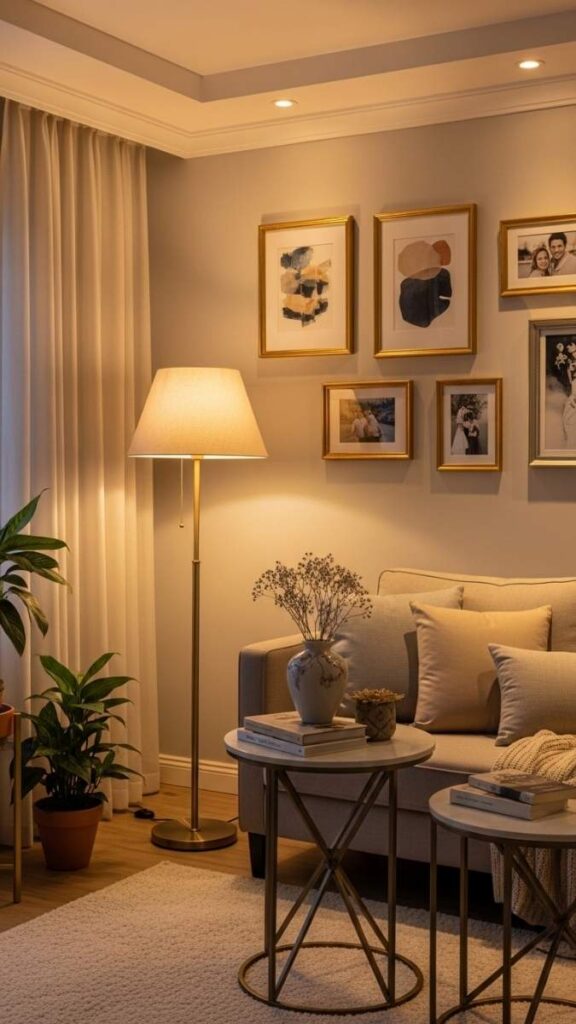
Mixing metals across a room is fine but mixing warm-toned metals (brass, bronze, antique gold) keeps the space cohesive while still feeling layered.
The trick is distributing the metal finish across at least three different surfaces: a lamp base, a side table leg, a frame, and a candle holder.
When the same warm tone appears repeatedly in small doses throughout the room, it reads as a deliberate design choice rather than a collection of random pieces.
Avoid a cold-warm metal mix (chrome next to brass, for example) as it creates visual noise without adding sophistication.
Read More About: 35+Small Living Room Layout Ideas That Actually Make Your Space Feel Bigger
A Large Art Print or Canvas Above the Sofa
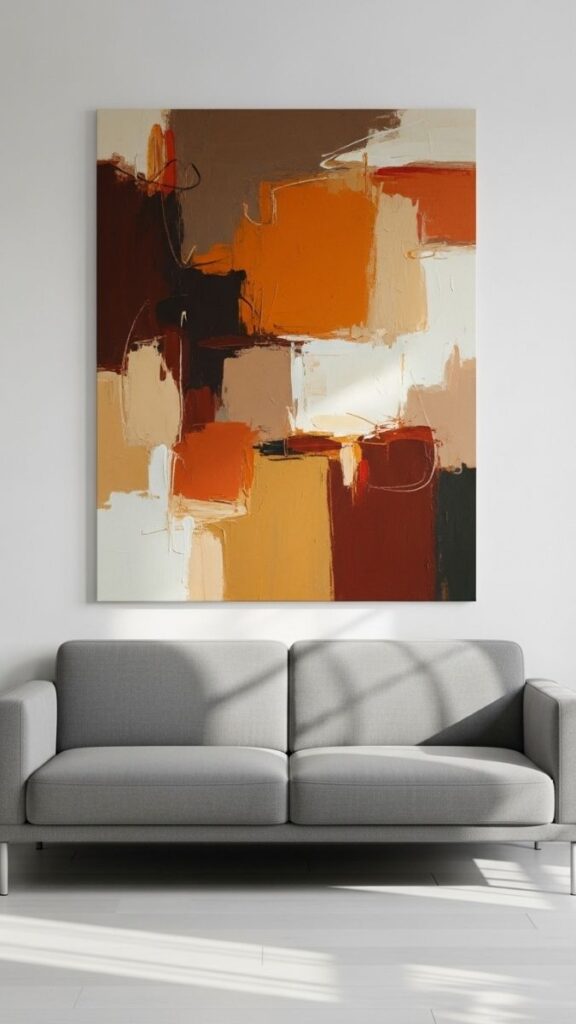
Scale mismatches are one of the most common problems in living room art placement. Artwork hung above a sofa should be approximately two-thirds the width of the sofa; a three-seater sofa (roughly 84 inches wide) pairs well with artwork in the 50–60 inch range.
Hanging height matters equally; the center of the artwork should sit roughly 57–60 inches from the floor, with the bottom edge 6–8 inches above the sofa back.
One large piece almost always reads better than a cluster of small prints in this position.
A Sculptural Floor Lamp With an Interesting Base
Standard floor lamps disappear into a room. A lamp with a sculptural base solid marble, textured ceramic, aged brass holds visual weight even when it’s off.
Arched lamps are especially practical because they extend over a seating area and provide light at the right height for reading or ambient use without requiring a table surface.
I’ve noticed this style tends to anchor a corner in a way that makes the seating arrangement feel more complete; it fills vertical space without adding furniture mass.
A Mirror That Reflects Natural Light
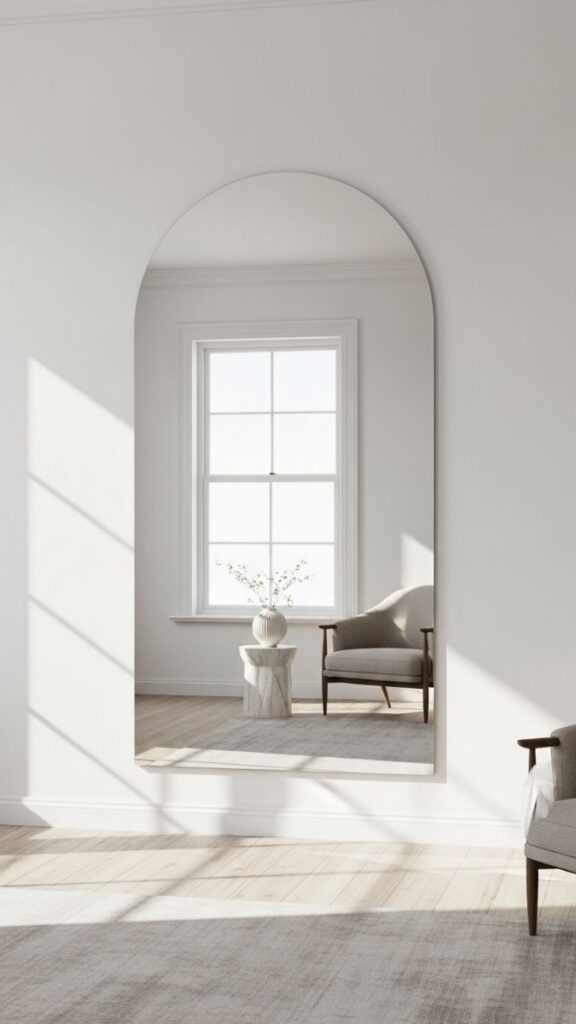
The placement of a mirror changes its entire function. Hung opposite or adjacent to a window, it bounces natural light across the room and makes the space feel significantly larger and brighter without any structural change.
Arched mirrors are a strong choice for living rooms because their shape softens a wall without demanding much visual weight.
Size should be proportional; a mirror that’s too small reads as decorative clutter rather than a design statement. For most living rooms, a mirror at least 30 inches wide reads as intentional.
A Linen or Velvet Ottoman as a Coffee Table Alternative
A large upholstered ottoman in place of a coffee table does two things a table can’t: it adds softness to the center of the room, and it doubles as extra seating when needed. A simple tray on top gives it a functional surface for drinks and objects. Linen reads as casual-luxe; velvet reads as more formal.
Both work well in neutral color schemes. This swap is particularly good in homes with children or pets; the soft surface removes a sharp corner hazard without sacrificing the room’s visual cohesion.
A Plinth or Pedestal for Displaying a Single Object
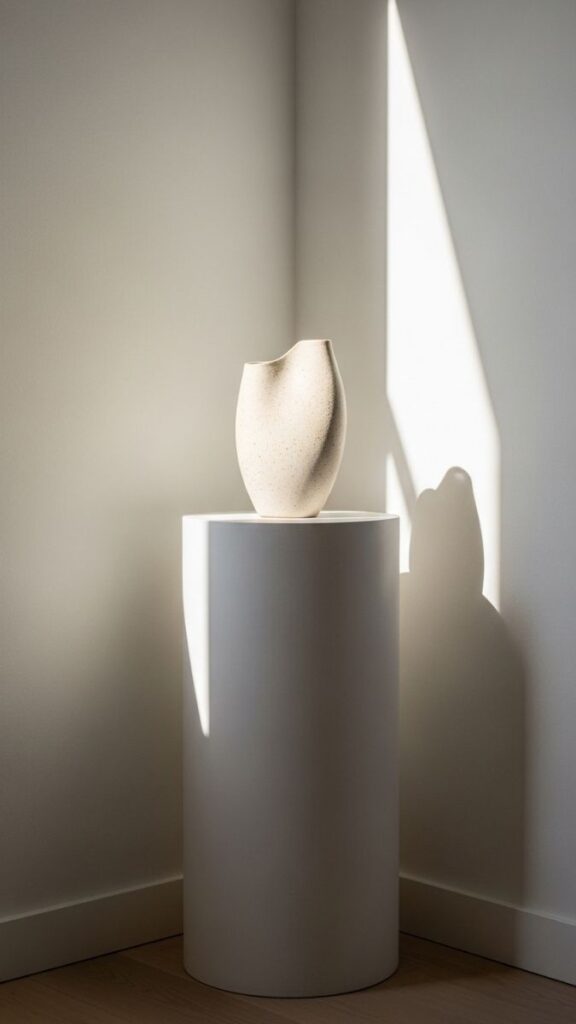
Elevating one sculptural object on a plinth, a ceramic vase, a small sculpture, a trailing plant immediately signals curation. The object doesn’t need to be expensive; the elevation changes its perceived value entirely.
Plinths work best in corners or beside furniture groupings where they add vertical variation without blocking sightlines. Natural stone, white lacquer, and raw wood are the three finishes that work across most living room aesthetics right now.
A Two-Tone Wall Treatment With a Dado or Panel Line
Painting a room in one flat color across floor-to-ceiling walls is safe but rarely memorable. Adding a horizontal division, a painted dado rail, a board-and-batten panel treatment, or simply a color change at chair-rail height (around 32–36 inches from the floor) creates architectural detail that reads as built-in and intentional.
A deeper shade on the lower section grounds the room visually; a lighter shade above keeps it feeling open. This technique adds dimension to a rental or new-build room without requiring any permanent structural change.
Trailing or Sculptural Plants in Oversized Planters
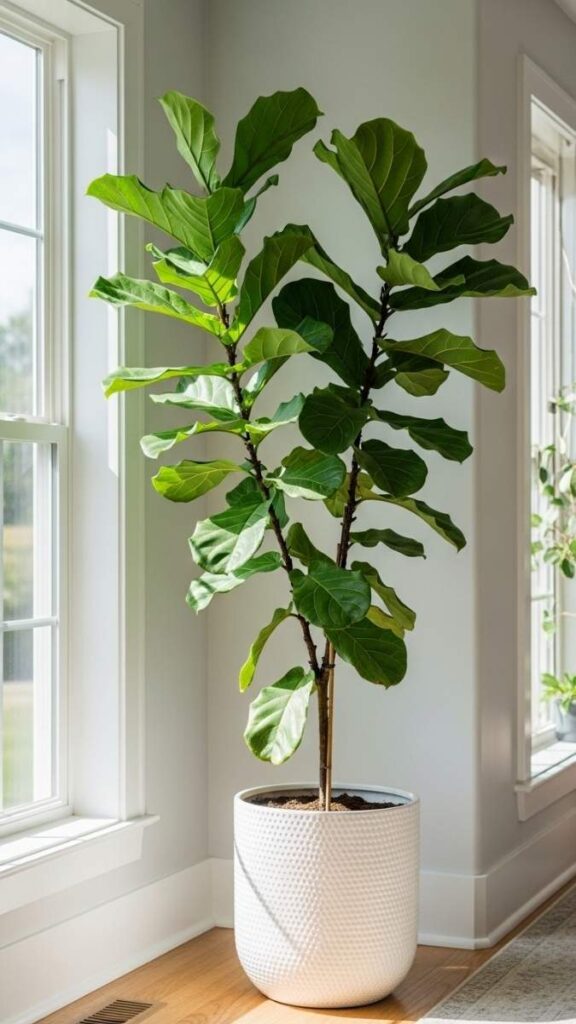
Plants in small, generic plastic nursery pots undercut an otherwise well-styled room. A single sculptural plant, a fiddle leaf fig, olive tree, or bird of paradise in an oversized planter (14–16 inches minimum diameter) becomes a design element in its own right.
The planter material matters: matte white ceramic, hand-thrown terracotta, or pale stone all add texture that generic plastic can’t. Positioning a tall plant in an empty corner solves the common problem of corners that feel dead and unresolved.
Scent as a Sensory Layer
Luxury isn’t just visual and a well-chosen ambient scent (diffuser, candle, or room spray) makes a room feel more intentional when guests walk in.
This isn’t decorating advice in the conventional sense, but it’s one of those details that changes how a room is experienced. The key is to retain one scent source. Displayed in a decorative ceramic vessel or alongside a curated shelf setup, it becomes part of the visual composition rather than an afterthought.
A Nesting Side Table Set for Flexibility
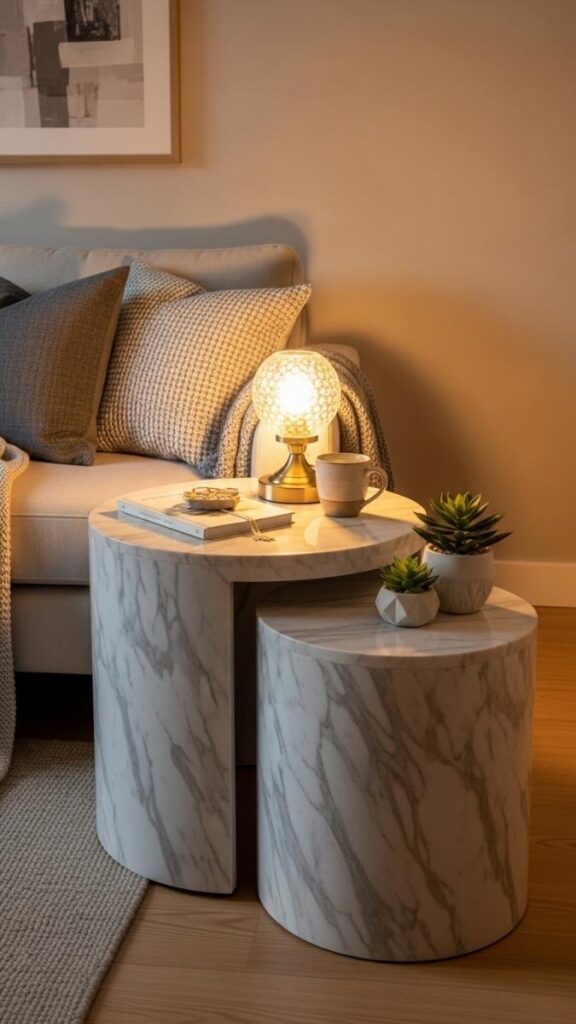
A single side table at one fixed height limits how you use a space. Nesting tables solve this by offering two different surface heights one for a lamp, one for a drink or book without adding the footprint of two full tables.
When pushed together, they read as a cohesive design object. When pulled apart, they can serve two different seats in the arrangement. Marble-effect, solid wood, and powder-coated metal are the three finishes that work best in a room aiming for a refined feel.
Linen or Cotton Slipcovers in a Tight Weave
A well-fitted slipcover in a quality fabric reads completely differently from a loose, gathered one.
Tight-weave linen or cotton canvas slipcovers particularly in oat, warm white, or natural can elevate an older sofa frame significantly and make the overall arrangement feel current.
This is one of the better options for renters or those who aren’t ready to invest in a new sofa. The return on investment relative to the cost is substantial, particularly when combined with quality cushion inserts.
A Statement Ceiling Treatment Paint or Wallpaper
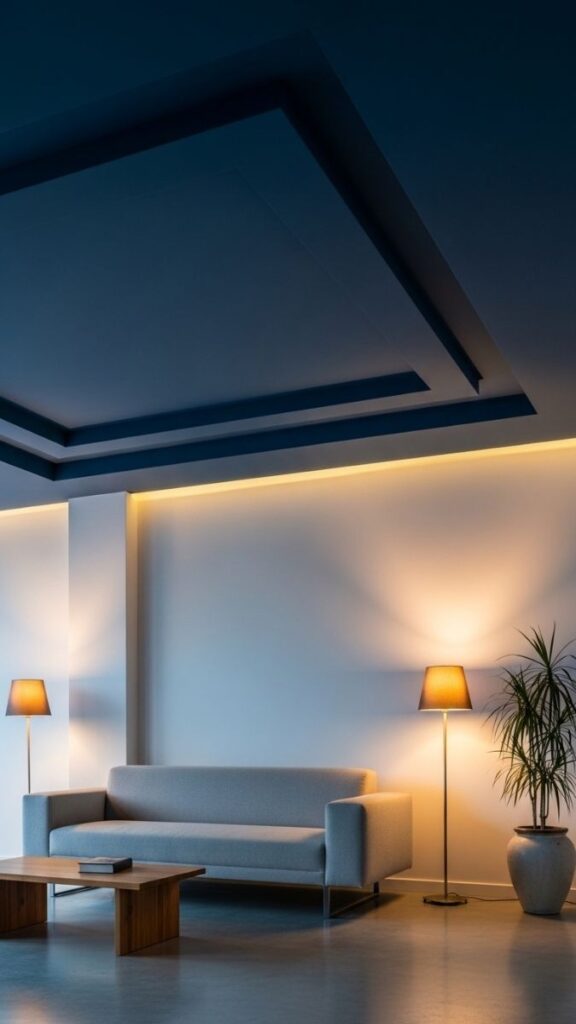
The ceiling is one of the most underused surfaces in residential living rooms. Painting it in a deep, saturated tone navy, forest green, warm charcoal while keeping walls neutral creates a cocooning effect that makes the room feel intimate without shrinking the floor area.
In rooms with low ceilings (under 8 feet), a mid-tone rather than very dark shade achieves a similar effect without making the ceiling feel oppressive. Peel-and-stick wallpaper is a renter-friendly alternative for adding pattern without permanence.
A Book Stack Used as a Decorative Surface
A curated stack of large-format books on a coffee table or side table does double duty: it adds color and texture at a low level, and creates a raised surface for a small object: a candle, a small vase, a stone.
The books don’t need to be pristine collector’s items.
Three to five books with visually appealing spines (matte, neutral, or tonal) in a stack create warmth and personality without clutter. IMO, this is one of the lowest-effort high-return moves in living room styling.
Intentional Negative Space as a Design Choice
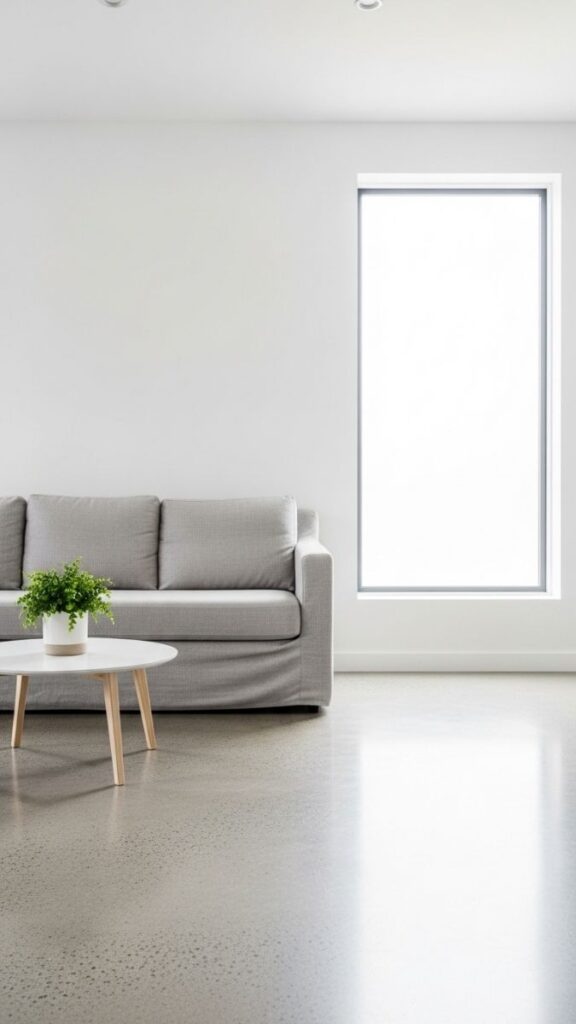
The instinct in most living rooms is to fill every surface, every corner, every wall. Luxury design consistently moves in the opposite direction.
Leaving one wall completely bare, keeping a side table with a single object, or pulling furniture away from walls to create breathing room around pieces these decisions communicate confidence in the objects that are present.
A room with a breathing room looks composed. A room where everything is filled to capacity looks crowded regardless of how expensive each individual piece is.
What Actually Makes These Living Room Luxury Decor Ideas Work
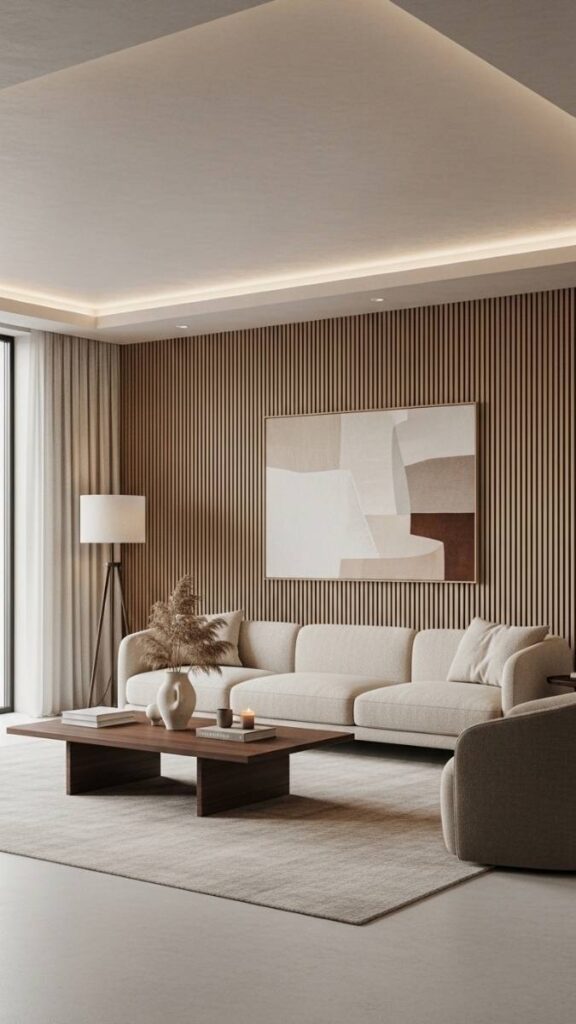
Warm metals, warm wood tones, or cool metals and stone rarely both), appropriate scale furniture that fits the room’s proportions rather than fighting them), and layered lighting that adjusts to how the space is being used.
Scale is worth dwelling on because it’s the most frequently misjudged variable. A sofa that’s too small for a large room makes the space feel sparse in the wrong way. A rug that’s too small makes a seating area feel untethered.
A piece of art that’s too small above a sofa reads as an afterthought. Before purchasing anything new, measure both the room and the existing furniture and work from those numbers rather than from visual guessing.
Material consistency is the other factor that separates a collected-looking room from one that feels random. This doesn’t mean everything should match, it means the finishes, tones, and textures should share a relationship.
Warm woods pair naturally with warm neutrals and brass. Cool stone and marble pair with white, grey, and matte black or chrome. Mixing both temperature families in the same room tends to make the space feel unresolved, even if each individual piece is attractive on its own.
Living Room Luxury Decor Setup Comparison Guide
| Idea | Best For | Space Type | Problem Solved | Effort Level |
| Oversized pendant light | All layouts | Any size | Flat lighting, no focal point | Low |
| Ceiling-to-floor curtains | Rooms needing height | Small to medium | Low ceilings, bare windows | Low |
| Large area rug | Open-plan or floating furniture | Medium to large | Untethered seating area | Low |
| Statement armchair | Incomplete seating arrangements | Medium rooms | One-dimensional furniture layout | Low–Medium |
| Two-tone wall treatment | Rooms lacking character | Any size | Flat, featureless walls | Medium |
| Built-in shelving with negative space | Rooms needing storage and style | Any size | Clutter, dead wall space | Medium |
| Marble or stone coffee table | Rooms needing a grounding piece | Medium to large | Visual imbalance at center | Low–Medium |
| Layered lighting (3 sources) | All living rooms | Any size | Flat or harsh lighting after dark | Low–Medium |
| Curved sofa | Square or rigid-feeling rooms | Medium to large | Stiff, corporate-feeling layout | Medium–High |
| Sculptural floor lamp | Corners or beside seating | Any size | Dark corners, dead zones | Low |
Common Living Room Decor Mistakes That Make the Space Feel Less Luxurious
Furniture pushed flat against every wall.
This is the most reliable sign of an unplanned layout. Pulling sofas and chairs a few inches or a few feet away from the wall creates breathing room between pieces and makes the arrangement look considered rather than defensive. The walking space between furniture should be at least 30–36 inches on the main pathways.
Matching everything too closely.
A fully matched furniture suite (sofa, loveseat, and two chairs all from the same collection in the same fabric) is the opposite of curated. Intentional variety in materials and silhouettes while staying within a coherent tone palette is what gives a room personality and the impression that it’s been thoughtfully assembled rather than bought in a single afternoon.
Treating lighting as an afterthought.
One ceiling light on full brightness is functional but never comfortable. The rooms that feel genuinely luxurious are almost always lit from multiple angles at varying intensities. If your room currently has only one light source, that’s the first thing worth changing before making any other purchases.
Buying too small across the board.
Small rugs, small art, small mirrors these are the scale mistakes that most consistently undermine an otherwise decent room. The instinct to buy small (cheaper, safer, easier to return) works against you in living rooms where scale is one of the primary signals of confidence and intention.
FAQ’s
What makes a living room look luxurious without spending a lot?
Scale, lighting, and material consistency do most of the work. A large rug that extends under furniture, curtains hung from ceiling height, and layered lighting with at least two or three sources will upgrade the feel of a room significantly; none of these require expensive furniture.
How do I choose luxury decor for a small living room?
Focus on pieces with lifted legs (sofas, chairs) to maintain visual floor space, use a large mirror opposite a window to amplify light, and keep the furniture arrangement tight to one zone rather than spreading it around the room. Scale pieces up slightly rather than buying small to “fit” a correctly sized rug reads better than an undersized one in any room.
What color palette works best for a luxurious living room feel?
A neutral base warm white, greige, oat, or soft beige with one deep accent tone works across most room sizes and lighting conditions. In 2026, warm terracotta, dusty sage, and deep plum are the accent tones that tend to read as elevated rather than trendy when used in small doses.
Is it better to invest in a sofa or lighting for a luxury living room?
Both matter, but if forced to choose lighting first. A mediocre sofa in a well-lit room looks better than a beautiful sofa under a single harsh overhead light. Layered lighting is the most consistently underrated improvement in living room design.
How many decorative objects should be on a coffee table?
Three to five objects in a loose triangle arrangement is a practical starting point one tall element (a vase or candle), one flat element (a book stack or tray), and one small accent (a stone, small sculpture, or coaster). The goal is a composition that looks deliberate without appearing staged.
What’s the difference between maximalist luxury and minimal luxury in a living room?
Maximalist luxury relies on layering rich fabrics, multiple patterns, collected objects, warm deep colors all held together by a consistent color temperature and material quality. Minimal luxury relies on scale, negative space, and material refinement. Both work; the choice depends on how you actually want to live in the room, not just how you want it to photograph.
Should a living room have matching furniture?
Not entirely. A cohesive room usually has matching tones and material temperatures but fully matched furniture suites can feel rigid and showroom-like. Mixing one or two different pieces within the same color family reads as more considered and naturally assembled.
Conclusion
A living room that feels genuinely luxurious isn’t the result of expensive purchases, it’s the result of decisions that compound. The right rug size, the right curtain drop, the right number of light sources, the right amount of space left deliberately empty. Each of those decisions individually seems small. Together, they’re the difference between a room that functions and a room that actually feels good to be in.
Start with one or two ideas that address your room’s most obvious issue whether that’s scale, lighting, or a layout that never quite settled. Adjust, observe how the space feels, and build from there. The key is finding what works for your specific room rather than recreating a room that looks good in a photo but doesn’t suit how you live.