56+ Modern Rustic Bathroom Ideas That Feel Warm, Grounded, and Genuinely Livable
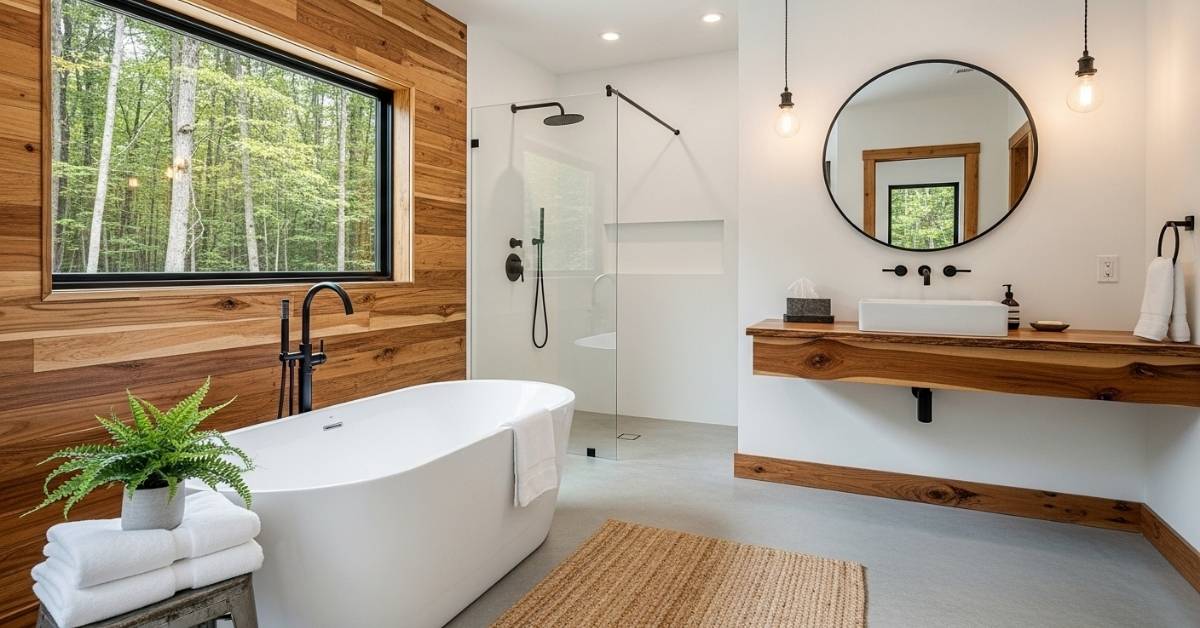
If your bathroom currently feels cold, generic, or just… lacking something you can’t name this is the direction worth exploring. Modern rustic works especially well in spaces where you want texture Modern Rustic Bathroom Ideas and warmth to do the heavy lifting, without relying on color or pattern to create visual interest.
This list is built for real homes, small apartments, older houses with dated bones, and rentals where you can’t touch the tile. Whether you’re starting from scratch or refreshing what’s already there, these ideas are meant to be actually usable.
Warm Wood Vanity with Matte Black Hardware in a White Tiled Bathroom
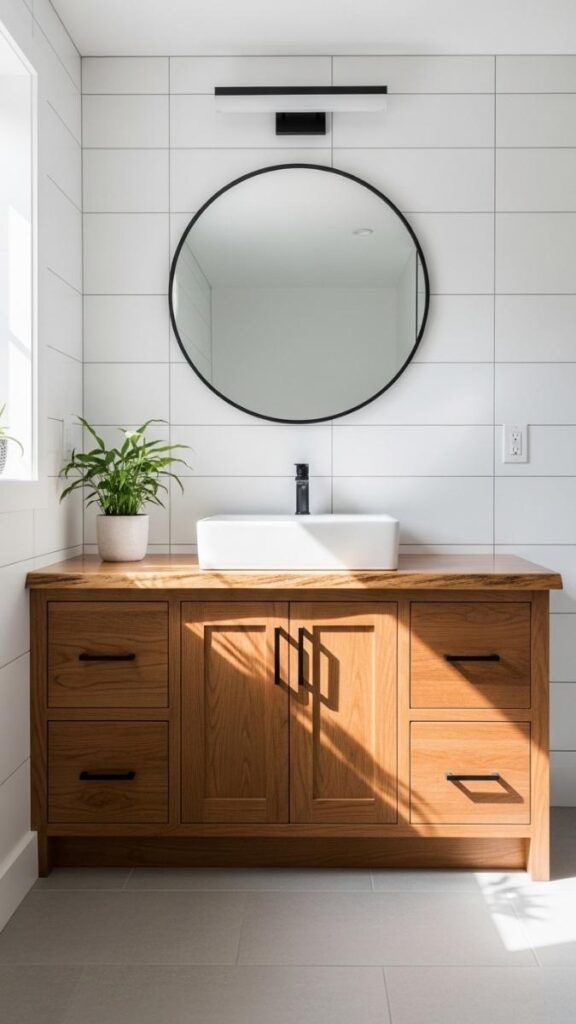
A wood vanity in a white-tiled bathroom does something interesting: it keeps the space bright while giving it enough warmth to feel intentional. Go for walnut, oak, or teak in a natural or lightly oiled finish, and pair it with matte black fixtures rather than chrome.
The contrast between warm wood grain and flat black metal reads as modern; the natural material keeps it rustic. This works especially well in bathrooms that feel overly clinical or builder-basic, where one grounded material can shift the entire tone.
Exposed Brick Accent Wall Behind the Vanity
Not every bathroom can pull this off, but if you have brick behind drywall or access to thin brick veneer panels the visual payoff is significant. Position it on the vanity wall specifically, keeping the other walls clean and light.
The texture breaks up the flatness of a small bathroom without adding visual clutter, and the warm undertones in the brick play well against white, cream, or sage green color schemes.
For renters or those without real brick, peel-and-stick brick panels have improved enough in quality to be a genuinely workable option.
Shiplap Walls with a Freestanding Soaking Tub
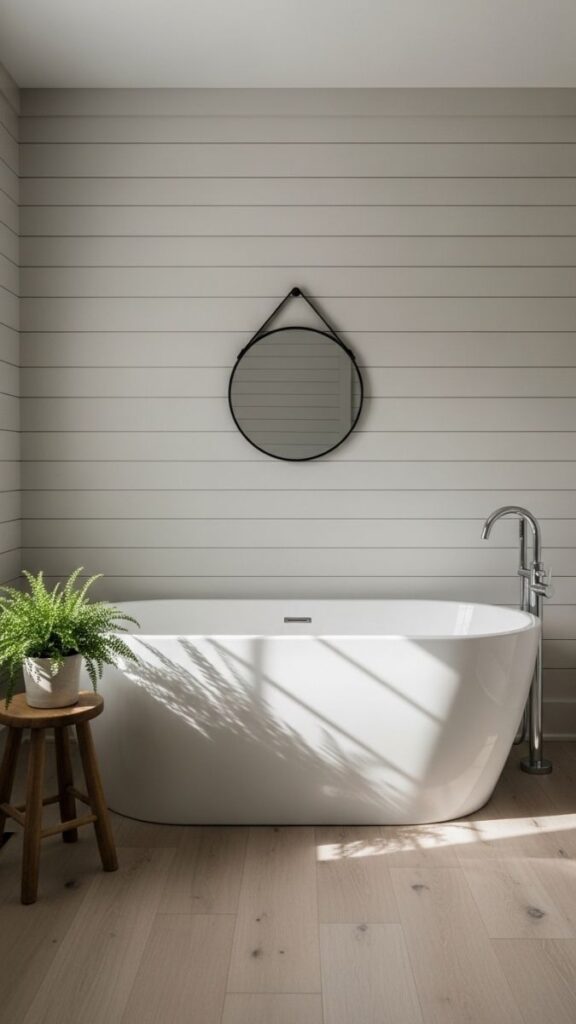
Shiplap and a freestanding tub is one of those combinations that works because both elements are textural without being complex.
The horizontal lines of the shiplap draw the eye across the wall, making narrow bathrooms feel wider, and the freestanding tub becomes a focal point without needing any surrounding built-ins
. Use a matte white or biscuit-finish tub rather than a glossy one; it keeps the palette cohesive and leans into the unpretentious quality that makes modern rustic feel livable rather than staged.
Read More About: 55+ Rustic Small Bathroom Ideas That Make Tiny Spaces Feel Warm and Intentional
Open Wood Shelving for Towel and Toiletry Storage
Closed cabinetry can make a small bathroom feel boxed in. Open wood shelving even just two or three simple floating planks keeps the walls from feeling heavy while giving you visible, accessible storage.
The key is editing what you put on display: rolled towels, one or two small plants, and a few glass or ceramic containers for everyday items.
I’ve noticed this approach works best when the shelves are kept genuinely tidy; open shelving amplifies both order and disorder, so the curation matters.
Stone or Pebble Tile Shower Floor for Natural Texture
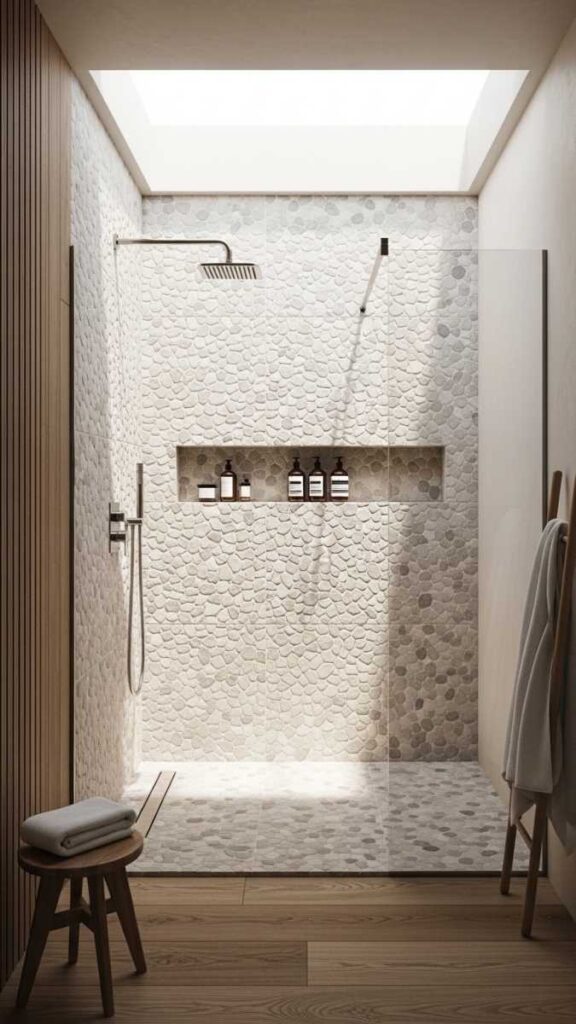
Pebble tile floors are one of the most underused moves in modern rustic bathrooms. They bring in an organic, tactile quality that standard ceramic tile simply can’t replicate, and they create enough visual interest at the floor level that you don’t need to layer much else in the shower.
The rounded stones are also naturally slip-resistant, which is a functional advantage beyond the aesthetic. Pair them with large-format smooth wall tiles to balance the visual texture; too much pattern at once overwhelms the space.
Concrete Look Walls with Warm Wood Accents
Concrete walls or plaster and tile that mimics the finish work in a modern rustic bathroom when they’re offset by enough warmth. On their own, concrete can read as cold and industrial.
Add a wood vanity, a jute or woven bath mat, and warm-toned lighting, and the combination shifts.
The concrete provides the modern backbone; the organic materials pull it back toward something comfortable.
This setup suits bathrooms with higher ceilings especially well, where the raw texture doesn’t make the space feel compressed.
A Vintage Mirror in a Contemporary Bathroom
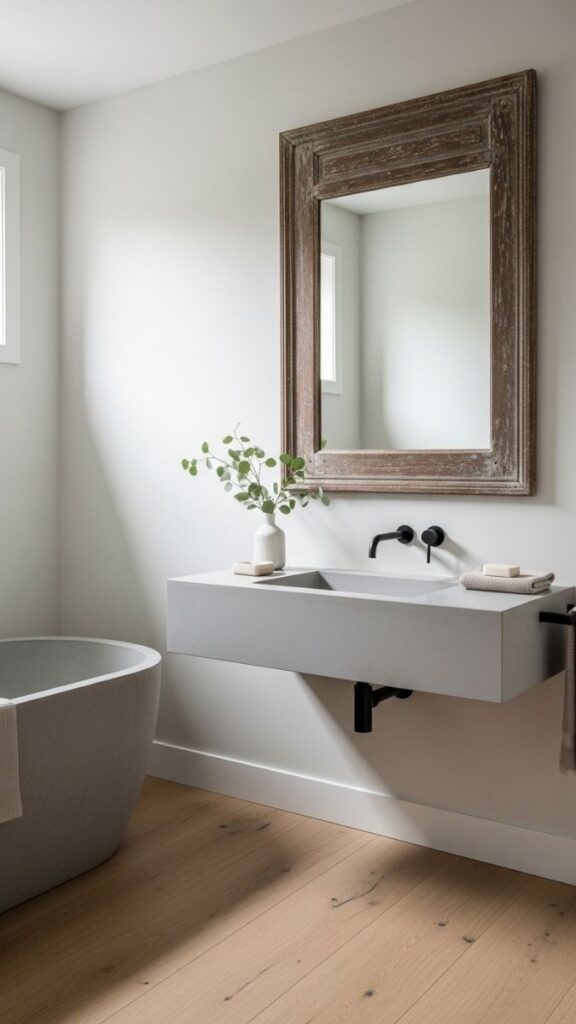
The mirror is often the easiest single upgrade in a bathroom. Swapping a builder-grade frameless mirror for one with a reclaimed wood frame, a weathered iron surround, or an antique-style arch introduces instant character without changing the layout or plumbing.
It works because the rest of the bathroom can stay clean and modern. The mirror carries the rustic note without the space becoming themed or overdone. Go for something with actual presence at least 24 inches wide, ideally taller than wide.
Warm Ambient Lighting with Edison Bulbs or Globe Sconces
Most bathroom lighting is designed for function, not atmosphere and that’s exactly why so many bathrooms feel flat or harsh.
Edison bulbs in a simple cage or industrial sconce, placed on either side of the mirror rather than overhead, give you even, warm light that suits the modern rustic aesthetic naturally.
It reduces shadows on the face and softens the entire room. If you can’t change the wiring, plug-in sconces on either side of the mirror are a legitimate alternative that doesn’t require an electrician.
Woven Baskets and Natural Fiber Storage
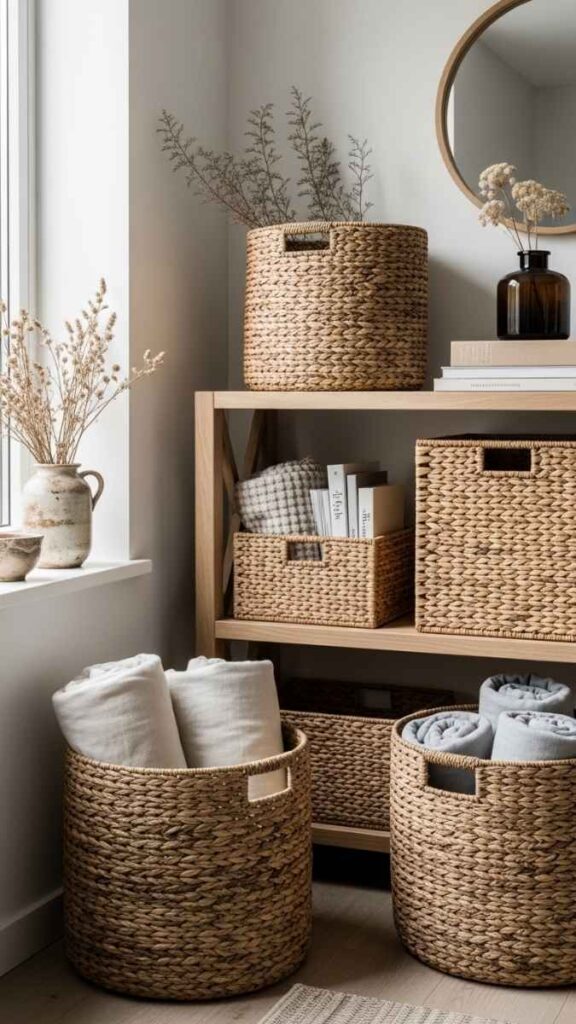
Storage that doesn’t look like storage is a real design skill. Woven baskets, seagrass, water hyacinth, or rattan hold extra towels, toilet paper, or toiletries while adding texture at floor level.
They work especially well in bathrooms where wall space is limited and you can’t add shelving. Position a larger basket beside the toilet or under a floating vanity, and a smaller one on the counter for frequently used items.
The natural fibers tie directly into the rustic side of modern rustic without requiring any installation.
Matte Terracotta or Earthy Tile in the Shower
Terracotta tiles have come back in a genuinely refined way in 2026 not the orange-heavy version from decades ago, but matte, slightly irregular tiles in warm clay and adobe tones that sit comfortably between rustic and contemporary. Use them on one shower wall or as a floor tile, keeping the surrounding surfaces neutral.
The matte finish is important here; it prevents the tiles from looking plasticky and keeps them from showing water marks as visibly as glossy surfaces do.
Read More About: 54+ Wall Decor Ideas for Living Room That Actually Work in Real Homes
Freestanding Ladder Towel Rack in Natural Wood or Black Metal
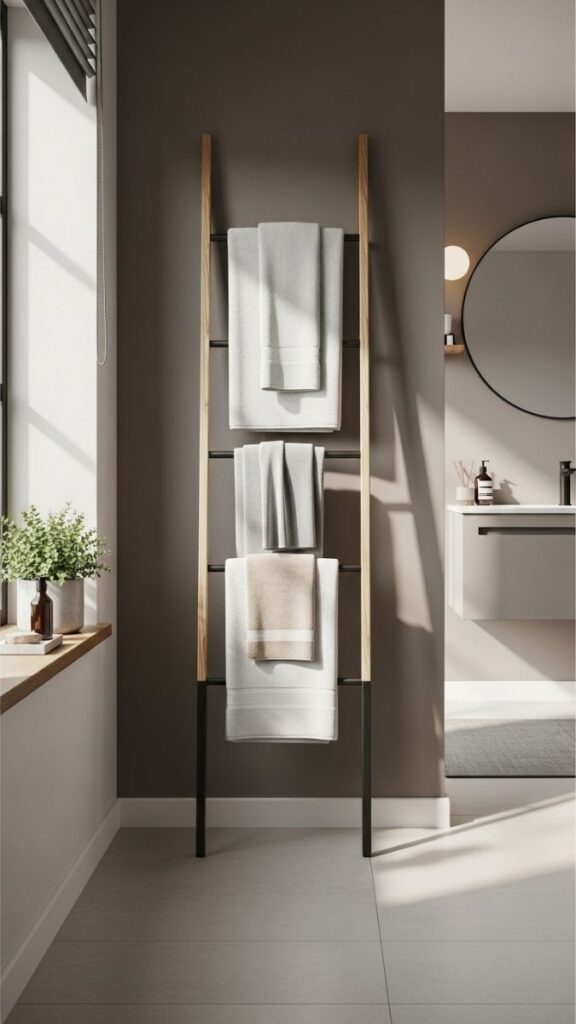
A ladder rack takes up no wall mounting, adds vertical interest without bulk, and serves a real functional purpose which is exactly the kind of solution modern rustic design does well. In wood, it reads warm and organic; in matte black metal, it leans more contemporary while still keeping a handcrafted feel.
Either version works well in small bathrooms or rentals where you can’t drill into walls. Lean it beside the tub or in an empty corner, and it immediately makes that area feel considered rather than unused.
Clawfoot Tub as the Room’s Anchor Piece
If you have the square footage, a clawfoot tub positioned away from the wall particularly near a window makes the bathroom feel intentional and unhurried.
The tub becomes the room’s visual center, which means surrounding elements can stay simple: a clean floor, an unfussy window treatment, a single shelf or hook.
The clawfoot silhouette itself does the heavy lifting aesthetically. In my experience, this works best when the floor is dark wood or stone tile. Light floors can make the white tub disappear rather than stand out.
Floating Vanity with Legs Visible, Paired with a Woven Mat
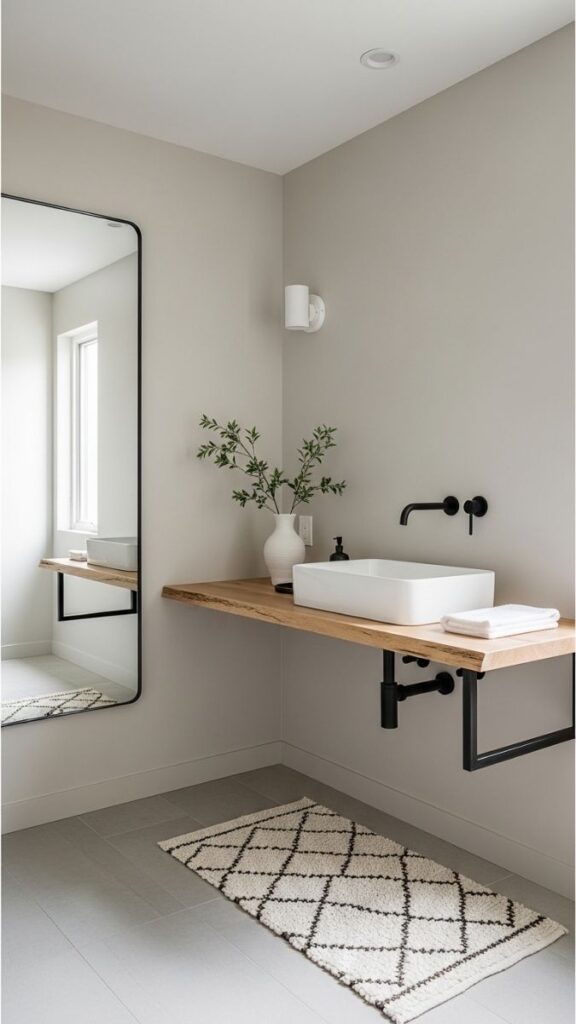
A floating vanity creates visual breathing room in a bathroom by revealing the floor beneath it; the eye reads the continuous floor plane as spacious rather than cut up by furniture. Pair it with a woven jute or cotton bath mat rather than a thick plush one,
Which keeps the natural texture on the floor without adding visual weight. This combination suits smaller bathrooms particularly well, where any impression of openness helps the space feel larger than it is.
Dark Grout with White Subway Tile for a Moodier Look
White subway tile with white grout reads clean but flat. Switch the grout to charcoal, slate gray, or even dark brown, and the same tile suddenly has definition, depth, and a character that leans distinctly modern rustic.
The grid becomes visible and graphic, which adds pattern without adding a new material. This works in any size bathroom, though it’s especially effective in small spaces where you want the tile to feel designed rather than default.
A Live Edge Wood Shelf or Countertop
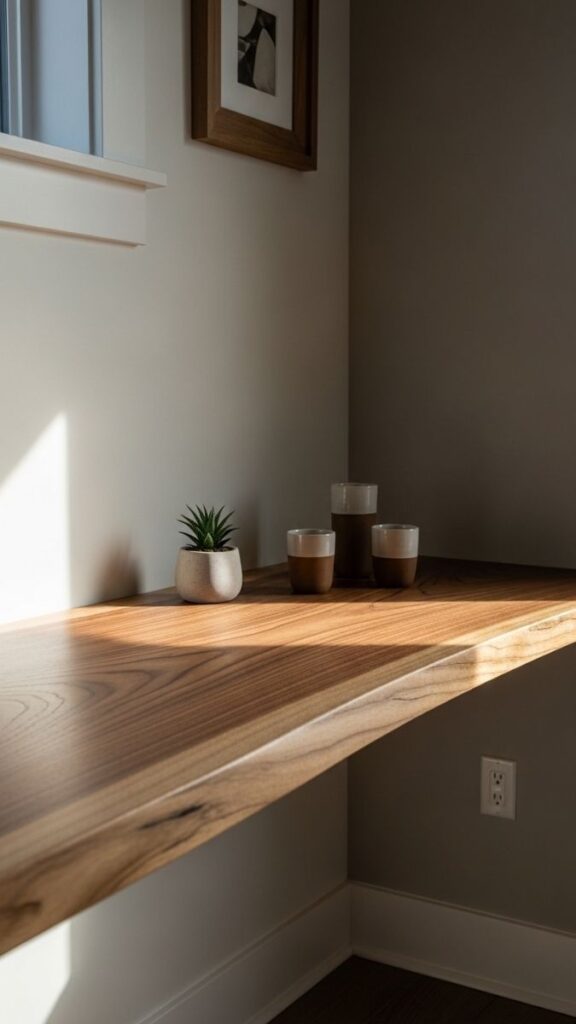
A live-edge slab as a bathroom shelf or vanity countertop brings in an unmistakably natural element; the irregular edge of the wood is the point, not a flaw.
Used as a floating shelf above the toilet or as an actual vanity surface with a vessel sink, it introduces organic form into a space that’s usually made entirely of straight lines and hard surfaces. Seal it properly for moisture resistance, and it’s a genuinely durable surface.
This is one I’d recommend trying first if you want a single material to do most of the rustic work in an otherwise contemporary bathroom.
Read More About: 53+ Rustic Farmhouse Decor Ideas That Make Any Room Feel Warm, Lived In, and Pulled Together
Sage Green Walls with Natural Wood and White Fixtures
Sage green has staying power beyond the trend cycle because it works with almost every natural material wood, stone, linen, terracotta without competing.
In a bathroom, it reads calm and grounding rather than bold, and it pairs especially well with warm wood tones and white fixtures.
It suits both small powder rooms and larger primary bathrooms, though in smaller spaces it works best when kept to the walls only, with everything else staying neutral.
Rainfall Showerhead with Teak Shower Bench
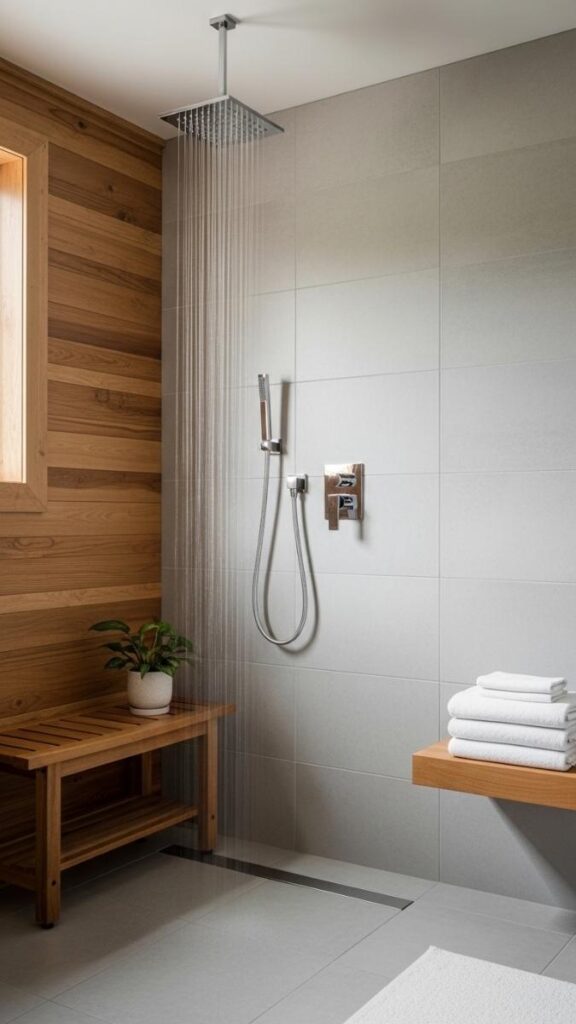
The rainfall showerhead alone reads contemporary; add a teak bench and you shift the space toward something warmer and more considered.
The slatted wood bench allows water to drain through, which makes it practical, and the natural teak tones against white tile or stone is a classic modern rustic contrast.
It works in any walk-in shower with enough floor space roughly 36 by 36 inches minimum and it addresses the very real usability need for a surface to rest items or sit on while in the shower.
Brushed Brass or Unlacquered Brass Fixtures
Brass fixtures went through a long period of being associated with dated design, but brushed or unlacquered brass with its warmer, slightly muted finish sits differently. It’s close enough to gold to feel elevated, but organic enough to complement natural materials without clashing.
In a modern rustic bathroom, brushed brass on the faucet, towel bar, and mirror frame ties the hardware together and introduces warmth at the detail level. Unlacquered versions develop a subtle patina over time, which actually suits the rustic aesthetic rather than working against it.
Reclaimed Wood Ceiling for a Cabin Inspired Mood
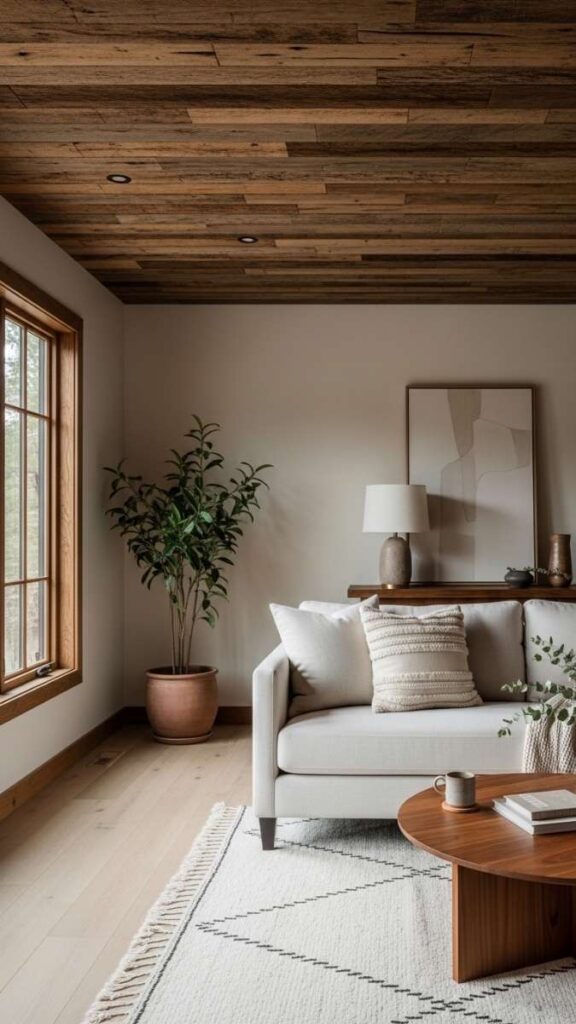
Ceilings are the most ignored surface in bathroom design. A reclaimed wood plank ceiling even in a small bathroom adds warmth from above and creates an enveloping, cabin-like quality that no wall treatment quite replicates.
Because it’s elevated, it doesn’t reduce the sense of space the way a wood-covered wall might. Use lighter-toned reclaimed wood rather than very dark planks in smaller rooms, and ensure proper sealing and ventilation to handle moisture over time.
Vessel Sink on a Simple Wooden Console
A vessel sink on an open console table skips the closed cabinet entirely, which makes the bathroom floor feel more open and the setup feel less conventional. The exposed plumbing below in matte black or brushed brass becomes part of the design rather than something to hide.
This works in bathrooms where storage is handled elsewhere (linen closet, open shelving on another wall), and it suits renters or anyone who wants a furniture-style vanity without a custom build.
Linen Curtain as a Shower Curtain in Neutral Tones
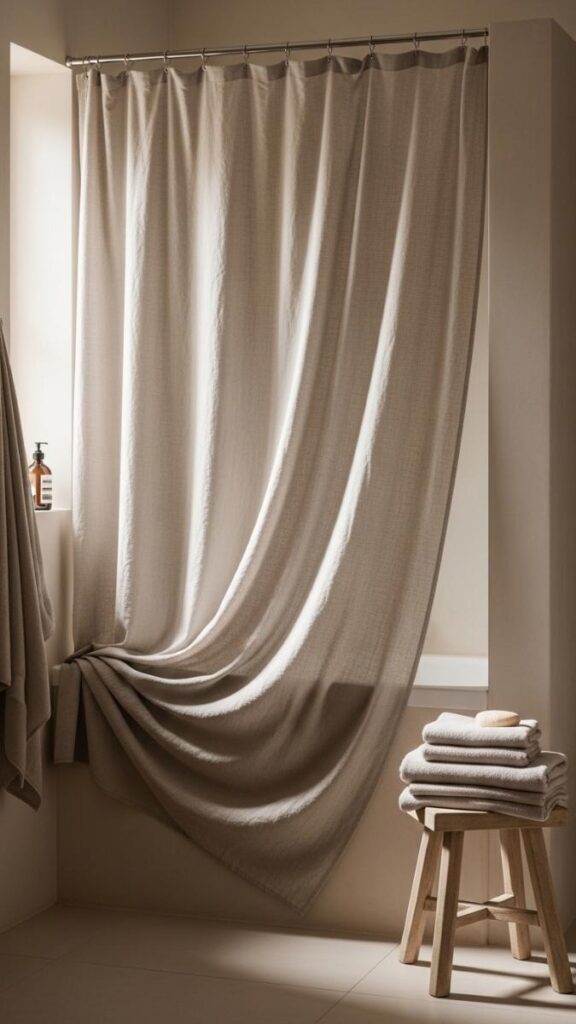
A linen or cotton shower curtain in natural, unbleached tones does more visual work than it gets credit for. It softens the lines of the tub area, introduces fabric texture into a hard-surface-heavy room, and has a quiet, unpretentious quality that plastic or synthetic curtains simply don’t have.
Hang it slightly higher than the tub and let it puddle very slightly at the bottom for a more relaxed effect. Make sure the curtain itself is a water-resistant linen or paired with a basic clear liner inside.
Stone Countertop with Visible Veining in the Vanity Area
A stone countertop with visible natural veining marble, quartzite, or a quality stone-look porcelain introduces organic patterns without requiring any decorative objects. The veining does the visual work; the surrounding surfaces can stay quiet.
Go for honed rather than polished finish if you’re leaning rustic; it’s less reflective, more tactile, and significantly more forgiving in terms of scratches and water marks. This suits any size vanity and works particularly well when the cabinetry below is warm wood.
Hanging Eucalyptus or Dried Botanicals in the Shower
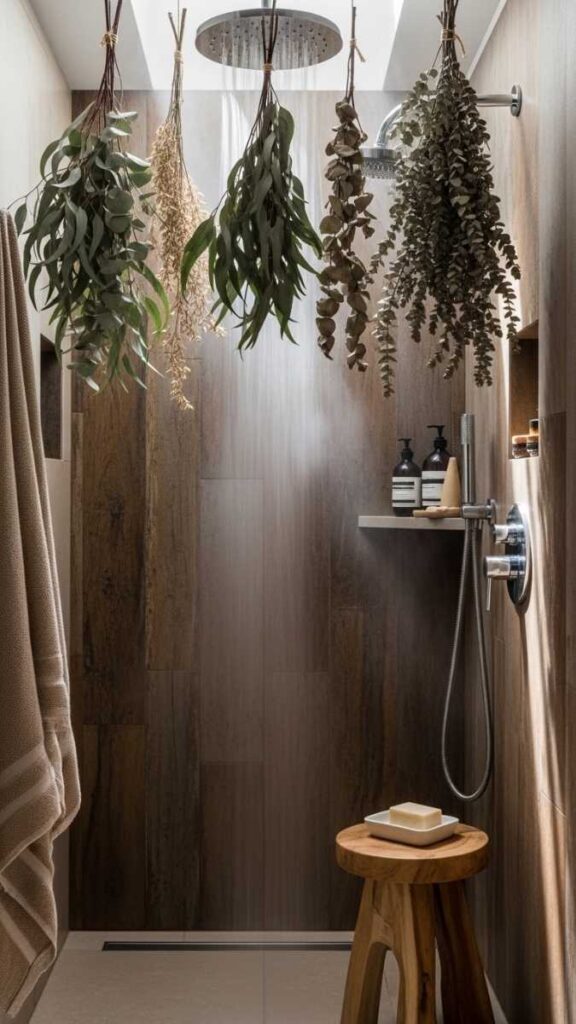
Honestly, this one delivers more impact than it has any right to. A small bundle of eucalyptus tied to the showerhead with twine adds a natural, spa-adjacent element that fits the modern rustic aesthetic without requiring a purchase of anything heavy or permanent.
The steam from the shower releases the scent, which is the practical appeal but the visual effect of something living and organic in a hard-surfaced room is also genuinely compelling. Replace every two to three weeks as it dries.
Penny Tile Floor in an Earthy Mosaic Pattern
Penny tile floors are intricate enough to feel intentional and small-scale enough to suit compact bathrooms without overwhelming the space.
An earthy mosaic mixing cream, sand, and terracotta tones gives the floor a handcrafted quality that reads as both modern and rustic simultaneously.
The small scale of the tiles also makes irregular floor shapes (like around a toilet base or curved wall) easier to tile cleanly. Keep the grout tone close to the lighter tiles to unify rather than grid the pattern.
Industrial Pipe Shelving with Reclaimed Wood Planks
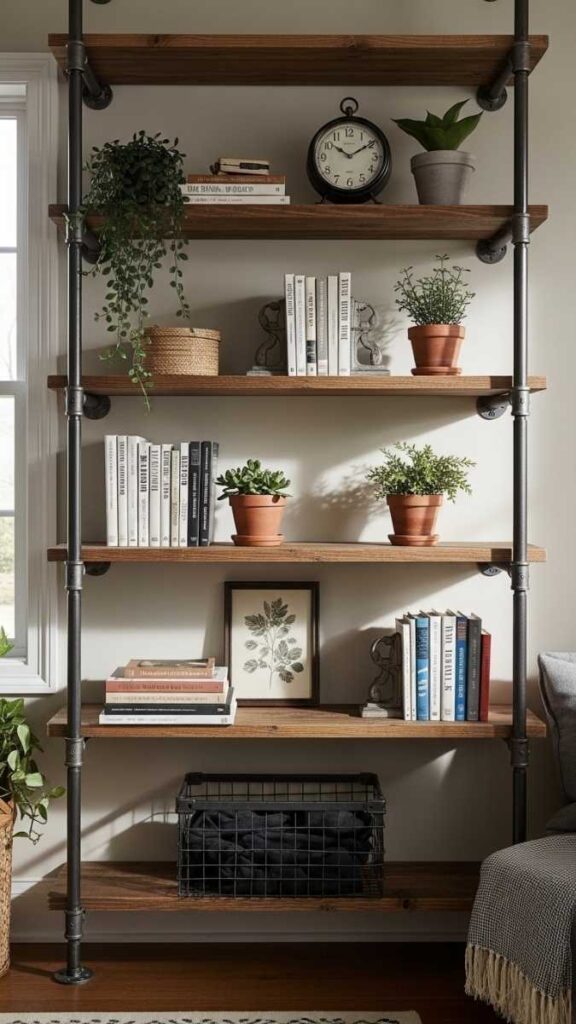
Pipe shelving has been around long enough to feel slightly familiar, but in a bathroom context where the alternative is often nothing it still delivers well.
The contrast of the industrial black pipe brackets against the organic grain of reclaimed wood planks is exactly the kind of material dialogue that defines modern rustic.
Mount two shelves at different heights for visual rhythm. It works especially well above the toilet where wall space is usually wasted, and the open construction means the wall still reads as relatively uncluttered.
Deep Charcoal or Slate Blue Wall as a Statement
A deep, muted wall color charcoal, slate blue, or even near-black in a small bathroom can read either claustrophobic or intentionally moody, depending on how it’s handled. Keep the ceiling white and the floor light.
Use warm metal fixtures rather than chrome or cool-toned hardware. Add at least one natural material (wood shelf, woven mat, plant) to prevent the space from feeling cold. Done this way, the dark wall creates depth and intimacy rather than compression.
Textured Plaster Walls in a Muted Earth Tone
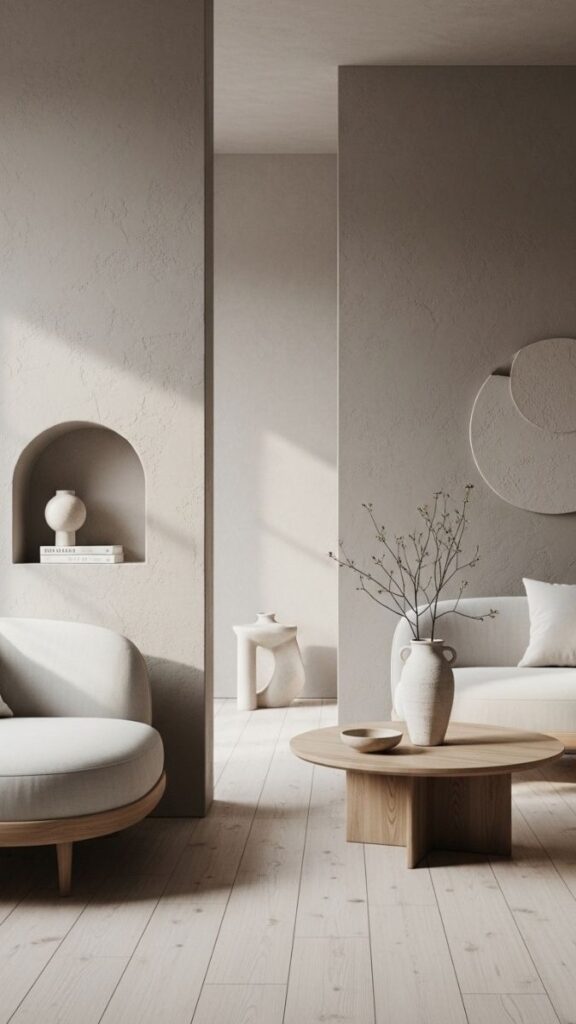
Textured plaster or a limewash paint applied in a similar technique is one of the most effective ways to introduce rustic character into a bathroom without adding any objects or furniture. The wall itself becomes the texture.
Applied in muted sand, warm greige, or aged clay tones, it creates an effect that reads as crafted and considered rather than finished and smooth.
It works in every size bathroom, and in 2026 it’s becoming a strong alternative to the all-tile approach, particularly for homeowners who want warmth without the visual busyness of patterned tile.
What Actually Makes Modern Rustic Bathrooms Work
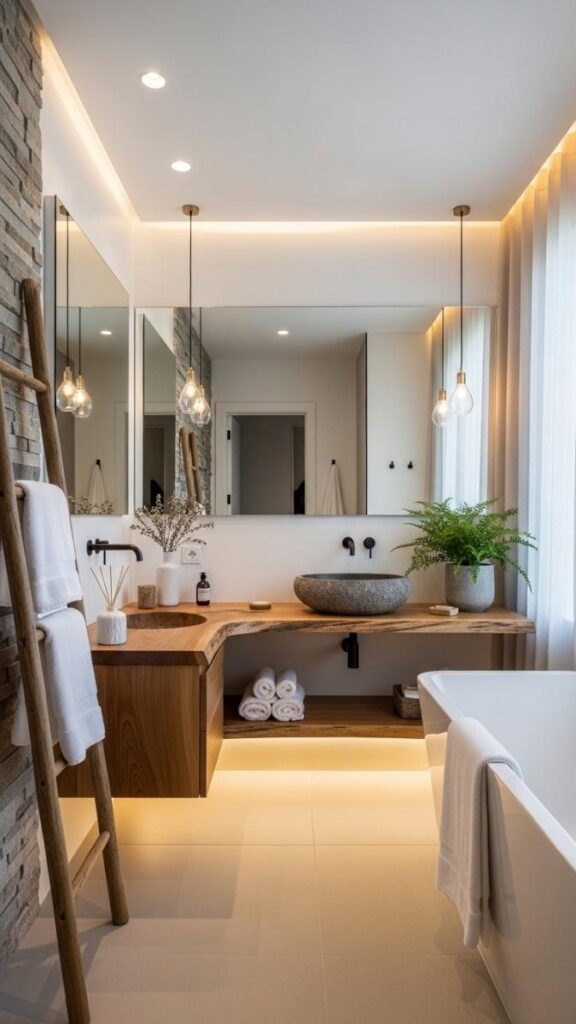
The term “modern rustic” gets applied loosely, which is part of why so many attempts at the look fall flat; they end up either too cold or too themed. The setups that actually work share a few common principles worth understanding before you start buying anything.
Material contrast is the mechanism.
Modern rustic isn’t a single aesthetic; it’s a conversation between two sets of materials. The “modern” side brings clean lines, smooth surfaces, matte finishes, and geometric forms. The “rustic” side brings wood grain, stone texture, natural fibers, and organic forms. The interplay between these, not an excess of either is what creates the balance. A bathroom that’s all concrete and black metal reads industrial. A bathroom that’s all reclaimed wood and wicker reads farmhouse. The middle ground is where modern rustic people actually live.
Scale matters more than quantity.
One generous natural element (a live-edge countertop, a stone accent wall, a freestanding wood-framed tub) does more than five small rustic accessories scattered around the room. In a bathroom especially, where surfaces are already busy with fixtures and plumbing, restraint in layering is essential.
Lighting defines the mood.
Warm light 2700K to 3000K color temperature is non-negotiable in a modern rustic bathroom. Cool or neutral white light flattens wood tones and makes natural materials look washed out. Sconces at face level, rather than overhead fixtures alone, give the space warmth and dimension without requiring structural changes.
Modern Rustic Bathroom Ideas Quick Comparison Guide
| Idea | Space Type | Key Material | Problem Solved | Difficulty |
| Wood vanity + matte black hardware | Any size | Wood + metal | Generic, clinical feel | Low |
| Exposed brick accent wall | Medium–large | Brick/veneer | Flat, textureless walls | Medium |
| Open wood shelving | Small–medium | Wood | Limited storage, heavy walls | Low |
| Pebble tile shower floor | Any shower size | Natural stone | Bland shower, slip risk | Medium |
| Vessel sink on wood console | Small–medium | Wood + ceramic | Heavy vanity blocking floor | Low–Medium |
| Textured plaster walls | Any size | Plaster/limewash | Cold, flat wall surfaces | Medium |
| Clawfoot tub | Large | Cast iron/acrylic | No focal point | Low (if replacing existing) |
| Pipe shelving + reclaimed wood | Any size | Wood + iron | Wasted wall space | Low–Medium |
| Dark accent wall | Small–medium | Paint | Lacks depth and mood | Low |
| Brushed brass fixtures | Any size | Brass | Inconsistent hardware, cold finishes | Low |
How to Design a Modern Rustic Bathroom Without Overcomplicating It
The most common mistake in modern rustic bathrooms is treating it as a checklist adding shiplap, a wood vanity, woven baskets, Edison bulbs, and exposed pipe all at once and wondering why the space feels chaotic. The issue isn’t the individual elements; it’s the lack of hierarchy.
Start with the largest surface.
Walls and floors set the foundation. If you’re tiling the shower or floor, make that decision first; everything else adapts to it. A stone or terracotta tile floor, for example, already brings enough rustic texture that you don’t need much more. A smooth white tile floor means you have more room to layer natural materials on the walls and in the accessories.
Choose one material anchor.
In a smaller bathroom, pick one primary natural material to lead wood, stone, or plaster and let everything else support it. If the vanity is wood, keep other organic elements quieter (woven mat, small plant, natural-finish mirror). If the wall is stone or plaster, the vanity and accessories can be simpler and more contemporary.
Don’t resolve every surface.
Modern rustic bathrooms that feel genuinely relaxed usually have a few surfaces that are plain and undesigned a white wall, a simple floor, an unfussy ceiling. Those neutral areas give the textured, natural elements room to breathe. The goal is not to fill every surface; it’s to make a few surfaces count.
Work with the light you have.
If your bathroom gets natural light, lean into it natural materials look their best in natural light and don’t need much styling support. If it’s a windowless interior bathroom, warm artificial lighting is doing everything, so invest there before anything else.
FAQ’s
What is modern rustic bathroom design?
Modern rustic combines contemporary elements with clean lines, matte finishes, minimal clutter with natural, organic materials like wood, stone, and linen. The result is a bathroom that feels warm and textured without being themed or overly decorated. It’s less about matching a specific look and more about the balance between refined and natural.
How do I add rustic character to a bathroom without renovating?
Focus on what you can swap or add without touching tile or plumbing. Replace the mirror with a wood-framed or vintage-style one, add open wood shelving, swap out hardware for matte black or brushed brass, and use a natural linen shower curtain. Lighting upgrades switching to warm-toned bulbs or adding plug-in sconces make one of the biggest differences with minimal effort.
Does modern rustic work in a small bathroom?
Yes, and it often works better in small bathrooms than more maximalist styles. The key is restraint: choose one or two natural materials rather than layering many, use open shelving instead of bulky cabinetry, and keep the color palette neutral. A floating vanity with visible floor space and open wood shelving above the toilet can make a compact bathroom feel considered rather than cramped.
Shiplap vs. plaster walls which is better for a bathroom?
Shiplap gives more defined texture and a cabin-adjacent feel; plaster (or limewash) reads softer and more artisanal. Shiplap requires proper sealing in wet zones and suits a more structured, architectural look. Plaster works in any size bathroom, is easier to apply in irregular spaces, and suits a quieter, more organic aesthetic. For renters or those wanting lower commitment, limewash paint applied over existing walls achieves a similar effect to plaster without structural work.
What colors work best in a modern rustic bathroom?
Warm neutral sand, warm white, greige, sage green, and muted terracotta are the most compatible with the natural materials in a modern rustic palette. Avoid cool grays or bright whites, which tend to work against warm wood tones and organic textures. If you want a statement color, deep charcoal or slate blue can work when balanced with warm wood, brass fixtures, and adequate warm lighting.
Is brushed brass or matte black better for modern rustic bathrooms?
Both work, but they read differently. Brushed brass adds warmth and pairs naturally with wood tones and organic materials; it suits a softer, more refined version of modern rustic. Matte black reads more contemporary and creates stronger contrast, which works well in bathrooms with lighter walls and floors. If your space leans warmer (wood, terracotta, plaster), go brass. If it’s cleaner and more graphic (white tile, concrete), matte black is the stronger choice.
What flooring works best in a modern rustic bathroom?
Stone tile, pebble tile, terracotta tile, and dark wood-look porcelain are all strong options. Natural stone (marble, slate, travertine) is the most elevated but requires sealing maintenance. Pebble tile adds the most organic texture. Terracotta works best in warmer, Mediterranean-leaning palettes. If you prefer a warmer wood look without the moisture risk of real wood, a matte-finish wood-look porcelain in a longer plank format is the most practical choice.
Conclusion
A modern rustic bathroom doesn’t need a full renovation to feel genuinely well-designed. The ideas in this list range from paint and hardware swaps to more involved changes like new tile or a freestanding tub and the ones that tend to make the most impact aren’t necessarily the most expensive. Warm lighting, a wood vanity, and one textured surface can shift the entire feeling of a bathroom that currently feels flat or cold.
Start with whatever your space is most lacking if it’s warmth, prioritize wood tones and lighting; if it’s texture, look at the walls and floor; if it’s storage that’s causing visual clutter, open shelving or woven baskets can help immediately. Pick one or two ideas that fit your space, budget, and the bones you’re working with and build from there.