50+ Cabin Decorating Ideas That Make Any Space Feel Warm Cozy and Intentionally Designed
If your cabin feels either too sparse or too cluttered or just a little off in a way you can’t name you’re not alone. Most cabin spaces struggle with one of three things: scale Cabin Decorating Ideas (furniture that’s too small or too large for the room), lighting that’s either too bright or too dim, and decor that leans so heavily into “rustic” that it loses any sense of ease. This list works around all three.
Whether you’re decorating a weekend getaway, a fulltime mountain home, or a compact rental cabin, these ideas are built around real spaces, real constraints, and setups that actually hold up beyond the first Instagram photo.
Layer Your Lighting With at Least Three Sources
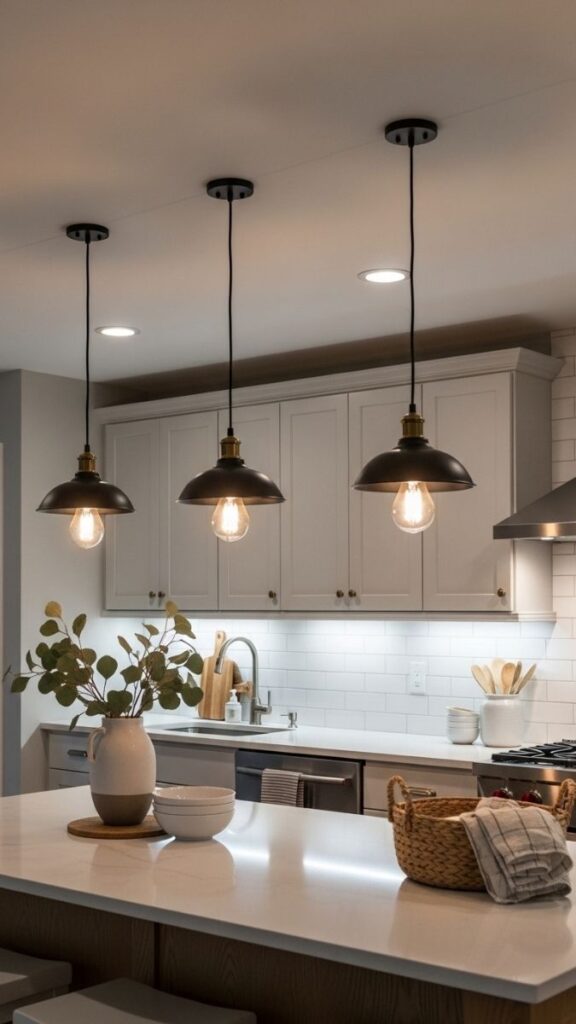
Singlesource lighting is one of the fastest ways to make a cabin feel flat and uninviting and it’s incredibly easy to fix. The goal is three layers: ambient (overhead), task (table or floor lamps), and accent (candles, fireplace glow, or LED strip under shelving).
In a cabin setting, warmtoned bulbs in the 2700K–3000K range make the biggest difference. Pair them with natural wood lamp bases or wrought iron fixtures and the room starts to feel like it has actual depth.
This approach works especially well in open plan cabins where the living and dining area share one large space layered lighting zones each section without needing a wall between them.
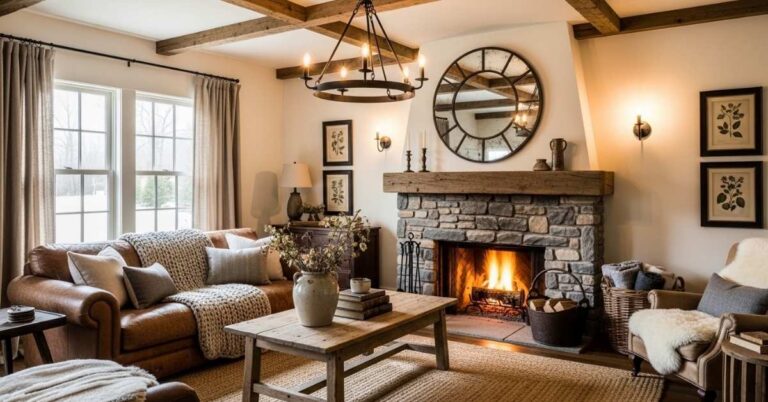
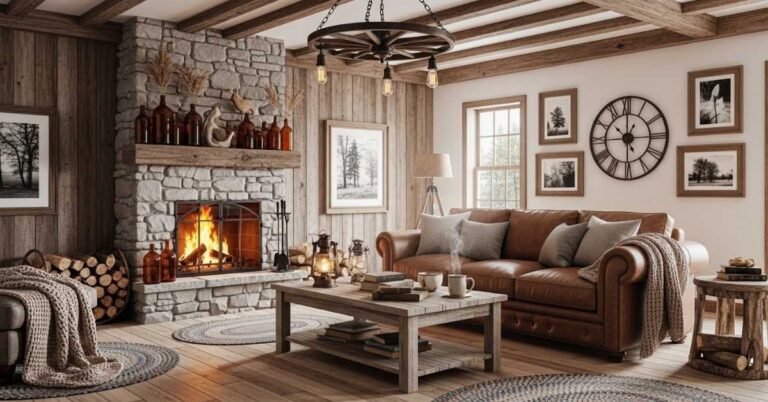
Anchor the Living Room With a Stone or Brick Fireplace Surround
A fireplace surround doesn’t need to be original to the cabin, stone veneer panels have gotten convincingly realistic, and the visual payoff is significant. The key is proportion; the surround should feel like the room’s anchor point, not an afterthought.
Arrange seating so the sofa and chairs face the fireplace rather than the TV, which immediately changes the social dynamic of the room. I’ve noticed this layout tends to make cabins feel much more intentional like the space was designed for actual gathering rather than passive screen time.
Works particularly well in living rooms with high ceilings where the vertical stone draws the eye upward and adds drama without adding clutter.
Use a Plaid or Buffalo Check Textile as Your Pattern Base
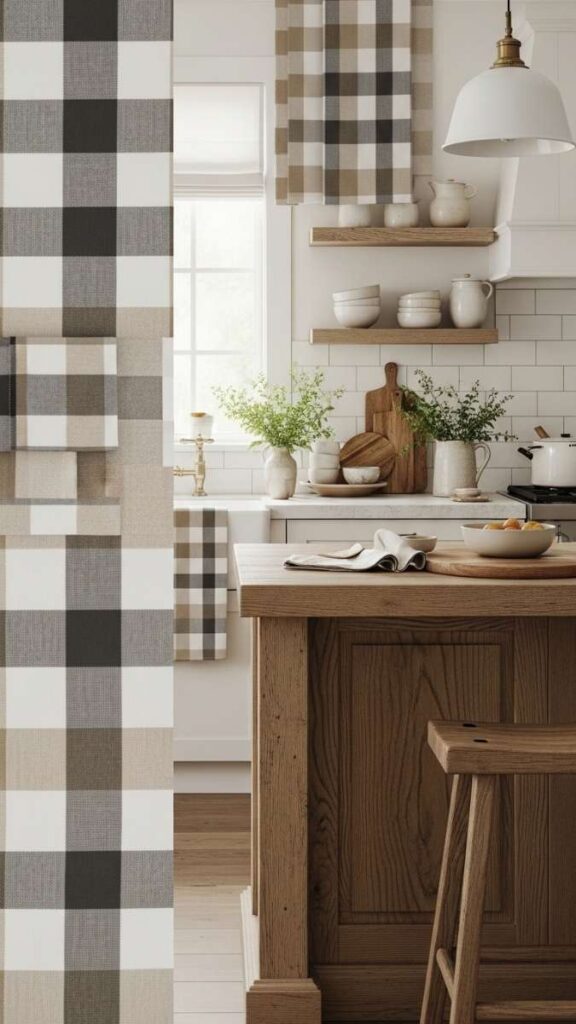
Plaid isn’t a trend in cabin decor, it’s a structural element. One wellchosen plaid textile (a throw, a set of pillows, or a window panel) gives the room a visual pattern anchor that everything else can stay neutral around.
The mistake most people make is using too many competing plaid scales at once. Pick one either a large buffalo check or a finer tartan and keep everything else in solid textures. Linen, wool, and brushed cotton work well alongside it.
This approach is especially useful in small cabin bedrooms where you want warmth and personality without visual noise.
Read More About: 49+ Rustic Kitchen Ideas That Make Your Space Feel Warm, Lived In, and Actually Functional
Build a Reading Nook Into a Dead Corner
Most cabins have at least one awkward corner too small for a full seating arrangement, too large to leave empty. A builtin or semibuiltin reading nook solves this without spending much.
A simple wooden bench with a hinged lid (for storage), a wall mounted lamp, and a few floating shelves above transforms dead space into the most used spot in the cabin.
For renters or nonpermanent setups, a freestanding corner bench with the same lamp and shelf configuration achieves nearly the same result. It’s one I’d recommend trying first if your cabin has an oddly shaped wall or an underused hallway alcove.
Mount Antler or Branch Style Coat Hooks Near the Entry
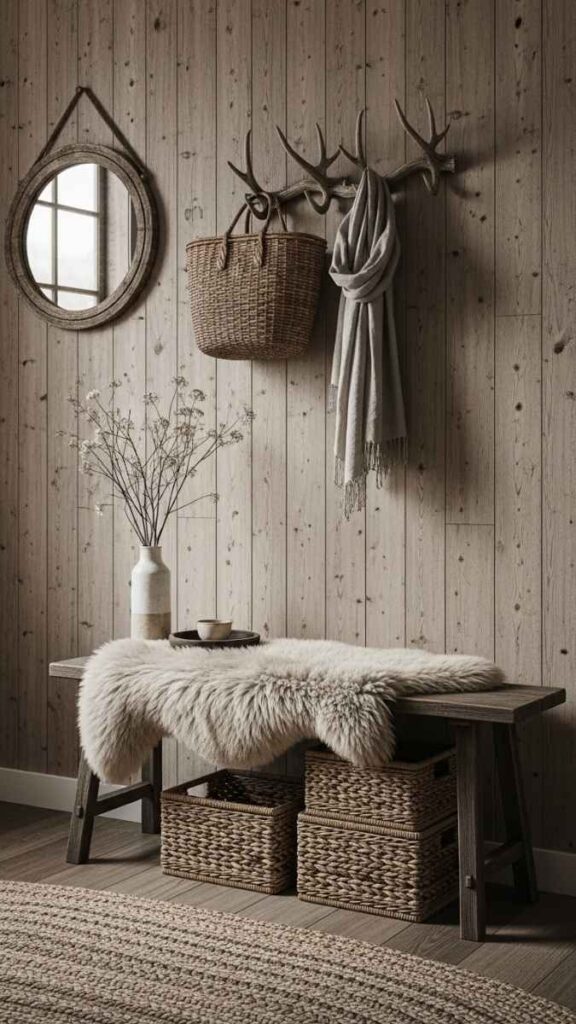
Cabin entries often have no real storage plan, which means coats, bags, and gear end up piled on furniture.
A row of antlerstyle or handforged iron hooks mounted directly on shiplap or wood paneling fixes the function and adds immediate character to an otherwise transitional space.
Keep it simple with three to five hooks, a low basket or crate underneath for shoes, and a small mirror nearby if the entry allows.
The visual effect is organized without feeling staged. This works in any cabin entry regardless of size, and it requires no cabinetry or major installation.
Go Faux Fur on One Surface, Not Every Surface
Faux fur throws, rugs, and pillow covers are everywhere in cabin decor right now and when overdone, they read as costume rather than comfort. The rule that actually works is one faux fur surface per room.
A single throw draped over a leather armchair, or a small faux fur accent pillow on a linen sofa, adds texture contrast without overwhelming the space. Pair it with harder materials leather, wood, stone so the softness registers as intentional rather than excessive.
This is particularly effective in rooms that already have a lot of natural wood tones, where the fur adds tactile warmth that wood alone can’t provide.
Use Open Shelving to Display Practical Items Beautifully
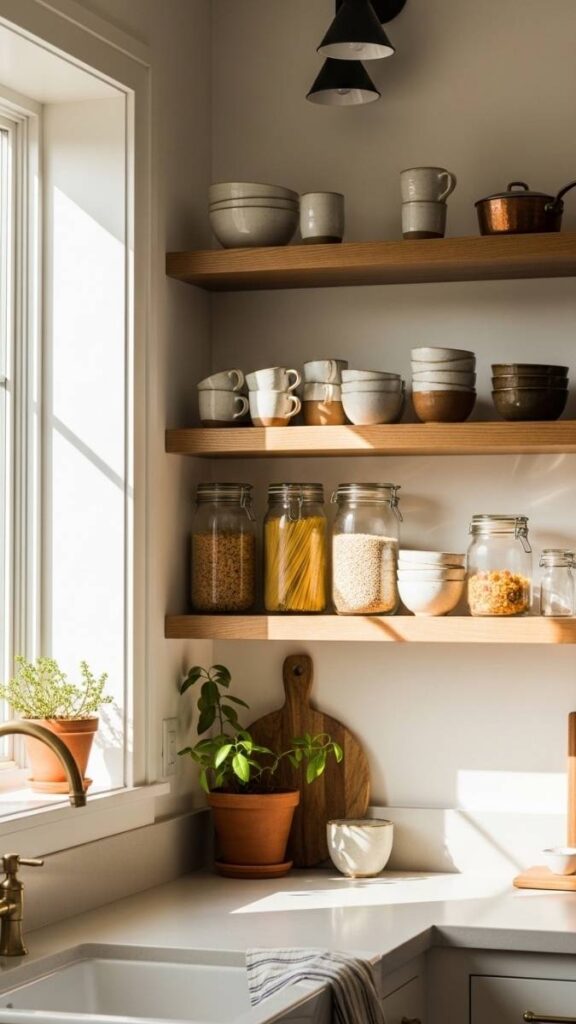
Open shelving in a cabin works differently than in a modern kitchen; the goal isn’t minimalism, it’s curated functionality. Stack enamelware, line up cast iron, use glass jars for dry goods. The objects themselves become the decor when they’re grouped by material and use.
Avoid mixing too many colors; staying within earth tones, cream, black, and natural wood keeps it cohesive. Undershelf lighting in warm tones pulls the whole setup together at night.
In small cabin kitchens where upper cabinet doors make the space feel tight and low, open shelving also visually opens the room by eliminating the hard edges of door fronts.
Read More About: 48+ Rustic Bedroom Ideas That Make Any Space Feel Warm, Grounded, and Effortlessly Lived In
Introduce a LiveEdge Wood Element as a Focal Feature
Liveedge wood slabs where the natural tree edge is preserved rather than cut straight brings an organic quality to cabin interiors that manufactured furniture simply doesn’t replicate. A liveedge dining table, console, or floating shelf becomes the room’s visual centerpiece without competing with anything around it.
The trick is to keep surrounding furniture simple and relatively straightlined so the live edge reads as a feature rather than clutter. Darker woods like walnut pair well with lighter walls and linen upholstery; lighter woods like maple or ash work better with darker or more rustic surroundings.
Hang Landscape or Nature Photography Instead of Conventional Art
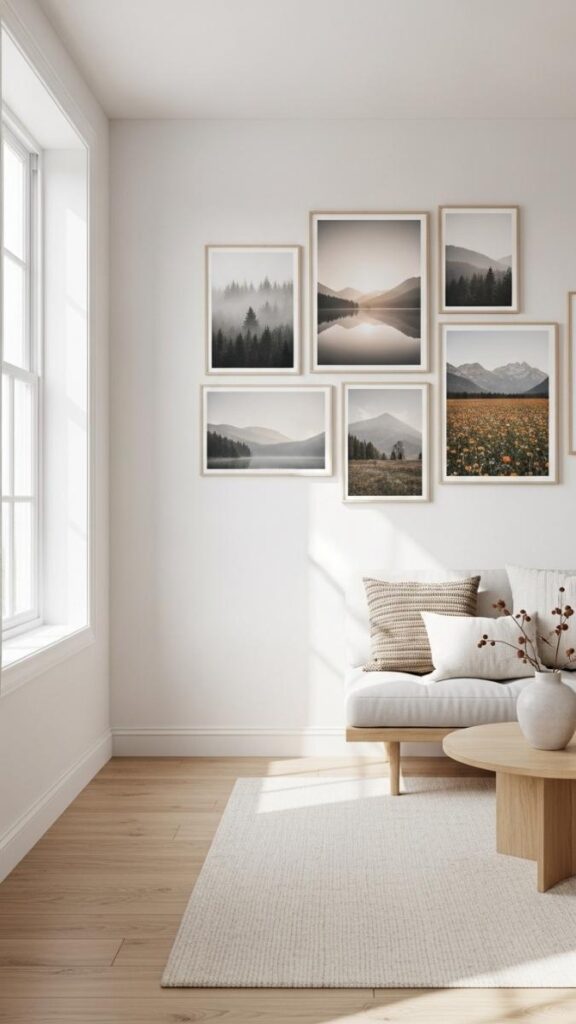
Abstract or fine art can feel out of place in a cabin not because it can’t work, but because landscape and nature photography connects the interior to the environment outside in a way that feels more intentional.
Large format prints of forests, mountains, rivers, or winter fields in simple wood or black frames create a gallery wall that actually makes sense in the space. Stick to a consistent color palette across prints all black and white, or all muted warm tones so the wall reads as a cohesive collection rather than a random assortment. This works especially well in hallways and stairwells where wall space is long and uninterrupted.
Ground the Bedroom With a Chunky Knit or Woven Headboard
Headboards are often overlooked in cabin bedrooms in favor of just pushing the bed against a log or woodpaneled wall. But a woven or upholstered headboard adds a layer of softness that the hard surfaces of a cabin typically need.
Rattan, macramé, and chunky knit headboard styles all work well against natural wood walls; they add texture without competing. Woven rattan in particular photographs well in cabin settings and works in both rustic and more refined mountain home aesthetics.
For renters or anyone who can’t mount a headboard, a large woven wall hanging directly behind the bed achieves nearly the same visual effect.
Use a Persian or Vintage Style Rug to Warm Up Wood Floors
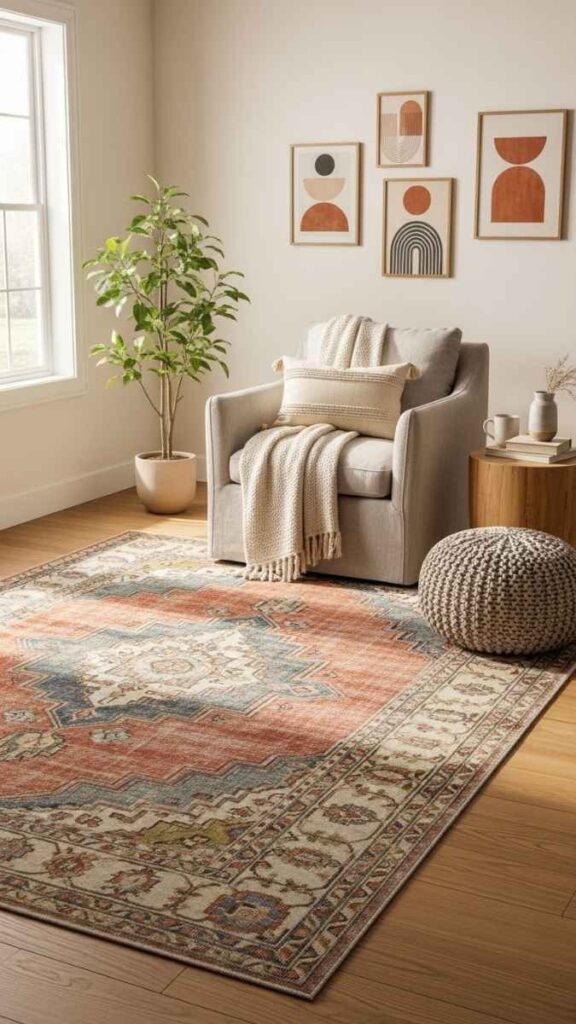
Natural fiber rugs like jute and sisal are popular in cabins, but in spaces with a lot of raw or rough texture already, a vintagestyle patterned rug adds the one thing most cabin rooms lack: visual depth.
A faded Persian or Oushakstyle rug in muted terracotta, navy, or olive grounds the seating area and introduces color without requiring you to paint a wall or buy new furniture.
Make sure the rug is large enough front legs of all seating pieces should sit on the rug, not float off the edge. In rooms with very busy wood grain or stone elements, a simpler pattern works better than a highly detailed medallion.
Install Shiplap or BoardandBatten on One Accent Wall
Not every wall in a cabin needs to be log or exposed wood in fact, painting one wall in shiplap or board and batten creates contrast that actually makes the natural wood on other walls stand out more.
White or warm cream painted shiplap behind a bed or fireplace functions as a neutral anchor that brightens the space without losing the cabin character.
It also works well in cabins that lean toward a more modern, rustic or Scandinavian influenced aesthetic where the full log look feels too heavy. Boardandbatten panels are a straightforward DIY if you’re working on a budget, and they add real architectural interest.
Create a Coffee Station That Doubles as a Decor Moment
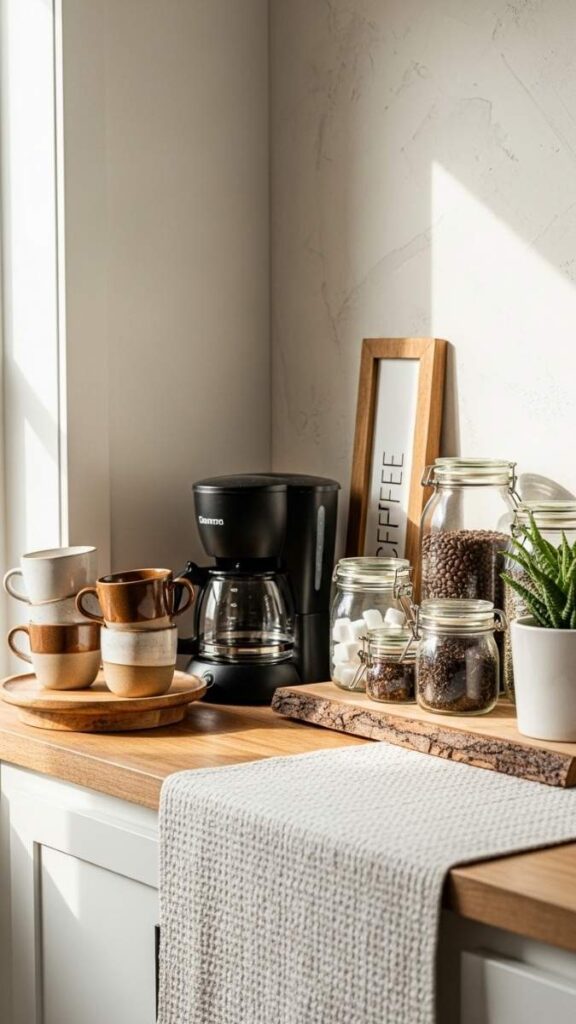
In a cabin where mornings feel like part of the whole experience, a dedicated coffee station earns its square footage. A single floating shelf, three or four hooks underneath for mugs, a pourover or French press setup, and a small canister for beans that’s the whole thing. Keep it tight and functional. The visual appeal comes from the material mix matte ceramic, dark wood, and a few hanging mugs in complementary tones.
It works in any corner of a cabin kitchen or even in a bedroom nook for smaller spaces. Honestly, it’s one of those setups that photographs well but is mostly just incredibly practical.
Lean Large Mirrors Against the Wall Rather Than Hanging Them
Hanging a mirror requires commitment especially in log or stone walls where drilling is involved. Leaning a large mirror (ideally arched or with a wide wood frame) against a wall achieves the same spatial and lighting effect without the installation.
The leaning position also works better in cabin aesthetics, which tend toward casual and layered rather than formally arranged.
Position it across from a window or a lamp to maximize light reflection. In small cabin living rooms or bedrooms, a leaned mirror with a shelf or basket in front of it adds the illusion of more square footage while keeping the space practical.
Bring in Dried or Preserved Botanicals for Low Maintenance Texture
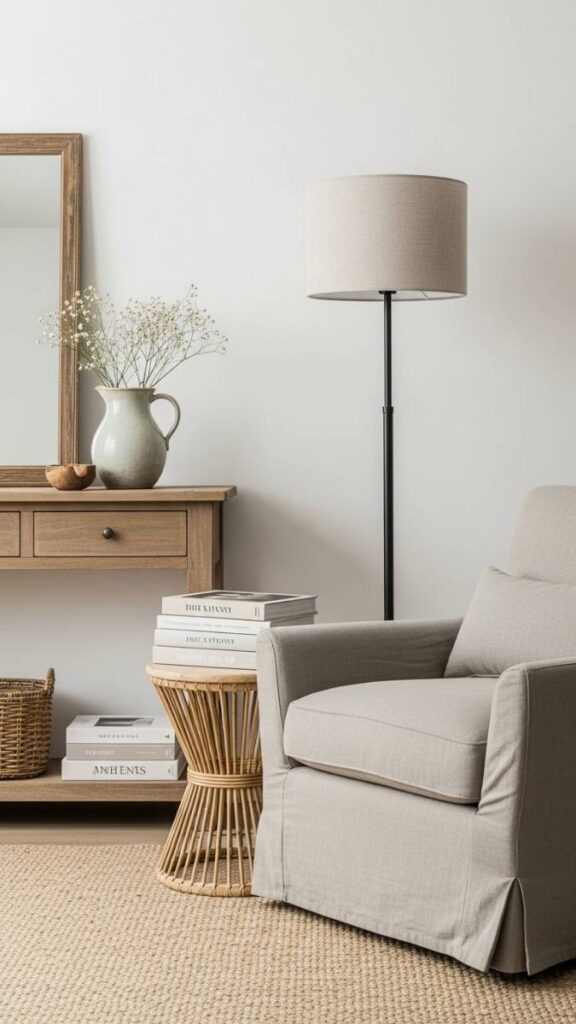
Fresh flowers are beautiful, but they’re high maintenance in a vacation cabin or a space you don’t live in fulltime. Dried botanicals, pampas grass, dried eucalyptus, wheat stalks, cotton stems hold their shape and texture indefinitely, requiring zero upkeep.
In a cabin setting they read as organic and grounded rather than dusty or dated (which was the knock on dried arrangements in the past).
A ceramic or stoneware vase in a neutral or earth tone keeps the arrangement from looking too crafty. Group stems loosely rather than tightly packing them the negative space between stems is part of the visual.
Read More About: 47+ Rustic Wedding Decor Ideas That Feel Warm, Intentional, and Totally Pinterest Worthy
16. Choose Furniture With Visible Wood Joinery and Craft Details
In an age where most furniture is flatpacked and seamless, cabin spaces have a genuine opportunity to celebrate craft. Furniture that shows its construction exposed joinery, handplaned surfaces, turned legs, dovetail drawers adds a layer of authenticity that manufactured pieces can’t replicate.
It doesn’t need to be custom or expensive; many small furniture makers and Etsy woodworkers produce this type of work at accessible price points. The visual payoff in a cabin setting is significant because the craftsmanship echoes the handbuilt quality of the structure itself.
Use Dark Cabinetry in the Cabin Kitchen to Anchor the Space
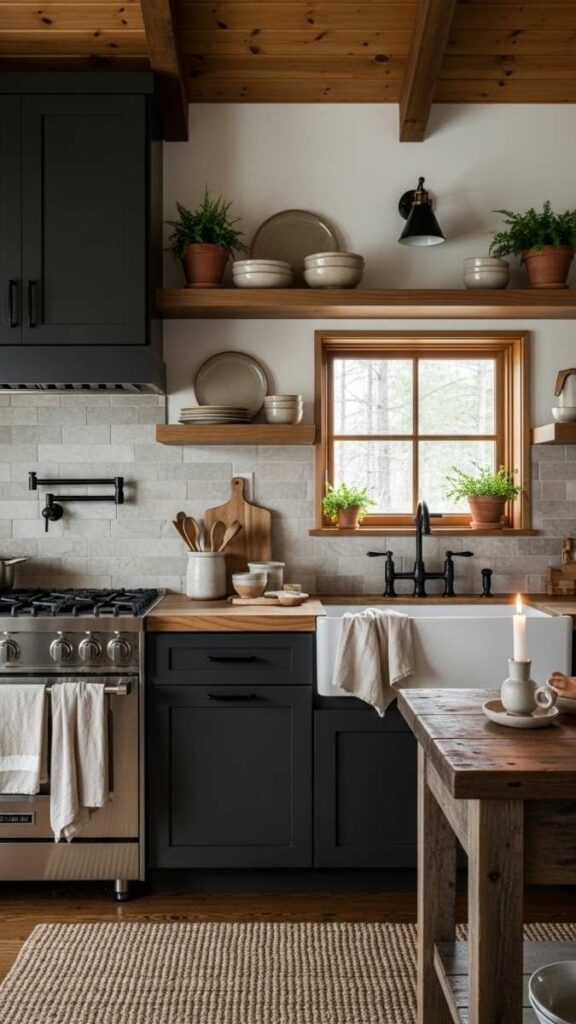
Light cabinetry is the default in most kitchens, but in a cabin where the walls, floor, and ceiling already carry a lot of warm wood tone, dark cabinetry creates definition and grounding. Deep forest green, navy, or charcoal shakerstyle cabinets with brass or black hardware feel distinctly intentional in cabin spaces more designed, less buildergrade.
The contrast between dark cabinets and natural wood surroundings creates the kind of visual balance that makes a kitchen feel finished. In 2026, this pairing dark cabinetry with warm brass and natural stone is one of the more lasting mountain home trends precisely because it photographs well and ages better than all white kitchens in rustic settings.
Install a Barn Door to Solve Layout Problems Without Losing Space
Traditional hinged doors swing into a room and eat into usable square footage, a real problem in compact cabin layouts. A sliding barn door solves this completely while adding a visual element that fits the cabin aesthetic without trying too hard.
Weathered wood, reclaimed planks, or even a simple X brace panel on painted wood all work. The hardware matters go for black or oilrubbed bronze over chrome or brushed nickel, which reads too modern against natural cabin materials.
Barn doors work especially well between a bedroom and bathroom, or between a living area and a bunk room in family cabins.
Add a Canopy or Curtain Over the Bed to Define the Sleep Zone
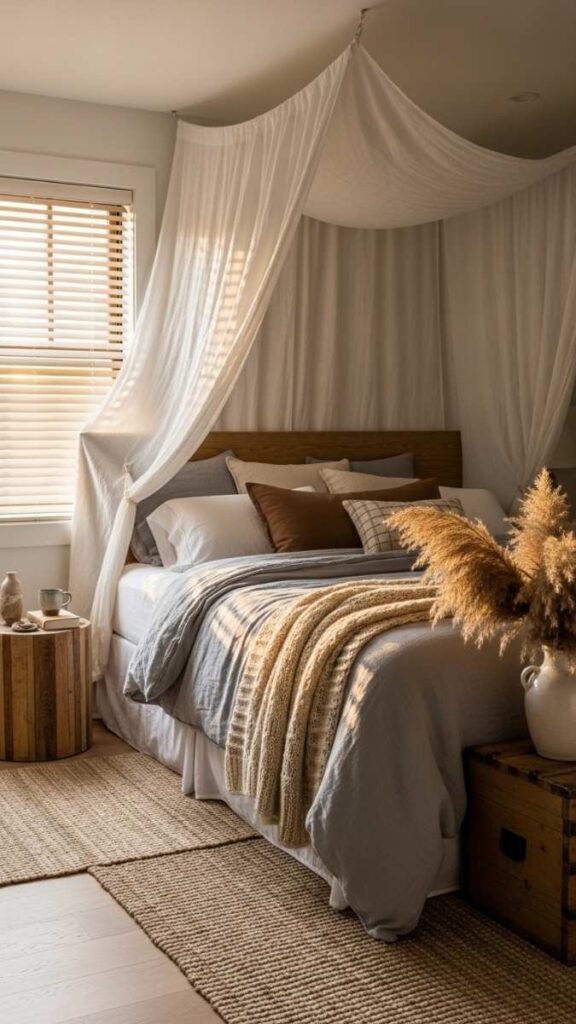
In open plan cabin spaces or rooms where the ceiling is very high, a bed can feel visually unmoored technically in the bedroom zone, but without enough definition to feel intimate or cozy.
A simple canopy muslin or linen fabric draped from a ceiling hook or basic wooden frame creates a contained sleeping area without building a wall.
The fabric softens the ceiling height and adds warmth that wood and stone alone don’t provide.
For very high ceilings, drop the canopy lower rather than draping it to the full height; the lower frame makes the bed feel more enclosed and restful.
Use a Vintage Trunk as a Coffee Table With Hidden Storage
Coffee tables in cabin living rooms face a specific challenge: they need to hold drinks, books, candles, and remotes while surviving weekend guests, kids, and muddy boot traffic.
A vintage trunk or blanket chest handles all of this while adding storage for extra throw blankets, something every cabin needs and rarely has enough of. Top it with a tray to organize smaller items and give the surface a more finished look.
The trunk’s patina and hardware add character that a standard coffee table in the same room might not. This works in any cabin living room size because trunks come in such a wide range of proportions.
String Edison Bulb Lights on a Covered Porch or Deck
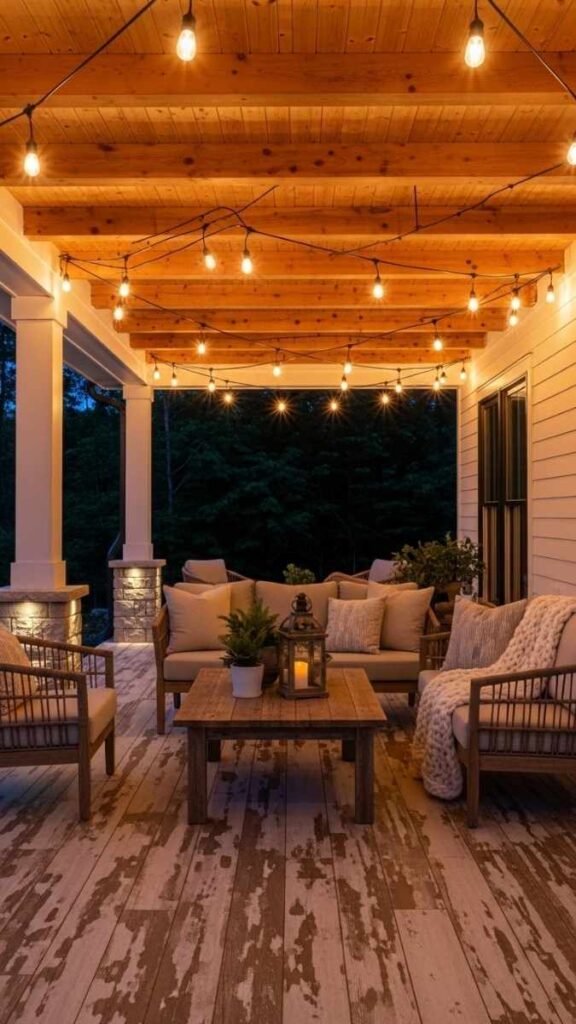
Cabin outdoor spaces are often an afterthought, but a covered porch or deck with good lighting becomes one of the most used areas of the whole property.
Edison string lights in a grid or swag configuration overhead extend usable hours after dark and create the kind of warm ambient glow that makes outdoor spaces feel like rooms.
Plug and drape setups with outdoor-rated string lights require no hardwiring, just a few hooks and an outdoor outlet. Pair with a couple of Adirondack chairs, a small side table, and you’ve created the most inviting spot on the property with minimal investment.
Paint Interior Trim and Ceiling Beams in a Deep Contrasting Tone
Most cabin ceilings default to matching the wall finish, all natural wood or all white.
Painting exposed ceiling beams in a contrasting tone (charcoal, black, deep walnut stain) creates architectural definition that draws the eye upward and makes the ceiling feel like a design choice rather than a construction detail.
Against a white or light ceiling panel, dark beams create a grid effect that feels intentional and slightly modern without losing the cabin sensibility.
This works best in rooms with at least 9foot ceilings; in lower ceiling spaces, dark beams can feel heavy rather than dramatic.
Cluster Candles of Varying Heights on a Stone or Wood Surface

Candlelight in a cabin hits differently than in any other setting; it amplifies the warmth of wood and stone in a way that electric light simply doesn’t.
Grouped pillar candles on a slate or wood slab, arranged in odd numbers at varying heights, create a centerpiece that requires no flowers, no fuss, and almost no cost.
Keep the candle tones consistent with all ivory, all beeswax, or all a single muted shade so the cluster reads as deliberate. On a fireplace hearth during months when the fireplace isn’t in use, this arrangement keeps the focal point of the room active and warm feeling year round.
Add Woven Basket Storage Everywhere You’d Normally Use a Bin
Plastic bins and generic storage boxes look out of place in a cabin setting, even when they’re functional. Woven baskets, seagrass, water hyacinth, rattan hold the same amount, fit the same spaces, and contribute to the room’s texture rather than working against it.
Use a large one beside the sofa for blankets, smaller ones on open shelving for remotes, books, and chargers.
The natural material blends into wood and stone surroundings without needing to be hidden. In my experience, this is one of those genuinely easy swaps that makes a cabin feel noticeably more considered with no layout changes, no paint, just different containers.
Create a Gallery Wall Using Topographic or Trail Maps
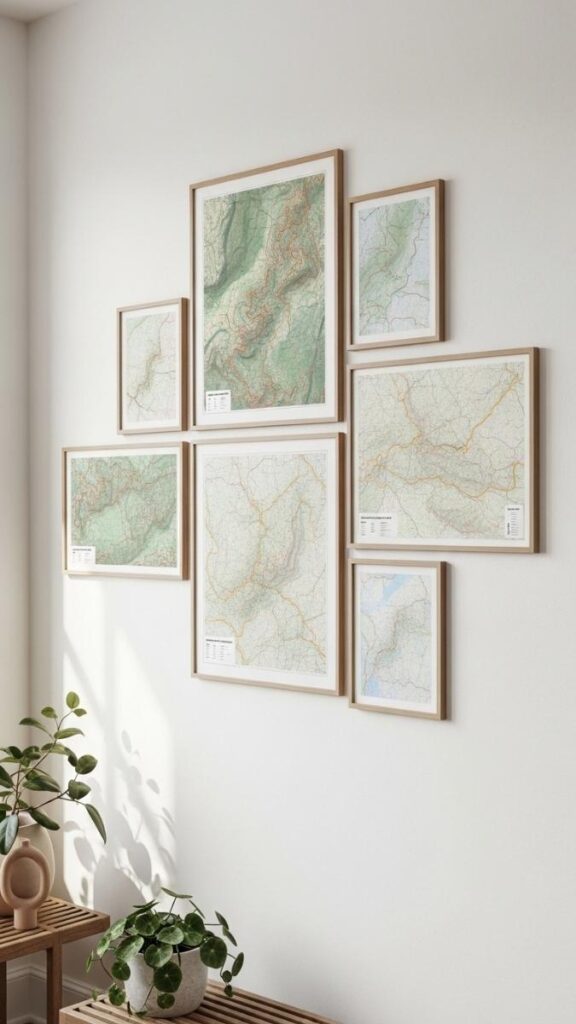
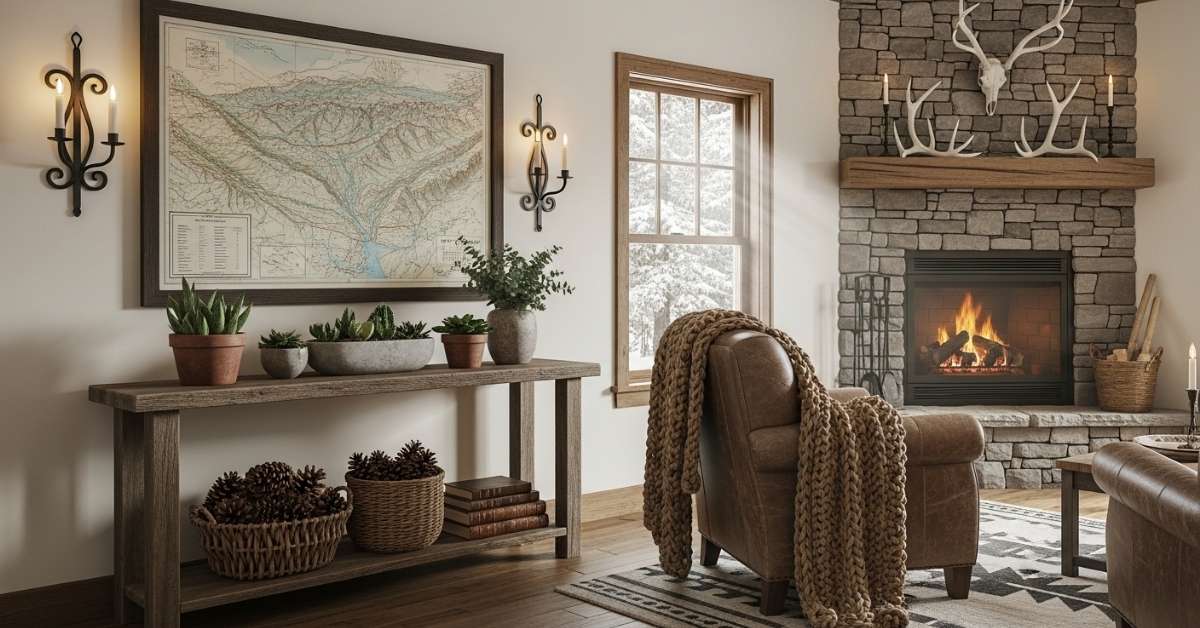
Topographic maps of nearby mountains, rivers, or trails serve as both art and personal reference in a cabin setting and they’re inexpensive to source and frame.
A grouping of three to five maps in natural wood frames creates a gallery wall with actual meaning tied to the location. Mix sizes (one large, two medium, two small) and align them loosely rather than in a rigid grid for a more organic arrangement.
Trail maps, watershed maps, and vintage USGS survey maps all work well and are widely available as reprints. This approach lands particularly well in cabins used by hikers, skiers, or fishing families.
Use a Plank Wood Ceiling Instead of Drywall
Drywall ceilings in a cabin can feel like an interruption to the one surface that doesn’t commit to the cabin aesthetic. Tongueandgroove wood plank ceilings in pine, cedar, or whitewashed wood enclose the space in a way that feels architecturally complete.
The ceiling becomes part of the overall material story rather than a neutral background. Cedar has the added benefit of a mild natural scent that reinforces the cabin atmosphere. For renters or those who can’t make structural changes, shiplap panels in the same tones applied to a feature ceiling section (over the bed or dining area) offer a similar effect with less commitment.
End the Entry With a Narrow Bench and Hooks Above
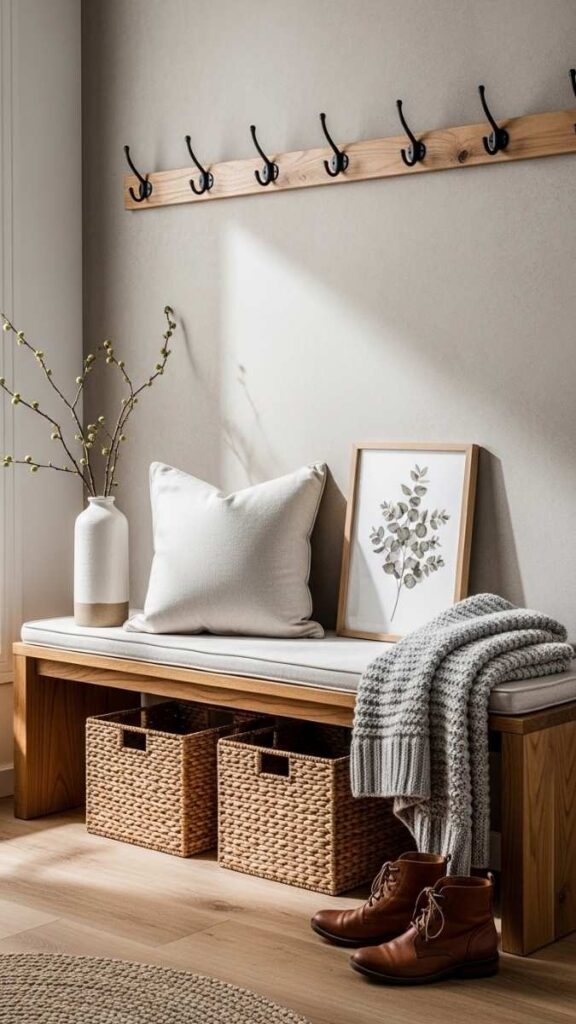
The entry of a cabin takes more abuse than any other room: wet boots, packed bags, ski gear, hiking poles. A narrow bench (ideally with cubbies or a lower shelf underneath) paired with wall mounted hooks above creates a functional drop zone that contains the chaos without requiring a mudroom addition. Keep the bench shallow 14 to 16 inches deep so it doesn’t obstruct the walkway.
A small woven rug in front of the bench catches dirt before it reaches the main floor. This setup works even in very tight entries (as small as 4 feet wide) and makes an immediate difference in how organized and welcoming the cabin feels when you walk through the door.
What Actually Makes These Cabin Decorating Ideas Work
The ideas above come from different directions: lighting, textiles, architecture, storage but they share a consistent logic: every element should either add warmth, improve function, or both. Cabin spaces fail most often not because of bad taste but because of mismatched scale, insufficient lighting, or a decorating approach that treats the cabin like a regular house that just happens to have wood walls.
A few principles worth keeping in mind as you plan
Material layering matters more than individual pieces.
A cabin room that mixes wood, stone, linen, leather, and woven natural fiber will always feel richer than one that’s all wood or all neutral fabric, even if the individual pieces are simpler. The contrast between hard and soft, rough and smooth, is what creates the tactile depth that makes cabin spaces feel genuinely warm.
Scale is the most common mistake.
Furniture that’s too small in a cabin’s great room creates the same disconnected feeling as furniture that’s too large in a city apartment; it makes the room look uncertain about itself. In open plan cabin spaces, go larger than you think you need a bigger sofa, wider coffee table, more generous rug. The bones of the space can handle it.
Lighting hours matter more than fixture style.
The best cabin aesthetic in the world falls apart if the lighting is wrong in the evening. Prioritize warm, layered light sources over aesthetic fixture choices, a perfectly styled room with overhead fluorescent light is less inviting than a simpler room with three warm lamps.
Cabin Decorating Ideas Setup Comparison Guide
| Idea | Best For | Space Type | Problem It Solves | Difficulty |
| Layered lighting (3 sources) | All cabin types | Any size | Flat, cold atmosphere | Easy |
| Liveedge wood feature | Main gathering rooms | Medium–large | Generic, buildergrade feel | Medium |
| Barn sliding door | Tight layouts | Small–medium | Wasted door swing space | Medium |
| Open shelving kitchen | Compact kitchens | Small | Heavy, closedin feel | Easy–Medium |
| Vintage trunk coffee table | Living rooms with storage needs | Any size | No blanket/item storage | Easy |
| Boardandbatten accent wall | Bedrooms, main walls | Any size | Flat, unfinished walls | Medium |
| Woven basket storage | Any room | Any size | Mismatched, out of place bins | Easy |
| Wood plank ceiling | Bedrooms, great rooms | Any size | Incomplete, unfinished ceiling aesthetic | Hard |
| Canopy over bed | High ceiling or open bedrooms | Large or open | Bed feels visually unanchored | Easy |
| Edison string lights on porch | Covered outdoor spaces | Any | Unusable after dark | Easy |
Common Cabin Decorating Mistakes That Make Spaces Feel Off
Going all rustic without any contrast.
Full log walls, log furniture, barktexture accessories, and a deer antler chandelier individually, any of these can work. Together, they create sensory overload and make the space feel like a themed attraction rather than a home. The most effective cabin interiors use natural and raw materials as a backdrop and introduce softer, more refined elements (linen upholstery, cleanlined furniture, matte ceramic) as counterbalance.
Underestimating rug size.
A rug that’s too small for the seating area, just the coffee table sitting on it, with the sofa legs floating off makes the whole room look tentative. In cabin living rooms, a rug that extends under the front legs of all seating pieces grounds the arrangement and gives the space a sense of boundary and completeness.
Using too many “cabincoded” accessories.
Pinecone candles, bear figurines, and “Cabin Sweet Cabin” signs all exist, and none of them are wrong on their own. The problem is accumulation when every surface holds a naturethemed object, the space stops feeling like a cabin anyone actually lives in and starts feeling like a gift shop. Edit aggressively one or two meaningful objects per surface, and the rest stays in a drawer.
Ignoring window treatments.
Bare windows in a cabin look unfinished even when the view is beautiful. Simple linen or cotton panels in a natural or warm tone frame the view, soften the edges of the opening, and add a layer of insulation and privacy. Roman shades in a neutral linen work well in smaller windows; full floorlength panels work best on larger windows or sliding doors.
Skipping the entry entirely.
The entry sets the expectation for the rest of the cabin. A space with no defined storage, no rug, and no lighting cue tells guests (and your own nervous system) that the space isn’t quite organized. Even a 3footwide entry can hold a hook, a small rug, and a basket and it makes a significant difference in how the whole property feels when you arrive.
FAQ’s
What is the best color palette for a cabin interior?
Warm neutrals, cream, warm white, oatmeal, taupe work as the base in most cabin spaces, layered with deeper earth tones like terracotta, olive, rust, or navy as accents. The goal is to complement the natural wood and stone rather than compete with it. Avoid cooltoned grays, which tend to fight against the warmth of wood grain and firelight.
How do you make a small cabin feel bigger without major renovation?
Three things help most mirrors (especially leaned against a wall to reflect light), layered warm lighting instead of a single overhead source, and keeping furniture off the walls rather than pushed against them. Floating a sofa 6–12 inches from the wall with open space behind it creates a sense of depth that wallhugging furniture eliminates.
What type of rug works best in a cabin with wood floors?
Vintagestyle Persian or Oushak rugs in muted tones work well because they add pattern and warmth without competing with the natural texture of the wood. Natural fiber rugs like jute or sisal also work in more minimal setups. Avoid highpile fluffy rugs in heavy traffic areas; they flatten quickly and are harder to clean.
How do you decorate a cabin on a budget?
Start with lighting (bulb swaps and inexpensive table lamps have the highest ROI), then add woven baskets, dried botanicals, and a statement throw. These categories consistently deliver the most visual change per dollar spent. Furniture investments are worthwhile but not urgent styling and lighting can significantly change the feel of a room before you replace a single piece of furniture.
Is it possible to make a log cabin feel modern without losing its character?
Yes and the key is contrast rather than replacement. Dark cabinetry, cleanlined furniture, matte black hardware, and large format photography all read as modern without erasing the cabin’s natural character. The log walls and stone elements stay; the accessories and finishes update around them. The result is a space that feels current without feeling like a renovation of something it shouldn’t be.
How many textiles should a cabin bedroom have?
Enough to layer without overwhelming a fitted sheet, a duvet or quilt, one or two accent pillows, and a throw at the foot of the bed is a complete setup. Beyond that, a small rug on either side of the bed and a window panel or roman shade. Cabin bedrooms tend to look best when textiles are in two or three complementary tones rather than a wide mix of colors and patterns.
What’s the easiest cabin decorating change that makes the most difference?
Lighting, consistently. Replacing a single overhead light with three layered warmtoned sources (a table lamp, a floor lamp, and candles or a dimmer on the overhead) changes the atmosphere of a room more immediately and dramatically than almost any other single change. It’s low cost, requires no tools, and works in any cabin regardless of style or size.
Conclusion
Good cabin decorating isn’t about acquiring more, it’s about choosing more deliberately. The spaces that feel genuinely warm and livable are usually the ones where lighting was taken seriously, textiles were layered with intention, and materials were chosen for how they work together rather than how they look individually. Small decisions (a warmer bulb, a larger rug, a basket instead of a bin) accumulate into a space that actually feels like a retreat.
Start with one or two ideas that match what your cabin currently needs most whether that’s better lighting, a defined entry, or a more intentional bedroom layout. You don’t need to do all 27 at once. Pick the ideas that solve a real problem in your space, implement them simply, and see what changes before moving on. That’s how cabins go from functional to genuinely comfortable places to come back to.