57+ Coastal Living Room Ideas That Actually Work in Real Homes
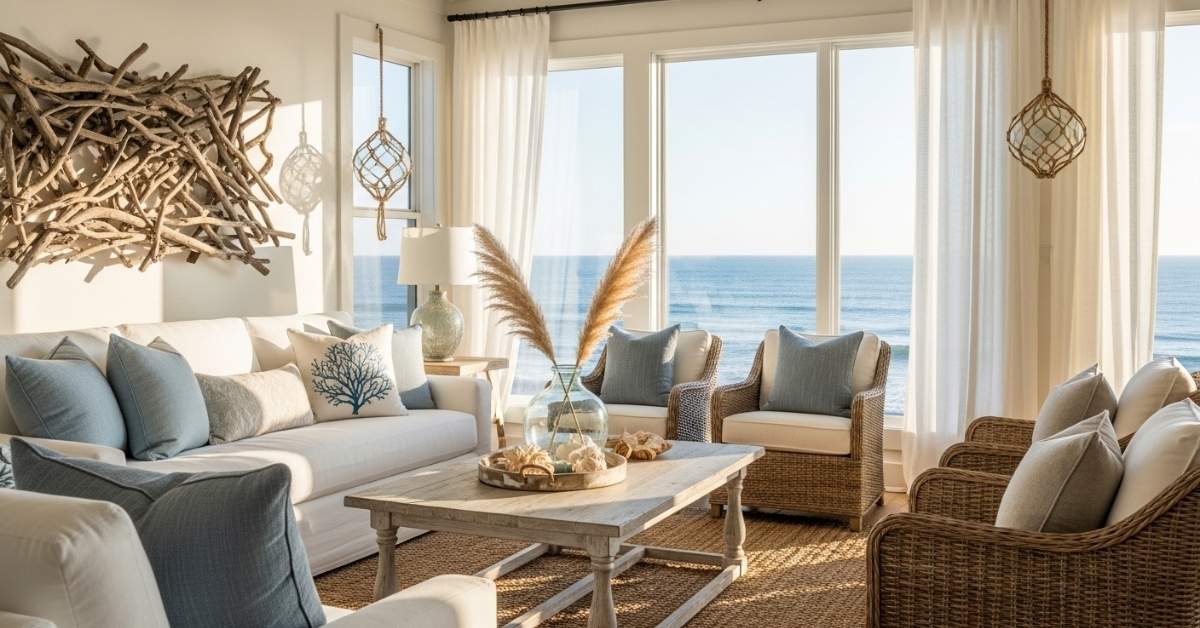
If your living room feels heavy, cluttered, or just a little too closed-in, the coastal approach solves that in a specific way: it uses light, natural materials, Coastal Living Room Ideas and a restrained palette to make a room feel larger and more breathable without gutting it. You don’t need ocean views or high ceilings. You need the right combination of elements and the right layout logic.
For anyone trying to make their living room feel more open, relaxed, and pulled-together without a full renovation, these 27 coastal living room ideas cover everything from furniture arrangement to lighting to texture layering with real-room application in mind.
Anchor the Room With a Linen Sofa in Warm White or Soft Sand
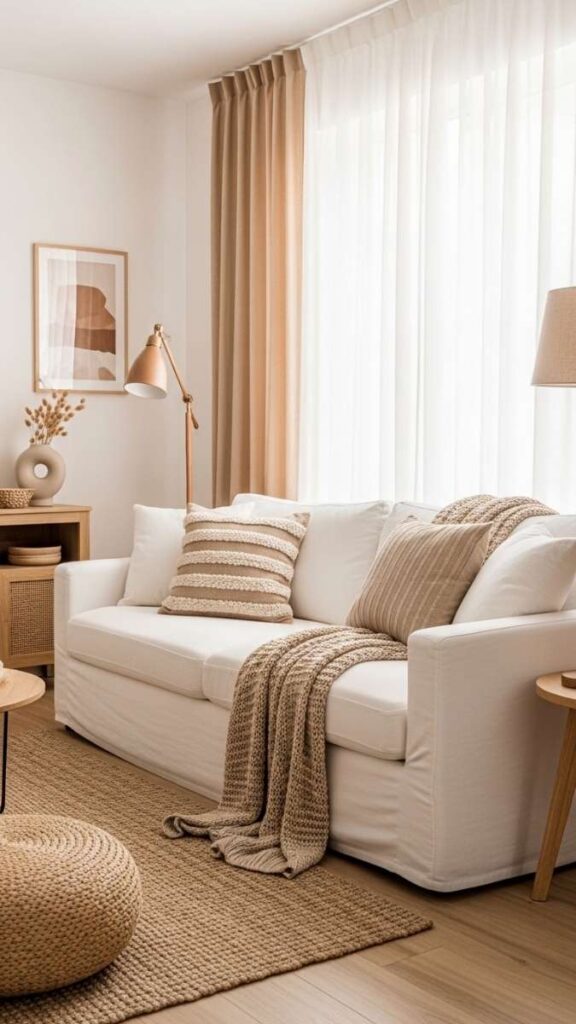
Most coastal living rooms fall apart on the sofa. People either go too stark (bright white that reads clinical) or too literal (navy stripes, anchor prints). A warm white or soft sand linen sofa sits right in the middle; it reads light and airy without feeling sterile.
Place it facing the room’s main light source if possible, ideally a window, so the fabric catches natural light and the texture becomes part of the visual interest.
Linen specifically works here because its natural variation in weave gives the room organic warmth rather than the flat look of polyester blends.
This setup works especially well in small-to-medium living rooms where a dark sofa would shrink the space visually.
Use Sheer White Curtains to Maximize Natural Light Without Losing Privacy
Heavy drapes are one of the fastest ways to kill the coastal feel; they absorb light and make walls feel closer. Floor-to-ceiling sheer curtains do the opposite: they diffuse incoming light into something soft and even, which makes the whole room glow rather than just the corner near the window. Hang the rod as close to the ceiling as possible and let the curtains extend slightly past the window frame on each side.
This creates the illusion of a wider, taller window especially useful in older apartments where windows tend to be small. The result is a room that feels connected to the outside even when you’re not near the window.
Layer a Jute Rug Under a Smaller Woven Accent Rug for Coastal Texture
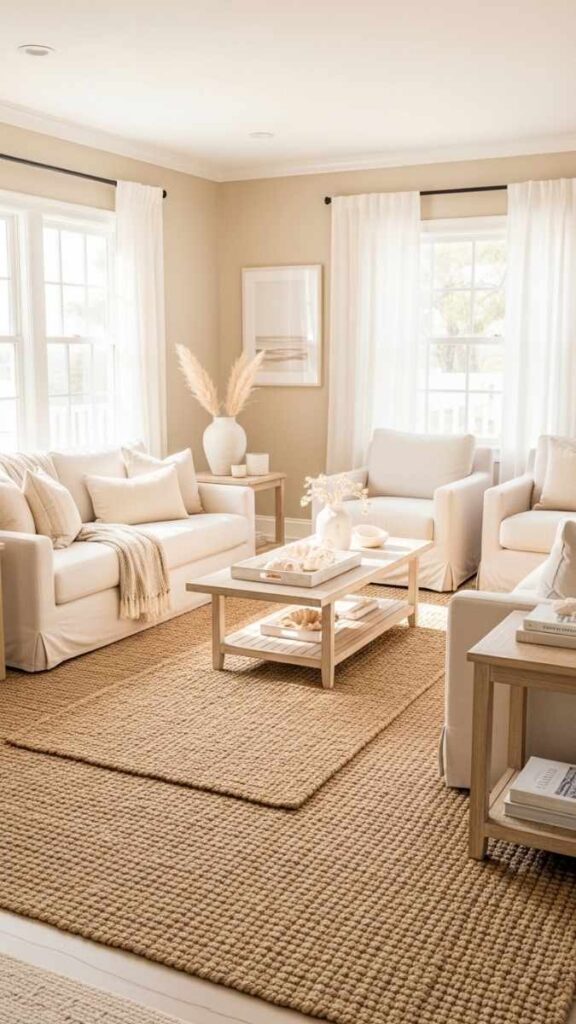
Single rugs on light floors can look flat and unfinished. Layering a large jute or sisal rug as the base, with a smaller woven or textured rug on top adds depth without adding visual noise.
The jute grounds the room with an earthy, natural quality that reads coastal without being literal about it.
Keep both rugs in the same neutral family (natural, cream, oatmeal) so the layering reads as intentional texture rather than mismatch.
This works well in open-plan living rooms where you need to define the seating zone without using color contrast to do it. It’s also a practical budget move jute is significantly cheaper than large statement rugs.
Bring In a Rattan or Wicker Coffee Table as the Room’s Texture Anchor
Wood coffee tables are the default, but in a coastal living room they can feel too heavy and conventional. Rattan or wicker introduces a lightness visually and literally because the open weave doesn’t create the same visual block as a solid wood top.
The texture also reads natural and relaxed, which reinforces the coastal atmosphere without using any overt beach references.
If you have a small living room, this matters more than people realize: a woven table with visible negative space through the structure keeps the floor feeling open. Pair it with a tray on top to keep it functional without cluttering the surface.
Read More About: 54+ Wall Decor Ideas for Living Room That Actually Work in Real Homes
Paint Walls in Greige or Warm Off White Instead of Cool Gray or Bright White
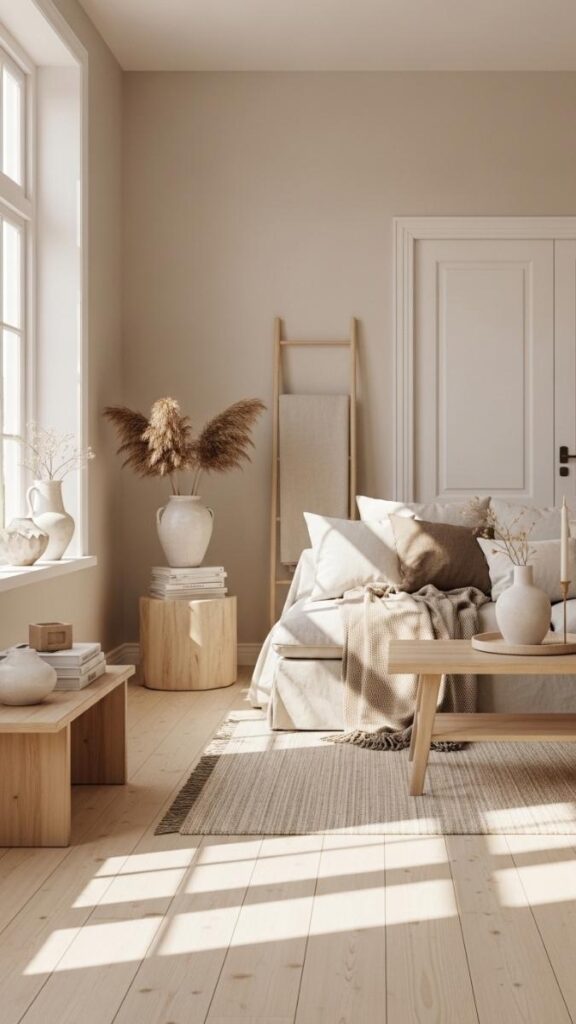
Cool grays felt coastal for about a decade. In 2026, the move is to use warmer greige tones (gray-beige hybrids), soft putty, and creamy off-whites that absorb warm light rather than reflect cool tones.
The difference matters spatially: cool walls under warm artificial lighting create a color tension that makes rooms feel unsettled.
Warm off-whites harmonize with the natural materials linen, rattan, driftwood that define the modern coastal palette. This is especially effective in rooms that don’t get direct sunlight. The wall color has to do more work in those spaces, and a warm neutral carries the room without relying on natural light to make it feel right.
Position Seating to Face the Window, Not the TV
Most living rooms default to the TV as the focal point everything angles toward it, which often means seating turns away from windows and natural light. In a coastal living room, light is the atmosphere.
Reorganizing furniture so the primary seating faces or sits perpendicular to the main window changes how the whole room feels brighter, more open, more connected to the outside.
If the TV needs to stay, mount it on an adjacent wall rather than directly opposite the window. This layout also tends to encourage better conversation flow because the room stops feeling like a home theater and starts feeling like a living space.
Use a Driftwood or Bleached Wood Media Console Instead of Black or Dark Units
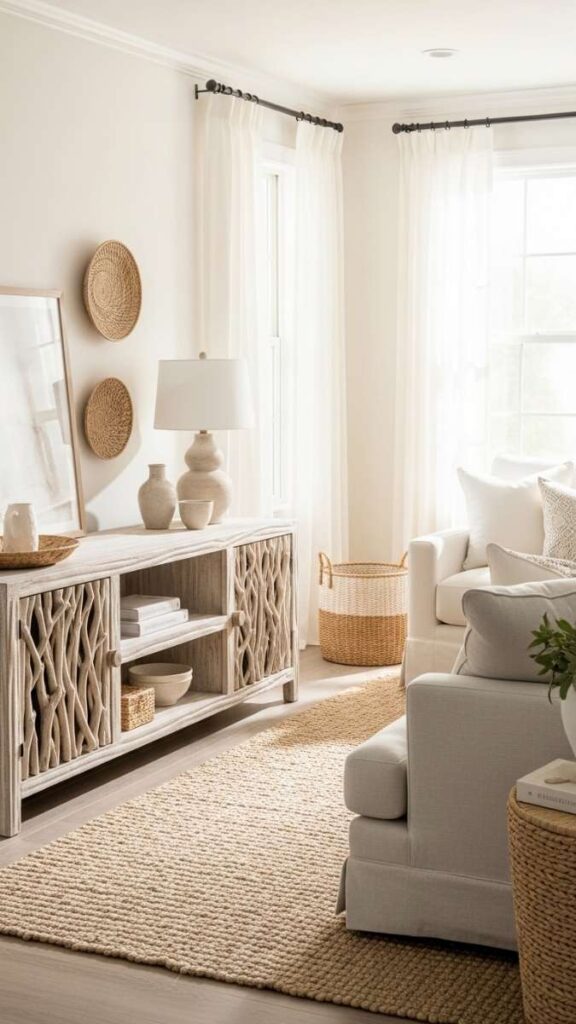
Dark media units are the single biggest contrast problem in coastal living rooms. They pull focus, add visual weight, and work against the light, open palette that the rest of the room is trying to achieve.
A driftwood-tone or bleached oak console blends with the wall and floor rather than creating a hard block of contrast. It also reads warmer and more natural, which is exactly the material story a coastal room needs.
The lower profile of most media consoles already helps keeping horizontal lines low, opens up wall space above and makes ceilings feel taller. For renters who can’t paint, swapping out a dark media unit is one of the highest-impact single changes you can make.
Add a Pair of Woven Pendant Lights Over a Reading Nook or Seating Area
Overhead recessed lighting flattens a coastal living room. It lights everything equally and removes the shadow and depth that make a room feel warm and layered. Woven pendant lights rattan, seagrass, or bamboo do two things:
They bring light down to a human scale (closer to eye level when seated), and the woven material diffuses light into a warm, dappled pattern that looks like filtered sunlight. Hang them slightly lower than you think around 60–65 inches from the floor when seated nearby so they feel intimate rather than distant.
This works especially well in rooms where you’re creating a dedicated reading or conversation corner separate from the main seating.
Introduce Blue Through Pillows and Throws, Not Wall Color
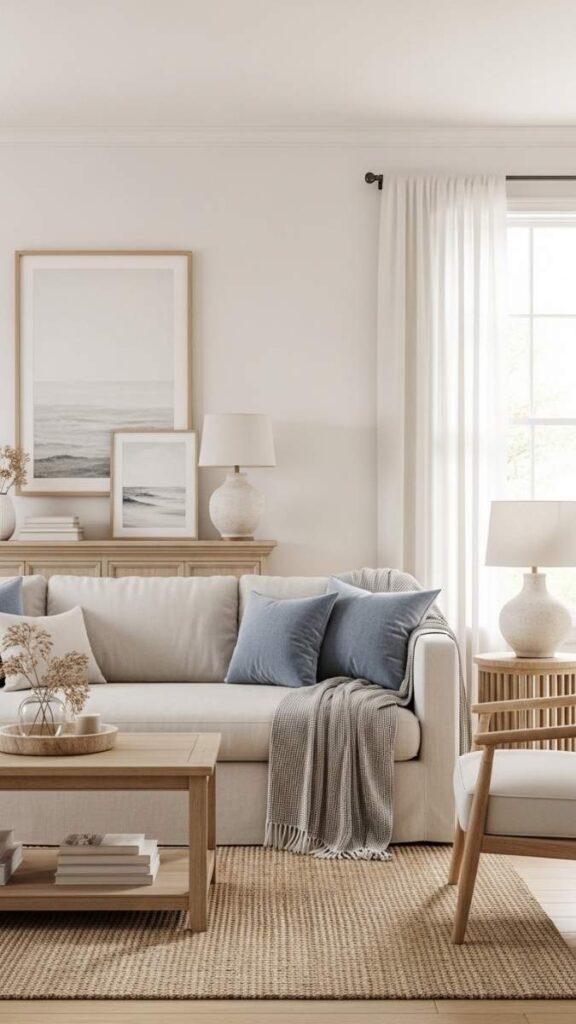
Blue is the most expected coastal color and the easiest to overdo. When it goes on the walls, it commits the whole room to a single mood.
When it comes in through textiles, it stays flexible: you can adjust the intensity, swap pieces out seasonally, or pull it back without repainting.
The key is to use blue that reads faded or natural rather than saturated thin washed denim, dusty sky, or muted teal rather than navy or cobalt. Two or three blue elements in an otherwise neutral room create the coastal reference without making the space feel themed.
This approach works well for renters and anyone who wants a coastal feeling without committing to a single aesthetic permanently.
Flooring is the largest surface in the room, and it sets the base tone for everything above it. Wide-plank light wood whitewashed oak, blonde ash, or similar bounces light upward, which makes the room feel naturally brighter throughout the day.
The wide plank specifically matters because narrow strips read busier and more traditional; wider planks are calmer and more contemporary.
If you’re renting or can’t change the flooring, a large light-toned area rug over dark floors achieves a similar effect covering enough of the floor that your eye reads the lighter surface as dominant.
This is one I’d actually recommend prioritizing first because it changes how every other element in the room reads.
Read More About: 55+ Rustic Small Bathroom Ideas That Make Tiny Spaces Feel Warm and Intentional
Style Shelves With a Mix of Coral, Ceramic, and Greenery Not Just Books
Bookshelves in coastal rooms often end up looking cluttered or too library-like when they’re filled entirely with books.
The coastal approach to shelving uses books as one layer among several mixing in white or sand-toned ceramics, a piece of coral or sea glass, a small trailing plant, and a natural object like a worn piece of driftwood.
The visual logic here is: vary the height, vary the material, and keep the color palette tight. When everything on the shelf sits within the same neutral-to-natural range, even a full shelf reads as calm rather than cluttered.
Odd groupings of three work better than even pairs, and leaving some open negative space between groups keeps the whole unit from feeling dense.
Choose Furniture With Exposed Legs to Keep the Floor Line Visible
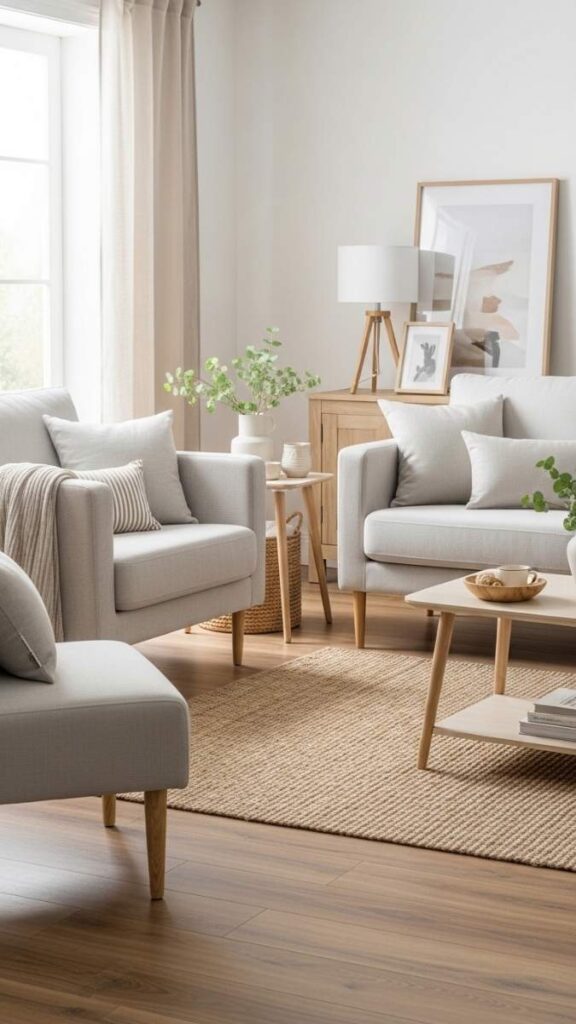
Furniture that sits flush to the floor fully upholstered sofas and chairs with no visible leg makes small and medium living rooms feel heavier than they are. The floor disappears under the furniture, and the room loses visual breathing room.
Pieces with exposed legs, tapered wood, slender metal, or even hairpin legs allow you to see the floor underneath, which extends the floor plane visually and makes the room feel airier.
In coastal design specifically, this pairs well with light flooring because you’re essentially keeping the lightest surface in the room visible throughout. It also makes the space easier to clean, which matters more than most decor advice acknowledges.
Mount a Large Organic Frame Mirror to Expand the Room and Reflect Light
Mirrors in coastal rooms work best when the frame reads natural rather than ornate oval or arched shapes in raw wood, washed rattan, or light-toned metal. A large mirror (at least 30 by 40 inches) positioned on a wall perpendicular to the main window doubles the visible light in the room by reflecting it back across the space. This is especially useful in north-facing rooms or spaces that only get indirect light.
The organic shape matters because it softens the room rather than adding a hard geometric element. Position it so it reflects something worth seeing the window, a plant, a well-styled corner rather than a blank wall or a TV.
Use a Neutral Linen Slipcover to Update an Old Sofa Without Replacing It
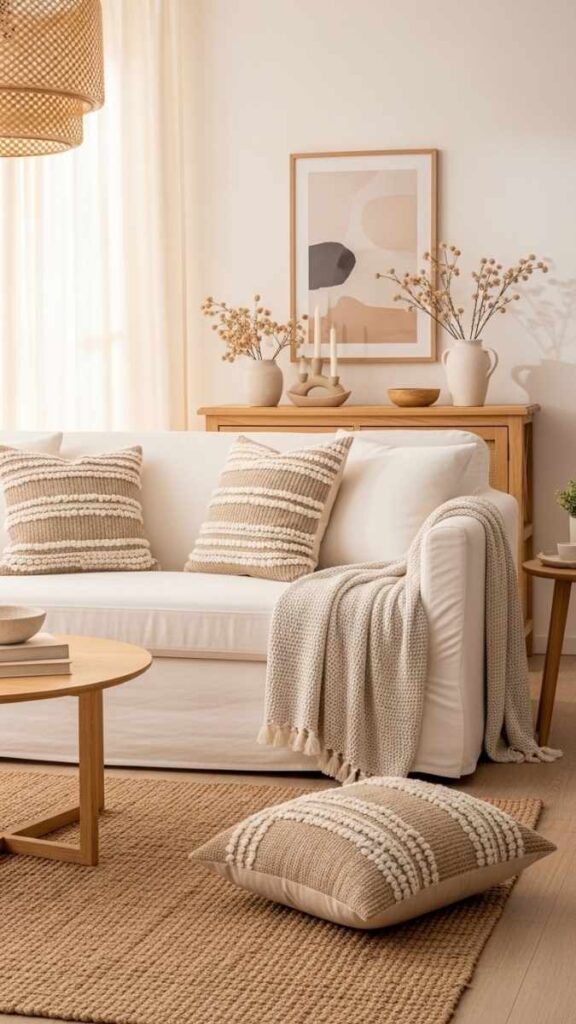
Not every coastal living room starts with the right sofa. If yours is a darker color, a heavy fabric, or a shape that’s fighting the rest of the room, a fitted linen slipcover is one of the most cost-effective resets available.
Modern slipcovers, especially tailored versions rather than the baggy draping style, can look very close to a reupholstered piece from across the room. Natural linen in warm white or oatmeal immediately shifts the room’s temperature and weight.
This is a practical solution for renters or anyone not ready to invest in a new sofa, and it makes seasonal updates easier because slipcovers can be swapped or washed without disrupting the whole room.
Create a Coastal Gallery Wall Using Natural Frames and Organic Subject Matter
Gallery walls in coastal living rooms work when the subject matter stays in the natural-organic range: abstract watercolor washes, horizon line photographs, botanical sketches, or simple line drawings rather than literal beach imagery.
The frames matter as much as the prints: thin natural wood, raw brass, or matte white keep the wall feeling light rather than heavy.
Mix one large anchor piece (at least 16 by 20 inches) with smaller supporting pieces rather than using identical sizes throughout. The layout should leave enough wall space between frames that the grouping reads as curated rather than dense.
In my experience, this works best when the largest piece sits slightly left or right of center rather than perfectly centered; it feels more organic that way.
Incorporate a Tall Leafy Plant to Add Height and Organic Volume
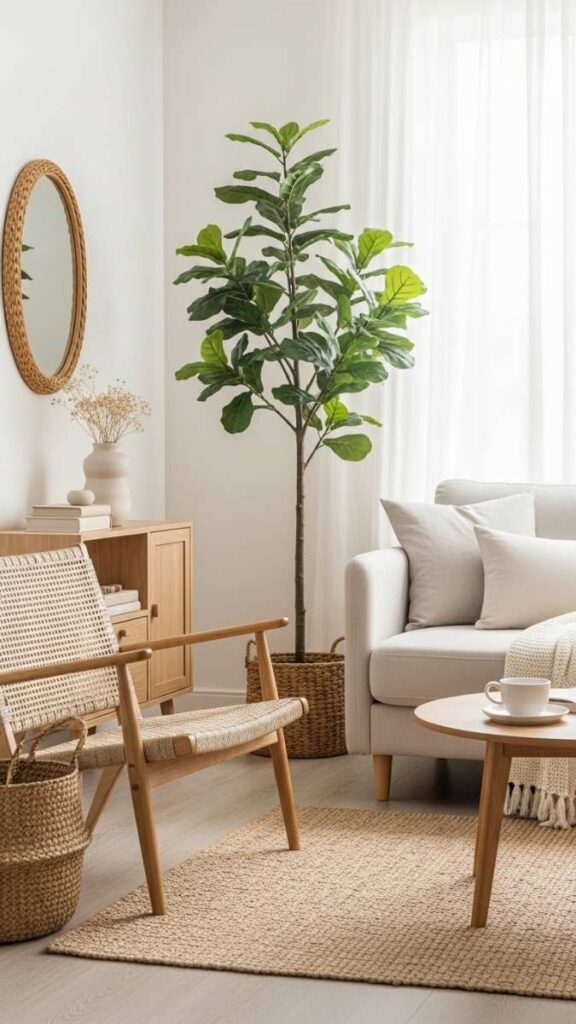
Low, spreading plants work in coastal rooms, but a tall plant, a fiddle leaf fig, bird of paradise, or tall snake plant solves a specific spatial problem: empty upper corners. In rooms with standard 8-foot ceilings, those upper corners can feel cut off and unresolved.
A tall plant bridges the floor to the ceiling line, adding vertical interest without adding furniture. The container matters: a clean white or cream ceramic pot keeps the focus on the plant rather than the vessel.
This works in corners behind the sofa’s end, flanking a fireplace, or anchoring a bare wall next to the media unit. The organic shape of the plant also softens any sharp architectural lines in the room.
Use a Rope or Macramé Wall Piece in Place of Art for Tactile Texture
Not every coastal living room needs framed prints. A large macramé or woven rope wall piece adds something flat art can’t physical texture and shadow.
As light moves through the day, the shadows cast by the weave change, which gives the wall a kind of quiet life that static prints don’t have. Size matters here: go larger than feels comfortable at least as wide as two-thirds of the sofa below it.
Smaller pieces look decorative; larger ones become architectural. Keep everything else on that wall minimal so the texture does the work. This is particularly useful in rental spaces where painting an accent wall isn’t an option; the piece itself becomes the focal point.
Read More About: 56+ Modern Rustic Bathroom Ideas That Feel Warm, Grounded, and Genuinely Livable
Add a Striped Indoor Outdoor Rug in Natural Tones for a Casual, Durable Option
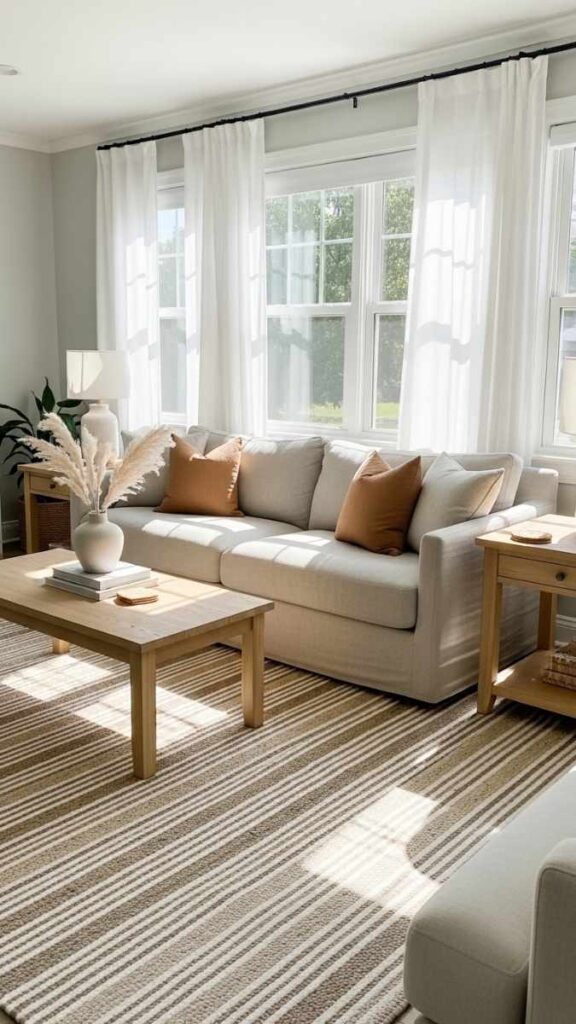
Indoor-outdoor rugs have genuinely improved over the past few years. The current generation doesn’t look like patio furniture especially in the flatweave, muted-stripe styles that read more like natural fiber than synthetic material.
For coastal living rooms in high-traffic homes, or homes with kids or pets, this is a practical choice that doesn’t sacrifice aesthetics.
A cream and sand or natural and warm white stripe keeps the palette consistent while adding subtle patterns. These rugs are also significantly easier to clean, a practical advantage in a room designed to feel relaxed and low-maintenance, which is ultimately what the coastal approach is about.
Style a Console Table Behind the Sofa as a Functional Display Surface
Pulling a sofa away from the wall by 10–12 inches and placing a narrow console table behind it creates a functional layer that the room would otherwise lack. It gives you a surface for a lamp (which adds warm ambient light behind the seating area), a plant, a small tray, or a few curated objects.
The lamp specifically solves one of the most common lighting problems in living rooms overhead light only, which creates a flat and harsh atmosphere. A console lamp behind the sofa throws light upward and forward, creating a warm halo effect around the seating zone. This works in medium to large rooms where the sofa doesn’t have to be flush to the wall for space reasons.
Choose a Curved or Rounded Sofa Profile for a Softer Room Silhouette
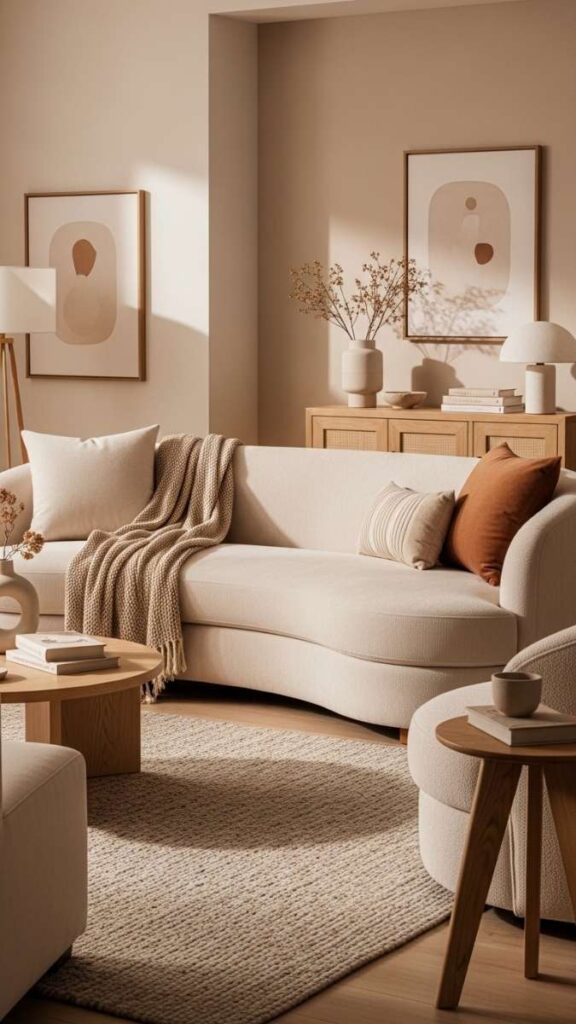
Hard-edged, boxy sofas are functional, but they add an angular tension to a room that coastal design works against. Curved or semi-curved sofas, even a subtle arc rather than a dramatic semicircle, soften the room’s overall silhouette and make it feel more inviting.
The rounded form also works better in open-plan spaces where you’re seeing the back of the sofa from the kitchen or entry: a curved back has a visual finish that a flat-backed boxy sofa doesn’t.
This is one of the stronger 2026 furniture trends that actually translates into coastal design logic rather than just being a passing aesthetic moment. It works especially well in medium to large living rooms where the sofa has breathing room.
Use Washed Linen Cushions in a Three-Tone Palette for a Layered, Calm Look
Cushion styling is where most coastal living rooms either land or fall apart. Too many colors and the sofa looks chaotic; too few and it looks bare. A three-tone approach cream or white, a warm mid-tone like sand or warm gray, and one muted accent like dusty blue or sage gives the arrangement enough variation to look considered without competing with the rest of the room.
Vary the textures too: a plain linen, a ribbed fabric, and a chunky knit or boucle give the eye something to move across. Keep sizes varied a mix of 20-inch and 18-inch squares, plus one longer lumbar and avoided matching pairs, which read too formal for the relaxed coastal register.
Install Floating Shelves in Whitewashed Wood for Storage That Feels Airy
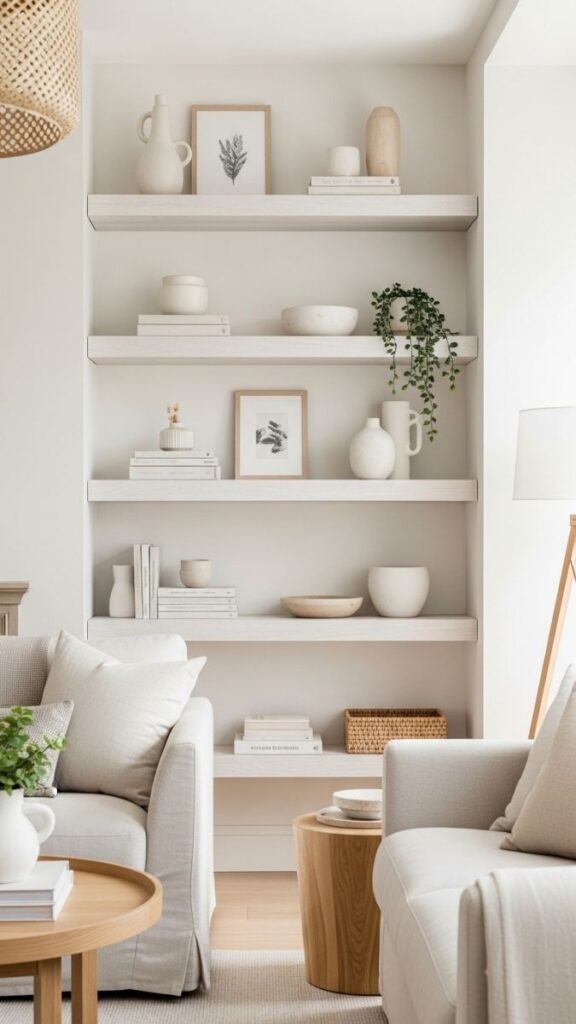
Bulky bookcases and entertainment units are the quickest way to make a coastal living room feel heavy and enclosed. Floating shelves especially in whitewashed or bleached wood keep the storage visible but light.
The wall space around and below the shelves remains open, which preserves the feeling of openness that the rest of the room is working toward. Two shelves at slightly different heights tend to look more natural than a perfectly symmetrical pair.
Style them the same way you would freestanding shelving: varied heights, mixed materials, negative space between groupings. For small apartments where storage is genuinely limited, this solves a real problem without the visual bulk of traditional shelving units.
Layer Ambient, Task, and Accent Lighting Instead of Relying on Overhead Fixtures
Single-source overhead lighting, a ceiling fan with a light kit, or a flush-mount fixture is the most common lighting mistake in coastal living rooms. It creates flat, even light that removes the depth and warmth the room needs.
Layering three types of light ambient (floor lamps, table lamps), task (a reading lamp near the sofa), and accent (candles, LED strip under the media unit, a lit shelf) creates the kind of atmosphere where the room genuinely feels different in the evening than it does in the day.
Warm-toned bulbs (2700K or lower) are essential; anything cooler shifts the palette from warm and relaxed to clinical.
This layering approach works in any room size and requires no structural changes.
Use Oversized Artwork in a Light Frame as a Focal Point on the Main Wall
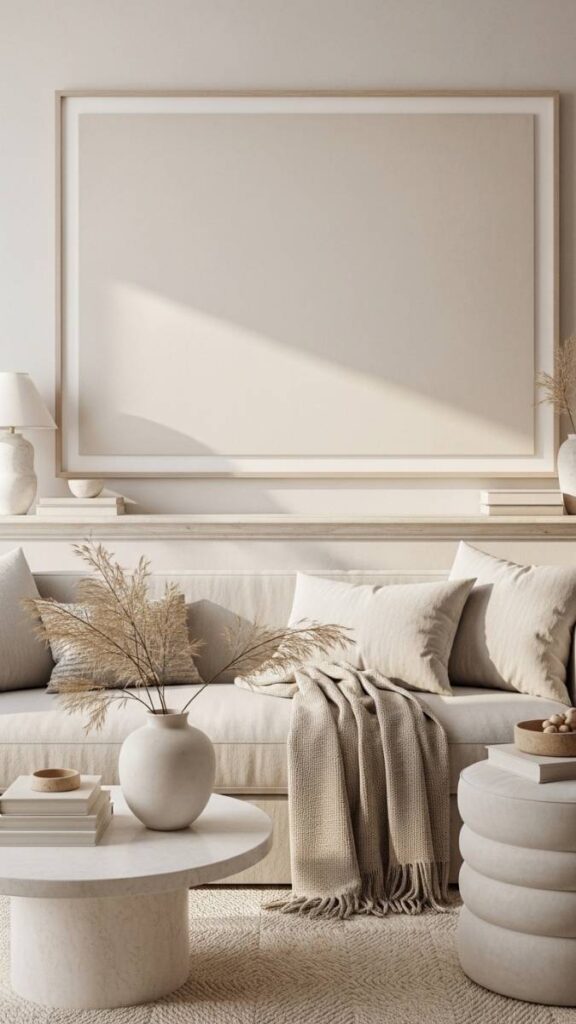
A single large piece of art 36 inches wide or larger on the main wall does more for a coastal living room than a gallery arrangement in many cases. It creates one clear focal point, keeps the wall calm and uncrowded, and draws the eye in a way that multiple smaller pieces divide and dilute.
Abstract works in ocean-adjacent tones, soft aqua washes, horizon-line compositions, and sandy neutrals work better than literal coastal imagery because they read more sophisticated and age better.
Hang it so the center of the piece sits roughly at seated eye level (about 57–60 inches from the floor) rather than standard standing eye level, which tends to hang art too high for a living room context.
Add a Hammered Brass or Aged Gold Accent Through Hardware and Small Objects
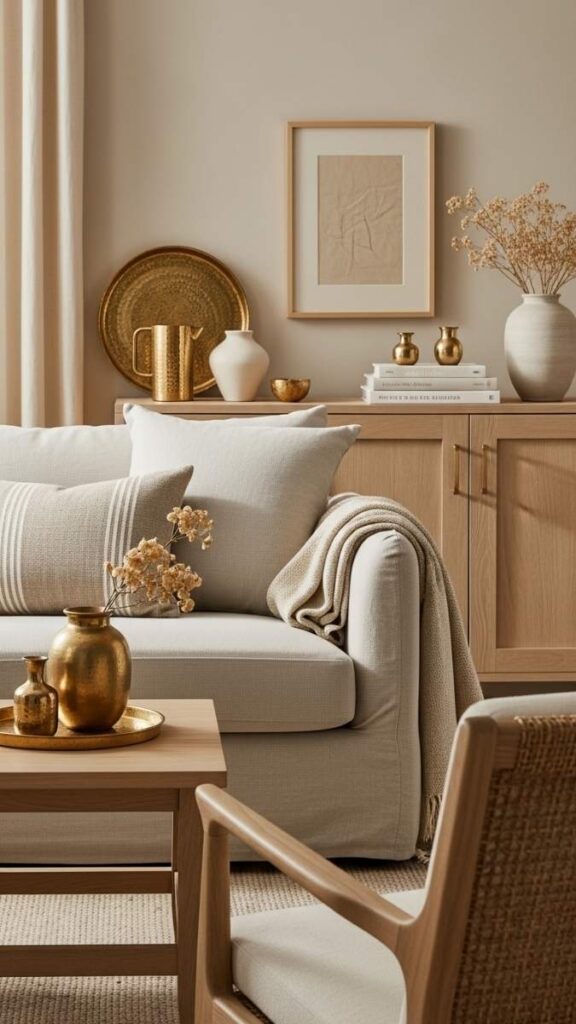
Coastal design doesn’t have to be entirely matte and natural. Aged brass or hammered gold accents introduced through lamp bases, small trays, picture frame edges, or a vase add a warmth and subtle richness that prevents the palette from feeling flat.
The key word is subtle: two or three small brass objects in the room rather than a full brass moment.
The slightly imperfect texture of hammered or aged brass reads more natural and less formal than polished gold, which is why it fits the coastal aesthetic without pulling the room toward glam territory. This is an easy upgrade if your room currently has chrome or black hardware swapping to aged brass unifies the warm palette.
Use a Linen Roman Blind Rather Than Curtains in Smaller Windows
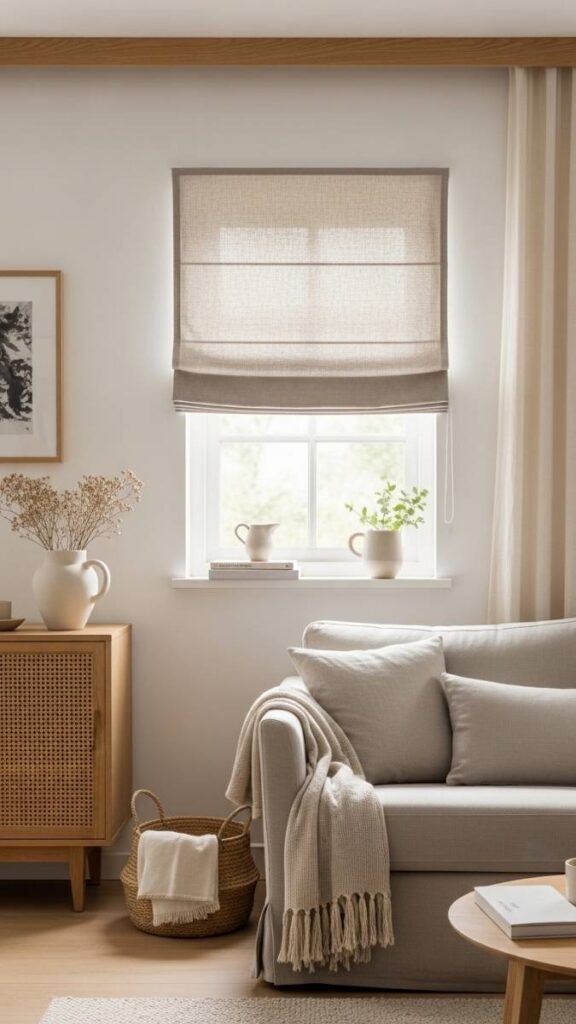
In rooms where floor-to-ceiling curtains aren’t practical small windows, low ceilings, or windows positioned between furniture a linen Roman blind solves the window treatment problem cleanly.
It sits within the window frame, keeps lines clean, and filters light softly without the visual weight of heavy drapes. Natural linen in warm white or soft stone tones lets some light through even when partially lowered, which maintains the bright, airy quality the room needs.
The flat fold of a Roman blind also works better in rooms where you need the wall space on either side of the window; there’s no fabric stack to account for. This is especially practical in kitchens adjacent to open-plan living rooms.
Introduce a Coastal Scent Layer Through Natural Candles to Complete the Atmosphere
Rooms with a strong sense of place engage more than one sense. A coastal-scented candle driftwood, sea salt, or eucalyptus placed on the coffee table or console doesn’t show up in photographs, but it reinforces the atmosphere in a way that purely visual elements can’t.
This isn’t purely about décor performance: scent has a measurable effect on how relaxed a space feels.
Use it with one or two well-chosen candles rather than a collection and keep the holders natural: matte ceramic, concrete, or unfinished wood. The candle becomes part of the visual styling even when unlit, so the material and color of the holder matter as much as the scent.
What Actually Makes These Coastal Living Room Ideas Work
The ideas above cover a wide range, but a few underlying principles connect most of them.
Material consistency beats color consistency.
A coastal room can have a slightly varied color palette: cream, sand, warm white, soft blue as long as the materials stay in a consistent family. Natural fibers, raw or whitewashed wood, woven textures, and organic ceramics all belong to the same material language. When materials conflict, say, a glossy synthetic rug alongside raw linen cushions and a chrome floor lamp the room reads as incoherent even if the colors technically match.
Light does most of the atmospheric work.
The coastal feeling open, calm, connected to nature is largely a light feeling. The palette, the sheer curtains, the light flooring, and the layered lighting all serve the same goal: maximize warm, natural-feeling light and eliminate the sources of harshness (cool white bulbs, dark surfaces, heavy window treatments).
Restraint at every layer.
Coastal rooms that feel cluttered have usually over-committed to the theme too many sea objects, too many patterns, too many accent colors. The restraint rule is: one statement per zone. One large plant, one large artwork, one textured element. Let each element have enough visual breathing room to be noticed.
Coastal Living Room Setup Guide by Space Type
| Space Type | Best Approach | Key Priority | What to Avoid |
| Small apartment (under 400 sq ft) | Floating shelves, furniture with exposed legs, light flooring rug | Visual openness | Large area rugs that cut the floor, dark media units |
| Open-plan living/dining | Define zones with layered rugs, consistent material palette | Zone clarity without walls | Mixing material languages across zones |
| Rental (no painting allowed) | Slipcovers, removable wallpaper, large art, textile-led color | Flexibility and reversibility | Heavy permanent fixtures or hardware changes |
| Family living room (high traffic) | Indoor-outdoor rugs, washable slipcovers, durable rattan over delicate cane | Practicality first | White upholstery without slipcover protection |
| North-facing room (low natural light) | Warm greige walls, layered artificial lighting, large mirrors | Light maximization | Cool gray palette, dark curtains, minimal lighting |
| Large room (over 600 sq ft) | Curved sofa, defined reading nook, console table behind sofa | Scale and zone definition | Undersized furniture floating in empty space |
Common Coastal Living Room Mistakes That Make Your Space Feel Off
Scaling furniture too small for the room.
In larger coastal living rooms especially, people tend to undersize furniture because they’re chasing an airy feeling. The result is furniture that floats, a room that feels empty rather than open, and no clear sense of a seating zone. The airy quality in a coastal room comes from material and color choices not from using smaller furniture. Scale up.
Using too many literal beach references.
Anchors, shells, seahorses, and fishing nets are the fastest route to a room that looks themed rather than designed. Modern coastal design works through material texture and palette; it suggests the coast rather than depicting it. One or two subtle references (a small piece of coral on a shelf, an ocean horizon photograph) are enough.
Ignoring ceiling height in lighting choices.
In rooms with low ceilings, hanging pendant lights too low creates a cramped feeling. In rooms with high ceilings, keeping all lighting at counter or table level loses the architectural drama of the space. Coastal lighting should map to the actual geometry of the room, not follow a formula.
Mixing warm and cool tones without a clear dominant.
Warm whites, greige, and linen tones are coastal. Cool grays, blue-whites, and silver metallics are coastal in a different, colder register. Both can work, but mixing them without a clear dominant warm or cool direction creates visual tension. Pick one and let the other serve as a secondary accent only.
Neglecting the ceiling and upper walls.
Most living room styling focuses from the floor to about 6 feet up. The upper third of the room, the ceiling, the space above windows, the tops of tall furniture often goes unaddressed. In coastal design, painting the ceiling the same warm white as the walls (rather than a stark bright white) unifies the room and removes the visual “lid” that creates a boxy, closed-in feeling.
FAQ’s
What is the coastal living room style, exactly?
Coastal design is a natural, light-focused interior style that draws on the textures, tones, and materials of coastal environments, think linen, rattan, whitewashed wood, soft blues, and warm neutrals. It’s less about beach-specific objects and more about creating a calm, open, and naturally lit atmosphere. The modern version leans minimal and material-led rather than nautical or themed.
How do I make my living room feel coastal without making it look like a beach house?
Focus on materials and light rather than coastal objects. Natural linen, rattan furniture, light wood flooring, and a warm neutral palette do the work without any seashells or anchors in sight. Restraint is the key coastal feeling comes from what you leave out as much as what you put in.
What colors work best for a coastal living room?
Warm whites, sand, greige, and soft putty tones form the base. Add muted blue, dusty sage, or warm terracotta as accent colors through textiles rather than wall paint. In 2026, the trend has moved away from cool grays and sharp white toward warmer, more livable neutrals that hold up better under artificial light.
Can I do a coastal living room in a small apartment?
Yes and it often works better in smaller spaces because the coastal principles (light colors, furniture with legs, sheer curtains, minimal clutter) directly address the problems small apartments tend to have. Focus on visual openness: lighter flooring tones, transparent or open-weave furniture, and layered lighting rather than a single overhead source.
What’s the difference between coastal and Hamptons style?
Coastal is the broader category of relaxed, natural, and material-led. Hamptons is a more elevated and structured version: it typically involves more architectural detail, navy and white palettes, stripe patterns, and a polished finish. Coastal can work in any budget or space type; Hamptons reads are more formal and tend to require more investment in furniture quality and finishing details.
How do I layer lighting in a coastal living room?
Start by turning off the overhead light and seeing what the room needs. Most rooms need at minimum: one floor lamp in a corner, one table lamp near the sofa (on a console or side table), and one focused lamp for reading. Add candles or a small LED accent for the evening atmosphere. Using 2700K warm white bulbs throughout anything cooler will fight the warm palette.
Is rattan furniture durable enough for an everyday living room?
Modern rattan and wicker furniture designed for indoor use is more durable than its reputation suggests, especially when it’s a resin-wrapped or natural rattan-over-metal-frame construction. The main consideration is humidity: in very dry climates, natural rattan can become brittle over time. For high-traffic use, a rattan coffee table or side table holds up better than a rattan sofa as a primary seating piece.
Conclusion
A well-done coastal living room isn’t about proximity to the ocean, it’s about a specific set of design decisions that make a room feel open, calm, and naturally livable. The right palette, the right materials, and the right use of light can shift a room significantly without a major renovation. Even changing a few key elements, swapping out heavy curtains for sheers, adding a woven pendant lamp, restyling shelves with more negative space makes a measurable difference in how the room feels day to day.
Start with the ideas that fit your current space constraints and budget. If you’re in a rental, focus on textiles, lighting, and accessories. If you’re working with an awkward layout, prioritize furniture placement and flooring treatment before buying anything new. The strongest coastal living rooms usually aren’t the ones with the biggest budgets, they’re the ones where the design decisions are the most intentional.