71+ Furniture Layout Ideas That Make Any Room Feel Bigger, Balanced
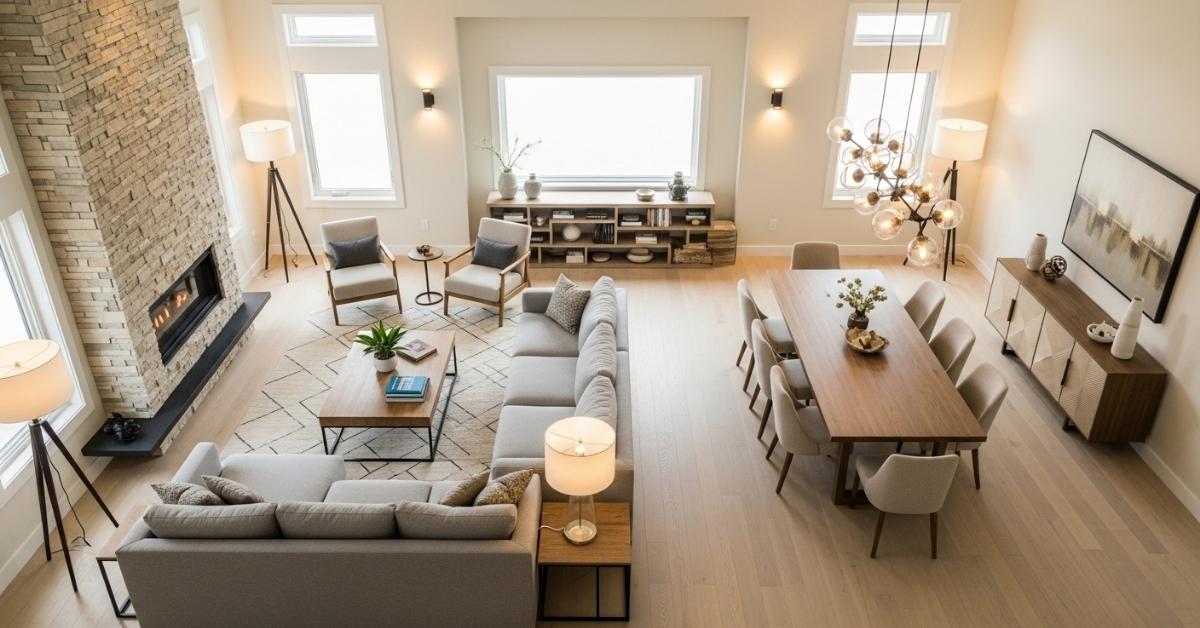
Most rooms don’t feel off because of the furniture they feel off because of where the furniture is. The sofa pushed against every wall, the rug that’s two sizes too small, Furniture Layout the coffee table that makes you turn sideways just to reach the couch. These are layout problems, not decor problems, and they’re far easier to fix than most people realize.
If you’re working with a small apartment, an awkwardly shaped living room, or a space that functions for both work and relaxation, getting the furniture arrangement right makes everything else fall into place. Lighting feels better. The room feels larger. It’s easier to clean, easier to move through, and honestly just easier to be in.
Here’s a practical breakdown of 27 furniture layout ideas that work in real homes, not just perfectly staged showrooms.
Float Your Sofa Away From the Wall to Create a Conversation Zone
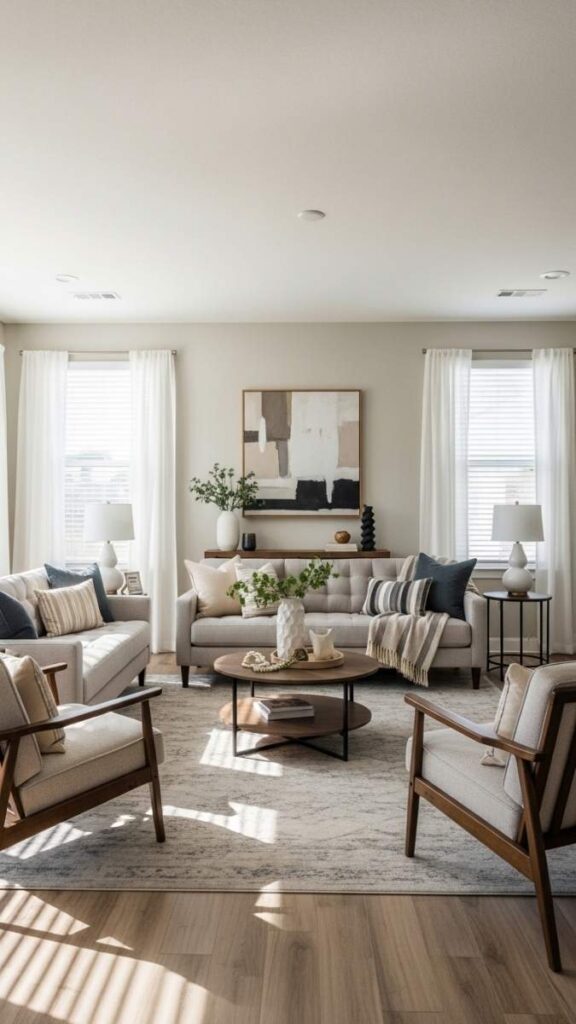
The wall-hugger instinct is understandable; it feels like it opens up space. In practice, it usually does the opposite.
When you pull a sofa 12–18 inches from the wall, the space between the furniture becomes usable; it defines a zone rather than just filling a perimeter. The room stops feeling like a waiting room.
This works especially well in medium to large living rooms where the center of the space feels empty or dead. The visual effect is that the room looks arranged rather than just furnished.
Use a Rug to Anchor Two Separate Zones in One Open Room
In an open-plan space, without anchors, everything bleeds into everything. A rug defines boundaries without walls. The key is that your living room rug should be large enough that at least the front legs of every seating piece sit on it.
For a dining zone, the rug should extend at least 24 inches beyond the table on all sides so chairs stay on the rug when pulled out. Two rugs with a similar color palette but different textures signal “two zones, one home.”
This is one I’d actually recommend trying first, because it’s the single cheapest layout fix with the most visible impact.
Place the Bed on the Wall Opposite the Door for Maximum Visual Weight
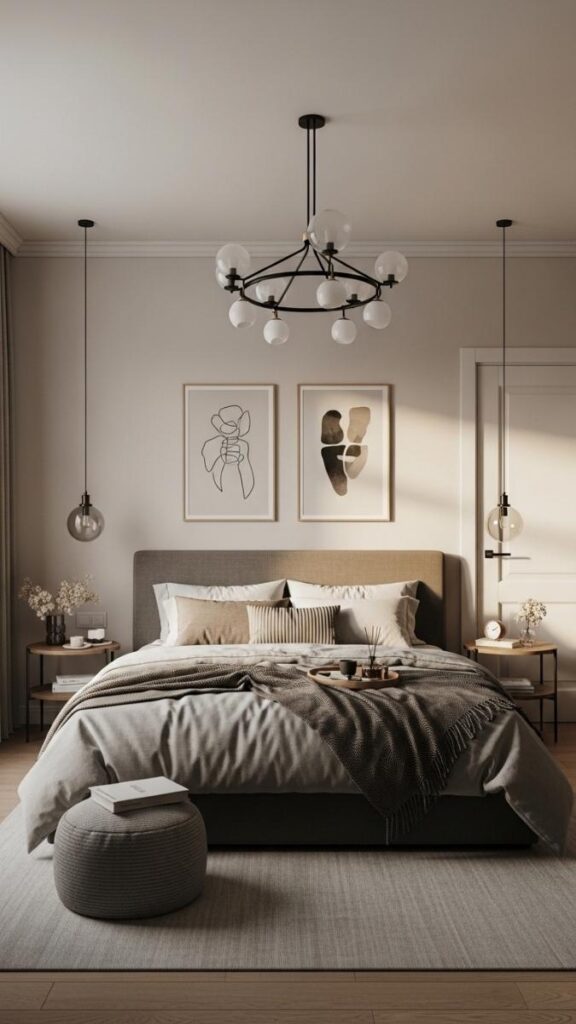
When you walk into a bedroom, your eye travels to the focal point. If the bed is the first thing you see centered, commanding, balanced the room reads as intentional.
Placing it on the wall opposite the door also allows you to see the whole room from the pillow, which has a subtle effect on how restful the space feels.
Where it works best is any standard rectangular bedroom. The one exception is rooms where that wall is shared with a window. In that case, the wall adjacent to the door often gives you better light control.
Create an L-Shape Seating Layout to Handle Corner Spaces Efficiently
Corner sections and L-shaped configurations have a reputation for being clunky. They’re not, they’re actually one of the most space-efficient layouts when done right. The L creates a natural enclosure that draws people together without closing off the room.
What makes it work is completing the shape of an accent chair or small bench placed across from the open end of the L turns a sectional into a proper conversation area. Without that fourth anchor, the layout feels unfinished and the room reads as one-sided.
Best suited to square rooms and living areas that need to seat four or more people comfortably.
Position a Desk at a Right Angle to the Wall Rather Than Flush Against It
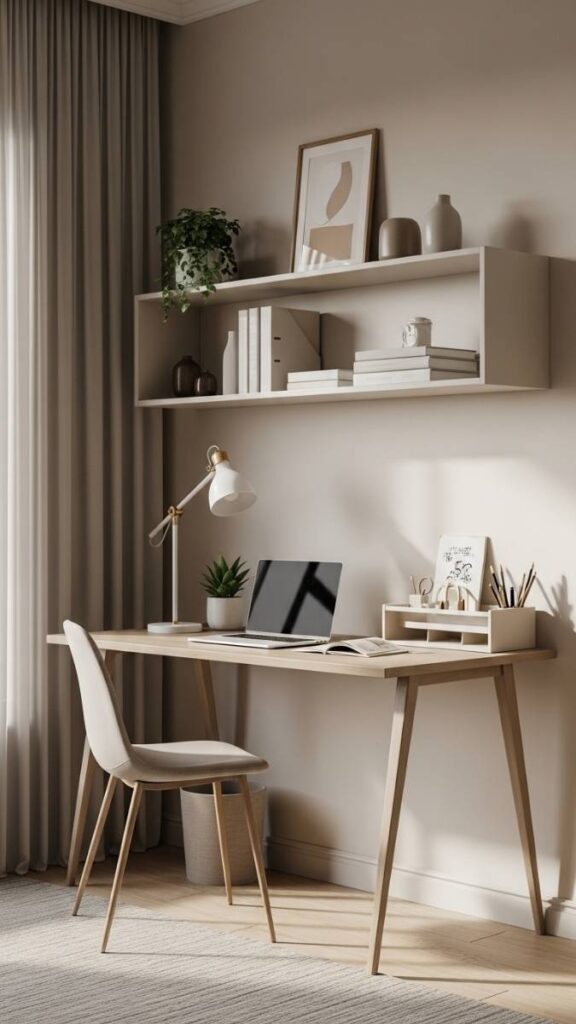
Desks pushed flat against a wall tend to feel claustrophobic; you’re essentially working inside a corner with limited peripheral view.
Positioning a desk perpendicular to the wall, or even slightly angled into the room, opens up your sightline and separates the workspace from the wall it was anchored to.
For anyone working from home in a multi-use room, this also creates a stronger visual boundary between “work space” and “living space.” A small room divider, a bookshelf turned sideways, or even a trailing plant can reinforce that separation without eating floor space.
Read More About: 11+ Lighting Ideas That Actually Change How Your Home Feels Not Just How It Looks
Use a Bench at the Foot of the Bed to Absorb Visual Clutter
A bench at the foot of the bed does something specific: it gives you a place to put things that would otherwise end up on the floor or the chair in the corner (that chair).
It also lengthens the visual line of the bed, making the whole room feel more put-together without adding a piece that takes up meaningful floor space. In smaller bedrooms, choose a bench with a slim silhouette with nothing with turned legs or excessive upholstery.
A clean-lined upholstered bench in a neutral fabric disappears into the room; a carved wooden one competes with it.
Angle Two Armchairs Toward Each Other Instead of Facing the TV
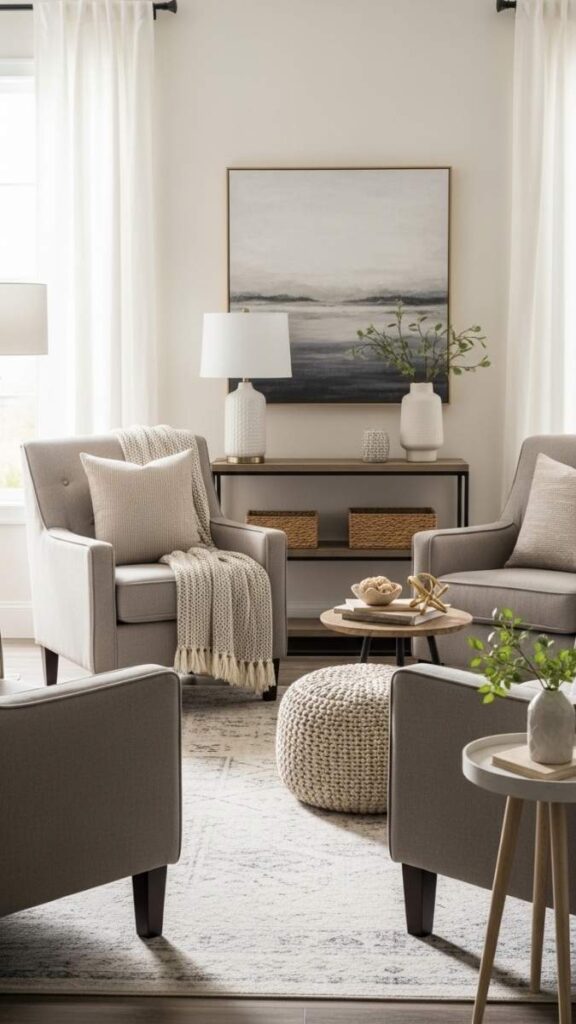
Not every seating arrangement needs to face the television. Two chairs angled slightly toward each other with a shared side table between them create a reading corner that’s genuinely useful and visually distinct from the main sofa arrangement.
This is especially smart in larger living rooms where you have room to spare but the space feels flat. The angled placement also disrupts the rigid parallel lines that make a room feel overly formal. It works for renters who want to add personality without painting or drilling.
Place a Console Table Behind a Floating Sofa to Define the Back of the Space
When a sofa floats in the center of a room, the space behind it can look unresolved like the furniture just stopped without reason. A narrow console table (no deeper than 12–14 inches) placed directly behind the sofa closes that gap and turns the back of the sofa into a functional edge.
Add a lamp for ambient light or a couple of objects for visual interest. This setup is particularly useful in long, narrow rooms where the sofa has to bisect the space the console prevents the back half of the room from feeling orphaned.
Set the Dining Table at Least 36 Inches From Every Adjacent Wall
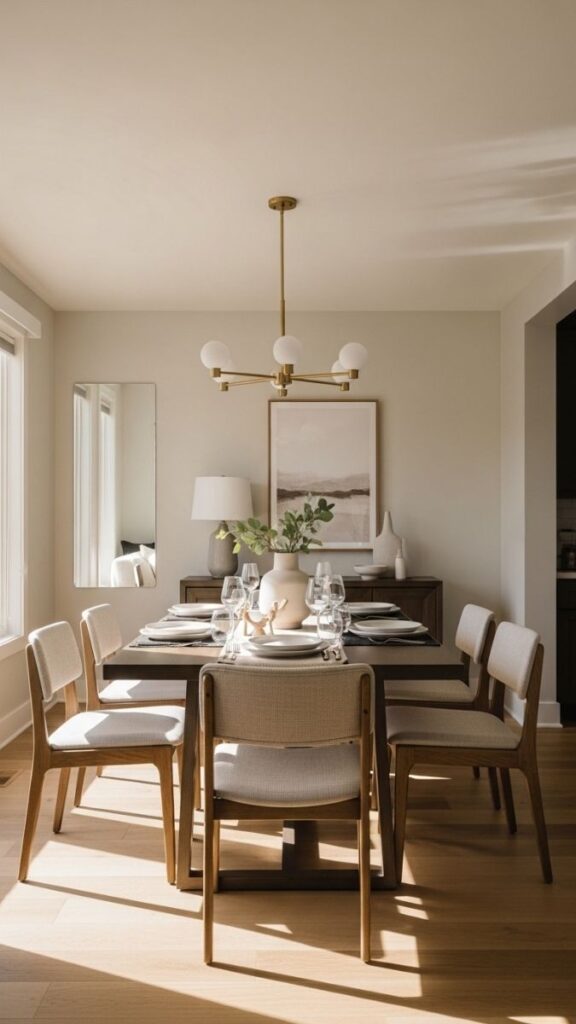
The most common dining room mistake is underestimating how much space chairs actually need. When someone pulls their chair back to stand up, they need roughly 36 inches of clearance behind them. If the dining table is too close to a wall or buffet, every meal involves a minor wrestling match.
The practical fix is a simple measure from the table edge to the nearest obstruction before buying or placing furniture. In small dining rooms, this sometimes means going with a smaller table than you planned for which is almost always the right call.
Read More About: 27+ Wall Decor Ideas That Actually Work in Real Homes Not Just on Pinterest
Pair a Low Profile Sofa With a Higher Bookshelf to Balance the Room Vertically
Vertical balance is easy to overlook because we furnish rooms from the floor up, not the wall down. A low sofa combined with a tall bookshelf or open shelving unit on an adjacent wall creates a visual counterweight that makes the room feel composed.
The high point draws the eye upward and makes ceilings feel taller. This matters most in rooms with lower ceilings (8 feet or under), where choosing all low-profile furniture creates a flat, horizontal feeling that makes the space feel compressed rather than cozy.
Use a Round Dining Table in a Square Room for Better Flow
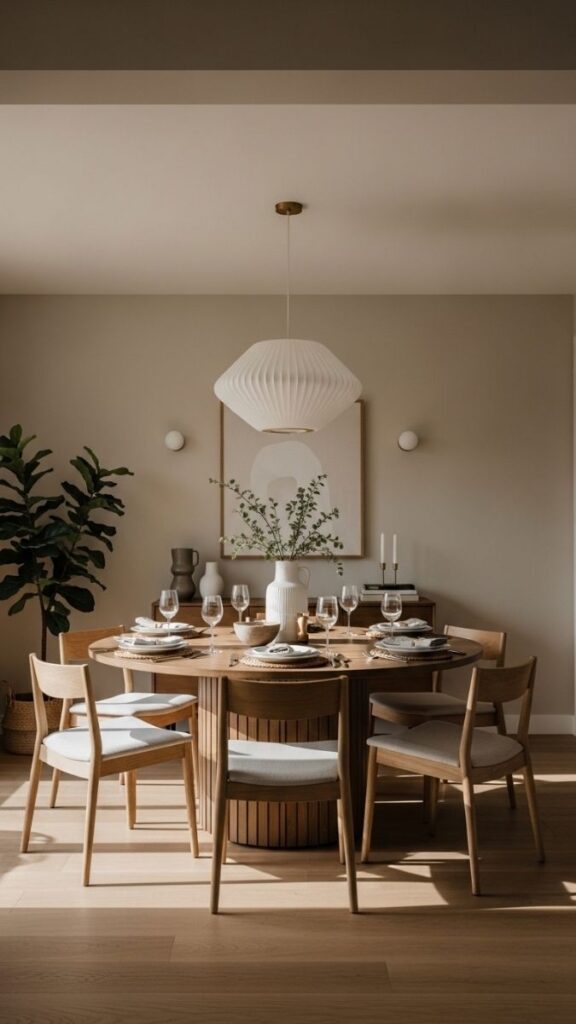
Square rooms with rectangular tables create awkward corners. The table corners point toward the walls, walking space becomes uneven, and the geometry just doesn’t resolve cleanly.
A round or oval table solves this in one step it sits naturally at the center of the room, allows easy movement on all sides, and removes the hierarchical “head of the table” positioning that doesn’t suit every household. In my experience, this works best when the room is relatively compact in a large rectangular dining room, a round table can look isolated.
Layer Lighting at Three Heights to Change How a Layout Reads
Layout is as much about light as it is about furniture. A room lit only from a single overhead source flattens everything every corner looks the same, every surface competes equally for attention.
Layering lighting at three heights (ceiling, eye level, surface level) creates pools of light that define zones, make furniture groupings feel more intentional, and add visual depth to a space.
Honestly, you can rearrange furniture all you want, but if the lighting isn’t layered, the room will still feel undifferentiated. An arc floor lamp positioned behind and slightly to the side of the sofa is one of the most efficient single additions.
Place the Bed Off Center to Free Up a Full Wall for Storage
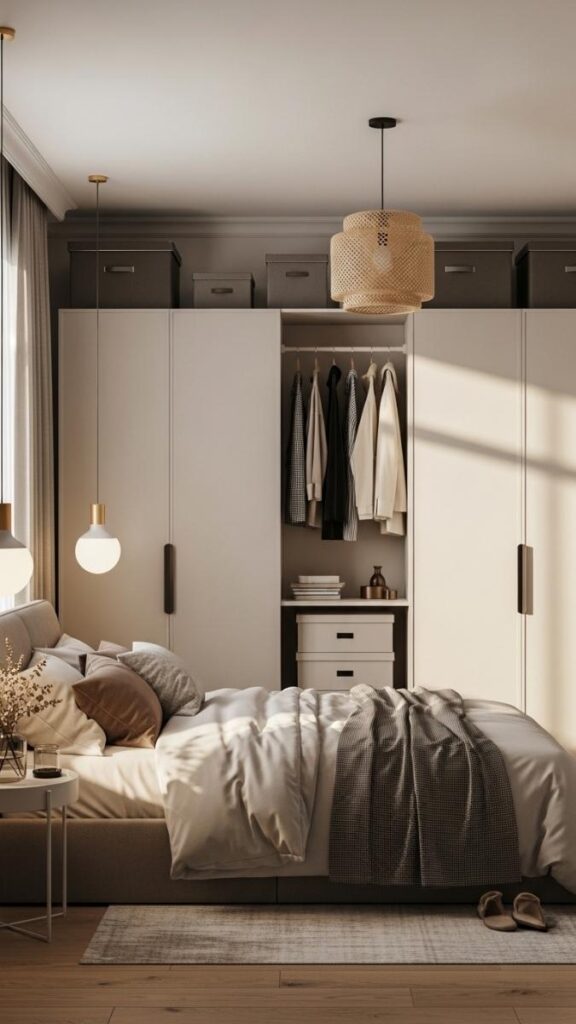
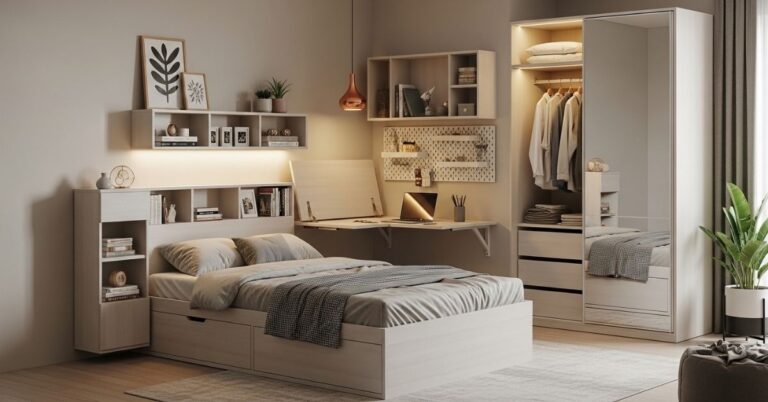
Symmetry is satisfying but not always practical. In bedrooms where storage is the priority, shifting the bed to one side of the room rather than centering it frees up an entire wall for a wardrobe, built-in shelving, or a custom closet unit.
The asymmetry feels deliberate rather than accidental when you use matching bedside lamps or symmetrical bedding. This is especially useful in narrow rooms where a centered bed leaves unusable slivers of space on both sides that aren’t wide enough for furniture and too small to move through comfortably.
Position a TV Stand at Viewing Height Rather Than on the Floor
Television height is one of the most underrated layout decisions in a living room. When a TV sits too low directly on the floor on a squat console you end up tilting your head down for the entire length of a movie.
The screen center should be roughly at eye level when you’re seated, which for most sofas means the center of the screen sits around 42–48 inches from the floor. This is also a layout issue because the TV’s height determines the console’s proportions, which in turn affects the visual balance of the entire wall.
Read More About: 70+ Seasonal Decor Ideas That Actually Work in Real Homes Without the Clutter
Use a Daybed in a Studio to Create a Clear Living Sleeping Boundary
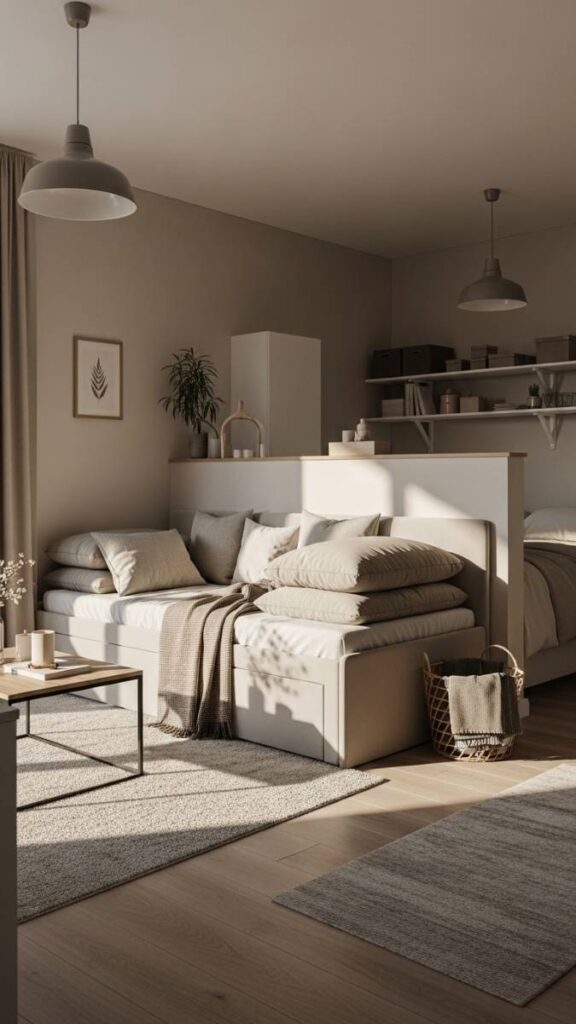
In a studio apartment, the challenge isn’t space, it’s visual clarity. A daybed styled with cushions and bolster pillows reads as a sofa during the day and a bed at night, but more importantly, it allows you to draw a clear boundary between “living” and “sleeping” zones without a room divider or curtain.
Pair it with a floor lamp, a small coffee table, and a rug to reinforce the living-room framing. This solves the flat, one-note feel of a studio where every corner looks the same regardless of its function.
Add a Narrow Side Table Between Two Sofas Instead of a Large Coffee Table
Two sofas facing each other is a formal, high-functioning layout for conversation but the instinct to fill the center with a large rectangular coffee table can make the setup feel crowded. A pair of small round side tables or a single narrow piece between the sofas keeps the center open and the path between them clear.
This is the better choice in rooms where you want the layout to feel conversational without sacrificing walkability. It also works better in rooms with children or frequent foot traffic, where a large low table becomes an obstacle.
Mount Shelves at Eye Level Rather Than at Ceiling Height for Usability
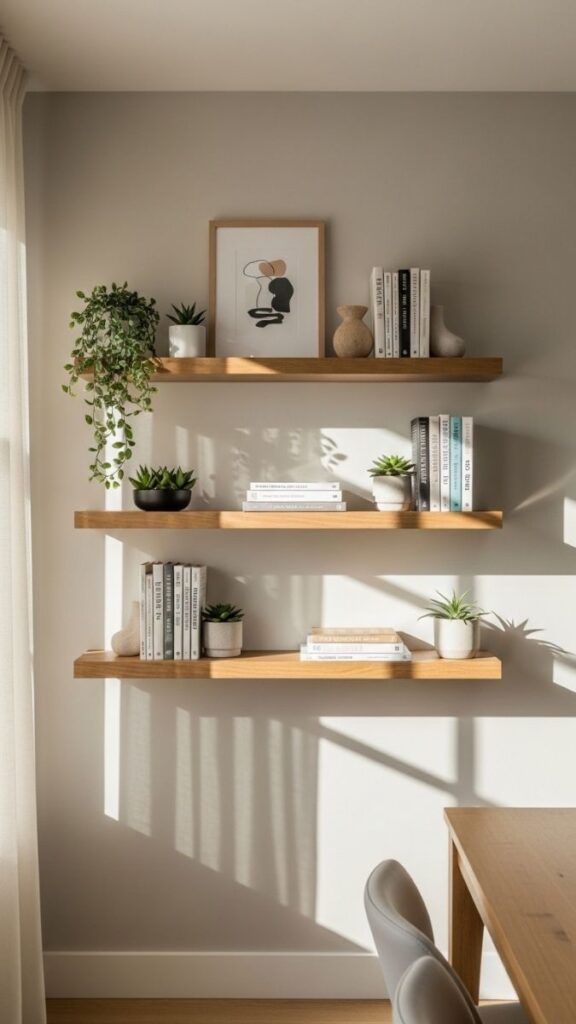
High shelving looks architectural but is functionally awkward; you need a step stool to reach anything, and the items you store there become essentially decorative by default.
Mounting shelves at eye level (around 58–65 inches from the floor to the shelf surface) keeps everything accessible and makes the wall feel actively used rather than filled for the sake of it. Leaving the wall above the shelves empty also does something counterintuitive: it makes the shelves feel more deliberate and the room feel less crowded.
Keep a Clear 18 Inch Path Around Every Major Piece of Furn
This isn’t a design principle, it’s a usability principle. Eighteen inches is the minimum comfortable walking space through a room.
When furniture is placed in a way that forces you to turn sideways or shuffle past corners, the room feels smaller and more claustrophobic than it actually is, regardless of its square footage.
Before finalizing any layout, walk the actual path from the door to the sofa, from the sofa to the kitchen, from the bedroom door to the closet. If any of those paths require maneuvering, something needs to move.
Set a Dining Bench on One Side of the Table to Seat More Without Adding Chairs
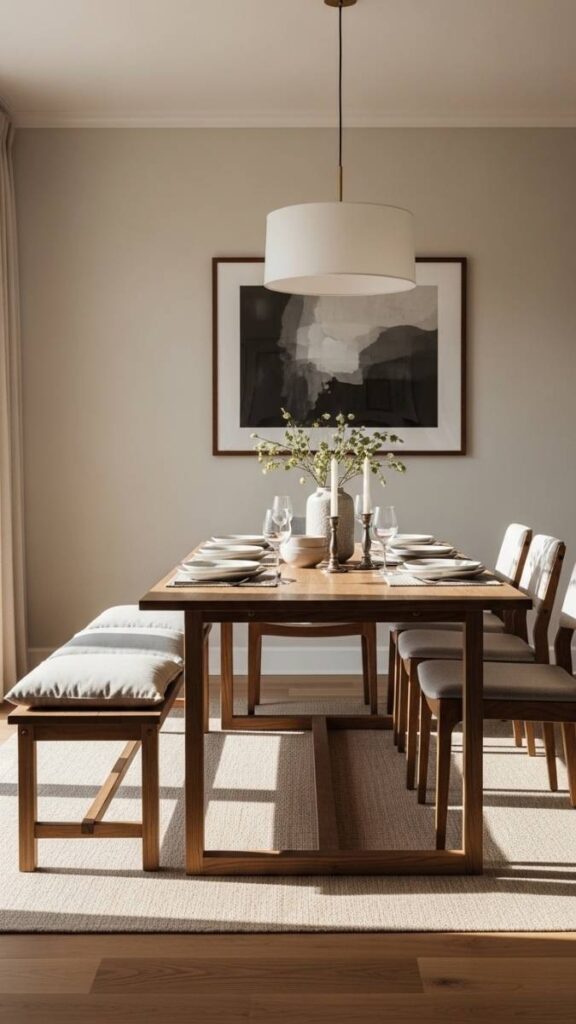
Chairs on both sides of a dining table create a fixed seating count and don’t adapt when you have a crowd. A bench on one side solves this quietly; it seats more people per linear foot than individual chairs, it slides under the table fully when not in use (reducing its visual footprint), and it adds a casual, relaxed quality to the dining setup.
Works best with a bench that’s approximately two-thirds the length of the table, so it doesn’t overwhelm the piece. Pair it with upholstered chairs on the opposite side to keep the balance comfortable rather than cafeteria-like.
Use a Tall Headboard to Anchor the Bed and Create a Focal Point
A tall headboard does two things that nothing else in a bedroom can replicate: it gives the bed visual authority (so the room doesn’t feel like a bed placed in a storage space) and it draws the eye upward, which has the effect of making the ceiling feel higher.
This is especially useful in rooms where the ceiling is low or the walls feel featureless. An upholstered headboard in a mid-range fabric linen, boucle, or a tight-weave velvet also softens the acoustics of a room slightly, which makes the space feel quieter and more insulated.
Pull a Reading Chair Into a Corner With a Floor Lamp Behind It
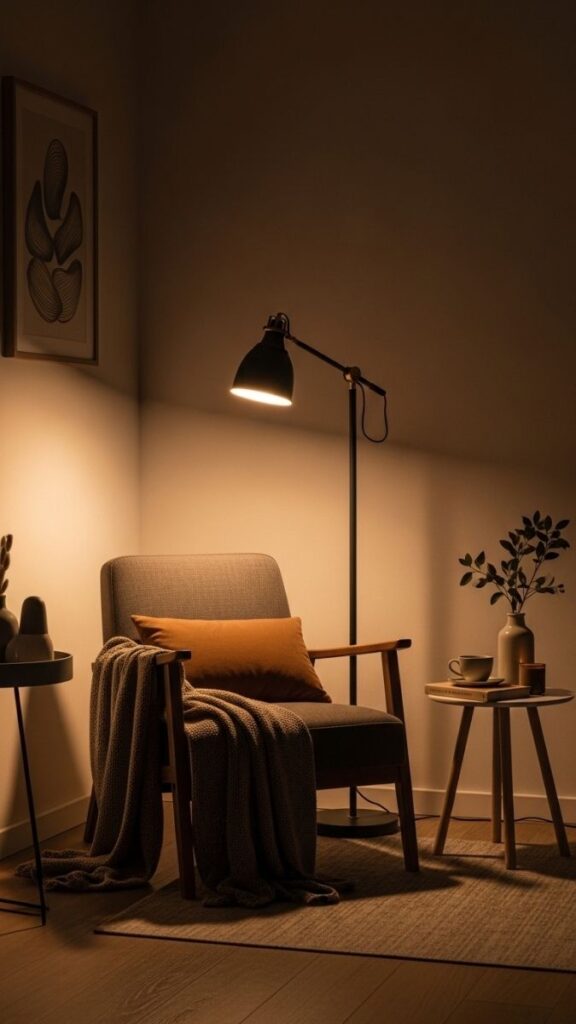
A chair placed in a corner with a floor lamp behind it becomes a room’s most useful square footage. The corner creates a sense of enclosure that makes the chair feel like a destination rather than just overflow seating.
The lamp positioned slightly behind and above illuminates without glare. Add a small table at arm’s reach for a drink or book, and the corner functions as a self-contained zone within the larger room.
The problem this solves living rooms where every seat faces the TV, leaving no space that encourages anything else.
Use a Glass or Lucite Coffee Table in Small Rooms to Preserve Sightlines
Solid coffee tables in small rooms create a visual interruption that cuts the floor space in half. A glass or clear acrylic table maintains the sightline from the sofa to the far wall, which makes the room read as larger and more open.
It’s not a trick, it’s a direct result of removing the visual mass from the center of the room. The trade-off is durability and maintenance (fingerprints and smudges are more visible), but for renters or anyone working with a compact space, the spatial benefit is usually worth it.
Place a Sofa Table Behind a Sectional’s Chaise to Stop the Layout From Drifting
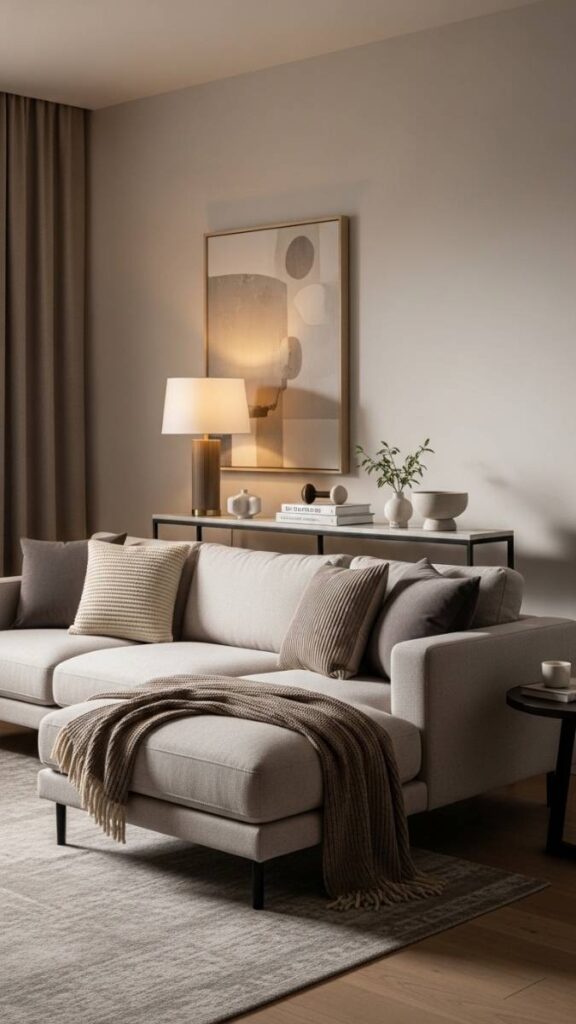
Sectionals with a chaise extension create a layout problem that’s hard to name but easy to feel as the chaise end floats into the room without visual resolution. There’s nothing to stop the eye, the layout just trails off.
A narrow sofa table (around 10–12 inches deep) placed directly behind the chaise end closes that visual gap. It gives the chaise a defined back, creates a surface for a lamp, and makes the sectional read as a deliberate, completed unit rather than furniture that ran out of wall.
Hang Curtains at Ceiling Height Even When the Window Is Shorter
This is one of the most impactful layout-adjacent decisions you can make in a room. When curtains hang from ceiling height rather than from just above the window frame, the vertical line runs from floor to ceiling and the eye follows it.
The room reads taller, the windows read larger, and the whole wall becomes an intentional feature. In rooms where the window sits awkwardly low or is offset from center, ceiling-height curtains normalize the wall and integrate the window into the room’s visual structure.
Mirror the Furniture on Either Side of a Fireplace for Symmetrical Balance
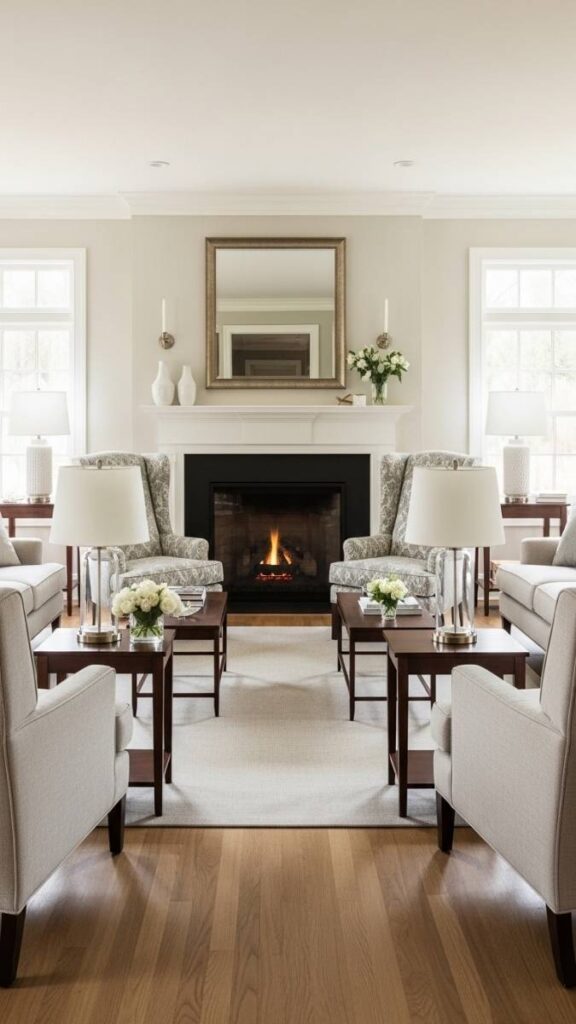
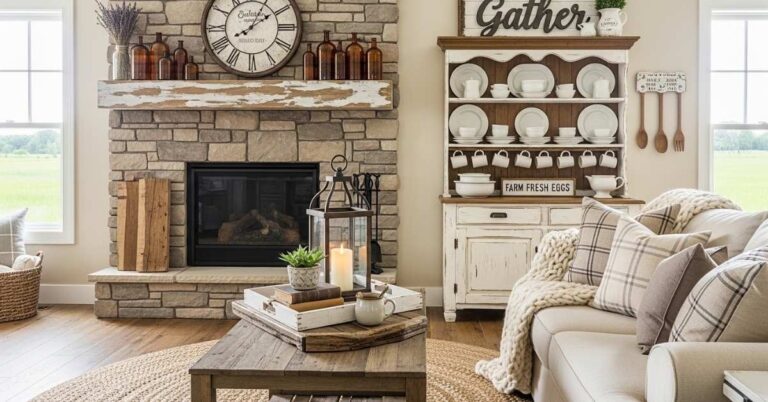
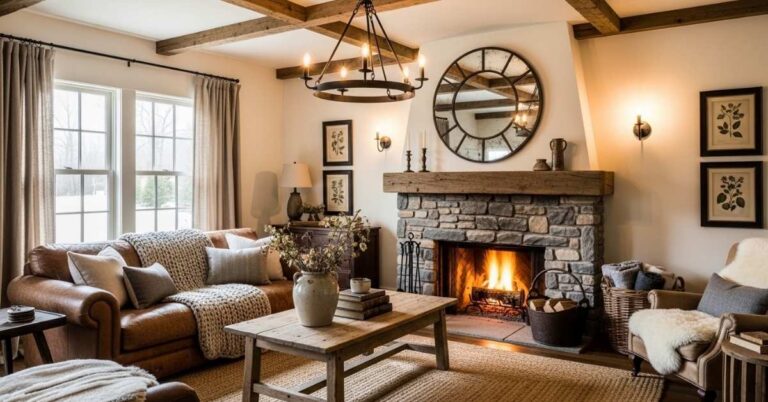
When a fireplace exists in a room, every layout decision should radiate outward from it; it’s the natural focal point. Placing matching chairs, side tables, or built-in shelving units symmetrically on either side of the fireplace gives the room a clarity that no amount of decorating can replicate.
This solves rooms that feel cluttered or unresolved even when individual pieces are attractive. Symmetry creates a visual reset that makes everything easier to read. For renters who can’t add built-ins, two matching bookcases on either side of a fireplace accomplish the same effect.
Use an Open Bookshelf as a Room Divider in an Open-Plan Space
A freestanding bookshelf placed perpendicular to the wall defines two zones without blocking light or closing off the space. Unlike a solid room divider, an open shelf allows light to pass through, maintains airflow, and keeps the space feeling connected.
The shelf itself becomes functional on both sides, the living area side can be styled with books and decor, the bedroom side can hold practical items. Best suited to studio apartments or open-plan spaces where a visual boundary is needed but a wall isn’t possible.
Choose a Sofa Length That Leaves at Least 12 Inches of Breathing Room on Each Side
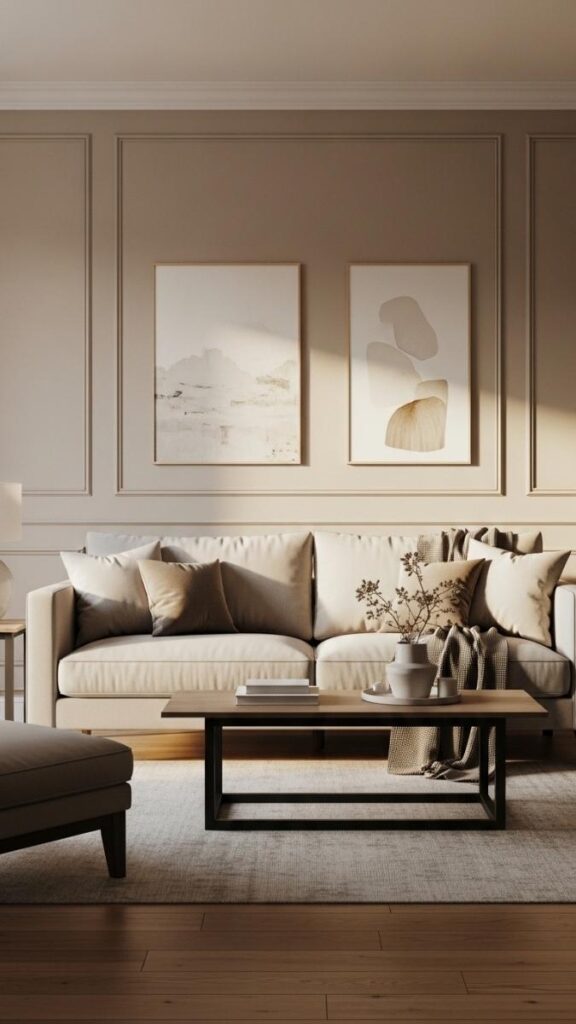
The most underrated furniture sizing rule: a sofa that spans the full width of a wall doesn’t make the room feel larger, it makes it feel tighter. Leaving 12–18 inches of visible wall on either side of the sofa creates breathing room that makes the piece itself look more expensive and the room more balanced.
This applies especially in living rooms where the sofa wall is the first thing you see from the entry. A sofa that fits the wall with proportional margin reads as chosen deliberately; one that extends edge to edge reads as whatever was available.
What Actually Makes These Layout Ideas Work
The single thread connecting every idea above is spatial intention, the sense that every piece of furniture was placed with a reason, not just arranged to avoid the center of the room. Here’s what practically creates that effect
Visual balance doesn’t require symmetry.
A tall bookshelf on one side can balance a wide sofa on the other. Weight is about proportion and distribution, not mirroring.
Zone definition matters more than furniture count.
One well-defined reading corner with a chair, lamp, and table does more for a room’s usability than adding two more chairs with no purpose.
The scale is set by the largest piece first.
The sofa, the bed, the dining table these set the proportional logic for every other decision. When those anchor pieces are scaled correctly to the room, everything else becomes easier to arrange.
Movement flow is the invisible architecture.
If you can’t walk naturally through a room, the layout is wrong regardless of how good it looks in a photo.
Furniture Layout at a Glance Setup Guide by Room Type
| Room Type | Best Layout Approach | Priority Problem to Solve | Key Spacing Rule |
| Small living room | Float furniture away from walls | Room feels closed off | 18″ walkways minimum |
| Open-plan space | Use rugs to define zones | Zones blur into each other | Two rugs with consistent palette |
| Studio apartment | Daybed + zone separation | Living vs. sleeping blurs | Visual boundary, not physical |
| Square bedroom | Off-center bed | Unusable slivers of space | Leave one full wall for storage |
| Narrow dining room | Round or oval table | Tight corner clearance | 36″ clearance around all sides |
| Large living room | L-shape + accent chair | Center feels empty or dead | Complete the conversation zone |
| Multi-use room | Perpendicular desk placement | Work bleeds into living space | Reinforced boundary with shelf or plant |
How to Fix the Most Common Furniture Layout Mistakes
Furniture pushed against every wall.
This is the most widespread layout habit and the one that does the most damage to a room’s feel. Furniture against walls creates a perimeter arrangement that leaves the center empty and the edges overcrowded. The fix is to float the seating at least partially away from the wall and let the rug define the zone.
Wrong rug size.
A rug that’s too small makes furniture look like it’s floating with no relationship to the floor. The front legs of every seating piece should sit on the rug this anchors the group and defines the zone. When in doubt, go larger.
Too much furniture for the room.
More furniture doesn’t make a room feel homey, it makes it feel compressed. The key is finding what works for your space, specifically a room with three well-scaled, well-placed pieces reads as intentional; a room with six pieces fighting for space reads as cluttered regardless of their individual quality.
No clear focal point.
Every room needs one: a fireplace, a view, a gallery wall, a TV. When there’s no clear focal point, the furniture has nothing to orient around and the layout feels directionless. If your room doesn’t have a natural focal point, create one before arranging anything else.
Lighting as an afterthought.
A room with great furniture and poor lighting still feels flat. Not every idea will fit every room, but adding a floor lamp behind a seating piece or a pendant above a dining table does more for atmosphere than almost any furniture rearrangement.
FAQ’s
What is the most important rule of furniture layout?
Maintain clear walking paths at least 18 inches between pieces so the room feels open and functional. After that, anchor every seating group with a rug and float furniture slightly away from walls rather than pushing everything to the perimeter.
How far should a sofa be from the TV?
The general guideline is 1.5 to 2.5 times the diagonal measurement of your TV screen. For a 55-inch TV, that’s roughly 7 to 11 feet. Sitting too close strains the eyes; too far makes the TV feel disconnected from the seating group.
How do I make a small living room feel bigger with furniture placement?
Use a glass or clear coffee table to preserve sightlines, float the sofa slightly away from the wall, choose one large rug rather than multiple small ones, and keep one wall visually clear. Scale matters too; oversized furniture in a small room compresses the space immediately.
Is it okay to put a sofa in the middle of a room?
Yes, and often it’s the better choice. Floating a sofa away from the wall defines a conversation zone and makes a room feel more intentional. Balance the back of the sofa with a narrow console table and a lamp so the layout doesn’t feel unresolved from behind.
What’s the difference between a functional layout and a decorative one?
A functional layout prioritizes movement, usability, and zone definition; it’s designed around how you actually live in the space. A decorative layout prioritizes visual symmetry or aesthetic appeal but may not work as well day-to-day. The best layouts do both, they look considered and they function smoothly.
How do I arrange furniture in an awkward or oddly shaped room?
Start by identifying the room’s focal point, then plan the main seating arrangement around it. Use rugs to define zones and compensate for irregular walls. Angle furniture slightly rather than forcing it parallel to walls that aren’t square. Embrace the shape rather than fighting it, an alcove can become a reading nook, a jog in the wall can house a desk.
Should all furniture in a room match?
No matching sets can make a room feel flat and over-coordinated. A more livable approach is to keep a consistent scale and one or two tying elements (a shared wood tone, a recurring accent color, similar silhouette heights) while mixing pieces. This creates a room that feels collected over time rather than purchased in one afternoon.
Conclusion
Getting furniture layout right is less about following strict rules and more about understanding how people actually move through and use a space. Small adjustments floating the sofa, sizing the rug correctly, clearing a walking path, and adding a lamp behind a chair can shift how a room feels entirely without changing a single piece of furniture. Start simple and build from there.
Pick one or two ideas from this list that match your space type and your current frustration. Rearrange before you buy anything new. In most rooms, the furniture you already have can do more work; it just needs to be in the right place.