10+ Luxury Decor Ideas That Make Any Room Feel More Elevated Without the Designer Price Tag
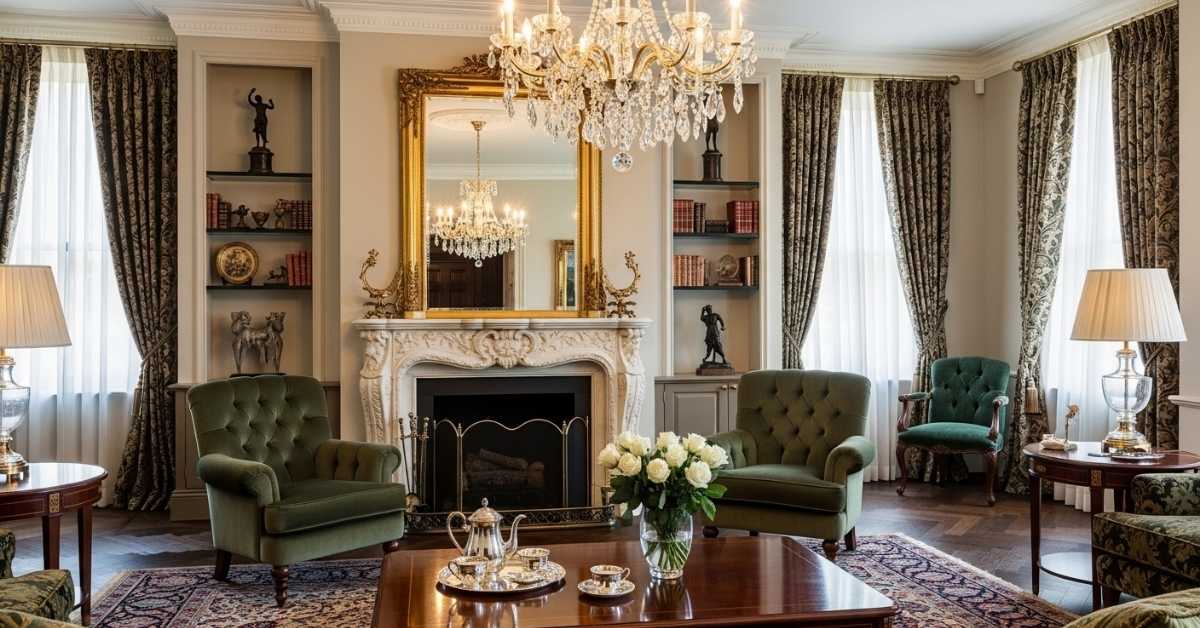
There’s a version of “luxury” that costs $40,000 and a version that costs $400 and honestly, the difference often comes down to choices, not budget. Rich-looking rooms aren’t built on expensive furniture alone. Luxury Decor Ideas They’re built on proportion, texture, restraint, and the kind of lighting that makes everything look intentional.
If your space feels like it’s missing something but you can’t quite name what, this is for you. Whether you’re working with a compact apartment or a larger home that just hasn’t come together yet, these luxury decor ideas focus on visual logic that actually makes a room look and feel elevated in real, livable conditions.
For anyone trying to make their space feel more curated and refined without gutting the budget or starting over, these are the ideas worth bookmarking.
Layer Lighting Instead of Relying on a Single Overhead Fixture
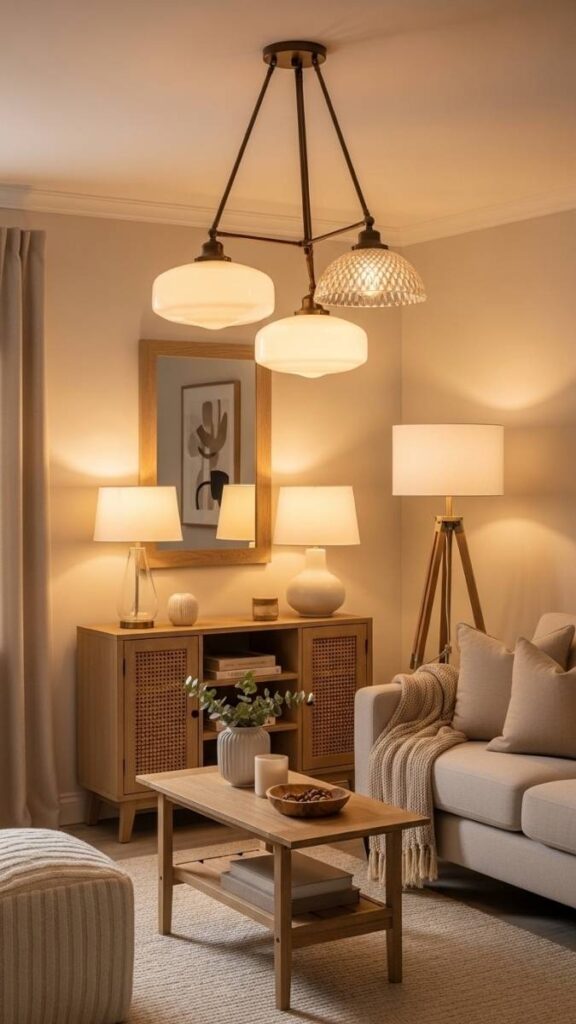
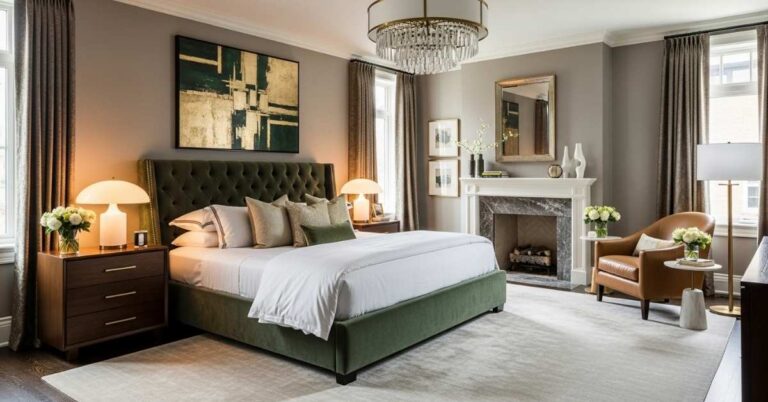
A room lit by one overhead fixture looks flat; it’s the single biggest giveaway that a space feels unfinished. Luxury interiors almost always use three layers: ambient (overhead or recessed), task (a reading or desk lamp), and accent (a sconce, picture light, or uplighter). The result isn’t just prettier, it changes the entire spatial atmosphere.
A floor lamp placed behind a sofa anchors the seating area and creates a visual boundary in open-plan spaces. Table lamps at seated eye level add warmth that ceiling lights simply can’t replicate. This is one I’d actually recommend trying first because the investment is modest and the visual difference is immediate.
Use a Single Oversized Art Piece Instead of a Gallery Wall
Gallery walls have had a long run, but in 2026 the shift is moving toward retaining one large statement piece that commands attention and lets the room breathe around it. Oversized art (anything 36 inches or wider) works because it fills wall space without cluttering it, and it signals confidence in the aesthetic.
The trick is that the piece should span roughly two-thirds the width of the furniture below it, and hang low enough that its center sits at eye level. This setup is especially effective in rooms where the furniture is low-profile; the scale contrast creates a natural focal point without any additional accessories.
Introduce a Boucle or Textured Upholstery Piece as the Room’s Anchor
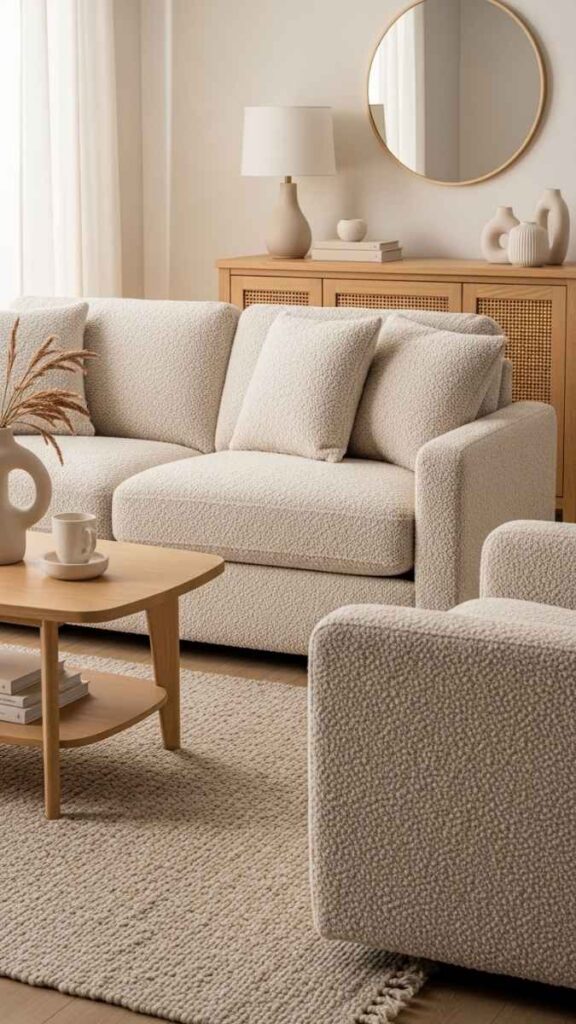
Texture does more for a room than color in most situations. A boucle chair, a ribbed linen sofa, or a velvet accent piece creates visual and tactile depth that flat fabrics simply don’t. The interest isn’t loud, it’s quiet and rich, which is exactly what makes a space feel considered rather than assembled.
In a neutral room, a single textured upholstery piece acts as a soft focal point without requiring any other major changes. It works especially well in living rooms and bedrooms where seating is the primary visual anchor. Pair it with a smooth-finish side table or lacquered surface nearby to let the contrast read clearly.
Choose Curtains That Pool Slightly on the Floor
Most curtains hang too short; this is one of the most common reasons rooms feel casual when they’re meant to feel polished. Curtains mounted close to the ceiling and allowed to brush or slightly pool on the floor do two things: they make ceilings look taller, and they create a soft, intentional quality that shorter panels never achieve.
Heavyweight linen or velvet in a neutral tone are the most versatile options. This setup works in any room but has the most impact in spaces where ceiling height is modest; the vertical draw of long drapery makes the eye travel upward and extends the perceived height of the space significantly.
Add a Sculptural Table Lamp as a Functional Art Object
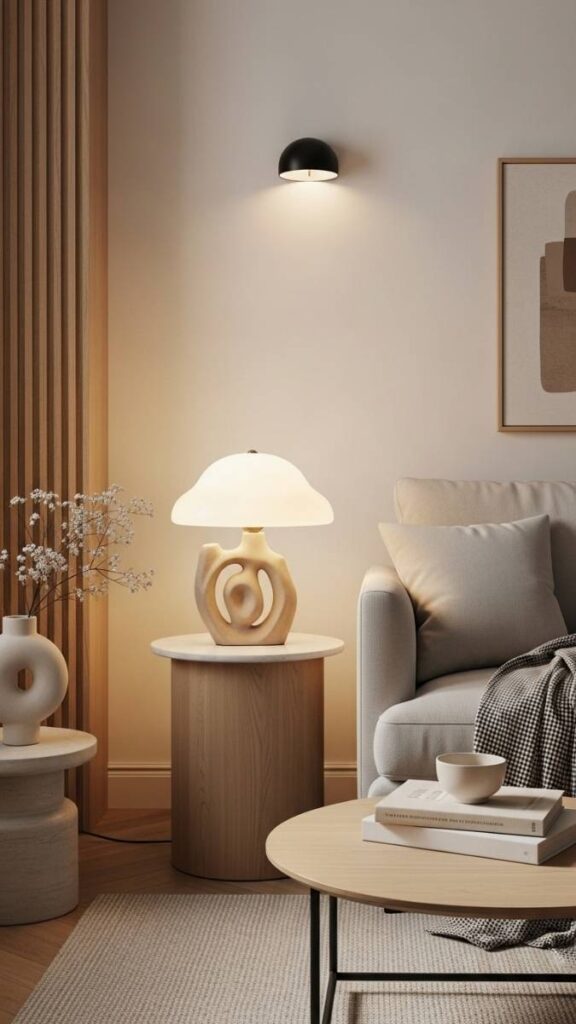
A sculptural lamp does double duty; it provides task lighting and acts as a decorative object with real visual weight. Look for forms that feel architectural ribbed ceramic bases, organic stone finishes, or asymmetric silhouettes. The shade matters as much as the base; linen or natural fabric shades cast warmer, softer light than paper or synthetic options.
In a bedroom, placing matching sculptural lamps on either side of the bed adds symmetry and a hotel-like formality. In a living room, a single statement lamp on a console or side table creates an unexpected vignette that draws the eye without overcrowding the surface.
Read More About: 59+ Coastal Kitchen Ideas That Actually Work in Real Homes Not Just Beach Houses
Incorporate a Large Natural Fiber Area Rug to Anchor the Seating Zone
The rug size mistake is almost universal. People buy one too small, which makes furniture look like it’s floating. A luxury-feeling room has a rug large enough to bring all major furniture legs onto its surface, creating a unified seating zone rather than a collection of objects.
Natural fiber rugs wool, jute, sisal, or a wool-jute blend add texture underfoot and visual warmth without pattern that might date quickly. In small living rooms, a well-proportioned rug is often the single change that makes the space feel more designed. Go one size larger than feels comfortable at first. In my experience, this works best when you measure the full furniture grouping and add at least 12 inches on every side.
Use a Console Table to Add Depth and Purpose to an Entry or Living Room
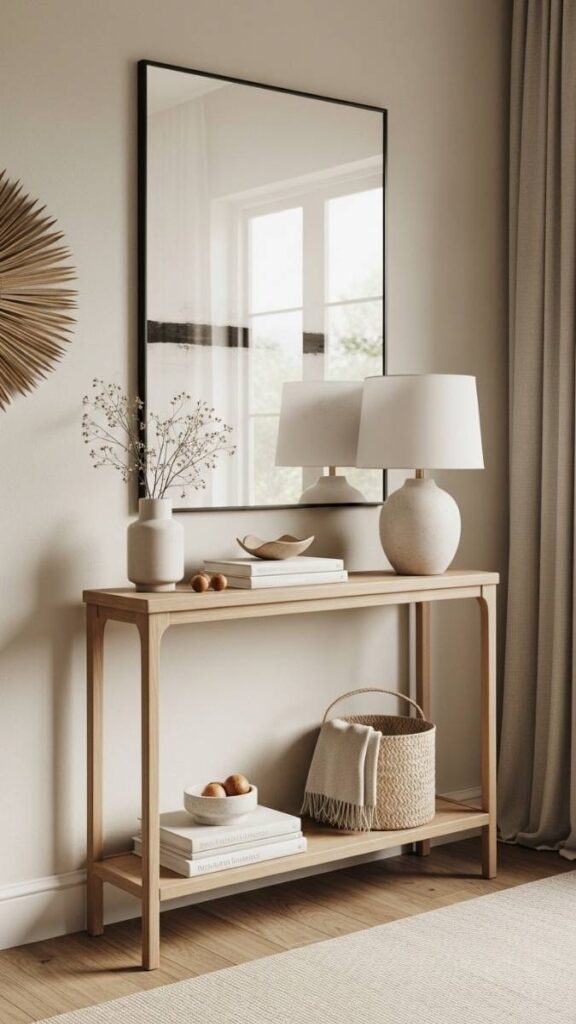
A console table against a wall adds a layer of depth that transforms an empty surface into a designed moment. In entryways, it establishes a clear landing zone while framing the space you walk into. In living rooms, it works behind a sofa to separate a seating area from an open-plan kitchen or dining zone.
The styling on top should feel like one lamp, one object, maybe a tray. The goal is visual intentionality, not maximalism. A darker or high-contrast console (black metal, walnut, or painted lacquer) reads as the most elevated; it has enough visual weight to stand on its own without requiring much around it.
Install or Fake Architectural Paneling on One Wall
Architectural details are what separate builder-grade interiors from designed ones. Wall paneling, whether it’s real millwork, applied molding, or peel-and-stick panels adds three-dimensional texture to a flat wall and immediately raises the perceived quality of a room. A single accent wall behind a bed, sofa, or dining table is enough; doing all four walls tends to feel heavy rather than refined.
For renters, there are now several systems that use adhesive or interlocking panels that are fully reversible. The finish matters paint the panels the same color as the wall for a tone-on-tone, shadow-play effect. This subtle approach reads far more sophisticated than contrasting colors.
Style Your Bookshelf or Open Shelving With Negative Space
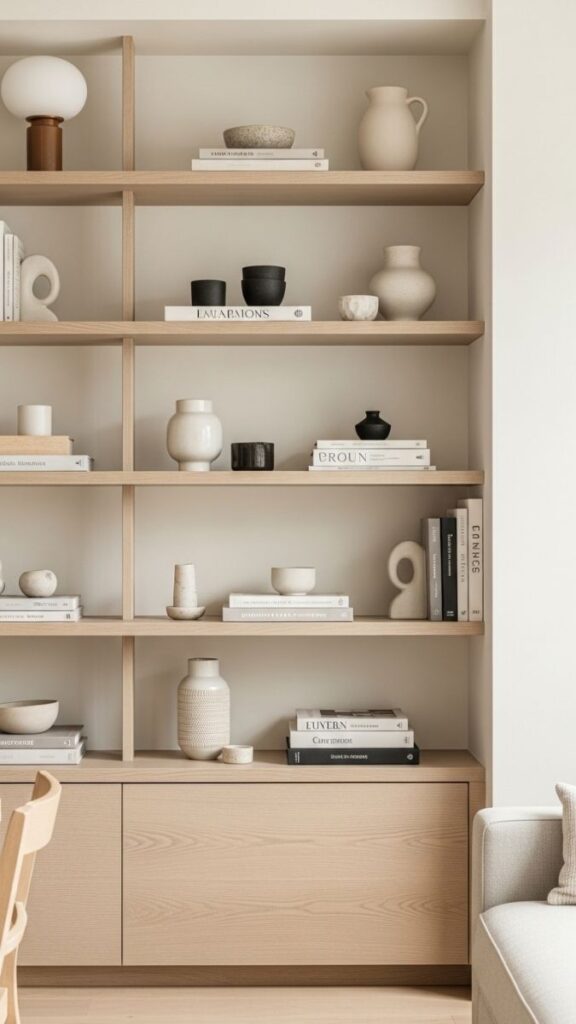
An overstuffed shelf looks like storage; a curated shelf looks like design. The difference is restraint. Luxury interiors treat open shelving as a series of small vignettes, not as filing systems. Remove half of what you think you need, then group what remains in odd numbers with varying heights.
Leave sections entirely clear that negative space is what makes the occupied sections feel intentional. Books look best spine-in (if you want the minimal, gallery-like effect) or grouped by color. Decorative objects should have visual weight stone, ceramic, glass, or natural materials read more grounded than plastic or lightweight props.
Read More About: 58+ Beach Bedroom Decor Ideas That Actually Work in Real Homes Not Just Coastal Mansions
Place a Tray on Every Surface You Want to Feel Finished
Trays are one of the lowest-effort, highest-impact additions to any space. They create a boundary that signals “this is a designed arrangement,” not just items placed somewhere. On a coffee table, a tray containing a candle, a small plant, and a book reads as deliberate. On a bathroom counter, it organizes daily items and makes them look curated.
The material of the tray matters marble, lacquer, brass, or dark wood all carry more visual weight than lighter alternatives. The objects on the tray should occupy roughly two-thirds of its surface; the empty third is part of what makes it look expensive.
Use Warm Toned Metals Consistently Across Hardware and Fixtures
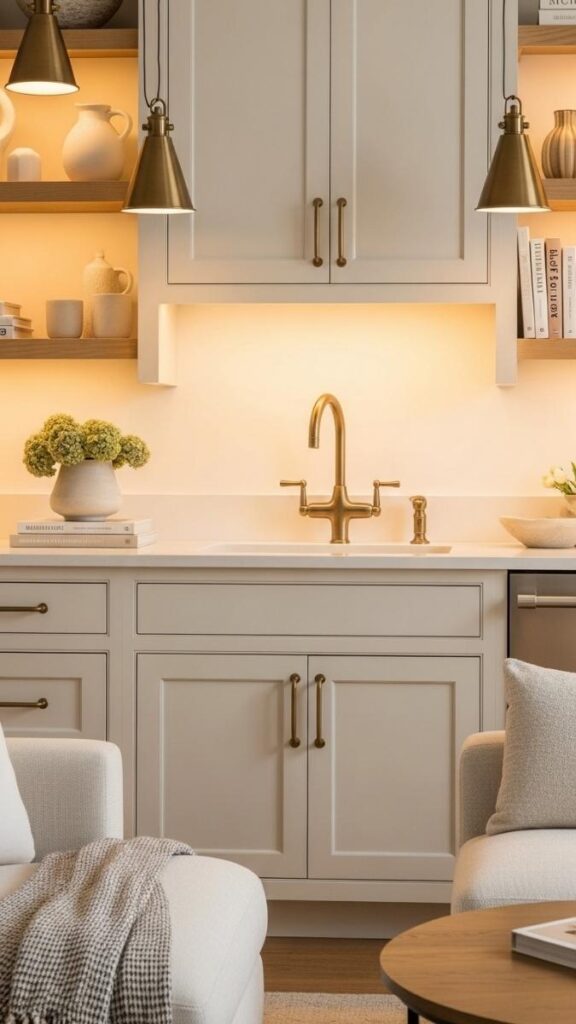
Mixed metals used to be called eclectic. Used incorrectly, they look unresolved. Luxury spaces tend to commit to one warm metal brushed gold, unlacquered brass, or oil-rubbed bronze and carry it through drawer pulls, light fixtures, faucets, and accessories. The consistency creates a thread of intentionality that ties disparate elements together.
Warm metals also work with a wider range of colors than cool finishes like chrome or nickel, which makes them more versatile across neutral, earthy, and jewel-toned palettes. You don’t need to replace everything at once, start with cabinet hardware and a lamp. The alignment effect compounds as you add more.
Add a Statement Mirror That Functions as Both Decor and Architecture
A well-placed mirror is the closest thing to adding square footage without construction. In a small space, an oversized mirror on the wall opposite a window doubles the light and creates the visual illusion of extended depth. In a larger room, a mirror can serve as the primary focal point especially in rooms where a fireplace or large window isn’t an option.
The frame is part of the design: a thick plaster frame, an arched gold frame, or a simple beveled frameless style all read differently. Round mirrors tend to feel softer and more modern; rectangular or arched shapes feel more architectural. Choose based on whether the room needs softness or structure.
Invest in High Quality Throw Pillows in Fewer Numbers
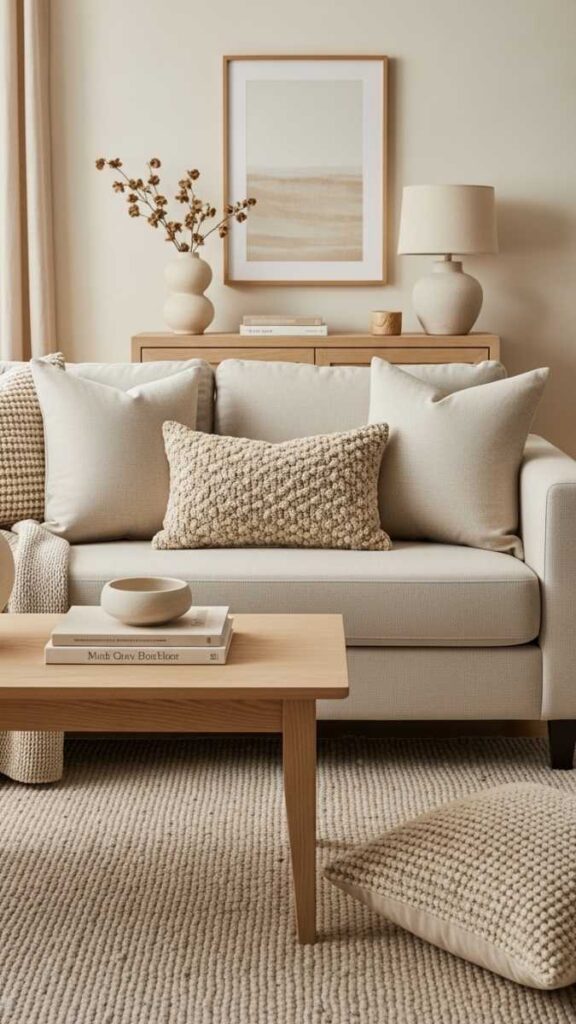
Too many throw pillows make a sofa look like a display; the right number makes it look lived-in and considered. The luxury standard is to rest two to four pillows on a standard sofa, in two complementary textures and a consistent tonal palette. Velvet, linen, boucle, and jacquard all work well because they hold their shape and have tactile interest.
Avoid logos, typography, or novelty prints that date quickly and tend to undermine the cohesion of a neutral space. Pillow inserts matter too; a down or feather-down insert creates that slightly slouched, full look. Polyester inserts tend to look stiff and boxy regardless of the cover quality.
Opt for a Neutral, High Contrast Color Palette With One Deep Anchor Tone
Luxury spaces rarely use many colors; they use a tight palette with variation in tone and material. The most versatile formula is a light neutral base (warm white, cream, greige), layered with textures in similar tones, anchored by one deeper shade. That anchor color might be a charcoal sofa, a deep green console table, or a terracotta-toned area rug.
It doesn’t need to be everywhere; one deep tone in one major piece is enough to give the room its visual weight. This approach is also the most forgiving to add to over time because neutral bases accommodate changes without requiring a full redesign.
Read More About: 57+ Coastal Living Room Ideas That Actually Work in Real Homes
Choose Furniture With Visible Legs Over Fully Skirted Pieces
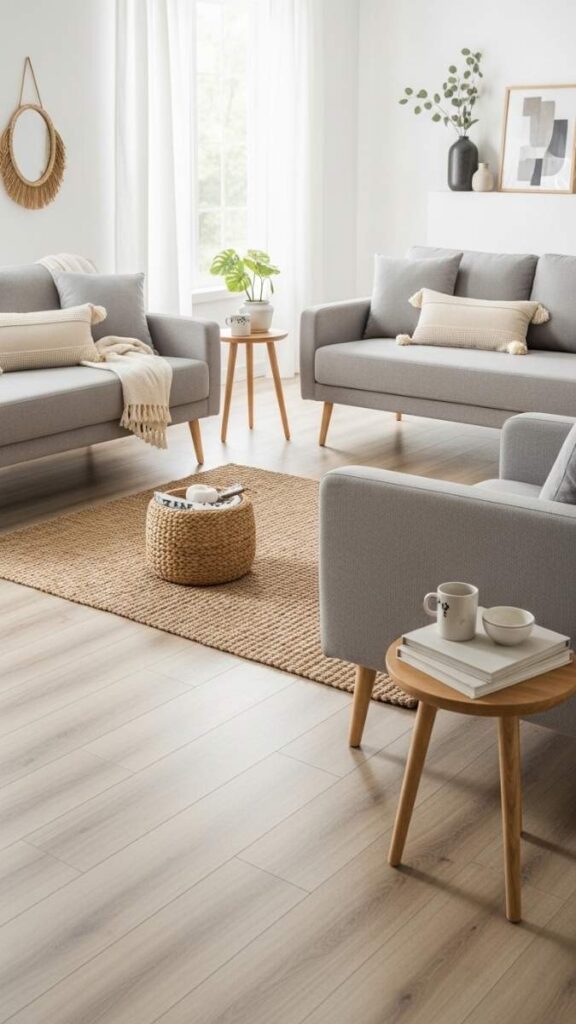
Furniture with visible legs, whether tapered wood, slender metal, or carved stone lifts the visual weight of a piece and allows light to travel across the floor. This openness makes rooms feel less heavy and more spatially generous, especially in smaller spaces where a fully skirted or box-base sofa can block the entire lower portion of a room.
The exposed leg also reads as a more considered design decision than a basic platform base. This is especially important for sofas and chairs, which are the largest visual anchors in most living rooms. Pairs well with an area rug large enough to sit under the front legs.
Add Indoor Plants With Height Variation to Bring Life to Flat Surfaces
Plants are one of the few things that make a space feel genuinely alive rather than merely styled. The key is variation in scale: one tall statement plant (fiddle leaf fig, olive tree, or large monster) anchors a corner or fills a bare wall, while smaller plants on shelves or side tables add detail at eye level.
Avoid clustering many small plants together; this reads as a collection, not a composition. A single tall plant in a quality pot near a natural light source does more for a room than twelve small ones scattered around. The pot matters as much as the plant terracotta, stone, or matte ceramic all carry more visual weight than plain plastic nursery pots.
Display Objects in Odd Numbered Groupings at Varying Heights
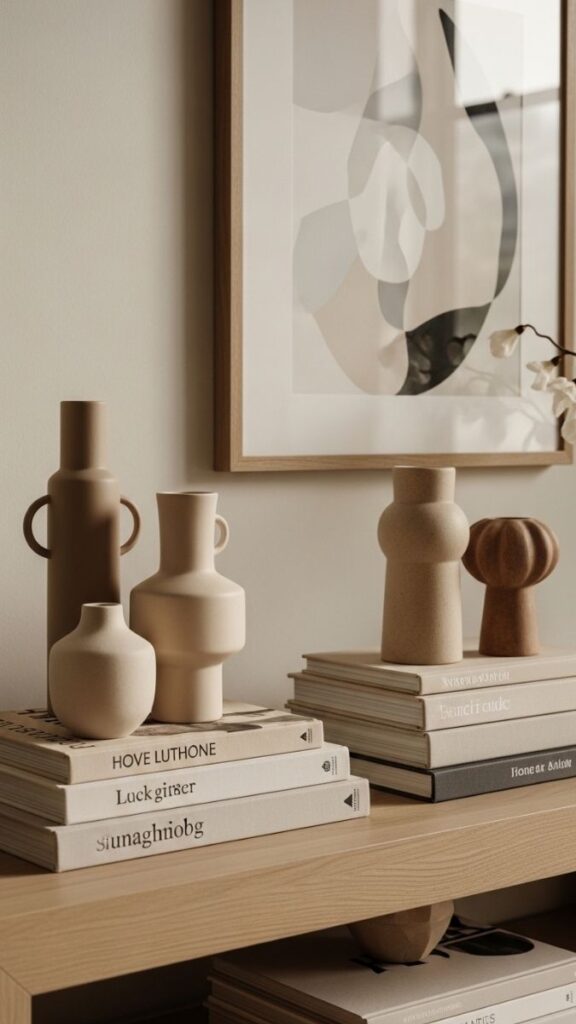
The rule of odds is one of the most reliable principles in interior styling for a reason three or five objects create visual movement that even numbers don’t. The eye travels between them rather than treating them as a symmetrical block.
The key is height variation at least three distinct levels (tall, medium, low) within the grouping and material contrast (one reflective, one matte, one organic texture).
This applies to bookshelves, coffee tables, console surfaces, and even bathroom vanities. The scale of the objects should relate to the surface they’re on; large surfaces need at least one object with significant height or visual mass, or the arrangement will feel like it’s floating.
What Actually Makes Luxury Decor Ideas Work
Luxury isn’t about spending more, it’s about choosing better. A $200 linen throw and a $40 ceramic vase in a well-edited arrangement will always look more elevated than $2,000 worth of mismatched pieces competing for attention. The common thread in rooms that genuinely feel upscale is restraint: fewer objects, better materials, more intentional placement.
Proportion is the foundation. Every element in a room should relate to the scale of the space and the furniture around it. A rug too small, curtains too short, or art too tiny on a large wall undermines the entire room regardless of quality.
Material hierarchy matters equally. Rooms that feel refined tend to anchor around two or three quality materials: stone, natural wood, linen and let everything else play a supporting role. When everything competes for tactile interest, nothing wins.
Lighting is the amplifier. The most beautifully styled room in daylight will feel flat and unconvincing under harsh overhead light. Layered lighting, especially warm-toned bulbs in the 2700K–3000K range does more for perceived luxury than almost any decorative addition.
Luxury Decor Ideas Space and Setup Guide
| Idea | Best Space | Key Benefit | Difficulty | Budget Level |
| Layered lighting | Any room | Transforms atmosphere | Low | Low–Mid |
| Oversized art | Living room, bedroom | Focal point, visual anchor | Low | Mid |
| Boucle/textured upholstery | Living room, bedroom | Tactile depth, elegance | Low | Mid–High |
| Floor-to-ceiling curtains | Any room with windows | Height extension | Low–Mid | Low–Mid |
| Sculptural table lamp | Bedroom, living room | Functional art, warmth | Low | Low–Mid |
| Large area rug | Living room, dining room | Grounds furniture grouping | Low | Mid–High |
| Console table | Entryway, behind sofa | Depth, visual purpose | Low | Mid |
| Wall paneling | Accent wall | Architectural interest | Mid | Mid |
| Curated open shelving | Living room, office | Refined organization | Low | Low |
| Consistent warm metals | Kitchen, bathroom, living | Visual cohesion | Mid | Low–Mid |
How to Arrange a Room for a More Elevated Feel Without Buying Anything New
Before spending anything, walk through these layout adjustments most people are surprised by how much difference rearrangement alone makes.
Float the furniture.
Pushing every piece against the wall creates a perimeter that reads as nervous and empty in the center. Pulling the sofa and chairs inward toward each other and leaving wall space behind them creates a defined conversation zone that feels intentional and spacious. The gap between the sofa back and the wall doesn’t need to be large (even 6–10 inches is enough), but it immediately makes the arrangement feel more considered.
Create a clear focal point.
Every room needs one thing the eye settles on first: a fireplace, a large window, a piece of art, a statement piece of furniture. If your room has multiple competing focal points, or none at all, the space feels directionless. Decide what the room’s anchor is and arrange the furniture to face or complement it. Remove anything that pulls attention away from it.
Control the floor plan movement.
There should be a clear path for walking through the space without weaving around furniture. 36 inches is the minimum comfortable walkway; 24 inches works in tighter spaces but feels narrow. If you can’t walk a direct line from entry to exit without redirecting, the layout is working against itself.
Reduce surface clutter by 30%.
Clear every surface in the room of everything. Then put back only what you actively use or genuinely love. What remains should occupy no more than 60–70% of each surface, leaving breathing room around objects so they read as choices, not accumulation.
FAQ’s
What makes a room look luxurious without expensive furniture?
Luxury in a room comes down to proportion, texture, and lighting not price tags. Well-placed lighting, quality textiles (linen, wool, velvet), a properly sized rug, and a disciplined approach to surface styling create the same visual result as high-end furniture. The biggest wins are usually layered lighting and removing clutter.
How do I make a small room look more luxurious?
In a small space, the most effective changes are floor-to-ceiling curtains (to make ceilings look taller), a large mirror opposite a window (to add light and perceived depth), furniture with visible legs (to keep the floor plane open), and a rug sized correctly for the furniture grouping. Avoid pattern overload; a tight, tonal palette makes small rooms feel more expansive.
What colors feel most luxurious in a living room?
Warm neutrals, creams, warm whites, greige, soft terracotta consistently photograph and feel the most elevated, especially when anchored by one deeper tone like charcoal, forest green, or rich navy. Jewel tones (emerald, sapphire, deep plum) work in rooms with sufficient natural light and a confident, eclectic style. Cool grays tend to feel more commercial unless warmed by wood tones and textiles.
How many pillows are too many on a sofa?
For a standard two- or three-seat sofa, four pillows is generally the upper limit for a refined look, two larger (22″–24″) and two smaller (18″–20″). More than five tend to look styled rather than lived-in. Use two complementary textures and keep the color palette within two to three tones. The goal is a relaxed intentionality, not a symmetrical display.
Is it worth investing in real linen or velvet over synthetic alternatives?
For upholstery and large textile pieces (curtains, sofas, bedding), yes natural fabrics drape, age, and feel differently than synthetics in ways that are visible from across the room. For smaller items like throw pillow covers or decorative napkins, high-quality synthetic blends are often indistinguishable. Prioritize natural materials where the tactile or visual quality will be most apparent curtains, cushion covers on frequently used seating, and bedding.
What’s the most overlooked luxury decor detail?
Consistently, it’s lightbulb temperature. Even beautifully styled rooms look flat and clinical under cool white (5000K+) lighting. Switching all bulbs to 2700K–2900K warm white costs almost nothing and makes every element in the room read warmer, softer, and more intentional. It’s the single fastest and cheapest upgrade available in any space.
How do I style a console table to look luxurious?
Use the rule of three: one tall element (a lamp or tall vase), one medium element (a small sculpture or plant), and one low element (a tray, books, or smaller object). Keep the palette tight, two to three tones at most. Leave one-third of the surface clear. The lamp should be functional, not just decorative, which anchors the arrangement with practical purpose.
Conclusion
Making a room feel more refined isn’t about a complete overhaul, it’s about addressing the right things in the right order. Lighting, proportion, texture, and restraint are the four variables that most consistently separate elevated spaces from ordinary ones. Small changes, a correctly sized rug, floor-length curtains, a sculptural lamp, one quality throw create compounding effects when they work together.
Start with one or two ideas that fit your space, your current furniture, and your budget. Lighting is usually the most impactful first step; getting the rug size right is often second. From there, build slowly and deliberately rooms that feel genuinely luxurious rarely happen all at once.