33+Spring Home Decor Ideas That Actually Make Your Space Feel Different
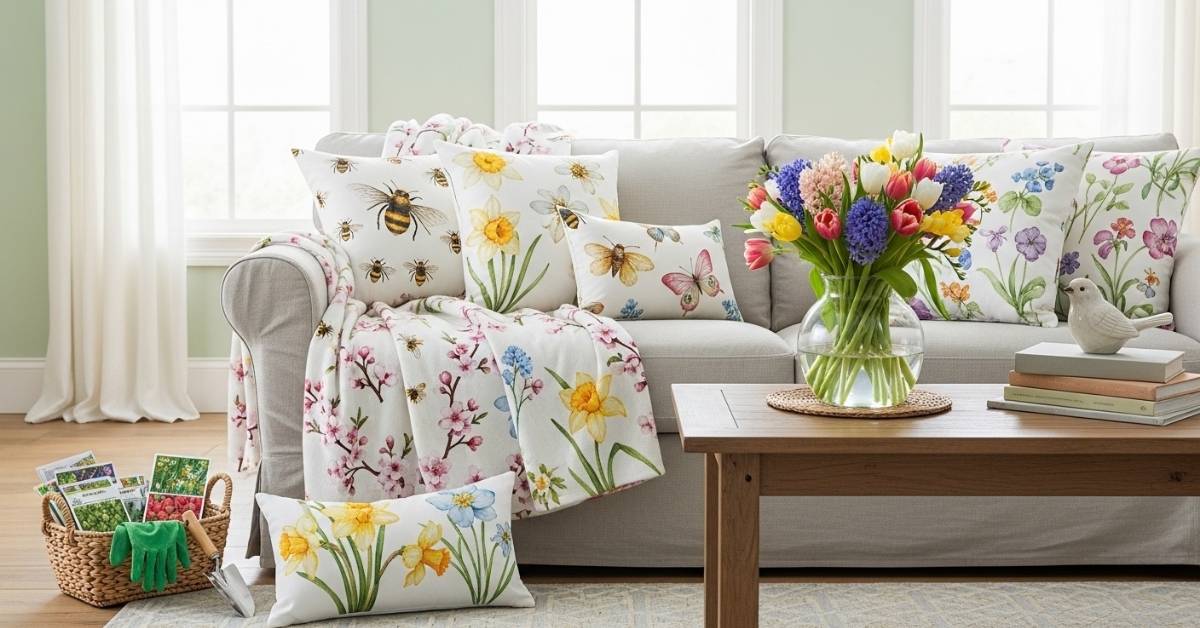
Spring cleaning is one thing. Spring decorating is another and honestly, it doesn’t get nearly enough credit. There’s a specific kind of fatigue that builds up over winter: Spring Home Decor Ideas the heavy blankets, the dark candles, the closed-off rooms that start feeling a little too closed-off. By the time March hits, most spaces are ready for a reset, not just a deep clean.
The good news is that spring home decor doesn’t require a renovation or a full room overhaul. The ideas that make the most difference tend to be surprisingly targeted: a lighting swap here, a textile change there, a plant placed exactly where the afternoon light lands. For anyone working with a smaller apartment, a rented space, or a tight budget, this list is especially useful. These are setups that work in real homes, not just staged ones.
Swap Heavy Drapes for Sheer Linen Panels and Watch the Room Expand
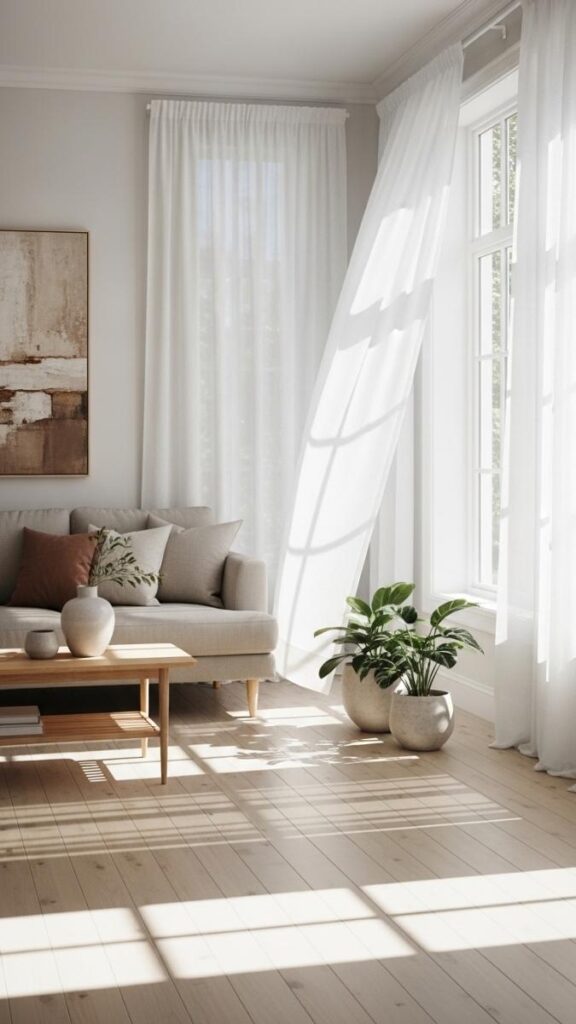
Heavy curtains do more visual damage than most people realize. They absorb light, make ceilings feel lower, and add visual weight to a wall that already has a lot going on. Switching to sheer linen panels hung high, close to the ceiling, and wide enough to extend several inches past the window frame on each side creates the impression of a much taller, wider window.
This setup works especially well in north-facing rooms that don’t get direct sunlight. The linen filters what light does come in and diffuses it softly across the room rather than leaving one bright rectangle on the floor. For renters, tension rod alternatives exist. The practical payoff is that the room feels airier without any furniture moving, any repainting, or any significant spend.
Layer a Jute Rug Over a Flat-Weave Base for a Relaxed Spring Feel
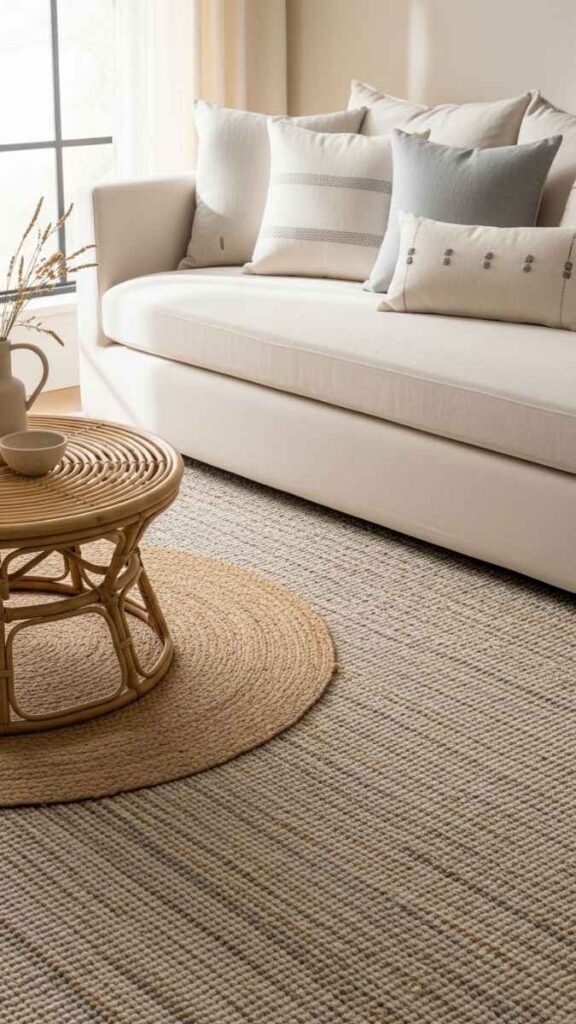
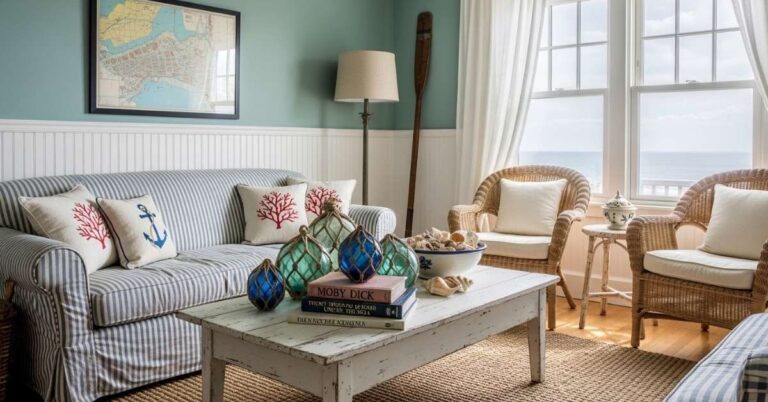
A single flat rug rarely reads as “spring” it’s just a rug. But layering a smaller natural-fiber jute or seagrass rug over a striped or solid flat-weave creates a look that feels intentionally relaxed rather than empty or unfinished.
The combination works because jute adds organic texture while the flat-weave underneath provides color and definition for the seating area. In a small living room, this setup visually anchors the sofa and chairs without requiring a large, expensive single piece. The key is to choose a base rug that extends at least 12 inches beyond the top rug on all sides otherwise it looks accidental rather than considered. This is a particularly good move in rental spaces where carpet underneath benefits from a layered covering.
Bring in One Statement Stem Arrangement Instead of Multiple Small Vases
Multiple small vases scattered across a surface often create visual noise instead of the organic feel they’re going for. One well-proportioned stem arrangement in a clear or earthy vessel does more; it functions as the room’s anchor point and gives the eye somewhere to land.
For spring specifically, branches work better than standard bouquets. Eucalyptus, cherry blossom branches, or simple olive stems add height and movement that a tight floral cluster can’t. Placed at the center of a dining table or on a console in the entryway, a tall arrangement draws the eye upward, which makes the ceiling feel higher. In my experience, this works best when the vessel is transparent or matte glossy ceramic competes with the stems rather than letting them read clearly.
Read More About: 26+DIY Bedroom Decor Ideas That Actually Work in Real Homes
Replace a Dark Gallery Wall with Botanical Prints in Matching White Frames
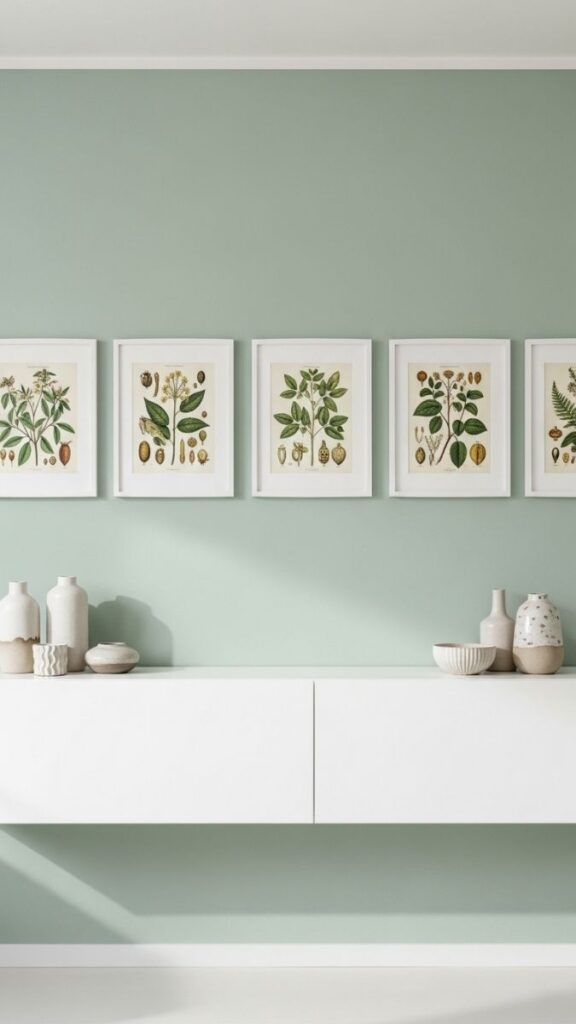
A gallery wall that worked in winter dark art, moody frames, mixed metals can feel heavy by April. Swapping out even two or three prints for botanical illustrations or pressed-leaf artwork shifts the entire energy of the wall without replacing the layout.
The matching white frame rule matters here. Mismatched frames add visual complexity that fights the lightness of botanical prints. A uniform frame style lets the artwork itself do the work. This works especially well in dining rooms and home offices where the wall art tends to be more visible from a fixed vantage point. The practical advantage for anyone on a budget, quality botanical prints are widely available as digital downloads, making the cost almost entirely the frames themselves.
Move Your Furniture Away from the Walls to Create a Conversation-Ready Layout
Furniture pushed flat against walls is one of the most common layout habits that quietly makes rooms feel less functional and less welcoming. Pulling a sofa 18 to 24 inches from the wall creates a defined conversation zone and actually makes the room feel larger, not smaller, because it establishes visual depth.
This setup is especially effective in square rooms where the space tends to feel boxy and undefined. The furniture creates its own boundary, and the space between the sofa and the wall becomes a breathing zone that makes movement through the room feel more natural. For spring, this layout shift also opens the room to whatever light is coming through windows, rather than trapping it in corners. The adjustment costs nothing and takes about ten minutes.
Add a Terracotta or Sage Accent Chair to Break Up a Neutral Room
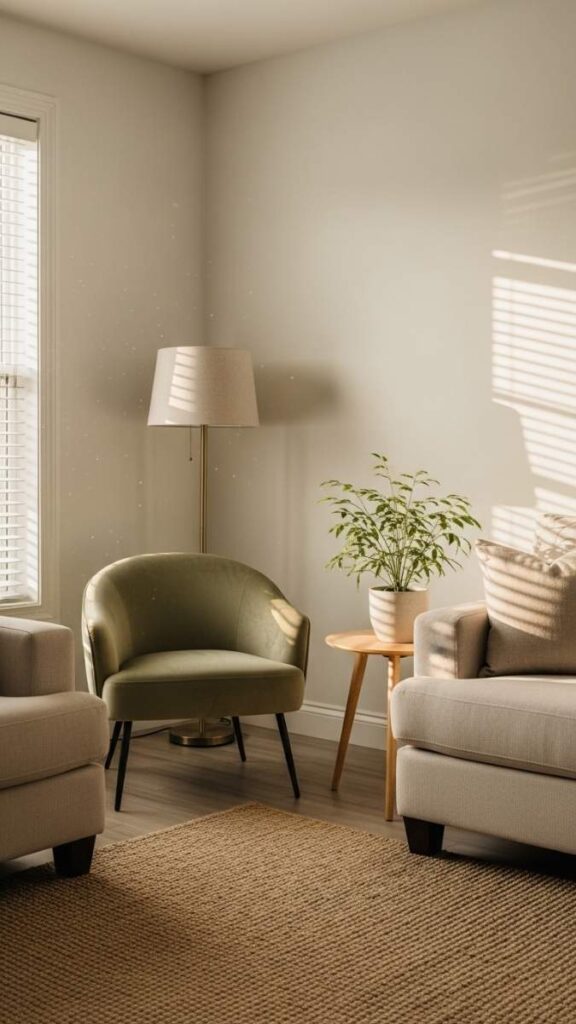
An all-neutral room doesn’t need to stay all-neutral year-round. Adding a single accent chair in a spring-appropriate color terracotta, sage, dusty rose, or warm mustard gives the room seasonal intention without committing to a full repaint or reupholstery project.
The placement matters more than people expect. An accent chair works best when it’s positioned at a slight angle in a corner with its own light source, a floor lamp or a window nearby. This creates a distinct reading or sitting nook that feels purposeful rather than like leftover seating. The chair doesn’t have to be expensive; even a secondhand piece reupholstered in a seasonal fabric accomplishes the same thing. This is especially useful in open-plan spaces where different zones need visual definition.
Use Trailing Plants on High Shelves to Add Vertical Life Without Floor Space
Floor space is valuable, especially in apartments. Trailing plants, pothos, philodendrons, strings of pearls placed on a high shelf or a floating wall-mounted planter solve the greenery problem without occupying any floor square footage.
The trailing direction creates a natural downward flow of texture that softens the hard edges of shelving and draws the eye along the wall in a way that feels organic. For spring, this setup works particularly well against a white or light-colored wall where the green registers clearly. The plant also doesn’t need direct sunlight; pothos and philodendrons thrive in indirect light, making them practical for rooms that face away from the sun. This is one I’d actually recommend trying first because the visual return is immediate and the maintenance commitment is low.
Read More About: 22+Apartment Storage Ideas That Actually Work in Small, Cluttered Spaces
Layer Soft Woven Throws in Warm Neutrals Instead of Switching to Solid White
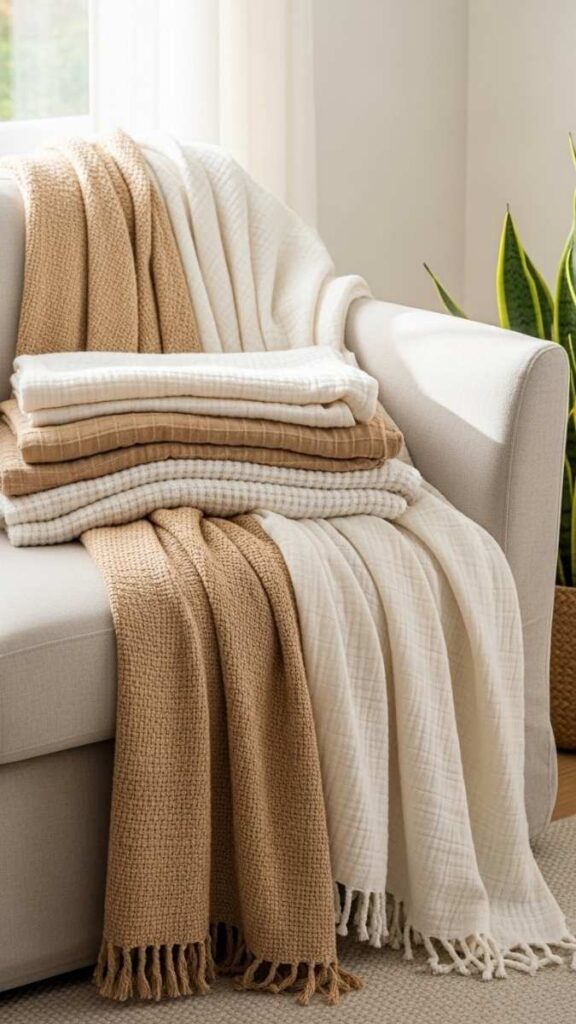
The instinct to switch to crisp white for spring often results in a sofa that looks sterile rather than fresh. Layering woven throws in warm neutrals, cream, oat, and light sand creates the same lightness with more warmth and texture.
The layering technique works best with two or three throws of different weights and weaves. Drape one loosely over one arm, fold the second over the back of the sofa, and leave the third in a loose fold on a nearby armchair or bench. This approach looks lived-in and easy without looking messy. It also works better for renters who can’t paint or change furniture; the softness of layered textiles does significant visual work in spaces that otherwise feel flat or impersonal.
Introduce Rattan or Cane Accents to Bring in Natural Texture
Rattan and cane have a staying power that other trend-driven materials don’t; they’re specific enough to feel considered but neutral enough to blend with almost any existing palette. A single cane-accent side table, a rattan pendant light, or a woven basket introduces the kind of organic texture that spring spaces benefit from.
The material works best as a supporting element rather than the focal point. Pair it against linen, cotton, or wood rather than against polished stone or metal the contrast reads as intentional. For small bedrooms, a rattan bedside table takes up the same footprint as a solid wood one but feels visually lighter, which matters in tight layouts where every piece needs to earn its place.
Swap a Synthetic Throw Pillow Collection for Linen and Cotton Covers
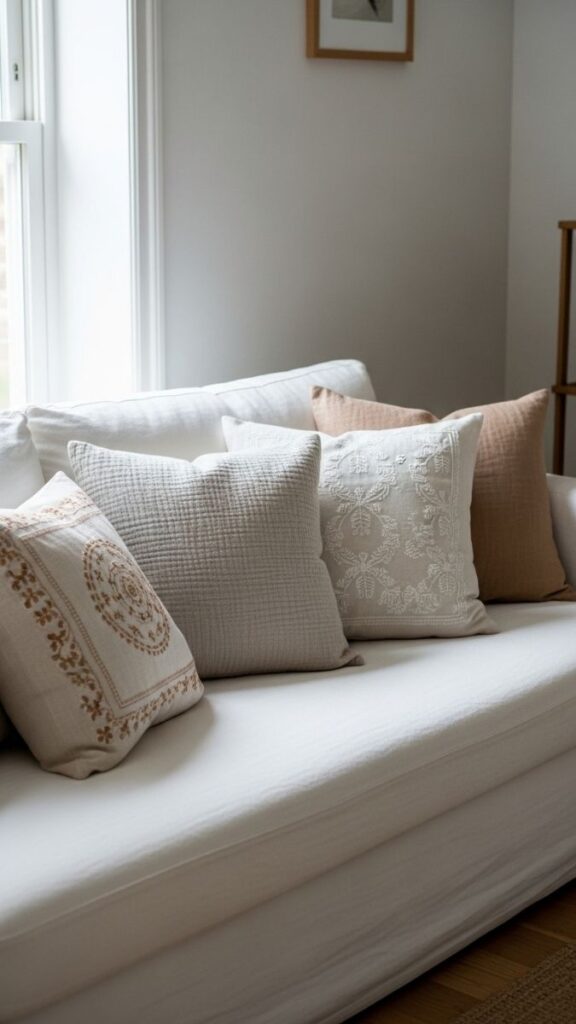
Pillow covers are the most underestimated tool in seasonal decorating. Most people buy a pillow; a better approach is buying inserts once and rotating covers by season. Spring covers in linen, cotton gauze, or light embroidered fabric immediately shift the sensory register of a sofa or bed; they feel different to the touch, and they read differently under natural light than polyester or velvet.
The practical move for spring is a mix of textures within a tight color palette three pillows in the same tonal family (warm white, light sand, stone) with varied weaves: a loose linen, a tighter cotton, and one with subtle texture or stitching. This creates visual depth without color clash. Budget-conscious versions IKEA, H&M Home, and Amazon basics all carry linen-blend covers under $20 that photograph and read just as well as higher-end options in a real-room context.
Create a Spring Entry Moment with a Simple Console Table Setup
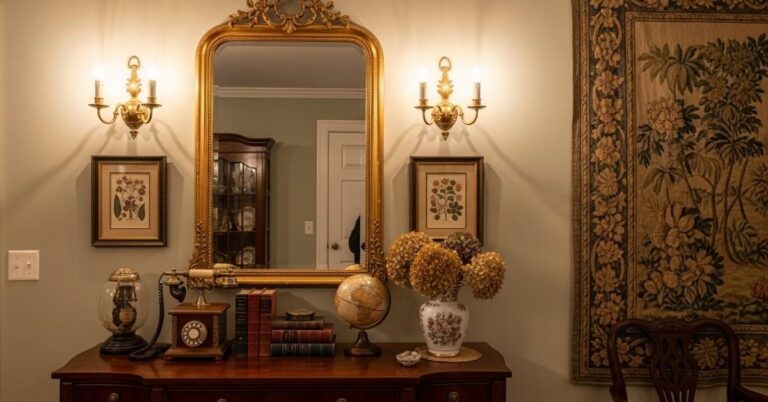
The entryway sets the tone for how a whole home feels, something that becomes especially noticeable after winter, when guests and residents both arrive expecting something warmer. A slim console table with a round or arched mirror above it, a single vase with fresh or dried stems, and one small tray for keys creates an entry that feels complete without overcrowding a narrow space.
The round mirror specifically does two things: it bounces light from whatever source is available (even a wall sconce or pendant), and it breaks up the visual rigidity of a narrow corridor. For apartments with very little entry space, a wall-mounted floating shelf achieves the same layered moment in less than six inches of depth.
Hang a Linen or Cotton Wall Hanging Instead of Adding More Art
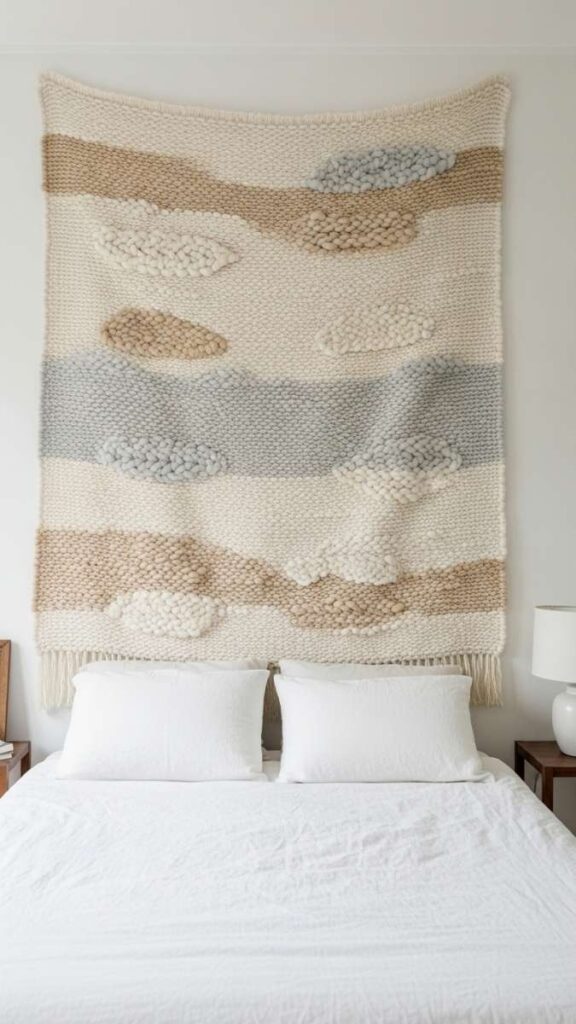
A large-format textile wall hanging does something framed art rarely does in a bedroom: it absorbs sound, adds warmth, and introduces texture all at once. For spring, a loose-woven linen or cotton macramé piece in a natural, undyed palette gives a bedroom wall a quiet, organic presence without competing with surrounding furniture.
This works particularly well as a headboard alternative in rentals where mounting hardware is limited. A dowel rod and two hooks are typically all that’s needed, and the visual footprint of a well-scaled textile can easily replace a full gallery wall of frames. Scale up rather than down a piece that’s too small looks like an afterthought, while one that fills most of the wall feels genuinely architectural.
Bring Outdoor Bistro-Style Lighting Onto an Interior Shelf or Mantle
String lights are almost always associated with holiday decorating, which is probably why they get packed away in January. Repositioning them as ambient accent lighting on a shelf, fireplace mantle, or bookcase rather than hung on a wall gives them a different visual function. The warm glow at lower heights creates the kind of layered lighting that makes a room feel cozy without being dim.
For spring evenings specifically, this works well as the only light source in a living room when combined with a floor lamp or table lamp elsewhere in the space. The key is placement: the lights should weave through and behind objects on the surface rather than sitting on top, which creates depth and avoids the look of decoration for decoration’s sake.
Read More About: 17 Under Bed Storage Ideas That Actually Work in Real Bedrooms
Use a Vintage or Secondhand Mirror to Add Light Without Hanging Anything Heavy
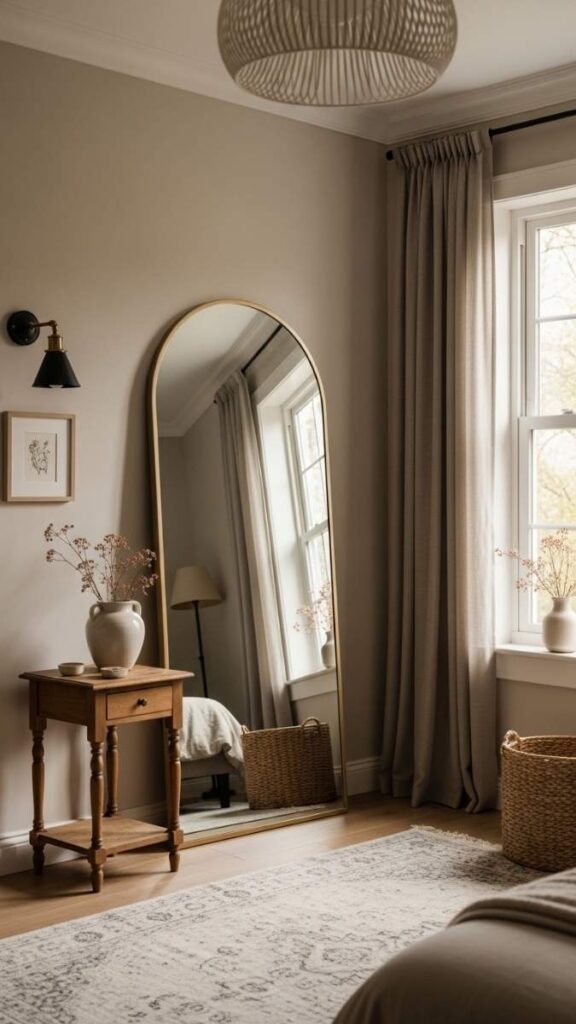
A large floor mirror leaning against a wall, especially one positioned at an angle to catch a window, functionally doubles the light in a room by reflecting it into darker corners. The leaning position also requires no wall damage, making it practical for renters. Arched or oval vintage-style frames are particularly popular in 2026, and they read warmer than rectangular contemporary options.
The strategic placement rule says the mirror should face a natural light source (a window, a glass door) rather than a wall or a dark corner. Position it at the far end of a narrow hallway and it visually extends the space. Position it beside a sofa and it adds a sense of depth to the seating area that furniture arrangement alone can’t achieve.
Introduce Dried Botanicals for Low-Maintenance Organic Texture
Dried botanicals are having a sustained moment in home decor and unlike most trends, this one has longevity because the product itself doesn’t need maintenance. Dried pampas grass, lunaria (money plant), cotton bolls, or wheat stalks in a simple ceramic or concrete vase add spring texture without the weekly water requirement of cut flowers.
The key difference from a standard floral arrangement is scale: dried stems tend to work best in loose, generous arrangements that spill slightly from the vase rather than being tightly packed. A wide ceramic vessel at low height works well on coffee tables. A tall, narrow vase with a few long stems works in entryways and dining areas. This is a genuinely budget-friendly setup: dried stems are far cheaper than regular flowers and last for months.
Declutter One Surface Completely and Use It as a Breathing Space
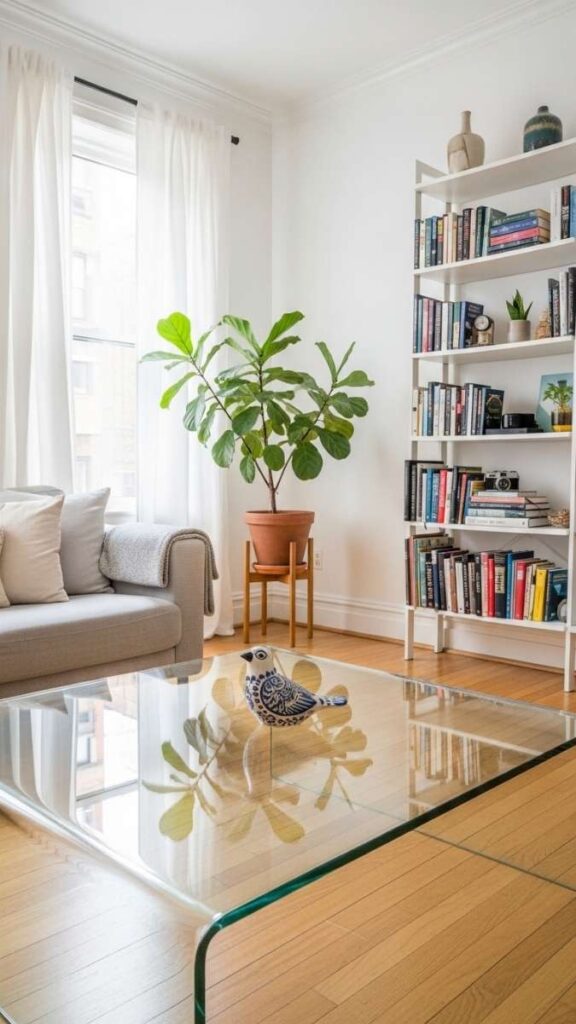
This one sounds counterintuitive as a decor idea, but clearing a surface entirely the coffee table, a side table, the top of a dresser often does more for a room’s spring feeling than adding anything new. Negative space is a design element, not an absence of one.
The breathing surface principle: when every horizontal surface in a room is occupied, the eye never rests, which makes the room feel busier and more stressful than it actually is. Leaving one surface completely clear (or nearly so, with one small object) creates visual relief that makes the rest of the room feel more curated by contrast. This is especially effective in small apartments where the room needs to read as calm to feel livable.
Layer Ambient, Task, and Accent Lighting Instead of Relying on Overhead Fixtures
Overhead lighting is one of the most overlooked contributors to a room that feels flat or clinical. Spring is a good time to reconsider the lighting setup entirely not by replacing fixtures, but by adding. A floor lamp in the far corner of a living room, a table lamp on a side table, and a few LED candles on the coffee table create a layered effect that makes the room feel warmer and more dimensional.
The principle here is that light coming from multiple lower points creates depth; a single overhead fixture flattens a room by illuminating everything uniformly. The practical implementation costs less than most people expect. A good floor lamp from IKEA or Amazon typically runs $50–$80, and it changes the evening feel of a room more than almost any other single purchase. For spring, warm-toned bulbs (2700K–3000K) read noticeably better than cool white.
Place a Small Herb Garden on a Kitchen Windowsill for Function and Freshness
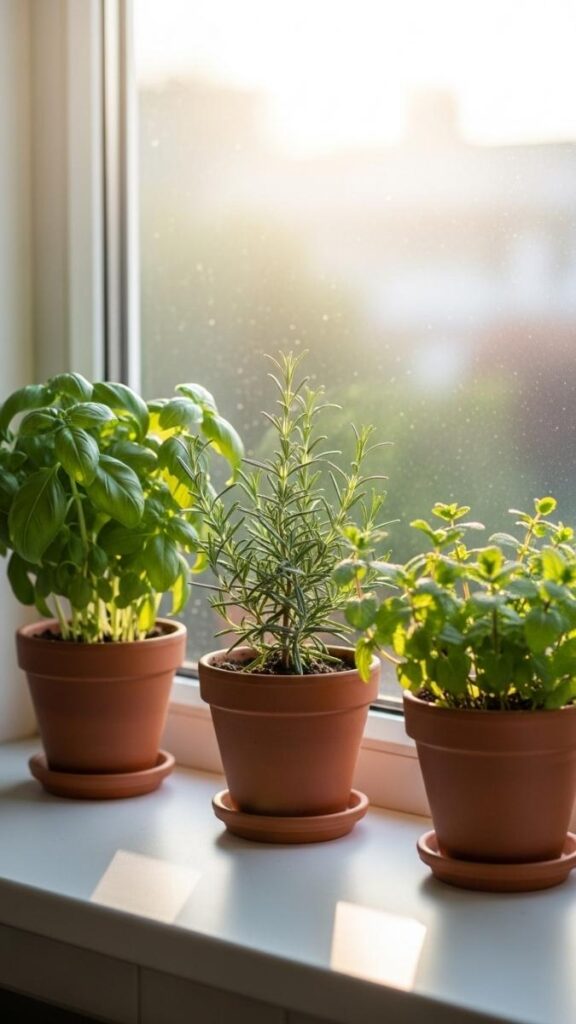
A kitchen herb garden on the windowsill is both one of the most practical spring home decor ideas and one of the most visually effective. Three or four small terracotta pots in a row, each holding a different herb, provide greenery, fragrance, and usability in a space that often lacks organic elements.
The terracotta specifically works because the material’s warm tones read well against almost any backsplash color and the porous texture contrasts naturally with kitchen surfaces like tile, marble, or painted wood. In a kitchen that faces east or south, herbs grow well with minimal intervention. For north-facing kitchens, choose hardier varieties like mint and chives over basil, which needs more direct light.
Create a Reading Nook with a Chair, Floor Lamp, and a Low Plant Beside It
A reading nook doesn’t require a window seat or a dedicated room. A corner with an upholstered chair, an arc floor lamp positioned behind and to the right of the seat, and a low plant beside it creates a distinct zone within a larger room, one that feels purposeful and inviting rather than just another place to sit.
The spatial logic of the lamp provides focused light for reading without illuminating the whole room, which defines the nook as a separate atmosphere within a shared space. The plant beside the chair adds organic warmth at eye level when seated. This setup works in living rooms, bedrooms, and even open-plan studio apartments where space feels undivided and therefore undefined. One well-composed corner changes how the whole room is experienced.
Introduce Spring Color Through a Single Statement Piece of Ceramic
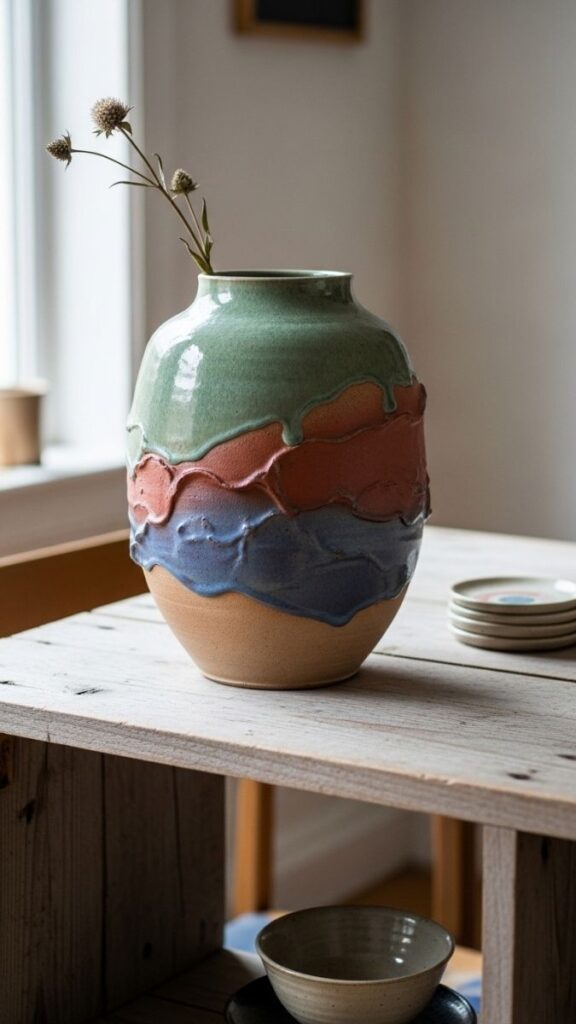
A hand-thrown or artisanal ceramic in a spring color sage green, terracotta, dusty blue, or warm blush functions as a slow, lasting color introduction that doesn’t require repainting or buying new furniture. One well-proportioned piece on a shelf, a dining table, or a console creates a color moment that grounds the room without overwhelming it.
The size decision matters when a piece that’s too small reads as clutter. A vessel that’s genuinely oversized, something that would feel slightly audacious on the shelf reads as intentional and confident. Secondhand and thrifted ceramics are particularly good here because irregular shapes and subtle imperfections in the glaze add authenticity that mass-produced items don’t have.
Roll Out a Light-Colored Natural Fiber Rug on a Balcony or Patio
The outdoor space tends to get decoration attention last usually only when warm weather is already in full swing. Starting in early spring, even a small balcony benefits from a light-colored outdoor rug, which immediately defines the space as a usable room rather than a pass-through. Natural fiber outdoor rugs in cream, sand, or warm gray read cleaner than darker options and make a small balcony feel more expansive.
This is particularly effective for apartment balconies where the concrete floor otherwise makes the space feel raw and unfinished. Pair the rug with two low chairs and a small side table and the result is a functional outdoor room that costs a fraction of permanent patio furniture.
Switch from Candles with Heavy Scent to Light Spring Fragrance
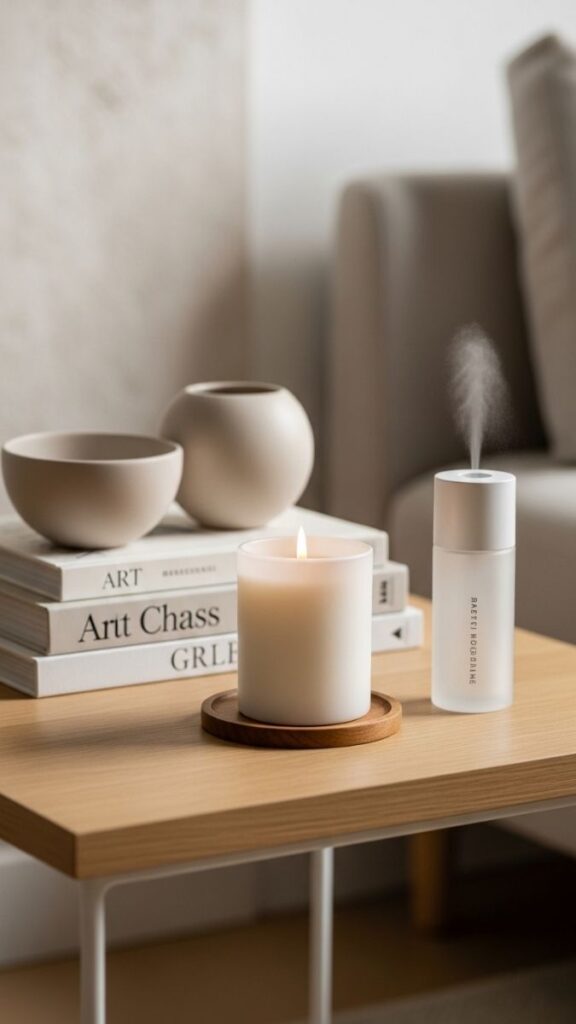
Scent is part of how a home feels seasonally and winter scents (amber, sandalwood, cedar, clove) stay in the room well past their welcome. Switching to lighter spring fragrances linen, green tea, eucalyptus, light citrus, or cotton makes an almost immediate sensory difference in how a home registers when you walk in.
The practical point reed diffusers are more consistent for daytime scent than candles and work especially well in entryways and bathrooms. For living areas, a candle in a light, clean fragrance complements the other changes (textiles, plants, lighting) rather than working against them. Avoid layering multiple competing scents in the same space; one source per room is generally the right ceiling.
Use Floating Shelves in Clusters to Build a Spring-Styled Vignette
A single floating shelf tends to look isolated. A cluster of two or three staggered shelves at different heights, arranged asymmetrically, creates a genuine vignette wall that holds plants, books, and decorative objects without dominating the room.
The staggering principle is that the shelves should sit at three different heights rather than evenly spaced, which creates visual interest and allows taller objects (stems, plants, art prints propped upright) to occupy some shelves while shorter ceramics and books sit on others. For spring, lead with plants at the top a trailing pothos or small fern cascading downward unifies the shelves and adds the organic element that makes the arrangement feel alive rather than staged.
Add a Large-Format Art Print in a Lighter, More Open Color Palette
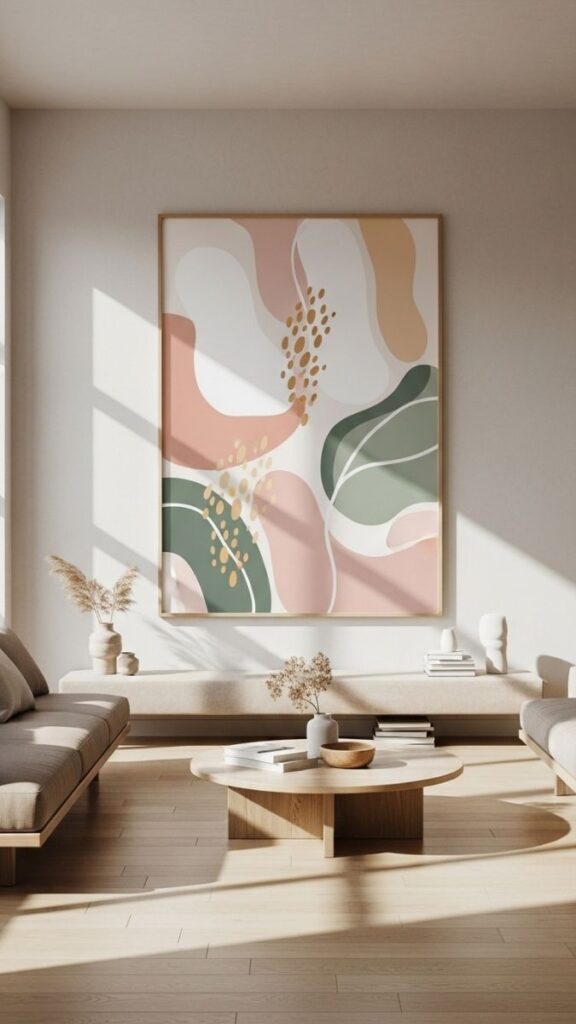
Going up in scale with a single print rather than adding more frames in a smaller size is one of the stronger moves in spring decorating. One large-format abstract or landscape print in a soft, open palette (creamy whites, warm blush, sage green, dusty blue) shifts the tone of an entire wall without requiring additional furniture or layout changes.
The format does the work: a print that occupies most of a wall becomes a piece of architecture rather than decoration. For budget-conscious spaces, quality printmaking services like Artifact Uprising or Society6 offer large-format prints on demand, and a simple white mat and frame from IKEA finishes the look without the gallery-wall price point.
Rearrange a Bookcase to Create a Styled Open Display
A bookcase that’s purely functional books packed spine-out from edge to edge is an easy win when restyled. The spring version removes roughly 30% of the books, group the remaining ones by tone (warm neutrals together, darker spines together), add two or three small ceramics or vessels, and position one small plant at the corner of a shelf where it can trail or reach toward the light.
Turning some books spine-inward (pages facing out, in warm cream and white tones) has become more visually integrated in 2026 shelf styling; it creates tonal blocks of neutral color that help ceramics and plants read more clearly. The approach works in living rooms and home offices equally well and costs nothing beyond the time of rearranging.
Use a Woven or Rattan Pendant Light to Warm Up a Dining Area
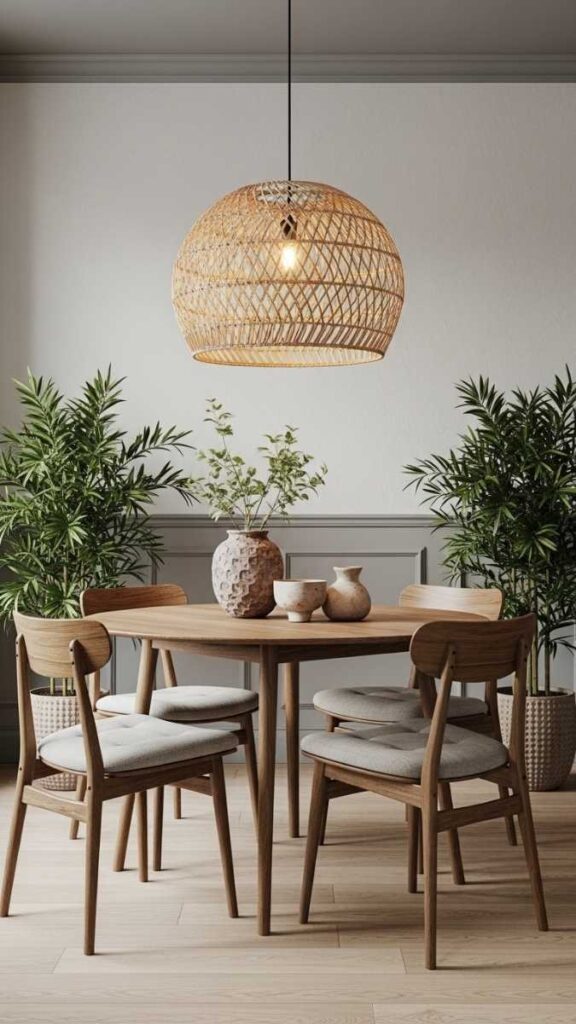
The pendant light above a dining table is the room’s loudest visual statement; it’s large, it’s centered, and it’s always in the peripheral view of anyone seated. Swapping a heavy metal or generic glass pendant for a woven rattan or seagrass shade in spring changes the entire register of the room.
The woven material diffuses light warmly and creates a dappled effect on the ceiling that reads differently from standard shades. For homes that can’t change fixed wiring, clip-on pendant adapters exist for standard bulb sockets, making this a realistic option even without an electrician. Scale matters significantly; the pendant diameter should be roughly half the width of the table, too small and it reads as an afterthought, too large and it crowds the space.
Create a Spring Bedroom Moment with a Fresh Duvet Cover and One Potted Plant
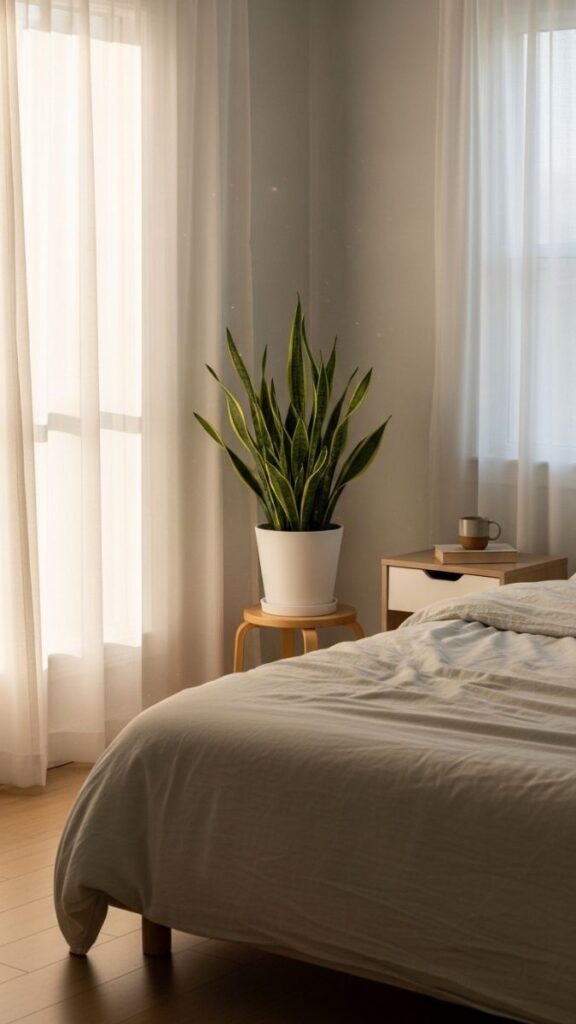
The bedroom tends to update last, but it’s the room most people start and end their day in which means it has more cumulative impact than the living room for how a home feels day-to-day. A lighter duvet cover (linen or cotton percale in warm white, oat, or soft sage) and one well-placed potted plant on a stool or the floor beside the bed creates a bedroom that reads as genuinely spring without requiring any furniture changes.
The plant placement beside the bed matters at floor level or on a low stool, it reads as a living element that anchors the side of the bed and creates a natural asymmetry that makes the room feel less formal and more lived-in. A fiddle leaf fig, a monstera, or a simple snake plant all work well at this scale. Combine this with sheer curtains from idea #1 and the bedroom becomes the most significantly changed room in the house from two relatively low-cost moves.
What Actually Makes These Spring Ideas Work
Most spring home decor ideas get abandoned halfway through because they require more coordination than people expect. The ideas that stick and that actually change how a home looks and feels share a few practical characteristics worth understanding before you start.
They work with existing furniture, not against it.
The most effective spring changes are layered on top of what’s already in the room, textiles, plants, lighting, and smaller accent pieces. If an idea requires moving a sofa to work, it’s a layout overhaul, not a seasonal refresh. Spring decorating is most successful when the bones of the room stay put.
Light is the real variable.
What reads as spring isn’t primarily color, it’s light. Natural fiber materials, sheers instead of blackout curtains, mirrors positioned to reflect windows, and layered warm-toned artificial light sources all contribute to the sense of openness and ease that makes a spring home feel different from a winter one. The material choices are secondary to the lighting choices.
Scale decisions matter more than style.
A single large ceramic does more than five small ones. One oversized print does more than a collection of small frames. A trailing plant on a high shelf does more than three small succulents on a windowsill. Consistently choosing the larger option within a given category and using fewer pieces overall produces a cleaner, more considered result in almost every space.
Spring Home Decor Room-by-Room Quick Reference
| Room | Best Spring Idea | Space Type | Problem Solved | Budget Level |
| Living room | Sheer linen panels + pulled-in furniture layout | Small to medium | Heavy, closed feel | Low ($30–$80) |
| Bedroom | Light duvet + floor plant beside bed | Any size | Feels too closed-off seasonally | Low-medium ($40–$120) |
| Dining area | Rattan pendant light + stem arrangement | Medium | Lacks warmth, feels formal | Medium ($60–$150) |
| Kitchen | Herb windowsill garden + open shelf display | Small to medium | No greenery, feels sterile | Very low ($15–$40) |
| Entryway | Console table + round mirror + single vase | Narrow/compact | No clear welcome moment | Low-medium ($50–$120) |
| Balcony/Patio | Outdoor rug + two low chairs | Small | Unused or feels temporary | Medium ($80–$200) |
| Home office | Floating shelf cluster + trailing plant | Any size | Lacks personality and warmth | Low ($30–$80) |
Common Spring Decorating Mistakes That Make Your Space Feel More Cluttered, Not Less
Buying new rather than editing first.
The most common spring decorating mistake is adding new items before removing what’s making the space feel heavy. Before purchasing anything, do one pass of the room and pull out what’s seasonal to winter heavy throws, dark candles, dense gallery arrangements. The room’s baseline often improves significantly before a single new item enters.
Going too light in color.
All-white spring decor works in editorial photoshoots but tends to read as cold and impersonal in real homes, especially those without abundant natural light. Warm neutrals, oats, sand, cream, warm white give the same lightness as stark white but feel more livable. The same applies to spring paint a slightly warm white (with yellow or red undertones) reads better on most walls than a cool, blue-tinged white.
Overloading surfaces with small plants.
Three small succulents on a shelf look like a hobby; one well-scaled plant in the same location reads as design. Spring greenery works best when it’s generous in scale and limited in quantity; one large plant per room, or two medium ones with clear spatial separation, is more effective than many small plants scattered throughout.
Ignoring the floor.
Rugs are often not replaced seasonally, which means the rug that felt right in winter (dark, dense, heavy pile) actively works against spring lightness in a way that’s difficult to compensate for with other changes. A lighter, flatter rug jute, flat-weave cotton, low-pile wool in a warm neutral changes the visual temperature of an entire room more than almost any single element. Even a layered runner on top of a darker rug makes a measurable difference.
FAQ‘s
What are the easiest spring home decor changes that actually make a difference?
The highest-impact, lowest-effort changes are textile swaps (duvet covers, throw pillow covers, light curtains) and adding one well-scaled plant per room. These two categories change how a room reads without any furniture moving, repainting, or significant budget.
How do I make my home feel like spring without spending much?
Start by removing rather than packing away heavy winter textiles, dark candles, and dense decorative clusters. Then add one or two things a fresh stem in a clear vase, a lighter pillow cover, or a plant from your local garden center. The removal step does more than most people expect on its own.
Is rattan still popular in spring 2026, or is it overdone?
Rattan and cane accents remain relevant in 2026, particularly as supporting elements rather than dominant ones. The trend has matured; the all-rattan room has peaked but a single rattan pendant, a woven basket, or a cane-accent chair still reads as considered rather than dated. The key is using it as a texture note, not the whole visual story.
What’s the difference between spring decor and summer decor?
Spring decor tends to lean toward warmth, organic texture (dried botanicals, linen, cane), and the transition from indoor to outdoor lighter textiles but still layered, and a mix of live and dried botanicals. Summer decor often goes lighter still, with more white, more contrast, and a stronger connection to the outdoors. Think of spring as the warmer, more textured middle ground.
How do I make a small apartment feel like spring without cluttering it?
In a small space, spring is best communicated through editing rather than adding. Swap heavy textiles for lighter ones, introduce one plant at a meaningful scale (floor level or high shelf), and make sure the lighting is warm-toned and layered. Avoid adding multiple small decorative items they read as clutter in compact spaces faster than in larger rooms.
Should I repaint for spring, or are there better ways to refresh the color?
Repainting is a significant commitment for a seasonal change and usually isn’t necessary. A better approach introduce spring color through textiles (throw pillow covers, a throw blanket, a duvet), one ceramic or vase, and plants. These can be swapped again in fall without any residual impact. If you’re considering paint, a warm white or a soft sage on a single accent wall reads better than repainting an entire room.
What plants work best for spring home decor in low-light apartments?
Pothos, snake plants, ZZ plants, and philodendrons are the most reliable options for lower-light interiors. Pothos is particularly useful because it grows quickly, trails naturally, and works on high shelves. For windowsill setups that get some light, peace lilies and monsters do well. Avoid fiddle leaf figs in low-light conditions; they need more direct light than most apartments can provide.
Conclusion
A spring home doesn’t require starting over; it requires making different choices about the elements already in play light, texture, scale, and what you edit out. The spaces that feel most noticeably different by late April are usually the ones where two or three targeted changes were made thoughtfully, not the ones where twenty small items were added.
Pick one or two ideas from this list that fit your actual space, your light conditions, your layout, your budget and start there. Swap a curtain panel. Add one plant at floor level. Clear one surface completely. The cumulative effect of small, well-chosen changes is almost always more convincing than a full room overhaul. Start simple and build from there.