59+ Coastal Kitchen Ideas That Actually Work in Real Homes Not Just Beach Houses
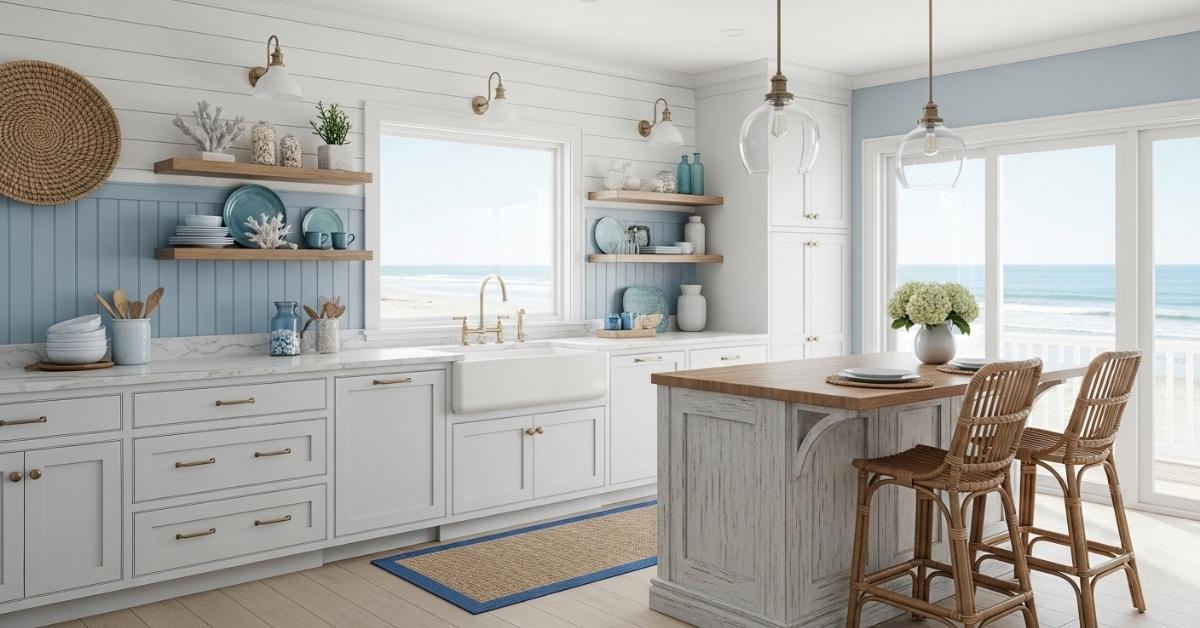
If your kitchen feels closed off, dark, or just generically “fine,” a coastal approach can shift that without a full gut renovation. It’s one of the more adaptable design directions out there; Coastal Kitchen Ideas it works in rentals, compact galley kitchens, and mid century homes just as well as it does in newer builds.
This list covers 27 real, workable coastal kitchen ideas that solve layout problems, maximize light, and bring in that easy, airy feel without making your space look like a themed restaurant.
White Shiplap Backsplash With Open Wood Shelving
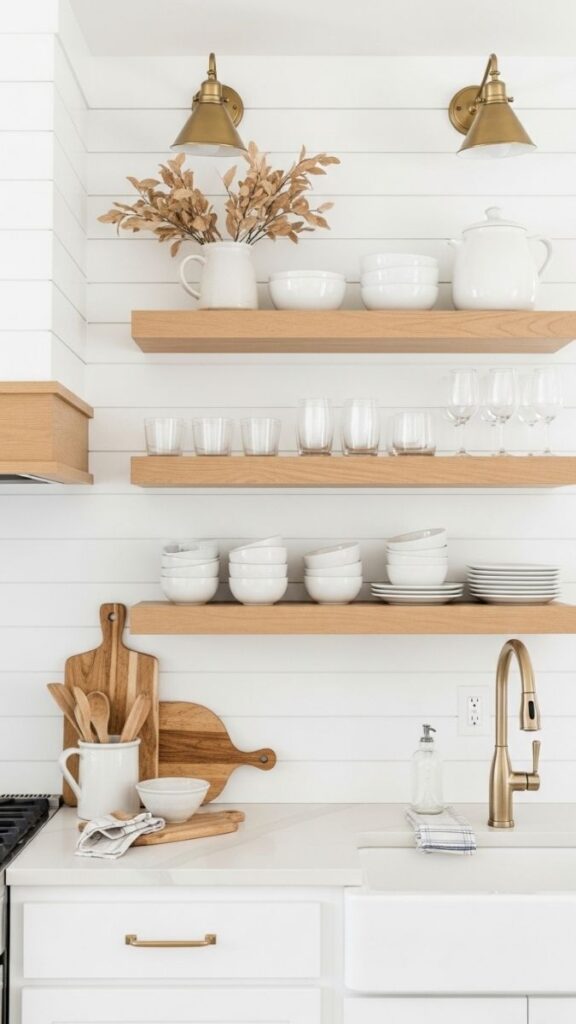
Shiplap behind the stove or sink instantly references coastal architecture without being literal about it. The horizontal lines draw the eye across the wall which actually makes a narrow kitchen feel wider than it is.
Pair it with open floating shelves in a warm toned wood (think weathered oak or white ash) to balance the cool white with something tactile and organic.
This works especially well in galley kitchens where wall real estate is limited and you need the shelving to do double duty as storage and visual texture. The contrast between the flat white boards and the wood grain is what keeps it from reading as too sterile.
Navy Blue Lower Cabinets With White Uppers
Navy is one of the most underused colors in coastal kitchens probably because people default to pale blues and greens. But deep navy lower cabinets grounded with white uppers do something interesting spatially they lower the visual weight of the room to the floor, which makes the ceiling feel higher.
Add unlacquered brass or matte black hardware and you get a kitchen that feels curated rather than costumey. This setup works in kitchens with at least 9 foot ceilings in lower spaces, the dark floors can feel heavy.
For smaller kitchens, keep the navy only on the island or a single run of base cabinets.
Limewash Paint on One Kitchen Wall
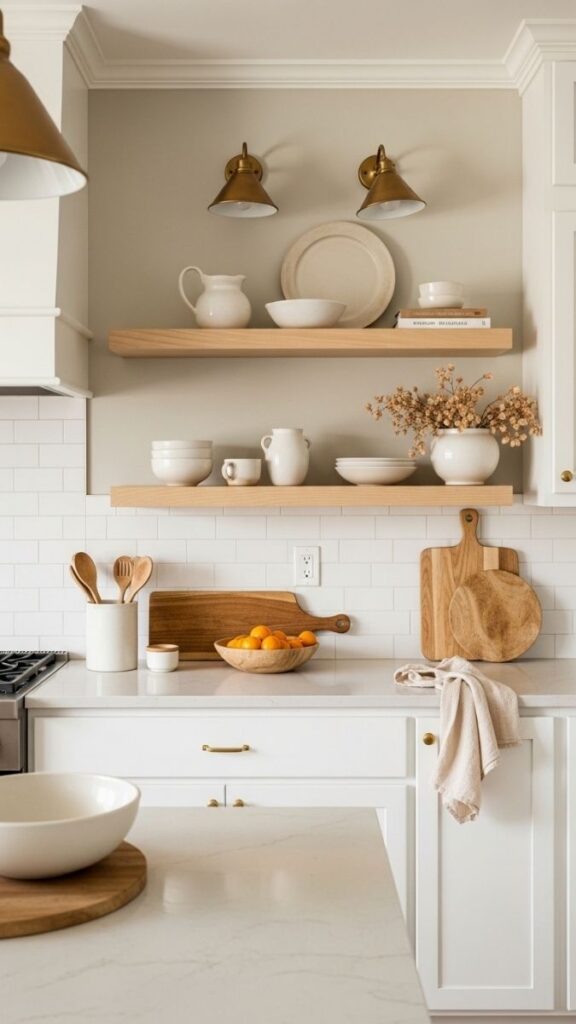
Limewash has been trending steadily through 2025 and into 2026 because it does something flat paint doesn’t it creates movement.
The slightly uneven, chalky finish catches light differently throughout the day, giving a single wall a sense of depth and age without the commitment of tile or wallpaper.
In a kitchen context, using it on the wall opposite the window it’ll interact with the natural light in a way that feels organic rather than designed. It’s a renter friendly option if you’re using removable limewash finish paint products (several brands now offer washable versions).
This is one I’d actually recommend trying first because the before and after is dramatic and reversible.
Rattan Cabinet Inserts on Upper Kitchen Doors
Replacing flat cabinet door panels with rattan cane inserts is one of the highest impact, lowest effort upgrades you can make.
The woven texture immediately introduces a coastal/tropical note without changing the cabinet footprint. Hardware stores and online retailers sell the cane webbing by the yard you cut it to size and attach it to the existing frame. It’s reversible
. It also solves a common problem: solid upper cabinet doors can feel oppressive in a small kitchen. The partial visual openness of rattan lightens that without fully committing to open shelving (which requires your dishes to always be on display).
Read More About: 58+ Beach Bedroom Decor Ideas That Actually Work in Real Homes Not Just Coastal Mansions
Whitewashed Wood Floating Shelves Coastal Kitchen Ideas
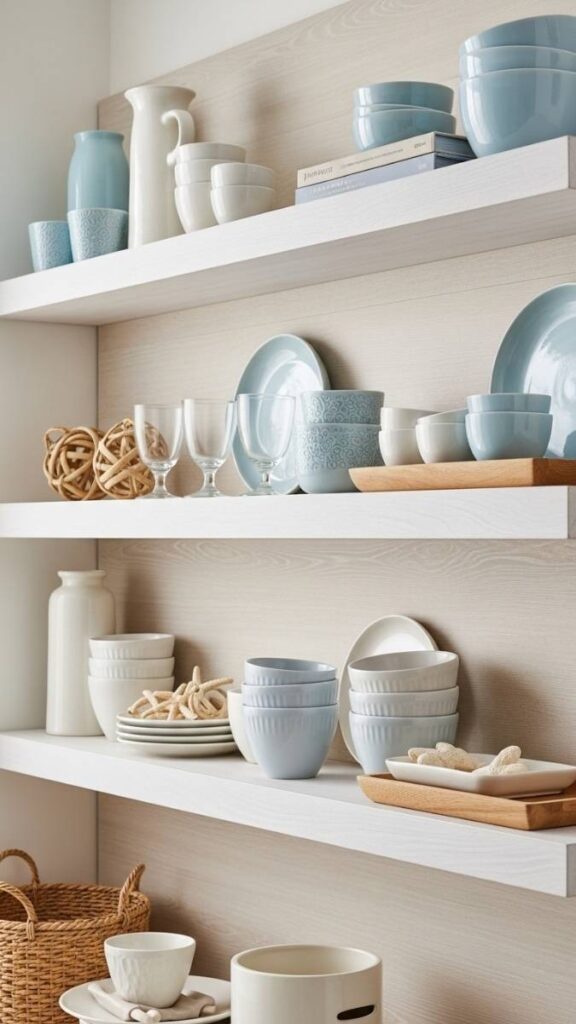
The whitewash finish on wood does two things at once: it lightens the shelf without painting it white (so you still see the grain and natural variation), and it connects to the sun bleached driftwood aesthetic that’s at the core of most coastal palettes.
Style the shelves with ceramics in sandy, cream, and muted sage tones to avoid the temptation to add too many blue and white pieces, which can tip quickly into nautical cliché. The spacing between items matters, leaving room for the wall to show through
. Overcrowded shelves read as cluttered regardless of how nice the individual pieces are.
Pale Blue Green Zellige Tile Backsplash
Zellige tile has an irregular, handmade surface that reflects light in a way machine cut tiles simply don’t. In a pale blue green seafoam, celadon, soft aqua it brings coastal color into the kitchen in a way that feels elevated rather than literal.
Each tile catches the light slightly differently, which gives the backsplash a natural luminosity. It’s a bigger investment than standard subway tile, but even a half backsplash behind the sink area can anchor the whole room’s color story.
This works best in kitchens with white or very light cabinets; darker cabinetry competes with the tile’s texture.
Driftwood Finish Kitchen Island With White Perimeter Cabinets
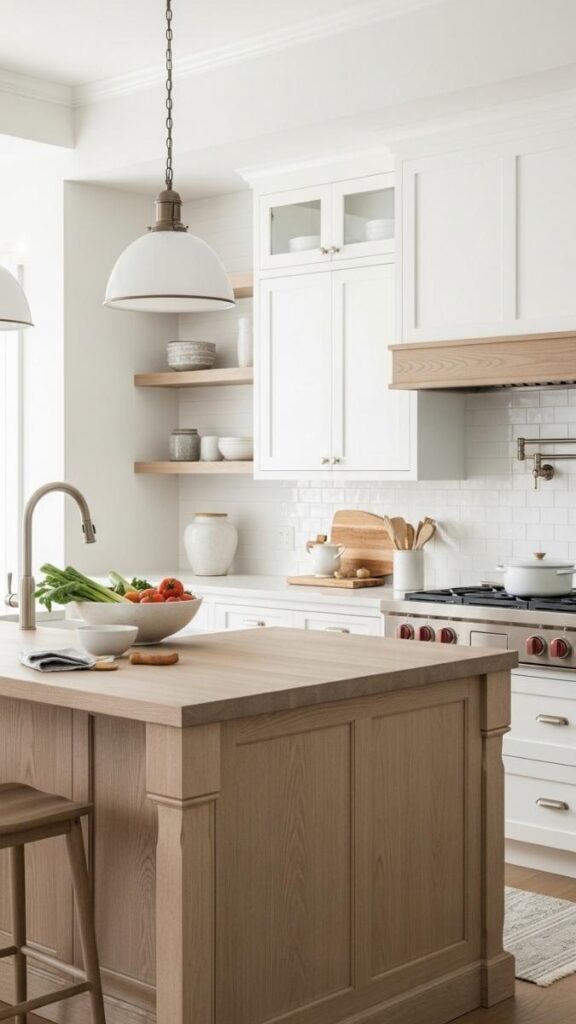
Using a contrasting finish on the island while keeping perimeter cabinets white is a classic two tone move but the driftwood tone is what makes it coastal. It’s that bleached, weathered grey beige that reads like reclaimed timber from a pier.
Pair it with a slightly veined marble or quartz countertop and rattan or seagrass barstools. The island becomes the visual anchor of the room without overwhelming the white cabinets around it.
Practically speaking, the darker tone also hides daily marks and smudges better than white does which matters if the island is your main prep and eating surface.
Read More About: 57+ Coastal Living Room Ideas That Actually Work in Real Homes
Large Format Stone Look Porcelain Flooring
Nothing opens up a kitchen floor plan like large format tile. The fewer grout lines, the bigger the space reads. In a warm greige or sandy stone finish, it connects to a beach house material palette without the maintenance issues of actual natural stone.
It’s also one of the more practical coastal moves for high traffic kitchens; it handles spills, pets, and foot traffic without the anxiety of real limestone or travertine.
If the budget is tight, prioritize large format tile on the kitchen floor over any backsplash upgrades; it affects the spatial feel more than almost anything else you can do at the floor level.
Woven Pendant Lights Over the Kitchen Island
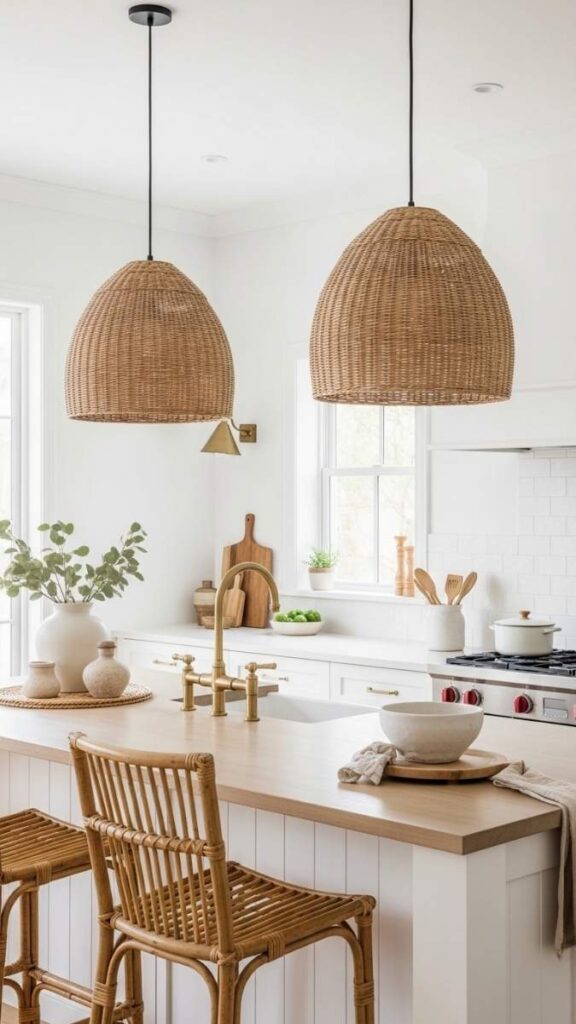
In my experience, lighting is where coastal kitchens either come together or fall flat. Woven pendant lights whether in rattan, seagrass, or jute bring in warmth and texture overhead that recessed lighting simply can’t replicate. Two pendants over an island, hung at approximately 32–36 inches above the countertop, create a soft pool of light that makes the island a natural gathering spot.
The woven shade also diffuses the bulb’s light beautifully with no harsh direct glare, just an ambient glow that reads warm and relaxed. Avoid styles that are too architectural or industrial; for a coastal kitchen, you want something that looks like it came from an artisan market, not a tech office.
Open Plan Layout With a Sliding Barn Door to the Dining Room
Barn doors have been around long enough that they can feel cliché unless you do them right. In a coastal context, a white painted solid wood sliding barn door connects the kitchen to a dining area while giving you the option to close off the space when you want to.
The key is proportionality: the door should be full height (floor to ceiling, or as close as possible) and fitted with minimal hardware. It maintains visual flow between spaces when open, it tucks flat against the wall without eating floor space the way a hinged door would.
This is especially useful in older homes where the kitchen dining separation is abrupt and awkward.
Sandy Linen Roman Shades Over the Kitchen Window
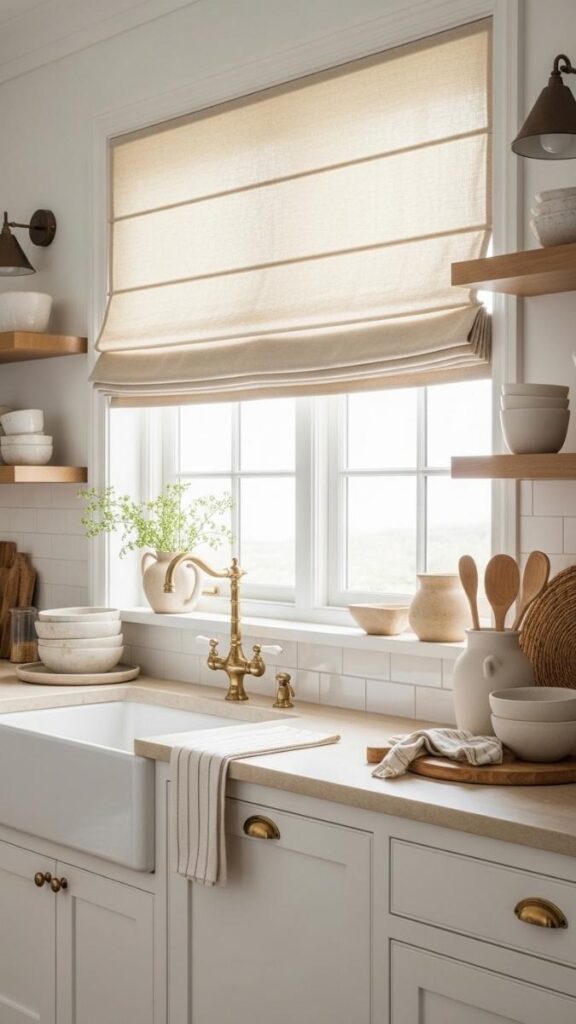
Window treatments in kitchens are often overlooked which is exactly why they have a disproportionate impact when you do them well.
A linen roman shade in a sandy, undyed tone does two things: it softens the transition between indoors and the natural light coming in, and it adds a layer of material texture that most kitchens lack at the window line.
When pulled up, it neatly stacks so you get full light. When lowered, it filters without blocking that diffused, golden quality of light through linen is genuinely one of the more atmospheric things you can do in a kitchen. This works in any rental because roman shades mount with minimal hardware.
Sage Green Cabinets With Warm White Countertops
Sage green is having a long moment and in a coastal kitchen, it works because it bridges the organic (plants, sea glass, lichen covered rocks) with the clean restraint of the palette. The key is choosing a warm sage, not a cool or grey green.
Warm sage with creamy white countertops and unlacquered brass hardware reads earthy and coastal without being predictably beachy. It also ages well; it won’t feel dated the way a trendier blue might in a few years.
Go for this if your kitchen gets strong afternoon light; the warm tones will deepen beautifully.
Herringbone Subway Tile Backsplash in Soft White
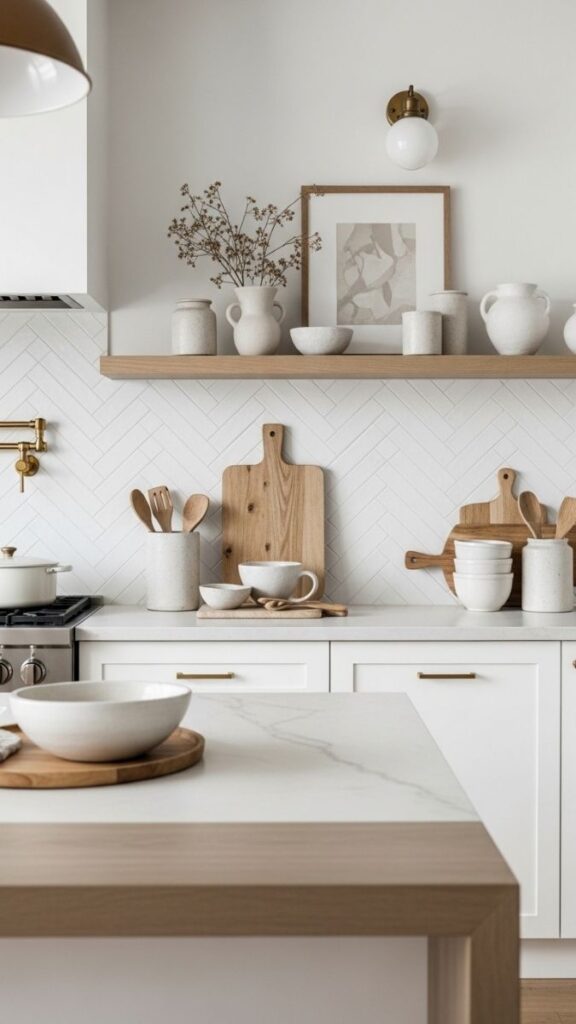
The herringbone layout is a simple way to add movement and visual interest to a standard subway tile without changing the material. In soft white (not bright white there’s a difference), it reads clean and coastal without being stark.
The diagonal arrangement also draws the eye upward, which adds perceived height behind the stove, useful if you have low slung upper cabinets that compress the space.
Budget wise, this is one of the most cost effective backsplash choices; the tile itself is inexpensive and the only added cost is the slightly more complex installation pattern.
Built In Bench Seating by the Kitchen Window
A built in bench transforms an awkward corner or underused wall into the most lived in spot in the kitchen. In coastal design, the bench becomes a visual anchor; it’s where you sit with coffee in the morning, where kids do homework, and where guests linger.
Build it with a hinged seat lid for storage underneath (perfect for bulky kitchen items you don’t use daily), and top it with a thick linen cushion in a neutral sand or warm white.
The key is window placement: the bench should sit below or alongside the main kitchen window to take advantage of natural light. It’s a feature that photographs well on Pinterest but actually makes the kitchen more functional day to day.
Unlacquered Brass Hardware on White Shaker Cabinets
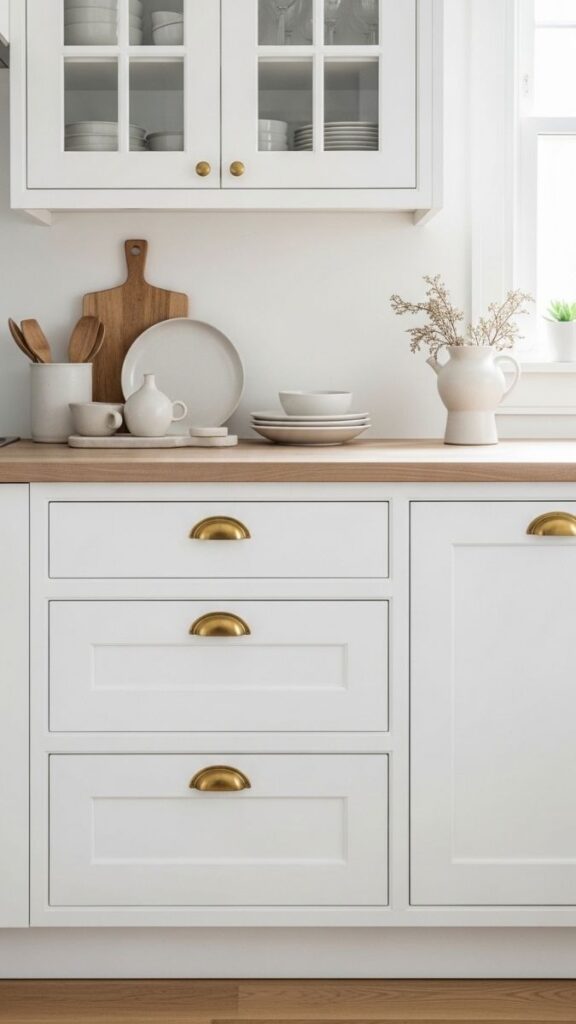
Hardware is a small detail that anchors the whole color story of a kitchen. Unlacquered brass as opposed to polished or brushed develops a natural patina over time, which is exactly what gives coastal spaces their quality.
It reads warm against white cabinetry without the coldness of chrome or the flatness of matte black. Swap hardware on existing cabinets before doing anything else; it’s the cheapest update in the kitchen and one that consistently changes how the space reads. Cup pulls on lower drawers and knobs on upper doors create a traditional coastal rhythm that feels layered and considered.
Read More About: 56+ Modern Rustic Bathroom Ideas That Feel Warm, Grounded, and Genuinely Livable
Pale Grey Shaker Cabinets With Marble Look Countertops
Cool grey and white marble is a combination that feels inherently coastal, think overcast morning light on the water, bleached linen, that particular kind of quiet that’s not cold, just calm.
Pale grey shaker cabinets in a blue grey or greige tone with a marble look quartz countertop (the veining matters keep it soft, not dramatic) creates a kitchen that feels pulled together without trying too hard. Chrome or polished nickel fixtures tie the cool palette together.
This is a good choice for north facing kitchens that don’t get a lot of warm light; the grey doesn’t fight for attention the way a warmer tone would.
Terracotta Tile Floor in a Coastal Kitchen
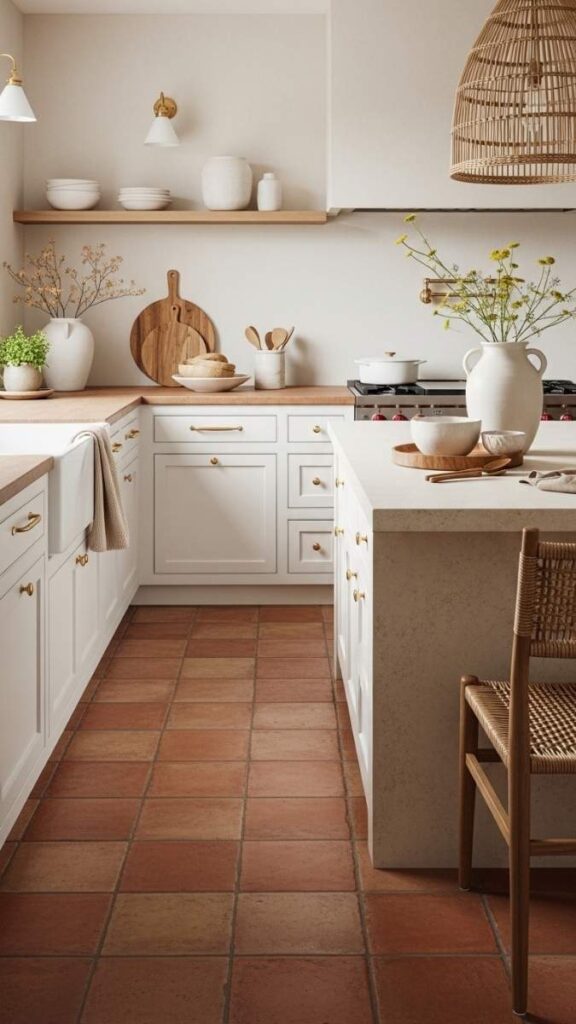
Terracotta in a coastal kitchen seems counterintuitive. It reads more Mediterranean than beach house but it works because of contrast. The warm, earthy orange red of terracotta against white cabinets and a pale blue island creates a palette that’s simultaneously grounded and breezy.
It’s the material contrast that makes it coastal rather than any single element being “beachy.” Sealed terracotta is also surprisingly practical: it’s durable, non-slip, and develops a beautiful patina with use. It works best in kitchens with ample natural light, where the warmth of the floor can open up rather than close in.
Sea Glass Collection Display Above Kitchen Cabinets
The space above kitchen cabinets is almost always a dusty afterthought. Using it to display a sea glass collection whether genuine pieces or glass pebbles in sea colors in clear vases or amber glass bottles is a low cost way to bring the coastal theme to the upper zone of the room.
The light that filters through the colored glass casts small washes of color onto the ceiling and upper walls subtle, but noticeably alive. This works particularly well in kitchens with recessed lights above the cabinets. It’s also endlessly customizable; you can change the colors seasonally without touching anything else.
Sheer White Linen Curtains at the Kitchen Pass Through
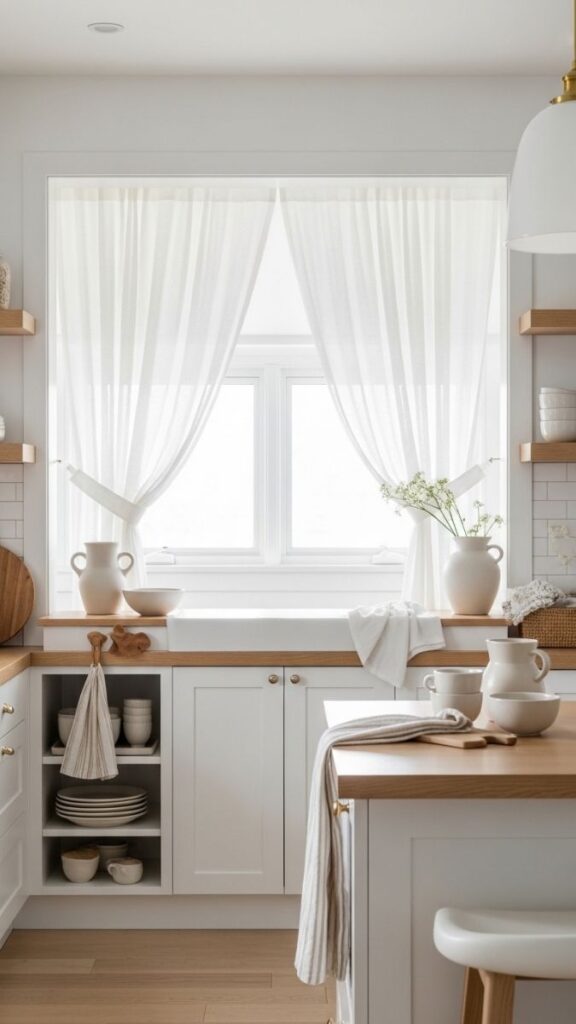
A pass through window to the patio or backyard is a coastal kitchen feature that blurs the indoor outdoor boundary in the most effective way.
Frame it with sheer white linen curtains that can be pulled back or left loose; they move in the breeze, filter the light without blocking the view, and soften what would otherwise be a hard architectural opening.
The counter ledge below the pass through can function as a serving bar during gatherings. Honestly, this is the kind of detail that makes a kitchen feel like it belongs in a coastal setting even if it’s technically an hour from the nearest beach.
White Bead Board on Lower Cabinet Doors
Beadboard is one of those traditional coastal materials that never fully goes out of style because it’s so structurally honest it’s just vertical planks, essentially, which reads simultaneously as nautical, farmhouse, and classic.
Applied as insert panels on existing lower cabinet doors (a straightforward DIY), it adds texture and dimension to an otherwise flat face. It works well in kitchens that don’t have a lot of other texture to work with smooth cabinets, flat walls, plain countertops.
The beadboard breaks that flatness without competing with anything else in the room.
A Bold Coastal Mural or Printed Wallpaper on One Wall
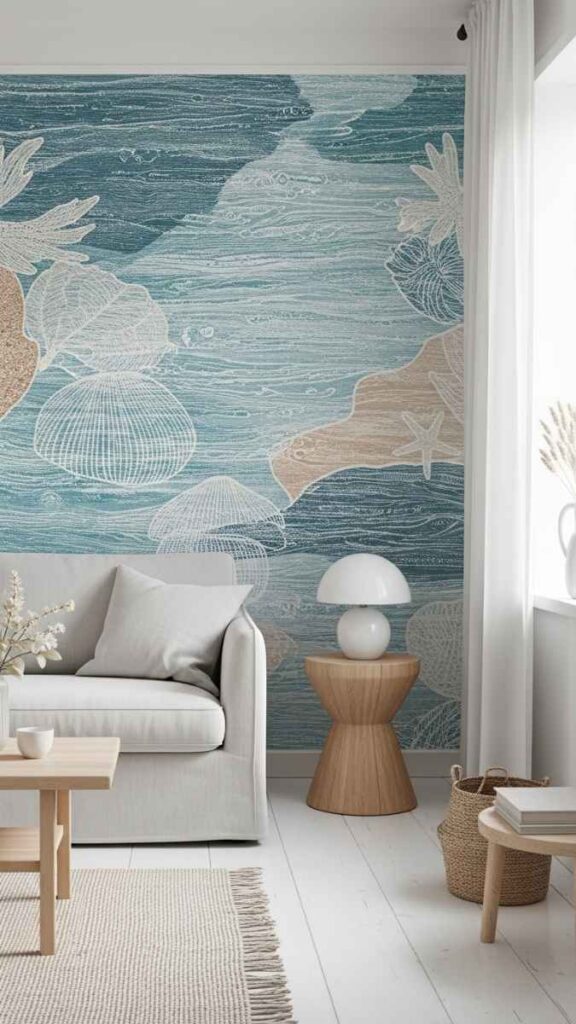
Wallpaper in a kitchen used to be a maintenance nightmare; modern vinyl coated wallpapers have changed that.
A coastal botanical print (sea grass, palm fronds, simple coastal flora) on one wall typically behind open shelving or a breakfast nook corner adds pattern and depth in a space that can easily become too monotone.
Keep everything else in the kitchen quiet white cabinets, neutral countertops, plain floors. The wallpaper should carry the visual interest on its own. For renters, peel and stick options in botanical prints have improved significantly in quality over the last few years.
Nautical Inspired Open Shelving Made of Pipe and Reclaimed Wood
Black iron pipe shelf brackets with thick reclaimed wood boards are a coastal industrial hybrid that’s currently having a strong moment in 2026 kitchen design.
The contrast between the raw, aged wood and the dark metal creates a visual tension that keeps the space from feeling too beachy soft.
Load the shelves with practical items: a mixture of white dishes, one or two trailing plants, and baskets for storing items you’d otherwise hide in a cabinet. This system is easy to install, extremely strong, and completely adjustable if you need to reconfigure.
A White Farmhouse Sink as a Coastal Kitchen Centerpiece
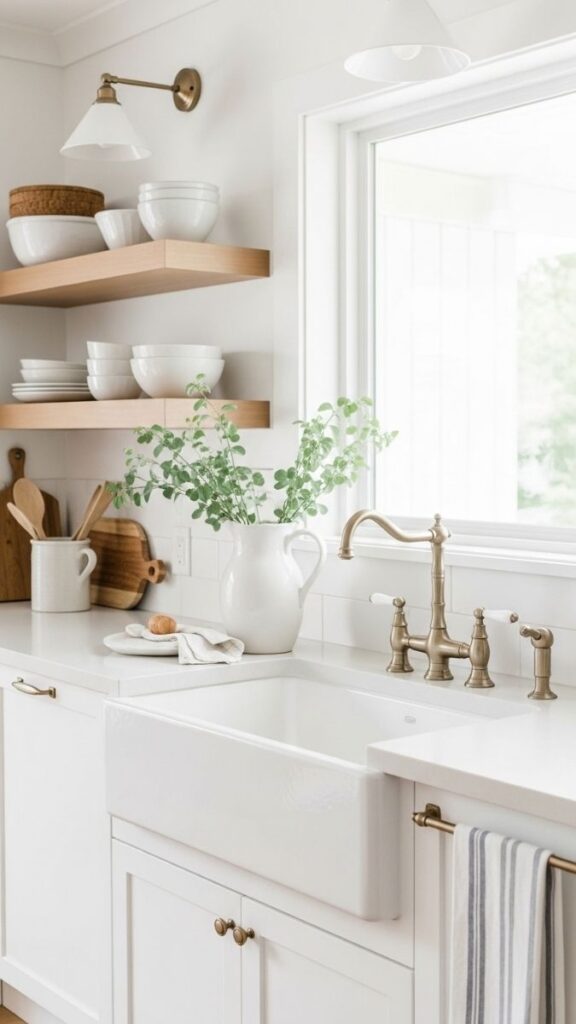
The apron front farmhouse sink is almost synonymous with coastal kitchen design at this point and for good reason. The exposed front panel adds architectural interest and makes the sink feel intentional rather than just functional.
In white porcelain, it integrates quietly into a light kitchen while anchoring the sink run with a sense of substance.
Pair it with a wall mounted or tall deck mounted brass faucet and a simple window above ideally with a garden or outdoor view. The combination of the deep basin, the brass, and the view through the window creates a kitchen moment that’s both practical and atmospheric.
Coastal Palette Accent Tiles Behind the Range
Instead of tiling the entire backsplash, use hand painted or artisanal accent tiles only behind the range, a one or two column configuration that draws the eye to the cooking zone. Look for tiles in coastal tones: sandy buff, weathered white, soft seafoam, or pale coral.
The visual impact is concentrated exactly where it’s most effective (the focal point of the kitchen), while keeping the rest of the backsplash simple and cost effective. It also means you’re investing in fewer, higher quality tiles rather than covering every surface in the more expensive option.
Reclaimed Wood Floating Island in a White Kitchen
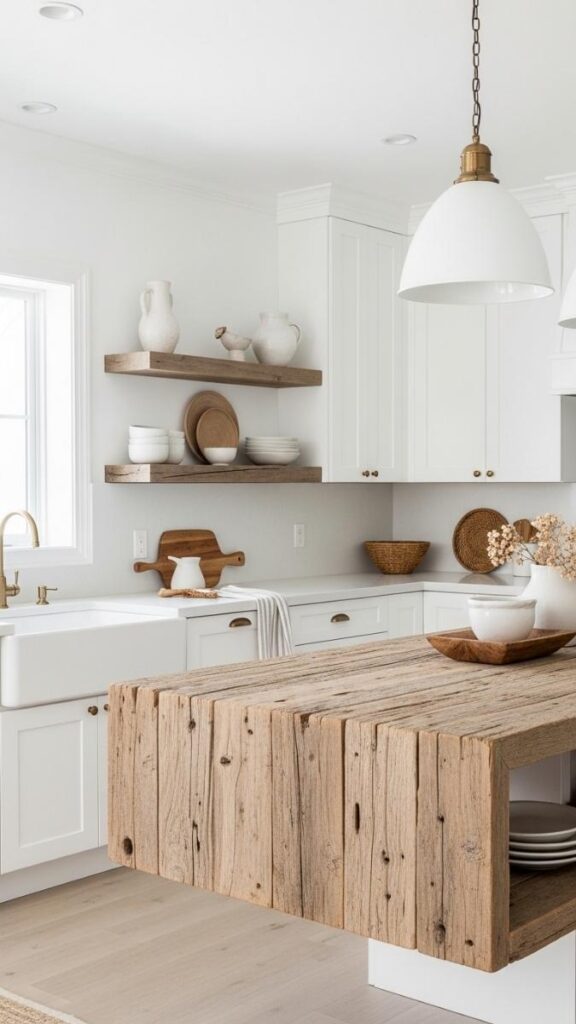
A reclaimed wood island top introduces raw, aged materiality into a white kitchen in a way that feels more interesting than a stone countertop.
The knots, grain variation, and color range of genuinely reclaimed wood (not manufactured to look reclaimed) give the island an organic quality that no manufactured surface can replicate.
It requires proper sealing and maintenance. It’s not carefree but for kitchens where aesthetics are a genuine priority, it makes the island look like it has history. Keep the rest of the kitchen minimal so the wood can be the star.
Shell and Stone Collection as a Kitchen Windowsill Display
The windowsill above the kitchen sink is prime real estate that most people ignore. A simple, edited collection of shells, smooth stones, and one or two small terracotta pots creates a quiet coastal vignette that you look at every time you do the dishes.
The key word is edited five to seven items maximum, with intentional spacing between them. It doesn’t cost anything beyond the stones themselves, and it’s the kind of detail that gives a kitchen its personality.
I’ve noticed this style tends to work best when you stick to a consistent material palette of all neutral toned shells, for example, rather than a mix of colors.
Bi Fold Glass Doors Opening the Kitchen to the Outdoors
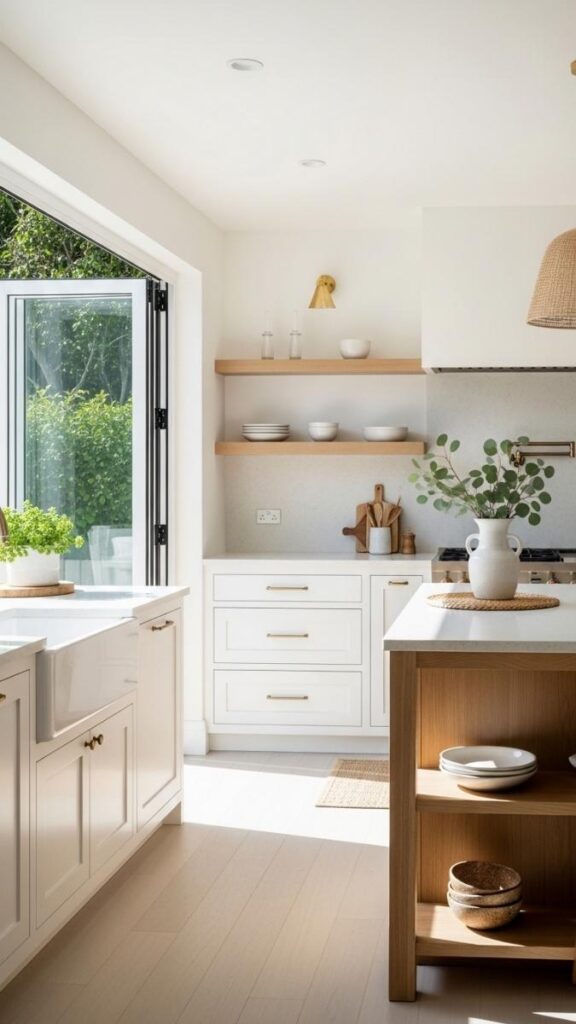
If there’s one coastal kitchen feature that changes how a space feels more than anything else, it’s the ability to open the kitchen fully to the outside.
Bi fold glass doors whether to a deck, patio, or small garden dissolve the boundary between interior and exterior when open.
The kitchen becomes something closer to an outdoor pavilion. Natural ventilation, natural light, and the visual continuity to outdoor greenery or a view are all compounded by this single architectural move. It requires planning, investment, and often a structural change but among all the ideas on this list, this is the one that changes the daily experience of a kitchen most dramatically.
What Actually Makes These Coastal Kitchen Ideas Work
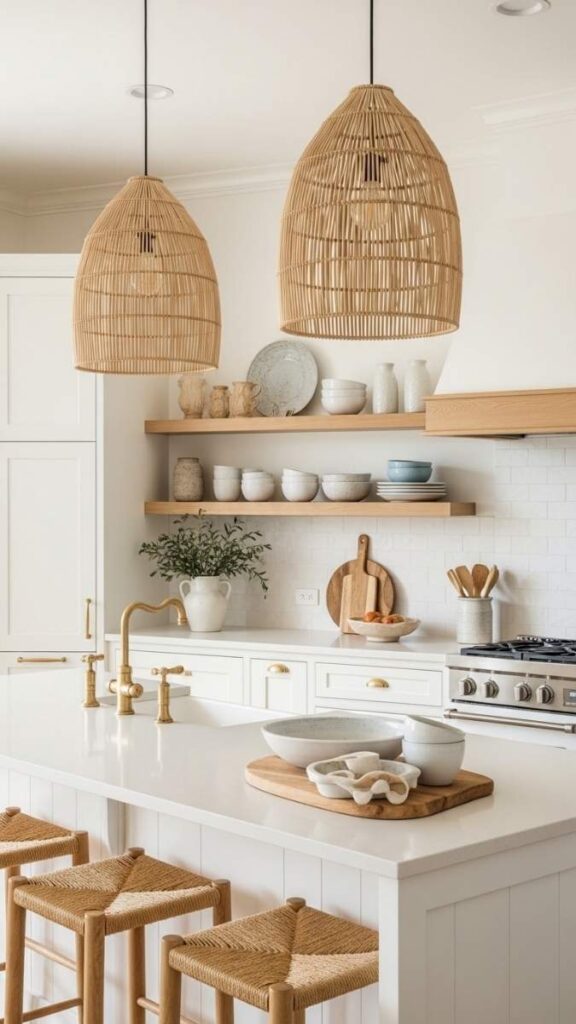
Coastal design at its core is about restraint and material honesty not about decoration. The kitchens that pull it off well share a few common traits that have nothing to do with how many seashell shaped knobs are on the cabinets.
Light comes first.
Every coastal kitchen that reads as genuinely beautiful prioritizes natural light above everything else. Before changing cabinets or countertops, ask what’s blocking or competing with your light. Heavy window treatments, dark upper cabinets, and cluttered surfaces all absorb light. Removing those obstacles will do more for the “coastal feel” of the space than any material addition.
Material contrast is the mechanism.
The characteristic coastal tension between rough and smooth, warm and cool, raw and refined is what gives these kitchens their visual interest. Shiplap and marble. Rattan and white lacquer. Terracotta and seafoam. It’s the contrast that reads as coastal, not any single element in isolation.
Color restraint over color abundance.
The instinct is to go full teal and navy and both can absolutely work but the most sophisticated coastal kitchens use color sparingly. One or two coastal accent colors in a sea of neutrals will always read better than a fully saturated palette. Think of color as punctuation, not the whole sentence.
Coastal Kitchen Ideas Setup Comparison
| Idea | Best Space Type | Problem It Solves | Budget Level | Renter Friendly? |
| Shiplap backsplash + open shelving | Galley, narrow kitchens | Visual width, storage | Mid | Depends on installation |
| Navy lower / white upper cabinets | Medium–large kitchens | Ceiling height illusion | Mid–High | No |
| Limewash wall paint | Any kitchen | Texture, depth | Low | Yes (peel formulas) |
| Rattan cabinet inserts | Any kitchen | Cabinet heaviness | Low | Yes |
| Zellige tile backsplash | White or light kitchens | Color + light reflection | High | No |
| Woven pendant lights | Any island kitchen | Warm, textured lighting | Low–Mid | Yes |
| Large format stone porcelain floor | Any size kitchen | Spatial expansion | Mid–High | No |
| Built in bench seating | Corner/window adjacent spaces | Underused corner, seating | Mid | No |
| Bi fold glass doors | Ground floor kitchens | Indoor outdoor connection | High | No |
| Shell/stone windowsill display | Any kitchen | Personality, coastal texture | Free | Yes |
How to Design a Coastal Kitchen Without Adding More Furniture
One of the most common approaches people take and one that often backfires is trying to make a kitchen feel coastal by buying more things. More decorative objects, more themed accessories, more furniture. The result is usually a kitchen that feels cluttered and trying too hard.
The more effective approach works in the opposite direction. Start by pulling back.
Clear the countertops first.
Coastal kitchens rely on open, breathing surfaces. Remove everything from the counter and only put back what you use every day. The negative space is part of the design. A single cutting board, a small oil and vinegar setup, and a plant in a terracotta pot will read more coastal than ten decorative objects.
Work with what’s already there.
Before buying a single thing, assess your current materials. Do your cabinets have any warm or cool undertones that could be leaned into? Is there a window that could be better dressed? Is there existing tile that could be painted or replaced at the backsplash only? Often the existing bones of the kitchen have more coastal potential than they’re currently expressing.
Reframe the light.
Switch existing harsh white bulbs to warm toned LED bulbs (2700K is the target for coastal warmth). Replace any overhead fluorescent strips with a combination of recessed lights and one pendant or hanging light. These two moves, new bulbs and a new pendant will change the atmosphere of a kitchen more than almost any material change you can make.
Use texture before color.
Before painting anything, consider whether adding texture (a woven mat, linen curtains, rattan pendant, raw wood shelf) might do what you were hoping color would do. Texture is more forgiving than color it doesn’t require repainting if you change your mind, and it layers comfortably with what’s already in the room
FAQ’s
What defines a coastal kitchen style?
A coastal kitchen is typically characterized by a light, neutral base palette of whites, creams, sandy beiges with natural textures like wood, rattan, linen, and stone. The emphasis is on natural light, open surfaces, and organic materials rather than literal nautical decoration. The feel should be airy and relaxed, not themed.
How do I make my kitchen look coastal on a budget?
Start with the lightest impact, highest return changes: swap hardware for brass or unlacquered metal, add a woven pendant light, put a linen roman shade on the kitchen window, and clear the countertops. These four changes can shift the feel of a kitchen significantly without touching the cabinets or flooring.
What colors work best for a coastal kitchen?
The most versatile coastal kitchen palettes center on warm or cool whites, soft navy, sage green, sandy beige, and muted seafoam. Avoid going too saturated; coastal color should feel like it was bleached by the sun, not painted on full strength. Accent colors work best used in one place (an island, a backsplash, a single wall) against a neutral backdrop.
Is a coastal kitchen style possible in a small apartment?
Yes in fact, the coastal emphasis on light, open surfaces, and restrained decoration is especially practical in small spaces. Focus on maximizing natural light, using open shelving instead of upper cabinets where possible, and keeping surfaces clear. Even in a galley kitchen, shiplap, a woven pendant, and light colored floors can create a convincing coastal feel.
Coastal vs. farmhouse kitchen: what’s the difference?
Both use shaker style cabinets, apron front sinks, and natural materials but coastal leans toward lighter materials (rattan, driftwood, seafoam tile) and a cooler or more neutral palette, while farmhouse tends to run warmer and more rustic (dark wood beams, wrought iron, terracotta). The overlap is large, but coastal prioritizes lightness and openness, while farmhouses often lean into warmth and heaviness.
What flooring works best in a coastal kitchen?
Large format porcelain in a warm stone or greige tone is the most practical option, low maintenance, visually expansive, and durable. Natural limestone or terracotta is beautiful but requires sealing and more upkeep. Light toned hardwood flooring also works well if the coastal style is being pulled toward a more relaxed, natural direction.
Do coastal kitchens go out of style?
The most timeless version of coastal design, neutral palette, natural materials, and emphasis on light tends to age very well. What dates faster is the more literal interpretation: nautical anchors, blue and white stripes, starfish everywhere. If you stick to the underlying principles (light, texture, restraint), a coastal kitchen will stay relevant for a long time.
Conclusion
A coastal kitchen doesn’t require a renovation, it requires a point of view. The ideas that work best in real homes are the ones rooted in material contrast, light management, and surface restraint. Whether you’re redoing the whole kitchen or just adjusting a few things, the underlying logic stays the same: let the light in, keep the surfaces honest, and layer texture before color.
Start with one or two ideas that fit your space, budget, and current kitchen bones. Swap the hardware, add a woven pendant, change the window treatment and see how far those small moves take you before considering anything larger. The key is finding what works for your specific kitchen rather than replicating a design board wholesale. Coastal style at its best looks like it evolved naturally, not like it was installed.