35+ Budget Bathroom Makeovers That Look Surprisingly High End
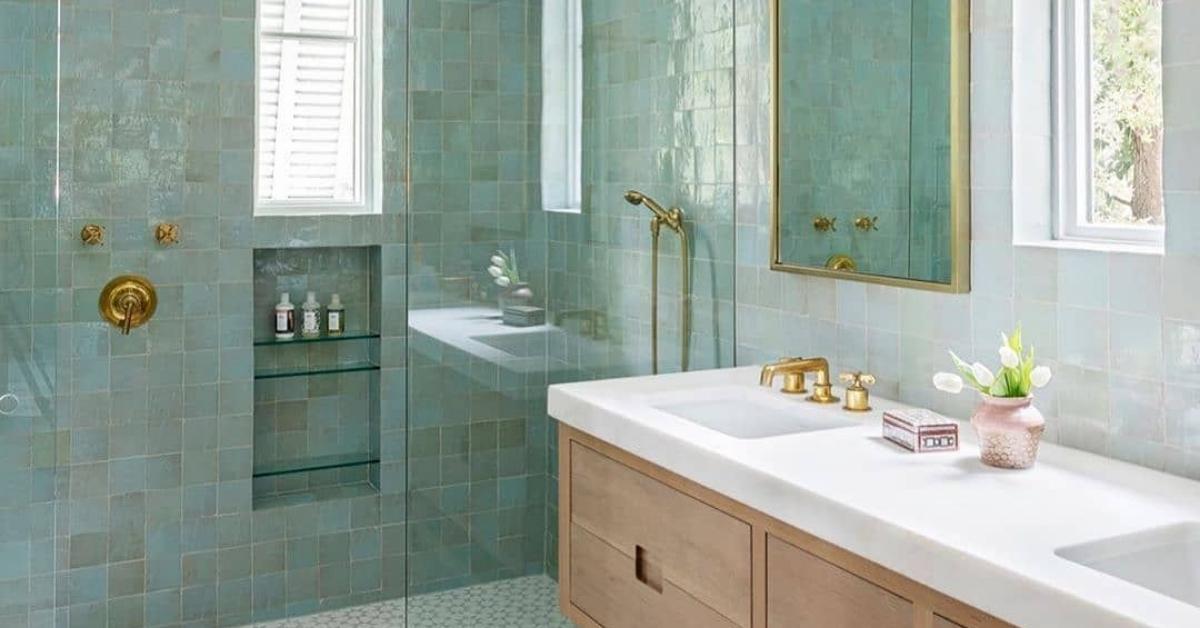
Your bathroom doesn’t need a gut renovation to feel completely different. A new coat of paint, better lighting, or even just rearranging what’s already there can shift the entire feel of the room and for a lot less Budget Bathroom Makeovers than you’d expect.
If you’re working with a dated bathroom, a rental, or just a space that’s never quite clicked, this list is for you. These ideas are practical, most cost under $100 per idea, and they work in bathrooms of all sizes from tiny powder rooms to awkward master baths that never felt finished.
One thing I’ve noticed: the highest-impact changes in any bathroom usually have nothing to do with fixtures. It’s often lighting, storage logic, and surface choices that change everything.
Swap the Vanity Mirror for an Oversized Frameless One
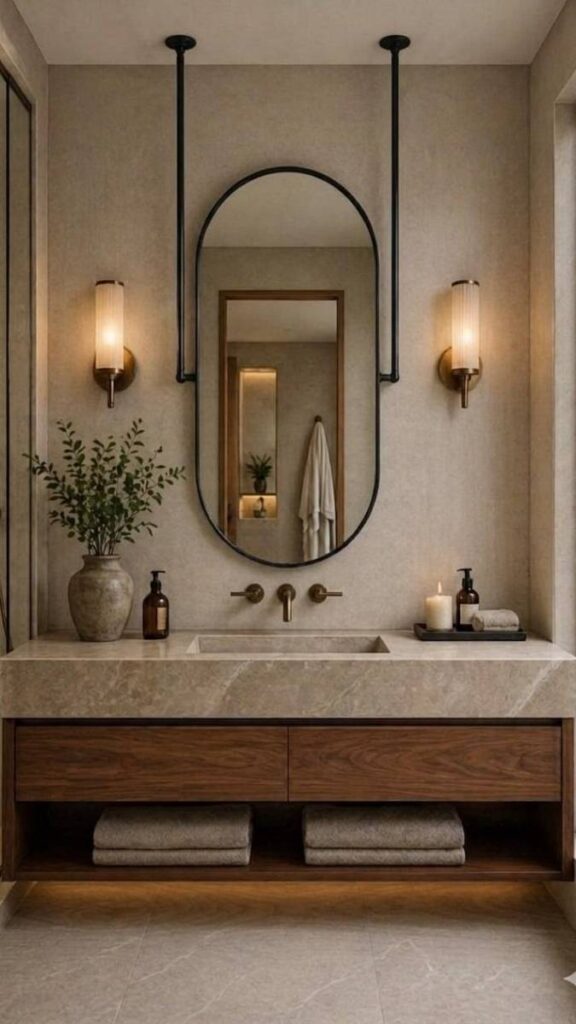
A standard builder-grade mirror does one thing: reflect. An oversized mirror one that runs nearly wall-to-wall and sits tall completely changes the spatial logic of a small bathroom. The room reads wider, the ceiling feels taller, and the lighting bounces deeper into the space.
Install warm-toned sconces on either side (not overhead) and you’ve eliminated the shadowy, unflattering lighting problem that plagues most bathrooms. This works especially well in narrow bathrooms where there’s limited window light. The vertical dimension is the one tool most people forget to use in small bathrooms, and a tall mirror uses it fully.
Paint the Walls a Deep, Moody Color
Counterintuitively, dark colors work well in small bathrooms. A deep sage, navy, or warm charcoal makes a tiny bathroom feel intentional rather than cramped because the walls recede visually instead of closing in. The contrast with white trim, white fixtures, and warm lighting creates depth.
This is one of the lowest-cost changes on this list (a quart of paint covers a small bathroom) and one of the most dramatic. It’s a great option for renters who are allowed to paint, and it photographs beautifully. Go for eggshell finish. It’s washable and doesn’t highlight imperfections the way flat paint does.
Replace Builder Hardware with Brushed Gold or Matte Black
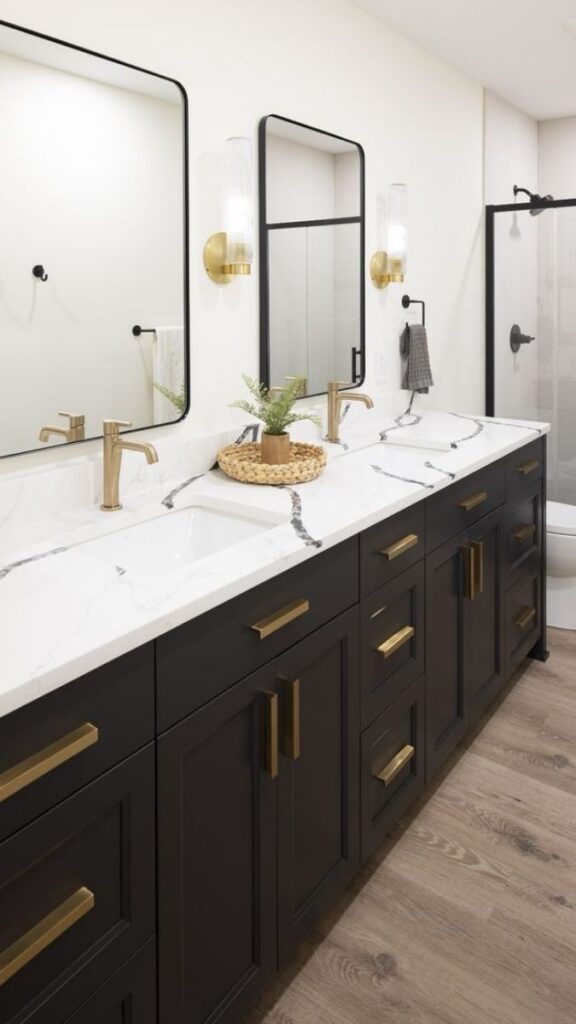
Towel bars, cabinet pulls, faucet handles, toilet paper holder these are the jewelry of a bathroom. Replacing them all in one consistent finish takes a bathroom from “mixed everything” to “clearly chosen.”
Brushed gold reads warm and earthy; matte black reads sharp and modern. The cost is manageable because these are small parts. The installation is usually just a screwdriver and a drill. This setup works best in bathrooms that already have neutral tile or white fixtures; the hardware becomes the design choice, not the tile.
Install Peel and Stick Tile on the Floor
Old vinyl or worn-out tile flooring can age an entire bathroom regardless of what else you do. Peel-and-stick tiles have genuinely improved the thicker vinyl versions, lay flat, hold up to moisture, and can mimic stone, cement, or classic hex patterns convincingly.
The key is starting from the center of the room and working outward, so cuts at the edges are even. This is one of the best renter-friendly options on this list because they lift cleanly. It solves the problem of a floor that pulls down the whole room, without touching a single permanent surface.
Add Open Shelving for Accessible, Styled Storage
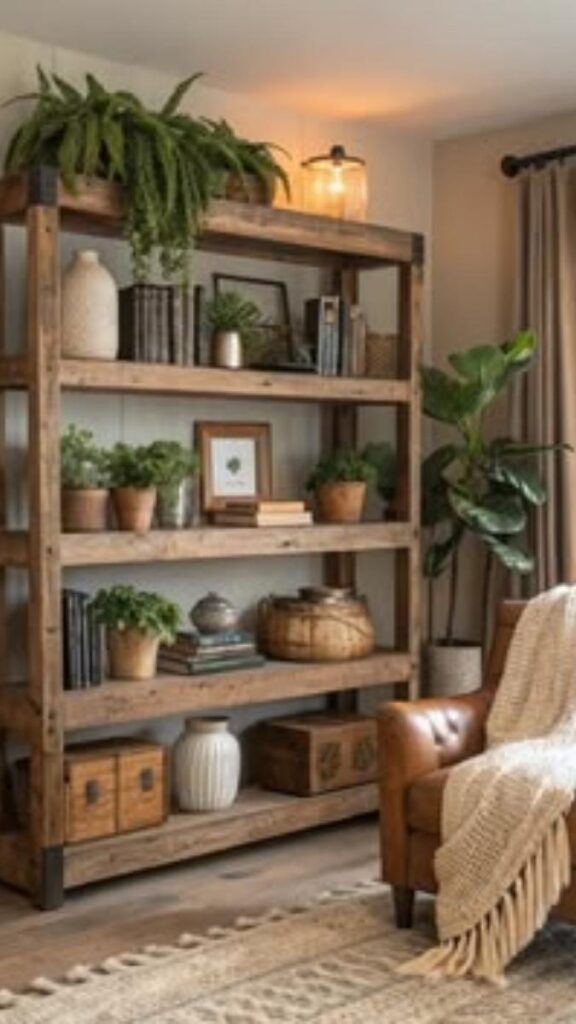
Most bathroom storage is either hidden (under-sink chaos) or nonexistent (bare walls). A couple of floating shelves in a consistent material of natural wood, painted MDF, or black metal create a visual anchor and solve the storage problem at the same time.
Style them simply: two or three folded towels, a small plant, a few glass storage containers. The key is restraint: the shelf should look curated, not crammed. This works especially well above the toilet, which is often wasted vertical space. It’s also a good solution for bathrooms without linen closets.
Read More About: 45+ Wall Decor Ideas That Make Every Room Feel More Intentional
Upgrade the Shower Curtain and Rod
The shower curtain is one of the largest visual elements in any bathroom, and the one that gets replaced least often. A floor-length linen or textured curtain hung high, near the ceiling adds height and softness that short, plasticky curtains never deliver.
Pair it with a curved tension rod to create more room inside the shower, or a matte black straight rod to tie in the hardware finish. This is a $30–$80 fix that changes the perceived size of the room. It’s also one of the easiest swaps to reverse in a rental.
Reframe the Vanity with Tile Wrap or Peel and Stick Panels
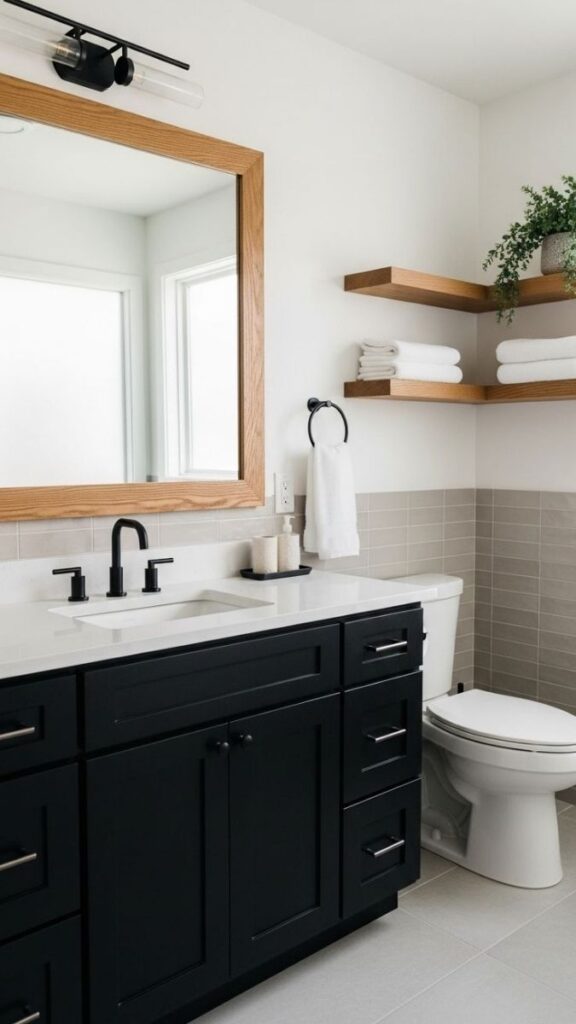
Builder vanities are often hollow, unfinished on the sides, or just visually boring. Wrapping the sides and front in peel-and-stick shiplap, thin wood panels, or even painted beadboard instantly gives it structure and character.
This works without removing or replacing the vanity itself. The front panel becomes the design statement; the hardware you chose in step three ties it together. This is especially effective in bathrooms where everything else is white or neutral; the textured vanity becomes the visual focus.
Use a Wooden Bath Mat Instead of Fabric
Fabric bath mats are functional, but they’re also visually busy, prone to mildew, and hard to keep looking clean.
A teak or eucalyptus wooden bath mat solves all three problems. It dries faster, looks cleaner, and reads more elevated especially against tile or painted floors. In a neutral bathroom, the natural wood tone adds warmth without clutter. This is a $25–$60 swap that changes the texture story of the whole room. Honestly, I’d try this before almost anything else. The visual return is disproportionate to the cost.
Add a Slim Rolling Cart for Hidden Storage
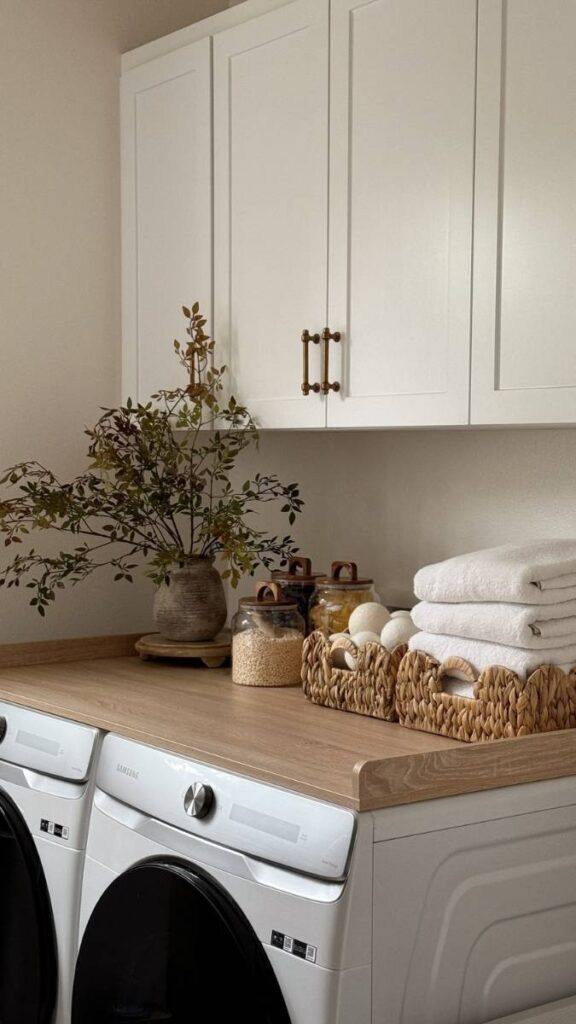
The gap between the toilet and the wall or between the vanity and the wall is one of the most underused spaces in a small bathroom. A slim rolling cart (usually 6–8 inches wide) slides in and disappears visually while holding towels, toilet paper, skincare, or anything else that currently lives on the counter.
This works best in tight bathrooms where there’s no linen storage at all. It’s mobile, inexpensive, and doesn’t require any installation. The clutter problem in most small bathrooms isn’t about square footage, it’s about missing storage logic.
Replace Overhead Lighting with Layered Sources
Most bathrooms rely on a single overhead light, which creates flat, harsh lighting that makes the room feel more like a utility space than a place you actually want to be in. The fix is layering: sconces at eye level for task lighting, a ceiling fixture for general light, and optionally a small strip light under a shelf for atmosphere.
You don’t need all three two light sources to shift the feel significantly. Sconces on either side of the mirror eliminate face shadows and are the single best upgrade for anyone who uses the bathroom for skincare or grooming.
Paint or Refinish Old Tiles
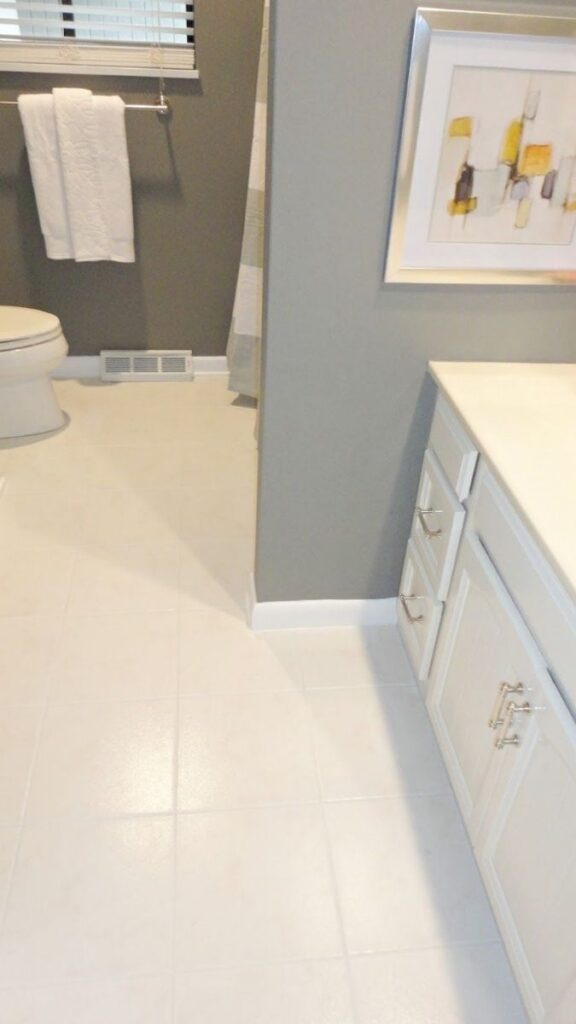
Tile replacement is expensive. Tile refinishing or painting tile is not. Specialty tile paint and refinishing kits have improved substantially, and when properly prepped (cleaned, lightly sanded, primed), they hold up better than most people expect in lower-traffic bathroom areas.
This is most effective on wall tile, particularly in older bathrooms where everything is the same beige or pink. It’s not a permanent solution, but it extends the life of a bathroom significantly while you plan a bigger renovation. This setup works best for renters who own their space and want a stopgap that actually looks considered.
Hang Artwork or Framed Prints in the Bathroom
The bathroom is one of the few rooms in a home that people almost never hang art in which is exactly why doing it creates such a distinct impression. Two or three small framed prints above the toilet or flanking the mirror make the bathroom feel finished in a way that most people can’t immediately identify.
Choose simple prints in neutral frames: abstract line drawings, botanical sketches, simple typography. Protect them from humidity with glass fronts. This is a $15–$40 change that makes the bathroom feel like someone actually designed it.
Install a Wall Mounted Soap Dispenser
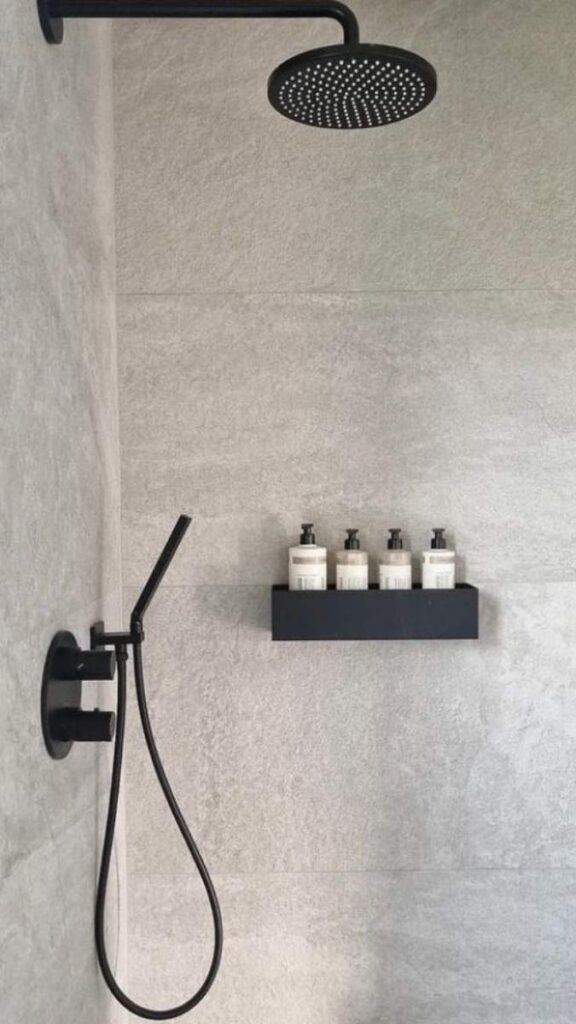
Counter clutter in a small bathroom is a real space problem. A pump bottle of soap, a bottle of hand lotion, a glass for toothbrushes they eat up linear inches on a counter that’s probably already small.
Moving the soap dispenser to the wall frees up the counter and adds a hotel-like coherence to the space. Adhesive-mount versions require no drilling and work on tile, painted walls, and most smooth surfaces. This is a $20–$40 fix that’s often underestimated because it’s so small but it changes the visual cleanliness of the sink area immediately.
Read More About: 18+ Dollar Store Decor Ideas That Actually Look Good in a Real Home
Use a Vessel Sink to Elevate an Older Vanity
Vanity replacement is one of the bigger costs in a bathroom renovation. But if the existing vanity cabinet is structurally sound, replacing just the sink changes the entire look. A vessel sink (one that sits on top of the counter) works with a wider variety of faucet styles, eliminates the need for an exact undermount fit, and reads more architecturally than a standard drop-in.
This is a moderate DIY project you’ll need to add or reroute a drain slightly but the cost is a fraction of full vanity replacement. It’s especially useful in bathrooms where the cabinet itself is in good shape but dated.
Use Matching Storage Containers on Open Shelves
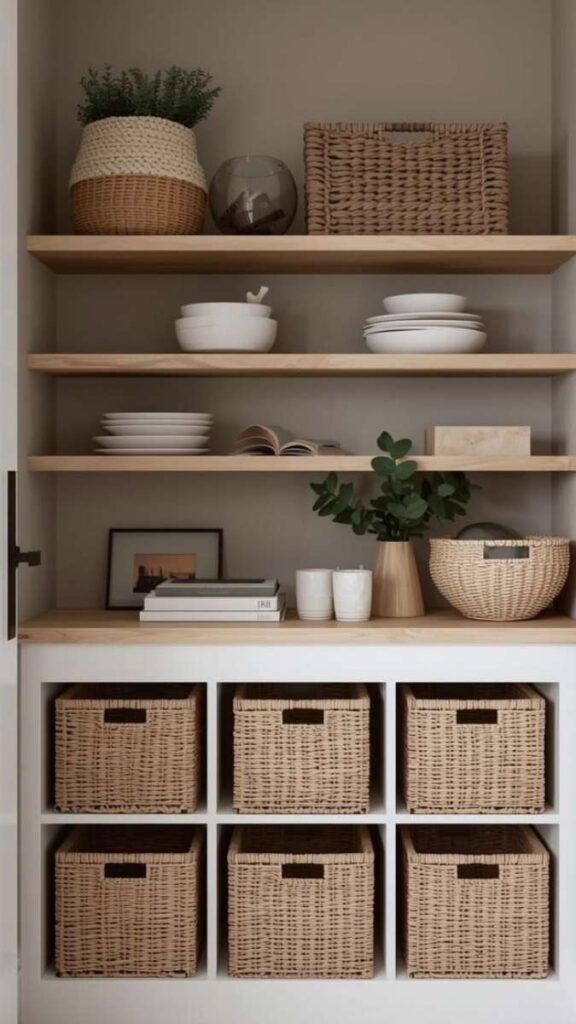
Mismatched bottles and containers on open shelves read as clutter even when everything is organized. Moving everyday items into a consistent container set of glass jars with bamboo lids, white ceramic canisters, matching baskets changes how organized the bathroom reads visually.
Everything still has a place; it just doesn’t announce its brand on the outside. This is one of the lowest-cost ideas on this list ($15–$30 for a basic set) and one of the most effective at making a budget bathroom look considered. It works in bathrooms of all sizes, and especially well with open shelving or floating vanities.
Add a Statement Mirror with a Frame
A framed mirror does what an unframed one can’t: it acts as furniture rather than hardware. Round mirrors with natural frames (rattan, wood, or woven cane) are having a strong moment in 2026 and work particularly well in bathrooms leaning toward natural or organic aesthetics.
A dark metal frame works in more minimal or industrial setups. The size matters; it should feel generous in proportion to the vanity below it. IMO this is one of the changes that photographs best and creates the strongest first impression when someone walks in.
Replace the Toilet Seat
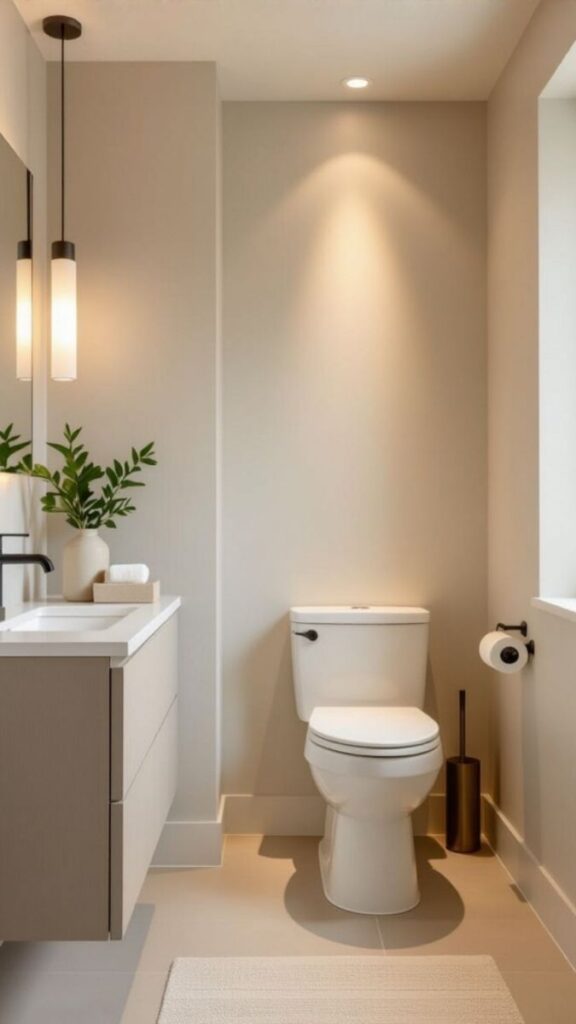
This one’s extremely easy to overlook, and yet an old, stained, or scratched toilet seat is one of the most visible markers of a dated bathroom. A new seat, especially a soft-close model is a $25–$60 fix that takes 20 minutes to install and makes the whole bathroom feel cleaner.
Elongated seats look more modern in most bathrooms; round seats work in tighter spaces where the extra length is an issue. It’s not glamorous, but it’s one of those changes that makes the room feel less like a project and more like a finished space.
Add a Towel Ladder Instead of a Rack
A towel ladder leans in a corner and requires zero installation, no drilling, no studs, no wall damage. In a bathroom where the walls are already crowded or you’re renting, this is a practical solution that also reads as a deliberate design choice.
Wood ladders add warmth; matte black metal ladders read sharper and more modern. The key is keeping only one or two towels on it so it doesn’t look overloaded. This setup works best in master bathrooms or larger powder rooms where there’s a corner to spare.
Regrout Old Tile
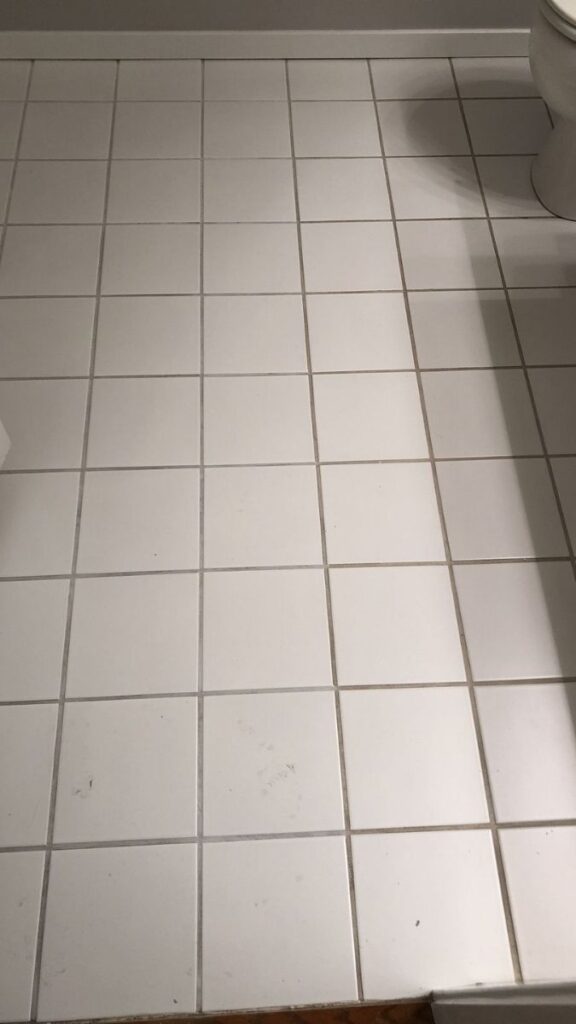
Discolored grout is one of the most common reasons a bathroom looks dirty even when it isn’t. Regrouting isn’t always necessary, grout pens and sealers can address surface staining for $10–$20.
For grout that’s actually cracking or missing, regrouting a shower or floor takes a weekend and costs $30–$80 in materials. The visual result is a tile surface that looks almost new. This is especially worth doing before any other changes because discolored grout will undercut every other improvement you make.
Swap Out the Faucet
The faucet is one of the most touchable things in the bathroom and therefore one of the most noticed. A dated brass or chrome faucet with a standard spout is easy to replace with a modern single-handle version in brushed nickel, matte black, or brushed gold.
This is a moderate DIY (you’ll need a basin wrench and some patience with the supply lines), but the transformation is significant. The faucet style should match the other hardware you’ve chosen. This is especially worth doing in bathrooms where the sink is staying; it updates the whole vanity area for $60–$150.
Create a Mini Spa Corner with a Stool and Accessories
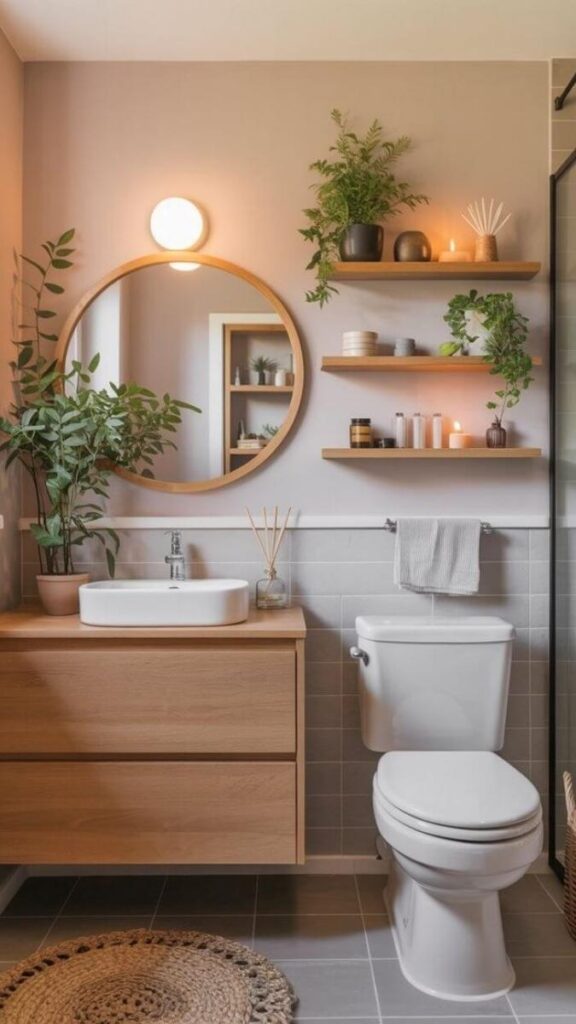
Not every change has to involve installation. A small wooden stool or side table in a corner of the bathroom holding a plant, a candle, a tray of rolled towels creates a moment that makes the space feel finished and considered.
This works especially well in bathrooms that are functionally complete but still feel utilitarian. The stool doubles as storage and styling; the plant adds life and visual contrast to hard surfaces. In my experience, this kind of setup works best when you limit the accessories to four or five items max. It should look curated, not crowded.
Read More About: 16+ Home Decor Ideas That Actually Work in Real Rooms
Add Crown Molding or Chair Rail for Visual Structure
Trim work gives a bathroom visual structure that paint alone can’t. A simple chair rail divides the wall into upper and lower zones. You can paint them different colors, apply wallpaper above, or tile below.
Crown molding at the ceiling line makes a low ceiling look more intentional. Neither requires advanced carpentry; both are paintable and affordable. This setup works best in medium or large bathrooms where you want more architectural interest without changing the fixtures.
Install Removable Wallpaper as an Accent Wall
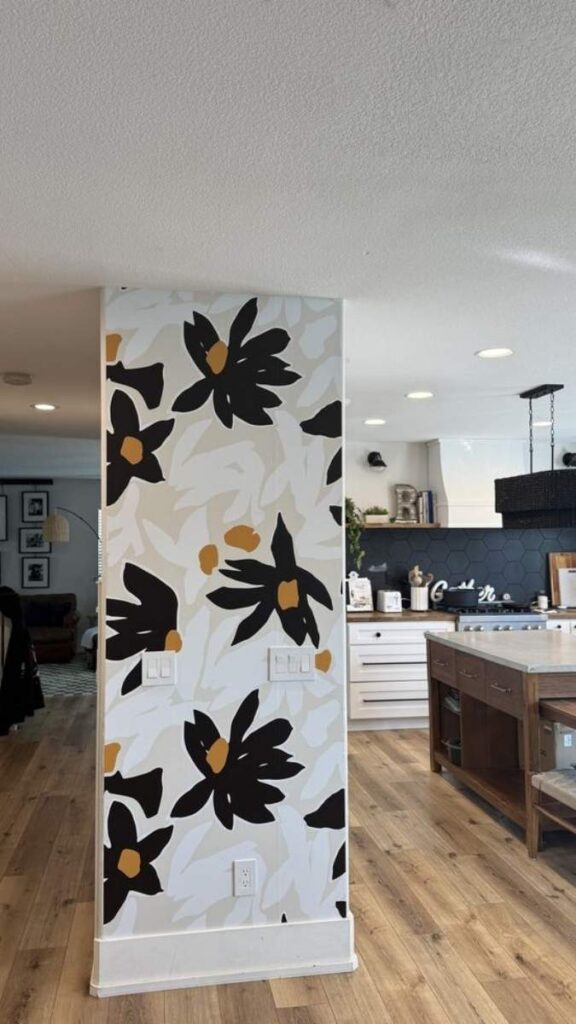
One accent wall, specifically the wall behind the toilet is the ideal location for removable wallpaper in a bathroom. It’s a contained area, low moisture exposure, and it creates a focal point in a part of the room that often goes ignored.
Botanical prints, geometric patterns, and textured faux options all work. Removable wallpaper is renter-friendly and repositionable. The key is preparing the wall properly (clean, dry, smooth) so it adheres without bubbles and releases cleanly later.
Use Under Sink Organization Bins
Under-sink storage in most bathrooms is a chaotic tangle of cleaning products, spare rolls, and overflow toiletries. A simple tiered organization system pull-out bins, stackable trays, and a tension rod for spray bottles can double the usable storage in that space without adding anything to the room visually.
This is a $20–$40 fix. It won’t change how the bathroom looks from the doorway, but it solves the daily friction of opening a cabinet and finding nothing where you expect it. Functional organization makes the whole space feel less stressful to be in.
Add a Backlit Mirror
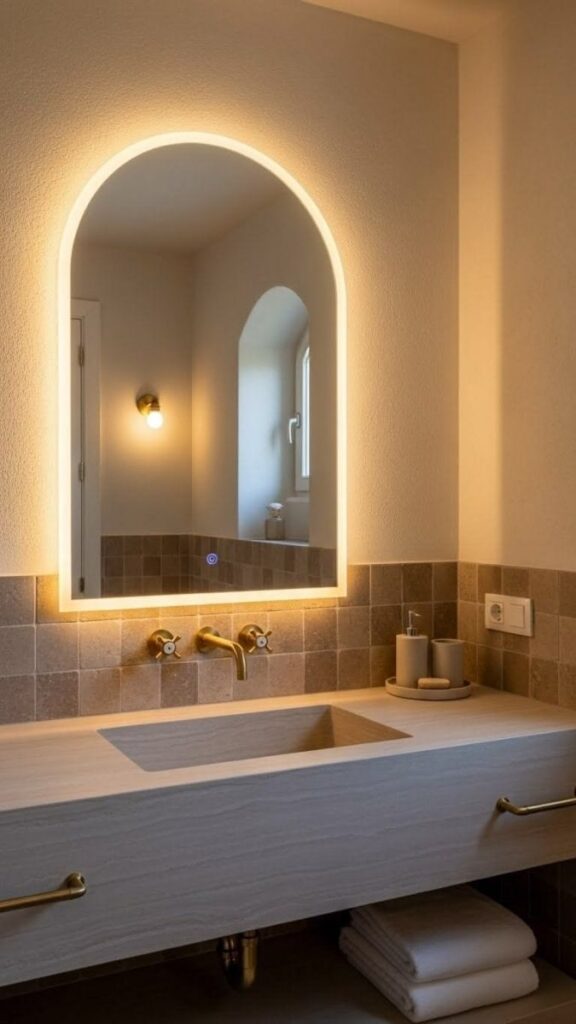
Backlit mirrors with integrated LED lighting around or behind the perimeter solve two problems at once: task lighting and ambient atmosphere. They eliminate the need for separate sconces, require only one outlet connection, and create a soft, even light that’s flattering and functional.
The glow they cast on the wall adds depth in smaller bathrooms. In 2026, backlit mirrors have come down significantly in price; decent options are available in the $80–$150 range. This is a strong upgrade for any bathroom that lacks good natural light.
Paint the Ceiling a Different Color
Painting the ceiling is one of the most overlooked design moves in a bathroom. A ceiling in a warm, pale tone blush, soft sage, pale blue creates a cocoon-like atmosphere without changing a single fixture.
It’s unexpected, works in low-ceiling bathrooms where height matters, and photographs in a way that makes the room feel designed rather than defaulted. The ceiling cost is minimal: a small room ceiling takes less than a quart of paint.
Style the Counter as a Permanent Installation
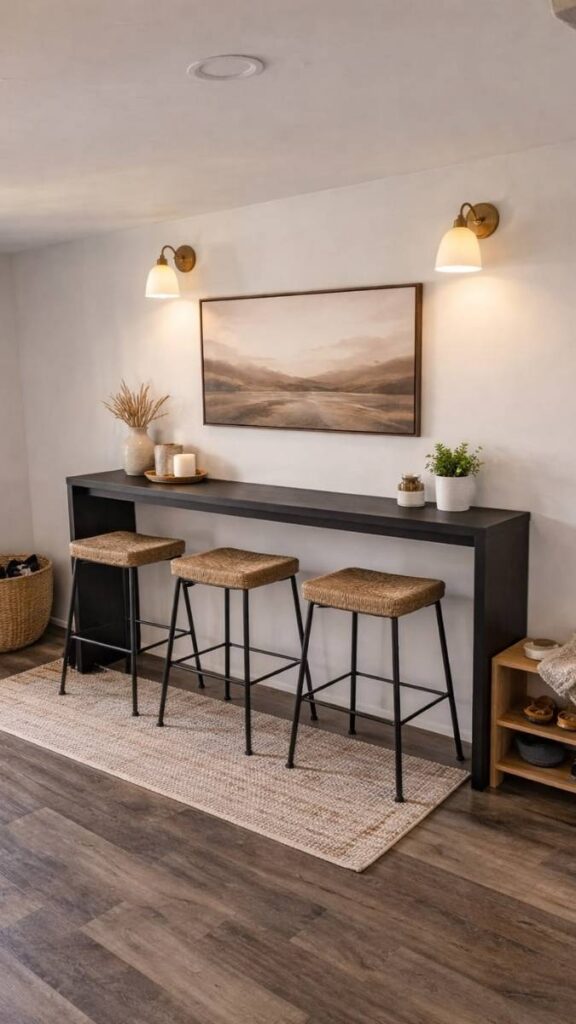
The bathroom counter is almost always treated as a dumping ground. But when you treat it as a styled surface, a marble or acrylic tray holding only the items that actually need to be there, nothing sitting loose it changes how the whole room feels.
The tray is the organizing logic; everything within it is intentional, everything outside it gets stored. This is the easiest, cheapest, fastest change on this list and requires nothing to install. It works in any bathroom, any size, any budget.
What Actually Makes These Budget Bathroom Ideas Work
The best budget bathroom makeovers share a few practical principles that are easy to miss when you’re focused on individual changes.
Finish consistency matters more than any single product.
Brushed gold and chrome mixed together in the same bathroom create visual noise. Matte black and shiny chrome do the same. Choosing one metal finish and committing to it for the faucet, hardware, towel bar, and toilet paper holder creates a coherence that reads as intention. This costs nothing extra if you plan it from the start.
Lighting is the lever most people don’t pull.
Harsh overhead lighting in a small bathroom creates shadows, flattens surfaces, and makes the room feel clinical. Sconces at mirror level, a warmer bulb temperature (2700K–3000K), or a dimmable overhead fixture change the experience of being in the room more than almost any surface change. If your bathroom has only one light source and it’s directly overhead, that’s the first thing to address.
Clutter is a design problem, not a cleanliness problem.
A bathroom with ten items on the counter isn’t untidy because you’re disorganized, it’s untidy because there’s nowhere to put those ten items. Storage solutions (rolling carts, under-sink bins, floating shelves) solve the visual problem permanently, not temporarily.
Budget Bathroom Makeover Ideas at a Glance
| Idea | Best For | Space Type | Estimated Cost | Problem Solved |
| Oversized mirror | Narrow bathrooms | Small to medium | $50–$120 | Dark, cramped feel |
| Dark wall paint | Any style | Small to large | $20–$40 | Unfinished, plain walls |
| Hardware swap | Any bathroom | All sizes | $60–$150 | Dated, mixed finishes |
| Peel-and-stick tile | Rentals, old floors | Small to medium | $40–$100 | Worn-out flooring |
| Floating shelves | No linen storage | Small bathrooms | $20–$60 | Storage deficit |
| Layered lighting | Any bathroom | All sizes | $40–$200 | Flat, harsh lighting |
| Rolling cart | Tight spaces | Small bathrooms | $25–$60 | No storage space |
| Backlit mirror | Low-light bathrooms | Any size | $80–$150 | Poor task lighting |
| Vessel sink | Dated vanity cabinet | Medium bathrooms | $80–$200 | Dated, worn fixtures |
| Towel ladder | Renters | Medium to large | $30–$80 | No wall installation |
Common Budget Bathroom Mistakes That Make Spaces Feel Smaller or Cluttered
Replacing one thing without updating the surrounding context.
A new faucet in brushed gold against chrome towel bars, old hardware, and a dated mirror draws attention to the mismatch rather than the upgrade. When you change one element, scan the room for what now looks out of place. Budget renovations work best when changes are grouped hardware, then mirrors, then lighting rather than done in isolation.
Choosing the wrong lighting temperature.
Warm white (2700K) feels comfortable and residential. Cool white (4000K+) feels like a hospital waiting room. Most bathrooms default to whatever came with the fixture, which is often too cool. Replacing just the bulbs, not the fixture, with a warmer temperature option ($8–$15 total) changes the room’s entire emotional quality. It’s genuinely one of the smallest changes with the biggest return.
Under-sizing the mirror.
A mirror that’s noticeably smaller than the vanity below it looks like an afterthought. The mirror should match or exceed the vanity width. In bathrooms where height is the constraint, going taller matters more than going wider. The mirror is one of the largest visual elements in the room; undersizing it makes everything else feel smaller too.
Over-filling open shelves.
Open shelving is a liability as much as an asset. A shelf with eight mismatched items looks busier than no shelf at all. The rule of thumb: every shelf should have at least 30–40% visual breathing room. Group items by category and keep containers consistent.
Ignoring the grout before doing anything else.
New accessories, new art, and new hardware can’t compensate for visually dirty grout. It’s the foundation of how tile reads. If your tile grout is discolored, clean or refresh it before making any other investment the whole room will respond to that fix.
FAQ’s
What’s the best budget bathroom makeover to start with?
Start with the mirror and hardware. Updating the mirror size and replacing all the hardware in a consistent finish (matte black or brushed gold) addresses two of the biggest visual problems in most bathrooms, at once dated surfaces and mismatched details. Together these two changes cost $100–$250 and create the framework for every other update.
Can I renovate a bathroom for under $100?
Yes, if you focus on surface-level changes. Repainting the walls, replacing the toilet seat, reorganizing under-sink storage, adding a towel ladder, and styling the counter with a tray can all be done within a $100 total budget. None require professional installation. The results won’t be dramatic, but they will be noticeable.
How do I make a small bathroom feel bigger without renovating?
Use an oversized mirror, remove anything from the counter that doesn’t need to be there, and switch to warmer lighting. These three changes address the three main reasons small bathrooms feel cramped: flat lighting, visual clutter, and an absence of reflective surfaces. Pale paint colors help, but they matter less than most people assume.
Is peel-and-stick tile good enough for bathrooms?
For walls and low-moisture floor areas, yes especially the thicker vinyl versions. They don’t belong in a wet shower area, but for a bathroom floor, vanity backsplash, or accent wall, quality peel-and-stick tile holds up well with proper surface prep. It’s also the most accessible renter-friendly flooring option currently available.
Floating shelves vs. a medicine cabinet which is better for a small bathroom?
It depends on what you’re storing. A medicine cabinet is better for private items (medication, personal care) and keeps the counter clearer without requiring styling effort. Floating shelves are better for towels, plants, and curated accessories but require more intentional organization to avoid looking cluttered. For a bathroom under 50 square feet, a medicine cabinet is usually the more functional choice.
What paint finish should I use in a bathroom?
Eggshell or satin. Both are washable and hold up to humidity better than flat paint. Satin has a slightly more reflective surface and is easier to wipe down; eggshell is more forgiving with imperfect walls. Avoid flat or matte finishes on bathroom walls; they absorb moisture and stain more easily.
Does bathroom lighting really make that much difference?
More than almost anything else. Lighting affects how color reads, how clean the room looks, and how comfortable it feels to be in. A bathroom with warm, layered lighting from two sources feels like a different room than the same bathroom with a single cool overhead fixture. It’s also one of the more affordable changes: new sconces and warmer bulbs can be done for $60–$150 total.
Conclusion
A bathroom makeover doesn’t require a contractor, a full weekend, or a significant budget. The ideas on this list prove that targeted, thoughtful changes, a better mirror, a consistent hardware finish, smarter storage, warmer lighting add up to a room that feels genuinely different from what you started with. The key is finding what works for your space and starting there, not doing everything at once.
Pick one or two ideas that address the most obvious problem in your bathroom right now whether that’s clutter, lighting, or a surface that’s just pulling everything down visually. Start simple, see what it changes, and build from there. Small bathrooms in particular respond quickly to even modest improvements, and the effort compounds faster than you’d expect.