12+Vintage Modern Living Room Ideas That Actually Work in Real Homes
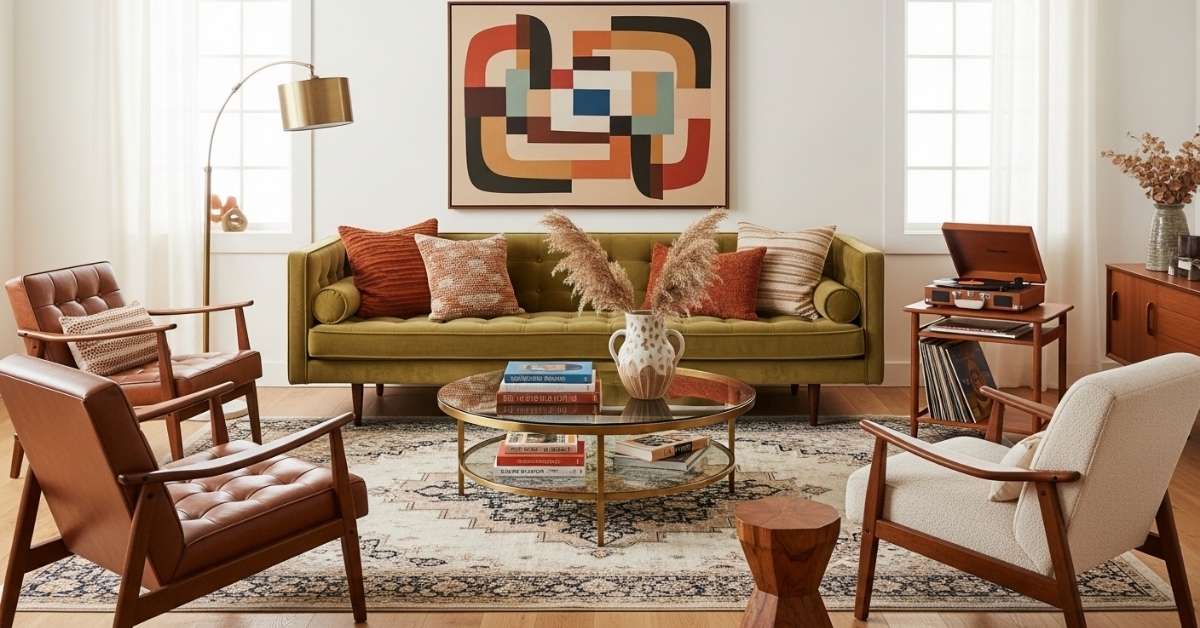
If your living room currently lands somewhere between “generic rental” and “grandma’s parlor,” this style might be the missing framework. It’s not about filling the room with antiques or stripping it back to nothing, Vintage Modern Living Room Ideas it’s about contrast, layering, and intentional mixing. If your style leans toward warm, characterful spaces but you still want things to feel clean and livable, this is worth paying attention to.
The ideas below are grounded in real spaces, real budgets, and real layout constraints. Some work best in small apartments; others shine in larger, open-plan rooms. All of them are built around how a space actually functions, not just how it photographs.
Anchor the Room With a Curved Vintage Sofa on a Natural Fiber Rug
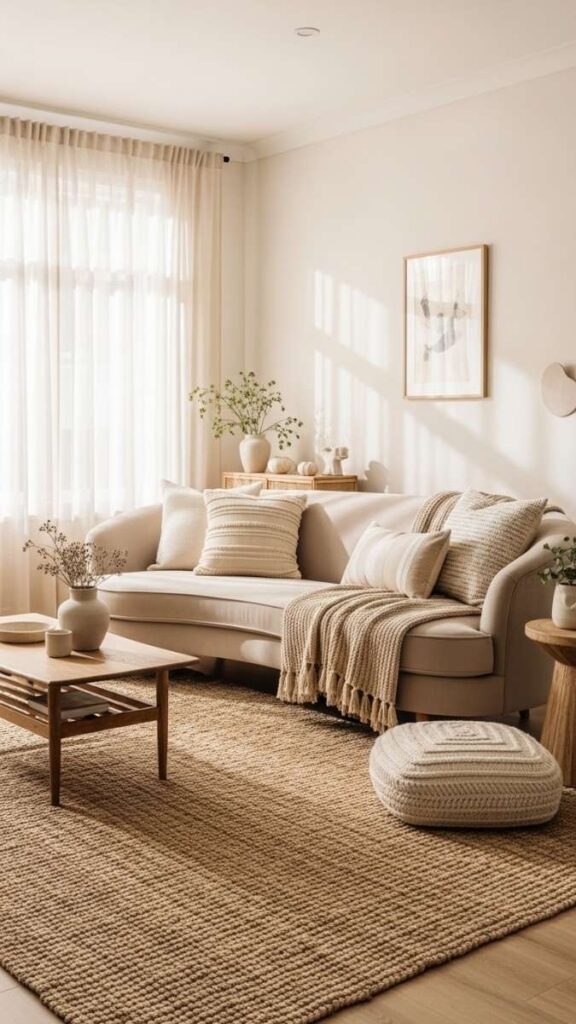
A curved sofa especially in caramel leather, bouclé, or velvet immediately softens a boxy room layout. Place it slightly away from the wall (even 6–8 inches helps), floating it on a jute or wool rug that defines the seating zone. The organic shape of a curved piece works against the straight lines that dominate most living rooms, creating visual interest without adding visual clutter. This setup works best in small to medium rooms where you want the sofa to be the clear focal point rather than just “furniture pushed against a wall.” It resolves the common problem of a room that feels assembled rather than designed.
Use a Wooden Console Table Behind the Sofa as a Functional Divider
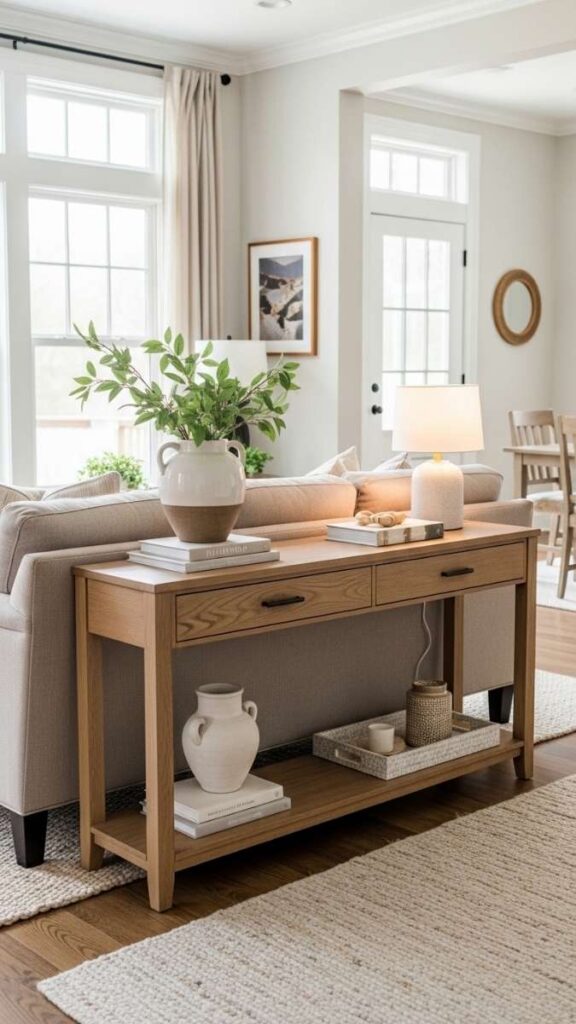
In open-plan spaces, floating a sofa in the middle of the room can feel unanchored. A low walnut or oak console table placed directly behind it solves the problem practically; it gives the sofa a visual back, creates a secondary surface for a lamp and a few objects, and subtly defines the living area from a dining or entryway zone. This is one I’d actually recommend trying first if you’re working with a studio or an open layout, because it adds structure without adding walls. The key is keeping the table low enough that it reads as connected to the sofa, not as its own separate furniture moment.
Layer Warm Lighting at Three Heights Instead of Relying on One Overhead Fixture
Overhead lighting flattens a room. When you layer a floor lamp in the corner, a table lamp on a side table, and either a pendant or wall sconce as a mid-level source, the room gains warmth and dimension especially in the evening when you’re actually spending time there.
Vintage-influenced fixtures think fluted glass pendants, rattan floor lamps, or brass-armed sconces bring in period character without making the space feel like a set. This works in any size room, but it’s especially effective in small living rooms where harsh overhead light makes the space feel like a utility zone rather than somewhere you’d want to sit.
Read More About: 19+Living Room Decor Ideas That Actually Work in Real Homes Not Just on Pinterest
Mix a Mid Century Media Cabinet With Minimal Open Shelving Above
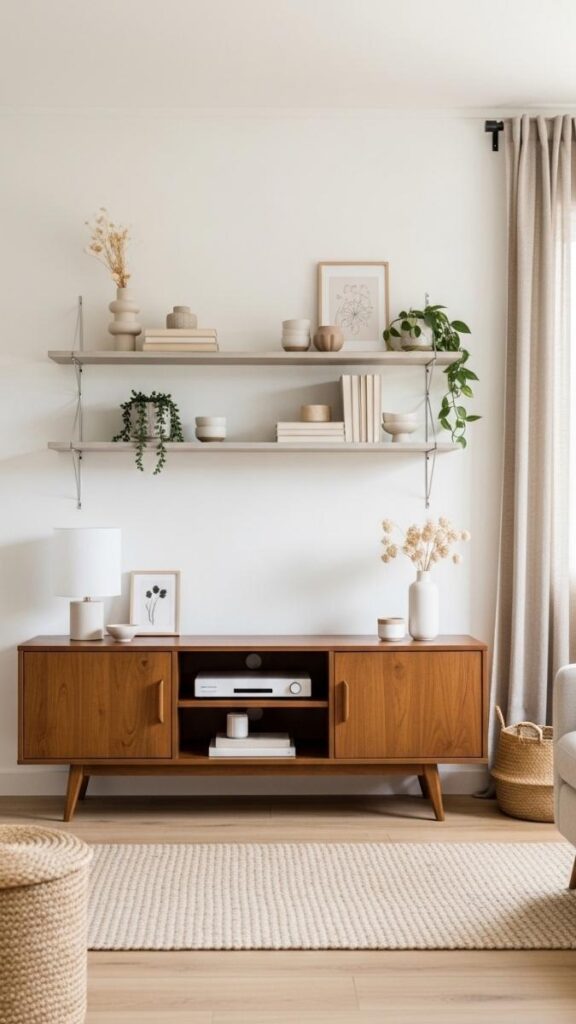
The tension between “vintage character” and “functional modern living” often shows up around the TV wall. A low sideboard or media cabinet in teak or walnut genuine vintage pieces or quality reproductions keeps the storage grounded and warm. Add two or three floating shelves above, spaced generously, and style them with a mix of books, a ceramic piece, and maybe one plant. The negative space between objects matters as much as the objects themselves. This is especially useful if you want a vintage feel without committing to heavy, ornate furniture that can overwhelm a small room.
Hang Vintage Art in a Considered Gallery Wall With Warm Mat Framing
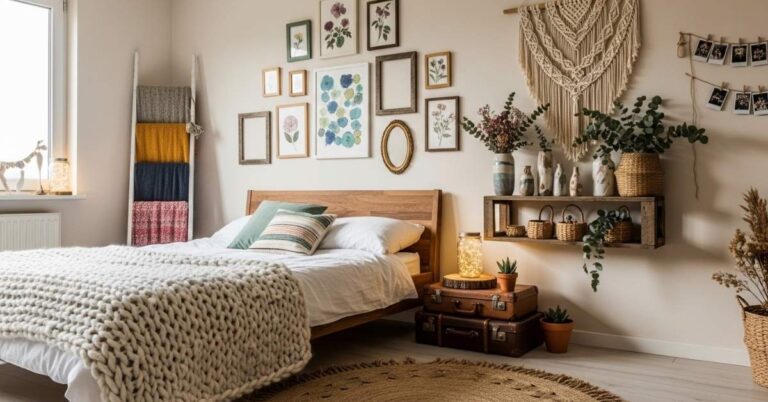
A gallery wall only works when it feels deliberate. For a vintage modern approach, stick to warm mat colors (cream, sand, terracotta) and consistent framing materials all wood, or all thin black metal and choose art that mixes periods without clashing in color. Vintage botanical prints, abstract expressionist reproductions, and old architectural drawings all work together when the color palette is cohesive. Hang the arrangement so the visual center sits at eye level when seated, not when standing; this makes the wall read as part of the room rather than above it. Renters can use adhesive hanging strips rated for heavier loads; many gallery wall setups don’t require drilling at all.
Introduce a Leather or Rattan Accent Chair as the Room’s Personality Piece
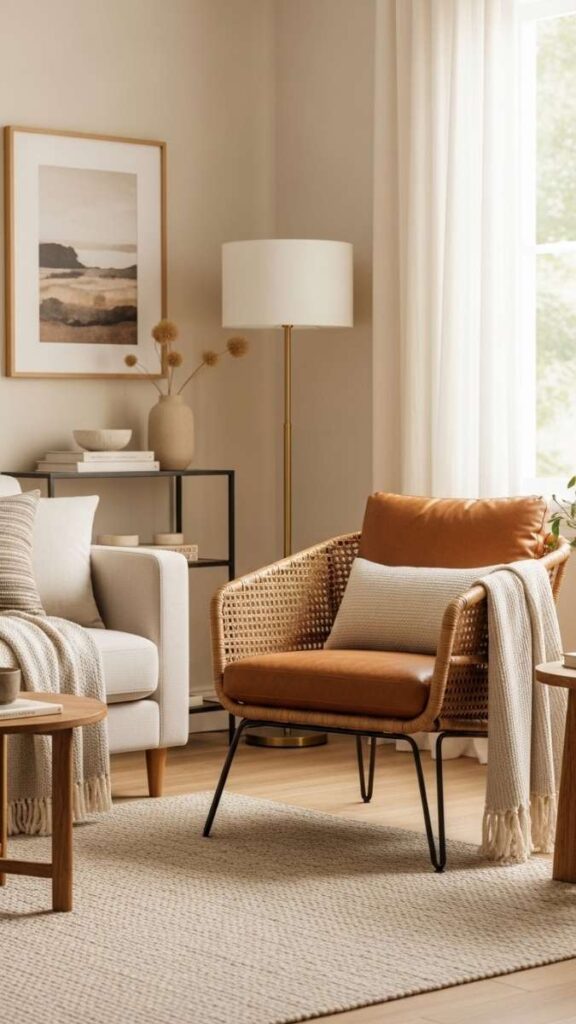
Every good living room has at least one piece that anchors the room’s character rather than just filling space. In a vintage modern setup, that’s often an accent chair: a worn leather club chair, a rattan or cane-back occasional chair, or a sculptural wood-frame piece with a cushioned seat. Place it at a slight angle to the sofa not directly across from it so the room has a more relaxed, conversational feel rather than a formal conference-room arrangement. This setup is particularly useful in small rooms because a single strong accent chair does more visual work than two matching chairs that add symmetry but not interest.
Use an Antique or Distressed Wooden Coffee Table as the Layout Anchor
The coffee table is often where vintage modern design either comes together or falls apart. A round or oval table in reclaimed wood, light oak, or with a slightly distressed finish adds age and warmth to an otherwise contemporary room. Round tables also improve traffic flow in smaller spaces where there are no corners to navigate around, which opens up the room both visually and physically. In my experience, this works best when the table sits roughly 14–18 inches from the sofa edge close enough to be functional, far enough that the seating zone feels open rather than cramped.
Install Warm-Toned Curtains That Run Floor to Ceiling for Visual Height
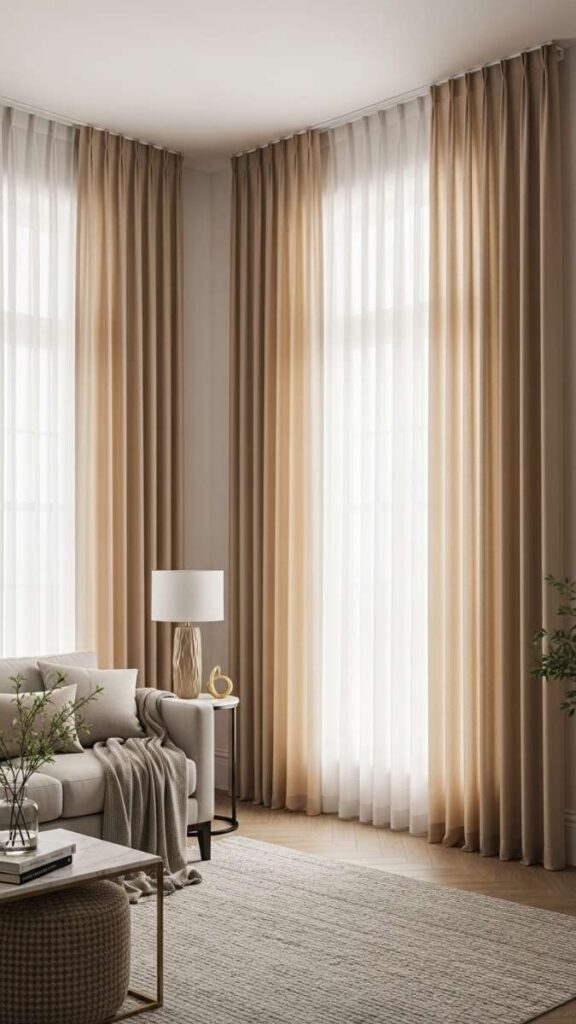
One of the most effective spatial tricks in a vintage modern room is hanging curtains high ideally at ceiling height or just below a crown molding with panels that reach the floor. This draws the eye upward and makes any ceiling feel taller than it is. In a vintage modern context, choose linen, cotton, or a linen-blend in warm neutrals: cream, oat, dusty rose, or terracotta. Avoid stiff, structured drapes that feel more formal than relaxed. This works especially well in rental apartments where you can’t structurally change the room; the curtains alone shift how the space reads spatially.
Layer Textiles Across the Sofa With Contrasting Textures and Periods
Vintage modern rooms often feel flat when the textiles are too matched. Layering a woven throw from a craft market, an embroidered lumbar pillow, and a solid bouclé cushion all in the same color family but different textures gives the sofa a lived-in quality that’s hard to achieve with a matching set.
The rule is to vary texture more than color: keep the palette in a narrow warm range and let the materials do the contrast work. This is one of the lower-cost ways to shift a room’s character without moving anything.
Read More About: 18+Kitchen Lighting Ideas That Make Every Inch of Your Space Work Harder
Create a Reading Corner With a Vintage Lamp, Chair, and Stack of Books
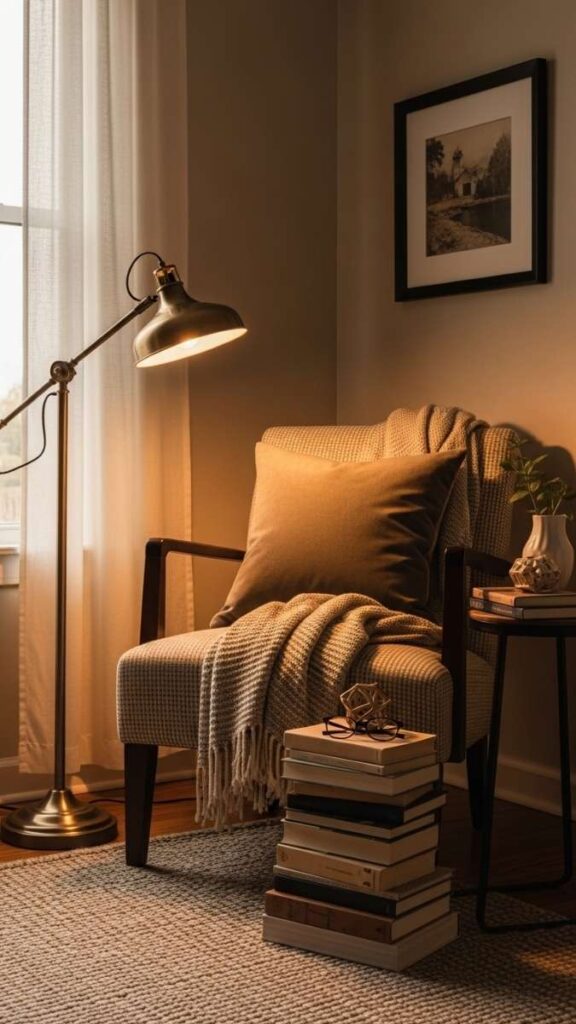
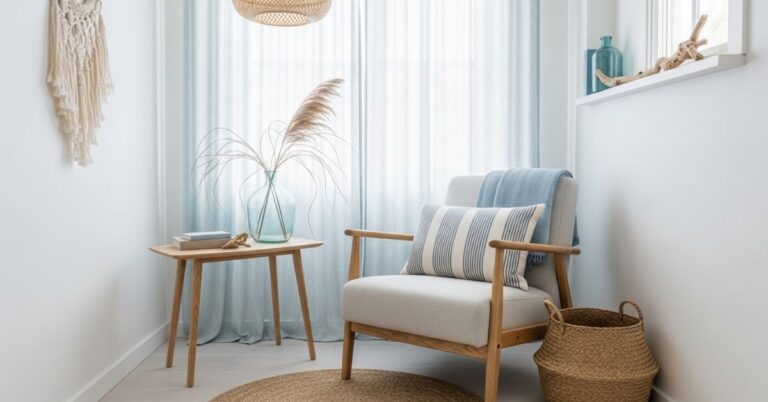
Dead corners are a layout problem in most living rooms. A reading corner, even a modest one, gives that space a clear purpose and adds the kind of lived-in warmth that makes a room feel considered rather than staged. A floor lamp, a single chair, and a small side table is enough. The lamp does the most heavy lifting here: a vintage-style fixture with a warm-toned bulb (2700K or lower) shifts the corner from practical to atmospheric. This works best in medium to large living rooms where you have at least 5–6 feet of corner space to work with.
Bring In a Vintage Sideboard or Credenza for Entry Level Storage
A sideboard or credenza, one of the most versatile pieces in vintage modern design offers closed storage while functioning as a display surface. It sits lower than a bookcase, which keeps sight lines open and makes small rooms feel less blocked. In a vintage modern living room, this piece bridges the old and new: a walnut or teak credenza from the 1960s or a quality reproduction works equally well. On top, keep it curated: a lamp, a vase, a small stack of books. Avoiding filling every inch of the surface restraint is part of the aesthetic.
Use a Vintage Persian or Flatweave Rug to Ground a Neutral Color Palette
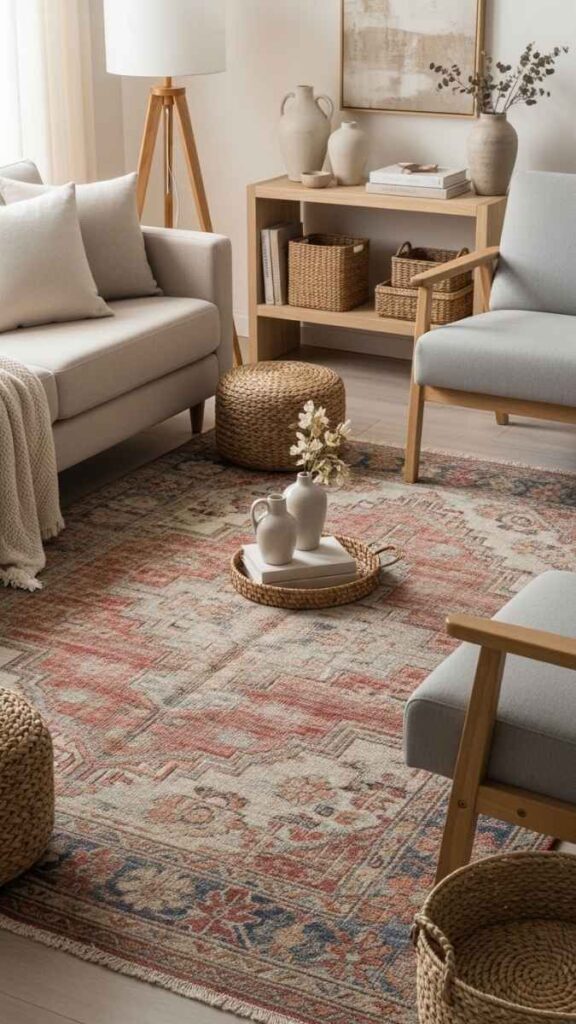
A faded vintage rug authentic or a quality reproduction adds pattern and warmth to a room that would otherwise read as too sparse. In a neutral living room (white walls, linen sofa, wood furniture), the rug is often the only place where pattern appears, which means it carries a lot of visual responsibility. Faded Persian or Turkish flatweave rugs in warm terracotta, sage, and dusty blue work well because the worn-in color reads as quiet rather than loud. Honestly, this is often the piece that makes the whole room feel like it has history and it’s surprisingly achievable through vintage markets and online resale platforms.
Style Open Shelving With a Mix of Books, Ceramics, and Vintage Objects
Open shelving only works when it’s edited. The vintage modern approach to shelving is to mix categories not just books, not just objects, but a combination with breathing room between groupings. Place books horizontally in some sections and vertically in others. Add a ceramic bowl, a small sculpture, or a vintage brass object at intervals. The key is keeping 30–40% of the shelf space visually empty so the arrangement reads as curated rather than packed. This works in any living room with existing shelving or with affordable floating shelves installed at varying heights.
Paint One Accent Wall in a Deep, Warm Tone to Create Depth
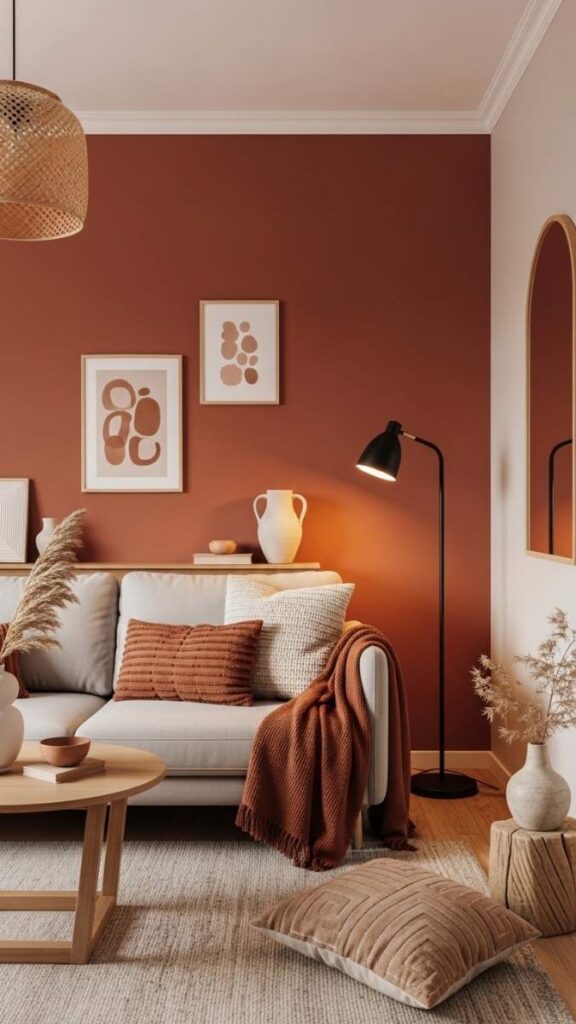
A single deep-tone wall terracotta, sage, dusty plum, or warm charcoal gives a vintage modern room depth and a sense of enclosure that all-white spaces lack. The key is painting only the wall behind the main seating area (usually the sofa wall), which defines the room’s focal point without making the space feel smaller overall.
Pair it with warm-toned lighting pointed at the wall and the contrast between the deep accent and the lighter surrounding walls does the spatial work. This is a weekend project for renters with landlord permission, and one coat of the right color often changes how the entire room feels.
Read More About: 16+Apartment Bathroom Decor Ideas That Make Small Spaces Feel Intentional
Add a Vintage Bar Cart as a Functional and Decorative Moment
A bar cart is one of those pieces that earns its place in a vintage modern room because it’s both functional and visually interesting. A brass-toned or dark metal cart with glass shelves, styled with a mix of glassware, a small plant, and a bottle or two, reads as a curated moment rather than storage. In smaller rooms, it fits into a corner or beside a bookcase without claiming much floor space. This detail works especially well because it adds warmth and layering to the room without requiring any wall space or furniture rearrangement.
Incorporate Plants in Vintage Style Pots to Add Organic Texture
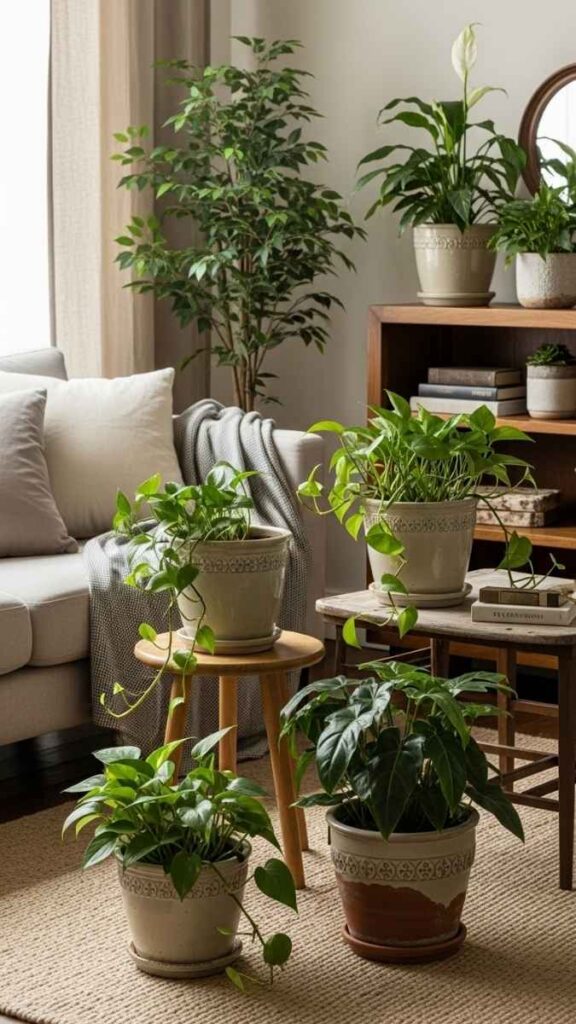
Plants in a vintage modern living room aren’t just décor; they break up the visual regularity of furniture lines and introduce the kind of organic texture that balances out harder materials like wood and metal. A large statement plant in a terracotta or ceramic pot in a corner does more spatial work than several small plants scattered across surfaces. The height adds a vertical element to a room that might otherwise read as all horizontal, and the natural material of an unglazed pot fits seamlessly with a warm, earthy palette.
Use a Vintage Style Mirror to Bounce Light and Add Period Character
A vintage mirror, arched, oval, or with an ornate gilt frame works hard in a small living room: it reflects available light, adds a period reference, and creates the impression of more space without physically altering the room. The placement matters more than the size. Hung opposite a window, it bounces natural light back into the room. Above a console table or fireplace, it creates a visual anchor for that wall. This is one of those details that requires almost no investment in rearranging furniture but shifts the room’s character significantly.
Choose Warm Metals Brass, Bronze, Antique Gold Consistently Across Fixtures
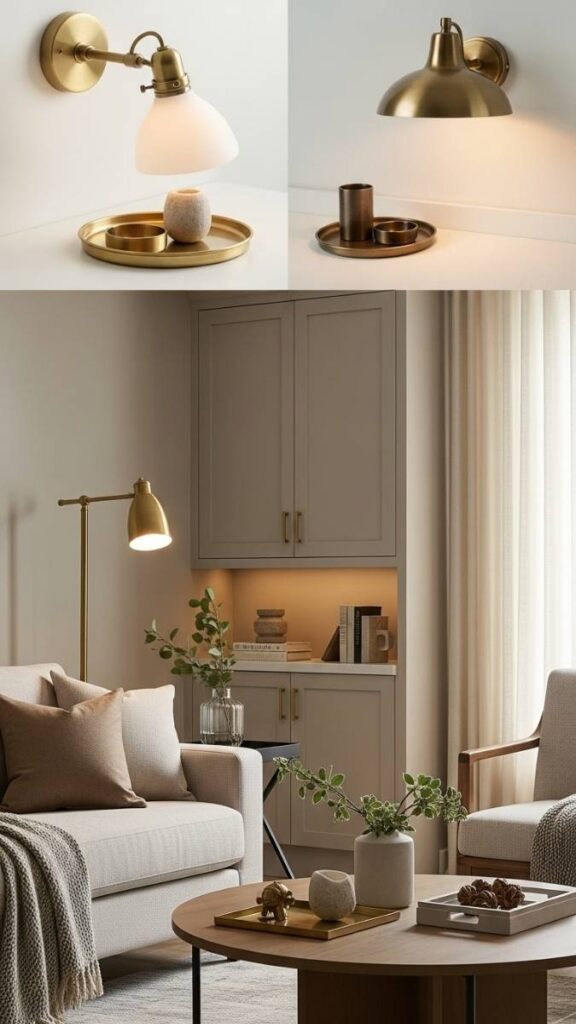
Metal finishes in a living room are easy to overlook, but they’re one of the clearest signals of a coherent design. In a vintage modern room, warm metals brass, bronze, or unlacquered gold connect disparate pieces into a visual system. When the lamp base, the picture frames, the side table legs, and the small hardware details share the same metal family, the room reads as considered rather than assembled. Avoid mixing chrome or brushed nickel into a warm-metal scheme; the cool tones break the warmth the rest of the room is building.
Arrange Furniture for Conversation, Not Just TV-Watching
Most living rooms are arranged entirely around the television, which creates a layout that feels passive and linear. In a vintage modern room where the aesthetic leans toward the thoughtfully inhabited, angling the furniture slightly inward toward a conversation grouping, with the TV positioned to the side rather than as the dead-center focal point, changes how the room functions and how it feels. Two chairs set at angles to the sofa, with the coffee table centered between them, creates a space that looks like someone actually lives there, not just watches things there. This works in any size room and doesn’t require any new furniture.
Use Aged Paper and Linen for Wall Art Instead of High-Gloss Prints
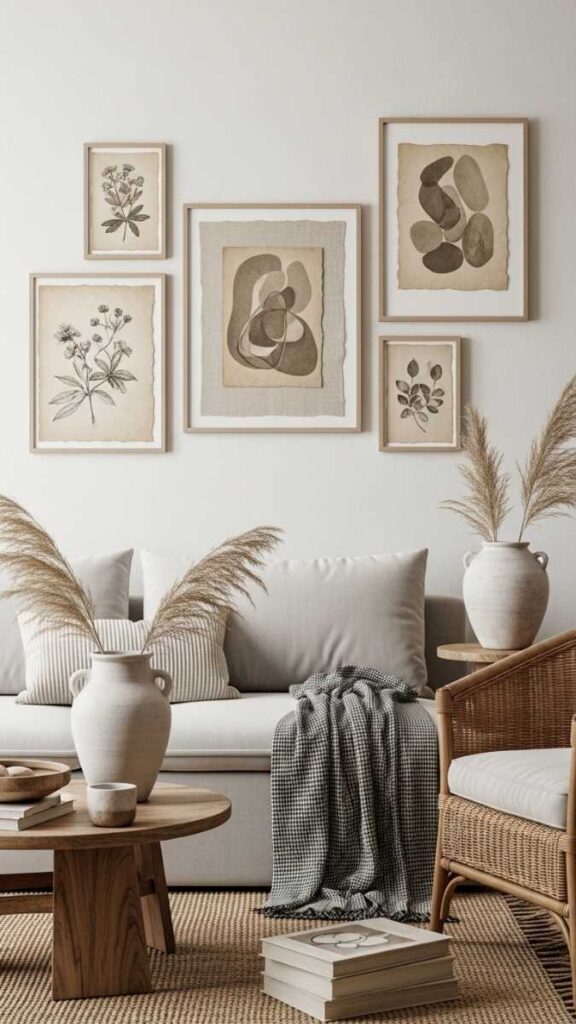
High-gloss, saturated prints can read as visually sharp in a room built around warm, matte materials. Aged-paper botanical prints, vintage map reproductions, or old architectural illustrations printed on matte paper or sourced as actual vintage finds have a softness that integrates naturally with linen upholstery, jute rugs, and wood furniture. The frames should be simple: natural wood or thin matte black. This is a detail that’s easy to change seasonally, and because the prints are intentionally understated, they don’t compete with the rest of the room for attention.
Anchor the Room’s Color Palette With Terracotta, Warm White, and Natural Wood
Vintage modern rooms that feel genuinely cohesive usually share one characteristic: a controlled, warm color palette rather than a collection of individually interesting pieces. Terracotta as an accent (a pillow, a pot, one painted surface), warm white on walls, and natural wood in varying shades of oak, walnut, ash creates a palette that reads as both warm and restrained. This combination is particularly effective because each element individually is quiet; together, they create a room that feels considered without feeling decorated. It also photographs beautifully, which makes it ideal for spaces you want to document or share.
What Actually Makes Vintage Modern Living Room Design Work
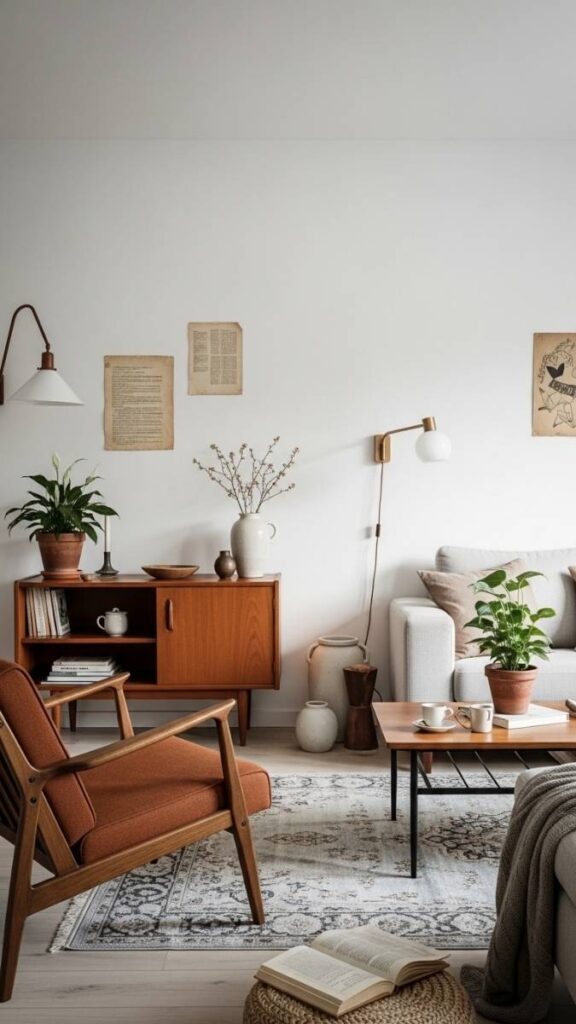
Vintage modern is less a defined style and more a design approach and it works because it’s built on contrast rather than matching. The tension between old and new, rough and refined, patterned and plain is what gives the aesthetic its energy.
The practical principle is this: every room needs what designers call “something borrowed and something new.” In a vintage modern setup, that means for every genuinely old or aged piece a vintage rug, an inherited table, a flea market lamp there should be at least one cleaner, more contemporary element that keeps the room from tipping into nostalgic territory. A Danish-modern sofa with a Victorian side table. A contemporary floating shelf alongside a mid-century credenza.
Lighting is the element most people underinvest in. A room with good vintage-modern bones but harsh, flat lighting will always feel unresolved. Warm-toned bulbs (2700K) in layered sources overhead, floor level, and table height do more to establish the atmosphere than any individual piece of furniture.
Scale is the other underestimated factor. Vintage pieces, especially furniture, often run smaller than contemporary versions because they were made for different room proportions. A genuine mid-century sofa might be noticeably shorter in depth and height than a modern equivalent. In a small apartment, that’s an advantage: the pieces don’t overwhelm the room. In a larger space, you may need to mix in larger modern pieces to fill the room proportionally without cluttering it.
Vintage Modern Living Room Ideas at a Glance
| Idea | Space Type | Key Benefit | Problem Solved | Difficulty |
| Curved vintage sofa on jute rug | Small–medium rooms | Creates focal point | Feels “assembled” | Easy |
| Console table behind sofa | Open-plan, studio | Defines zones | Unanchored layout | Easy |
| Layered lighting at 3 heights | Any size | Adds depth + warmth | Flat, harsh lighting | Easy |
| Mid-century media cabinet | Any size | Warm functional storage | TV wall looks cold | Moderate |
| Vintage gallery wall | Any wall space | Adds character | Empty, bare walls | Moderate |
| Leather/rattan accent chair | Small–medium rooms | Room personality | Generic feel | Easy |
| Distressed wooden coffee table | Small–medium rooms | Improves traffic flow | Awkward corners | Easy |
| Floor-to-ceiling curtains | Low-ceiling rooms, rentals | Visual height | Ceiling feels low | Easy |
| Layered sofa textiles | Any sofa | Warmth + texture | Flat, matched look | Easy |
| Reading corner setup | Medium–large rooms | Activates dead corner | Unused corner space | Easy |
| Vintage sideboard/credenza | Any room | Closed storage + display | Clutter, no storage | Easy–moderate |
| Vintage Persian rug | Neutral rooms | Grounds palette | Room feels sparse | Easy |
| Styled open shelving | Any room with shelves | Visual interest | Bare or messy shelves | Easy |
| Deep accent wall | Any room | Adds depth, focal point | Room feels flat | Moderate |
| Vintage bar cart | Small–medium rooms | Functional + decorative | Dead corner | Easy |
| Plants in vintage pots | Any room | Organic texture | Hard, cold materials | Easy |
| Vintage mirror | Small rooms | Reflects light, adds space | Dark, tight spaces | Easy |
| Warm metal finish consistency | Any room | Design cohesion | Disjointed pieces | Easy |
| Conversational furniture layout | Any room | Activates the space | TV-only layout | Easy |
| Matte paper/linen art | Warm-material rooms | Soft, integrated look | Glossy prints feel harsh | Easy |
| Terracotta + warm white palette | Any room | Room feels cohesive | No color direction | Easy |
How to Arrange a Vintage Modern Living Room for Better Flow and Function
Start with the sofa, not the TV.
The most common layout mistake is orienting the room entirely around the screen. Decide where you want the primary seating to land ideally with a clear sightline to a window or an interesting wall and work outward from there.
Define zones with the rug before moving furniture.
A rug that’s too small (less than front legs of all seating on the rug) makes a room feel disconnected. The rug should be large enough that the seating group sits on it; this is the primary anchor of the layout.
Keep the main walking path clear.
In a vintage modern room with layered furniture and accessories, it’s easy to accidentally block the natural flow between the entrance and the rest of the space. Leave at least 36 inches of clear passage through the main traffic path.
Don’t push everything against walls.
Floating furniture, even just the sofa, pulled 6–8 inches from the wall immediately makes a room feel more intentional. It also creates opportunities for elements like the console table placement described above.
Vary the height of display objects.
On a shelf or a console table, groupings work best when they include one taller element (a lamp, a tall vase), one medium element (a stack of books, a ceramic piece), and one low element (a small object, a tray). The variation creates a natural, collected look rather than a flat line of objects at the same height.
FAQ’s
What is vintage modern interior design in a living room?
Vintage modern design mixes antique, mid-century, or aged pieces with cleaner contemporary elements creating a space that feels both characterful and livable. The goal is contrast rather than strict period matching: a 1960s credenza alongside a contemporary sofa, or a Victorian mirror above a minimal console table.
How do I start a vintage modern living room on a budget?
Focus on a few high-impact pieces: a vintage rug (thrift stores, Facebook Marketplace, and rug resellers often have affordable finds), one statement lamp, and a couple of aged-paper art prints. You don’t need to refurnish; adding vintage accessories to existing contemporary furniture often gets the balance right.
What furniture works best for a vintage modern living room?
Mid-century furniture, low profiles, tapered legs, warm wood finishes works most naturally in a vintage modern setup because it bridges old and new without being overtly antique. Curved sofas, sideboards, and rattan or cane accent chairs all perform well in this style.
Can you do vintage modern in a small living room?
Yes, and honestly it works very well in compact spaces. Smaller mid-century pieces often fit small rooms better than oversized contemporary furniture. A rounded coffee table, a floating sofa placement, and layered lighting all help the space feel larger and more considered without adding square footage.
Vintage modern vs. traditional design: what’s the difference?
Traditional design favors matched sets, symmetry, and ornate detailing often in formal arrangements. Vintage modern is more relaxed: pieces from different periods coexist, the arrangement is conversational rather than formal, and the overall feel leans toward warm-but-contemporary rather than period-specific. Traditional reads curated; vintage modern reads collected.
What colors work best in a vintage modern living room?
Warm neutrals are the foundation: cream, warm white, sand, and natural wood tones. Accent in earthy hues terracotta, sage green, dusty blue, or muted ochre. Avoid cool grays and bright whites, which flatten the warmth that makes vintage modern rooms feel inviting.
How do I keep a vintage modern living room from looking cluttered?
Editing is more important than adding. Keep surfaces like shelves and side tables to 2–3 objects with negative space between them. Choose storage piecessi deboards, credenzas with doors to hide everyday items. The vintage aesthetic is about selected character, not accumulated stuff.
Conclusion
A vintage modern living room works because it gives you a framework for making decisions rather than a rigid rulebook. Once you understand the balance of old against new, rough against smooth, patterned against plain it becomes easier to edit what you already have and add what you actually need.
The key is finding what works for your space, your furniture scale, and how you actually use the room. Not every idea here will be the right fit, but even two or three of these changes: a rug repositioned, a lamp added, one well-chosen vintage piece introduced can shift the room’s character noticeably. Start with the idea that requires the least investment and works hardest for your specific layout, and build from there.