Best Bathroom Floor Tile Ideas: 35 Stylish Designs for Every Bathroom
Choosing the right floor can make or break a bathroom remodel. It’s the one surface you touch every single day, often barefoot, often half-asleep. Get it right, and your whole room feels pulled together. Get it wrong, and even the prettiest vanity won’t save space.
This guide walks through 35 bathroom floor tile ideas for every style, budget, and bathroom size. You’ll find modern looks, small-space tricks, luxury upgrades, and practical advice on tile installation, color, and care. By the end, you’ll know exactly which direction fits your home. Let’s get into it.
Best Bathroom Floor Tile Ideas for Every Style
Your bathroom’s style should guide your tile choice first. Material and color matter too, but they only work if they match the overall look you’re going for. A sleek minimalist bathroom needs a different floor than a cozy, traditional one. So before you fall in love with a specific tile, think about the mood you want the room to have.
The good news? Tile is one of the most flexible materials out there. You can use the exact same porcelain floor tiles to create a calm spa retreat or a bold, graphic statement. It all comes down to size, layout, and finish. Below, we break down three popular directions: modern, small-space, and luxury.
Modern Bathroom Floor Tile Ideas
Modern bathroom flooring leans on simplicity. Think large-format tiles, often 24×24 inches or bigger, laid with thin grout lines. Fewer seams mean a cleaner, more open look. Many homeowners pair this with neutral bathroom colors like warm beige, soft gray, or greige for a calm, contemporary base.
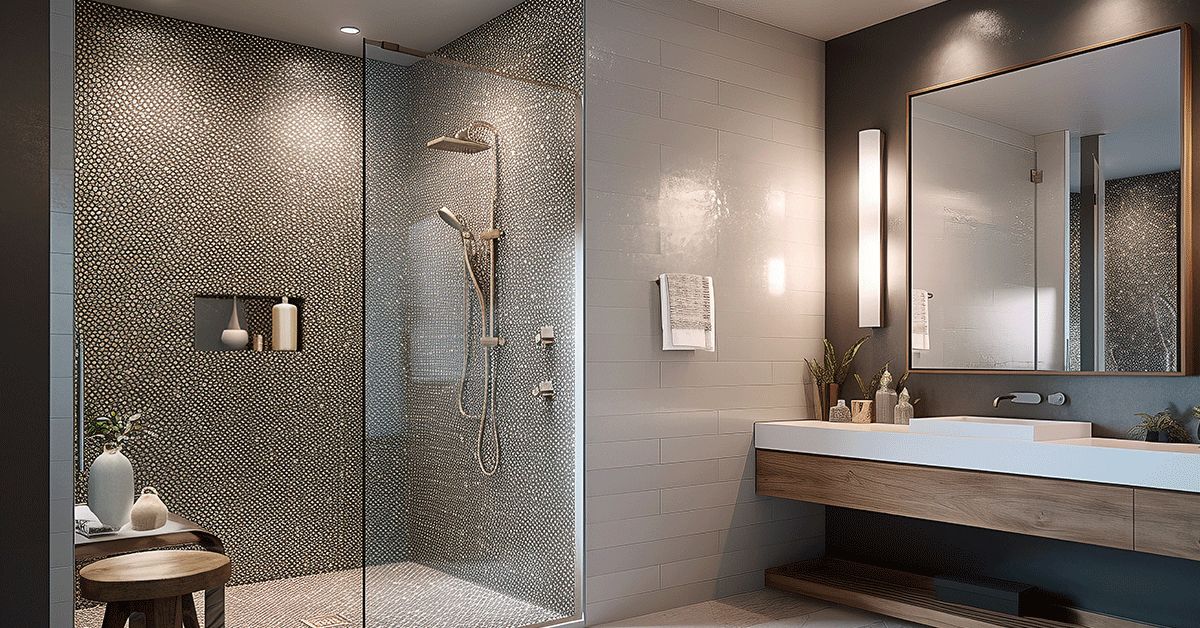
A matte finish is the modern standard for floors right now. It feels grounded underfoot and hides water spots better than gloss. Combine a matte porcelain floor tile with a floating vanity and a frameless glass shower, and you get a clean, contemporary bathroom design that feels both current and timeless. Rectified edges (tiles cut with perfectly straight sides) help keep grout lines razor-thin for an even sleeker finish.
Small Bathroom Floor Tile Ideas
Small bathrooms need smart tile choices, not just pretty ones. Lighter tones bounce light around the room and make it feel bigger. Cooler whites and soft grays work well here, especially with a glossy or satin finish that reflects more light than matte does.
Tile size matters more than people expect. Large-format tiles can actually make a tiny room feel more spacious because there are fewer grout lines breaking up the floor visually. On the other hand, small mosaic tiles add texture and charm without overwhelming the space, as long as you stick to a simple, calm color palette. A diagonal layout is another classic trick. It draws the eye corner to corner and makes a cramped footprint feel longer than it really is.
Luxury Bathroom Floor Tile Ideas
If budget isn’t the main concern, luxury bathroom finishes open up a whole new world. Natural stone like marble, travertine, or polished limestone brings a high-end, one-of-a-kind look that manufactured tile simply can’t copy. A marble tile bathroom floor, especially one with deep veining, instantly elevates the entire room.
Heated flooring is another upgrade worth considering. Radiant floor heating sits underneath the tile and warms the surface from below, which feels incredible on cold mornings.
Terrazzo and zellige tiles are also gaining popularity in upscale bathrooms thanks to their handmade, artisanal character. Mixing matte stone on the floor with a glossier tile on an accent wall adds depth without making the space feel busy.
Best Bathroom Flooring Materials Compared
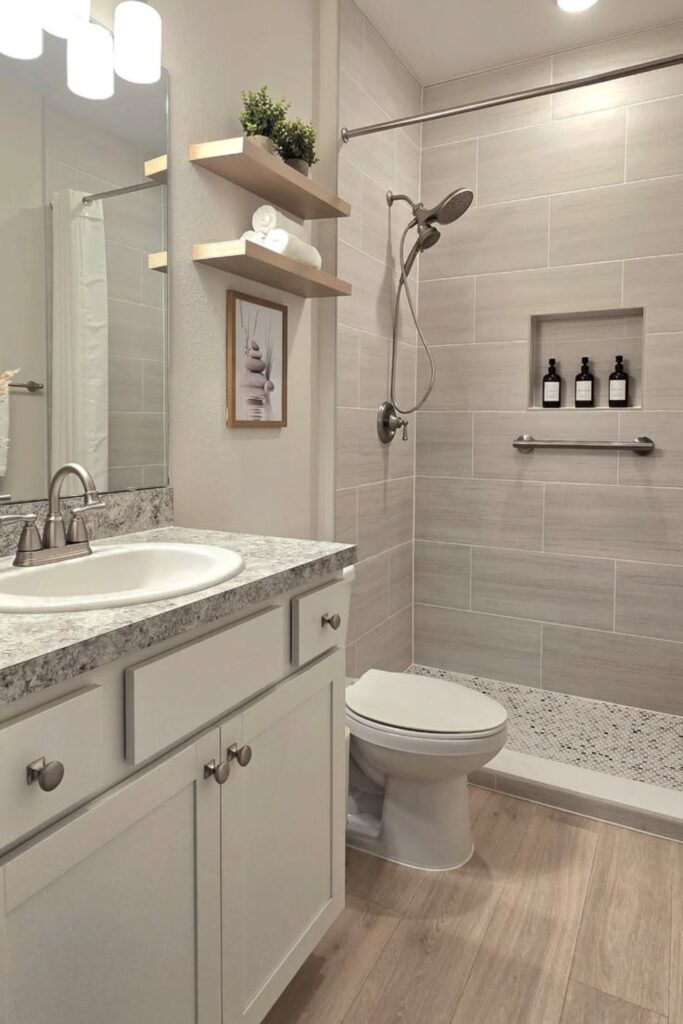
Style gets all the attention, but material is what actually determines how your floor performs over time. Some materials shrug off water and daily wear without a second thought. Others need extra care, sealing, or simply aren’t built for a high-moisture room. Before you fall for a specific look, it helps to understand what you’re actually buying.
The table below gives you a quick side-by-side comparison of the most common bathroom flooring ideas by material. Use it as a starting point, then read through each section for more detail on where each material shines.
Read More About: Best Small Bathroom Remodel Ideas That Maximize Style and Space
| Material | Water Resistance | Durability | Maintenance | Best For |
| Porcelain | Excellent | Very High | Low | All bathrooms, high traffic |
| Ceramic | Good | Moderate-High | Low | Budget-friendly floors and walls |
| Natural Stone | Fair (needs sealing) | High | High | Low-traffic, luxury spaces |
| Wood-Look Porcelain | Excellent | Very High | Low | Spa-style and warm modern looks |
| Terrazzo | Excellent | Very High | Low-Moderate | Statement floors, modern or retro styles |
Porcelain Floor Tiles
Porcelain tiles are the gold standard for bathroom floors, and for good reason. They’re fired at extremely high temperatures, which makes them dense, hard, and almost completely resistant to water absorption. That makes them one of the most reliable waterproof bathroom surfaces you can install, whether on the floor, in the shower, or on a vanity backsplash.
Beyond performance, porcelain also wins on versatility. It comes in nearly every color, pattern, and texture imaginable, including convincing wood, marble, and concrete look-alikes. It typically costs more than ceramic per square foot, but its long lifespan and easy-to-clean surfaces often make it the better long-term investment, especially for a primary bathroom that sees daily use.
Ceramic Bathroom Tiles
Ceramic tiles are the more affordable cousin of porcelain. They’re made from natural clay and fired at lower temperatures, which makes them softer and slightly more porous. That’s not a dealbreaker for bathroom floors, but it does mean ceramic generally suits lighter-traffic areas like guest bathrooms or powder rooms a bit better than a heavily used family bathroom.
Where ceramic really shines is style for the price. You’ll find an enormous range of colors, patterned tiles, and finishes at a lower cost than most other materials. Many ceramic tiles also work beautifully as shower wall tiles or for a mosaic backsplash, giving you flexibility to mix budget-friendly walls with a more durable porcelain floor if needed.
Natural Stone Bathroom Flooring
There’s a reason natural stone has been used in bathrooms for centuries. Marble, travertine, slate, and granite each bring genuine texture and variation that no manufactured tile fully replicates. Every slab is different, which gives the floor real character and a sense of permanence.
That beauty comes with responsibility, though. Natural stone is porous, so it needs sealing when installed and periodic resealing over time to stay protected from moisture and stains. It’s also a better fit for low-traffic environments, like a primary suite bathroom used mostly by one or two people, rather than a busy family bathroom that takes constant water exposure and foot traffic.
Wood Look Porcelain Tiles
Wood flooring feels warm and inviting, but real wood and bathrooms don’t mix well. Wood-look porcelain solves that problem completely. It’s printed and textured to mimic real wood grain, right down to the knots and color variation, while staying fully moisture-resistant underneath.
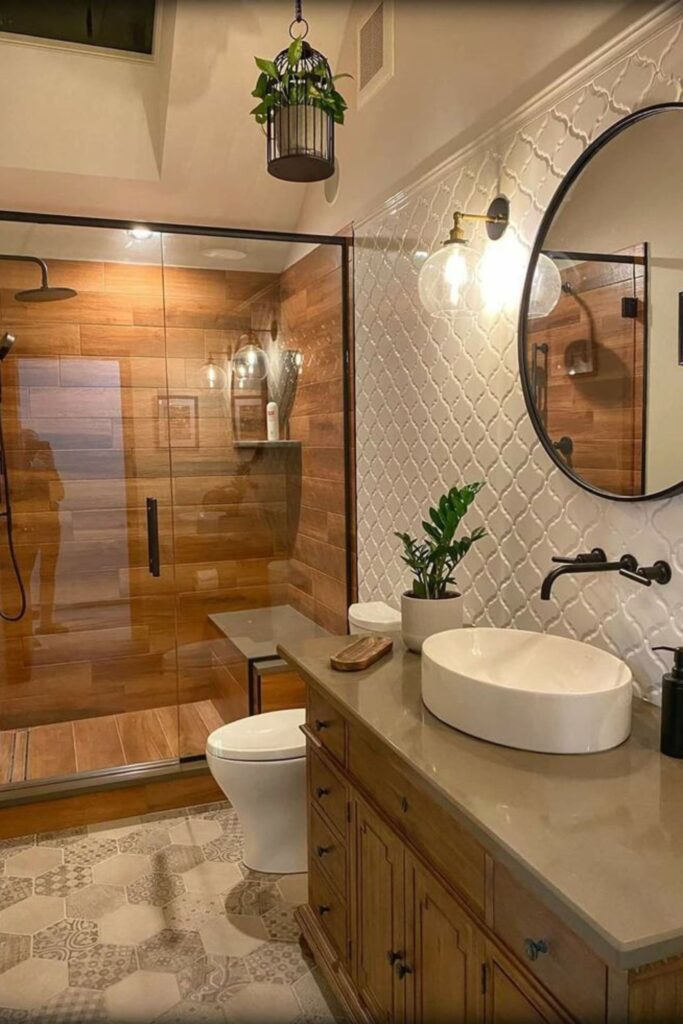
This material has become a favorite for spa-inspired bathroom designs because it softens an otherwise cool, tiled space. Pair it with stone counters or a concrete-look accent wall, and the wood-look floor brings instant warmth. Plank sizing matters here: longer, wider planks tend to look more realistic and modern than short, narrow ones.
Terrazzo Bathroom Floors
Terrazzo is having a real comeback, and 2026 is shaping up to be one of its biggest years yet. Made from chips of marble, glass, or quartz set into a cement or resin base, terrazzo brings a speckled, one-of-a-kind look that works in both modern and retro-inspired bathrooms.
What makes terrazzo so appealing today isn’t the bold primary-color style from decades past. It’s a softer, more residential take featuring cream, sage, and clay-toned chips set in a lighter base. It’s also incredibly durable and easy to maintain, since the surface is sealed and largely nonporous once installed. If you want a floor that doubles as a design statement, terrazzo delivers without sacrificing practicality.
Read More About: Best Bathroom Tile Ideas: 75 Stylish Bathroom Tiles Design Ideas for Every Home
Most Popular Bathroom Tile Designs
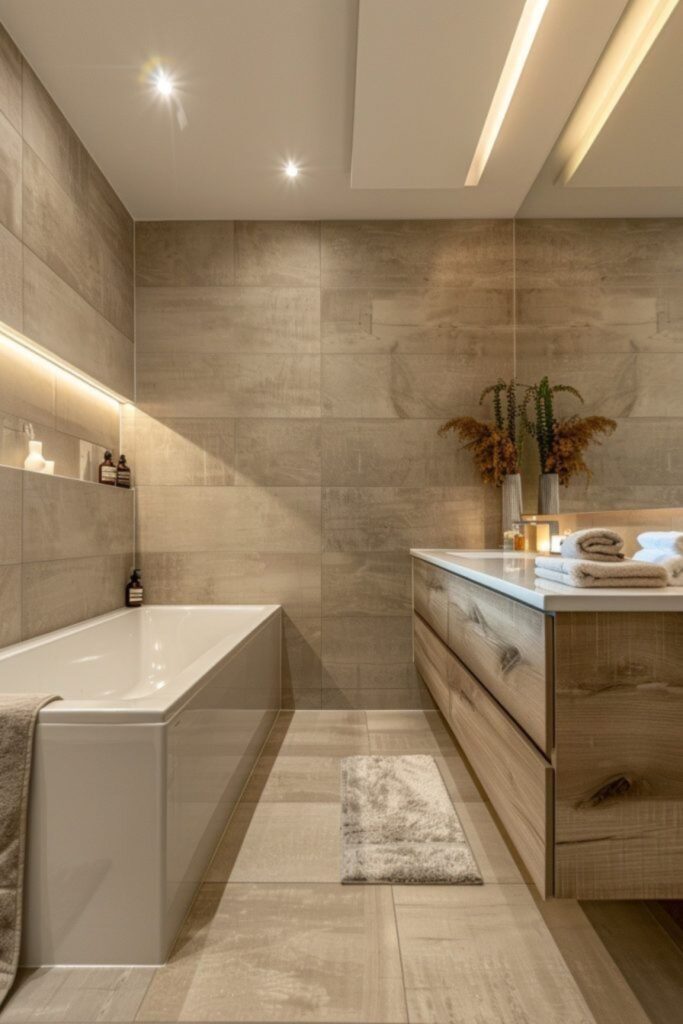
Once you’ve settled on a material, the next decision is pattern and shape. This is where your bathroom really starts to show personality. Some designs, like subway tile, have stayed popular for over a century because they simply work in almost any space. Others, like zellige, bring a handmade, imperfect charm that mass-produced tile can’t fake.
These six designs represent the most requested looks in bathroom interior trends right now. Each one fits a slightly different aesthetic, so think about which feels most like your bathroom before picking one.
Subway Tiles
The classic subway tile bathroom look never really goes away, and there’s a reason for that. Originally used in early 1900s subway stations, this rectangular tile has a clean, simple shape that pairs with almost any design style. The traditional brick layout still works beautifully, but a vertical stacked layout has become a popular, more modern twist.
Subway tile is usually associated with walls, but it works just as well on shower wall tiles paired with a different floor tile below. Keep the grout color close to the tile for a streamlined look, or go with a contrasting grout color idea like charcoal for more visual definition.
Penny Tile Floors
Penny tiles are small, round tiles roughly the size of an actual penny, usually arranged in a sheet for easier installation. They bring serious retro charm, and they’re practical too. All those extra grout lines between the tiny circles create natural texture, which actually improves slip resistance compared to larger, smoother tiles.
This is a great option if you want a decorative tile accent without going overboard. Many homeowners use penny tile only on the shower floor, then pair it with a calmer large-format tile everywhere else, getting the charm without overwhelming the whole room.
Mosaic Bathroom Tiles
Mosaic tile ideas cover a huge range, from glass and porcelain to natural stone chips arranged in detailed patterns. Because the individual pieces are small, mosaic tile bends easily around curves and slopes, which makes it a natural choice for shower floors, where proper drainage requires a slight slope toward the drain.
Mosaic also works wonderfully as a mosaic backsplash behind a vanity, adding shimmer and detail without covering the whole room. The denser grout lines that come with mosaic tile add real traction underfoot, making it one of the more practical slip-resistant flooring choices for wet areas.
Hexagon Floor Tiles
Hexagon tiles bring a honeycomb-style geometry that feels fresh without being trendy in a fleeting way. Black-and-white hexagon floors have a vintage, almost Parisian café feel, while tonal hexagon patterns (where all the tiles are similar shades) feel more current and subtle.
Because hexagons interlock without straight grout lines running through the room, they create a more organic, flowing visual pattern compared to square tile. This shape works at nearly any size, from small mosaic-format hexagons in a shower to oversized hexagon tiles covering an entire bathroom floor.
Herringbone Pattern
The herringbone pattern lays rectangular tiles at an angle so they interlock in a zigzag formation. It’s traditionally associated with hardwood flooring, but it has become one of the standout tile layout ideas for bathrooms in recent years. The angled lines add movement and a sense of craftsmanship that a straight grid layout just doesn’t offer.
Herringbone works especially well with narrow brick-shaped tiles, whether in porcelain, natural stone, or zellige. It’s a fantastic way to add texture and visual interest to a small bathroom without needing bold color or a busy pattern to make a statement.
Zellige Bathroom Tiles
Zellige tiles are handmade Moroccan tiles, traditionally cut from clay and individually glazed. No two tiles are exactly alike. Slight color variation, uneven edges, and a hand-applied glaze give zellige a depth and warmth that perfectly uniform, mass-produced tile simply cannot match.
This handcrafted quality has made zellige a favorite in 2026 bathroom design, especially paired with an oak vanity, brass fixtures, or limewash-painted walls. It works beautifully on floors, walls, or both, and it’s a great choice if you want your bathroom makeover inspiration to feel personal and one of a kind rather than catalog-perfect.
Bathroom Floor Tile Color Ideas
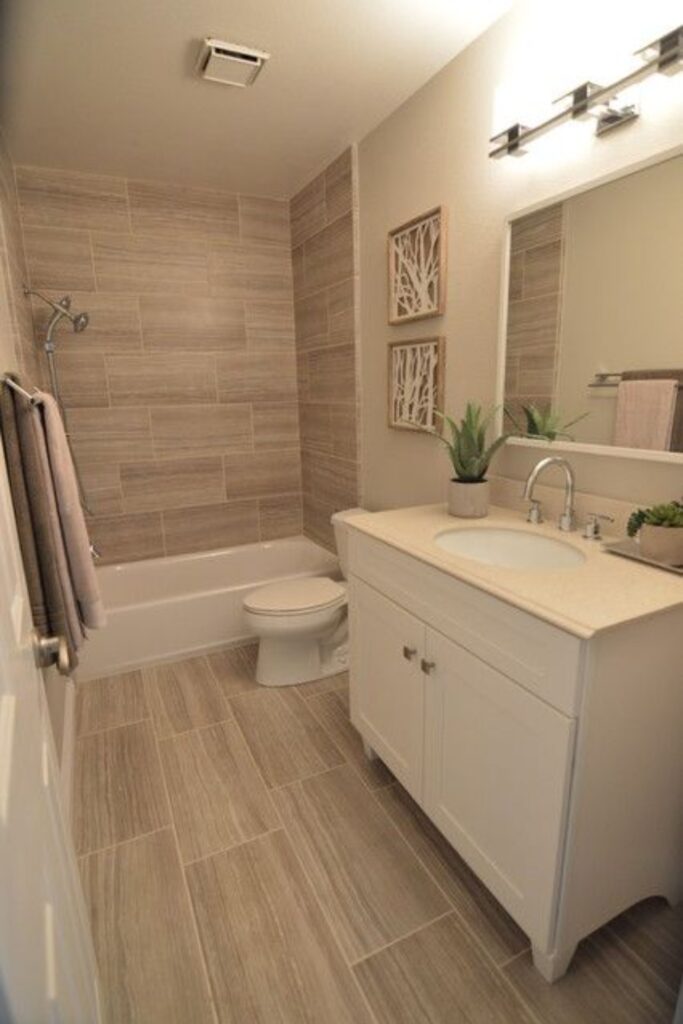
Color affects a bathroom more than most people realize. It changes how big or small the room feels, sets the entire mood, and influences how long the design will stay appealing to you, and to future buyers if you ever sell. Dark colors feel dramatic and grounded. Light colors feel airy and expansive. Warm tones feel inviting. Cool tones feel crisp and clean.
The five colors below represent the most popular directions in bathroom floor tile right now, based on current bathroom interior trends. Some are timeless classics, while others reflect the newer shift toward warmer, earthier palettes.
Black Bathroom Tiles
Black floor tile makes a bold, confident statement. It grounds a room and pairs beautifully with bright white walls, brass fixtures, or marble accents for contrast. Used carefully, black tile can feel genuinely luxurious, almost like stepping into a boutique hotel.
The key with black tile is balance. Pair it with plenty of light elsewhere in the room, whether that’s white walls, a bright vanity, or strong natural light, so the space doesn’t feel closed in. Black tile also tends to show water spots and dust more easily than lighter colors, so it does ask for slightly more regular cleaning to stay looking sharp.
White Bathroom Tiles
White floor tile is about as close to timeless as it gets. It brightens the room, reflects light well, and pairs with literally any color scheme you might want to bring in through towels, paint, or accessories. It’s also one of the safest choices if you’re planning to sell your home down the road, since it appeals to the widest range of buyers.
The tradeoff is that white tile shows grout lines and dirt more visibly than darker shades. Choosing a slightly off-white or warm white, rather than a stark, cool white, can soften this effect while still keeping that bright, open feeling.
Gray Bathroom Floor Tiles
Gray sits right in the middle, and that’s exactly why it’s so popular. As one of the most reliable neutral bathroom colors, gray pairs with almost any fixture finish, from brushed nickel to matte black to warm brass. It also hides everyday wear better than pure white without feeling as heavy as black.
Gray comes in a wide range of undertones too. Cooler, blue-based grays feel modern and crisp, while warmer, taupe-leaning grays feel softer and more inviting. Picking the right undertone usually comes down to matching your walls, cabinetry, and overall contemporary bathroom design direction.
Read More About: Master Bathroom Ideas: 55 Modern, Luxury & Functional Designs for Every Home
Pink Bathroom Tiles
Pink floor tile has shifted from a niche, retro choice to a genuinely popular option, especially in powder rooms and guest bathrooms. Soft, dusty pink tones feel sophisticated rather than overly sweet, particularly when paired with matte black fixtures or warm wood accents.
Because pink is a more personal, expressive color, it tends to work best in secondary bathrooms rather than a primary bath used daily by the whole household. It’s a great way to add personality to a smaller space without committing your main bathroom to a bold color choice.
Terracotta Bathroom Floors
Terracotta has become one of the defining colors of the current shift toward warmer, earth-inspired bathroom palettes. This warm, clay-toned color brings an immediate sense of coziness and works beautifully with natural materials like wood, rattan, and unlacquered brass.
Terracotta tile often gets used in a “tile drenching” approach, where the same warm tone runs across the floor and partway up the walls for a cohesive, enveloping feel. It’s a strong choice if your overall bathroom renovation ideas lean toward a Mediterranean, rustic, or relaxed organic style rather than a sleek, cool, modern look.
Patterned Bathroom Floor Tile Ideas
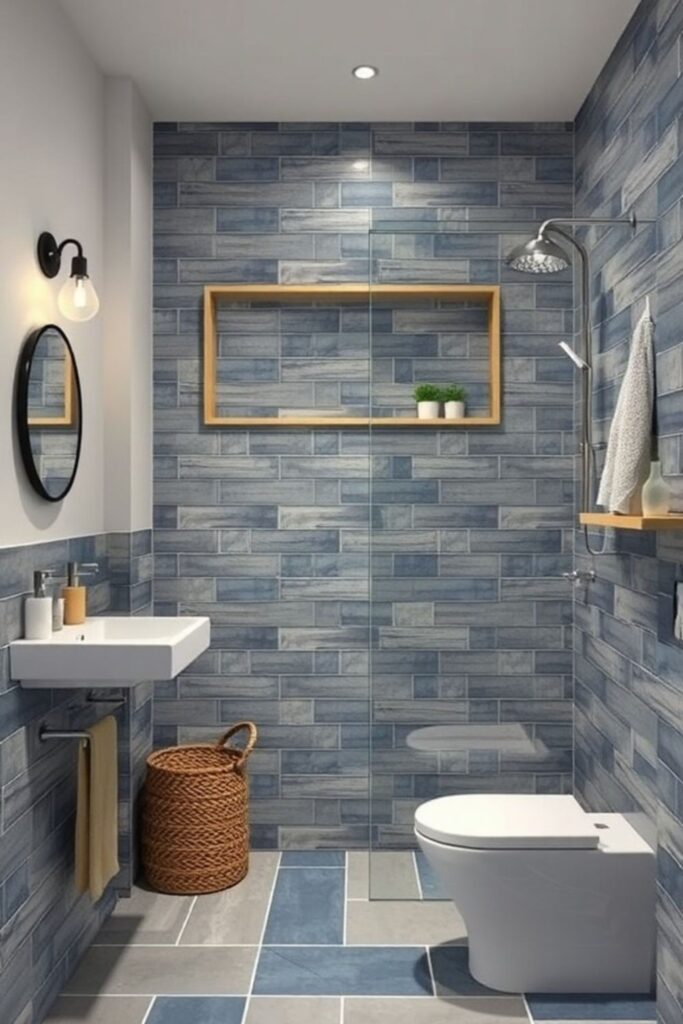
Plain tile is reliable, but patterned tile is where bathrooms really get to show off. After a few years of mostly minimal, solid-color floors, patterned tiles are back in a big way, and homeowners are leaning into them with more confidence than before. The key with any patterned floor is commitment. A half-hearted pattern can look accidental, while a fully embraced one looks intentional and designed.
Below are four of the most popular pattern styles showing up in bathrooms today, ranging from timeless to boldly graphic.
Checkerboard Tiles
Checkerboard flooring has genuine staying power. The classic black-and-white version has a timeless, almost old-Hollywood glamour to it, while a softer version using tones like cream and sand instead of stark black and white feels more relaxed and current. Smaller checks tend to read as more refined and retro, while larger checks feel bolder and more graphic.
This pattern works in almost any size bathroom, though scale matters. Smaller checkerboard squares generally suit smaller rooms better, while a larger powder room or primary bathroom can comfortably handle a bigger checkerboard pattern.
Moroccan Tiles
Moroccan-style tiles bring intricate geometric and floral motifs, often in rich blues, greens, or terracotta tones. These patterns trace back to centuries-old North African and Spanish design traditions, and they instantly add warmth, color, and a sense of craftsmanship to a bathroom floor.
Because the patterns themselves are detailed, Moroccan tile usually looks best with simpler, calmer surroundings. Plain walls, a simple vanity, and minimal accessories let the floor pattern take center stage without the room feeling cluttered or overdone.
Art Deco Bathroom Tiles
Art Deco patterns lean into bold geometry, typically in striking black, white, and gold combinations. Think sharp angles, fan shapes, and strong symmetry. It’s a dramatic, glamorous look that works especially well in larger bathrooms or powder rooms, where there’s enough visual space for the pattern to breathe.
The golden rule with Art Deco tile is restraint everywhere else. A geometric patterned floor paired with a bold feature wall can quickly become too much. Keep cabinetry simple and walls plain, and let the floor do the talking.
Encaustic Pattern Tiles
Encaustic tiles originally referred to cement tiles with patterns inlaid using different colored clays, popular in Victorian-era homes. Today, you’ll mostly find porcelain reproductions of that vintage look, which give you the same intricate, old-world pattern with modern durability and far easier maintenance.
These tiles bring instant character to a bathroom, especially in period homes or anywhere you want a touch of vintage charm. Because the patterns are usually busy and colorful, encaustic-style tile pairs best with neutral walls and simple fixtures to keep the overall look balanced.
Shower Floor Tile Ideas
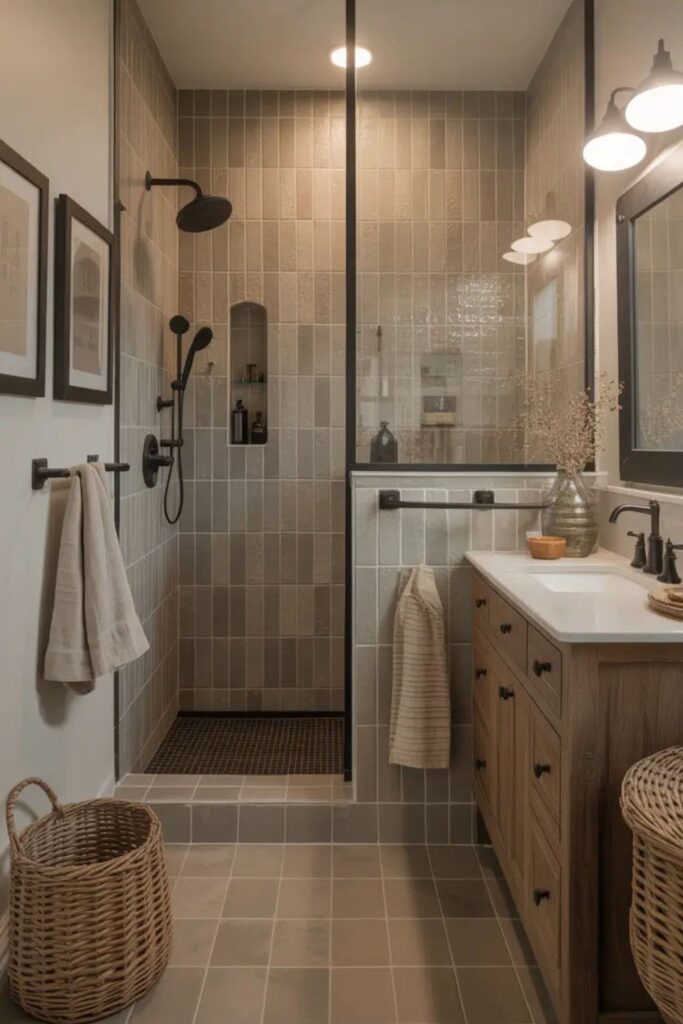
Shower floors play by different rules than the rest of the bathroom. Safety comes first here, since this is the wettest, most slippery part of the entire room. Style still matters, of course, but it has to work alongside practical features like drainage, grip, and waterproof grout.
The three approaches below balance both sides of that equation, giving you shower floor options that look good and perform well under constant water exposure.
Slip-Resistant Shower Tiles
Slip-resistant flooring is non-negotiable in a shower. Tile slip resistance is measured using something called a DCOF rating (Dynamic Coefficient of Friction). For wet areas like shower floors, look for a DCOF rating of 0.42 or higher, which indicates the surface provides adequate traction even when wet.
Matte and textured finishes naturally perform better here than polished, glossy ones. Many manufacturers now offer the same tile in both a glossy wall version and a matte, slip-resistant floor version, which lets you keep a consistent look while still meeting safety needs where it counts.
Small Mosaic Shower Floors
Small mosaic tiles remain one of the most practical choices for shower floors, and there’s a simple reason why. Smaller tiles mean more grout lines per square foot, and those grout lines create texture that improves grip underfoot. They also bend more easily to accommodate the slight slope needed for proper drainage toward the shower drain.
This is also where you can have a little fun. A shower niche lined with a different, more decorative mosaic can add a nice design contrast against a simpler mosaic floor, without compromising on slip safety where you’re actually standing.
Textured Shower Tiles
Textured tile, including options with ridges, subtle bumps, or a slightly raised surface, adds another layer of grip beyond what flat tile offers. These finishes have become especially popular as part of the broader move toward tactile, dimensional surfaces in bathroom design.
While textured tile shows up most often on walls as a design feature, textured floor options exist specifically for showers and wet areas. They offer a nice middle ground: more visual interest than plain matte tile, with better traction than a smooth, glossy finish.
Bathroom Floor Tile Layout Ideas
The exact same tile can look completely different depending on how you lay it. Layout affects how spacious a room feels, how much visual movement the floor has, and how much character the space carries overall. It’s an easy detail to overlook, but it’s one of the most impactful choices in the entire project.
These three layout approaches each create a distinctly different effect, even using identical tile.
Large Format Tiles
Large-format tiles, generally 24×24 inches or bigger, create a clean, expansive look with very few grout lines breaking up the surface. Fewer seams mean fewer places for grime to collect, which also makes large-format floors genuinely easier to clean and maintain over time.
This layout style has become the go-to choice for modern bathroom flooring, particularly in primary bathrooms and larger spaces where the scale of the tile can really shine. Some homeowners even carry the same large tile from the shower floor up onto the walls for a smooth, continuous look.
Diagonal Tile Layout
Laying square tile on a 45-degree angle, rather than straight, is a classic trick for making narrow or awkwardly shaped bathrooms feel bigger. The diagonal lines draw the eye corner to corner instead of straight across, which visually stretches the perceived width and length of the room.
This layout works with almost any square tile, so it’s an easy upgrade that doesn’t require choosing a completely different material or pattern. It’s one of the simplest, most budget-friendly ways to make a small bathroom feel noticeably more open.
Mixed Tile Patterns
Mixing two tile sizes, shapes, or finishes intentionally can add real depth to a bathroom floor. A common approach combines a large-format tile through the main floor with a smaller mosaic strip or border for visual definition, often near a shower threshold or as a transition point.
The trick with mixed patterns is keeping a unifying element, usually color or material, so the combination feels deliberate rather than random. Done well, this approach gives you a custom, designer feel without needing an entirely custom tile.
How to Choose the Best Bathroom Floor Tiles
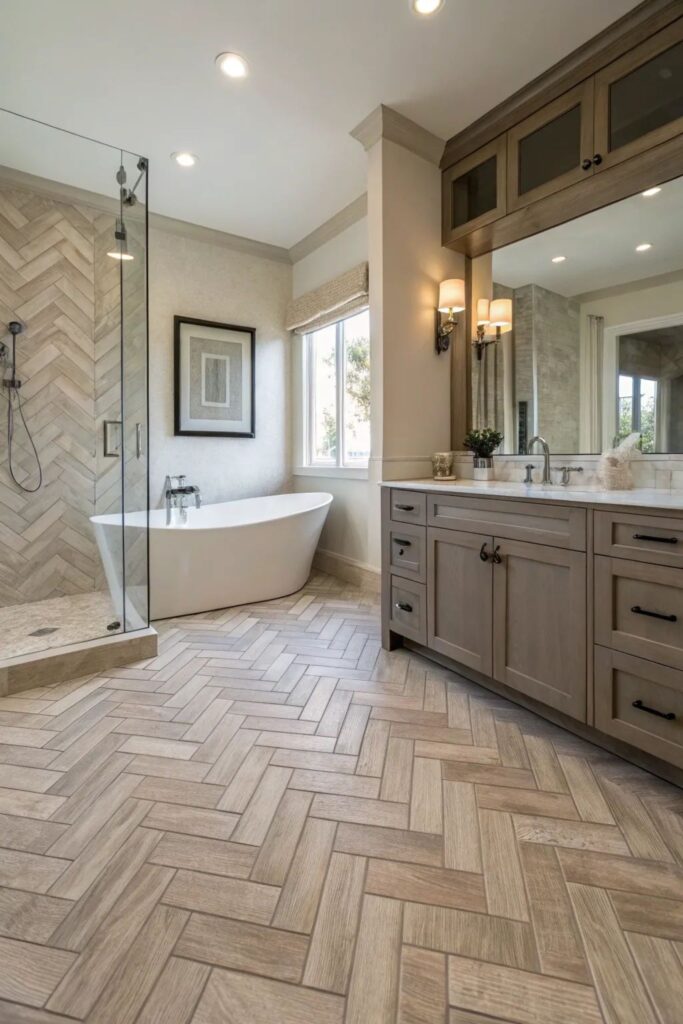
With so many styles, colors, and materials on the table, narrowing things down can feel overwhelming. A few practical factors can simplify the decision considerably. Tile size, finish, and slip resistance affect daily comfort and safety just as much as looks do, so they deserve real consideration before you commit to an order.
Tile Size Guide
As a general rule, smaller bathrooms tend to pair well with either very small tiles (like mosaics) or very large ones (like 24×24 inch tiles), while sizes in between can sometimes feel awkward in a tight footprint. Larger bathrooms have more flexibility and can comfortably handle nearly any tile size without looking off-balance.
Here’s a simple breakdown to guide your sizing decision:
| Bathroom Size | Recommended Tile Size | Why It Works |
| Tiny / Powder Room | Mosaic (under 2 inches) or 24″+ large format | Mosaic adds texture; large format reduces grout lines |
| Small (40-60 sq ft) | 12×12 to 18×18 inches | Balanced scale without overwhelming the space |
| Medium (60-100 sq ft) | 18×18 to 24×24 inches | Comfortable proportion, fewer seams |
| Large / Primary Bath (100+ sq ft) | 24×24 inches and up | Scale matches the room, creates a luxury feel |
Matte vs Gloss Finish
Matte finishes have become the preferred choice for bathroom floors, and there’s a practical reason behind the trend. Matte surfaces are generally less slippery than gloss, hide water spots and soap scum better, and give the room a grounded, contemporary feel.
Gloss finishes still have their place, though, particularly on walls and accent wall features. Glossy tile reflects more light, which can brighten a small or windowless bathroom. A common approach pairs a glossy wall tile with a matte floor tile in a similar color, getting brightness up top and safety underfoot.
Slip Resistance Ratings
DCOF (Dynamic Coefficient of Friction) ratings tell you how much traction a tile provides when wet. Higher numbers mean better grip. For reference, a rating of 0.42 or higher is generally recommended for wet areas like shower floors, while a slightly lower rating may be acceptable for a dry bathroom floor outside the shower.
Most tile retailers list DCOF ratings on product packaging or spec sheets, so it’s worth asking directly if you don’t see it listed. This single number can tell you more about real-world bathroom safety than any photo ever could.
Bathroom Floor Tile Ideas by Bathroom Size
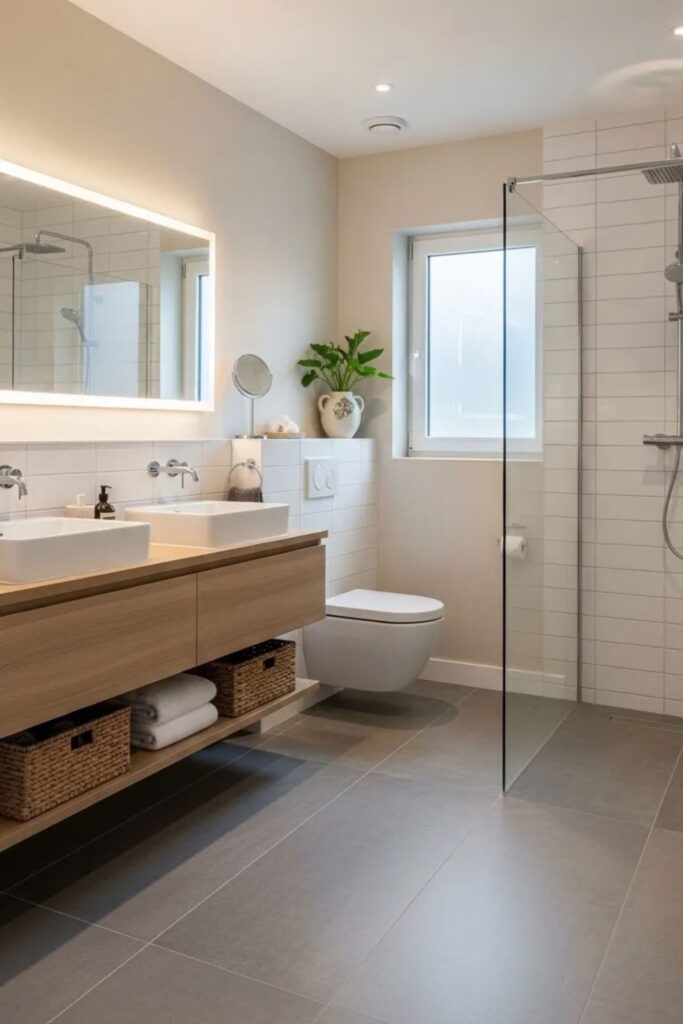
Not every bathroom serves the same purpose, and your tile choice should reflect that. A tiny powder room used mainly by guests has very different needs than a primary bathroom used daily by you and your family. Matching tile choice to room function helps you spend your budget where it actually matters most.
Tiny Bathrooms
For tiny bathrooms and half-baths, lighter colors and either very small or very large tile formats tend to perform best visually. Since these spaces see lighter, more occasional use, this is also a great opportunity to experiment with a bold pattern or color you might hesitate to use in a primary bathroom.
Guest Bathrooms
Guest bathrooms benefit from a balance between style and low-maintenance durability. Porcelain remains an excellent choice here since it handles occasional, inconsistent use well without demanding much upkeep between visits. This is also a good spot for a fun pattern, since the lighter use means a bold look stays fresh-looking longer.
Master Bathrooms
Primary, or master, bathrooms typically see the heaviest daily use, which makes durability essential. They’re also usually the largest bathroom in the home, giving you room to invest in large-format tiles or premium natural stone without the scale feeling overwhelming. This is the space where a marble or terrazzo floor tends to deliver the most visual and functional payoff for the investment.
Bathroom Tile Maintenance & Cleaning Tips
Even the most beautiful bathroom floor tile needs the right care to stay looking its best. The good news is that most modern tile options, especially porcelain and ceramic, require relatively little effort to keep clean. Natural stone asks for a bit more attention, but a simple routine keeps any tile floor performing well for years.
Easy-to-Clean Tiles
Porcelain and ceramic are about as low-maintenance as flooring gets. A simple sweep followed by a damp mop with a pH-neutral cleaner handles routine cleaning. Avoid harsh acidic or abrasive cleaners, since they can dull the surface finish over time, even on durable porcelain.
Natural stone needs a slightly different approach. Stick to cleaners specifically labeled safe for stone, since standard bathroom cleaners can sometimes etch or discolor the surface. Resealing every one to two years, depending on the stone type and how much traffic the floor gets, keeps it properly protected against moisture.
Prevent Mold & Grout Stains
Grout is usually the weak point in any tile floor’s defense against mold and staining. Sealing grout lines after installation, and resealing periodically afterward, creates a protective barrier that helps repel water and prevent staining. Waterproof grout or epoxy-based grout options also offer better built-in resistance compared to standard cement-based grout.
Good ventilation matters just as much as sealing. Running a bathroom fan during and after showers helps reduce the lingering moisture that mold needs to take hold. Wiping down the shower floor after use, even just a quick squeegee pass, makes a noticeable difference in keeping grout lines clean between deeper cleaning sessions.
Bathroom Floor Tile Installation Tips
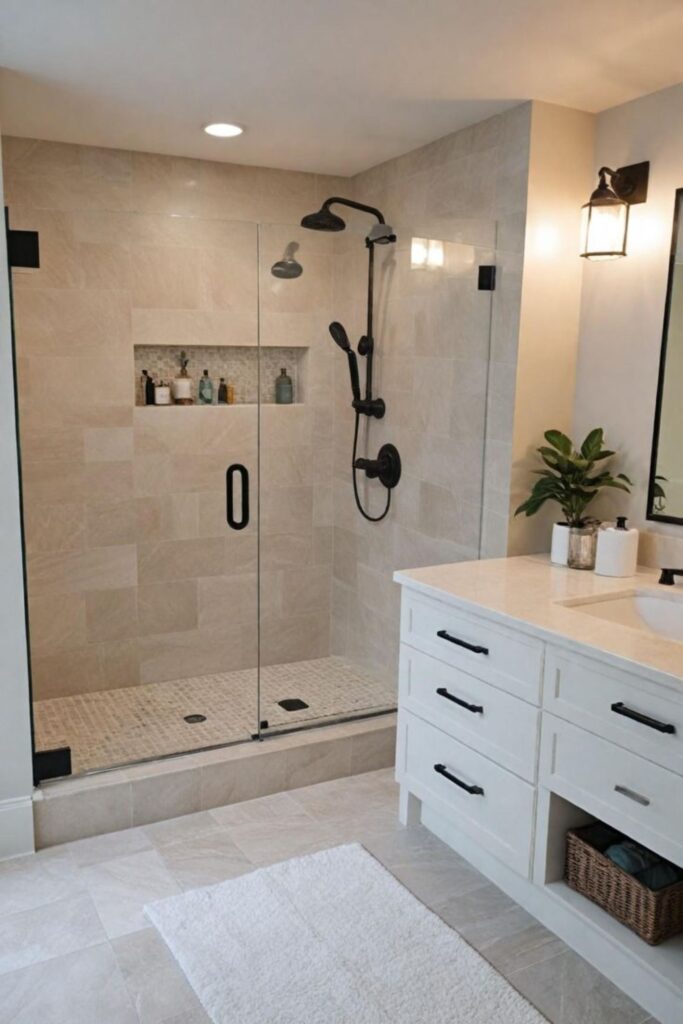
Even the best tile choice won’t look right if the installation isn’t handled properly. Getting this part right affects not just the initial appearance, but how long the floor actually lasts before tiles crack, shift, or lift.
DIY vs Professional Installation
Simple, square layouts using standard-size tile can sometimes be a reasonable DIY project for an experienced homeowner. However, bathroom floors come with extra challenges that make professional installation worth considering. Proper waterproofing, slope toward the drain, and precise cuts around toilets, drains, and corners all require real skill to get right.
A case in point: many tile failures don’t actually come from the tile itself. They come from improper substrate prep or missing waterproof membrane underneath. A professional installer knows how to address these hidden details, which is exactly the kind of mistake that costs far more to fix later than it would have cost to install correctly the first time.
How Many Tiles Do You Need?
Calculating tile quantity starts with your bathroom’s square footage. Multiply the length and width of the floor in feet to get your base square footage. Then add a waste factor, typically 10 percent for a simple layout and up to 15 to 20 percent for diagonal or pattern layouts that require more cuts.
For example, a 50-square-foot bathroom floor with a standard layout would need roughly 55 square feet of tile once you factor in a 10 percent buffer for cuts, breakage, and future repairs. It’s always smarter to order slightly more than you think you’ll need rather than running short mid-project and discovering your exact tile is no longer in stock.
FAQs
What is the best tile for bathroom floors?
Porcelain is generally considered the best all-around choice for bathroom floors. It resists water almost completely, holds up well to daily traffic, and comes in an enormous range of styles, including convincing wood and stone look-alikes. That said, “best” really depends on your specific bathroom. A low-traffic primary suite might be a great fit for natural stone, while a busy family bathroom usually benefits most from porcelain’s durability and easy upkeep.
What color floor tile makes a bathroom look bigger?
Lighter colors, particularly white, soft gray, and light beige, tend to make a bathroom feel larger because they reflect more light around the room. Tile size and layout matter just as much as color, though. Large-format tiles with minimal grout lines, or a diagonal layout, can make an even bigger visual difference than color alone, especially in a genuinely small footprint.
Are porcelain tiles better than ceramic?
Porcelain generally outperforms ceramic in durability and water resistance, since it’s fired at a higher temperature and has lower porosity. That said, ceramic is still a perfectly solid choice for many bathrooms, especially lighter-traffic spaces, and it typically costs less per square foot. For a primary bathroom used daily, porcelain is usually worth the extra investment. For a guest bathroom or powder room, ceramic often does the job just fine.
Conclusion
The right bathroom floor tile pulls everything else in the room together. Style sets the direction, material determines how the floor performs over time, and layout shapes how spacious or dramatic the space feels. None of these decisions exist in isolation. They all work as a team.
Before you commit to anything, bring home a few samples and look at them in your actual bathroom lighting, not just under the bright lights of a showroom. Lighting changes color more than most people expect. Once you’ve narrowed things down by size, budget, and how much maintenance you’re genuinely willing to do, the rest of the decision tends to fall into place naturally. Whichever of these 35 ideas you land on, you’re already ahead by thinking it through properly before you buy a single tile.