49+ Rustic Kitchen Ideas That Make Your Space Feel Warm, Lived In, and Actually Functional
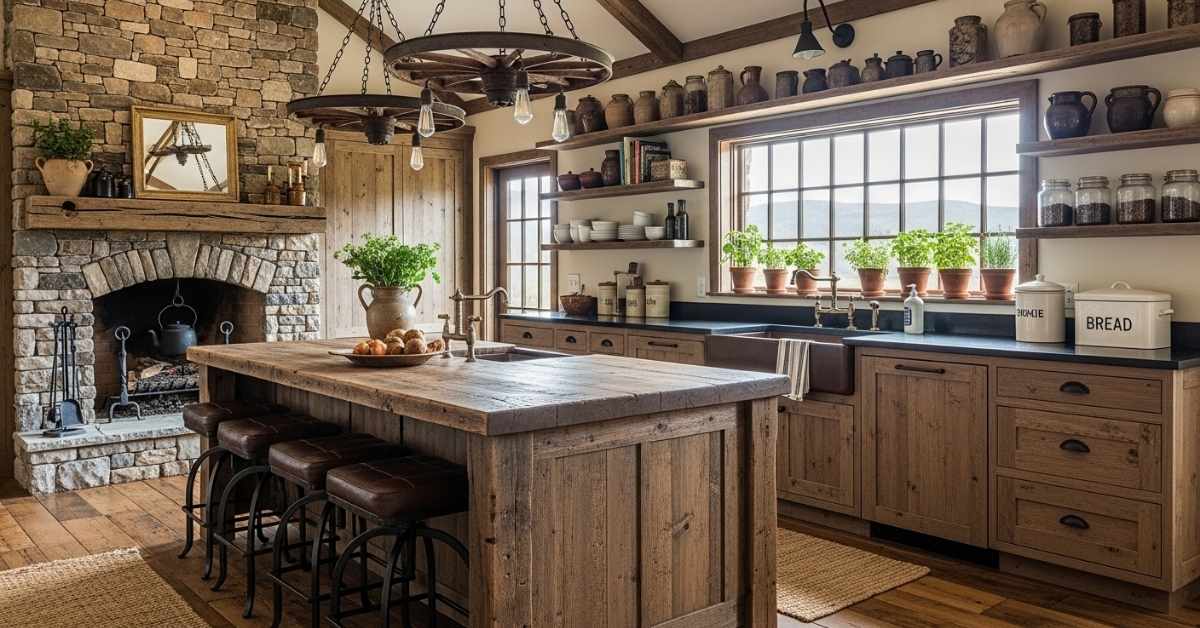
Rustic kitchens are having a serious moment in 2026but not the dusty, overly themed version you might be picturing. The shift is toward something more grounded: natural materials, warm tones, Rustic Kitchen Ideas and layouts that actually work for how people cook and live. Think exposed wood beams paired with clean lines, or open shelving that’s organized enough to look intentional.
If your kitchen feels cold, generic, or like it’s missing something you can’t quite name, rustic design tends to solve that. It adds texture, depth, and warmth without requiring a full renovation. Most of these ideas work whether you own your home or rent, and several are low cost enough to pull off over a weekend.
This list is especially useful if you’re working with a small or midsized kitchen that needs more personality, better storage, or just a layout that feels less buildergrade and more like yours.
Open Wood Shelving Instead of Upper Cabinets
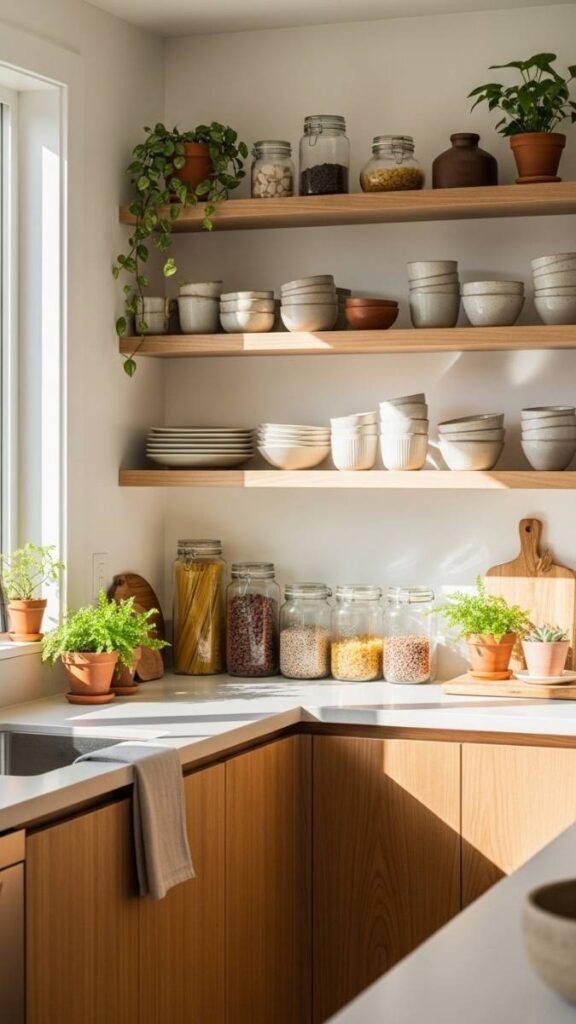
Upper cabinets can make a kitchen feel boxed in, especially in smaller spaces where the ceiling already feels low. Replacing one or two runs of upper cabinets with open wood shelving immediately opens up the wall and gives you a visual break.
Go for solid walnut, oak, or even pine with a matte sealant; the grain does the heavy lifting aesthetically. What makes this work isn’t just the look, it’s the breathing room it creates between the counter and ceiling.
This setup works best in kitchens with at least decent natural light, since the open shelves keep light moving through the space rather than blocking it. The tradeoff is real though you need to keep things edited. A few stacked dishes, some everyday glasses, and a couple of plants is the sweet spot.
A Farmhouse Sink as the Kitchen’s Focal Point
An apron front sink is one of those elements that changes the entire feel of a kitchen without requiring you to touch the layout. It sits proud of the cabinetry, draws the eye, and signals a certain warmth and intentionality that standard undermount sinks just don’t have.
White fireclay is the classic choice: it holds up well, cleans easily, and works against both dark and light countertops.
Position it under a window if your layout allows it; the combination of natural light hitting the sink basin and a view outside makes daily tasks like washing up feel less like a chore. This is one I’d actually recommend trying first if you’re doing a partial kitchen refresh; the visual return is high relative to the installation effort.
Read More About: 48+ Rustic Bedroom Ideas That Make Any Space Feel Warm, Grounded, and Effortlessly Lived In
Butcher Block Countertops for Warmth and Functionality
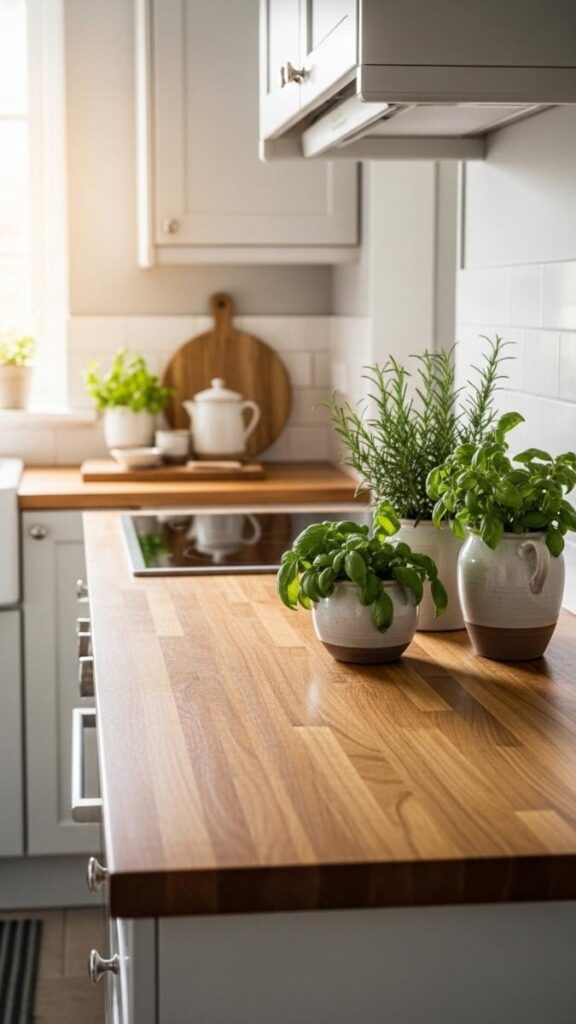
Butcher block countertops solve two problems at once: they add the warmth that cold stone or laminate surfaces lack, and they give you a functional cutting surface that doesn’t require a separate board.
The key is placementan island or peninsula tends to be the best spot, since it gets the visual attention it deserves without the maintenance challenges that come with using wood near a sink.
Oak and maple are the most durable choices; walnut is beautiful but softer. I’ve noticed this style tends to look best when it’s contrasted with painted cabinetrywhite, navy, or even sage greenrather than matched with other wood tones, which can feel flat. Sand and recoil once or twice a year and it’ll last decades.
Exposed Brick or a BrickEffect Backsplash
Real exposed brick has an irreplaceable texture, the variation in tone, the slight irregularity in each brick, the way it absorbs warm light.
If your kitchen has original brick behind a plaster wall, it’s worth exploring whether it can be uncovered. If not, thin brick veneer panels are a solid alternative that can be installed without structural changes, which makes them renter accessible.
Frame the brick around the stove or behind the rangeit’s a natural focal point and the heat resistance of brick makes practical sense there too. The visual effect is depth; even in a shallow galley kitchen, a brick feature wall adds a layer that makes the space feel less flat.
Vintage or Antique Hardware on Modern Cabinetry
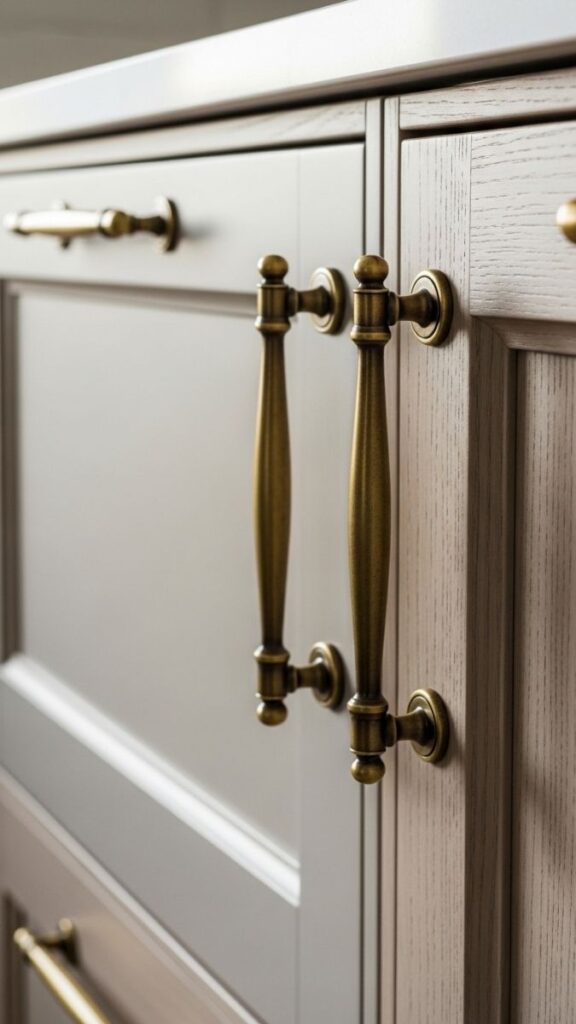
Cabinetry hardware is probably the most underestimated detail in kitchen design. Swapping out standard brushed nickel pulls for aged brass, oilrubbed bronze, or handforged iron can shift the entire personality of a kitchen without touching anything structural.
Bin pulls and cup pulls have a distinctly oldworld feel that works well in rustic setups; they also have better grip than knobs, which is genuinely useful.
On shakerstyle cabinets specifically, antique brass hardware bridges the gap between classic and rustic in a way that feels considered rather than costumey. This is a halfday project with a dramatic visual payoff.
A Statement Range Hood in Wood or Plaster
The range hood is one of the most visible vertical elements in a kitchen, and in most homes it’s also one of the most generic. A custom hoodwhether clad in reclaimed wood, shiplap, or smooth plaster turns that dead zone above the stove into the room’s main event.
Wooden hoods work especially well in kitchens with other natural materials; they tie the ceiling line down to counter level in a way that makes the room feel more cohesive. Plaster hoods skew slightly more modern rustic and are a good choice if the rest of the kitchen is cleaner and more pared back.
Either version adds architectural weight to what is usually a blank, builder grade metal box.
Read More About: 47+ Rustic Wedding Decor Ideas That Feel Warm, Intentional, and Totally Pinterest Worthy
Shiplap or Tong ueand Groove Walls for Texture
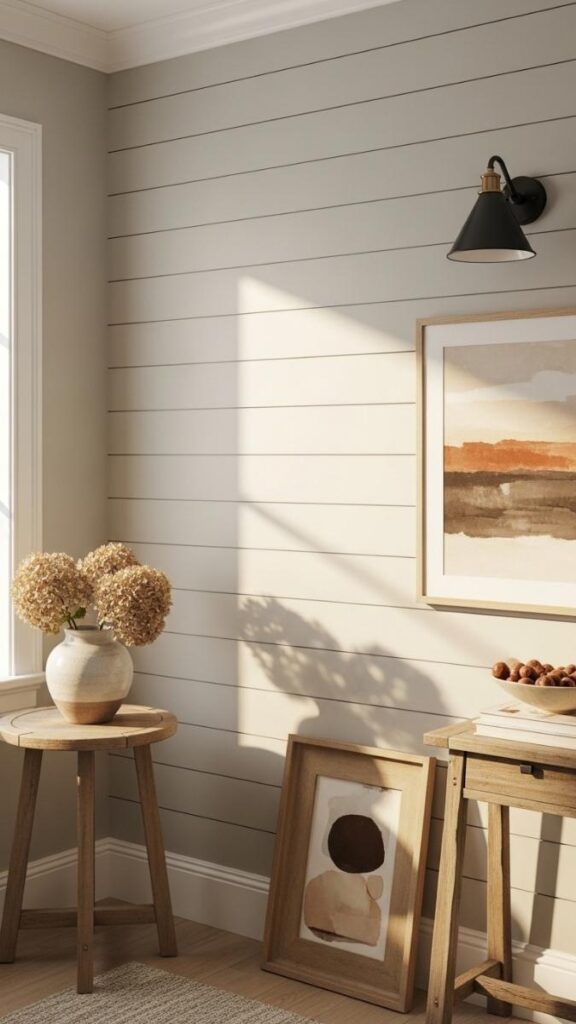
Horizontal shiplap installed on one walltypically behind open shelves or along a breakfast nook adds a layer of texture that paint alone can’t achieve. The shadow lines between each board create visual interest that changes subtly with the light throughout the day.
Painted white or offwhite, shiplap reads as clean and airy; left natural or in a warm grey, it reads as more overtly rustic. This works particularly well in kitchens that are otherwise quite minimal, since the texture does the job of pattern without requiring busy tile or wallpaper.
It’s also one of the more renter-friendly options if you’re using removable panels or peel-and-stick versions.
Open Pot Rack Over the Island or Stove
If you cook regularly, pots and pans are probably taking up more cabinet space than anything else. A ceiling-mounted pot rack over the island or directly above the stove solves the storage problem while adding a layer of texture and warmth that’s inherently rustic.
Wrought iron or black metal frames work well with most kitchen styles; the hanging copper or stainless pots themselves bring warmth through material contrast.
The functional logic here is solid: the things you reach for most often are immediately accessible, and your lower cabinets open up for less-used items. This setup works best in kitchens with at least 8foot ceilings lower than that and it starts to feel obstructive.
A Reclaimed Wood Kitchen Island
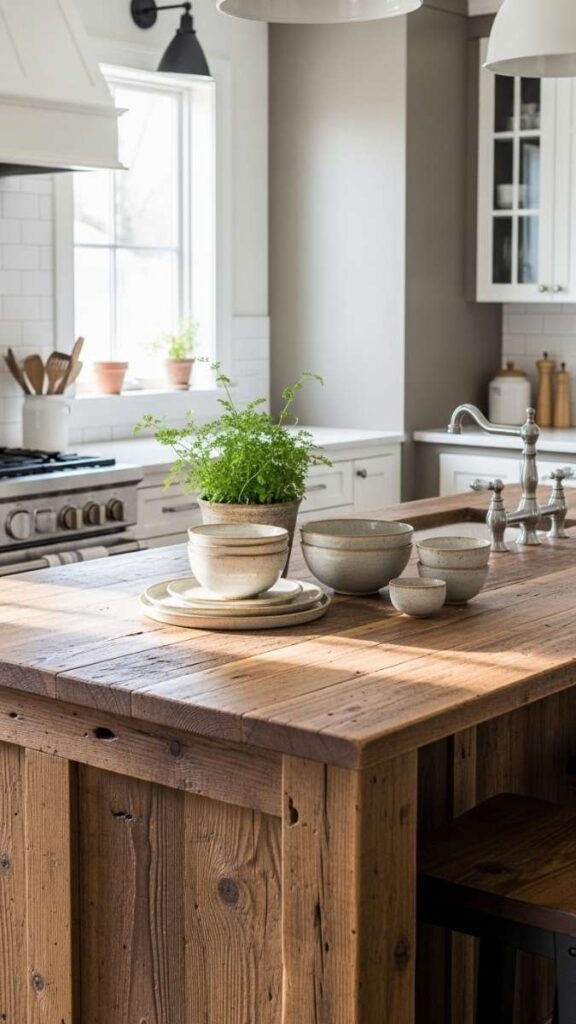
Reclaimed wood brings something new; wood simply can’t fake history. The knots, nail holes, variation in color, and rougher grain are exactly what make a reclaimed wood island feel grounded and real rather than showroomperfect.
This works as a standalone island with a butcher block or thick plank top, or as a piece of antique furniture, a farm table, a dresser, an old workbench repurposed for kitchen use.
The contrast between reclaimed wood and surrounding painted cabinetry is where the visual interest lives. For smaller kitchens, a rolling reclaimed wood island keeps things flexible without the commitment of a fixed piece.
Woven and Rattan Accents for Softness
Woven materialsrattan, seagrass, jute, canesoften the hardness of countertops, tile, and cabinetry in a way that feels genuinely organic.
A rattan pendant light over the island or table is probably the easiest entry point; it’s warm, diffused, and works with almost any neutral kitchen palette. Woven storage baskets on open shelves solve the problem of visible clutter while adding texture; they’re practical and decorative at the same time.
Honestly, these kinds of materials are doing a lot of heavy lifting in kitchens right now because they bring the organic warmth of rustic design without requiring any structural changes.
Stone or Concrete Countertops for an Earthy Feel
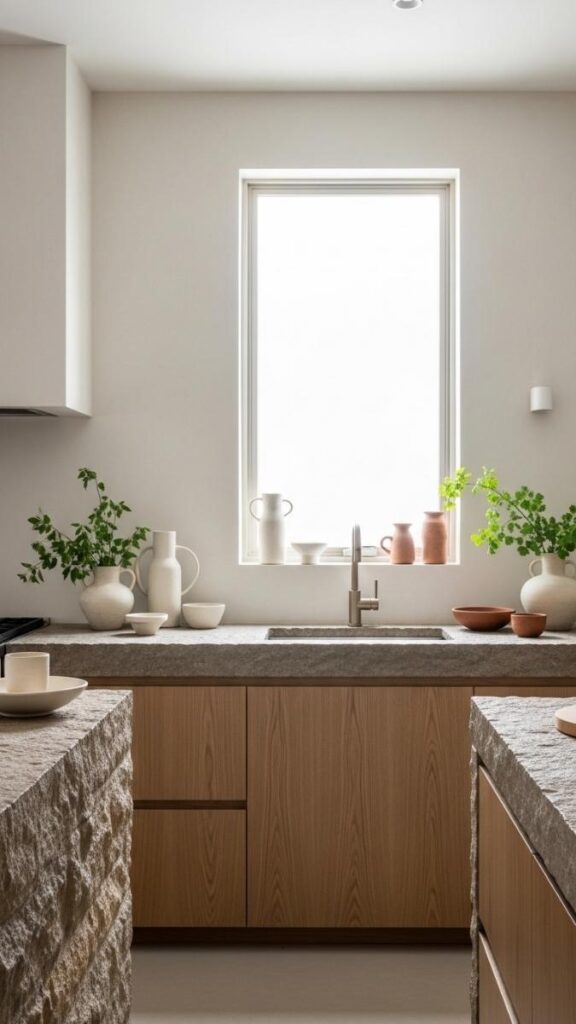
Polished granite and quartz read as modern; honed limestone, soapstone, or concrete reads as something older and more elemental.
The matte, slightly textured surface of these materials has a quieter presence than highgloss stone; they don’t compete with other elements in the room. Soapstone is particularly practical; it’s nonporous, heatresistant, and develops a natural patina over time that adds character rather than showing wear.
Concrete countertops can be cast in place or installed as premade slabs, and they pair especially well with industrial or farmhouse-leaning rustic kitchens. The slightly imperfect surface of both materials is part of the point.
Vintage Open Shelving With Plate Grooves
Plate grooves, the small horizontal channel cut into a shelf surface that holds dishes upright, are a detail you see in old farmhouses and rarely in modern kitchens, which is exactly why they feel distinctive now.
A shelf or two with this detail gives you a display spot for ceramics, platters, and everyday dishes that keeps them accessible and organized without needing a full china cabinet. In a rustic kitchen, this kind of functional display is better than purely decorative shelving because everything on the shelf has a use.
This setup works well in a dining nook or along a wall adjacent to the main cooking zone.
Edison Bulbs and Exposed Filament Lighting
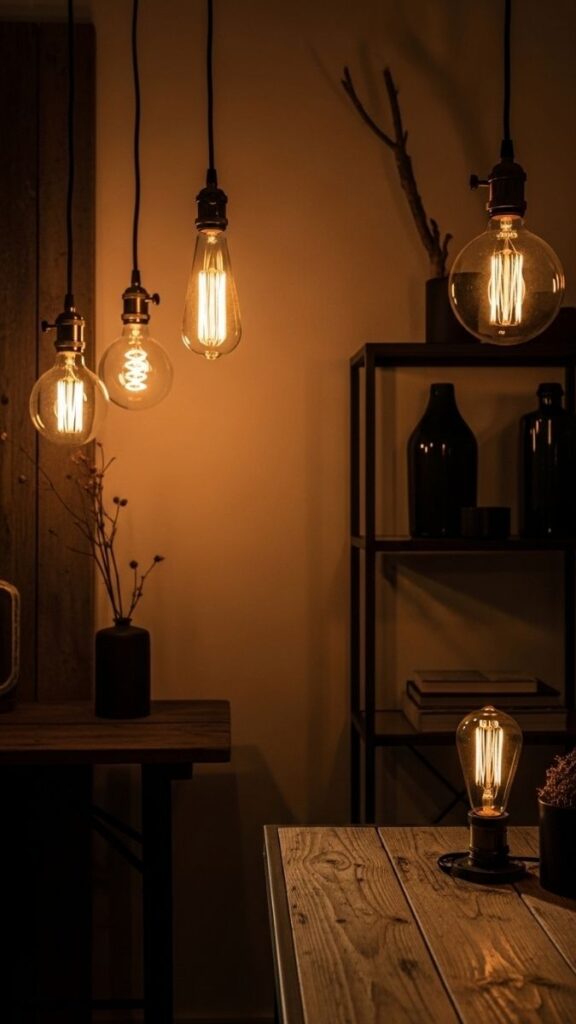
The quality of light in a kitchen matters more than most people realize, and the shift from cool white LED to warmtoned Edisonstyle bulbs changes the atmosphere entirely.
Exposed filament pendants over an island add a slightly industrial, slightly vintage feel that works well in rustic spaces; the bulb itself becomes part of the decor.
Cluster pendant arrangements work well in kitchens with higher ceilings; single pendants spaced evenly are better for lower ceiling spaces.
Pair these with dimmable switches so the kitchen can shift from bright and functional during meal prep to warm and ambient during dinner. In my experience, this lighting change alone does more for a kitchen’s mood than almost any other single update.
Read More About: 46+ Vintage Beach House Decor Ideas That Make Coastal Living Feel Effortlessly Lived In
A BuiltIn Bench Nook With Plank Wood Detailing
A built-in bench in a kitchen corner or under a window converts otherwise awkward square footage into one of the most used spots in the home.
The structure itself typically with a plank top and simple framing is inherently rustic, especially when built from pine or oak. Pair it with a farmhouse-style table and the nook becomes a natural gathering spot for meals, homework, and morning coffee. Storage drawers or lifttop bench seating under the seat adds function in smaller kitchens where every square foot matters.
This kind of builtin element also adds perceived permanence and character that freestanding furniture doesn’t always achieve.
Terracotta Tile Floors for Warmth and History
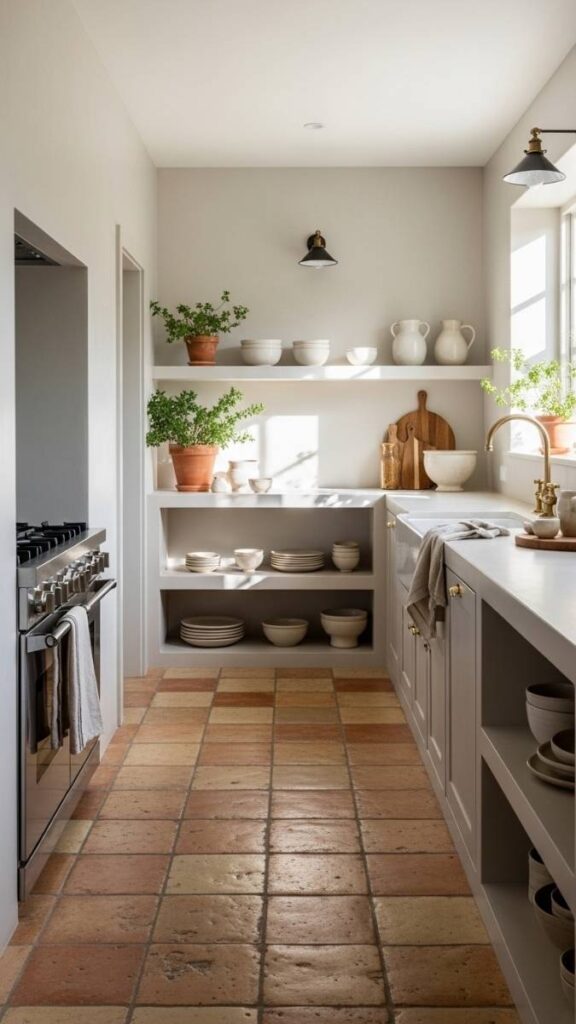
Terracotta floors have a warm, earthy quality that ceramic and porcelain tile can approximate but rarely match. The slight variation in tone across individual tiles no two are exactly the same color creates a floor that feels genuinely old and grounded.
Hexagonal terracotta tiles are particularly popular right now and work in kitchens where a more Moroccan or Mediterranean rustic direction is intentional. Square terracotta with dark grout reads as more traditional farmhouse.
Both options work well with white cabinetry, wood countertops, and any of the warmer wall tones that rustic kitchens tend to favor. The maintenance is straightforward with proper sealingterracotta is porous and needs an initial seal to be practical in a kitchen environment.
Hanging Herb Garden by the Window
A small herb garden near the kitchen window addresses several problems at once: it adds living greenery, it softens the often hard edges of countertop and cabinetry, and it’s genuinely functional for cooking.
Terracotta pots in a row on the windowsill is the simplest version, low cost, easy to rearrange, and visually warm. A hanging version with a simple wooden dowel and cotton twine is slightly more involved but keeps the counter clear.
Basil, rosemary, thyme, and mint are the most practical choices for indoor kitchen herbs. The organic, slightly imperfect growth of live plants is exactly the kind of softness that rustic kitchens benefit from most.
Dark Painted Cabinetry With Natural Wood Open Shelving
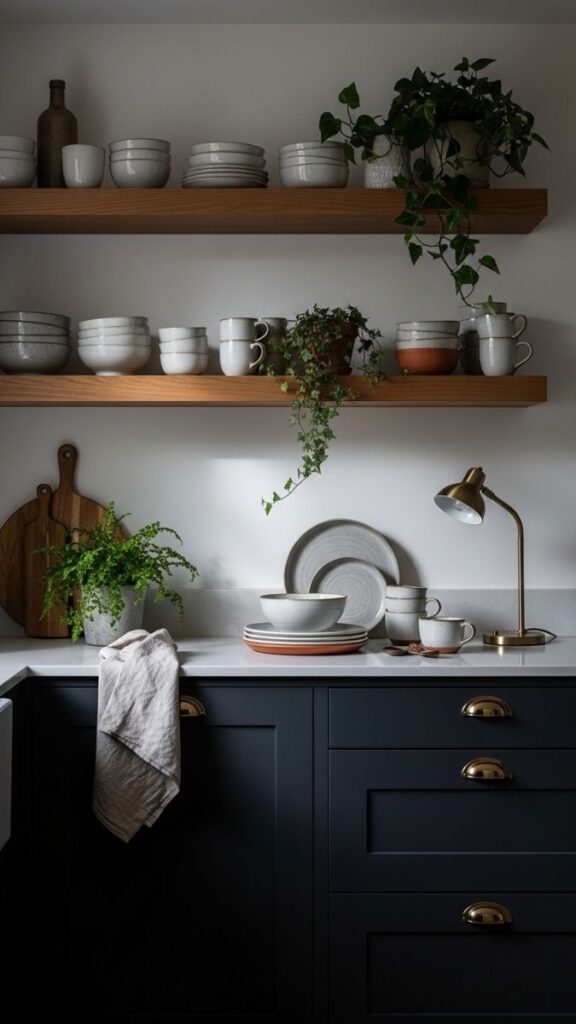
Dark lower cabinetry, forest green, charcoal, or deep olive paired with natural wood open shelving above is one of the more versatile and modern rustic combinations available right now. The dark cabinets ground the kitchen visually; the lighter wood shelving keeps the upper portion of the room from feeling heavy.
This contrast in tone and material is what gives the kitchen a layered, intentional look without requiring an elaborate design strategy.
The format works especially well in L-shaped and galley kitchens where the upper and lower sections are visually distinct. Brass or aged bronze hardware pulls the two zones together.
A Freestanding Pantry or Hutch for Storage
Not every kitchen has a walk-in pantry, and built-in cabinetry isn’t always an option especially for renters. A freestanding pantry or vintage hutch solves the storage problem while adding a piece of furniture with actual character.
Old hutches from estate sales or thrift stores often have glassfront upper doors, which display dry goods, ceramics, or glassware without the need for additional shelving.
The furniture itselfparticularly older pieces in oak, pine, or painted wood tends to have the kind of patina and proportions that rustic kitchens are built around. This is a renter-friendly, budget-conscious option that adds both storage and visual warmth.
Wainscoting or Boar dand Batten on Kitchen Walls
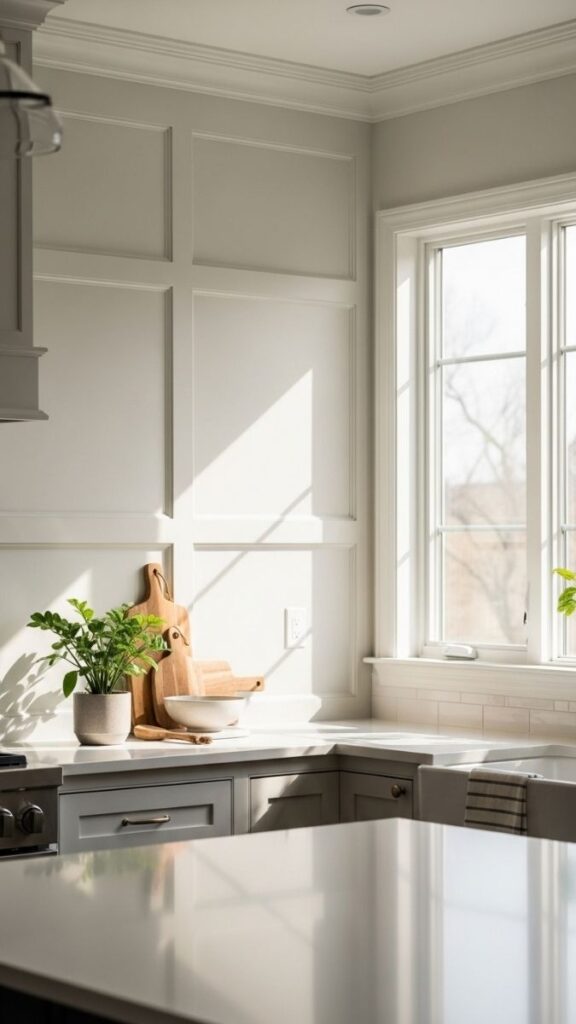
Wainscoting and board and batten paneling are wall treatments that add architectural structure below counter height, a zone that’s often ignored entirely.
In a kitchen, this lower wall section gets dirty, scuffed, and is hard to keep clean with flat paint; paneling is actually more practical in addition to being more decorative.
Painted white, board and batten reads as farmhouse clean; in a warm greige or sage, it shifts toward modern rustic. The vertical lines of the battens also help a room with low or average ceilings feel slightly taller by drawing the eye upward.
This is a good project for a kitchen that has decent bones but feels unfinished or generic.
Stone Tile or Slate Backsplash Behind the Range
Stone tileslate, travertine, or stacked ledger stone as a backsplash behind the stove brings a level of texture that ceramic subway tile can’t replicate.
The natural variation in surface and color creates a focal point that feels geological rather than designed, which is exactly the quality rustic kitchens benefit from.
Stacked ledger stone panels are the most dimensional option; slate tiles in a running bond pattern are slightly more refined and easier to install. Either works best when the surrounding kitchen is relatively calm in tonenatural stone is a strong visual element and doesn’t need much competition.
Copper Accents in Fixtures and Cookware
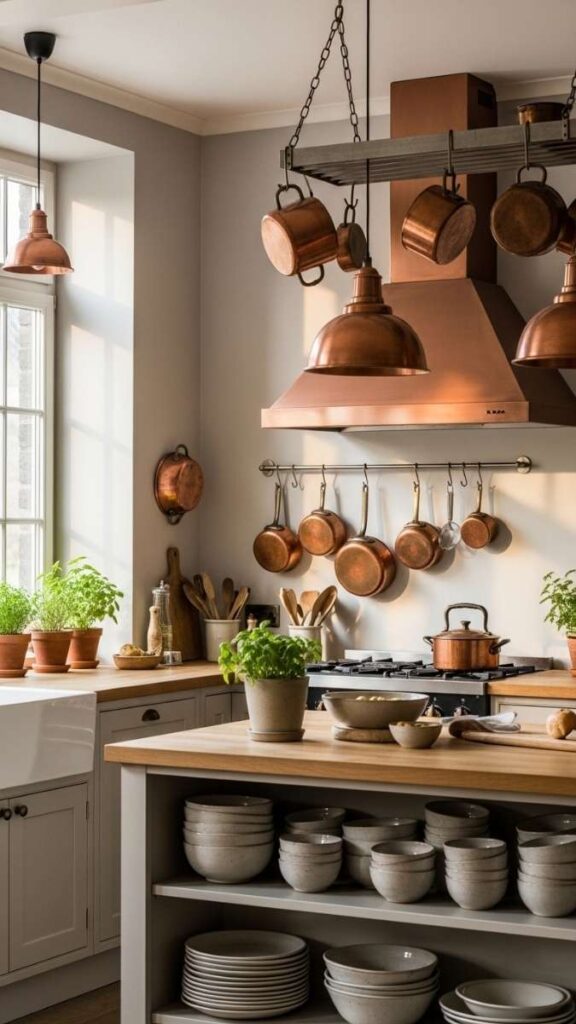
Copper is having a steady resurgence across kitchen design in 2026, and it works particularly well in rustic contexts because it ages naturally darkening and developing variation over time rather than staying uniformly shiny.
A copper faucet, copper pot rack, or a few copper vessels displayed on open shelves bring a warmth that neither brushed nickel nor matte black achieves. The material is warmtoned and reflective in a soft way, which picks up ambient lighting well.
Copper also pairs naturally with both wood and stone, making it one of the most versatile accent materials in a rustic kitchen palette. Keep other metals minimal when using copper; it reads best as the dominant metal in the space.
A Chalkboard Wall or Panel for Function and Character
A chalkboard surface in the kitchen solves a specific organizational problem: a place for grocery lists, meal plans, and notes in a way that doubles as a visual element.
A full chalkboard wall is the most dramatic version; a framed chalkboard panel hung on a wall or inside a cabinet door is more practical for smaller kitchens.
Either version fits naturally into rustic kitchen aesthetics since chalkboard surfaces have a strong visual connection to older schoolrooms, farmhouses, and general stores.
The matte black surface also acts as a visual anchor similar to how dark paint or a black hood grounds a kitchen without being permanent or expensive.
Linen and Cotton Textiles for Softness
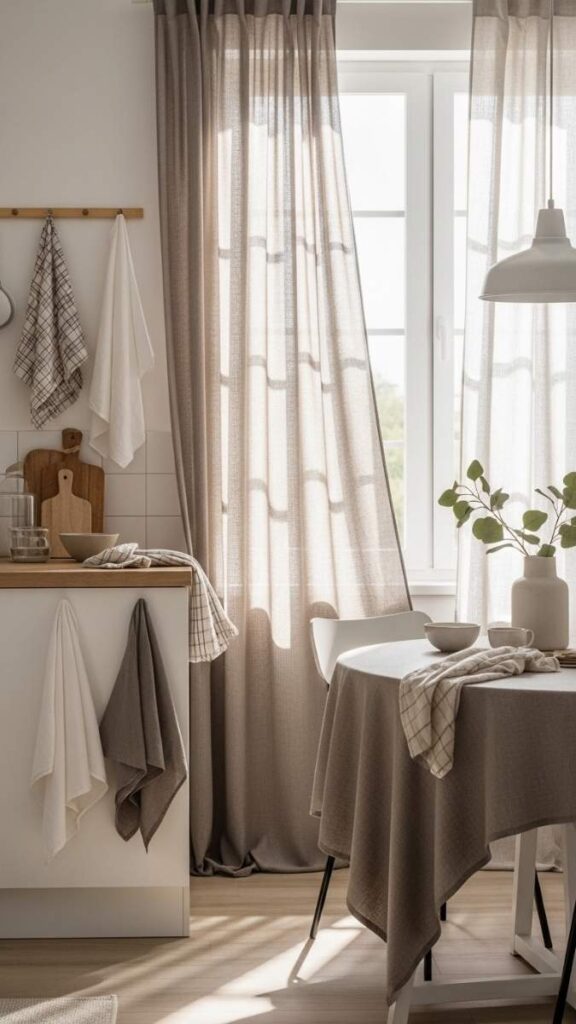
Soft goods are often an afterthought in kitchens, but in a rustic space, they’re what bridges the gap between hard materials, tile, stone, wood and something that actually feels livable.
A linen curtain in the window (instead of a blind), cotton dish towels in natural or striped tones, and a jute or cotton rag rug in front of the sink all add texture at eye level and underfoot without requiring any installation.
These elements are also easy to swap seasonally, which keeps the kitchen feeling current without any structural changes. This is the detail layer that makes the difference between a kitchen that looks rustic in photos and one that actually feels warm to be in.
A Large Farmhouse Table Instead of a Kitchen Island
Not every kitchen needs a purpose built island. In a kitchen with enough floor space, a solid farmhouse table with seating does everything an island doesprep surface, casual dining, workspace with the added benefit of flexibility and character.
Old farm tables in pine or oak have the kind of wear and proportion that new islands rarely replicate. The table can be moved, extended, or replaced without construction, which matters for renters and anyone who might want to rethink the layout later.
A single pendant light overhead defines the table’s role in the room and makes the space feel intentionally designed.
Raw or Limewashed Plaster Walls
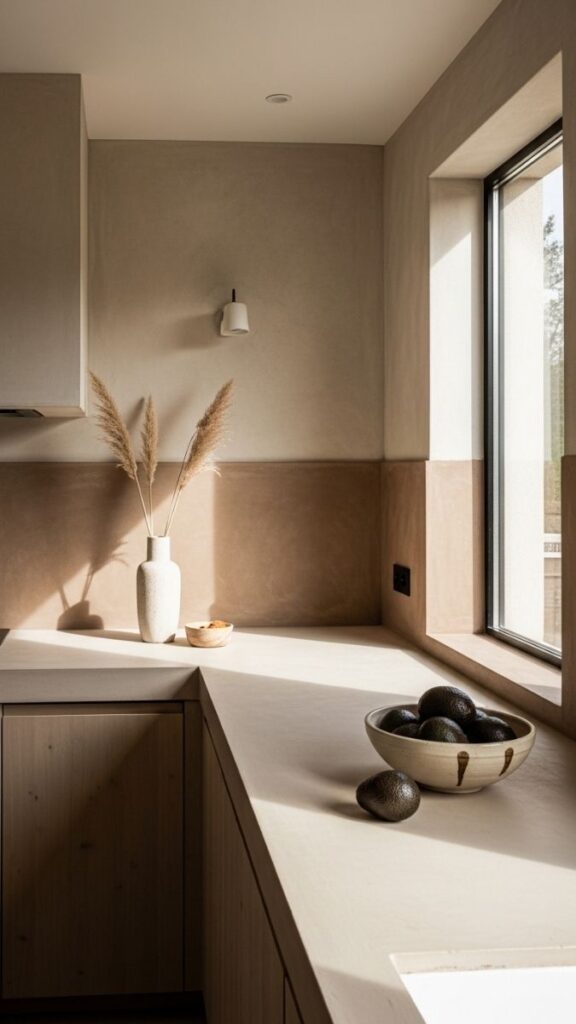
Limewash paint and raw plaster finishes are gaining significant traction in 2026 as an alternative to flat or eggshell paint and in a rustic kitchen, the effect is exactly right.
The finish is matte and slightly uneven, which catches light differently throughout the day and creates a wall surface that feels aged without looking dated.
Applied over existing painted walls (limewash) or as a skim coat (plaster), this treatment is one of the more affordable ways to make a kitchen feel architecturally distinctive. It pairs especially well with natural wood cabinetry and stone surfaces, where the organic, handmade quality of all three materials reinforces each other.
UnderCabinet Warm Strip Lighting
Undercabinet lighting is one of the most practical lighting upgrades in any kitchen; it eliminates the shadow that overhead lights cast when you’re working at the counter.
In a rustic kitchen specifically, warmtoned LED strips (2700K3000K color temperature) bring out the grain in wood surfaces, the depth in stone backsplash, and the texture in tile in a way that cool overhead lighting flattens.
The installation is low cost and, in many cases, doesn’t require an electrician if you use plugin versions. This is a setup that improves both the function and the atmosphere of the kitchen simultaneously, which makes it one of the most efficient upgrades on this list.
A Windowed Ceiling or Skylight Over the Cooking Zone
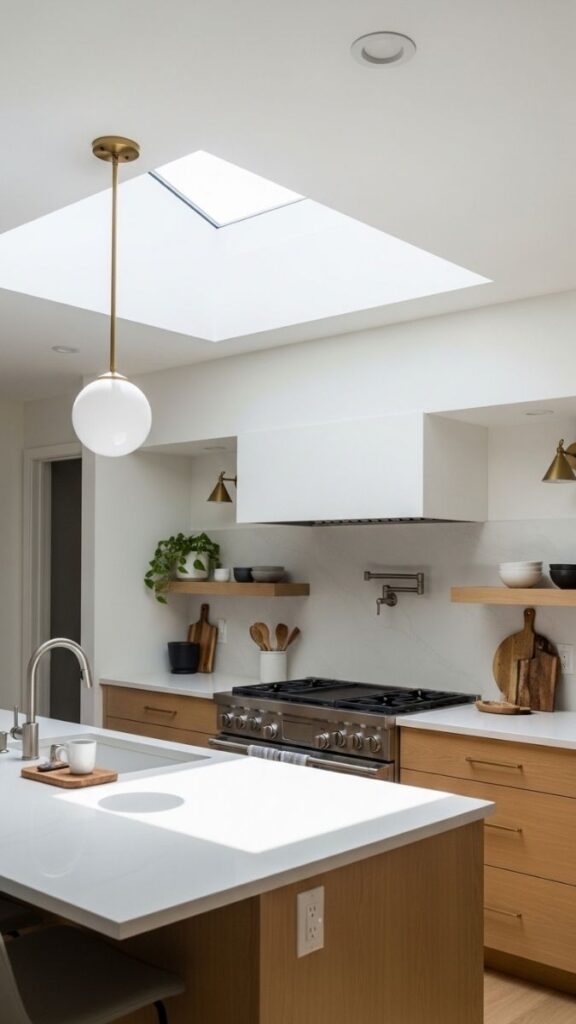
Natural light changes how every material in a kitchen lookswood warms up, stone shows its depth, and the whole space feels less enclosed.
A skylight directly over the cooking or prep zone is obviously not a weekend project, but it’s worth mentioning as a longer-term renovation consideration for kitchens that feel consistently dark despite good artificial lighting.
For kitchens that can’t accommodate a skylight, strategically placed mirrors, particularly a large mirror on a wall opposite a window can meaningfully increase the amount of natural light in the space. This is especially useful in galley kitchens or those in older homes where the window situation is fixed.
What Actually Makes Rustic Kitchen Ideas Work in Real Homes
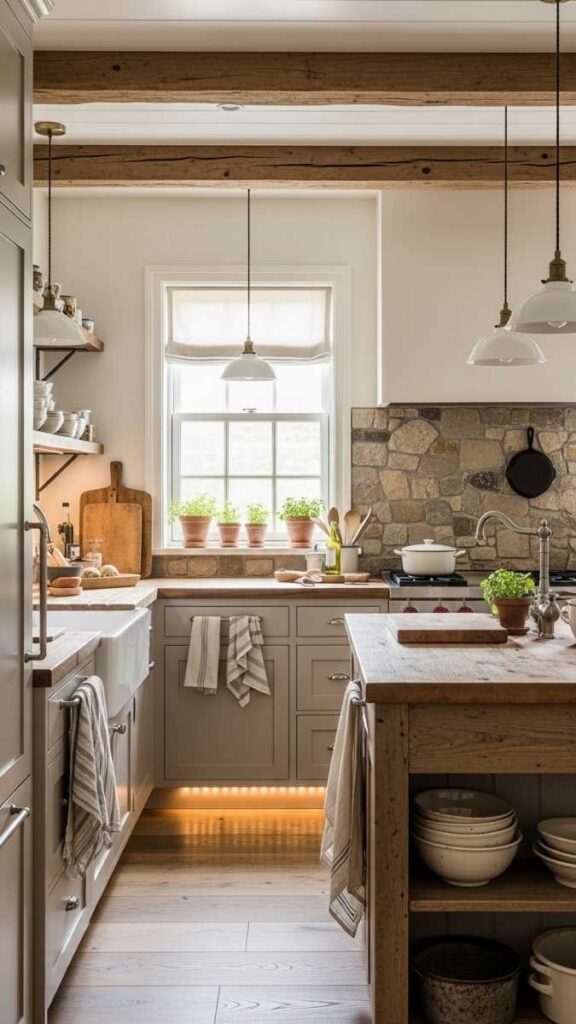
There’s a gap between rustic kitchens that look good in photos and ones that actually function well daytoday. The difference usually comes down to three things: material honesty, restraint, and lighting.
Material honesty means choosing real or closetoreal materialsactual wood grain, natural stone, handmade ceramic rather than printed vinyl or laminate versions of those things. The difference is most visible in person, and it’s what gives rustic kitchens their sense of permanence and warmth.
Restraint means not doing everything at once. A kitchen with open shelving, exposed brick, a stone floor, shiplap walls, and a reclaimed wood island risks feeling like a theme park rather than a home. The strongest rustic kitchens pick two or three signature elements and let the rest be relatively quiet.
Lighting is the factor most people underestimate. Rustic materialswood, stone, terracotta, copper are warmtoned and need warm light to look their best. Cool or overly bright lighting flattens these materials and makes them look cheap. Getting the color temperature right (2700K–3000K) and layering sources (overhead, undercabinet, task) makes every other element in the kitchen work harder.
Rustic Kitchen Ideas Setup Comparison Guide
| Idea | Best For | Space Type | Problem Solved | Difficulty |
| Open wood shelving | Renters, small kitchens | Any size | Boxedin feeling | Easy |
| Farmhouse sink | Partial renovations | Medium large | Generic look | Moderate |
| Butcher block countertop | Budget updates | Any size | Cold, lifeless surfaces | Easy–Moderate |
| Reclaimed wood island | Statement pieces | Medium large | Lack of character | Moderate |
| Stone/slate backsplash | Feature zones | Any size | Flat, uninteresting walls | Moderate |
| Shiplap accent wall | Renters, minimal budgets | Small medium | Bland, empty walls | Easy–Moderate |
| Terracotta tile floor | Full renovations | Any size | Cold, impersonal flooring | Hard |
| Limewash plaster walls | Budget makeovers | Any size | Flat, generic walls | Easy |
| Undercabinet lighting | Functional upgrades | Any size | Poor task lighting | Easy |
| Freestanding pantry hutch | Renters, storage issues | Small medium | Limited storage | Easy |
How to Design a Rustic Kitchen Without It Feeling Overdone
The most common mistake in rustic kitchen design is layering too many rustic elements into one space. When everything is reclaimed, exposed, or distressed, nothing stands out and the kitchen starts to feel like it’s trying too hard.
Start with one anchor material.
Choose one element that defines the kitchen’s rustic direction: a wood island, a stone backsplash, terracotta floors, or exposed brick. Everything else should support that choice rather than compete with it.
Balance texture with calm surfaces.
If you have a heavily textured element (rough stone, thick wood planks, shiplap), balance it with something smooth and quiet painted cabinetry, simple white tile, flat plaster walls. The contrast is what makes the textured element register as a design choice rather than visual chaos.
Let the layout breathe.
Rustic kitchens that feel cramped usually have too much going on at counter level. Keep countertops relatively clearespecially if you have open shelvingand make sure there’s a clear movement path through the kitchen. The warmth of rustic design works best when the space itself feels open enough to move through comfortably.
Don’t neglect the lighting plan.
Rustic kitchens need layered, warm lighting to come alive. Overhead lighting alone won’t do it. Add undercabinet lights, a statement pendant over the island or table, and at least one warm accent source, a plugin sconce or a table lamp on a counter shelf to give the kitchen range across different times of day.
FAQ’s
What makes a kitchen look rustic without a full renovation?
The fastest way to bring rustic character into a kitchen without major work is to swap the hardware, add open wood shelving in place of one or two upper cabinets, and change the lighting to warmtoned bulbs. These three changes cost relatively little and address the most visible elements of the kitchen.
What colors work best in a rustic kitchen?
Warm neutral cream, warm white, soft greige, sage green, and terracotta tones work best. These shades support natural wood and stone materials rather than competing with them. Avoid cool greys and bright whites, which can flatten rustic textures and make the space feel clinical.
Is open shelving practical in a rustic kitchen?
Open shelving works well if you keep it edited. Limit each shelf to items you use regularly, and leave some visual breathing room between objects. If you’re prone to clutter, mixing open shelving with closed cabinets gives you the aesthetic benefit without the organizational pressure.
Rustic vs. farmhouse kitchen: what’s the difference?
Farmhouse kitchens tend to be cleaner and more structured cabinets, apron sinks, subway tile with rustic as one possible layer within that style. Rustic kitchens are broader and can include industrial, Mediterranean, or cottage influences. Farmhouse is a subset; rustic is the wider category.
What flooring works best in a rustic kitchen?
Terracotta tile, wide plank hardwood, and slate or flagstone are the most authentic choices. Of these, wideplank hardwood is the most practical for everyday use; it’s warm, durable, and works with almost any rustic direction. Terracotta is beautiful but requires sealing and more maintenance.
How do I add rustic character to a rental kitchen?
Focus on removable and freestanding elements a butcher block cart, a freestanding pantry hutch, open shelves on brackets with removable anchors, plugin undercabinet lighting, linen curtains, and swapped hardware (keeping the originals to reinstall when you leave). These changes are reversible and effective.
What lighting fixtures suit a rustic kitchen?
Exposed filament pendants, lanternstyle fixtures, wrought iron chandeliers, and rattan or wicker shades all work well. Avoid recessed lighting as the only source it’s too flat and directional. A pendant over the island plus warm undercabinet lighting is a solid baseline for any rustic kitchen.
Conclusion
A rustic kitchen doesn’t require a major renovation or a big budget; it requires a clear direction and a handful of well-chosen elements. Natural materials, warm lighting, and a layout that prioritizes movement and usability will do more for the space than any number of decorative add-ons. The ideas in this list range from weekend-level swaps to longer term projects, so there’s a starting point regardless of where you are in the process.
Pick one or two ideas that fit your actual space, not your dream kitchen and start there. Whether it’s swapping cabinet hardware, adding a wood shelf, or finally fixing the lighting situation, small moves in the right direction tend to compound. Get one thing right, and the next choice usually becomes clearer.