26+DIY Bedroom Decor Ideas That Actually Work in Real Homes
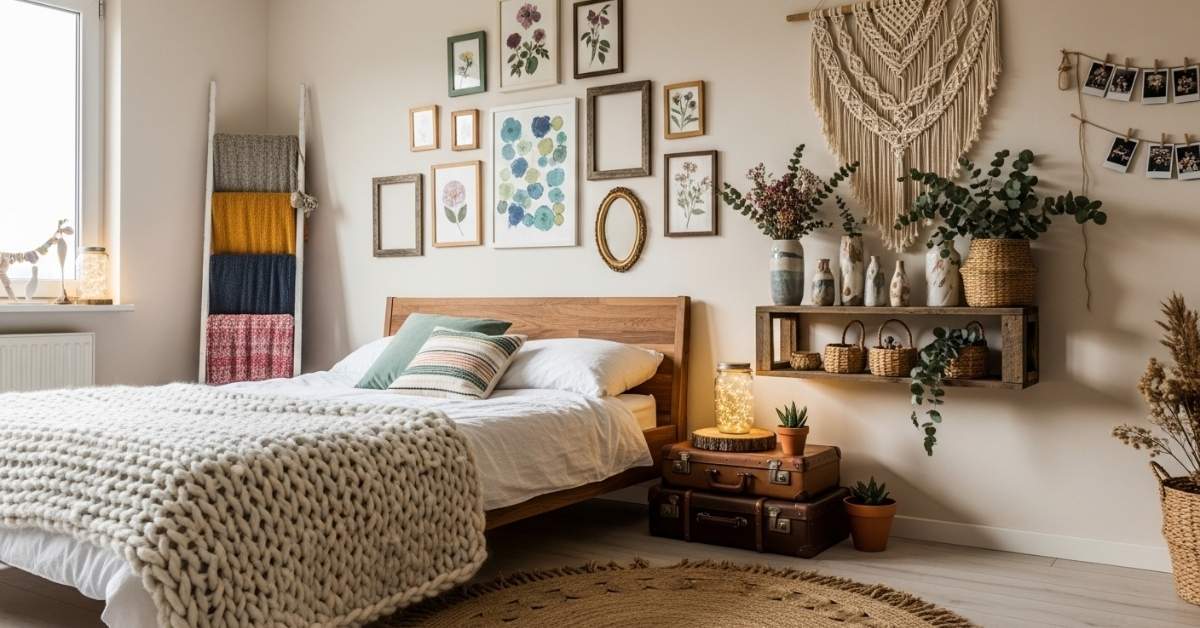
The good news is that most of what makes a bedroom feel finished comes down to small, intentional decisions, not a full renovation or a designer budget.DIY Bedroom Decor Ideas If you’re working with a standard-sized room, a rental, or simply a space that’s been “fine” for too long, these DIY ideas are worth actually trying.
For anyone who wants their bedroom to feel more put-together without buying everything new, this list focuses on setups you can build, rearrange, or make yourself in a weekend or less.
Hang a DIY Fabric Headboard Using Plywood and Upholstery Foam
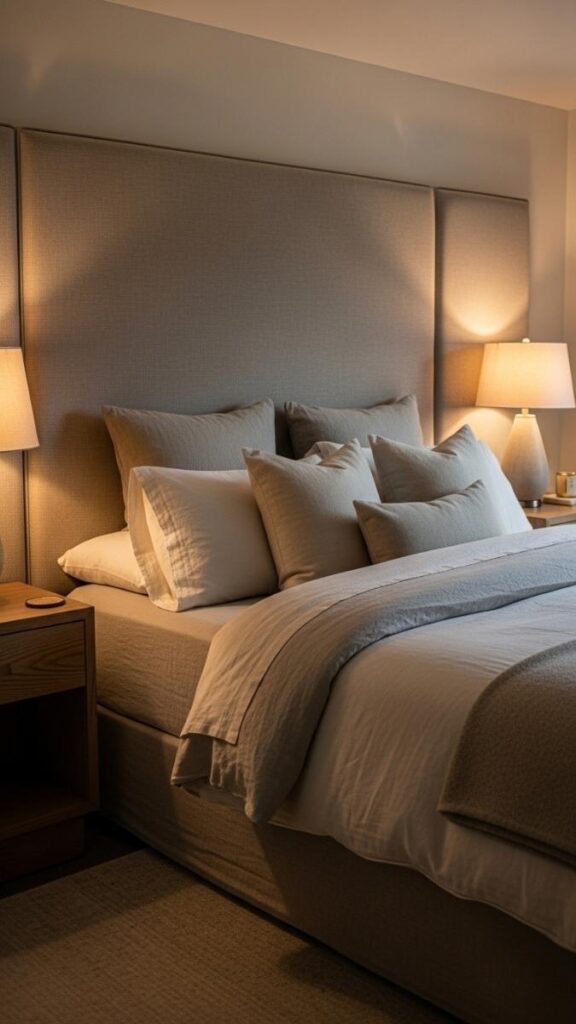
Most beds without headboards look unanchored; the mattress floats in the room with nothing to frame it. A fabric headboard solves this without a major purchase. Cut a piece of plywood to width, glue two inches of upholstery foam on top, then wrap the whole thing in linen or boucle and staple it to the back. Mount it directly to the wall with picture-hanging hardware. The result is a soft, textured focal point that makes the bed look deliberate. It works in rentals because it’s wall-mounted without drilling into the frame, and the fabric can be swapped out when you want a refresh. In narrow rooms, a headboard with vertical height draws the eye up and makes the ceiling feel higher.
Build a Floating Nightstand With a Wooden Shelf and Pipe Brackets
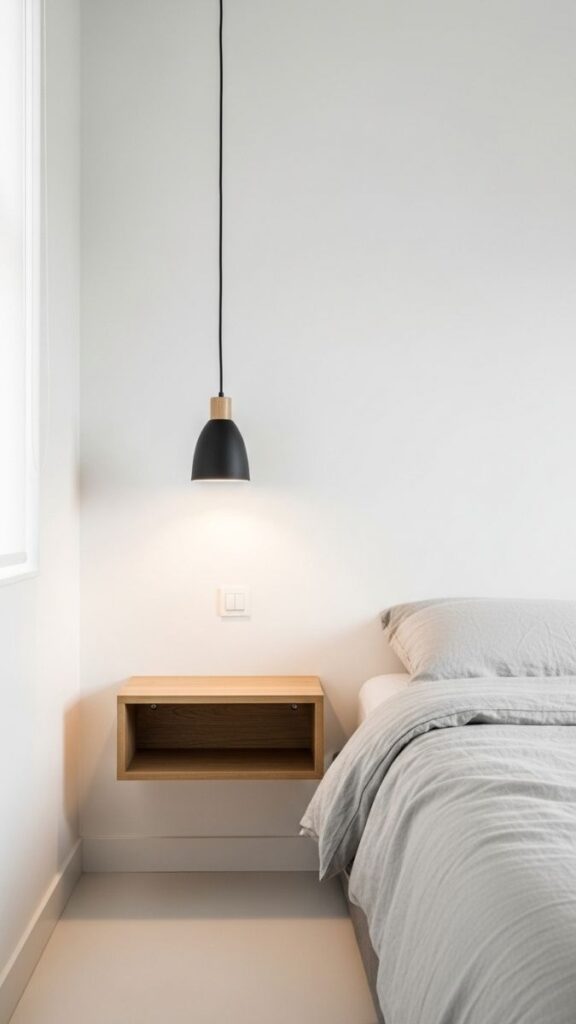
Freestanding nightstands eat floor space and often create visual clutter especially in rooms under 150 square feet. A floating shelf with metal pipe brackets (or simple L-brackets) gives you the same surface for a lamp, a book, and a glass of water without blocking the floor line. The open space beneath the shelf makes the room read as larger. For a finished look, choose a shelf in a wood tone that matches another piece in the room even if it’s just the floor. This setup works best in small apartments and studios where every inch of floor space matters, but it also works beautifully in larger rooms as a paired set on either side of the bed. One thing I’ve noticed keeping the shelf depth at 10–12 inches is the sweet spot deep enough to be useful, shallow enough to not project awkwardly into the room.
Frame Fabric Swatches as Large-Format Wall Art
Printing large art is expensive. Buying it is even more so. But fabric linen, printed cotton, even canvas drop cloth can fill a large frame beautifully and adds a layer of texture that paper prints can’t. Pull a yard or two of fabric from a craft store in a tone that matches your bedding or curtains, cut it to size, and stretch it over a frame insert the way you would canvas. Group three to five frames in complementary sizes for a cohesive wall arrangement. This is especially useful on wide walls opposite the bed where bare space can make the room feel cold. The textural contrast between fabric and a smooth wall is what makes it work; it adds visual warmth without adding furniture.
Read More About: 22+Apartment Storage Ideas That Actually Work in Small, Cluttered Spaces
Create a Canopy Effect With Curtain Rods and Sheer Panels
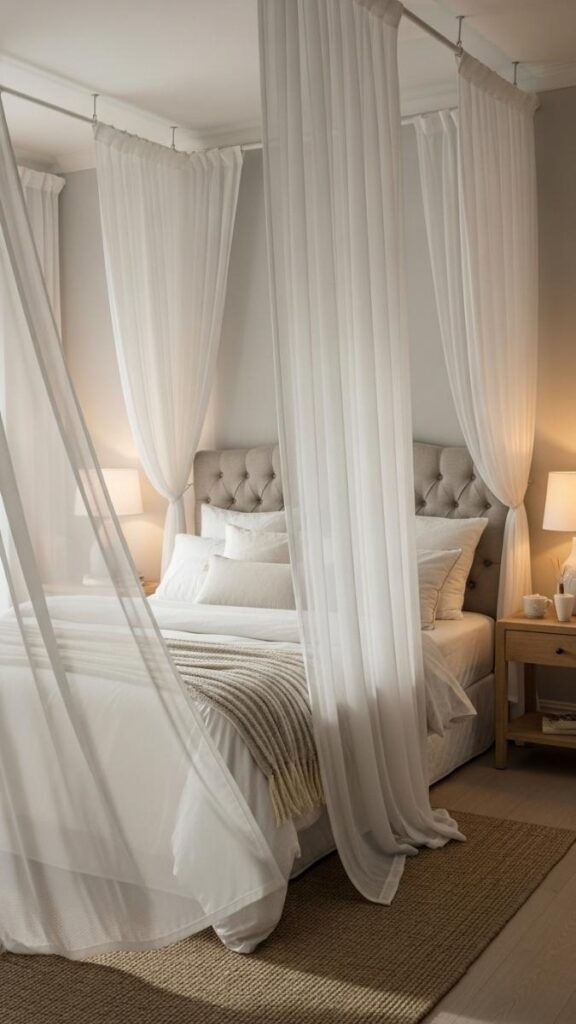
A canopy bed frame is a significant investment. But the visual effect, the sense of a room-within-a-room around the bed can be created for under $60 with ceiling-mounted curtain rods and sheer linen or voile panels. Install two rods parallel to each other, on either side of the headboard position. Hang sheer panels from them so they fall loosely at the sides of the bed. The curtains don’t need to fully enclose the bed; even flanking panels on the sides create enough framing to anchor the bed visually. This works in rooms with higher ceilings (above 8 feet) where the panels have room to breathe. In lower-ceilinged rooms, mount the rods closer to the ceiling and keep the panels long and narrow to preserve vertical proportion.
DIY Rope or Macramé Wall Hanging as a Textural Focal Point
Not every bedroom needs framed art. In neutral, minimal spaces, texture does more visual work than color. A large macramé or knotted rope hanging above the bed acts as a headboard alternative or supplements one by adding depth and organic movement to an otherwise flat wall. Basic macramé knots (square knots, half-hitch patterns) are genuinely learnable in an afternoon, and the materials cotton rope, a dowel rod, cost very little. Scale is important here; the hanging should be at least two-thirds the width of the bed to read as intentional. Smaller pieces get lost. In rooms that lean cool or contemporary, natural cotton rope warms the space without introducing new color.
Repurpose Wooden Crates Into Stacked Bedside Storage
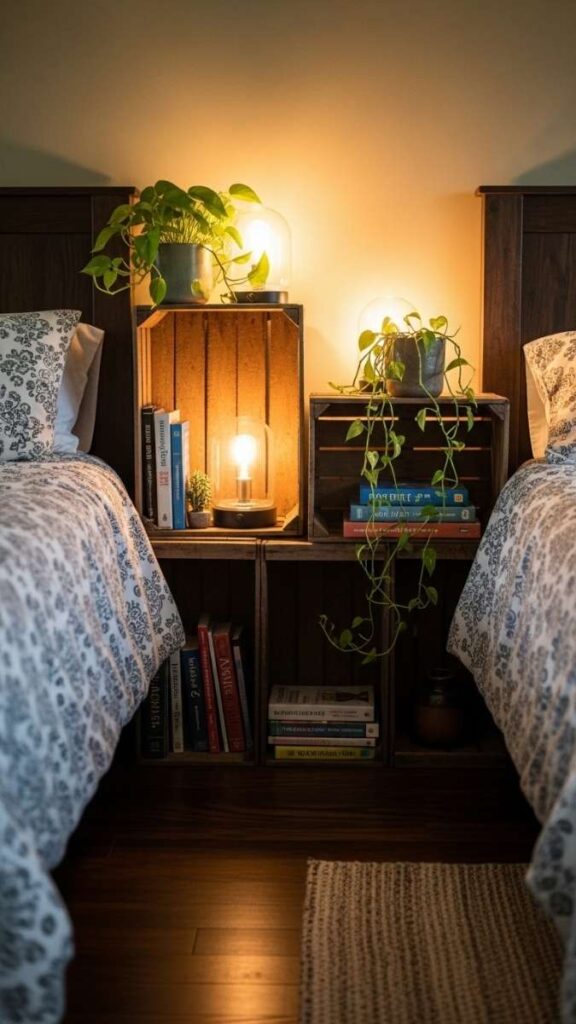
Standard nightstands give you one surface and maybe a drawer. Stacked wooden crates give you storage, display space, and a surface and they can be reconfigured whenever you want. Stack two or three on their sides, arrange them at different orientations to create open cubbies, and sand the edges smooth. A coat of white paint, walnut stain, or even left raw gives you very different results. The stacked configuration keeps the floor area minimal while maximizing vertical storage useful in small rooms where a traditional nightstand’s footprint is a problem. This works especially well in relaxed, natural, or Scandinavian-adjacent aesthetics. Go for it if your bedroom leans toward warm woods and layered textures.
Read More About: 17 Under Bed Storage Ideas That Actually Work in Real Bedrooms
Hang Edison Bulbs or String Lights Along a Canopy Frame or Ceiling Beam
Overhead lighting from a single ceiling fixture flattens a bedroom; it lights everything at once without creating warmth or depth. Stringing Edison or warm globe lights across the ceiling, along a faux beam, or over a canopy frame introduces ambient light at a lower level, which makes the room feel cozier in the evening. The trick is placement lights should be at or below eye level when you’re lying down. Draped loosely along the edges of the ceiling or across a frame above the bed, they pool light in the areas where you actually use the room. This is one of the most low-effort changes that makes a real perceptual difference in my experience. Warm lighting does more for a bedroom’s atmosphere than almost any piece of furniture.
DIY Painted Accent Wall With Geometric Tape Patterns
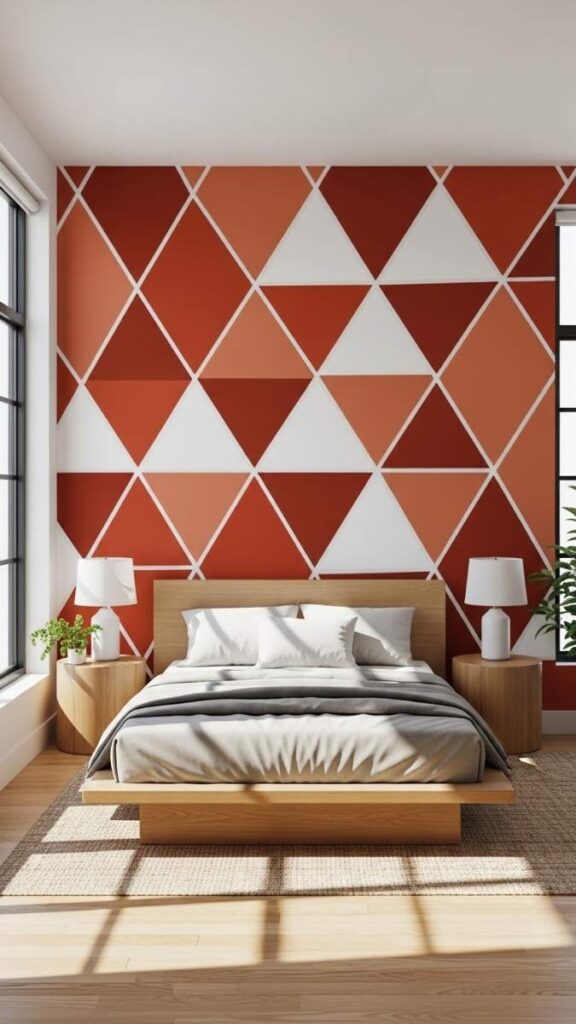
An accent wall doesn’t have to mean solid paint. Painter’s tape allows you to create precise geometric patterns triangles, diamond grids, half-wall color blocks that read as intentional and architectural. Map out your pattern with a level and tape, paint the sections, and peel carefully before the paint fully dries. The visual result is a textured, graphic backdrop that functions the same way wallpaper does but at a fraction of the cost. This works best on the wall directly behind the headboard, where it reinforces the bed as the room’s focal point. In small rooms, keep the colors within the same tonal family, high contrast geometric patterns in small spaces can feel busy rather than bold.
Build a Simple PVC Pipe or Copper Pipe Clothing Rack as Functional Decor
In smaller bedrooms particularly studios or rooms without walk-in closets the clothing situation is always a design challenge. A freestanding pipe clothing rack built from copper or black iron pipe fittings turns a storage necessity into a decorative element. The pipe, a few T-fittings, and two floor flanges are all available at a hardware store for under $40. Mount it on casters for mobility. Keep it edited, only hang the current season’s statement pieces, and treat it like an open wardrobe rather than overflow storage. Paired with a wooden crate beneath for shoes, it reads as intentional rather than improvised.
Create a DIY Gallery Wall Using Thrifted Frames in Mismatched Sizes
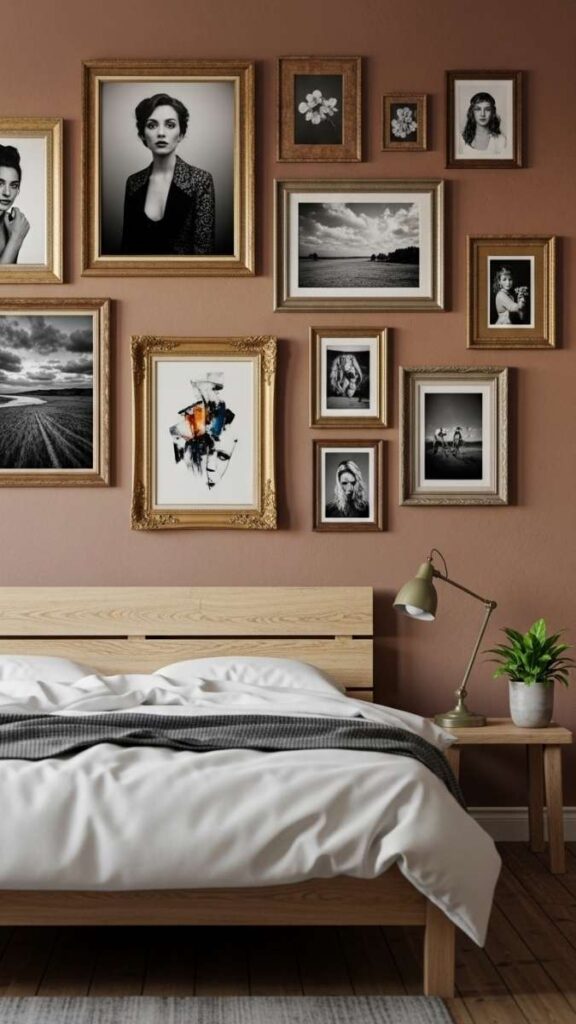
Gallery walls work when they feel collected rather than curated and thrift stores are the best source for mismatched frames that suggest that quality. Look for frames in a similar color family (all black, all gold, or all wood-toned), then vary the sizes and shapes. Fill them with black-and-white photography, simple botanical prints, or fabric swatches for consistency. On the wall, arrange everything on the floor first before hanging. Start from the center and work outward, keeping spacing between frames consistent at about two to three inches. This layout approach covers large walls without requiring expensive art, and the variety of frames adds visual interest that identical sets can’t.
Sew a Simple Linen Duvet Cover From Fabric Yardage
A quality duvet cover in natural linen runs $150 or more. The same amount of linen fabric costs roughly $40–$60 and produces a cover that’s thicker, better quality, and completely customized to your color preference. The construction is simple: two panels sewn together on three sides, with a button or tie closure on the fourth. No complex pattern required. Linen wrinkles naturally, which actually adds to the relaxed, lived-in look that’s currently dominant in bedroom aesthetics going into 2026. If you own or can borrow a basic sewing machine, this is one of the highest-value DIY projects for a bedroom; the upgrade in material quality is immediately noticeable.
Read More About: 25 Closet Organization Ideas DIY That Actually Make Small Spaces Work Harder
Make a DIY Roman Shade From Fabric and Wooden Dowels
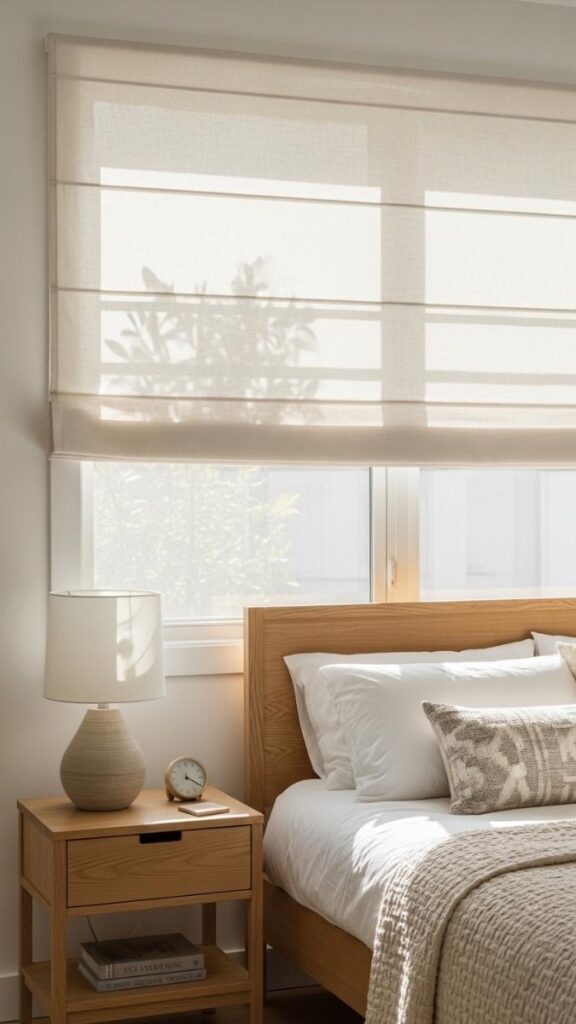
Blinds that came with the apartment look exactly like blinds that came with the apartment. A Roman shade made from a yard of upholstery fabric, a few wooden dowels, and ring-and-cord hardware replaces them with something that actually looks intentional. The fabric folds horizontally when raised and lies flat when lowered, diffusing light softly rather than blocking it entirely. In east-facing rooms, a light linen Roman shade in the morning turns harsh sunlight into something genuinely pleasant. The construction is more involved than some of these projects, but tutorials are widely available and the materials run about $25–$35 per window. For renters, mount the shade on a tension rod inside the window frame with no holes required.
. Build a DIY Pegboard Organizer for a Small Bedroom Office Corner
Bedrooms that double as work-from-home spaces have a consistent problem: visual clutter from work materials bleeds into the rest of the room and makes it feel less restful. A painted pegboard panel mounted above a small desk contains the workspace visually and keeps everything off the desk surface. Paint the pegboard the same color as the wall behind it so it recedes rather than drawing attention. Use pegs to hang headphones, notebooks, small plants, and organizers. When the desk chair is tucked in and the area is tidy, the pegboard section reads as a distinct zone rather than bedroom overflow. This is especially useful in studios and one-bedroom apartments where the workspace can’t be separated by a door.
DIY Pressed Botanical Prints for Bedside or Above-Dresser Art
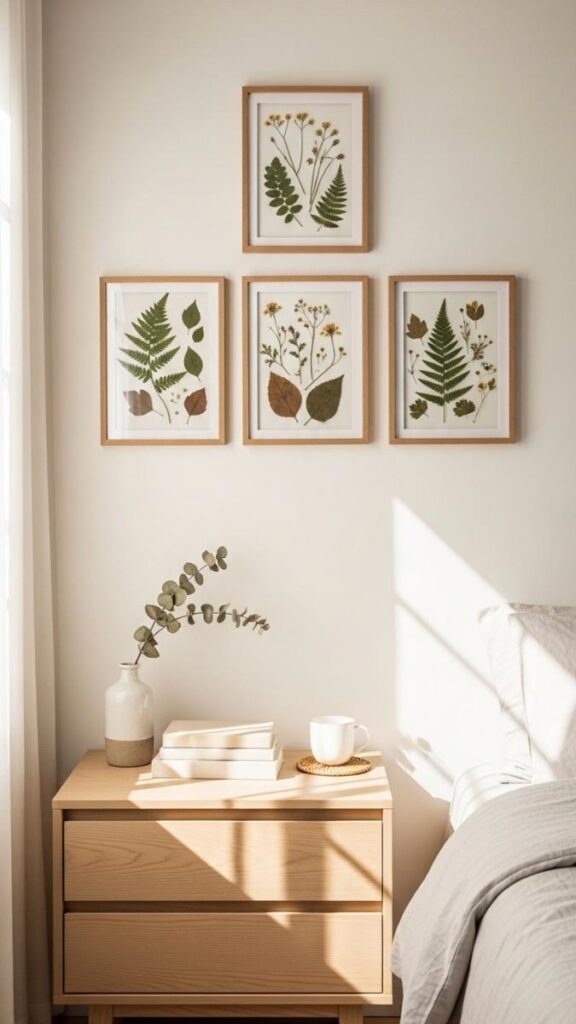
Pressed flowers and leaves, dried between book pages and then framed, produce art that has genuine visual complexity variation in color, texture, and form that a printed reproduction doesn’t replicate. The process takes patience (two to three weeks for the pressing) but almost no skill. Choose botanicals with interesting silhouettes: ferns, eucalyptus, larkspur and press them between parchment paper inside a heavy book. Once dry, arrange them on white or cream card stock and frame. A grouping of three matching frames above a dresser or bedside creates a quiet, organic focal point. In rooms that lean very neutral, this adds an element of nature without disrupting the overall tone.
Lay a DIY Painted Canvas Floor Rug for Bedroom Warmth
Rugs are one of the most impactful elements in a bedroom. They define the sleeping zone, add warmth underfoot, and soften the acoustics of the room. But they’re also expensive, and the right size often runs $300 or more. A canvas drop cloth, hemmed at the edges and painted with floor paint in a geometric or abstract pattern, is a workable and durable alternative. Seal it with multiple coats of water-based polyurethane for a surface that holds up to foot traffic. The limitations are real; it won’t be as soft as a textile rug but in warmer climates or hardwood rooms that don’t need insulation underfoot, the canvas rug does the visual job well. This is particularly useful as a temporary solution in a room you’re still figuring out you can experiment with patterns and placement without committing $400.
DIY Curtain Tiebacks From Leather Strips or Rope
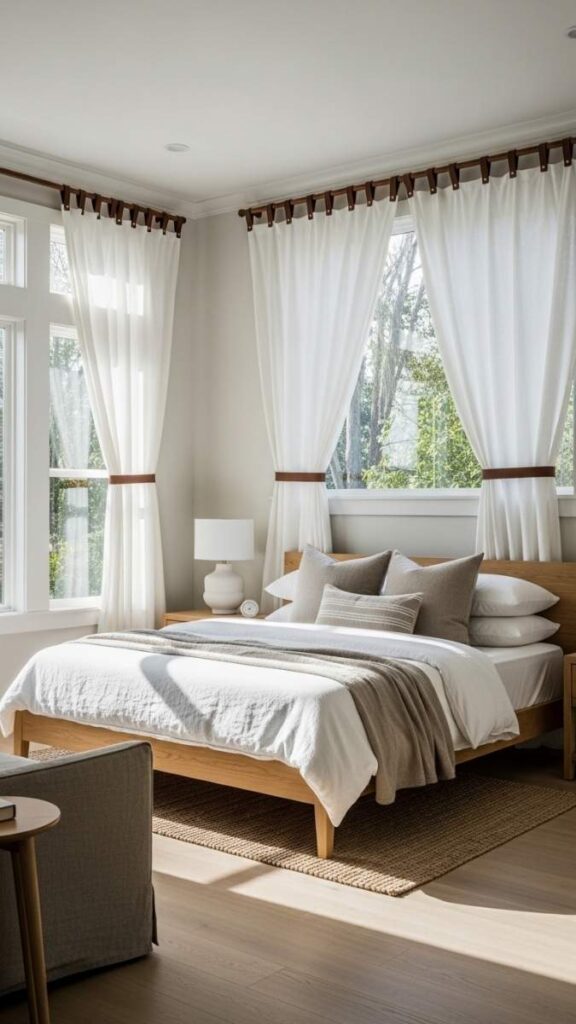
Curtains that fall straight down on both sides look unused. Pulling them back even loosely introduces light, reveals the view, and creates a softly draped silhouette that adds movement to the wall. Store-bought tiebacks are often plasticky or too decorative. A strip of genuine or faux leather, punched with a hole at each end and looped around a wall hook, looks architectural rather than ornamental. Alternatively, a thick cotton or jute rope tied in a loose knot does the same thing in a more relaxed register. Either version takes about 10 minutes per window to make and costs almost nothing. The visual difference between curtains that hang untouched and curtains that are actively styled is larger than you’d expect.
Create a Faux Limewash Wall Effect With Watered-Down Chalk Paint
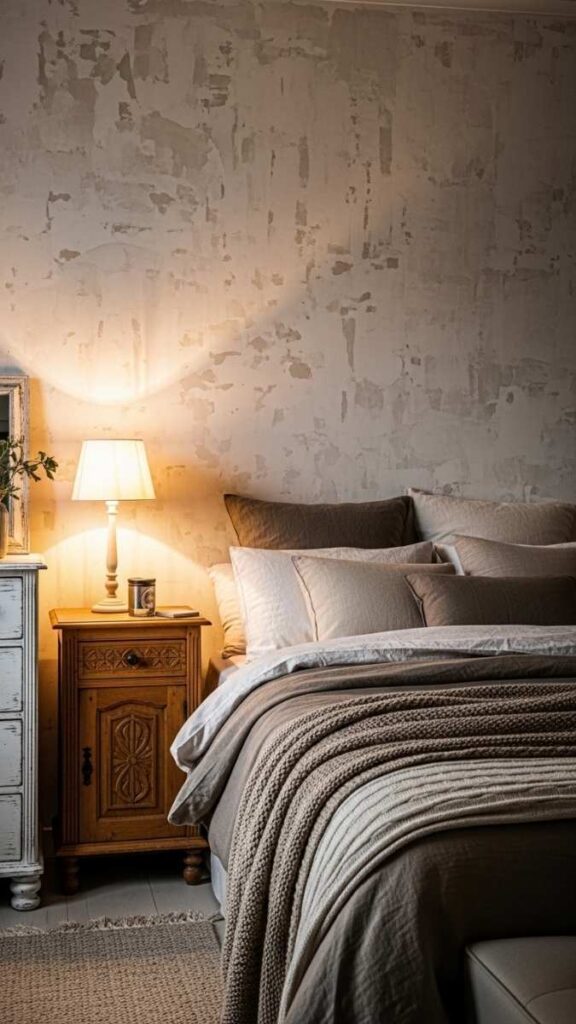
Limewash paint has dominated interior design in recent years and for good reason. The layered, mottled finish looks like plaster walls in a European farmhouse, and it photographs beautifully. But limewash paint itself is expensive, and professionally applied it costs even more. A close approximation is achievable with chalk paint thinned to the consistency of heavy cream, applied in random overlapping strokes with a wide brush and then lightly blended while wet. The result isn’t identical to true limewash, but on the wall behind the headboard it creates enough texture and depth to be genuinely compelling. Use a base coat in the lightest shade, let it dry, then apply a slightly darker tone in patches. The contrast between layers is what creates the dimensional effect. This is one of the bigger commitments on the list, but the visual payoff is substantial.
What Actually Makes These DIY Bedroom Ideas Work
The ideas above range from 10-minute projects to full weekend builds. What separates the ones that feel finished from the ones that look “DIY” in a less flattering sense comes down to a few consistent principles.
Scale and proportion first.
A small macramé piece over a king-size bed looks lost. A Roman shade that doesn’t reach the floor looks unfinished. Before starting any of these projects, measure twice both the specific dimensions and the visual weight of what you’re making relative to the space. IMO, this is the single most common place where DIY decor goes wrong.
Finish quality matters more than complexity.
A simple linen duvet cover with clean seams looks more expensive than an elaborate headboard with visible staples. Sanding edges, hemming fabric properly, and painting in thin coats instead of one thick one will always produce a better result.
Material choices carry tone.
The same floating shelf in pine versus walnut versus painted white reads as three different aesthetics. Before starting a project, decide what feeling you’re building toward warm and natural, clean and minimal, layered and eclectic and choose materials accordingly. Mixing material tones at random is what makes rooms feel unresolved.
DIY Bedroom Decor Ideas Setup Guide by Space Type
| Idea | Best For | Space Type | Primary Benefit | Difficulty |
| Fabric headboard | All bedrooms | Small–medium rooms | Anchors the bed, adds texture | Medium |
| Floating nightstand | Minimalist / renters | Small apartments | Saves floor space | Low |
| Framed fabric art | Neutral bedrooms | Any size | Budget large-format art | Low |
| Curtain canopy | Romantic / cozy styles | Rooms with 8ft+ ceilings | Frames the bed without a frame | Medium |
| Macramé wall hanging | Boho / natural styles | Any | Adds texture, no drill needed | Low–Medium |
| Painted accent wall | Modern / eclectic | Any size | Defines the bed wall | Medium |
| Pipe clothing rack | Studios / small bedrooms | No closet space | Turns storage into decor | Medium |
| Roman shade | Light-focused rooms | Any window size | Controls light + looks custom | Medium–High |
| Pegboard corner | WFH + bedroom | Small rooms | Contains workspace clutter | Low |
| Limewash paint effect | Minimalist / warm styles | Feature wall | Adds architectural texture | High |
Common DIY Bedroom Mistakes That Make Your Space Feel Smaller or Cluttered
Even when individual ideas are solid, the way they’re executed together can undermine the whole room. Here are the patterns worth avoiding
Too many focal points.
A gallery wall, a macramé hanging, a canopy, a geometric accent wall any one of these can be a strong feature. All of them in the same room compete for attention and the result is visual noise rather than personality. Choose one dominant feature and let the rest support it.
DIY pieces that aren’t scaled to the room.
The most common mistake is a headboard that’s too short for the wall height, or a gallery wall that’s too small for the wall width. As a rough rule, your bed wall’s primary feature whether headboard, art, or wall treatment should span at least 60–70% of the wall width. Anything narrower reads as undersized.
Mismatched finish levels.
Mixing a carefully made fabric headboard with a half-painted secondhand dresser creates an inconsistency that registers as unfinished even if you can’t immediately identify why. It’s fine to have pieces at different investment levels just to make sure the finish quality (sanding, painting, hemming) is consistent across all of them.
Poor lighting that undercuts everything else.
The best-decorated room in harsh overhead light still feels unpleasant. Before investing time in any decor project, add a warm light source at lamp level on the nightstand, on a shelf, or draped above the bed. It contextualizes everything else.
FAQ’s
What are the easiest DIY bedroom decor ideas for beginners?
Floating shelves, framed fabric art, and string lights are the lowest barrier-to-entry options on this list; all three require minimal tools and produce results that look finished rather than rough. Macramé is also beginner-friendly if you’re willing to learn two or three basic knots before starting.
How do I make a small bedroom look bigger with DIY decor?
The most effective moves in small bedrooms are vertical a tall fabric headboard, floor-to-ceiling curtains, and floating shelves that keep the floor clear all create the impression of more height and space. Avoid heavy furniture pushed into corners, and keep the color palette light and consistent contrast draws the eye to boundaries, which makes rooms feel smaller.
Is DIY decor actually cheaper than buying from stores?
Generally yes, particularly for fabric-based and paint-based projects. A DIY linen duvet cover costs roughly 60–70% less than a comparable store-bought version. A fabric headboard runs a fraction of upholstered headboard retail prices. The savings are narrow for projects requiring specialized hardware, but for most of the ideas on this list, DIY is meaningfully more affordable.
What’s the difference between a DIY headboard that looks polished and one that doesn’t?
Material choice and fastening quality. Cheap foam compresses quickly and shows lumps through fabric; medium-density upholstery foam holds its shape. Staples placed too close to the edge pull through fabric over time; keeping them two to three inches in prevents this. The finishing step folding fabric corners cleanly like wrapping a gift is what separates the results that look intentional from the ones that look improvised.
Can renters use these DIY bedroom decor ideas without damaging walls?
Most of these ideas are renter-friendly. Floating shelves and wall art can use removable adhesive strips for lighter pieces and standard picture hooks (one small hole) for heavier ones. Roman shades on tension rods require no holes at all. The curtain canopy and fabric headboard are both wall-mounted but use minimal hardware, typically two to four small anchor points that are easily patched when leaving.
What DIY bedroom trend is worth trying in 2026?
The limewash and textured wall trend continues to build and the DIY chalk paint approximation is the most accessible entry point. Alongside that, natural fiber textures (linen, jute, cotton rope) are replacing synthetic fabrics across bedroom decor, making macramé and handmade textile projects more relevant than they’ve been in years.
How do I start a DIY bedroom decor project without the room looking chaotic mid-process?
Work one wall at a time, and finish each element before moving to the next. The bed wall headboard, art, and lighting should be your first priority since it’s the room’s primary visual anchor. Once that reads as complete, the rest of the room has a reference point to build around.
Conclusion
Small, intentional changes add up faster than most people expect. A well-placed light source, a headboard that gives the bed a sense of frame, and one strong wall feature can shift how a bedroom feels to live in not as inspiration, but as daily comfort. None of that requires a full renovation or a designer’s involvement.
Start with the one or two ideas on this list that match your existing space and the tools you actually have. The floating nightstand if floor space is the problem. The fabric headboard if the bed wall feels incomplete. The string lights if the room is cold at night. Adjust from there most of these projects are reversible, which makes experimenting genuinely low-risk.