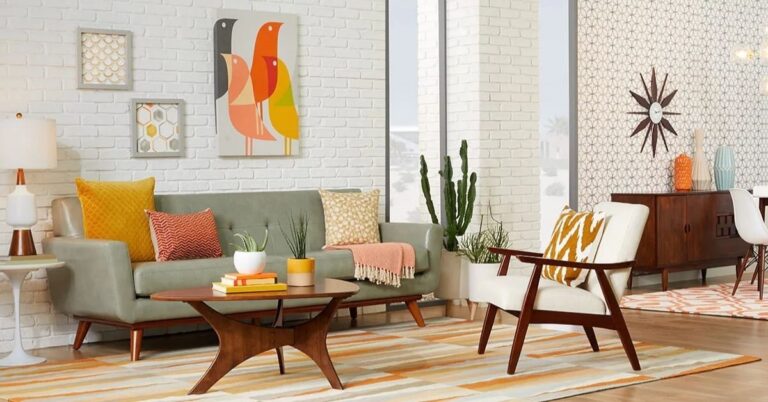
22+Apartment Storage Ideas That Actually Work in Small, Cluttered Spaces
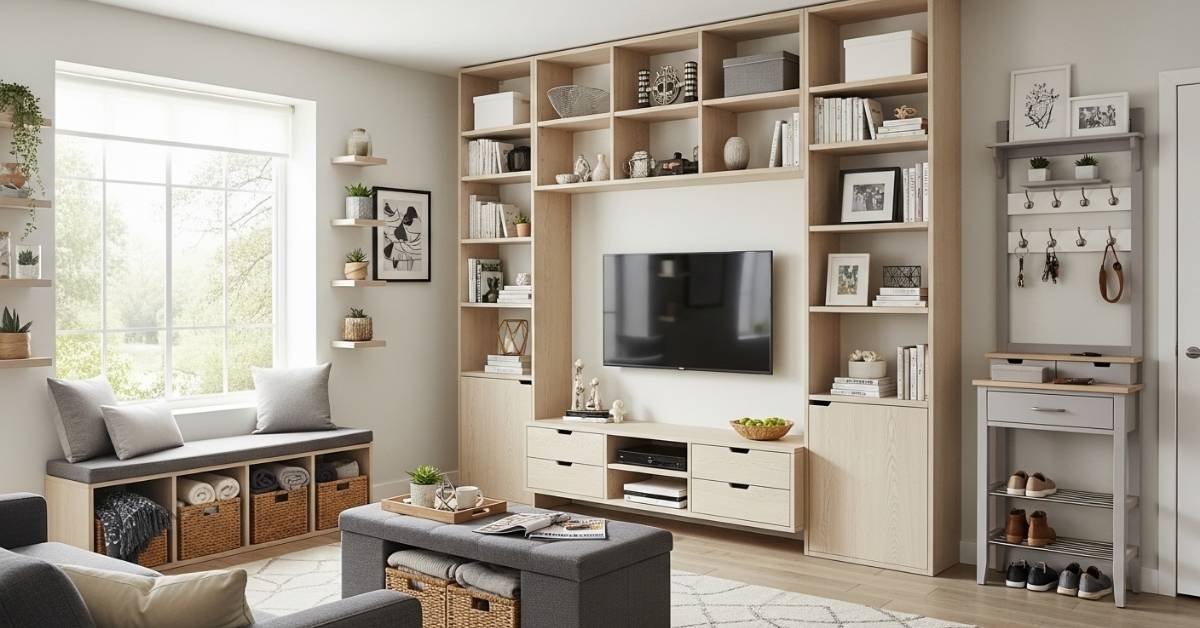
The good news? You don’t need a bigger place, you need smarter storage. These ideas are built around real apartment constraints: no permanent modifications,Apartment Storage Ideas limited square footage, awkward layouts, and the need for spaces that look decent while doing serious functional work. Whether you’re in a studio, a one-bedroom, or a compact two-bedroom, there’s a setup here that fits.
If you’ve been patching the problem with more bins and baskets that just move the clutter around, this is the reset your space actually needs.
Use Your Bed Frame as a Storage Engine
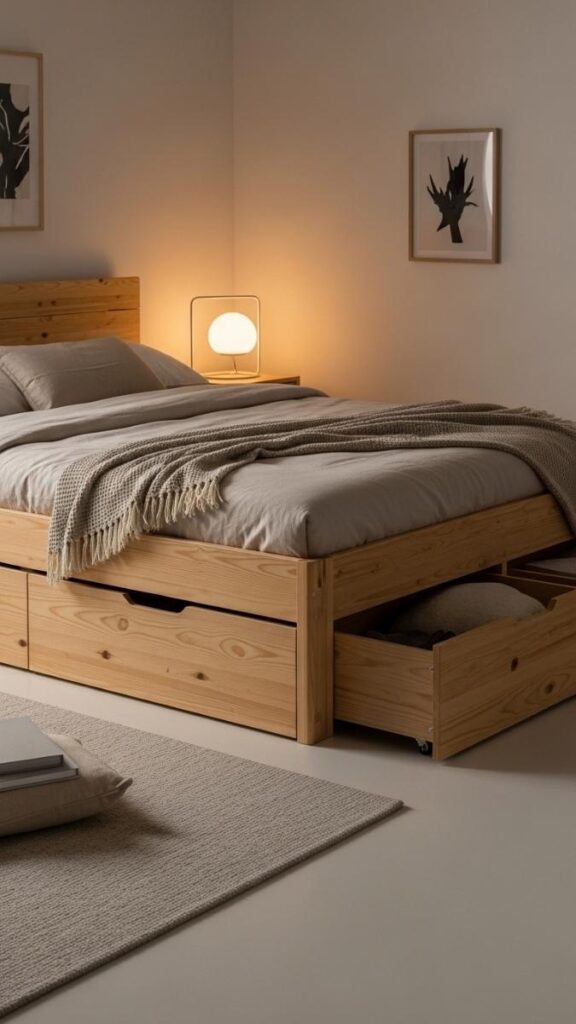
Most people treat under-bed space as overflow storage boxes shoved in and forgotten. A bed frame with built-in drawers changes the entire dynamic. You get dedicated, accessible compartments for off-season clothing, extra bedding, or shoes, all contained within the footprint of furniture you already need. In a bedroom without a walk-in closet, this setup can absorb an entire dresser’s worth of storage, which frees up floor space for better movement and a less crowded layout. Go for a frame with smooth-glide drawers rather than open slat storage; it stays organized longer and looks intentional rather than improvised.
Mount Floating Shelves High and Use the Full Wall Height
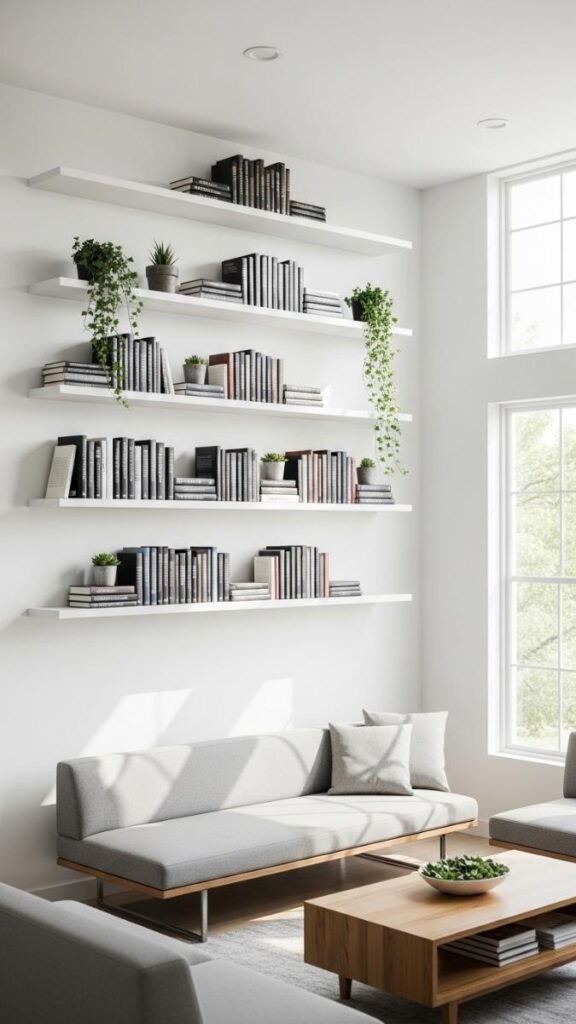
The upper third of most apartment walls is completely wasted. Mounting shelves at eye level is the default, but it cuts your storage potential in half and makes walls feel shorter. When shelves run from mid-wall up to the ceiling, they draw the eye upward, which creates the visual impression of more height in the room. Use the upper shelves for books, baskets, or items you access occasionally and keep the lower ones for everyday use. This works especially well in living rooms and home offices where wall space is the primary real estate.
Build a Kitchen Command Zone with a Rolling Cart
Counter space in apartment kitchens is almost always insufficient. A rolling cart with shelves or drawers doesn’t just add surface area, it adds flexible, moveable storage that can shift depending on what you’re cooking or who’s visiting. Park it beside the stove for prep, roll it toward the dining area when you’re serving, and tuck it against the wall when you need walkway clearance. Look for one with a lower shelf for small appliances, a drawer for utensils, and a top surface that can handle cutting or plating. In a kitchen with no island, this is the closest practical alternative.
Replace Your Entryway Table with a Storage Bench
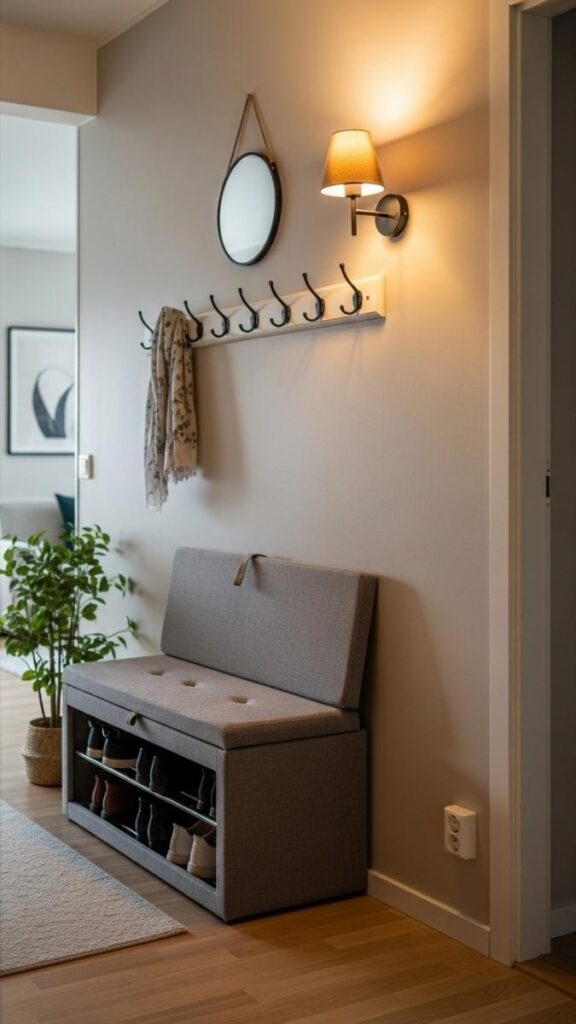
Entryways in apartments are usually just a few feet wide enough for a table and a pile of things that accumulate with no real system. A storage bench with a hinged lid gives you seating (useful when putting on shoes), hidden storage underneath for footwear, bags, or umbrellas, and a flat top surface for keys or a small tray. Pair it with wall-mounted hooks directly above, and the entire entry zone becomes functional without taking up more floor space. This is one I’d actually recommend trying first because it solves three problems: seating, storage, and surface clutter in one piece of furniture.
Read More About: 17 Under Bed Storage Ideas That Actually Work in Real Bedrooms
Use the Space Above Kitchen Cabinets for Baskets
If your kitchen has upper cabinets that don’t reach the ceiling, that gap is prime real estate most renters completely ignore. Deep baskets or bins lined up along the top can hold bulky items like extra paper towels, small appliances you rarely use, or holiday dishware things that take up valuable cabinet space below. The key is keeping the baskets uniform in size and material so the arrangement looks deliberate rather than cluttered. Woven or rattan baskets work particularly well here because they add texture and warmth at ceiling height rather than a visual mess.
Add a Pegboard Wall Panel to Your Home Office or Kitchen
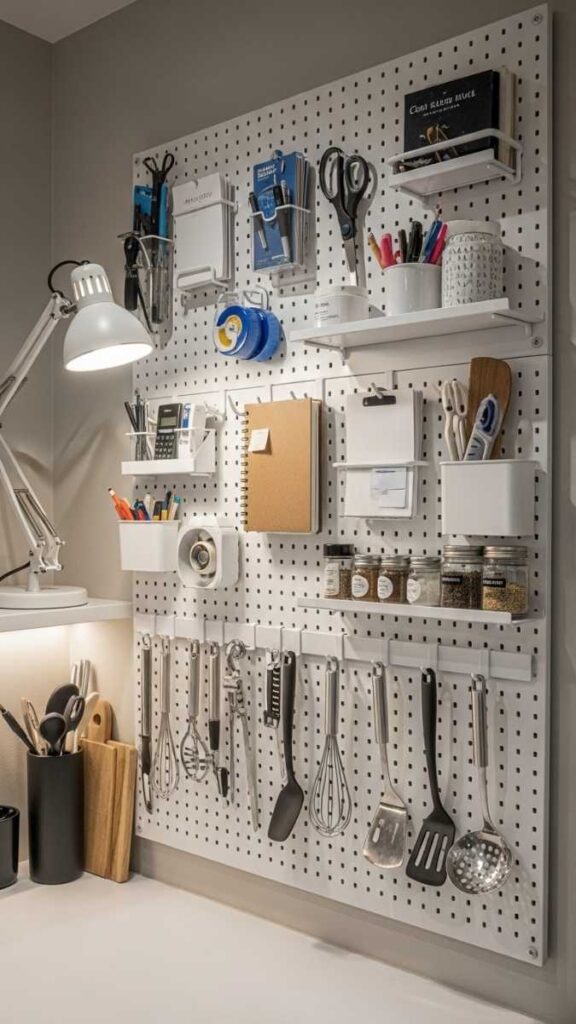
Pegboards have gotten a reputation as a crafting-room solution, but they work just as well in kitchens for cookware and in home offices for supplies and tech accessories. The functional advantage is that the storage reconfigures completely; you move hooks and shelves around as your needs change, without drilling new holes or buying new furniture. In a small apartment where a room has to serve double duty (office by day, something else by evening), a pegboard keeps work gear visible, accessible, and off the desk surface entirely. Mount it behind your workspace or inside a closet door for a version that hides when not in use.
Install a Tension Rod System Under the Sink
The cabinet under the kitchen or bathroom sink is one of the most chaotic spots in any apartment. Plumbing eats into the usable space, and items pile up in a single flat layer that’s hard to sort through. A horizontal tension rod mounted inside the cabinet lets you hang spray bottles by their triggers, which immediately clears floor space and creates a second functional level for other items. Add a small turntable or a pull-out bin below, and the cabinet becomes genuinely usable rather than a spot where things go to be forgotten.
Choose a Sofa with Built-In Storage
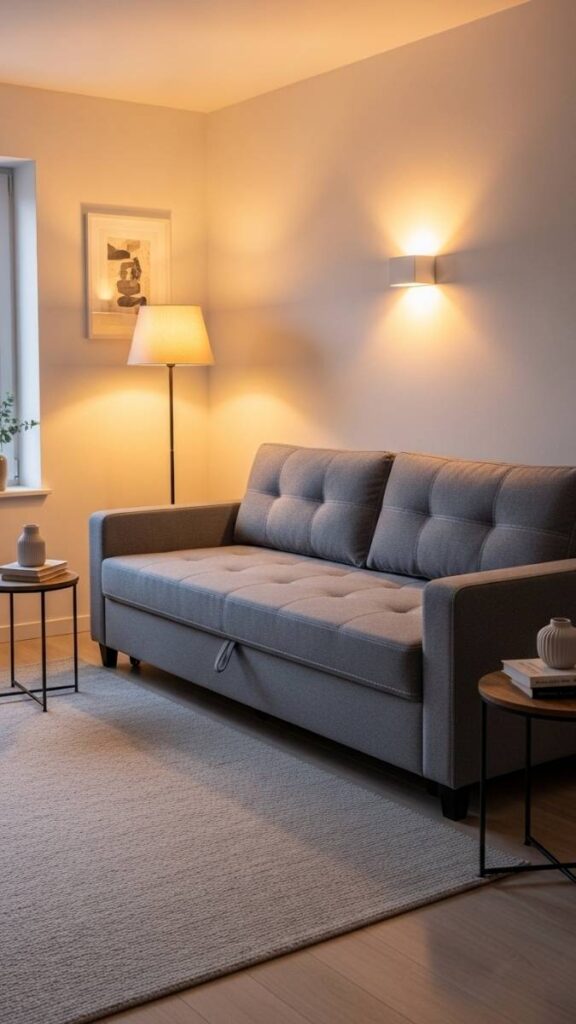
In a living room that also functions as a reading nook, TV space, and occasional guest room, the sofa is the most-used piece of furniture in the apartment. A sofa with a lift-up base or side compartments turns that footprint into storage for blankets, pillows, board games, or seasonal items. This is especially useful when the living room doubles as a guest sleeping area; extra bedding stays close but completely out of sight. The setup keeps the room from feeling over-furnished, since the sofa is doing storage work that would otherwise require additional furniture.
Stack Vertical Storage in Bathroom Corners with a Tower Shelf
Bathroom floor space in apartments is often the most limited in the entire unit, sometimes just enough room to move between the vanity and the shower. A slim corner tower shelf uses the one dimension that’s almost never constrained: height. Stack towels on lower shelves, toiletries in the middle, and decorative items at the top to keep the overall look balanced. Unlike a bulky storage cabinet, a tower shelf doesn’t block movement or make the room feel more enclosed. This works especially well in bathrooms without linen closets, which describes most apartment bathrooms.
Read More About: 25 Closet Organization Ideas DIY That Actually Make Small Spaces Work Harder
Use Drawer Organizers in Every Deep Drawer
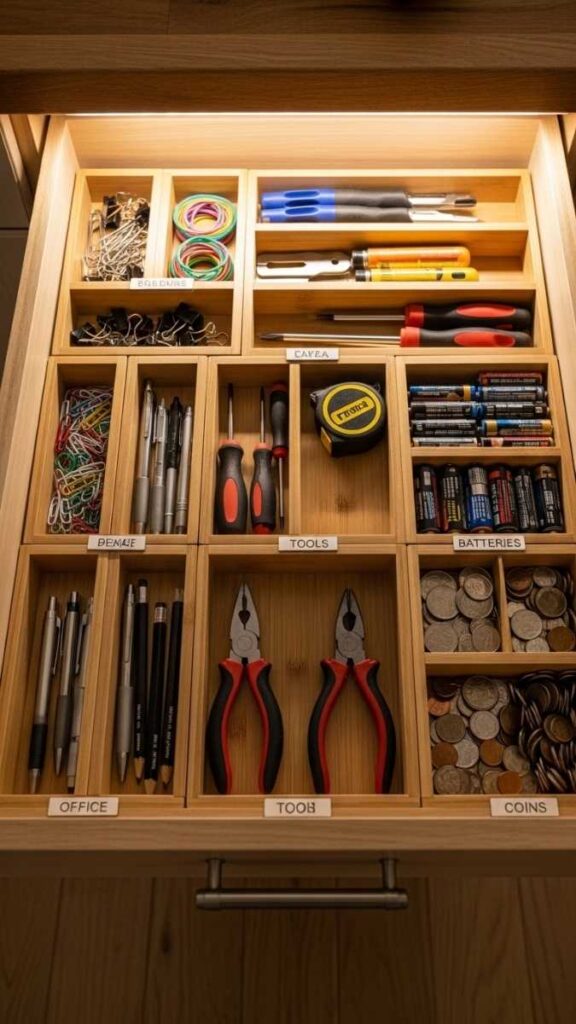
Deep drawers especially in kitchens become unusable within weeks if there’s no internal system. Everything migrates to the front, the back becomes dead space, and finding anything requires digging. Modular drawer organizers (bamboo or acrylic work well) let you divide the space into zones by category, so every item has a fixed spot. The result isn’t just tidiness, it’s speed. You stop losing things and start finding them in under three seconds. In a small kitchen where efficiency matters, this is one of the highest-return improvements for the least amount of money.
Hang Curtain Rod Organizers on Cabinet Doors
The inside surface of cabinet doors is almost universally ignored. A few adhesive hooks or a small over-door rack instantly converts that surface into storage for spices, cleaning supplies, hair tools, or pot lids. It’s a renter-safe option because most adhesive systems come off cleanly, and the storage is genuinely useful rather than decorative. In a kitchen where cabinet space is insufficient, adding door storage can replicate the capacity of an entire additional shelf without adding any furniture.
Dedicate a Closet Wall to Open Shelving for Non-Clothing Items
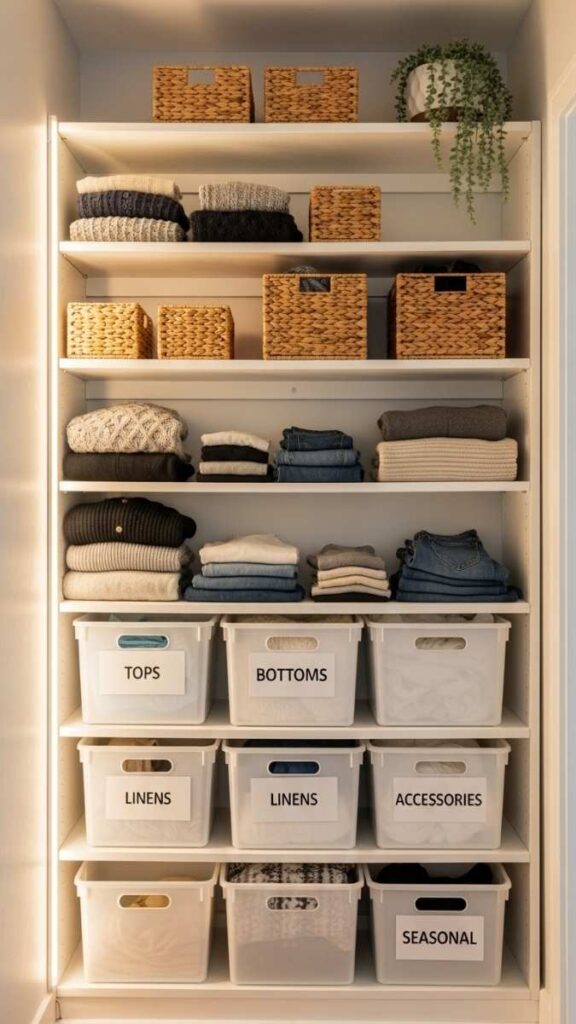
Not every closet needs to store clothes. In apartments where storage is insufficient across the board, converting one closet or one section of a closet into open shelving for pantry overflow, office supplies, or miscellaneous items can dramatically reduce clutter in other rooms. Add a set of adjustable shelves, uniform bins with labels, and a simple organizational logic (most-used items at eye level, rarely used items above or below). Honestly, a well-organized utility closet does more for apartment livability than almost any decor upgrade.
Mount a Magnetic Knife Strip in the Kitchen to Free Drawer Space
A knife block on the counter takes up valuable prep surface real estate. A wall-mounted magnetic strip moves the entire knife collection to vertical space while keeping everything visible and easy to grab. The wall space between counter and upper cabinet typically just backsplash suddenly becomes functional storage. Beyond knives, magnetic strips hold metal spice tins, scissors, and small metal utensils. In a kitchen that’s too small for a utensil crock and a knife block, this consolidates both.
Read More About: 30 Small Space Storage Ideas for Bedrooms That Actually Work in Real Homes
Layer Storage Under a Staircase If Your Apartment Has One
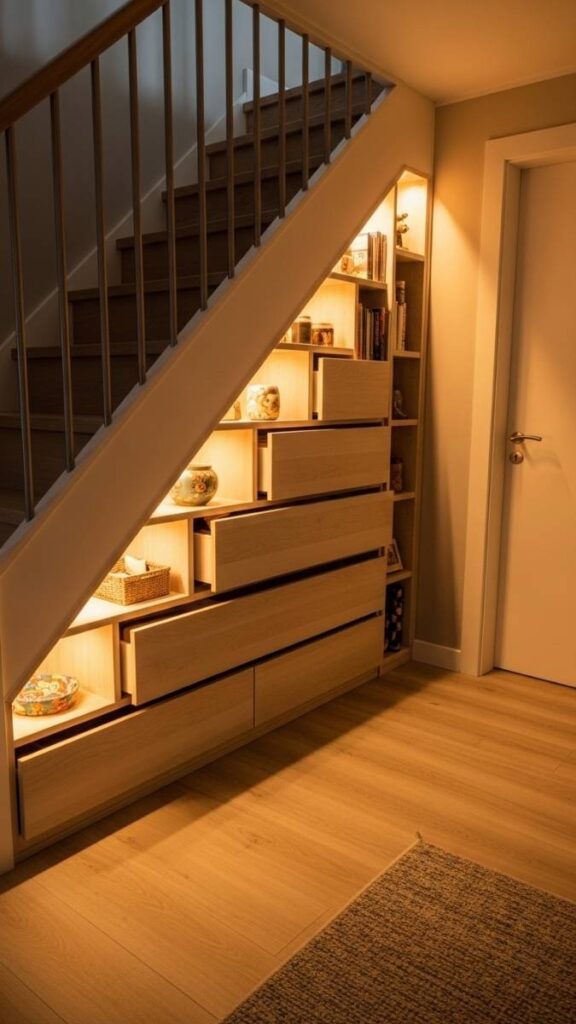
In apartments with interior staircases, usually townhouse-style or duplex units the space beneath the stairs is often left completely empty or used for random storage with no system. This is one of the most underused large voids in any home. Built-in drawers that follow the stair profile, or a combination of shelving and closed cabinets, turns the space into serious storage without using any floor area elsewhere. Even without built-ins, a series of rolling bins or a custom shelving unit cut to fit the slope can hold a significant volume of items.
Use a Narrow Console Table in the Hallway for Zoned Storage
Hallways are transient spaces you walk through them, not in them which is why most people ignore their storage potential. A console table with a lower shelf or basket storage slots fits against the wall without narrowing the walkway significantly, and it creates a drop zone that actually holds things rather than just accumulates them. Assign each basket a category (mail, accessories, keys) so the system has logic. The visual effect is a more organized entry area without any renovation.
Maximize Closet Capacity with a Double Hang Rod
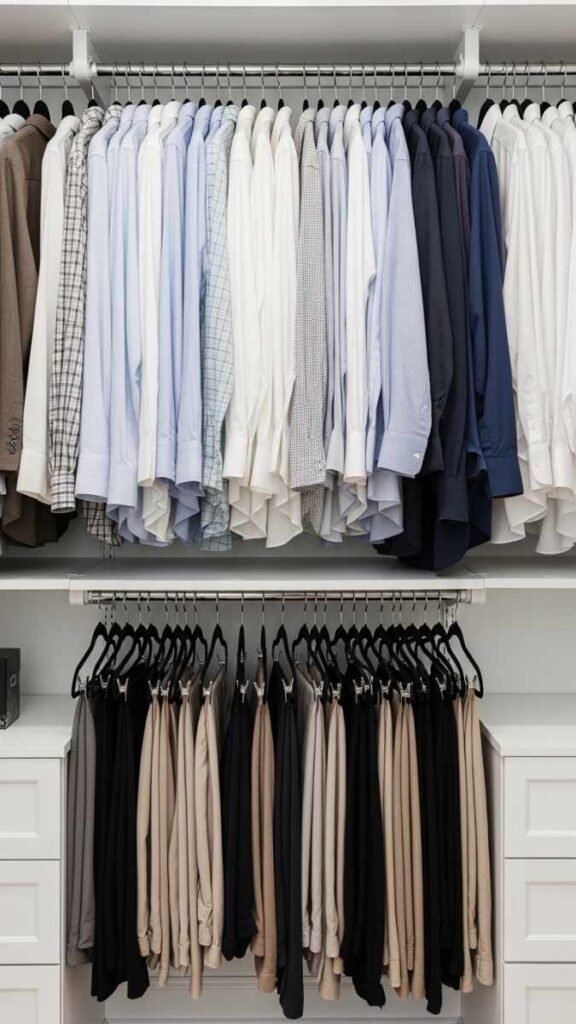
Standard closet setups have a single rod positioned high which means the bottom half of the closet is wasted space. A second rod mounted below (and adjusted for shorter items like folded pants, shirts, or jackets) doubles the hanging capacity without requiring any permanent changes. Most double hang systems are tension-mounted and installed in minutes. For a bedroom without a dresser, this added hanging space can absorb enough clothing to justify skipping the dresser entirely which frees up significant floor space.
Add Over-Door Storage on Bedroom and Bathroom Doors
Over-door organizers are one of the most efficient renter-friendly storage solutions because they add capacity without touching walls. In a bedroom, use a pocket organizer for accessories, charging cables, or books. In a bathroom, use one for toiletries, hair tools, or makeup. The key is choosing a slimline version that doesn’t prevent the door from opening fully and keeping the contents organized enough that the pockets don’t overflow and defeat the purpose. I’ve noticed this works best when you treat each pocket like a fixed slot with a specific item rather than general overflow.
Use a Bookcase as a Room Divider in Open-Plan Apartments
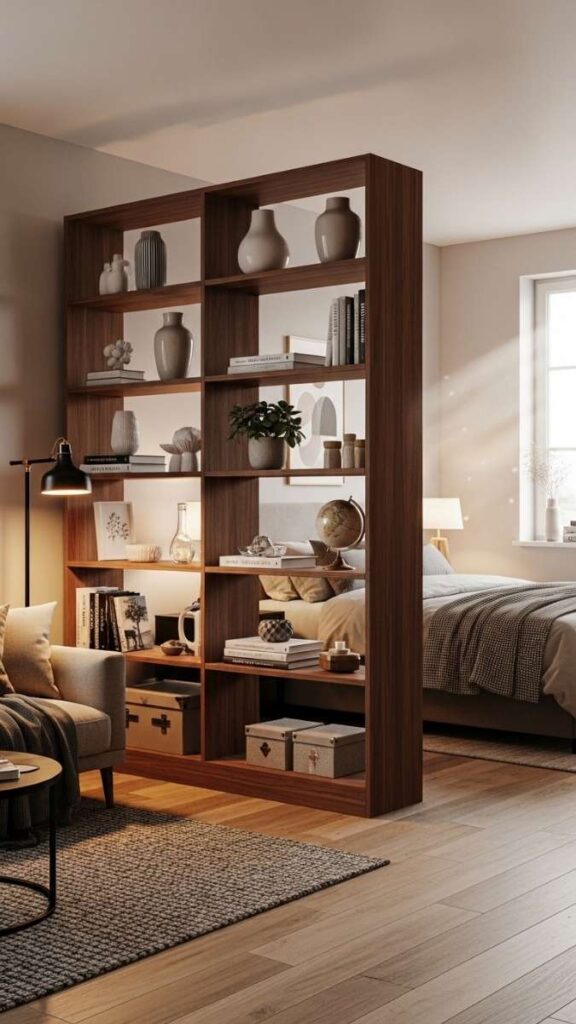
In a studio or open-plan apartment, dividing the space visually without closing it off is a real spatial challenge. A tall bookcase positioned perpendicular to the wall creates a soft boundary between zones while adding substantial storage on both sides. The shelf side can face the living area for books and decor, while the back, if painted or wrapped, defines the sleeping area. This is more effective than curtains for people who want the division to feel architectural rather than temporary. It also doesn’t require any installation.
Mount Hooks Inside Kitchen Cabinet Doors for Mugs and Lids
Kitchen cabinets run out of stacking space faster than shelf space. Mugs, in particular, take up an inefficient amount of vertical room per unit. Mounting a row of small hooks inside a cabinet door moves the mug collection off the shelf entirely, creating a dedicated spot for each one while clearing a full shelf for plates or containers. The same principle works for pot lids using a horizontal tension rod or a small vertical rack mounted inside the door.
Create a Freestanding Pantry Wall with a Tall Cabinet
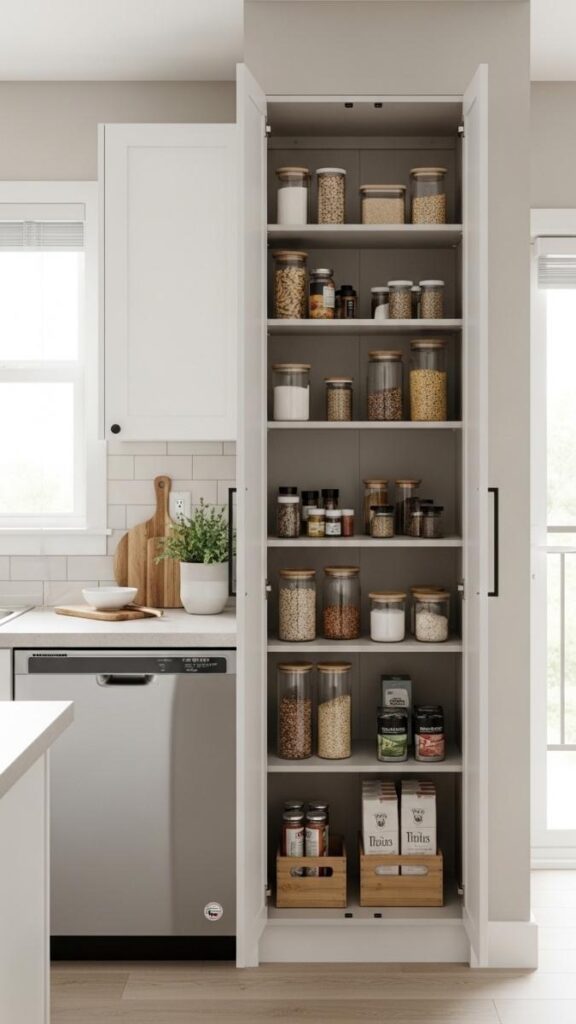
Apartment kitchens rarely come with enough pantry space or any at all. A tall freestanding cabinet in an adjacent dining or kitchen corner extends storage vertically without requiring installation. Look for one with adjustable internal shelves, a mix of open and closed compartments, and a depth that doesn’t extend beyond the counter. In a small kitchen, this cabinet can absorb all dry goods, small appliances, and overflow cookware which frees every existing cabinet for daily-use items only.
Use Storage Ottomans as a Multi-Function Living Room Solution
A standard coffee table has one function: surface. A storage ottoman with a flat top (and a tray added for stability) functions as a coffee table, extra seating when guests arrive, and hidden storage for blankets, controllers, chargers, or anything else that migrates to the living room. In a small apartment where every piece of furniture needs to justify its floor space, a single-function table is a missed opportunity. The upholstered surface also softens the room visually compared to a solid table useful in compact spaces where hard edges can feel heavy.
Install a Shower Caddy Tension System for Full-Height Bathroom Storage
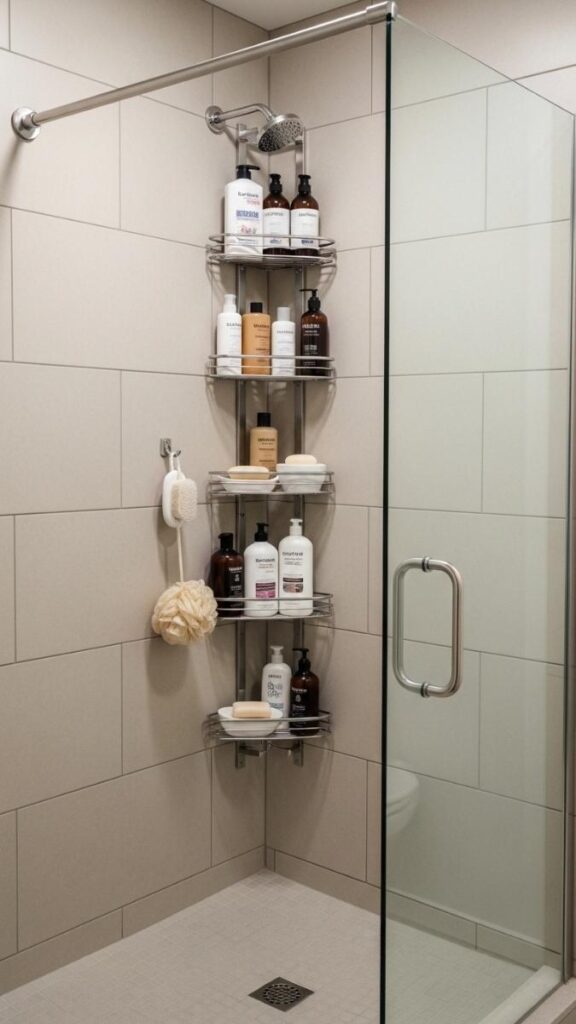
A tension-mounted shower caddy that extends from floor to ceiling is significantly more stable and spacious than the hook-over-showerhead version. It holds more items, doesn’t shift during use, and the extra vertical shelves can hold razors, loofahs, and soap with room to spare no more ledges crowded with bottles. For a bathroom with no medicine cabinet or linen space, this adds meaningful capacity inside the shower footprint itself, which keeps counters clear.
Use Labeled Bins Inside Cabinets to Maintain Category Order
Cabinets go from organized to chaotic within a few weeks if there’s no system inside them. Uniform bins with clear labels don’t just look organized, they enforce a category logic that makes it easier for everyone in the household to put things back correctly. Assign one bin per category, keep consistent bin sizes per shelf, and leave visible space between bins so nothing gets pushed to the back and forgotten. This works in kitchen cabinets, bathroom cabinets, linen closets, and office storage equally well.
Mount a Wall Desk with Fold-Down Surface for Work-from-Home Setups
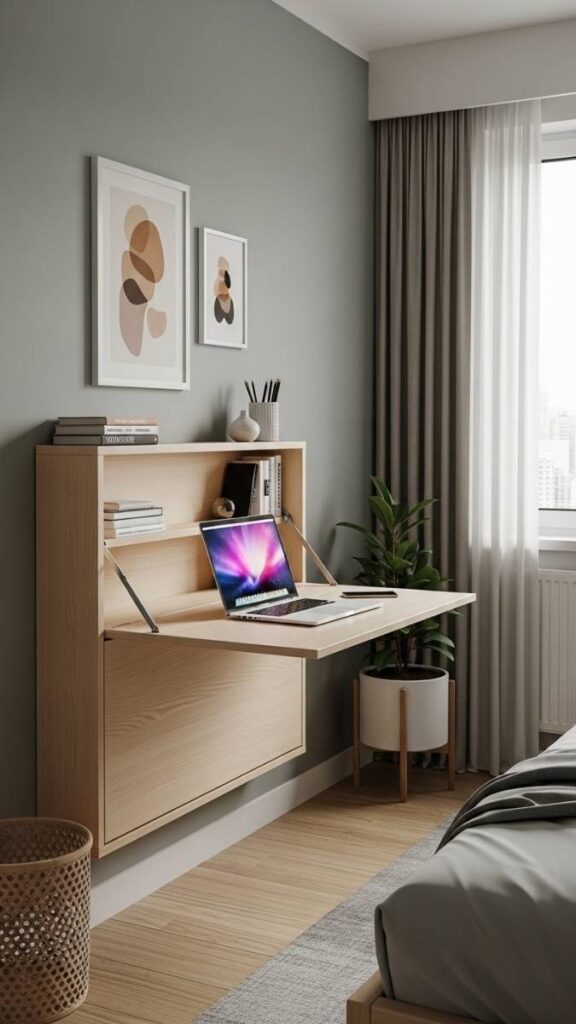
A dedicated workspace is hard to manage in a one-bedroom or studio apartment where the living room or bedroom has to absorb work life. A fold-down wall desk gives you a functional work surface during work hours and closes flat against the wall when you’re done leaving no visual trace of the office zone. Pair it with a floating shelf above for monitor or storage, and a small pegboard beside it for cables and accessories. When working from home is a daily reality, this is a far more sustainable setup than a laptop on the sofa.
Group Small Items in Decorative Trays to Control Surface Clutter
Surface clutter happens when small items have no fixed home. A tray on a coffee table, console, or dresser doesn’t just organize it creates a visual boundary that defines what belongs there and what doesn’t. When everything inside the tray is intentional, the surface looks curated rather than cluttered, even with multiple items on it. The key is keeping the tray contents limited: three to five items maximum, with variation in height (a candle, a plant, a flat coaster) to make the grouping feel designed rather than dumped.
Use Vertical Bike Storage Mounts for Apartments with No Storage Room
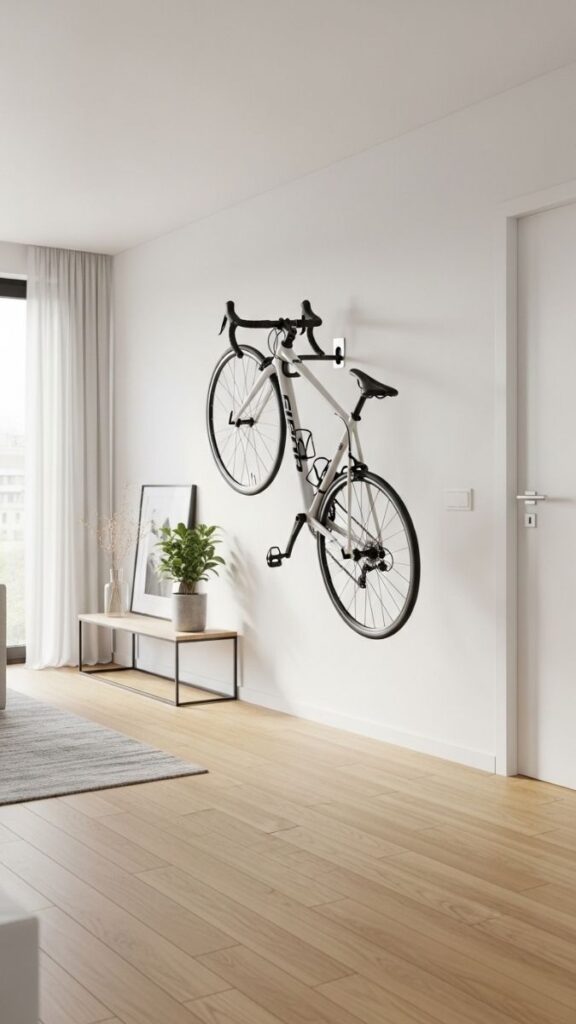
For apartment dwellers who own bikes and have no building storage, a wall-mounted vertical hook is the most space-efficient solution available. The bike hangs perpendicular to the wall, taking up roughly two feet of wall space and nothing on the floor. Positioned near the entry, it integrates into the layout without becoming a visual obstacle. The hooks are typically renter-safe (small wall anchors) and hold the bike firmly. Compared to leaning a bike against the wall which is the default this frees a surprising amount of floor space in a narrow entry.
Build a Linen Storage System in the Bathroom with a Ladder Shelf
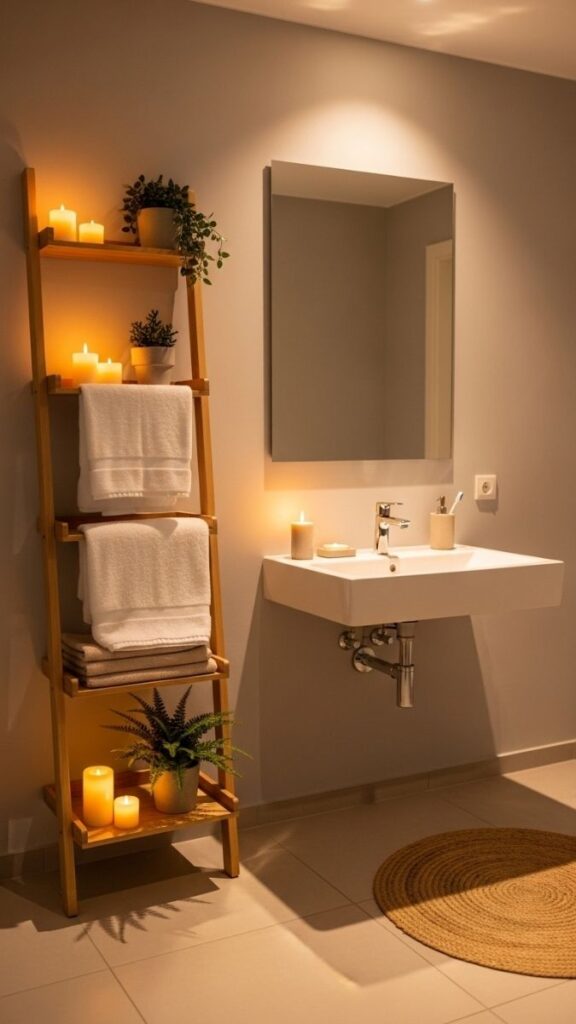
A ladder shelf in the bathroom leans against the wall without requiring any installation useful for renters and provides three to four surface levels for towels, toiletries, and small plants. Unlike a standing shelf unit, the A-frame design takes up less floor space at the base and creates an open, airy feel rather than blocking the room. Fold towels neatly and keep the shelves edited (not overloaded) and the result is a bathroom that looks intentional. In a bathroom without a linen closet, this is a practical and renter-safe alternative.
What Actually Makes These Apartment Storage Ideas Work
Storage ideas fail in apartments for a specific and consistent reason: the solution doesn’t match the constraint. A large armoire works in a spacious room but blocks light and movement in 400 square feet. A beautiful open shelf looks great styled in a magazine but becomes visual clutter when loaded with everyday items.
Match storage to behavior, not aesthetics.
The best storage systems in small apartments are built around what you actually do, where you drop things when you walk in, what you grab most often, and where the clutter naturally accumulates. Fighting those patterns rarely works. Instead, design the storage around them.
Use furniture that earns its floor space.
In a small apartment, every piece of furniture that sits on the floor should justify its presence with function beyond its primary purpose. A coffee table that only holds drinks is expensive floor space. A storage ottoman, a bed with drawers, a sofa with a base compartment these earn their footprint.
Prioritize access over capacity.
A storage system you can’t easily use will stop being used. Bins stacked four deep, overhead shelves that require a step stool for daily items, or drawers that require emptying to find what you need create more friction than they solve. The most effective storage puts frequently used items within arm’s reach and saves the hard-to-reach spaces for occasionally accessed items.
Apartment Storage Ideas at a Glance
| Idea | Best Space Type | Primary Benefit | Renter-Friendly | Effort Level |
| Bed with storage drawers | Studio / 1-bedroom | Replaces dresser | ✅ Yes | Low |
| Floating shelves to ceiling | Any room | Maximizes wall height | ✅ Yes | Medium |
| Rolling kitchen cart | Small kitchen | Adds prep + storage | ✅ Yes | Low |
| Storage bench at entry | Narrow entryway | Solves seating + clutter | ✅ Yes | Low |
| Tension rod under sink | Kitchen / Bathroom | Vertical under-sink use | ✅ Yes | Very Low |
| Sofa with hidden storage | Living room | Hides bulky items | ✅ Yes | Low |
| Bookcase room divider | Studio / Open-plan | Zone separation + storage | ✅ Yes | Low |
| Fold-down wall desk | Bedroom / Living room | WFH without footprint | ⚠️ Check lease | Medium |
| Ladder shelf | Bathroom | Linen without linen closet | ✅ Yes | Very Low |
| Double hang rod | Bedroom closet | Doubles hanging capacity | ✅ Yes | Very Low |
Common Apartment Storage Mistakes That Make Spaces Feel More Cramped
Using too many open surfaces.
Open shelving looks great in staged photos, but in a real apartment, it requires constant maintenance to stay tidy. Too many open shelves especially in small rooms turn everyday clutter into a permanent backdrop. Balance open and closed storage so items that are messy in practice have somewhere to hide.
Buying storage furniture that’s too large for the space.
An oversized wardrobe or a chunky shelf unit in a compact bedroom reduces floor space and blocks natural light paths. Before buying any storage furniture, measure the clearance you need for doors to open fully, drawers to extend, and a comfortable walking path (typically at least 30 inches). Storage that reduces movement makes a space feel smaller, not more organized.
Treating every room separately instead of thinking system-wide.
Apartment storage works best when thought about as a whole rather than room by room. If your bedroom closet is overloaded, some of that content might belong in a hallway console, under the bed, or in a bathroom cabinet not in a second wardrobe shoved into the bedroom corner. Redistributing storage across the apartment is often more effective than adding more storage to a specific room.
Ignoring vertical space in favor of floor-level solutions.
Most apartment dwellers default to floor-level solutions: bins on the ground, baskets under tables, boxes in corners. Vertical space is almost always underused. Walls, cabinet interiors, door surfaces, and the zones above head height are where real capacity lives in small spaces.
FAQ’s
What is the best storage solution for a small apartment with no closets?
Freestanding wardrobes, floor-to-ceiling shelving units, and storage ottomans are the most practical options for apartments without built-in closets. Focus on multi-function furniture pieces that hold items while also serving another purpose like seating or room division to avoid over-furnishing a small space.
How can I add storage to a studio apartment without making it feel cluttered?
Use vertical storage (wall-mounted shelves, tall cabinets) rather than horizontal furniture that eats floor space. Keep storage closed or behind uniform bins so it reads as a single contained element rather than scattered items. A bookcase used as a room divider also adds storage while creating functional zones in an open layout.
Is it better to use open shelving or closed cabinets in a small apartment kitchen?
Closed cabinets work better for most people in small kitchens because they hide everyday clutter and require less upkeep than styled open shelves. Use one or two open shelves for frequently accessed items or decor, and keep the rest closed. The visual cleanliness of closed storage makes compact kitchens feel less busy.
What storage furniture works best in an apartment bedroom with limited space?
A platform bed with built-in drawers is the highest-value storage piece for a small bedroom; it absorbs dresser-level storage without adding any floor footprint. Add a double hang rod in the closet and an over-door organizer, and most small bedrooms can function without additional freestanding furniture.
How do I organize apartment storage without permanent modifications?
Tension rods, adhesive hooks, over-door organizers, freestanding shelves, and modular drawer organizers are all renter-safe options that don’t require wall anchors or drilling. Most work as well as permanent fixtures when correctly sized for the space.
What’s the most overlooked storage space in apartments?
The inside surfaces of cabinet doors. They’re consistently ignored and consistently useful for spices, cleaning supplies, pot lids, hair tools, and more. A few adhesive hooks or a slim over-door rack converts that dead space into real storage without any permanent changes.
How do I stop clutter from building up even after organizing?
The key is giving everything a fixed home and making it slightly easier to put things back correctly than to leave them out. Labeled bins, consistent categories, and storage positioned near where items are naturally used (cleaning supplies under the sink, charging cables near the sofa) all reduce the effort of maintaining the system day to day.
Conclusion
Apartment storage isn’t about finding more space, it’s about using the space you already have more deliberately. Most apartments have significant untapped capacity in vertical areas, door surfaces, and furniture footprints that aren’t working as hard as they could. The ideas here address real constraints: renters who can’t drill, compact rooms that need furniture to multi-task, and everyday routines that create clutter no matter how organized you try to be.
Start with one or two setups that address your most persistent pain point whether that’s an overloaded closet, a chaotic kitchen, or a bathroom with nowhere to put anything. Small, well-chosen changes to how storage is set up tend to have an outsized effect on how the whole apartment feels to live in day to day.