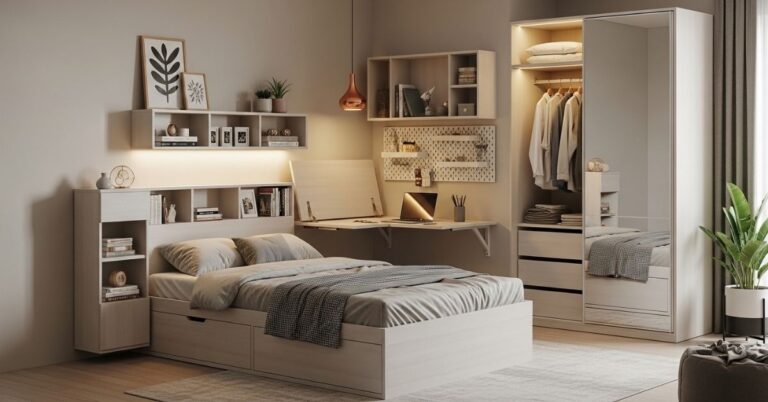
61+ Small Apartment Ideas That Make Every Square Foot Work Harder
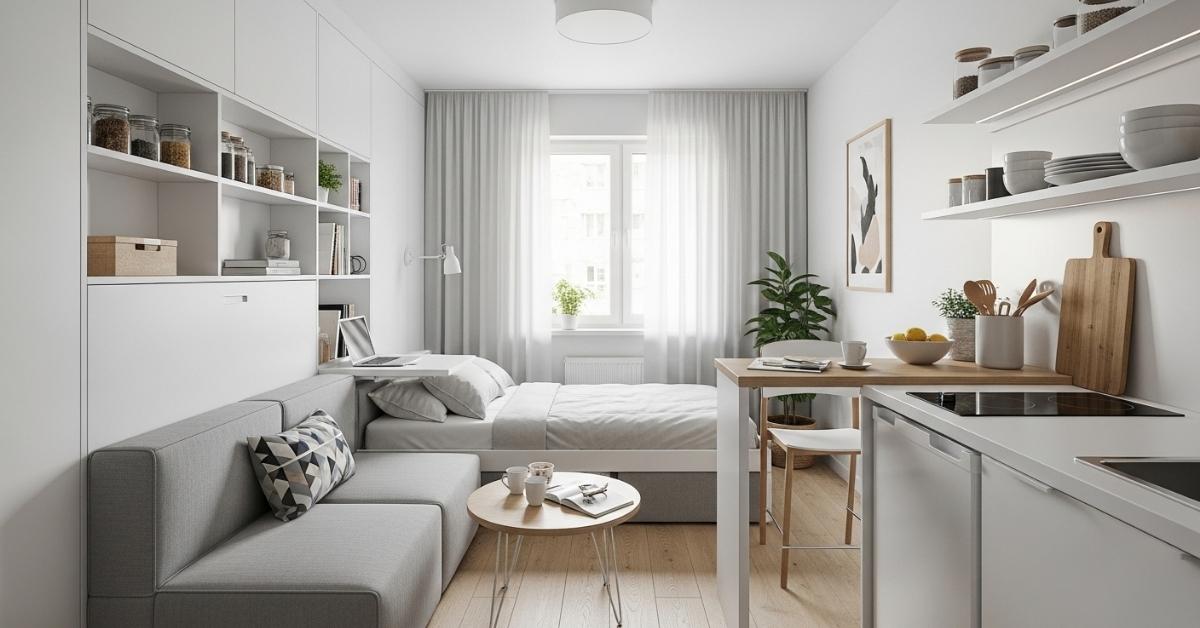
There’s a specific kind of frustration that comes with a small apartment not because the space is unlivable, but because it never quite feels settled. Furniture that doesn’t fit the flow. Small Apartment Ideas Corners that collect clutter.
Rooms that feel like they’re trying to be two things at once and failing at both. The good news: most of these problems are layout and proportion problems, not size problems.
For studio apartments, compact one-bedrooms, or any space where every decision matters, what follows is a curated set of ideas that are grounded in how small spaces actually function, not just how they look in a styled photo shoot.
Float Your Sofa Away from the Wall
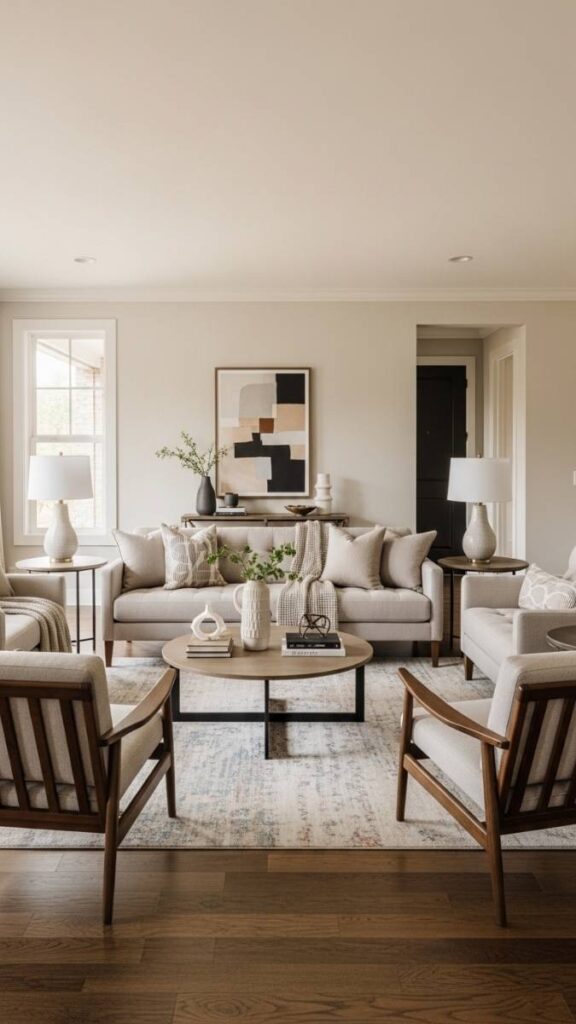
Pushing the sofa directly against the wall is the default move in small living rooms and it almost always makes the room feel more cramped, not less. Pulling it out just 10 to 12 inches creates a visual zone that reads as intentional, and it gives the eye a sense of depth to travel across.
The space behind the sofa becomes a natural walkway, which helps with traffic flow if your kitchen or entryway is behind the seating area. This setup is especially useful in rectangular living rooms where the proportions tend to feel long and narrow; floating the sofa breaks up the visual tunnel effect without adding anything new to the room.
Use a Daybed as a Dual Function Living Room Anchor
In a studio or a space where the living room also needs to function as a guest room, a daybed does what a standard sofa can’t. During the day it reads as seating; add a throw and extra pillows and it becomes a proper sleeping space at night. The key is choosing a daybed with a clean,
low profile something that doesn’t read as a bed when you don’t want it to. I’ve found that styles with a bolster pillow along the back hold up better visually in living room contexts than those with just a headboard. This is one I’d actually recommend trying first if you’re working with a studio under 500 square feet.
Mount Your TV on the Wall and Reclaim the Surface Below
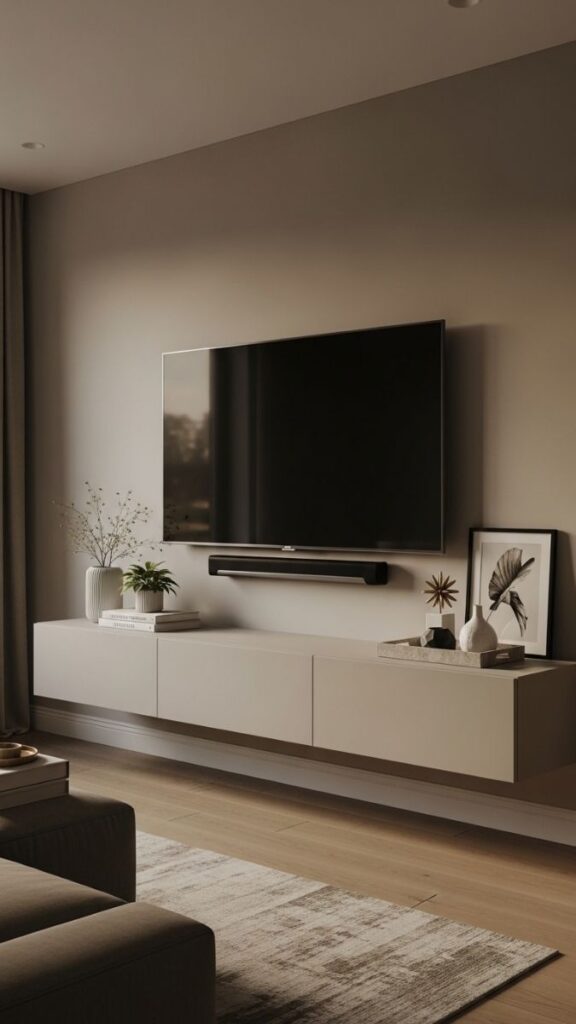
A TV stand or entertainment unit takes up floor space and more importantly creates visual weight that sits low and heavy in a small room. Mounting the TV on the wall and using a single narrow floating shelf below for components opens up the floor, making the room feel longer and more open.
The floor space that was previously occupied becomes part of the visual field, which reads as more room even if it’s just a few extra feet. This works especially well in apartments with good wall space but limited floor space, and it’s one of the easier wins in terms of effort-to-impact ratio.
Choose a Round Dining Table Over a Rectangular One
Rectangular tables tend to read as blocking in small dining areas they cut across the space visually and physically. A round table with the same surface area allows more flexible chair placement, easier movement around it, and a softer overall feel in tight rooms.
In apartments where the dining area is really a section of the living room rather than a separate space, a round table blends into the layout more naturally. It also seats more people for its footprint during gatherings. You can add chairs around the curve without feeling like someone’s been pushed into a wall.
Install Floor to Ceiling Shelving in One Focused Zone
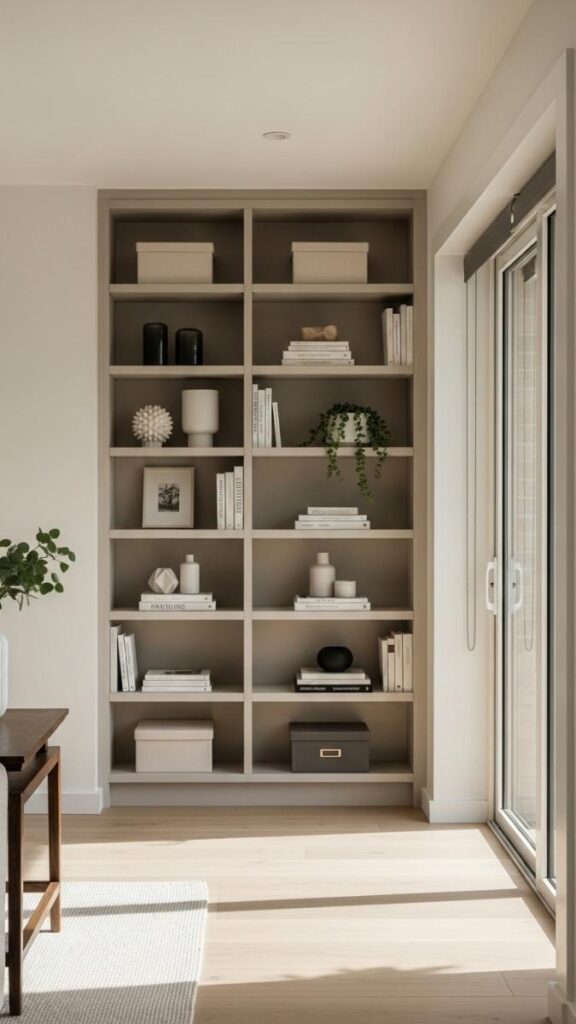
The instinct in a small apartment is to spread storage out a shelf here, a cabinet there. But a single, tall shelving unit that goes all the way to the ceiling in one concentrated zone is usually more effective both practically and visually.
Vertically, it draws the eye upward and makes ceiling height feel more generous. Practically, it consolidates your books, objects, and storage into one area rather than scattering visual noise across multiple walls. Works especially well in living rooms and home offices where you need substantial storage without the room feeling overrun by furniture.
Use a Narrow Console Table as a Room Divider
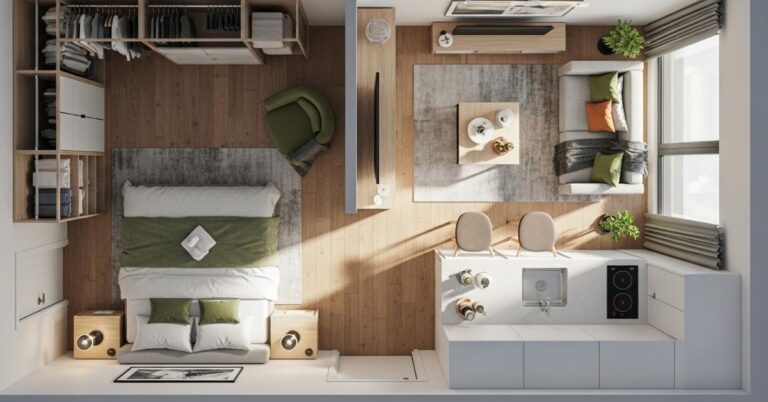
In a studio or open-plan layout, defining different zones is one of the bigger challenges. A console table positioned directly behind the sofa creates a low visual boundary between the living area and the sleeping or dining zone without physically blocking anything or taking up meaningful floor space.
It also gives you a surface useful for a lamp, a small plant, or a few books that reads as part of the living room rather than awkward floating furniture. At 10 to 14 inches deep, a narrow console has almost no footprint but a real organizational impact on how the space is read.
Go for a Bed with Built In Storage Underneath
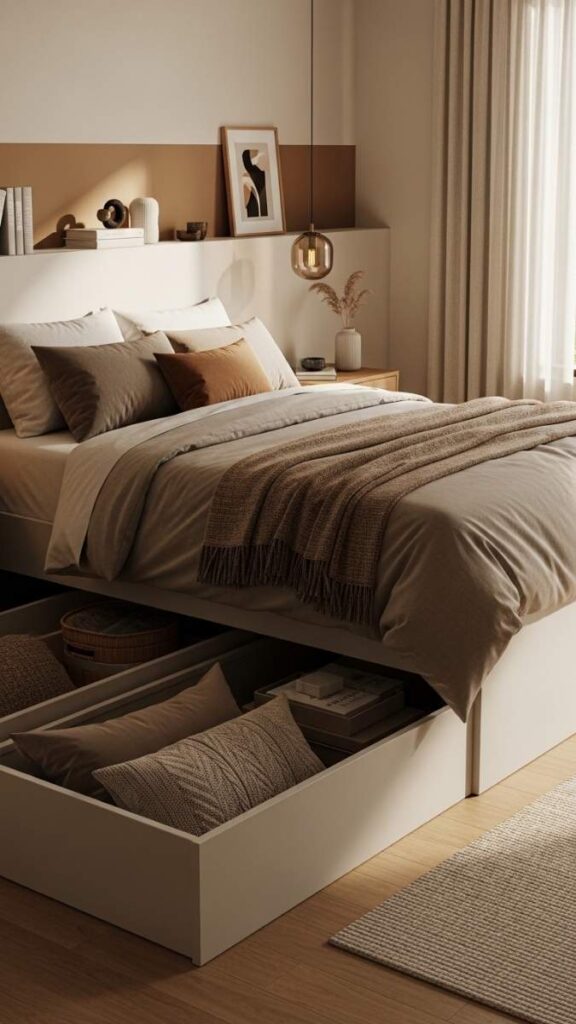
In a small bedroom or studio, the area under the bed is often the largest single storage zone in the entire apartment. A bed frame with built-in drawers either on both sides or the foot end lets you move bulky items like extra linens, out-of-season clothing, and shoes out of the closet and off the floor.
This usually has a significant impact on how usable the closet feels day-to-day. Compared to under-bed bins that require you to lift the mattress or get on the floor, integrated drawers are genuinely more usable, which means they actually get used.
Read More About: 60+ Light Blue Bathroom Ideas That Make Small Spaces Feel Airy and Intentional
Layer Lighting Instead of Relying on One Overhead Source
A single overhead fixture in a small apartment creates flat, even light that tends to make a space feel institutional rather than lived-in. Replacing that single-source approach with two or three lower light sources: a floor lamp in one corner, a table lamp, and something on a shelf creates depth and warmth that makes the same room feel smaller but also cozier in a good way.
In the evening especially, this kind of layered lighting shifts the feeling of a space more than almost any other change. This is one of those setups where the physical dimensions of the room don’t change but the perceived atmosphere does, significantly.
Choose Furniture with Visible Legs
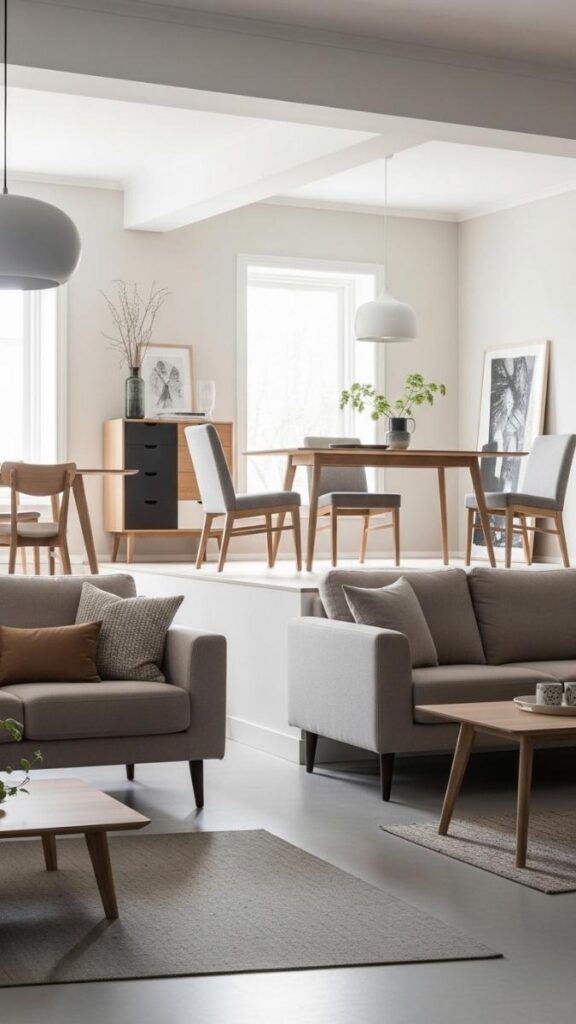
Furniture that sits directly on the floor, especially sofas and armchairs, creates a solid visual mass that reads as heavy and space-consuming. Pieces raised on legs allow light and sightlines to pass underneath, which makes the floor feel larger.
Even a few inches of clearance has a real visual effect. This is especially noticeable in smaller rooms with patterned or light-colored rugs. You see more of the rug, which in turn reads as more floor. Practically, it also makes cleaning underneath easier, which matters more than it sounds in tight spaces.
Use Mirrors Strategically, Not Decoratively
The mirror-makes-rooms-look-bigger idea is accurate, but it only works well when the mirror is placed so it reflects something worth seeing, ideally a window, a well-lit corner, or a part of the room that has some depth to it. A mirror reflecting a blank wall or the back of a door doesn’t do much.
The most effective placement in most small apartments is leaning or mounting a larger mirror on the wall directly opposite or adjacent to the primary window, so it bounces natural light across the room. Scale matters too; a large mirror does more work than several small ones scattered at random.
Create a Defined Entry Zone Even in an Open Layout
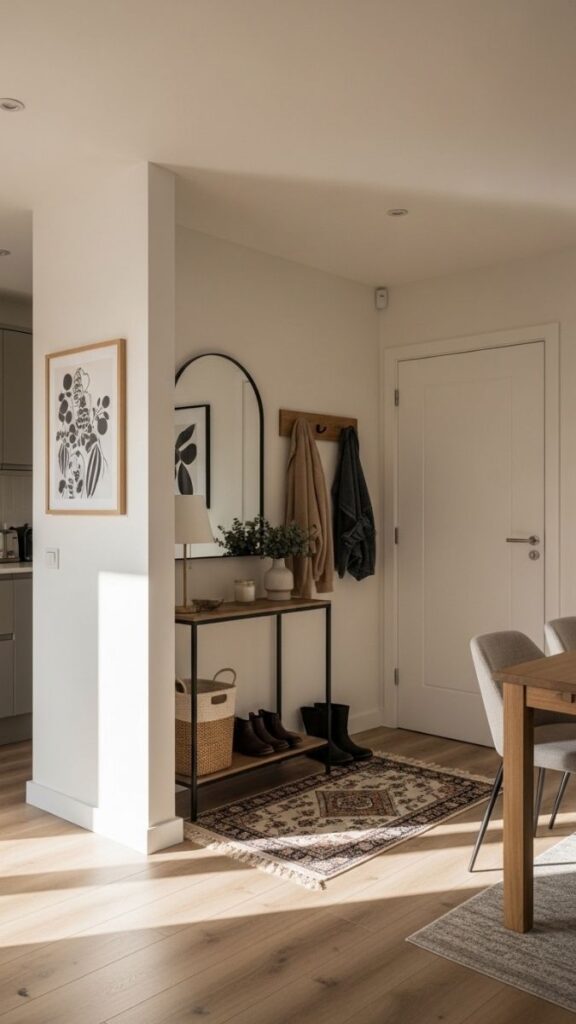
Many small apartments open directly into the living room, which means there’s no transition point between the outside world and your home space. Adding even a minimal entry zone, a narrow bench,
a set of wall hooks, and a small rug creates a physical and psychological threshold that helps the apartment feel more organized and deliberate. It also gives you a functional landing zone so bags, keys, and shoes don’t end up scattered across the living room.
Honestly, this is one of the more underrated small apartment moves because it has almost no square footage cost but a real day-to-day organizational payoff.
Read More About: 73+ Aesthetic Setups That Make Your Home Feel Intentional Without Starting Over
Lean Into Vertical Wall Space in the Kitchen
Counter space in a small apartment kitchen is always at a premium. Moving storage upward opens shelves for daily dishes, a magnetic knife strip, a hanging rail for utensils frees up counter surfaces without requiring any additional floor space.
Open shelving in kitchens gets a bad reputation for looking messy, but that’s mainly a function of what’s on the shelves, not the shelves themselves. Keeping only what you actually use daily on open shelves and storing everything else in closed cabinets keeps the look functional rather than chaotic.
Use a Curtain to Define a Sleeping Zone in a Studio
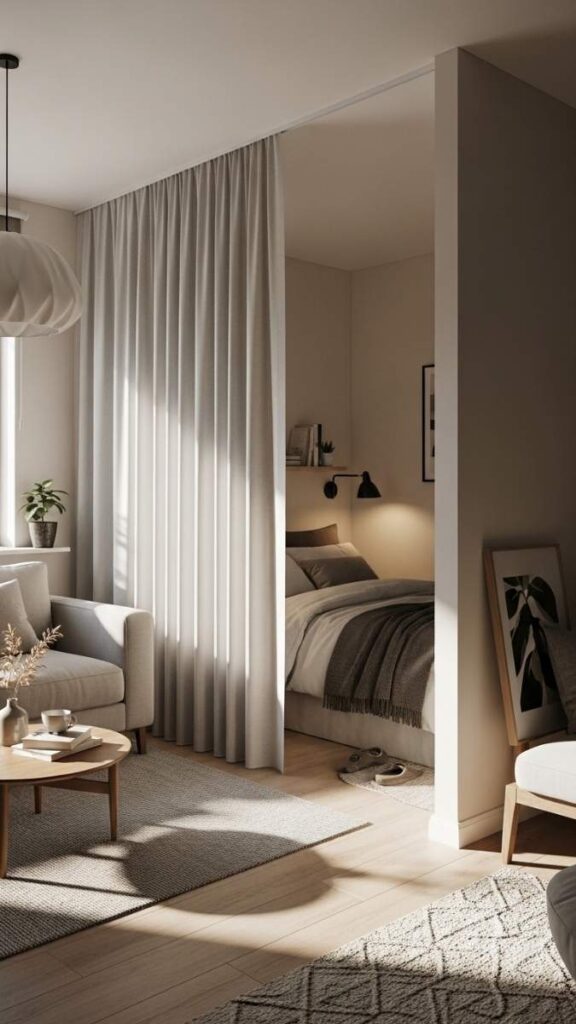
In a studio where privacy and visual separation are both limited, a curtain hung from a ceiling-mounted track is one of the more practical solutions. It doesn’t require construction, it’s renter-friendly,
and it can be drawn back completely when you want the space to feel open. Heavy linen or cotton in a neutral color absorbs some sound and creates a genuine sense of separation without making the room feel divided and cramped. This works better than most furniture-based dividers in studios under 400 square feet because it takes up zero floor space.
Mount Bedside Lighting on the Wall Instead of Using Table Lamps
Nightstand space in a small bedroom is constantly contested by phone, water glass, book, whatever else accumulates. Switching to wall-mounted swing-arm sconces frees up the entire nightstand surface without removing the light you need.
The fixtures extend when you need them and swing back when you don’t, which matters in bedrooms where space between the bed and the wall is limited. Practically, it also makes reading in bed easier since you can angle the light exactly where you need it rather than dealing with the fixed beam of a table lamp.
Choose a Dining Bench Over Chairs on One Side
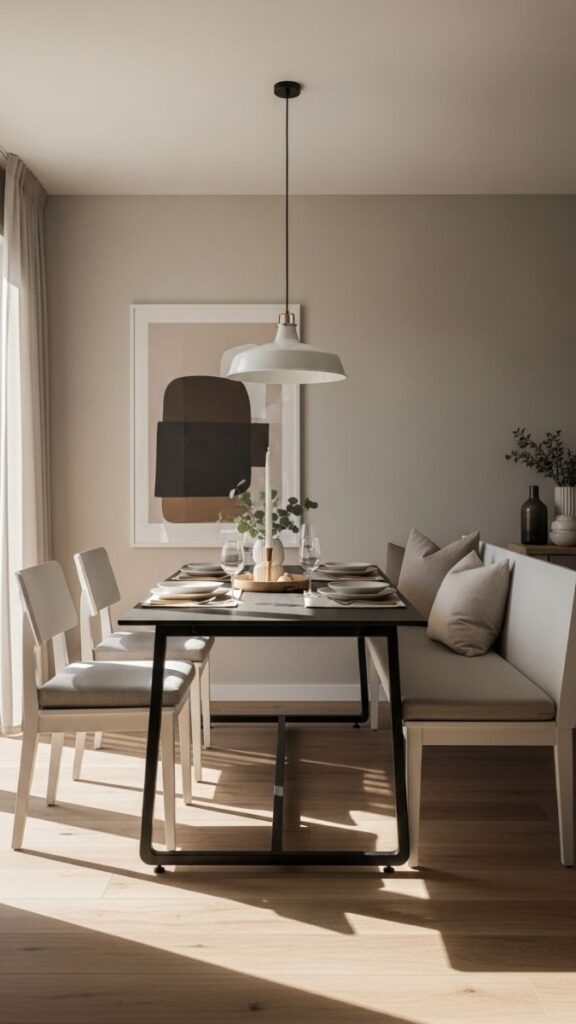
Chairs require clearance; each chair needs room to pull out, sit in, and push back. A bench on one or both sides of a dining table reduces that clearance requirement significantly, and the bench can slide under the table entirely when not in use.
In apartments where the dining area is also a circulation path, this makes a real functional difference. The bench can also double as occasional seating in the living room if needed, which is the kind of multi-use thinking that tends to pay off in smaller spaces.
Add a Murphy Bed in a Home Office or Studio
A Murphy bed is the most effective single furniture piece for making a studio or one-bedroom work as a guest room without permanently sacrificing living or working space. When folded up, it reads as a flat panel often housing a desk, shelves, or cabinetry.
When folded down, it becomes a proper sleeping space with a real mattress. Modern Murphy bed units have improved significantly in terms of mechanism reliability, and many can be installed without professional help.
In 2026, the category has expanded into modular wall systems that combine the bed with a workstation, making them especially relevant for remote workers in small spaces.
Read More About: 72+ Home Color Schemes That Actually Work in Real Rooms
Use Color to Create the Feeling of Separate Zones
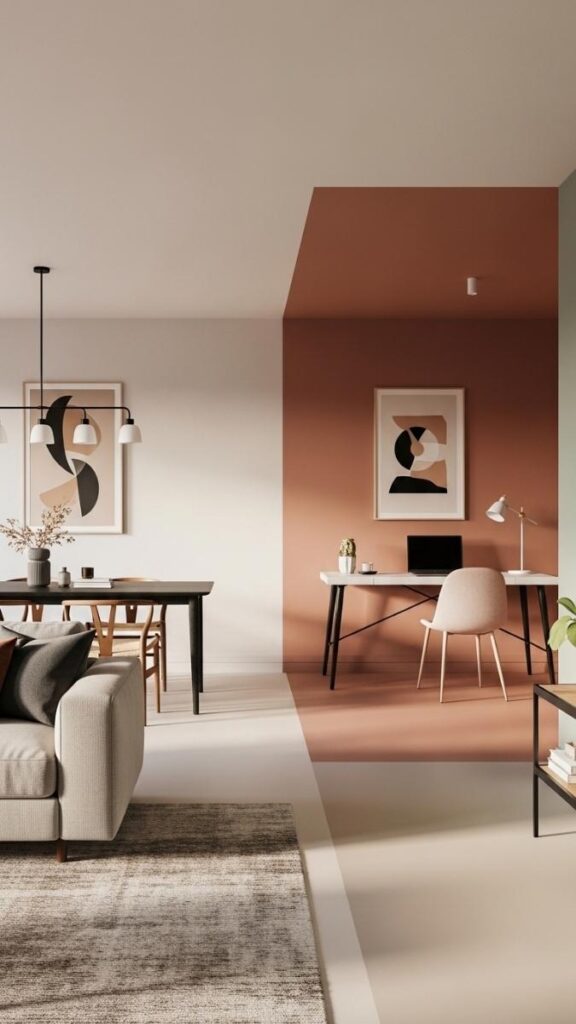
In an open-plan apartment, painting one wall or zone a slightly different color or the same color in a slightly deeper tone creates a visual boundary that suggests different areas without physical separation.
It’s a subtler approach than rugs or furniture placement alone, and it works particularly well in studios or open-plan spaces where you want the rooms to feel distinct without feeling divided. This doesn’t require bold or contrasting color; even a warmer versus cooler shade of white accomplishes the separation effect more than most people expect.
Swap Heavy Curtains for Roman Shades or Sheer Panels
Heavy, floor-length curtains in a small room take up visual space even when they’re pushed to the sides. Roman shades fold up neatly against the window frame when raised, taking up almost no visual space at all.
In rooms where window size is limited to begin with, this also maximizes the amount of light coming in which in a small space has an outsized effect on how open the room feels. For renters who can’t mount hardware, tension rod sheer panels are a reasonable alternative that provides privacy without the visual weight of heavier curtains.
Create a Dedicated Work Corner with a Wall Mounted Desk
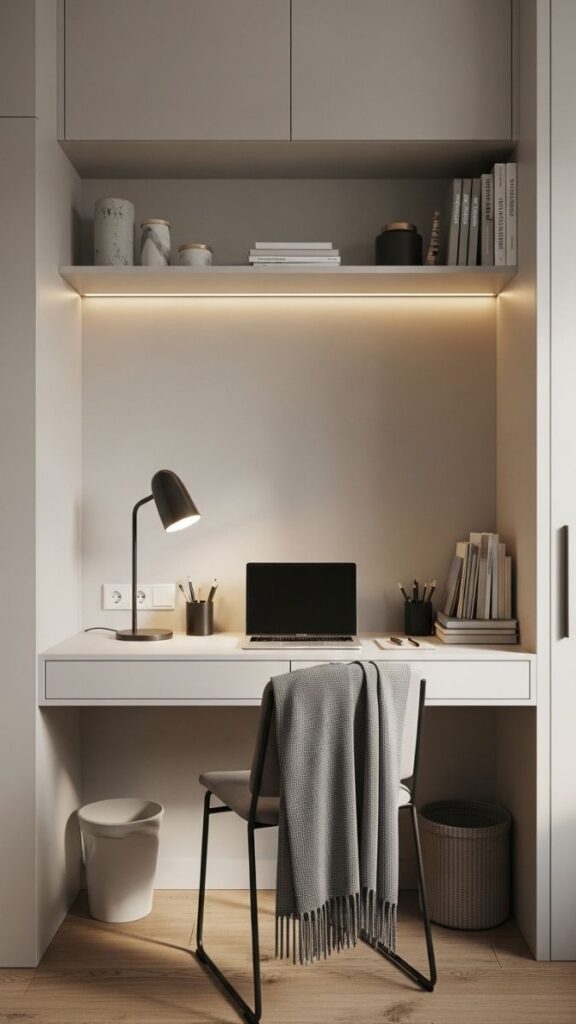
A standard desk takes up significant floor space and often ends up as a dumping surface in small apartments. A wall-mounted fold-down or fixed desk keeps the footprint minimal; most options project only 18 to 20 inches from the wall, leaving the rest of the floor clear. Paired with a shelf above for work essentials and a simple task chair that tucks underneath, it creates a functional workspace without dominating the room.
This works particularly well in bedrooms being used as dual-purpose work-sleep spaces, where keeping the visual boundary between “work” and “rest” is useful for both productivity and sleep quality.
Use a Pegboard in the Kitchen or Home Office
Pegboard is genuinely underused in residential spaces. It turns any wall surface into flexible, rearrangeable storage without requiring new shelving each time your needs change. In a kitchen, it holds spices, utensils, and small containers. In a home office, it manages cables, office supplies, and frequently used tools.
The visual key is keeping it organized and not overloading it; a pegboard that’s half-empty reads as intentional; one stuffed with every possible item reads as chaotic. In my experience, leaving 20 to 30 percent of the pegboard free makes the whole setup look better without sacrificing much storage.
Invest in Nesting Tables Rather Than a Fixed Coffee Table
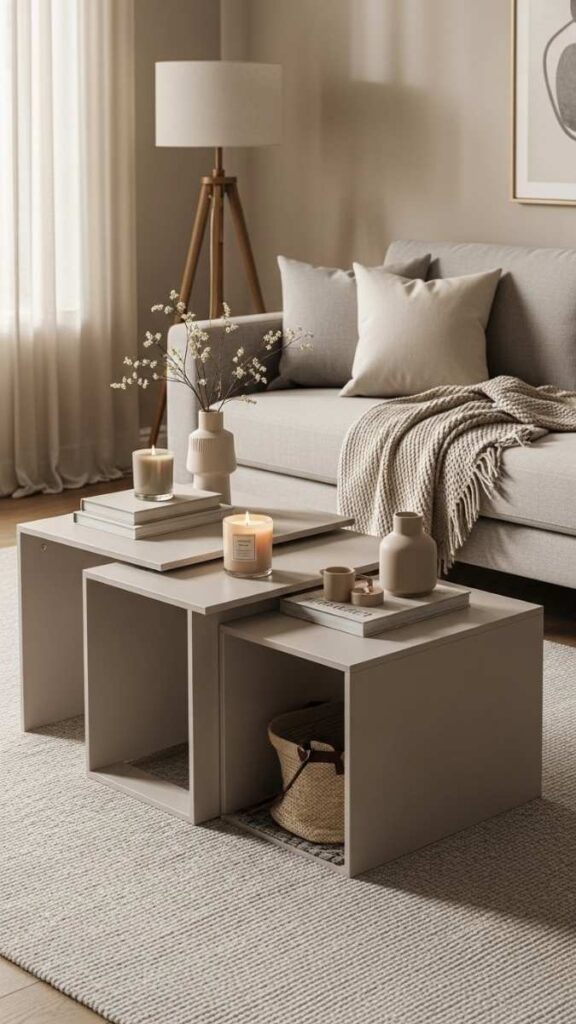
A fixed coffee table in a small living room commits you to one traffic pattern and one furniture arrangement. Nesting tables offer the surface area when you need it and collapse down to almost nothing when you don’t.
For apartments where the living room also functions as an exercise space, a dining overflow, or a work area, the flexibility matters more than the permanence of a traditional coffee table. Light materials, blond wood, glass, white lacquer keep them from reading as too heavy even when all three are in use.
Hang Artwork Lower Than You Think
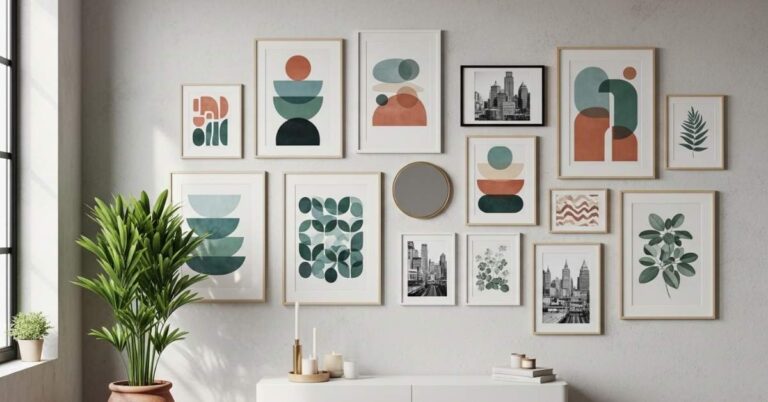
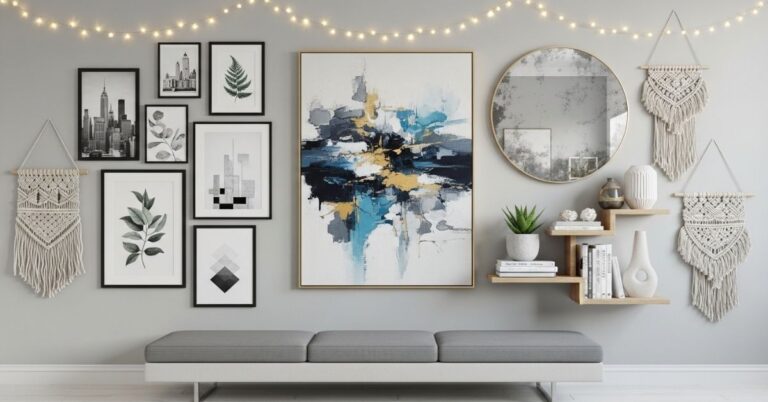
Gallery walls in small apartments often end up with too high artwork floats near the ceiling, disconnected from the furniture below. Hanging art so that the center of the piece is at roughly eye level 57 to 60 inches from the floor grounds it visually and creates a relationship between the furniture and the wall.
In rooms with lower ceilings, hanging artwork slightly lower than standard actually works better because it keeps everything in proportion. The practical payoff is a room that reads as more curated and considered, even if nothing else has changed.
Add a Clothes Rail in the Bedroom as Open Wardrobe Storage
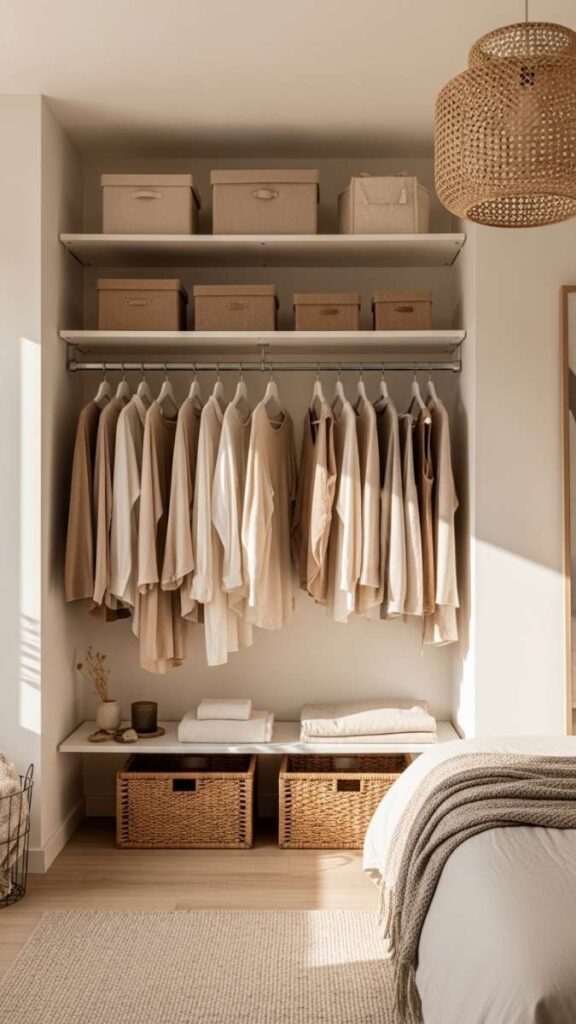
When closet space is limited, a freestanding clothes rail is a practical solution that can work aesthetically if it’s kept intentional. Limiting what’s displayed to a curated selection of clothing seasonally organized, with no more than one row deep keeps it from reading as overflow.
A rail with a lower shelf for shoes or folded items effectively functions as a wardrobe without the bulk of a wardrobe cabinet. This is particularly useful in bedroom layouts where a large wardrobe would block a window or consume most of the wall.
Run Rugs Larger Than You Think Is Necessary
The most common rug mistake in small spaces is going too small. A rug that only sits under the coffee table, while the sofa legs float on the bare floor, creates a fragmented look that makes the room feel smaller and less resolved.
A rug large enough for at least the front legs of all seating to rest on or ideally all four legs grounds the furniture as a cohesive group and makes the overall space feel more generous. In open-plan layouts, an appropriately sized rug is often the most effective way to define a living zone without any physical barriers.
Use a Bar Cart as a Mobile Storage Solution
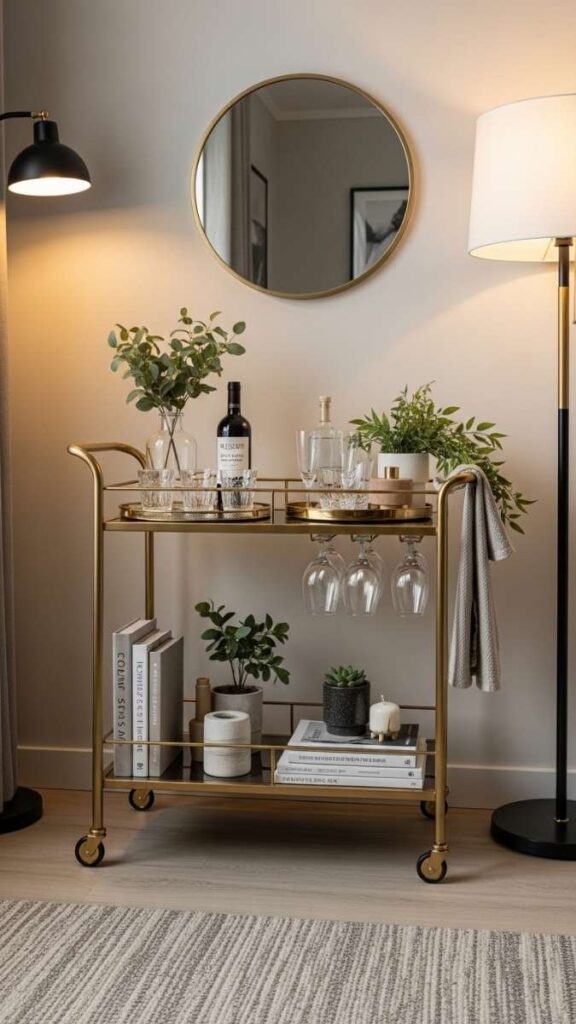
A bar cart earns its place in a small apartment because it’s mobile. It can move to wherever it’s useful, pulled into the living room for entertaining, tucked against a kitchen wall when not in use. Beyond drinks storage,
it functions well as a small plant station, a work supply cart, or a coffee station if your kitchen counter is limited. The two-tiered structure makes it more storage-efficient than it looks, and the wheels mean you’re not committing it to any fixed position.
Place Tall Plants in Corners to Add Volume Without Clutter
An empty corner in a small apartment tends to feel wasted but filling it with furniture creates congestion. A tall plant, a fiddle-leaf fig, a snake plant, a bird of paradise occupies the corner visually without taking much floor space and adds a vertical element that draws the eye upward.
Beyond aesthetics, plants change the quality of a space in ways that are harder to quantify: they soften the edges of a room that has a lot of straight lines and hard surfaces, which most apartments do. This is especially effective in corners that get at least indirect natural light.
Design Your Entryway Storage to Work on Two Axes
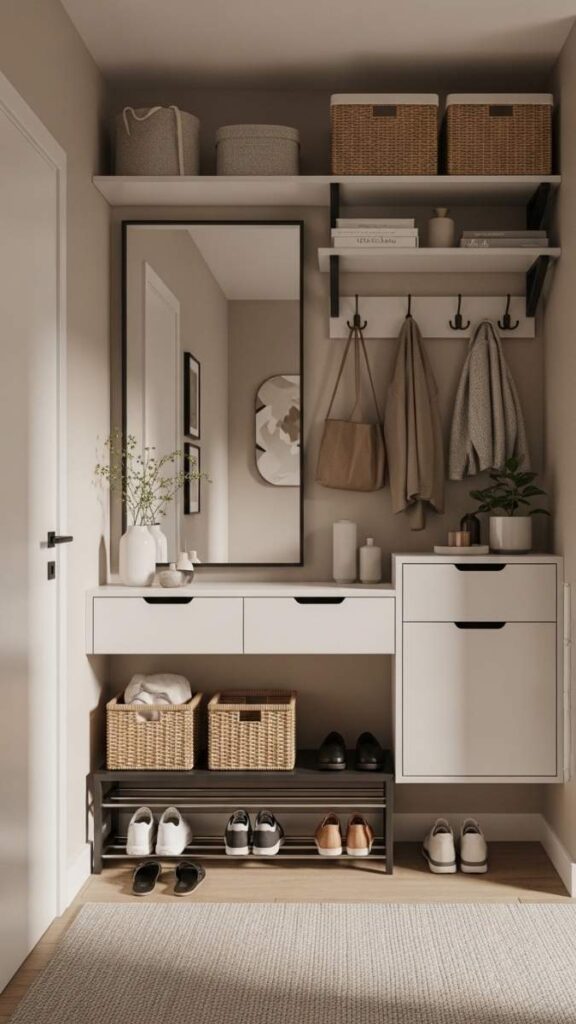
Most entryway storage in small apartments is designed on one axis, usually horizontal hooks at the same height. A two-axis system uses both height and depth: hooks at mid-level for frequently used bags and jackets,
a shelf above for less-used items, and a bench or low shelf below for shoes. This triples the usable storage in the same wall footprint. The practical result is an entryway that actually absorbs the daily load of bags, shoes, and outerwear without things migrating into the living room.
What Actually Makes These Small Apartment Ideas Work
Most small apartment setups fail not because the ideas are wrong but because the proportions are off. A floating sofa in a room that’s too narrow creates a traffic problem instead of solving one. A floor-to-ceiling shelf in a room with 8-foot ceilings has less impact than the same shelf in a room with 9-foot ceilings. The ideas above work reliably, but each one needs to be calibrated to your specific layout.
The two adjustments that pay off most consistently: get your furniture scale right before anything else, a large sofa in a small room is harder to overcome than any number of organizational improvements, and prioritize sightlines, the visual lines from your main seating position to the farthest wall. The longer and cleaner those sightlines are, the more spacious the room reads regardless of its actual dimensions.
Small Apartment Ideas Quick Reference Guide
| Idea | Best For | Space Type | Problem It Solves | Difficulty |
| Floating sofa | Living room flow | Rectangular rooms | Cramped, tunnel-like layout | Easy |
| Wall-mounted TV | Living room | Most apartments | Floor clutter, visual weight | Moderate |
| Round dining table | Dining zone | Open-plan or small dining areas | Traffic flow, rigid seating | Easy |
| Floor-to-ceiling shelving | Storage | Any room | Scattered clutter, wasted vertical space | Moderate |
| Murphy bed | Guest/office dual use | Studios, 1-bedrooms | Permanent bed in living space | High investment |
| Wall-mounted desk | Home office | Bedroom or corner nook | Desk footprint, multi-use space | Easy–Moderate |
| Layered lighting | Atmosphere | All rooms | Flat, institutional light quality | Easy |
| Oversized rug | Defining zones | Open-plan spaces | Furniture feels ungrounded | Easy |
| Nesting tables | Flexibility | Living rooms | Fixed traffic pattern | Easy |
| Ceiling curtain track | Privacy | Studios | No visual separation | Moderate |
Common Small Apartment Mistakes That Make Your Space Feel Smaller
Over-furnishing out of abundance instinct.
The impulse to fill every corner and wall in a small apartment usually backfires. Negative space isn’t wasted space, it’s breathing room that makes the furniture you do read more clearly. A room with five pieces of well-chosen furniture usually functions better than the same room with eight.
Matching everything too closely.
Furniture sets where every piece matches in finish, color, and height create a visual monotony that makes a small room feel like a showroom sample, a little stiff, a little airless. Mixing one or two materials wood with metal, linen with leather creates more visual interest without adding any bulk.
Ignoring the ceiling.
In small apartments, the ceiling is underused visual real estate. A pendant light, a hanging plant, or paint in a slightly different tone draws the eye up and makes the room feel taller. Most small apartment decor stays at furniture height or lower anything that breaks that pattern changes how the space reads.
Using too many small items instead of fewer larger ones.
Several small prints, several small plants, several small decorative objects add up to visual noise faster than a single larger version of any of those things would. In small spaces, scale consolidation going bigger and fewer rather than smaller and many tends to read as more considered.
FAQ’s
What’s the most impactful change you can make in a small apartment?
Getting furniture scale right. A sofa that’s too large for the room affects every other decision and can’t be offset by organizational improvements. Before buying anything new, measure your floor plan and tape out the furniture footprint. Many small apartment problems come from pieces that are 20 to 30 percent larger than the space can comfortably hold.
How do you make a small apartment feel bigger without renovating?
Focus on sightlines, light, and visual continuity. Keeping the floor as clear as possible, using mirrors opposite windows, and choosing furniture with visible legs allows light to travel farther and makes the floor plan feel more open. Painting walls and trim the same color reduces visual breaks and makes the room read as a single continuous volume.
Is open shelving a good idea in a small apartment?
Yes, with caveats. Open shelving works well when it’s curated only daily-use items, neatly organized. The problem is that small apartments tend to accumulate things faster than larger ones, and open shelving makes every disorganized moment visible. Pairing open shelves for display with closed cabinets for storage usually works better than all-open or all-closed.
Studio vs. one-bedroom: which layout is easier to make functional?
A one-bedroom is generally easier because the physical separation between sleeping and living areas reduces the furniture problem significantly. Studios require more intentional zone definition rugs, curtains, console tables, furniture placement to make different areas of the space feel distinct rather than multipurpose in a muddled way.
How do you create a home office in a small apartment without it taking over the space?
Keep the footprint as small as possible. A wall-mounted desk, a fold-down table, or a desk that doubles as a console table behind the sofa all work with limited floor space. The bigger challenge is visual and psychological separation positioning the desk so it’s not in direct sightline of the bed or sofa helps. At the end of the workday, closing a laptop and putting it away does more for the home-office mental boundary than any furniture arrangement.
What furniture should you avoid in a small apartment?
Anything with visual mass close to the floor and no clearance underneath low-profile sectionals, solid-base bed frames, and large storage ottomans tend to make rooms feel heavier. Also avoid anything you’re planning to use in two ways but that realistically functions best as only one: a futon that’s mainly a bed but occupies living room space, or a dining table that’s too small to work comfortably.
How should you approach color in a small apartment?
Keeping the base palette consistent across rooms, a small apartment with several different wall colors feels choppy and fragmented. One neutral for the main surfaces, with variation in textiles and objects, gives you visual cohesion. If you want to use a bolder color, apply it to a single wall or a concentrated zone rather than across the apartment.
Conclusion
Small apartments reward specificity the more precisely each piece of furniture and each storage decision is matched to how you actually live, the better the space performs. The ideas above aren’t about maximizing aesthetics so much as maximizing the ratio of function to square footage. Even a handful of targeted changes getting the sofa scale right, adding layered lighting, consolidating storage vertically can make a meaningful difference in how livable a space feels day to day.
Start with the one or two ideas that address your most immediate friction point, whether that’s storage, traffic flow, or the feeling that the room never quite settles. Small changes in proportion and layout tend to have compounding effects once the major furniture is in the right relationship to the space, everything else becomes easier to resolve.