17 Under Bed Storage Ideas That Actually Work in Real Bedrooms
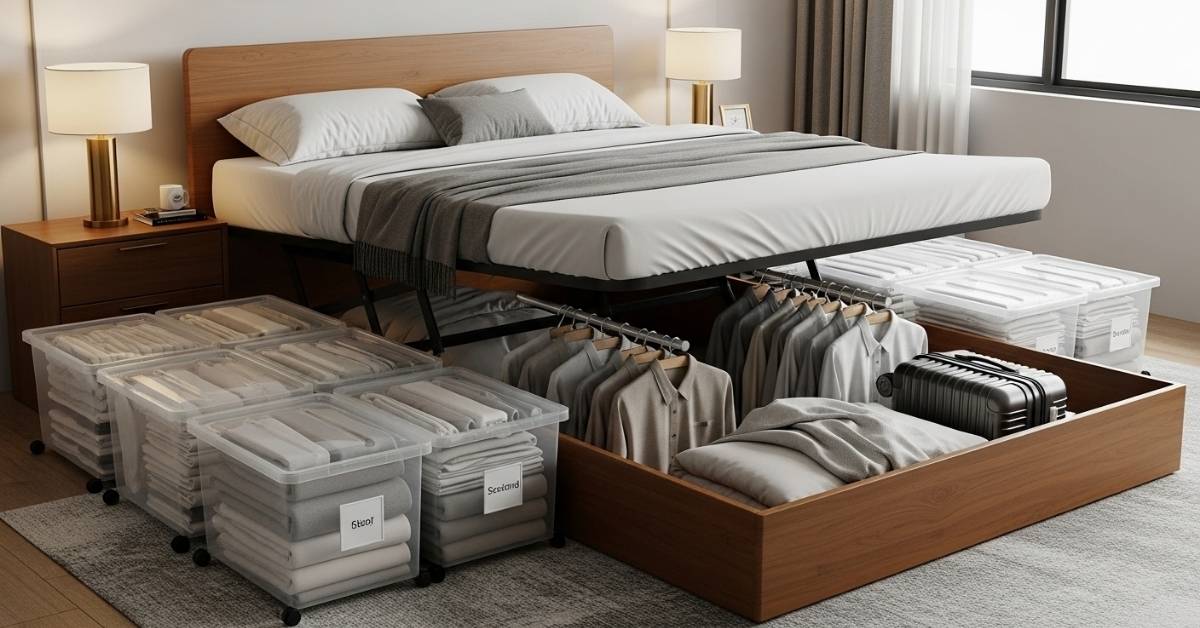
Under-bed space is one of the most underused areas in the home and in smaller bedrooms, ignoring it can mean losing serious square footage of functional storage.Under Bed Storage Ideas Whether you’re dealing with a cluttered room, a lack of closet space, or just trying to keep things organized without buying more furniture, the area beneath your bed is one of the most practical places to start.
If you’re working with a small bedroom, a studio apartment, or a room that needs to pull double duty, these ideas are designed for real constraints, not just aesthetically pleasing setups that don’t hold up in daily life. The goal here isn’t just “tidy” it’s smarter use of space you already have.
Low-Profile Bed Frame With Built-In Drawers
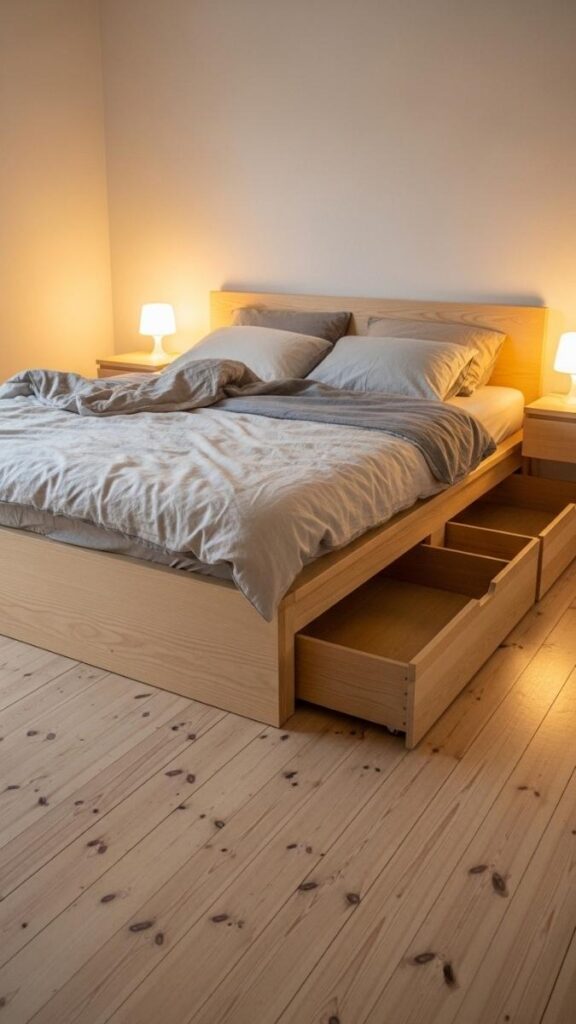
A bed frame with integrated drawers eliminates the need for a separate dresser, which in a small bedroom can free up an entire wall. The drawers slide flush against the frame, no visible storage boxes, no visual clutter. This setup works best when the drawers are divided one side for folded clothing, the other for seasonal items or extras like spare bedding. In my experience, this layout works best when the rest of the room stays intentionally minimal; the cleaner the surroundings, the more functional the storage feels. Ideal for apartments or any bedroom under 200 square feet.
Flat Storage Bins for Seasonal Clothing
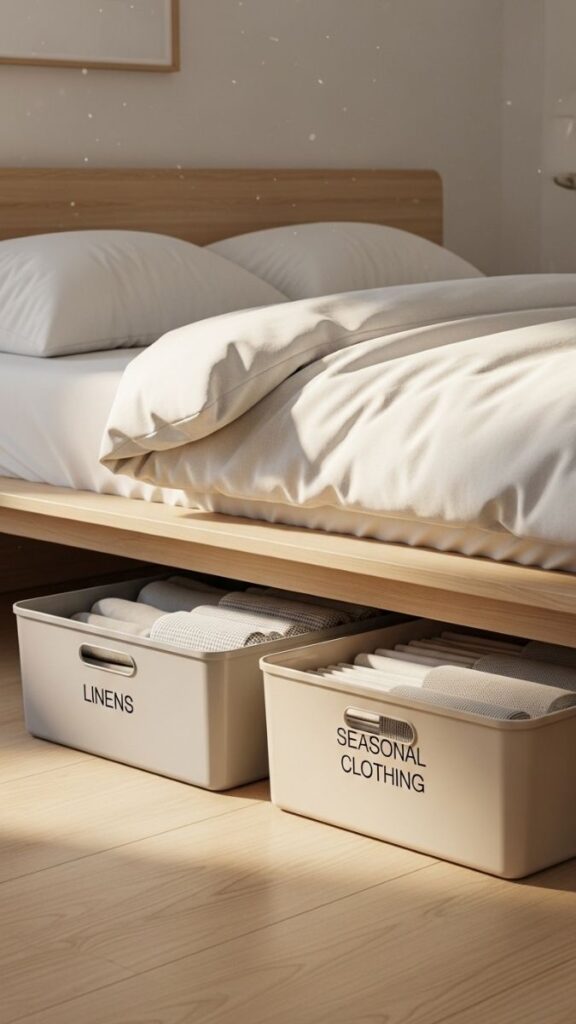
Not every bed frame comes with drawers and that’s fine. Flat, lidded storage bins that slide under the bed are one of the most flexible solutions available. They work in any bedroom where there’s at least 6–7 inches of clearance. Use them to rotate seasonal wardrobe pieces winter sweaters go under when it’s summer, lighter layers swap in when temperatures drop. This keeps the closet from becoming overpacked without adding any additional furniture to the room. Go for uniform bins in a neutral tone so if they’re slightly visible, they don’t disrupt the room’s visual balance.
Vacuum Storage Bags for Bulky Items
Duvets, comforters, and spare pillows are notoriously difficult to store in smaller homes. Vacuum storage bags compress them to a fraction of their original size, allowing them to slide under even a relatively low-clearance bed. This is especially useful in guest rooms or multi-purpose bedrooms where extra bedding is needed occasionally but takes up too much space when stored at full volume. Honest opinion this is one of the first solutions I’d recommend trying because it costs almost nothing and recovers a surprising amount of space.
Rolling Crates or Baskets for Easy Access

For items you access regularly, gym clothes, extra towels, accessories, rolling storage makes more sense than lidded bins. Woven baskets or wooden crates on small casters can be pulled out and pushed back without effort, which matters for daily use. The texture of natural materials like rattan or seagrass also adds warmth to the room if the baskets are partially visible. This setup works particularly well under beds with open frames rather than solid bases, where the storage becomes part of the room’s visual texture rather than something hidden.
Read More About: 25 Closet Organization Ideas DIY That Actually Make Small Spaces Work Harder
Under-Bed Shoe Organizer With Individual Compartments
Shoes take up a disproportionate amount of closet space, and a dedicated under-bed organizer solves the problem without requiring a separate shoe rack in the room. Flat organizers with individual zippered or lidded compartments keep pairs together, protect them from dust, and make them easy to find. This works especially well for shoes worn less frequently, heels, boots, or formal footwear that doesn’t need to be at the front of the closet every day. Clear lids or mesh panels make it easy to find what you need without pulling everything out.
Bed Risers to Increase Clearance
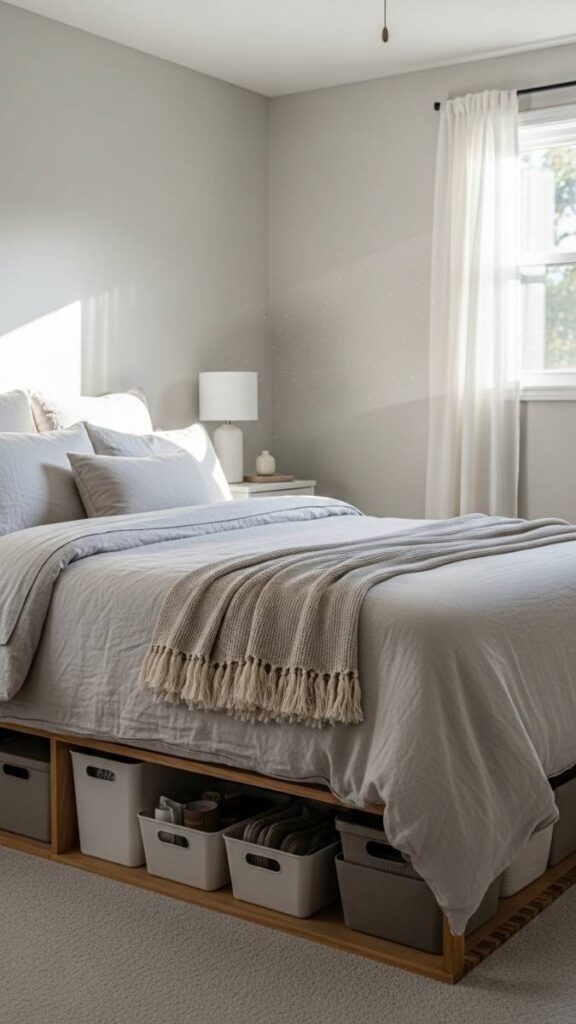
Sometimes the limiting factor isn’t organization, it’s clearance. Bed risers add 3–6 inches of height to any standard bed frame, immediately increasing the usable space underneath. The visual effect is minimal when done correctly: choose risers in a finish that matches your frame, and keep the storage under the bed contained in matching bins so the extra height doesn’t look makeshift. This is one of the most budget-accessible options available, risers typically cost under $20 and work with most standard frames. Best for rooms where closet space is genuinely limited and the priority is volume of storage.
Built-In Under-Bed Bookshelf for Small Spaces
In bedrooms where nightstand space is limited, a low built-in or freestanding shelf that slides under the bed and faces outward serves as both storage and display. This works particularly well in Scandinavian-style or minimalist bedrooms where horizontal lines define the design. The shelf holds books, a small lamp, or objects you want accessible without adding height to the room. It keeps things organized at a low visual level, which actually makes the room feel more open rather than busier.
Labeled Canvas Bins for Household Overflow
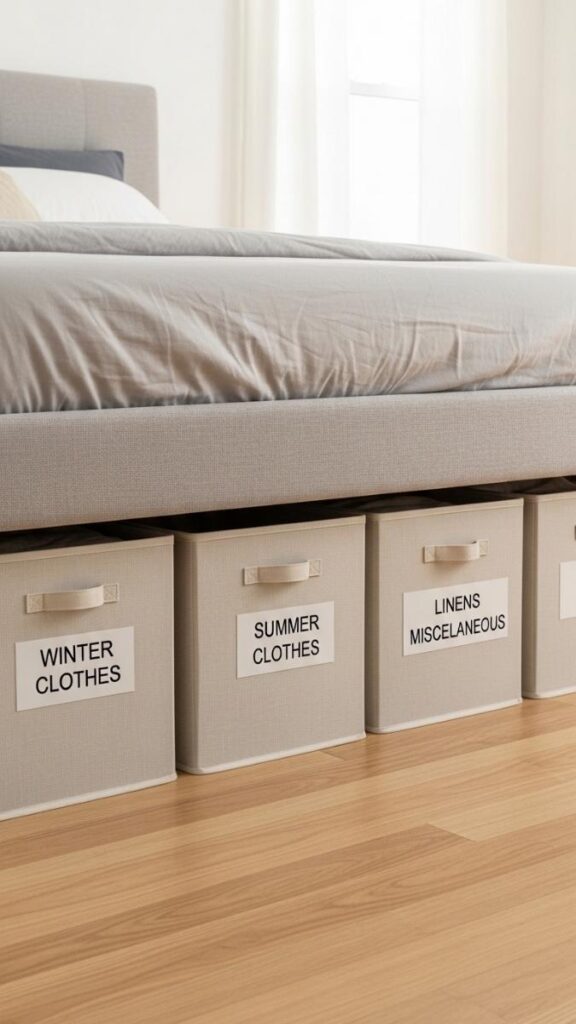
For households managing overflow from other rooms, extra linens, craft supplies, documents labeled canvas bins offer a structured but low-cost system. The labeling does the organizational work so nothing gets buried or forgotten. Canvas is softer than plastic, handles easily, and collapses when not in use. This setup is especially useful for renters who want to keep common areas clear without investing in permanent solutions. Use a consistent label style typed tags or a label maker to keep the system looking intentional.
Read More About: 30 Small Space Storage Ideas for Bedrooms That Actually Work in Real Homes
Under-Bed Storage With Headboard Integration
When the bed frame, headboard, and storage are part of the same visual unit, the room reads as more cohesive and intentional. Some platform beds are designed with both drawer storage below and shelving or compartments built into the headboard, effectively turning the entire bed structure into a multi-functional piece. This is worth the higher initial investment in a bedroom that lacks both floor storage and wall space. The unified design means you’re not mixing materials or styles across separate pieces, which simplifies the visual environment considerably.
Rolling Drawer Unit Repurposed Under the Bed
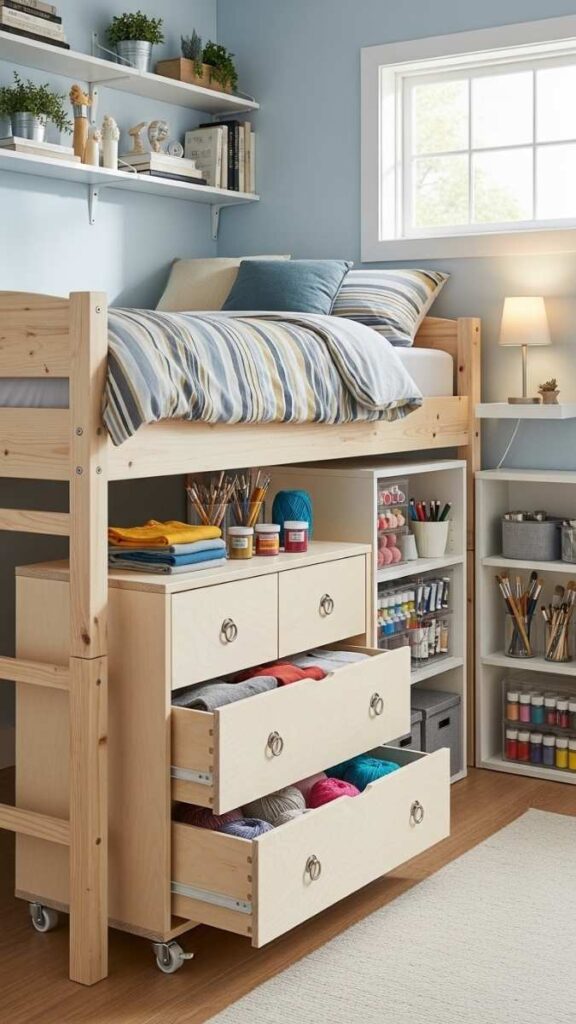
A standard rolling drawer unit, the kind often used in offices or craft rooms, fits under many bed frames and provides more organized storage than open bins. Each drawer can be dedicated to a category one for socks and underwear, one for accessories, one for miscellaneous small items. The rolling base means it can be pulled out as needed. This is a practical option for anyone who wants drawer-level organization but isn’t ready to replace their existing bed frame. It’s especially effective under higher frames or beds on risers.
Pegboard-Backed Storage Slide for Craft or Hobby Supplies
For bedrooms that double as work or creative spaces, under-bed storage can handle supplies that don’t belong in a living room but need to stay accessible. A shallow tray with compartments or a pegboard-backed sliding unit keeps hobby supplies organized and out of sight when not in use. This keeps the visual environment calm during sleep hours while making the room functional during the day. It’s a niche setup, but for anyone managing a studio or single-room apartment, it’s a smart way to separate “work mode” from “rest mode” without having two separate spaces.
Segmented Under-Bed Organizer for Kids’ Rooms
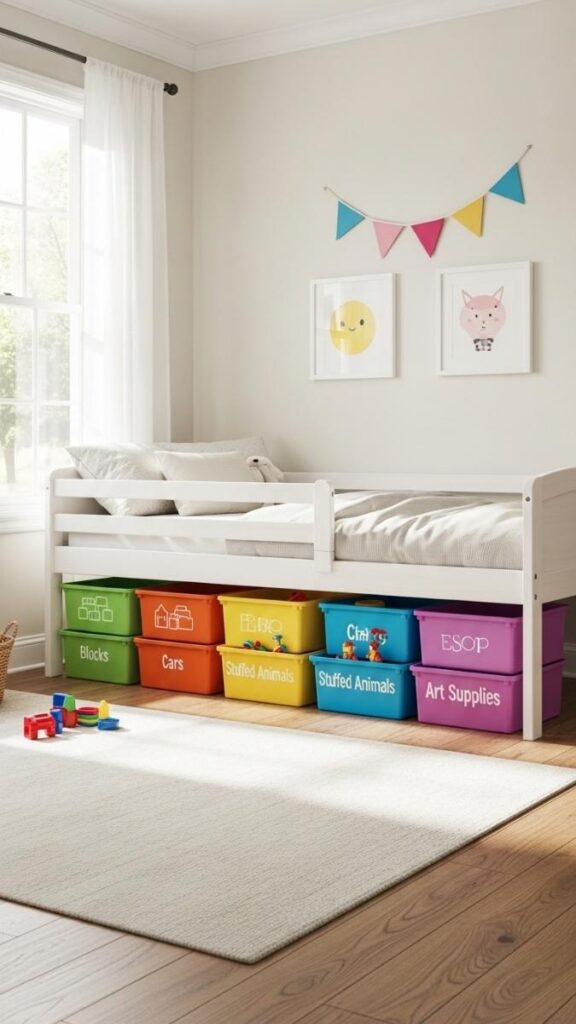
In children’s bedrooms, floor space is constantly under pressure from toys, books, and gear. A segmented under-bed organizer with dedicated sections one for art supplies, one for small toys, one for games creates a system even younger kids can maintain. The key is accessibility bins should be lightweight, easy to pull out, and not require an adult to operate. This keeps the main floor area open for playing, which actually matters more in a child’s room than in most other spaces. Color-coded bins can help young kids self-sort.
Sliding Tray System for Flat Items
Flat items wrapping paper rolls, artwork, large documents, or even a yoga mat don’t store well in standard bins. A shallow sliding tray, either purchased or DIY’d from plywood, handles these items cleanly. The tray pulls out from one end of the bed, keeps flat contents organized, and doesn’t require sorting through stacked materials to find a specific item. This is a genuinely underused storage format for bedrooms in homes that lack dedicated utility storage elsewhere.
Linen Storage for Guest Bedroom Efficiency
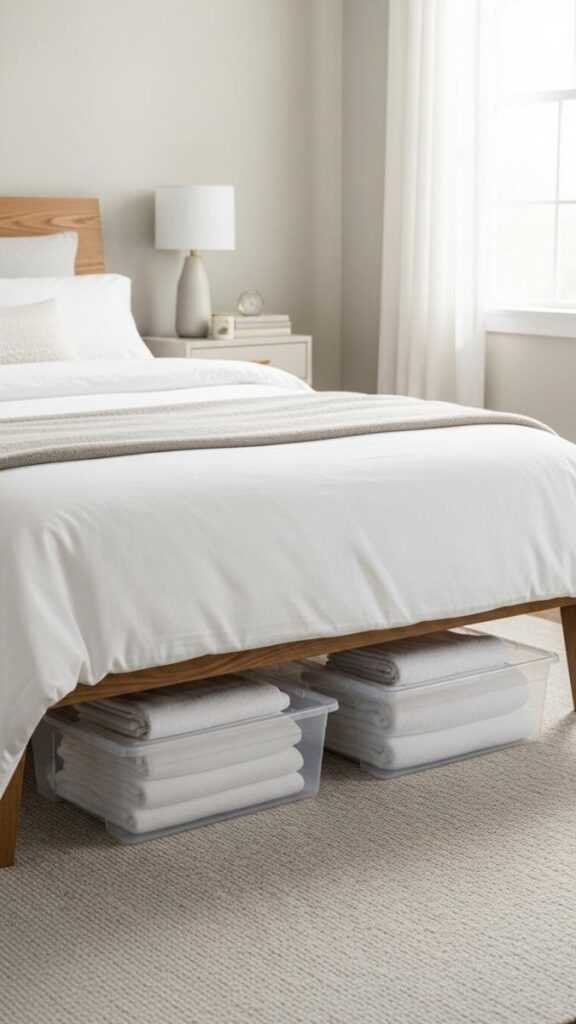
Guest bedrooms often hold extra linens, additional sets of sheets, spare pillows, extra blankets that are rarely needed but take up significant closet space elsewhere in the home. Storing them under the guest bed keeps them close to where they’ll be used without taking up space in main areas. Vacuum-seal the bulkier items, fold sheets into flat bins, and label by type. It’s a logical system: the linens stay near the room they serve, and the closet stays clear for everyday household storage.
Modular Under-Bed System With Adjustable Dividers
Modular under-bed organizers with moveable dividers are worth the slightly higher cost because they adapt as storage needs change. A system that works for clothing now can be reconfigured for shoes, accessories, or seasonal items later. This flexibility is especially valuable in shared bedrooms or spaces used by different people over time. Look for systems made from coated wire, lightweight wood, or canvas over a rigid frame materials that hold their shape without adding significant weight.
Read More About: 24 Coastal Wall Decor Ideas That Actually Work in Real Homes Not Just Beach Houses
Ottoman Bed Frame for Combined Seating and Storage
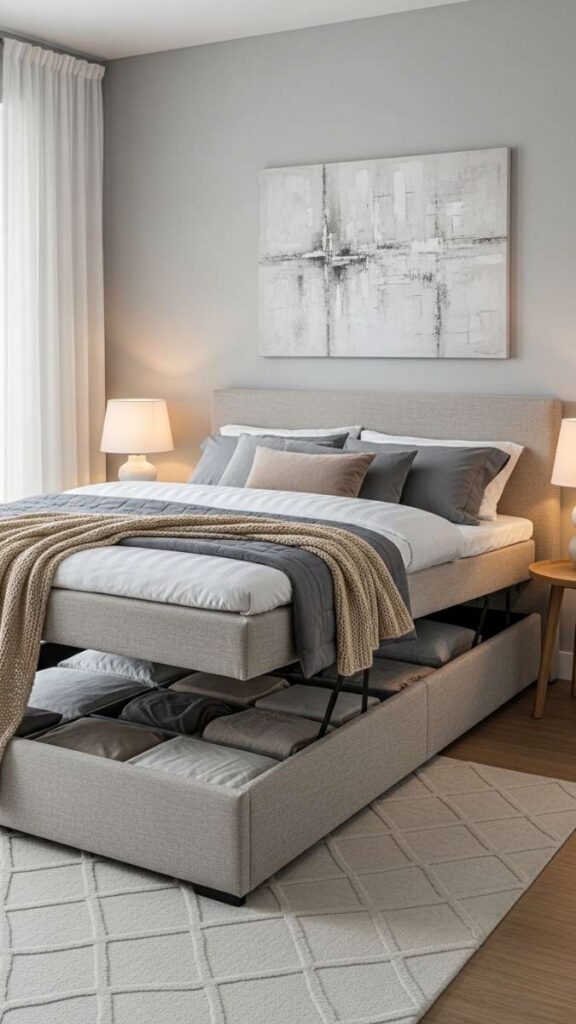
An ottoman bed frame lifts the entire mattress base to reveal deep storage below, often enough to hold a full duvet set, multiple blankets, and several storage bags without any visible organization system. The exterior looks identical to a standard upholstered bed, so there’s no visual compromise. This is one of the higher-investment options on this list, but for a bedroom without any other dedicated storage, it’s arguably the most efficient single-furniture solution available. It works best in rooms where you want storage completely out of sight.
Aesthetic Display Storage Using Low Trays and Baskets
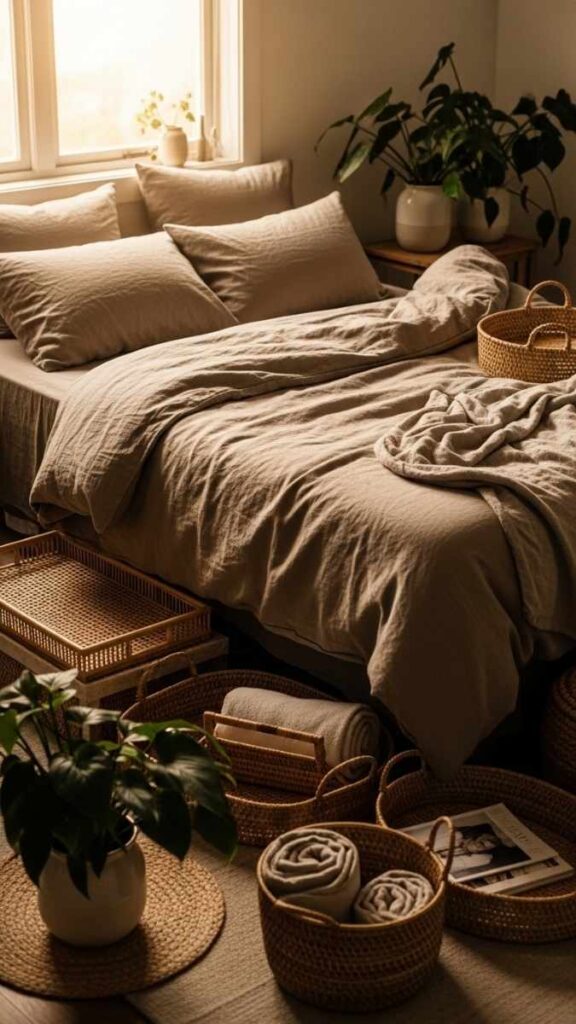
Not all under-bed storage needs to be fully concealed. In rooms with an open bed frame and a design-forward aesthetic, shallow trays or woven baskets that are partially visible can serve as both storage and visual texture. This works best when the items stored are decorative or neutral extra throw blankets, a small plant basket, decorative boxes. The key is keeping it intentional: two or three coordinated pieces look deliberate, while a mix of unrelated containers reads as clutter. I’ve noticed this style tends to work best in bohemian, natural, or Japandi-inspired bedrooms where organic materials are already part of the design language.
What Actually Makes Under-Bed Storage Work
The mistake most people make is treating under-bed space as a dumping ground, throwing things under the bed without a system and then never accessing them again. That’s not storage; it’s displacement.
Effective under-bed storage has three qualities: it’s accessible, it’s organized into categories, and it’s matched to the clearance of the specific bed frame. Before buying any storage product, measure the clearance from floor to frame not just at the side but at the center, where the slat system may hang lower. Most flat bins require at least 6 inches; rolling carts and drawer units typically need 8–10 inches.
It also helps to categorize what you’re storing before choosing a container. Seasonal items that you access twice a year belong in sealed, labeled bins. Daily-use items need roll-out access. Bulky soft goods benefit from vacuum compression. Matching the container to the access frequency is what keeps the system usable long-term.
Under-Bed Storage Ideas Setup Comparison
| Setup | Best For | Space Type | Problem Solved | Effort Level |
| Built-in drawer frame | Clothing, everyday items | Small bedrooms, apartments | No dresser space | Low (buy once) |
| Flat lidded bins | Seasonal items, linens | Any room with 6″+ clearance | Closet overflow | Low |
| Vacuum bags | Duvets, bulky bedding | Low-clearance beds | Volume/bulk | Low |
| Rolling drawer unit | Categorized clothing | High-clearance frames | Lack of drawer storage | Medium |
| Bed risers + bins | General overflow | Standard frames | Insufficient clearance | Low |
| Ottoman bed frame | Full hidden storage | Any room size | No visible storage solution | Low (buy once) |
| Rolling baskets | Frequent-access items | Open bed frames | Daily usability | Low |
| Sliding tray | Flat/large format items | Any clearance | Awkward item sizes | Medium |
How to Maximize Under-Bed Storage Without Cluttering Your Bedroom
Start with a clearance check.
Every decision about under-bed storage depends on how much space exists between the floor and the frame. Measure at multiple points the sides tend to have more clearance than the center.
Assign zones before buying containers.
Divide what you need to store into three categories: items used weekly, items used seasonally, and items rarely used. Each category needs a different storage format. Don’t buy uniform bins for everything before thinking this through.
Use bed skirts strategically.
If open storage bins are visible and disrupt the room’s visual tone, a fitted bed skirt conceals them completely with no hardware, no modifications, renter-friendly. This works especially well in more traditional or soft-styled bedrooms.
Avoid overfilling.
Under-bed storage fails when it becomes impossible to access. Leave enough room to pull bins out without moving the entire contents of the bed space. One rule that works if you can’t retrieve something in under 20 seconds, the system needs reorganizing.
Rotate seasonally.
Treat under-bed storage as a rotation system, not permanent placement. Twice a year at season changes go through what’s stored and swap items in and out. This keeps the system from quietly filling up with things that should be donated or discarded.
FAQ‘s
What is the best under-bed storage for small bedrooms?
Built-in drawer bed frames are the most space-efficient option for small bedrooms because they eliminate the need for a separate dresser. For existing frames without drawers, flat lidded bins with 6–8 inch clearance offer flexible, budget-friendly storage without adding furniture.
How do I store things under my bed without it looking messy?
Use uniform containers matching bins, baskets, or trays in a neutral tone. If containers are visible, a bed skirt conceals them entirely. The key is keeping storage intentionally one category per container, and only items you actually need stored there.
Are vacuum storage bags safe for long-term clothing storage?
Vacuum bags work well for bulky synthetic items like duvets and pillows, but they’re not ideal for long-term storage of natural fiber clothing (wool, cashmere, silk). Compression can damage fibers over extended periods. Use them for bedding and seasonal outerwear rather than delicate garments.
How much clearance do I need for under-bed storage?
Most flat bins require a minimum of 6 inches of clearance. Rolling drawer units and crates typically need 8–10 inches. Measure from the floor to the lowest point of the frame, usually the center slats before purchasing any storage product.
Is an ottoman bed worth it for storage?
For bedrooms with no other dedicated storage, an ottoman bed is one of the most efficient investments available. The lift-up base provides deep, dust-free storage for bulky items. The trade-off is cost and the fact that accessing storage requires removing bedding so it’s best suited for items used infrequently.
What should I not store under my bed?
Avoid storing anything moisture-sensitive in unventilated spaces mold can develop in low-airflow areas. Electronics, important documents (without sealed containers), and anything that attracts pests should also be stored elsewhere or in sealed, hard-shell containers.
Under-bed storage bins vs. drawers which is better?
Bins are more flexible and budget-friendly, working with any existing frame. Drawers either built-in or rolling are better for frequent access because they don’t require lifting or removing a lid. The right choice depends on how often you need to access what’s stored.
Conclusion
Under-bed storage is one of those practical changes that doesn’t require a renovation, a large budget, or even a full weekend. The right system matched to your clearance, your storage needs, and how often you need to access things makes a real difference in how organized and manageable the bedroom feels day-to-day.
Start with one or two ideas that fit your current setup. If you have an existing frame with decent clearance, flat bins or a rolling drawer unit are the lowest-effort starting points. If you’re open to replacing your frame, a built-in drawer or ottoman bed is worth serious consideration. Small changes to how you use existing space tend to compound once one area is organized, the rest of the room becomes easier to manage.