43+ Vintage Lake House Decor Ideas That Make Every Room Feel Warm, Collected, and Lived In
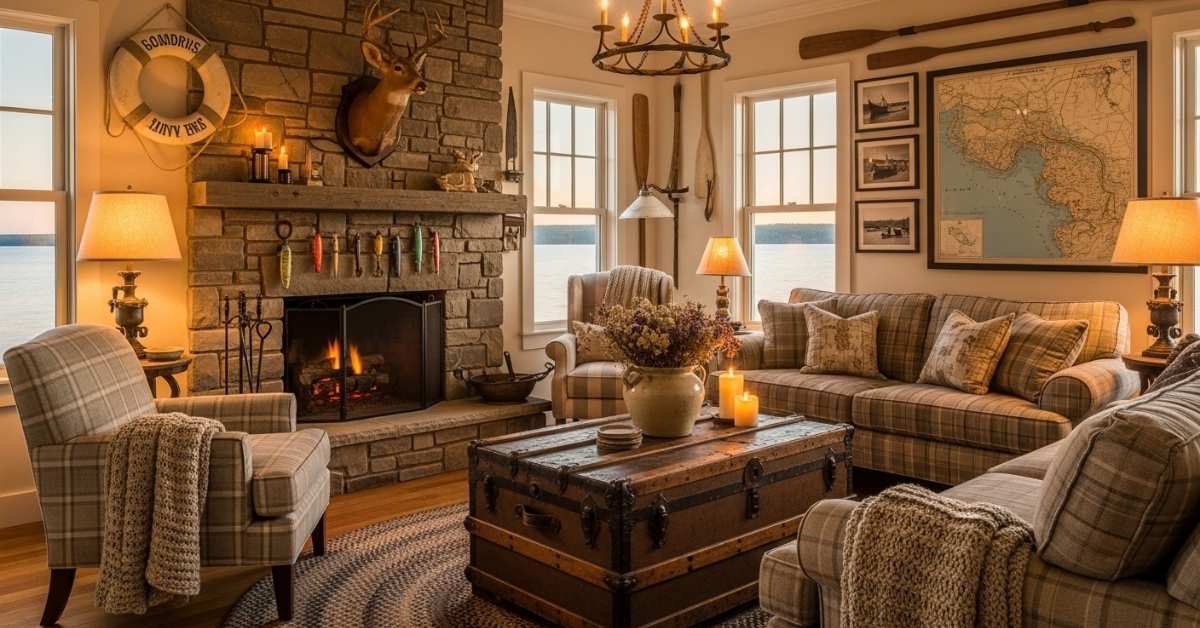
Vintage lake house decor is having a genuine moment in 2026, and honestly, it’s not hard to see why. People are gravitating away from overly curated interiors and toward spaces that feel personal, Vintage Lake House Decor a little worn-in, and deeply comfortable. Whether you’re decorating a cabin by the water or just want that relaxed, naturalistic energy in a suburban home, the ideas here are grounded in what actually works in real rooms.
This one is especially for anyone working with an older property, a rental, or a space that feels a little disconnected from itself. The goal isn’t Pinterest-perfect, it’s Pinterest-saveable because it actually looks livable.
Whitewashed Wood Plank Walls with Hanging Vintage Oars
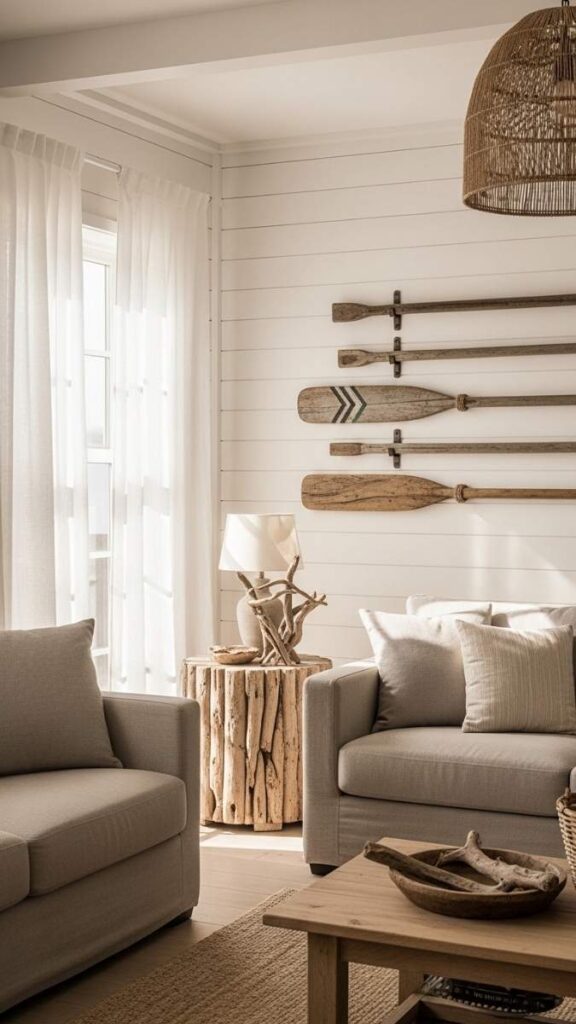
Vertical whitewashed planks give walls a sense of height, while decorative oars add unmistakable waterfront identity without screaming “themed.” Mount them horizontally at eye level on one focal wall; they function like oversized art. The weathered texture of old wood oars against bright, slightly chalky planks creates material contrast that feels earned rather than staged.
This works especially well in living rooms where the fireplace or TV wall needs something substantial but not fussy. For smaller rooms, a single oar centered above a console table is enough no need to overdo it.
Layered Jute and Wool Rugs Over Bare Hardwood
Stacking a smaller, patterned wool rug on top of a large jute base creates the visual impression of a curated, well-traveled space. The jute’s rough texture grounds the look while the top rug adds warmth and pattern interest. This works particularly well in open-concept layouts where area rugs have to define zones without walls to help them.
In practice, this setup reduces the cold, echoey quality of large wood floors, especially in older lake houses where insulation isn’t always great. I’ve noticed this combination tends to pull a room together faster than almost any other change. It’s one I’d recommend trying first.
Mismatched Vintage Wood Furniture That Shares One Tone Family
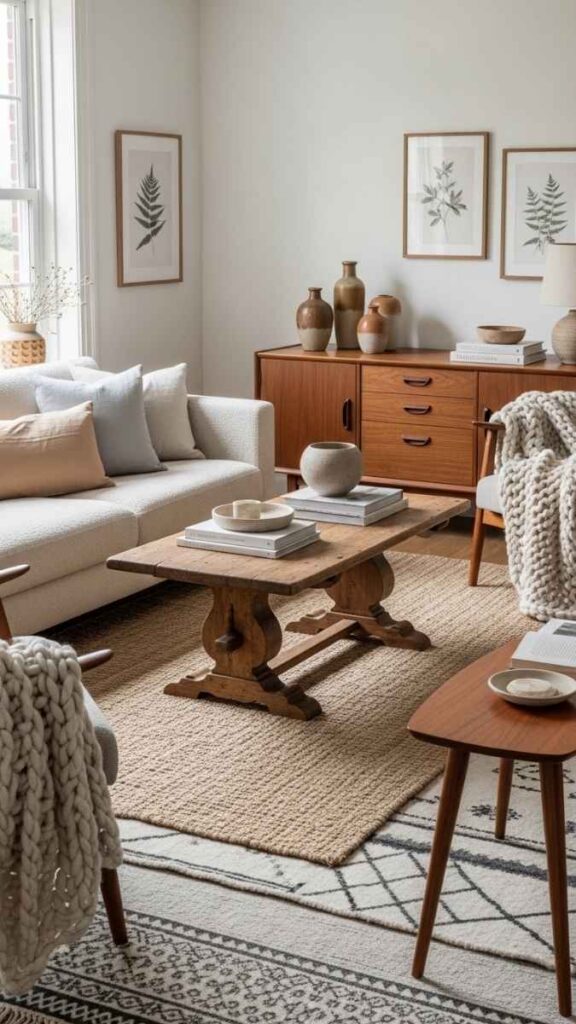
The key to making mismatched furniture look intentional is keeping all the wood tones in the same warm family amber, honey, and walnut read as cohesive even when the pieces are completely different styles. A round farmhouse table with four different chairs (one caned, one spindle-back, one Windsor, one upholstered) looks collected rather than accidental when the wood colors connect.
This is one of the most budget-friendly approaches to vintage lake house furniture because it means you can buy pieces individually from thrift stores, estate sales, or Facebook Marketplace without needing a matching set.
Galvanized Metal Accents Against Natural Wood Shelving
Galvanized metal pitchers, buckets, bins, pendant shades add that industrial-meets-rural quality that’s very specific to old American lake houses and fishing camps. Against raw or lightly finished wood shelving, the gray metal reads as a natural accent rather than a contrast.
In kitchens especially, galvanized containers serve double duty: they’re functional storage and decorative elements at once. This setup works well in kitchens that feel too modern for the rest of the house. A few galvanized pieces and some open wood shelving can rebalance the whole room without a renovation.
An Antique Canoe or Rowboat Hung from Exposed Ceiling Beams
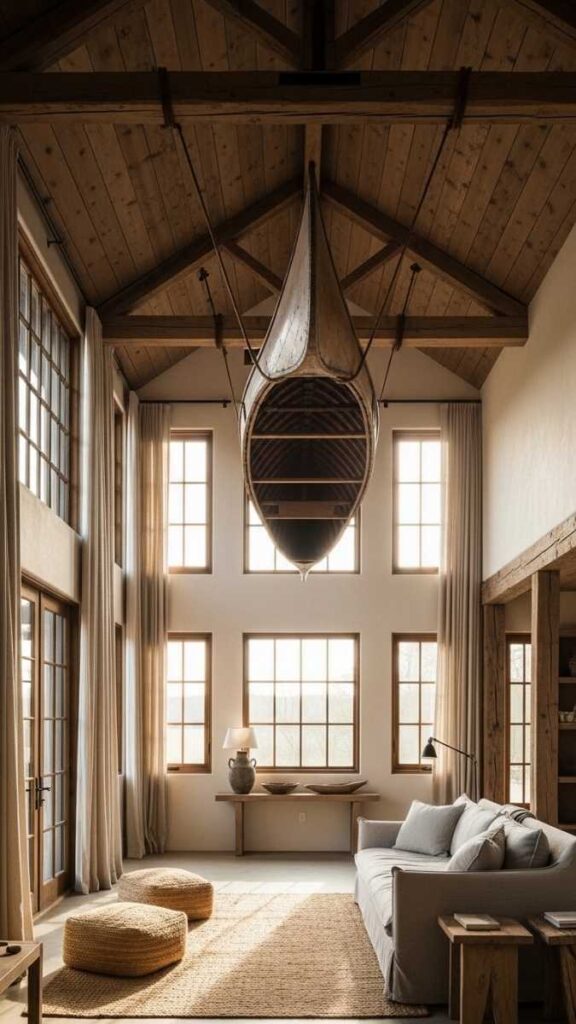
This is the kind of statement piece that works because it uses vertical space that would otherwise be empty, especially in great rooms or vaulted living areas with high ceilings. A vintage wooden canoe (often found at antique markets or old sporting goods shops) hung from exposed beams with rope becomes the room’s defining element without cluttering the floor plan below.
The visual weight sits high, which paradoxically makes the room feel more spacious at eye level. For anyone with a room that feels like it has too much ceiling and not enough personality, this solves both problems at once.
Read More About: 11+Apartment Living Room Aesthetic Ideas That Actually Work in Real Spaces
Vintage Fish and Wildlife Prints in Simple Wooden Frames
Old-school fishing illustrations of bass, trout, pike printed on aged paper and framed simply in thin wood frames create a gallery wall that’s unmistakably lake house without being kitschy. The trick is keeping frames consistent in material (all wood, same tone) even if sizes vary. Source vintage prints from antique shops, Etsy sellers who sell original vintage prints, or even old sporting magazines.
They read like inherited pieces rather than purchased decor. This setup is especially useful in hallways, staircases, or bathrooms where there’s wall space but not much floor room for furniture.
Wicker and Rattan Seating Mixed with Wood and Linen
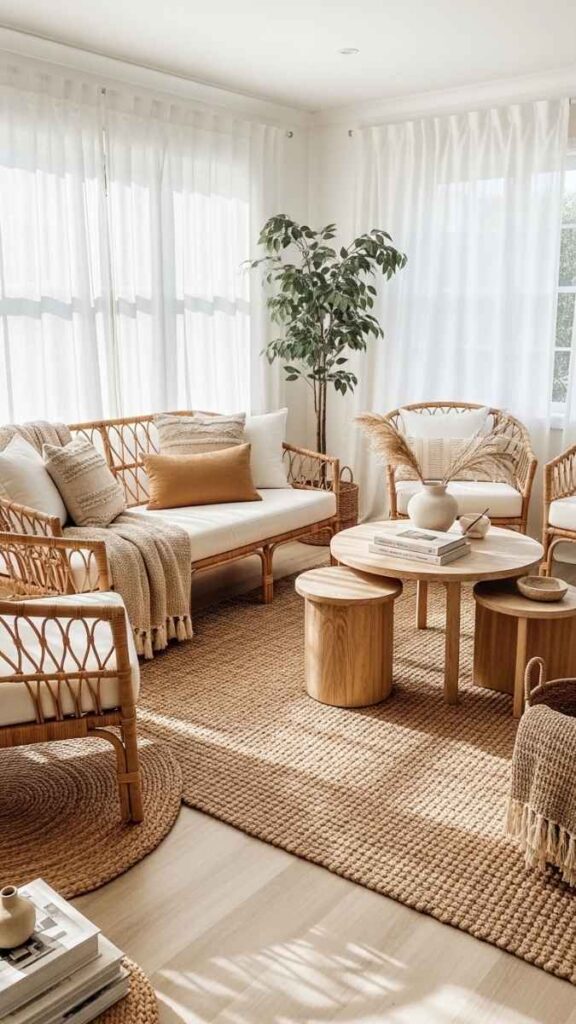
Rattan and wicker seating brings organic texture into spaces that might otherwise feel too flat. In a sunroom or screened porch, a rattan armchair with linen cushions costs a fraction of upholstered furniture and holds up better in spaces that get humidity and sun exposure.
Mixing a few rattan pieces with a wood sofa table and some linen textiles creates a layered, casual feel that’s hard to over-do. This is a particularly good approach for sunrooms or porches that need seating without the maintenance concerns of full upholstered furniture.
Shiplap Ceilings with Warm Edison Bulb Pendant Lighting
Shiplap on a ceiling rather than a wall does something interesting: it draws the eye upward and adds architectural character without requiring any furniture changes below. Pair it with Edison-style bulb pendants one or two hung low over a dining table and the warm, slightly dim light creates that familiar, cozy evening quality you associate with old summer cabins.
This setup works best in dining rooms and kitchens where direct task lighting isn’t the priority. The horizontal lines of shiplap also make lower ceilings feel wider rather than shorter, which is useful in older lake house architecture.
A Painted Vintage Apothecary Cabinet Used as a Sideboard
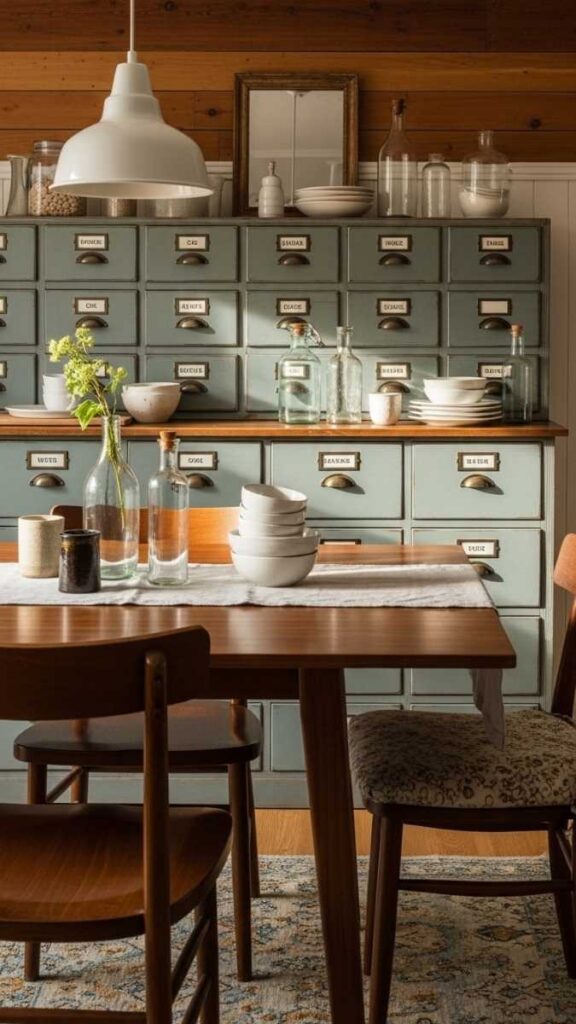
Apothecary cabinets, those wide, multi-drawer storage pieces from old pharmacies or laboratories are ideal lake house furniture because they provide serious storage in a piece that’s already full of character. Paint them in muted green, aged blue, or chalky white to anchor a dining room or entryway.
The many small drawers handle items that usually clutter countertops: keys, candles, cords, playing cards, fishing licenses. This works well in lake houses where the entryway doubles as a drop zone and needs organization without looking clinical.
Exposed Beam Ceilings Left Natural with Simple White Walls
The combination of raw, dark beams against white walls is one of the most spatially efficient visual tools in lake house decorating the contrast that defines the architecture without adding any furniture. It works because the eye interprets the dark ceiling element as structural and historical, while the white walls keep the room bright and flexible.
This setup is especially good in rooms where you want to add character without committing to heavy dark furniture. Let the beams be the statement and keep the furniture simple underneath.
Vintage Enamelware Collection Displayed on Open Kitchen Shelves
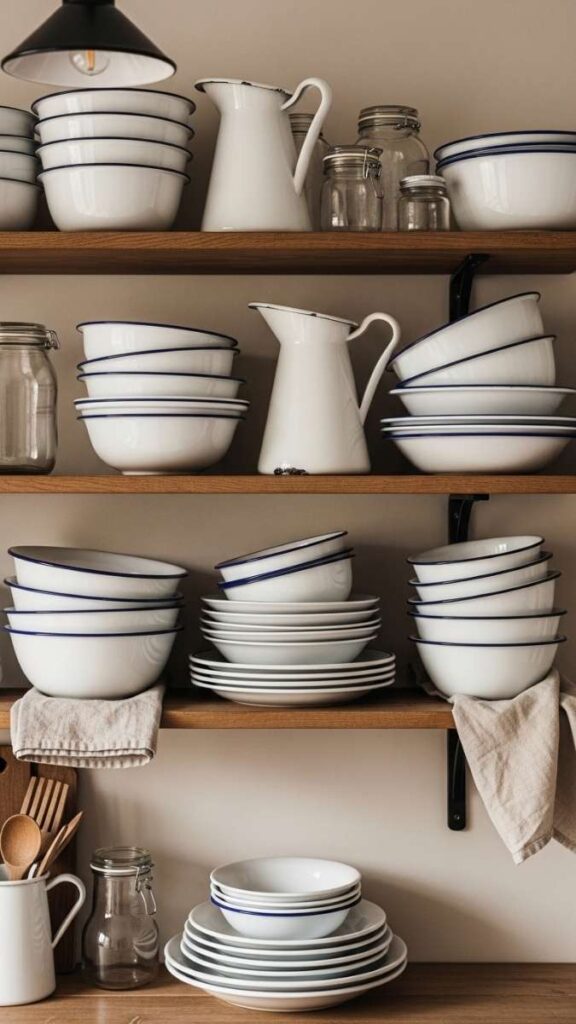
A collection of vintage enamelware, the white-with-colored-rim pots, mugs, and platters from mid-century kitchens creates immediate visual warmth on open shelving. Arranged by size and type, they read as functional displays rather than clutter.
Enamelware is also genuinely useful, which means what’s on the shelf is also what you cook with no separate “display” items taking up space. This approach works well in lake house kitchens that feel too plain or modern, especially if the cabinets are basic.
Read More About: 41+Amazon Finds Room Decor Ideas That Actually Work in Real Homes
A Clawfoot Tub in a Bathroom with Beadboard Wainscoting
The clawfoot tub is probably the most iconic element of vintage American lake house style, and it works because it centers the bathroom on an object with actual presence not just function. Pair it with beadboard wainscoting, which adds texture and period authenticity without heavy cost, and brass fixtures that patina over time.
The combination reads as old without trying. In bathrooms where the tub is against a wall, painting the exterior of the tub in a dark color (forest green, navy, black) makes the room feel more intentional and less purely utilitarian.
Plaid Wool Throw Blankets and Cabin Stripe Pillows on a Leather Sofa
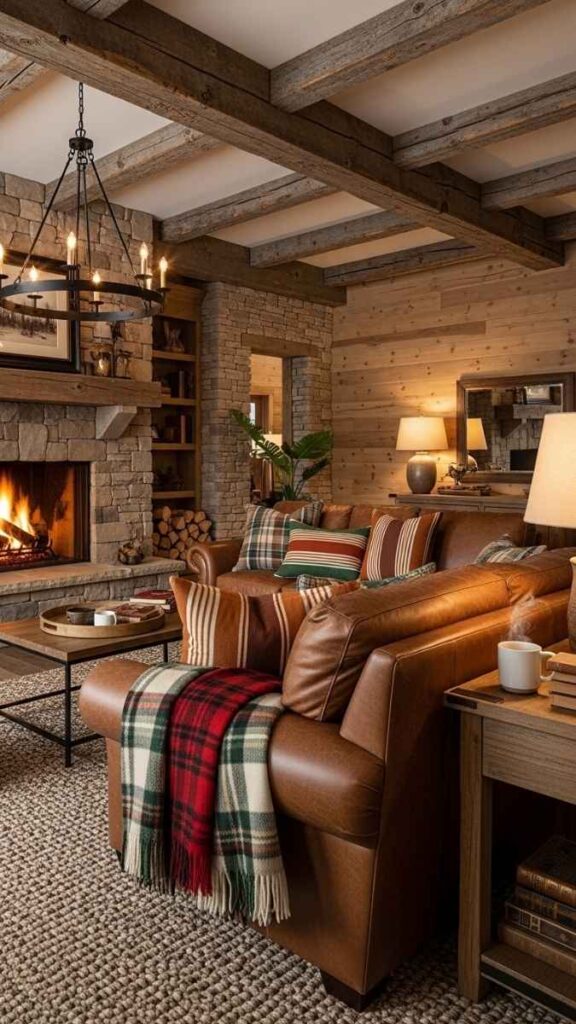
A worn leather sofa ideally aged rather than brand new paired with plaid wool throws and striped cabin pillows creates the kind of seating area that looks like it’s been through several generations of summer guests. The layering is the point: the blankets aren’t just decorative, they’re there because evenings get cold near the water.
This setup is one of the most genuinely functional vintage lake house arrangements because it handles both warmth and seating comfort while looking completely at ease. Leather also holds up to lake life wet towels, sandy feet, damp clothing better than most upholstered fabrics.
Mason Jar Vases with Wildflowers Grouped on a Wood Console Table
Grouping mason jars of different heights, some taller, some squatter creates an arrangement that looks intentional without matching vessels. Fill them with whatever grows near the water: cattails, dried grasses,
Queen Anne’s lace, or simple wildflowers. This setup works particularly well in entryways where a large floral arrangement would feel too formal. The organic imperfection of wildflowers and the utilitarian quality of the jars together land exactly where vintage lake house style lives somewhere between effort and ease.
Vintage License Plates and State Park Signs on a Mudroom Wall
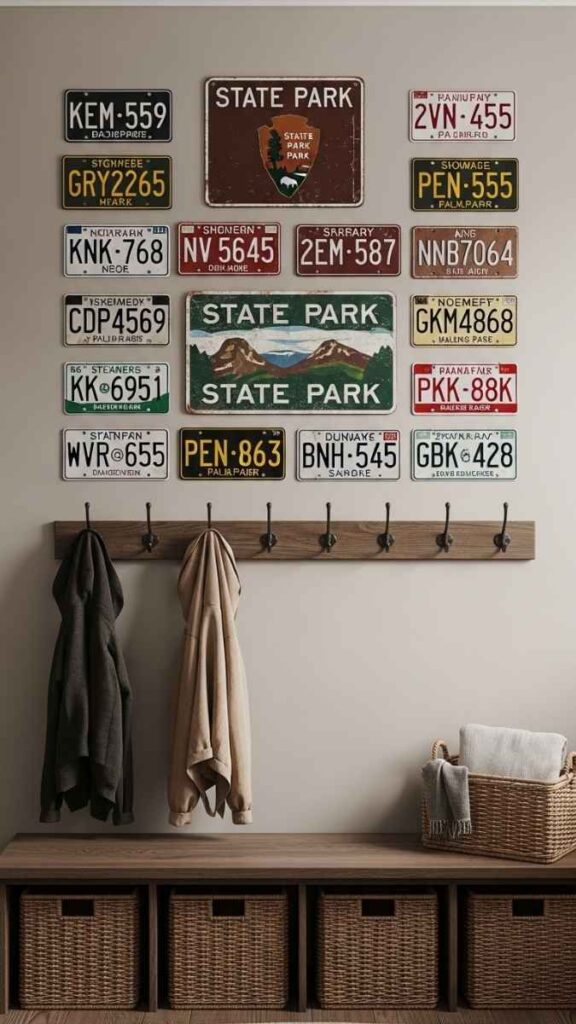
License plates from different years and states, arranged on a board-and-batten mudroom wall, function as both decor and conversation piece. Group them roughly by color family: the warm oranges and yellows together, the blue-and-white together and they create a patchwork effect that reads more like art than collected junk.
This is one of the few decorating ideas where obvious imperfection and variety are the whole point. It also costs almost nothing: old license plates are abundant at antique markets and garage sales.
Rope-Detailed Mirrors and Nautical Wall Art in the Entryway
A rope-trimmed mirror in the entryway is one of those details that immediately communicates “waterfront” without being heavy-handed about it. The circular shape is especially effective in narrow entryways where a rectangular mirror would feel too boxy.
Keep the nautical references sparse, one rope mirror, one or two small brass anchors or cleats used as hooks so the effect reads as subtle rather than themed. This is especially useful in rental properties or homes where you can’t make structural changes but want to give the entry a distinct personality quickly.
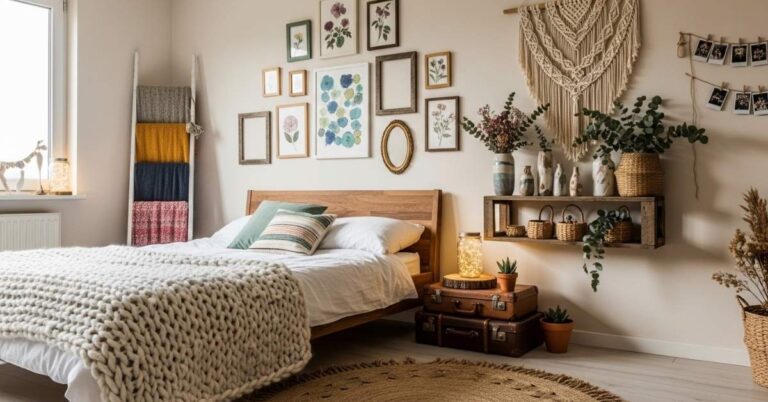
A Vintage Wooden Ladder Used as a Blanket Display
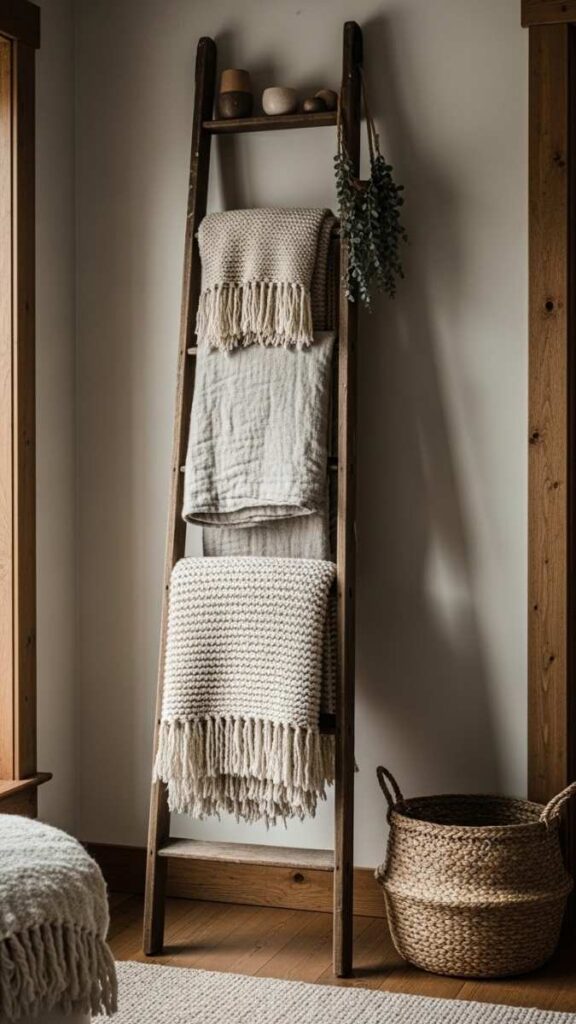
An old wooden ladder, the kind with slightly rough rungs and weathered paint propped in a bedroom corner and draped with folded blankets, solves a storage problem that most lake houses have: too many blankets, not enough linen storage. The ladder holds five or six throws while keeping them accessible and visible.
The rougher and more imperfect the ladder, the better it looks. A perfectly smooth, clean ladder reads as purchased rather than found. This works in any bedroom where floor space is tight and the walls need something in the corners.
Read More About: 42+Vintage Living Room Ideas That Feel Collected, Not Costumey
Driftwood as Sculpture on Fireplace Mantels and Open Shelves
A single piece of well-shaped driftwood displayed on a mantel or bookshelf brings organic texture that no manufactured item can replicate. The key is scale: one large piece reads as intentional sculpture, while several small pieces read as clutter.
Look for pieces with interesting curves or worn-smooth surfaces the more they’ve been worked by water, the better they photograph and display. Driftwood is free if you’re near water, and its pale, muted tones work with virtually any color palette.
Plank Board Floors Left Bare or Lightly Waxed
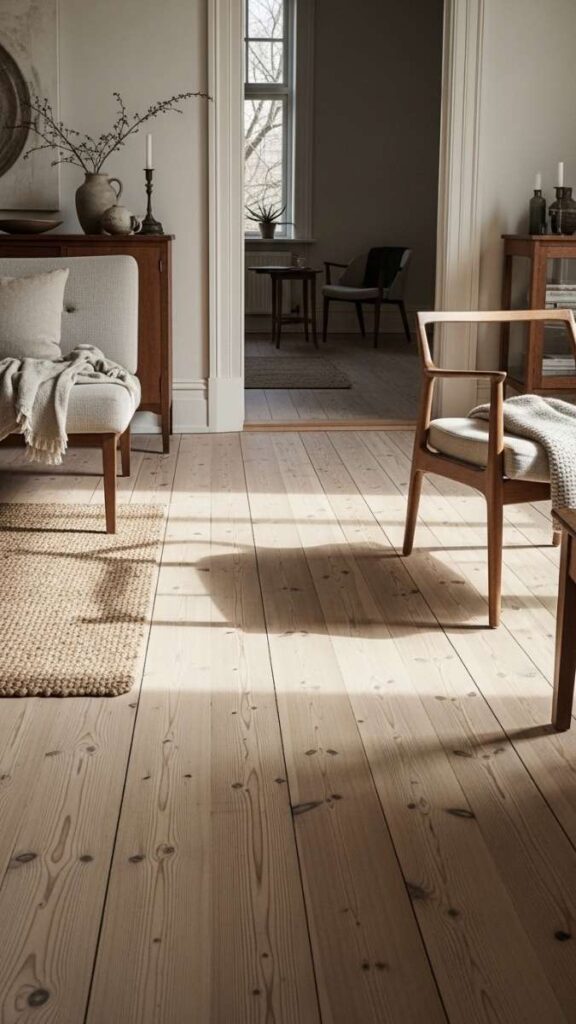
Original wide-plank floors, particularly pine, which scratches and dents easily actually look better with age in a lake house context. Instead of refinishing them to a high gloss, lightly wax or oil them to enhance the grain without creating a reflective surface that shows every scratch.
The natural variation in old wood floors (color shifts, knots, surface imperfections) gives a room visual texture that no new floor can match. If the floors have dings and marks, leave them. They communicate that the house has been used and loved, which is exactly the feeling vintage lake house decor is after.
An Old Map or Topographic Print of the Lake as Focal Art
A topographic or vintage-style map of the specific lake or region framed large and hung above a sofa or bed is one of the most personal things you can put in a lake house. It’s site-specific in a way that nothing mass-produced can be.
Old USGS topographic maps, vintage lake charts, and mid-century state maps are all widely available on Etsy and at map specialty stores. Framed in a simple wood frame at a size that fills most of the wall above a sofa, it reads as both art and history.
A Sleeping Porch with Vintage Metal Day Beds and Hanging Lanterns
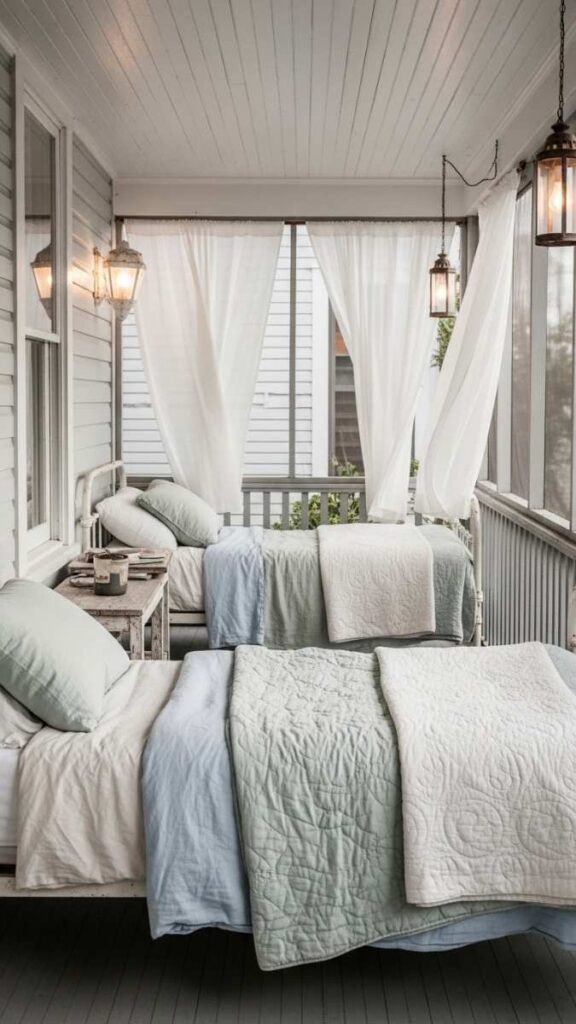
A sleeping porch done with vintage metal day beds, those folding or folding-leg styles with iron frames and hanging lantern pendants creates the most specific lake house room possible. The key is keeping it simple: thin cotton mattresses, one or two pillows, a lightweight throw.
Sleeping porches aren’t supposed to feel like bedrooms, they should feel transitional, between inside and outside. Hanging lanterns provide warm, non-glaring light for evenings and maintain the outdoor quality of the space even after dark.
Painted Shaker Cabinets in Deep Green or Navy Blue with Brass Hardware
In 2026, lake house kitchens are increasingly moving away from all-white cabinets toward deeper, more grounded colors: deep forest green, aged navy, and warm slate blue are all rising. Painted Shaker cabinets in these tones with aged brass hardware (not polished, but the warm, slightly worn kind) feel immediately more period-appropriate in a vintage lake house context than white.
This works especially well in lake houses where the kitchen is separated from the main living area and can have a more distinct identity. The darker color also hides wear better than white which matters in a house that gets heavy seasonal use.
Vintage Woven Baskets as Storage Throughout the House
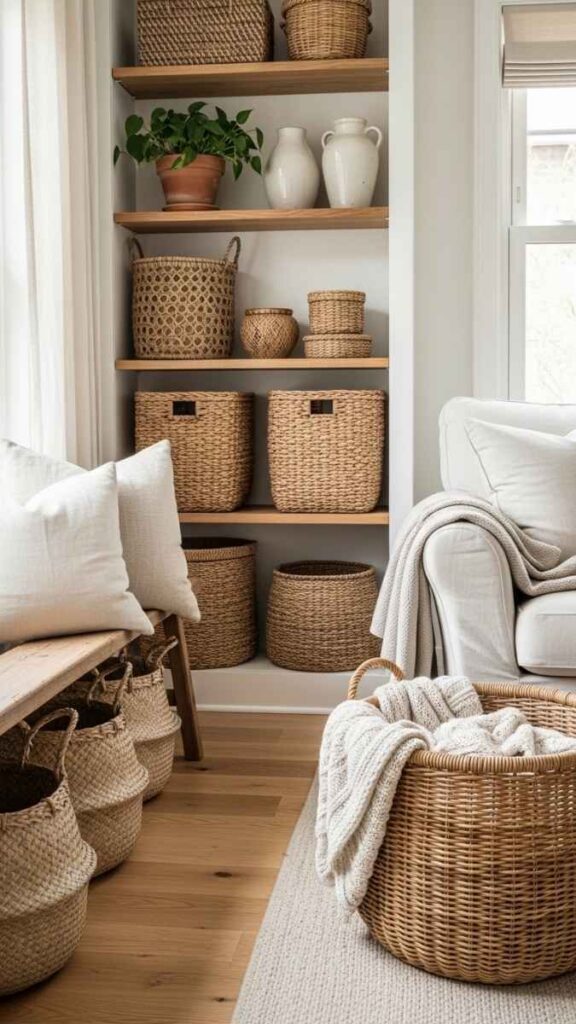
Large woven baskets, seagrass, coiled cotton rope, split wood used throughout the house for storage create visual continuity across rooms while solving practical storage problems. They hold firewood next to the fireplace, extra blankets by the sofa, towels in the bathroom, and kids’ toys anywhere.
In a lake house where items move constantly between inside and outside, baskets provide storage without the committed permanence of built-in cabinetry. Grouping two or three baskets of different sizes together looks more intentional than scattering single baskets through the house.
Antique Lanterns as Indoor and Outdoor Lighting
Vintage lanterns, whether antique originals or well-made reproductions, are the most versatile light source in a lake house context because they work equally well indoors and outdoors. Electrified antique lanterns can be wired or battery-operated and used on side tables, console tables, and porches.
Real candle lanterns on a dining table or porch railing create light that no electric fixture can replicate. In my experience, this type of lighting works best when you layer it with no single overhead fixture, but instead a combination of lanterns at different heights across a room.
A Stone or Stacked Fieldstone Fireplace as the Room’s Anchor
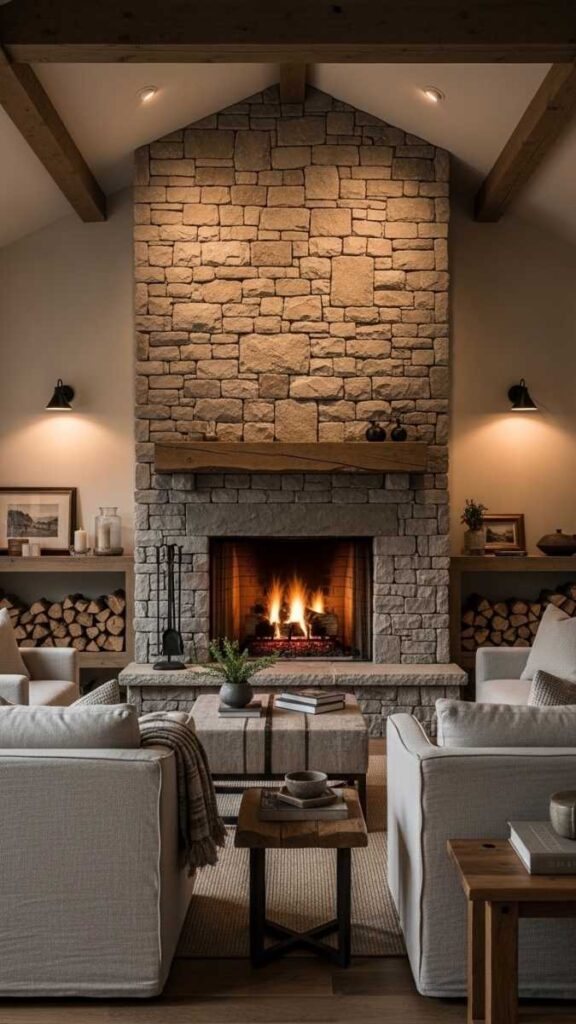
A fieldstone or stacked stone fireplace is the structural element that anchors the entire lake house interior; it’s where the room orients itself. If you have one, resist the impulse to paint it or cover it. If you inherited one that’s been painted (common in older properties), stripping it back or using a masonry wash to show the texture through the color is usually worth the effort.
The visual weight of stone grounds large, open rooms that might otherwise feel spatially undefined. Furniture positioned to face it, even slightly off-axis, acknowledges the fireplace as the room’s center of gravity.
Vintage Sports Equipment Used as Decorative Objects
Old wooden tennis rackets, bamboo fishing rods, lacrosse sticks, and canvas tackle bags hung on wall pegs or arranged on open shelves bring the lake house lifestyle into the decor without relying on typical nautical imagery. These are objects that actually belong here worn from use, made from natural materials, and loaded with personality.
This approach works well in dens, mudrooms, and kids’ bunk rooms where the decor can be more casual and playful. The pieces function as wall art without requiring frames.
A Screen Porch Dining Setup with a Reclaimed Wood Table and Mismatched Chairs
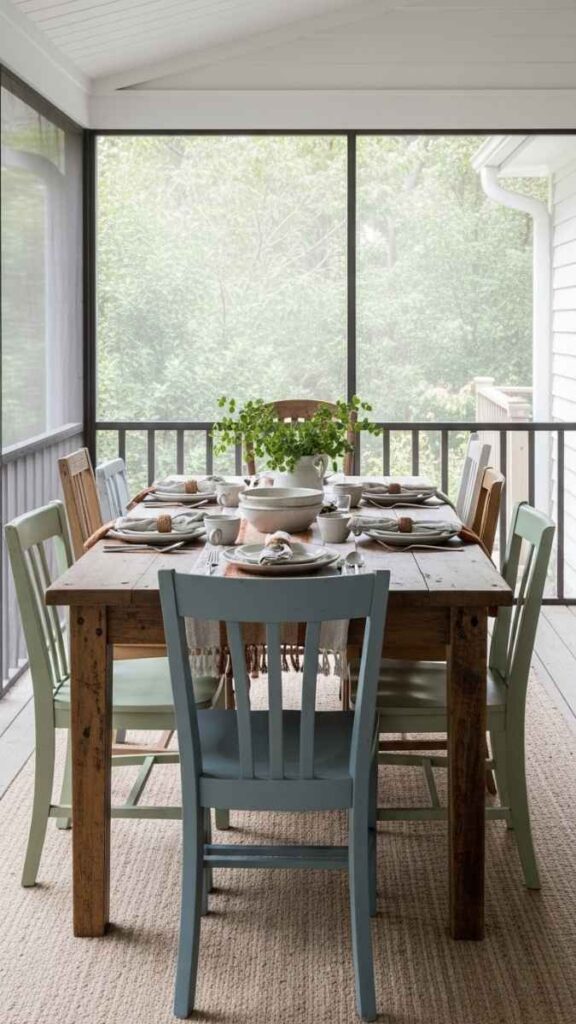
The screened porch dining table is the social center of a lake house, and a reclaimed wood table with completely mismatched chairs is both the most practical and most visually interesting approach. Reclaimed wood holds up to seasonal humidity and temperature swings better than new furniture that hasn’t been seasoned.
Mismatched chairs mean that when one breaks or needs repair, it doesn’t compromise the set. The whole arrangement looks like it was assembled over years of summers which is exactly the aesthetic lake house decor is working toward.
What Actually Makes Vintage Lake House Decor Work
The ideas above share a common logic that’s worth naming, because applying it helps you make better decisions about pieces you didn’t find on this list.
Materiality over finish.
Lake houses look best when the materials do the work real wood, natural fiber, stone, metal rather than the finish. A smooth, high-gloss lacquered piece feels wrong in this context even if it’s technically beautiful. Matte, worn, rough, and natural are the textures that belong here.
Function drives selection.
The most successful vintage lake house spaces are filled with things that actually get used. A canoe you paddled, a blanket you slept under, a basket you filled with kindling. When decor is also functional, it has a presence that purely decorative objects lack.
Age variation creates depth.
Rooms that feel genuinely vintage have pieces from different eras: a 1940s apothecary cabinet next to a 1970s rattan chair next to a 1920s fieldstone fireplace. The mix communicates history. Rooms where everything comes from the same “vintage aesthetic” shopping session tend to read as curated rather than collected.
Scale matters more than style.
A large piece, an antique wardrobe, a wide farmhouse table, a substantial rug anchors a room in a way that collections of small pieces can’t. Start with one large statement item per room and build around it.
Vintage Lake House Decor Setup Comparison Table
| Idea | Space Type | Primary Benefit | Problem Solved | Difficulty |
| Whitewashed plank walls + oars | Living room, great room | Vertical interest + focal point | Blank, characterless walls | Moderate |
| Layered jute/wool rugs | Any open floor plan | Zone definition + warmth | Cold, echoey floors | Easy |
| Mismatched vintage wood furniture | Dining room | Collected look on a budget | Matching set costs | Easy |
| Galvanized metal kitchen accents | Kitchen | Functional decor | Modern-feeling kitchen | Easy |
| Hung canoe from beams | Great room, high ceiling | Uses vertical space | Empty, undefined ceiling | Difficult |
| Vintage fish print gallery wall | Hallway, bathroom | Wall personality | Bare walls, no floor space | Easy |
| Rattan/wicker seating | Sunroom, porch | Humidity-tolerant seating | Expensive upholstered furniture | Easy |
| Shiplap ceiling + Edison pendants | Dining room, kitchen | Architectural character + warmth | Low, plain ceilings | Moderate |
| Apothecary cabinet sideboard | Dining room, entryway | Serious storage + character | Clutter and disorganization | Easy |
| Clawfoot tub + beadboard | Bathroom | Period-authentic focal point | Bland, modern bathroom | Difficult |
| Driftwood as mantel sculpture | Living room | Organic texture | Bare, flat mantel | Easy |
| Vintage topographic lake map | Living room, bedroom | Personal, site-specific art | Generic or bare focal wall | Easy |
Common Vintage Lake House Decorating Mistakes That Make Spaces Feel Cluttered or Disconnected
Going too themed too fast.
The biggest mistake in vintage lake house decor is overloading a room with explicitly nautical or fishing references before the underlying structure is right. Fish prints, oars, anchors, and rope are all valid but only after the basics (floor treatment, seating arrangement, lighting) are working. When theming leads the design, rooms feel like a retail display rather than a home.
Buying small pieces before large ones.
It’s easy to accumulate a dozen vintage accessories that have no anchor, no large furniture piece or architectural element to organize around. In practice, a room with one significant vintage piece (a wide farm table, a leather Chesterfield, a stone fireplace) and minimal small accessories reads better than a room crowded with small vintage finds and no visual focal point.
Ignoring the floor plan for the sake of the aesthetic.
Rooms that look amazing in photos but don’t work for the way the space is actually used lake house interiors where people move between inside and outside constantly, tracking sand and carrying fishing gear fail in practice. Furniture that’s too precious, rugs that can’t be shaken out, surfaces that need constant maintenance: these contradict the inherent casualness of the lake house lifestyle. Choose beauty that holds up.
Mismatching material eras.
Contemporary laminate furniture and high-gloss surfaces conflict with vintage pieces in a way that reads as indecision rather than eclecticism. The solution isn’t to remove all modern pieces, it’s to ensure every visible surface has a matte, natural, or aged quality. Slipcover a too-modern sofa, replace hardware, paint laminate with chalk paint. Unifying the material quality of the room matters more than the age or style of individual pieces.
Underlighting.
Lake houses often have minimal ceiling fixture infrastructure, and the mistake is accepting that as permanent. Vintage lake house decor depends on warm, layered lighting Edison bulbs, candles, lanterns that modern overhead lighting actively undermines. Bring in lamps, hang lanterns, use plug-in sconces. The right light makes everything look better and everything looks worse when it’s missing.
FAQ’s
What is vintage lake house decor exactly?
Vintage lake house decor refers to an interior style that draws on mid-century American cabin and cottage aesthetics, natural materials like wood, stone, and wicker, layered textiles, worn furniture, and decor that references life near the water (oars, fish prints, galvanized metal). It prioritizes pieces that look collected over time rather than purchased all at once, and emphasizes function alongside character.
How do I start decorating a lake house on a budget?
Start with what costs nothing or very little: rearrange existing furniture for better flow, layer rugs you already own, and find one or two anchor pieces at thrift stores or estate sales. Vintage enamelware, mason jars, old wooden ladders, and driftwood all cost almost nothing. The goal is adding material warmth and texture before spending on furniture.
What furniture works best in a vintage lake house style?
Worn leather sofas, mismatched wood dining chairs, rattan and wicker seating, and pieces in warm wood tones (pine, oak, walnut) are the most reliable choices. Prioritize pieces that are durable, easy to clean, and that improve rather than suffer with age. Avoid anything with light upholstery that can’t be washed, and anything with a high-gloss finish that shows every scratch.
Is shiplap or beadboard better for a lake house interior?
Shiplap works better on walls and ceilings in larger rooms; its wider planks and cleaner lines suit open-concept great rooms and living areas. Beadboard is better suited to smaller rooms, bathrooms, and wainscoting applications where the finer texture adds detail without overwhelming the space. Both are equally “correct” for vintage lake house style; the choice comes down to room scale.
Can I achieve a vintage lake house look in a non-waterfront home?
Yes, with some intentionality. The aesthetic is driven by material choices and decor references more than architecture. Wide-plank wood floors, warm Edison lighting, plaid textiles, natural baskets, vintage wood furniture, and botanical or wildlife prints create the feel without needing a lake nearby. Focus on layering natural textures and keeping things casual rather than precise.
How do I make a small lake house room feel bigger without removing furniture?
Use light-colored walls with natural wood accents; the contrast reads as airy. Raise curtains to ceiling height to exaggerate vertical space. Use furniture with legs rather than pieces that sit on the floor; the visible floor gap creates openness. Mirrors (especially rope-framed ones in a lake house context) reflect light and depth effectively. Avoid dark rugs in small rooms; go lighter in color if not in tone.
What colors work best for vintage lake house interiors in 2026?
Warm whites, natural linen, aged oak, and muted greens (sage, forest, olive) are the most current palette choices. Navy and slate blue are rising for accent walls and cabinetry. Avoid cool grays, which read as too contemporary for this style, and very bright whites, which feel more modern than vintage. The palette should look like it came from the landscape outside the window.
Conclusion
Vintage lake house decor is less about individual pieces and more about the cumulative effect of natural materials, warm light, and the sense that a space has been used and loved over time. Even a few of the ideas above layered rugs, warm Edison bulbs, a vintage map above the sofa, a reclaimed wood dining table can shift the entire feeling of a room without major renovation. The key is finding what works for your space rather than applying all of it at once.
Start with one or two ideas that fit your actual layout, budget, and lifestyle. Rearrange the furniture before you buy anything. Add texture before adding color. Go for the large statement piece before filling in the small accessories. Vintage lake house style rewards patience and restraint and a room that feels genuinely collected is always worth the slower build.