66+ Storage and Organization Ideas That Actually Work in Real Homes
Storage and organization, done well, is less about buying more bins and more about understanding how you actually live. Where do your keys really end up? What’s sitting on the kitchen counter because it has nowhere logical to go? These ideas are built around those real-world habits, not magazine-perfect setups that fall apart by Tuesday.
If you’re working with a small apartment, a rented space with no built-ins, or a home that just needs a smarter layout, this list covers practical setups across every room from low-cost fixes to elevated options worth the investment.
The Double Layer Pantry Shelf System
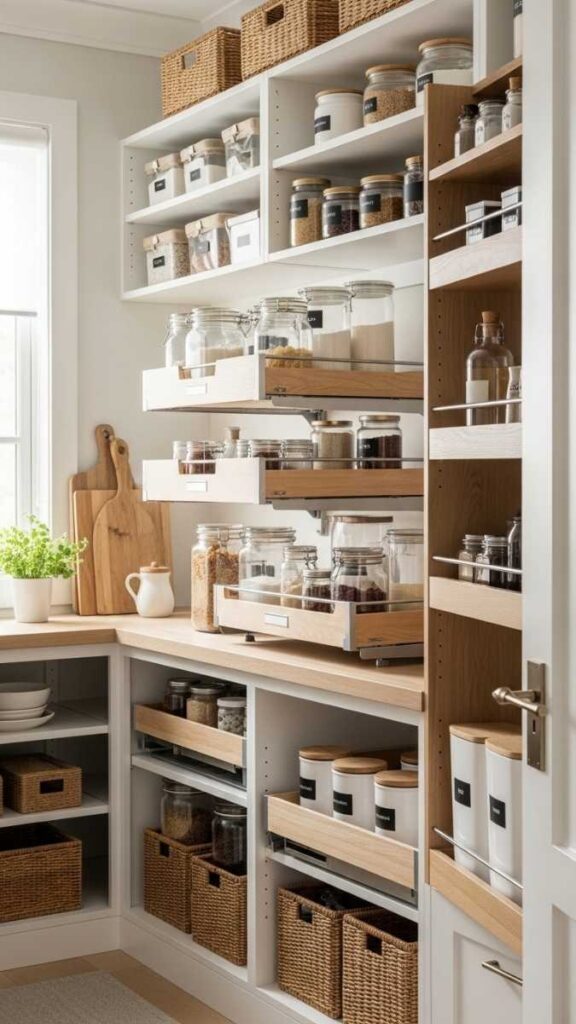
Most pantries waste their vertical space completely. A double-layer system uses stackable shelf risers on fixed shelves to create two rows of visibility of canned goods on the bottom, spices and packets on the elevated tier in front.
Pull-out wire baskets installed at the lower level handle bulkier items like snack bags or onion storage without requiring you to dig through everything. The visual effect is immediate: every item has a designated row, so you stop losing things behind other things. This works especially well in shallow pantries where the common problem is depth, not width. Things fall to the back and stay there. I’ve noticed this style tends to hold up better long-term than purely aesthetic organizers because the logic is built into the structure itself.
Floating Ledge Shelves in the Living Room Corners
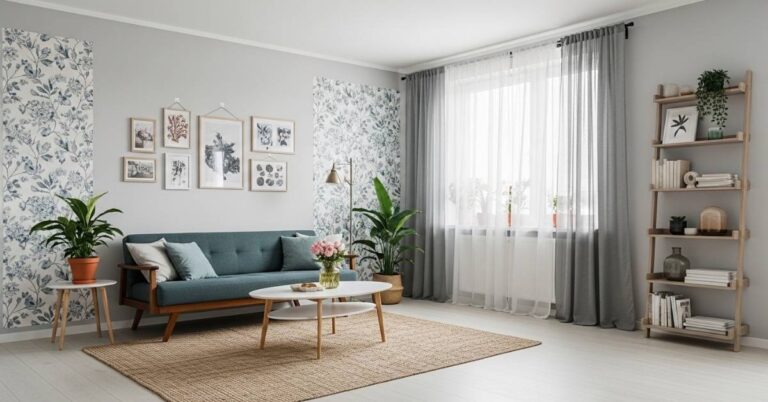
Corner spaces in living rooms are almost always underused; they’re awkward to furnish and end up empty or collecting clutter. Floating ledge shelves installed diagonally across the corner create storage and display space without consuming floor area.
Keep the shelves shallow (around 6–8 inches deep) so they hold books, small plants, or framed art without overwhelming the wall. Because they’re mounted high, the floor beneath stays clear, which makes the room feel larger than it actually is. Renters can use adhesive-mounted ledges rated for lighter loads. This setup works particularly well in living rooms where square footage is limited but you still want visual interest on the walls.
Under-Bed Storage With Labeled Flat Bins
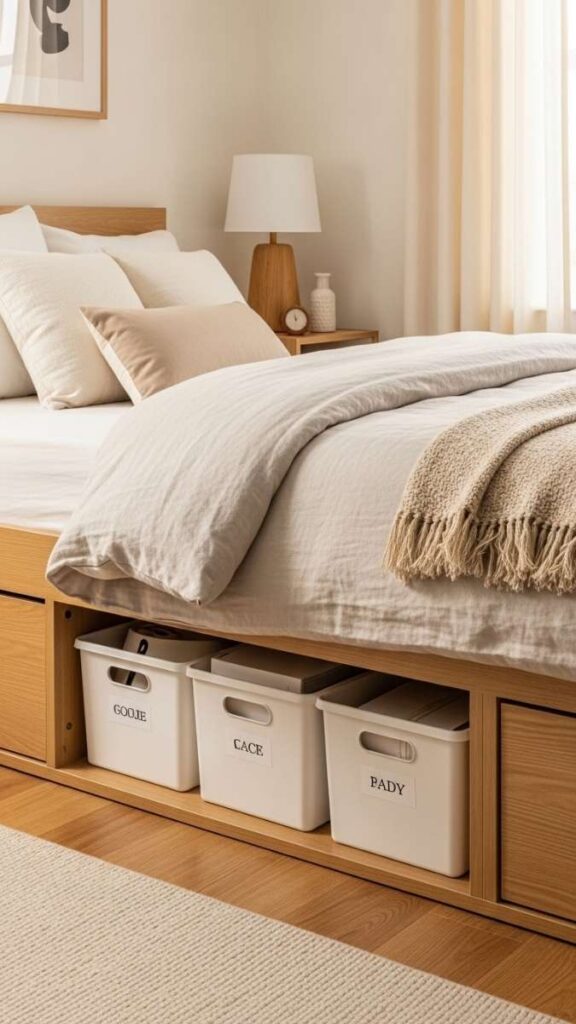
The area under a bed holds roughly 40–50% of what most people store in their closets, seasonal clothing, extra bedding, shoes but it’s almost always managed poorly. Flat rolling bins (around 6 inches high) on wheels are the most functional option: they slide out fully, so you can actually see and reach everything inside, unlike bags or loose items that just get pushed further back.
Use clear bins with labeled lids. One bin per category of summer clothes, extra blankets, off-season shoes. This is one I’d actually recommend trying first, especially if closet space is tight, because the ROI on usable storage is immediate and the cost is low.
Pegboard Kitchen Wall for Tools and Utensils
In a small kitchen, drawer space is often the first thing that runs out. A pegboard installed on an otherwise unused wall section turns a flat surface into a fully functional storage system. Hang utensils, measuring cups, a paper towel holder, and small baskets for loose items all within arm’s reach of the prep area.
Because everything is visible and accessible, you also cut down on searching through cluttered drawers during cooking. Paint the pegboard to match the wall for a more polished, built-in look. This setup works best in rental kitchens where cabinet space is limited and you need a flexible, removable solution pegboard mount with a few anchor bolts and come down cleanly.
The Entryway Drop Zone Setup
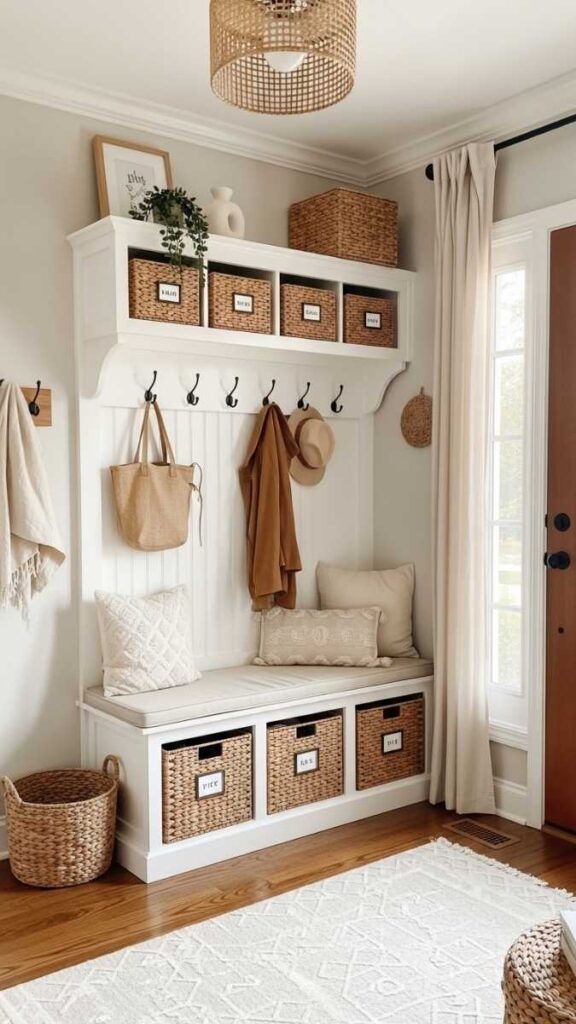
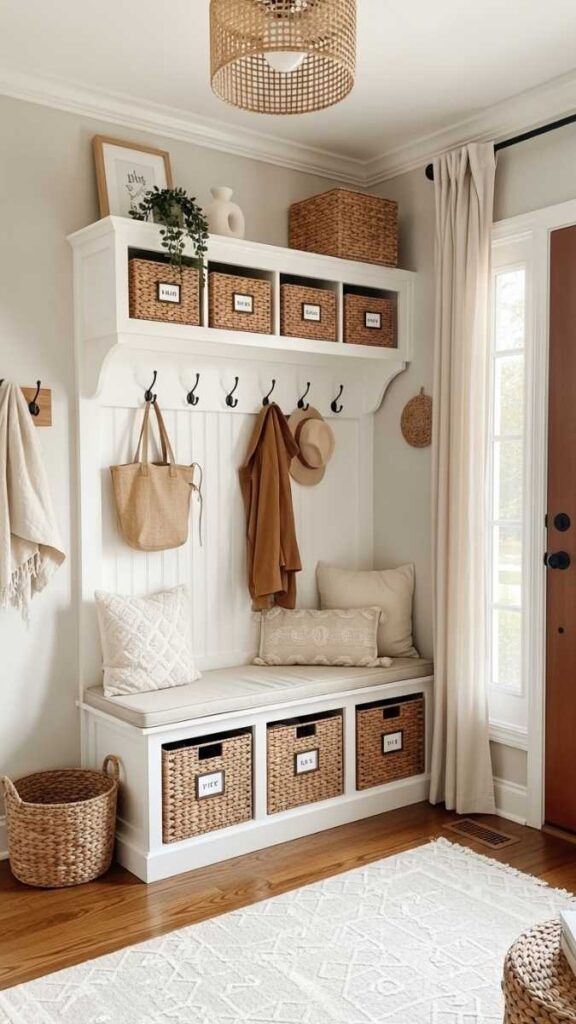
The entryway is where most home organization systems break down first. Without a designated spot for keys, shoes, bags, and mail, everything lands on the nearest flat surface. A drop zone setup combines three elements: wall-mounted hooks for bags and coats, a narrow floating bench or shelf underneath for shoes, and a small basket or tray on a wall-mounted ledge for keys, cards, and mail.
This isn’t just about aesthetics, it’s about removing decision-making at the door. When every item has one correct landing spot, clutter stops accumulating. Aim for a bench no deeper than 12 inches so the entryway still feels open. This is particularly useful in apartments where the entry leads directly into the living area.
Read More About: 65+ Japandi Style Ideas That Make Any Room Feel Calmer, More Intentional, and Beautifully Balanced
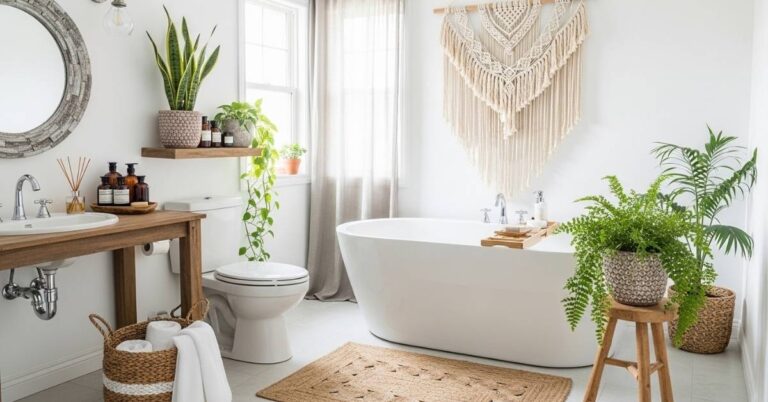
Bathroom Vanity Drawer Organizers With Vertical Dividers
Most bathroom drawers are a flat layer of chaos products stacked on top of each other, nothing visible, nothing accessible. Adjustable drawer organizers with vertical sections (not just the standard flat grid) let you store items upright, the way you’d store files in a cabinet.
Serums, mascara, and lip products stand vertically, so you can scan everything at a glance without pulling items out. Pair this with a lazy Susan under the sink cabinet for cleaning products one spin and everything is reachable. Small bathrooms benefit the most from this, especially when counter space is minimal and the drawer has to do the work of a full medicine cabinet.
The Open Wardrobe With Cubbies and Drawers
For renters or bedrooms without built-in closets, a freestanding wardrobe system with a mix of cubbies, short hanging rods, and small pull-out drawers does more organizational work than a standard single-rod wardrobe.
The key is zoning: short-hang section for jackets and tops, long-hang for dresses or trousers, cubbies for folded items and shoes, drawers for small items like socks and accessories. The open nature of these systems also creates accountability; you can see everything, which makes it harder to let clutter accumulate. Works especially well in studios or small bedrooms where a full built-in closet isn’t an option.
Kitchen Island With Pull Out Bins on the End
Adding a small kitchen island (or modifying an existing one) to include pull-out bins on one end solves one of the most annoying kitchen problems: trash cans and recycling bins taking up floor space. A two-bin pull-out built into the island base keeps them accessible but completely hidden.
The freed floor space is significant in a small kitchen removing a freestanding bin can open up an entire traffic lane. If you’re not building from scratch, look for island carts that come with this feature, or retrofit an existing lower cabinet with a pull-out trash unit (widely available in standard 12-inch widths). This setup works in both owned homes and rentals with moveable islands.
Laundry Room Shelf to Floor Organization
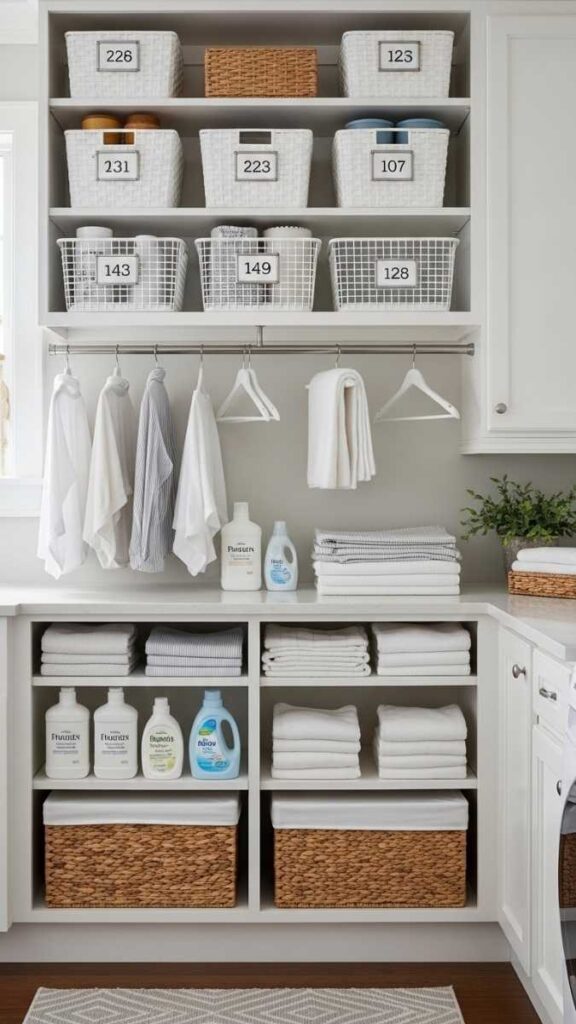
A laundry room that works well uses every vertical inch floor to ceiling. Start with open shelving above the washer and dryer for detergent, cleaning supplies, and extra linens. Mid-height shelving holds labeled bins for sorting laundry by category (darks, lights, delicates, hand-wash).
A retractable drying rack mounted to the wall takes up zero space when not in use. The floor stays clear except for a basket for items to fold. This system works because it mirrors the actual steps of doing laundry: sort → wash → dry → fold, each with a logical position in the room. Small laundry rooms, especially narrow ones, benefit the most because the vertical stacking replaces the need for any floor-based furniture.
The Home Office Cord and Cable Management System
Desk setups with visible cords read as messy regardless of how organized the actual desk surface is. A combination approach works best: cable raceways along the wall to bundle and hide cords running to outlets, a cable management tray mounted under the desk to hold power strips and cable slack, and velcro ties to keep individual cables grouped.
The desk surface clears visually, which makes the room feel more professional and focused. This matters especially in home offices that also function as living spaces. The visual separation between “work mode” and “living mode” is often psychological, and cable management contributes to that shift.
Magazine Files for Cabinet and Drawer Organization
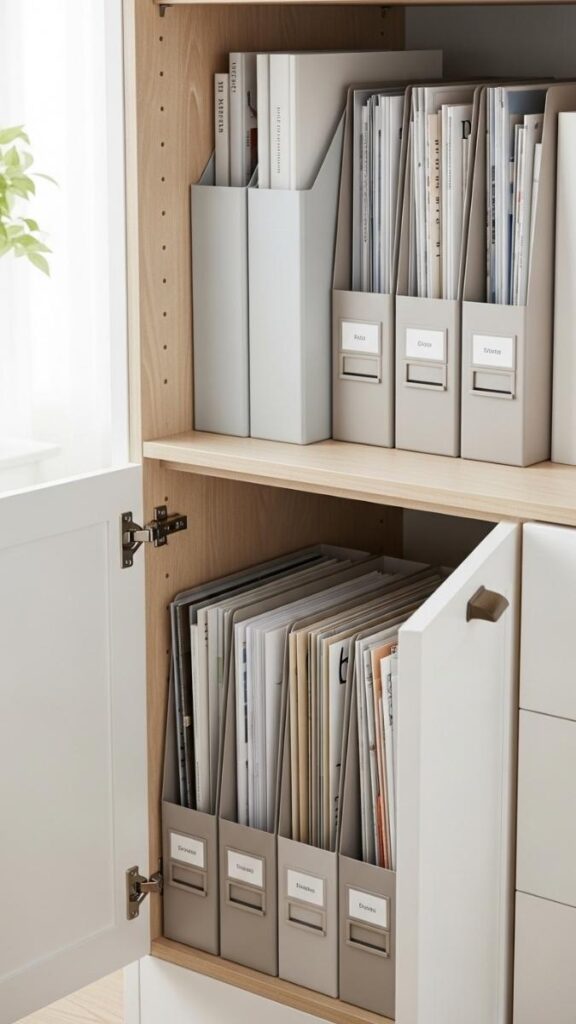
Magazine files, the upright cardboard or acrylic type, are one of the most versatile storage tools for internal cabinet organization. Stand them in kitchen cabinets to hold baking sheets, pan lids, and cutting boards vertically instead of stacked. In a home office, they organize folders and notebooks.
In a bathroom cabinet, they hold heat styling tools upright. The vertical orientation is the key feature: you can remove one item without disturbing everything else around it. These cost almost nothing and require no installation. The setup works in any cabinet with at least 10 inches of height, which covers most standard kitchen and bathroom cabinetry.
Read More About: 64+ Coastal Decor Ideas That Actually Work in Homes Not Just Beach House
Floating Nightstand With a Small Shelf and USB Outlet
In a bedroom where floor space is tight, a floating nightstand with a built-in shelf and USB charging outlet removes two pieces of furniture: a side table and a separate charging station. Mount it at the right height for your mattress (usually 24–28 inches from the floor), and the open floor beneath makes the room feel significantly more spacious.
The small lower shelf handles books and a glass of water; the USB outlet keeps your phone off the mattress entirely. This is especially useful in rooms where the bed sits close to a wall, leaving limited space for a standard freestanding table. It’s also the smarter choice in shared bedrooms where each side has its own wall-mounted unit.
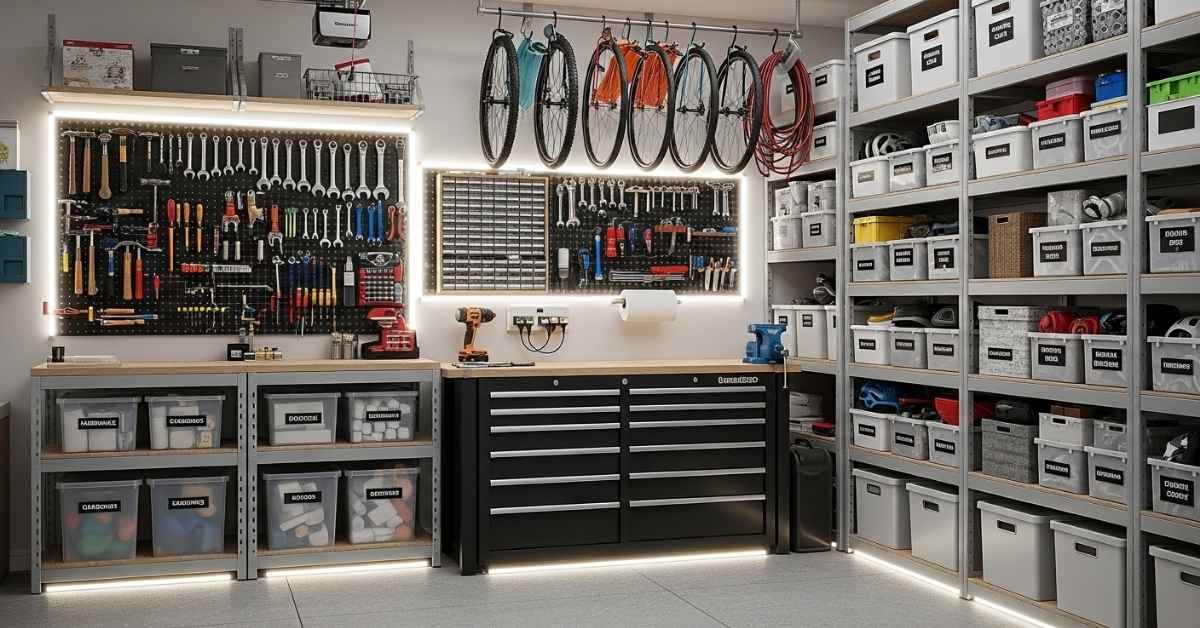
Stackable Modular Bins in the Garage or Utility Space
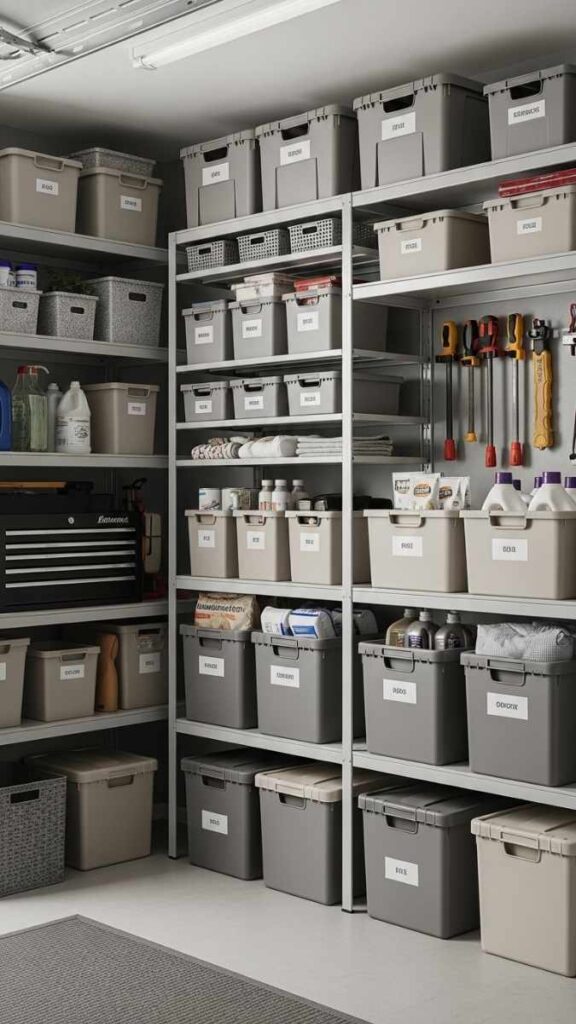
Garages and utility spaces are where organizational systems typically collapse because items are larger, heavier, and more varied. Stackable modular bins, the kind that connect to a wall track or bracket system, solve this by creating adaptable storage that can be reorganized as needs change.
Smaller bins at the top for hardware and spare parts, larger bins below for sports equipment or garden supplies. Label everything. Honest, visible labeling is more important in high-volume spaces than anywhere else in the home because these are areas where things tend to go when they don’t belong anywhere else.
Children’s Room Toy Storage With Low Open Cubbies
The most common complaint about kids’ room organization is that children don’t maintain it. The solution isn’t better labeling, it’s designing storage that a child can actually use independently. Low open cubbies (no higher than 24–28 inches for young children) with individual bins for different toy categories allow independent access and more importantly independent clean-up. No lids to open, no high shelves to reach, no stacking required.
Color-coding bins by category works better than written labels for pre-readers. This is a practical, low-maintenance system that stays functional even when it isn’t perfectly maintained.
The Linen Closet Overhaul With Shelf Dividers and Rolled Towels
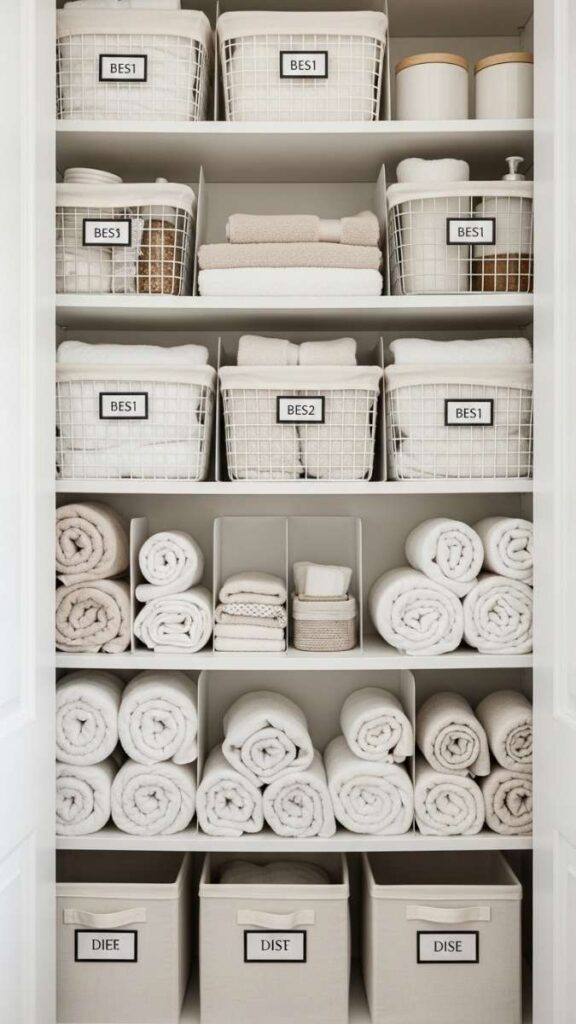
Most linen closets suffer from the same problem: towels collapse sideways, sheets slip out of their folds, and the closet is functionally impossible to navigate. Shelf dividers create vertical sections that hold towels stacked or rolled without sliding.
Roll towels instead of folding take up less space and stay organized because each towel is a self-contained unit. Use small bins at the top for less-accessed items (travel toiletries, first aid) and keep daily-use items at eye level. Group sheet sets inside one of the pillowcases so they stay together as a unit instead of getting separated. This is the kind of change that saves real time every day you stop rummaging.
Read More About: 63+ Rustic Decor Ideas That Make Any Room Feel Grounded, Warm, and Actually Livable
Vertical Spice Storage on a Magnetic Wall Strip
A standard spice drawer or rotating rack rarely shows you more than the tops of jars, which means you’re reading labels on your knees every time. A magnetic wall strip with small magnetic tins stores spices vertically and visibly. Label the lids (not the sides) and the names face you directly when you scan the strip.
This works in kitchens of any size, but is particularly efficient in compact kitchens where counter space matters; the strip sits on a backsplash or inside a cabinet door, freeing an entire drawer.
Clear Stackable Containers for the Refrigerator
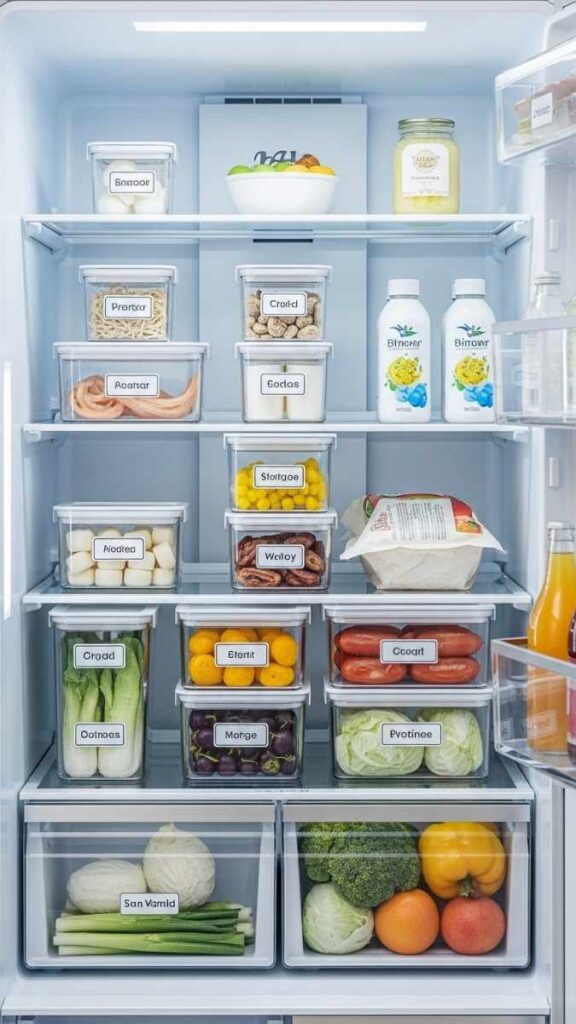
Refrigerator organization is often overlooked as a storage solution, but it directly affects food waste and grocery spending. Clear stackable containers group similar items: deli meats together, cheeses together, condiments decanted into smaller bottles so you can see everything at a glance.
The horizontal containers designed for refrigerator shelves slide out like drawers, giving you full access to the back of the shelf without unpacking the front. In 2026, this has become one of the most-searched home organization topics for a reason: it works, it’s inexpensive, and the habit change (seeing everything vs. guessing) has a genuine impact on daily life.
Built-In Bookcase Around a Doorway
A doorway flanked by built-in shelving uses an architectural feature most rooms already have and turns the surrounding wall space into functional storage. This is particularly useful in living rooms and home offices where books and display items accumulate without a natural home.
The shelves read as architectural rather than added-on, especially when painted the same color as the wall. Floor-to-ceiling shelving on both sides of a standard doorway can hold anywhere from 200 to 400+ books depending on depth. For renters, a similar look can be achieved with freestanding bookcases flanking a doorway; the effect is nearly identical.
Tension Rod Organizers Under the Sink
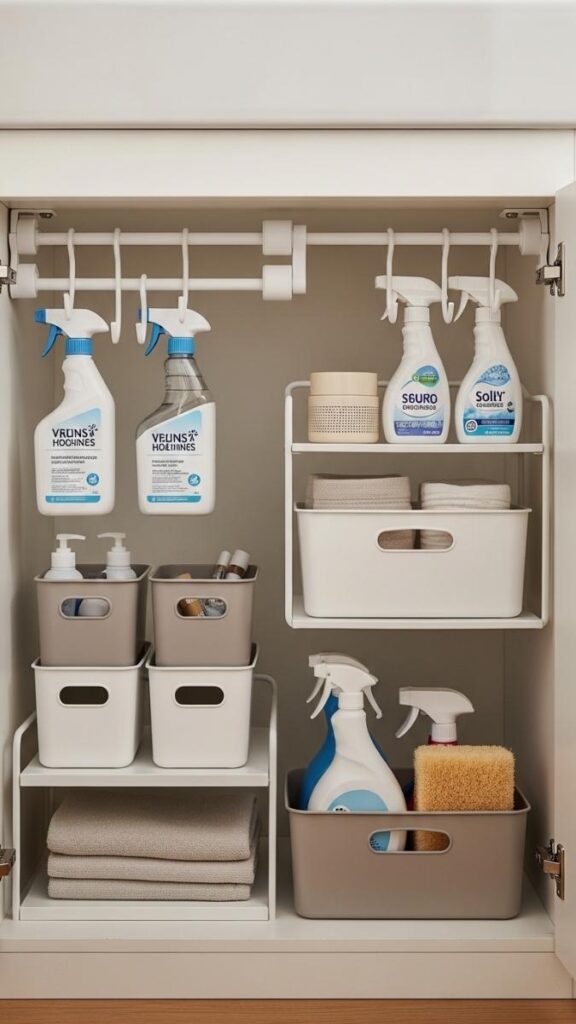
The cabinet under a sink is one of the most wasted spaces in any bathroom or kitchen. The plumbing takes up the center, leaving two awkward side sections. Tension rods installed horizontally allow spray bottles to hang upside down suspended by their trigger handle which keeps the cabinet floor completely clear for other items.
It costs almost nothing, requires zero tools, and can be removed instantly for renters. Below the rods, use small bins for sponges, extra soap, or cleaning supplies. The result is a cabinet that holds more than it did before, with everything accessible and visible.
Staircase Drawer Storage in the Risers
In a home with a staircase, the risers represent a significant amount of hidden storage that most people never use. Converting even a portion of the risers into pull-out drawers (typically 3–4 inches deep) creates space for shoes, seasonal accessories, dog supplies, or board games items that usually end up displaced in other parts of the home.
This works in both owned homes and some rental situations where the landlord permits minor modifications. The visual result is a staircase that looks the same from a distance but functions as a multi-drawer storage unit, one of the more elegant solutions for homes short on closet space.
The Mudroom Wall Grid With Hooks and Baskets
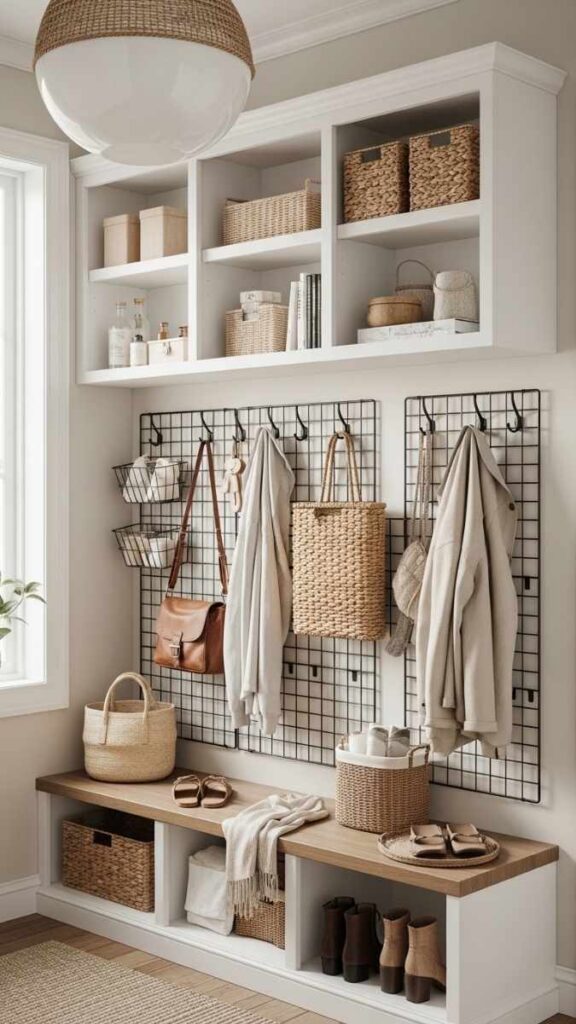
A mudroom grid system either a pegboard or a metal grid panel, lets you configure hooks, baskets, and shelves in any arrangement that suits your household. The benefit over fixed cabinetry is adaptability: if your storage needs change (new hobby, new family member, different season), you reconfigure rather than rebuild.
Mount the grid at a practical height, hooks at coat level, baskets at mid-height for sports gear, a small shelf near the top for less-used items. This is especially efficient for families where multiple people use the entryway simultaneously, because each person can have a designated section.
Closet Rod Doubler for Short Hang Clothing
Most closets have 66–72 inches of height below the shelf, which is enough for two short-hang rods. The lower rod can be hung on adjustable chains from the upper rod, requiring no installation beyond a screwdriver. Honestly, this is the highest-impact, lowest-cost closet upgrade available.
One of the fastest improvements to any standard closet is adding a second hanging rod below the existing one, creating two rows of short-hang space. Shirts, jackets, blazers, and folded trousers all fall into the short-hang category and two rows of these items fit in the same vertical space as one row of full-length hanging garments.
Labeled Acrylic Containers for Bathroom Countertops
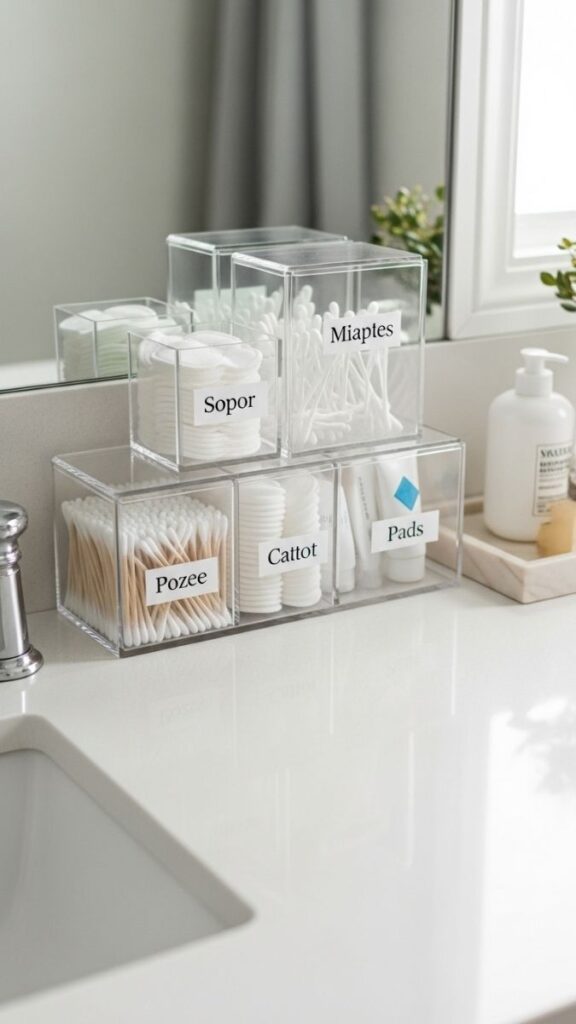
Bathroom countertops tend to accumulate small items: cotton rounds, bobby pins, hair ties, skincare samples that are too small to store in a drawer but too numerous to leave loose on the surface. Matching acrylic containers with labels keep the countertop functional and visually cohesive.
The clear material means you can see fill levels at a glance, so nothing runs out unnoticed. Keep the containers in a straight line along the back edge of the counter to leave working space in front. This setup works in small bathrooms where a lack of storage drives countertop clutter, and it keeps the visual noise low because the containers are identical in material and finish.
Under Stair Reading Nook With Built In Storage
The dead space beneath a staircase is one of the most creatively underused areas in a home. Converting it into a reading nook with a built-in bench (with lift-top storage) and surrounding bookshelves addresses two problems at once: you create a functional, comfortable space and solve a storage problem.
The bench storage works particularly well for bulky items like extra blankets, throw pillows, or holiday décor. The shelving handles books and displays. In a home with children, this becomes a naturally scaled space that kids use independently. The visual effect of a defined, purposeful alcove carved from unused space makes the surrounding rooms feel more organized by association.
Rolling Kitchen Cart as Flexible Pantry Storage
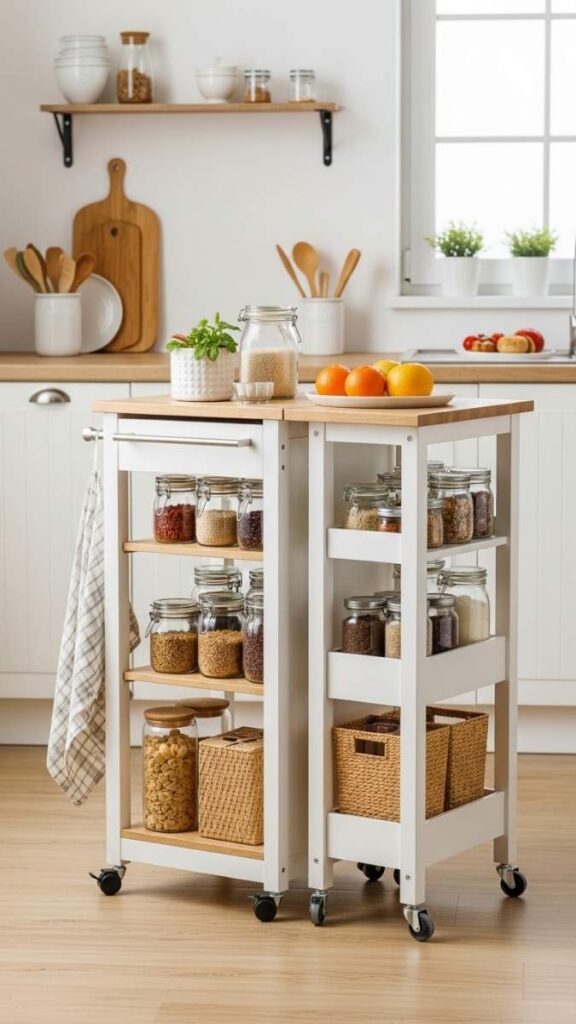
In kitchens without a pantry, a rolling cart can function as a mobile pantry shelves on wheels that move to wherever they’re needed and tuck away when they’re not. Look for carts with a mix of fixed shelves and a drawer, and choose one with locking wheels so it stays put when in use.
Because it’s freestanding, it adds significant storage without any permanent changes ideal for renters. It also works as additional prep space when positioned next to the counter, or as a serving station for entertaining. The flexibility is the value here: it solves three different problems (storage, prep, serving) with one piece of furniture.
Wardrobe Shelf Dividers for Folded Clothing
Stacked folded clothing on a shelf without dividers inevitably collapses sideways. Shelf dividers, whether acrylic panels or adjustable wire versions, create vertical channels that keep stacks of sweaters, jeans, or t-shirts upright and separate.
You can fit more items per shelf because you’re stacking to the divider height, not to the precarious leaning point of an uncontrolled stack. Remove one item from the middle of the stack without disturbing the rest. In wardrobes with a lot of folded storage (as opposed to hanging), this is a simple structural fix that makes the wardrobe feel significantly more organized.
Garage Ceiling Storage Racks for Seasonal Items
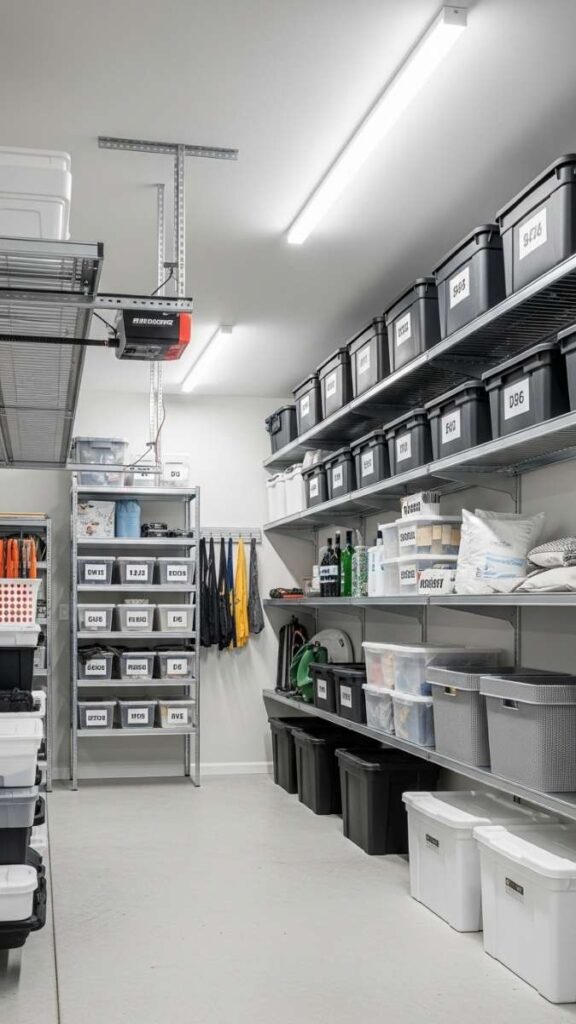
Garages lose most of their storage potential to the floor cars, bikes, and equipment spread out horizontally until the space becomes nearly unusable.
Ceiling-mounted storage racks (the kind that attach to joists with adjustable vertical hangers) convert overhead space into a practical storage zone for items you only access a few times per year: holiday decorations, camping gear, off-season sports equipment.
Keep these racks to bins and boxes only; loose items aren’t safe overhead. Label every bin facing outward so you don’t have to pull things down to identify them. This is particularly valuable in attached garages where the ceiling height is 10 feet or more, giving you 4–6 feet of clearance above the car.
What Actually Makes These Storage and Organization Ideas Work
The reason many storage systems fail after a few weeks comes down to one thing: friction. If putting something away takes more effort than leaving it out, it stays out. Every system in this list is designed with that in mind the goal is always to make the organized state the path of least resistance.
A few practical principles that apply across all of these setups:
Match the system to your actual habits, not your ideal habits.
If your keys always land on the kitchen counter, put the key hook on the kitchen counter not by the front door. Work with your existing behavior patterns.
Visible storage requires visual consistency.
Open shelves, pegboards, and acrylic containers look organized when items are consistent in material, size, or color. Mixing random containers on open shelving doesn’t read as organized regardless of how neatly it’s arranged.
Zones matter more than containers.
Grouping like items in the same location, all cleaning supplies together, all snacks together is the structure that makes a system work. Containers just hold the zone together.
Assign storage by frequency of use.
Daily items at eye and hand level. Weekly items are slightly less accessible. Seasonal and rarely used items overhead or in deep storage. This keeps your most-used spaces the most accessible and prevents the system from compressing inward over time.
In my experience, this works best when you start with the highest-friction area first, usually the kitchen or the entryway and build from there. The visible improvement reinforces the motivation to continue.
Storage and Organization Setup Comparison Table
| Idea | Best Space Type | Primary Benefit | Difficulty | Renter-Friendly |
| Double-layer pantry shelves | Shallow pantry | Visibility, access | Easy | Yes |
| Pegboard kitchen wall | Small kitchen | Drawer space savings | Easy | Yes (with anchors) |
| Entryway drop zone | Any entry | Clutter prevention | Easy | Yes |
| Under-bed flat bins | Small bedroom | Hidden bulk storage | Easy | Yes |
| Floating nightstand shelf | Tight bedrooms | Space expansion | Medium | Yes (anchor required) |
| Open wardrobe with cubbies | No built-in closet | Full wardrobe system | Medium | Yes |
| Closet rod doubler | Standard closet | Doubles hang space | Easy | Yes |
| Staircase riser drawers | Homes with stairs | Hidden architectural storage | Hard | Conditional |
| Ceiling garage racks | Garages | Seasonal item storage | Medium | Conditional |
| Under-sink tension rods | Kitchens/bathrooms | Floor space savings | Easy | Yes |
FAQ’s
What is the most effective way to start organizing a cluttered home?
Start with one room ideally the one that causes the most daily friction, like the kitchen or entryway. Clear the space completely, then only return items that belong there with a designated spot. Adding storage before decluttering rarely works; the clutter just moves into the new containers.
How do I organize a small apartment with no storage space?
Focus on vertical space: wall shelves, pegboards, over-door organizers, and under-bed storage. Furniture with built-in storage (ottomans, beds with drawers, benches with lift tops) replaces single-purpose pieces. The goal is every item having a designated location, even in a limited square footage.
What storage systems are renter-friendly and don’t require permanent changes?
Tension rods, freestanding shelving, rolling carts, pegboards with minimal anchors, and adhesive hooks cover most storage needs without permanent modifications. Many landlords permit small anchor holes that can be filled before move-out. Always check your lease.
Double-rod closet vs. built in shelving: which is better for small bedrooms?
A double-rod closet system wins for short-hang clothing (shirts, blazers, trousers) in terms of volume per square foot. Built-in shelving works better for mixed storage folded items, shoes, and accessories. In practice, the best small-bedroom closet combines both: double rods on one side, shelving on the other.
Why does my storage system fall apart after a few weeks?
Usually because the system doesn’t match your real habits. If putting something away requires extra steps opening a lid, walking to another room, moving other items it won’t happen consistently. The most sustainable systems make the organized state the easiest option, not the most disciplined one.
Is open shelving or closed cabinetry better for home organization?
Open shelving keeps things visible and accessible, which reduces “out of sight, out of mind” clutter elsewhere. It works best with consistent, visually cohesive items. Closed cabinetry hides visual noise and works better for items that don’t need to be visible to be remembered. Most practical homes use a combination of both.
How do I organize a garage without spending a lot of money?
Tension shelving units (the kind with adjustable wire shelves) are low cost and hold significant weight. Ceiling hooks for bikes and ladders free up floor space. Labeled cardboard banker boxes on shelves handle seasonal storage. A $15 pegboard panel handles most tool storage. The key expense is the shelving structure goes as tall as the ceiling allows.
Conclusion
Good storage and organization isn’t about achieving a perfect, magazine-worthy space, it’s about reducing the daily friction points that make a home feel chaotic. Even a few targeted changes in the right areas, like clearing your entryway, doubling your closet capacity, or finally organizing that under-sink cabinet, make a measurable difference in how the space functions.
Start with one or two ideas that address your most-used spaces or biggest frustrations. You don’t need to overhaul everything at once. Make one system work, live with it for a few weeks, then layer in the next. That’s the approach that actually sticks and that’s what turns a functional-enough home into one that genuinely works for you.