67+ DIY Decor Ideas That Actually Work in Real Homes No Craft Store Overwhelm Required
There’s a specific kind of frustration that comes with looking up DIY decor online: you find a project that looks incredible in photos, attempt it at home, and end up with something that belongs in a craft failure compilation. The gap between Pinterest inspiration and real-world execution is real, and most DIY content skips the part where it tells you why something works spatially.
This list is different. These are ideas that hold up in actual rooms: small apartments, rentals, open-plan spaces, rooms with awkward lighting. Whether your space feels bland, cluttered, or just unfinished, there’s something here that won’t require a power drill or a weekend to execute.
If your style leans minimal, cozy, or somewhere in between, and you want your home to feel more intentional without spending a lot, this is where to start.
Layered Gallery Wall With Varying Frame Depths
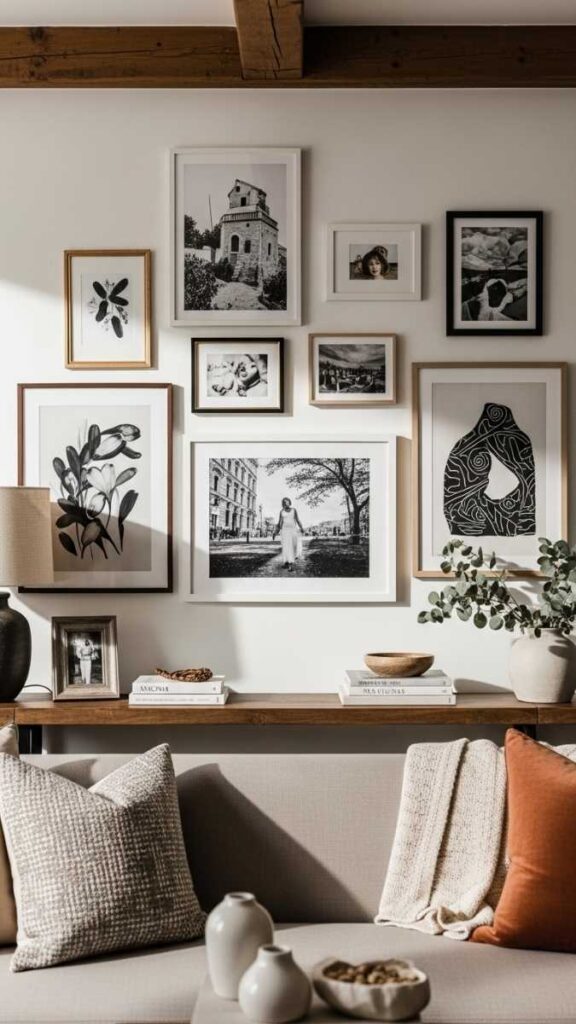
Most gallery walls fall flat because every frame sits at the same depth with the same spacing they read as wallpaper rather than a curated collection. The fix is simple mix frame depths by combining standard frames with box frames (which sit 1–2 inches off the wall).
This creates actual shadow and dimension, making the arrangement feel considered rather than slapped together. Lean a few frames against the wall below the hung pieces to break the grid. This setup works especially well in living rooms with a sofa below the horizontal line of the furniture anchoring the arrangement so it doesn’t look like it’s floating.
DIY Limewash Effect on a Single Accent Wall
Limewash paint has been one of the more interesting wall finish trends building through 2025 and into 2026 it creates an aged, slightly mineral texture that photographs beautifully and looks considered in person. You don’t need a plasterer. A limewash-finish paint (Portola or Roman Clay are the most accessible versions) applied with a wide brush in loose, overlapping strokes gives you a convincing version of the look.
Stick to one wall; the feature wall behind a bed or sofa works best. The texture absorbs light differently throughout the day, so the wall reads differently in morning sun than it does under warm evening lighting. This is one I’d actually recommend trying first if you’re tired of flat painted walls but not ready for wallpaper.
Rope Wrapped Pendant Light Over a Dining Table
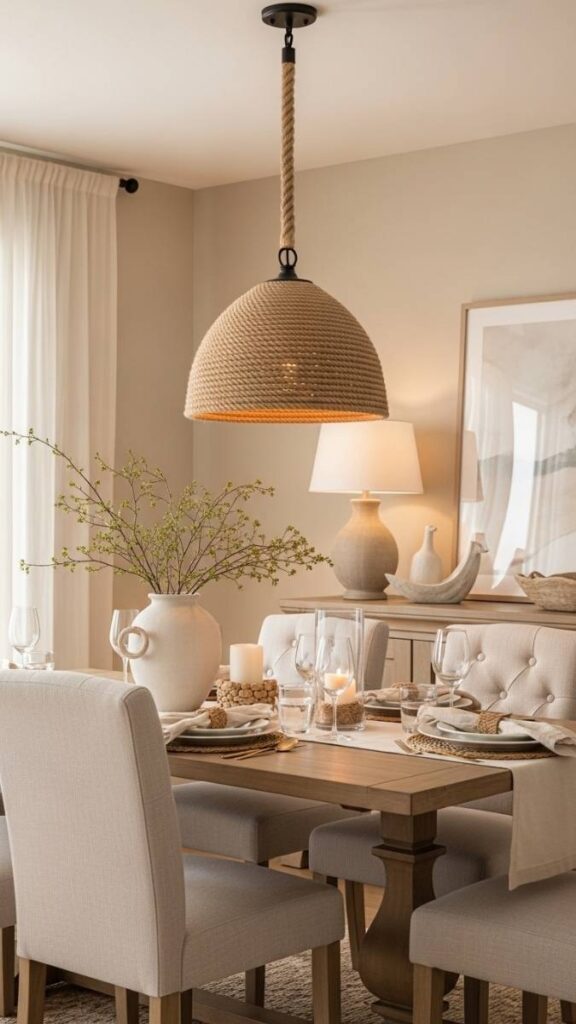
A bare pendant over a dining table feels unfinished, but replacing a fixture in a rental isn’t always an option. Wrapping the existing cord and shade base in jute rope or thick cotton twine changes the entire character of the light without any electrical work.
The material adds warmth especially when the bulb itself is a warm-toned Edison or globe style and the texture contrast against a smooth ceiling reads as intentional. The process takes about an hour with a hot glue gun. Best suited for pendant lights with visible cords in rooms that lean natural, Scandinavian, or bohemian. This solves the “rental lighting is ugly and I can’t change it” problem without touching the wiring.
Plaster or Beeswax Finish on Terracotta Pots
Plain nursery pots have a look and it’s not exactly curated. A thin wash of white gesso, a beeswax rub, or a chalk paint coat takes a terracotta pot from generic to something that looks like it came from a boutique garden shop.
The trick is not covering the entire surface leaving edges, rims, and the base slightly exposed creates an aged, layered effect that reads as handmade in the best sense. Group pots in odd numbers (three or five) at different heights using stacked books or small risers underneath. This is particularly effective on windowsills and open shelving where the pots are at eye level.
Washi Tape Geometric Shapes as Temporary Wall Art
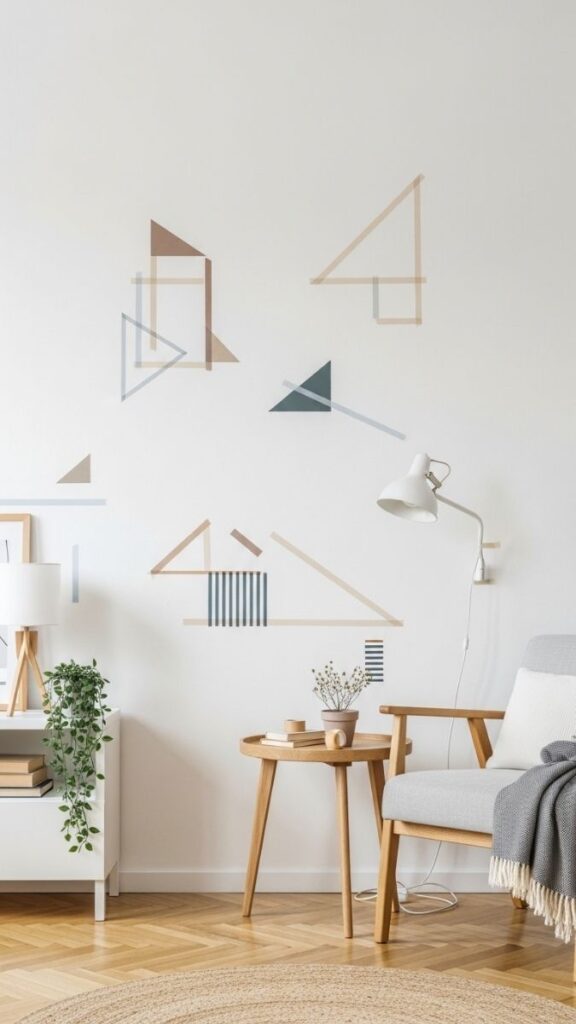
This solves a very specific problem: you want something on your walls but you’re renting, commitment-averse, or genuinely unsure what you want. Washi tape comes off cleanly from most painted surfaces and can create surprisingly architectural patterns, large triangles, grid layouts, abstract blocked shapes that read as intentional design decisions rather than craft projects. The key is going bigger than you think you should.
A triangle that spans 24 inches looks like art; one that’s 8 inches looks like a mistake. Works best on light walls in home offices, reading nooks, or bedroom corners.
Read More About: 65+ Japandi Style Ideas That Make Any Room Feel Calmer, More Intentional, and Beautifully Balanced
DIY Arch Mirror Using Foam Board and a Thrift Store Frame
Arched mirrors are everywhere in interior design right now, and they’re also $300+ at most retailers. The DIY version is to buy a plain rectangular mirror from a thrift store or discount retailer, cut an arch shape from foam board, glue it to the top of the mirror frame, and cover the foam with joint compound or plaster for texture, then paint.
The arch shape does specific spatial work in a room; it softens hard corners and reflects light in a more organic way than a rectangular mirror. Particularly effective in entryways and bathrooms where vertical space is used but floor space is limited.
Curtains Hung at Ceiling Height Not Window Height
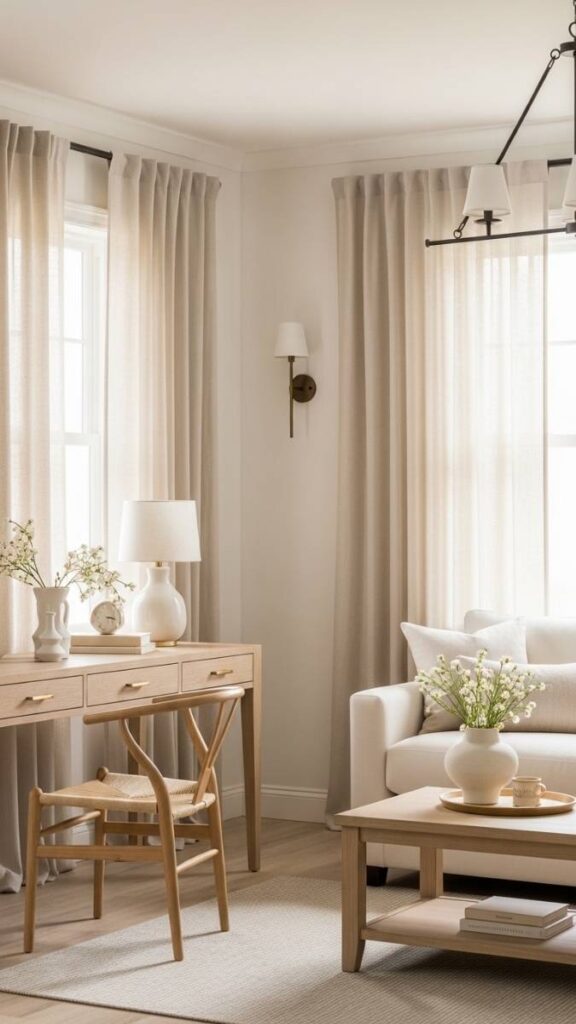
This one isn’t exactly a craft project, but it’s the single most impactful DIY intervention in a room with disappointing windows. Mounting curtain rods 4–6 inches below the ceiling (rather than just above the window frame) visually extends the window height, draws the eye upward, and makes ceilings feel higher.
The curtains themselves don’t need to be anything special, inexpensive linen-look panels from IKEA or Amazon work exactly the same as expensive ones when hung correctly. This solves the problem of windows that feel small or rooms that feel low-ceilinged, and it’s something renters can typically do without damaging walls if they use proper anchors.
DIY Boucle Style Pillow Covers From Remnant Fabric
Boucle and textured fabric pillow covers retail for $40–80 each, and you need at least four to make a sofa look intentionally styled. Remnant fabric bins at fabric stores sell boucle, sherpa, and waffle-knit by the yard at a fraction of the cost.
A basic envelope-back pillow cover requires zero sewing if you use fabric glue just fold, overlap, and press. The goal is mixing textures bounce next to smooth linen next to a subtle pattern creating depth that a single material never does. In my experience, this works best when you keep the color palette narrow (all neutrals or all in the same tone family) and let the texture variation carry the visual interest.
Floating Shelf With Invisible Bracket and Curated Objects
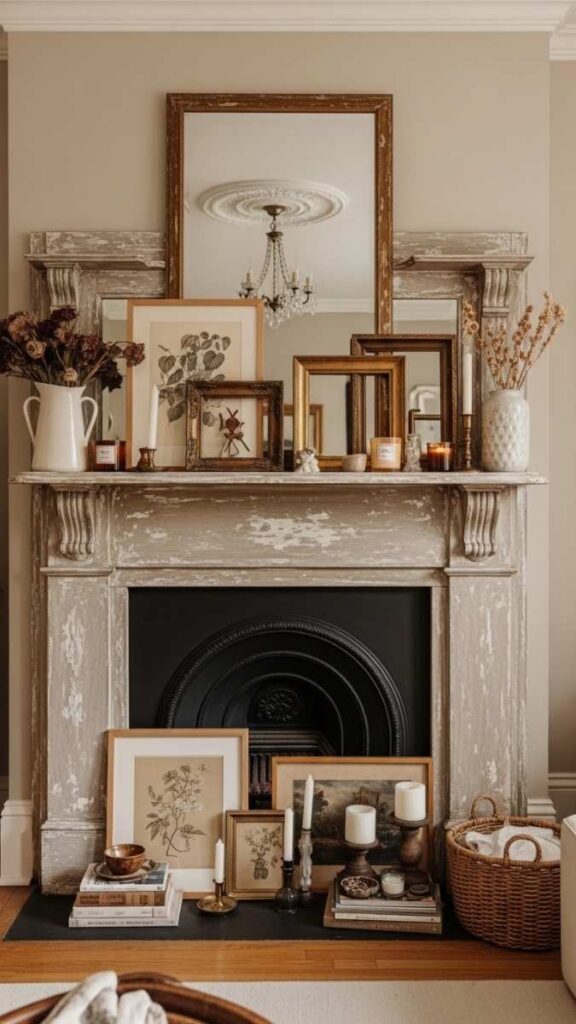
The shelf itself is less important than what’s on it and how it’s lit. A single floating shelf, especially one with a hidden bracket that makes it look like the wood is attached directly to the wall, creates a clean display surface that doesn’t compete with the rest of the room.
Keep it sparse three to five objects maximum, varying heights, and at least one tall element (a vase, a branch, a candle). A small battery-powered puck light installed above the shelf does more for the vibe than any art object on it. This is especially useful in small spaces where a full shelving unit would feel heavy.
DIY Dried Botanical Arrangements in Vintage Jugs
Dried botanicals have stayed relevant in interiors because they solve a practical problem: they look good and require exactly zero maintenance. Pampas grass, dried eucalyptus, dried cotton branches, and preserved palm leaves can all be found at craft stores or ordered online for much less than fresh arrangements.
The container matters more than the botanicals themselves; odd-shaped vessels, vintage jugs, or matte ceramic vases make dried arrangements look intentional rather than dusty. Group containers in clusters of three on counters, sideboards, or coffee tables. Avoid glass vases, which make dried stems look clinical.
Read More About: 66+ Storage and Organization Ideas That Actually Work in Real Homes
Painted Ombre Effect on a Plant Pot Cluster
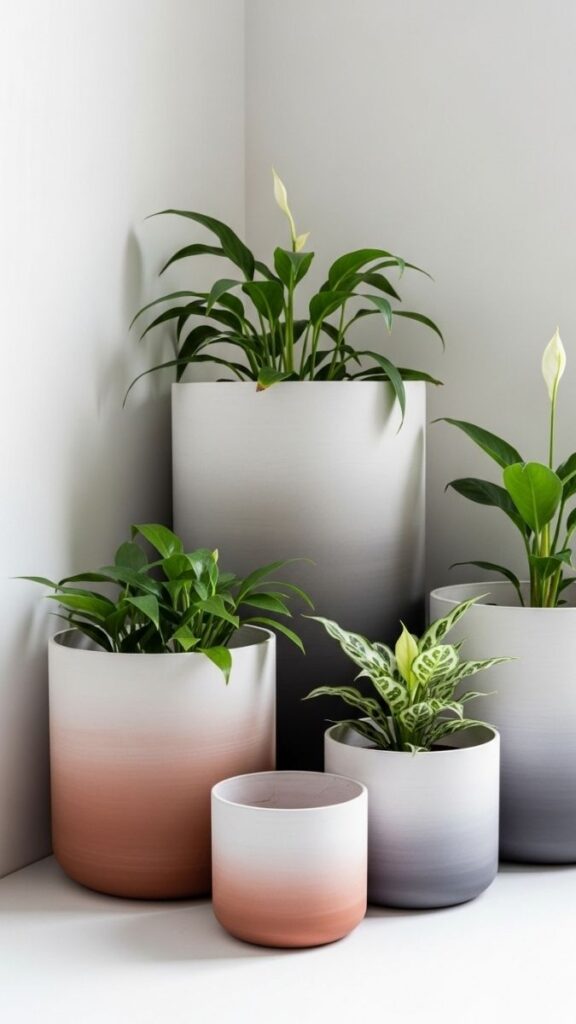
Ombre on a single object looks like a craft project from 2014. On a cluster of pots, it looks like a considered color system. The technique paints five to seven pots in the same color at different dilutions, most concentrated on the largest pot, lightest on the smallest.
Chalk paint works best for this because it doesn’t require priming and dries to a matte finish that reads as high-quality. The gradient effect creates visual cohesion across a group of plants that would otherwise look random. Works well on patios, balconies, and in entryways.
Fabric-Covered Acoustic Panels as Wall Art
Acoustic foam panels are genuinely useful in home offices and bedrooms; they reduce echo and soften hard sounds. But bare foam panels look like a recording studio, which is fine if that’s your aesthetic and less fine if it isn’t.
Wrapping them in fabric (stretched and stapled on the back like a canvas) turns them into functional art. Choose linen, bouclé, or a textured woven fabric in a muted color. Three panels at identical sizes and spacing read as a deliberate installation. The panels stay useful, the room looks better, and the acoustic benefit is real less echo means phone calls and video calls feel more professional.
DIY Cane Webbing Cabinet Upgrade
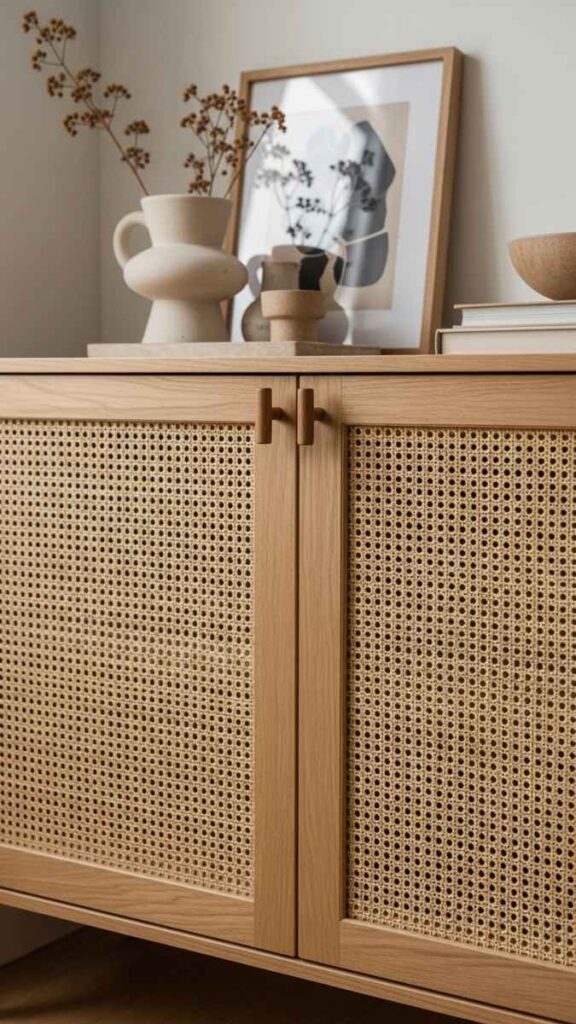
Solid cabinet doors on old dressers, media consoles, or bathroom vanities can look dated even after a fresh coat of paint. Replacing flat panels with cane webbing inserts (available by the roll from craft and upholstery suppliers) opens the visual weight of the piece and adds texture.
The material itself is breathable, which matters in bathroom vanities and kitchen cabinets. The process involves routing or cutting out the center of each door panel and stapling the webbing to the back. It’s manageable with basic tools. This is one of the more substantial DIY projects on this list, but the result looks like a furniture piece that would cost significantly more to buy.
Budget Terrazzo Look With Epoxy Paint on Countertops
This won’t fool anyone who’s seen real terrazzo up close, but the painted version does something that matters more in a practical sense: it covers ugly laminate countertops without a full renovation.
Epoxy countertop paint kits come with a base coat, chip colors, and a protective top coat. The chip colors can be customized; you’re not limited to what comes in the kit.
The most convincing results stick to two or three colors max with a white or light gray base. This is particularly useful in rental bathrooms where countertops are often the single most visually distracting element and replacing them isn’t an option.
Read More About: 63+ Rustic Decor Ideas That Make Any Room Feel Grounded, Warm, and Actually Livable
DIY Woven Wall Hanging With a Wooden Dowel
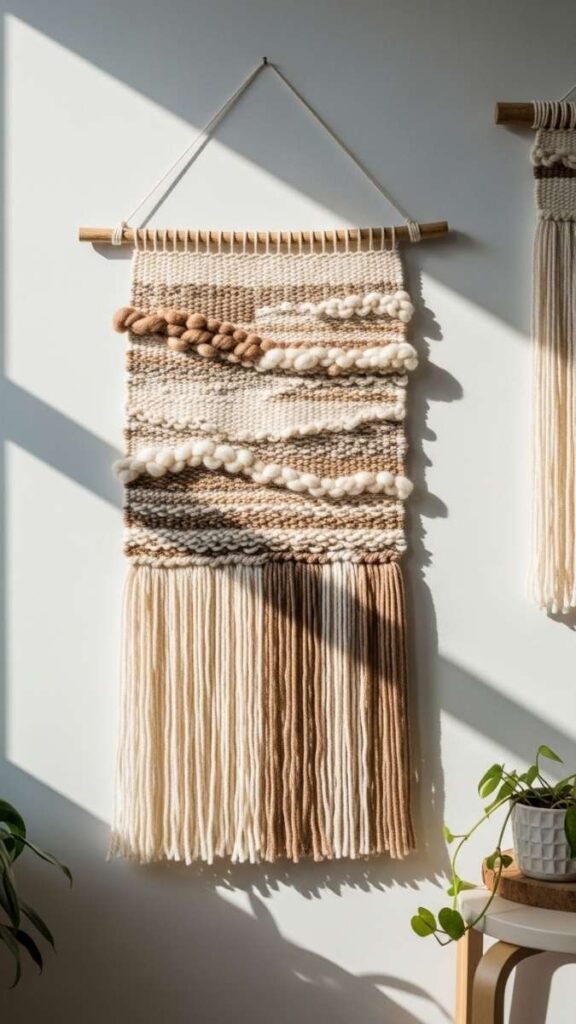
Weaving looks more complicated than it is when you see finished pieces in galleries. The basic loop-and-pull technique that creates most wall hanging patterns can be learned in an afternoon, and the materials wool yarn, a wooden dowel, and a comb cost about $25 total.
The design decisions that make a woven piece look considered rather than elementary are all in proportion: the hanging should be at least 18 inches wide to register as art on a wall, and it should incorporate at least three yarn textures (smooth, chunky, looped or fringe). Earthy neutrals terracotta, cream, sand, rust age better than brighter color choices and integrate more easily into different room directions over time.
Contact Paper Wood Look Shelf Liner as Visual Anchor
Open shelving looks great in design photography and immediately cluttered in real homes without a system. Contact paper on the shelf surface, specifically a warm wood-grain or marble-look pattern, creates a visual anchor that makes even ordinary objects on the shelf read as a display rather than overflow storage.
This works because the pattern gives the eye somewhere to land that isn’t the objects themselves. The installation is straightforward measure, cut, peel, and smooth with a credit card to eliminate bubbles. It’s also removable, which makes it ideal for rentals.
DIY Plaster Lamp Base Using Air Dry Clay
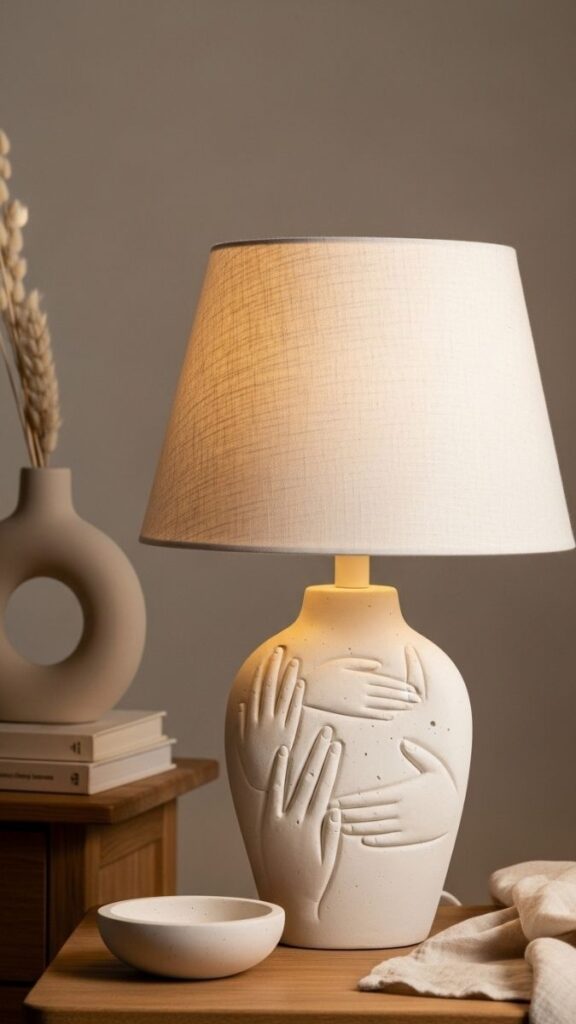
Lamp bases are expensive. A good-looking ceramic or plaster base with a simple shade runs $150–300 at retail. The DIY version uses air-dry clay wrapped around a plain bottle or existing lamp base, then sanded and sealed.
The handmade quality reads as artisan rather than homemade because imperfections in clay work are expected; the slight variation in surface texture is part of the appeal, not a flaw. A flat white or warm beige plaster spray finish makes the clay surface look intentional.
This takes two to three days (one to shape, one to dry, one to finish), but the result is a lamp that looks like it came from a boutique.
Framed Fabric as Low Cost Large Scale Art
Oversized art is expensive. A canvas or print that fills a large wall costs several hundred dollars at minimum, which is why most people end up with walls that feel empty and unbalanced.
Framing fabric, particularly linen, a vintage textile, or an upholstery swatch with an interesting pattern at large scale is the most cost-effective way to solve this problem. A $15 yard of fabric in a frame from a thrift store or IKEA’s RIBBA line creates a piece that reads from across the room as intentional and considered. The fabric doesn’t need to be anything precious; texture and scale do most of the work.
DIY Moss Wall Panel for a Living or Work Room
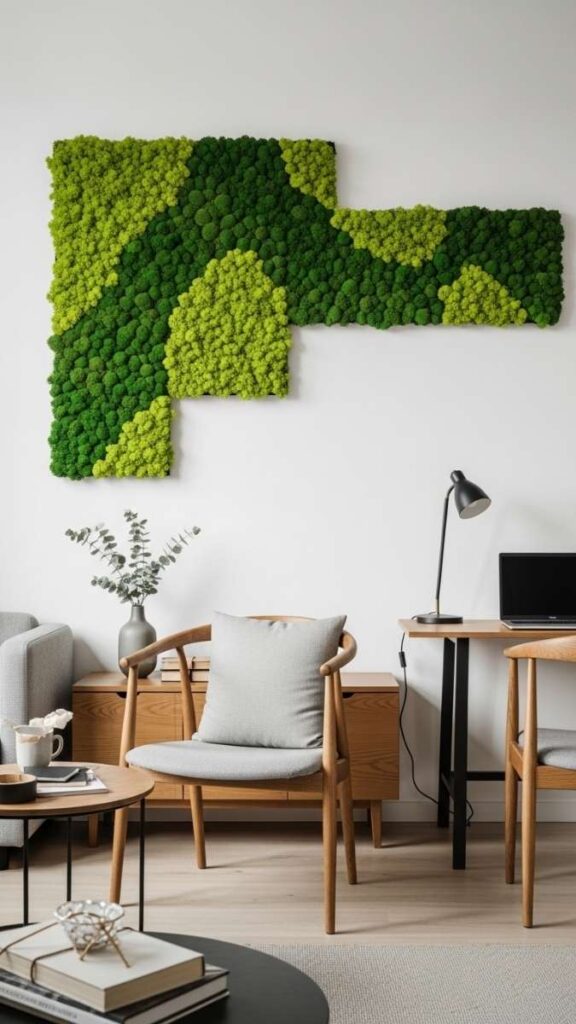
Preserved moss panels add something no art print can: an organic texture that reads differently under different lighting conditions, and a sense of life without any maintenance. Preserved (not living) moss requires no water or light; it maintains its color and texture indefinitely in an indoor environment without direct sunlight.
Building a moss panel involves a shallow shadow box frame, a foam or wire mesh backing, and preserved sheet moss or mood moss pressed and glued into place. The result is tactile in a way that flat wall art isn’t, and it absorbs sound slightly, which makes a noticeable difference in rooms with hard surfaces. This works particularly well in home offices and bedrooms.
Stenciled Tile Pattern on Bathroom Floor
Ugly bathroom floors are one of the most demoralizing features of rental living. Replacing them isn’t usually an option. Painting them with floor paint and a geometric stencil is and the result lasts surprisingly long under normal bathroom traffic when sealed properly.
The key is floor-specific paint (not wall paint) and two to three coats of a water-based polyurethane sealer after the stencil is complete. Geometric patterns Moroccan lattice, simple grid, herringbone lines are forgiving of slight stencil misalignments in a way that organic patterns aren’t.
This is one of the more involved projects on this list, but it’s the one that changes the room most fundamentally.
Pegboard Organizer Styled as a Feature Wall
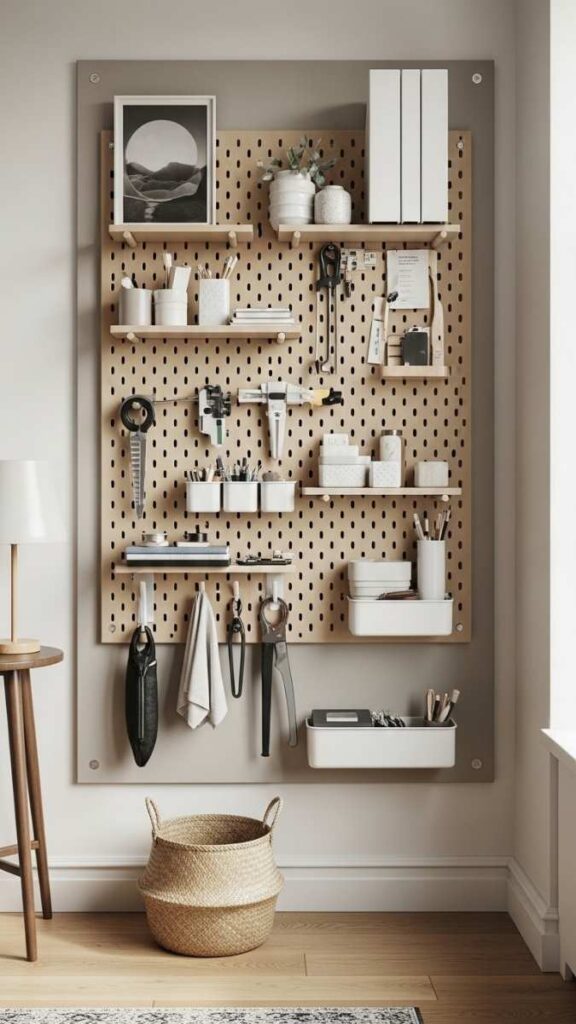
Pegboard has a utilitarian reputation that its actual appearance doesn’t deserve when it’s done correctly. Painted in a solid color (sage, terracotta, or deep navy work particularly well) and mounted with a consistent set of metal hooks and shelves rather than a mix of plastic accessories it reads as intentional storage design rather than garage organization.
The key is restraint, leaving roughly 30–40% of the pegboard empty. Visible negative space is what separates a curated pegboard from a cluttered one. This is genuinely useful in home offices, studios, and small kitchens where horizontal counter space is limited.
DIY Linen Roman Shade Without a Sewing Machine
No-sew roman shades are not a compromise. Done with the right materials, they look identical to sewn versions and can be made in an afternoon with fusible tape, a curtain ring set, and dowels. The linen fabric choice is important: the material needs enough body to hold its folds when gathered but enough translucency to let light through.
Medium-weight linen in a natural or off-white color works in almost any room. This is particularly useful in rooms where generic blinds are the only existing window treatment; the switch from vinyl blinds to a linen shade is significant enough to change the entire atmosphere of the space.
Upcycled Bottle Vase Cluster With Dip Dye Technique
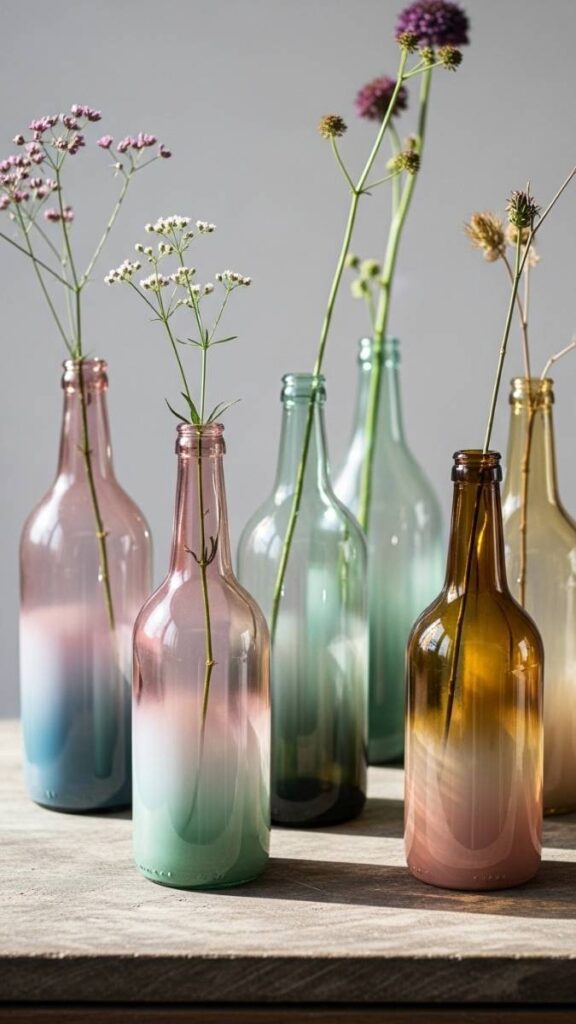
Glass bottles, wine bottles, olive oil bottles, sparkling water bottles have genuinely good silhouettes for vases. The dip-dye technique (dipping the bottom half of each bottle into chalk paint and allowing it to dry) creates a two-tone effect that looks more expensive than a fully painted bottle because the glass is still visible at the top.
A cluster of five to seven bottles at varying heights, in two or three coordinating dip colors, creates a windowsill or counter display that looks cohesive without being identical. The dried or fresh stems inside are optional; the bottles read as decorative objects on their own.
DIY Japandi Style Tray Arrangement on a Coffee Table
Japandi, the design hybrid of Japanese minimalism and Scandinavian warmth has fully arrived in mainstream home decor in 2025-2026, and its guiding principle (fewer, more intentional objects) is exactly what makes a coffee table look styled rather than messy.
A rectangular tray creates containment objects inside the tray look curated; objects outside look random. Fill the tray with three to five objects at different heights: a low candle, a small ceramic bowl, one sculptural object (a stone, a driftwood piece, a small bronze object).
The rule is one of each type: one functional item, one natural object, one sculptural piece. This keeps the arrangement from feeling cluttered even in a small space.
Painted Arch Niche on a Flat Wall
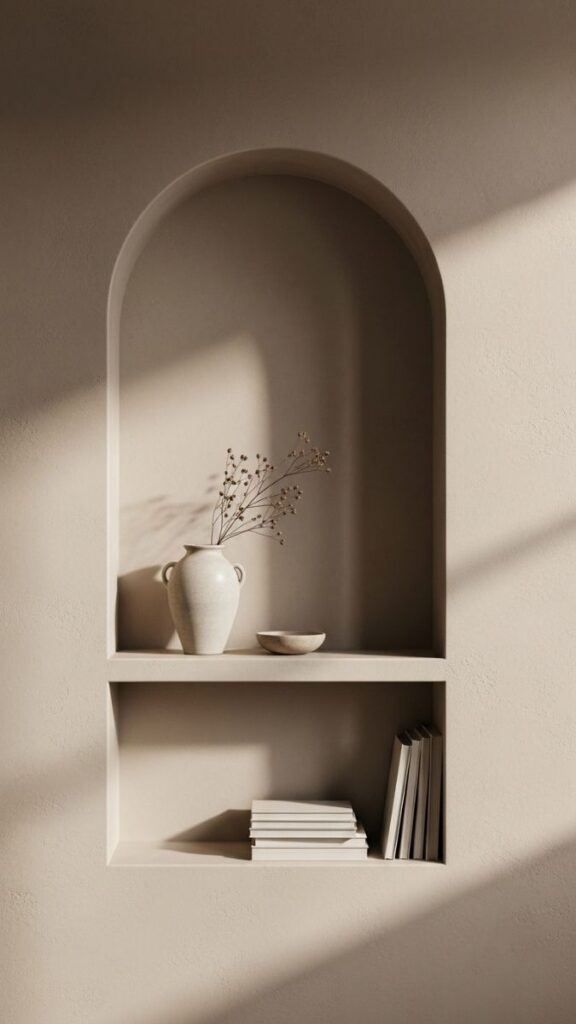
An architectural arch niche costs thousands of dollars to construct. Painting the illusion of one costs about $20 in paint and an afternoon. Tape a half-round arch shape directly on the wall using flexible tape or a hand-drawn pencil line as a guide, paint the interior in a color one or two shades deeper than the wall, and mount a small shelf inside the painted space.
The result photographs as an actual architectural feature because the depth implied by the color difference reads to the eye as real recession. Objects placed on the shelf inside the arch receive focus from both the wall treatment and the implied frame. This works best on walls that get directional light from the side, which deepens the shadow and makes the illusion more convincing.
DIY Raffia or Seagrass Headboard Panel
Natural fiber headboards raffia, seagrass, woven jute retail for $400–800. The DIY version builds from a hollow-core door or a foam board cut to size, wrapped tightly with raffia ribbon or seagrass cord using a staple gun on the back. The material is forgiving, imperfections in the wrap tension are essentially invisible once the headboard is upright and against the wall.
A natural fiber headboard changes the acoustic quality of the room slightly (absorbs sound rather than reflecting it) and adds warmth that painted or upholstered headboards don’t. This works best in rooms with neutral bedding and warm lighting.
Floating DIY Bookshelf in a Reading Nook Corner
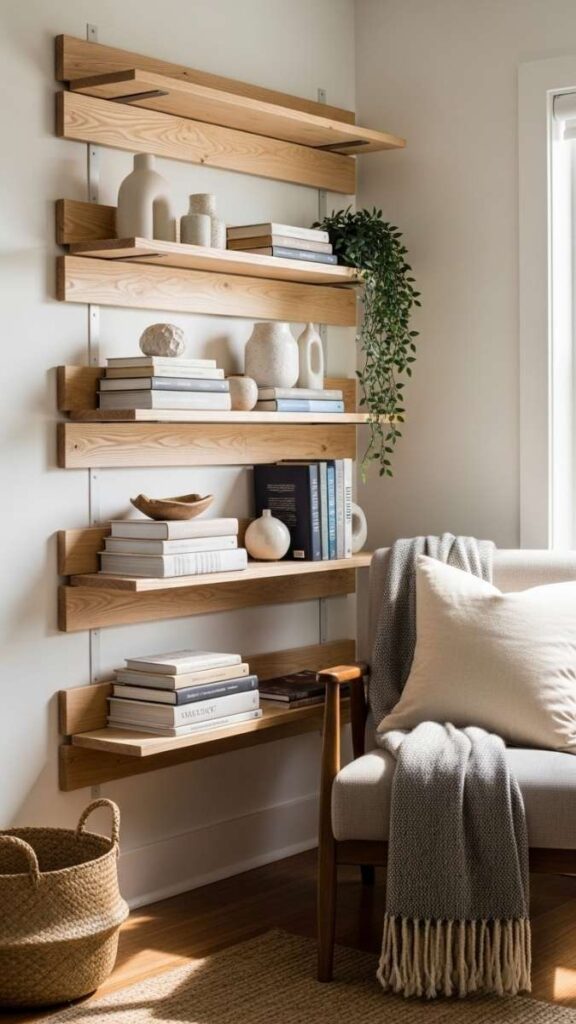
A proper reading nook needs a sense of enclosure, something that separates it visually from the rest of the room. Floating shelves mounted at two different heights in a corner (one at shoulder height, one at eye level) create an L-shaped frame around a chair that feels contained without building walls.
The shelves themselves become the architecture. Keep books spine-out and limit the non-book objects to one or two per shelf. A small clip-on or battery-powered light mounted on the lower shelf directs reading light without adding a floor lamp to an already compact area. This is specifically useful in studio apartments or open-plan spaces where carving out a distinct zone requires visual rather than physical separation.
What Actually Makes DIY Decor Ideas Work in Real Homes
There’s a reason some DIY projects look incredible in their tutorial photos and fail in application and it’s almost never about skill level. It’s about understanding the spatial logic behind why a particular idea works.
Scale is the most common miscalculation.
A gallery wall with frames that are too small looks timid. A woven wall hanging that’s 10 inches wide disappears. DIY decor tends to work when the scale is generously bigger than feels comfortable in theory, appropriately sized in practice. When you’re unsure, make the thing bigger.
Material contrast does more than color.
Two objects in the same material family both matte, both smooth, both woven create less visual interest than two objects in contrasting materials even if they’re the same color. This is why mixing a smooth ceramic with a woven textile with a raw wood object on a shelf looks composed and the eye has three different surfaces to engage with.
Lighting is a multiplier.
A DIY project in flat overhead lighting looks like a DIY project. The same piece with a directed warm light source, a small spotlight, a positioned table lamp, and a window at the right angle looks like a design decision. Before deciding a project didn’t work, try changing the lighting around it.
Grouping beats individual placement.
Almost every object on this list performs better in clusters or in context with other elements. An isolated bottle on a windowsill looks forgotten; five of them look intentional. A single floating shelf looks like it’s waiting for more furniture; two at different heights look like a design system.
DIY Decor Ideas Quick Reference Guide
| Idea | Space Type | Key Benefit | Difficulty | Renter-Friendly |
| Gallery wall with varied frame depths | Living room, bedroom | Visual depth without renovation | Easy | Yes |
| Limewash accent wall | Bedroom, living room | High-impact texture, unique finish | Moderate | Check lease |
| Ceiling-height curtains | Any windowed room | Visually raises ceiling height | Easy | Yes (with anchors) |
| Cane webbing cabinet upgrade | Dresser, console, bathroom | Lightens furniture visually | Moderate | Yes (reversible) |
| Washi tape geometric wall | Rental, home office | Zero-commitment wall art | Easy | Yes |
| Stenciled tile floor | Bathroom | Covers ugly floors affordably | Hard | Check lease |
| Pegboard feature wall | Home office, studio | Storage that reads as design | Easy | With anchors |
| Fabric panel in oversized frame | Dining room, living room | Solves empty wall at low cost | Easy | Yes |
| Painted arch niche | Living room, hallway | Architectural character | Easy | Reversible |
| DIY Japandi tray arrangement | Coffee table, console | Instant organization + style | Very easy | Yes |
Common DIY Decor Mistakes That Make a Space Feel Unfinished
Going too small.
This is the most consistent mistake in DIY decor and it’s understandable, because making something large feels like a commitment. But a single small piece of DIY art on a large wall, one small pot when a cluster of five was needed, or a woven hanging that’s 8 inches when it should be 20 small scales makes DIY look amateur. The correction is almost always to increase the size of whatever you’re making.
Mismatching finish quality.
A beautifully made DIY object placed next to something visually cheap undermines both. If you’ve made a careful plaster lamp base, pairing it with a low-quality shade from a dollar store erases the work. Every element in a vignette should have the same care level even if they’re inexpensive, they should read as considered.
Skipping the styling layer.
Many DIY projects need a finishing layer to look complete: a small tray to anchor a shelf arrangement, a dried stem in a newly painted bottle, a picture light above a gallery wall. Without this, even well-executed DIY can look unfinished. The project itself is usually 80% of the work, the last 20% is how you style around it.
Treating every wall the same.
Not every wall needs something. In a room with four walls, one or two should be visually active (art, texture, shelving) and the rest should recede. When you apply DIY decor to every surface, nothing stands out and the room feels busy. Restraint is a design choice, not an absence of ideas.
Ignoring the room’s light.
A limewashed wall in a north-facing room reads differently than in a south-facing one. A dark accent color in a basement apartment absorbs what little light exists. Assess your room’s light quality before committing to a technique, especially paint-based ones.
FAQ’s
What’s the easiest DIY decor project for a rental apartment?
Ceiling-height curtains are the most impactful low-effort change; they don’t require modifying the apartment and immediately make rooms feel taller and more finished. Washi tape wall designs are another zero-damage option for adding pattern and interest to bare walls.
How do I make DIY decor look high end rather than crafty?
Scale, restraint, and material choice are the three factors that separate DIY that reads as designed from DIY that reads as homemade. Go bigger than feels comfortable, leave negative space, and choose materials that are tactile and natural (linen, jute, plaster, wood) over materials that feel flimsy. Finishing details, a tray, a spotlight, styled objects around the piece also close the gap significantly.
Can I paint over tile in a bathroom I’m renting?
In most leases, painting tile falls under “alterations” that require landlord permission. It’s worth asking because many landlords will approve cosmetic changes if you agree to restore the original before leaving. Floor-specific and tile-specific paints can be removed with the right solvents, which makes this more reversible than it sounds.
What’s the difference between preserved and dried botanicals, and which should I use?
Dried botanicals are simply air-dried; they’re brittle, often a bit dusty-looking over time, and lose some color. Preserved botanicals have been treated with glycerin to maintain flexibility and color they feel soft and don’t shed. For arrangements that will be handled or touched (on coffee tables, in entryways), preserved botanicals are significantly better. For shelf arrangements above eye level, air-dried is fine and much more affordable.
How many items should I put on a floating shelf to make it look styled?
Three to five objects is the practical range, with at least one tall element and deliberate empty space visible at each end of the shelf. The empty space is not a gap to fill its part of the composition. More than five objects on a standard shelf tips from styled to cluttered regardless of how carefully each individual piece is chosen.
Is lime wash paint reversible or permanent?
Limewash paint, whether genuine mineral wash or chalk-based interior paint, is technically paintable over, but it can be difficult to get a perfectly smooth finish over the textured surface. Most landlords would consider it a modification that needs to be returned to flat paint before moving out. It’s less reversible than wallpaper with peel-and-stick backing but more so than wallpaper paste.
What type of lighting makes DIY decor look best?
Warm-toned directional light is the most flattering for DIY decor objects; it creates shadow, highlights texture, and adds depth. Battery-powered spotlights (puck lights or LED strips) positioned above shelving or art, or small warm-globe table lamps at lower heights, do significantly more for a styled vignette than overhead recessed lighting.
Conclusion
A home that feels considered doesn’t require a renovation budget or a design background. Most of what creates that sense of “put-together” is about scale, texture, and thoughtful placement of things that DIY work is genuinely well-positioned to deliver, when the projects are chosen based on what actually works spatially rather than what looks good in a tutorial.
The key is finding what fits your space’s specific constraints: its light quality, its size, your lease terms, and how much time you realistically want to spend. Not every idea here will suit every room, but even two or three of these done well can shift how a space feels to live in.
Start with the simplest idea that solves your biggest frustration: an empty wall, an awkward window, a surface that always looks cluttered. Nail that one, then build from there. Small changes executed thoughtfully accumulate into a home that reflects how you actually want to live.