64+ Coastal Decor Ideas That Actually Work in Homes Not Just Beach House
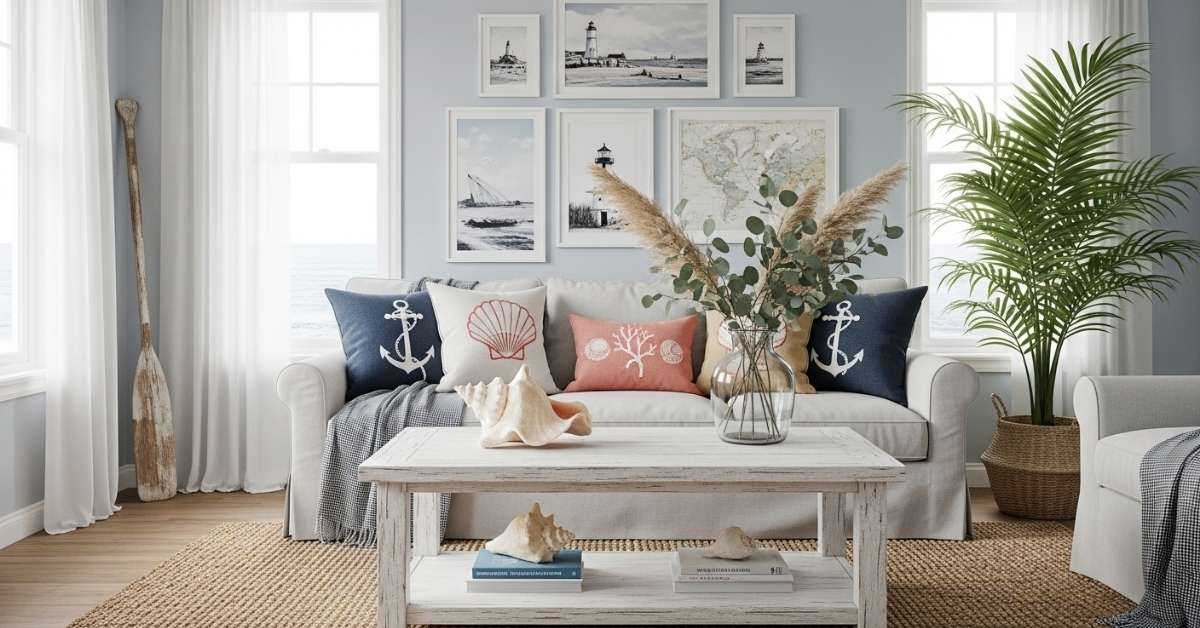
Soft, sun-bleached tones. Natural textures. Rooms that feel genuinely relaxed without trying too hard. Coastal decor has shifted significantly in 2026; it’s no longer about seashell collections and anchor prints. The aesthetic has matured into something more grounded: layered neutrals, organic materials, and interiors that feel breezy and intentional at the same time.
If your space feels heavy, closed-off, or just visually noisy, coastal design is one of the more practical directions to move in. It works with light instead of against it, favors open layouts, and tends to prioritize materials that actually age well which makes it as functional as it is appealing.
For anyone trying to make their living room, bedroom, or even a compact studio feel more open, calm, and put-together, these ideas cover real setups across different budgets, room sizes, and rental situations.
Linen Sofa in Warm White Against a Greige Wall
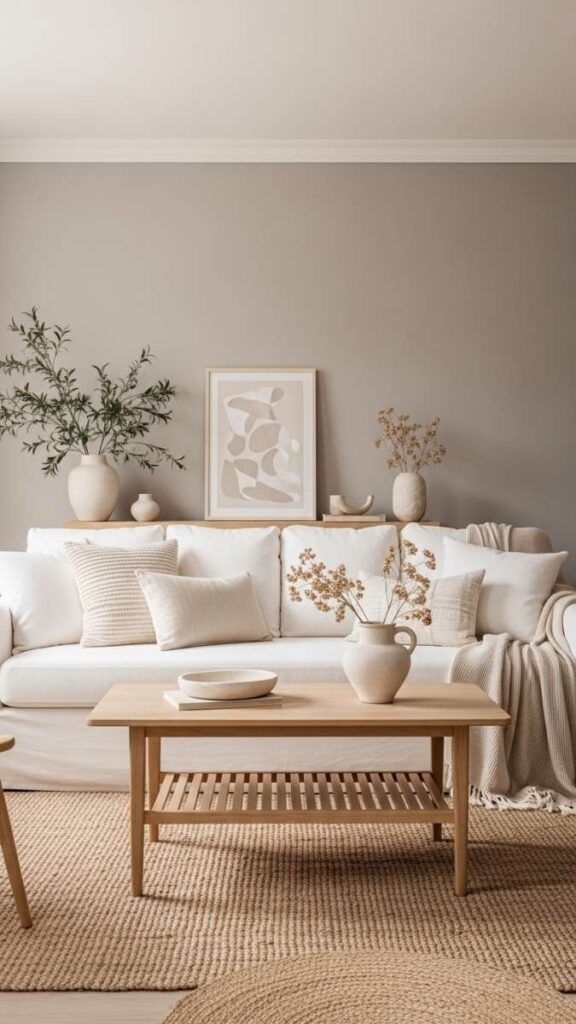
A white or warm cream linen sofa does something specific in a room: it bounces light rather than absorbing it, which makes the whole space read as larger and more open. Pair it against a greige (gray-beige) wall instead of stark white, and the contrast stays soft rather than clinical.
Add a low-profile wooden coffee table and a jute rug underneath to ground the setup without adding visual weight. This works particularly well in living rooms that get afternoon light from one side, since the linen picks up the warmth and distributes it across the room.
The setup suits renters well since it relies on furniture placement and textile choices rather than permanent wall changes.
Rattan Pendant Light Over a Dining Table
Overhead lighting is one of the most overlooked elements in coastal interiors, and a woven rattan pendant does two things at once: it adds texture to an otherwise flat ceiling plane and casts a warm, diffused glow that eliminates harsh shadows at the table.
The weave pattern creates subtle light play on surrounding walls, which adds depth without adding decor. This works in dining rooms and kitchen eating areas of almost any size; the visual footprint is compact even when the fixture feels substantial.
Go for a natural, undyed finish rather than bleached white to keep it from looking costume-y.
Layered Blue Green Textiles Without Matching Them Exactly
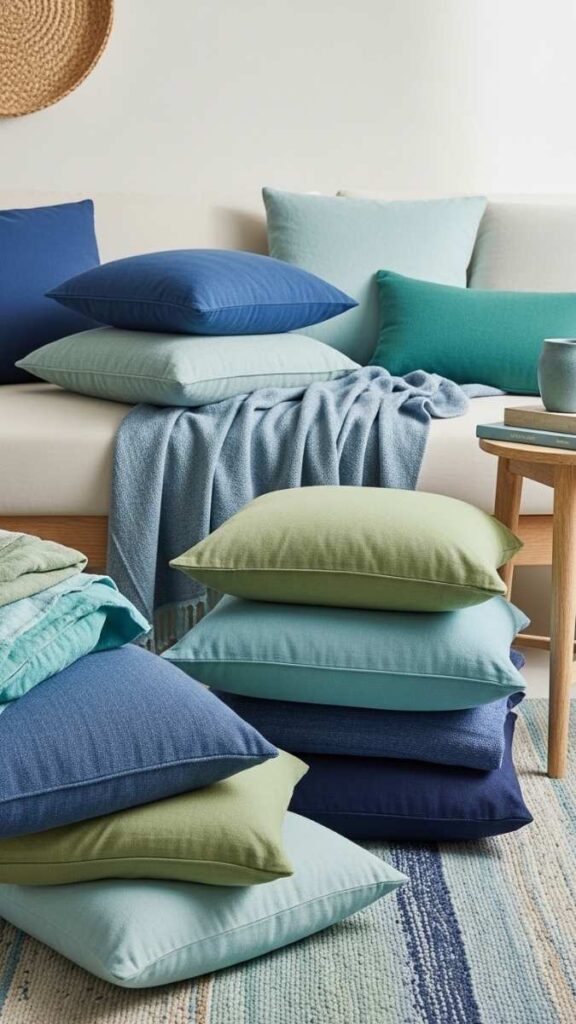
One of the reasons coastal bedrooms look cohesive is that they work within a narrow tonal range rather than matching colors exactly.
Dusty blue, sage green, warm sand, and muted teal all belong to the same coastal family, layering them across throw pillows, blankets, and a linen duvet creates depth that a single-color scheme can’t achieve.
The key is keeping the values (light vs dark) consistent. All mid-tone shades will blend naturally. This approach is especially useful in bedrooms where you want calm without monotony, and it’s easy to rotate seasonally by swapping one or two throws.
Whitewashed Wood Shelving in the Living Room
Whitewashed wood sits in a specific visual space; it reads as light and airy without disappearing into the wall, and the grain texture prevents it from feeling flat. Float three shelves in a vertical arrangement on one wall, and the setup creates a display zone that doesn’t crowd the room the way a bookcase would.
Style with a mix of functional and decorative items: a basket for remotes, a small trailing plant, a ceramic bowl, maybe one or two coral-toned objects. In my experience, this works best when the shelf depth is kept shallow (around 8–10 inches) it leaves enough walking space in smaller rooms and keeps the wall from looking heavy.
Seagrass Rug Under a Sectional
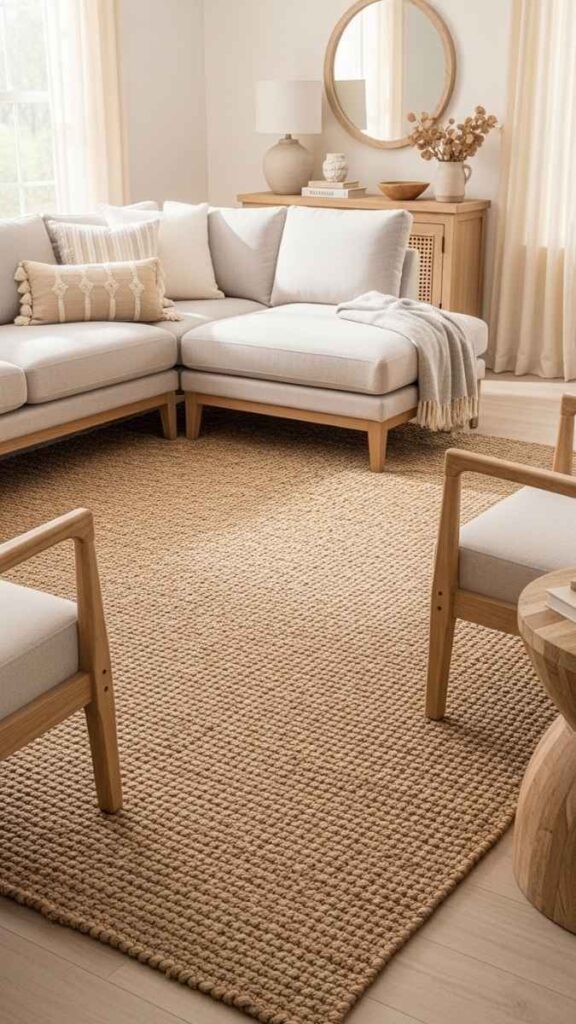
Seagrass rugs have a tighter, more structured weave than jute, which makes them more durable underfoot and easier to clean practical for high-traffic living rooms. The natural color variation in seagrass (ranging from warm green-gray to honey-beige) adds subtle patterns without competing with other decor elements.
Under a sectional, a large seagrass rug anchors the furniture grouping and visually separates the lounge zone from the rest of the room. This setup solves one of the most common living room layout problems: furniture that looks like it’s floating without purpose. Works especially well on hardwood or tile floors where you want warmth without adding a heavy textile.
Read More About: 63+ Rustic Decor Ideas That Make Any Room Feel Grounded, Warm, and Actually Livable
Driftwood Mirror as a Focal Point
A large mirror with a driftwood or distressed natural wood frame does two things well: it reflects light to brighten a space, and the organic frame adds coastal character without needing any additional styling around it.
Position it on the wall opposite your main light source, a window or a lamp to maximize the reflection effect. In entryways, this setup makes a narrow hallway feel more open immediately.
In living rooms, it works as a low-commitment focal point that doesn’t require symmetrical furniture arrangements around it. Honestly, this is one of the higher-impact single-item changes you can make in a coastal-leaning space.
Open Shelving in the Kitchen with Coastal Toned Ceramics
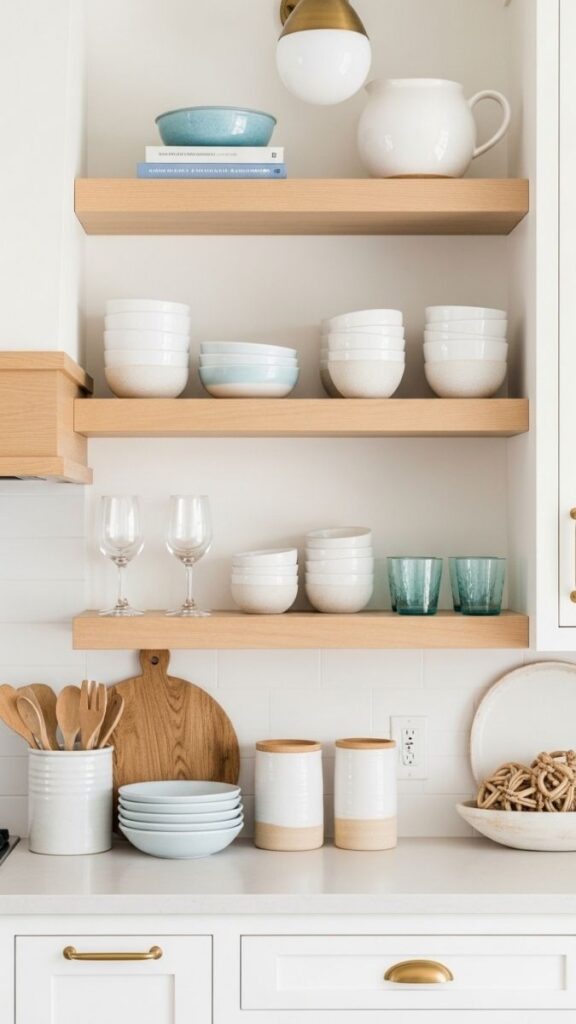
Removing one or two upper cabinet doors in the kitchen and replacing the space with open shelving changes the visual rhythm of the room entirely.
The key to making this work in a coastal kitchen is consistency: group white, cream, or dusty blue ceramics together, add one or two small plants, and leave breathing room between objects.
A cluttered open shelf reads as messy; a thoughtfully arranged one reads as designed. This is a good option for renters who can take doors off hinges without damaging anything, and for smaller kitchens where closed cabinets can feel heavy or institutional.
Limewash Paint on One Accent Wall
Limewash paint has been gaining serious momentum, and for good reason the technique creates a layered, slightly matte finish that looks like aged plaster rather than flat painted drywall. In coastal interiors, a soft blue, whitewashed sage, or sandy beige limewash on one wall adds depth and texture without introducing pattern.
The effect is subtle in direct light and more pronounced in morning or evening light, which gives the room a dynamic quality that regular paint can’t achieve. This works well in bedrooms where you want visual interest without bold color, and in rooms with lower ceilings where you’d rather avoid busy wallpaper.
Wooden Bead Chandelier in the Bedroom
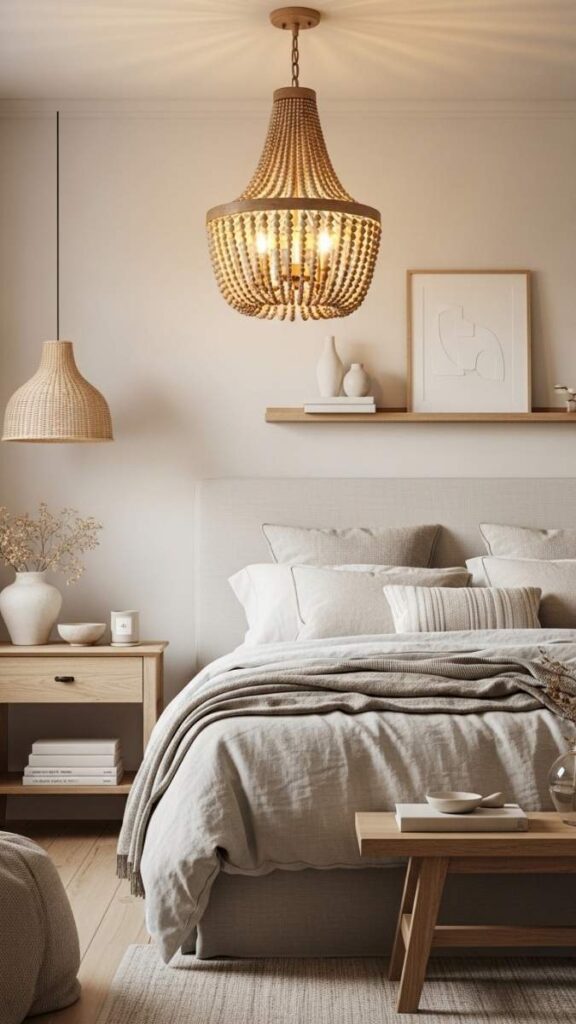
A beaded wood chandelier adds texture to what is often the most visually flat zone in a bedroom, the ceiling. Unlike metal or glass fixtures, the wood beads absorb and scatter light softly, which creates a warmer ambient glow rather than direct overhead brightness.
This works especially well in rooms with higher ceilings where the fixture has space to hang properly without feeling imposing. For lower ceilings, look for a flush or semi-flush bead version. The material connects naturally to driftwood, jute, and rattan elements elsewhere in the room, making it easy to integrate without over-planning.
Read More About: 62+ Vintage Decor Ideas That Make Any Room Feel Collected, Not Cluttered
Woven Wall Hanging as Bedroom Art
In coastal interiors, art above the bed is often where the look either comes together or falls apart. A large woven wall hanging in natural, undyed fibers solves a specific problem: it adds visual weight and warmth to the wall without introducing color that needs to be coordinated with everything else.
The texture of woven cotton or wool reads differently in different light flatter in midday, more dimensional in the evening which adds life to the wall without movement or clutter. This is a particularly good option for renters, since it hangs with a simple hook and can move rooms easily.
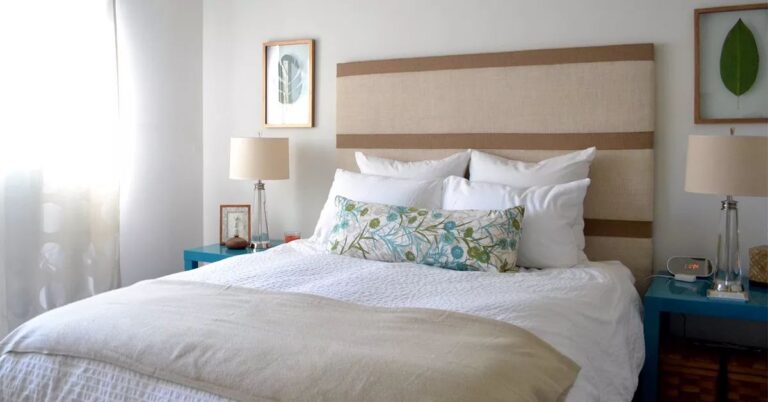
Bleached Wood Bed Frame with Linen Bedding
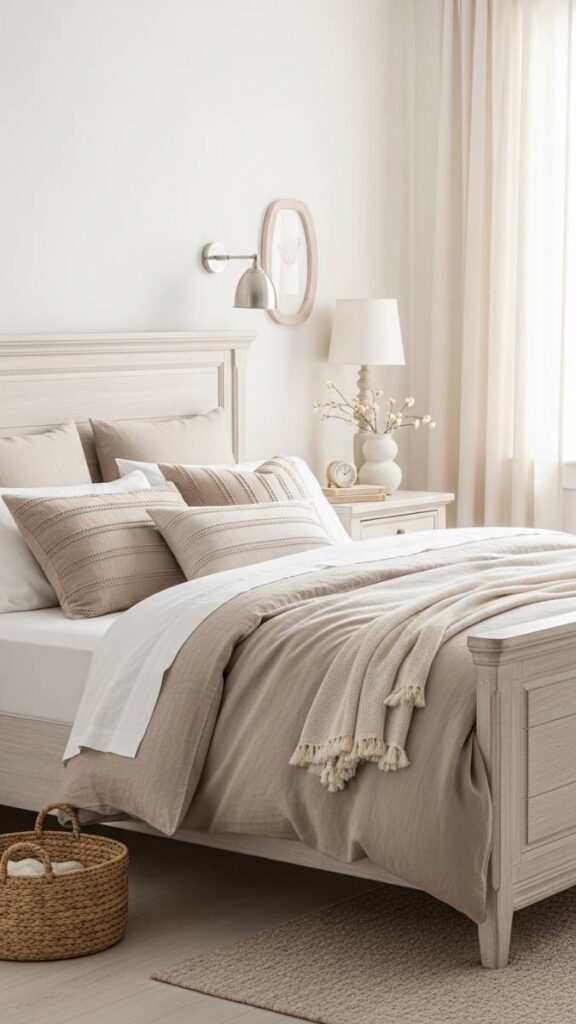
The combination of a bleached wood bed frame and layered linen bedding is one of the more reliable setups in coastal bedroom design because both materials read as light without being stark. Linen wrinkles naturally, which adds a relaxed, lived-in quality that works with the coastal aesthetic rather than against it.
The bleached wood frame keeps the furniture feeling grounded (literally it has weight and presence) without pulling the eye down the way a dark wood frame would. This setup works in small bedrooms because both elements stay visually light, leaving the floor visible and the room feeling more spacious.
Rope Accent Details in a Bathroom or Entryway
Rope detailing wrapped around a mirror frame, used as towel hooks, or as drawer pulls in a vanity is one of the quieter coastal design signals that tends to read as intentional rather than themed.
A single rope-framed mirror in a bathroom adds enough texture and character to make the space feel designed without requiring a full remodel.
This approach solves the common problem of bathrooms that feel sterile or generically finished, especially in rental units where the tile and fixtures are fixed. The detail is small in scale but high in visual payoff.
Freestanding Rattan Bookcase in the Living Room
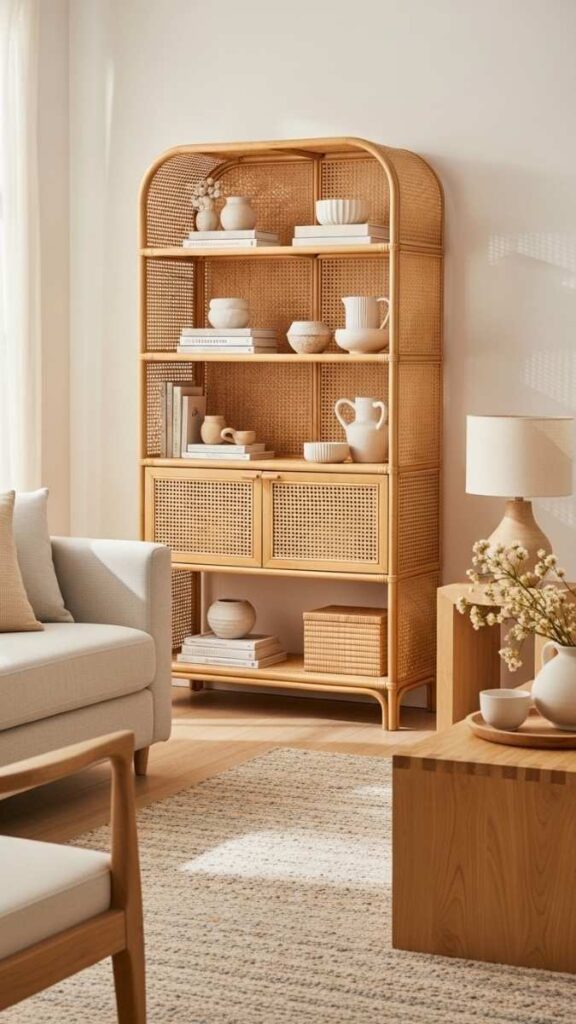
A rattan or wicker bookcase in a living room corner does more than store books; it introduces organic texture at vertical scale, which draws the eye upward and makes the ceiling feel higher. Style the shelves with a mix of books, trailing plants, woven baskets, and one or two larger coastal objects (a smooth stone, a simple ceramic vase).
The openness of rattan shelving means light passes through, which keeps the piece from reading as heavy or space-consuming. I’ve noticed this style tends to work best in rooms that already have solid-colored walls, since the texture of the rattan provides enough visual interest on its own.
Weathered Gray Wood Accent Wall
A weathered gray shiplap or wood plank accent wall is one of the stronger structural moves you can make in a coastal interior. The horizontal lines extend the visual width of the wall, which makes narrow rooms feel broader.
The gray wood tone sits naturally between blue and beige the two core colors of coastal design which means it integrates without competing. In living rooms, position the TV or a simple gallery arrangement on this wall to turn it into a functional focal point rather than purely decorative. This works in both modern coastal and more rustic beach-house-inspired spaces, depending on the finish texture you choose.
Oversized Floor Lamp in a Reading Corner
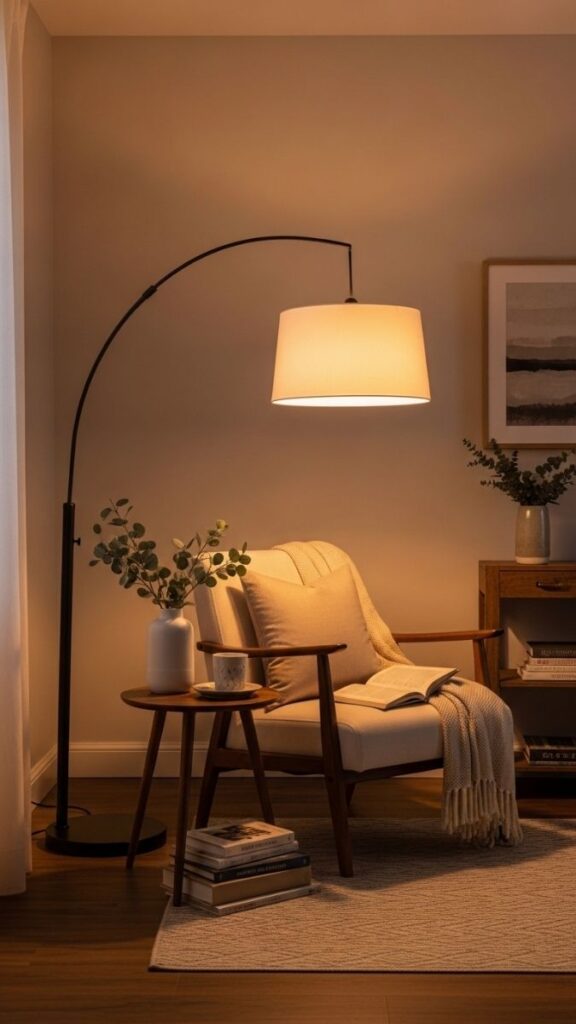
Reading corners are underused in most living rooms, and a well-placed floor lamp is often what makes or breaks the setup. An oversized arc lamp ideally with a natural linen or paper shade provides warm, directional light without requiring a table or ceiling fixture.
Position a linen armchair at roughly a 45-degree angle to the corner, add a small side table, and you’ve created a functional zone that also solves the “dead corner” problem many rooms have. The arc lamp’s height draws the eye upward and adds vertical interest to what would otherwise be a flat compositional moment.
Read More About: 10+ Luxury Decor Ideas That Make Any Room Feel More Elevated Without the Designer Price Tag
Sliding Barn Door in Driftwood Finish
A sliding barn door in a driftwood or bleached finish solves both a practical and an aesthetic problem. Practically, it eliminates the swing radius of a traditional door, which frees up wall and floor space in smaller rooms. Aesthetically, the large expanse of textured wood becomes a statement element without requiring any surrounding decor.
In coastal interiors, the driftwood finish bridges the gap between rustic and refined; it works equally well in a casual beach house aesthetic and in a more polished, contemporary coastal space. This is one of the better investments for rooms where the door itself is unavoidable as a visual element.
Coastal Gallery Wall with Organic Shapes
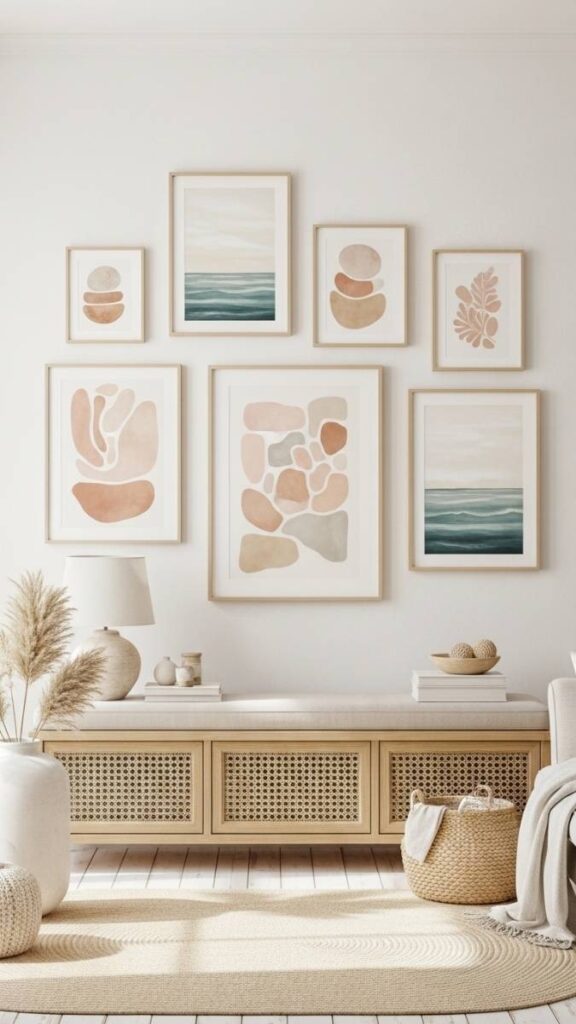
A gallery wall with organic or irregular frames think arch-shaped prints, round mirrors, and asymmetric ceramic wall art moves away from the grid-based gallery wall format that’s felt dated for a while now. In coastal interiors, mix muted watercolor seascape prints with simple botanical sketches, a small round mirror, and one or two solid-colored frames for balance.
Hanging the arrangement at eye level and leaving more space between pieces than you think you need the breathing room is part of what makes it feel intentional. This works on any wall size and is one of the more renter-friendly setups since it uses picture hooks.
Jute Wrapped Planters in Clusters
Grouping planters in clusters of three or five varying the heights creates a layered, garden-like effect that works indoors and on balconies. Wrap terra cotta pots in jute rope or use pre-made jute planters to add texture and keep the palette cohesive.
Plant choices matter here: a trailing pothos, a structured snake plant, and a broad-leafed monster together give the grouping rhythm without looking curated to the point of being stiff. This setup solves the common problem of single plants that look lonely and disconnected in larger rooms. The cluster creates visual mass that justifies its position in the space.
Sheer Linen Curtains from Ceiling to Floor
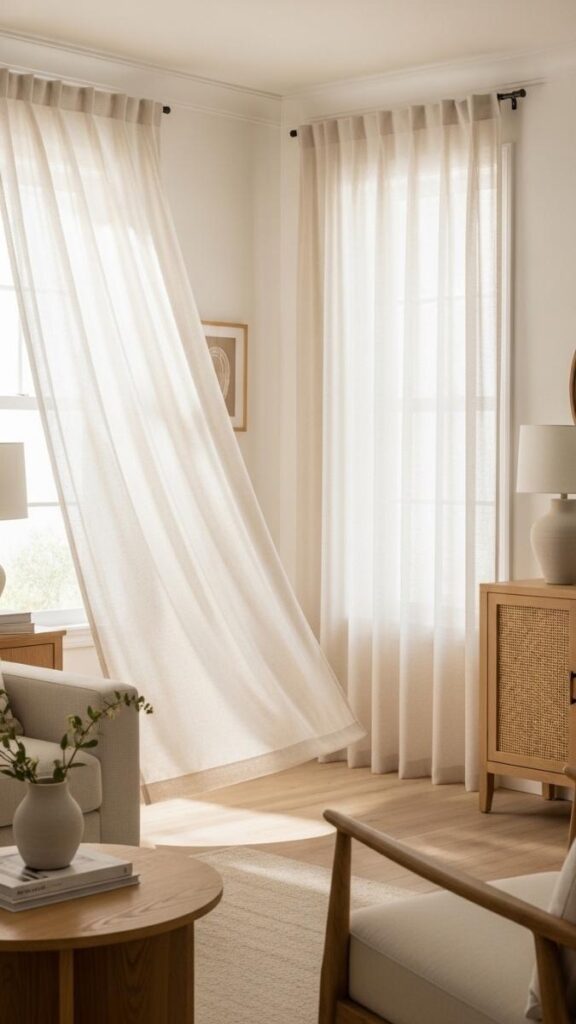
Hanging curtains at ceiling height even if your windows are mid-wall is one of the most reliable visual tricks in interior design for making a room feel taller. In coastal interiors, sheer linen curtains are the right material choice:
They allow natural light to filter through while still providing privacy, and the natural slubs and texture of linen add visual interest that sheer polyester panels never achieve. Mount the rod as close to the ceiling as possible, let the curtains pool slightly on the floor, and the entire wall becomes part of the composition. This is a particularly high-return change in rental apartments where the windows are smaller than you’d like.
Coastal Blue Kitchen Island
In kitchens that are otherwise neutral, a coastal blue island thick navy, dusty teal, or soft slate introduces color in a contained, deliberate way. The island becomes the visual anchor of the kitchen without requiring any other color changes.
Keep the countertop white or light gray to maintain contrast, and add warm wood stools underneath to prevent the setup from reading as too cool or corporate. This works particularly well in open-plan kitchens where the island is visible from the living area; the color creates a natural visual boundary between the two zones.
Hammock Chair in a Sunny Corner
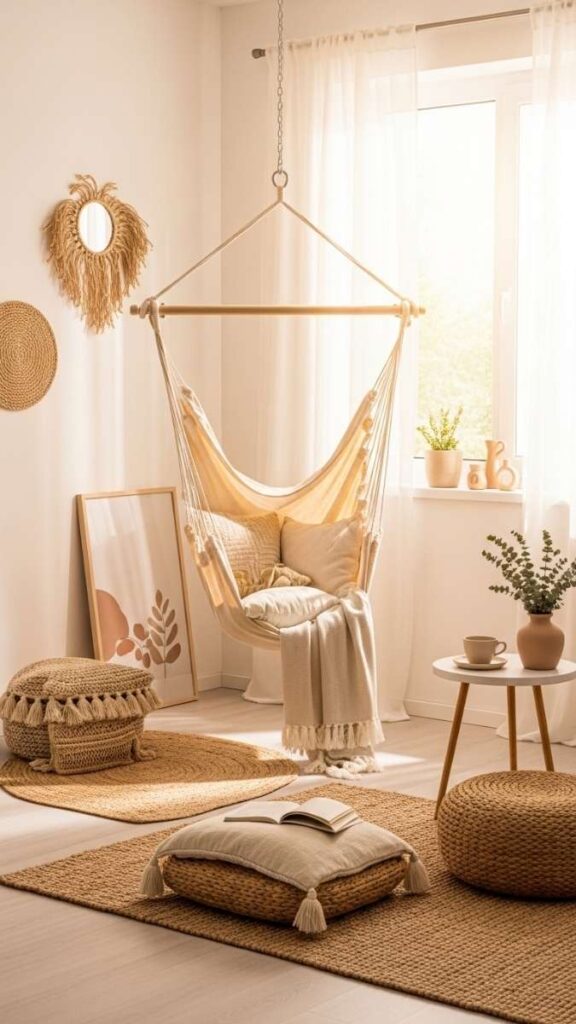
A hanging hammock or swing chair in a sunny corner does something that most furniture can’t: it introduces movement and informality into a space that would otherwise feel static. In coastal interiors, a natural cotton or woven hammock chair reads as casual and intentional at once.
The single suspension point means the chair doesn’t take up much floor space, which makes it useful in rooms where seating options feel limited. A small round side table beside it and a trailing plant overhead complete the vignette. This is a particularly good addition to sunrooms, reading nooks, or living room corners that face the window.
Oyster and Bone Tones in a Monochromatic Bedroom
A monochromatic bedroom in the oyster-bone-warm white range sounds like it would be flat, but the variety of textures, smooth cotton, nubby linen, rough-woven wool is what creates the visual interest. The tonal consistency means the eye reads the room as cohesive and calm, while the layered materials add dimensionality.
This setup is especially effective in small bedrooms where introducing color would fragment the space further. It’s also one of the easiest coastal looks to build over time since you’re working within a narrow palette and every addition integrates naturally.
Coastal Inspired Bathroom With Pebble Tile Floor
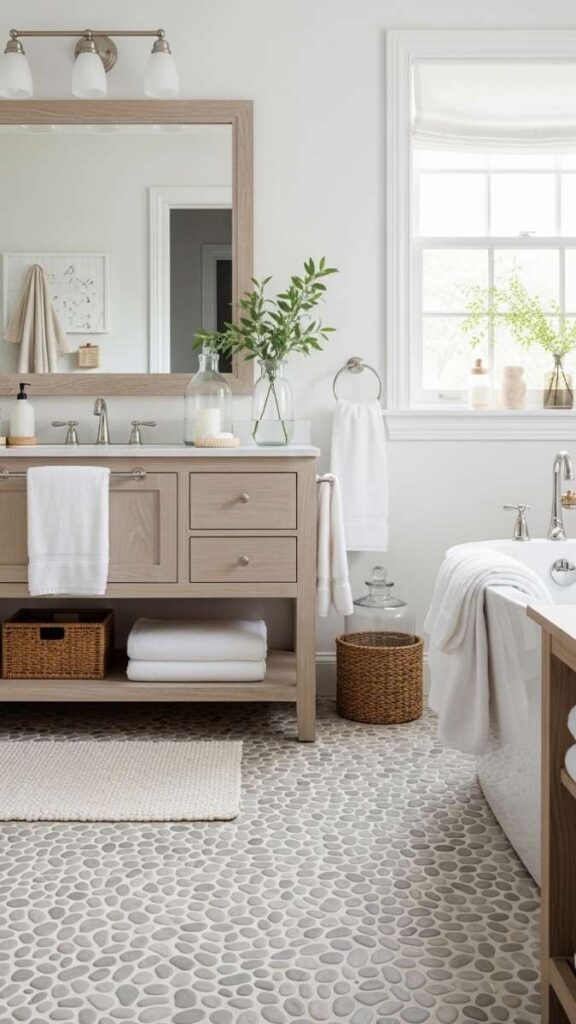
Pebble tile on a bathroom floor introduces natural texture at ground level, a zone that’s often treated as purely functional.
The varied tones in natural pebble tile (beige, gray, cream) work with almost any wall color, and the texture underfoot adds a tactile quality that flat tile doesn’t have. Pair with a wooden vanity and a rope or driftwood mirror, and the bathroom reads as a considered coastal space rather than a standard fixture arrangement.
For renters, peel-and-stick pebble tile options have improved significantly and can create a similar effect without permanent installation.
Dine In Kitchen Banquette With Cushioned Bench
A banquette or cushioned bench dining setup solves multiple problems at once in smaller kitchens and dining areas: it seats more people than individual chairs, it pushes storage opportunity under the bench, and the cushioned back and seat add softness to what is typically the hardest-edged room in the house.
In coastal interiors, upholster the cushions in linen or canvas in a soft stripe or solid coastal tone sandy beige, soft blue, or warm white. The setup is particularly effective in corner or alcove dining areas where the geometry of the space is already working with you.
Terracotta Accents Against a Blue Green Coastal Base
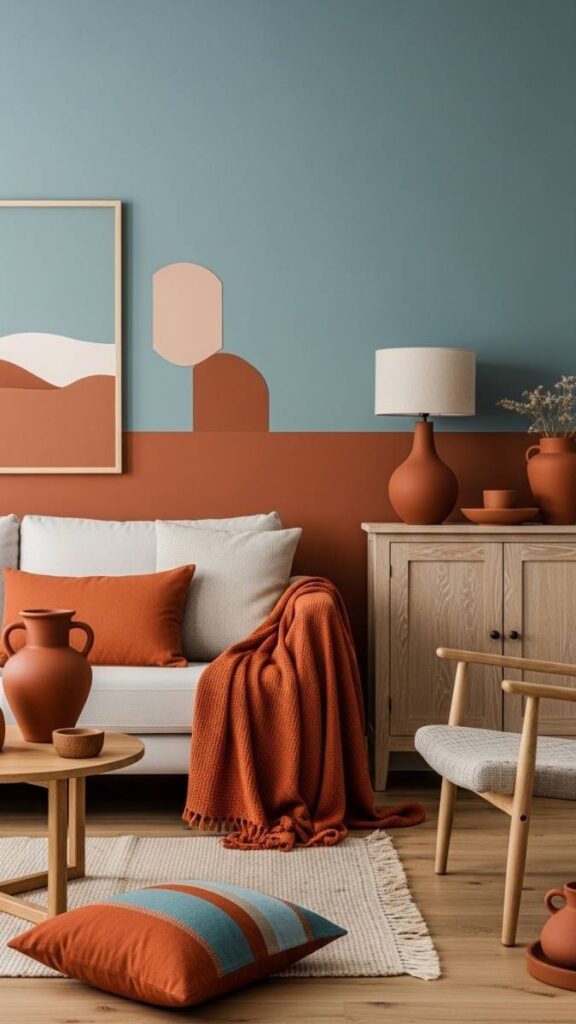
Terracotta is not the first color most people associate with coastal decor, but it works as a grounding accent against the cooler blue-green palette that defines the aesthetic.
The warm earth tone prevents a coastal room from reading as cold or one-dimensional, and it connects the interior to the sun-baked, sandy quality of actual coastal environments.
Use it in small doses: a ceramic vase, a throw pillow, a set of coasters against a dusty blue or sage green base. The contrast is warm and balanced rather than jarring.
Floating TV Console With Hidden Storage
In a coastal living room, visual clutter is the fastest way to undermine the relaxed quality you’re going for. A floating TV console mounted directly to the wall rather than sitting on the floor solves this by clearing the floor plane and making the room feel more open.
Choose a light wood or white finish with closed storage to keep media equipment and cables contained. The visible floor space between the console and the floor creates a sense of airiness that floor-standing furniture simply doesn’t achieve. This works in rooms of any size but is particularly impactful in smaller living spaces.
Outdoor to Indoor Coastal Styling on a Balcony or Patio
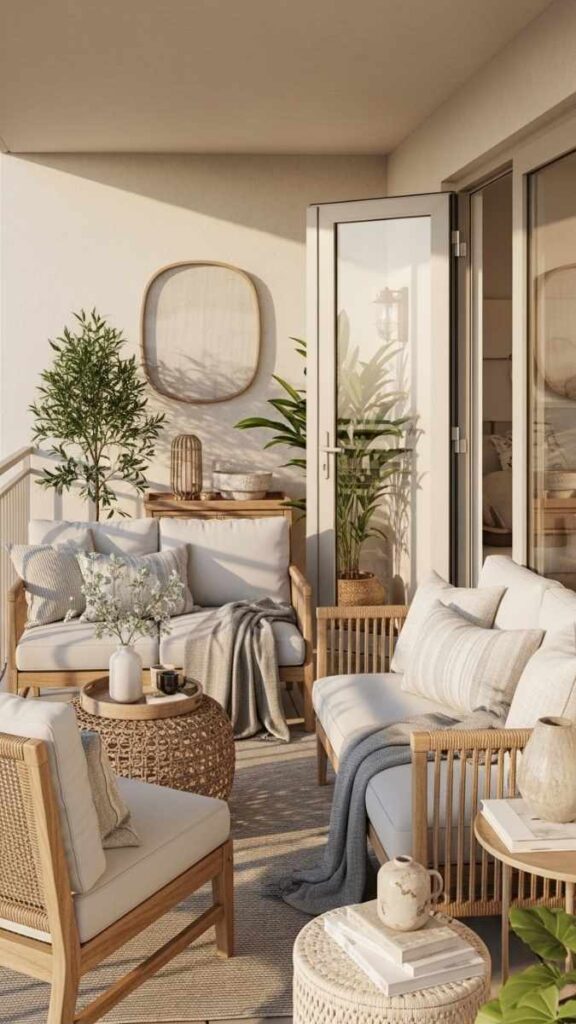
Extending the coastal interior palette to a balcony or small patio creates a visual continuity that makes both spaces feel larger and more intentional. Use all-weather rattan or wicker furniture with removable linen-look cushions, add string lights at the perimeter, and cluster a few potted plants in varying heights.
The outdoor area starts to function as an additional room rather than an afterthought. In small apartments especially, a well-designed balcony extends the perceived square footage of the home and the coastal palette translates naturally to outdoor materials and light conditions.
What Actually Makes Coastal Decor Work in Non-Beach Homes
The most common misstep with coastal decor is treating it like a theme rather than a design language. Anchors, seashells, and nautical maps are coastal references; they don’t create the quality that actually defines the aesthetic, which is lightness, airiness, and material warmth.
What actually works is the combination of three things: a light base palette (warm whites, soft neutrals, muted blues and greens), natural organic materials (linen, jute, rattan, bleached wood), and intentional restraint in styling. The rooms that feel most authentically coastal are typically the ones where the most obvious “coastal” objects are absent, and instead the quality of light and texture does the work.
Lighting deserves specific attention. Coastal interiors rely on layered lighting, natural light during the day, and warm ambient sources in the evening rather than overhead fluorescents. The shift from a single overhead fixture to a combination of a floor lamp, a table lamp, and a pendant makes a more dramatic difference to the coastal mood of a room than almost any single decor purchase.
Coastal Decor Setup Guide by Room Type
| Room | Best Coastal Setup | Key Problem Solved | Budget Range | Difficulty |
| Living Room | Linen sofa + seagrass rug + rattan shelving | Heavy, closed-off feel | $$ | Low |
| Bedroom | Bleached wood frame + linen bedding + woven wall art | Visual noise, poor rest atmosphere | $–$$ | Low |
| Kitchen | Open shelving + coastal ceramics + wooden stools | Institutional, boxy feel | $$ | Medium |
| Bathroom | Pebble tile + wood vanity + rope mirror | Sterile, impersonal space | $$–$$$ | Medium |
| Entryway | Driftwood mirror + jute rug + woven hooks | Dark, unwelcoming entry | $ | Low |
| Balcony/Patio | Rattan furniture + linen cushions + string lights | Underused outdoor space | $$ | Low |
| Dining Area | Banquette + linen cushions + rattan pendant | Rigid, cold dining setup | $$–$$$ | Medium |
How to Avoid the Most Common Coastal Decor Mistakes
Over-theming the space.
The moment a room has three anchor motifs and a “Life is Better at the Beach” sign, the design stops working. Coastal decor reads as sophisticated when the references are material and tonal, not literal.
Using cool whites instead of warm ones.
Standard bright white paint pulls a coastal room toward sterile rather than airy. Warm whites, cream, linen white, aged white stay in the same family as the sandy neutrals and natural fibers that define the palette.
Ignoring scale.
Coastal interiors tend to favor furniture with lower profiles and simpler silhouettes. A bulky, high-backed sofa in a coastal room disrupts the sense of openness that the aesthetic depends on. Scale your largest furniture pieces to the room, not to a showroom floor.
Over-cluttering with natural objects.
Shells, driftwood, and stones can all work, but they need restraint. Three well-placed objects read as intentional. Twenty of them read as a display case. Edit aggressively.
Neglecting the floor.
Bare tile or hardwood can feel stark in a coastal space. A jute, seagrass, or natural fiber rug grounds the furniture grouping and adds warmth without competing with the rest of the palette.
FAQ’s
What is coastal decor, exactly?
Coastal decor is an interior design style built around light, airy spaces, natural organic materials, and a palette of soft blues, greens, sandy neutrals, and warm whites. It draws on the textures and tones of the natural coastal environment driftwood, linen, rattan, sea glass rather than literal nautical motifs.
Can coastal decor work in an apartment far from the coast?
Yes, and it works well. The style is defined by light quality, material choices, and a restrained palette none of which are location-dependent. In fact, coastal decor is one of the more practical approaches for urban apartments because it prioritizes visual openness and light, which are often in short supply in city settings.
What’s the difference between coastal and Hamptons decor?
Coastal decor is broader and more casual; it includes relaxed, boho-leaning and rustic interpretations. Hamptons style is a more polished, preppy subcategory of coastal: think crisp navy and white stripes, formal furniture silhouettes, and a cleaner-lined, more tailored finish. Coastal is the family; Hamptons is one specific expression of it.
What colors work best for a coastal interior?
The core palette is warm white, soft sand, dusty blue, sage green, and muted teal. Terracotta works as a grounding accent. To avoid bright or saturated versions of these colors the coastal palette relies on muted, slightly desaturated tones that mimic natural light conditions.
How do I make a rental feel coastal without permanent changes?
Focus on textiles, lighting, and furniture. Linen curtains, jute rugs, rattan shelving, and woven wall hangings all move with you. Swap out hardware on cabinets and dressers (with landlord permission), add warm-toned bulbs to existing fixtures, and use large mirrors to reflect light. These changes are fully reversible and collectively make a significant difference.
Is coastal decor hard to maintain?
The natural materials used in coastal interiors linen, jute, seagrass do require some care. Linen wrinkles and needs occasional steaming; seagrass rugs should be kept dry to prevent mildew. That said, the aesthetic actually benefits from slight imperfection: a slightly rumpled linen sofa looks more coastal, not less. The maintenance is manageable with basic upkeep.
What’s the easiest first step into coastal decor?
Start with a jute or seagrass rug and a set of linen curtains. These two changes shift the material quality of a room significantly and establish the tonal base for everything else. From there, it’s easier to see which furniture and decor choices will integrate naturally.
Conclusion
Coastal decor works in real homes because it’s built around practical principles, light-enhancing materials, open spatial arrangements, and a restrained palette rather than decorative trends that date quickly. The ideas above cover a range of room types, budgets, and rental situations, so there’s genuinely something applicable regardless of what your space looks like right now.
Start with one or two setups that address a specific problem in your home whether that’s a dark living room, a bedroom that feels cluttered, or an entryway that lacks warmth. Small material changes such as linen curtain swap, a jute rug, and rattan pendant tend to have an outsized effect in coastal interiors. Build from there, and the look comes together more naturally than most design styles.