65+ Japandi Style Ideas That Make Any Room Feel Calmer, More Intentional, and Beautifully Balanced
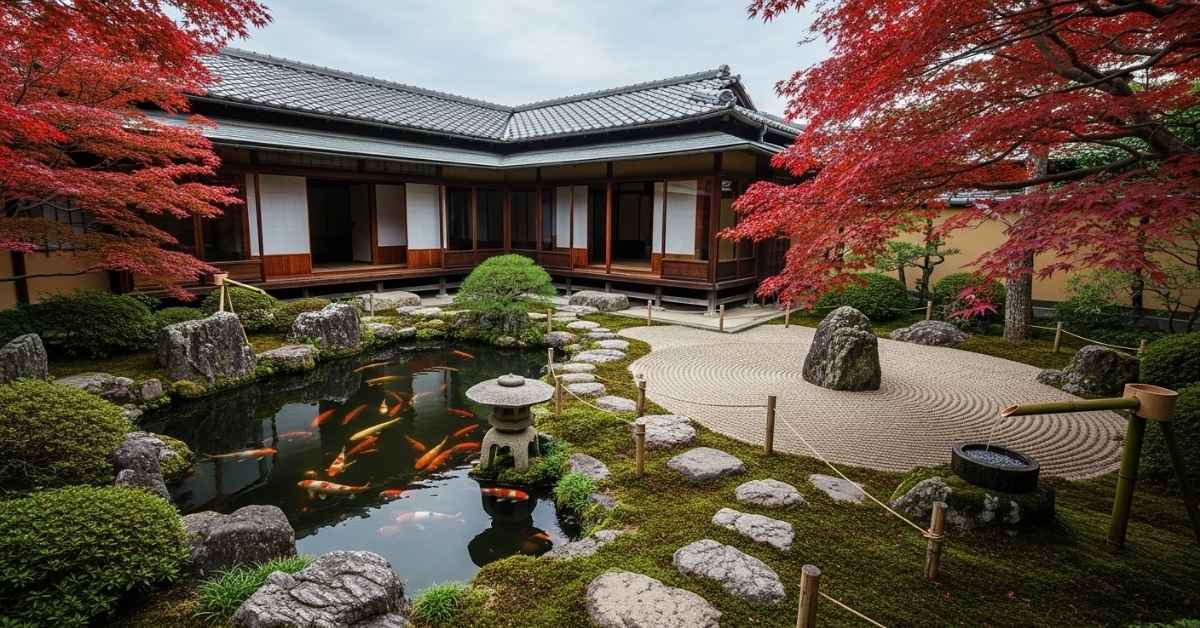
There’s a specific kind of quiet that well-designed rooms have, not empty, not sparse, just settled. Japandi Style That’s the feeling Japandi style is built around. It merges Japanese minimalism with Scandinavian warmth, and the result is something most people can’t quite name when they walk into a room, but immediately want more of.
If your space currently feels like it’s trying too hard, too many pieces, too much visual noise, or a layout that doesn’t quite breathe, Japandi is worth looking at seriously. It’s not about stripping everything down to nothing. It’s about keeping what earns its place and letting the room do the rest.
This works especially well if you’re in a small apartment, a rented flat you can’t renovate, or a home where you want one space to handle multiple functions without looking chaotic. The principles are flexible, the palette is forgiving, and most of the ideas here can be implemented without buying much at all.
A Low Platform Bed with Linen Bedding and One Warm Light Source
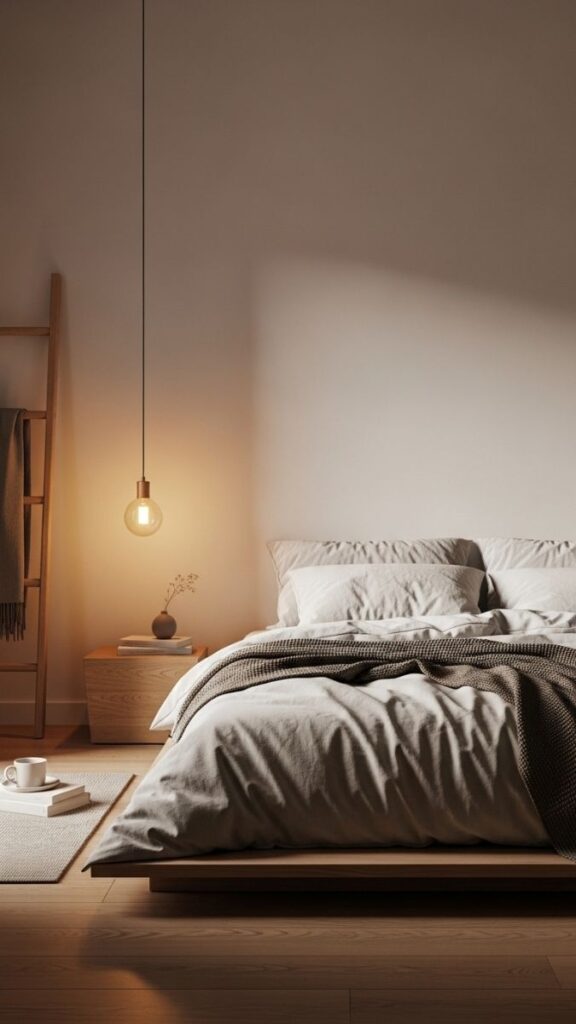
Low beds change how a bedroom feels not just visually, but spatially. When the highest point in the room is your ceiling rather than your headboard, the whole space reads as taller and more open. Pair a solid oak or walnut platform frame with undyed or oatmeal linen bedding, and add one pendant light rather than two matching lamps.
That single off-center light source adds a subtle asymmetry that’s very much part of the Japanese wabi-sabi influence in Japandi. This setup works especially well in rooms under 120 square feet, where a traditional bed frame can feel like it’s consuming the room. The absence of a boxspring also simplifies the silhouette considerably.
A Neutral Living Room with a Single Sofa, Coffee Table, and Negative Space
Most living rooms are over-furnished. Japandi challenges that by treating empty floor space as a design element rather than wasted potential. A low-profile sofa in warm stone, sand, or sage paired with a simple wooden or concrete coffee table lets the floor around it breathe. In my experience, this works best when you resist adding a side table, an accent chair, and a rug all at once. Pick two.
The constraint is what creates the calm. For small living rooms especially, negative space around furniture makes movement feel natural instead of squeezed.
Shoji-Inspired Room Dividers for Open Plan Apartments
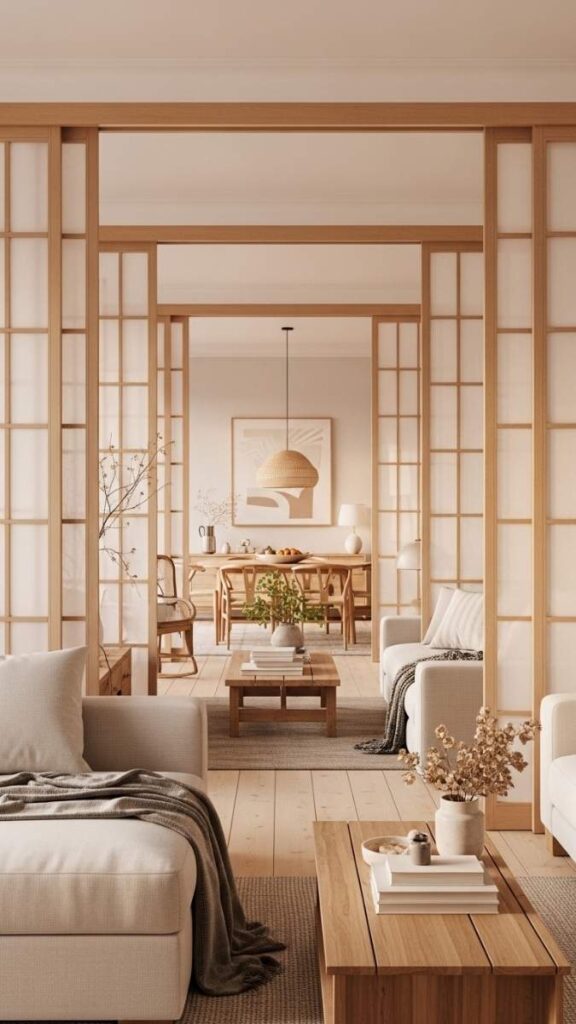
Open-plan layouts are practical but rarely peaceful. A shoji-inspired divider, typically a wood-framed panel with translucent or frosted inserts, creates separation without blocking light. This solves one of the most common renter problems needing zones (work, sleep, living) without walls.
You can find affordable freestanding versions that don’t require installation. The light that filters through gives the room warmth without overhead lighting doing all the work. It’s an especially smart solution for studio apartments where the bed is visible from the kitchen.
Read More About: 64+ Coastal Decor Ideas That Actually Work in Homes Not Just Beach House
A Japandi Kitchen with Open Lower Shelving and Concealed Upper Storage
Kitchens lose their calm fast. The Japandi approach inverts the usual setup instead of open upper shelves (which require constant styling), keep lowers open and uppers closed.
Display a few considered objects: a ceramic bowl, a wooden utensil holder, a small plant at counter level, and let the upper cabinets handle everything else.
Matte black or brushed brass hardware on flat-front cabinets reinforces the aesthetic without over-committing to a style. This setup reduces visual noise above eye level, which is where most kitchen clutter registers first.
Wabi Sabi Ceramics Grouped on a Wooden Tray
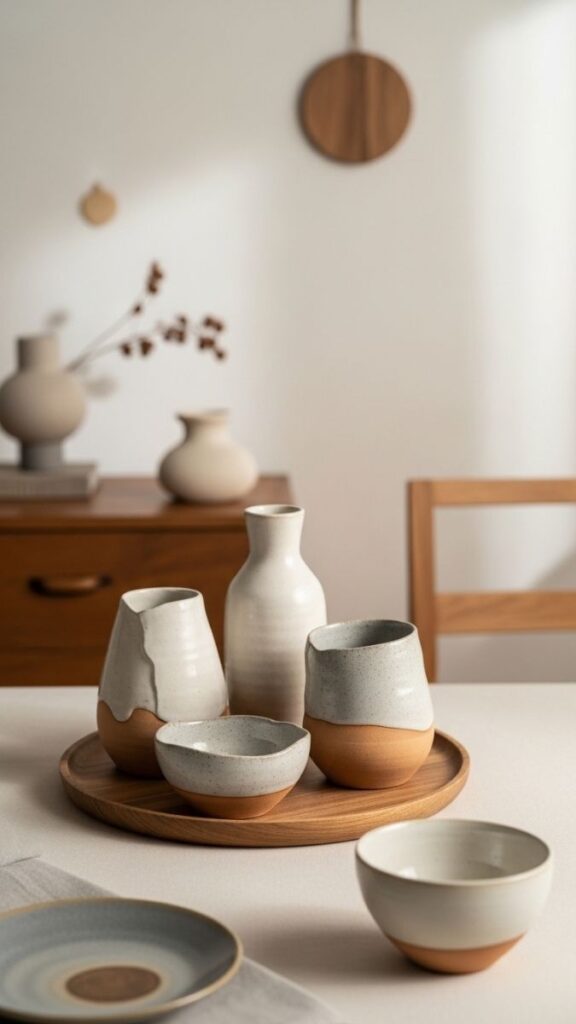
Grouping imperfect, handmade ceramics on a single tray does something: a row of matching vases doesn’t look curated without looking rigid. Wabi-sabi, the Japanese appreciation for imperfection and impermanence, shows up in Japandi through objects that have visible texture, irregular edges, or matte surfaces.
A wooden tray grounds the grouping visually, so it reads as intentional rather than random. This works on any surface: a coffee table, a bedroom dresser, an entry console and it’s one of the easiest Japandi ideas to execute on any budget. Thrift stores are honestly one of the better sources for this kind of piece.
Layered Neutral Rugs for Texture Without Color
Instead of one statement rug, layer two neutral textures. A flat-weave jute or sisal underneath, with a softer wool or cotton rug on top, adds depth without introducing color.
This technique works particularly well on light hardwood or concrete floors, where the natural tones of the rugs blend rather than contrast.
It also solves the rug-too-small problem: layering can visually extend a smaller rug by grounding it within a larger base. In Japandi interiors, texture is doing the work that color usually does elsewhere.
A Minimal Entryway with a Wooden Bench, Single Hook Rail, and Japandi Style
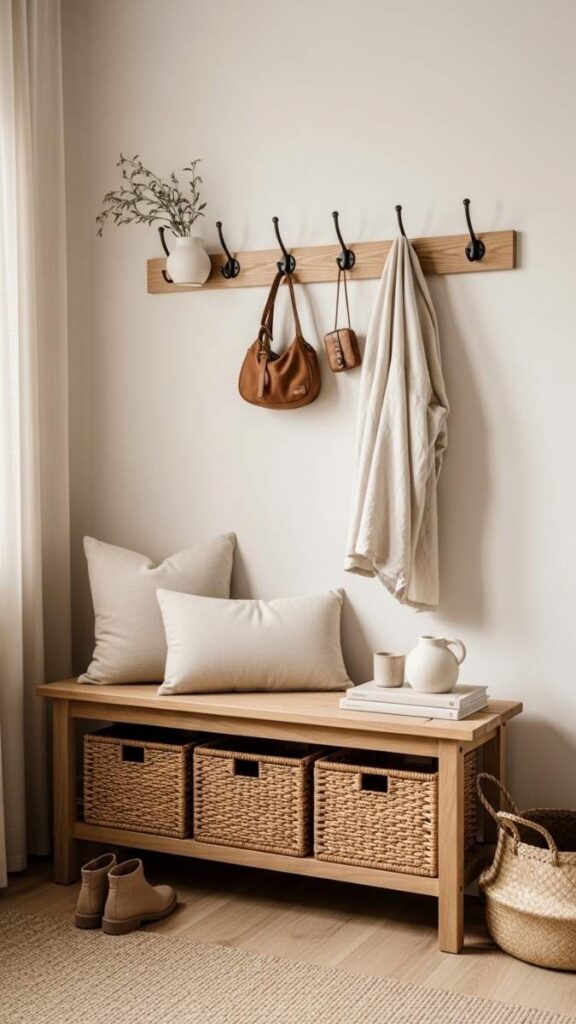
Entryways set the tone for everything that follows. The Japandi version keeps it functional without adding furniture for furniture’s sake: a low slatted bench (for sitting while removing shoes, a Japanese custom), a horizontal hook rail with just enough hooks, and one or two baskets underneath for shoes or bags.
The floor stays mostly clear. This setup is practical in ways that most styled entryways aren’t; it actually accommodates daily life without looking chaotic by the end of the week.
Read More About: 63+ Rustic Decor Ideas That Make Any Room Feel Grounded, Warm, and Actually Livable
Floor Level Seating with Flat Cushions and a Low Side Table
Floor seating isn’t for everyone, but in the right room it changes the entire atmosphere. Large flat cushions in linen, wool, or canvas arranged around a low table create a gathering area that feels both relaxed and deliberate.
This works especially well in rooms where ceiling height is limited, since keeping everything low makes the ceiling feel higher by contrast. It’s also a genuinely flexible setup: cushions can be moved, stacked, or stored when you need the floor space back.
A Japandi Bathroom with Wooden Accents and Matte Fixtures
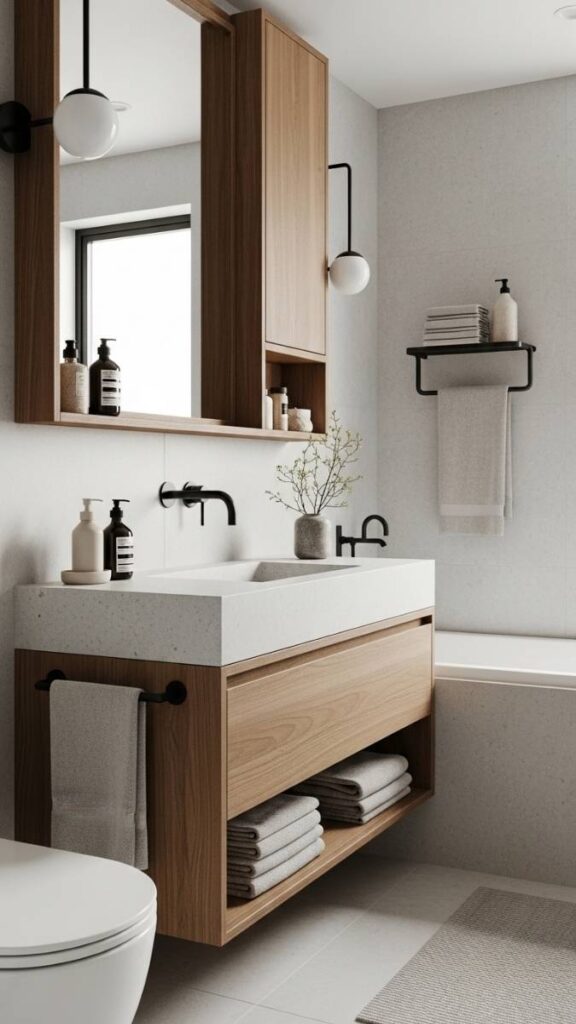
Bathrooms are often the easiest room to Japandi-fy because they’re already minimal by necessity. Swap chrome fixtures for matte black or brushed nickel, add a wooden or bamboo bath mat instead of a fabric one, and replace the usual cluster of products on the counter with one or two in a ceramic tray.
The contrast between the natural wood and the matte hardware is the visual combination that defines Japandi in small, functional spaces. No shelf styling required just reduction.
A Gallery-Free Wall with One Large Botanical Print
Gallery walls are everywhere, and Japandi is the opposite approach. One large print ideally botanical, ink-wash, or a simple landscape in a thin black or natural wood frame creates a focal point without visual competition.
The scale matters; a print that’s too small on a large wall creates awkward negative space. Go bigger than feels comfortable. This is one I’d actually recommend trying first if your space currently has too much on the walls, removing everything and replacing it with a single large piece usually feels more resolved immediately.
Open Wood Shelving with Intentional Object Placement
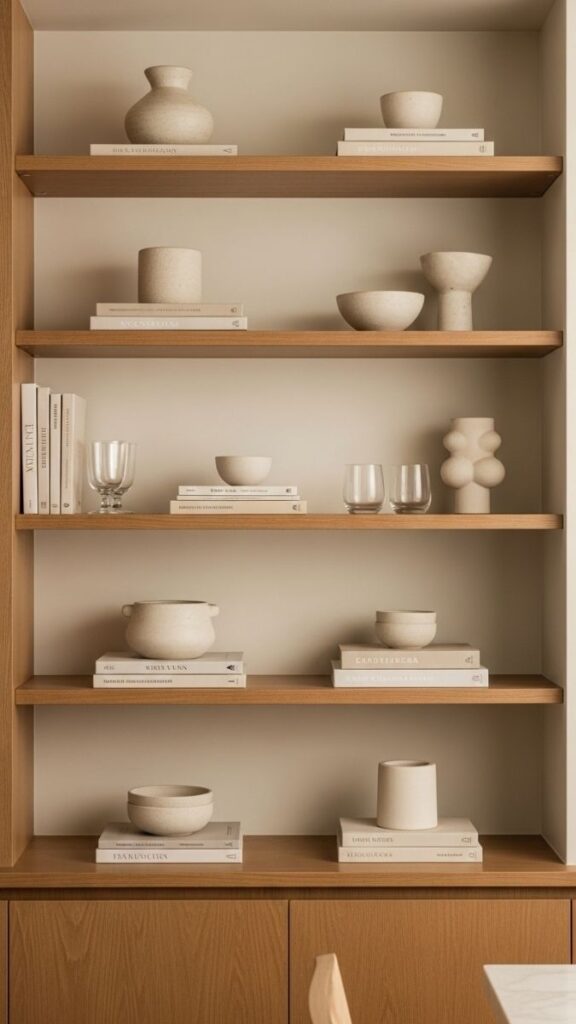
The difference between Japandi shelving and general shelf styling is spacing. Objects aren’t packed together; they have room around them. A shelf might hold three things: a small plant, one book laid flat, and a ceramic vessel. That’s it.
The visual weight is in the negative space between objects, not the objects themselves. Floating shelves in solid wood (rather than laminate) reinforce the material warmth that Scandinavian design brings to the combination. This works in any room, kitchen, living room, bedroom and is easy to adjust over time.
Natural Light Maximization with Sheer Linen Curtains
Heavy curtains block light and make rooms feel smaller. Sheer linen panels in white, ivory, or warm greige filter light rather than cut it off, giving rooms that soft, diffused quality that Japandi interiors are known for.
Hanging curtains from ceiling to floor (even when windows are shorter) draws the eye upward and makes the room feel taller. This is a high-impact change that’s also renter-friendly with tension rods or basic ceiling hooks.
Read More About: 62+ Vintage Decor Ideas That Make Any Room Feel Collected, Not Cluttered
A Japandi Dining Area with a Solid Wood Table and Upholstered Chairs
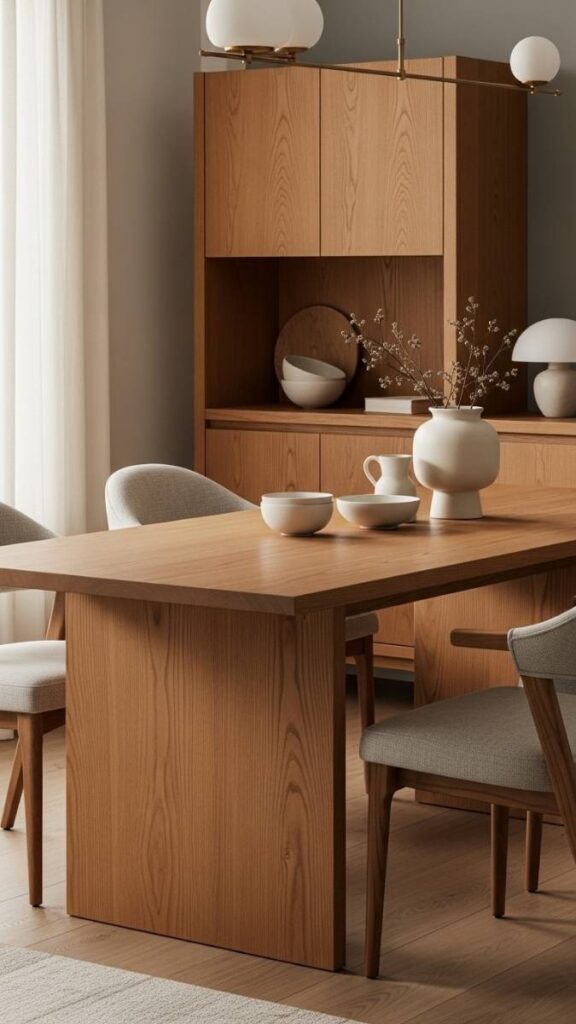
The Japandi dining table is almost always solid wood, oak, walnut, or ash with a simple shape (round or oval works particularly well in smaller rooms). Pair it with chairs that have upholstered seats in a natural fabric to soften the room without adding visual complexity. One pendant light centered above the table completes the setup.
This avoids matching sets, decorative centerpieces, and anything that turns a functional space into a display. The table is for using, and that intention shows.
Bedroom Concealed Storage with Built-In or Platform Drawers
Surface clutter is the primary enemy of a calm bedroom. Platform beds with integrated drawer storage solve this at the source; everything that would otherwise sit on the floor or a nightstand has a home that’s built into the furniture.
This setup works especially well in small bedrooms where a separate wardrobe or dresser competes for floor space. The visual result is a room where the floor is clear, surfaces are near-empty, and the eye has nowhere stressful to land.
A Muted Green Plant as the Only Color Accent
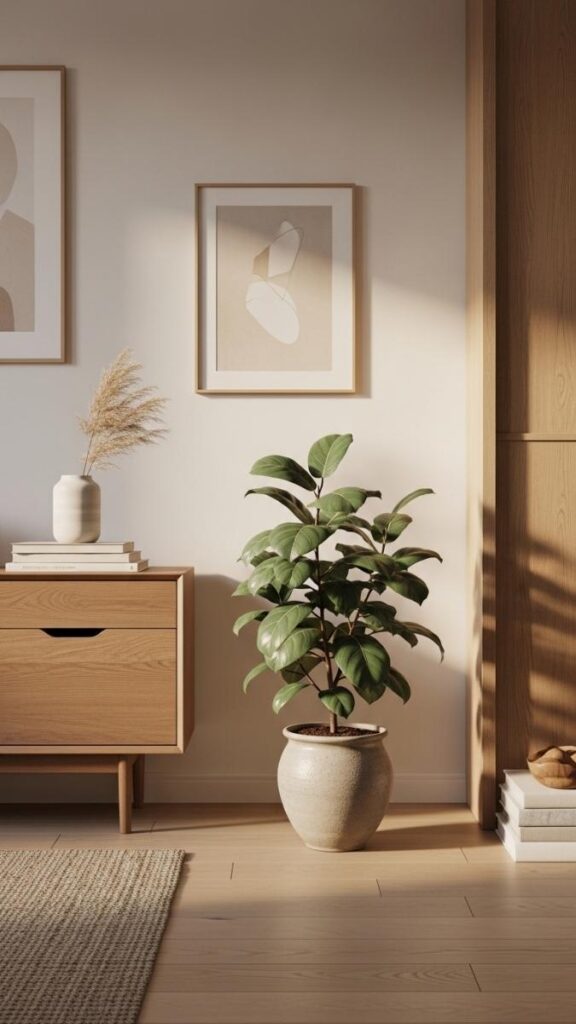
Japandi interiors don’t avoid color, they just choose it deliberately. One plant in a matte ceramic pot introduces the only saturated color in an otherwise neutral room, and it works because it’s also organic.
A fiddle leaf fig, olive tree, or monster at floor level adds vertical interest without requiring styling. In 2026, the trend is shifting toward larger, statement plants rather than collections of small ones one well-placed tree reads as more considered than a shelf of succulents.
Japandi-Style Work From Home Corner with a Floating Desk
A floating desk wall-mounted in light oak or birch keeps the floor completely clear, which in a multi-use room is the difference between a cramped corner and a functioning workspace. Keep the surface to one task lamp, a notebook, and whatever device you’re using.
Cable management is non-negotiable here; visible cords break the whole effect immediately. This setup is ideal for anyone working from a living room or bedroom corner who needs the space to visually “turn off” after hours.
A Zen Inspired Bedroom Corner with a Floor Cushion and Reading Lamp
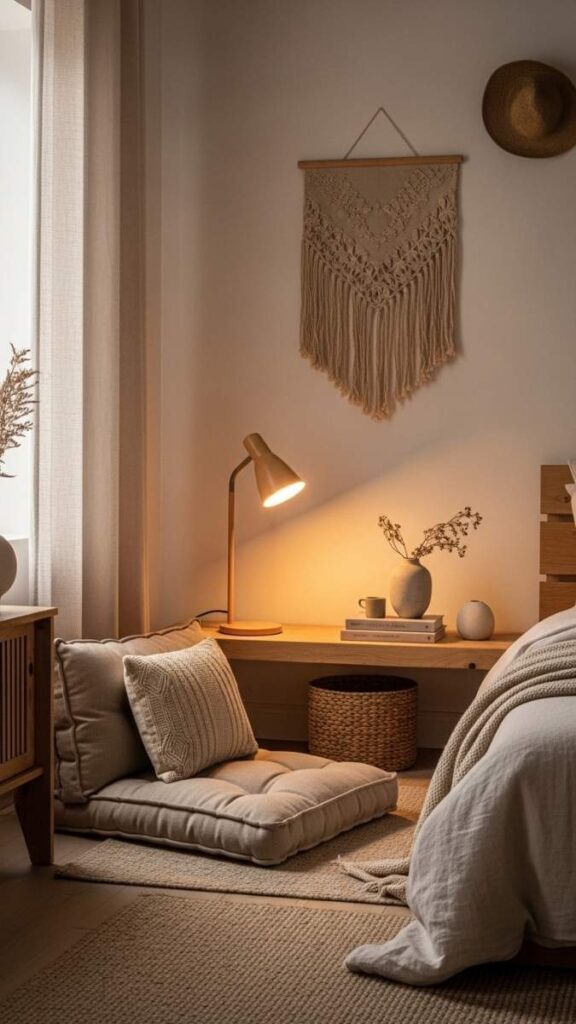
Not every room needs furniture in every corner. A single floor cushion, a thin arc lamp, and a small stack of books creates a reading corner that’s both functional and visually restful. I’ve noticed this style tends to work best in rooms that already have a low bed.
It keeps the scale consistent and avoids mixing sitting heights in one small space. It’s also a flexible setup for renters who want warmth without committing to furniture placement.
Textured Limewash or Matte Paint Walls as a Backdrop
Flat, bright white walls can feel sterile in a Japandi room. Limewash paint or even just a matte finish in warm white, greige, or clay adds texture and depth that changes throughout the day as light shifts.
It’s one of the most effective ways to make a room feel handcrafted without adding any objects. For renters, high-quality removable wallpapers in limewash or textured finishes have improved significantly and are now a realistic alternative.
A Japandi Hallway with Vertical Wood Paneling and Minimal Lighting
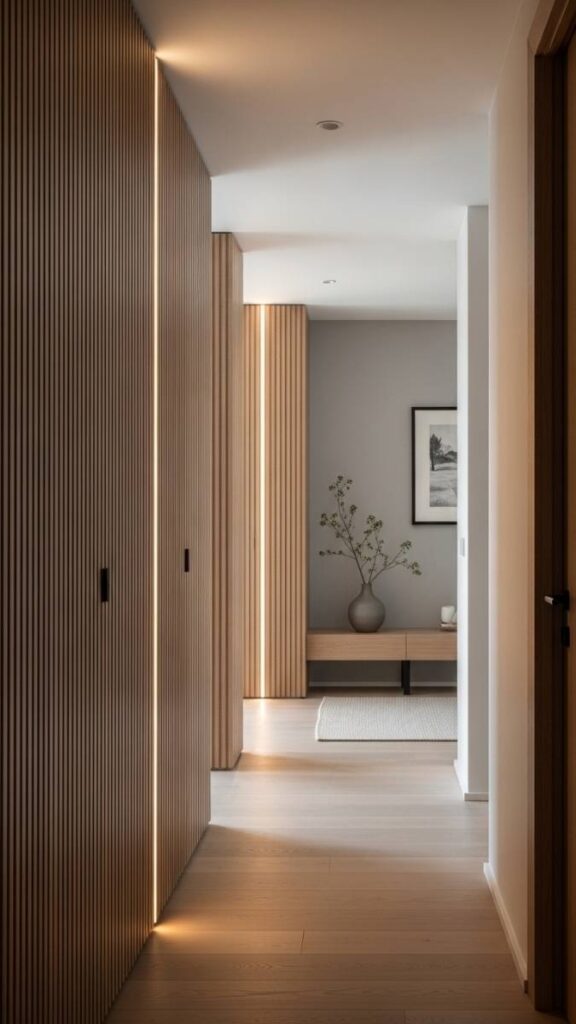
Hallways rarely get design attention, but they connect every space in a home. Vertical wood paneling on one wall even if it’s just one accent strip or a simple shiplap in natural finish adds warmth and directs the eye upward.
Pair with recessed lighting or a series of small wall-mounted fixtures (not a single overhead) to eliminate the harsh shadows that make hallways feel narrow. This is a renovation-level idea for some, but peel-and-stick wood panels make it accessible as a renter-friendly version.
Ceramic Tableware as Everyday Decor
In a Japandi kitchen, the everyday objects are the decor. Handmade ceramic plates and bowls in matte cream, warm grey, or earthy terracotta look intentional when stacked openly on a lower shelf or in an open cabinet.
There’s no separation between the functional and the decorative. This is useful in smaller kitchens where open shelving is the only option; choosing ceramics you actually find beautiful means the storage doubles as styling without extra effort.
A Multi Functional Console Table as Room Divider and Storage
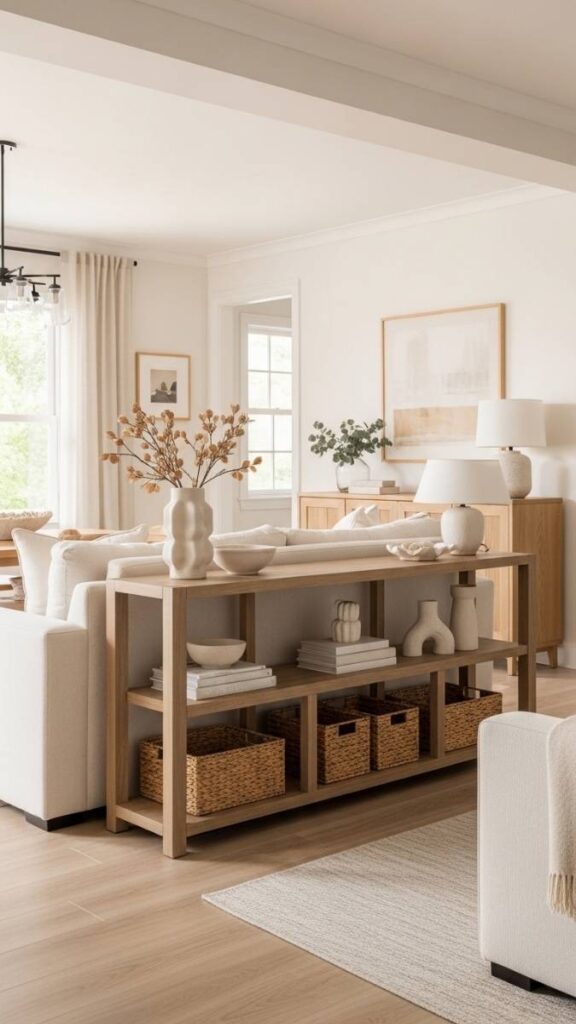
In open-plan homes, a narrow console table placed behind the sofa defines the living area without building a wall. At Japandi scale, simple, solid, nothing ornate it also functions as a drop zone, display surface, and subtle room divider simultaneously.
Keep the top nearly clear, one small plant, one lamp. The under-shelf can hold a basket for blankets or remotes. This setup works better than most room dividers because it’s furniture that earns its place functionally.
Warm Ambient Lighting with No Overhead Dependence
Overhead lighting especially the single central ceiling fixture most apartments have flattens a room and removes all atmosphere. Japandi lighting relies on multiple low sources: a floor lamp in one corner, a table lamp near the sofa, and perhaps a small pendant above the dining area.
The combined effect is a room that feels warm and dimensional in the evening rather than lit like an office. If you can only make one change to your living room this year, switching the light source is it.
A Japandi Kids’ Room with Montessori Inspired Low Furniture
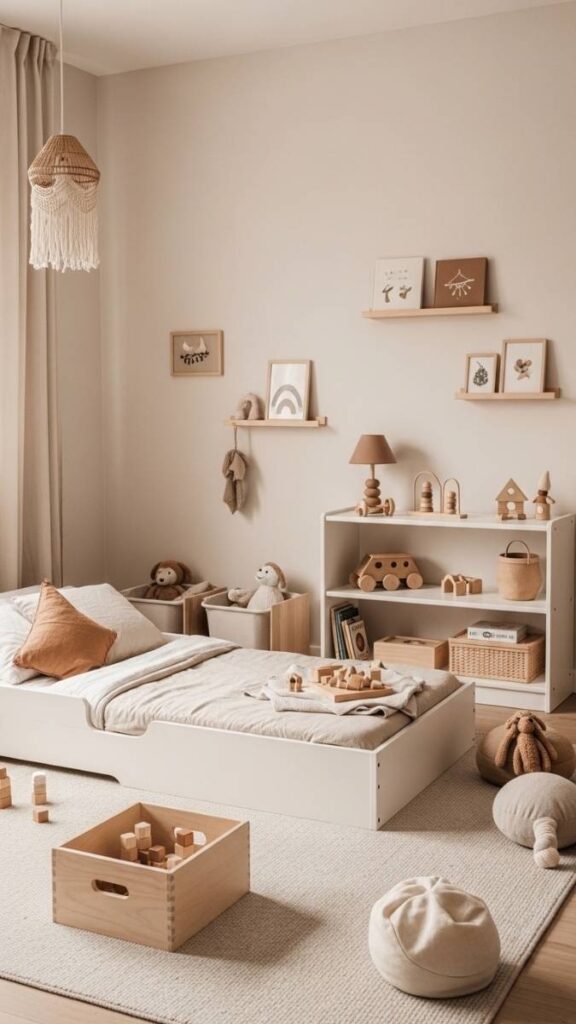
Japandi principles translate naturally to children’s rooms when combined with Montessori thinking low furniture children can access independently, open but organized shelving, and a palette that doesn’t overwhelm.
A floor bed, a low bookshelf, and a simple play rug in neutral tones create a room that’s calm without being sterile. The key is limiting what’s on display, rotating toys rather than having everything accessible at once keeps the room functional and visually manageable.
Bamboo or Rattan Accents as Transitional Texture
Rattan and bamboo sit at the intersection of Japanese and Scandinavian material values: natural, sustainable, and warm without being decorative in a fussy way.
One rattan chair, a bamboo pendant shade, or a woven storage basket introduces texture that neither wood nor linen provides.
The rule in Japandi is one or two natural material accents, not a full rattan moment; these materials work as contrast, not as the dominant element.
A Clutter Free Bathroom Vanity with Hidden Storage
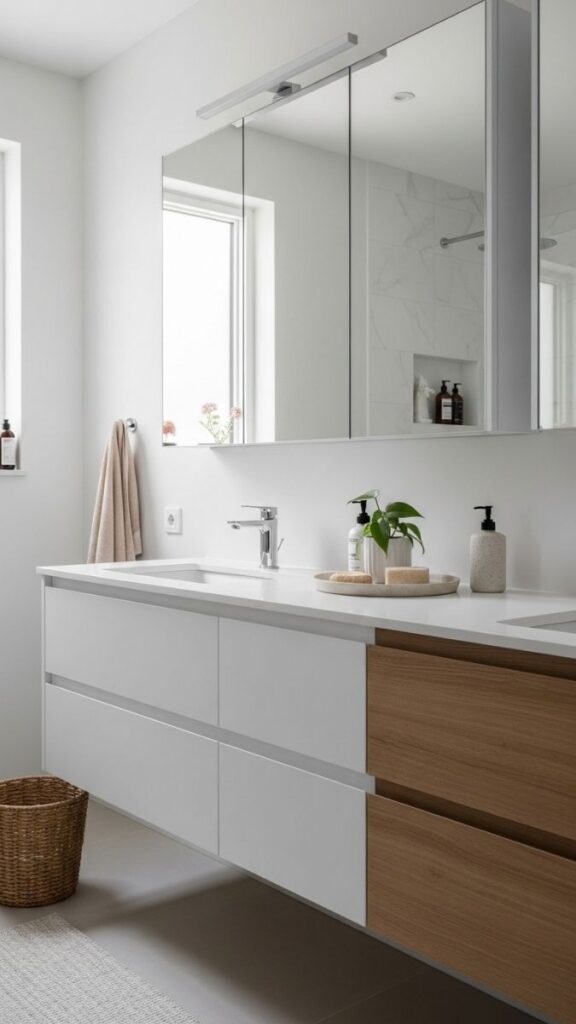
The Japandi bathroom counter has one thing on it. One. Everything else skincare, toothbrushes, cotton pads live in a mirrored cabinet or a deep drawer. This requires a little reorganization but no renovation.
The visual result is a counter that feels like a hotel bathroom rather than a storage surface, which changes the energy of the entire morning routine. A single ceramic soap dish or small plant is all the styling you need.
Nature-Inspired Art Ink Wash, Botanical, or Abstract Organic Forms
The art in a Japandi interior isn’t decorative in a traditional sense, it’s more like a window. Ink wash landscapes, botanical studies, or abstract shapes that reference nature (stone, water, branches) maintain the connection to organic forms that both Japanese and Scandinavian design prioritize.
These prints are widely available at accessible price points, and a single large piece on an otherwise empty wall does more than a curated gallery arrangement in this context.
A Thoughtfully Styled Outdoor Balcony Using Japandi Principles
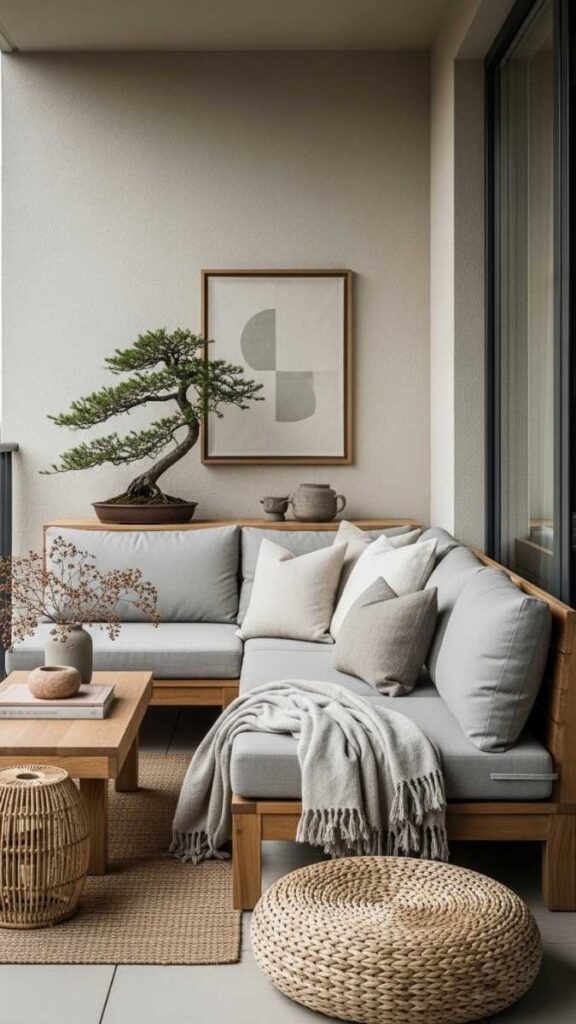
If you have even a small balcony, Japandi principles extend well outdoors. A low wooden stool or side table, one large plant in a simple planter, and a small outdoor lantern is the entire setup.
Resisting the urge to add seating for six, the goal is one functional, intentional spot. Weatherproof versions of natural materials (teak, bamboo, sealed concrete) hold up without losing the aesthetic. It becomes a space you actually use, which is the point.
What Actually Makes Japandi Style Work in Real Homes
The ideas above are only as effective as the principles behind them. Japandi isn’t a look you can achieve by buying a specific set of furniture, it’s a set of decisions about what to keep, where to put it, and how to let the room breathe.
Material consistency matters more than color.
Japandi rooms feel cohesive because the materials speak the same language: wood, linen, ceramic, stone. These textures sit naturally next to each other. Where it breaks down is when shiny, synthetic, or heavily patterned surfaces enter the mix. Even one piece of high-gloss furniture disrupts the matte, organic quality the style depends on.
Scale is the invisible variable.
Furniture that’s too tall, too bulky, or too numerous creates visual pressure even in neutral colors. Low-profile pieces give the room room to exist. This is especially true in smaller spaces where the height of furniture relative to the ceiling height is the primary spatial lever you have.
Function has to come first.
Japandi rooms that only exist to be photographed don’t hold up to daily life. The style works when the storage is real, the lighting is usable, and the furniture is chosen for how it’s actually used. Honest, everyday function removing shoes at the door, having a place for everything is part of the philosophy, not an afterthought.
Japandi Style Setup Comparison Guide
| Setup | Best For | Space Type | Problem It Solves | Difficulty |
| Low platform bed | Bedroom calm | Small–medium rooms | Overcrowded layouts | Low |
| Shoji divider | Zone creation | Open plans, studios | Lack of room separation | Low–Medium |
| Floor cushion corner | Flexible seating | Any size room | Unused dead corners | Low |
| Floating desk | WFH in small spaces | Bedrooms, living rooms | Multi-use layout tension | Low–Medium |
| Open ceramic shelving | Kitchen styling | Small kitchens | Clutter masquerading as decor | Low |
| Layered neutral rugs | Texture without color | Any room | Flat, cold flooring | Low |
| Ambient lamp layering | Evening atmosphere | Living rooms, bedrooms | Harsh overhead lighting | Low |
| Limewash/matte walls | Warm backdrop | Any room | Cold, flat wall surfaces | Medium |
Common Japandi Mistakes That Make Your Space Feel Cluttered or Cold
Minimalism without warmth.
The Scandinavian half of Japandi is specifically about preventing this. A room that’s only Japanese-minimal white walls, empty surfaces, no texture reads cold and unfinished. The warmth comes from layering natural materials: a wool rug over wood floors, linen on the bed, a ceramic piece on the shelf. Remove those layers and you lose the comfort.
Mixing too many wood tones.
Light oak shelves, a dark walnut bed frame, a mid-tone pine coffee table when three different wood tones are competing, the room reads as inconsistent rather than layered. Japandi works best with one primary wood tone used throughout, with other natural materials (stone, rattan, linen) providing variation.
Over-styling the negative space.
Negative space is part of the design, but filling it with small objects to avoid it looking “empty” defeats the purpose. A shelf with twelve items evenly spaced isn’t a negative space, it’s a crowded shelf. True Japandi negative space is intentional and requires some tolerance for the discomfort of leaving surfaces empty.
Choosing the wrong scale of furniture.
A bulky L-shaped sofa in a small living room can’t be Japandi-fied with throw pillows and a bamboo tray. Scale is the foundation. If the furniture is too large for the room, no amount of styling will resolve the spatial tension.
Using cool or bright whites.
Japandi palettes lean on warm cream, warm white, greige, sand, and soft clay. Bright or bluish whites feel clinical and fight against the organic warmth of the natural materials. Paint samples always read differently on walls than they do on a chip; always test with natural and artificial light before committing.
Frequently Asked Questions
What is Japandi style in simple terms?
Japandi is a design approach that blends Japanese minimalism with Scandinavian warmth. It prioritizes natural materials, neutral tones, low-profile furniture, and functional simplicity creating rooms that feel calm and intentional without being cold or bare.
What’s the difference between Japandi and Scandinavian style?
Scandinavian design tends to be slightly warmer and more functional, with more emphasis on cozy elements like textiles and warm lighting. Japandi takes that warmth but adds Japanese discipline around negative space, asymmetry, and imperfect, handmade materials. The result is quieter and more restrained than typical Scandi interiors.
Can you do Japandi style on a budget?
Yes and honestly, it’s one of the more budget-friendly aesthetics because it actively limits what you buy. The biggest shifts come from removing things, not adding them. Key budget-friendly moves are sheer linen curtains (widely available), handmade ceramics from thrift stores, matte paint, and one or two large plants instead of a collection of decor objects.
What colors are used in Japandi interiors?
Japandi uses warm neutrals off-white, cream, warm grey, greige, sandy beige, clay, and muted sage or forest green as an occasional accent. The palette avoids bright whites, cool tones, and anything saturated. Wood tones (light oak, walnut, ash) provide the main color variation.
How do I start with Japandi style without redecorating everything?
Start with three changes: switch to warm ambient lighting (replace overhead reliance with floor and table lamps), clear surfaces down to one or two intentional objects, and add one natural material: a linen throw, a wooden tray, and a handmade ceramic. These three moves shift the atmosphere without requiring furniture changes.
Is Japandi style practical for families or kids?
Yes, particularly when combined with Montessori-influenced furniture (low, accessible, multi-functional). The emphasis on organized, concealed storage and durable natural materials makes it more practical than many aesthetics that look good but don’t hold up to daily use.
Do Japandi work in small apartments?
It’s one of the best styles for small apartments. The principles of low furniture, negative space, functional storage, neutral palette all work in favor of making compact spaces feel larger and less crowded. Studio apartments especially benefit from the zoning strategies (shoji dividers, console tables as room separators) built into the aesthetic.
Conclusion
Japandi style resonates because it solves a real problem: rooms that look full but don’t feel finished, or spaces that function but don’t feel good to be in. The ideas in this list aren’t purely visual; they’re structural changes to how a room works, breathes, and accommodates daily life. Small rooms feel more open. Cluttered surfaces become functional again. The lighting shifts from flat to dimensional. These are noticeable differences that don’t require a full renovation to achieve.
Start with one or two ideas that match what your space actually needs right now. If lighting is the issue, begin there. If surface clutter is the problem, start with clearing and a wooden tray. Japandi rewards restraint the less you add at once, the clearer it becomes what each space actually needs. Build from that first change and let the rest follow naturally.