12+ Instagram Picture Home Ideas That Make Every Room Look
Your space doesn’t need a full renovation to photograph well. What it needs is intentional arrangement, the kind that makes natural light do its job, keeps surfaces from looking chaotic, Instagram Picture Home Ideas and gives each corner a reason to exist. If you’ve been scrolling through home feeds wondering why some rooms look polished and others don’t, the difference is usually not the furniture, it’s how everything sits in relation to each other.
These Instagramworthy home ideas are rooted in real design logic, not just aesthetic trends. Whether you’re working with a compact apartment, a rented room you can’t paint, or a living space that just feels off, there’s something here you can apply this weekend.
The Layered Bookshelf With a Back Panel Pop
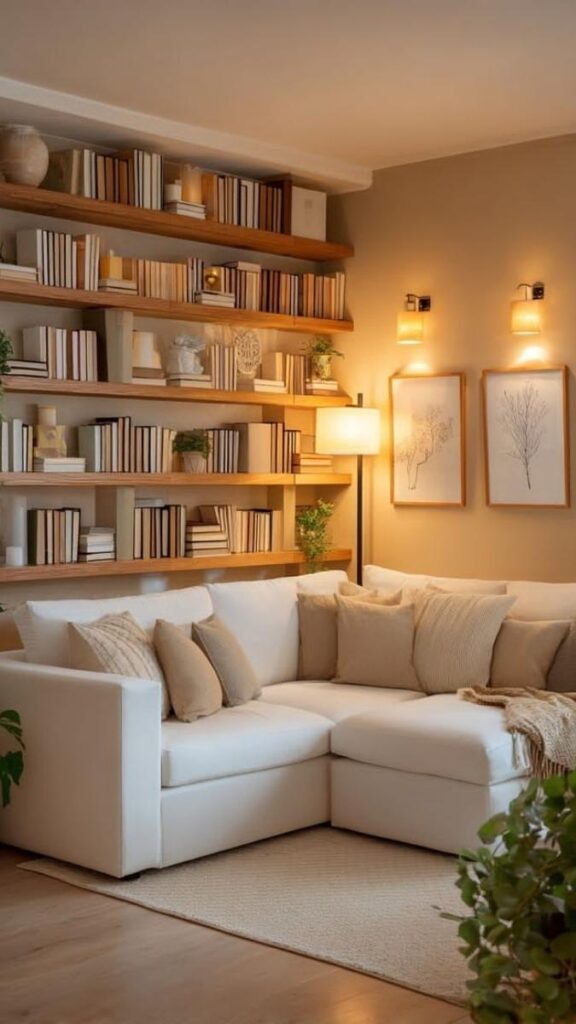
Take a standard IKEA Billy or any open shelving unit and line the back with peelandstick wallpaper or removable paint. Even a single stripe of deep green or terracotta on the back wall makes the shelf feel curated rather than cluttered. Front the book’s spineout, cluster a few faceout for rhythm, and add one trailing plant at the corner.
The contrast between the colored back panel and neutral shelves creates the kind of depth that reads beautifully on camera and makes the wall feel designed, not accidental. This works especially well in rentals where you can’t commit to permanent changes.
Corner Gallery Wall With a Curved Wrap
Most people stop a gallery wall at one wall. Letting it wrap around the corner changes the room’s energy entirely; it makes the space feel more designed and less “put some pictures up.” Use a consistent frame color (all black, all white, or all natural wood) but vary the sizes.
The corner itself becomes the focal anchor rather than a dead zone. In a small living room, this creates the illusion of depth because your eye travels around the room rather than stopping at a flat surface.
Bed Pushed Into the Corner With Floor Cushions Instead of a Nightstand
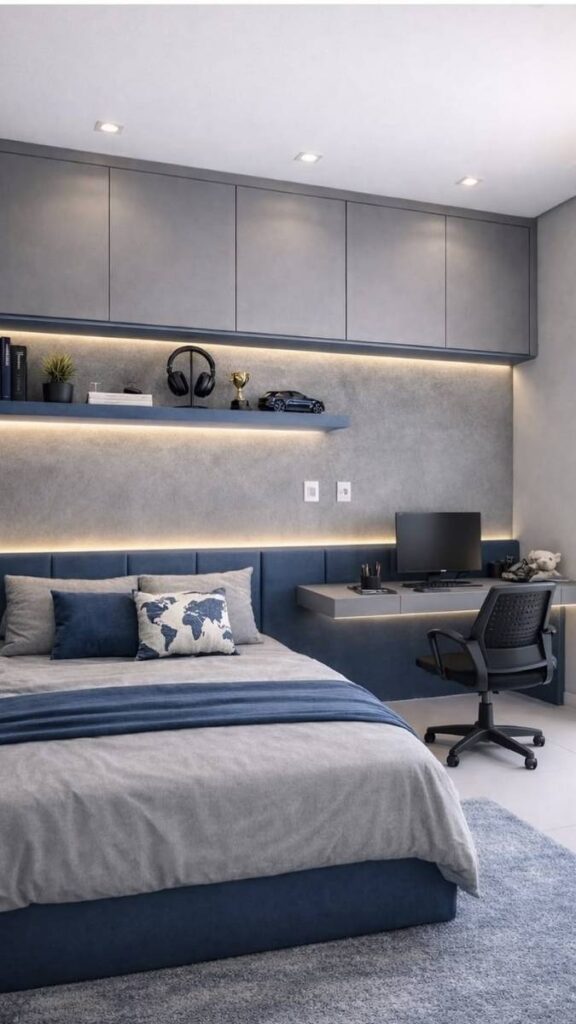
In smaller bedrooms, this setup is smarter than it gets credit for. Pushing the bed into the corner frees up floor space on the other side, and replacing the nightstand with a large floor cushion or woven basket keeps the profile low and the room feeling open.
Layer the bedding a flat sheet, a waffle throw, a linen duvet and the whole thing photographs with that effortless “coastal cabin” quality that’s all over feeds right now. Practically, it gives you a full wall behind the headboard area, which means you can lean artwork against it without drilling.
The Breakfast Nook With BuiltIn Bench Vibes Without the Build
You don’t need a contractor to create this look. Push a narrow sofa or loveseat flush against the wall, add a round table in front of it, and hang a pendant light low overhead. The result reads like a proper builtin breakfast nook.
This is one I’d actually recommend trying first because it solves two problems at once: it defines the dining zone in an open plan space and reduces how much furniture you need overall. Works especially well in studio apartments where every piece needs to work double duty.
Open Shelving Kitchen With a Restrained Edit
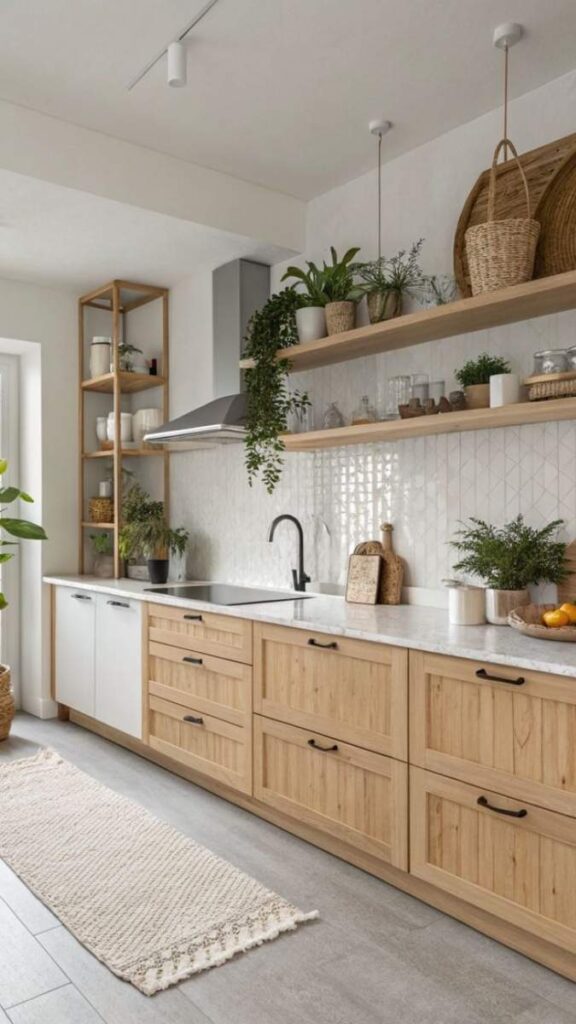
The reason open kitchen shelves look cluttered in real life but immaculate on Instagram is curation not budget. Keep only what you genuinely reach for every week on display. Stack dishes in groups of three or four, keep one small ceramic vessel (for olive oil, utensils, or nothing), and add a single trailing plant at the end.
The negative space is the thing making it work. Leave at least one third of each shelf empty and the entire shelf reads as a deliberate design choice rather than overflow.
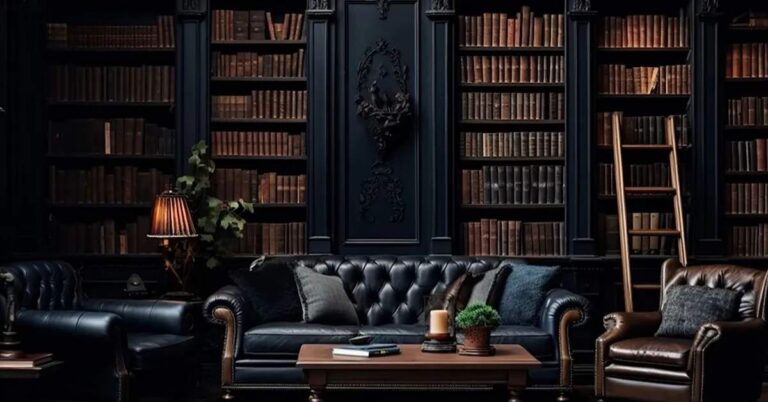
Read More About: 27+Dark Academia Living Room Ideas That Feel Intellectual, Moody,
Entryway Moment With Aa Vertical Mirror and Single Hook Row
A narrow entryway doesn’t have room for a console table, mirror, and coat rack all at once. Instead: one tall mirror leaning against the wall (not hung leaning adds a casual editorial quality), a single row of hooks above it, and a woven basket on the floor for shoes.
That’s it. Three elements, all doing a job. The mirror expands the space visually and the vertical emphasis makes the ceiling feel higher. In a rented apartment where you’re limited on wall holes, this setup requires almost nothing.
Living Room With All Furniture Pulled Off the Walls
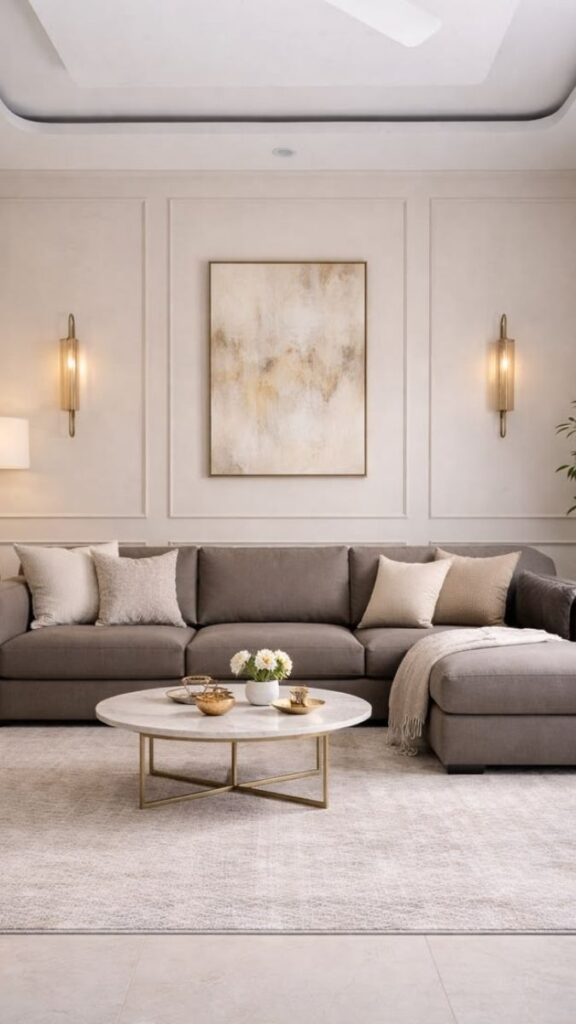
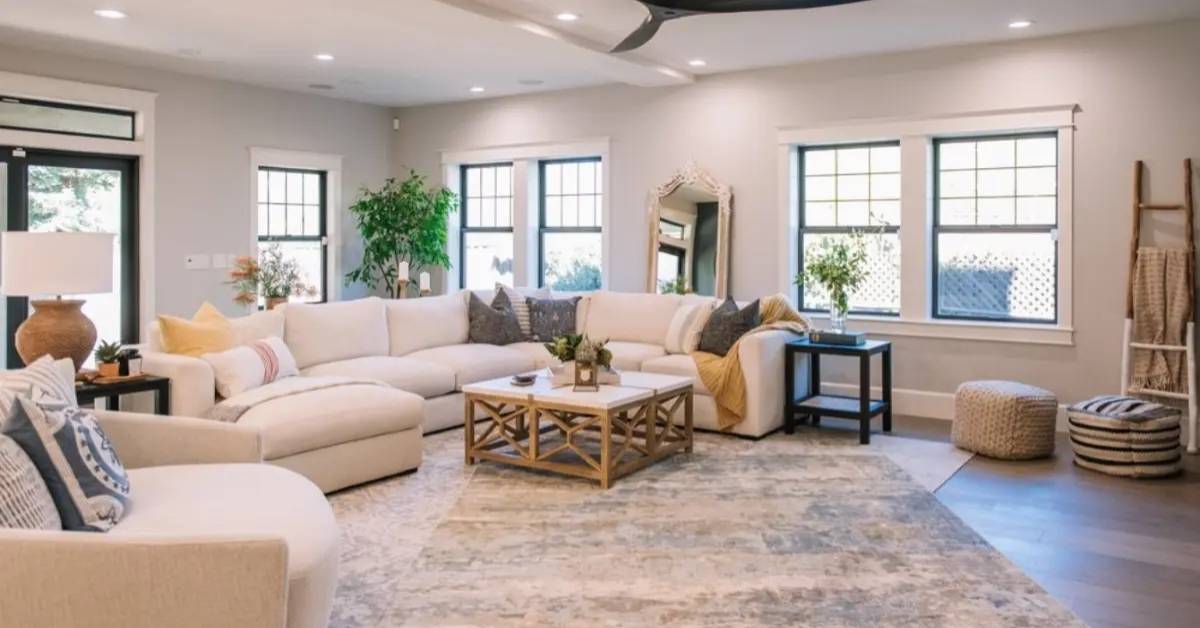
This is probably the most counterintuitive advice in here, but floating your furniture pulling it away from the walls by even 6 to 12 inches instantly makes a room look more intentional. When sofas and chairs hug the perimeter, rooms feel like waiting areas.
Pull the sofa away from the wall, angle the armchair slightly toward it, and let the rug anchor everything. In a midsized living room, this creates a conversation zone that photographs with genuine depth and warmth.
The LowtotheGround Living Room Setup
Low furniture has been gaining ground through 2025 into 2026, and for good reason it makes ceilings feel taller and rooms feel more relaxed. A platformstyle sofa (or a regular sofa with legs removed), a flat coffee table, and a large textured rug together create that JapaneseScandinavian overlap that keeps performing well on home feeds.
The practical win: lower furniture makes a small room feel more spacious because there’s more wall visible above the furniture line.
Bathroom Counter Reset With Decanted Products and One Tray
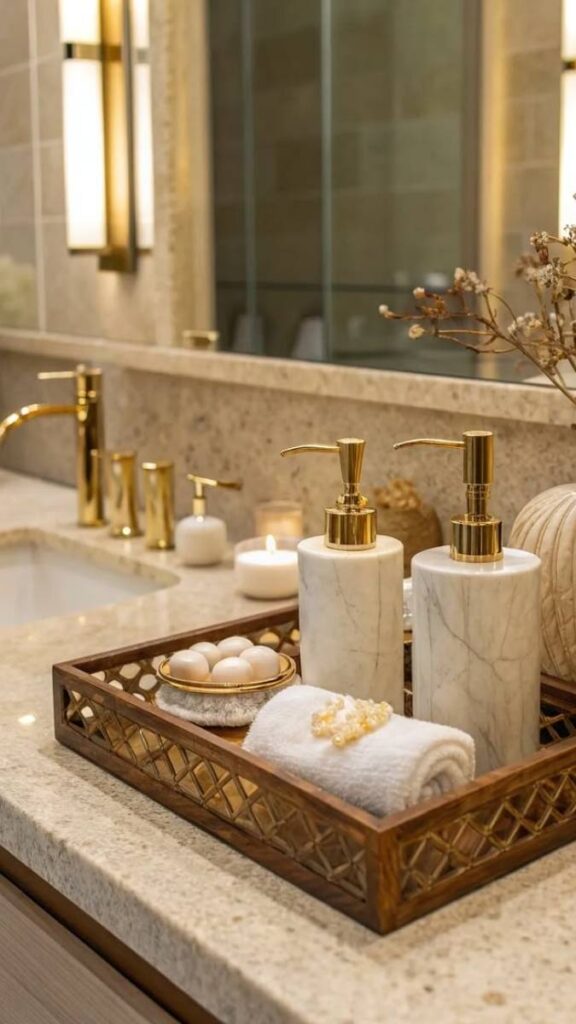
Decant your hand soap, lotion, and face wash into matching ceramic or glass dispensers, group them on a small tray (marble, wood, or simple stone), and add one small plant. Remove everything else from the counter completely.
This is the single fastest change-to-impact ratio on this list. The tray creates containment; the eye reads a single styled object rather than a collection of product labels. It also solves the visual clutter that makes bathroom photos feel messy regardless of cleanliness.
A Dining Table That Doubles as a Styling Surface
Honest truth: most dining tables look like they’re waiting for something. A long linen runner down the center, a grouping of three candles (vary the heights), and two simple place settings permanently set on one end turns the table into a room anchor rather than a flat surface.
In small open plan spaces, this makes the dining area feel finished even when it’s not in use, which matters for both daily living and photos.
Read More About: 41+Clean Home Aesthetic Ideas That Make Any Space
Window Seat Created From Stacked Storage Ottomans
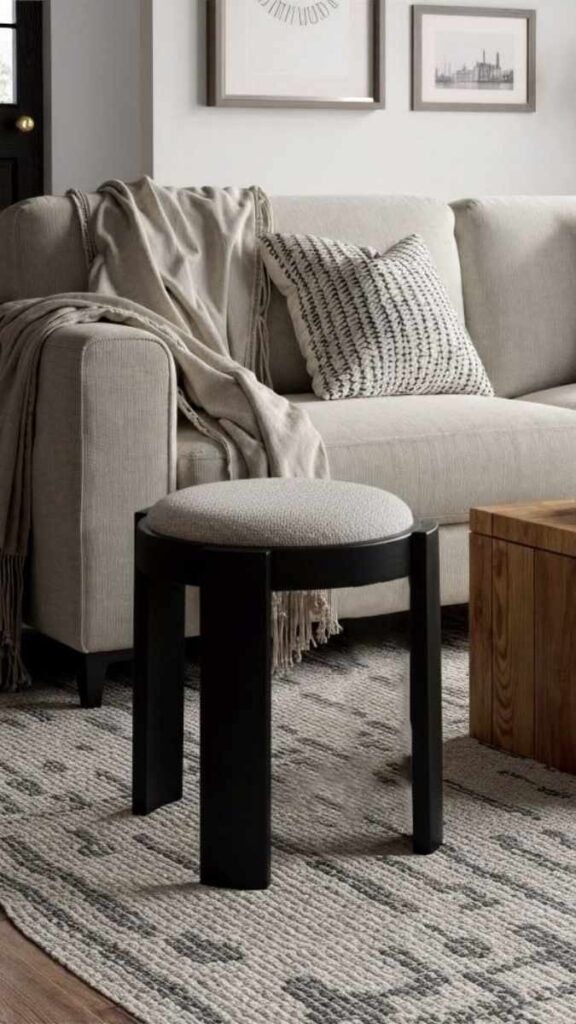
Two storage ottomans side by side under a window, topped with a cushion and a couple of pillows, reads exactly like a built-in window seat. The practical advantage is that each ottoman provides storage, you’re not drilling anything, and the whole setup costs a fraction of actual builtin work.
Add floorlength curtains flanking the window and the illusion is complete. This is particularly useful in bedrooms where there’s an awkward window wall with no natural furniture placement.
Statement Lamp Instead of Overhead Lighting
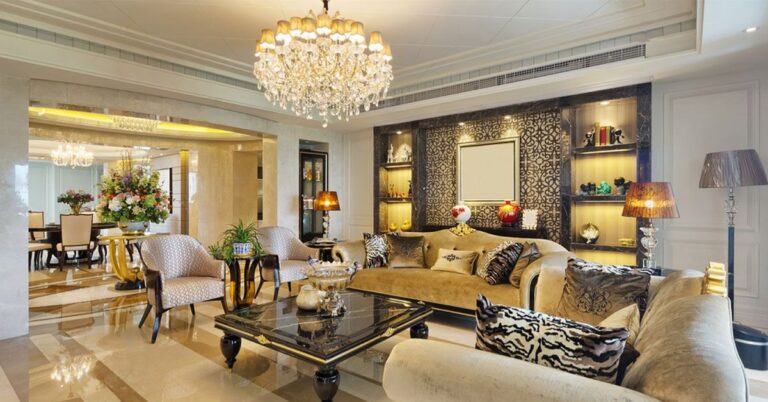
If you shoot any room with only overhead lighting, it will look flat. If you photograph the same room with a single arc floor lamp creating a warm pool of light over a chair, it looks like it belongs in a design magazine.
Switch your living room off the overhead and run it through a floor lamp and one or two table lamps. The shadows this creates add dimension which is exactly what makes a room look three-dimensional in a photo rather than like a showroom floor.
The Books helvesas Headboard Wall
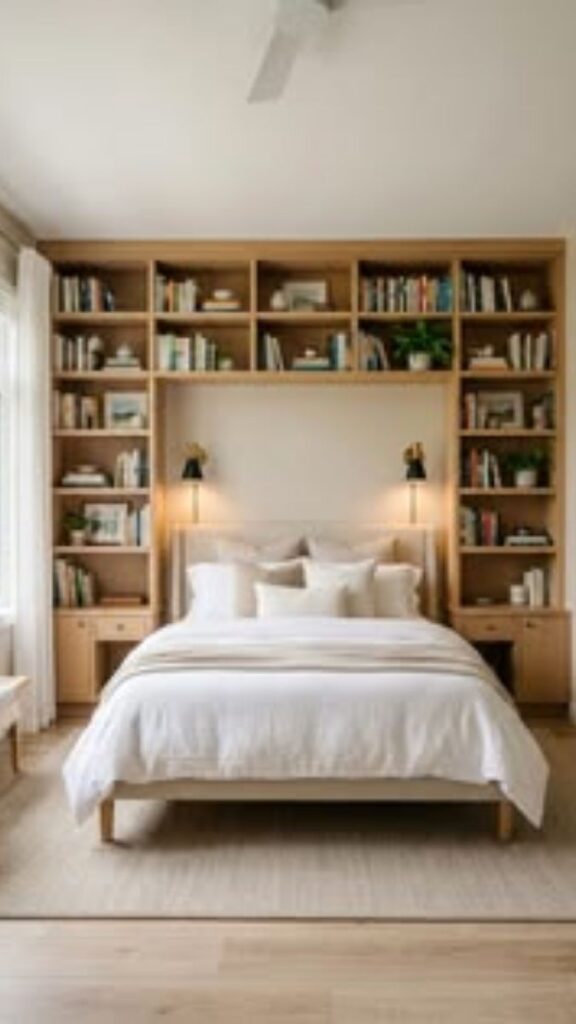
Two tall bookshelves placed on either side of the bed, close enough that they frame it, create a builtin headboard effect without any permanent work. Add wallmounted sconces between the shelves and the bed for reading light that looks intentional.
This setup works best in rooms with at least 12 feet of wall space, but it transforms a plain bed into a full architectural moment. The shelves also solve the classic bedroom storage problem; actual headboards give you nowhere to put anything.
Kitchen Island Moment With Stools That Actually Fit
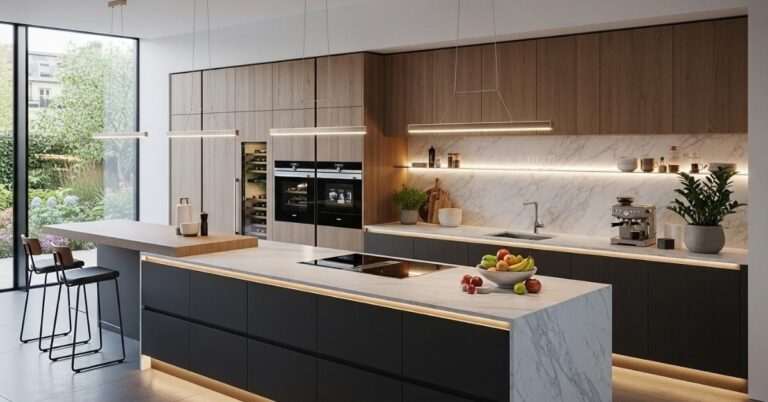
Kitchen islands fail stylistically when the stools are either too tall, too bulky, or the wrong finish. The formula that photographs best: stools at seat height (17–19 inches for counterheight islands), with a slim profile and a finish that contrasts the island light stools against a dark island, or rattan against white.
Keep the counter mostly clear, with one functional cluster at each end (a fruit bowl, a small board and oil bottle). Negative space on the island surface reads as intention.
The Organized Home Office Nook Inside a Living Room
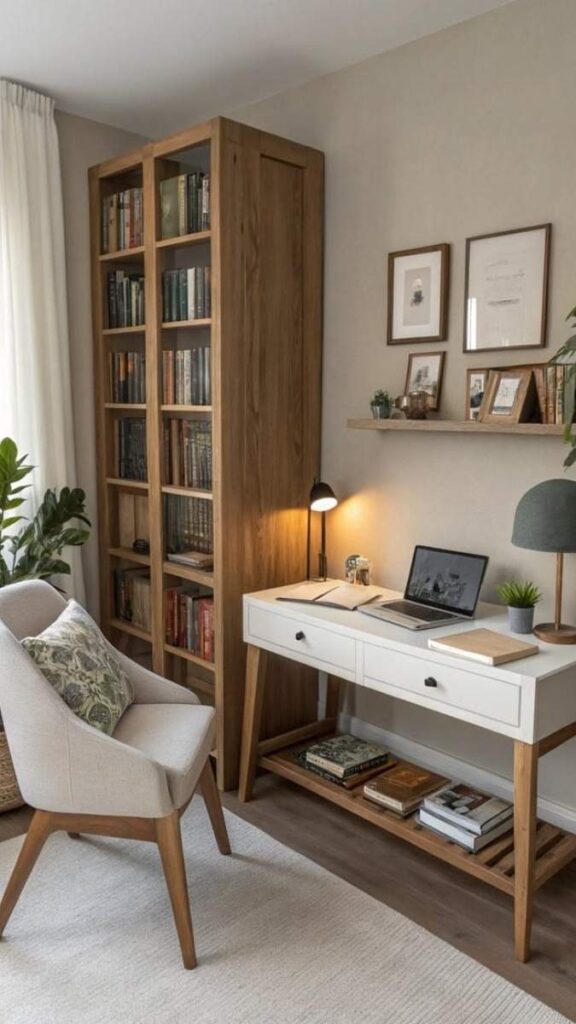
A home office that lives in a living room only works photographically and practically if it has clear edges. That means the desk stays in the corner, cords are hidden (a cable management box or even a fabric basket works), and the area has its own lighting source separate from the main room.
A monitor riser adds the height that makes the desk feel considered rather than makeshift. In 2026, multiuse rooms aren’t a compromise, they’re the standard, and this setup treats them that way.
Floating Shelves as a Bedside Table Alternative
One floating shelf at the right height replaces a bedside table entirely in small bedrooms where floor space matters. Mount it at roughly the same height as your mattress top, add a slim lamp, a water glass, and whatever you actually use at night.
The result is cleaner than any nightstand because nothing can go on the floor beside the bed and a cleaner floor is what makes small bedrooms look larger, full stop.
Read More About: 72+ Black and White Bedroom Ideas That Actually Work in Real Homes
The Rug Layering Trick That Defines Space
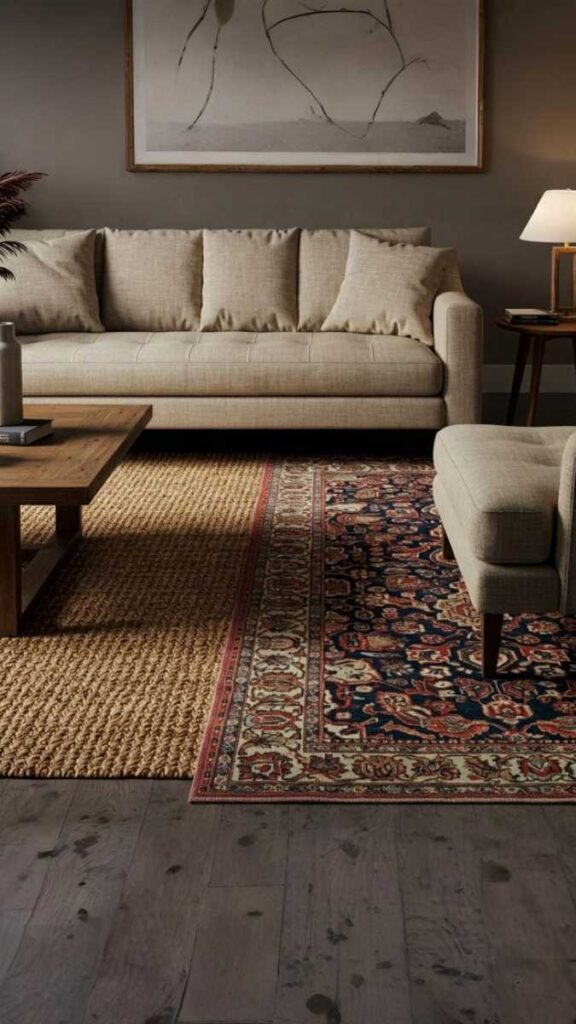
Layering a smaller, patterned rug on top of a larger natural fiber base (jute or sisal works well) adds texture and visual depth at a fraction of the cost of a large statement rug. The key is proportion: the top rug should cover the seating zone but leave at least 6 to 8 inches of the base rug visible on all sides.
This setup defines the conversation area clearly, which is especially useful in open plan spaces where the living zone otherwise bleeds into adjacent areas.
Bathroom With a Towel Ladder Instead of a Ring
A slim wooden or black metal towel ladder leaning against the wall not mounted gives a bathroom that is boutique hotel quality without any installation. Fold two or three different texture towels over the rungs (a waffle weave, a regular cotton, a smaller hand towel) and let one hang naturally.
The asymmetry is the point. In bathrooms with awkward layouts or renters who can’t mount hardware, this is genuinely one of the most effective visual upgrades available.
Living Room With a Single Large Artwork Not a Gallery
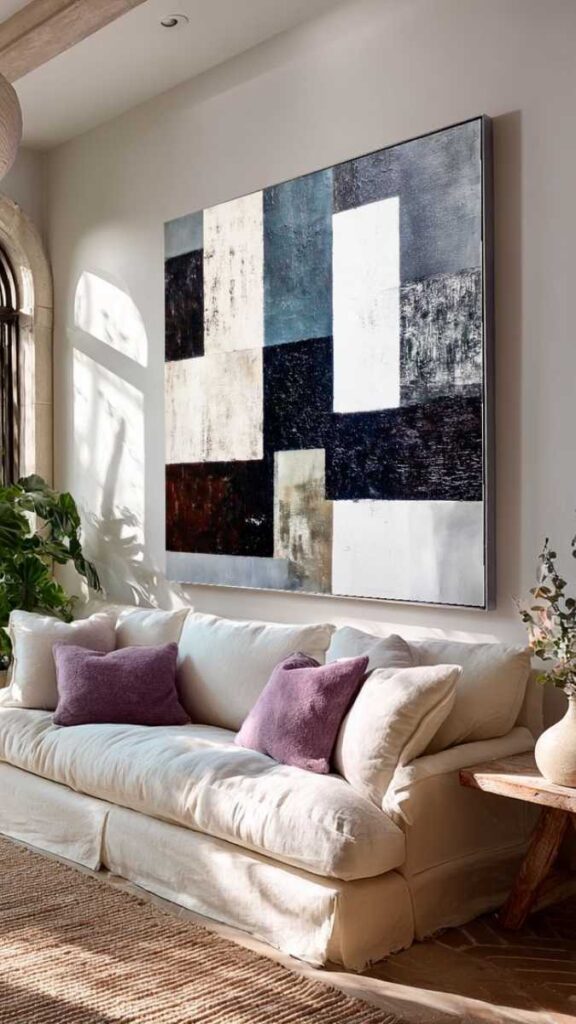
Sometimes the best alternative to a gallery wall is exactly the opposite: one large piece, properly scaled. A canvas at least 36 inches wide, leaning casually against the wall rather than hung, reads more editorial and less “decorator’s checklist.”
Leave significant space around it at least 8 inches of wall visible on each side. The restraint is what makes it look expensive and intentional rather than underfilled.
Kitchen With One Open Shelf and Everything Else Hidden
Instead of open shelving throughout, use exactly one open shelf placed deliberately. Three matching mugs, one cookbook propped slightly open, a small plant. That’s it. Everything else lives behind closed doors.
The visual effect is “curated kitchen” rather than “storage wall,” and it’s dramatically easier to maintain on a daily basis. I’ve noticed this approach is especially useful in rental kitchens where the cabinets aren’t attractive: the single shelf draws the eye and the rest recedes.
Entryway With a Large Scale Vintage Map or Oversized Print
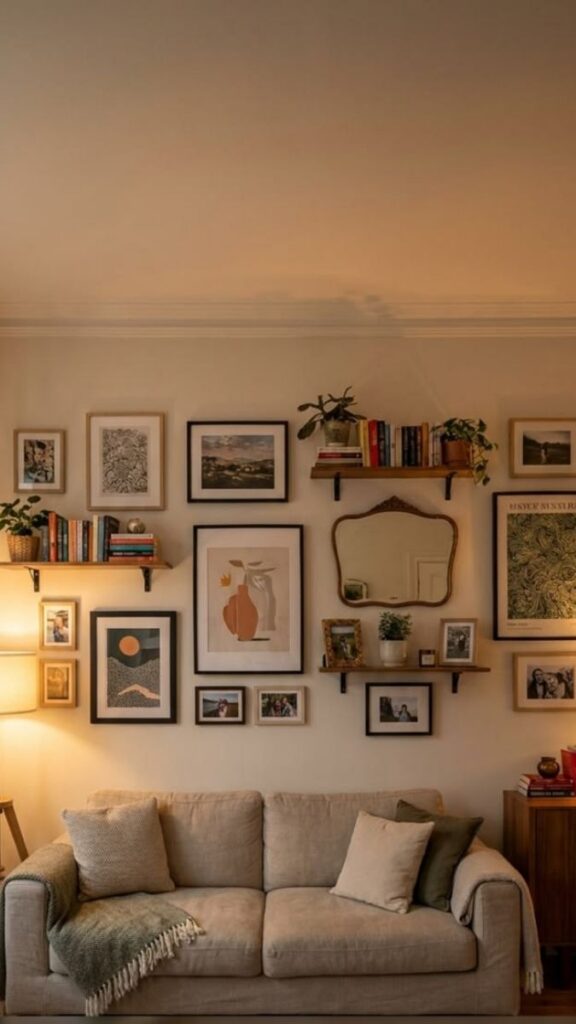
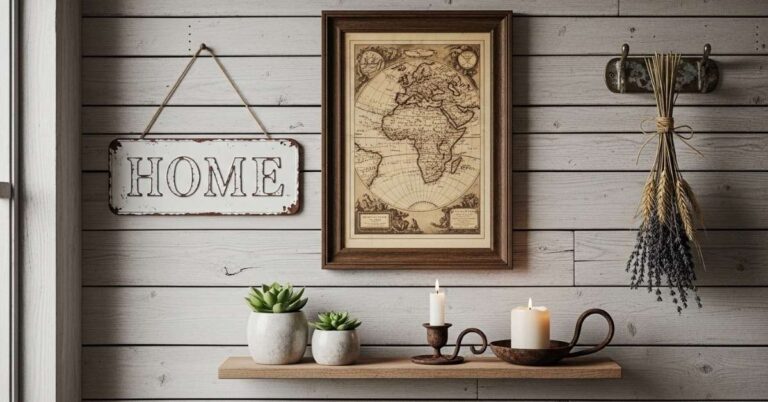
The entryway is where you set expectations for the rest of the home. One oversized print or framed vintage map that nearly fills the wall paired with a narrow console and a single vessel below it makes the entry feel considered immediately.
Scale matters here: a small print on a large wall looks timid. Go at least 24 by 36 inches, and mount it so the visual center of the piece sits at eye level (roughly 57 to 60 inches from the floor).
Bedroom With a Canopy Effect Using Only Curtain Rods
Mount two ceiling height curtain rods on either side of the bed headboard and drape sheer linen panels from them. The effect is a soft canopy without a frame, and it photographs with an incredible sense of warmth and enclosure.
This works in rooms where the ceiling is at least 9 feet, and it transforms a basic bed setup into a genuine focal point. The sheers don’t block light, they diffuse it, which makes morning photos especially flattering.
Dining Room With Mismatched Chairs That Work Together
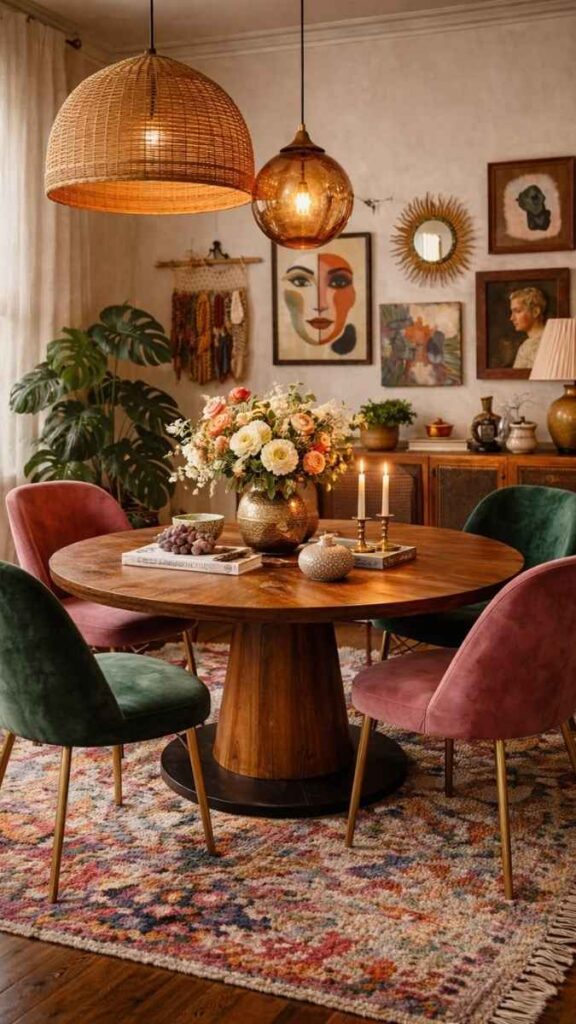
Two matching armchairs at the ends of a dining table, four side chairs in a complementary tone or material on the sides, creates a collected overtime look that’s far more interesting photographically than a matching set.
The rule for making it work: all chairs should share at least one element: the same finish on the legs, a similar scale, or the same general tone. Variety in silhouette, cohesion in material.
Bathroom Shelf Styled Like a Spa Shelf
Roll towels and stack them vertically rather than folding and laying them flat. Add a small glass jar with cotton rounds or Qtips, one candle, and a small plant. This doesn’t require buying anything new, it’s purely a reorganization of what most bathrooms already have.
The rolled-style approach is more compact, more visual, and keeps the shelf from looking like a linen closet.
Living Room Reading Corner With Layered Lighting
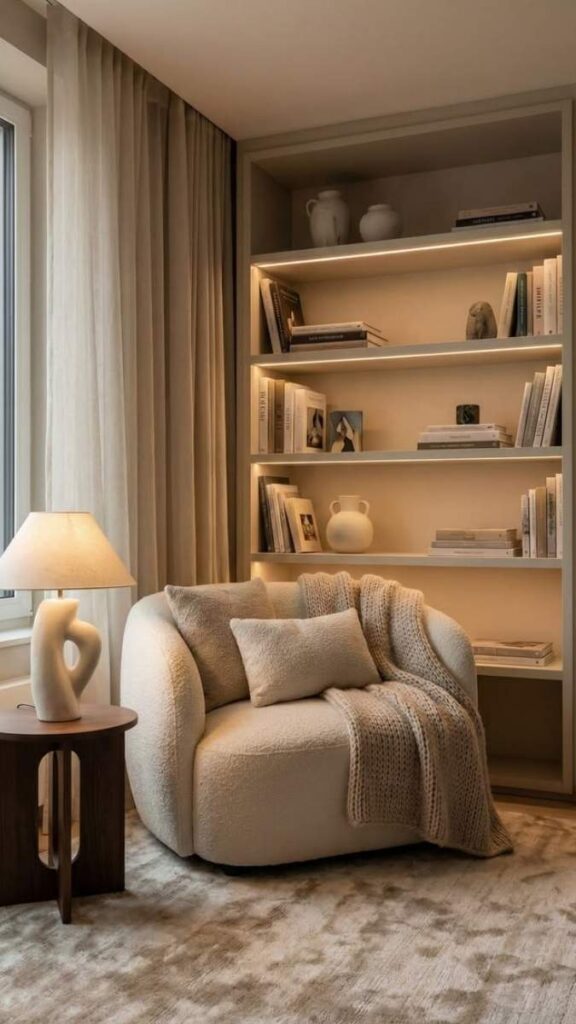
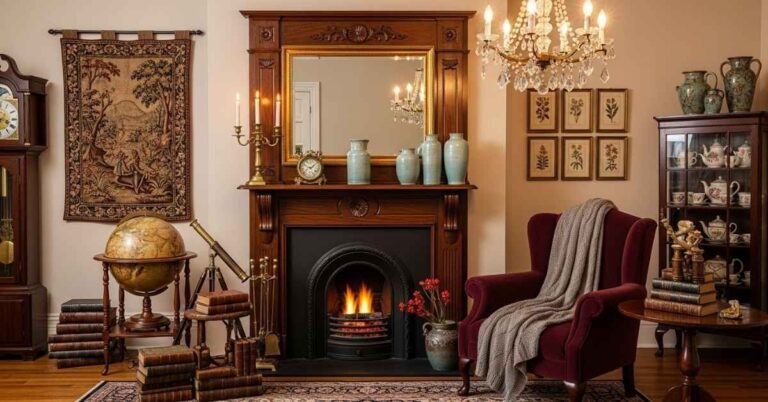
A dedicated reading corner, one armchair, one arc or floor lamp arching over it, a small side table or stacked books, and a throw is one of the most frequently saved setups on home Instagram for good reason. It tells a story in a single frame.
The lighting does the most work here: the pool of warm lamplight creates a defined zone within the larger room, which photographs with that rare quality of feeling genuinely livable rather than staged.
Outdoor or Balcony Space Styled Like an Extension of Indoors
A balcony with a weather-resistant rug, two small rattan chairs, and a string light overhead looks like extra square footage rather than an afterthought.
The indoor/outdoor continuity using materials that echo the interior makes the overall home feel larger and more composed. Even a Juliet balcony with only enough space for a single chair and a plant reads as a designed moment rather than wasted space.
Entryway Shoe Storage That Looks Like Furniture
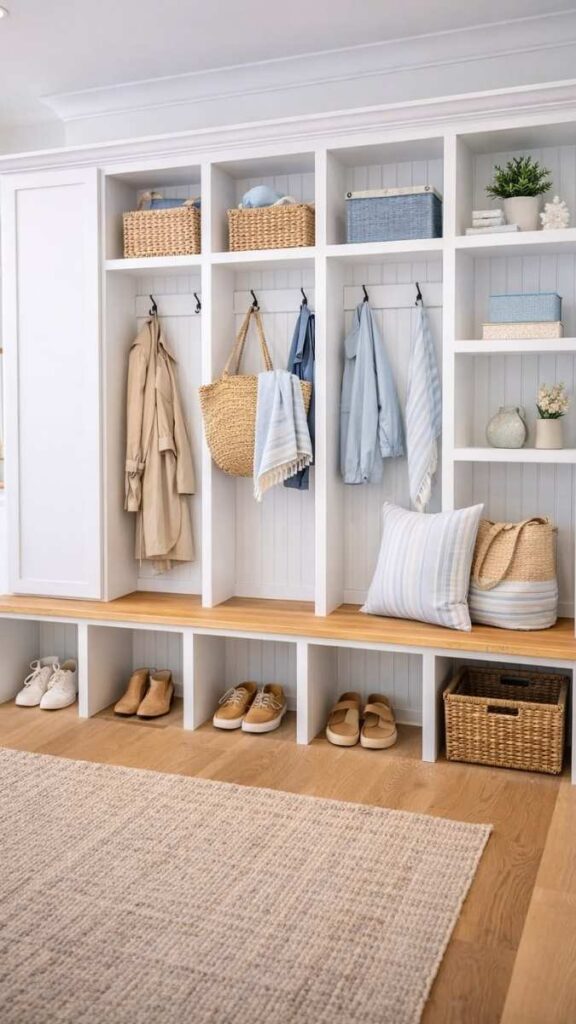
A slim wooden bench with a woven basket underneath for shoes does double duty: seating for putting on shoes, and contained storage that keeps the floor visually clear. The bench profile reads as furniture rather than a storage unit, which matters for how the whole entryway photographs.
Limit visible shoes to one pair; everything else goes in the basket. That small editing decision is what separates an entryway that looks designed from one that looks functional only.
What Actually Makes These Ideas Work
The common thread across all 27 setups isn’t budget or even aesthetics, it’s containment and intentional negative space. Rooms that photograph well have clear zones, a limited number of materials in each area, and enough breathing room between objects that nothing competes visually.
Proportion before anything else.
A rug that’s too small makes furniture float. Artwork that’s too small makes a wall look underused. Before buying a new piece, measure. The most common reason a room “looks off” is a scale mismatch, not a style mismatch.
Light does the editing for you.
Strong overhead lighting flattens a room and shows every imperfection. Warm, layered lighting from floor and table lamps creates pools of focus that naturally direct the eye. If your room feels hard to photograph, the lighting is usually the culprit, not the furniture.
Restraint is a design decision.
The tension in home styling is always between adding more (more texture, more color, more decor) and removing things (editing down surfaces, simplifying shelves, leaving floor space clear). The rooms that read as “welldesigned” almost always err toward less. What’s on a surface matters less than how much space exists around it.
Instagram Picture Home Ideas at a Glance
| Idea | Best Space Type | Main Benefit | RenterFriendly? | Effort Level |
| Layered bookshelf with back panel | Any room with shelving | Adds depth and personality | Yes (removable wallpaper) | Low |
| Corner gallery wall wrap | Living room, hallway | Creates designed focal point | Yes (command strips) | Medium |
| Furniture floated off walls | Midsize living rooms | Improves flow and depth | Yes | Low |
| Low profile furniture setup | Small to midsize rooms | Maximizes ceiling height perception | Yes | Low |
| Single statement lamp | Living room, bedroom | Transforms light quality dramatically | Yes | Very low |
| Bookshelf headboard | Bedrooms with wall space | Storage + visual architecture | Yes | Medium |
| Rug layering | Living room, open plan | Defines zone without walls | Yes | Very low |
| Towel ladder | Bathroom | Boutique hotel aesthetic | Yes (freestanding) | Very low |
| Reading corner with layered lighting | Living room corner | Adds character and warmth | Yes | Low |
| One large artwork, leaning | Living room, hallway | Elevated, editorial quality | Yes | Very low |
How to Make Your Space Look CameraReady Without Staging It Every Time
The goal with an Instagramworthy home isn’t to constantly arrange things before you photograph, it’s to set up your space so it looks right at rest. That requires a bit of upfront thinking about what each surface is doing.
Give every surface a purpose and a limit.
A console table with three objects looks curated. A console table with ten objects looks like a landing zone. Before you add anything to a surface, decide what that surface is for display, function, or transition (like an entryway). Once you know the purpose, the editing becomes obvious.
Work with your natural light, not against it.
Note where light enters your rooms at different times of day. Style your bestlooking setups toward those windows. Morning light is usually softer and warmer than afternoon light in most northfacing rooms. If your kitchen gets good morning sun, that’s where the open shelf should go. If your living room gets a strong afternoon light, that’s where you place the reading chair.
Edit first, add second.
Most rooms that feel cluttered need subtraction, not addition. Before buying new decor, remove half of what’s currently on display for a week. If the room feels better, the items you removed weren’t earning their place.
FAQ’s
What makes a home photo look good on Instagram?
The biggest factors are natural light, restrained surfaces, and intentional layout not expensive furniture. A room with good light and edited surfaces will photograph better than a room full of highend pieces arranged without intention.
How do I make a small apartment look good for photos?
Float furniture away from walls, use lowprofile pieces, keep floors as clear as possible, and layer warm lighting rather than relying on overhead fixtures. Scale your rugs up undersized rugs make a small room look fragmented rather than defined.
Do I need to buy new furniture to get an Instagramworthy home?
Not necessarily. Most of the impact comes from editing what you already have, changing the placement of existing furniture, and improving lighting. Decanting products, rolling towels, and curating open shelves are changes that cost nothing but significantly shift how a space reads.
Open shelving vs closed storage which looks better?
Closed storage almost always looks cleaner because it removes visual noise. Open shelving works when it’s curated to about 60–70% capacity and maintained. The best approach for most homes is primarily closed storage with one or two intentionally styled open shelves.
How do I make a rental apartment look designed without permanent changes?
Lean into freestanding furniture arrangements, removable wallpaper, peelandstick elements, and lighting (plugin sconces, floor lamps, string lights). The key is treating every piece as moveable furniture rather than trying to work around the existing space.
What’s the best lighting setup for home photos?
Turn off overhead lights and shoot using only warm lamps ideally a mix of floor, table, and task lighting at different heights. This creates depth and shadow that photographs far more interestingly than flat overhead illumination.
Is there a rule for how much to keep on a surface?
The practical rule is the “thirds edit”: when you think you’re done styling a surface, remove onethird of what’s on it. What remains will almost always look better than the fuller version.
Conclusion
Most of what makes a home look great on Instagram or just feel better to live in comes down to arrangement, light, and restraint rather than investment. The ideas in this list work because they’re grounded in how space and light actually function, not because they require a specific price point or aesthetic.
Start with one or two setups that fit your existing space and constraints. If your bedroom feels off, try floating the bed away from the wall or swapping out overhead lighting. If your living room looks flat, test pulling the sofa away from the wall before buying anything new. Small, confident edits tend to reveal more than big purchases and they’re usually reversible if they don’t work.