23+ Living Room Ideas That Actually Make Small Spaces Feel Bigger
You know that moment when your living room looks fine… but still feels off? Living Room Ideas Maybe the sofa’s in the wrong spot, the corners feel empty, or the whole room just feels tight no matter how you rearrange it. That gap between “looks okay” and “feels right” is usually a layout problem, not a decorating one.
If you’re working with a small living room, a rental, or a space that has to multitask as a home office or guest area, these living room ideas are built around real constraints, not just aesthetics. The goal here is simple: better flow, more usable space, and a room that actually feels calm to sit in.
In my experience, the biggest shifts come from how furniture is positioned relative to walking paths and light sources, not from buying more stuff. Let’s get into it.
Float the Sofa Away From the Wall
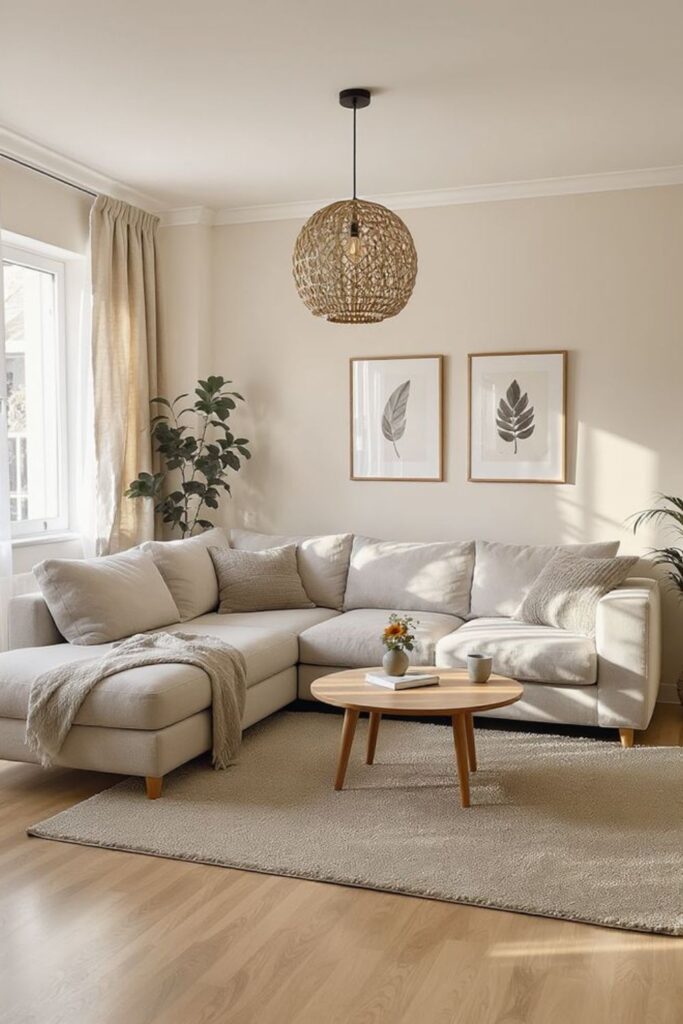
Pushing every piece of furniture against the wall is the default move, but it often makes a room feel like a waiting area. Pulling the sofa just 8-12 inches off the wall and adding a slim console table behind it creates a natural divider between the living area and whatever’s behind it an entry, a dining corner, a hallway.
This works because it gives the room a sense of layers instead of one flat plane. Light from a window can travel further into space when nothing’s blocking the wall edge. It’s especially useful in open-concept apartments where the living room blends into another zone and needs its own visual boundary without adding a wall.
Use a Round Coffee Table in Tight Layouts
Sharp corners on coffee tables are the first thing people bump into in a small room. Swapping a rectangular table for a round or oval one in wood, marble-look resin, or woven rattan softens the walking path around the seating area.
This is one I’d actually recommend trying first because it’s a low-cost swap with an immediate impact on how the room moves. A round table also tends to read as lighter visually, which helps in rooms where the sofa already takes up a lot of footprint. Best for studio apartments or any living room doubling as a walkway to another room.
Anchor the Room With an Oversized Rug
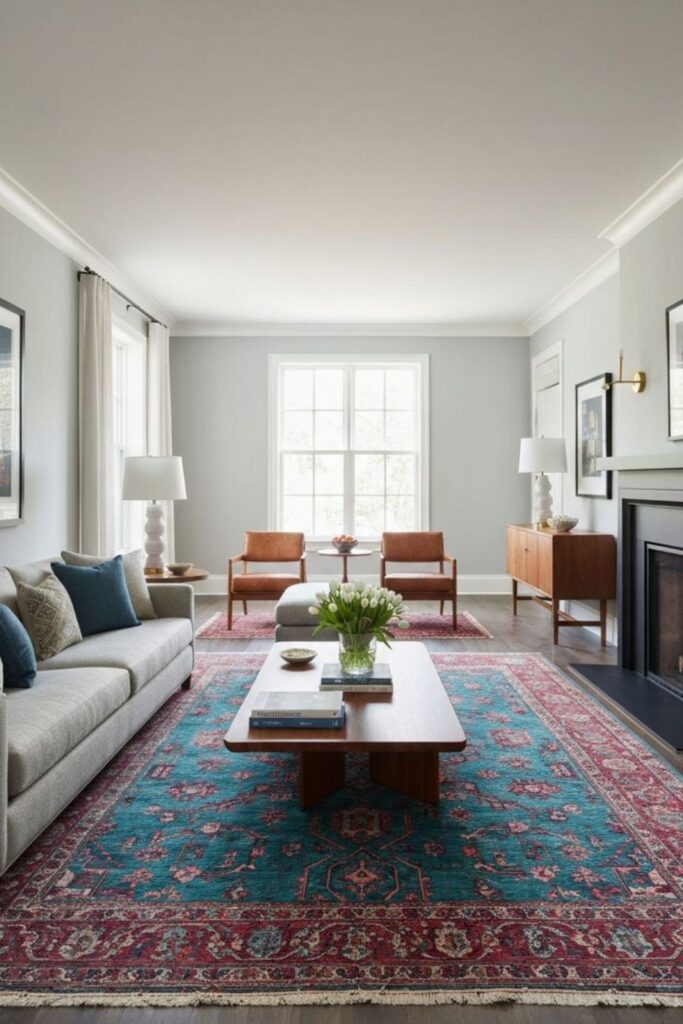
A rug that’s too small makes furniture look like it’s floating on an island in the middle of nowhere. Sizing up so the front legs of the sofa and chairs sit on the rug visually ties the whole seating area together and makes the room feel intentional rather than scattered.
This matters because it defines the “zone” of the living room even in open layouts where there’s no wall to mark the boundary. A larger rug in a neutral tone with subtle texture (like a flatweave or jute blend) also bounces light around more evenly. Works especially well in apartments with hard flooring throughout, where rugs do the job of separating rooms.
Add a Mirror Opposite the Main Window
This one gets repeated a lot, but the placement matters more than people think. A mirror directly across from your largest window not at an angle reflects the most light back into the room and can visually double the sense of depth on that wall.
Go for this if your living room has only one real light source, which is common in railroad-style apartments or rooms with a single exterior wall. The mirror doesn’t need to be huge; even a 24-30 inch round or arched mirror in a thin metal frame does the job without adding bulk. It solves the “this room feels dark by 4pm” problem more effectively than adding another lamp.
Create a Reading Nook in an Underused Corner
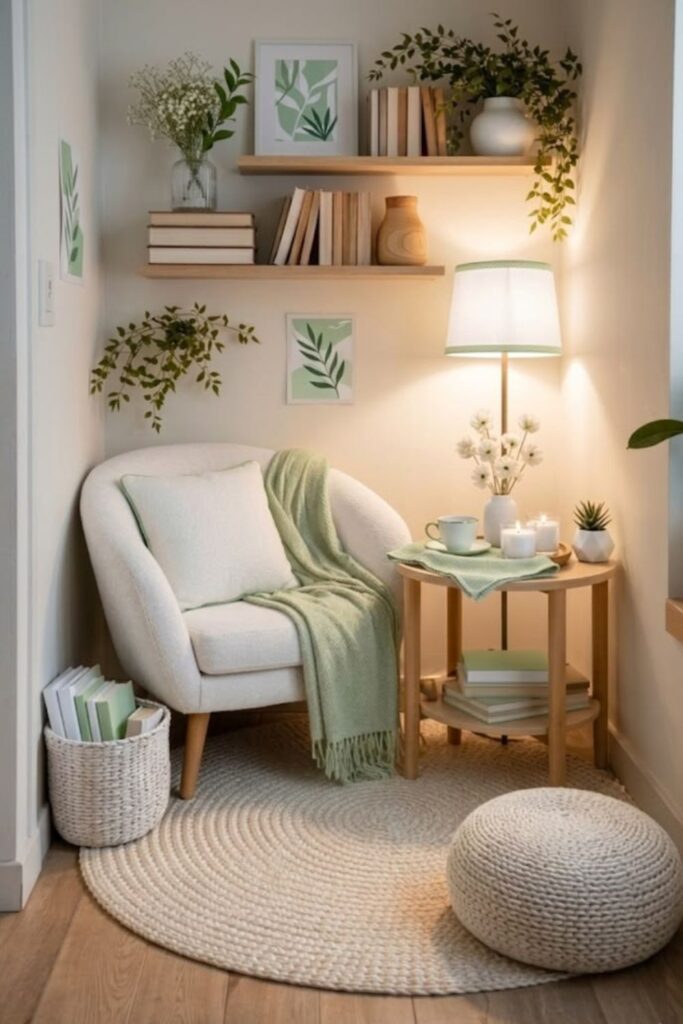
Every living room has that one corner that collects clutter or stays empty usually because it’s too small for “real” furniture. A single armchair, a small side table, and a floor lamp turn that dead space into a spot people actually want to sit in.
The trick is keeping the footprint tight: a 28-30 inch wide chair, a table no bigger than a side table needs to be, and a lamp that arcs over rather than taking up floor space. This works particularly well for anyone trying to make their space feel more open and organized, because it gives the “extra” corner a job instead of letting it become storage overflow.
Read More About: Living Room Wall Decor Ideas: 35 Stylish Ways to Transform Your Space
Layer Lighting Instead of Relying on One Overhead Fixture
A single ceiling light creates flat, even lighting that makes a room feel more like an office than a living space. Mixing in a floor lamp near the seating area, a table lamp on a console, and maybe a plug-in wall sconce gives the room depth after dark.
Honestly, this is one of those changes that’s almost entirely about ambiance rather than space, but it has a real effect on how “finished” a room feels. For renters, plug-in sconces and lamps mean zero electrical work. This setup is especially useful in evenings when the room needs to shift from a bright daytime feel to something more relaxed.
Use a Bench Instead of a Second Sofa
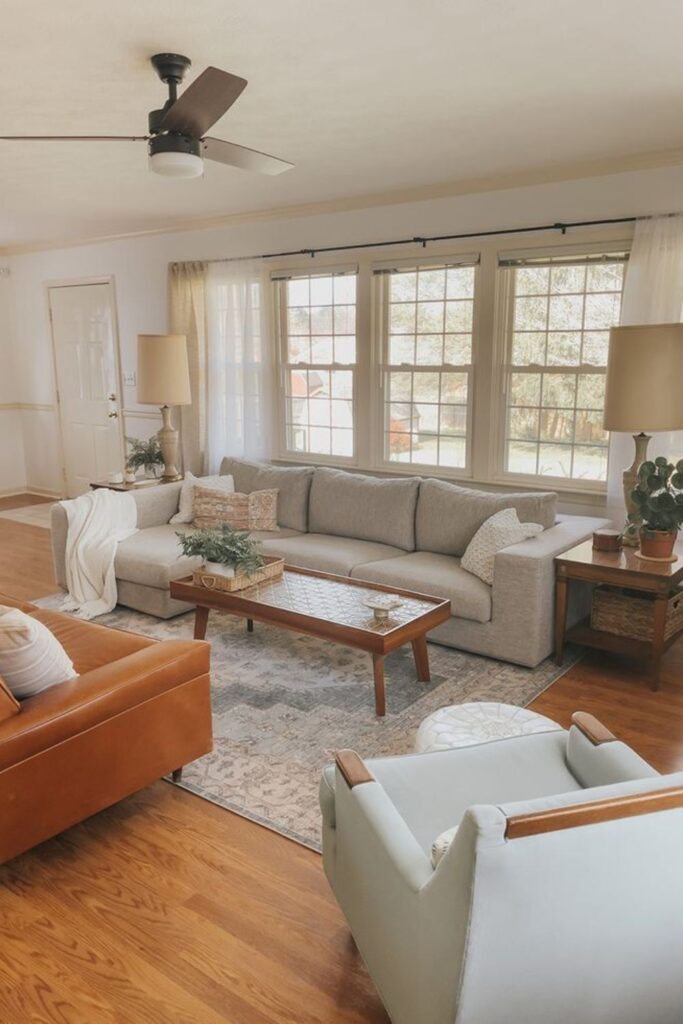
In smaller living rooms, a second sofa or loveseat often eats up more space than it gives back in seating. A low upholstered bench placed along a wall or at the foot of the main seating area provides extra seating that can slide under a console or against a wall when not in use.
This setup is especially useful in multi-use rooms, since the bench can double as a spot to set bags, fold laundry, or stage shoes by the door. It also doesn’t block sightlines the way a bulky second sofa does, so the room reads as more open. Good for renters who need flexible furniture that can move between rooms if needed.
Build a Gallery Wall Around Not Above the Sofa
A single piece of art centered above the sofa is fine, but it leaves a lot of walls feeling unfinished. Extending a gallery arrangement to wrap slightly around the sides of the sofa not just directly above it makes the wall feel considered rather than an afterthought.
This works because it draws the eye horizontally across the room, which can make a narrow living room feel wider than it is. Mixing frame sizes and a couple of unframed prints or textile pieces adds texture without needing to buy more furniture. Solves the classic “empty wall behind the sofa” problem in a way that feels collected over time, not staged all at once.
Choose Furniture With Visible Legs
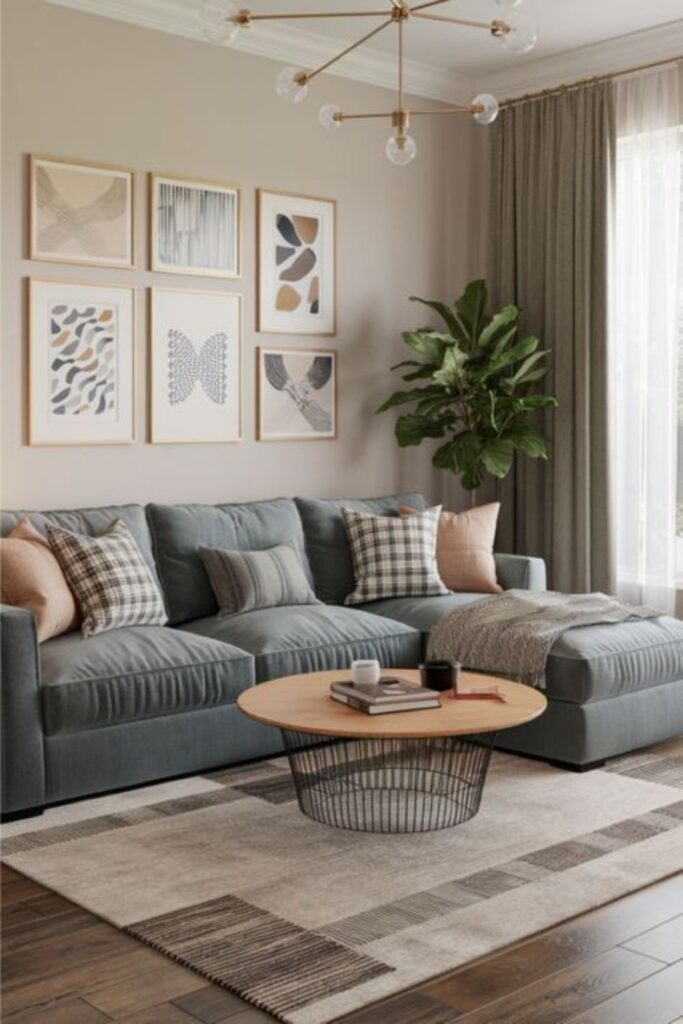
Furniture that sits flush to the floor sofas with skirts, low platform pieces can make a small room feel heavier than it is. Pieces with visible tapered or peg legs let light and floor show through underneath, which reads as more breathing room even when the furniture itself isn’t smaller.
This is a small detail that adds up across a whole room. If you’re furnishing from scratch or swapping pieces gradually, prioritizing leggy furniture for at least the sofa and one chair makes a noticeable difference. Especially useful in rooms with lower ceilings, where visual weight at floor level makes the whole room feel more compressed.
Read More About: 26+Bedroom Furniture Layout Ideas That Actually Make Your Space Work
Use Vertical Storage Instead of Wide Furniture
A wide TV console or bookshelf eats up floor space fast in a small room. Going vertical, a tall, narrow shelving unit or a wall-mounted media console gives the same storage capacity with a much smaller footprint, and draws the eye upward.
This is especially useful for studio apartments or compact spaces where every inch of floor matters. A wall-mounted console under the TV, paired with floating shelves above, keeps the floor clear for movement while still giving you storage for books, baskets, and media equipment. Solves the “too much stuff, not enough floor space” problem without requiring a declutter overhaul.
Define Zones With a Sofa Back Instead of a Wall
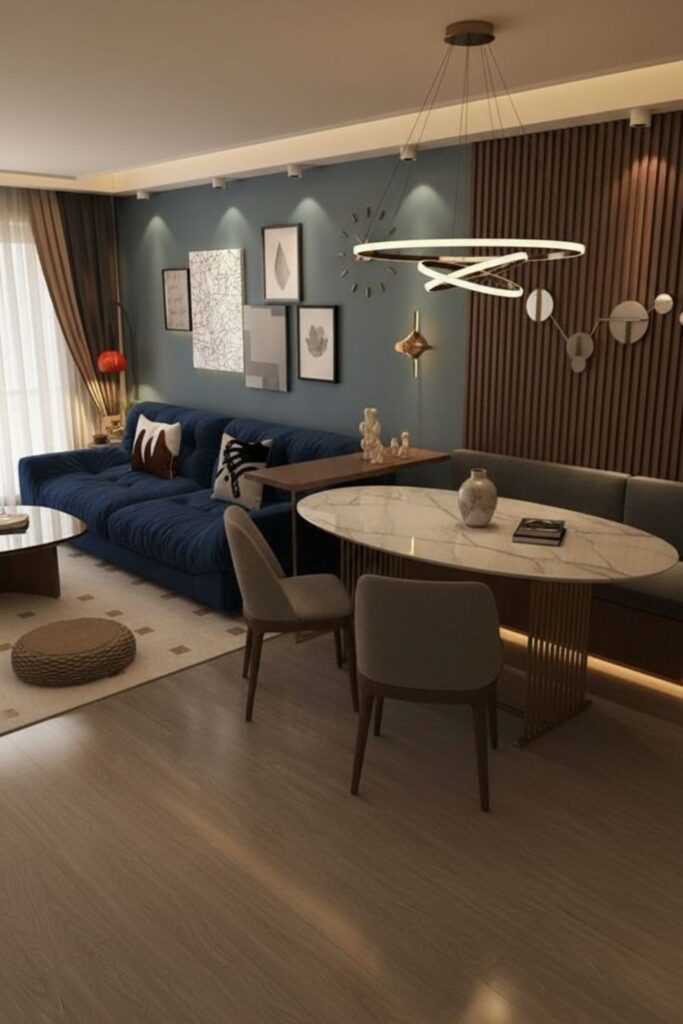
In open-concept layouts, the back of a sofa can act as a soft divider between the living area and a dining nook or entry. Placing the sofa perpendicular to the main walking path back facing the secondary zone creates a sense of “two rooms” without losing the open feel.
This layout is especially useful in apartments where a wall was removed or never existed between living and dining areas. It also means you’re not blocking light or sightlines the way a bookshelf-as-divider would. Solves the problem of an open layout feeling like one big undefined space with no clear “living room.”
Add a Console Table Behind the Sofa for Extra Surface Space
If the sofa is floated (see idea #1), the space behind it shouldn’t go to waste. A slim console 12-14 inches deep gives you a spot for a lamp, a tray for keys and remotes, or a small plant, without crowding the walking path.
This is one of those setups that solves a problem you don’t notice until it’s fixed: the “where do I even put my coffee” issue when you’re not sitting on the sofa. It works in almost any room size, but it’s most valuable when the sofa is the main divider in an open layout, since the console adds function to what would otherwise be dead space.
Swap Heavy Curtains for Light, Sheer Panels
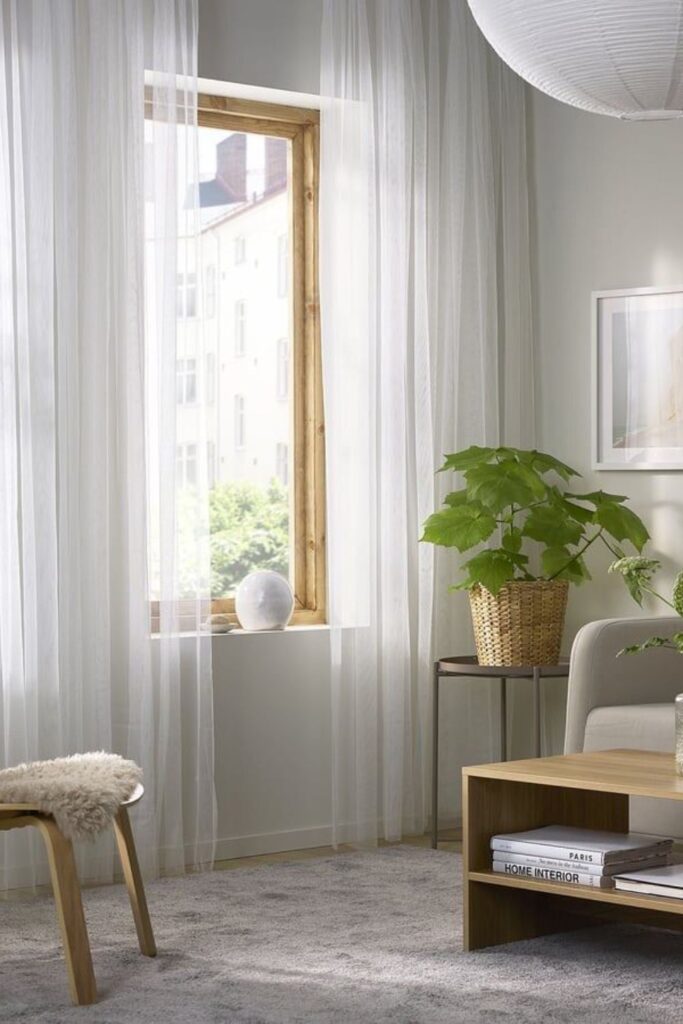
Thick blackout curtains in a small living room can visually shrink the walls and block natural light even when they’re open, because of how much fabric bunches at the sides. Switching to lightweight linen or sheer panels hung close to the ceiling rather than at window-frame height lets more light in and makes the ceiling feel higher.
If your style leans minimal, cozy, or neutral, this is a low-effort swap that changes the whole feel of the room in an afternoon. Hanging curtains a few inches above the window frame and slightly wider than the window itself (extending the rod) also makes the window itself look larger. This is one I’d actually recommend trying first because it’s reversible, renter-friendly, and cheap.
Use a Bookshelf as a Room Divider (Not Against the Wall)
For multi-use rooms, living room plus home office, or living room plus guest sleeping area, a tall open bookshelf placed perpendicular to a wall can split the space into two functional zones while still letting light pass through the open shelving.
This works best in larger rooms where a full wall would feel too heavy-handed, but you still need a visual break. Keeping the shelves open-backed (not solid) is key; it maintains light flow and prevents the room from feeling chopped up. Solves the “I need a home office corner but don’t want it staring at me during movie nights” problem.
Read More About: best Small Living Room Ideas: 25 Smart Ways to Maximize Space and Style
Choose a Low Profile Sectional for Open Layouts
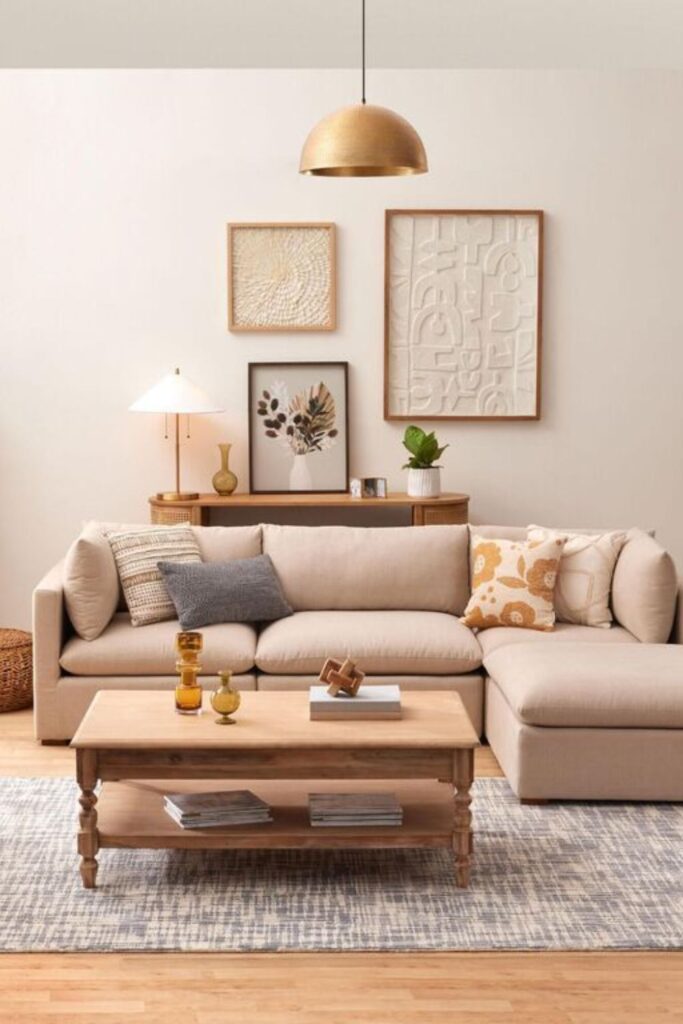
A bulky, high-backed sectional can dominate an open-plan living room and block sightlines to the kitchen or entry. A low-profile sectional with a back height under 30 inches provides the same seating capacity while keeping the room feeling connected to adjacent spaces.
This setup is especially useful for anyone trying to make their space feel more open and organized in a layout where the living room flows into a kitchen or dining area. Lower-profile pieces also tend to look less “blocky” against larger windows, since they don’t compete with the view. Best for larger or open-concept rooms rather than small enclosed ones, where a low sectional might actually feel too sprawling.
Add a Plant in the Tallest Empty Corner
An empty corner near the ceiling common in rooms with high ceilings or awkward layouts often goes unnoticed until you add something tall there. A floor plant (real or a high-quality faux one) that reaches 5-6 feet draws the eye upward and fills a gap that furniture can’t really address.
This is a small, low-cost addition, but it solves the “this corner feels weirdly empty” issue that’s hard to put into words until it’s fixed. In my experience, this style tends to work best in corners that get at least some natural light, even if it’s a faux plant. Direct shadows from a window make it look more intentional. Good for any room size, but especially impactful in rooms with higher ceilings where corners can otherwise feel cavernous.
Use a Statement Chair Instead of a Matching Set
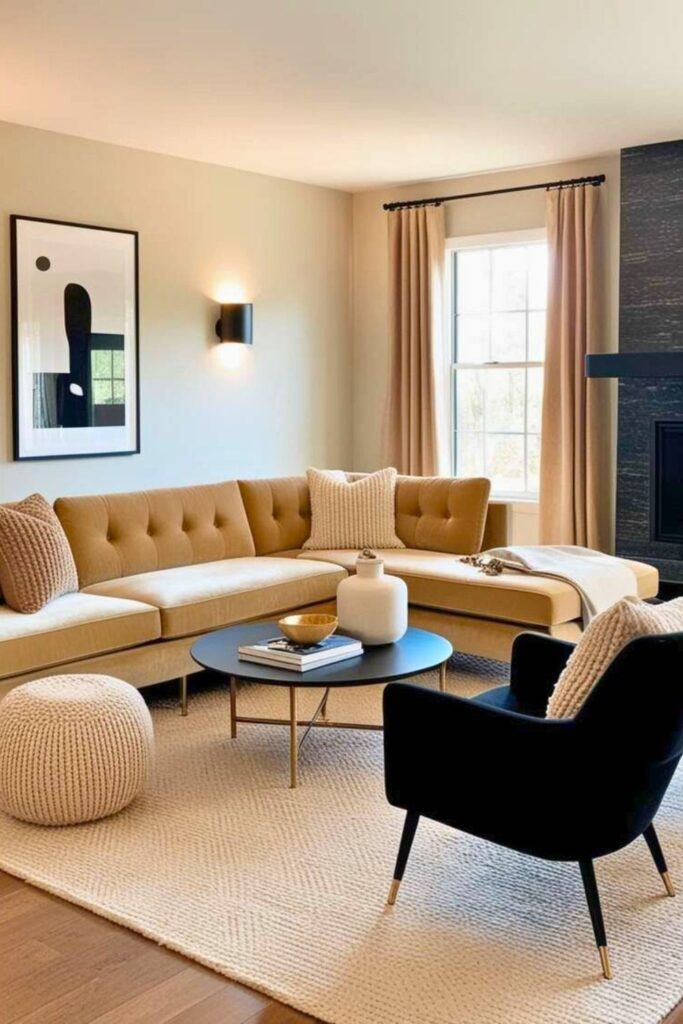
A matched sofa-and-loveseat set can feel like a furniture showroom rather than a lived-in room. Swapping the second seat for a single statement chair in a contrasting material like boucle, leather, or a patterned fabric adds personality without adding bulk.
This is especially useful for anyone furnishing gradually or on a budget, since you can find a single great chair secondhand more easily than a matching set. It also breaks up the room visually, which helps smaller spaces feel less like one large block of furniture. Go for this if your space needs a focal point beyond the TV or the art on the wall.
Create a Window Seat With Built-In or Modular Storage
If your living room has a window with wall space beneath it, a low bench or modular storage unit topped with cushions turns that area into seating plus storage. This is especially valuable in rooms where closet space is limited.
This setup is especially useful for small living rooms or studios where every surface needs to multitask. Storage cubes with cushion tops can hold blankets, books, or seasonal items while doubling as extra seating for guests. Solves both the “not enough seating” and “not enough storage” problems with one piece.
Use a Daybed Instead of a Sofa in Multi-Use Rooms
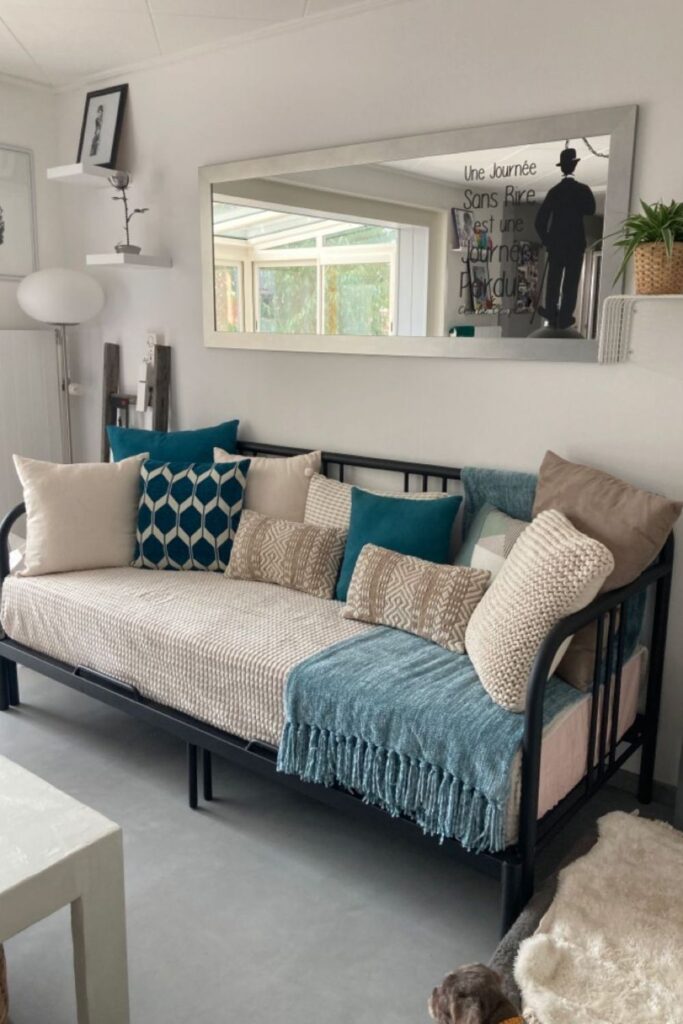
For rooms that need to function as a living room during the day and a guest space at night, a daybed with a trundle or a deep, flat-cushioned design offers the comfort of a sofa with the flexibility of an extra bed.
If your space needs to function for both work and relaxation or living and guest sleeping this is a setup worth considering early in the planning process, since it shapes the whole room layout. Daybeds also tend to have a slimmer profile against a wall than a sofa, since they’re designed to sit flush. This is especially useful in studio apartments or homes without a dedicated guest room.
Pull Furniture Into Conversation Clusters, Not a Straight Line
Lining all the seating up to face a TV on one wall is the default, but it can make a room feel like a waiting room. Angling a chair slightly toward the sofa, or pulling the coffee table into the center of a loose cluster, creates a layout that feels designed for conversation, not just screen-watching.
This is especially useful in larger living rooms where furniture can otherwise feel scattered along the walls with a big empty middle. It doesn’t mean abandoning the TV setup just acknowledging that people actually face each other when they talk. Solves the “this room feels good for watching TV but weird for hosting people” issue.
Add Texture Through Throw Pillows and Layered Textiles Not More Furniture
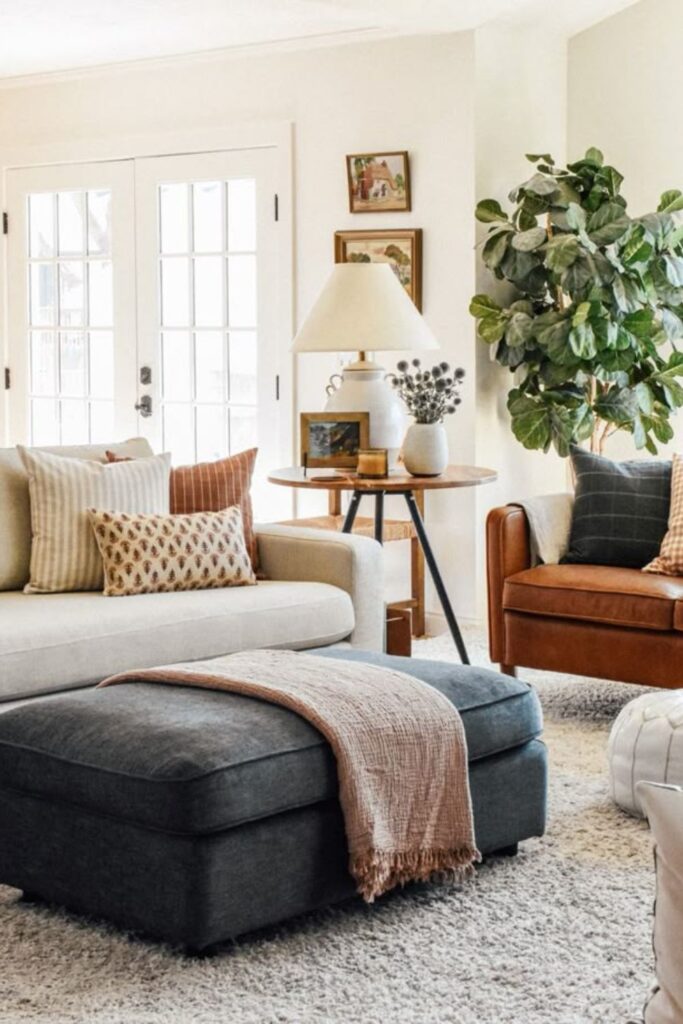
When a room feels “unfinished,” the instinct is often to add more furniture. But a lot of the time, what’s missing is texture: a chunky knit throw, pillows in mixed materials (linen, boucle, velvet), or a textured pouf near the sofa.
This is one of the easiest, lowest-commitment changes on this list, and it’s one I’d recommend trying before buying anything bigger. Texture adds visual warmth without taking up floor space, which matters in smaller rooms where every new piece of furniture has a footprint cost. Especially useful for renters who can’t change walls or flooring but want the room to feel cozier.
Use a Trunk or Storage Ottoman as a Coffee Table
A vintage trunk or upholstered storage ottoman can replace a traditional coffee table while adding hidden storage for blankets, remotes, or magazines. The slightly raised, softer profile also makes it safer in homes with kids or pets compared to a hard-edged table.
This works particularly well in living rooms that double as a play space or a casual hangout spot, where surfaces get used hard. It’s also a good option for renters, since trunks and ottomans are easy to move between apartments without worrying about scratching floors the way a heavy wood table might. Solves clutter and storage issues in one piece of furniture.
Paint or Wallpaper Just One Wall to Add Depth Without Shrinking the Room
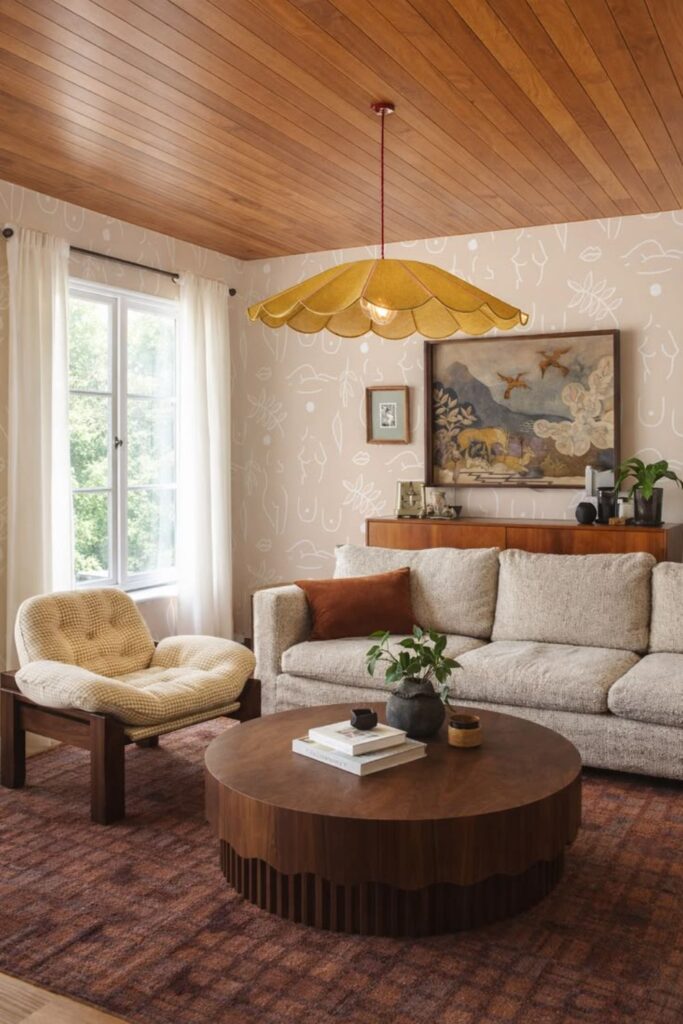
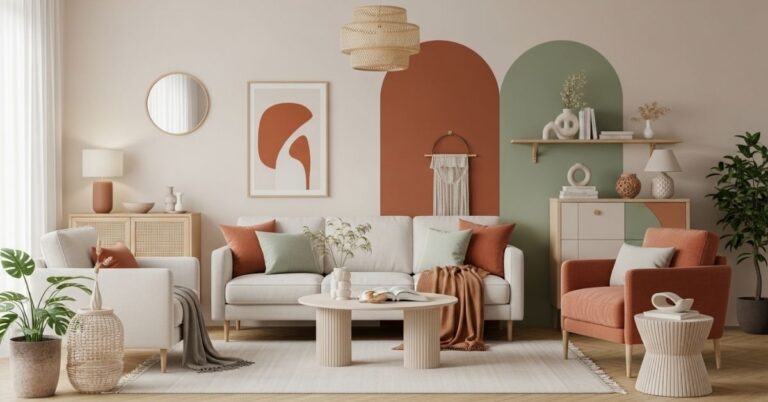
A single accent wall in a deep neutral, soft green, or terracotta tone, which are trending into 2026 can add depth and warmth to a living room without the visual weight of color on all four walls. The key is choosing the wall that’s the natural focal point, usually behind the sofa or around a fireplace.
This works because it gives the eye a place to land without making the room feel boxed in, which can happen when color is used on multiple walls in a small space. If your style leans minimal, cozy, or neutral, even a subtle tonal shift like a warm greige against white trim can add this depth without feeling like a big design commitment. For renters, removable wallpaper panels achieve a similar effect without paint.
Keep the Color Palette Tight, But Vary the Materials
A room painted and furnished in three or fewer core colors can still feel rich and layered if the materials vary, think a linen sofa, a wood coffee table, a woven jute rug, and a metal floor lamp, all in neutral tones but different textures.
This is a subtle but important distinction: color restraint doesn’t mean visual flatness. I’ve noticed this style tends to work especially well in small spaces, where too many colors can make a room feel busy and even smaller. It also makes it easier to add or swap pieces over time without worrying about clashing, since everything sits within the same tonal family.
Position the TV Away From the Main Light Source
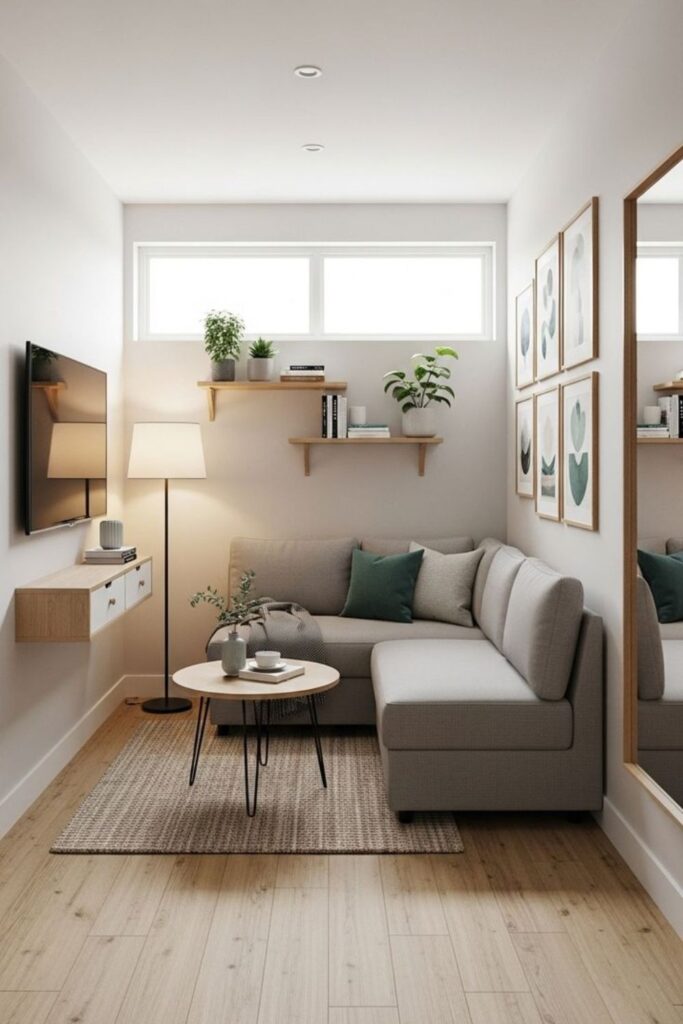
A TV directly across from a large window often means glare during the day, which leads people to keep curtains closed and lose natural light altogether. Positioning the TV on a wall perpendicular to the main window rather than facing or backing it solves the glare problem and lets you keep curtains open.
This is a layout fix that’s easy to overlook because the TV often gets placed based on where an outlet happens to be, not where it makes the most sense. For anyone trying to make their space feel more open and organized, keeping curtains open during the day makes a bigger difference than people expect. Especially useful in living rooms with one dominant window wall.
Use Nesting Tables Instead of One Fixed Coffee Table
Nesting tables two or three tables of varying sizes that tuck under each other offer the flexibility of extra surface space when needed (movie nights, hosting) without the permanent footprint of a large coffee table.
This setup is especially useful in smaller living rooms or for anyone who hosts occasionally but doesn’t want a bulky table taking up space day-to-day. It’s also a flexible option for renters moving between apartments of different sizes, since the tables can be used together or separated depending on the room. Solves the “coffee table is either too big or too small depending on the day” problem.
Add a Rug Layering Trick for Visual Warmth in Small Rooms
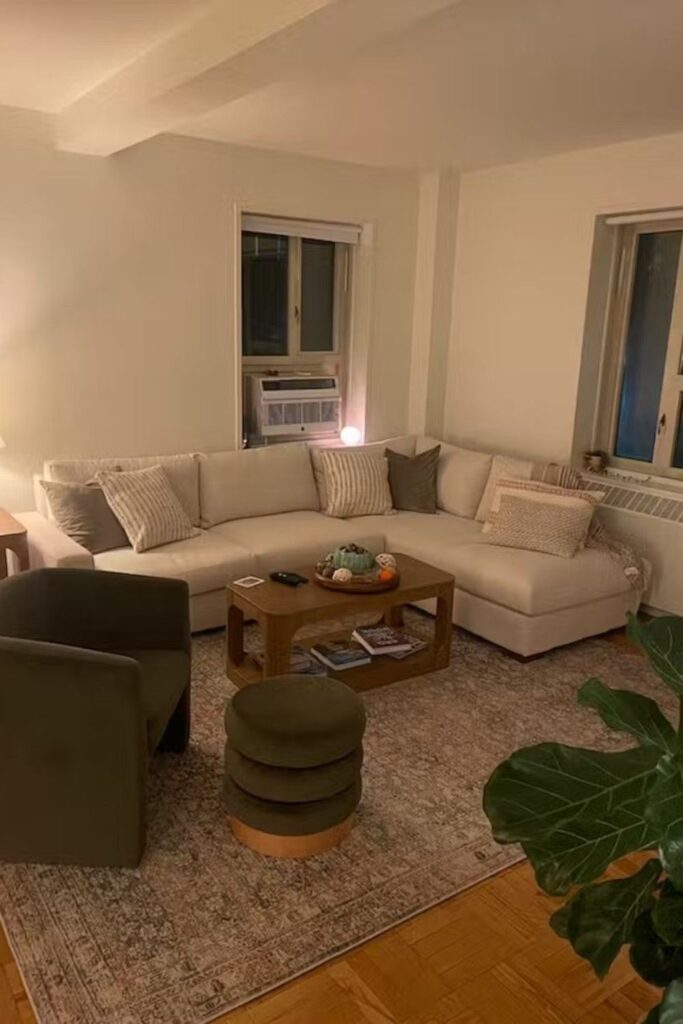
Layering a smaller patterned or textured rug on top of a larger neutral one adds visual interest and warmth without overwhelming a small space the way one large patterned rug might. The base rug defines the zone; the layered rug adds personality.
This is one I’d actually recommend trying first if you’re not ready to commit to a bold rug across the whole floor; it’s a lower-risk way to experiment with pattern or texture. It also adds a sense of coziness underfoot, which matters in rooms with hard flooring. Especially useful for renters who may already own a neutral rug and want to refresh the look without buying a whole new one.
What Actually Makes These Ideas Work
A lot of living room advice focuses on individual pieces “get this chair” or “try this color” without addressing how those pieces interact with the room’s actual shape and traffic flow. The ideas above work because they’re rooted in three things: walking space, light direction, and zone definition.
Walking space is the most overlooked factor. A room can have great furniture and still feel cramped if there’s no clear path between the entry, the seating, and any secondary areas. Before adding anything new, it’s worth physically walking through your living room’s main paths and noting where you have to turn sideways or step around something; those pinch points are usually the first thing to fix, often by repositioning rather than removing furniture.
Light direction matters almost as much. A layout that looks great in a showroom photo can fall flat if it doesn’t account for where your windows are and how light moves through the room across the day. This is especially useful for anyone trying to make their space feel more open and organized, since light-aware layouts often need fewer “fixes” later you’re working with the room instead of against it.
Living Room Layout Guide by Room Size and Goal
| Room Size | Best Layout Approach | Key Focus | Common Problem Solved |
| Studio / Small (under 150 sq ft) | Floated sofa + vertical storage | Maximizing floor space | Clutter, lack of storage |
| Narrow / Galley-Style | Conversation cluster + mirror placement | Visual width and light | Room feels like a hallway |
| Open-Concept Medium | Sofa-back zoning + low-profile furniture | Defining areas without walls | Undefined “living room” |
| Multi-Use (Office + Living) | Bookshelf divider + daybed | Functional separation | Lack of privacy/focus |
| Large / High-Ceiling | Statement chair + tall plants | Filling vertical space | Empty corners, scale issues |
Common Living Room Mistakes That Make Your Space Feel Smaller or More Cluttered
The most common mistake is pushing every piece of furniture against the wall, which feels like it “saves space” but actually creates one large, undefined gap in the middle of the room with nothing to anchor it. This setup is especially useful for moving day, but it rarely works long-term, floating at least the sofa, even slightly, almost always improves flow.
Another frequent issue is choosing rugs that are too small for the seating area, which visually shrinks the room by leaving furniture legs off the rug entirely. The fix isn’t complicated, but it does often mean sizing up more than feels intuitive as a rule of thumb, at least the front legs of major furniture pieces should rest on the rug.
Lighting mistakes are just as common. Relying on a single overhead fixture creates flat lighting that makes a room feel functional but not relaxed, while curtains hung at window-frame height (rather than near the ceiling) can make windows and the whole room feel smaller than they are. Both are fixable without major renovations, which makes them some of the highest-impact, lowest-cost changes available.
Finally, matching furniture sets can make a room feel like a showroom display rather than a home. Mixing in at least one piece with a different material, shape, or finish a statement chair, a vintage trunk, a textured rug breaks up the uniformity and makes the space feel collected rather than purchased all at once.
FAQ’s
What is the best layout for a small living room?
A floated sofa (pulled slightly off the wall), a round coffee table, and vertical storage instead of wide furniture tend to work best in small living rooms. This combination keeps walking paths clear while still providing storage and surface space.
How can I make my living room feel bigger without buying new furniture?
Focus on light and rugs first: hang curtains closer to the ceiling, add a mirror across from your main window, and make sure your rug is large enough for furniture legs to rest on it. These changes affect how the room feels without changing what’s in it.
Is it better to have a sectional or separate sofa and chairs in a small living room?
It depends on the room’s shape. A low-profile sectional works well in open-concept layouts where it won’t block sightlines, while separate sofa-and-chair setups offer more flexibility in narrow or irregularly shaped rooms.
What are common living room mistakes that make a space feel cluttered?
The most common mistakes are undersized rugs, furniture pushed flush against every wall, and relying on a single overhead light. All three are fixable without major changes sizing up the rug and adding a floor or table lamp are good starting points.
How do I arrange a living room that also needs to work as a home office?
An open-back bookshelf or a daybed can divide the space functionally without closing it off visually. Position the desk or work area away from the main light source used for relaxing in the evening, so the two “modes” of the room don’t compete for the same lighting.
What living room trends are rising in 2026?
Warm, tonal accent walls in colors like terracotta and deep green are gaining popularity, along with low-profile furniture and layered, textured rugs. The overall shift is toward rooms that feel warm and lived-in rather than sparse or overly matched.
Should I choose furniture with legs or low-to-the-ground pieces for a small room?
Furniture with visible legs generally works better in small rooms, since it lets light and floor space show underneath, creating a sense of openness. Low-to-the-ground pieces can work in larger rooms but tend to make smaller spaces feel more compressed.
Conclusion
The biggest difference between a living room that “looks fine” and one that actually feels good to spend time in usually comes down to layout and light, not how much furniture is in it. Floating the sofa, sizing up a rug, or rethinking where the TV sits can shift how a room functions far more than adding new decor ever will. The key is finding what works for your space, since not every idea here will fit every room, but small adjustments can go a long way.
Start with one or two ideas that match your biggest pain point whether that’s a cramped walking path, a dark corner, or a room that needs to do double duty. Try repositioning before buying anything new, and build from there as you get a feel for how the changes affect the room day to day.