
72+ Black and White Bedroom Ideas That Actually Work in Real Homes
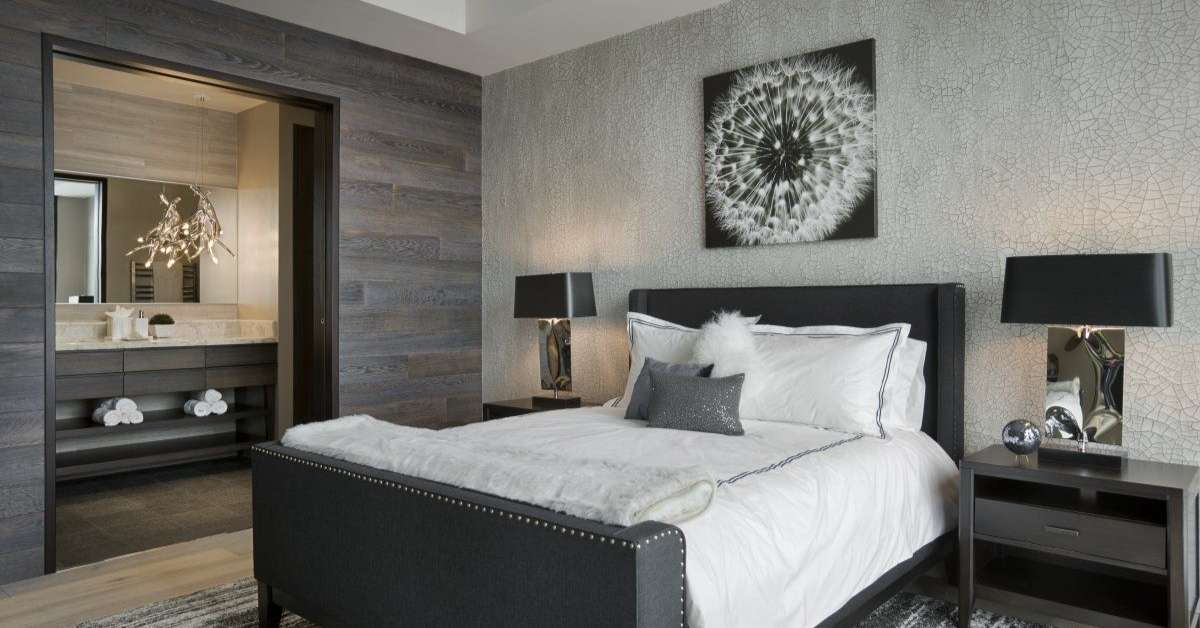
Black and white bedrooms have been having a moment for a while now and it’s not slowing down in 2026. But what you see on Pinterest and what actually works in a real bedroom with awkward proportions, low ceilings, or rental-beige walls are often two very different things.
The good news? A black and white palette is one of the most forgiving color combinations you can work with. It’s high contrast without being loud, visually structured without feeling cold, Black and White Bedroom Ideas and it layers beautifully with wood, linen, and warm metallics. If anything, it’s a framework not a restriction.
If your bedroom feels flat, unfinished, or like it’s missing a visual anchor, chances are a well-placed contrast moment would fix most of it. These 27 black and white bedroom ideas are built around real rooms, small apartments, rentals, low-budget setups not staged showrooms.
A White Linen Bed Against a Black Accent Wall
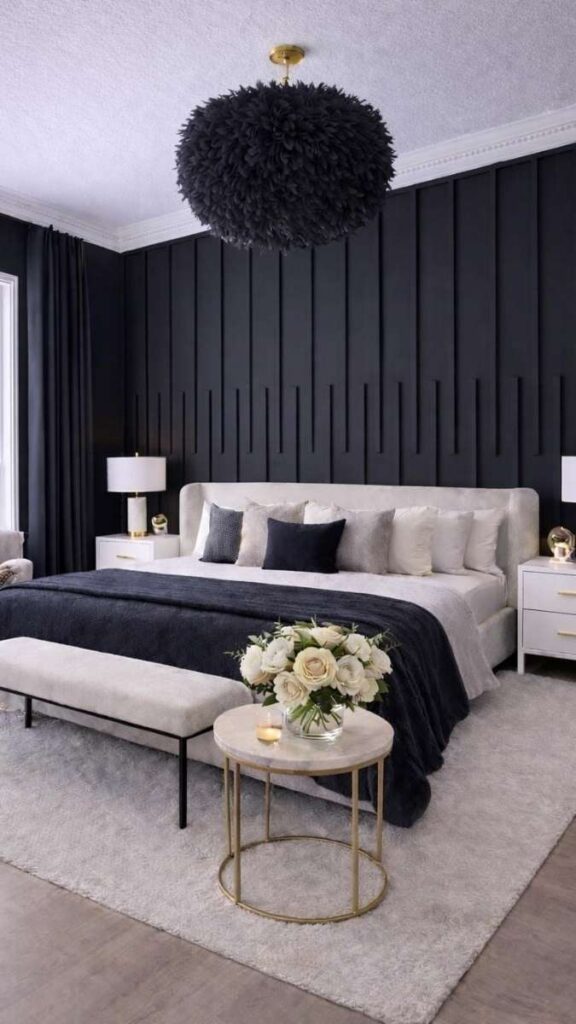
The simplest version of this setup is more powerful than it looks. Push the bed flush against a matte black wall, dress it in white or off-white linen, and the headboard area becomes the room’s automatic focal point. The contrast draws the eye straight to the bed which in a bedroom is exactly where you want attention to go.
Dark walls absorb light, so this works best in rooms with at least one window on an adjacent wall to compensate. For renters, a large black-painted canvas or a floor-to-ceiling fabric panel achieves the same result without touching the walls.
Black Bedframe with White Walls and Warm Wood Flooring
This is one I’d actually recommend trying first if you’re new to the palette it’s low-risk and highly livable. A black bedframe (especially a thin metal or simple wood one) reads as architectural detail rather than heavy color.
Against white walls and warm flooring, it creates a grounded, purposeful look without making the room feel darker. The wood floor softens the contrast and keeps the space from tipping into clinical territory. Works equally well in small rooms and larger layouts.
Graphic Black and White Bedding as the Room’s Statement
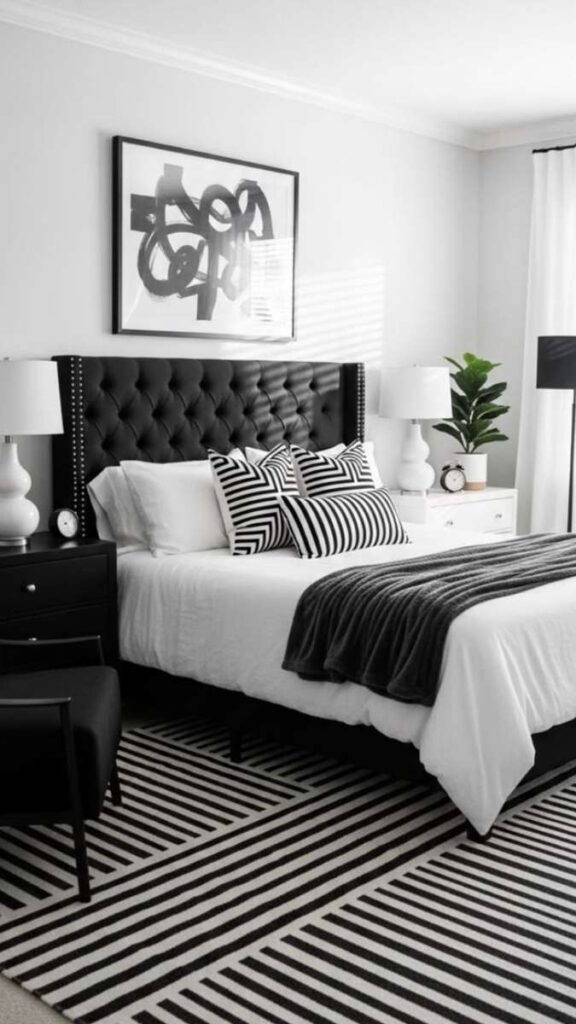
When you’re not ready to paint or invest in new furniture, bedding does the heavy lifting. A graphic black and white duvet with wide stripes, oversized checks, or an abstract print becomes the visual center of the whole room.
Keep everything else quiet: white or oat walls, simple nightstands, neutral rug. The bedding carries enough contrast that anything competing with it just creates noise. This approach works especially well in rentals or rooms you’re not sure how long you’ll be in.
Black Floating Shelves on White Walls
Floating shelves aren’t just storage in a black and white bedroom, they’re the fastest way to add structure and personality to an empty wall. Black shelves on white walls create a clean grid-like effect that feels intentional rather than decorative.
Stagger the heights slightly rather than running them in a straight horizontal line it gives the arrangement more movement. Keep objects sparse: a few books, a small plant, maybe a ceramic or two. Overfilling them defeats the graphic effect you’re going for.
White Sheer Curtains Against Dark Walls
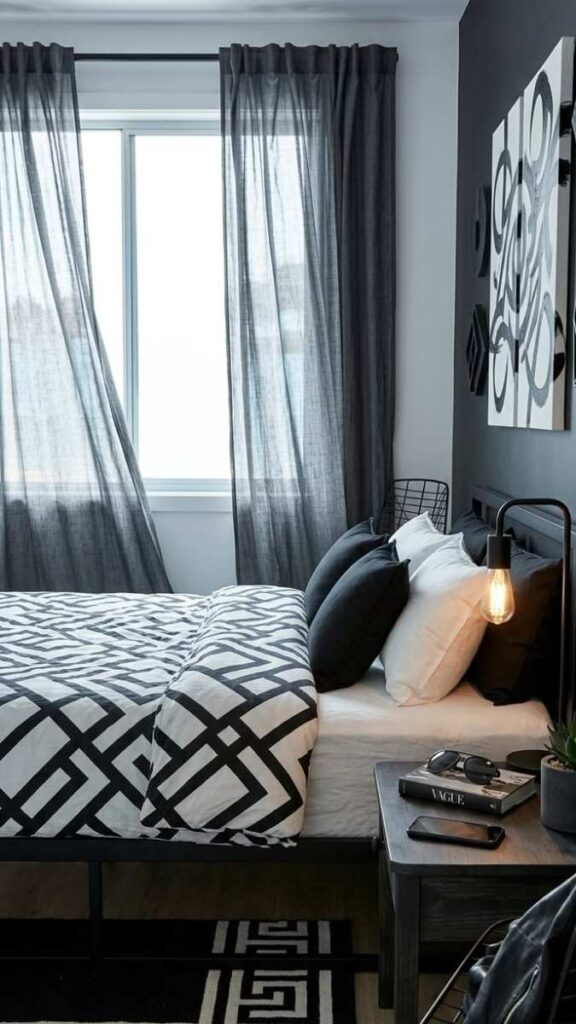
Here’s something counterintuitive that actually works: pairing white sheer curtains with dark walls amplifies the light effect rather than fighting it. The sheers diffuse sunlight into a soft, even glow that bounces off the white fabric and creates depth against the dark background.
The height of floor-to-ceiling curtains also makes the room feel taller, which matters in standard 8-foot-ceiling bedrooms. This setup is particularly useful if you have a window that gets direct afternoon sun. The sheers cut the glare while keeping the brightness.
Read More About: 42+ Cool Living Room Ideas That Actually Work in Real Homes
Black Nightstands Flanking a White or Neutral Bed
Symmetry has a calming effect in bedrooms, and black nightstands are one of the most practical ways to introduce it. The contrast between dark nightstands and light bedding creates a clean horizontal line that anchors the whole bed setup.
Practically speaking, matte black surfaces also hide fingerprints and minor scuffs better than light wood or white pieces which matter in a high-contact piece of furniture you use every day. Go for nightstands with at least one drawer to avoid surface clutter.
A Black and White Gallery Wall Above the Bed
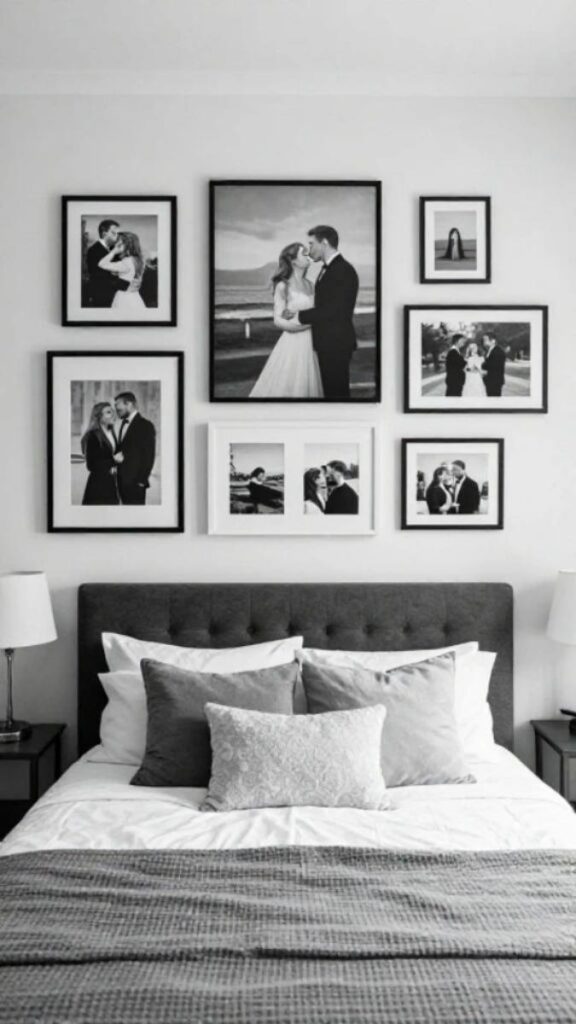
Gallery walls above the bed have replaced the oversized single-canvas trend, and in a black and white bedroom they’re especially effective because the frames and the art palette work together. Use black frames throughout for cohesion mixing frame colors in this palette reads as unfinished rather than eclectic.
The art itself can range from abstract line drawings to typography to photography, but keeping everything in monochrome prevents the wall from pulling attention away from the room’s overall calm. Aim for odd numbers: three, five, or seven pieces.
Black Hardware and Fixtures as Quiet Contrast
This is a detail-level approach that’s underestimated. Black hardware door handles, curtain rods, light switch covers, lamp bases introduce contrast without committing to black furniture or walls. The room stays mostly white and light,
but the hardware acts as punctuation throughout the space. It’s also surprisingly easy to execute in a rental: most door hardware and switch plates can be swapped and swapped back, and black curtain rods are widely available. In my experience, this subtle repetition of the same dark tone across multiple points in a room is what gives a space a “finished” quality.
Black Framed Architectural Mirrors
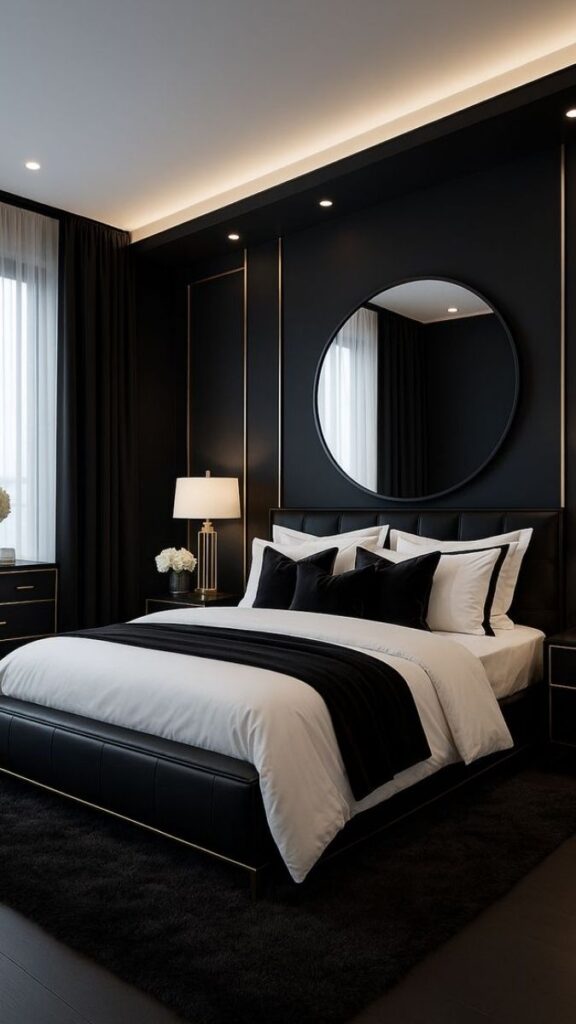
A large black-framed mirror does two things at once: it introduces the dark anchor the palette needs and it bounces light around a room that might otherwise feel heavy. Leaning it against the wall rather than mounting it keeps it casual and flexible, useful in rentals or spaces you’re still figuring out.
An arched mirror in particular adds a soft architectural quality that a rectangular one doesn’t, which matters if the room is mostly straight lines and right angles. Position it across from a window for maximum light return.
Monochrome Textural Layering on the Bed
Working entirely within the black and white palette doesn’t mean the bed has to look flat. The key is texture: layer a waffle-weave duvet with a chunky knit throw, add a linen pillowcase next to a cotton one, and mix a flat sheet with a textured blanket.
The contrast between materials creates visual interest even when the color range is narrow. This is one of the more tactile approaches in this list; the bed ends up looking rich without any color at all. Stick mostly to white and grey with one true black element (a pillow, a throw) to keep it from going too monotone.
Read More About: 29+ Entryway Decor Ideas That Make Your Home Feel Intentional the Moment You Walk In
Black Pendant Lights Over Matching Nightstands

Pendant lights instead of table lamps do more than save nightstand space; they draw the eye upward and make the ceiling feel higher. Two matching black pendants flanking the bed create the same symmetry as bedside lamps but with a more architectural quality.
The cords become part of the visual, especially against white walls, so measure the drop carefully before committing. Warm-toned bulbs (2700K or lower) take the edge off the black and prevent the setup from looking too industrial.
Black and White Wallpaper on a Single Feature Wall
A wallpapered feature wall is one of the highest-impact single changes you can make to a bedroom. In a black and white palette, geometric patterns (grid, diamond, chevron) read as graphic and structured; botanical or hand-drawn prints read as softer and more organic. The pattern choice changes the room’s entire mood,
so it’s worth being deliberate. Keep the three remaining walls white and the bedding plain to avoid visual competition. Peel-and-stick options have improved significantly and are now a real option for renters; a good one won’t damage walls if removed correctly.
A Dark Rug Anchoring a White Bedroom

White-on-white bedrooms run the risk of feeling cold or ungrounded, especially on hard floors. A dark area rug charcoal, black, or deep grey with a subtle pattern solves that immediately.
The rug anchors the bed visually and creates a defined “zone” within the room that makes the space feel more organized even if nothing else changes. Size matters here: the rug should extend at least 18 inches on the sides and foot of the bed. Too small and it reads as an afterthought.
White Walls with Black Trim Details
Painting trim, baseboards, or window frames black while keeping walls white creates an architectural effect that most people associate with expensive renovation but it’s just paint. The black outlines every architectural element in the room, making even basic builder-grade windows look considered.
It also photographs beautifully if that matters to you. This works best in rooms with at least some natural light; in very dark rooms, black trim can feel heavy. Matte or eggshell finishes are more forgiving than gloss for this application.
Black and White Plaid or Check Throw Blanket as an Accent
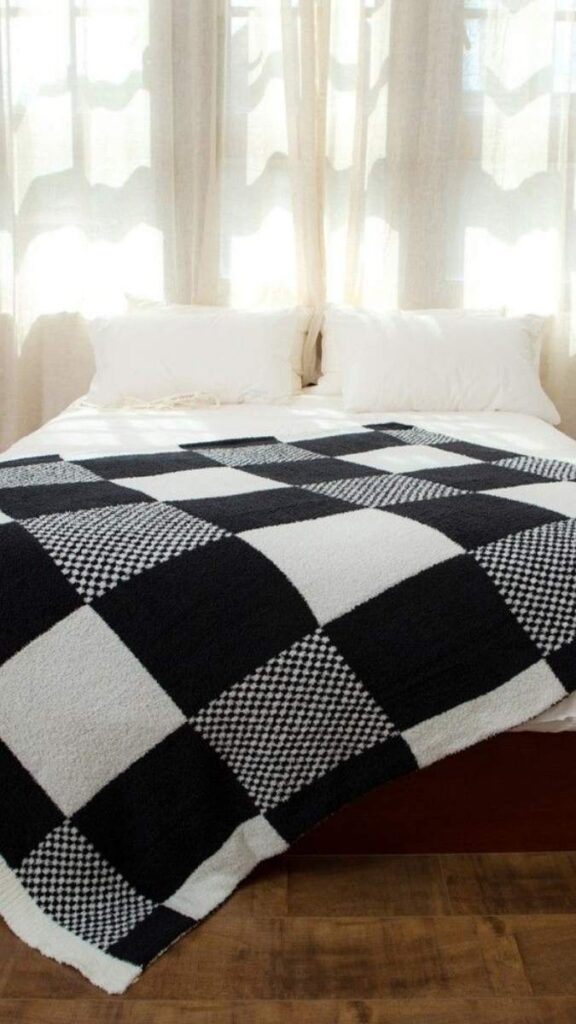
Not every black and white detail needs to be structural. A graphic throw blanket, classic plaid, buffalo check, or houndstooth folded at the foot of the bed or draped over a chair is one of the lowest-commitment ways to add personality to the palette.
It also does double duty as functional bedding. The key is contrast against what it sits on: a black and white plaid reads strongly against white bedding but disappears against a similarly-toned duvet. Use it as punctuation, not background.
Minimalist Black Typography Prints
Line art or typography prints in black frames are the most accessible entry point into gallery walls; they’re inexpensive, easy to find, and endlessly replaceable. A single word, a simple illustration, an abstract form in black ink on white paper reads as design-forward when the frame is right.
Group three identically-framed prints in a tight horizontal row rather than spreading them across a large wall the compact arrangement has more visual weight than the same pieces scattered. Print-on-demand services make this very affordable.
Black Built In or Freestanding Wardrobe Against a White Wall

In a bedroom where storage is a primary concern, a black wardrobe doesn’t just solve a functional problem it becomes the room’s main piece of furniture in a way that a white or wood one wouldn’t. Against a white wall,
a black wardrobe reads as almost built-in even when it’s freestanding, which makes smaller rooms feel more purposeful and less provisional. The trick is to keep the surrounding space simple: the wardrobe is already making a statement, so everything else should be quiet.
White Bedding with Black Piping or Edging
This is as refined as the palette gets. White bedding with black piping or edge stitching looks hotel-quality and requires almost no other design decisions; the detail carries the whole look. It works in any size room, with any style of furniture,
and it’s one of those details that guests notice without being able to identify exactly what makes the bed look so put together. Honestly, if you’re undecided about how far to commit to the black and white palette, start here and see how it feels.
Read More About: 49+ Best Christmas Bedroom Decor Ideas That Make Your Room Feel Like a Winter Fairytale
Black Ceiling in a White Bedroom
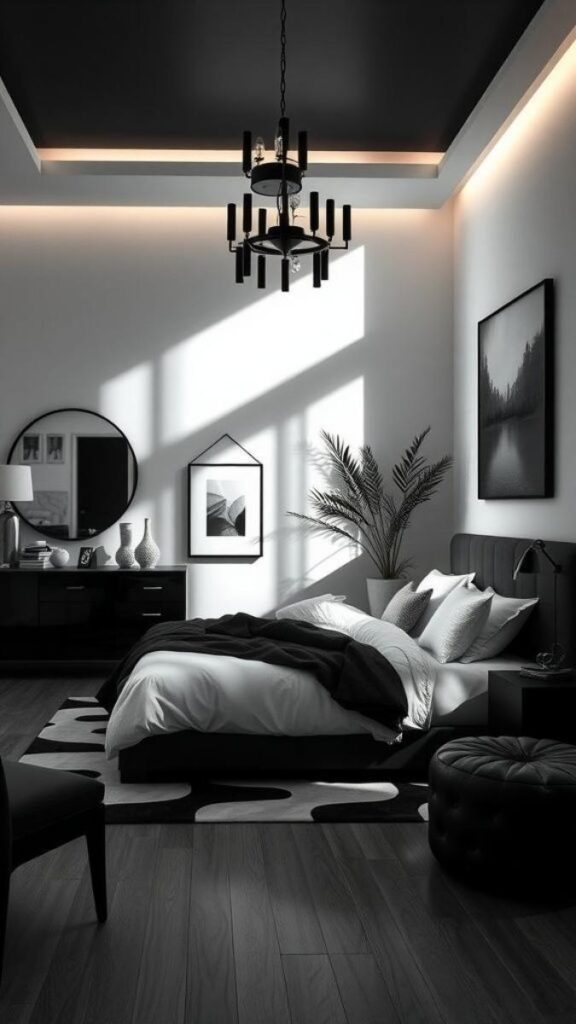
Painting the ceiling black sounds extreme and looks extraordinary. Rather than making the room feel smaller, a dark ceiling actually lowers your visual perception of the room’s height in a way that reads as cozy rather than claustrophobic, especially with warm lighting.
It’s one of the more dramatic moves in this list and best suited for rooms where you want an intimate, enveloping quality. Pair it with wall sconces or warm pendant lights rather than overhead lighting, which would otherwise draw attention directly upward.
Black and White Striped Accent Wall
Stripes are doing more visual work than they get credit for. Vertical stripes draw the eye upward and make ceilings feel taller, useful in any standard-height bedroom. Horizontal stripes make a narrow wall feel wider.
Painter’s tape makes this achievable as a DIY project, and the contrast between black and white means you don’t need the stripes to be perfect; a bit of hand-painted texture adds character. Keep the stripe pattern to one wall; running it across all four walls tips from graphic into overwhelming.
Cozy Black Reading Nook in a Corner
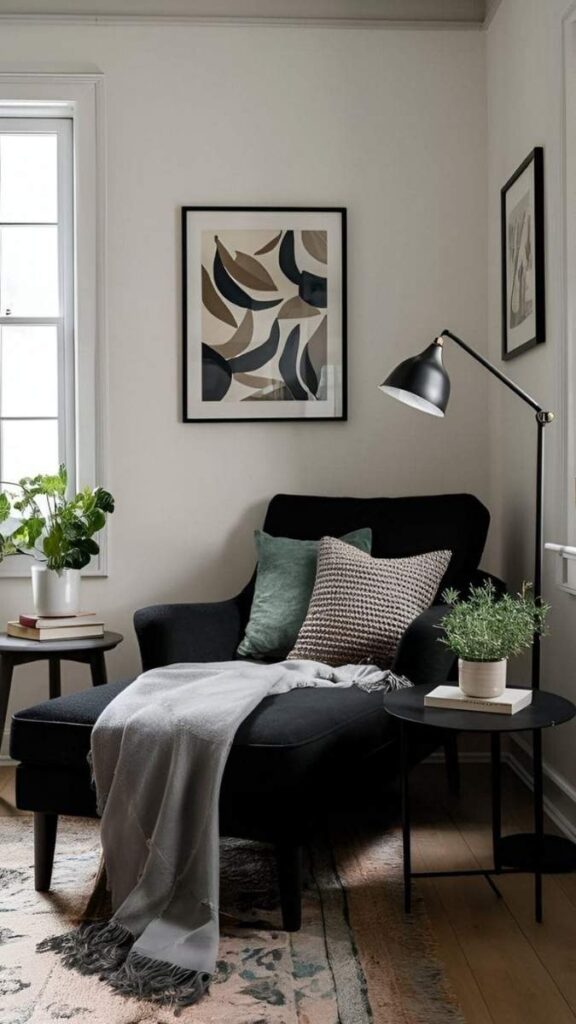
If the bedroom is large enough for a sitting area, even a small one a black chair or bench in a white-walled corner creates a visual destination separate from the bed. The contrast makes the corner feel intentional rather than unused
A floor lamp with a warm bulb completes the setup and makes the area genuinely usable. This is especially useful in rooms that double as a home office or reading space, where the visual separation between “sleep zone” and “activity zone” has both practical and psychological value.
Monochrome Artwork in an Oversized Black Frame
A single large-format piece of art in an oversized black frame commands more visual authority than a collection of small pieces. This is a particularly strong approach in bedrooms with high ceilings or large empty walls that feel difficult to address. The frame itself not just the art inside it contributes to the visual weight,
so sizing up is almost always the right move. Black and white photography tends to work especially well here because it maintains the palette while adding depth and narrative.
White Platform Bed with Black Legs

Platform beds have a low, horizontal quality that makes rooms feel more spacious by keeping furniture close to the ground. A white bed with black legs (a common mid-century modern configuration) splits the difference between light and dark without committing to either;
The result is a bed that anchors the room but doesn’t dominate it. The gap between the frame and the floor also makes small rooms feel less crowded than a bed that sits directly on the floor.
Black Wall Sconces Flanking the Headboard
Wall sconces solve a specific bedroom problem: you want light at reading height without taking up nightstand space or creating a lamp shade that competes visually with the rest of the room. Black metal sconces, particularly articulating arm styles are utilitarian in the best way.
They add an industrial-organic quality that works across both minimalist and more layered aesthetics, and because they’re mounted rather than freestanding, they read as architectural detail. The black tone against white walls makes them visible as a design element rather than just a functional fixture.
Black and White Botanical or Abstract Wallpaper as a Full Room Treatment

For a more immersive version of the pattern idea in #12, papering all four walls in a quiet black and white print creates a room that feels wrapped rather than decorated. The key word is “quiet” fine-line botanicals, soft abstracts,
and subtle textures work here where bold geometric prints would be overwhelming at full-room scale. Keep the ceiling white and the furniture simple. This approach works best in bedrooms that are used primarily as a retreat rather than a workspace, where the cocooning effect is genuinely welcome.
Black Dresser as a Room Anchor Against White Walls
In rooms without a natural focal point, no feature wall, no interesting architecture a piece of furniture can do that work. A black dresser against a white wall creates an anchor point that organizes the surrounding space without any additional effort.
The horizontal line of a wide dresser is particularly effective in rooms with high or narrow proportions because it introduces visual weight at a low, stable level. I’ve noticed this works especially well in bedrooms with wood floors; the warmth of the floor softens the contrast so it reads as grounded rather than stark.
Layered Black and White With Natural Materials

linen bedding, a raw-edge wooden shelf. None of these add color in a disruptive way; they stay within a neutral range but the organic textures warm the palette and make the room feel lived-in rather than staged.
This is the approach to take in 2026 if you want the clean graphic quality of black and white without the sterile associations that come with it. The trend right now is explicitly moving away from ultra-polished monochrome toward warmer, more textured interpretations.
What Actually Makes Black and White Bedroom Ideas Work
Contrast ratio matters more than color distribution.
You don’t need a 50/50 split between black and white. Most successful black and white bedrooms are weighted 70–80% toward white or light, with black used as punctuation frames,
hardware, nightstands, and one wall. When black becomes dominant, the room needs very intentional warm lighting to avoid feeling oppressive.
Texture is the variable that changes everything.
In a room with no color variation, the eye reads material differences instead. Smooth paint next to rough linen,
matte plaster next to glossy ceramic; these contrasts are what give a monochrome room its depth. A bedroom that’s all flat white and flat black surfaces with no textural variation will read as two-dimensional.
Scale decisions prevent the most common mistakes.
Oversized art in an undersized frame, a rug that’s too small for the bed, shelves that are proportionally light for a heavy wall these are scale mismatches that read as “almost right” in a way that’s hard to identify but immediately felt.
When in doubt, go bigger with decorative elements in a black and white bedroom the palette can handle stronger proportions than color rooms.
Lighting is the element most often underplanned.
A black and white bedroom with cold overhead lighting will feel sterile. The same room with layered warm lighting bedside lamps,
wall sconces, and a floor lamp in a corner shifts from clinical to comfortable. Aim for multiple light sources at different heights and keep bulbs at 2700K or below.
Black and White Bedroom Ideas Space + Style Guide
| Idea | Best Room Size | Primary Benefit | Difficulty | Renter-Friendly? |
| Black accent wall + white bedding | Medium–large | Strong focal point | Medium | With removable paint or canvas |
| Black bedframe + white walls | Any size | Clean anchor, low commitment | Easy | Yes |
| Graphic monochrome bedding | Any size | High impact, no installation | Very easy | Yes |
| Black floating shelves | Small–medium | Storage + structure | Easy | With proper anchors |
| Black framed gallery wall | Any size | Personality, flexibility | Easy | Yes |
| Black hardware + fixtures | Any size | Subtle cohesion | Easy–medium | Mostly yes |
| Black ceiling | Medium–large | Drama, intimacy | Medium | No |
| Natural materials layered in | Any size | Warmth, livability | Easy | Yes |
Common Black and White Bedroom Mistakes That Make the Space Feel Cold or Unfinished
Using cool white paint instead of warm white.
Standard bright white paint (with blue or grey undertones) reads harsh against black, especially in overhead lighting.
Warm whites cream, linen, Swiss coffee read as white but have enough warmth to keep the contrast from feeling clinical. This single paint choice affects the entire mood of the room.
Skipping soft furnishings.
Bedrooms with only hard surfaces, a metal bedframe, painted walls, wood floor, no rug will always feel sparse in a black and white palette because there’s nothing to absorb the visual tension.
A rug, throw blanket, upholstered headboard, or heavy curtains all add the softness that stops a room from reading as staged.
Using too many competing patterns.
A graphic duvet plus a patterned rug plus a wallpapered wall plus gallery art create
test visual noise even when everything is technically in the same palette. The rule of thumb: one pattern at a time. Let the rest of the room be calm around it.
Matching blacks.
Not all blacks read the same. A matte black wall next to a glossy black bedframe next to a warm-dark wood nightstand creates an unintentional patchwork rather than a cohesive scheme.
Either commit to the same finish throughout (all matte, all warm, all cool) or deliberately separate the elements so they’re not directly adjacent.
Poor lighting planning.
This cannot be overstated. A cold overhead light in a black and white bedroom is the fastest way to make the space feel like a showroom floor rather than somewhere people sleep. Install a dimmer if possible, layer multiple sources, and use warm-spectrum bulbs exclusively.
FAQ’s
What colors go with a black and white bedroom?
Warm neutrals integrate most naturally natural wood, linen, jute, terracotta in small amounts, and warm brass or bronze hardware. These stay in a neutral range but add enough warmth to prevent the space from reading as cold.
Soft green is also a strong option in 2026 trends, used as a single accent through plants or a small ceramic rather than as a paint color.
How do I make a black and white bedroom feel cozy rather than cold?
Texture does most of the work layered linen, a chunky knit throw, a wool rug, woven rattan. Lighting is the other critical factor:
warm-spectrum bulbs (2700K or lower) and multiple light sources at different heights transform the mood of a monochrome bedroom. Avoid cool overhead lighting as the primary source.
Is a black and white bedroom hard to maintain?
White bedding shows more dirt than colored bedding, but most white linens are easily bleached. Black furniture surfaces show dust more readily than mid-tones. The practical trade-off is real. This palette is higher-maintenance than a neutral taupe setup but the visual clarity is worth it for most people.
What style does black and white work best with?
It spans several aesthetics: minimalist, Scandinavian, modern farmhouse, mid-century modern, and eclectic all work well within the palette. The difference is in the supporting elements
thin metal bedframes read modern, natural wood reads Scandinavian, mixed vintage pieces read eclectic. The palette itself is neutral enough to adapt.
Can a small bedroom work in black and white without feeling claustrophobic?
Yes, with a few specific adjustments. Keep dark elements concentrated (one wall, the bedframe, hardware) rather than spread across the room. Use floor-to-ceiling curtains to create the illusion of height. Mirrors, especially large black-framed ones,
bounce light and add perceived depth. The rug should be large enough to ground the bed without crowding the room.
Is black and white bedroom decor a trend that will date quickly?
The monochrome palette has been a design constant for decades and reads as classic rather than trend-driven when executed with restraint.
What dates faster is how it’s accessorized maximalist layering or very specific furniture silhouettes. The palette itself is stable enough to be a long-term investment.
What’s the easiest first step for creating a black and white bedroom?
Bedding is the lowest-commitment starting point. A graphic black and white duvet or a set of white bedding with black piping immediately anchors the palette without any permanent changes. From there, a black-framed mirror or a set of black floating shelves can build out the scheme gradually.
Conclusion
A black and white bedroom doesn’t require a complete overhaul to work; it requires in the right two or three elements placed deliberately. The contrast does the design work for you once you stop trying to add color and start paying attention to texture, proportion, and light.
Start with what’s most accessible to your space and budget bedding, a mirror, a frame, hardware. Build from there. The key is finding the balance that makes your specific room feel finished and livable rather than styled, and small adjustments in a palette this graphic go a long way.