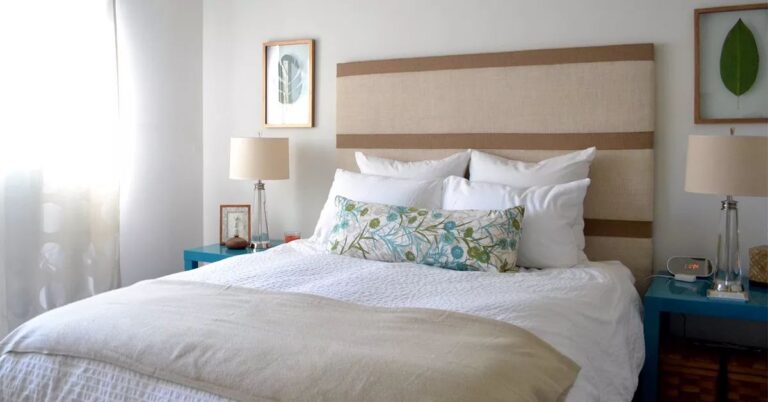
33+ Mood Lighting Aesthetic Ideas That Make Any Room Feel Intentional
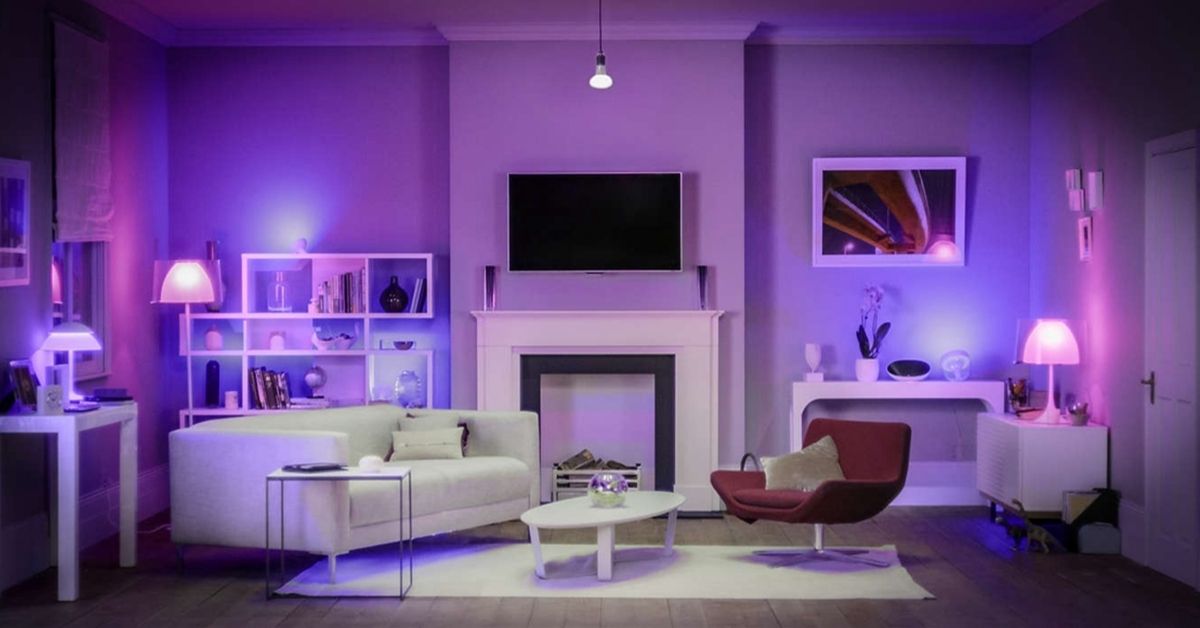
Lighting is probably the most under-leveraged design tool in most homes. People spend hours choosing paint colors and furniture, then plug in a single overhead bulb and wonder why the room still feels flat. Mood Lighting Aesthetic The mood lighting aesthetic isn’t a trendit’s a design principle that’s been quietly redefining how people think about home atmospheres since around 2022, and it’s only gotten more refined going into 2026.
If you’ve ever walked into a hotel lobby, a cozy restaurant, or a friend’s apartment and thought why does this feel so much better than my place this is almost certainly why. The difference is rarely the furniture. It’s the light.
For anyone working with a small apartment, a rented space, or rooms that need to function for both work and winding down, getting your lighting right is one of the most cost-effective changes you can make.
Layer Warm Edison Bulbs With a Linen Floor Lamp in the Corner
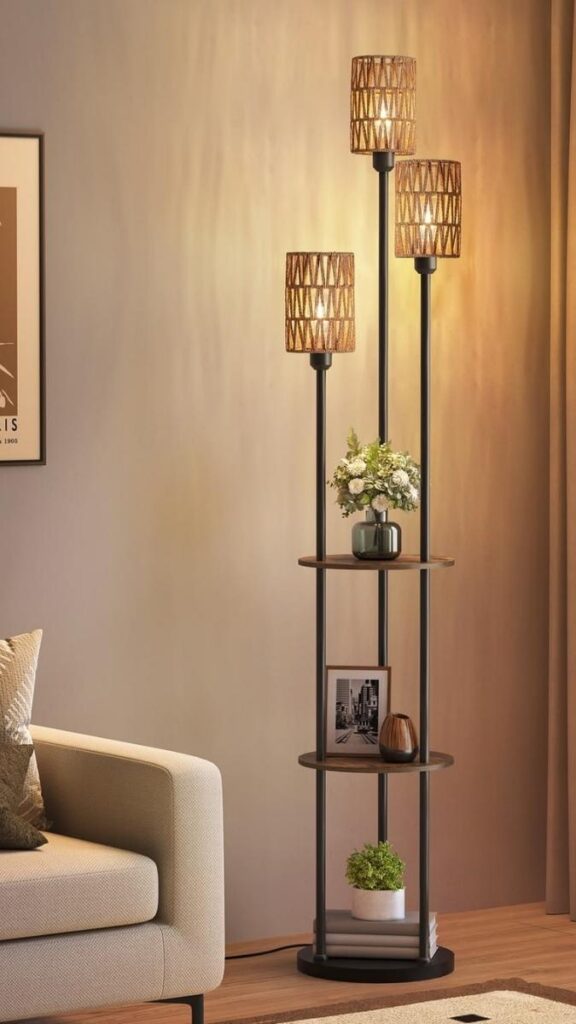
Most living rooms suffer from a single light source problem; everything gets lit evenly, which ironically makes the room feel less interesting and harder to relax in. A linen or cotton shade floor lamp tucked into the corner of a seating area creates a soft pool of warm light that draws the eye inward and signals “this is where you settle in.”
The linen material diffuses the Edison bulb’s warm glow so it doesn’t create harsh contrastjust a rich amber spread across the walls. This setup works especially well in rooms where the sofa sits against a wall, because the lamp can anchor the opposite corner and create balance without adding any furniture. It solves the flatness problem that most overhead-only setups create.
Install a Dimmer Switch on Your Existing Ceiling Light
This might be the highest-ROI lighting change you can make. Most people never consider it, but swapping a standard switch for a dimmer (usually under $20 and about 15 minutes of work) fundamentally changes how the same fixture performs throughout the day. Bright in the morning, mid-level for afternoons, low warm glow by eveningone switch, completely different rooms.
The effect is especially dramatic in rooms with white or warm-toned walls because dimmed light brings out the undertones in paint colors that harsh brightness tends to flatten. Works in virtually any space. Worth doing before buying any new fixtures.
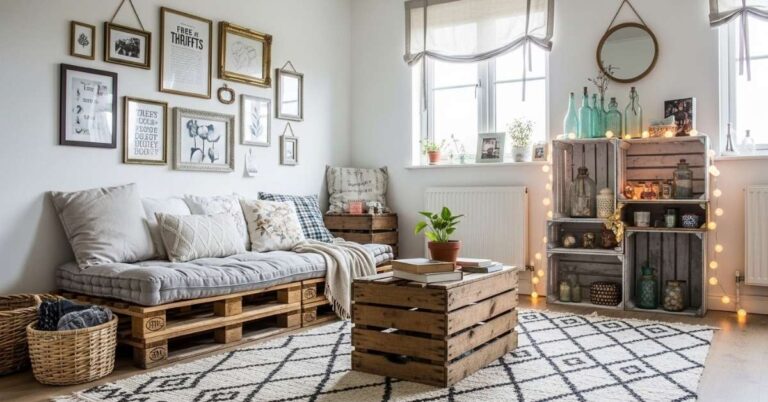
String Lights Along a Bookshelf or Open Shelving Unit
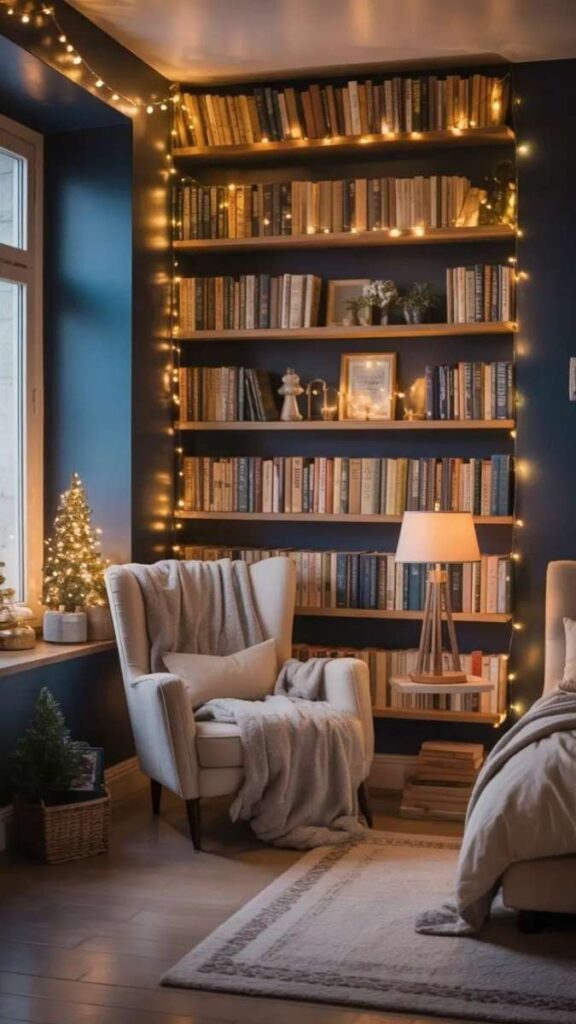
Winding a simple strand of warm white string lights along the back of a bookshelf or through open kitchen shelving creates backlighting that makes the whole wall feel like a feature. The objects in frontbooks, plants, small decorcast soft shadows and get a warm rim of light that makes them look intentionally curated rather than just collected.
This works best on shelves that are roughly 50–70% filled, because too much clutter absorbs the light and too little leaves nothing to catch it. For renters, this requires zero permanent changes. Plug-in and battery-operated versions are widely available, and they’re easy to move if you rearrange.
Use a Salt Lamp or Amber Candlelight in the Bedroom for Pre-Sleep Hours
In my experience, this works best when it’s part of a deliberate wind-down routine rather than just an aesthetic choice. A Himalayan salt lamp emits light in the orange-amber range, which is low on the blue spectrum meaning it doesn’t interfere with melatonin production the way standard white bulbs do.
Beyond the biological benefit, the warm pinkish glow it casts on white walls and bedding creates a genuinely different atmosphere than any other bedside option. The light radius is small, which is the point it keeps the focus close and the rest of the room in gentle shadow. This setup is especially useful in bedrooms that also double as work-from-home spaces, because it helps signal the mental shift from productivity to rest.
Mount Plug In Wall Sconces on Either Side of the Bed
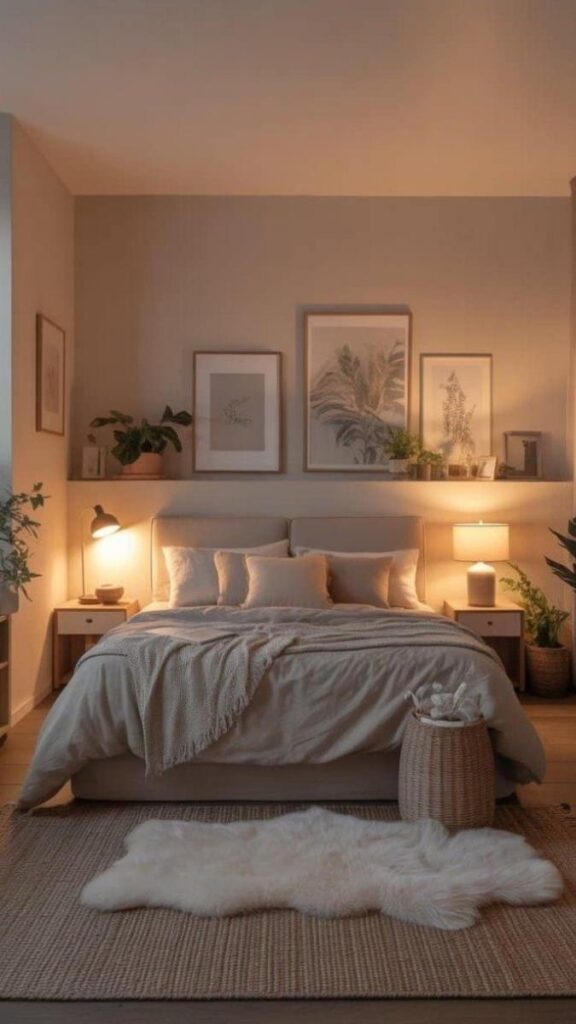
Bedside sconces solve two problems at once: they free up your nightstand surface and they bring the light source down to eye level, which creates a far more comfortable reading and ambient experience than overhead lighting. Plug-in versions require no electrical work just a picture hook and a cord cover, if needed.
Placing one on each side of the bed creates the symmetry that makes a bedroom feel finished and considered. In small bedrooms especially, wall-mounted lights open up nightstand space for only what’s essential, which visually reduces clutter without removing anything.
Read More About: 12+ Instagram Picture Home Ideas That Make Every Room Look
Place a Low Table Lamp Behind the TV to Reduce Eye Strain and Add Depth
This is a setup I’d actually recommend trying first because the results are immediately noticeable and it costs very little. Placing a small warm lamp or even a bias lighting LED strip behind or beside the TV softens the contrast between a bright screen and a dark wall.
Optically, this reduces eye strain during long viewing sessions, but it also creates a soft ambient glow around the screen that makes the whole wall feel more intentional. A small ceramic or concrete table lamp on a media console positioned slightly behind the TV achieves this well. In darker rooms with minimal natural light, this also prevents the “black hole” effect where the TV appears to float in darkness.
Use Candles With Varying Heights on a Tray as a Tabletop Focal Point
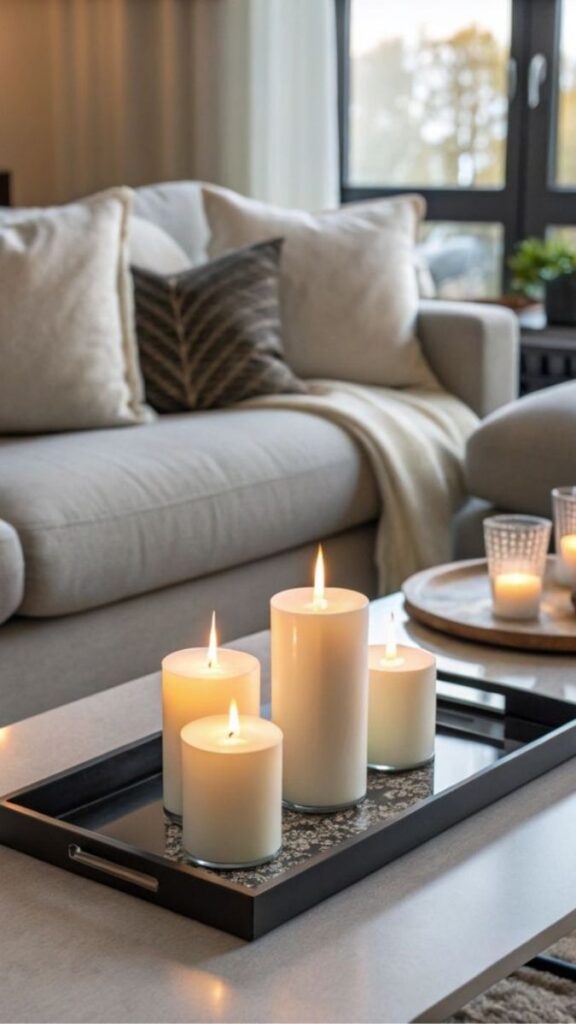
Candle groupings work because they create light at eye level when you’re seated, which is exactly where ambient lighting has the most impact during social moments. Three to five candles of varying heights on a tray or wooden board give the composition enough visual interest to feel purposeful.
The tray does two things: it contains the grouping so it doesn’t feel scattered, and it makes the whole arrangement easy to move if you need table space. Unscented or lightly scented options keep the setup versatile. This approach translates equally well to dining tables, coffee tables, and bathroom countertops.
Add a Neon LED Sign or LED Word Light to a Bedroom or Office Wall
This is one of those ideas that sounds maximalist but executes quietly in the right setting. A single warm-toned neon-style LED sign especially in white, cream, or amber functions more like art than signage when the surrounding room is minimal. Mounted on a plaster or painted wall with nothing else competing for attention, it adds a gentle ambient glow to a mid-sized space without affecting the overall color temperature the way a harsh cool-white fixture would.
The light output is low, so it works as a layered accent rather than a primary source. In home offices, it also signals the shift from work-mode to off-mode when used only in the evenings.
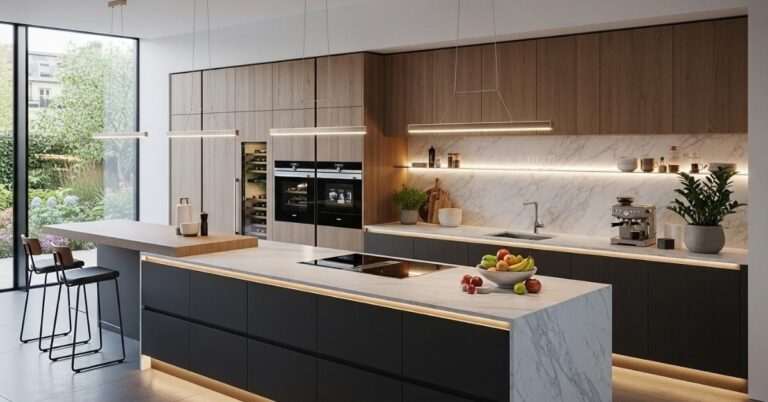
Try Recessed Puck Lights Under Floating Shelves or Cabinets
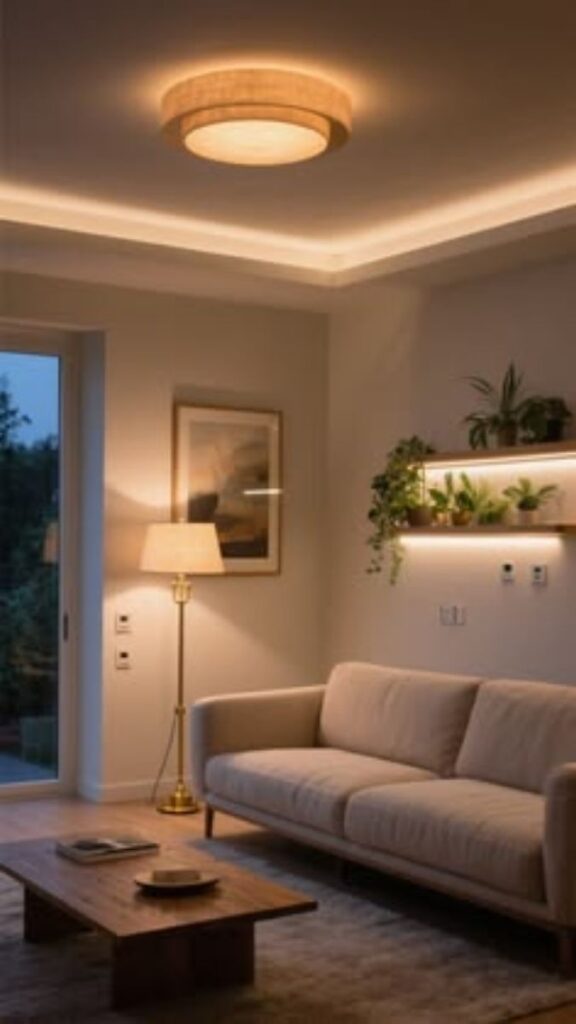
Under-cabinet lighting is one of those things that looks like a design upgrade but is actually a functional one. Small LED puck lights or strip lights positioned under floating shelves or kitchen cabinets cast light downward onto the surface below, which illuminates the workspace without any ceiling fixture involvement.
The result is a layered look where countertops and tabletops are softly lit while the wall and ceiling stay darker, creating depth. This is particularly useful in kitchens where overhead lighting is often fluorescent and unflattering under-cabinet lights let you use the overhead only when needed and switch to the softer layer for everything else.
Hang a Rattan or Woven Pendant Light Over a Dining or Kitchen Table
The material of a pendant shade matters as much as the bulb inside it. Woven rattan, bamboo, or seagrass shades filter light through their weave, creating a dappled pattern on the ceiling and walls that a plain opaque shade never produces. This is especially effective in dining rooms and kitchen tables where the pendant hangs low the closer the light source is to the surface, the more defined the light pool becomes.
The weave pattern also adds texture to a neutral room without requiring additional wall decor. In 2026, this style is trending in a slightly more sculptural directionlooser, more open weaves that create stronger pattern shadow effects.
Read More About: 27+Dark Academia Living Room Ideas That Feel Intellectual, Moody,
Use a Projector Lamp or Star Projector in the Bedroom as Ambient Background Light
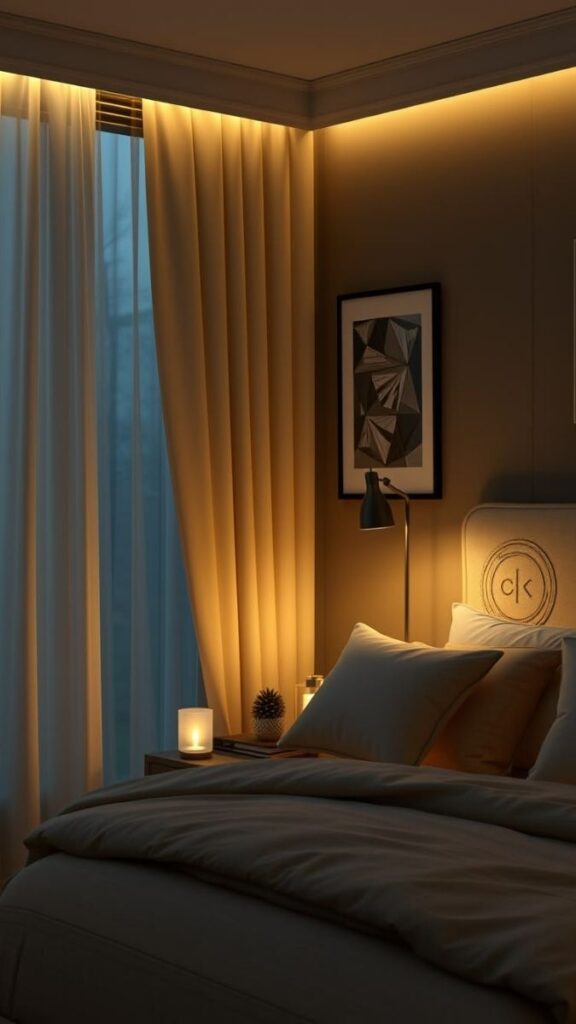
Star and galaxy projectors have evolved well beyond the novelty phasenewer models project at lower intensities with more natural-looking patterns and offer warm color options alongside the standard cool blues. In a bedroom, a projector lamp set to a slow movement speed creates a living ceiling that subtly changes without demanding attention.
It’s particularly useful in rooms where you want an atmosphere without any furniture or floor space given up to lighting fixtures. Because the light goes upward, it doesn’t interrupt sleep in the way a traditional lamp might. Worth considering in kids’ rooms and small bedrooms equally.
Layer an Oversized Floor Mirror to Double the Light in a Dark Room
Mirrors don’t emit light, but they redistribute it and in rooms with limited natural light or small windows, this distinction matters less than the result. A tall floor mirror positioned at an angle across from the main window bounces light into the parts of the room that windows don’t reach directly. In the evening, the same mirror amplifies the effect of lamps and floor lights by reflecting them back across the space.
This is especially effective in narrow rooms where adding more light fixtures isn’t practical, because the mirror extends the perceived depth of the room while simultaneously brightening it.
Switch to Warm White Bulbs (2700K–3000K) Throughout the Whole Home
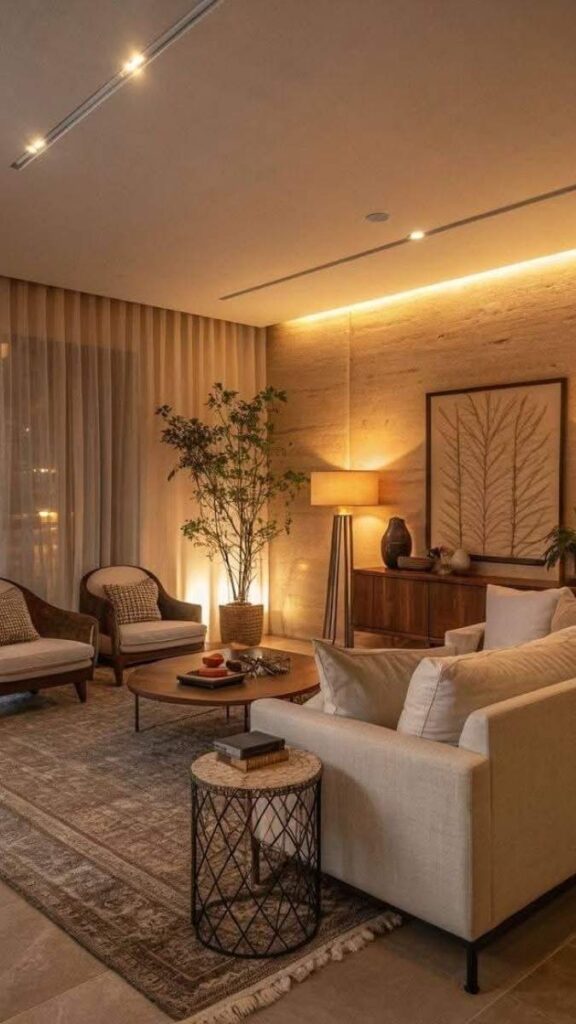
Cool or daylight bulbs (4000K–6500K) are fine for task lighting, reading, cooking, detailed work but they produce a clinical quality that works against the mood lighting aesthetic at any hour. Switching all ambient fixtures to warm white bulbs in the 2700K–3000K range is the single most impactful change you can make to the overall feel of a home without changing any fixtures or furniture.
The difference in atmosphere is immediate and works in every room. Honestly, this should be the first step, not the last. Everything else you layer on top will work better once the baseline temperature is right.
Create a Candlelight Nook With a Cluster of Pillar Candles on a Stone or Marble Tray
A concentrated grouping of pillar candles on a heavy, heat-safe tray creates what’s effectively a built-in design moment in any corner, shelf, or low table. The height variation between different pillar sizes short, medium, and tall in the same general color family creates depth that a single candle can’t achieve.
Stone, marble, or slate trays work well because they ground the grouping visually and feel permanent rather than decorative. This setup doesn’t require wall space, doesn’t need wiring, and can be styled with dried botanicals, small river stones, or greenery to make it feel more curated.
Use Color-Changing Smart Bulbs to Shift the Room’s Temperature by Time of Day
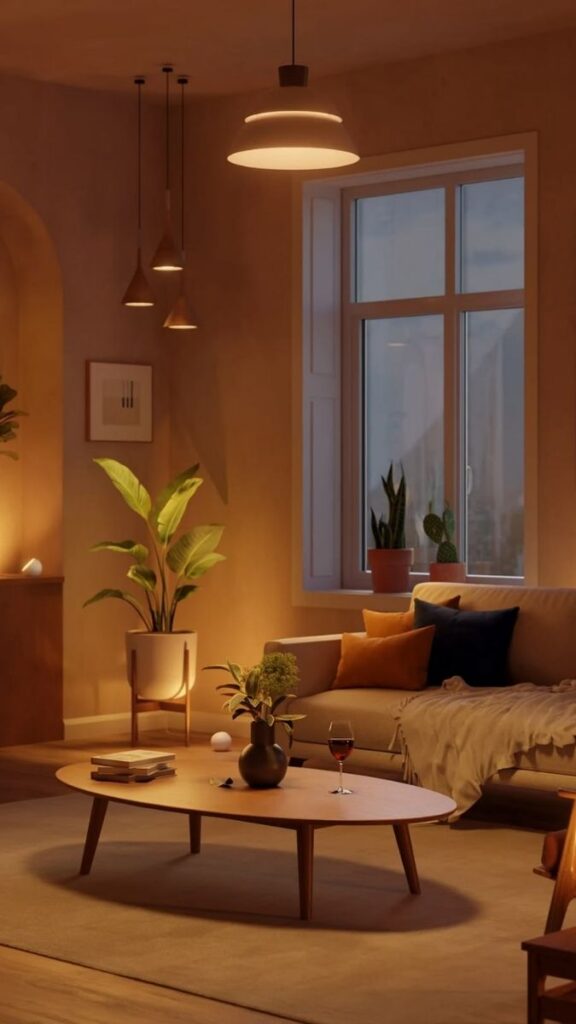
Smart bulbs with programmable color temperature schedules essentially automate the mood lighting process. Morning and afternoon can run at standard warm white, while the evening hours shift to a deeper amber or candlelight temperature without requiring any manual adjustment.
This is particularly useful in spaces that serve multiple purposes throughout the daya living room that functions as a home office in the morning and a relaxation space in the evening benefits enormously from this kind of automatic transition. Most major smart bulb brands now support this at a mid-budget price point.
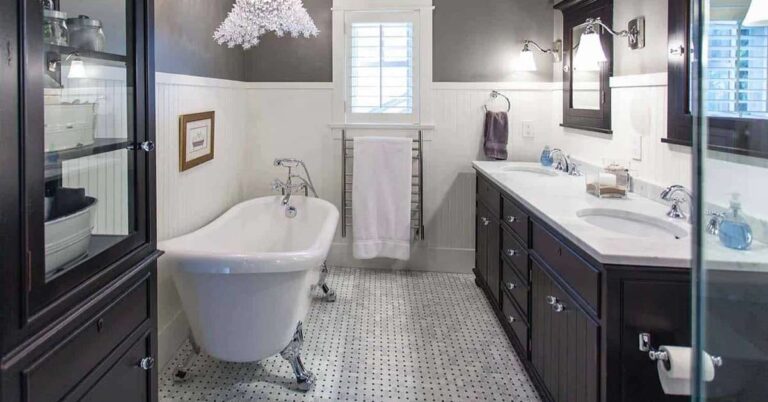
Position a Himalayan Salt Lamp in Bathroom Alcoves or on the Vanity
Bathrooms are one of the most overlooked rooms for mood lighting, usually because they default to whatever bright overhead fixture came with the apartment. A salt lamp placed on a vanity shelf or in a recessed alcove changes the character of the space immediately; the warm pink-amber light reflecting off white tiles or marble surfaces creates a spa-like effect that standard lighting can’t replicate at any brightness level.
This works especially well in bathrooms that have some natural stone, bright white tile, or glossy surfaces, because the reflective material amplifies the glow. Keep one as a secondary bathroom light option for evenings rather than a replacement for functional overhead lighting.
Use Candle Lanterns on the Floor or Steps to Create Ground-Level Ambient Light
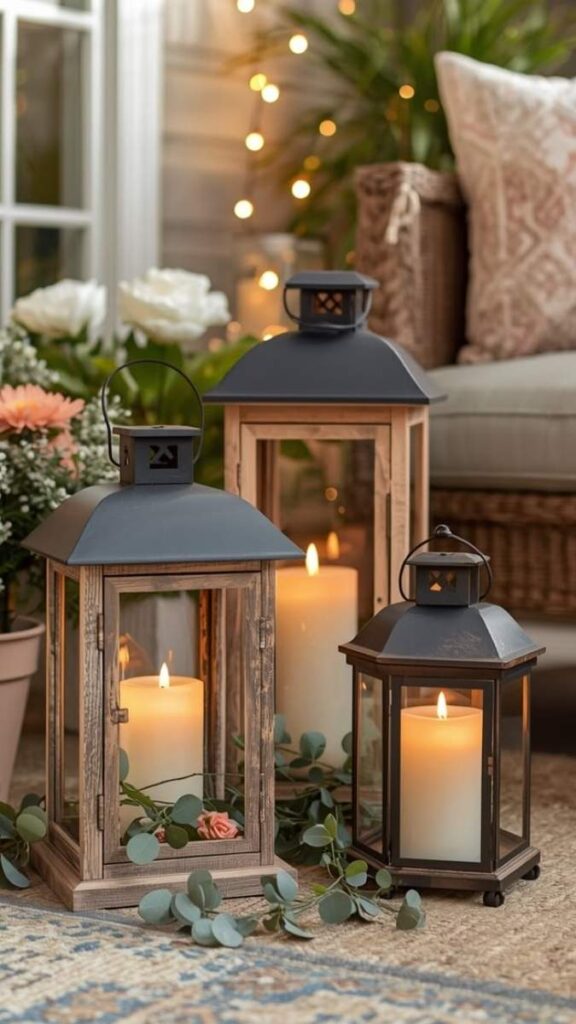
Floor-level lighting is underused in most homes, but it’s one of the most effective ways to create a layered, dimensional atmosphere. Glass or metal lanterns with candles placed directly on the floor, along a wall, on stair treads, or flanking a fireplace draw the eye downward and create a depth of field that only happens when light comes from multiple heights simultaneously.
Because the lanterns sit low, they cast upward and outward light that catches furniture legs and wall texture in a way that overhead or table-height lighting misses entirely. This setup works well in entryways and hallways where traditional lighting options are limited.
Read More About: 41+Clean Home Aesthetic Ideas That Make Any Space
Install LED Strip Lights Behind a Floating TV Console or Headboard
LED strips installed behind furniture, specifically floating headboards, TV consoles, or low credenzas create a floating effect by illuminating the wall behind the furniture rather than the furniture itself. The object appears to hover, and the wall behind it becomes a soft lit backdrop. This technique works best on mid-gray, warm white, or sage-toned walls where the light can interact with the color rather than wash it out completely.
Warm white LED strips work better than RGB for this purpose unless you’re intentionally going for a more saturated look. The installation requires no holes in the wallmost LED strips are adhesive and can be removed cleanly.
Layer Multiple Light Sources at Three Different Heights in the Living Room
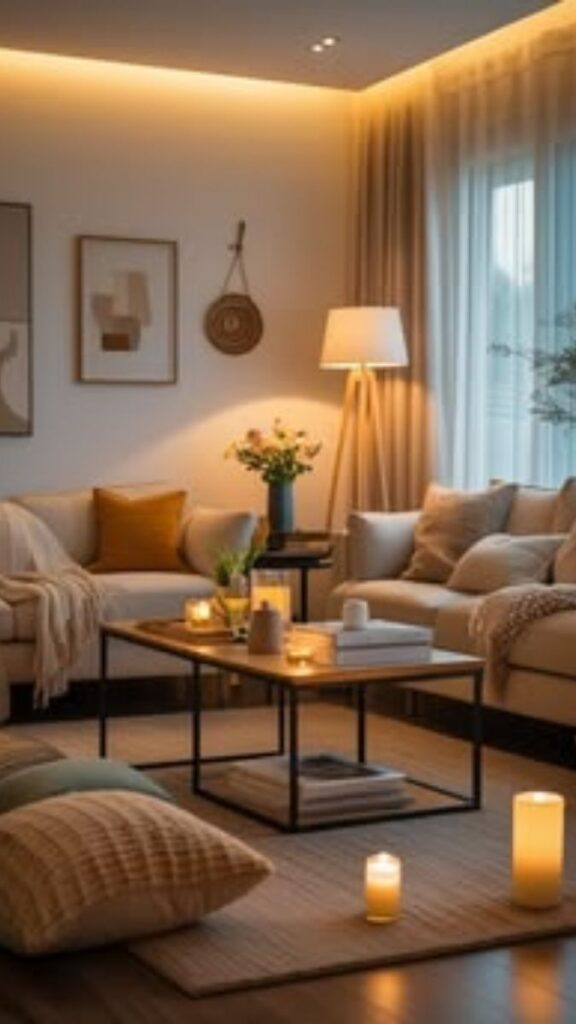
This is the fundamental principle behind why some rooms feel rich and livable while others feel like waiting rooms. When light comes from only one leveltypically overheadthe whole room reads flat. Three sources at three heights (ceiling or pendant, eye-level table lamp, and low floor or plug-in lamp) create shadow variation, which is what the human eye actually reads as warmth and depth.
The sources don’t need to be the same style or material in fact, mixing a rattan pendant with a ceramic table lamp and a linen floor lamp creates more visual interest than matching sets. The key is that each source illuminates a slightly different zone of the room.
Hang String Lights Across a Bedroom Ceiling for a Tent-Like Canopy Effect
Draping string lights from a center ceiling point outward toward the walls creates a tent-like soft canopy that’s particularly effective in bedrooms. The light level is low appropriate for evening ambiance rather than task lighting and the warm bulbs overhead create a feeling of enclosure that’s genuinely cozy rather than claustrophobic.
This is a popular setup for renters because it uses command hooks and requires no permanent installation. Works best in rooms with ceilings under 9 feet, because the closer the lights are to the bed level, the more intimate the effect.
Use a Backlit Frosted Glass Panel as a Statement Wall Feature
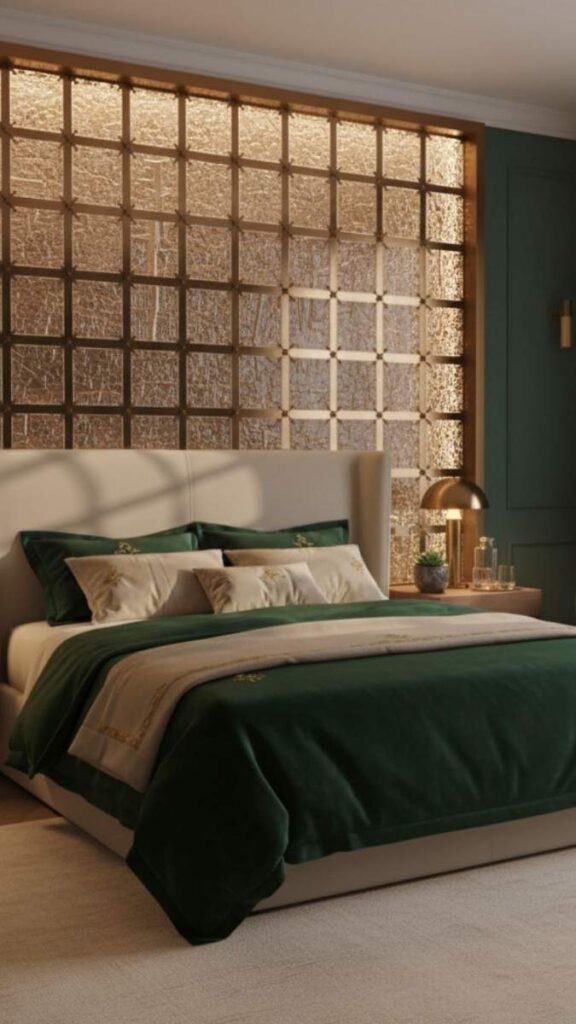
Backlit panels either custom or from flat-pack retailers are one of the cleaner ways to add significant ambient light to a room without any visible fixture. A frosted or ribbed glass panel mounted to a wall with warm LED backlighting creates an architectural light source rather than a decorative one.
It reads as part of the wall, not as a lamp, which is useful in rooms where you want the light but not the hardware. This is a more investment-level option and works best in minimal rooms where the panel can function as a genuine focal point.
Use Fairy Lights Inside a Glass Vase or Jar as a Table Centerpiece
Battery-operated fairy lights tucked inside a tall glass vase or wide-mouth jar create a soft glowing centerpiece that sits at table level and adds to the room’s ambient temperature without taking up much space. The glass amplifies and scatters the warm light in multiple directions, making the effect larger than the source itself.
This works as a seasonal or permanent option depending on how you style the container paired with dried botanicals, pampas grass, or nothing at all, the jar itself becomes part of the aesthetic. Low effort, high visual return, and easy to swap out seasonally.
Position a Table Lamp Behind a Sofa to Create Backlighting
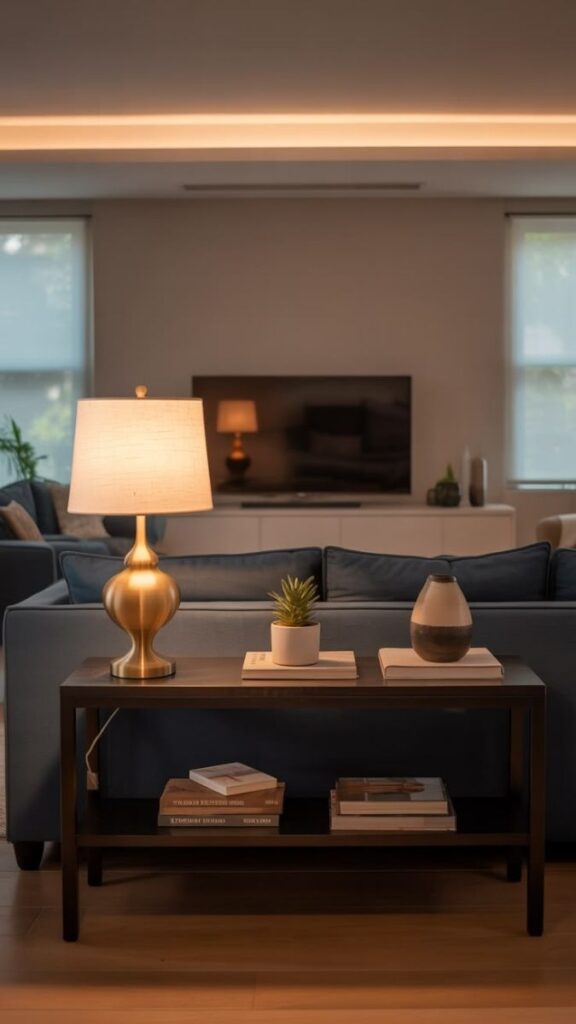
Placing a slim table lamp on a narrow console or shelf positioned directly behind a sofa creates a backlit silhouette effect that makes the seating area feel more intentional and cocoon-like. The light hits the wall above and beside the sofa, creating a warm halo that you see when you’re sitting across the room rather than when you’re seated in it.
This is a useful trick for open-plan living areas where the sofa floats in the middle of the room with no wall behind it the lamp creates a visual anchor and defines the seating zone without using room dividers or additional furniture.
Use Ambient Candlelight During Meals to Shift the Dining Experience
Candles used consistently during mealsnot just on special occasionstrain the eye to associate that quality of light with slowing down and being present. It’s a functional aesthetic choice as much as a mood one: warm, low light narrows visual focus to the table and the people around it rather than the broader room.
Taper candles in simple holders or tea lights in low glass vessels keep the centerline clear for conversation. The key is having enough light to comfortably see the food and your tablemates typically three to five light sources across the table length without an overlit space that competes with the atmosphere.
Add a Plug In Pendant Light in a Rental Where You Can’t Hardwire
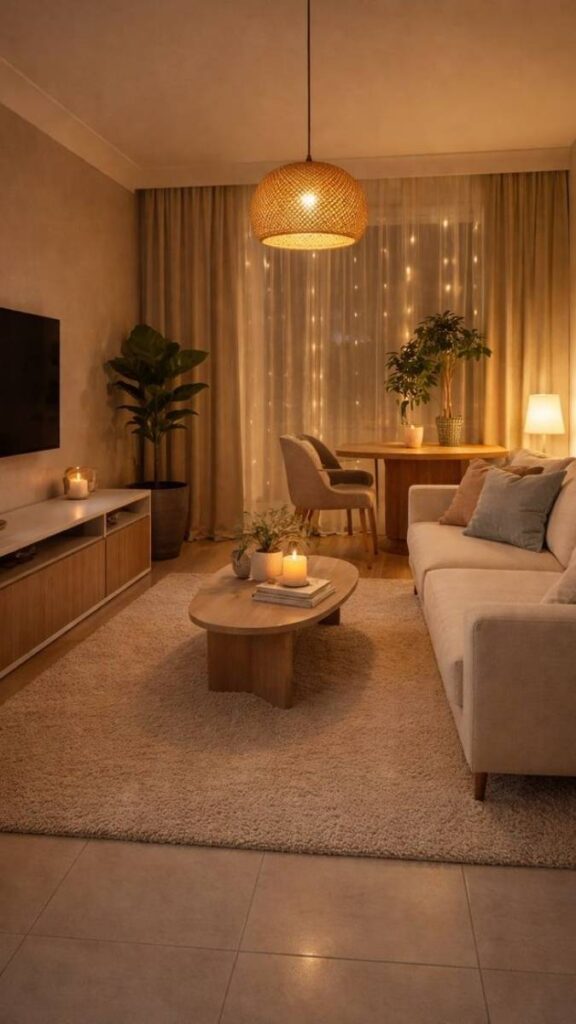
Plug-in pendant lights have become one of the best rental-friendly solutions for getting architectural-feeling lighting without electrical work. A pendant with a fabric cord and a warm Edison bulb hung from a swag hook creates the visual effect of a hardwired fixture at a fraction of the cost and with zero modification.
The cord runs along the ceiling and down the wall to the nearest outlet with a cord cover if you want the setup to look more finished. This is most effective over a dining table or in a reading corner where the pendant can hang at eye level and define a specific zone within a larger open space.
Use Textured or Frosted Bulbs for Softer, More Diffused Light
Standard clear Edison bulbs produce a point-source light that creates strong contrast, bright filament, sharp shadows. Textured or frosted glass bulbs scatter the same light more evenly before it leaves the glass, which means softer shadows, less glare, and a more forgiving quality of light in the room.
This is especially useful in sockets or fixtures where the bulb is exposed (pendant lights, open lamp shades, clip-on bulb sockets), because the bulb itself becomes a design element and a light diffuser simultaneously. The ambient effect of a frosted G40 globe bulb in an exposed pendant is noticeably different and usually better than a clear equivalent.
Create a Window Ledge Candle or Lamp Setup That Glows Both Inward and Outward
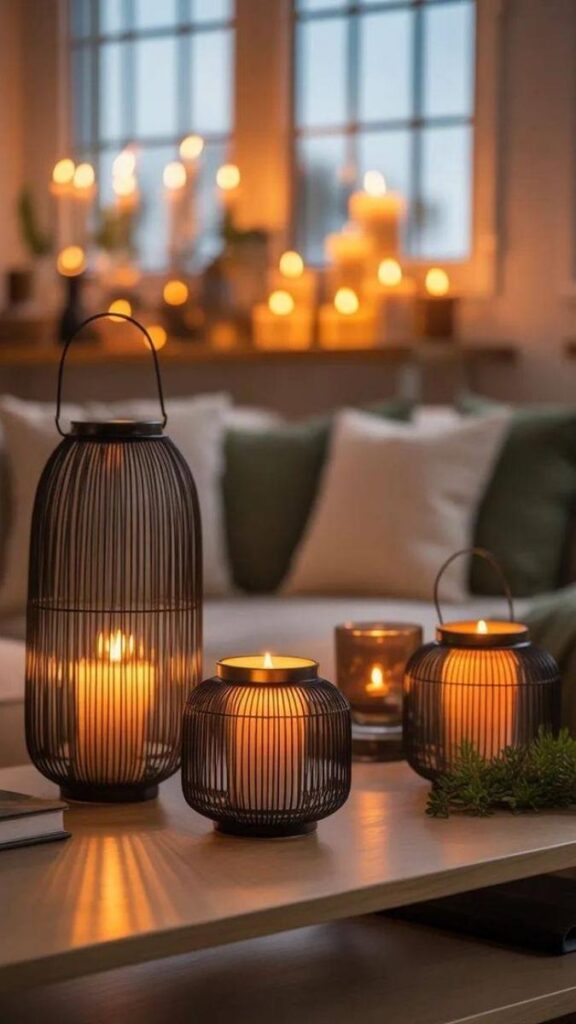
In the evenings when windows turn reflective, a lamp or cluster of candles placed on a windowsill creates a doubled effect light fills the room and reflects back from the glass, which functions like a mirror at night. This works particularly well in rooms facing a garden or quiet street, where the window reflection adds depth rather than distraction.
The setup also creates a warm, lit facade effect from outside, which makes the home feel inhabited and welcoming without any intentional exterior lighting. In apartments, it’s one of the simplest ways to make a space feel like it has more presence than its square footage suggests.
What Actually Makes the Mood Lighting Aesthetic Work
The goal isn’t darkness, it’s contrast. A room with well-executed mood lighting isn’t dim; it’s dimensionally lit. Some parts are bright, some are shadowed, and the eye has somewhere to travel. Flat, uniform lighting eliminates all of that.
The most common error is relying exclusively on overhead lighting while adding decorative lamps that aren’t actually turned on. Every lamp in a room should be functional and used. If a floor lamp is just for aesthetics, it’s not doing the job.
Color temperature consistency is the other overlooked factor. Mixing a warm floor lamp with a cool-white overhead light doesn’t create balance, it creates visual noise. Choose a temperature range (warm: 2700K–3000K for most living spaces) and stay within it across every fixture in the room.
For small spaces specifically, low-level lighting that keeps the ceiling in relative shadow makes the room feel more intimate and less like you’re aware of its boundaries. This is counterintuitive: most people add more light to make a small room feel bigger but softer, directed light works better than bright overhead light for creating a sense of spaciousness.
Mood Lighting Aesthetic Setup Guide by Space Type
| Room | Best Approach | Primary Fixture | Supporting Layer | Problem Solved |
| Living room | Three-level layering | Floor lamp + dimmer | Table lamp behind sofa | Flat, overhead-only lighting |
| Bedroom | Warm low-level sources | Plug-in sconces | Salt lamp or projector | Harsh evening light disrupting sleep |
| Dining room | Eye-level + table | Pendant over table | Candle grouping | Sterile overhead lighting |
| Bathroom | Warm secondary source | Salt lamp or vanity light | LED strip behind mirror | Clinical fluorescent light |
| Home office | Warm bias + task | Desk lamp (3000K) | LED strip behind monitor | Eye strain + flat work lighting |
| Studio/small apt. | Reflective layering | Floor mirror + floor lamp | String lights on shelving | Limited fixture options |
Common Mood Lighting Mistakes That Undercut the Whole Aesthetic
Using cool-white bulbs in ambient fixtures.
Anything above 3500K in living areas creates a clinical quality that no amount of additional warm lighting can fully overcome. The cool source will always win the color battle.
Buying lamps and not plugging them in.
Sounds obvious, but more rooms than you’d think have floor lamps that are switched off by default. Every fixture needs to be part of the active lighting plan.
Placing all the light sources at the same height.
Three lamps at the same level produce the same flat effect as one lamp. The variation in height is what creates the depth.
Ignoring the ceiling.
Where the light doesn’t reach tells you as much as where it does. A ceiling that stays in shadow feels intimate. One that’s lit the same as the floor feels like a supermarket.
Overcrowding light sources.
More isn’t always better. A room with seven competing light sources at similar temperatures creates chaos, not atmosphere. Edit down to three or four strategic sources and let the shadow do the rest.
FAQ’s
What is the mood lighting aesthetic exactly?
It’s an approach to home lighting that prioritizes warmth, depth, and atmosphere over uniform brightness. Rather than relying on a single overhead light, mood lighting uses multiple sources at different heights and intensities to create a layered, dimensional quality. The goal is to make a room feel intentional and comfortable rather than simply illuminated.
What color temperature bulb is best for mood lighting?
Warm white bulbs in the 2700K–3000K range are the standard choice for mood lighting in living spaces, bedrooms, and dining rooms. This temperature range produces a golden, candlelight-adjacent quality that feels relaxed and flattering. Avoid anything above 3500K in ambient fixtures; it starts to read as cool or clinical.
Can you create a mood lighting aesthetic in a rented apartment?
Yes, and it’s one of the easiest contexts to apply it in. Plug-in pendants, floor lamps, string lights, salt lamps, and dimmer switches (which can usually be replaced and returned to original before moving out) require no permanent modifications. The entire approach described above can be executed without drilling a single hole.
How many light sources does a living room need for proper mood lighting?
Three is generally the working minimum one at ceiling or high level, one at eye level, and one at low or floor level. This creates the height variation that produces shadow depth and prevents the flat look that single-source rooms have. Larger rooms may benefit from four or five, but the principle remains: different heights, warm temperatures, varied zones.
Is mood lighting the same as dim lighting?
Not exactly. Mood lighting is about contrast and direction, not just low brightness. A room with well-placed warm-toned lamps at different heights can feel brighter and more vibrant than a room with one bright overhead light, because the visual interest keeps the eye engaged. Dimness alone produces an unfinished, gloomy quality. The combination of warmth, layering, and intentional placement is what creates atmosphere.
What’s the fastest single change to improve home lighting?
Switching all bulbs to warm white (2700K–3000K) across every fixture in the home. It costs under $30 for most spaces and takes about 20 minutes. The impact on the overall atmosphere of the home is immediate and doesn’t require any new fixtures, furniture, or installation.
Plug-in sconces vs. floor lamps: which works better for bedroom mood lighting?
Both serve different purposes. Plug-in sconces work better in smaller bedrooms because they keep surfaces clear and bring light to eye level without using floor space. Floor lamps are better in larger rooms or in corners where a tall source of ambient light helps balance the room. If the bedroom is under 130 square feet, sconces are usually the better call.
Conclusion
Mood lighting isn’t about making your home dimmer, it’s about making it feel more inhabited, more layered, and easier to be in. Even a couple of the setups here, applied consistently, change how a room reads at every hour of the day. The spatial depth that comes from warm, multi-level lighting is one of those differences you feel before you understand why.
Start with one or two ideas that fit your current setup: a dimmer switch, a floor lamp in a dark corner, or swapping your bulbs to warm white. You don’t need to overhaul the whole home at once. Let the first change settle, see what it does to the room, and build from there.