14+Warm Color Schemes for Cozy Homes That Actually Work in Real Rooms
Soft lighting, a terracotta wall, warm wood tones layered against cream linen some rooms just feel like a deep exhale. If your space looks fine on paper but still feels cold or unfinished, the issue is almost always color temperature. Warm color schemes aren’t about going bold or maximalist; they’re about choosing tones that shift how a room reads emotionally. And in 2026, that shift is exactly what people are designing for.
For anyone trying to make their home feel more settled and lived-in without a full renovation color is the most efficient lever you have. It affects how large or intimate a room feels, how light bounces around, and whether you actually want to sit in the space for more than ten minutes.
This list covers 27 warm color schemes that work across different room sizes, budgets, and aesthetics. Whether your space leans minimal, rustic, or somewhere in between, there’s a combination here worth trying.
Terracotta Walls With Cream Trim and Natural Wood Floors
Terracotta is having a sustained moment and it earns it. When paired with cream trim (not white cream), the contrast softens dramatically. The wall color absorbs warm afternoon light and bounces it back as an amber glow. Lay natural oak or walnut flooring underneath and the whole room starts to feel like it belongs somewhere coastal or Mediterranean, even if you’re in a flat in Manchester or a condo in Chicago.
This palette works especially well in living rooms that get west-facing light. It solves the problem of rooms that feel clinical or too “gallery-like” , too much contrast, not enough warmth.
Warm Beige and Rust Accent Layering in a Neutral Living Room
Beige gets dismissed as boring, but that’s usually because it’s being used without contrast. Layer in rust through cushions, a ceramic lamp, or a single accent chair and the combination activates.
The rust reads warm without overwhelming the room, and the beige gives it breathing space. In my experience, this works best when the rust element is at least three different heights: floor (rug or pot), mid-level (cushion or throw), and eye-level (artwork or lamp). That vertical layering keeps the room from looking flat. Renters especially benefit here, no paint required.
Deep Amber and Olive Green for a Moody, Grounded Living Space
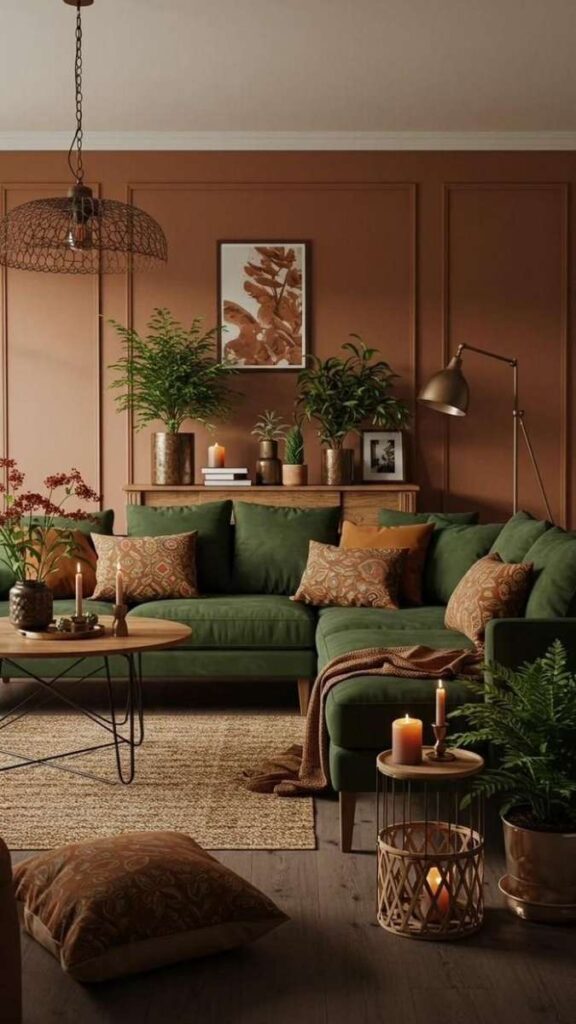
This is one I’d actually recommend trying first if you want a scheme that feels genuinely sophisticated without leaning into grey or navy. Amber and olive share yellow undertones, which means they sit harmoniously without fighting. The olive anchors the space it reads almost like a neutral while the amber wall does the atmospheric heavy lifting.
Use warm-toned Edison bulb lighting overhead and the room shifts completely after sunset. Best suited to medium or large living rooms where you can afford a dark accent wall without the space shrinking visually.
Honey Yellow Walls With White Oak Furniture and Linen Textiles
Honey yellow is different from canary or mustard; it’s softer, pulled more toward warm gold. Against white oak furniture (which has become the go-to wood finish in 2026 minimalist spaces), it creates a room that feels genuinely sun-filled even on overcast days. Linen bedding in oat or undyed tones keeps the softness without adding more color.
This palette does particularly well in bedrooms with limited natural light; the wall tone compensates visually. It also photographs beautifully, which matters if you’re ever listing the space.
Burnt Orange Feature Wall Behind a Neutral Sofa Arrangement
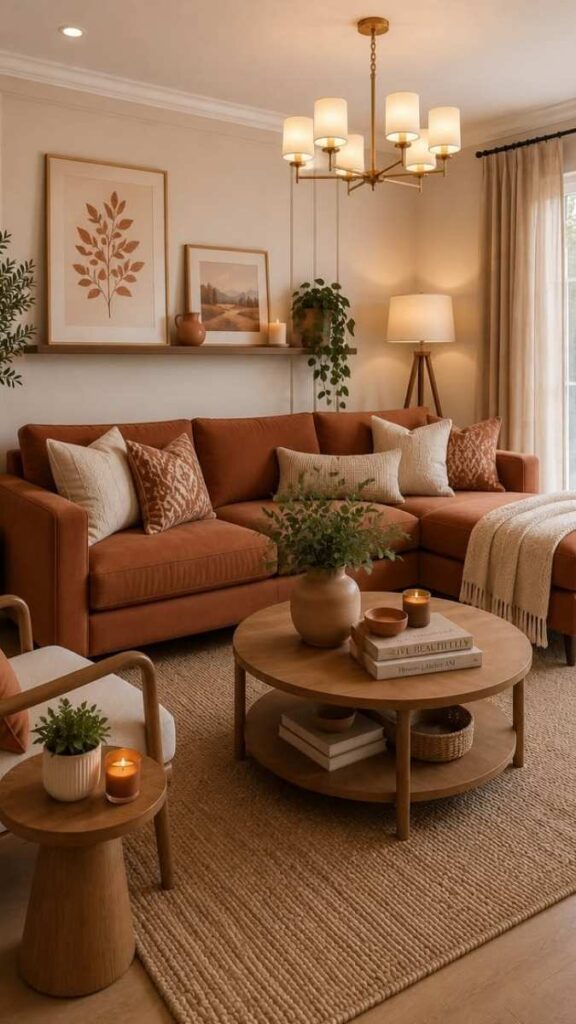
One wall. That’s all this needs. A burnt orange feature wall behind a sofa arrangement especially with a greige or warm grey sofa creates a focal point that the whole room organizes around. It solves the most common living room problem: the space lacks a visual anchor.
The orange doesn’t need to carry every surface; in fact, it works better when everything else is quiet. Add a brass side table and a warm-toned floor lamp and the scheme is complete. Works well in open-plan spaces where you need to define the seating zone without using furniture alone.
Read More About: 33+ Mood Lighting Aesthetic Ideas That Make Any Room Feel Intentional
Warm White Walls With Caramel Leather and Dark Walnut Wood Tones
Warm white is not the same as cool white the undertone is everything. Warm whites lean slightly yellow or pink, making them sit comfortably next to leather and wood without creating that sterile, showroom feel. A caramel leather armchair introduces richness without going dark, and dark walnut grounds the palette.
This scheme is especially practical in apartments where painting walls isn’t possible and you’re building color entirely through furniture and textiles. It’s also one of the most timeless combinations; it won’t feel dated in three years.
Sage Green and Warm Terracotta as a Two-Tone Room Warm Color Schemes for Cozy Homes
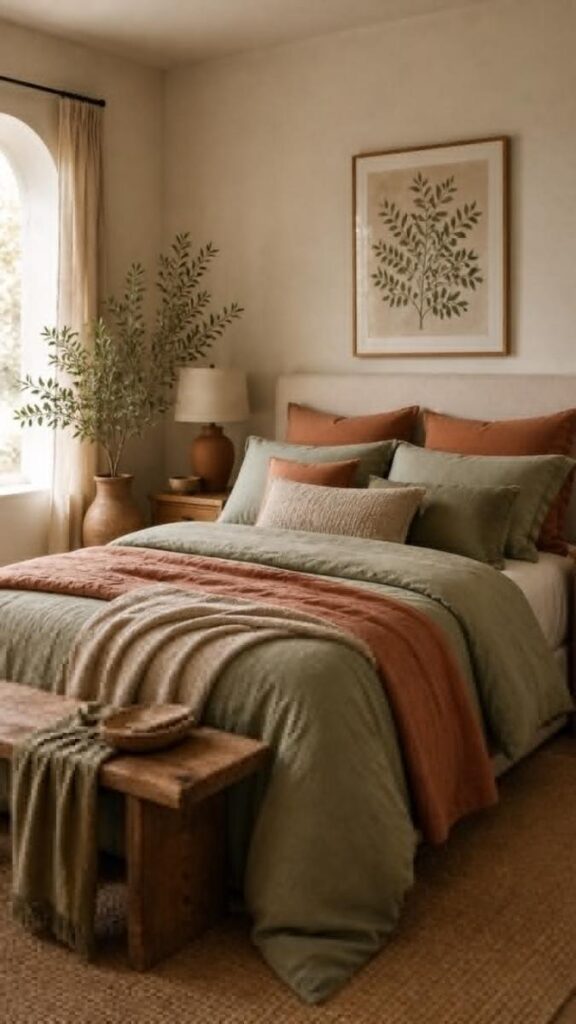
This pairing sounds like it shouldn’t work, and yet it does consistently. Sage and terracotta both have muted, earthy undertones that prevent either color from feeling harsh. In a dining room, use sage for the lower half (paneling or chair rail down) and terracotta on the upper wall. The visual weight stays low, which makes ceilings feel higher.
A rattan pendant light and wooden dining table complete the loop on the earthy, warm-toned story. This scheme solves awkward ceiling heights or rooms where the proportions feel off the color blocking draws the eye horizontally and rebalances the space.
Warm Greige Base With Layered Warm Lighting and Brass Fixtures
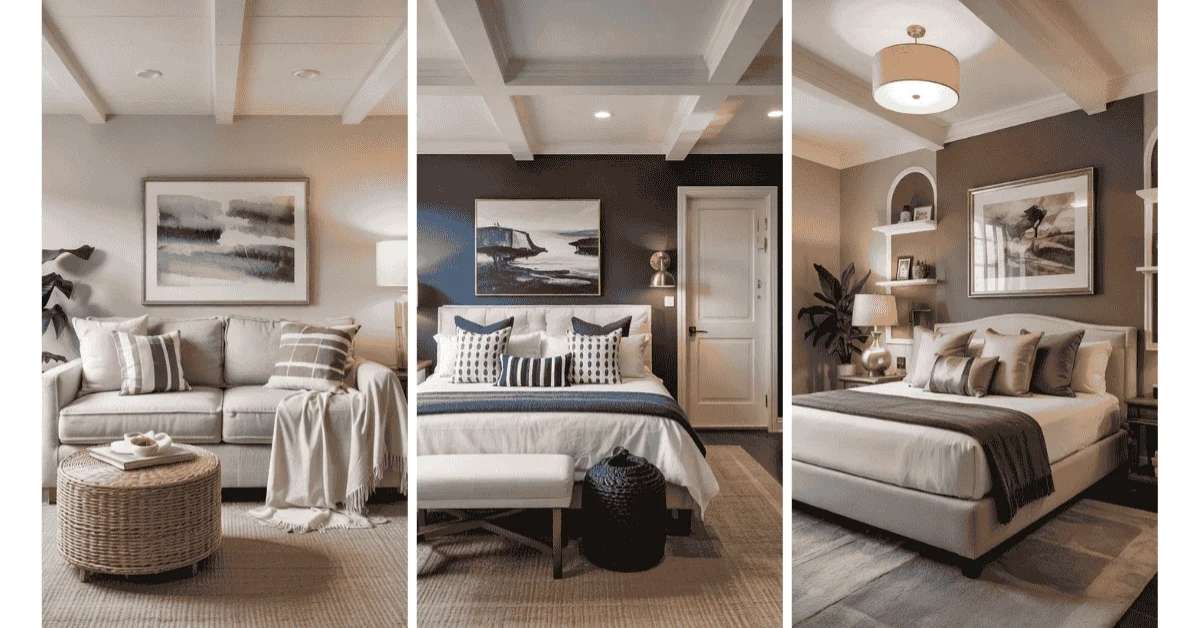
Greige (grey-beige) with warm undertones is the workhorse of cozy color schemes. It doesn’t demand attention, but it makes everything around it look intentional. The real move here is layering the lighting: brass wall sconces at mid-height, table lamps with warm bulbs on nightstands, and possibly a dimmable overhead fixture.
Multiple light sources at different heights eliminate the flat, institutional feel that comes from single overhead lighting. This setup works in almost any bedroom size. Honestly, it’s the combination I’ve seen make the most dramatic before-and-after difference without changing a single piece of furniture.
Blush Pink and Warm Sand for a Soft, Feminine Living Room
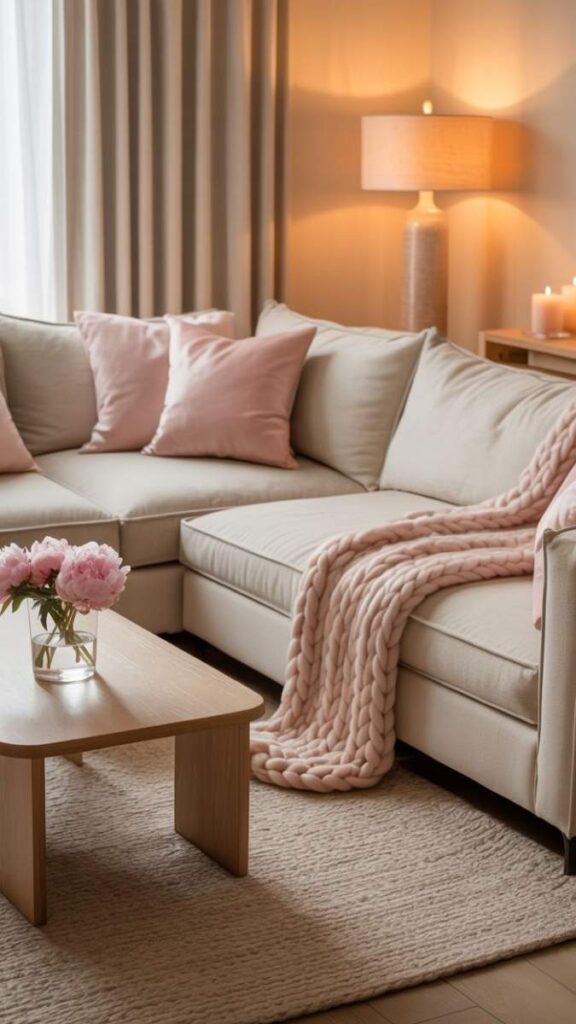
Blush tends to get written off as too feminine or trendy, but when paired with warm sand rather than white or grey, it settles into something far more livable. The sand wall keeps the temperature warm.
Cool grey walls would make the blush feel colder and more “millennial pink.” Layer in gold accents (not chrome) and ivory sheer curtains, and the room reads soft and curated without being theme-y. Best for living rooms or bedrooms where the goal is calm and comfort over high contrast.
Ochre Yellow Accents in a White Room to Add Warmth Without Commitment
Not everyone is ready to commit to a colored wall and that’s fine. Ochre accents in an otherwise white room do more thermal work than most people expect. The trick is density: one ochre cushion reads as an accent; three ochre items at different scales read as a considered palette.
A mustard throw draped over a sofa, a warm-toned print above it, and an ochre ceramic pot near the window creates enough warmth to shift the room without painting a thing. This is specifically useful for renters or anyone planning to move in the next couple of years.
Read More About: 12+ Instagram Picture Home Ideas That Make Every Room Look
Warm Chocolate Brown Walls With Cream Furniture and Soft Lighting
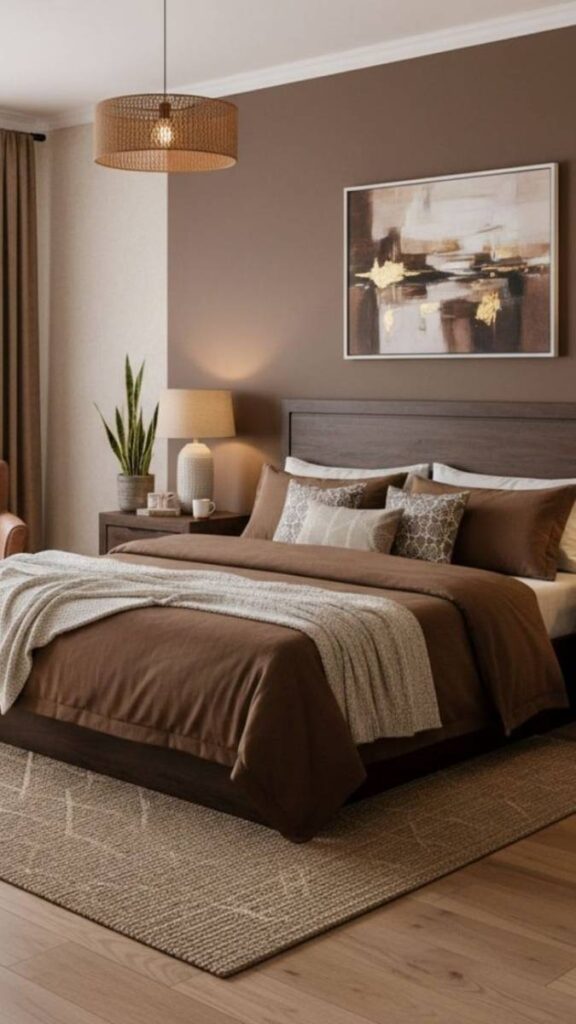
Dark walls used to be a design risk. Now they’re a design statement especially in bedrooms. Chocolate brown walls with cream furniture create a cocoon-like effect: the room feels enclosed in the best possible way, like a proper sleeping space rather than a pass-through.
The key is keeping the furniture and textiles light (cream, ivory, oat) to prevent the room from absorbing too much light and feeling cramped. Layer soft warm lighting at low heights no overhead only and the room achieves something genuinely hotel-like at a fraction of the cost.
Cinnamon and Off-White in a Cozy Bedroom for Maximum Warmth
Cinnamon is deeper than blush, warmer than terracotta, and more accessible than burnt orange. It’s a tone that reads rich in natural light and deeply cozy under artificial light. Pair it with off-white (not bright white the contrast would be too stark) and warm wood furniture and you get a bedroom that works beautifully across seasons.
In my experience, this palette tends to look even better in winter when the outside light is cool and the interior feels almost like a counterweight to the grey outdoors. Works in rooms of any size, though it’s particularly effective in smaller bedrooms where you want the space to feel intentionally intimate.Warm Rust and Natural Linen for a Textural, Organic Living Room
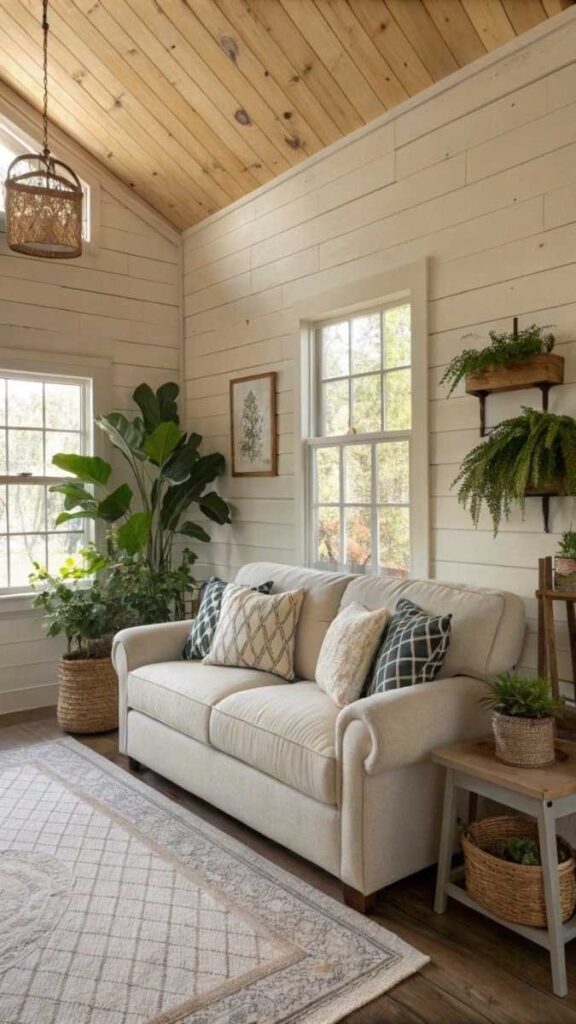
Rust with natural linen is a combination built entirely on texture contrast. The wall color is saturated but earthy; the linen is matte and soft. Together, they create a room that feels very current, the kind of organic, material-led aesthetic that’s been growing across interior design since the early 2020s and shows no sign of retreating.
The linen sofa doesn’t need to be expensive; the texture reads well even at lower price points. Add a woven throw and some dried botanicals (pampas, eucalyptus, dried wheat) and the palette is complete. Solves the problem of spaces that feel visually flat or too polished.
Golden Yellow and Deep Teal as a Warm-Cool Contrast Scheme
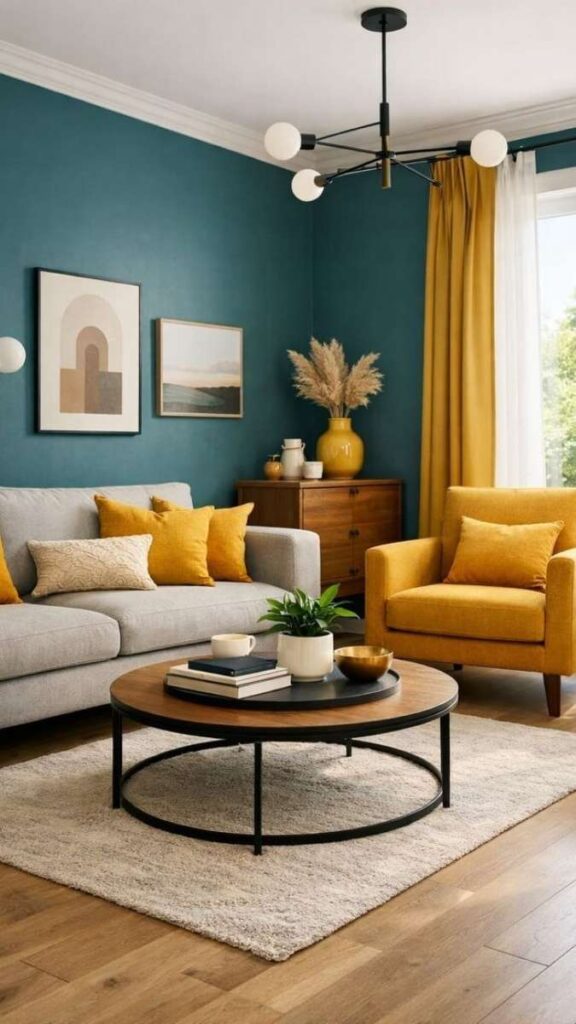
This one leans bolder, but the combination works because of how the tones are calibrated. Golden yellow has warm undertones; deep teal (not bright turquoise) leans towards the blue-green spectrum but isn’t cool enough to cancel out the warmth. The result is a room with energy and depth.
The golden wall does the atmospheric work; the teal sofa grounds it. Use a patterned rug that pulls both colors together and the scheme reads cohesive rather than chaotic. Best in rooms with confident, defined design direction not ideal for spaces where you’re still figuring things out.
Warm Terracotta and Dusty Pink for a Soft, Sun-Baked Aesthetic
Color-blocking two warm tones on the same wall terracotta on the lower two-thirds, dusty pink above sounds maximalist, but in practice it’s surprisingly quiet. Both tones share warm, muted undertones and read as a gradient in natural light. This approach gives a room personality without introducing patterns or busy textures.
The softness of dusty pink prevents the terracotta from feeling heavy. In a bedroom especially, this scheme creates a visual warmth that doesn’t depend on furniture or textiles. Works best in rooms that get morning light.
Read More About: 27+Dark Academia Living Room Ideas That Feel Intellectual, Moody,
Warm Taupe Walls With Layered Cream and Biscuit Textiles
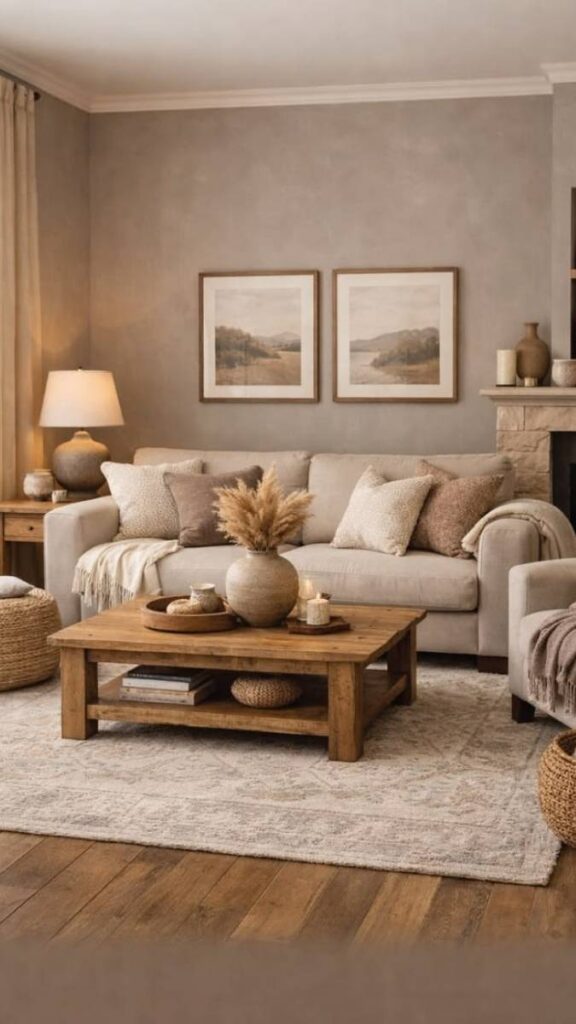
Tonal dressing using different values of the same warm hue is increasingly popular in 2026 interiors because it creates rooms that feel intentional rather than accidental. Warm taupe walls anchored by cream upholstery and biscuit-toned textiles keep the palette within a narrow range, but the variation in texture (linen, jute, wood, ceramic) prevents it from looking flat.
This scheme is particularly effective in open-plan spaces where you want warmth without visual noise. The restraint is the point; it’s a scheme that rewards careful material selection over quantity.
Warm Mustard and Natural Wood in a Minimalist Kitchen-Diner
Mustard in a kitchen sounds risky, but as a cabinet color (rather than a wall color), it’s significantly easier to live with. Against a white tile backsplash and natural wood countertop, it reads grounded and considered rather than loud. Brass pendant lighting continues the warm-toned thread.
This palette works especially well in long, narrow kitchen-diners where white cabinetry would create a corridor-like feel; the mustard visually compresses the width and makes the room feel more deliberate. Open shelving with warm ceramics, wooden boards, and glass jars completes the look.
Warm Burgundy Accents in a Neutral Room for a Moodier
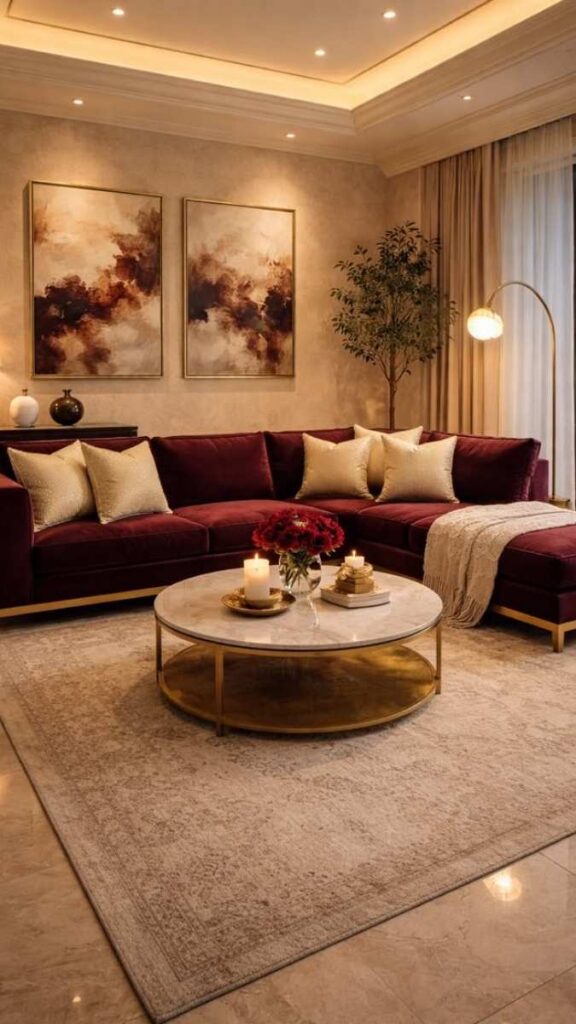
Burgundy is easier to integrate than most people think, especially when you treat it as an accent rather than a base. One burgundy velvet armchair and a well-styled burgundy bookshelf create a moodier, more editorial feel in an otherwise neutral room.
The red-wine depth of burgundy reads warm, not cold, so it shifts the emotional temperature of the room significantly without competing with other elements. This is a particularly good option for autumn and winter, when lighter palettes can start to feel less appropriate for the light level. Works in any room where you want to introduce richness.
Warm Ivory and Stone for a Timeless, Unfussy Neutral Scheme
Ivory and stone is the warm neutral pairing that survives every trend cycle. Unlike stark white and grey (which read cool and corporate), ivory and stone share warm, slightly organic undertones that make a room feel inhabited and comfortable. The scheme works across styles; it’s neither specifically Scandi, nor specifically rustic, nor specifically minimalist.
That flexibility makes it one of the most practical long-term choices for anyone who plans to change decor seasonally or doesn’t want to redecorate every two years. Add warm wood flooring and linen curtains and it becomes a genuinely complete interior.
Warm Terracotta and Forest Green in a Maximalist Living Room
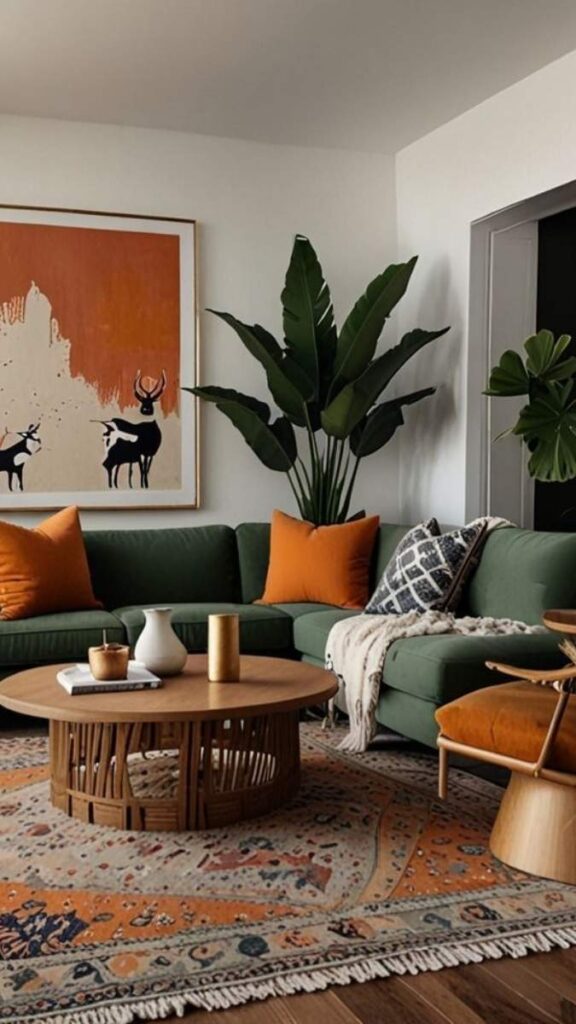
Terracotta and forest green are historically rooted, think Moroccan riads, Indian interiors, Victorian drawing rooms. In 2026, the combination is returning in a less literal way: terracotta walls, a forest green velvet sofa, a warm-toned Persian rug, and a gallery wall with wooden or brass frames.
It’s maximalist by nature but structured by color; everything shares the same earthy, warm temperature. IMO, this is the combination for anyone who wants a room that reads globally influenced and deeply personal rather than trend-chasing. Needs a large enough room to carry the visual weight.
Peach and Warm White for a Light-Filled, Open Bedroom Scheme
Peach is underused in bedrooms. It shares warmth with terracotta but at a much lower saturation the effect in a room with morning light is almost luminous. Against warm white bedding and light pine furniture, it avoids the bubble-gum association and reads more grown-up and considered.
Sheer curtains in ivory let light diffuse softly through the room rather than cutting it with shadows. This scheme is especially useful in east-facing bedrooms where the morning light is already warm-toned; the peach walls amplify it naturally. Great option for smaller bedrooms where a heavier palette would close the space in.
Warm Brown and Cream in a Traditional Home Office Setup
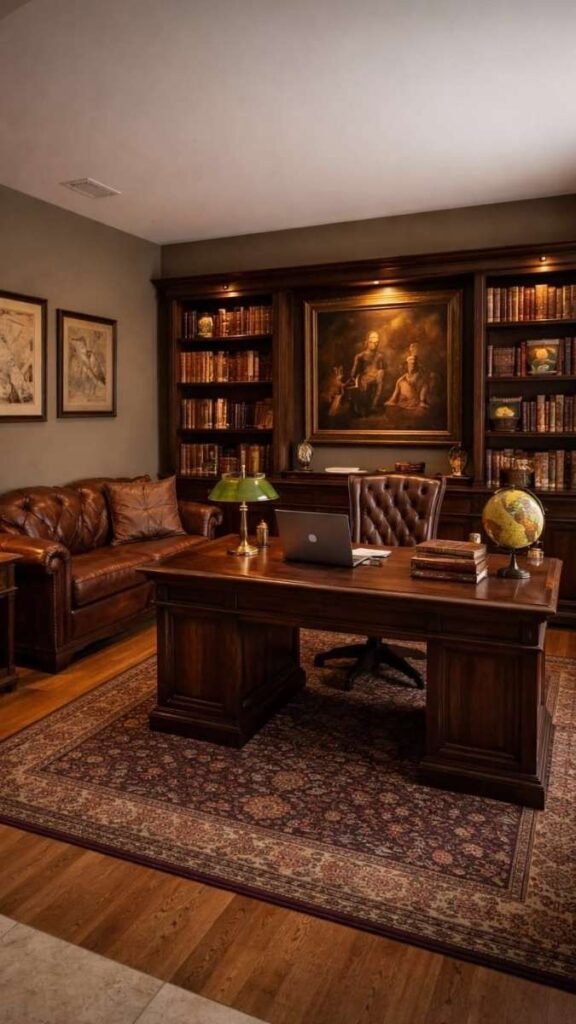
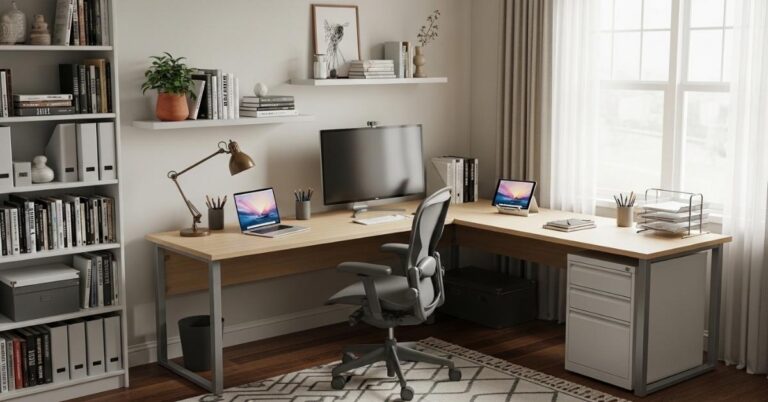
A home office designed around warmth rather than productivity clichés, no cool white walls, no harsh overhead lighting is actually easier to work in for long periods. Warm brown walls with cream built-in bookshelves create the kind of library-adjacent atmosphere that makes sitting at a desk feel less punishing.
A cognac leather chair adds richness; a brass table lamp provides task lighting with warmth. This is a scheme built on the idea that your work environment should feel like it belongs in your home, not like a WeWork branch that happened to install into your spare bedroom.
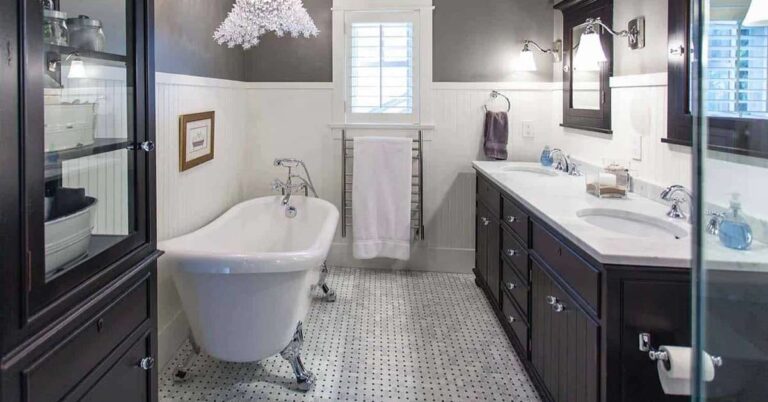
Warm Copper and Nude Blush in a Modern Bathroom
Bathrooms are often the last room people apply a warm color scheme to and it’s a missed opportunity. Nude blush walls (the kind that hover between pink and beige) with copper fixtures create a bathroom that reads spa-like without going overboard on marble and expense.
The copper fixtures replace cold chrome and bring the same warmth as a brass accent without the heaviness. A wooden floating shelf and cream towels keep the overall palette soft. Works especially well in windowless bathrooms where you need the warmth to compensate for the absence of natural light.
Warm Amber Lighting Paired With Dark Neutrals for Evening Ambiance
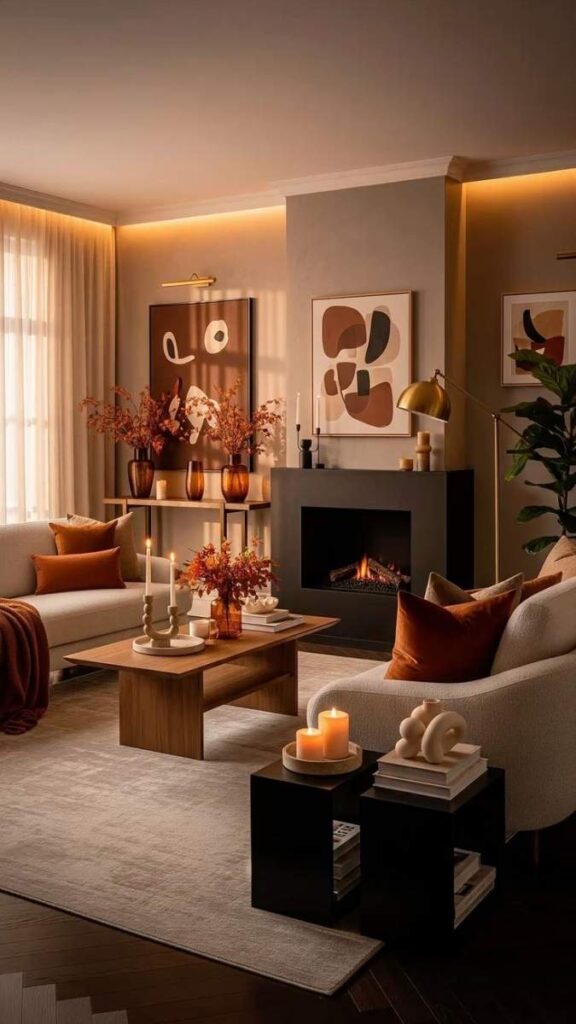
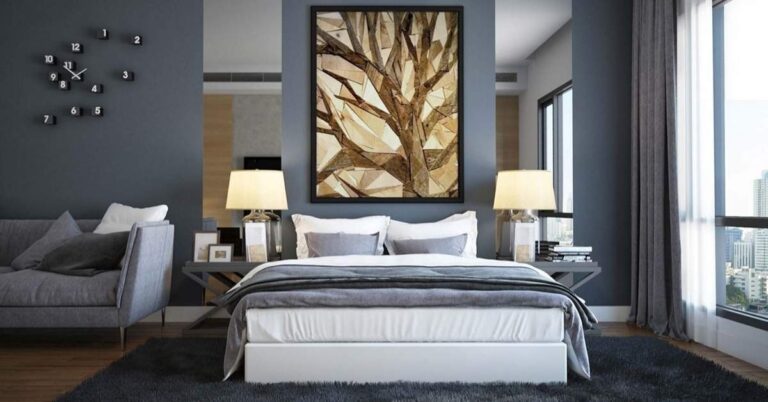
This is less about wall color and more about what lighting does to a neutral room after dark. Charcoal or dark navy walls with warm amber lighting table lamps, floor lamps, candles create a room that transforms completely at night. During the day, the dark walls read bold and modern.
After sunset with warm light sources, the same room becomes genuinely moody and cozy. The cream sofa reflects the amber light and adds enough brightness to prevent the space from feeling oppressive. It solves the problem of rooms that feel flat or interchangeable at different times of day.
Warm Red-Toned Brick Exposed Walls in an Industrial Living Room
If you’re lucky enough to have exposed brick, lean into the warmth rather than painting over it. Red brick (especially in older properties) carries an inherent warmth that no paint can fully replicate. A cream linen sofa against exposed brick creates one of the most effortlessly cozy contrasts in residential design.
Keep the rest of the room relatively restrained dark iron shelving, a leather pouf, Edison bulb pendants and let the brick carry the character. Works especially well in converted apartments, industrial lofts, or older Victorian-style terrace houses where the brick is structural and visible.
Warm Sage and Honey Tones in a Scandinavian Inspired Space
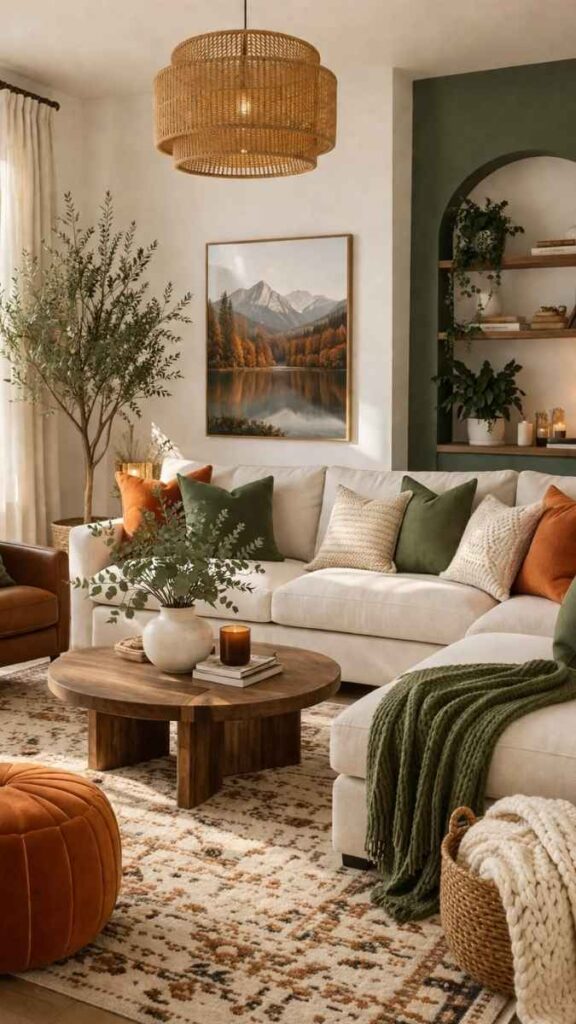
Scandi design sometimes skews too cool all whites and greys with very little warmth. Adding sage green walls and honey-toned wood furniture shifts the palette into something warmer without losing the clean, functional quality. Boucle upholstery in cream keeps the softness; minimal curtains let natural light spread evenly.
This is a useful combination for people who love the simplicity of Scandi design but find that fully cool-toned versions of it feel slightly clinical or uninviting. The sage acts as a bridge between the organic warmth of the wood and the neutrality of the cream.
Layered Warm Neutral Tones Throughout an Open-Plan Space
Open-plan spaces are notoriously difficult to make feel cozy; the square footage works against intimacy. The solution is layering warm neutral tones across zones rather than using one flat color throughout. Warm taupe walls unify the space; a terracotta rug defines the living zone; a honey wood dining table anchors the dining area.
Different textures at each zone boule in the living space, linen on dining chairs add visual interest without adding color complexity. Warm pendant lighting over the dining table and a floor lamp in the living zone create distinct pools of light that break the open space into smaller, more livable areas.
What Actually Makes Warm Color Schemes Work in Real Homes
Choosing the right palette is only half the job. Application of how tones are distributed across walls, furniture, textiles, and lighting determines whether the scheme reads cohesive or chaotic.
Undertones matter more than hue.
Warm color schemes fall apart when materials with mismatched undertones are combined. A warm terracotta wall paired with a cool-grey sofa will always feel slightly off, even if you can’t immediately identify why. Before buying, compare material samples in your actual room light not store light.
The 60-30-10 rule, adjusted for warmth.
Traditionally: 60% dominant color, 30% secondary, 10% accent. For warm schemes specifically, the dominant tone (wall or large furniture) should be your most mid-toned warm color, not your darkest or most saturated. The darkest element (a rust cushion, a walnut table) works best as the 10% anchor. This prevents the room from reading heavily.
Lighting amplifies every decision.
Warm-toned bulbs (2700K–3000K Kelvin) will deepen and enrich warm colors after dark. Cool-toned bulbs (4000K+) will flatten them and introduce a strange cast. If your scheme looks good in the daytime but wrong at night, the lighting temperature is almost always the culprit.
Texture adds warmth without adding color.
A warm beige room with one texture looks dull. The same warm beige room with linen, jute, wood, ceramic, and velvet reads rich and layered. When you can’t add more color, add more material contrast it achieves the same thermal effect.
Quick Reference Warm Color Scheme Pairings by Room and Goal
| Color Pairing | Best Room | Space Type | Problem It Solves | Difficulty |
| Terracotta + Cream | Living Room | Medium–Large | Feels clinical or empty | Easy |
| Warm Beige + Rust | Any Room | Any size | Too neutral, lacks warmth | Easy |
| Amber + Olive | Living Room | Medium–Large | Needs depth and character | Moderate |
| Honey Yellow + White Oak | Bedroom | Small–Medium | Poor natural light | Easy |
| Chocolate Brown + Cream | Bedroom | Any size | Feels unfinished or too plain | Easy |
| Sage + Terracotta (two-tone) | Dining Room | Medium | Poor proportions / low ceilings | Moderate |
| Blush + Sand | Bedroom/Living Room | Small–Medium | Too cool or sterile | Easy |
| Warm Taupe (tonal layering) | Open-plan | Large | Feels disconnected or flat | Moderate |
| Mustard Cabinets + Wood | Kitchen | Narrow/Medium | Clinical corridor feel | Moderate |
| Exposed Brick + Cream | Living Room | Any | Underutilized architectural feature | Easy |
Common Warm Color Scheme Mistakes That Make a Room Feel Heavier or Flat
Using too many saturated warm tones at once.
Rust walls, burnt orange sofa, terracotta rug, and mustard cushions in the same room creates visual noise rather than coziness. Warmth is better achieved through one or two saturated tones and the rest in quiet, muted counterparts.
Ignoring the ceiling.
Cool white ceilings on warm-toned walls create a disconnect; the room looks like two separate decisions. Try an off-white or warm white ceiling instead. It costs nothing extra in paint and the difference is immediately noticeable.
Choosing wall color from a tiny paint chip.
Paint reads differently at scale. A warm taupe that looks perfect on a chip can look yellow or pink on a full wall, depending on the room’s light direction. Always test with a large painted swatch (at least A4 size) on the actual wall before committing.
Relying on wall color to carry all the warmth.
If the furniture and textiles stay cool or mid-toned, a warm wall color becomes an accent rather than a scheme. The warmth needs to be present across at least three different material types: walls, upholstery or textiles, and a hard surface (wood, ceramic, or metal).
Skipping artificial light planning.
Natural light changes by hour and season. The warm scheme that looked perfect in summer afternoon light may look muddy in winter morning light. Plan your artificial lighting to compensate for warm bulbs, multiple lamp sources, and dimmable fixtures that give you control year-round.
FAQ’s
What are the best warm colors for a cozy home?
Terracotta, warm beige, honey yellow, cinnamon, ochre, rust, and warm taupe are among the most consistently effective warm tones for residential spaces. The key is selecting tones with yellow or orange undertones to avoid anything that leans pink or red without a grounding neutral alongside it. Pair with natural wood, linen, and warm-toned lighting for the full effect.
How do I make a warm color scheme work in a small room without making it feel smaller?
Use your most saturated warm tone on one feature wall only, and keep the remaining walls in a lighter version of the same hue or a warm white. Avoid dark warm tones (like chocolate brown or deep rust) across all four walls in small rooms; they absorb light and compress the space. Light-reflective textiles and warm bulb lighting help maintain the cozy effect without sacrificing perceived space.
Can warm color schemes work in a north-facing room with little natural light?
Yes and they often work better than cool schemes in low-light rooms. Honey yellow, warm terracotta, and amber tones compensate visually for the absence of warm natural light. The key is pairing them with warm-toned artificial lighting (2700K bulbs) and reflective surfaces, mirrors, glossy ceramics, metallic accents that help bounce light around the room.
Warm neutrals vs. bold warm colors: which is better for a living room?
Warm neutrals (taupe, warm beige, ivory) are lower risk and more adaptable long-term furniture changes won’t require repainting. Bold warm tones (terracotta, rust, amber) create more immediate atmosphere but require more commitment to a specific look. For a first attempt at a warm scheme, start with warm neutrals and introduce bold tones through textiles and accessories before committing to a wall color.
What’s the difference between a warm color scheme and just adding warm accents?
A warm color scheme means warmth is embedded across multiple surfaces walls, large furniture, flooring, and textiles all share warm undertones. Adding warm accents means introducing warmth through smaller objects (cushions, throws, candles) into an otherwise cool or neutral room. Both approaches work, but accents alone won’t fundamentally change the thermal feel of a room the way a full scheme does.
What warm color combinations work best for open-plan spaces?
Tonal layering works best using variations of the same warm hue across different zones rather than introducing multiple distinct warm colors. For example: warm taupe walls throughout, terracotta rug in the living zone, honey wood in the dining zone. This unifies the space while creating distinct areas. Avoid using a different bold color in each zone; it fragments the space visually.
Is warm beige still relevant in 2026, or does it look dated?
Warm beige is more relevant now than it was five years ago partly as a reaction to the cool grey trend that dominated the 2010s. In 2026, beige reads contemporary when paired with textured natural materials (jute, raw linen, aged wood) and warm metallics like brass or copper. The version that looks dated is flat beige with no texture variation or material contrast not warm, layered beige done properly.
Conclusion
A well-considered warm color scheme doesn’t require a renovation or a significant budget; it requires understanding which tones work together, how light affects them, and where to introduce warmth across a room’s different layers. The ideas in this list cover a range of approaches: some are as simple as swapping cushions, others involve committing to a wall color. All of them are grounded in how real rooms actually work.
Start with one or two ideas that fit your space constraints and your current furniture. Test a wall color with a large swatch before committing. Add warm lighting before buying anything else, it costs almost nothing and changes more than people expect. Build from there, and the room will follow.