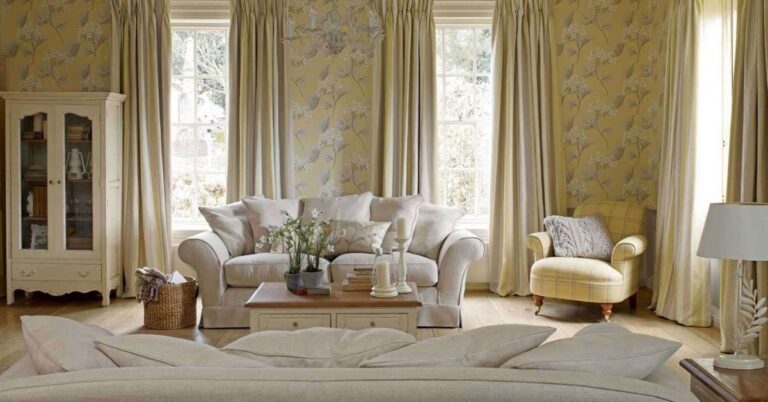
42+ Cool Living Room Ideas That Actually Work in Real Homes
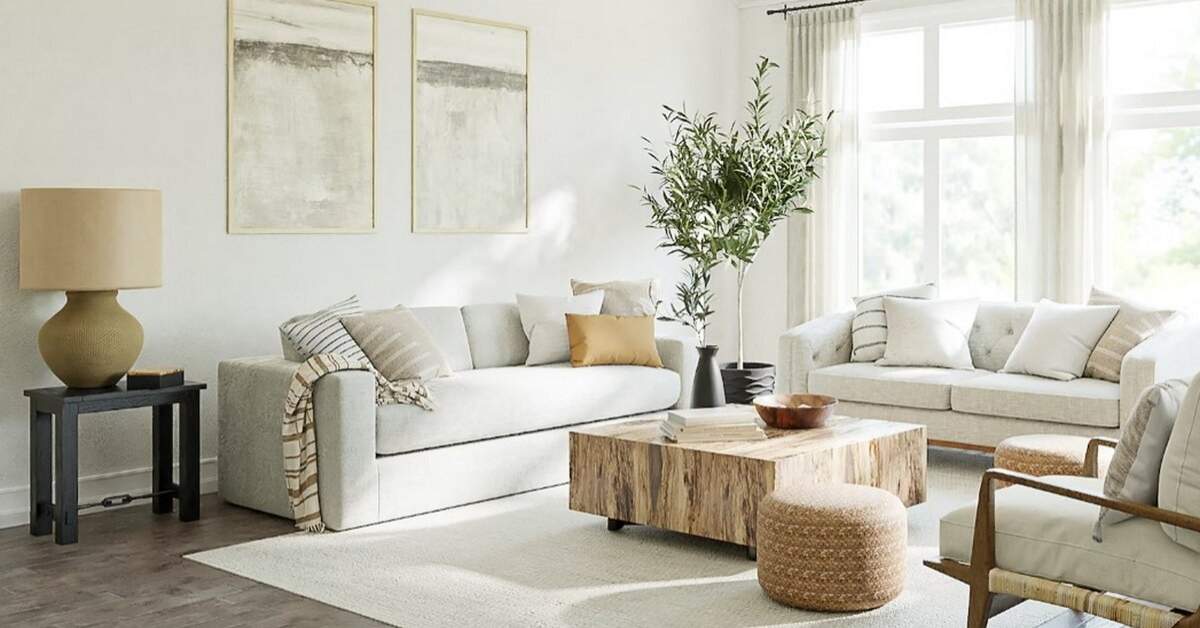
Your living room sets the tone for everything how the space feels when you walk in, how well it functions on a regular Tuesday, and whether it looks intentional or just assembled over time. Most rooms aren’t bad, Cool Living Room Ideas they’re just slightly off: wrong scale, flat lighting, or furniture pushed against walls because it seemed safe. Cool doesn’t have to mean expensive or dramatic. It usually just means considered.
If you’re working with a small apartment, a rented space, or a room that feels stuck somewhere between “functional” and “finished,” these ideas are built for exactly that.
Low Profile Sofa with a Grounded, Layered Setup
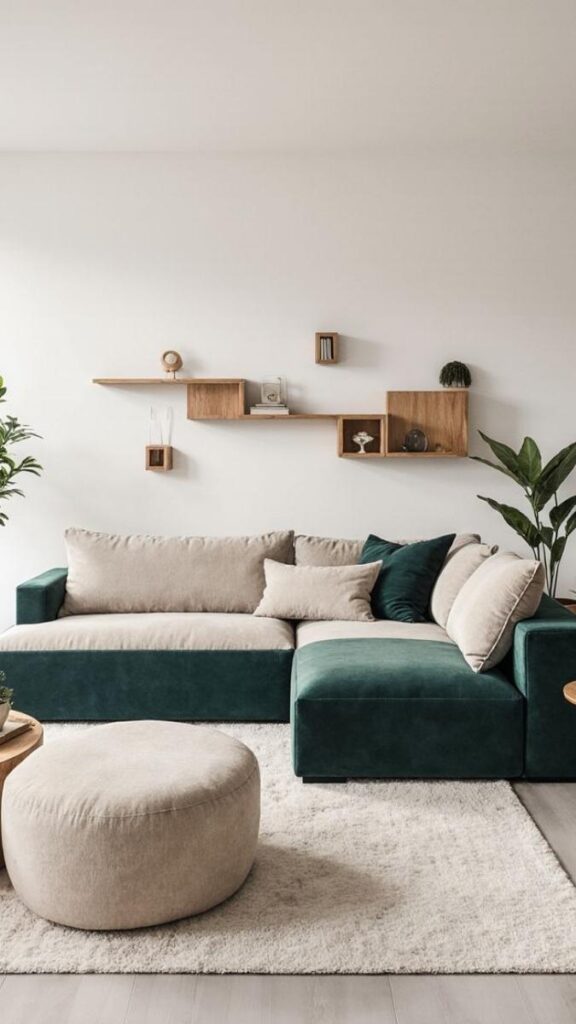
Low sofas do something most people don’t expect: they make ceilings feel higher and rooms feel more expansive without adding a single square foot. Pair one with a flat-weave or low-pile rug in a warm neutral, a wood coffee table at the same visual weight, and a pendant light hanging close overhead.
The whole setup creates a cohesive horizontal plane that reads as intentional rather than crowded. This layout works best in rooms under 300 sq ft where vertical space is the only real asset. The layering (rug → sofa → throws → pendant) is what moves it from furniture arrangement to an actual design choice.
Gallery Wall That Starts from the Furniture, Not the Wall
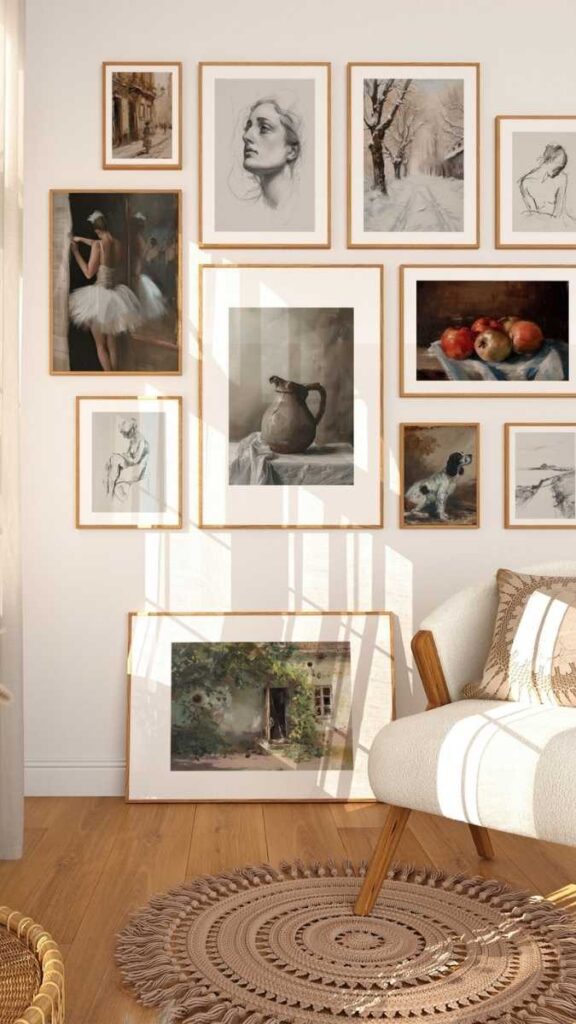
Most gallery walls fail because they start from the wall and work outward which leaves them floating. Anchor yours to the sofa or console below it instead. The bottom edge of the lowest frame should sit 8–10 inches above the furniture.
Mix two or three frame finishes (matte black, natural wood, thin brass), keep the artwork in the same tonal family, and let the arrangement be slightly asymmetrical. In my experience, this is one of the first ideas people try and immediately notice: a wall that felt blank now has weight and story without any architectural work.
Floating Shelves as a Functional Focal Point Cool Living Room Ideas
Floating shelves work hardest when they’re not overloaded. Leaving at least 40% of each shelf empty that breathing room is what makes the displayed objects feel curated rather than stored.
Use a mix of heights: books on their sides, a small plant, one sculptural object. Light the shelves with a plug-in sconce on one side to create shadow and depth. This setup is especially good for renters because it requires minimal wall damage and can be fully reconfigured. The problem it solves: storage that doesn’t look like storage.
Curved Furniture in a Square or Boxy Room
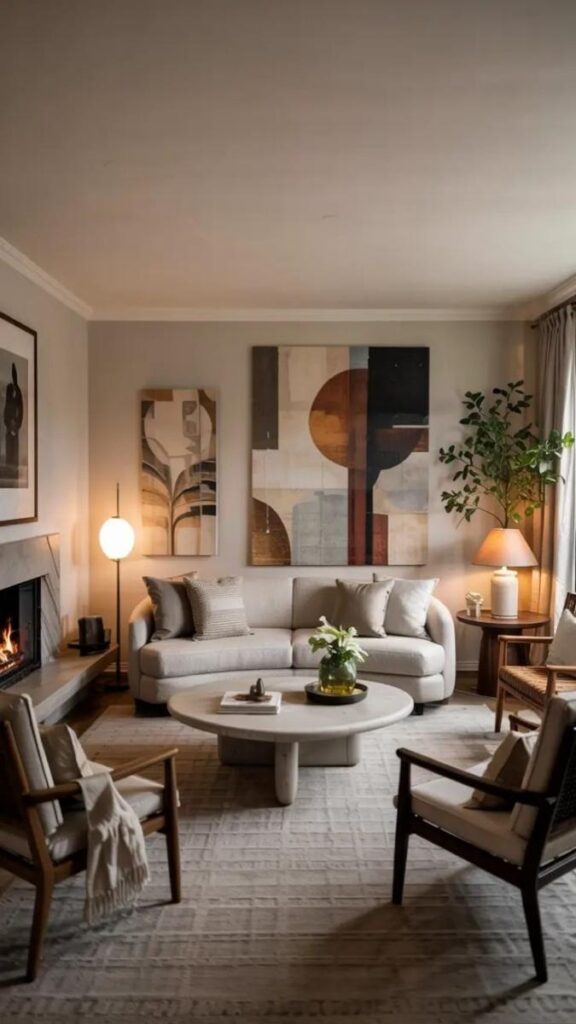
Square rooms with hard edges feel clinical. Introducing one curved piece, an arc chair, a rounded ottoman, or a half-moon coffee table softens the geometry without needing a renovation. The contrast between the room’s sharp angles and the organic shape of the furniture creates visual tension in the right way.
Keep the palette muted so the shape does the work. This is a simple intervention that changes the feeling of a room without changing its structure, which makes it especially useful in rental apartments where you’re working with a fixed shell.
Warm Ambient Lighting Without a Single Overhead Fixture
Overhead lighting flattens a room. Layering light from multiple lower sources: a floor lamp in a corner, a table lamp on a side table, a small lamp on a console creates depth and makes the space feel significantly warmer by evening.
Use bulbs at 2700K for the warmest feel. The trick is making sure no single source is too bright; dimmers help. This approach is particularly effective in open-plan apartments where you want to visually separate the living area from the dining or kitchen zone using light alone.
Read More About: 29+ Entryway Decor Ideas That Make Your Home Feel Intentional the Moment You Walk In
A Statement Coffee Table That Does Double Duty
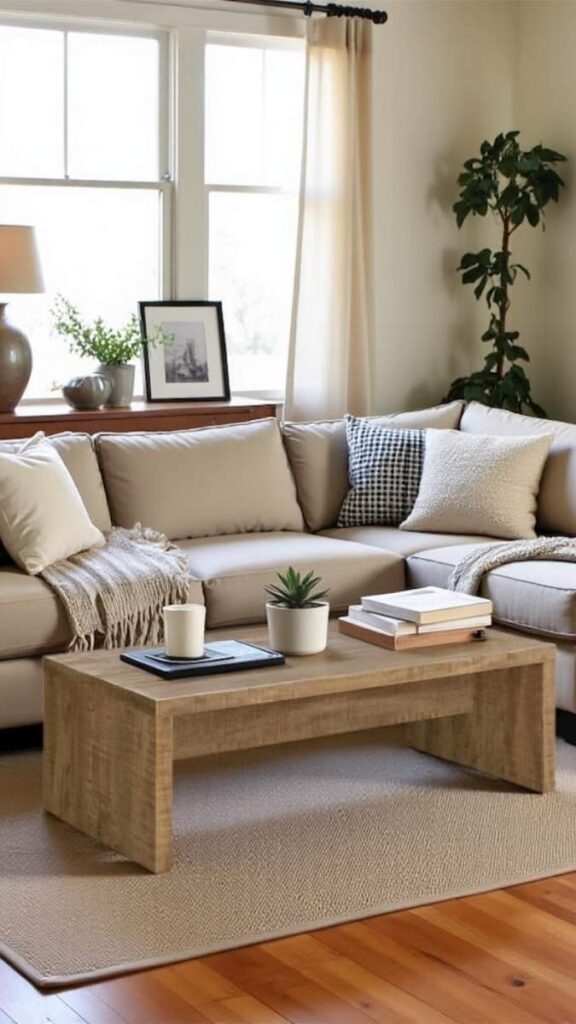
A coffee table that adds storage underneath whether through open shelving, a lift-top mechanism, or a hollow woven base earns its footprint. Honestly, the days of a purely decorative coffee table feel over in 2026 when most living rooms are expected to handle lounging, working, and hosting in the same 150 square feet.
Style the surface with a tray to group smaller objects, which prevents visual scatter. Works especially well in small apartments where every piece needs more than one job.
Textured Walls Without Paint or Wallpaper
Limewash or clay paint creates texture with depth, the kind that shifts with light throughout the day. Unlike flat paint, it absorbs and reflects at the same time, which makes a wall feel dimensional. Apply it to one wall only (usually the sofa-facing wall) and leave the rest neutral.
This works in both owned and rented spaces depending on the lease, but even removable textured wallpaper panels can approximate the effect. The problem it solves: a room that looks technically complete but still feels flat.
Plants as Structural Elements, Not Accessories
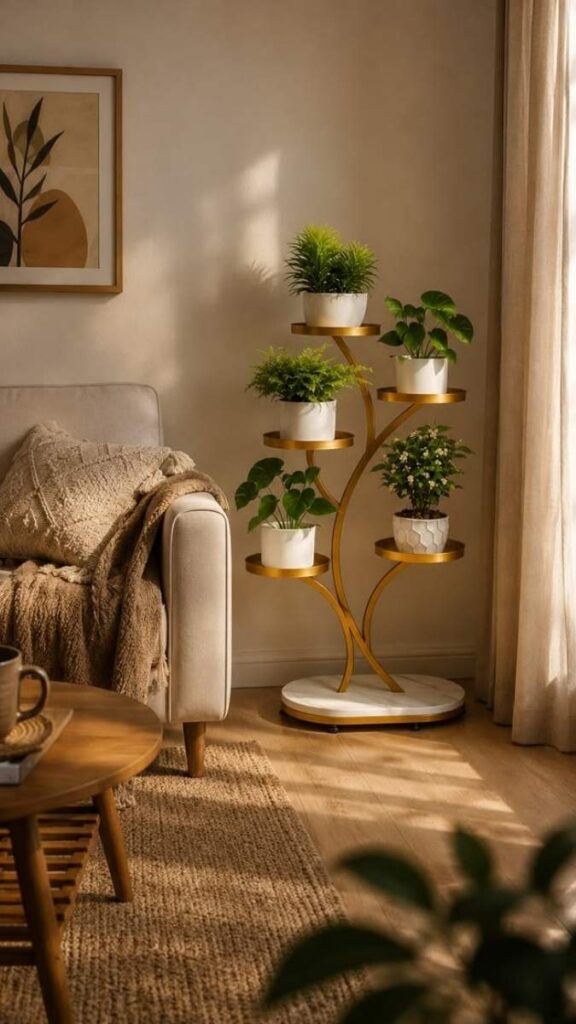
A single large plant fiddle-leaf fig, monstera, olive tree placed in a corner changes the spatial hierarchy of a room. It fills vertical space, draws the eye upward, and introduces organic shape and color that no furniture can replicate.
The key is treating it like furniture: choose the pot and stand as deliberately as you’d choose a side table. This works best in rooms with one good light source, and it solves the “empty corner” problem without adding another seating piece or lamp.
Layered Rugs for Zones and Warmth
Layering a smaller patterned or textured rug over a flat jute or sisal base is one of the most cost-effective ways to add depth to a living room floor. The base rug grounds the space; the top rug defines the seating zone and adds color or pattern without overwhelming the room.
This is a strong option for anyone who wants to introduce a print but doesn’t want it to dominate the jute underneath keeps it calm. It also extends the life of both rugs.
Read More About: 49+ Best Christmas Bedroom Decor Ideas That Make Your Room Feel Like a Winter Fairytale
A Console Table Behind the Sofa
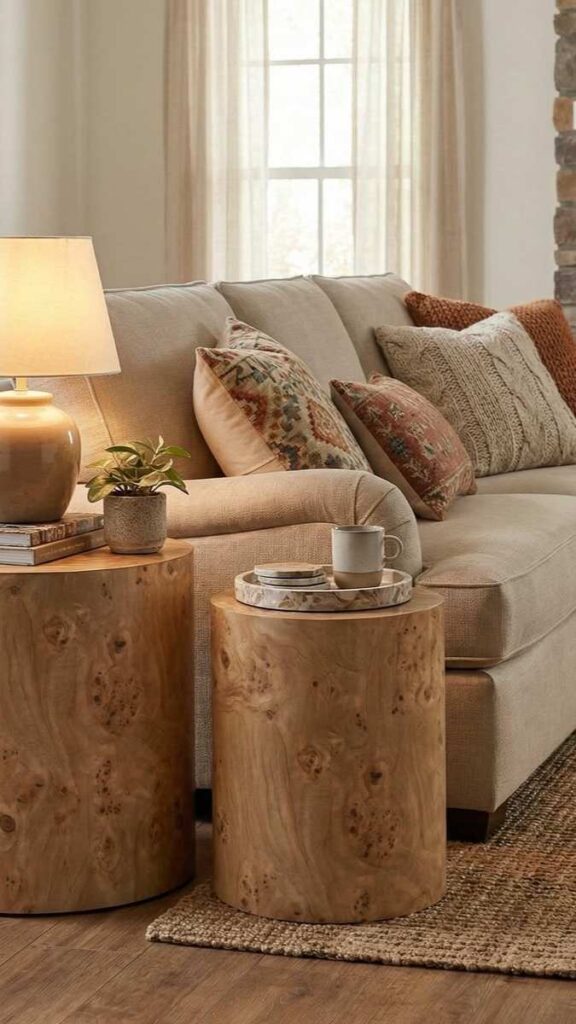
In open-plan layouts or large rooms, a console table behind the sofa defines the living area without adding a wall. It creates a visual backstop for the seating zone and adds a surface for lamps, books, or small plants.
Keep it narrow 10 to 14 inches deep so it doesn’t visually weigh down the sofa. Two small lamps on each end of the console create symmetry and anchor the space. This is particularly useful in studio apartments where the “living room” needs to feel distinct from the rest of the space.
Mixing Metals Intentionally
The old rule about matching metals is gone. In 2026, the more interesting approach is choosing two complementary metals, say, brushed brass and matte black and repeating them across the room in different scales (lamp base, shelf bracket, picture frame, hardware).
What makes it work is repetition: each metal appears at least twice so it reads as intentional rather than accidental. This solves the problem of a room that feels assembled from different eras without the effort of replacing everything.
Curtains Hung High and Wide
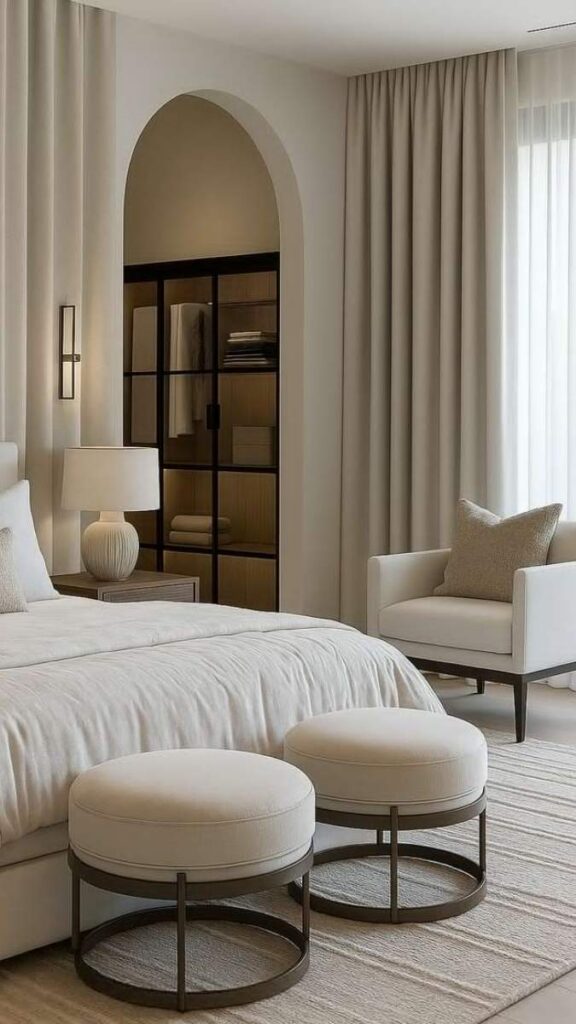
Hanging curtains 4–6 inches from the ceiling and 8–12 inches wider than the window frame on each side does two things: makes the window appear substantially larger and makes the ceiling feel higher. Use a lightweight fabric like linen or voile so they move slightly with air circulation.
In a small room, this is one of the highest-impact changes you can make with a curtain rod and fabric, no structural change, no paint. Works in any space but is especially noticeable in rooms under 10 feet tall.
A Reading Nook Carved from Dead Space
Most living rooms have at least one corner that isn’t really being used; it holds a plant that’s struggling or a chair no one sits in. Converting that corner into an intentional reading nook using a single armchair, a floor lamp positioned over the shoulder, and a small side table at the right height gives the room a secondary activity zone.
The distinction between the main sofa area and the reading corner makes the whole room feel larger because it has defined purposes, not just furniture.
Bookcase as a Room Divider
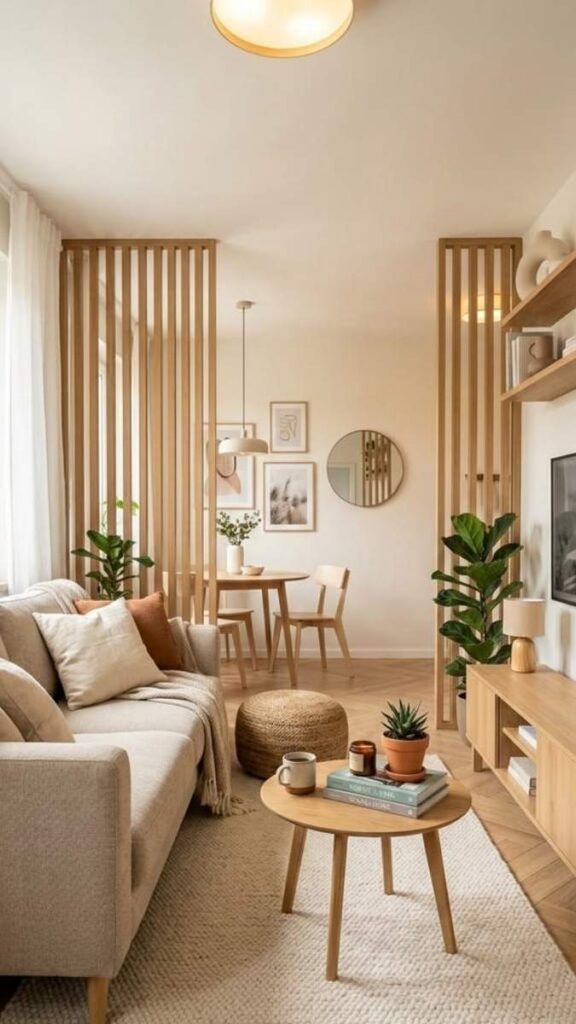
A bookcase placed perpendicular to the wall rather than against it creates a partial room divider that separates zones without blocking light or airflow. A low bookcase (under 60 inches) maintains sight lines across the room while defining two distinct areas.
In studios or open-plan apartments, this is a practical alternative to curtain dividers, which tend to look temporary. The double-sided access means it functions as storage for both zones.
A Dark Accent Wall in a Light Room
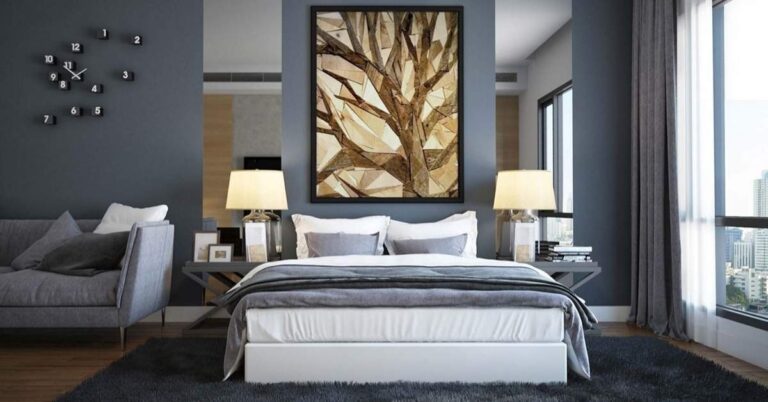
A deep-toned wall charcoal, forest green, navy on the sofa-facing side creates a backdrop that makes the furniture in front of it pop without darkening the room overall. The contrast between the painted wall and the paler furniture draws the eye to the seating area first, which organizes the room visually.
This works especially well in rooms with decent natural light, where the darker wall absorbs rather than dominates. I’ve noticed this style tends to look most resolved when the sofa is light in tone and the contrast does the work.
Multifunctional Ottoman as the Room’s Workhorse
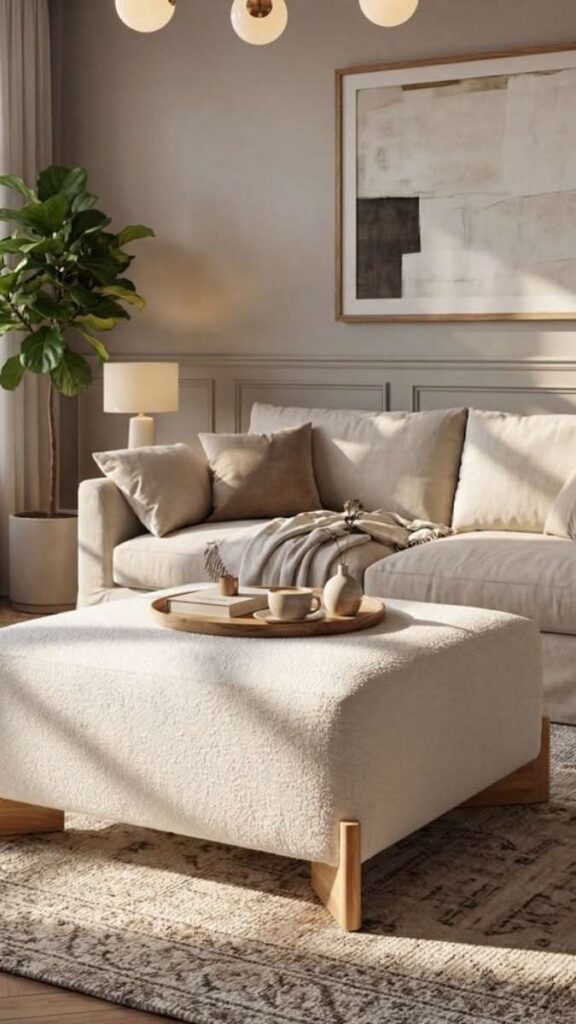
An oversized square or rectangular ottoman replaces both a coffee table and extra seating while adding softness to the room’s center. Add a wooden or metal tray on top to create a stable surface for drinks and objects.
The tray solves the impracticality of using fabric as a table. Leather, boucle, and performance velvet hold up best for daily use. This is the right choice for living rooms that need to flex between relaxing, working, and hosting without multiple pieces competing for the same floor space.
Read More About: 25+ Bathroom Decor Ideas That Actually Make Small Spaces
Statement Ceiling Moment
Ceilings are the most overlooked surface in a living room. Painting just the ceiling in a warm, saturated tone terracotta, sage, deep clay adds architecture to a room that doesn’t have any without touching the walls.
The color draws the eye upward and creates the feeling of a room that’s been designed rather than defaulted. This is one of the lowest-commitment accent color strategies because the ceiling doesn’t compete with furniture placement or natural light the way a wall does.
Sconce Lighting for Bedside Style Warmth
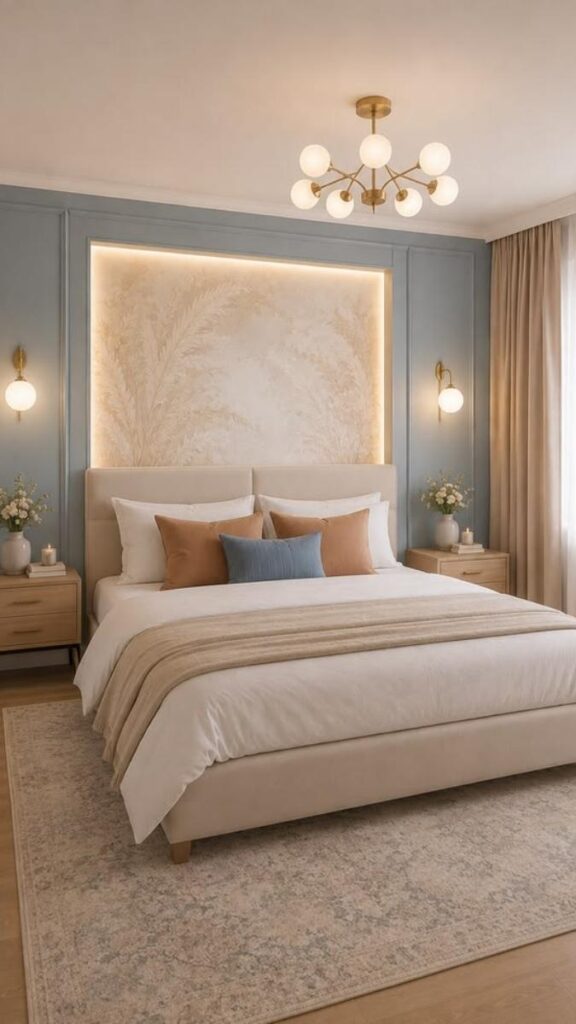
Plug-in wall sconces on either side of the sofa create the same warmth as bedside lamps without needing hardwired installation. Positioned at 60–64 inches from the floor, they cast light downward at eye level, which is the most flattering and functional height for evening use.
Conceal the cords with a cord cover painted to match the wall. The setup adds a second layer of light that softens the room significantly by night, and the symmetry of two flanking sconces gives the sofa wall a finished, considered look.
Linen or Bouclé Sofa Slipcover Update
Slipcovers have come a long way from the saggy versions of the early 2000s. Modern tailored slipcovers in linen or cotton canvas fit closely enough to look intentional, and they extend the life of a sofa by years while changing its aesthetic completely.
This is the right move for anyone who has a structurally sound sofa they’re tired of looking at. It also works well for renters who can’t replace furniture permanently the slipcover ships with you.
Artwork at Eye Level, Not Measuring Tape Level
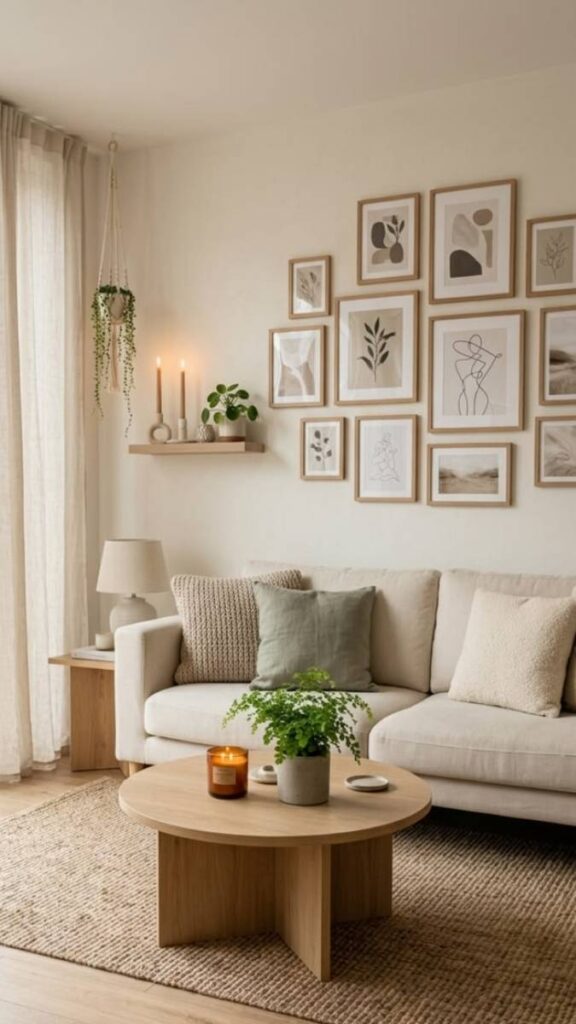
The standard “center at 57 inches” rule was built for gallery walls without furniture. In a living room, artwork should relate to the furniture below it; the bottom of the frame should sit 6–8 inches above the sofa back, not float halfway up an empty wall.
Correct hanging height makes art look like part of the room rather than an afterthought. This is one of those adjustments that takes 15 minutes and changes how composed the room looks instantly without buying anything new.
Natural Material Contrast for Texture Without Color
Rooms that feel flat often lack material contrast, not color. Pairing smooth surfaces (painted walls, lacquered side tables) with rough ones (woven rattan, raw linen, unglazed ceramics) creates visual interest that photographs well and reads beautifully in real life.
The key is staying in the same tonal range let the textures carry the differentiation rather than color. This works in any palette but is especially effective in monochromatic or neutral schemes where there’s no pattern to provide variation.
A Vintage or Antique Piece as an Anchor
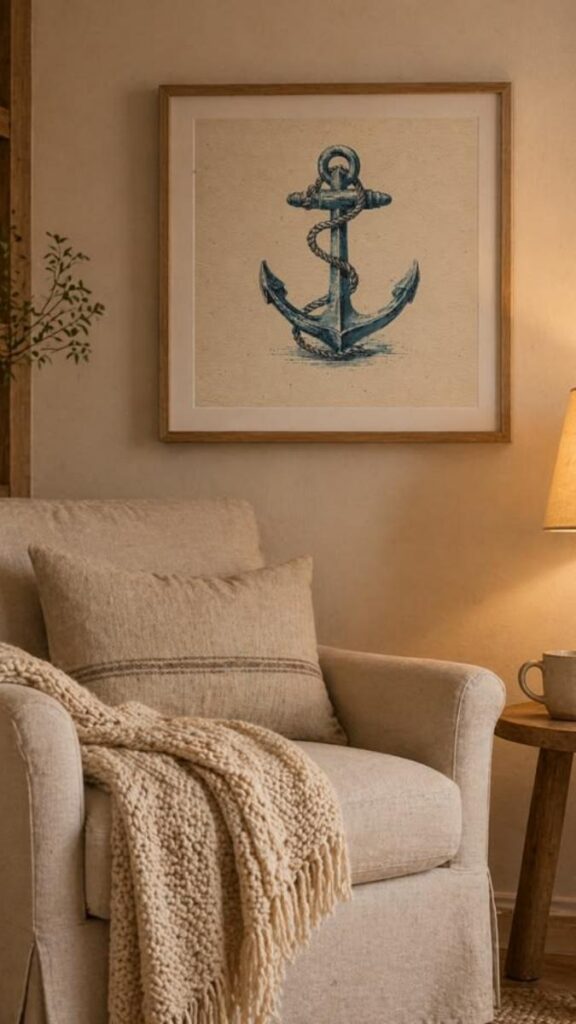
One older piece, a vintage chest, an antique mirror, a secondhand side table keeps a room from looking like a showroom. It adds layered history and signals that the room has been curated rather than purchased as a set.
The contrast between new upholstery and an aged wood grain creates the kind of tension that makes a room interesting. Flea markets, estate sales, and online resale platforms consistently offer pieces that would cost triple in retail stores and they’re often better made.
A Narrow TV Console That Creates Negative Space
Most TV consoles are too wide and too tall, which overpowers the wall and the screen above it. A console that’s narrower than the TV and low to the floor (under 20 inches tall) creates negative space on either side that makes the wall feel considered.
Use that flanking space for a single floor plant on one side, or leave it open. The restraint is the design move. The room feels calmer and more spacious because not every surface is being used.
Smart Lighting Setup with Warm Bias
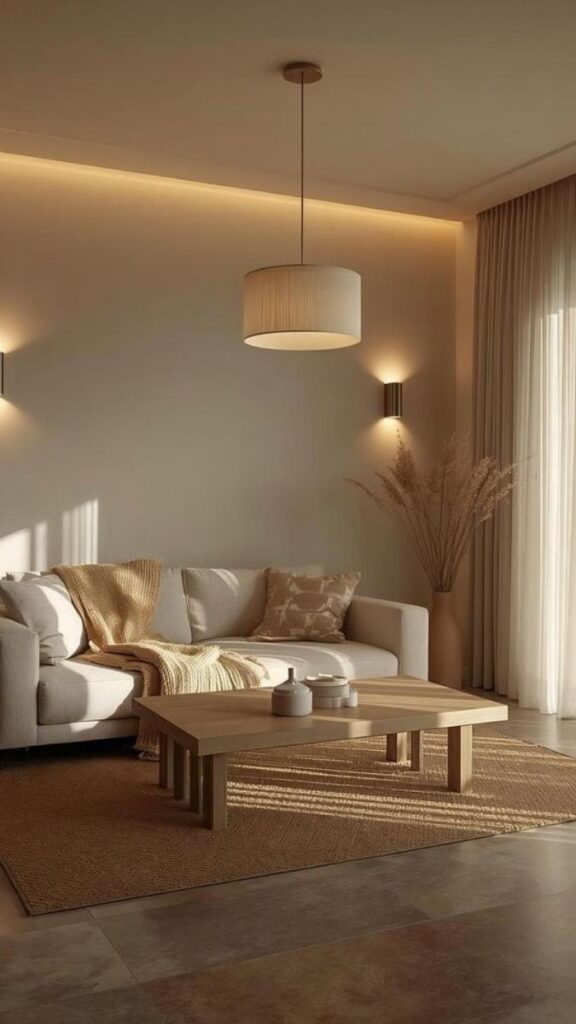
Smart bulbs in floor and table lamps set to 2200–2700K by evening shift a living room from “well lit” to warm and retreat-like with no additional furniture. The contrast between the warm indoor light and the cooler evening exterior is what makes the room feel intentional.
Scene-based lighting (one scene for watching TV, one for reading, one for hosting) is something that’s increasingly accessible through standard smart home setups in 2026 without requiring a full rewire. This is especially useful in multipurpose rooms where the atmosphere needs to shift.
Oversized Floor Mirror as a Space Expander
A floor mirror leaned against a wall rather than hung doubles perceived space by reflecting the room back at itself. Position it where it will catch natural light from a nearby window rather than reflecting a blank wall.
In rooms under 200 sq ft, this is one of the most effective spatial illusions available without structural change. Arched mirrors are particularly popular this year because the curved top softens the reflection and adds form to what’s otherwise a purely functional object.
Throw Blanket System That’s Actually Usable
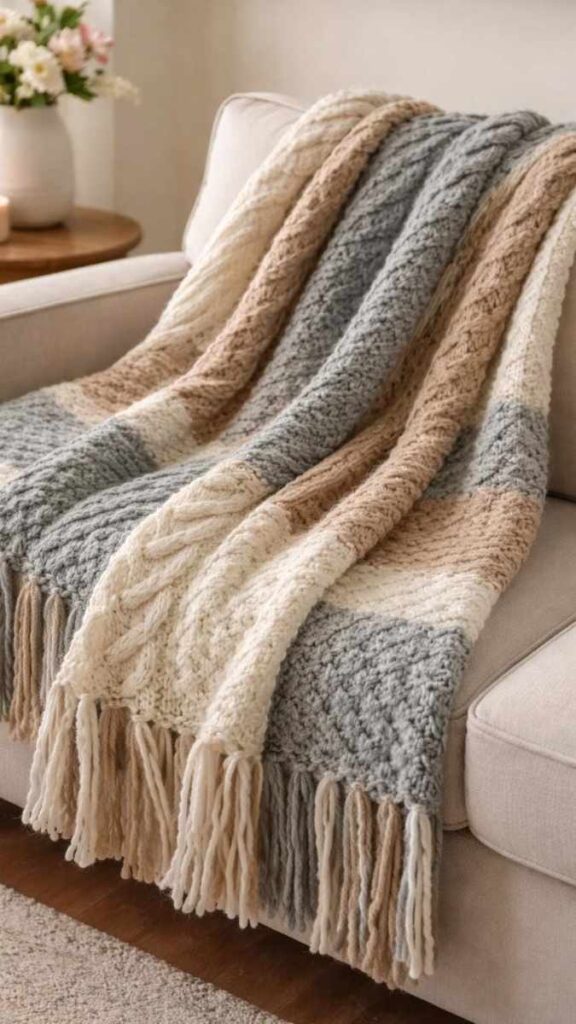
A throw blanket only adds to a room when it’s draped in a way that looks natural rather than arranged. The fold-and-drape-over-the-arm method where roughly half the throw falls to the floor looks lived-in without being messy.
Use a material with natural texture: chunky knit, waffle weave, or cashmere. The goal isn’t decoration; it’s accessible comfort that also happens to photograph well and add warmth to the sofa’s visual weight.
A Defined Entryway into the Living Room
In apartments where the front door opens directly into the living area, defining a mini-entry zone even 3–4 feet deep changes the way the whole room feels. A narrow console, a mirror, and a small rug that’s different from the main living area rug create a visual threshold that makes the space feel larger and more structured.
It gives visitors (and you) a moment of arrival before the main room. This setup solves the “immediate exposure” problem of studio and open-plan apartments without any construction.
What Actually Makes These Living Room Ideas Work
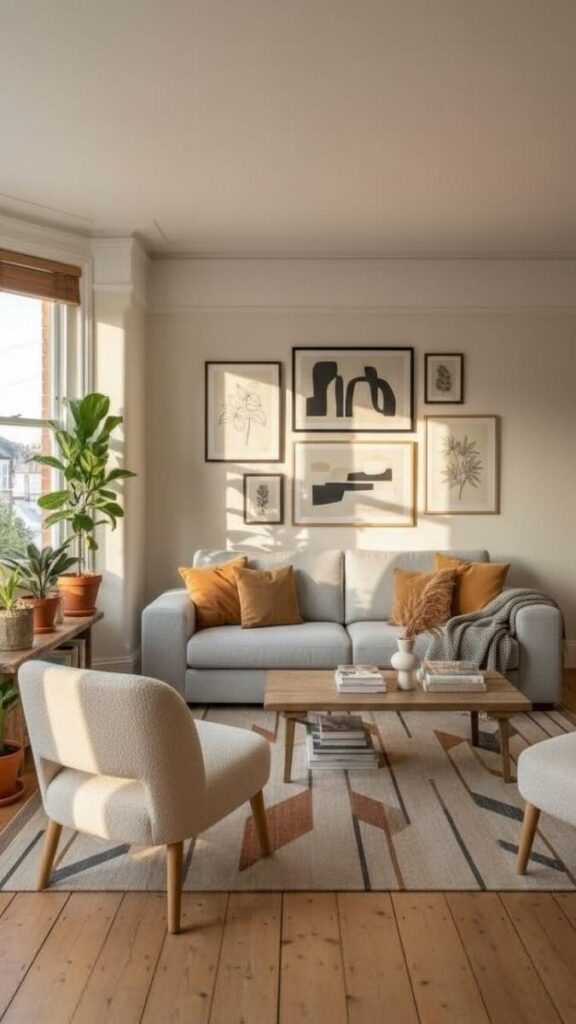
The ideas above aren’t equally applicable to every room, and understanding why they work helps you choose the right ones for your specific space.
Scale is the starting point.
Most living room problems come from furniture that’s the wrong scale for the room either oversized pieces that block traffic flow or undersized ones that leave the room feeling sparse. Before buying anything, measure your available floor space and map out furniture placement on paper. A sofa that’s 10–12 inches shorter than the wall behind it looks intentional; one that spans the full width tends to feel cramped.
Lighting is the most underused lever.
Rooms tend to be designed in daylight and then lived in at night which creates a mismatch. Evaluating your room at 7 PM rather than 2 PM will tell you more about what it needs. If overhead lighting is the only source, adding two table lamps or a floor lamp will change the character of the room more than any furniture swap.
One focal point per wall is enough.
A common mistake is treating each wall independently: a gallery here, a bookcase there, a TV on the third wall, a window treatment on the fourth. Rooms feel calmer when one wall is clearly dominant (usually the one the sofa faces) and the others play a supporting role. The focal wall holds the TV, the art, the fireplace, or the shelves. The other walls hold quieter moments: a sconce, a plant, a single mirror.
Living Room Ideas at a Glance
| Idea | Best For | Space Type | Primary Problem Solved |
| Low-profile sofa with layered setup | Small rooms | Under 300 sq ft | Low ceilings, cramped feel |
| Curtains hung high and wide | Any room | Especially small/rental | Small-looking windows |
| Console behind sofa | Open plans | Studio/loft | Undefined zones |
| Floating shelves + sconce | Renters | Any size | Blank walls, storage |
| Oversized ottoman | Multipurpose rooms | Small/medium | Lack of flexibility |
| Layered rugs | Budget-focused | Any size | Flat, undefined floor |
| Floor mirror | Small rooms | Under 200 sq ft | Spatial compression |
| Dark accent wall | Light, airy rooms | Medium and up | Lack of visual depth |
| Low narrow TV console | Minimal setups | Any size | Overpowered media wall |
| Smart warm lighting | Evening use spaces | Any size | Flat, cool atmosphere |
FAQ’s
What makes a living room look cool without spending a lot?
The biggest shifts tend to come from lighting, hanging height of curtains and art, and material layering none of which require buying new furniture. Adjust your curtain placement, layer your lighting, and introduce one textured piece (a throw, a rug, a ceramic object) in a neutral tone.
How do I make a small living room look bigger?
Use furniture that sits low to the ground, hang curtains close to the ceiling, and introduce a large floor mirror to reflect light. Keeping the floor plan open with a clear path through the room matters more than furniture size. Avoid pushing all furniture against the walls, which actually makes a room feel smaller by hollowing out the center.
What’s the best sofa style for a cool, modern living room in 2026?
Low-profile sofas in textured fabrics (bouclé, linen, performance velvet) are consistently strong. Clean lines with visible legs keep the space feeling open. Mid-century-influenced frames with contemporary fabric choices tend to bridge trends without dating quickly.
How do I add personality to a living room without it looking cluttered?
Go for fewer things with more weight: one large artwork rather than several small ones, one sizable plant rather than multiple small ones, one statement lamp rather than several matching ones. Restraint plus intention reads as personality. Clutter usually comes from too many similarly-scaled objects competing for attention.
Is mixing furniture styles okay in a living room?
Yes, and it’s preferable to a perfectly matched set. The key is finding a unifying thread material, color tone, or period and letting everything connect through that. A wood tone that runs through multiple pieces (table, shelf, picture frame) ties different furniture styles together without forcing them to match exactly.
What’s the biggest mistake people make with living room lighting?
Relying only on overhead lighting. A single ceiling fixture creates even, flat light that removes all shadow and depth from a room. Adding floor and table lamps at different heights and using them instead of the overhead changes the atmosphere completely, especially in the evening.
How do I style a living room when I rent and can’t paint or make changes?
Focus on textiles, lighting, and furniture placement none of which require permanent changes. Use plug-in sconces with cord covers, removable wallpaper panels, slipcovers, floor lamps, and area rugs to define and personalize the space. The biggest impact usually comes from switching out a rug and layering the lighting.
Conclusion
A living room doesn’t need to be redesigned from scratch to feel significantly better. The ideas here tend to work best in combination layered lighting with a defined focal wall, or a scaled-down TV console with intentional negative space. Small adjustments in placement, scale, and material often have more effect than new furniture.
Start with one or two ideas that fit your actual constraints: your budget, your layout, your lease. Move a lamp, rehang the curtains, and lay a rug. The rooms that look most resolved usually got there through a series of small, considered decisions rather than one big overhaul.