26+Bedroom Furniture Layout Ideas That Actually Make Your Space Work
Your bedroom might have decent furniture and it still feels wrong. The bed’s pushed into a corner, the dresser blocks a window, and the whole room just feels tighter than it should. That’s not a size problem, that’s a layout problem. Bedroom furniture layout has a bigger impact on how a room feels than most people realize: the way pieces are arranged determines light flow, movement, visual weight, and whether the space reads as restful or cluttered.
If your style leans minimal, cozy, or somewhere between the two, these layouts are designed for real rooms, small apartments, awkward floor plans, shared spaces not showrooms. In 2026, the shift is away from matched furniture sets and toward intentional arrangement: pieces that work together spatially, not just aesthetically.
Whether you’re rearranging from scratch or just trying to fix one thing that’s been bothering you, here are 21 bedroom furniture layout ideas worth saving.
Center the Bed on the Longest Wall
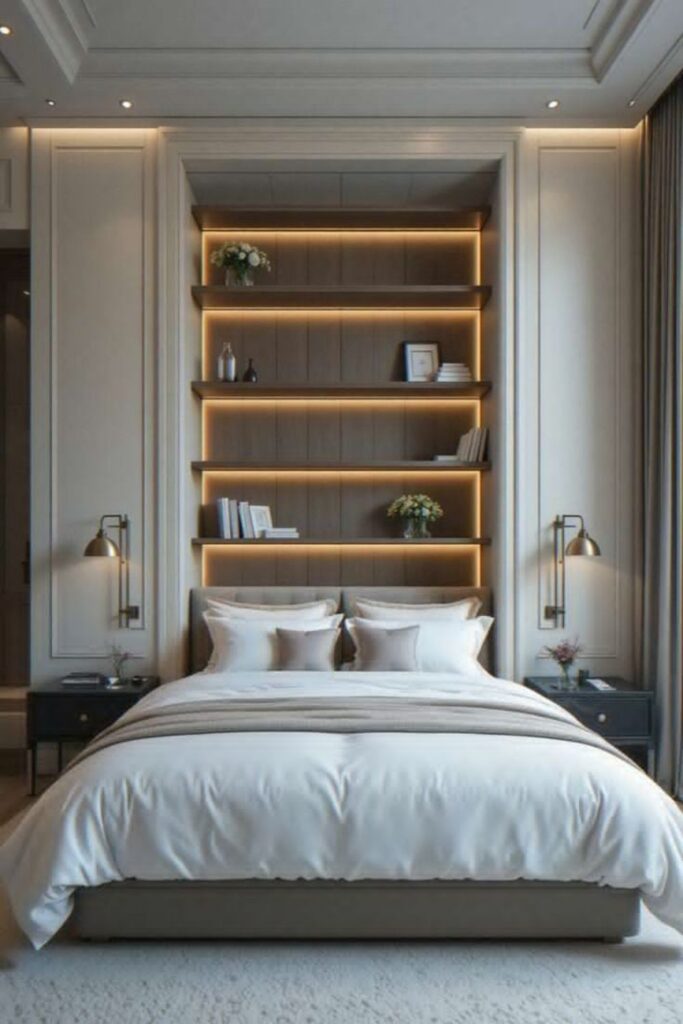
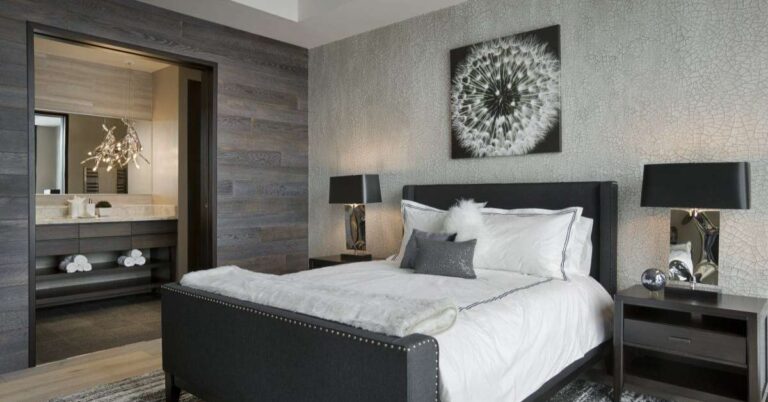
Most bedrooms have one obvious answer for the bed, and it’s usually the wall directly opposite the door but the longest wall tends to give better proportional balance. When the bed sits centered on that wall with equal space on both sides, the room develops a visual anchor that makes everything else easier to arrange.
Symmetrical nightstands on either side reinforce that balance without requiring a matching set. This layout works especially well in rooms where the door and window are on perpendicular walls, because it keeps both natural light and circulation paths open. It solves the “room feels unfinished” problem more reliably than any styling trick.
Float the Bed Away from the Wall
Pushing the bed against the wall is the default but it’s not always the best use of space. In rooms larger than 12 x 12 feet, pulling the bed a foot or two away from the wall creates breathing room that makes the space feel more deliberate, almost hotel-like.
The wall behind becomes a feature area for a statement headboard or a lean-to art arrangement. I’ve noticed this works especially well when there’s a window nearby: floating the bed means light reaches more of the room instead of being blocked by the frame. It’s a simple repositioning that changes the entire spatial dynamic.
Diagonal Bed Placement in a Square Room
Square rooms are notoriously hard to lay out; furniture tends to line up along walls and create a boxy, static feel. Placing the bed at a 45-degree angle in one corner breaks that rigidity instantly.
Yes, it loses some floor space behind the headboard, but it gains visual movement and makes the room feel larger than it is because the eye has to travel across a diagonal rather than a straight line. Go for this if your room feels monotonous despite having enough space it reframes the entire layout without adding a single piece of furniture.
Bedroom Furniture Layout with a Reading Nook Corner
Most bedrooms treat seating as optional. It shouldn’t be. Even a single chair in a corner paired with a floor lamp angled over the seat creates a secondary zone that makes the room function like more than one space. The key is placement: the chair should sit near a window for natural light during the day and close enough to an outlet for the lamp at night.
This works best in rooms where the bed is positioned away from the window wall, leaving that corner free. It solves the “I need a quiet reading or work spot but don’t have a separate room” problem practically.
Low-Profile Furniture Layout for High-Ceiling Rooms
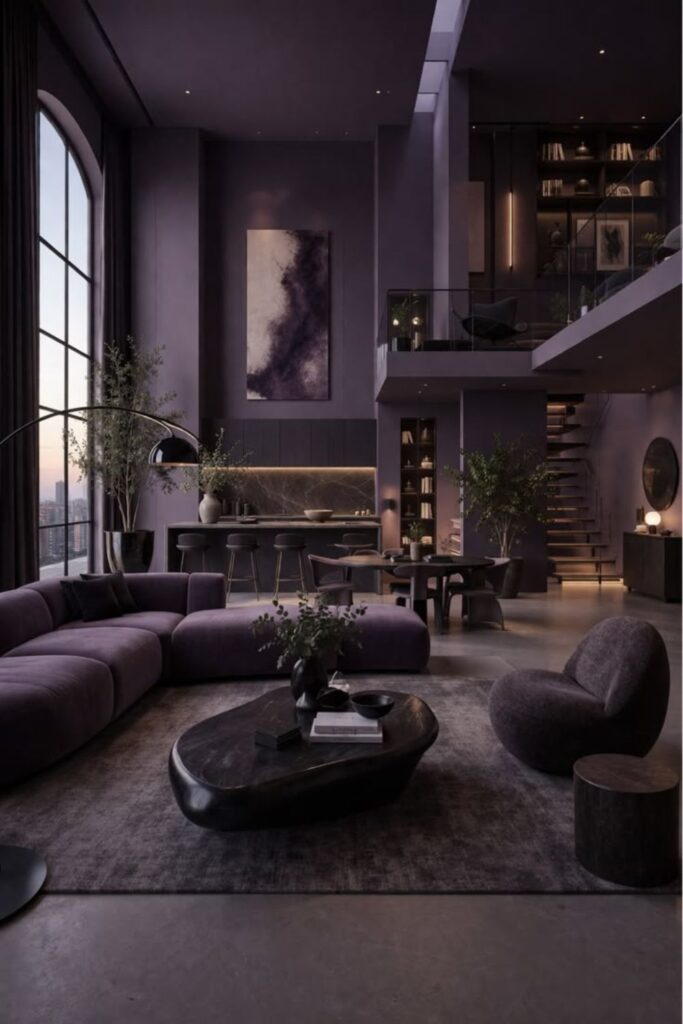
Tall ceilings are a feature, but they can make a bedroom feel more cavernous than cozy if the furniture fights the height instead of working with it. Low-profile pieces, platform beds, low dressers, floor-level lighting draw the eye down and create warmth at a human scale.
Hang a pendant light or chandelier lower than you think necessary; it pulls the ceiling height down visually without actually changing it. This layout strategy is especially useful in older apartments or converted spaces where ceiling height is dramatic but square footage is average.
Dresser Placement That Doesn’t Block Natural Light
This is one of the most common bedroom layout mistakes: placing a tall dresser in front of or adjacent to a window. Even if it doesn’t fully block light, it creates shadow zones that make the room feel dim.
The fix is simple: move the dresser to an interior wall (one without a window or door) and use the freed window wall for lower furniture or nothing at all. If the dresser has a mirror above it, angle or position it to reflect natural light back into the room. In my experience, this single adjustment changes how bright a bedroom feels more than any light fixture upgrade.
Read More About: 14+Warm Color Schemes for Cozy Homes That Actually Work in Real Rooms
Wardrobe and Bed Layout for Small Rectangular Bedrooms
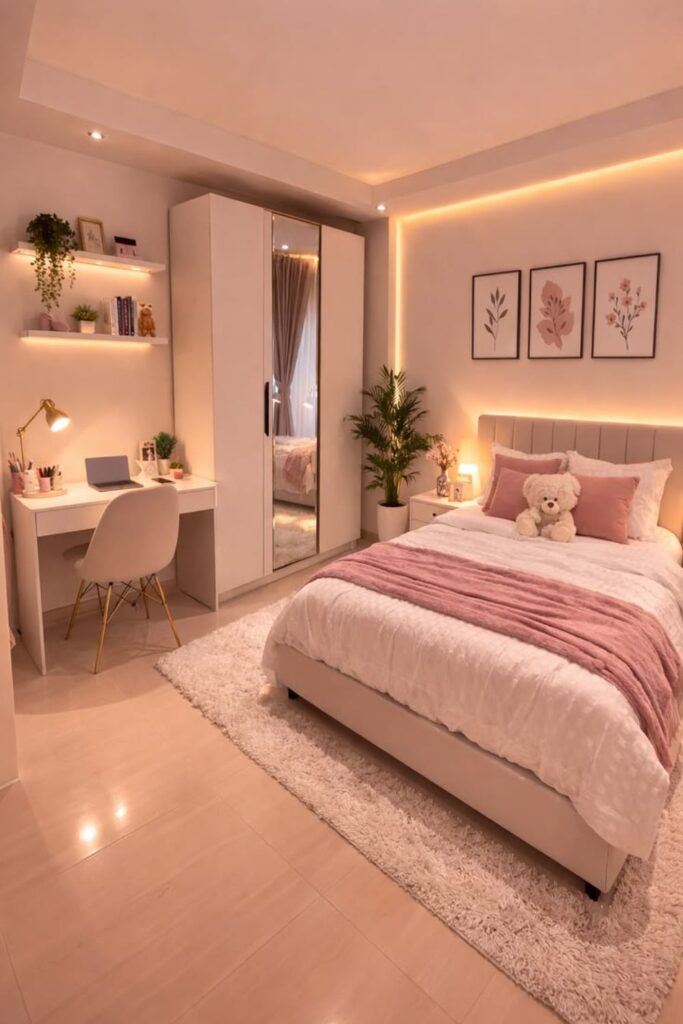
In a long, narrow bedroom, the layout choices are limited but the arrangement still matters significantly. The most functional setup places the wardrobe or closet unit on the short wall opposite the bed, with enough clearance (at least 24 inches) to open doors fully without blocking the walkway.
The bed goes on the long wall, centered if width allows. This keeps the main circulation path from door to bed to wardrobe clear and linear. It’s straightforward, but executed well, it makes a small room feel organized rather than cramped.
Bedroom Layout with a Desk Without Losing the Restful Feel
Work-from-home setups have pushed desks into bedrooms across every apartment size. The challenge is keeping the room from feeling like an office. The best approach: place the desk in a corner that isn’t in the direct sightline from the bed.
If you can see your desk from your pillow, your brain stays in work mode. A small bookshelf or a curtain panel between the desk area and sleeping area helps create a soft visual boundary. Face the desk toward the wall, not the bed. It’s a subtle psychological boundary that makes the room function better for rest and work simultaneously.
Layered Lighting Layout: Overhead, Ambient, and Task
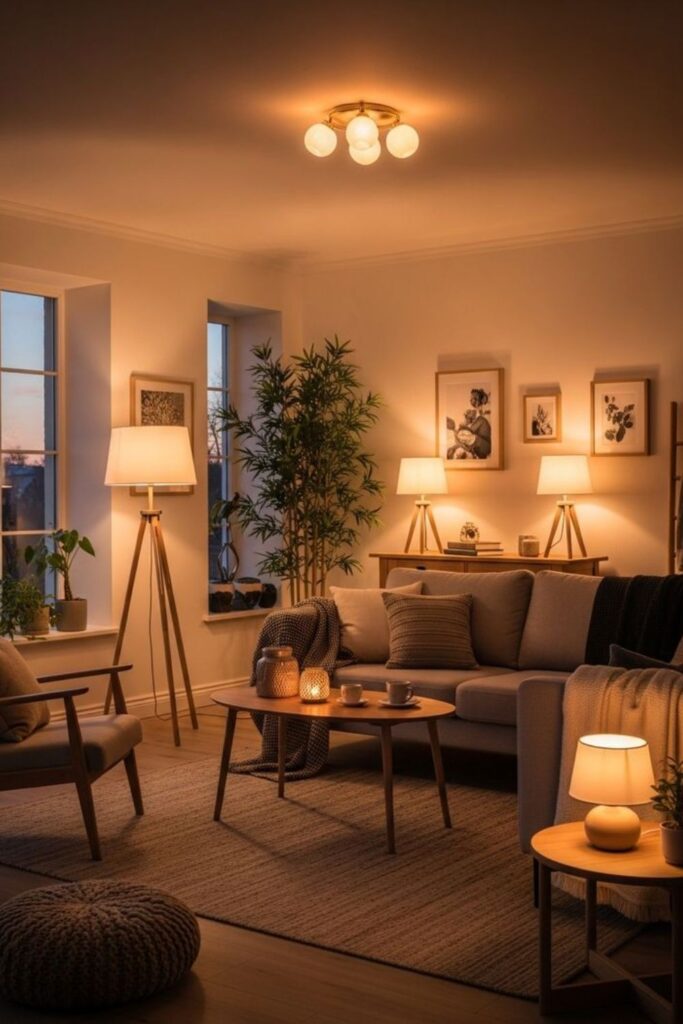
Overhead lighting is one of the worst things you can do to a bedroom at night. It flattens the space and signals alertness. The layout that works: one central overhead for utility, bedside lamps at nightstand height for ambiance and reading, and a floor or shelf lamp in a corner for a warm secondary glow.
Three light sources at different heights create depth and warmth that overhead lighting simply can’t. This works in any size bedroom and solves the “the room feels harsh or too bright at night” problem without rewiring anything.
Nightstand Alternatives for Beds Against the Wall
If one side of your bed is against the wall, a traditional nightstand wastes space or sits awkwardly only on one side. Wall-mounted shelves are the practical fix: they install flush, take up no floor space, and can be placed at exactly the right height.
For the open side, a standard nightstand works normally. This asymmetrical setup is actually more functional in small bedrooms than trying to force symmetry and it keeps the floor plan open for movement. Go for this if your room is under 10 feet wide and bed symmetry isn’t possible.
Read More About:47+ Small Room Ideas That Make Every Square Foot Feel Intentional
Area Rug Placement That Anchors the Entire Bedroom
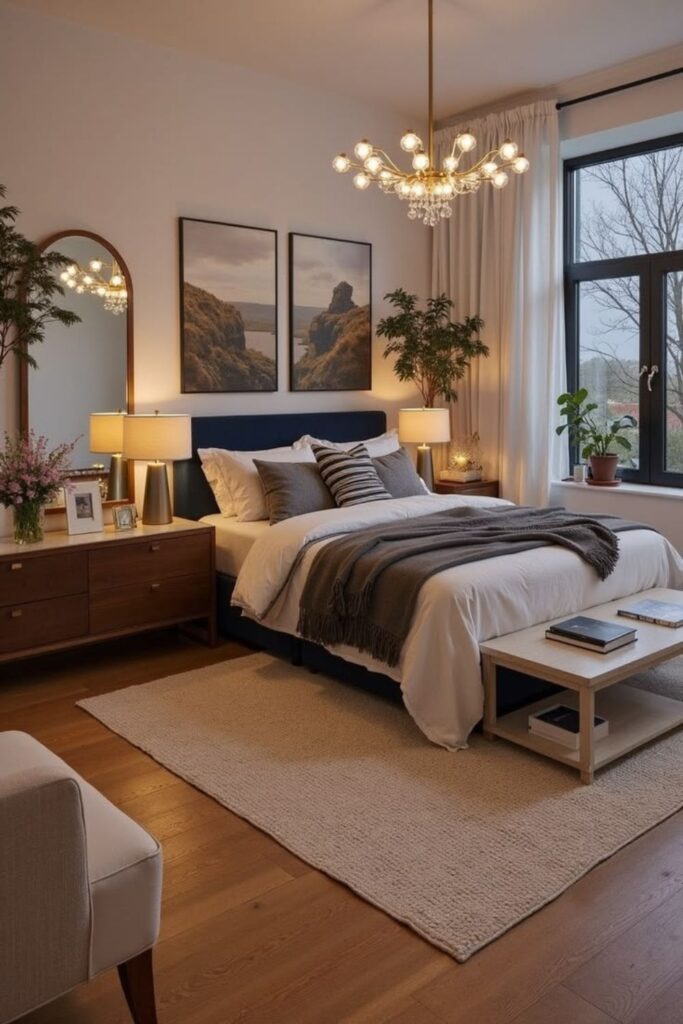
An area rug doesn’t just add warmth it defines the bedroom’s primary zone and makes furniture feel intentionally grouped rather than randomly placed. The rug should extend at least 18–24 inches past the sides and foot of the bed.
If a large rug isn’t in the budget, a runner along each side of the bed achieves a similar grounding effect. What to avoid: a rug that only fits under the bed frame itself. That’s too small to anchor anything and creates a visual cut-off rather than a zone. The rug sets the floor plan’s logic, so get this right before finalizing furniture positions.
Mirrored Wall or Large Mirror Placement for Small Bedrooms
A large mirror in the right position can visually double a room’s depth. The most effective placement: on a wall perpendicular to the main window so it reflects natural light across the room, not just back at itself. Leaning a full-length mirror rather than mounting it gives flexibility and works for renters.
Avoid placing mirrors directly facing the bed beyond the feng shui debate, it tends to feel visually disruptive rather than expansive. The goal is reflected light and the illusion of depth, not just a larger reflection of the room.
Storage-First Bedroom Layout for Small Spaces
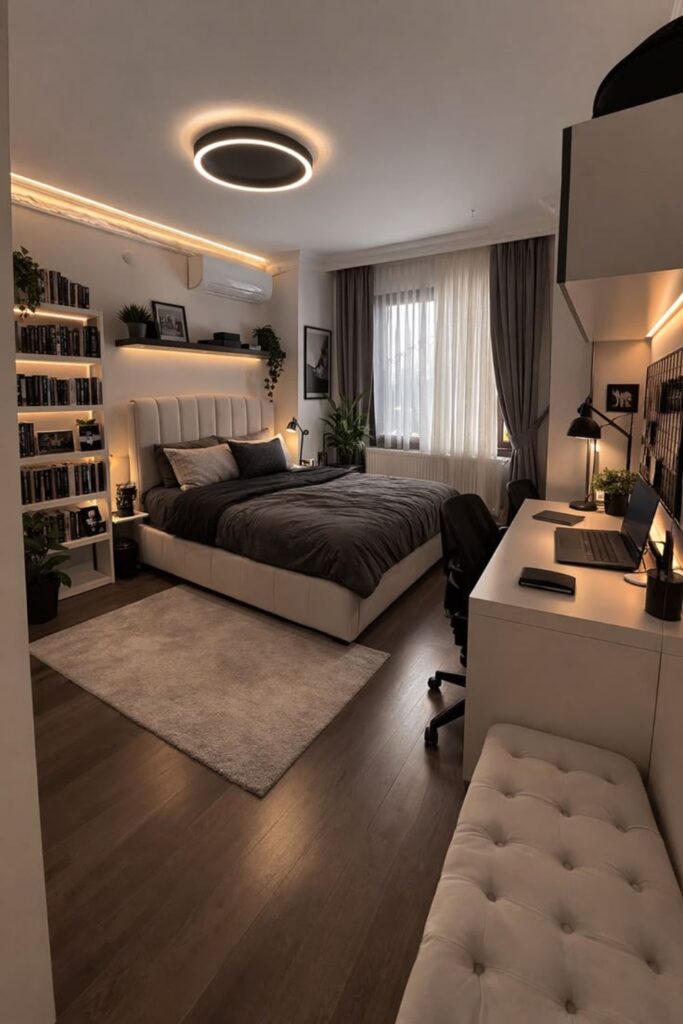
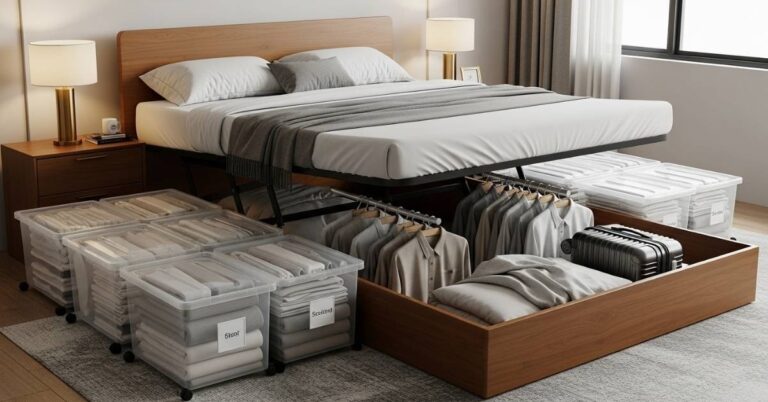
In a small bedroom, storage placement is the layout. Every piece of furniture that can do double duty should: a bed frame with drawers, an ottoman at the foot with interior storage, floating shelves rather than a bulky bookcase.
The layout logic is vertical, uses wall height for shelving and keeps the floor as clear as possible to preserve the sense of open space. Clutter at floor level makes a room feel smaller faster than almost any other variable. Honest answer: the best small bedroom layouts prioritize storage placement before aesthetic choices.
Bedroom Furniture Layout with Two Windows
Two windows on one wall is a specific layout challenge putting the bed between them is usually the right call. It keeps both windows unobstructed for maximum light, creates natural symmetry with the bed as the centerpiece, and avoids the awkward partial-blocking that happens when furniture partially covers a window.
Hang curtains at ceiling height to draw the eye upward and make the window wall feel taller. This layout reads as intentional rather than practical, and it genuinely brightens the room more than any artificial lighting alternative.
Open Wardrobe or Open Shelving as a Room Divider
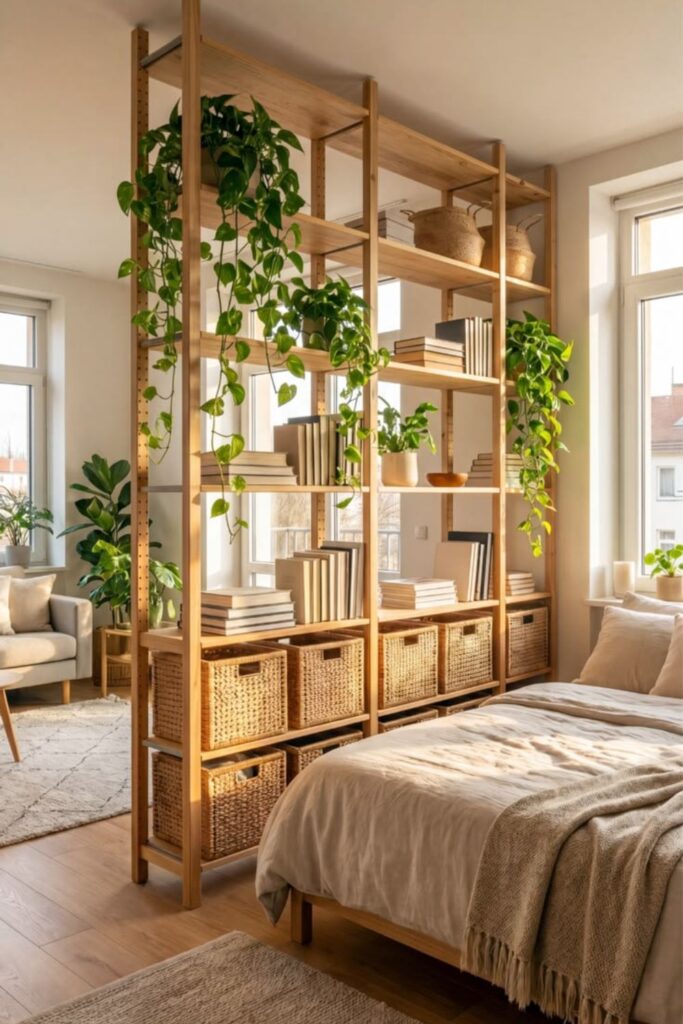
In a generously sized bedroom, an open wardrobe or shelving unit can function as a soft room divider separating a dressing area or seating corner from the main sleeping zone. The key is choosing a unit that doesn’t fully block light or sightlines: open shelving, an open-back wardrobe, or a mid-height bookcase all work.
This creates two functional zones within one room without construction, which is ideal for anyone who wants a dressing room feel without actually having the extra square footage.
Bed Placement Near the Window What Actually Works
Placing a bed directly in front of a window blocks light and creates drafts but placing it perpendicular to a window (along the adjacent wall) lets morning light come across the room at an angle that’s genuinely pleasant to wake up to.
This layout is especially effective when the window faces east or south. Add a blackout liner behind sheer curtains if the light is too strong early. It’s one of those layout decisions that affects daily comfort in a way that’s easy to underestimate until you try it.
Bedroom Layout for Couples with Different Storage Needs
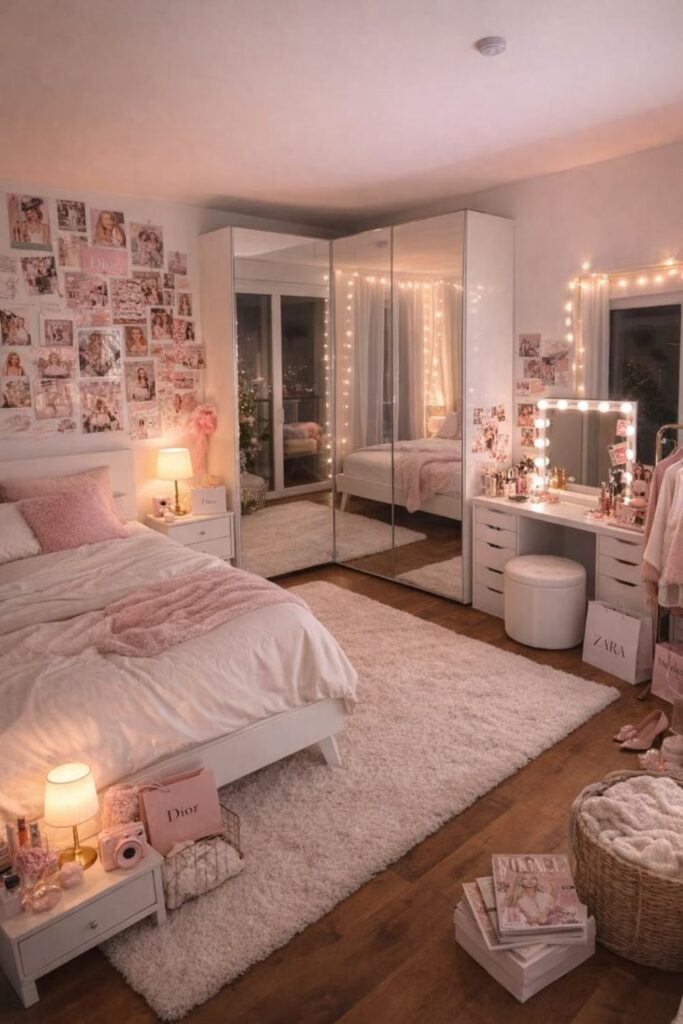
When two people share a bedroom with different storage habits, a symmetrical-but-separated layout works better than shared furniture. Each person gets their own storage unit; one might have a dresser, the other a wardrobe placed on opposite sides of the room with the bed centered between.
This avoids the layout problem where one person’s side feels organized and the other feels cluttered. It also distributes visual weight more evenly across the room. Shared nightstands in the middle keep the center zone cohesive even when the sides differ.
Minimalist Bedroom Layout with Fewer Pieces
Minimalist bedroom layouts in 2026 are leaning further into negative space deliberately leaving walls empty and reducing furniture to only what’s used daily. The setup: bed, one or two nightstands, one storage piece. That’s it.
The empty wall space reads as intentional calm rather than unfinished. This layout works best in bedrooms where built-in closets handle clothing storage, leaving surface furniture to the essentials. The openness improves circulation and makes the room feel genuinely restful rather than just styled.
Read More About: best Small Living Room Ideas: 25 Smart Ways to Maximize Space and Style
Kids’ Bedroom Layout That Grows with Them
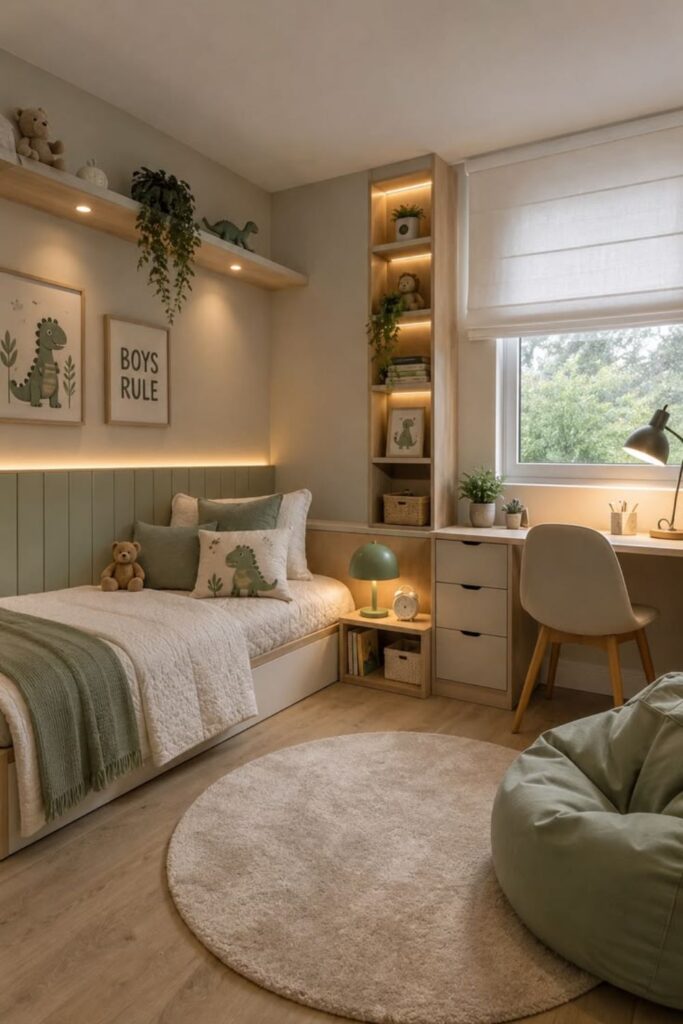
A kids’ bedroom layout that works at age 6 usually fails at age 12. The furniture arrangement that ages best: a loft bed that frees floor space for a desk or play area underneath, storage shelving along one wall that can be reorganized as needs change, and a clear central floor area.
Avoid building the layout around themed furniture that won’t grow with the child. The loft-plus-desk setup is especially practical in small rooms; it stacks two functional zones vertically instead of spreading them across limited floor space.
Guest Bedroom Layout That Doubles as a Home Office
The guest-room-slash-office is one of the most common multi-use room challenges right now. The layout that handles both functions well: a murphy bed or daybed that doesn’t dominate the room when not in use, a desk positioned to face away from the bed area, and storage that serves both purposes (filing, linens, books).
When guests arrive, the desk can shift slightly and the bed opens; neither use should require major furniture moves. The key is choosing a bed form that doesn’t demand the room be organized around it permanently.
Bedroom Furniture Layout That Prioritizes Morning Routine Flow
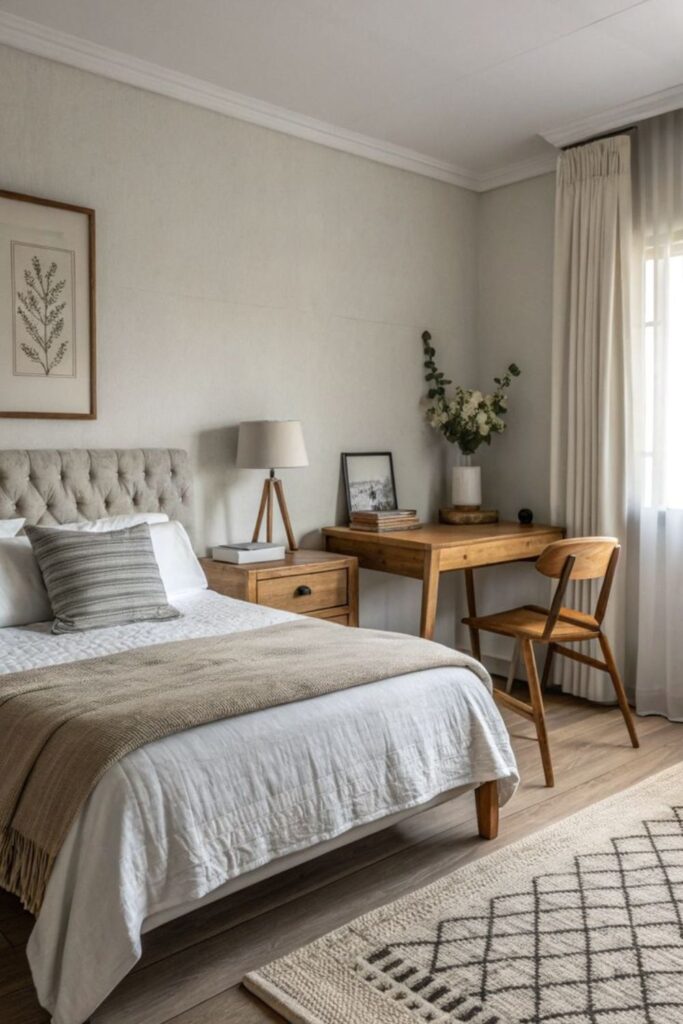
Most bedroom layouts are designed for how the space looks, not how it’s used at 7am. Layout the room around movement: place the dresser near the bathroom or closet, not across the room; keep a clear path from bed to door; position the mirror where natural light hits it during the morning.
This reduces the friction of getting ready in the morning more than any organizational system. It’s a practical priority that most decor advice ignores entirely.
What Actually Makes a Bedroom Furniture Layout Work
A bedroom layout works when three things align: flow, proportion, and light.
Flow means you can move from the door to the bed to the storage without navigating around furniture. If you’re sidestepping the dresser every morning, the layout needs fixing, not the dresser.
Proportion means the furniture scale matches the room. A king bed in a 10×10 room leaves almost no floor space; a twin in a 14×16 reads as sparse. The goal is furniture that occupies roughly 60% of floor space, leaving the rest for movement and visual breathing room.
Light is the most underrated factor. Where natural light enters the room should determine where furniture is not placed. Blocking windows with tall furniture even slightly creates shadow zones that make the room feel dim regardless of how many lamps are added.
Get these three right before worrying about color, texture, or decor. Layout logic comes first.
Bedroom Furniture Layout Setup Comparison Table
| Layout Type | Best For | Room Size | Problem Solved | Difficulty |
| Bed centered on long wall | Most room types | Any size | Visual balance, openness | Easy |
| Bed floated from wall | Larger bedrooms | 12×12 ft+ | Hotel-like feel, light flow | Easy |
| Diagonal bed placement | Square rooms | 10×12 ft+ | Static, boxy feel | Moderate |
| Storage-first layout | Small rooms | Under 120 sq ft | Clutter, lack of storage | Moderate |
| Desk corner setup | Work-from-home | Any size | Work-rest boundary | Easy |
| Multi-zone with divider | Large bedrooms | 14×16 ft+ | No defined areas | Moderate |
| Murphy bed + office | Guest/office combo | 10×12 ft+ | Multi-use conflict | Moderate |
| Loft bed layout | Kids’ rooms | Small-medium | Limited floor space | Moderate |
Common Bedroom Furniture Layout Mistakes That Make Your Space Feel Smaller
Blocking the window with the headboard
A bed directly in front of a window doesn’t just block light, it creates a dark shadow across the main furniture piece in the room. The wall behind the headboard should be solid if possible, with windows on adjacent walls.
Choosing a rug that’s too small
A rug that only fits under the bed frame looks like an afterthought. It doesn’t anchor the furniture, it just sits there. Rugs should extend past the sides and foot of the bed to define the sleeping zone as a complete area.
Putting the dresser on the window wall
Even if it’s a lower dresser, furniture on the window wall competes with incoming light. Interior walls are almost always the better choice for taller storage pieces.
Ignoring the door swing
A door that opens into a nightstand, dresser, or the side of the bed creates daily friction. Map the door’s full swing arc before placing anything within two feet of it.
Over-furnishing a small room
The instinct to fill every corner usually backfires. Empty floor space isn’t wasted, it’s what makes a room feel livable. Two well-placed pieces beat five squeezed together every time.
Matching furniture that doesn’t fit the room’s proportions
Full bedroom sets look cohesive in a showroom and overwhelming in a real room. A king bed frame with two matching oversized nightstands and a matching dresser can eat up a modest bedroom entirely. Mix scales deliberately.
FAQ’s
What is the best bedroom furniture layout for a small room?
For small bedrooms, the most effective layout centers the bed on the longest wall, uses storage furniture on interior walls (away from windows), and keeps the floor as clear as possible. Vertical storage wall shelves, tall dressers is more space-efficient than spreading furniture across the floor.
How far should furniture be from the bed?
Allow at least 24 inches between the bed and any opposite furniture for comfortable movement. Between the side of the bed and the wall or dresser, 18 inches is the functional minimum enough to walk through without turning sideways.
Should the bed face the door?
Ideally, yes the bed should be positioned so the door is visible from it, even if not directly opposite. This is both a comfort preference (not facing away from the entrance) and a practical layout point, since it keeps the main sightline open and the room feeling organized.
Is it okay to put a desk in the bedroom?
Yes, but placement matters. Position the desk so it’s not in the direct sightline from the bed preferably in a corner away from the sleeping area. Facing the desk toward the wall rather than the bed creates a cleaner visual and psychological separation between work and rest.
How do I arrange bedroom furniture in an awkward or L-shaped room?
Use the longest, most uninterrupted wall for the bed. In L-shaped rooms, the natural alcove often works as a dressing area or desk zone. The key is identifying clear rectangular zones within the irregular floor plan and treating each one as its own functional area rather than trying to connect them with a single layout logic.
What’s the ideal bedroom layout for couples sharing the space?
Equal access matters most both sides of the bed should have at least 24 inches of walkable space and equivalent nightstand setups. Separate storage pieces (rather than a shared dresser) reduce conflict over organization and distribute visual weight more evenly across the room.
Does furniture placement actually affect how a bedroom feels?
Significantly. Layout controls light flow, movement ease, visual balance, and how spacious or compressed a room feels. The same furniture arranged differently can make a room feel twice as open or twice as cluttered. It’s one of the highest-impact changes you can make without spending anything.
Conclusion
Getting bedroom furniture layout right isn’t about following rigid rules, it’s about understanding how space, light, and movement work together in your specific room. Even one or two layout adjustments (moving the dresser off the window wall, sizing up the rug, floating the bed slightly) can change how the entire room feels to be in daily use.
Start with the piece that’s been bothering you most. Rearrange just that, live with it for a week, and see how the rest of the room responds. Most meaningful improvements in a bedroom don’t require new furniture; they require looking at what you already have from a different angle.