Peel and Stick Wall Decor Ideas That Actually Look Good
If your walls feel bare but you’re not ready to commit to paint or permanent fixtures, you’re not alone. Renting, moving frequently, or simply being indecisive about color shouldn’t mean living with blank, Peel and Stick Wall Decor Ideas uninspired walls for years. Peel and stick wall decor has quietly become one of the most practical solutions in modern home styling not because it’s trendy, but because it genuinely works across a wide range of spaces, budgets, and skill levels.
For anyone decorating a rental, a first apartment, or a room mid-renovation, this format gives you real visual impact without the permanence. And the options have evolved far beyond the novelty stickers of the early 2000s. We’re talking textured panels, architectural-style molding strips, wallpaper murals, tile-effect accents designs that hold up visually in real homes.
This list covers 27 peel and stick wall decor ideas across different rooms, layouts, and aesthetics from minimal and modern to warm and layered.
Peel and Stick Shiplap Panels in a Narrow Entryway
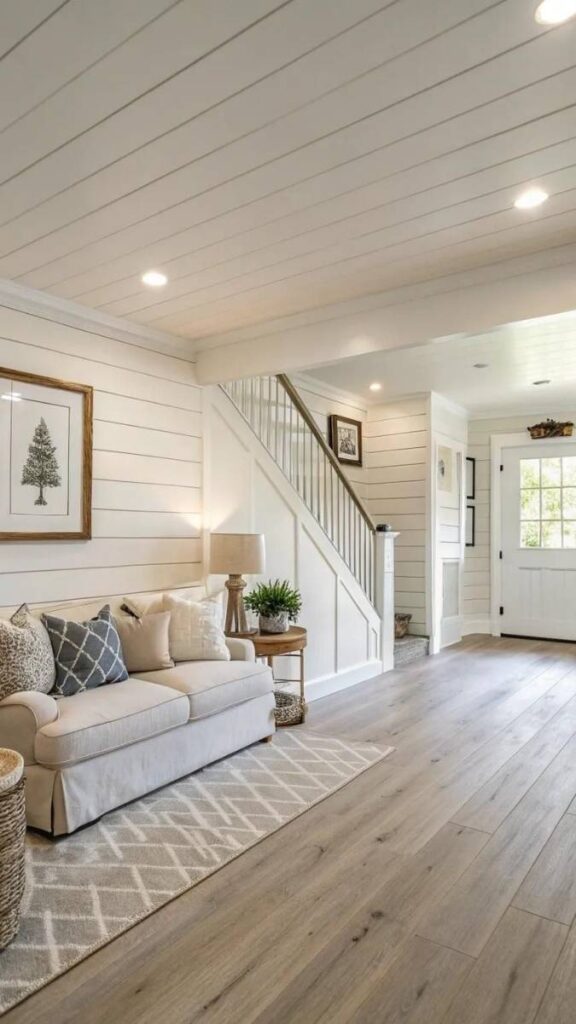
Entryways often get ignored in the decorating process, but they set the tone for the entire home. Horizontal shiplap-style peel and stick panels work especially well here because they create a sense of width in a narrow corridor, a trick that painted walls simply can’t replicate as quickly.
The texture adds depth without furniture, which matters when you’re working with a space too small for a console table. Pair with a single warm wall sconce or overhead pendant to bring out the panel relief. This setup works best in hallways under 4 feet wide, where the horizontal line keeps the space from feeling cramped.
Geometric Peel and Stick Tiles as a Kitchen Backsplash Accent
One of the most searched peel and stick applications and for good reason. A peel and stick tile backsplash between your countertop and upper cabinets immediately draws the eye upward, making a low-ceiling kitchen feel taller.
Geometric patterns in black and white or terracotta and cream work especially well because the contrast defines the zone visually without overwhelming a small kitchen. The practical win is that these are grease-resistant and easy to wipe down. This is one I’d actually recommend trying first if you’re a renter who wants a serious visual upgrade without touching the landlord’s walls permanently.
Peel and Stick Wallpaper Mural Behind the Bed
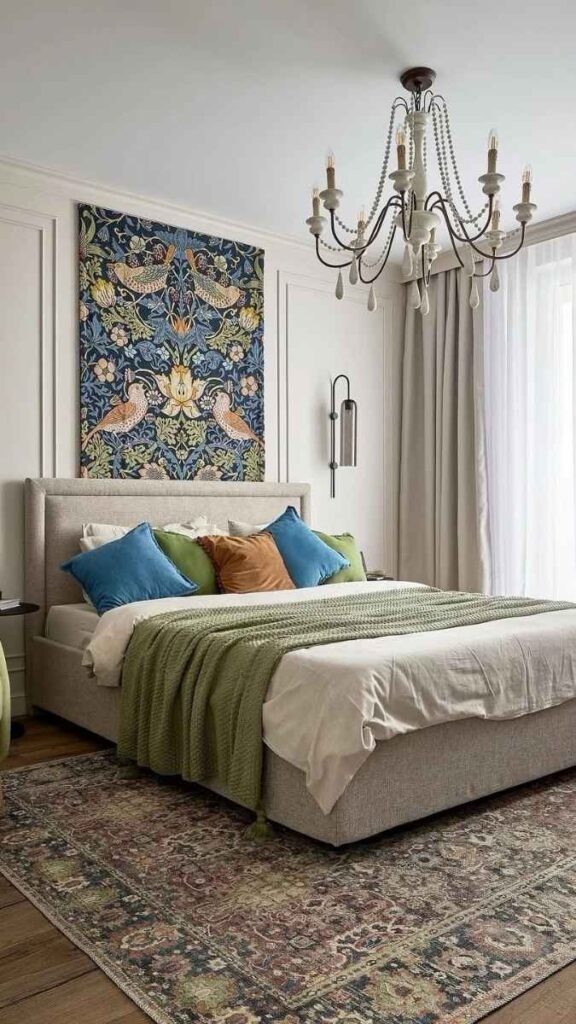
Instead of a traditional headboard, a full-wall mural behind the bed creates an anchor point that reads as intentional and designed. Botanical prints oversized leaves, tropical foliage, and soft watercolor trees work particularly well because they bring organic texture into a room that can otherwise feel flat.
The key is scale: the mural should extend at least 12 inches beyond the width of your bed on either side. In smaller bedrooms, this replaces the need for additional artwork on surrounding walls, keeping the room visually clean while still feeling layered.
Peel and Stick Wainscoting Panels in a Dining Room
Wainscoting has an architectural quality that makes any room feel more considered. The peel and stick version mimics the look of traditional board and batten or raised panel molding convincingly enough that most guests won’t notice the difference.
Applied to the lower third of a dining room wall (roughly 32–36 inches from the floor), it creates a visual boundary that grounds the space and makes the ceiling feel higher by contrast. This works particularly well in rooms with high ceilings or very plain walls; it adds structure where there was none.
Removable Wallpaper in a Rental Bathroom
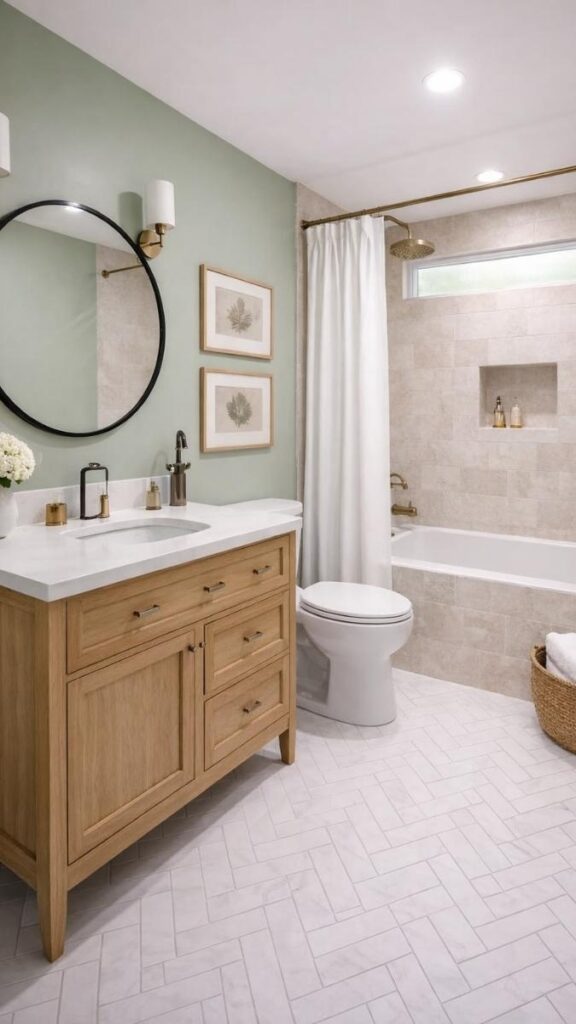
Bathrooms are one of the highest-impact peel and stick applications because the walls are small meaning one or two rolls can cover the entire space. A small-scale floral or tile-inspired print adds personality to what’s often the most forgettable room in a rental.
Because bathroom walls are primed surfaces (typically semi-gloss paint), adhesion is generally strong and removal is clean. Avoid using directly in shower enclosures, but the vanity wall and opposite wall handle humidity well with proper application. Honestly, the bathroom is where I’d experiment first with low risk, high reward.
Read More About: 45+ Wall Decor Ideas That Make Every Room Feel More Intentional
Faux Brick Peel and Stick Panels in a Home Office
An exposed brick look in a home office communicates a kind of focused, creative energy that plain walls don’t. Faux brick peel and stick panels (especially in weathered gray or warm red) add that texture without the weight or permanence of real brick installation.
Applied to the wall directly behind your desk, the one visible in video calls this upgrade has functional value beyond aesthetics. The texture also reduces the sterile, corporate feel of a home workspace. This setup works especially well in rooms with neutral or white walls where the contrast reads clearly.
Peel and Stick Herringbone Pattern in a Laundry Room
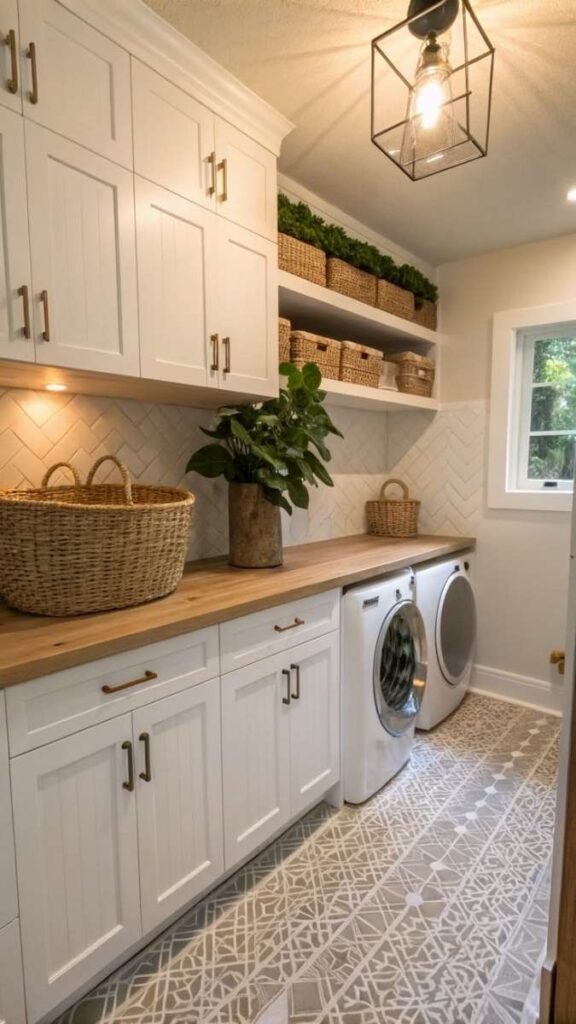
Laundry rooms rarely get design attention, which means a single well-executed wall can make the entire space feel like it belongs in the rest of the home. A herringbone peel and stick tile on the wall behind the washer and dryer even just that one surface changes the whole visual context of the room.
The diagonal pattern adds movement and draws the eye away from the utilitarian appliances. Because laundry rooms are small, you need very little material, which keeps the cost low even when choosing a slightly higher-quality product.
Abstract Peel and Stick Mural in a Kids’ Room
Kids’ rooms need to evolve fast. What a five-year-old loves and what a ten-year-old wants are completely different. Removable murals solve this perfectly: you’re not committing to dinosaurs or space rockets for a decade. Abstract designs in soft blues, greens, and warm yellows tend to grow with the child longer than character-based prints.
Position the mural on the wall the child faces from their bed that’s where it’ll have the most visual presence. When tastes change, removal is clean and takes about 30 minutes for a standard-sized panel.
Peel and Stick Marble Tile on a Bathroom Vanity Wall
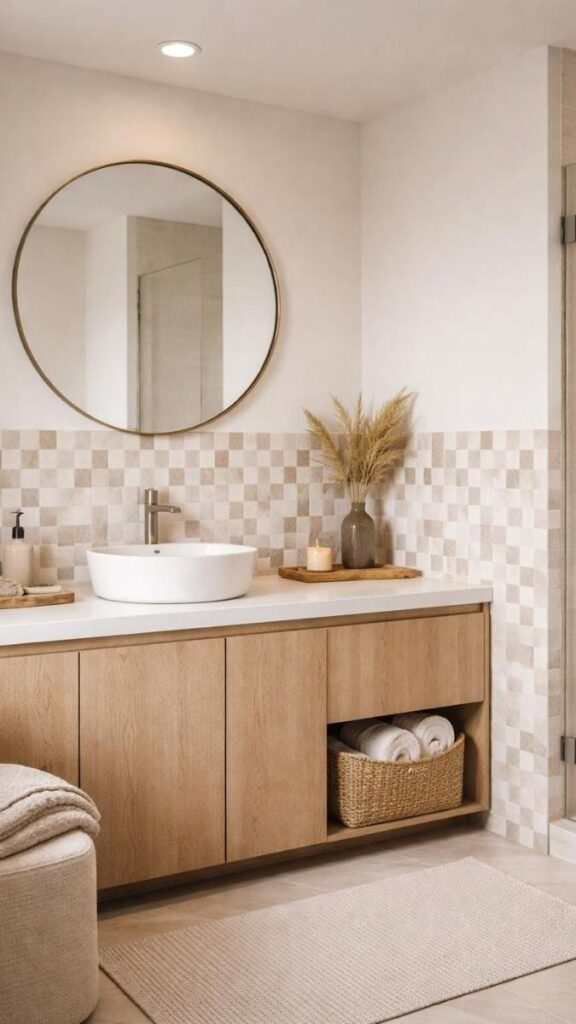
Marble is one of those materials that reads as high-end universally but real marble installation is expensive and permanent. Peel and stick marble-effect tiles on the vanity wall (the section between your sink and mirror) give you the visual weight of stone without either constraint.
The gray veining against white creates contrast that makes the mirror and fixtures pop. Keep the rest of the bathroom very simple white towels, minimal accessories so the marble effect can do its job without competing with clutter.
Read More About: 27+ Affordable Pool Furniture Ideas That Actually Look Good
Vertical Stripe Peel and Stick Wallpaper in a Low Ceiling Room
Ceiling height is one of the most common complaints in older homes and apartment buildings. Vertical stripe wallpaper even in subtle, tonal patterns draws the eye upward along the wall, creating the perception of added height.
The stripe doesn’t need to be bold to be effective; a tone-on-tone cream and ivory stripe reads well in natural light without overpowering the room. Apply to all four walls for full effect, or limit to just the wall opposite the door for a softer approach. This layout is especially useful in rooms with ceilings under 8 feet.
Peel and Stick Arch Frames Around Windows
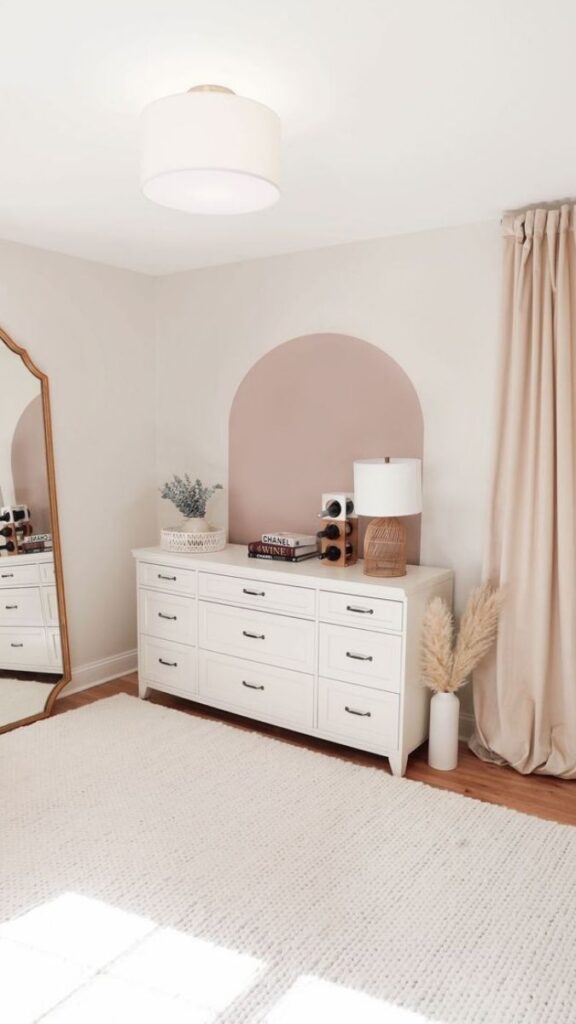
Architectural details like arched window frames are one of those features people pay significant premiums for in homes. The peel and stick version molding strips shaped into a soft arch around an existing window adds that character without structural work.
It makes a standard rectangular window look like a design feature, which changes how light is perceived in the room. This works best when painted over in the same color as the wall, so the arch reads as built-in. In rooms with plain windows and flat walls, this is one of the most cost-effective visual upgrades available.
Boho Macramé Print Peel and Stick in a Living Room Corner
Dead corners are a common issue in living rooms especially when the furniture layout doesn’t reach every wall. A single panel of textured or pattern-printed peel and stick wallpaper in one corner, paired with a floor plant and lamp, builds what designers call a “vignette” a composed mini-scene that anchors the space.
Boho and woven-look prints in terracotta, sand, and rust tones work particularly well here because they complement warm-toned furniture and natural materials. You don’t need to cover the entire wall; one intentional panel is enough.
Peel and Stick Grass cloth Wallpaper in a Bedroom Accent Wall
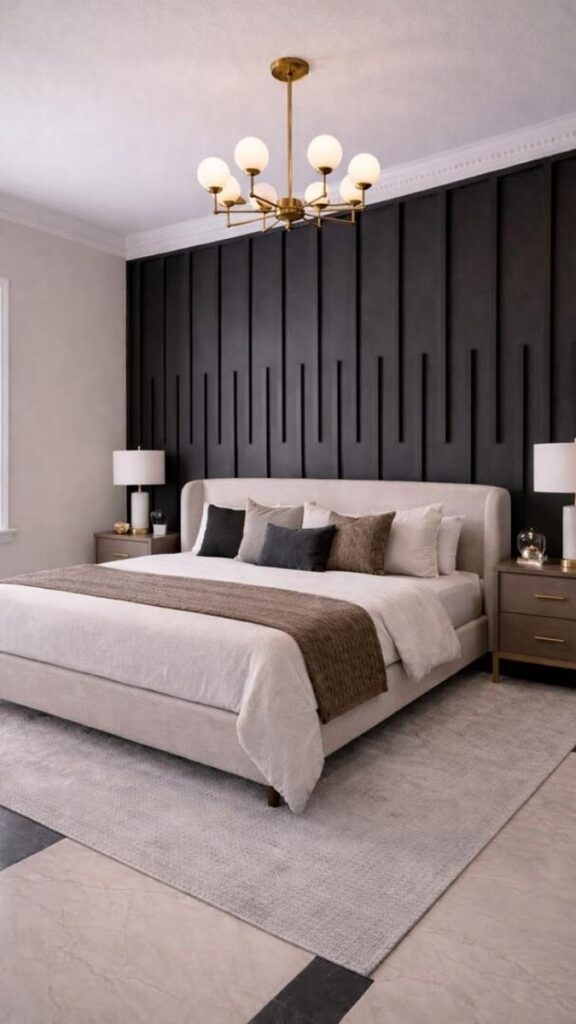
Grasscloth has a natural woven texture that photographs beautifully and feels warm in person. The peel and stick version captures this tactile quality well enough to hold up in a bedroom setting.
Applied as a single accent wall behind the bed, it functions similarly to a large piece of artwork creating visual focus without adding any furniture or décor to the room. The texture also absorbs light softly, which contributes to a more relaxed, cozy atmosphere in the evening. This is the setup I’ve noticed works best in bedrooms that are trying to feel more like a boutique hotel and less like a standard apartment.
Read More About: 35+ Budget Bathroom Makeovers That Look Surprisingly High End
Industrial Pipe Look Peel and Stick Border in a Loft Space
Loft apartments often have architectural character but feel unfinished at the transitions where the wall meets the ceiling, or where the wall meets the floor. Industrial pipe-look peel and stick borders at these junctions add definition and reinforce the aesthetic of the space.
In an already industrial setting, this reads as intentional detailing rather than decoration. It’s particularly useful in rentals where you can’t install actual trim or molding. The border creates a visual frame that makes the walls feel more permanent and purposeful.
Peel and Stick Tile Border as a Kitchen Counter Divider
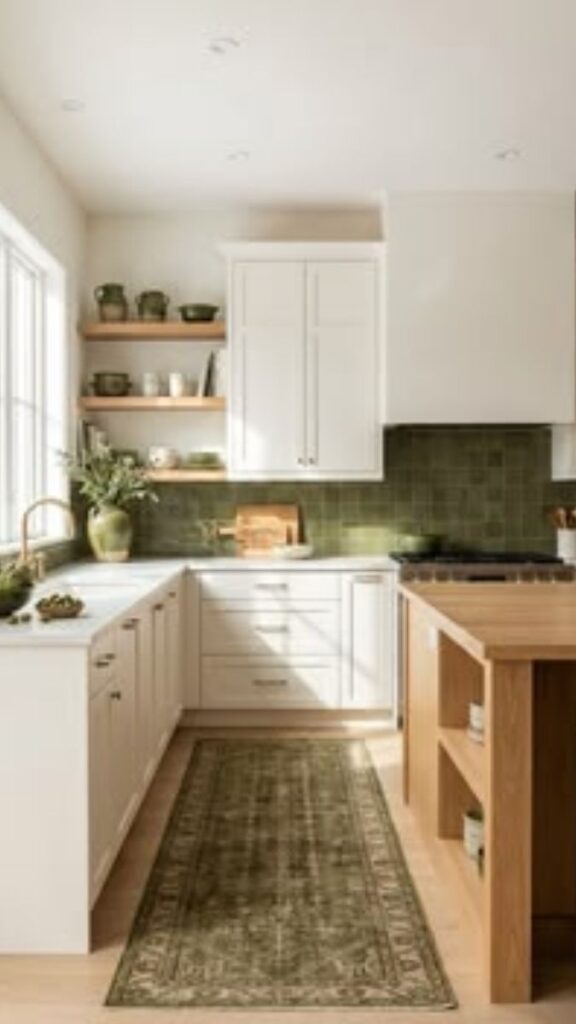
If a full backsplash feels like too much commitment (or too much material), a single border strip along the top edge of the countertop achieves a similar zone-defining effect. This narrow strip, often just 4–6 inches tall, creates visual separation between the counter and cabinet surfaces, which is particularly useful when both are the same color or material. Moroccan-inspired borders or simple subway tile strips work well.
Pair with warm under-cabinet lighting to make the strip visible even in low light. This setup solves one of the most common kitchen problems: surfaces blending together into a flat, undefined wall.
Peel and Stick Wood Plank Wall in a Living Room
Real wood paneling is heavy, expensive, and not renter-friendly. The peel and stick wood plank alternative in realistic oak, walnut, or pine finishes brings warmth into a living room without any of those constraints. Installed horizontally on the wall behind the sofa, it creates a natural backdrop that makes furniture placement feel intentional and grounded.
The wood grain adds texture that reads differently at different times of day, warmer in the evening with lamp light, cooler and more defined in morning natural light. This layout works especially well in Scandinavian, coastal, or transitional-style rooms.
Peel and Stick Stars and Constellations in a Teen Bedroom
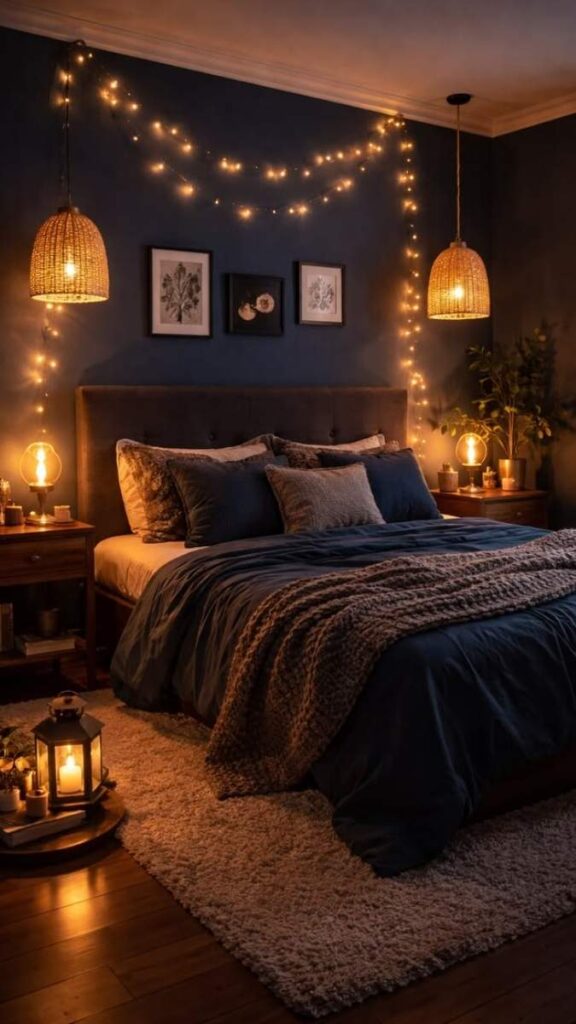
Teen spaces need to feel personal without locking the room into a permanent identity. Constellation and celestial-pattern peel and stick decals on a dark or deep-toned feature wall create something that feels sophisticated rather than juvenile.
The contrast between light metallic decals and a deep navy or charcoal wall is striking in a way that feels more aligned with 2026 teen aesthetics minimal, moody, personal. The decals can be rearranged or removed as style evolves. Apply on the ceiling above the bed as well if the space allows the effect to be unexpectedly dramatic.
Peel and Stick Coastal Mural in a Narrow Hallway
A long hallway with nothing on the walls can feel like a corridor rather than a space. A coastal panoramic mural of ocean waves, dunes, or a horizon view applied to one long wall creates a perspective illusion that visually extends the space.
The horizontal lines of a coastal scene naturally draw the eye toward the far end of the hallway, which makes it feel longer and more open simultaneously. Soft blue and sand tones keep the mural from feeling aggressive in a transitional space. This is one of the strongest peel and stick applications for rooms where traditional decor is difficult to place.
Peel and Stick Damask Pattern in a Formal Dining Room
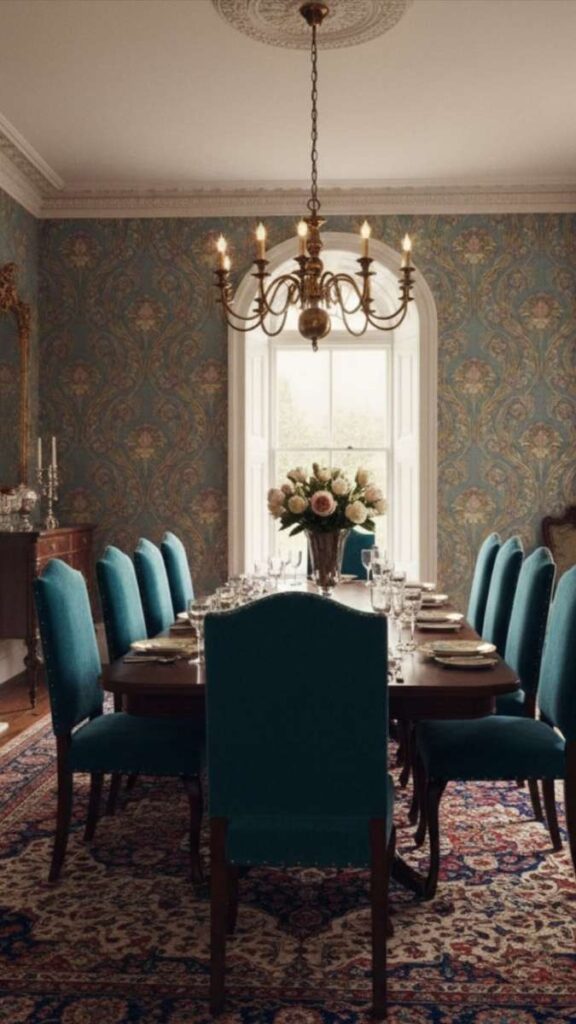
A deep charcoal or forest green damask on the dining room wall behind the table creates formality without heaviness, especially when the remaining walls are kept plain.
The pattern adds visual interest that replaces the need for artwork in the dining room, a space where hanging frames is often awkward anyway. This works best in rooms with at least one other architectural detail, like a crown molding or wainscoting.
Peel and Stick Tile in a Home Bar or Coffee Station Corner
Coffee stations and home bar corners are small enough that even premium peel and stick tile is affordable to cover the entire zone. A zellige-inspired or handmade-look tile in warm terracotta, sage, or midnight blue instantly elevates what could otherwise be just a cluttered kitchen corner into an intentional, designed station.
The tile creates a visual boundary that says “this area has purpose,” which actually helps with functionality. You’re more likely to keep a space organized when it looks like it was designed for a reason.
Large Scale Floral Peel and Stick in a Primary Bedroom
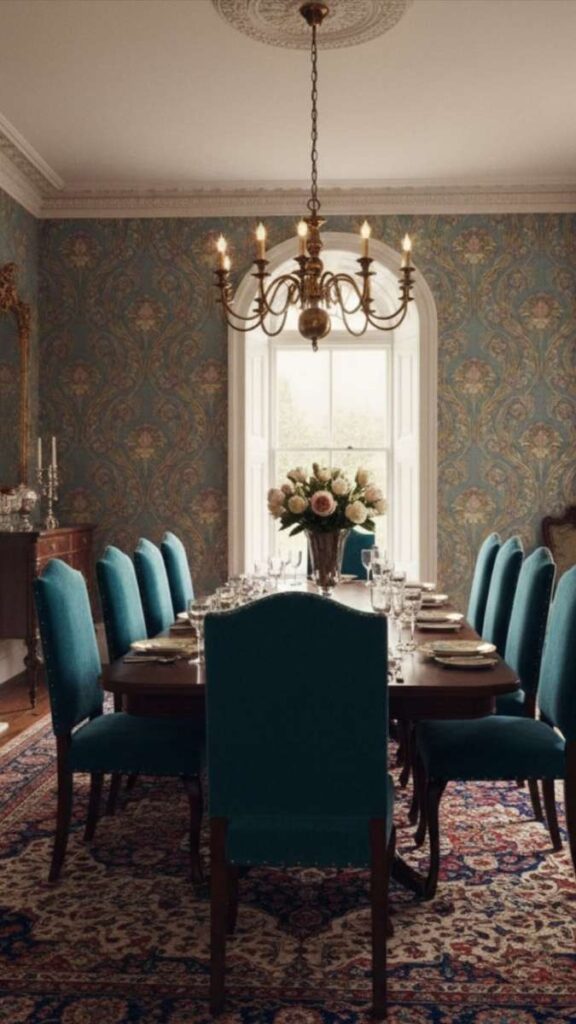
Oversized botanical prints are having a sustained moment in 2026 and unlike trendy geometric patterns, they tend to age well because they’re rooted in natural imagery. A large-scale soft floral applied to the primary bedroom feature wall creates a room that feels layered and curated without adding a single additional piece of furniture.
The key is keeping everything else in the room neutral and simple cream or white bedding, warm wood tones, very minimal art. The wallpaper carries all the visual weight, which ironically makes the room feel calmer rather than busier.
Peel and Stick Subway Tile in a Small Bathroom Shower Surround
This is one of the more functional applications subway tile-style peel and stick panels designed specifically for wet areas can hold up in a shower surround when applied correctly.
The classic white subway with simulated grout lines gives the look of a fully tiled bathroom at a fraction of the cost and effort. Matte black fixtures against white tile create a contemporary contrast that reads cleanly even in a tight space. Make sure to use panels rated for wet areas (not standard wallpaper) and seal edges carefully. This setup is especially useful for people in older rentals with dated tile they can’t replace.
Tonal Texture Peel and Stick in a Minimalist Living Room
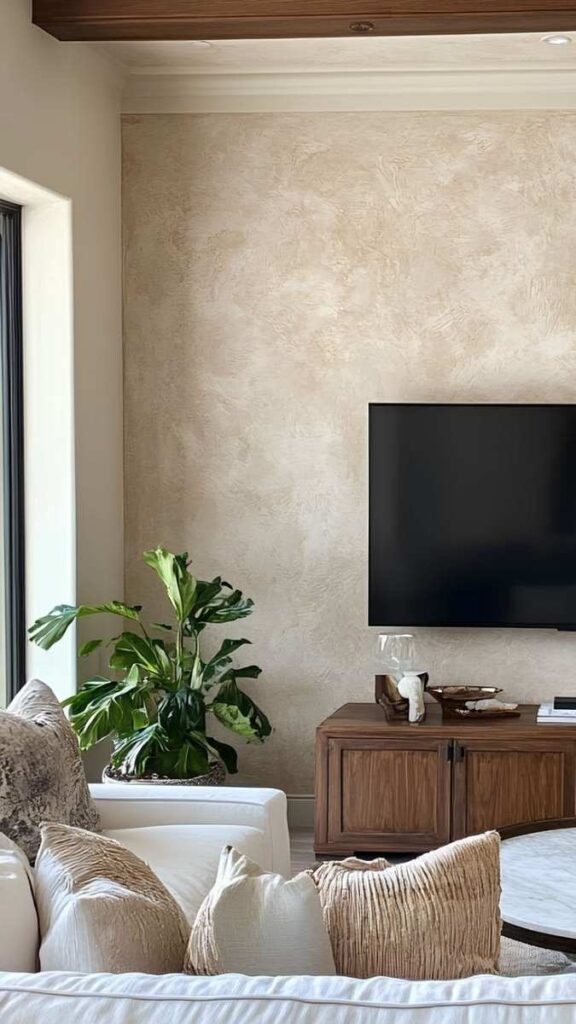
Not every peel and stick application needs to be bold. A subtle texture in the same tonal family as your wall color, a linen-look or concrete-look paper in warm white or soft gray adds depth that’s felt more than seen. In a minimalist living room, this is often the right move: the room needs more than a flat painted wall, but adding patterns would undercut the clean aesthetic.
The texture creates visual interest that rewards close attention while maintaining the open, uncluttered feel from across the room. This is particularly effective in rooms that get strong directional light, which makes the texture shift through the day.
Peel and Stick Moroccan Tile in a Mudroom
Mudrooms take a lot of abuse shoes, bags, coats and they rarely get decorative attention because of it. A Moroccan tile pattern on the back wall (and optionally the floor) of a mudroom transforms a purely functional space into something that feels like it belongs to the rest of the home.
The pattern also has a practical advantage: it hides scuffs and marks far more effectively than a plain painted wall. Deep blues, terracotta, and warm greens in traditional Moroccan repeating patterns bring a crafted, handmade quality to a space that’s often completely ignored.
Scandinavian Forest Mural Peel and Stick in a Reading Nook
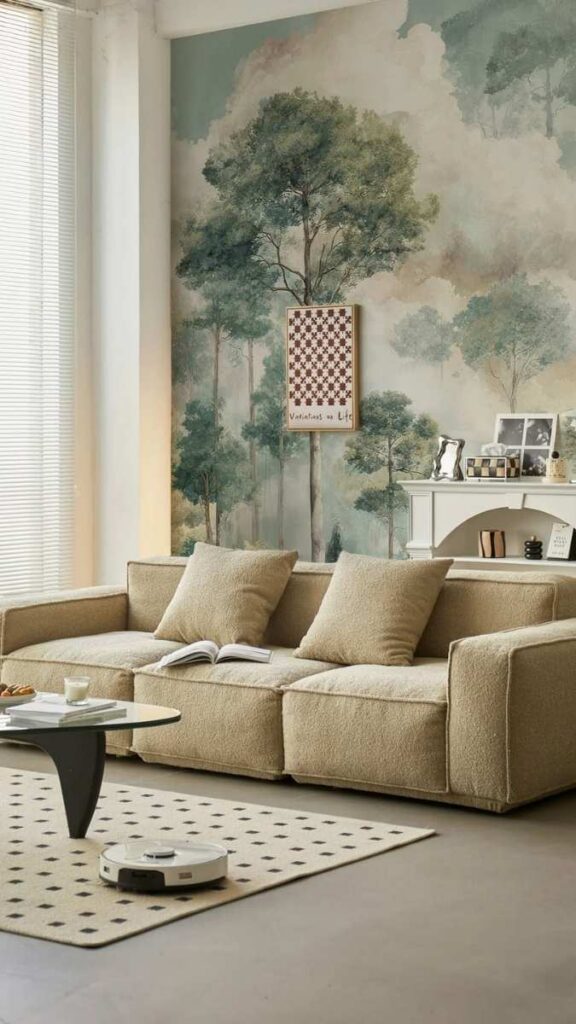
Reading nooks benefit from a sense of enclosure; they should feel like a separate zone within a larger room. A birch forest or woodland mural on the back wall of the nook creates exactly that kind of immersive boundary. The vertical tree lines reinforce the height of the space and make the nook feel taller.
Soft, muted palette versions pale gray trunks, ivory background, soft sage work better here than bold full-color murals, which can feel overwhelming in a small enclosed space. This is one of the most pinnable peel and stick setups because it photographs like a fully designed space.
Peel and Stick Chair Rail Molding in a Guest Bedroom
Chair rail molding the horizontal decorative strip that runs along the middle of a wall is an architectural detail that makes any room feel like it was designed with intention. The peel and stick version is applied the same way as traditional molding, just without nails or caulk.
Run it at 36 inches from the floor, paint the lower half a slightly deeper tone than the upper wall, and you have a classically structured room that looks far more finished than the effort required. This works particularly well in guest bedrooms, which often feel like afterthoughts, and in rooms with very tall ceilings where the division creates better visual proportion.
Dark Floral Peel and Stick Wallpaper in a Powder Room
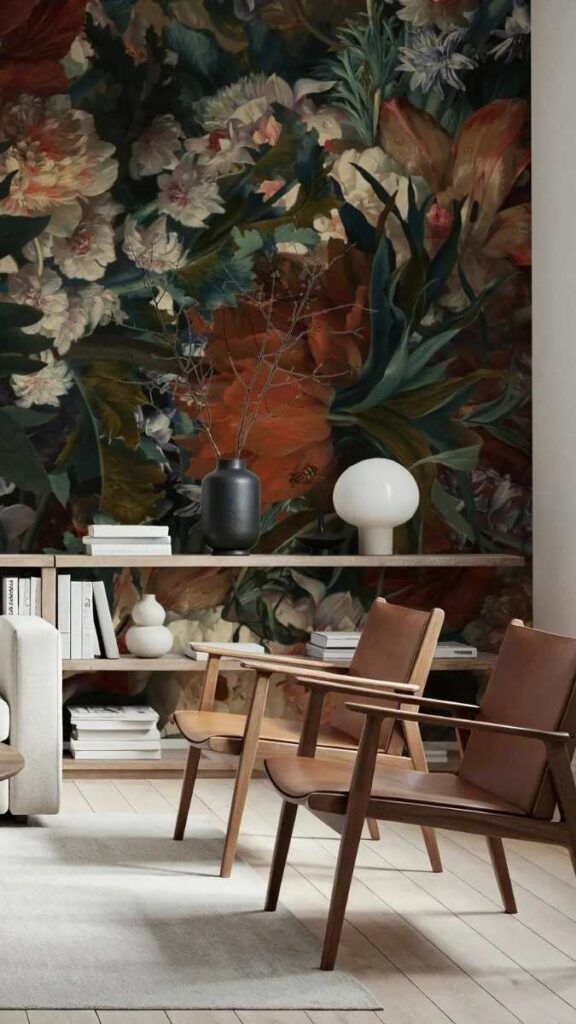
Powder rooms are the one space in a home where going bold actually makes sense. Guests spend only a few minutes there, and the small scale means even a very saturated wallpaper doesn’t become overwhelming.
Deep emerald, navy, or plum botanical prints work especially well because they pair beautifully with warm metal fixtures (brass, gold, or antique bronze) and feel deliberately curated. The dark background also makes mirrors and sconces stand out with more visual clarity. IMO, the powder room is the most underused opportunity in home decor and peel and stick makes experimenting completely low-risk.
What Actually Makes These Peel and Stick Ideas Work
The common thread across all these applications isn’t the product itself, it’s the placement logic. Peel and stick decor performs best when it’s solving a specific spatial problem: a wall that’s too bare, a room that reads too flat, a zone that lacks definition, or a ceiling that feels low. When you approach it as a spatial tool rather than a decorative add-on, the results look intentional.
Scale matters more than pattern. A small, intricate print on a large wall will read as busy and disconnected. A large-scale pattern in a small room creates intimacy rather than overwhelm provided the rest of the decor stays restrained. The other factor is contrast: textured or patterned walls need plain furniture, simple textiles, and minimal accessories to let the wall be the focal point.
Application quality also separates good results from mediocre ones. Smooth, properly primed walls, clean edges, and matched seams make the difference between a wall that looks designed and one that looks DIY in the wrong way.
Peel and Stick Wall Decor Ideas Quick Reference Guide
| Idea | Best Room | Space Type | Problem It Solves | Difficulty |
| Shiplap panels | Entryway | Narrow hallway | Visual width | Easy |
| Geometric tile | Kitchen | Small kitchen | Backsplash definition | Easy |
| Wallpaper mural | Bedroom | Any size | Headboard alternative | Moderate |
| Wainscoting panels | Dining room | High-ceiling rooms | Blank lower walls | Moderate |
| Floral wallpaper | Bathroom | Small rental bath | Personality in neutral space | Easy |
| Faux brick | Home office | Compact office | Background interest for calls | Easy |
| Wood plank panels | Living room | Medium to large | Warmth and texture | Moderate |
| Damask pattern | Dining room | Formal spaces | Artwork replacement | Moderate |
| Dark botanicals | Powder room | Tiny room | Bold accent without commitment | Easy |
| Arch molding strips | Living room | Any layout | Architectural character | Easy |
How to Choose the Right Peel and Stick Wall Decor for Your Space
Start with the specific problem your wall has, not with the pattern you like. A wall that feels too bare needs focal-point treatment (mural, textured panel). A wall that makes the room feel small needs vertical lines or light tones. A wall that looks flat needs texture rather than pattern. Matching the solution to the actual issue is what separates peel and stick applications that look designed from ones that look like an afterthought.
Think about light next. Dark or saturated patterns need good ambient or directional light to read properly in a dim room, a deep floral will disappear. Lighter, textured options work in low-light rooms because they reflect rather than absorb what’s available. Check how your room’s light changes through the day before committing to a dark palette.
Finally, consider the wall surface. Peel and stick adhesion depends heavily on what’s underneath. Flat or eggshell paint surfaces hold best. High-gloss, textured, or recently painted walls (within 30 days) cause adhesion problems. Clean the surface thoroughly and let it dry completely before application. This single step solves the majority of peeling issues people encounter.
FAQ’s
Does peel and stick wallpaper actually come off cleanly?
Yes, most modern peel and stick wallpaper is designed for clean removal from properly painted surfaces. The key variable is wall condition: flat or eggshell paint surfaces on walls that haven’t been recently painted release cleanly in most cases. High-gloss or damaged walls are more unpredictable.
What’s the difference between peel and stick wallpaper and removable wallpaper?
They’re usually the same thing; both terms refer to self-adhesive wallpaper with a peel-off backing. Some brands market them differently based on adhesive strength or material weight. Look for “repositionable” on the label if you want to adjust placement during installation.
Can peel and stick wall decor work in a bathroom?
Yes, but with conditions. Standard peel and stick wallpaper works on vanity walls and areas away from direct water contact. For shower surrounds or areas with heavy moisture, you need panels specifically rated for wet areas these use a different adhesive and backing material.
How do I avoid bubbles when applying peel and stick wallpaper?
Work from the top down in small sections, using a flat squeegee or credit card to smooth as you go. Don’t peel the entire backing at once and expose a few inches at a time. Small bubbles often disappear within 24–48 hours as the adhesive settles.
Is peel and stick wall decor worth it for a renter?
It’s one of the most practical upgrades available for rentals specifically. The ability to remove cleanly means no security deposit risk, and the visual impact is comparable to painted walls or permanent wallpaper. Focus on high-impact zones bathroom, kitchen backsplash, bedroom accent wall for maximum return on a small investment.
Which rooms benefit most from peel and stick wall decor?
Bathrooms, powder rooms, kitchens, and bedrooms tend to yield the highest visual return because the walls are either small (requiring less material) or serve as clear focal points. Entryways and home offices also perform well because they’re transition or functional spaces where a single wall makes a strong impression.
Can you paint over peel and stick wallpaper?
Some products are paintable, but this is not standard. Painting over peel and stick typically voids any clean-removal guarantee and can cause peeling at the edges. If you want a painted look with texture, choose a paintable peel and stick panel specifically designed for that purpose.
Conclusion
Peel and stick wall decor has earned its place as a legitimate design tool not a shortcut or a compromise. When chosen based on spatial logic rather than impulse, it solves real problems: flat walls, low ceilings, undefined zones, and under-designed rentals. The variety available in 2026 is substantial enough that you can find something that fits most aesthetics, from ultra-minimal to maximalist botanical.
Start with one idea that addresses an actual problem in your space, not just something you find visually appealing in isolation. Try the kitchen backsplash strip if your countertops feel undefined. Try a single-wall mural if your bedroom lacks a focal point. Work from the problem outward, and the right application will usually be obvious from there.