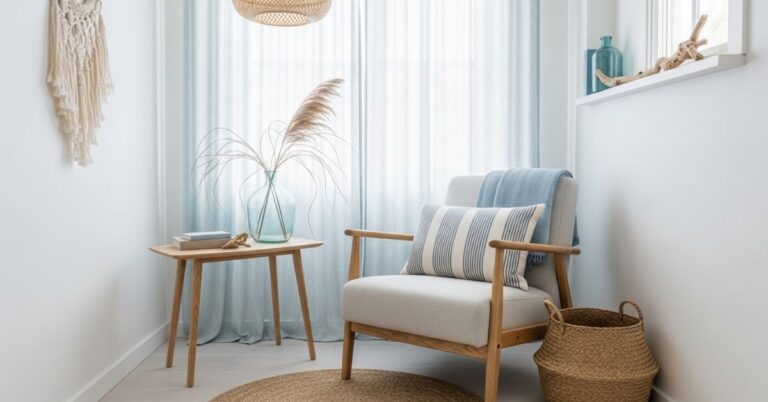
47+ Small Room Ideas That Make Every Square Foot Feel Intentional
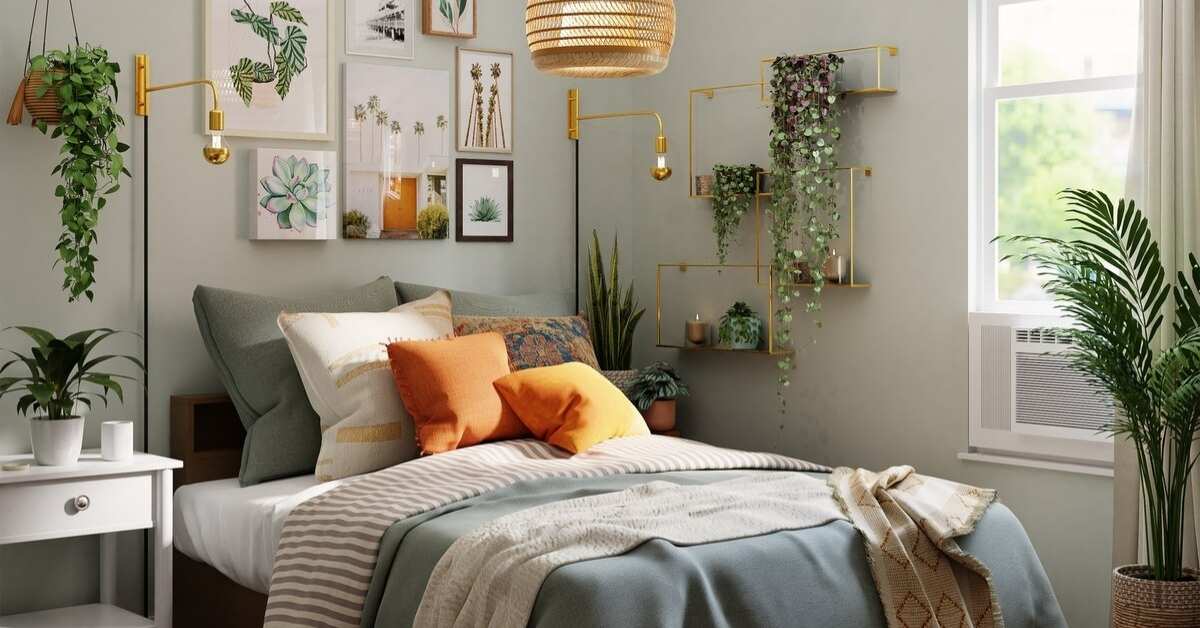
Small spaces have a way of exposing every design decision: the furniture that’s slightly too big, the layout that blocks natural light, the storage that doesn’t quite work. If your room feels cramped or just Small Room Ideas “off” despite your best efforts, you’re not dealing with a square footage problem. You’re dealing with a setup problem.
In 2026, the shift in small-space design is clear: people are moving away from trying to make rooms look bigger and toward making them work better. That’s a subtle but important distinction. A room that functions well with clear sightlines, flexible furniture, and layered lighting naturally feels more open without relying on optical tricks.
If you’re working with a small bedroom, a compact living room, or a studio that has to do everything at once, these ideas are built for real constraints. No “just add a large mirror” vagueness here every setup below is chosen because it solves a specific problem.
Float Your Sofa Away From the Wall
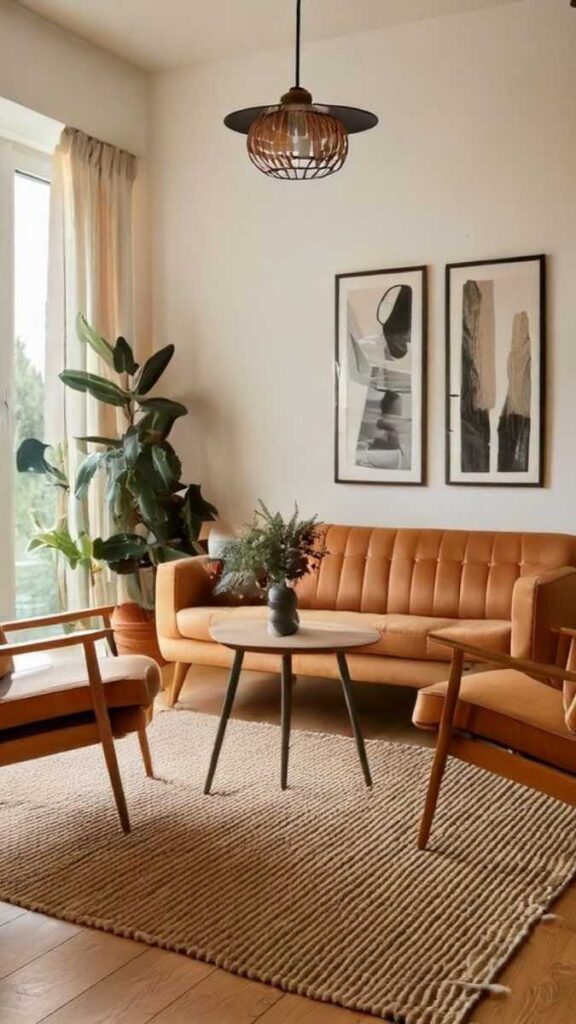
Pushing furniture against walls is the most common instinct in small rooms and often the one that makes them feel most cramped. Pulling your sofa even 8 inches from the wall creates a visual gap that reads as breathing room.
The space around furniture defines its presence; when everything is wall-hugging, the room feels like a waiting area. This works especially well in living rooms where you want a conversational, intentional layout rather than a furniture lineup. Pair it with a low-profile coffee table to keep sightlines open across the room.
Use a Lofted Bed to Reclaim Floor Space
In a room where the bed takes up half the floor, building vertical is the most practical move available. A lofted bed frame elevates your sleeping area and opens up the square footage below for a desk, wardrobe, or reading nook effectively doubling the function of the same footprint.
This works best in rooms with ceilings above 9 feet and for anyone who needs their bedroom to handle both sleep and work. It’s not just a space-saver; it restructures how the room functions entirely. Go for a frame with a built-in ladder rather than a freestanding one to keep the footprint tight.
Hang Curtains at Ceiling Height, Not Window Height
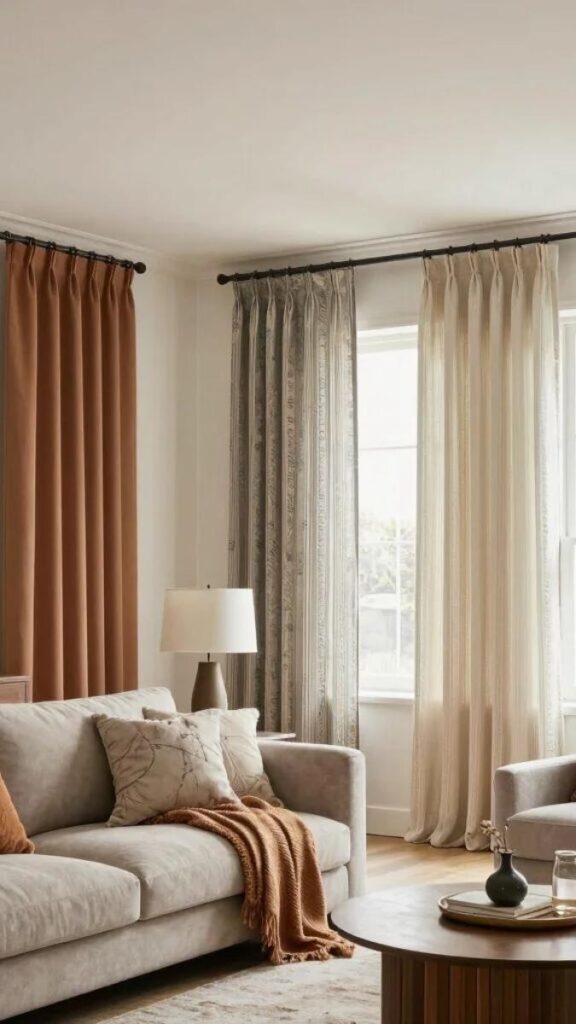
Where you hang your curtain rod changes how tall the room feels not because of an optical illusion, but because it draws the eye upward and frames the window as a larger architectural feature. Mounting the rod at ceiling height (or as close to it as possible) makes windows read taller and gives the room a more considered, less makeshift feel.
This is one of the lowest-cost changes you can make in a rented space since it requires only a drill and a curtain set. Stick to lightweight fabrics, linen or cotton voile in rooms that need to maximize daylight.
Choose a Daybed Over a Standard Sofa in Studio Apartments
A daybed solves the problem studios always face: you need seating during the day and sleeping space at night, but you can’t fit both without the room feeling like a furniture showroom. A daybed positioned along one wall ideally under a window functions as a sofa by day and a bed by night without constant rearranging.
It keeps the floor plan open and avoids the awkward double-furniture situation that makes most studios feel chaotic. This works best in square-shaped rooms where one long wall is available. Add bolster pillows along the back to lean it toward lounge territory during waking hours.
Mount Shelving High to Draw Attention Upward
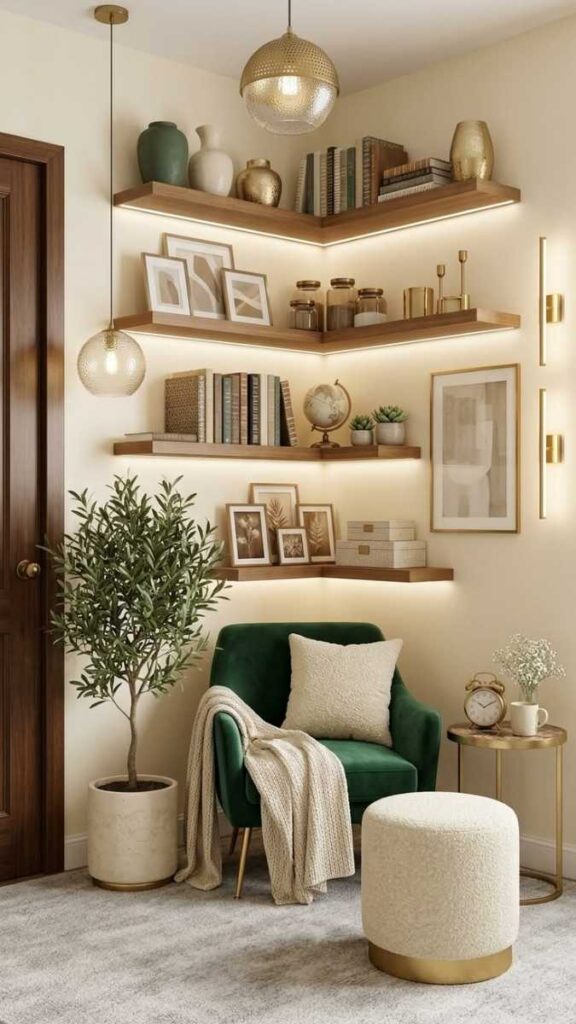
When wall space is limited but storage isn’t optional, mounting shelves higher than usual serves two purposes: it frees up the visual midzone (the area most responsible for making a room feel busy) and gives the eye something to travel toward.
Most people mount shelves at eye level, which crowds the wall and reduces the sense of openness. High-mounted shelving with a mix of books, plants, and minimal objects keeps the lower portion of the room clear and navigable. In my experience, this works best when you keep the top shelves lighter in visual weight and avoid heavy, dark objects at height.
Read More About: 14+Warm Color Schemes for Cozy Homes That Actually Work in Real Rooms
Use a Transparent or Glass Coffee Table
A coffee table takes up physical space regardless of what it’s made from but glass or acrylic versions don’t take up visual space. When your eye can pass through the table to the floor beneath, the center of the room reads as less occupied. This is especially useful in narrow living rooms where the furniture-to-floor ratio is already tight.
It works with almost any sofa style and keeps the material palette open for texture elsewhere. This is one I’d actually recommend trying first because the swap costs relatively little and the difference in perceived openness is immediate.
Replace a Bedside Table With a Wall Mounted Bedside Shelf
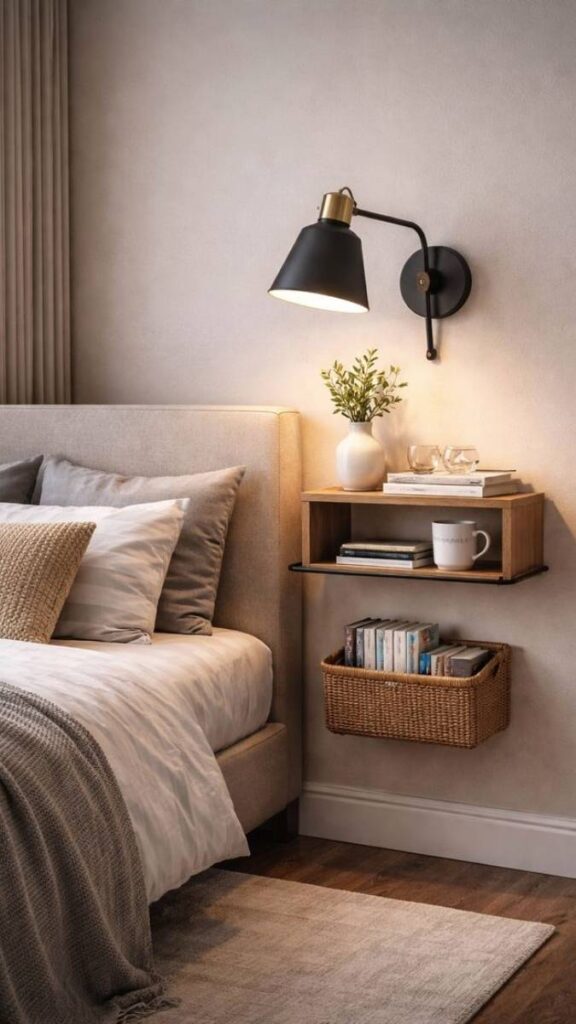
A standard nightstand occupies 2–3 square feet of floor space on each side of the bed which, in a small bedroom, is floor space you can’t afford. A wall-mounted shelf at mattress height serves the same function (lamp, water, phone) without touching the floor at all.
This makes the room easier to clean, keeps the sightline under the bed clear, and gives the layout a cleaner, less cluttered feel. It works in rented spaces if you’re willing to patch a couple of screw holes at move-out. Go for a shelf with a small lip or a low railing if you’re prone to knocking things off at night.
Define Zones With a Rug Instead of Walls
In open-plan small spaces studios, loft apartments, open-plan living rooms the absence of walls creates an “everything is everywhere” feeling that’s hard to shake. A well-placed rug anchors furniture into a defined zone and tells the eye where one function ends and another begins. You don’t need different wall colors or physical dividers.
Two rugs of different textures (say, a jute rug under a desk and a softer wool rug under a sofa) can split a studio into a clear living zone and a work zone without reducing the openness at all. The key is making sure each rug is appropriately sized too small and the zone feels like it’s floating.
Opt for a Narrow Console Instead of a Full Dresser
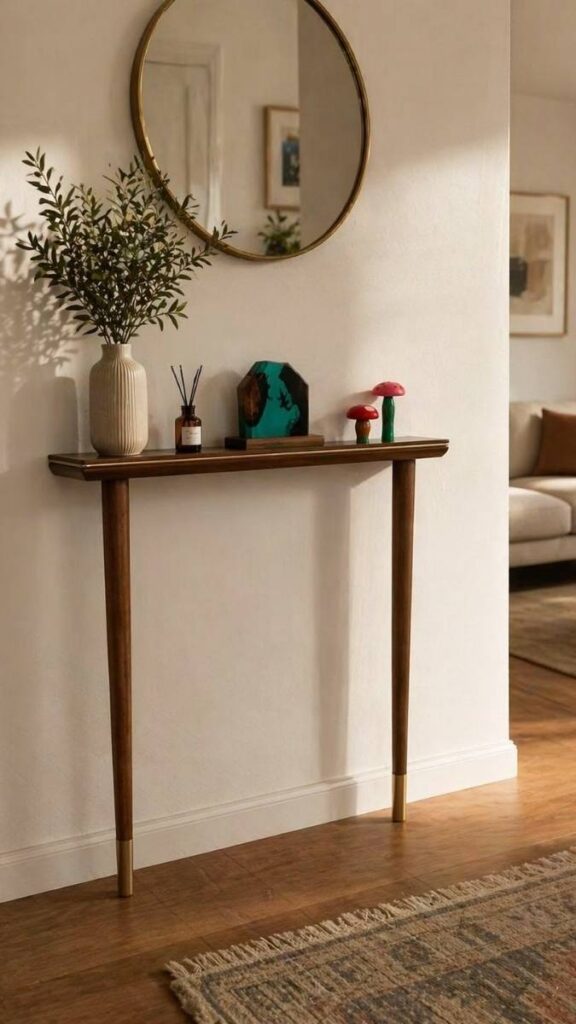
A standard dresser is 18–20 inches deep which in a small bedroom often means it projects into the walkway or blocks natural movement through the room. A narrow console at 12–14 inches depth does the job for folded items and accessories while leaving meaningful clearance.
Pair it with wall-mounted hooks above for bags and frequently used items, and a few labeled baskets below for seasonal storage. This setup works especially well in rooms where the only available wall for a dresser sits opposite the bed, right in the main traffic path.
Choose Low-Profile Furniture to Open Up the Upper Half of the Room
Furniture that sits lower to the ground platform beds, low sofas, floor cushions keeps the upper portion of the room visually unobstructed. This is less about the furniture size and more about where it sits in the vertical field of the room. When most of your furniture peaks at 18–24 inches rather than 36–40 inches, the room’s upper half stays open and the space feels less like a storage unit you sleep in.
This works particularly well in rooms with lower ceilings (under 9 feet), where tall furniture can feel oppressive. It also makes layered lighting a pendant or wall sconce more effective since the light has more room to distribute.
Read More About: 33+ Mood Lighting Aesthetic Ideas That Make Any Room Feel Intentional
Use a Pegboard Wall in Small Home Offices or Craft Rooms
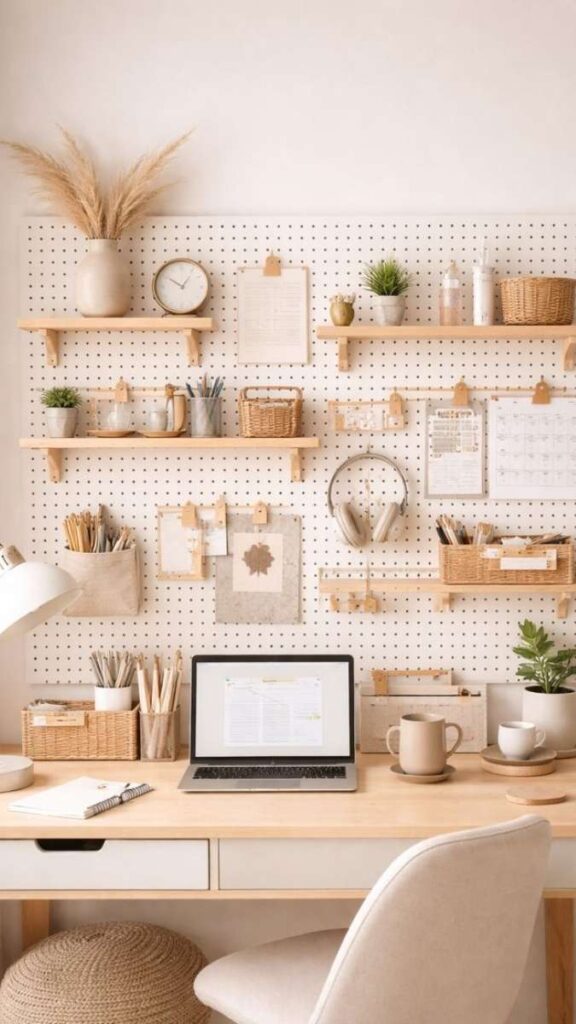
When desk space is too tight for organizers and drawers aren’t an option, moving storage to the vertical surface directly above your workspace keeps the desk surface clear and everything within reach.
A pegboard wall has flexible hooks, shelves, and bins can be rearranged as your needs change and it avoids the permanent commitment of built-in cabinetry. This is especially useful for renters or anyone who uses their small room for a mix of work and creative tasks. It works best in rooms with a dedicated wall that isn’t used for natural light.
Install a Murphy Bed for Rooms That Need to Multi-Task
A room that’s only used for sleeping 30% of the time doesn’t need to look like a bedroom the other 70%. A Murphy bed folds flat against the wall and transforms a guest room into a full-fledged home office, gym, or creative space during the day.
Modern Murphy systems are more integrated than the fold-down-mattress-on-a-frame designs of the past; many include built-in desk surfaces, shelving, or even sofas that move with the unit. The upfront cost is real, but the functional return for anyone working from home in a one-bedroom apartment is significant.
Maximize Light With a Mirror Positioned to Reflect a Window
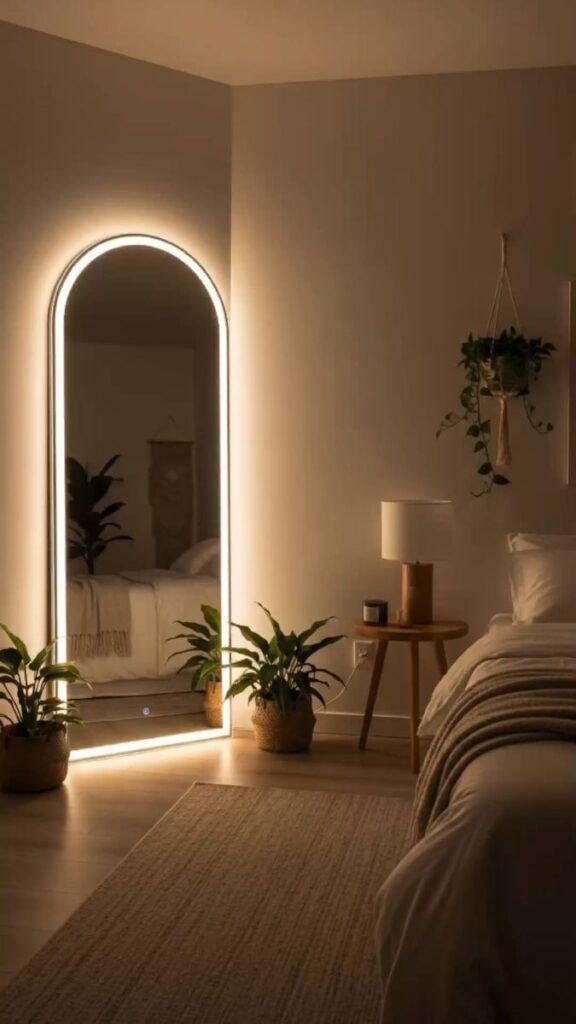
A mirror doesn’t create space but when positioned directly across from a natural light source, it reflects that light across the room and reduces the shadowed areas that make small spaces feel cave-like. The specific placement matters: a mirror that faces a wall reflects the wall; a mirror that faces a window reflects light and depth.
Honestly, the size matters less than the angle. Even a mid-sized mirror can change how a dark corner reads if it’s catching direct window light. This is most effective in rooms with limited windows or north-facing light.
Use Built-In Benches With Storage in Small Entryways
A small entryway has one job: transition you from outside to inside without dumping coats, shoes, and bags in the middle of the floor. A built-in bench with hinged storage underneath handles footwear while doubling as a seat for putting shoes on.
Wall-mounted hooks above keep jackets and bags off the floor. In a hallway that might only be 3 feet wide, this setup keeps the entry functional without adding freestanding furniture that narrows the path further. This is one of those spaces where built-in solutions significantly outperform freestanding ones in both utility and floor space efficiency.
Add a Small Dining Nook Instead of a Full Dining Table
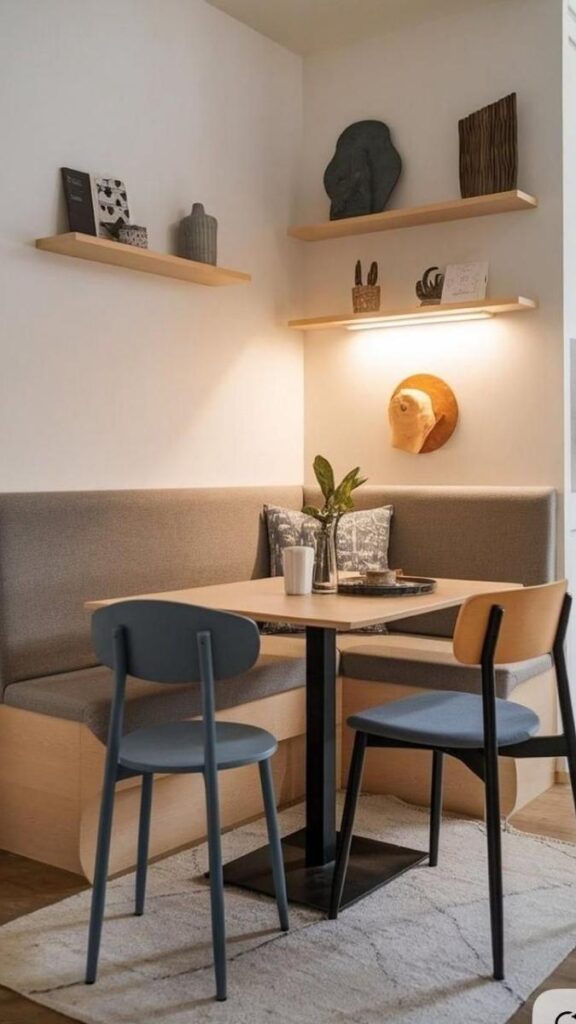
A full dining table in a small apartment or kitchen often sits unused most of the week while occupying a significant chunk of the room. A dining nook, a small built-in bench along a wall with a round table and a chair or two opposite, uses the corner or wall space more efficiently and seats the same number of people.
Round tables are important here: they remove the corner problem and fit more people with less footprint than rectangular options. This works well in kitchens where a breakfast nook can absorb the dining function without requiring a separate room.
Create Storage Under the Bed With Platform Frames or Risers
The space under your bed is the most underused storage zone in a small bedroom. A platform frame with built-in drawers puts that space to use without adding any visible storage furniture to the room which means the room looks more open while actually holding more. For standard bed frames, bed risers create clearance for low-profile storage bins.
This is particularly valuable in rooms without a dedicated closet or with limited wardrobe space. The rule of thumb: use under-bed storage for items you access weekly or less seasonal clothes, extra bedding, rarely used equipment.
Use Vertical Stripes or Tall Decor to Correct Low Ceiling Perception
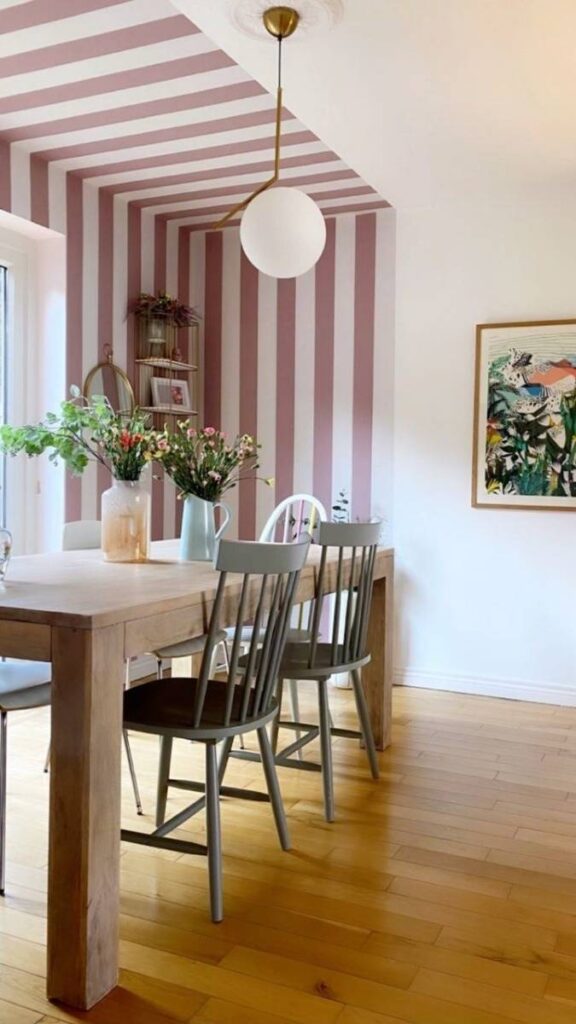
Rooms where the ceiling height is under 8.5 feet can feel squashed regardless of their floor plan dimensions. Vertical elements, striped wallpaper, tall narrow bookshelves, high-hung art, floor-to-ceiling curtains redirect visual attention upward and reduce the sense of compression. This isn’t about decoration for decoration’s sake; it’s about correcting the proportional imbalance that low ceilings create.
The goal is to make the room feel taller without actually touching the ceiling. In my experience, this works best when at least two vertical elements reinforce each other; one alone often reads as incidental.
Lean Large Art Pieces Against the Wall Instead of Hanging Them
Large art in a small room sounds counterintuitive but an oversized piece leaned against the wall rather than mounted creates a layered, lived-in quality without the permanence of drilling into walls. The scale of the piece acts as a visual anchor that makes the room feel considered rather than sparse.
Leaning also keeps the option open: you can move, rotate, or swap pieces easily. This works especially well above a low dresser, behind a sofa, or at the end of a hallway where you want a strong visual moment without making the room feel crowded.
Read More About: 12+ Instagram Picture Home Ideas That Make Every Room Look
Separate Work and Sleep in Studio Apartments With a Bookshelf Room Divider
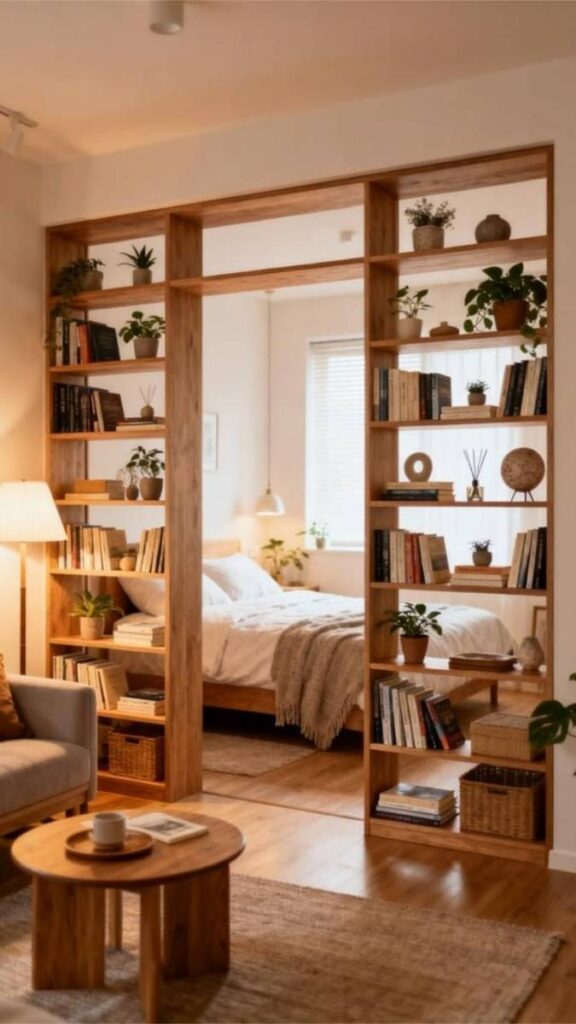
Working from bed or sleeping in your workspace creates a cognitive overlap that affects both productivity and rest. A freestanding open bookshelf positioned perpendicular to the wall used as a room divider creates enough visual separation to mentally distinguish zones without reducing light or completely closing off the space.
Open shelving means light still passes through; it’s a divider, not a wall. Fill it with books, plants, and objects on both sides so it reads as furniture, not a barricade. This setup works best when the bookshelf is at least 60 inches tall and 12 inches deep for stability.
Replace Overhead-Only Lighting With Layered Light Sources
A single overhead light in a small room creates flat, even light that flattens surfaces and makes the room feel smaller and more institutional. Layered lighting, a combination of overhead, table-level, and floor-level sources creates warmth and dimension. Each light source illuminates a different plane of the room, which gives the eye multiple points of interest and makes the space feel more articulated.
For small rooms, the emphasis should be on warm-toned bulbs (2700K–3000K) to avoid the brightness that reads as clinical. This is one change that costs very little (a lamp and a bulb) but restructures how a room feels after sundown.
Use a Drop Leaf or Expandable Table for Small Kitchens or Dining Areas
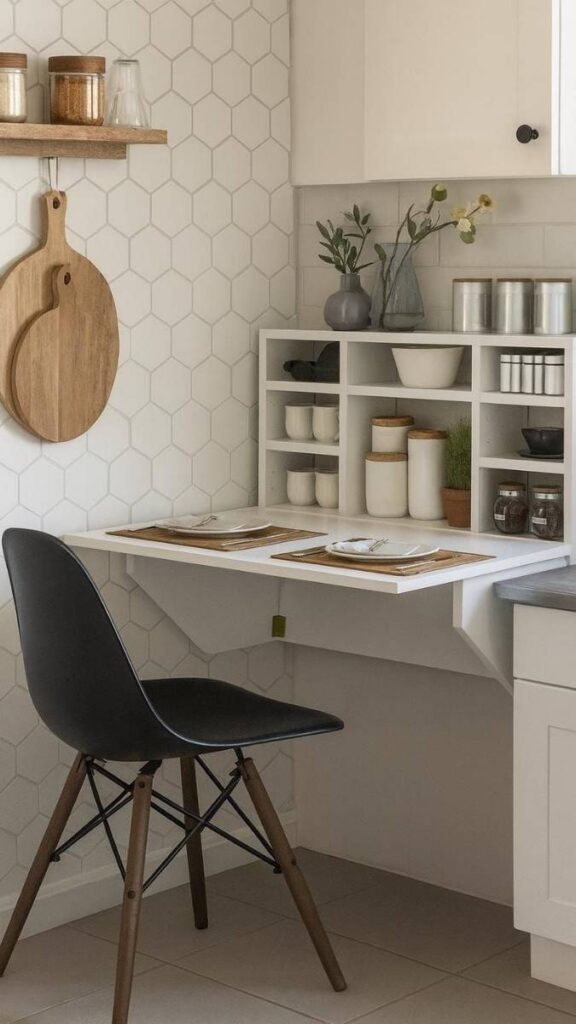
A fixed table in a small kitchen or open-plan space occupies floor space whether you’re using it or not. A drop-leaf table, folded down when not in use, reclaims that space for cooking, movement, or simply breathing room. Extended for a meal, it seats two to four people comfortably.
This is especially practical in galley kitchens or open-plan studios where every square foot in the center of the room affects how functional the space feels on a daily basis. Wall-mounted folding tables are an even more compact version of the same concept if floor space is truly at a premium.
Apply Limewash or Textured Paint to Add Depth Without Adding Objects
A flat, painted wall in a small room can read as a blank surface that emphasizes emptiness. Limewash paint which creates a subtle, uneven, mineral texture adds visual depth to a wall without adding any physical object to the room. It makes the wall itself interesting, which means you need fewer decorative elements to make the room feel complete.
In small bedrooms, applying it to the wall directly behind the bed creates a soft focal point that reads well without the overhead of a full gallery wall or headboard. It’s also increasingly common in 2026 interiors as people move away from gallery walls toward material texture.
Go Monochromatic to Reduce Visual Noise in Busy Small Rooms
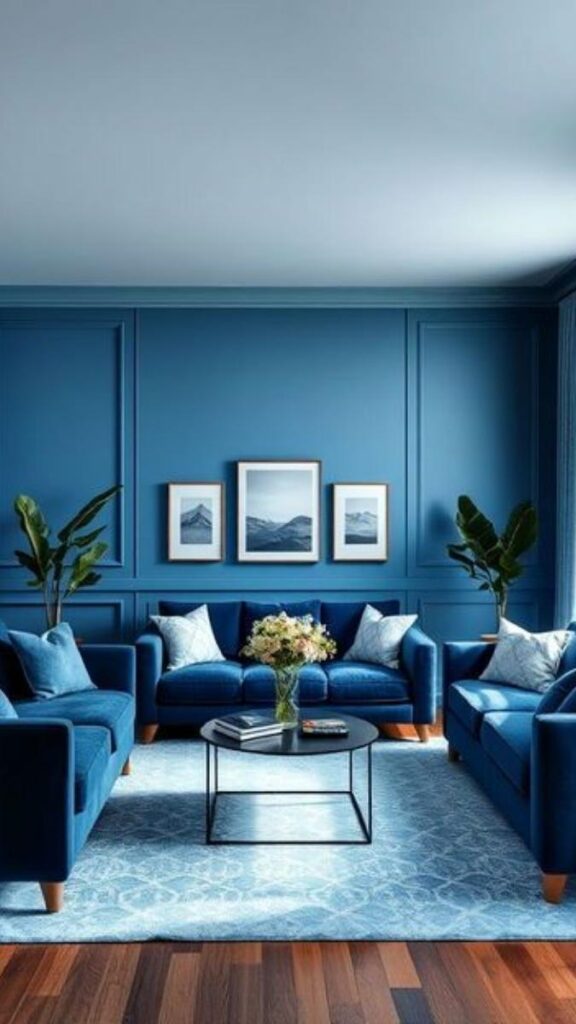
Too many contrasting colors in a small room create visual busy-ness that makes the space feel cluttered even when it isn’t. A monochromatic palette of one base color in multiple shades and textures keeps the eye moving smoothly through the room rather than jumping between competing points.
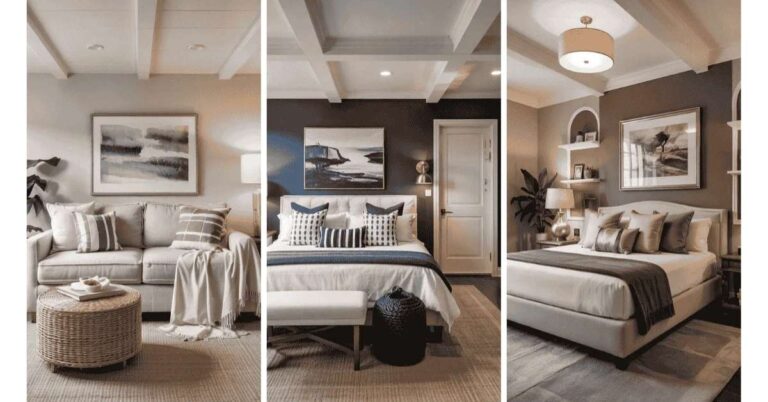
The texture variation (a linen throw, a woven rug, matte walls, a glossy ceramic) provides enough interest to prevent the room from feeling flat. This isn’t minimalism, it’s tonal cohesion. It works especially well in small bedrooms and living rooms where the goal is a calm, settled feel rather than a high-impact aesthetic.
Use Hooks and Wall Rails in Small Bathrooms to Keep Surfaces Clear
Counter space in a small bathroom disappears fast and once it’s gone, the room reads as cluttered regardless of how clean it is. Mounting a wall rail with S-hooks or individual hooks at different heights keeps towels, hair tools, and accessories off the counter and the floor while remaining easily accessible.
This is more flexible than fixed towel bars because you can adjust hook placement as your storage needs change. Go for matte black or brushed brass hardware to tie into a modern or transitional bathroom palette without adding decorative weight.
Build a Reading Corner in a Dead Bedroom Corner With a Single Chair and Lamp
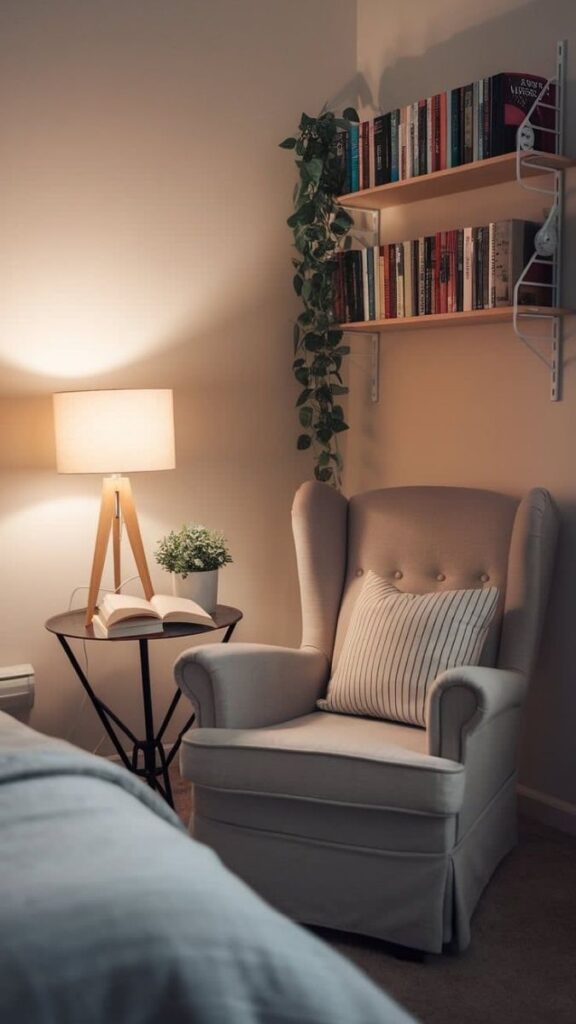
Dead corners, the awkward space where two walls meet and nothing quite fits are one of the most common layout problems in small bedrooms. A single armchair (ideally curved or compact) with a floor lamp and a small side table fills the corner without blocking movement and creates a secondary use zone that makes the room feel more layered and functional.
You don’t need a large footprint to make it work even if a 24-inch-wide chair leaves enough clearance for comfortable circulation. This setup works best when the chair faces into the room rather than a wall, so it feels like an intentional pause point rather than furniture that got pushed into a corner.
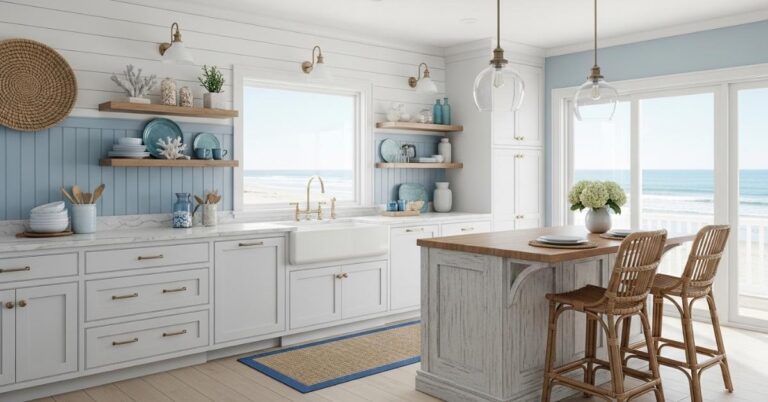
Use Open Shelving in Small Kitchens Instead of Upper Cabinets
Upper cabinets in a small kitchen close off the upper wall and make the space feel lower and more contained than it is. Open floating shelves in the same position keep items accessible but allow the eye to travel past the shelf line to the wall behind. The trade-off is visible storage: everything on the shelf is always on display, which means organization becomes part of the visual.
Keep items grouped, choose consistent dishware, and use the shelf height to your advantage by keeping the most-used items at eye level. For renters who can’t modify cabinetry, open shelves are also easier to install and remove without damage.
Create a Vertical Garden on a Balcony or Narrow Outdoor Space
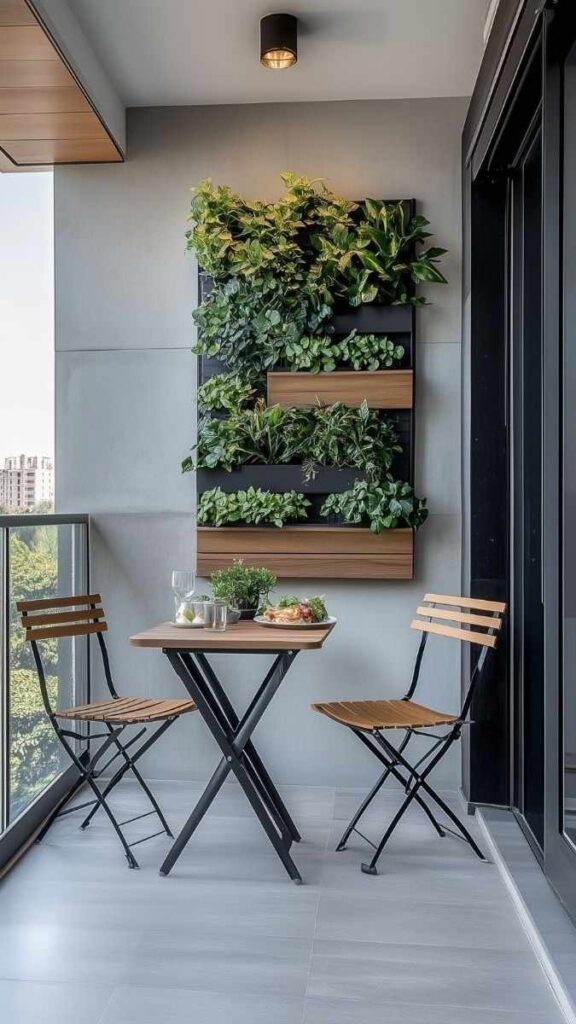
A narrow balcony that only fits one or two chairs often ends up underused because the layout doesn’t feel like a destination. Moving plants from the floor to the wall using vertical planters, wall-mounted pots, or a trellis frees up floor space and creates a surrounding effect that makes the area feel more enclosed and comfortable.
It shifts the balcony from a “place to stand outside” to something closer to an outdoor room. Pair with a small bistro set and a string light overhead to extend the usability into evenings. This works best on south- or west-facing balconies where plants get adequate light.
What Actually Makes These Small Room Ideas Work
The ideas above aren’t random tricks; they follow a consistent logic that applies to almost any constrained space.
Floor space and visual space are different things.
A room with 200 square feet of floor space can feel open or cramped depending almost entirely on how furniture is arranged and where visual weight accumulates. Clearing the floor by moving storage to walls is almost always more effective than removing furniture entirely.
Vertical space is routinely wasted.
Most rooms are designed with furniture that occupies the bottom 36 inches and leaves the upper 5 feet of wall largely empty. Shelving, art, curtains, and lighting installed in the upper half of the wall expand the room’s working surface without touching the floor plan.
Lighting defines the boundary of a room.
A well-lit room feels more spacious because you can see into every corner. Dark corners compress the perceived size of a space; targeted light that reaches the edges of the room extends it. This is why layered lighting (not just overhead) changes how a small room feels more significantly than most furniture changes.
Scale mismatches are the most common small-room mistake.
A sofa that’s 90 inches in a room that’s 120 inches wide doesn’t leave enough space for the eye to rest. Furniture that fits the room’s scale even if it’s smaller than what you’d prefer makes a space feel more composed and livable.
Small Room Setup Comparison Guide
| Idea | Space Type | Problem It Solves | Difficulty | Renter-Friendly |
| Float sofa from wall | Living room | Layout feels stiff | Low | ✅ Yes |
| Lofted bed | Small bedroom | No floor space | Medium | ⚠️ Depends |
| Ceiling-height curtains | Any room | Low ceiling feel | Low | ✅ Yes |
| Murphy bed | Multi-use room | Wasted daylight hours | High | ❌ Usually not |
| Daybed | Studio apartment | Sofa + bed conflict | Low | ✅ Yes |
| Open bookshelf divider | Studio apartment | No zone separation | Low | ✅ Yes |
| Layered lighting | Any room | Flat, institutional feel | Low | ✅ Yes |
| Drop-leaf table | Kitchen/dining | Table takes constant space | Low | ✅ Yes |
| Wall-mounted shelves (high) | Living room/bedroom | Wall feels cluttered | Medium | ⚠️ With patching |
| Monochromatic palette | Bedroom/living room | Visual noise and clutter | Low | ✅ Yes |
Common Small Room Mistakes That Make Your Space Feel More Cramped
Even well-intentioned layouts can work against a small room. Here are the problems that come up most consistently.
Buying furniture to fill the room instead of function.
A small room with furniture scaled to a larger space often has pieces that make the layout work only on paper, a dining table that seats six when you cook for two, a sectional that blocks the natural path through the room. The issue isn’t the furniture; it’s the fit. Before buying anything, map the floor plan and check that each piece leaves at least 24–30 inches of walkway on at least one side.
Ignoring the door swing.
In small rooms, a door that opens into a corner or sweeps a 90-degree arc into the center of the room limits furniture placement significantly. Swapping a hinged door for a sliding or pocket door even in a rental, if the landlord allows it can reclaim a meaningful area of the room that was functionally off-limits.
Under-lighting the corners.
Corners that are dark effectively shrink the room because the eye stops reading the space where the light ends. A floor lamp or wall sconce aimed at a corner costs almost nothing and extends the perceived depth of the room. This matters more in rooms with one window than it does in bright, naturally lit spaces.
Mismatched storage that adds clutter instead of removing it.
Random boxes, mismatched bins, and visible cord chaos on visible surfaces add more visual weight than the objects they store. Storage in a small room needs to be consistent in look same basket style, same label system, same finish or the organizational effort backfires visually.
Treating every wall as a display surface.
In a small room, gallery walls, floating shelf systems, and layered wall decor on multiple walls create a surround-sound busyness that compresses the space. Choose one wall as your primary feature wall and keep the others quieter. The contrast actually makes the feature wall more impactful and the room more balanced.
Frequently Asked Questions
What is the most effective way to make a small room feel larger?
The single most effective change is clearing floor-level visual clutter and moving storage to the walls. When the floor is clear and sightlines are unobstructed, the room reads as more open regardless of its actual dimensions. Add layered lighting to eliminate dark corners, and the effect is compounded.
How do I arrange furniture in a small bedroom with limited floor space?
Start by placing the bed against the longest wall without a window that preserves natural light and leaves the center of the room open. Use wall-mounted nightstands instead of freestanding ones, and avoid placing any furniture in the door swing zone. If you need a wardrobe, a built-in or a slim-profile unit along one wall is more efficient than a freestanding armoire.
Is it better to use light or dark colors in a small room?
Light colors reflect more light and reduce the visual weight of walls, which helps a small room feel less enclosed. That said, a dark accent wall on the wall farthest from the door can create a sense of depth that makes the room feel longer. The key is keeping ceilings and at least three walls light, even if you add a deeper tone as a focal point.
Can you use large furniture in a small room?
Yes, selectively. One large anchor piece, a sofa, a bed, a bookcase often works better than several small pieces competing for attention. The mistake is scaling every piece to the room; a single substantial piece reads as intentional, while a collection of small items reads as accumulated. The rest of the furniture should be proportionally lighter.
What’s the best lighting setup for a small room?
Layer three types: ambient (overhead or ceiling light), task (desk lamp, bedside lamp), and accent (floor lamp, wall sconce). Warm-toned bulbs in the 2700K–3000K range reduce harshness. Avoid relying on a single central overhead light; it casts shadows on the edges of the room and makes the space feel smaller than it is.
How do I divide a studio apartment without making it feel claustrophobic?
Use open, permeable dividers bookshelves with open backs, curtains on ceiling tracks, or a low console table rather than solid partitions. The goal is visual separation without light or air blockage. Rugs are the most unobtrusive method: two distinct rugs naturally define two zones without any vertical element at all.
Are there small room ideas that work for renters specifically?
Plenty. Ceiling-height curtain rods, peel-and-stick wallpaper on a single accent wall, wall-mounted shelves with anchor patches, furniture-based room dividers, and layered rugs all require minimal wall intervention and are easy to reverse. Focus on changes that live in the furniture and lighting layer rather than the architecture.
Conclusion
Small rooms don’t need to be fought against, they need to be understood. The ideas in this list share a common thread: they work with the constraints of the space rather than pretending those constraints don’t exist. Better lighting, smarter storage placement, and furniture scaled to the actual layout will do more for a small room than any single decor trend.
Not every idea here will apply to your specific space and that’s fine. Start with one or two that address the most pressing problem in your room, whether that’s a cluttered floor, a layout that blocks movement, or lighting that makes the room feel smaller than it is. Small, deliberate changes compound. A cleared floor plus a floor lamp plus ceiling-height curtains is already a noticeably different room, no renovation required.