24 Coastal Wall Decor Ideas That Actually Work in Real Homes Not Just Beach Houses
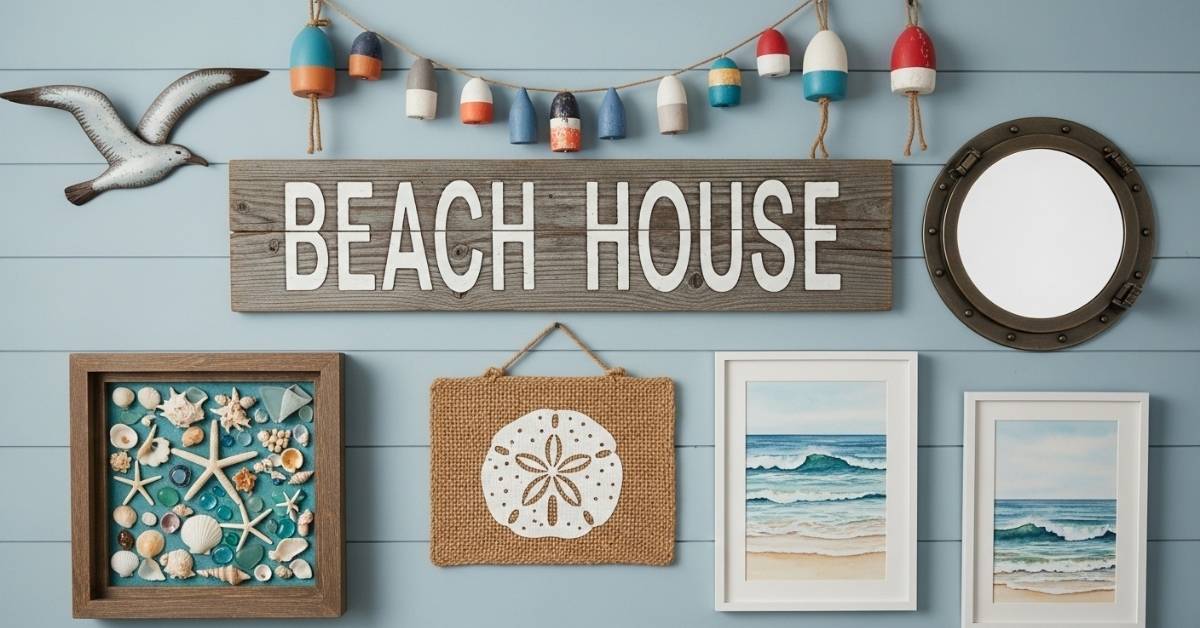
Coastal wall decor, done right, isn’t about anchors and starfish everywhere. It’s about layering textures, using a restrained color palette, and letting natural light do some of the heavy lifting.Coastal Wall Decor Ideas Whether you’re in a landlocked apartment or a home two blocks from the shore, these ideas work because they’re grounded in spatial logic, not just aesthetics.
If your space leans neutral, minimal, or airy, or if you’re just trying to make a room feel less heavy and more breathable, this is for you.
A Large-Scale Nautical Map as a Focal Point
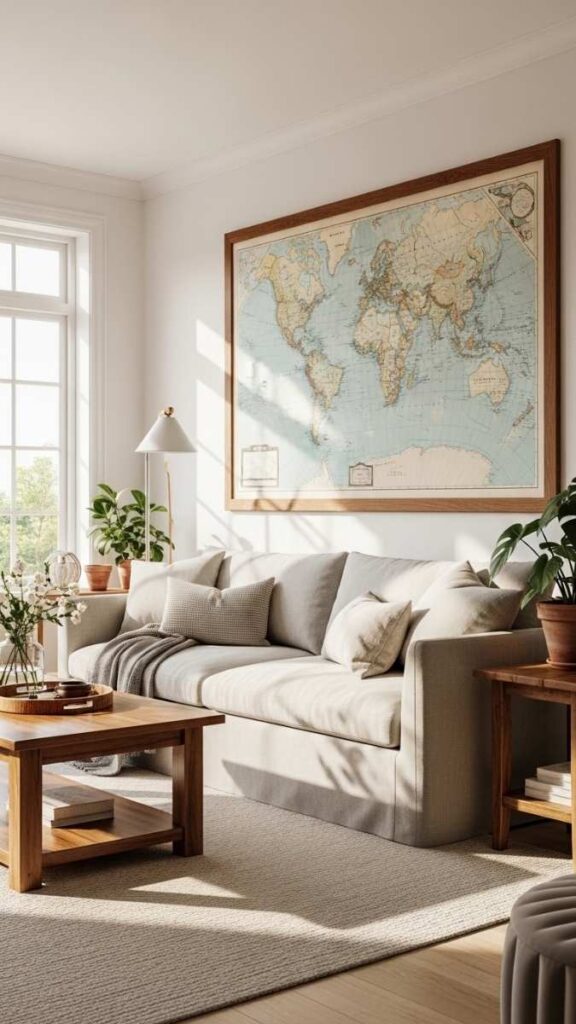
Most gallery walls fail not because of the art, but because nothing anchors them. A single oversized nautical or ocean topographic map framed simply in natural wood or matte black does the job without competing with anything else in the room.
Hang it centered above a sofa or console table, leaving at least 6–8 inches of breathing room from the furniture below. The scale makes the ceiling feel taller, and the map’s detail gives the eye somewhere to travel without the room feeling busy. This works especially well in living rooms or dining areas where you need one strong visual moment without over-decorating.
Woven Seagrass or Rattan Wall Panels
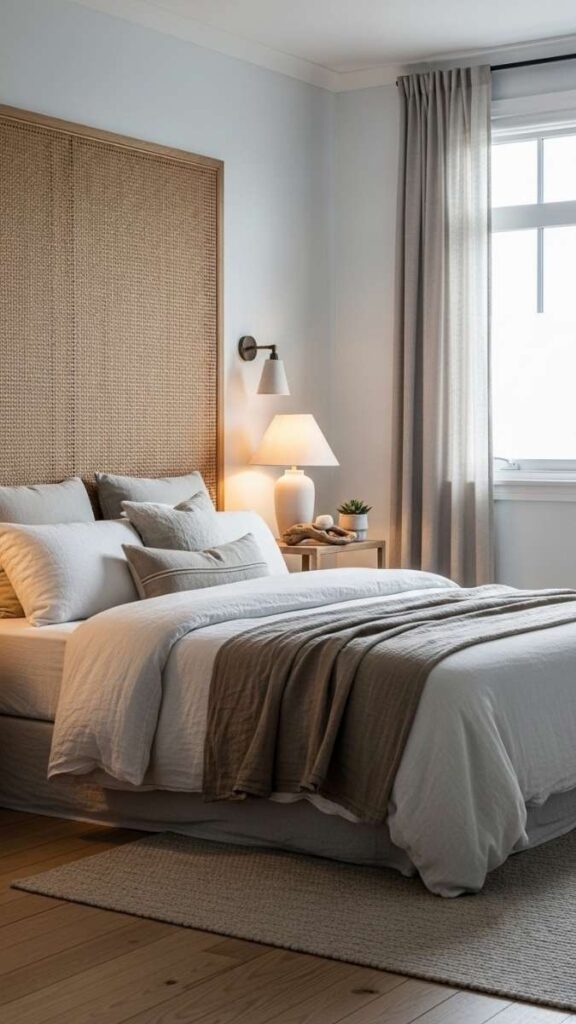
Texture is what separates a flat, forgettable wall from one that actually feels designed. A woven seagrass or rattan panel either as a headboard alternative or a standalone art piece adds dimension without color, which means it works in almost any palette.
In my experience, this works best when the rest of the wall is left completely bare; the weave has enough visual weight to carry the space on its own. It’s especially practical for renters since many panels hang like artwork on permanent installation required. The natural material also softens acoustics slightly, which is a subtle but real benefit in hard-surface rooms.
Read More About: 29 Vintage Wall Decor Ideas for Your Living Room That Actually Work in Real Homes
Driftwood Shelf with Simple Ceramic or Shell Accents
A floating shelf in a weathered or raw wood finish gives you function and coastal character at the same time. Keep the styling sparse with two or three ceramic pieces, maybe a small piece of coral or a handful of smooth stones and you avoid the clutter trap entirely.
The key is leaving at least a third of the shelf visually empty; negative space is what makes the whole thing feel intentional. This setup works particularly well in entryways and narrow hallways where you need a functional surface but don’t have floor space. The natural material contrast against a white or light plaster wall creates depth without requiring any color.
Abstract Ocean-Inspired Canvas Art
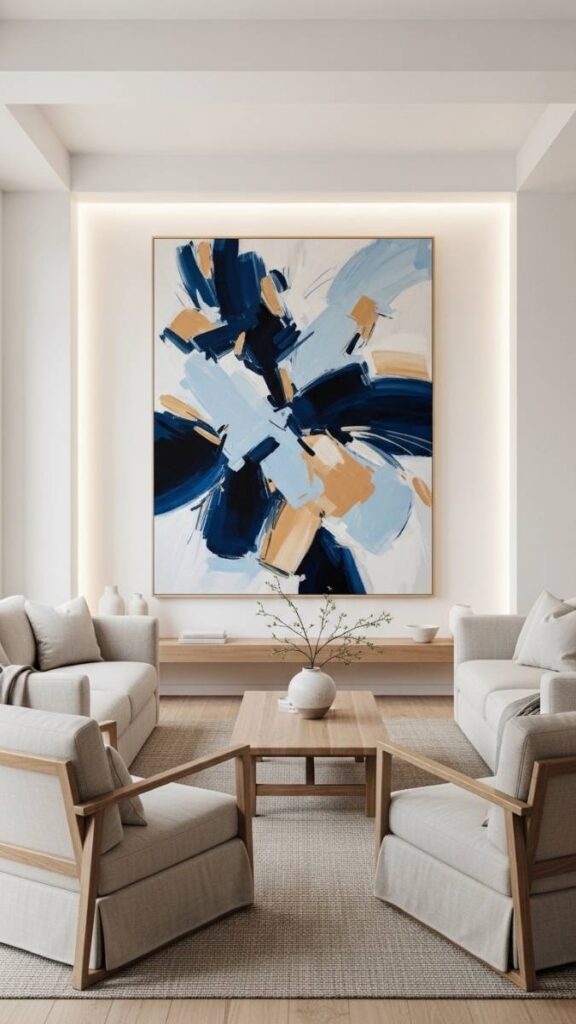
Abstract art with an ocean palettedeep indigo, seafoam, sandy beige, weathered white brings coastal feeling into a space without being literal about it. No waves, no boats, no shells required.
A canvas in the 24×36 or 30×40 range hung at eye level center at approximately 57–60 inches from the floor creates a focal point that works in both casual and more refined coastal interiors.
Honestly, this is one of the most flexible options on this list because the same piece reads differently depending on what you pair it with linen furniture makes it feel relaxed, while white walls and minimal furnishings make it feel more curated. Works in living rooms, primary bedrooms, and home offices equally well.
Vertical Rope or Macramé Wall Hanging
Vertical macramé or knotted rope hangings solve a specific problem that most people don’t name directly: narrow walls between windows or doorways that are too small for framed art but too obvious to leave bare.
A vertical piece 12–18 inches wide and 3–4 feet long fills that gap without overwhelming it. The natural fiber reads coastal without being themed, and in 2026, the move is away from oversized bohemian macramé toward tighter, more structured knot work in undyed cotton or jute. Hang it from a simple wooden dowel and let it float at least an inch from the wall for better shadow definition and visual depth.
Clustered Round Mirrors in Varying Sizes
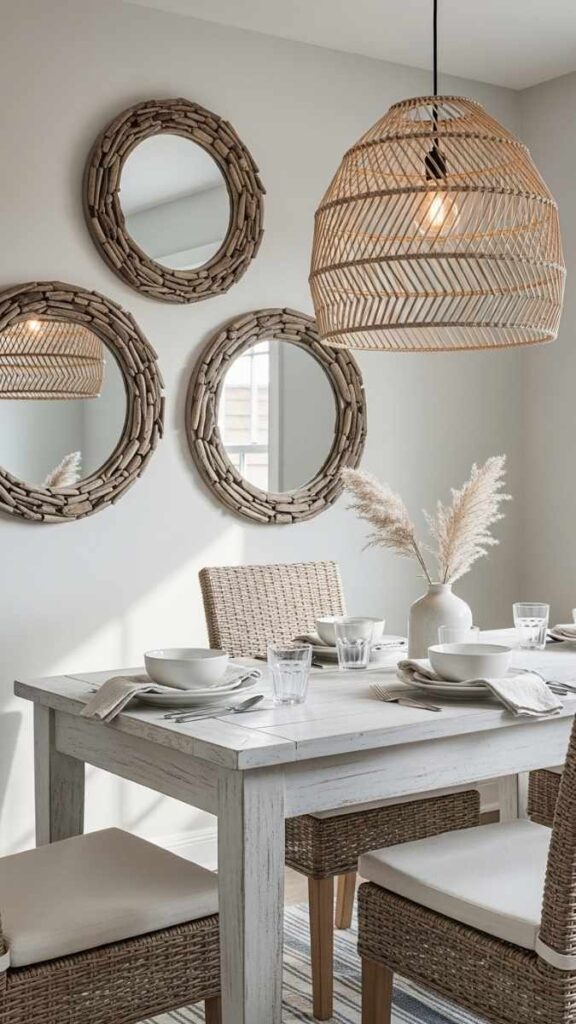
A cluster of round mirrors, three to five, in slightly varied sizes does something flat art; it bounces light around the room and makes the space feel genuinely larger. For a coastal feel, go for frames in weathered white, driftwood, or unfinished wood.
Arrange them in an organic cluster rather than a rigid grid, overlapping slightly for a more collected feel. This works especially well on walls opposite windows, where each mirror catches and distributes natural light throughout the day.
It’s also one of the more budget-friendly options here since mismatched thrifted mirrors work better than perfectly matched sets.
Blue and White Ceramic Plate Wall Display
Plate walls have had a revival but the coastal version is more restrained than the traditional maximalist take. Choose plates in a single color story, blue and white works best for this theme in two or three different patterns, and arrange them in an asymmetrical cluster of five to seven pieces.
Vary the sizes but keep the palette tight. This works beautifully in kitchens and dining rooms where the wall often gets neglected in favor of open shelving. The ceramic texture catches light differently than canvas or wood, which adds material variety to a room that might otherwise feel too uniform.
Read More About: 20 Vintage Kitchen Decor Ideas That Make Older Homes Feel Intentional and Modern Kitchens Feel Warmer
Gallery Wall Using Ocean Photography
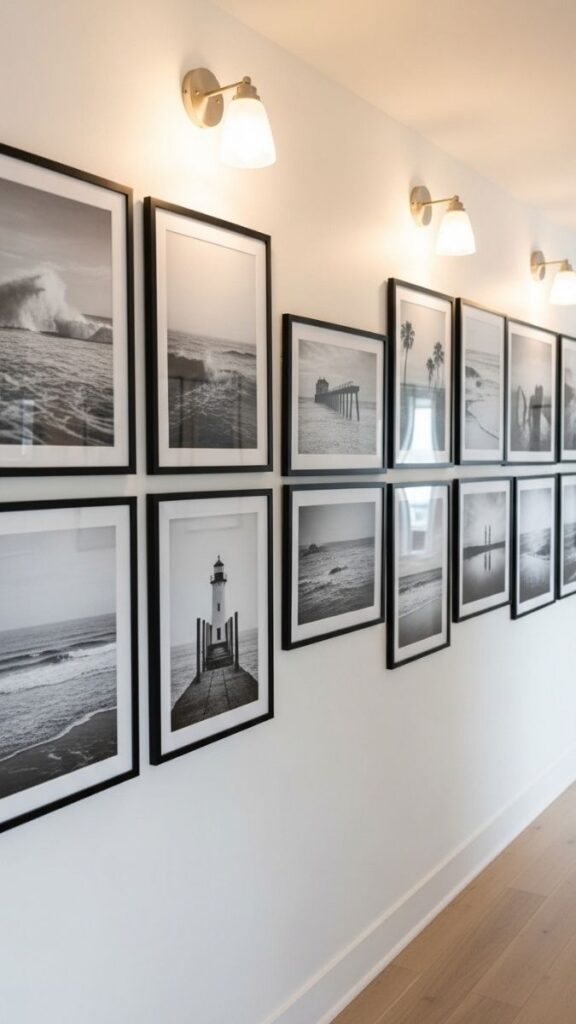
A photography-based gallery wall works better than mixed-media for coastal themes because the subject matter carries the visual story without the room needing much else. Stick to a consistent frame finish, thin black metal or natural wood and keep the matting white or off-white.
Black and white ocean photography has more visual longevity than color prints since it doesn’t compete with changing furniture or paint colors. Lay your arrangement out on the floor first, then transfer it to the wall starting from the center piece and working outward. In hallways and stairwells, a vertical arrangement in two columns keeps the eye moving upward.
Shiplap or Board and-Batten Accent Wall
This is one I’d actually recommend trying first if you own your home and want a structural change with lasting impact. Shiplap or board-and-batten behind a bed or sofa gives the room an architectural character that no art piece can replicate; it makes the wall itself feel designed.
Painted in soft white, warm cream, or even a muted sage, it reads as coastal without being literal. The horizontal lines of shiplap also visually widen a room, which is useful in narrow bedrooms. It’s a weekend project with real staying power, and it photographs beautifully, which matters if you’re ever selling or renting.
Framed Dried Botanicals and Sea Grasses
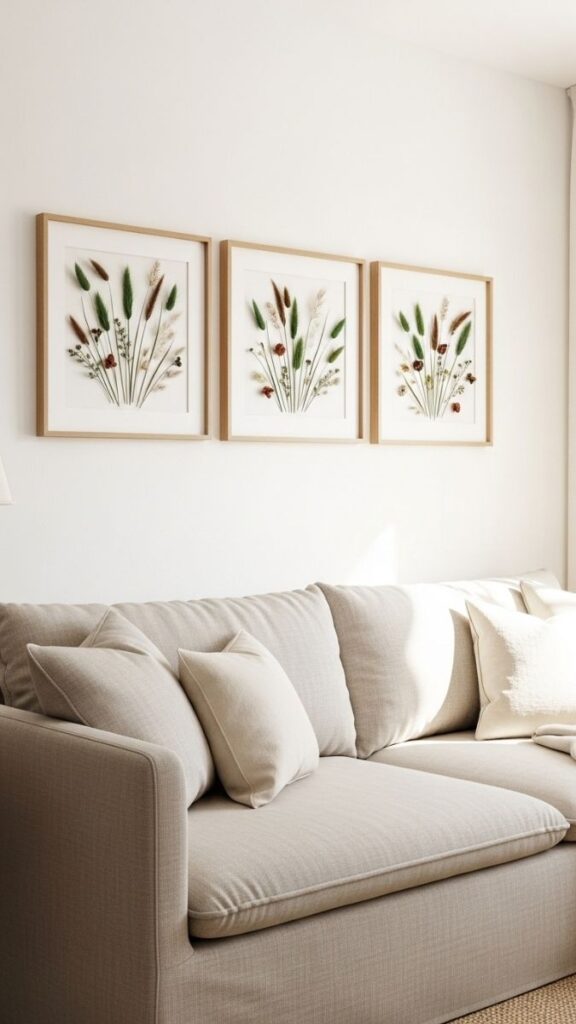
Pressed botanicals from coastal ecosystems, sea oats, beach grass, dried seaweed, sand dune wildflowers make surprisingly elegant framed art when displayed properly. Use deep frames with wide white mats and hang them in a horizontal set of three at consistent spacing about 3–4 inches between frames.
The muted tones of dried plant material work with almost any neutral palette, and the organic shapes break up the rigidity of a framed grid layout. This works especially well in bedrooms and reading nooks where you want something visually interesting but not stimulating. It’s also an extremely affordable option if you collect the materials yourself.
Wicker or Rattan Sunburst Mirror
A sunburst mirror in rattan or woven material bridges the gap between coastal and contemporary statement-making without being kitschy. The radial shape draws the eye outward from the center,
which makes the wall feel more expansive. Hang it solo above a console table or fireplace mantel where it can breathe; surrounding it with other pieces dilutes its impact. Natural rattan reads warmer than metal sunburst mirrors, making it better suited for spaces that skew cozy rather than stark. This is one of the design pieces that’s crossing over from beach house styling into urban apartments in 2026, precisely because it works in rooms that aren’t obviously coastal.
Read More About: 23 Antique Home Decor Ideas That Make Any Room Feel Collected, Not Cluttered
Painted Horizontal Stripe Accent Wall
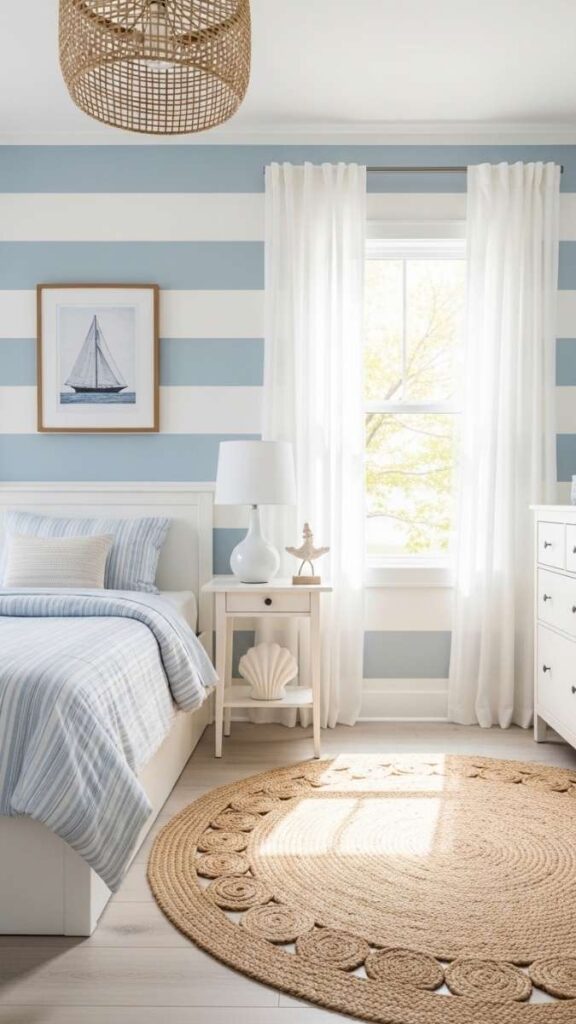
Two or three horizontal stripes in soft navy and white, or seafoam and cream transform a flat wall into something that feels both structured and coastal without requiring any art or accessories. The trick is scale wider stripes 18–24 inches feel relaxed and modern, while thin stripes feel more traditional.
Mark your lines with painter’s tape and a level, and use a matte or eggshell finish to avoid reflective glare. Horizontal lines also make a narrow room feel wider by directing the eye across the wall rather than up it. Guest bedrooms and children’s rooms are the ideal setting for this space where you want character but not heavy investment.
Oversized Woven Basket as Wall Art
Hanging woven baskets as art is one of those ideas that reads much better in person than in description. The texture, the dimension, the organic shape all contribute to a wall that feels intentional without feeling decorated.
Choose baskets in two or three sizes, all in the same material family seagrass, water hyacinth, or palm leaf, and hang them in a loose diagonal or triangular arrangement. The key is spacing leave at least 6 inches between pieces so each basket reads individually rather than as one mass. This works in entryways, above consoles, or flanking a sliding barn door anywhere with a wide, unbroken wall section.
Coastal Color Block Wall No Art Needed
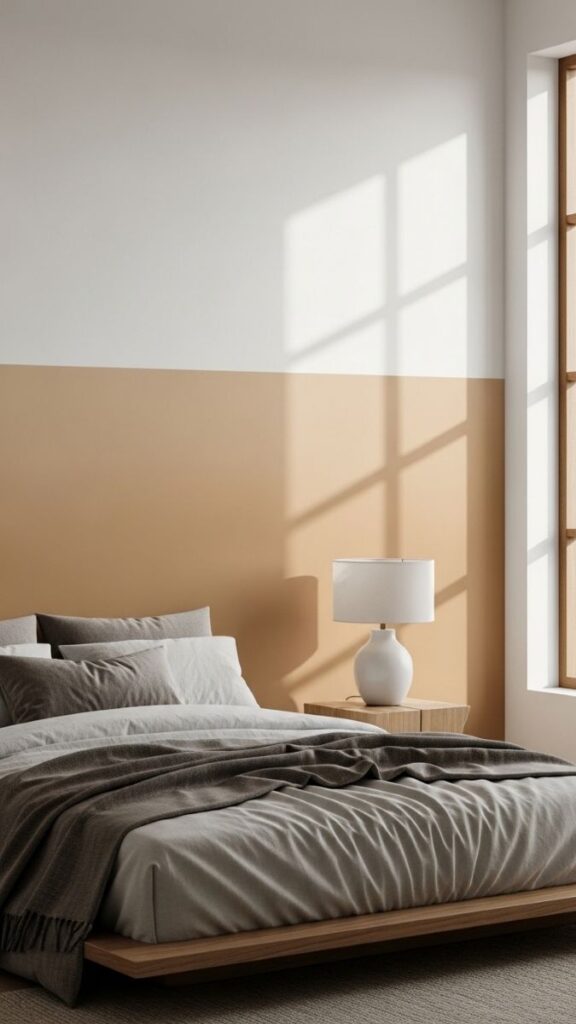
Sometimes the wall treatment is the decor. A two-tone color block using coastal shades of sandy beige below a chair rail or midpoint, crisp white above creates a calm, grounded backdrop that makes every piece of furniture in the room look more deliberate. No frames, no hangings, just two well-chosen paint colors applied cleanly.
This approach is especially effective in small bedrooms where adding wall art would make the space feel more cramped. It’s also budget-friendly; two quarts of paint and a steady hand are all that’s needed. I’ve noticed this style works best when the furniture is kept simple; the wall does enough visual work on its own.
Rope-Wrapped Hooks and Hanging Storage
In a mudroom or entryway, function and decor don’t have to be separate decisions. A row of rope-wrapped hooks mounted on a painted plank or reclaimed wood board handles coats, bags, and keys while adding genuine coastal texture.
Mount the board at a consistent height about 60–66 inches from the floor and leave space between hooks so things don’t pile up visually. Pair with a shallow woven basket mounted below for shoes or mail, and the whole wall becomes a working coastal vignette. This is one of the most practical ideas on this list for families or anyone with a high-traffic entry area.
Thin Floating Ledges with Rotating Art and Objects
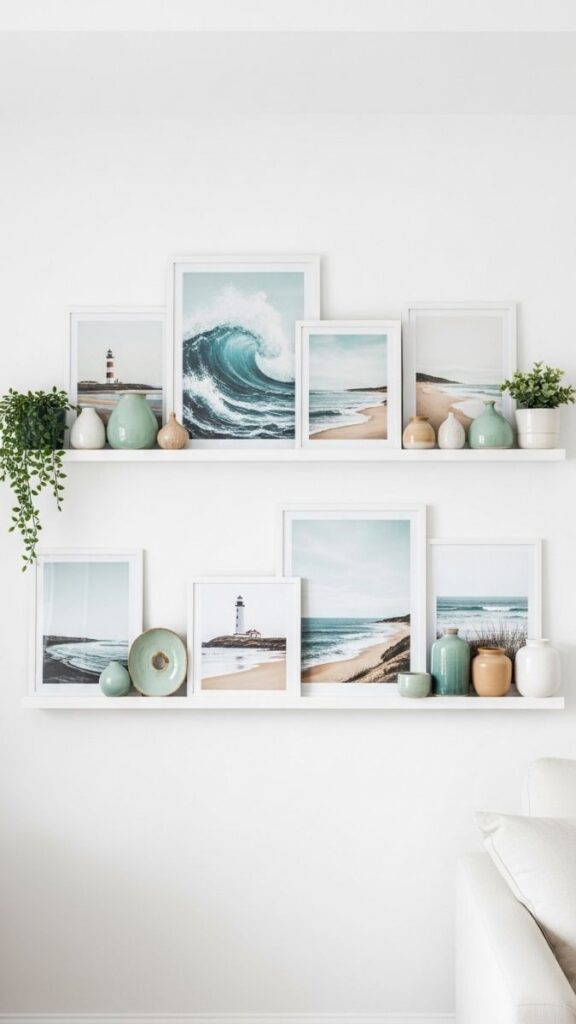
Picture ledges give you a display system that evolves; you can rotate prints, add seasonal objects, and restyle without touching a single nail. For a coastal wall, layer a mix of art prints, ocean photography, abstract watercolor, small ceramic vessels, and one or two natural objects like a smooth rock or a piece of bleached wood.
Keep the ledges in a natural or white finish and space them 10–12 inches apart vertically. This setup works well above a sofa, desk, or in a home office where you want visual interest without commitment. The layered depth of objects at different heights also creates the kind of dimension that flat-hung art can’t replicate.
Linen or Canvas Tapestry with Coastal Motif
A woven linen or cotton tapestry with a subtle coastal motifthink loose wave lines, abstract shore shapes, or a tonal ocean scene functions as both textile art and acoustic softener. In bedrooms with hard floors and minimal soft furnishings, this makes a noticeable difference in how sound travels through the room.
Hang it flush to the wall using a slim wooden rod and simple knot ties, and let the bottom edge fall naturally rather than pulling it taut. A little drape at the base reads more organic and less like a poster. Works especially well in rental bedrooms where you can’t paint or install permanent features.
Shadow Box Display with Found Beach Objects
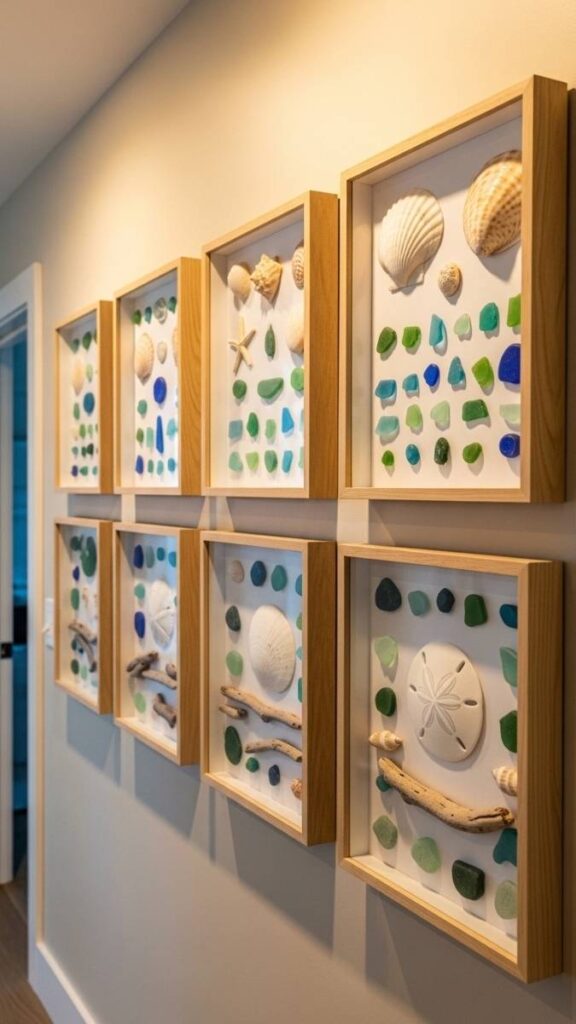
A shadow box turns collected beach objects into considered art but the framing matters as much as the contents. Choose deep frames 2–3 inches with a white or linen fabric backing, and space the objects with clear intentionality rather than filling every corner.
A single large shell, three pieces of sea glass, and one piece of smooth driftwood can carry an entire 12×16 frame. Arrange two or three shadow boxes in a horizontal line for a collected, curated feel. The three-dimensional nature of shadow boxes catches light throughout the day and reads differently in morning versus evening light which gives the wall more visual life than flat art.
Vertical Plank Wall with Whitewash Finish
Vertical planks shift the visual dynamic from shiplap’s horizontal coastal-cottage feel to something slightly more contemporary/taller, more linear, and a bit more graphic. A whitewash finish diluted white paint applied and partially wiped away lets the wood grain show through while keeping the palette light.
This works especially well in dining rooms and living areas with standard ceiling heights because the vertical lines draw the eye upward. It’s a more permanent installation, but the payoff in terms of texture and character is significant and it photographs extremely well in natural light.
Framed Antique or Reproduction Coastal Charts
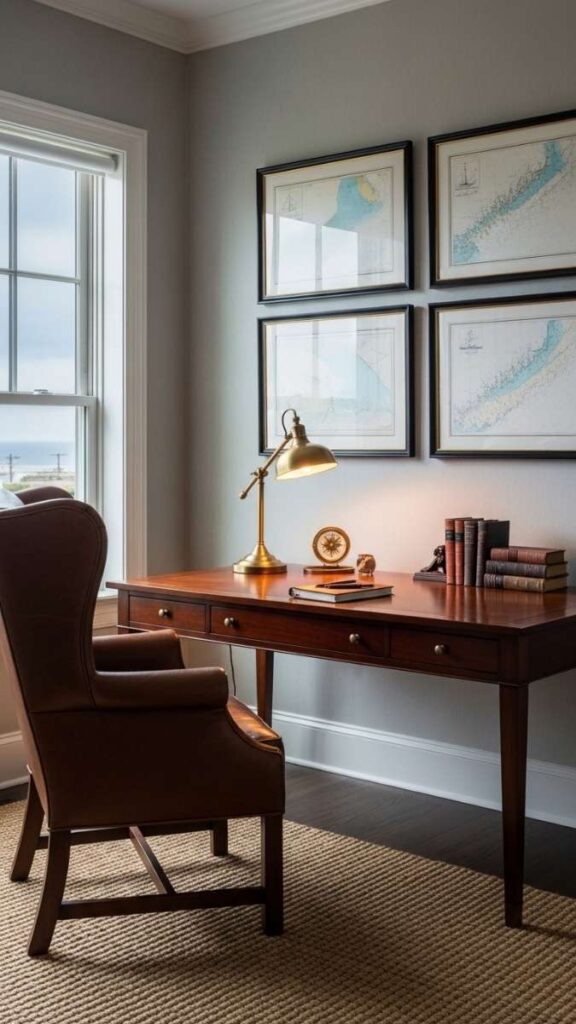
Antique nautical charts, either originals or quality reproductions read as sophisticated coastal decor rather than themed decoration.
The aged paper tones, the fine cartographic lines, and the place names give the wall a sense of history and specificity. Frame them simply in thin black or gilt metal frames with off-white mats, and arrange in a staggered horizontal row.
These work particularly well in home offices and libraries where you want something visually interesting but intellectually grounded. The combination of functionality maps communicate actual geographic information and aesthetics makes them feel more intentional than purely decorative pieces.
Beadboard Wainscoting with Open Wall Above
Beadboard wainscoting covering the lower third of a wall gives any room instant coastal characterit’s a classic technique associated with beach cottages and seaside architecture, but it works in bathrooms, hallways, mudrooms, and even home offices.
Paint the beadboard in crisp white and the wall above in a soft coastal tone pale blue-green, warm sand, or dusty seafoam for maximum effect. The panel visually anchors the room and makes the upper wall feel like a deliberate canvas rather than an afterthought. This is especially effective in rooms that feel too plain or too generic. The architectural detail does the work that furniture arrangement can’t.
Hanging Glass Float Buoys as Sculptural Art
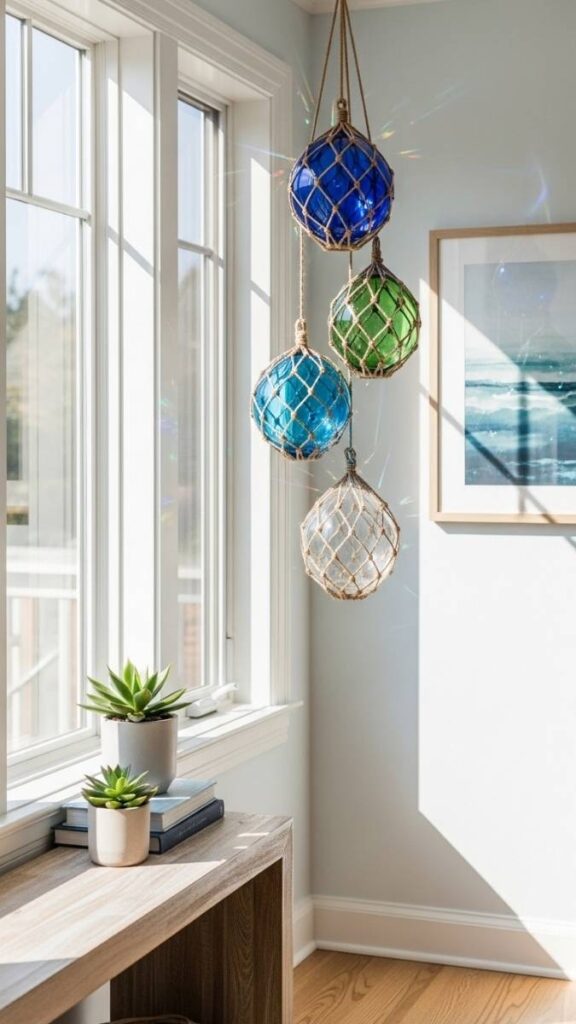
Glass fishing floats especially in deep teal, amber, and seafoam hung in a knotted rope or net arrangement near a window create a genuinely beautiful light effect throughout the day as sunlight passes through them.
Cluster three to five at varying drop lengths using a simple wooden branch or wall-mounted hook, and let them hang at different heights for an organic, sculptural feel. This is one of the few truly three-dimensional wall installations on this list, and the movement and light play make it feel alive in a way static art doesn’t. Works best near windows or in rooms with strong directional light.
Coastal-Themed Peel-and-Stick Wallpaper Panel
For renters or anyone hesitant to commit to paint, a peel-and-stick wallpaper panel on a single accent wall delivers a big visual impact with zero permanence. In 2026, the patterns moved away from obvious shells and starfish toward abstract watercolor waves, linen-texture prints, and tonal botanical coastal prints.
Install it on the wall behind a bed or sofa, the largest unbroken surface for maximum effect. The key is keeping everything else in the room quiet; one patterned wall needs breathing room to read as intentional. Measure carefully and take your time with alignment on the first stripeverything that follows depends on it being straight.
Single Statement Driftwood Sculpture on Wall
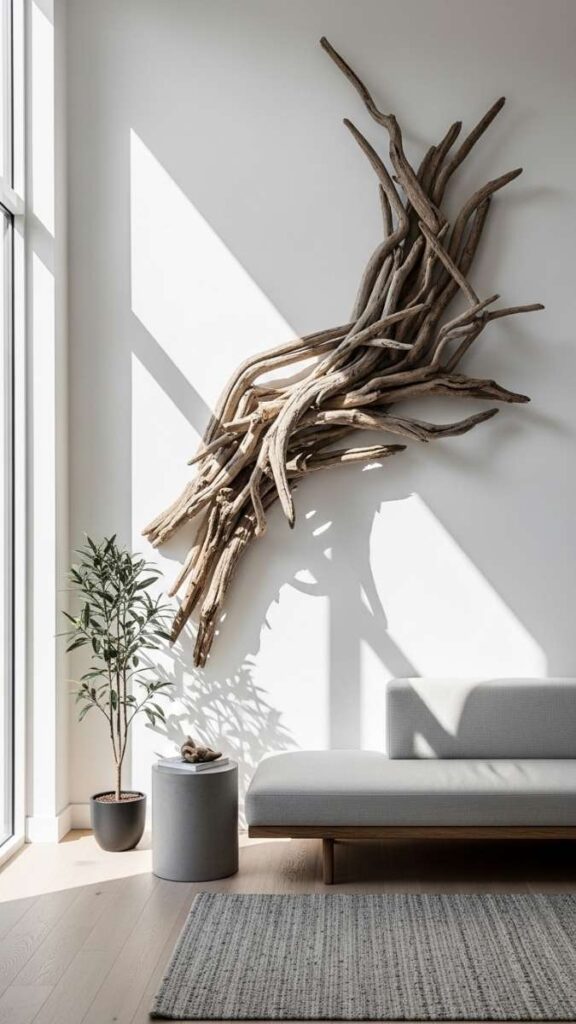
A large driftwood wall pieceeither a found arrangement or a purpose-made sculpture, brings genuine coastal materiality into a room without any framing, printing, or hanging hardware beyond a few well-placed screws.
The organic shape works precisely because it resists symmetry; no two pieces look alike, which makes the wall feel personal and considered. Mount it on a white or very light wall so the wood’s natural tones and shadow play are clearly visible.
This works in entryways, living rooms, and even over large dining tables where you want something dramatic but not demanding. Side lighting either from a nearby window or a directed wall sconce brings out the texture significantly.
Wave-Motif Wallpaper in a Powder Room or Bathroom
Small rooms especially are ideal for bolder coastal wallpaper because the exposure is brief and the room is self-contained. A wave pattern in navy and white, seafoam and cream, or even a graphic abstract interpretation covers all four walls without overwhelming the way it might in a bedroom or living room.
Keep the fixtures and vanity simple white, natural wood, brushed nickel so the wallpaper is clearly the star. This is one of the fastest, highest-impact upgrades on this list for a small space that currently has no personality. It’s also one of the most pin-worthy rooms you can create, which matters if you’re building a home design platform or social presence.
Linen-Framed Pressed Sea Map Prints
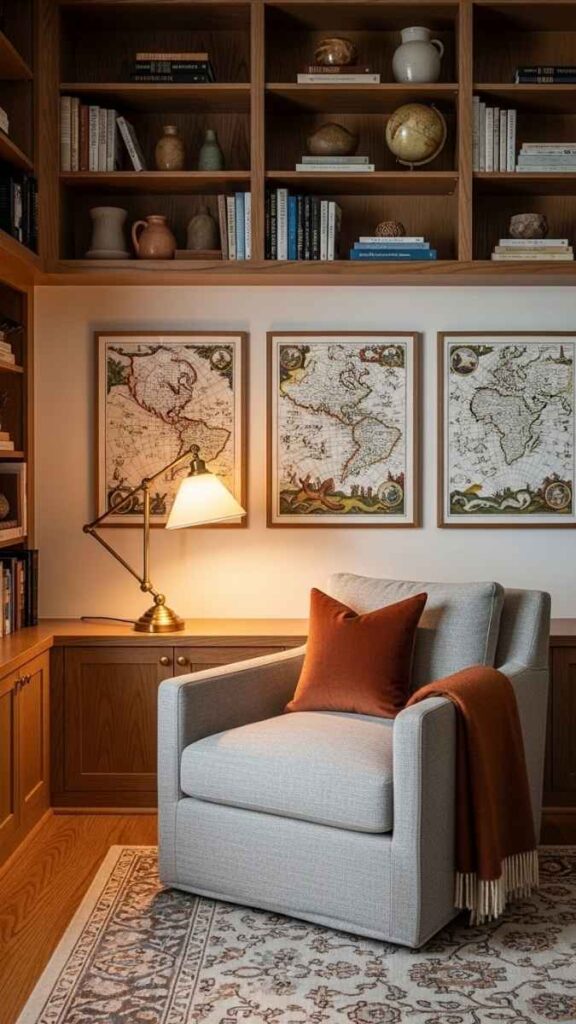
Mounting vintage-style sea map prints in linen-wrapped frames rather than standard matted frames creates a warmer, more textured finish that suits coastal interiors without leaning too formal or too casual.
The linen edge adds softness and material variety to a wall that might otherwise feel too uniform. Hang three in a consistent horizontal line with equal spacing in a reading nook, study, or bedroom.
This combination of material linen and subject matter cartographic prints bridges coastal and classic aesthetics, it’s one of the more quietly sophisticated options on this list, and it tends to age well as your overall decor evolves.
Mixed-Media Coastal Gallery Wall Done Right
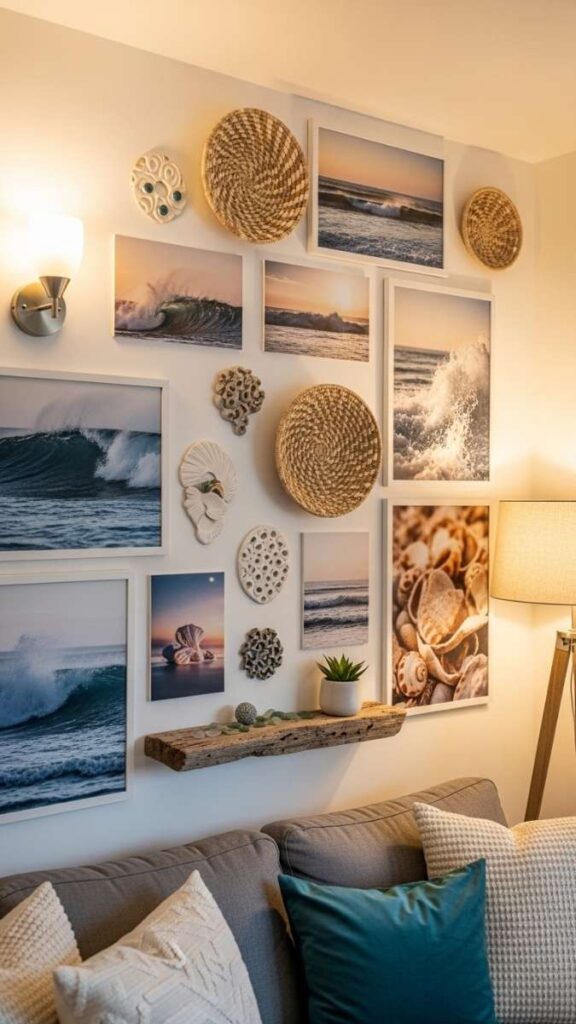
The mistake most people make with gallery walls is treating them like a collection of separate decisions.
A mixed-media coastal gallery wall works when it’s designed as a single composition: one dominant anchor piece, usually the largest, hung slightly left or right of center, two or three medium elements, and two smaller pieces or three-dimensional objects to create depth.
Stick to a maximum of two frame finishes and keep the color palette within the same family. Include at least one non-flat element, a small woven basket, a ceramic disc, a driftwood fragment to give the wall dimension. Map the whole arrangement on paper or tape it on the floor before committing to the wall.
What Actually Makes Coastal Wall Decor Work
The difference between a coastal wall that feels curated and one that feels like a theme park comes down to restraint and material honesty. Here’s what consistently separates the setups that work from the ones that don’t.
Material hierarchy matters.
Every strong coastal wall has a primary material wood, linen, ceramics, or rattan that anchors the scheme, with one or two secondary materials adding contrast.
When everything is the same texture, all smooth frames, or all woven pieces the wall flattens out visually. Vary the material finish matte vs. woven, smooth vs. rough and the wall gains depth without adding more pieces.
Scale is the most common mistake.
Undersized art on a large wall is the single most frequent coastal decor error. A piece that feels big at the store often looks small once it’s hanging in a room with furniture, light, and space around it. Go one size up from what feels comfortable, and you’ll almost always be right.
The wall color is part of the design.
Coastal decor relies heavily on wall color to create atmosphere. The pieces on the wall need the wall itself to be doing something. A flat white works, but warm white, soft linen, pale sage, or dune beige all give the overall composition more warmth and coherence.
Less anchoring to the ocean theme, more anchoring to your room.
The best coastal wall decor doesn’t shout its theme; it uses material, palette, and texture to evoke a feeling. If a piece would look just as good in a non-coastal room, that’s often a sign you’ve chosen well.
Coastal Wall Decor Quick Reference Guide
| Idea | Best Space | Key Problem Solved | Budget Level | Renter-Friendly |
| Oversized nautical map | Living room, dining room | Bare focal wall | Low–Medium | ✅ Yes |
| Woven rattan panel | Bedroom, living room | Flat, textureless walls | Medium | ✅ Yes |
| Clustered round mirrors | Any room | Poor light distribution | Low–Medium | ✅ Yes |
| Shiplap accent wall | Bedroom, living area | Generic-feeling walls | Medium–High | ❌ Owners only |
| Shadow box display | Hallway, living room | Personal decor with memory | Low | ✅ Yes |
| Beadboard wainscoting | Bath, hallway, office | Too-plain lower walls | Medium | ❌ Owners only |
| Peel-and-stick wallpaper panel | Bedroom, powder room | Commitment-free pattern | Low–Medium | ✅ Yes |
| Mixed-media gallery wall | Living room | Disconnected, cluttered art | Varies | ✅ Yes |
| Glass float buoys | Near windows, entryway | No light play or dimension | Low–Medium | ✅ Yes |
| Vertical plank wall | Dining room, study | Low-ceiling feel | Medium–High | ❌ Owners only |
How to Avoid the Most Common Coastal Wall Decor Mistakes
Hanging everything too high.
The standard rule is eye level center of the piece at 57–60 inches from the floor. In coastal interiors especially, art hung too high disconnects from the furniture below and makes the room feel top-heavy. When hanging above a sofa or bed, keep 6–8 inches between the top of the furniture and the bottom of the frame.
Over-theming the space.
A room filled with anchors, ropes, starfish, and sailboats isn’t coastal; it’s a costume. Pick one or two literal coastal references at most, and let the rest of the palette and materials carry the feeling.
A woven rattan mirror, a sand-toned canvas, and a driftwood shelf communicate “coastal” far more effectively than five themed accessories.
Ignoring wall color.
Hanging coastal art on a cool gray or stark white wall often produces a disconnected result. Warm whites, linen tones, pale sage, and dusty blue-green all work better as backdrops because they mirror the warmth of natural materials like wood, rattan, and linen.
If you can’t repaint, layer in warm-toned art and natural materials that compensate for the wall color.
Mixing too many frame finishes.
Black frames, gold frames, white frames, and raw wood on the same wall create visual noise that undermines the calm coastal feeling you’re trying to build. Limit yourself to two frame finishes, one dominant, one accent and the wall immediately looks more considered.
Skipping the floor-plan layout step.
Gallery walls and multi-piece arrangements almost always look better when you plan them on the floor first.
Use kraft paper to trace each frame, cut out the shapes, and tape them to the wall with painter’s tape before driving a single nail. It takes 20 extra minutes and saves hours of patching and re-hanging.
FAQ’s
What is coastal wall decor?
Coastal wall decor refers to art, materials, and wall treatments that evoke seaside environments using natural textures like rattan, driftwood, linen, and sea grass alongside ocean-inspired color palettes blues, whites, sandy neutrals to create a calm, airy atmosphere. It ranges from literal ocean photography, nautical maps to abstract textured panels, tonal art.
How do I make coastal wall decor look elevated instead of themed?
Limit obvious coastal references to one or two pieces and let natural materialsrattan, linen, unfinished woodcarry the rest of the aesthetic. Stick to a restrained palette, choose art with real scale, and avoid overcrowding the wall. Restraint is what separates elevated coastal from generic beachy.
What size art works best for a coastal living room wall?
For a standard sofa 84 inches wide, a piece 2/3 the width of the sofa is the baseline roughly 48–60 inches wide. A single large piece or a gallery wall that spans that width will look intentional; anything smaller tends to float and feel disconnected from the furniture below.
Can I do coastal wall decor in a rental apartment?
Yes some of the strongest options on this list require no permanent changes. Peel-and-stick wallpaper, removable hanging strips, picture ledges with lightweight art, macramé hangings, and clustered mirror arrangements all work in rentals. Avoid anything that requires anchoring into studs unless you’re prepared to patch on move-out.
Is coastal wall decor only for rooms near the ocean?
Not at all. Coastal decor works in any room where you want a calm, airy, light-feeling atmosphere. The key is treating it as a material and palette choice rather than a geographic onenatural textures, soft blues and neutrals, and uncluttered arrangements work just as well in landlocked cities as they do at the shore.
Coastal vs. nautical decorwhat’s the difference?
Nautical decor leans on specific maritime symbols/anchors, ship wheels, rope, navy stripes, brass hardware. Coastal decor is broader and more material-based, focusing on natural textures, soft ocean-inspired palettes, and organic shapes. Coastal tends to feel more timeless and versatile; nautical reads more themed and can date more quickly.
How many pieces should a coastal gallery wall have?
Five to nine pieces is the sweet spot for most living room gallery walls. Fewer than five can feel sparse unless the pieces are very large; more than nine risks feeling cluttered. Start with one anchor piece, build symmetrically or asymmetrically outward, and include at least one three-dimensional element for depth.
Conclusion
A well-executed coastal wall doesn’t require proximity to water, an unlimited budget, or a complete renovation. The ideas that hold up longest are the ones that use material and proportion thoughtfully a properly scaled piece of art, a wall treatment that adds texture instead of pattern, or a carefully arranged cluster of mirrors that makes a dim room noticeably brighter.
Start with one or two ideas that fit your actual space and constraints, not your ideal room. If you rent, begin with a removable solution. If you own, consider one structural change like shiplap or wainscoting that will work with multiple styles over time. The coastal aesthetic is forgiving by naturecalm, unhurried, and built on simplicity. That’s exactly why small, deliberate changes tend to go a long way.