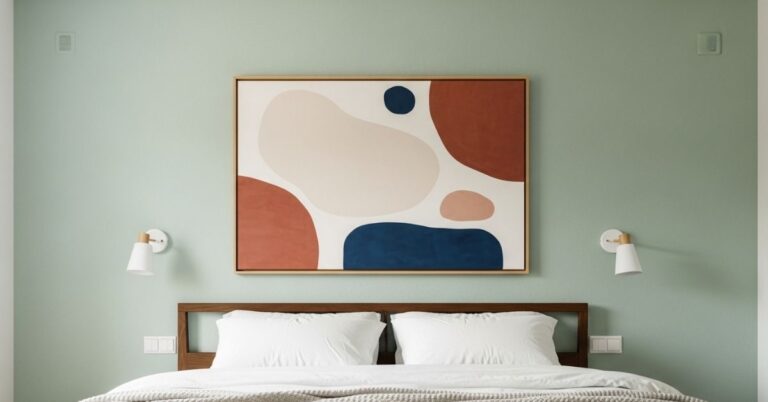
58+ Beach Bedroom Decor Ideas That Actually Work in Real Homes Not Just Coastal Mansions
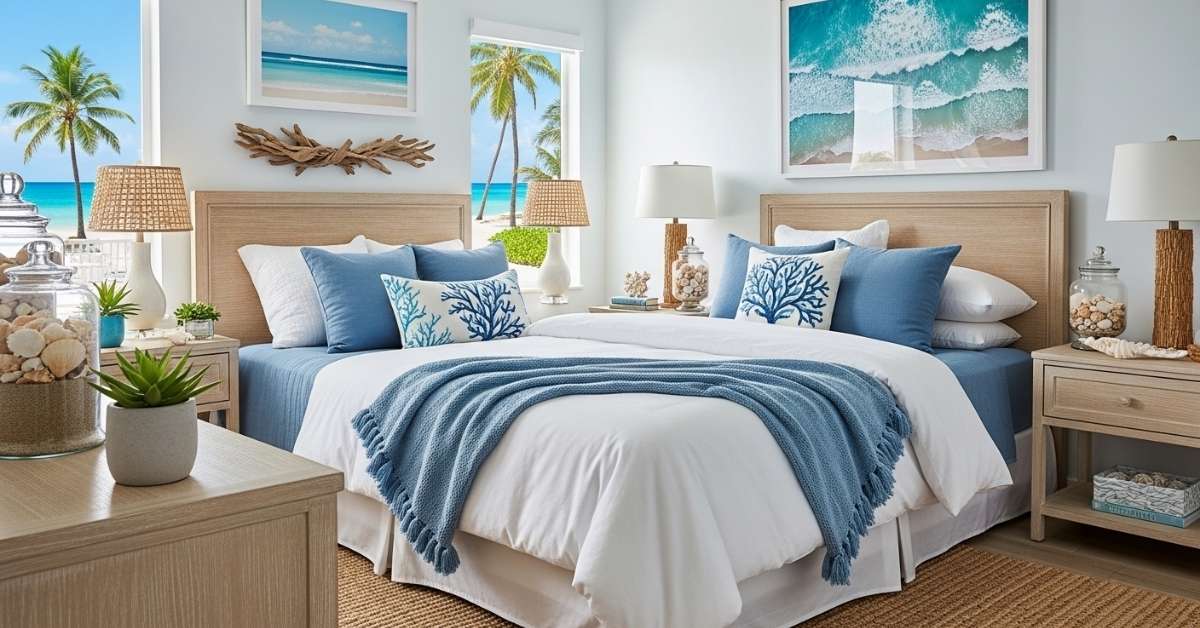
There’s a certain kind of calm that comes with a well-done coastal bedroom and it has nothing to do with anchors on the wall or a surfboard propped in the corner. Beach Bedroom Decor The beach bedroom aesthetic has quietly matured in 2026, moving away from the kitschy nautical tropes and toward something genuinely restful: soft, sun-bleached tones, natural textures, and a sense of light that makes a room feel like it’s breathing.
If your bedroom feels heavy, dark, or just a little too landlocked, beach-inspired decor is one of the most accessible ways to shift that. It leans on materials that are widely available, palettes that work in almost any light condition, and a layout logic that naturally opens up a room rather than crowding it.
For anyone working with a small bedroom, a rented apartment, or a limited budget this style is especially forgiving. Most of what makes it work isn’t expensive. It’s intentional.
Whitewashed Wood Headboard With Linen Bedding
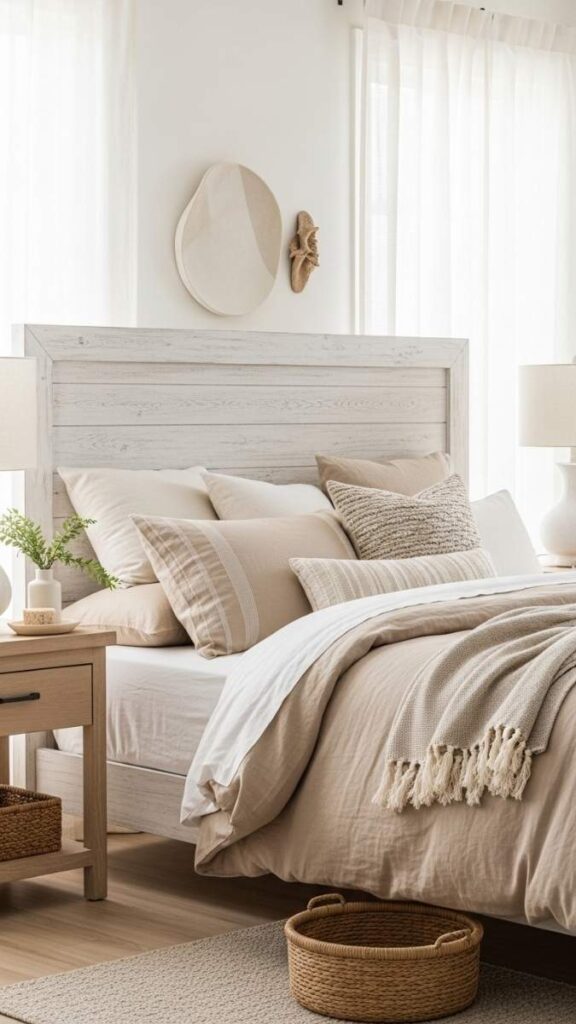
A headboard with a weathered, whitewashed finish is probably the single most efficient move in beach bedroom decor. The texture reads as organic and aged without looking worn-out, and the light tone keeps the wall behind it from feeling heavy.
Pair it with linen bedding in a warm sand or oat shade not stark white, which can feel clinical and the room gets that hazy, late-morning light quality almost immediately.
This setup works best in rooms with natural light. The whitewash finish bounces light without creating a mirror effect, and the linen adds enough visual softness to prevent the palette from feeling flat. If you’re renting and can’t change the wall color, this combination does a lot of the atmospheric work on its own.
It solves the problem of a bedroom that feels either too dark or too sterile: the whitewash warms without yellowing, and the linen layers in texture without adding visual weight.
Rattan or Cane Furniture as a Statement Piece
Rattan and cane furniture have had a long run in coastal interiors, but the 2026 version isn’t the wicker porch furniture from the 90s. Think refined frames, a cane-back accent chair in the corner, a rattan nightstand with a simple silhouette placed deliberately rather than layered everywhere.
The material itself does a lot of spatial work. Because you can see through the weave, the furniture doesn’t visually block space the way a solid dresser or upholstered piece would. In a small bedroom, a rattan nightstand reads as present without taking up visual real estate. It’s one of the few furniture choices that actually makes a room feel slightly larger.
This works best in rooms under 150 square feet where solid furniture starts to feel stacked. It’s also renter-friendly, no wall changes, no installation, just a swap of existing pieces.
Layered Blue Tones From Pale Aqua to Deep Navy
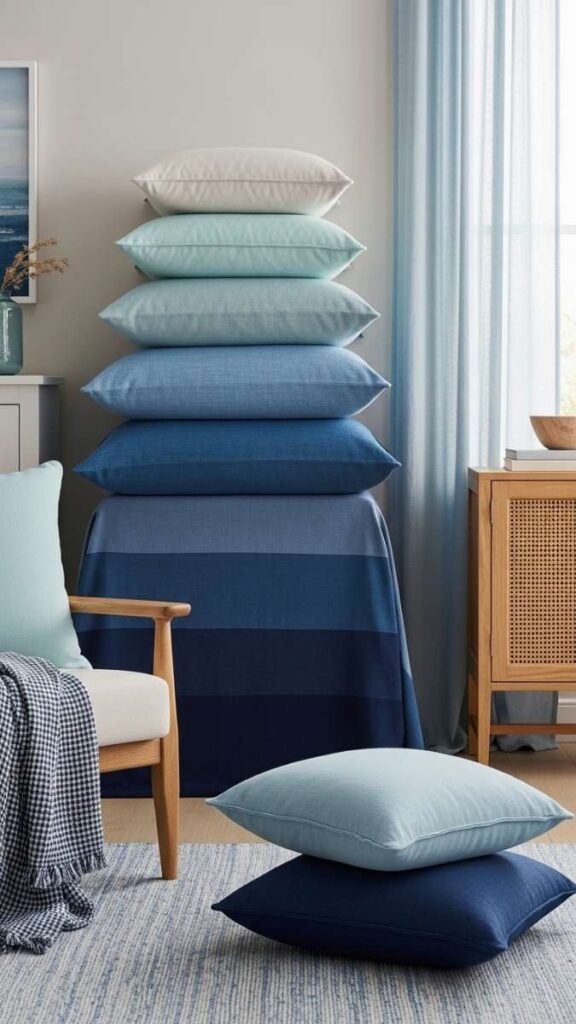
The mistake most people make with a coastal blue palette is going all-in on one shade. A single mid-tone blue across walls, bedding, and accents tends to flatten the room. The better approach is to stack three distinct blues: a pale aqua on the walls, a chambray or slate duvet, and one deep navy accent in a pillow or throw. The variation gives the eye somewhere to travel.
Visually, this creates the same layered depth you see in actual water lighter at the surface, deeper toward the center. It’s not a coincidence that this combination consistently reads as coastal. It mimics something the brain already associates with the ocean.
This setup is most effective in rooms with good natural light, where the pale aqua wall reads warm rather than cold. In a north-facing room with limited sun, bump the aqua up slightly toward a warm seafoam to avoid that grey cast.
Sheer White Curtains Floor to Ceiling
Sheer white curtains hung at ceiling height are one of the most underused tools in a coastal bedroom. When the rod is mounted close to the ceiling rather than just above the window frame the curtain creates a vertical line that draws the eye up and makes the ceiling feel higher than it is.
The sheer fabric diffuses direct sunlight into a soft, ambient glow rather than blocking it.
In a beach-inspired space, this mimics the quality of light you get through sea glass or a muslin shade bright but never harsh.
The room feels lit from within rather than from a single point. Morning light through sheers on an east-facing window is genuinely difficult to replicate with any artificial setup.
This is particularly useful in small bedrooms where heavy curtains would eat into the visual square footage. Sheers define the window zone without closing it off.
Driftwood-Style Floating Shelves With Curated Objects

Floating shelves with a driftwood or reclaimed wood finish do two things simultaneously: they add storage without taking floor space, and they give you a surface for intentional display rather than accumulation.
The key word is curated three to five objects maximum per shelf, with actual breathing room between them.
What works on these shelves is a small trailing plant, a single large shell (not a collection of twenty), one candle, and maybe a small woven tray. The rule of odd numbers holds here three objects feel balanced in a way that two or four don’t.
In my experience, the shelves that look best in person are the ones that feel slightly underdressed. Leave more space than you think you need.
This solves the problem of bare walls that make a bedroom feel unfinished without going heavy on framed art. The organic texture of the wood does enough visual work that the objects don’t need to be remarkable.
Read More About: 55+ Rustic Small Bathroom Ideas That Make Tiny Spaces Feel Warm and Intentional
Jute or Seagrass Rug Under the Bed
A jute or seagrass rug is the most textural element you can introduce to a coastal bedroom without adding color. The natural fiber weave catches light differently throughout the day,
More golden in the morning, more muted in the evening and the earthy tone grounds whatever palette is happening above it.
Placement matters here. The rug should extend at least 18 inches on each side of the bed so that your feet land on it when you get up.
A rug that’s too small for the bed looks like an afterthought; one that’s sized correctly anchors the whole sleeping area and makes the furniture arrangement feel intentional.
For renters or anyone with existing carpet, a jute rug layered on top adds texture contrast and helps define the sleeping zone in an open-plan space.
It’s also one of the more budget-conscious ways to shift the feel of a room significantly.
Woven Pendant Light Over a Bedside Table
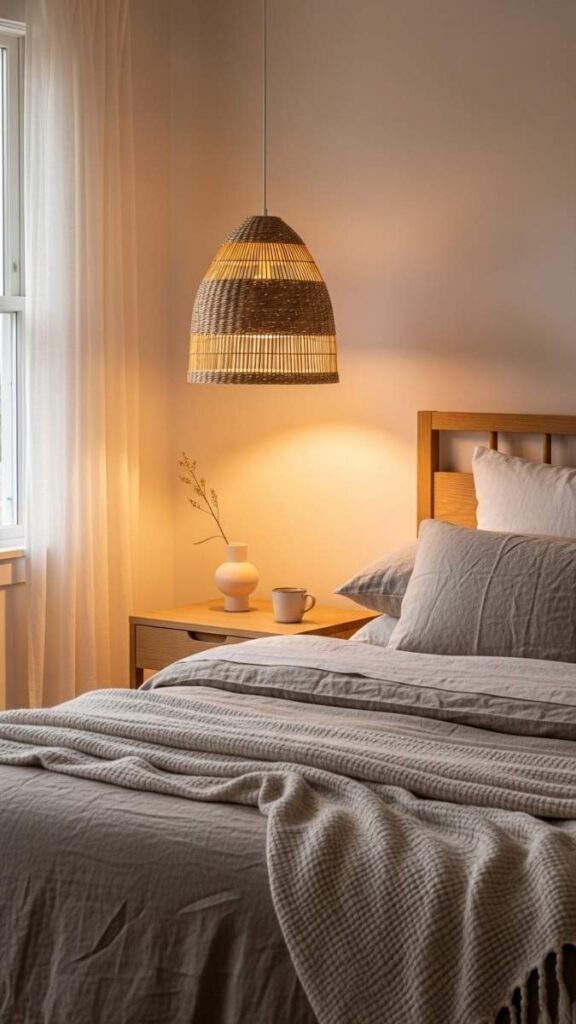
Swapping a generic bedside table lamp for a woven pendant hung from the ceiling creates a more intentional lighting zone and frees up your nightstand surface entirely.
The pendant casts warm, directional light that feels intimate rather than overhead-bright, and the woven texture adds a layer of coastal craft without being decorative in an obvious way.
This works best when the pendant hangs at roughly eye level when you’re sitting up in bed somewhere between 48 and 56 inches from the floor depending on ceiling height.
Too high and it becomes ambient rather than task-oriented; too low and it’s visually disruptive when you’re moving around the room.
It’s a particularly smart move in small bedrooms where nightstand surface area is limited. With the lamp off the table, you get that space back for a book, a glass of water, or nothing at all.
A Gallery Wall of Ocean Photography in Simple Frames
A gallery wall works best in beach bedrooms when the photos are edited down to one subject and one format.
All ocean photography waves, horizon lines, tide pools in the same type of frame (thin natural wood or simple black) reads as intentional rather than collected. The consistency creates visual cohesion; the variation in the photos themselves keeps it from feeling repetitive.
Skip color photography for this one if you can. Black-and-white or desaturated coastal images sit more quietly on the wall; they add depth without competing with the rest of the room’s palette. The result is a wall that feels curated without requiring a background in interior design to pull off.
This solves the empty wall problem that haunts almost every bedroom at some point. It gives the space a focal point that isn’t just the bed.
Macramé Wall Hanging as Texture Without Color
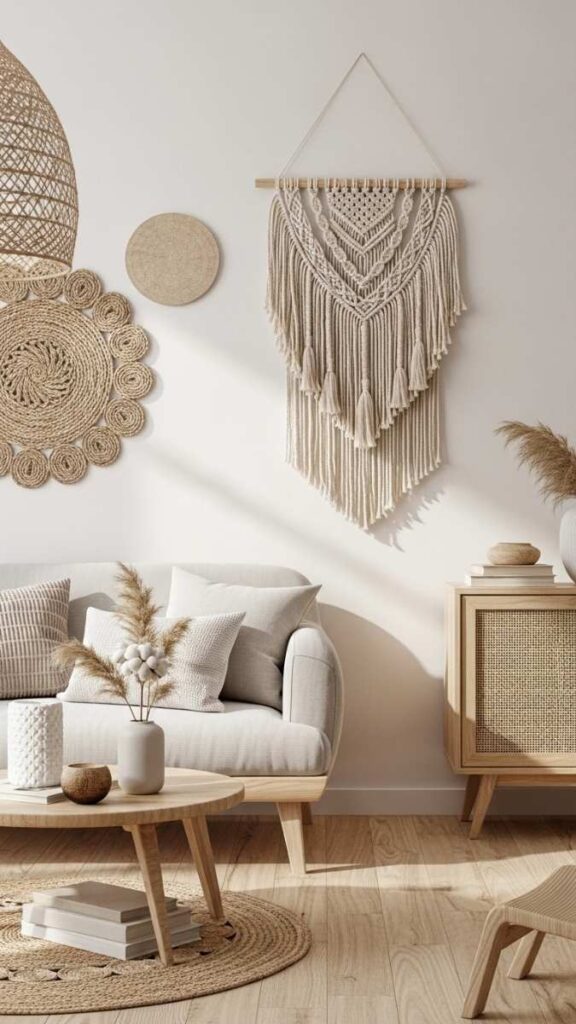
A macramé wall hanging above the bed provides texture at scale without introducing a competing color. In a neutral coastal bedroom, this is more useful than it sounds when the palette is all soft tones and natural materials, you need at least one element with genuine tactile presence to prevent the room from reading as bare.
The key is scale a hanging that’s roughly two-thirds the width of the bed will feel proportionate. Smaller than that and it looks decorative; at the right scale it becomes structurally a soft headboard alternative, almost. Hung 6 to 8 inches above the pillows, it frames the sleeping area without needing a statement wall behind it.
I’d actually recommend this as the first thing to try in a beach-themed bedroom, especially if you’re working with all-white or near-white walls. It’s the move that makes the room feel deliberately designed rather than simply pale.
Read More About: 56+ Modern Rustic Bathroom Ideas That Feel Warm, Grounded, and Genuinely Livable
Sand-Toned Walls With Warm White Trim
Sand-toned walls, not beige, not greige, but a genuine warm sandy hue are one of the less obvious choices in beach bedroom decor, and also one of the most grounding.
They reference the shore without being literal about it, and they pair with warm white trim in a way that feels polished rather than expected.
The trim contrast is what does the work here. Without it, a sand wall can feel muddy or unfinished. With clean white trim, the whole room sharpens, the wall color reads richer, the trim reads crisper, and the overall effect is more architectural than decorative.
This is a good choice for north-facing rooms where cooler blue tones can feel flat or cold. The warmth in the sand palette compensates for the lack of direct sun.
Bamboo or Sea Glass Accent Decor
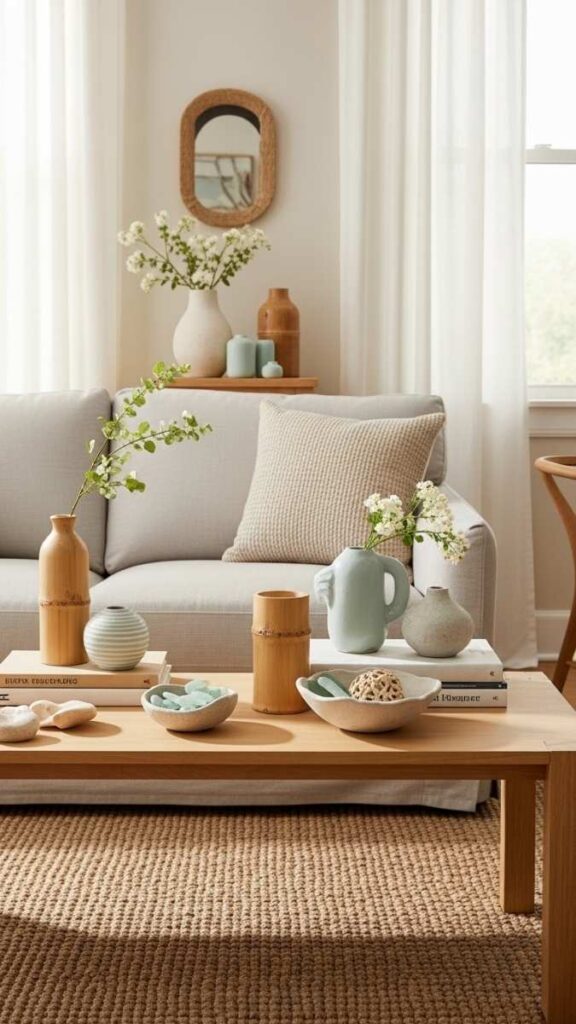
Bamboo objects and sea glass are both materials that photograph well and function even better as incidental decor in a coastal bedroom.
The bamboo brings organic linearity trays, small vases, simple frames while sea glass adds an irregular, translucent element that catches light in a way nothing manufactured replicates.
The key is restraint. Three pieces of sea glass in a shallow ceramic bowl, placed on a nightstand or shelf, reads as intentional.
A jar stuffed full of shells reads as clutter. Honest about this, the less you put out, the more each piece actually registers. The room breathes more easily, and the pieces you do display carry more visual weight.
This works in any sized room and is entirely budget-neutral sea glass is free if you live near a shore, or inexpensive at most home decor shops.
Low Platform Bed With a Clean Silhouette
A low platform bed is one of the most spatially effective choices in beach bedroom decor. The lower profile increases the visible expanse of wall above the bed, which makes ceilings read as higher and rooms feel less compressed.
The clean, uncluttered silhouette also keeps the focus on the bedding and the wall treatment, both of which do more design work in a coastal room than the bed frame itself.
Natural wood finishes, especially light oak or washed pine connect the bed visually to other organic elements in the room without forcing a matched-set look.
The material matters more than the stain; a heavily lacquered finish will disconnect from the rest of the coastal palette, while a matte or oil finish reads as intentional.
This is the setup I’d recommend for anyone starting from scratch in a small bedroom. The low height also makes the room easier to navigate, which you feel immediately even if you don’t consciously register it.
Coastal Blue Grass cloth or Textured Wallpaper on One Wall
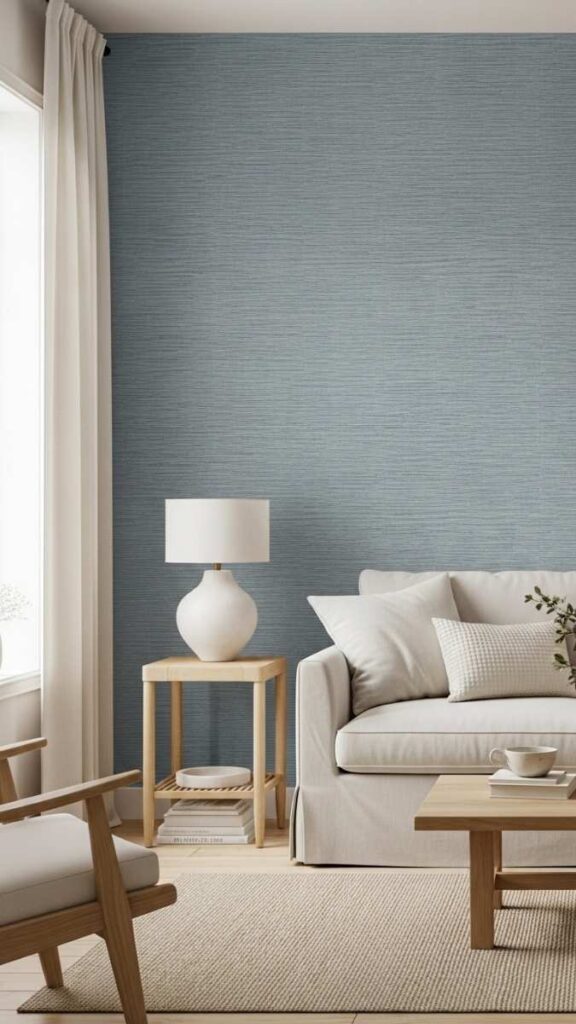
A single wall of grasscloth wallpaper in a coastal blue or natural wheat tone adds more texture and depth than any painted accent wall can, because the woven material itself has dimension. Light hits the fibers differently across the surface, so the wall looks slightly different depending on the time of day and the angle of the light source.
This is an accent wall approach that earns its keep. Rather than a flat color contrast, you get a material shift. The wall feels like it belongs in the same family as the jute rug and the rattan furniture rather than being a separate decorative decision.
The grasscloth connects the room’s elements visually, even when they’re different tones.
For renters peel-and-stick grasscloth wallpaper has improved significantly and is now widely available in quality options that don’t look temporary.
Linen or Cotton Canopy Over the Bed
A loose linen canopy, not a structured four-poster, but a single piece of lightweight fabric draped from a ceiling hook or a simple rod brings a coastal warmth to the bed without adding any solid visual mass.
The fabric moves slightly with air circulation, which adds a quality of lightness that’s difficult to achieve with any fixed decor element.
In terms of layout, the canopy defines the sleeping zone even in a room without architectural features to work with. It creates a soft sense of enclosure enough to feel cozy without shrinking the room. In a studio apartment or open-plan space, this is especially effective as a room-defining element.
This is one of the more mood-specific moves in beach bedroom decor. It reads as resort-like without requiring any of the other trappings of that aesthetic.
Read More About: 57+ Coastal Living Room Ideas That Actually Work in Real Homes
Warm Ambient Lighting With Rattan or Woven Shades
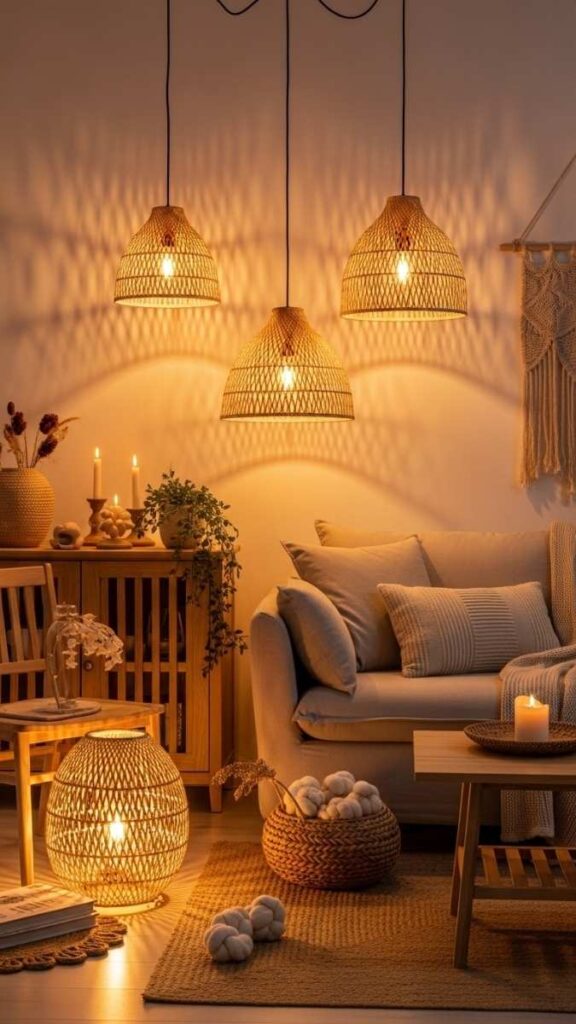
The quality of light in a coastal bedroom matters as much as any furniture or decor choice. Harsh overhead lighting is the fastest way to kill the atmosphere this aesthetic depends on.
Warm ambient sources: a table lamp with a woven or linen shade, a small pendant in warm 2700K create pools of soft light that feel grounded and intimate.
The woven shade on a lamp does two things: it diffuses the light source so there’s no harsh point of brightness, and it casts a warm, textured shadow pattern on the nearby wall. That shadow pattern is part of the decor at night. It’s subtle, but it’s one of those details that you notice more in person than in photographs.
Pair a table lamp with one wall sconce or a small pendant for layered lighting no single source should be doing all the work in a bedroom.
Rope or Woven Basket Storage
Woven baskets in seagrass or cotton rope are one of the rare storage solutions that improve the look of a room rather than simply hiding clutter.
A large basket at the foot of the bed for extra blankets, or a pair of medium-sized ones stacked near the closet for seasonal items, adds both function and organic texture simultaneously.
The visual benefit is in the material contrast: a round woven basket next to a rectangular wood dresser creates the kind of shape and texture variation that interior designers build whole palettes around. It doesn’t look like storage. It looks like decor that also happens to be functional.
This is especially useful in bedrooms without built-in storage, where visible organization is a necessity. The basket keeps the room from reading as cluttered even when it technically is.
Sea-Inspired Color in Soft Furnishings Only
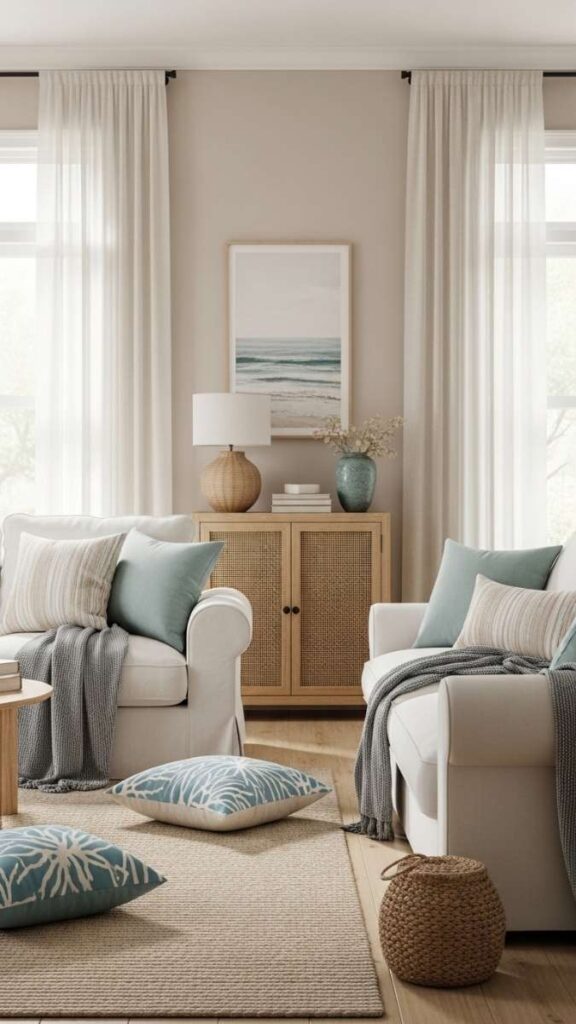
This approach keeping the walls and furniture entirely neutral and introducing coastal color only through soft furnishings is the most flexible version of beach bedroom decor.
The color becomes completely swappable as trends shift, and the room reads as deliberately restrained rather than aggressively themed.
The soft furnishing layer is where the color earns its weight: a dusty teal throw across the foot of the bed, two sea-green pillows in front of the sleeping pillows, a soft blue rug under the bed.
The color is present, but it’s always subordinate to the neutral foundation. This is what separates coastal decor that feels timeless from coastal decor that dates quickly.
It’s also the most forgiving setup for anyone who isn’t committed to the full beach aesthetic. The coastal layer can be added or removed entirely without touching the underlying room.
Natural Wood Ceiling Beams or Beam Effect
If you have existing ceiling beams or the structural clearance to add them, this is one of the few architectural choices in beach bedroom decor that pays dividends for years.
The horizontal wood lines at ceiling height simultaneously make the room feel larger horizontally and more cottage-like in character; the combination of those two effects is exactly what most beach bedroom aesthetics are reaching for.
For those without existing beams, lightweight faux wood beam wraps are now available in finishes that read convincingly in person. They’re not structural but they create the same visual result at a fraction of the cost.
This works best in rooms with ceilings of 9 feet or higher. In lower-ceiling rooms, the beams can compress the vertical space rather than enhancing it.
Terracotta and Sand as Warm Coastal Alternatives
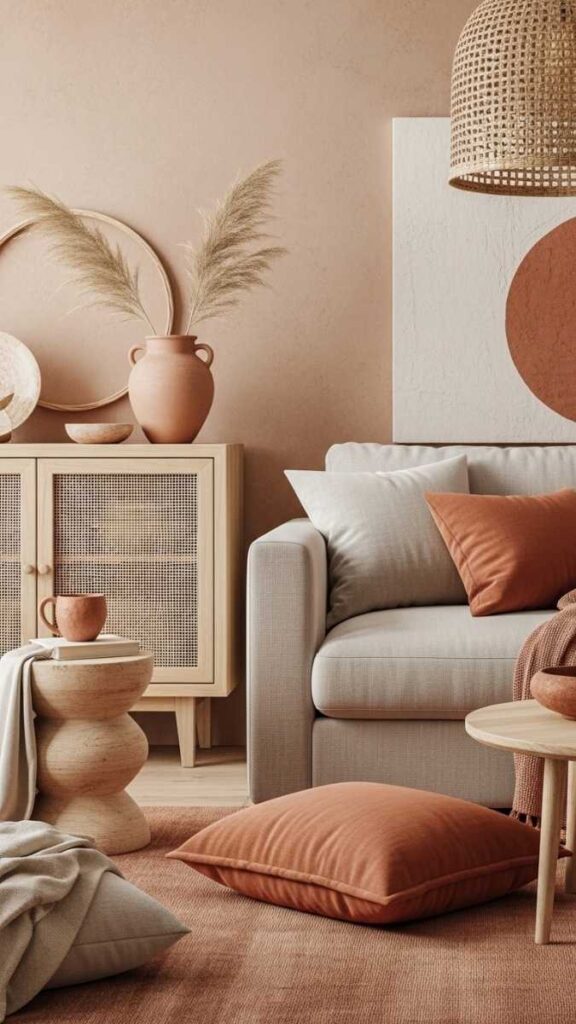
Coastal decor doesn’t always have to be blue. The warm-coastal direction of terracotta, sand, raw clay, and warm amber is one of the rising trends in 2026 bedroom design, and it solves the problem of blue-toned coastal spaces feeling cold in bedrooms without strong natural light.
The warm-coastal palette borrows the organic materials and relaxed texture of beach decor while grounding the color in earth tones rather than sea tones.
This pairs naturally with rattan, jute, raw linen, and driftwood all the same core materials, just without the blue. The room ends up reading as desert-coastal or Mediterranean rather than New England cottage, which is a distinction that matters in certain climate zones and lighting conditions.
If your bedroom faces north or gets limited direct sun, this warm-coastal route is likely to serve you better than the classic blue-white palette.
Simple Horizontal Stripe Bedding
A horizontal stripe on bedding, particularly a two-tone stripe in white and one coastal shade is one of the cleaner pattern choices for a beach bedroom. It reads as coastal through association without leaning on the more literal motifs (fish, anchors, shells), and the horizontal direction reinforces the sense of width and spaciousness that coastal interiors typically aim for.
The stripe works best when it’s simple two colors, even width, no border framing. The moment the stripe becomes complex or asymmetrical it starts to compete with everything else in the room.
Keep the pillow arrangement minimal; the stripe should be visible, not layered over with too many decorative cushions.
This is a good choice for anyone who wants a clear coastal signal in the bedding without committing to a full palette shift in the room.
Hanging Coastal Art Made From Natural Materials
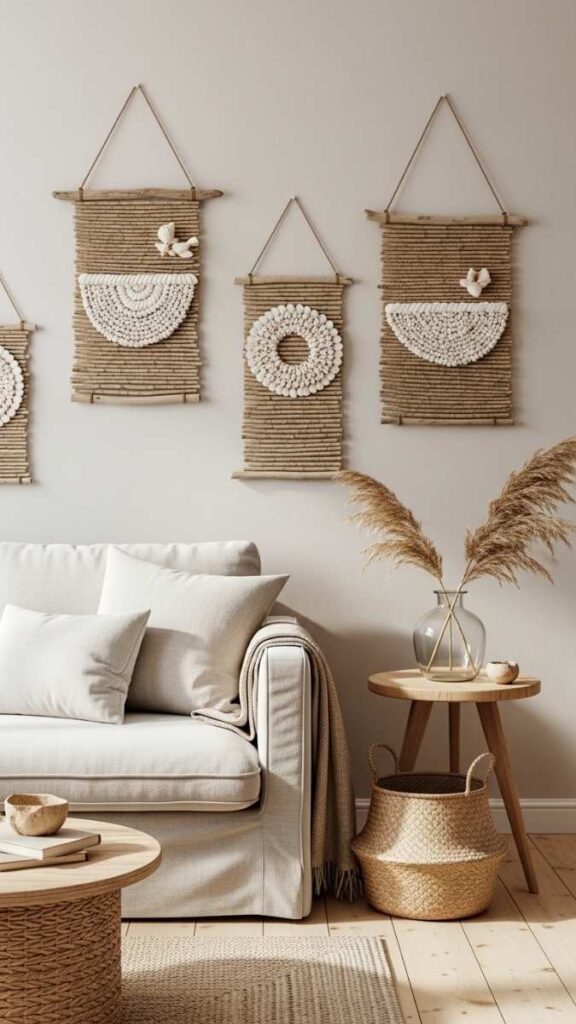
Art that’s made from natural materials, a large driftwood mobile, a woven sea grass wall piece, a framed dried botanical arrangement occupies an interesting middle ground in coastal bedrooms between decor and functional texture.
Unlike a framed photograph or print, these pieces have physical presence that changes subtly in different lighting conditions.
The scale matters significantly. A piece that’s too small reads as a craft project; scaled to at least 24 inches in either dimension, the same material reads as art.
Hung on a bare wall with breathing room around it, a large driftwood mobile or woven fiber piece becomes the visual focal point of the room without requiring anything else on that wall.
This approach works especially well on a wall that doesn’t have a natural focal point across from the bed, above a dresser, or on a side wall that would otherwise be bare.
Coastal Scent and Sensory Elements
Decor is only part of what makes a bedroom feel like it belongs at the coast. Scent salt air candles, eucalyptus, ocean-mineral diffusers is the element most frequently overlooked, and it’s one of the fastest ways to create an atmospheric shift without changing anything visually.
Beyond scent, the sensory layer in a coastal bedroom is mostly about texture under touch linen that feels cool and slightly crisp, a natural fiber rug underfoot, a rough-woven throw that has actual weight.
These are the details that get noticed after a few minutes in the space rather than immediately on entry.
A small tray on the bedside table to corral a candle, a small carafe of water, and one tactile object (a smooth shell, a piece of polished driftwood) creates a bedside vignette that functions and feels intentional.
Sliding Barn Door in Washed Wood
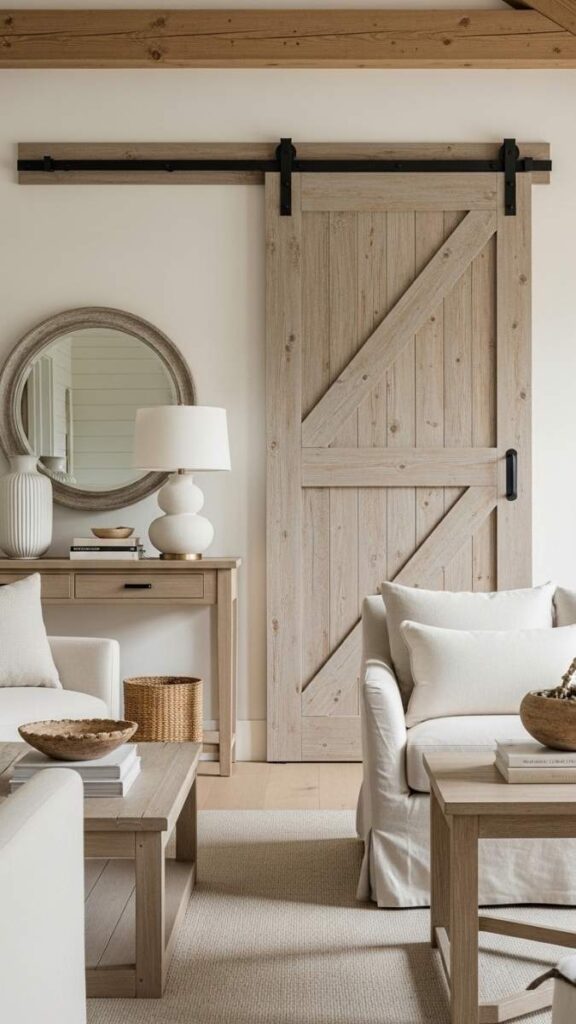
A sliding barn door in a white-washed or pale wood finish solves a practical problem managing a closet or bathroom entry that a traditional swinging door would interrupt while adding an architectural coastal detail.
The sliding mechanism keeps floor clearance open, which is measurably helpful in smaller bedrooms where every square foot of walking space matters.
The finish is what makes it coastal rather than farmhouse; a heavily distressed or dark-stained wood door reads rustic; a white-washed or pale pickled finish reads closer to the driftwood and sea-bleached wood that defines coastal interiors.
The distinction is subtle but consistent across well-executed beach bedroom designs.
This is a structural change rather than a soft decor swap, so it’s more relevant for homeowners than renters but the impact on both the feel and function of the room is significant.
Minimalist Coastal Bedroom With One Statement Piece
Honestly, one of the most confident moves in coastal bedroom design is restraint. A minimal bedroom white or near-white walls,
Simple linen bedding, clean furniture with no extra surface clutter with a single statement piece as its visual anchor is often more compelling than a fully layered coastal room.
The statement piece takes on more responsibility when the rest of the room is quite a large sculptural rattan floor lamp, a single oversized piece of coastal photography, or a significant natural fiber wall installation.
Because the piece has so much open space around it, it reads with a clarity that it wouldn’t have in a more layered room.
This works best for people who find maximally decorated spaces visually noisy, and for small bedrooms where layering too many elements starts to feel crowded. Start with less than you think you need, and add only when the room actually asks for it.
Blue and White Ceramic or Pottery Accents
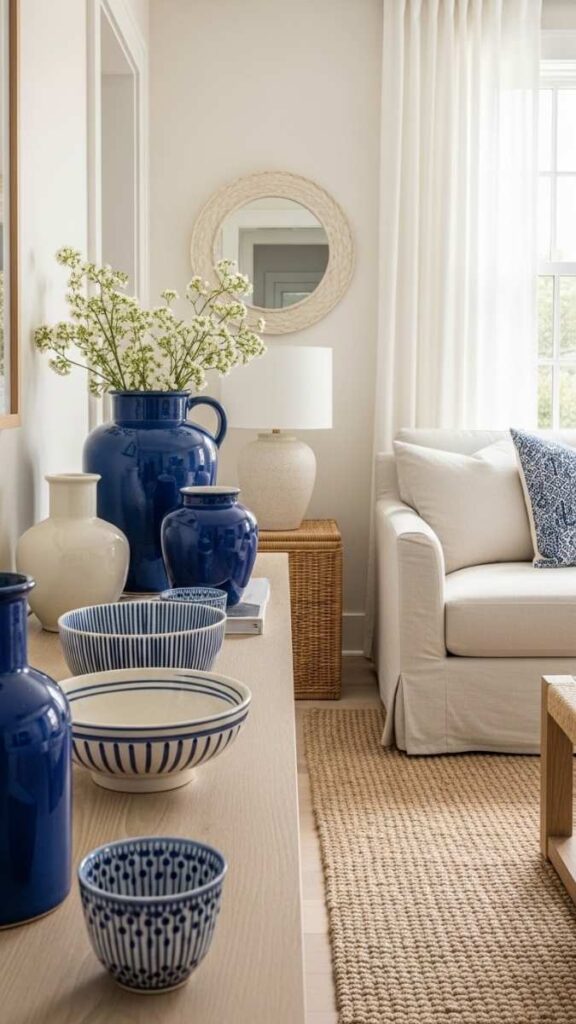
Blue and white ceramics are a recurring element in well-executed coastal bedrooms, and the reason is simple: the combination is one of the most enduring visual pairings in coastal design globally from Portuguese azulejo tiles to Moroccan zellige to Japanese indigo pottery. There’s a cultural depth to the blue-white contrast that reads as timeless rather than trendy.
In a beach bedroom, a few ceramic pieces placed on a shelf or dresser, a rounded vase, a small bowl, a cylindrical jar in blue-and-white glazes add color and object interest without requiring a significant commitment.
The irregular surfaces of handmade ceramics also catch light differently from manufactured objects, which is part of why they look so good in photographs and even better in person.
The selection rules three pieces maximum, varying in height but consistent in the blue-white palette.
Cotton or Gauze Throw in Ocean Tones
A lightweight gauze or cotton throw in a soft ocean tone seafoam, salt blue, washed aqua is possibly the quickest, most reversible, and most budget-conscious coastal element you can introduce to a bedroom.
Folded loosely at the foot of the bed, it adds a layer of color and texture that reads as effortless rather than styled.
The key is the material gauze and open-weave cotton have a translucency that heavier throws don’t. Light moves through them slightly, which keeps the color from sitting flat.
A gauze thrown in a pale aqua looks different in morning light than evening light and that variation is exactly what makes it feel coastal rather than just blue.
This is the first swap I’d suggest for anyone testing the coastal direction before committing to bigger changes.
Outdoor Indoor Connection With Coastal Plants
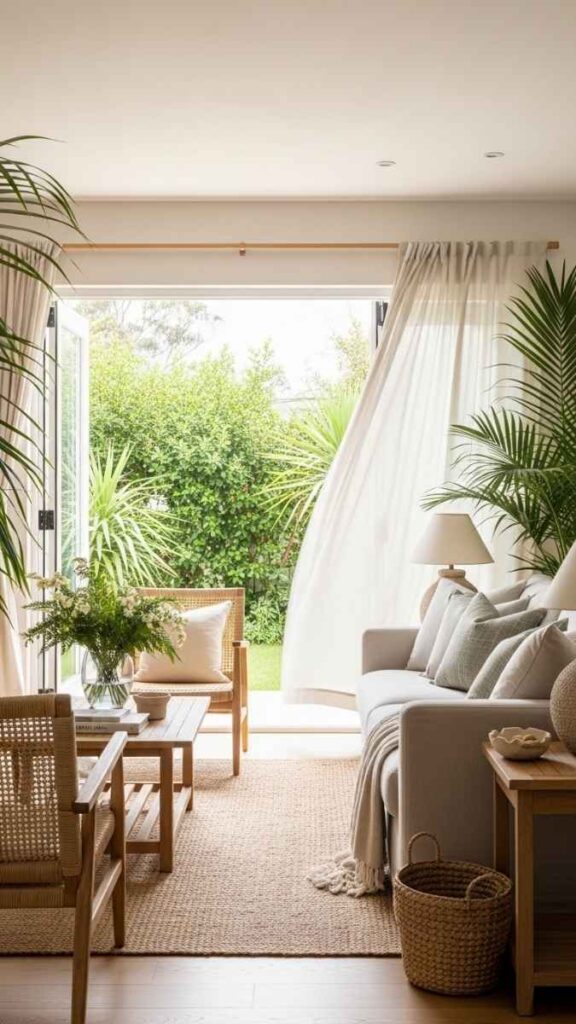
Plants in a coastal bedroom work best when they reference coastal flora rather than tropical jungle which, in practice, means succulents, aloe, and spiky-stemmed plants rather than broad-leafed monstera varieties.
The visual silhouette of a tall aloe in a simple terra cotta pot near a window is more consistent with beach bedroom aesthetics than a sprawling pothos.
The window placement is important.
The plants are at their best when they’re backlit by natural light, which creates a gentle shadow on the nearby wall and emphasizes their silhouette.
A plant that’s too far from its light source droops and loses exactly the upright quality that makes it work visually.
One or two plants maximum this isn’t a botanical garden. The greenery punctuates the neutral palette without overwhelming it.
What Actually Makes Beach Bedroom Decor Work
Beyond the individual ideas, there are a few underlying principles that consistently separate coastal bedrooms that feel genuinely restful from ones that feel costume-like.
Natural materials over manufactured replicas.
Rattan, jute, linen, seagrass, driftwood these materials have inherent variation and texture that synthetic alternatives don’t. The room feels more coherent when the organic elements are actually organic.
Fewer, more intentional objects.
The beach aesthetic is grounded in open space, horizon lines, and visual simplicity. Clutter works against all three. Editing down to the essential pieces and leaving negative space around them is what gives the room that inhale quality.
Lighting temperature matters more than fixture choice.
Warm 2700K bulbs in even modest fixtures create more atmosphere than interesting fixtures in daylight-temperature light. The coastal palette is warm and natural; cool LED light undermines it immediately.
Cohesion through texture, not matching.
A coastal bedroom doesn’t need everything to match in color or finish. It needs everything to belong to the same textural family organic, natural, slightly imperfect. A rattan chair, a linen duvet, a jute rug, and a driftwood shelf don’t match, but they cohere.
Beach Bedroom Decor Setup Comparison Guide
| Idea | Best For | Space Type | Problem Solved | Difficulty |
| Whitewashed wood headboard | Renters, neutral palette fans | Any size | Dark or heavy room feel | Easy |
| Rattan/cane furniture | Small room optimization | Small to medium | Furniture blocking space | Easy |
| Layered blue tones | Palette building | Any size | Flat or color-free room | Easy |
| Floor-to-ceiling sheers | Low ceiling rooms | Small to medium | Harsh light, low ceiling | Easy |
| Driftwood floating shelves | Bare wall problem | Any size | Empty walls | Moderate |
| Platform bed | Small bedroom layout | Small to medium | Compressed ceiling feel | Moderate |
| Grasscloth accent wall | Texture-deficient rooms | Any size | Flat, boring walls | Moderate |
| Woven pendant lighting | Nightstand space savers | Small rooms | Harsh overhead lighting | Easy |
| Canopy over bed | Studio or open-plan spaces | Any size | No architectural definition | Easy |
| Warm-coastal (terracotta) | North-facing or low-light rooms | Any size | Cold blue palette in dim rooms | Easy |
Common Beach Bedroom Decor Mistakes That Work Against the Aesthetic
Over-theming.
Anchors, ship wheels, fish artwork, and literal nautical motifs collapse the aesthetic into costume rather than atmosphere. The strongest beach bedrooms reference the coast through materials and palette not through imagery.
Too much blue, not enough contrast.
A room that’s uniformly blue-and-white without any warm tones (wood, jute, linen, terracotta) tends to feel cold rather than coastal. The organic warm materials are what make the palette feel sun-bleached rather than clinical.
Bright overhead lighting.
Standard ceiling fixtures at full brightness work against everything coastal bedroom decor is trying to accomplish. Dim them if you can, swap to warm bulbs, and rely more heavily on lamps and pendants for the daily-use light level.
Matching sets.
Bedroom furniture sets where every piece is the same finish and style often kill the organic, layered feel that coastal interiors depend on. Mixing a light oak dresser with a woven nightstand and a linen headboard reads more naturally than an identical matching trio.
Overdecorating walls.
A single significant wall element tends to work better than a wall dense with multiple frames, hangings, and shelves. The coastal aesthetic rewards open space including on the walls.
Frequently Asked Questions
What is beach bedroom decor?
Beach bedroom decor is a design approach that draws on coastal environments the palette, textures, and materials associated with the shore to create a calm, airy, and relaxed bedroom atmosphere. It typically includes natural materials like rattan, jute, and linen, a palette of blues, whites, and sandy neutrals, and simple organic shapes rather than ornate or heavy furniture.
How do I make my bedroom look beachy on a budget?
Start with what’s already there and swap selectively. A linen throw in a coastal tone, a woven basket for storage, and sheer curtains in place of heavy drapes can shift a bedroom significantly without major expense. Natural fiber rugs and rattan accessories are widely available at accessible price points and do more atmospheric work per dollar than almost any other decor category.
What colors go with beach bedroom decor?
The core palette is white, soft blue, and sandy neutrals (sand, oat, warm beige). From there, you can add seafoam, dusty teal, or navy for depth, and terracotta or warm amber as organic accent tones. The 2026 direction increasingly includes warm-coastal palettes that drop the blue entirely in favor of sand, clay, and raw linen tones.
Can I do beach bedroom decor in a small room?
Yes and in some ways a small room benefits from the coastal approach. The emphasis on light colors, open space, and low-profile furniture naturally works in favor of smaller square footage. Key moves for small beach bedrooms include a low platform bed, rattan furniture that you can see through, floor-to-ceiling sheers to add height, and a jute rug to ground the space without adding visual weight.
What’s the difference between coastal and nautical bedroom decor?
Coastal decor is atmosphere-driven natural materials, soft palettes, organic textures, and a restful ambiance. Nautical decor is more theme-driven, leaning on specific imagery (anchors, ropes, compasses, sailboats) and sharper navy-and-white contrast. Coastal is generally more liveable long-term; nautical can feel dated faster and works better in very specific contexts (a lake house, a boat-adjacent property).
Is beach bedroom decor still popular in 2026?
Yes, though it’s evolved. The maximally themed coastal look shells everywhere, anchor motifs, and heavily blue rooms have faded. What’s current is a quieter, more material-focused version of organic textures, warm-coastal palettes including terracotta and sand alongside blue, and fewer decorative objects with more breathing room. The aesthetic has matured in the same direction as most residential interiors toward simplicity and quality over quantity.
What kind of bedding works best for a beach bedroom?
Linen is the top choice. It has a natural softness, handles heat well, and gets better-looking with washing rather than worse. Linen in warm sand, soft white, or natural oat tones works as a neutral base that complements almost any coastal accent color. For a coastal signal without full commitment, a simple horizontal stripe duvet in white and one soft blue reads clearly without requiring any other theme elements.
Conclusion
A beach bedroom doesn’t require a coastline address or a renovation budget. The elements that make it work are natural materials, a restrained palette, layered texture, and warm ambient light are available at most price points and adaptable to most room sizes. Even a single well-placed swap, like trading a generic table lamp for a woven pendant or replacing heavy curtains with floor-to-ceiling sheers, shifts the atmosphere in a room more than you’d expect.
Start with one or two ideas from this list that fit what your room actually needs more light, more texture, better storage, a focal point rather than trying to introduce the full aesthetic at once. The coastal approach works best when it builds gradually and feels organic to the space. Give the room room to breathe, and it tends to find its way.