62+ Vintage Decor Ideas That Make Any Room Feel Collected, Not Cluttered
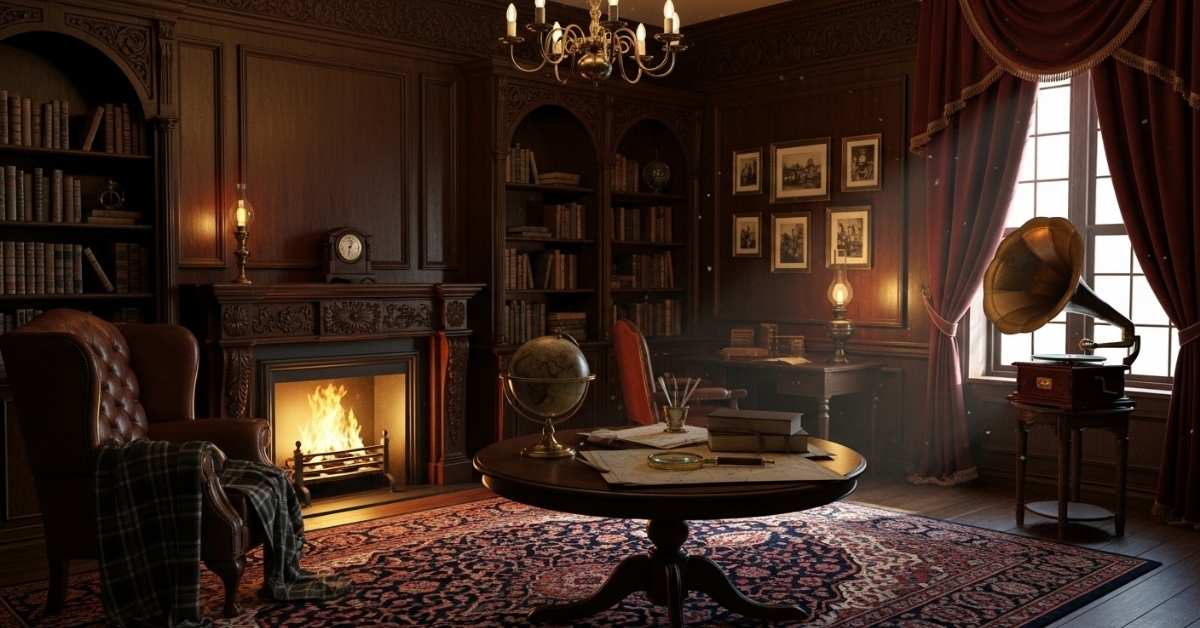
There’s a specific kind of warmth that only comes from a room that looks like it was assembled over time: a worn leather chair here, an antique brass lamp there, a stack of old books that actually get read. Vintage Decor That’s what vintage decor does when it’s done well. It doesn’t try to look perfect. It just feels real.
If your space currently feels too generic or too “showroom,” vintage elements are one of the most effective ways to fix that without a full renovation. A few well-placed pieces, a ceramic vase, a distressed wood shelf, a framed botanical print can shift the entire mood of a room.
This list is for anyone who wants that layered, lived-in feel without turning their home into a thrift store. Whether you’re working with a modern apartment, a small bedroom, or a neutral living room that needs personality, these ideas are grounded in actual spatial logic not just aesthetics.
A Worn Leather Armchair Positioned Beside a Floor Lamp
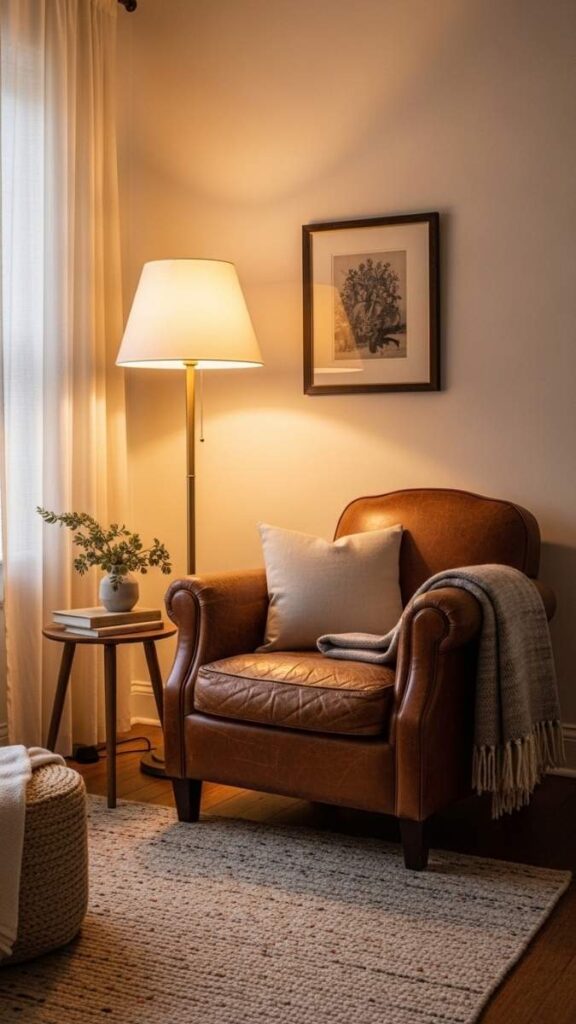
A single vintage leather armchair can do more for a room’s character than an entire furniture set. Position it at a 45-degree angle to the wall not flush against it with a brass or bronze floor lamp arching slightly over the seat. This creates what designers call a “reading corner,” but really what it does is give the eye a clear focal point in an otherwise open space.
The worn texture of aged leather introduces natural contrast against smooth modern walls without clashing. It works especially well in neutral living rooms or bedrooms where everything else is clean and contemporary. The visual weight of the chair keeps the space from feeling too sparse, and the lamp adds vertical interest without taking up floor area. Go for a chair with a visible patina that’s where the character lives.
Open Shelving Styled With Ceramic, Glass, and Old Spines
Open shelves styled with vintage objects work because they replace visual uniformity with visual rhythm. The key is mixing heights and materials: a stout ceramic pitcher next to a tall amber glass bottle, a stack of old hardcovers next to a small framed print. Nothing perfectly matched, but nothing random either.
This setup is particularly useful in living rooms or home offices where plain shelving can feel cold or unfinished. Vintage ceramics and weathered books add warmth through texture and color variation, muted terracottas, dusty greens, soft creams. In my experience, the shelf looks most balanced when you group items in odd numbers and leave intentional gaps rather than filling every inch. Negative space is what makes it look curated rather than cluttered.
A Vintage Inspired Gallery Wall Using Vintage Decor
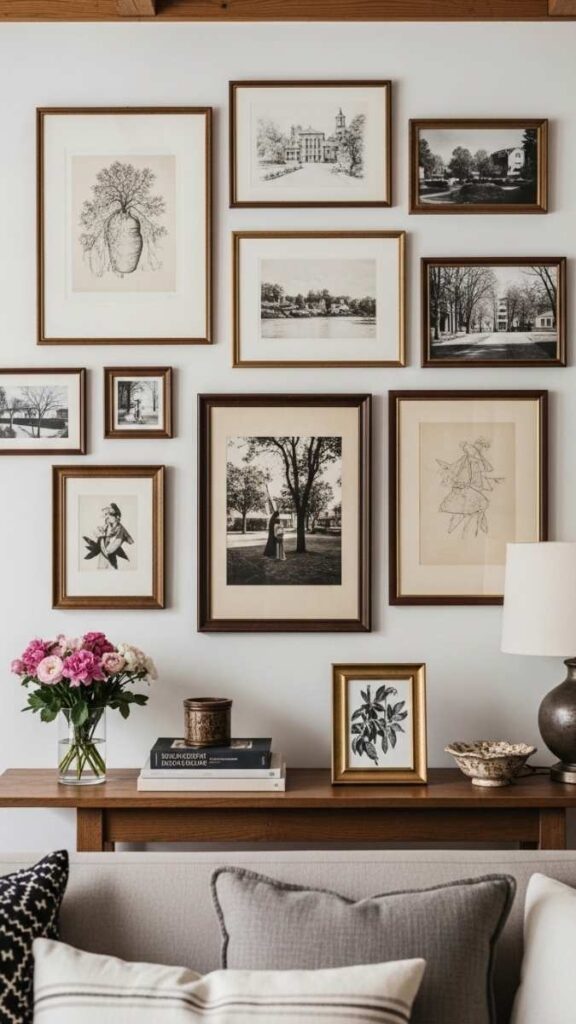
Gallery walls have been done endlessly, but the vintage version is different because the frames themselves carry the story. Think: a gilded oval frame next to a simple dark wood rectangle, a thin brass frame beside a chunky plaster-white one. The mismatched approach actually reads as more intentional than a perfectly uniform grid.
Fill the frames with botanical illustrations, vintage maps, sepia portraits, or old typographic prints anything with a slightly faded, aged quality. The wall becomes a focal point that draws the eye without requiring expensive art. This works best on large, empty walls in living rooms or hallways where a single piece of art wouldn’t have enough presence. The layered frame arrangement fills the space horizontally and vertically, which visually expands the perceived width of the room.
Antique Brass Hardware as a Low Cost Detail Upgrade
Hardware is one of the most underestimated vintage decor moves. Swapping out generic silver or chrome pulls for antique brass ones on kitchen cabinets, dressers, or bathroom vanities costs very little but shifts the entire tone of the space. Brass has a warmth that cooler metals don’t; it reads as aged and intentional rather than sterile.
This is especially worth trying in modern or minimalist kitchens where everything else is clean-lined and neutral.
The brass introduces a vintage counterpoint without disrupting the overall layout or requiring any structural change. It’s also one of the few renter-friendly upgrades you can do in an afternoon and undo just as easily. I’d actually recommend starting here before any bigger vintage investment; it’s the fastest way to test the look.
Read More About: 10+ Luxury Decor Ideas That Make Any Room Feel More Elevated Without the Designer Price Tag
A Distressed Wood Console Table in the Entryway
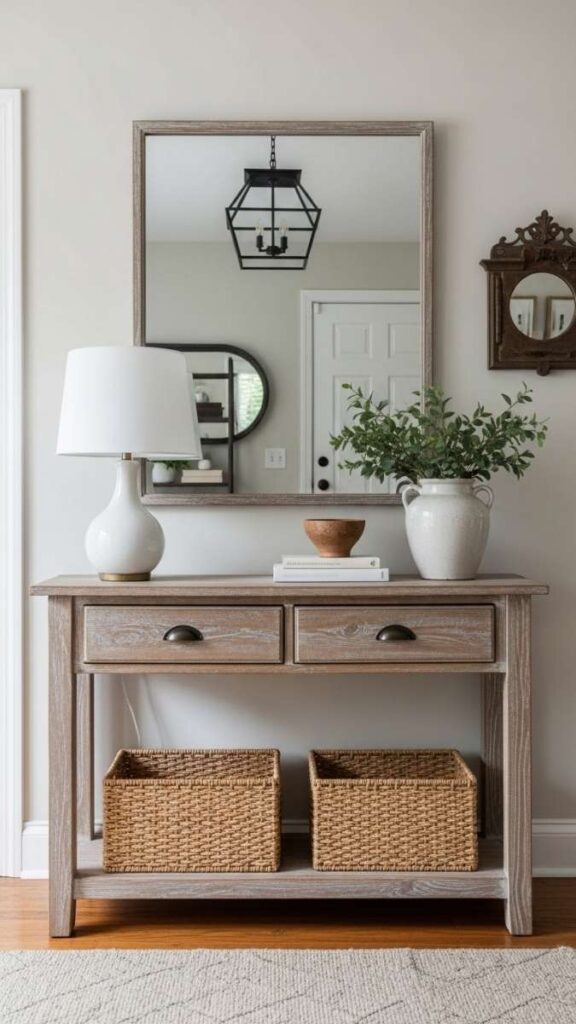
The entryway sets the tone for everything else, and a distressed wood console is one of the most practical ways to establish a vintage feel the moment someone walks in. The natural grain, knots, and weathered finish of reclaimed or antique-style wood introduce organic texture immediately before the eye even reaches the rest of the space.
Keep the surface simple: a small tray for keys, one ceramic object, and a vintage-style mirror above it. The mirror bounces light into what is often a narrow, dim corridor, and the vertical height of the mirror-plus-console combination makes the ceiling feel taller. This works in apartments and smaller homes where the entry barely has room for more than this. Function and atmosphere handled in a single setup.
Layered Vintage Rugs Over a Neutral Base
Rug layering has been building as a trend since around 2023, and by 2026 it’s become one of the signature moves in vintage-leaning interiors. The technique involves placing a large, flat-weave neutral rug jute or sisal work well as the base layer, then positioning a smaller vintage or kilim-style rug on top, slightly off-center.
What it solves: bare floors that feel cold and unanchored, especially in rental apartments where flooring options are limited. The layered approach also defines the seating area visually without needing furniture placement alone to do that work. Honest take this is one of the higher-impact vintage ideas for the cost, especially if the smaller rug is a secondhand find with real pattern and age to it.
Vintage Table Lamps With Fabric Shades on Side Tables
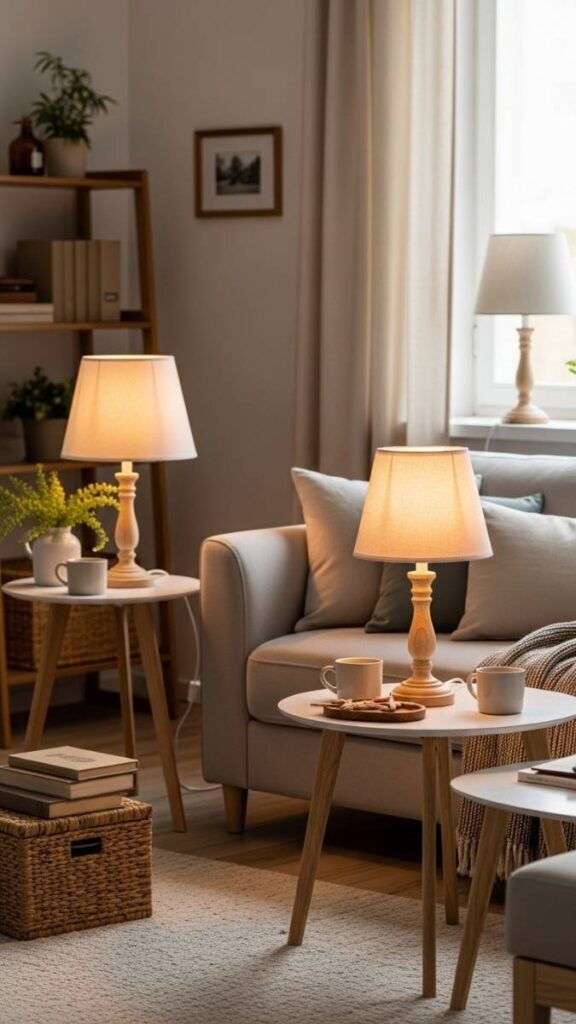
Lighting is where vintage decor does its most atmospheric work. A ceramic or glass lamp base with an aged patina think celadon green, dusty blue, or matte terracotta paired with a linen or pleated fabric shade creates a quality of light that modern metal lamps just don’t. The shade diffuses the bulb into a softer, more directional glow.
In bedrooms, this setup replaces the flat overhead lighting that most apartments default to. Two matching lamps on either side of the bed also create symmetry, which reads as calm and organized. Symmetry matters more in smaller rooms where the eye needs clear anchors. The lamp bases don’t need to be genuine antique vintage-inspired reproductions in the right finish work just as well for the visual effect.
Read More About: 59+ Coastal Kitchen Ideas That Actually Work in Real Homes Not Just Beach Houses
A Clawfoot Bathtub or Vintage Style Fixtures in the Bathroom
Bathrooms are often forgotten in vintage decorating conversations, but they’re actually one of the best rooms for it. A clawfoot tub is the most dramatic version of this; it becomes the entire focal point of the room. If that’s not an option, vintage-style brass or unlacquered fixtures on a standard tub do a significant portion of the same work for much less.
Black-and-white hex tile on the floor reinforces the period aesthetic and pairs with almost any wall color. This approach suits older homes or apartments with pre-existing character (crown molding, original tile, high ceilings) where modern fittings would feel out of place. The vintage fixtures introduce coherence rather than contrast.
A Mid-Century Sideboard Used as a Media Console
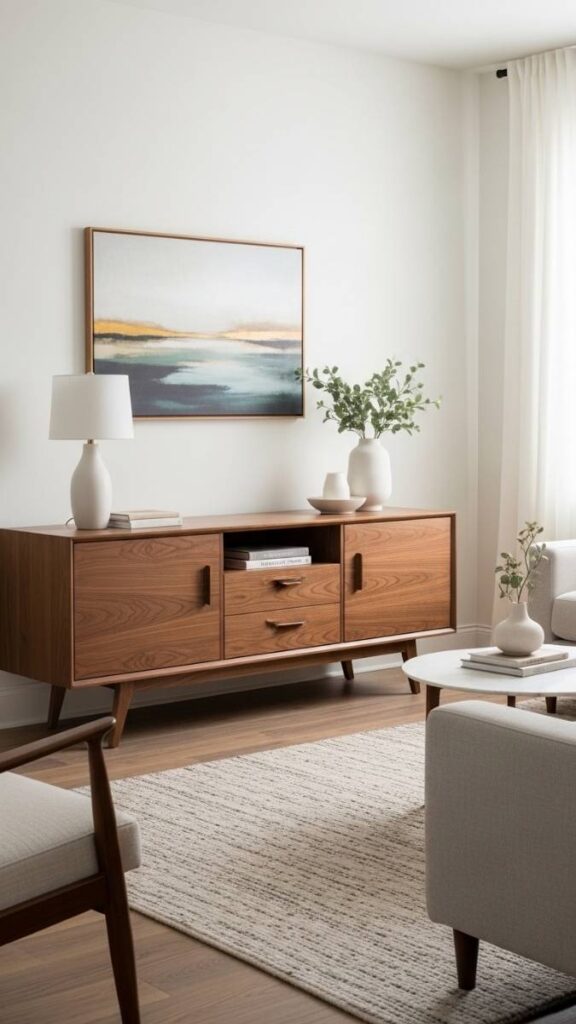
Mid-century furniture bridges vintage and modern in a way that works in almost any current interior. A walnut or teak sideboard with tapered legs originally designed as a dining storage piece functions beautifully as a media console. The low profile keeps the TV at the right viewing height, and the clean silhouette doesn’t clutter the space visually.
The tapered legs allow light to pass underneath, which makes the room feel less blocked and more open. This matters in smaller living rooms where heavy, floor-to-floor furniture can make a space feel compressed. Store media cables, remotes, and accessories inside the sideboard’s drawers and doors clean top surface, functional interior. One of the most versatile vintage furniture purchases you can make.
Botanical and Nature Prints in Aged Frames
Botanical prints have had staying power in interior design for decades, and in 2026 they’re still one of the most practical vintage wall decor choices because they work across aesthetics traditional, modern farmhouse, eclectic, and minimal. The key is the framing: aged gold or dark wood frames with a cream or white mat give even a printed reproduction a genuine antique quality.
This is a strong solution for empty walls in studies, hallways, or bedrooms where color and art are needed but the room’s palette is already fairly neutral. Botanicals are low-risk because their color range (greens, taupes, creams) rarely clashes. Hang them in a vertical column or horizontal row rather than scattered randomly for a more deliberate effect.
Exposed Brick or Brick Texture Wallpaper as a Feature Wall
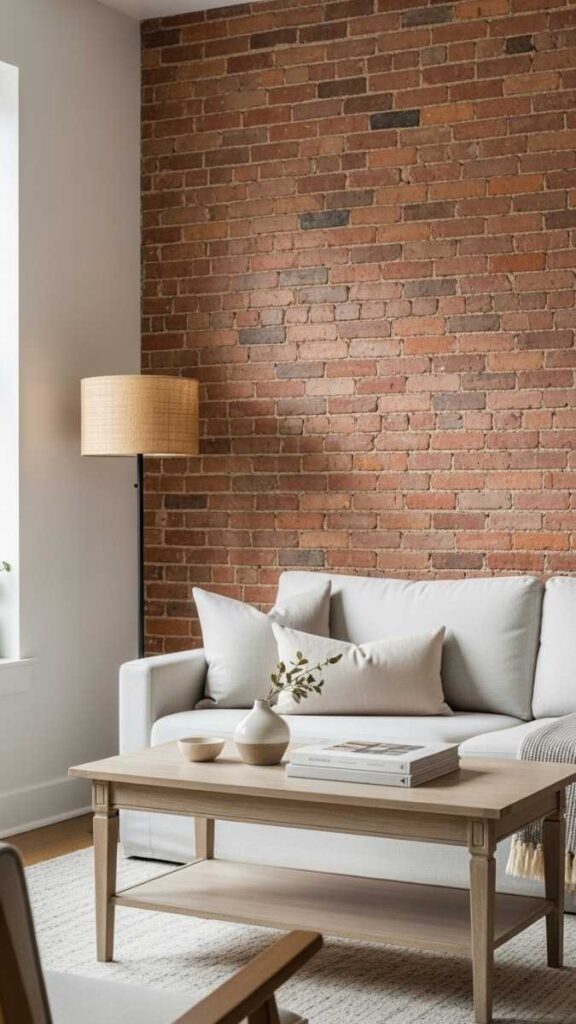
If your space has exposed brick, that wall is the most powerful vintage element you have built around it, not over it. Anchor the furniture toward it: sofa facing the brick wall, a simple coffee table between them, and a pendant light dropping from the ceiling above the seating area. Let the brick be the artwork.
In apartments without real brick, a high-quality brick-texture wallpaper in warm terracotta or aged red can replicate most of the visual effect. It’s more commitment than paint but more flexibility than real masonry. This works especially well in open-plan spaces where one defined feature wall helps break up the room into visual zones without building actual walls.
A Vintage Trunk Used as a Coffee Table or Storage Bench
A steamer trunk or vintage chest as a coffee table is one of those multi-function vintage solutions that actually earns its place. Surface area for drinks and books on top, interior storage for blankets, remotes, or seasonal items inside. The scale tends to be generous, which works well in living rooms that need a substantial central anchor without adding a bulky modern coffee table.
The weathered finish worn leather straps, tarnished metal hardware, aged wood slats reads as authentic rather than decorative-for-the-sake-of-it. In small apartments, this is especially worth considering because it eliminates the need for a separate storage ottoman or blanket box. Two functions, one piece, zero wasted space.
Read More About: 56+ Modern Rustic Bathroom Ideas That Feel Warm, Grounded, and Genuinely Livable
Vintage Mirrors With Ornate or Distressed Frames
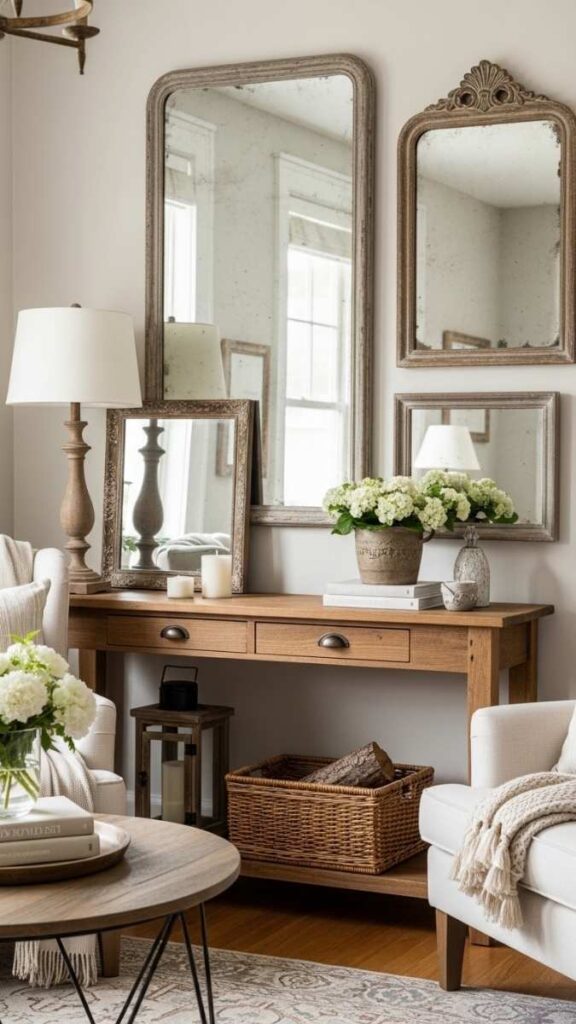
A large vintage mirror does two things simultaneously: introduces a decorative element with genuine character and bounces light deeper into the room. Ornate gilded frames, sun-burst designs, or distressed wood mirrors are all strong options; the frame style should feel slightly more elaborate than everything else in the room, which is what gives it focal-point status.
Position it opposite a window whenever possible to maximize the light-reflection benefit. In dark hallways or north-facing rooms, this can meaningfully brighten the space without adding electrical lighting. The visual effect of depth created by a large mirror also makes narrow rooms feel wider, particularly useful in corridor-shaped apartments or entryways.
Linen and Velvet Upholstery in Muted, Period-Appropriate Tones
Fabric choice is one of the quieter vintage signals; it doesn’t announce itself the way a statement piece does, but it shifts the room’s atmosphere significantly. Linen and velvet in muted, slightly desaturated tones sage green, dusty rose, tobacco brown, slate blue are the most versatile options because they sit comfortably between vintage and contemporary.
Velvet in particular has a quality of absorbing and reflecting light differently throughout the day, which gives the room a more dynamic, lived-in feel. For sofas and armchairs, this avoids the flat, showroom quality of synthetic fabrics. Linen works better for throws, pillows, and curtains where texture is visible but not the primary seating surface. Layer both in the same room for the most layered, vintage-feeling result.
An Antique or Vintage Desk in a Home Office Setup
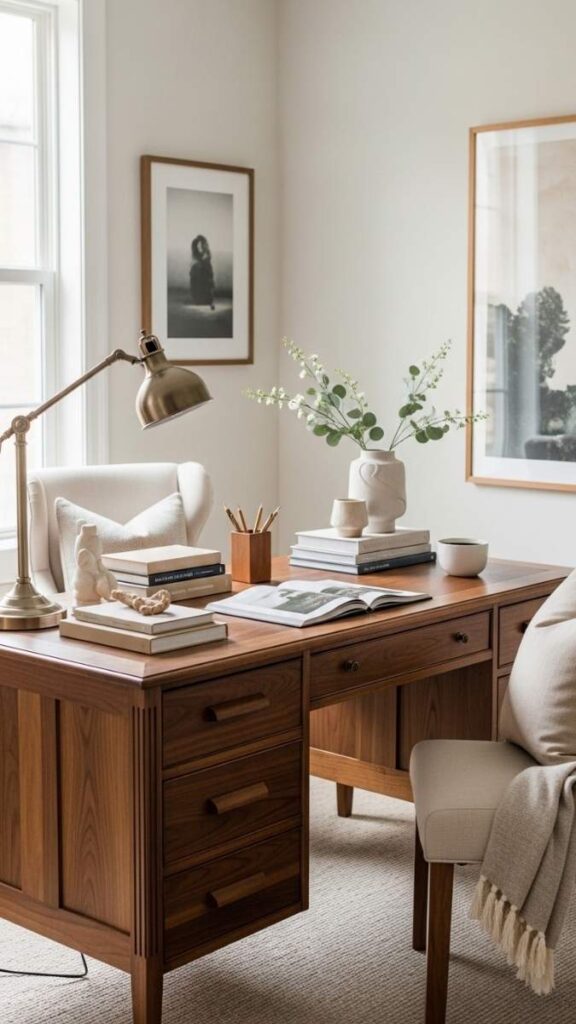
The rise of home working has made the home office a room people actually care about aesthetically, and vintage furniture fits this space exceptionally well. A roll-top desk, a campaign-style writing desk, or even a repurposed library table brings warmth and character to what would otherwise be a functional-but-cold workspace.
The wood tones typical in vintage desks walnut, mahogany, oak contrast cleanly against white or off-white walls, creating a workspace that feels deliberate and considered. Pair with a vintage-style task lamp in brass or black metal. In my experience, this combination of a warm wood desk, directional vintage lamp creates a more productive workspace atmosphere than most modern office setups, largely because it feels more personal and less temporary.
A Painted Vintage Cabinet as Kitchen or Dining Storage
A painted hutch or vintage cabinet in the dining room solves two problems: storage and character. Older cabinets often have proportions and detailing carved moldings, glass-fronted doors, decorative feet that modern flatpack furniture simply doesn’t. Paint it in a period-appropriate tone: dusty sage, aged cream, faded navy, or terracotta.
Use the open shelves for ceramics and serving pieces you want to display, and the closed sections for everyday items. This eliminates the need for a separate sideboard or display cabinet, consolidating function into one piece. In smaller dining rooms or kitchen-dining combos, a single vintage cabinet positioned against one wall does significant organizational work without making the room feel furniture-heavy.
Reclaimed Wood Floating Shelves in the Kitchen
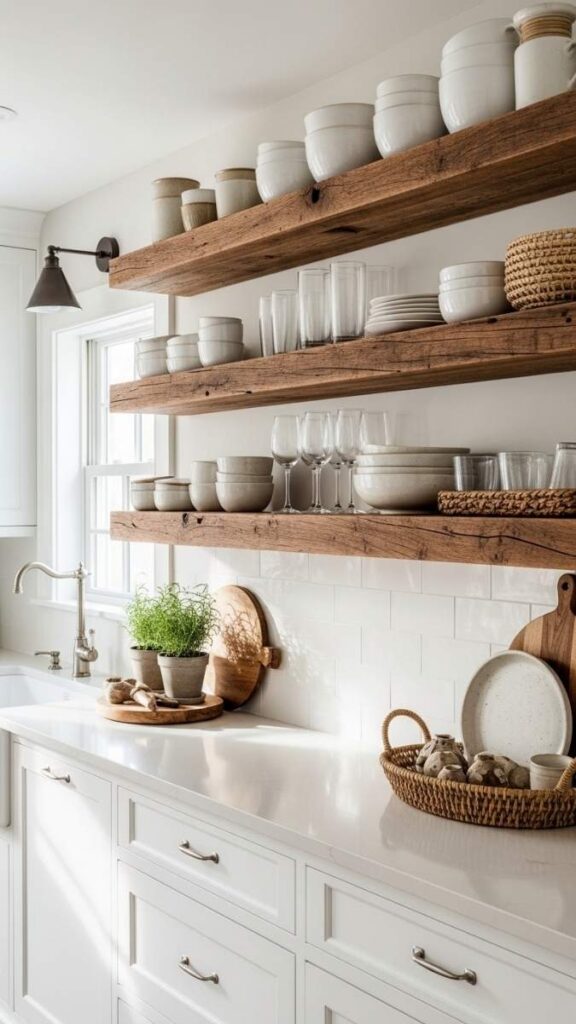
Reclaimed wood shelving in a kitchen introduces the grain, knots, and natural variation of aged timber against usually flat, modern surfaces. The contrast worn wood against smooth tile or painted wall is where the vintage character comes from. This doesn’t require major renovation: three floating shelves installed above a counter or in an alcove are sufficient.
Style them with a mix of vintage glass storage jars, ceramic canisters in neutral tones, a small trailing plant, and a few practical items you’d use daily. The lived-in look comes from mixing utility with display not from purely decorative arrangements. This works especially well in open kitchens where the shelving is visible from the living area.
Vintage Wallpaper or Botanical Wallpaper Mural as a Feature
Wallpaper has fully re-entered interior design, and vintage-inspired patterns large-scale botanicals, chinoiserie, toile, or art deco geometric repeats are among the most requested looks in 2026. On a single feature wall (typically the wall behind the bed or sofa), this creates immediate drama without requiring any furniture investment.
For renters, removable peel-and-stick wallpaper versions of vintage patterns have improved enough in recent years to be a genuinely viable option. The pattern itself does most of the decorative work, so keep the surrounding elements simple white or neutral bedding, a minimal nightstand, nothing competing. Let the wall lead.
Glass Decanters and Vintage Barware on an Open Bar Tray
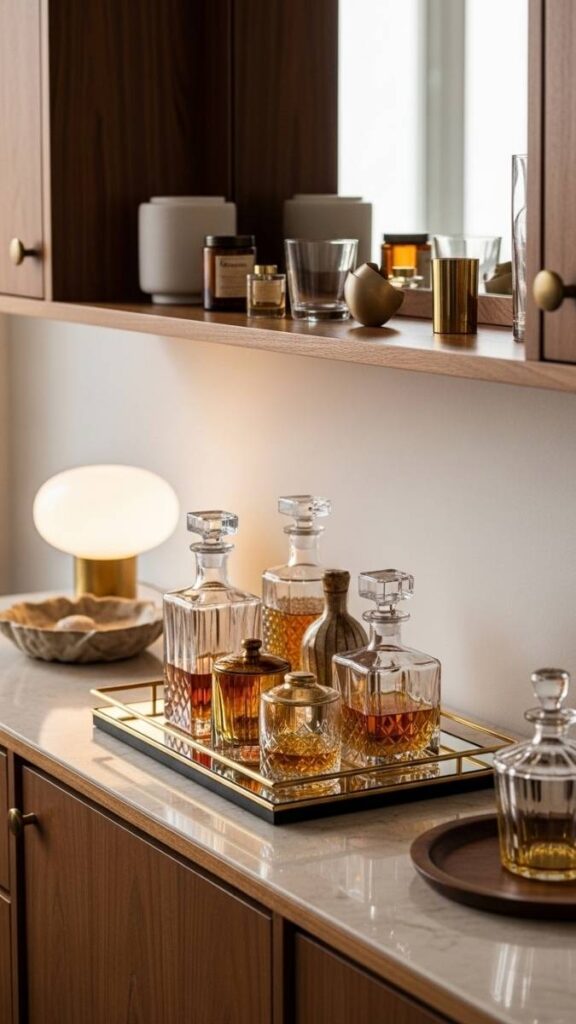
A bar tray or cart styled with vintage glassware is a small setup that punches above its visual weight. Amber, green, and clear glass decanters grouped together with a few crystal or cut-glass tumblers create a still-life quality, something that looks intentional and interesting without a single expensive purchase.
Place the tray on a sideboard, credenza, or kitchen counter where it’s visible but not in a high-traffic zone. The glassware creates layered transparency light that passes through each piece differently which adds a subtle, dynamic quality to the corner of a room. Secondhand crystal and decanters are among the most available and affordable vintage finds, which makes this one of the most accessible setups on this list.
A Freestanding Vintage Wardrobe in a Bedroom Without Built-Ins
In older apartments or homes without built-in closet space, a vintage wardrobe isn’t just decorative, it’s the practical storage solution the room actually needs. A solid wood armoire or wardrobe with carved detailing becomes the largest and most character-defining piece in the room by default.
Choose proportions carefully: the wardrobe should be tall enough to visually anchor the wall but not so wide that it dominates the floor plan. Leave at least 90cm of clear space in front of it for comfortable access. In rooms with low ceilings, a wardrobe with feet rather than a built-to-floor design creates the visual impression of more height. The negative space beneath lifts the piece optically.
Wicker and Rattan Accents as Texture Contrast
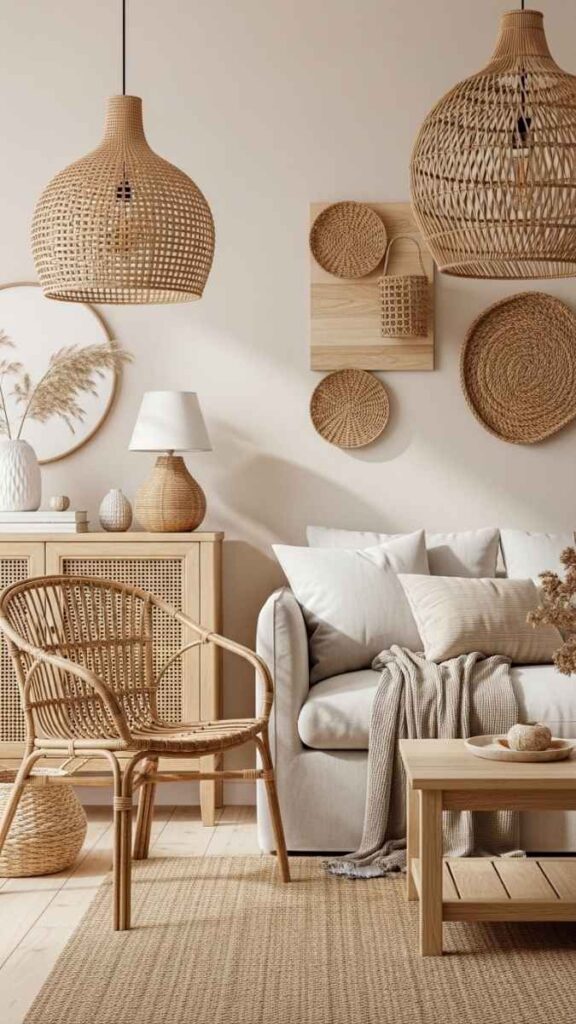
Wicker and rattan have strong vintage associations particularly with mid-century, bohemian, and coastal-traditional aesthetics but they’ve adapted well to the cleaner, more neutral palettes of contemporary interiors.
A rattan pendant light above a dining table, a wicker side chair in a reading corner, or a woven storage basket under a console all introduce natural texture without color complexity.
These materials are particularly useful in bright, white-walled spaces where everything else is smooth and flat.
The woven texture catches light differently throughout the day, adding visual interest that painted or lacquered surfaces don’t. Rattan and wicker are also among the most budget-accessible vintage or vintage-inspired decor categories.
Framed Vintage Maps or Travel Posters in a Study or Hallway
Old travel posters particularly from the 1920s–1950s era have a graphic quality that works both as art and as a vintage anchor. The bold typography, flat illustration style, and period-appropriate color palette (deep reds, faded yellows, ocean blues) read immediately as vintage without being precious or delicate.
Frame them simply in black or dark wood with white matting to let the print carry the visual weight. In a study, a hallway, or above a desk, they introduce personality and point of view. Vintage map prints serve a similar function: they’re visually detailed and interesting up close, and atmospheric from a distance. High-quality reproduction prints are widely available and significantly more affordable than original posters.
A Statement Vintage Chandelier or Pendant in the Dining Room
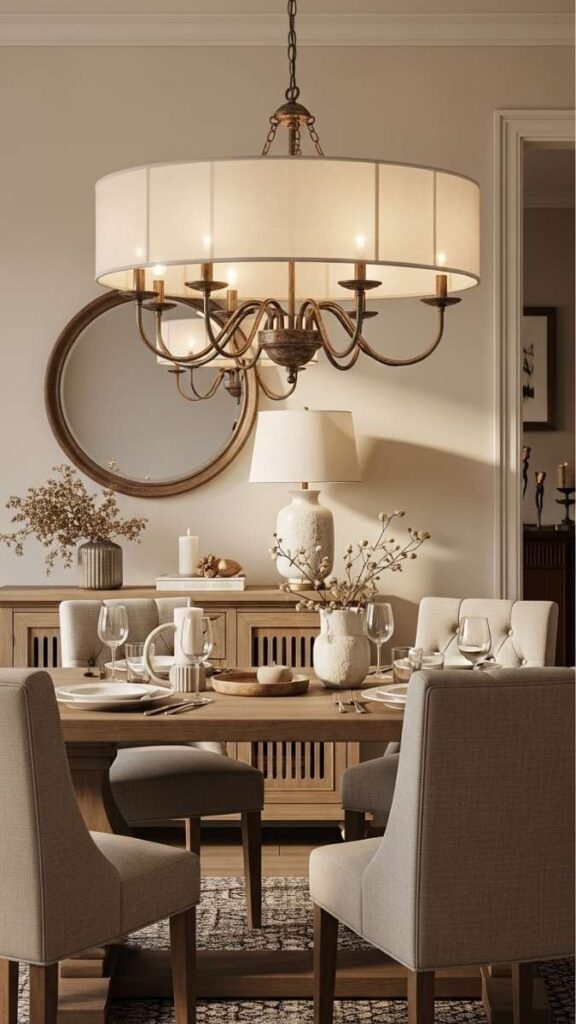
Lighting fixtures are one of the fastest ways to shift a room’s era and a vintage chandelier in a dining room makes a statement that no other single element can replicate. Crystal, brass, or wrought-iron chandeliers from vintage or period-inspired ranges immediately elevate the formality and warmth of the space.
The key is scale: the fixture should be roughly half the width of the dining table and hang low enough to create an intimate atmosphere over the table without blocking sightlines across it. In rooms with standard 8-foot ceilings, this typically means the bottom of the fixture sits 60–70 inches from the floor. This is one of the higher-investment vintage decor ideas, but it’s also one of the most durable quality chandeliers that rarely needs replacing.
Layered Vintage Textiles: Quilts, Tapestries, and Throw Blankets
Vintage textiles, patchwork quilts, woven blankets, embroidered tapestries add warmth and texture in a way that paint or furniture alone doesn’t achieve. A quilt folded at the foot of a bed or draped over a reading chair introduces color, pattern, and tactile softness simultaneously.
A tapestry hung above the bed functions as a textile alternative to framed art larger in scale, warmer in texture, and easier to hang than heavy framed pieces.
This is especially useful in rentals where wall fixings are limited. Layer these textiles thoughtfully: a patterned quilt pairs better with plain linen bedding than with another pattern. Let one textile lead and keep the others supporting.
An Apothecary or Vintage Display Cabinet for Bathroom Storage
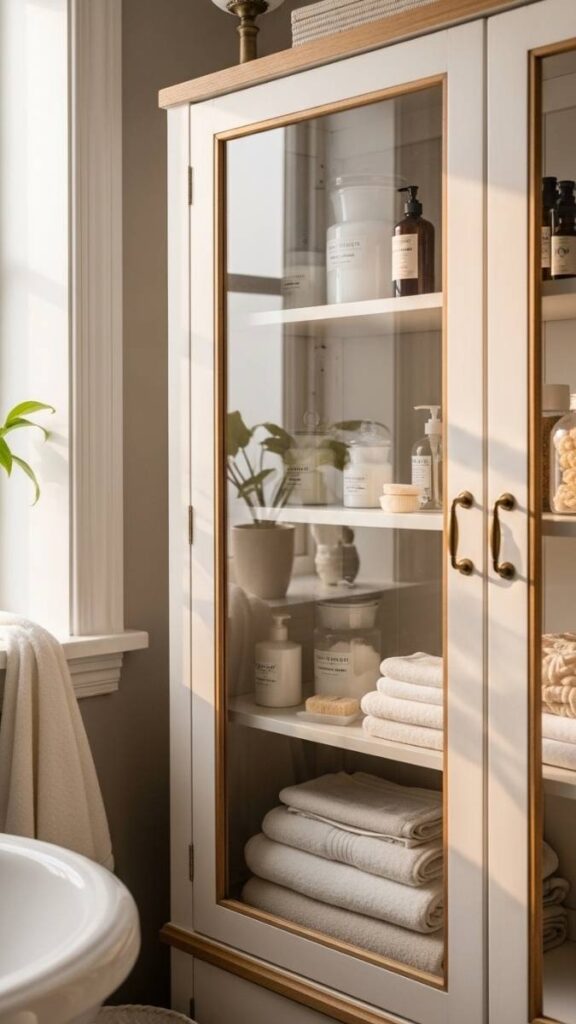
Bathrooms collect clutter fast; the vintage apothecary cabinet is both a storage solution and a display opportunity. A small glass-fronted cabinet, either wall-mounted or freestanding, with aged wood or painted metal framing turns everyday items (cotton balls, q-tips, small bottles) into something worth looking at when stored in clear glass jars or amber medicine bottles.
This is particularly effective in bathrooms with white subway tile or plain white walls, where the warm wood tone and glass detailing introduce character without requiring a renovation. The visual effect is organized and interesting simultaneously which is genuinely difficult to achieve in a small bathroom.
Vintage-Style Kitchen Canisters and Enamelware on the Counter
Counter styling in a kitchen is often overlooked, but it’s actually one of the more visible vintage opportunities in a home. A set of vintage-style ceramic canisters in cream, cobalt, or black lettering for flour, coffee, sugar along with a piece or two of enamelware (a classic French pot, a small colander) creates a kitchen counter that reads as characterful and well-used rather than generic.
This works in practically any kitchen style but suits cream, off-white, or dark navy cabinets especially well. The ceramic and enamel surfaces interact with light differently than stainless steel or plastic, giving the counter a warmer, more domestic quality. Genuine vintage enamelware is easy to find secondhand and usually more affordable than reproduction versions.
Vintage Books Styled as Decor Throughout the Space
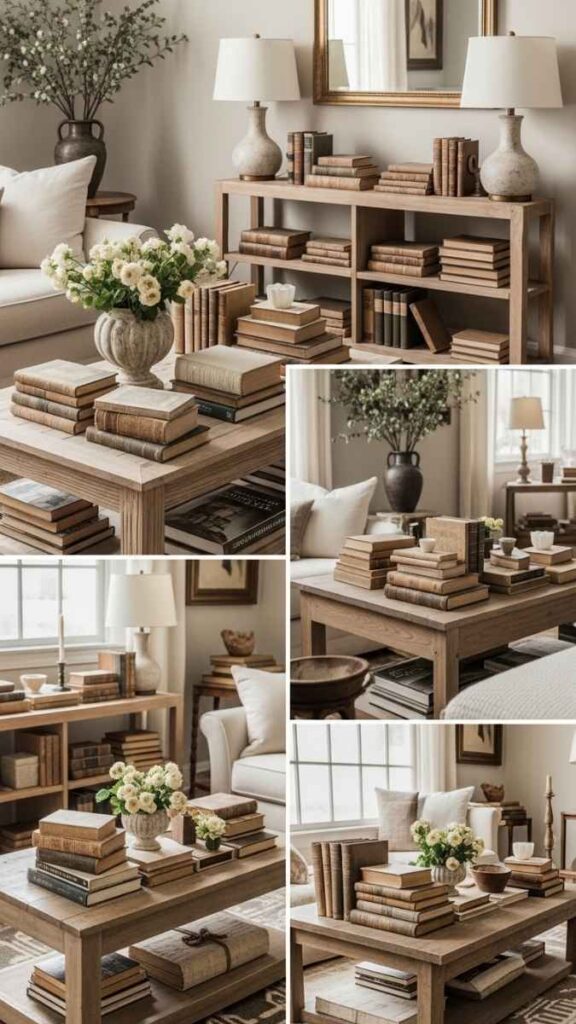
Old books are one of the most versatile vintage decor materials because they function in multiple formats: stacked as a riser under a lamp or object, displayed spine-out on open shelving, or arranged flat on a coffee table with a small ceramic piece on top. Faded spines in neutral, muted tones aged cream, terracotta, forest green add both color and texture wherever they’re placed.
The key is avoiding the “staged” look: a stack of books with a candle on top can feel intentional or it can feel like a design cliché depending on how it’s executed.
Keep the surrounding area relatively clear, use books of varying height and thickness in each stack, and choose volumes that look genuinely used. I’ve noticed that genuine old books almost always photograph and style better than new books bought purely for aesthetics; there’s a quality to worn spines that reproduction props don’t replicate.
What Actually Makes Vintage Decor Work in a Modern Home
The difference between vintage decor that works and vintage that feels like a museum or a cluttered charity shop is almost always about restraint and intentional mixing. Here’s what actually matters:
Anchor modern pieces with vintage accents, not the reverse.
A fully vintage room reads as themed. The sweet spot is a contemporary sofa or bed as the base, with vintage lamps, rugs, frames, and accents doing the character work. The modern foundation stops the room from feeling frozen in time.
Prioritize vintage in one or two material categories.
Rather than spreading vintage pieces across furniture, lighting, textiles, and decor simultaneously, focus your vintage investment. Lighting and soft furnishings (rugs, cushions, throws) tend to have the most atmospheric impact per pound spent. Furniture comes second. Small decor objects come third.
Color coherence matters more than style coherence.
Mixed vintage periods a Victorian frame next to a mid-century lamp work when the colors stay within the same family. Warm tones (amber, terracotta, gold, walnut) across different eras feel cohesive. Mixing warm and cool vintage tones in the same room is where it tends to go wrong.
Patina is the point.
If everything looks pristine, the vintage element loses its function. A worn leather chair, a tarnished brass lamp, a slightly faded print these imperfections are doing the work. Avoid the urge to over-restore pieces or replace aged hardware with bright new fittings.
Vintage Decor Setup Guide by Room and Intention
| Setup | Best Room | Space Type | Primary Problem Solved | Budget Level |
| Vintage leather armchair + floor lamp | Living room / bedroom | Any | Empty corner, needs focal point | Medium |
| Mismatched gallery wall | Living room / hallway | Any | Blank wall, lacks personality | Low |
| Antique brass hardware swap | Kitchen / bathroom | Any (renter-friendly) | Generic, modern-feeling space | Low |
| Mid-century sideboard as media unit | Living room | Small–medium | Storage + style in one piece | Medium–High |
| Vintage trunk as coffee table | Living room | Small apartment | Dual-function, storage | Medium |
| Layered vintage rugs | Living room / bedroom | Rental, bare floors | Cold, unanchored flooring | Low–Medium |
| Vintage wardrobe | Bedroom | No built-ins | Storage + character | Medium–High |
| Apothecary cabinet | Bathroom | Small bathroom | Clutter, plain surfaces | Low–Medium |
| Vintage chandelier | Dining room | Any ceiling height | Flat, characterless lighting | High |
| Botanical wallpaper feature wall | Bedroom / living room | Any (renter option available) | Empty wall, needs drama | Low–Medium |
How to Avoid the Most Common Vintage Decor Mistakes
Going too heavy with brown.
Dark wood, aged leather, and warm brass are all vintage staples but combining all of them in the same room without any contrast creates a space that feels heavy and dim rather than warm and layered. Introduce at least one lighter material: painted surfaces, white walls, linen textiles, or a light-toned rug.
Mistaking quantity for character.
More vintage objects don’t equal more atmosphere. A single genuinely good piece, a well-proportioned armoire, a real vintage rug, a quality ceramic lamp does more for a room than twenty small thrift-store objects arranged across surfaces. Edit aggressively.
Ignoring scale.
Vintage furniture often runs larger than modern equivalents particularly Victorian and Edwardian pieces. A beautiful antique wardrobe that’s 10cm too wide for the wall becomes a spatial problem that no amount of styling can fix. Measure the space and the piece before committing.
Buying purely for looks without considering function.
A vintage chair that’s visually perfect but uncomfortable gets moved, then ignored. Choose vintage pieces that you’ll actually use regularly; the wear and presence they develop over time is what gives them value in a space.
Mixing too many eras without a connective thread.
Georgian, mid-century, Victorian, and 1970s boho can all coexist in the same room but only if there’s a common material, color, or tone running through them. Without that connective thread, the room reads as inconsistent rather than eclectic.
Frequently Asked Questions
What is vintage decor, and how does it differ from antique decor?
Vintage decor typically refers to pieces or styles from roughly 20–100 years ago, while antique refers specifically to items over 100 years old. In practice, vintage decor focuses on the aesthetic and atmosphere of a period rather than the age of individual objects; reproductions and genuine finds are often mixed freely.
How do I mix vintage decor with a modern interior without it looking mismatched?
Start with a modern base, a contemporary sofa, clean-lined bed frame, or neutral wall color and layer vintage accents over it. Keep the color palette consistent across old and new pieces, and limit your vintage investment to two or three material categories (lighting, textiles, and frames, for example) rather than spreading it across everything.
Which rooms benefit most from vintage decor?
Living rooms and bedrooms respond most visibly because they have the most surface area for layering. Bathrooms and kitchens also benefit significantly from vintage details (hardware, fixtures, storage), often for relatively low cost. Hallways and entryways are high-impact because they set the tone for the whole home.
Can I do vintage decor on a small budget?
Yes and in some cases, a limited budget produces better results because it forces selectivity. Hardware swaps, secondhand books, thrifted glass and ceramics, removable vintage wallpaper, and gallery walls built from printed reproductions are all low-cost routes to a genuine vintage atmosphere.
Is vintage decor suitable for small apartments?
It works well, with caveats around scale. Choose vintage pieces that serve a function: a trunk coffee table with interior storage, a sideboard that houses media equipment, a wardrobe that solves a storage problem. Avoid large ornate furniture in rooms under 25–30 square meters unless it’s replacing multiple smaller pieces.
What are the most versatile vintage decor purchases to start with?
Antique brass hardware, a quality vintage rug, one statement lighting fixture, and a set of mismatched frames are the four that work across the widest range of interiors. They’re low-risk, broadly compatible with existing furniture, and impactful enough to shift the room’s atmosphere noticeably.
How do I stop vintage decor from looking cluttered?
The edit is more important than the acquisition. For every vintage piece you add, assess whether something else can be removed. Clear surfaces with one considered object read as more vintage-intentional than surfaces covered in multiple small pieces. Clutter and character are different things; the distinction is negative space.
Conclusion
Vintage decor works because it introduces the thing that most modern interiors lack by default: a sense of time, use, and accumulation. A room that looks like it came together over years rather than in a single furniture delivery feels more personal and more livable and that’s ultimately what most people are trying to achieve when they start looking at vintage ideas.
The key is finding what works for your specific space, budget, and the way you actually use the room. Not every idea here will suit every home, but even two or three well-chosen vintage elements: a genuine rug, a quality lamp, a set of proper frames can shift a room’s atmosphere more than a full furniture refresh. Start with the lowest-friction idea on this list that applies to your space, and build from there.