70+ Seasonal Decor Ideas That Actually Work in Real Homes Without the Clutter

Changing your decor with the seasons sounds appealing until you’re staring at a pile of plastic pumpkins in October wondering where it all went wrong. The real challenge isn’t finding ideas, it’s knowing which ones are worth the effort, the storage space, and the money. Most seasonal decorating advice assumes you have a sprawling farmhouse with a dedicated decor closet. Most of us don’t.
If you’re working with a mid-sized apartment, a rental, or just a home that needs to function year-round without looking like a holiday store exploded in it, this list is built for you. These ideas focus on swappable, stackable, and intentional setups decor that shifts with the season without requiring a full room overhaul every three months.
What’s shifted in 2026 is the approach: fewer themed pieces, more texture and color transitions. The seasonal decor ideas trending right now lean into natural materials, neutral bases, and layering which means they’re also easier to live with long-term.
Build a Neutral Base You Swap Around, Not Over
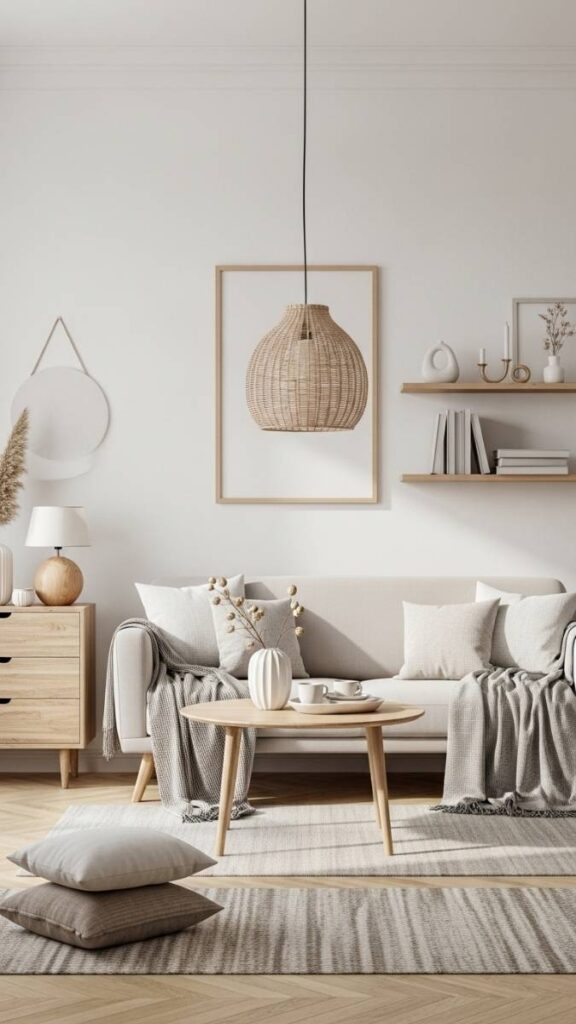
The smartest seasonal decorating move is one you only make once: invest in a neutral foundation. A linen sofa in warm white, a jute rug, and natural wood tones don’t belong to any season, they belong to all of them. What changes around them is everything else: pillow covers, a throw, a vase, the objects on your coffee table.
This setup works because it reduces the “starting over” feeling every season and keeps your space coherent even mid-transition. In my experience, this works best when you commit to one fixed neutral palette and let the accents carry all the seasonal weight. For renters or anyone in a smaller space, this is the single highest-return approach to seasonal decor.
Use Textile Swaps as Your Primary Seasonal Signal
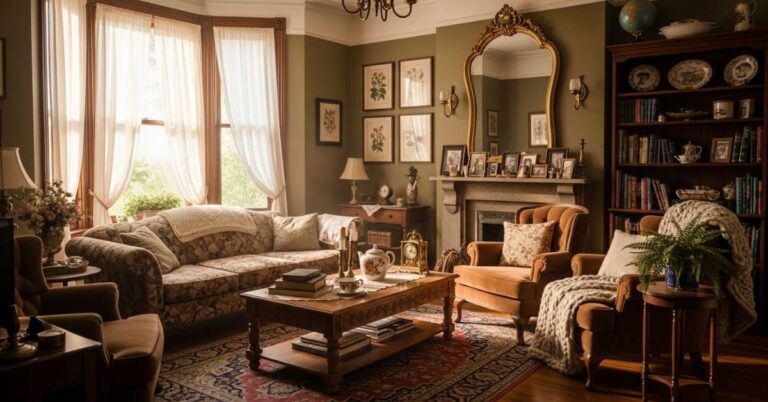
Textiles do more seasonal work than almost anything else in a room. A chunky knit blanket draped over a chair reads autumn immediately. Swap it for a light cotton throw in sage or cream and the same chair reads spring.
The material contrast is what signals the season weight, texture, weave not a themed pattern. This approach works especially well in bedrooms and living rooms where throws and pillow covers are already part of the setup. It solves the “my room feels the same all year” problem without requiring new furniture or wall art. Storage is also minimal: a vacuum bag per season, and you’re done.
Anchor Seasonal Moments With a Single Statement Vase
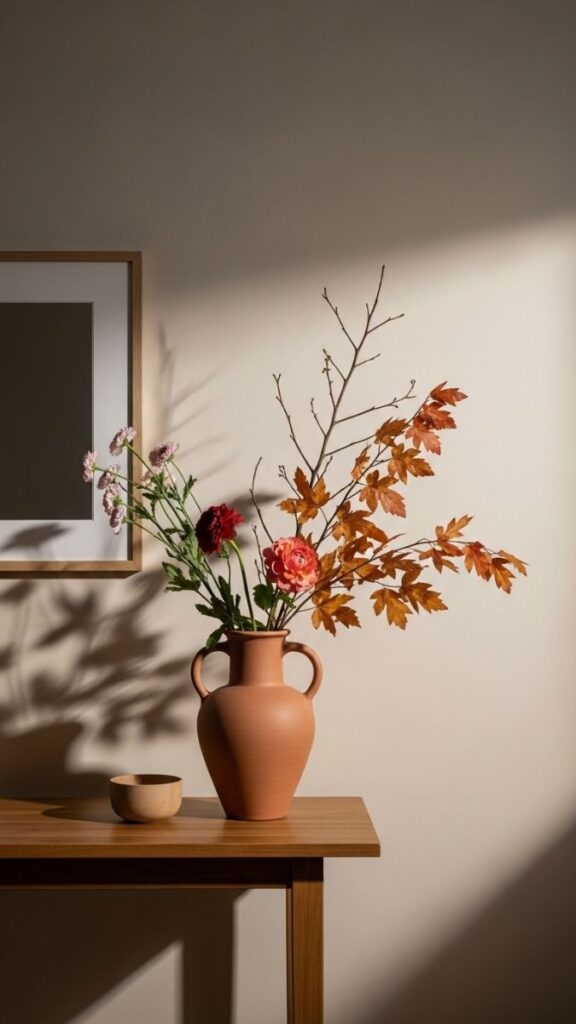
One well-chosen vase on a console table or sideboard can carry the seasonal story for an entire entryway. In winter, fill it with dried eucalyptus or bare branches. Spring calls for fresh tulips or cherry blossom stems. Summer works with tall grasses or sunflowers. Fall brings dried wheat or deep-toned foliage.
The vase itself stays put matte ceramic or raw terracotta works across all seasons and the contents rotate every few months. This is one I’d actually recommend trying first because it’s low-cost, low-effort, and makes an immediate visual impression when you walk through the door.
Layer Lighting to Shift the Season’s Mood
Lighting is one of the most underused seasonal decor tools. In summer, you want brightness, sheer curtains left open, and natural light maximized.
In winter and fall, the goal shifts to warmth: candles grouped on a tray, a dimmer on your floor lamp, amber bulbs replacing cool white ones.
The furniture doesn’t move. The mood does. This works particularly well in living rooms and dining spaces where ambiance matters as much as function. It solves the flat, same-all-year feeling that happens when lighting stays on one setting regardless of the time of year.
Rotate a Small Gallery Wall With Seasonal Prints
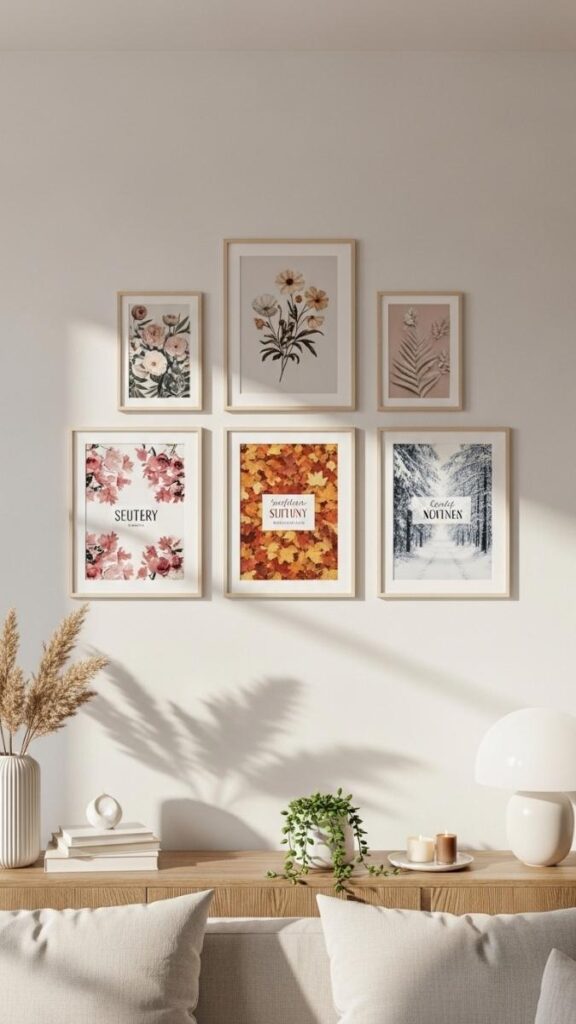
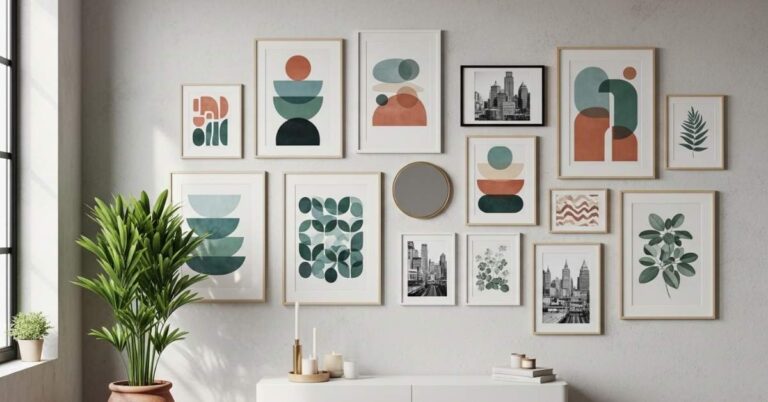
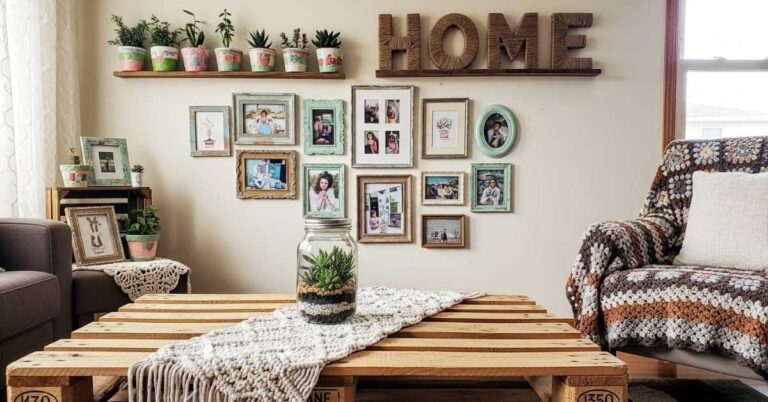
If you’re using fixed frames with removable prints, a small gallery wall becomes a seasonal canvas without any drilling. Gallery ledges, the shallow ones that lean prints against the wall, make this even easier. Swap two or three prints per season:
Florals for spring, warm abstract tones for fall, stark geometric monochromes for winter. The frames and layout stay consistent; the art does the seasonal shifting. This works well in hallways, living rooms, and even above a desk. It’s especially practical for renters because nothing about the setup is permanent.
Read More About: 69+ Rental Friendly Decor Ideas That Make Your Space Feel Like You Actually Own It
Use a Seasonal Tray as a Controlled Vignette
A tray gives you a defined boundary for seasonal styling; everything inside it is decorative, everything outside stays functional. In fall: a candle, a small pumpkin, dried florals. In winter: pine cones, a tea light, a small ceramic bird. Spring: a bud vase with fresh stems, a smooth stone, something green.
The tray contains the theme so it doesn’t spill across your entire coffee table or sideboard. This is a practical approach for people who like the idea of seasonal decor but find it tends to creep and multiply. It also makes styling faster if you’re editing within a frame, not rearranging a room.
Swap Curtains Seasonally for Immediate Room Impact
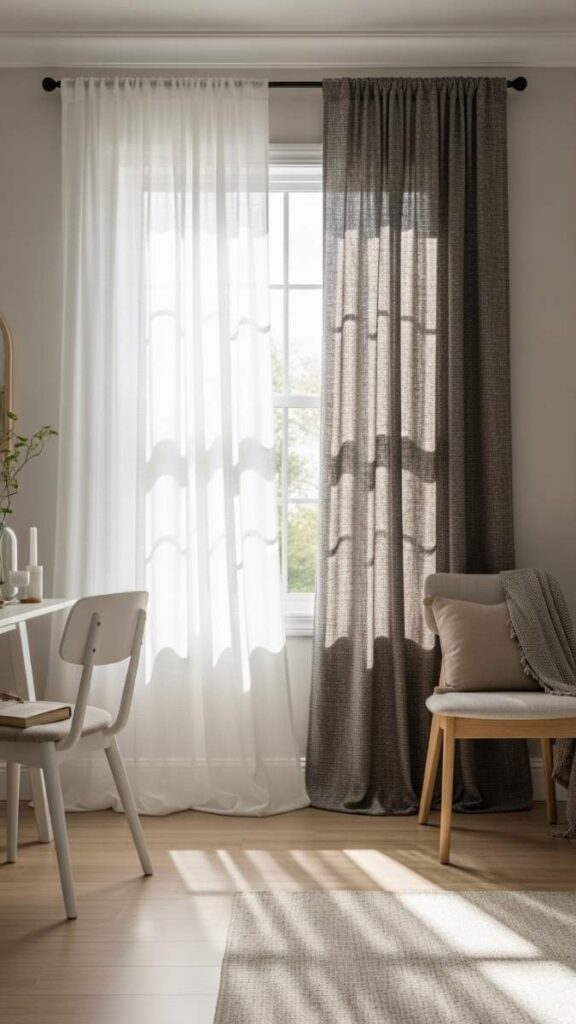
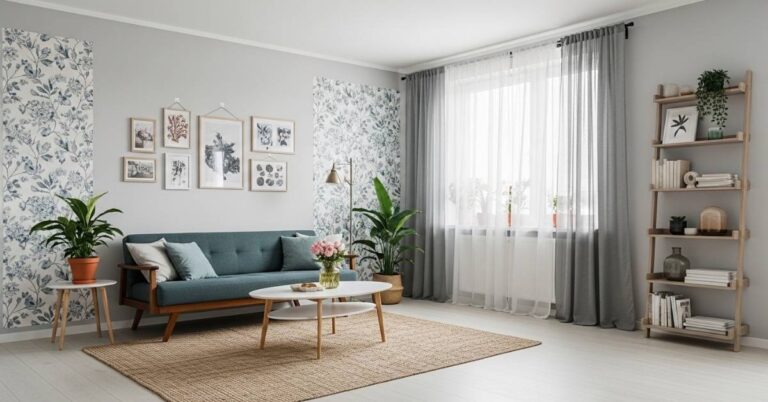
Curtains are one of the highest-impact, lowest-effort seasonal swaps available. Sheer linen in spring and summer lets in diffused natural light and makes a room feel open. A heavier linen or cotton-blend in fall and winter adds visual warmth and a sense of enclosure that suits the season.
The shift isn’t dramatic but it’s felt the room breathes differently. This works in any room with windows, but it has the most noticeable effect in living rooms where curtains frame a significant portion of the wall. For renters, tension rods or clip rings make this swap completely non-destructive.
Bring in Seasonal Scent Through Natural Objects, Not Candles
Scent is a seasonal decor layer most people miss entirely. A small ceramic bowl of dried lavender on a nightstand reads spring. Cinnamon sticks and cloves grouped in a wooden dish read fall without a single orange or leaf-shaped anything. Eucalyptus hung in a shower reads clean, fresh, and modern regardless of season.
This works because scent creates an immediate environmental shift that visual decor alone can’t replicate. It also solves the problem of spaces that look seasonally appropriate but don’t feel it. Small, contained, and easy to swap no storage issues.
Add Seasonal Color Through Bedding Layers, Not Full Replacements
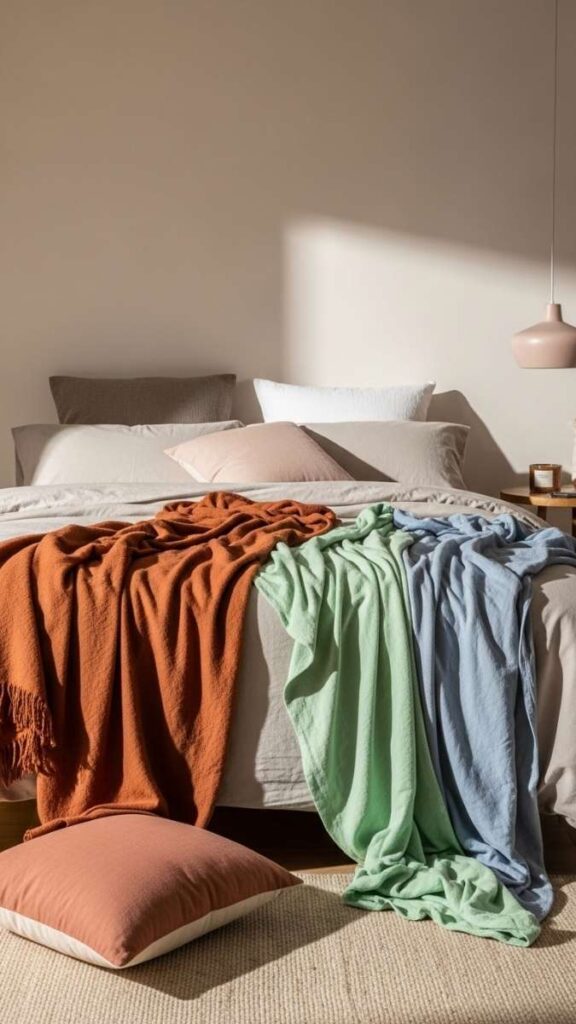
You don’t need a full bedding set for each season. A white or oatmeal base duvet stays year-round, and a folded layer at the foot of the bed does all the seasonal work. A lightweight dusty blue cotton quilt for spring and summer.
A chunky terracotta or rust-toned blanket for fall. A dense wool or sherpa throw for winter. The layering logic is also practical: you’re adding warmth as needed, not just decorating. This setup works in both small and large bedrooms and keeps storage minimal because each seasonal layer folds down small.
Read More About: 68+ Budget Decor Ideas That Make Your Home Look Intentional Not Cheap
Use Seasonal Greenery in Unexpected Rooms
Greenery doesn’t have to live in the living room. A eucalyptus stem in the bathroom, a small potted herb on the kitchen windowsill, a dried grass arrangement in the home office these small placements make a room feel attended to without requiring a full seasonal setup.
The greenery changes with what’s available: spring brings fresh blooms, summer works with leafy branches, fall suits dried arrangements, winter responds to pine or rosemary. Honestly, this is one of the most underrated seasonal decor strategies because it works in rooms people tend to forget about, and it takes less than five minutes to update.
Create a Seasonal Entry Setup That Welcomes, Not Overwhelms
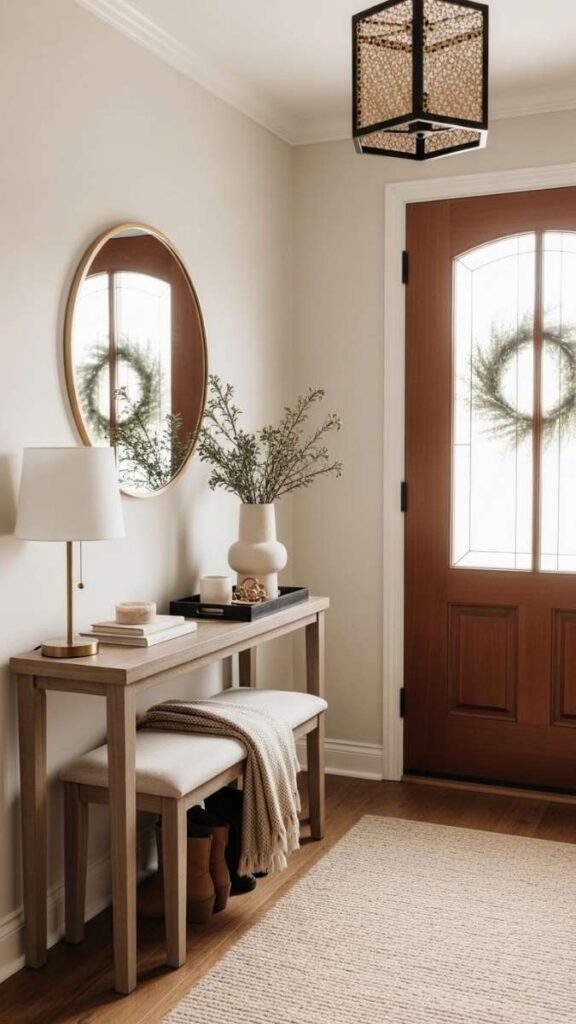
The entryway is the first seasonal impression your home makes but it’s also a functional zone that needs to handle coats, shoes, and bags. The most effective seasonal setups here are restrained: one textural element (a small wreath, a stem vase, a lantern), one material that signals the season (linen, dried flowers, pine), and a rug that either stays neutral or changes seasonally.
Avoid clustering too many objects in an entry in small spaces especially, it reads as clutter rather than decor. One well-chosen object in a considered spot does more than a themed collection.
Build a Seasonal Bookshelf Without Buying New Objects
Bookshelves offer seasonal flexibility without requiring new purchases. The objects you already own candles, small plants, ceramics, framed photos can be rearranged by color, height, and texture to reflect the season. In fall and winter, pull darker-spined books forward and cluster warmer-toned objects.
In spring and summer, lighter books, more open space, a fresh plant. The structure stays the same; the visual weight shifts. This works particularly well in living rooms where the bookshelf serves as a focal point. It’s one of the lowest-cost seasonal updates available because it uses what you already have.
Use a Seasonal Wreath Beyond Just the Front Door
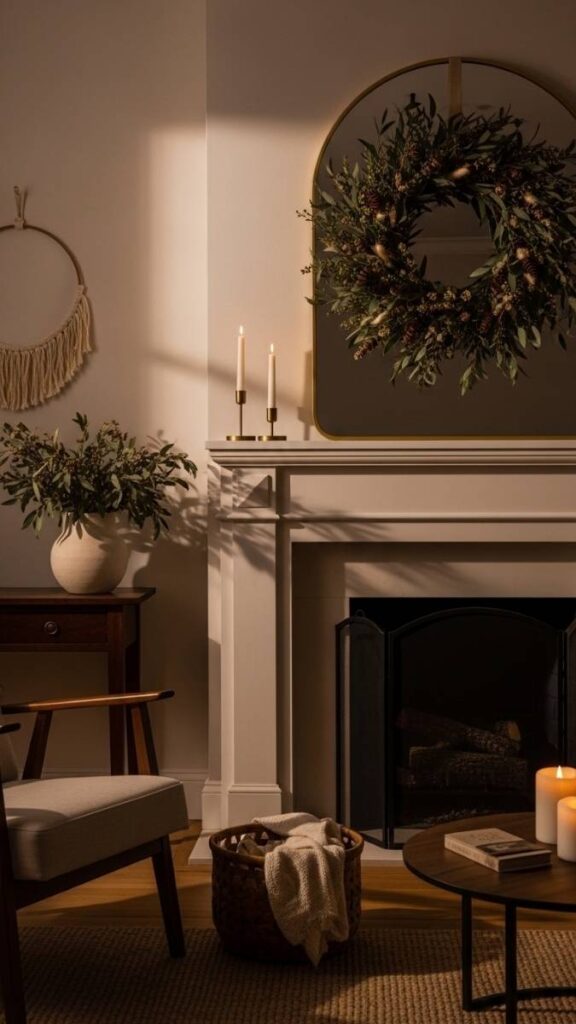
Wreaths aren’t exclusively a front door feature. A dried flower wreath above a bed, a eucalyptus circle hung over a sideboard mirror, or a small woven loop on a gallery wall adds seasonal texture without taking up surface space.
In spring, fresh or faux floral wreaths work. Fall suits dried botanicals in terracotta tones. Winter responds well to pine, berries, or simple twig circles. The key is to scale an interior wreath should be proportionate to the wall it’s on, not oversize the way exterior wreaths often are. This works well for renters because it typically only requires a small nail or adhesive hook.
Swap Out Throw Pillow Covers, Not Whole Pillows
This is one of the most efficient seasonal swaps available in terms of cost-to-impact ratio. Pillow insert prices don’t change seasonally cover prices do. A set of three or four quality inserts stays permanent; the covers rotate. Spring and summer:
Washed linen in sage, cream, or soft blue. Fall and winter: velvet or heavy cotton in terracotta, rust, or deep green. The visual shift is immediate and the storage footprint is tiny folded covers that take almost no space. For anyone decorating on a budget, this approach stretches seasonal decor investment further than almost anything else.
Introduce Seasonal Color Through Tabletop Objects
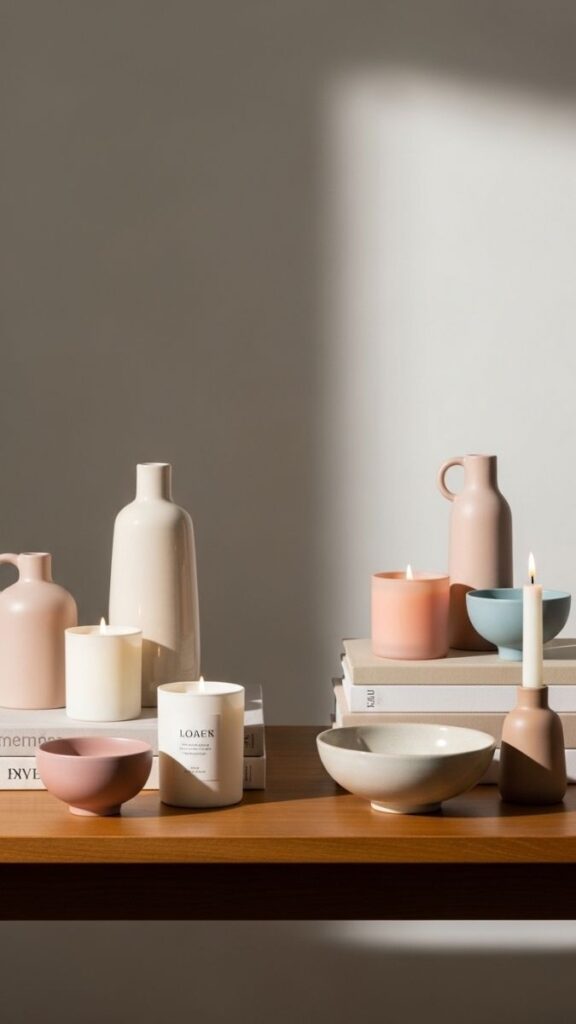
The dining table is a natural seasonal stage because it already gets styled for meals. Extending that into a light seasonal setup a centerpiece that changes four times a year gives the space consistent life without permanent commitment.
A low bowl with seasonal objects (citrus in winter, small gourds in fall, stones and shells in summer) works better than tall centerpieces that interrupt sightlines across the table. A linen runner in a seasonal tone grounds the whole setup. This is especially useful in open-plan spaces where the dining area is visible from the living room; it carries seasonal energy across a larger zone.
Read More About: 67+ DIY Decor Ideas That Actually Work in Real Homes No Craft Store Overwhelm Required
Let Natural Light Guide Your Seasonal Palette
Natural light changes dramatically across seasons, and your decor palette can respond to that rather than fight it. In autumn, warm afternoon light deepens gold and amber tones already in a space lean into that with similar-toned textiles and objects. In summer, cooler midday light makes soft blues and greens feel natural. In winter, the lower-angle light benefits from warm artificial supplements.
This isn’t about repainting walls, it’s about choosing seasonal accent colors that work with your existing light conditions rather than against them. I’ve noticed this style of color-light matching tends to make spaces feel more cohesive and intentional without any major investment.
Add Seasonal Texture Through Rugs Without Full Replacement
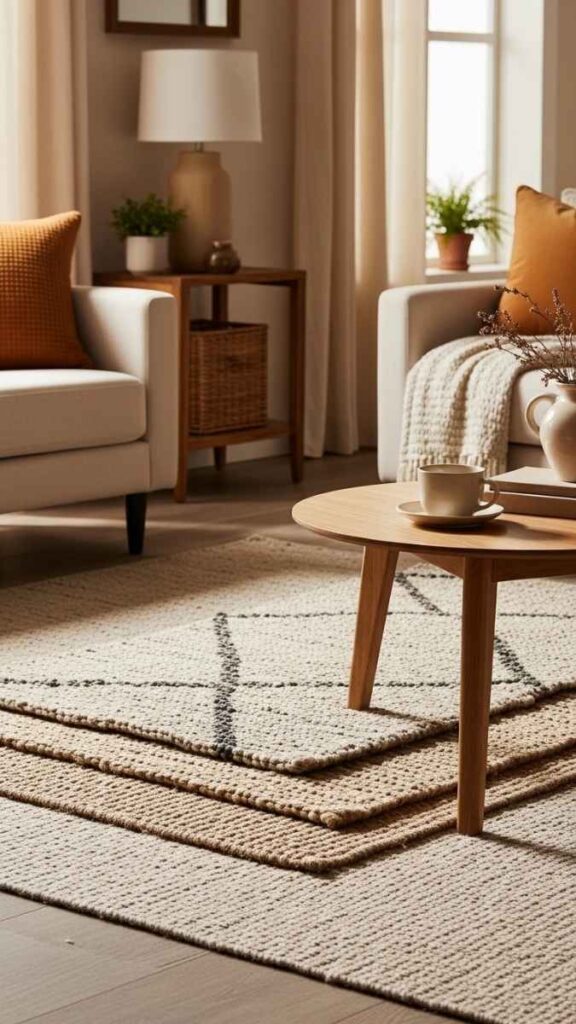
Layering rugs is a practical seasonal technique that adds warmth underfoot without replacing your main rug. In fall and winter, a smaller sheepskin, vintage-style, or woven rug layered over a neutral base adds both visual texture and physical warmth. In spring and summer, the layered rug comes up and the space opens visually.
This works especially well in living rooms and bedrooms where floor texture directly affects how a room feels to be in. The under-rug stays year-round; the layered piece does the seasonal rotation. Storage is easy; a folded rug takes minimal closet space.
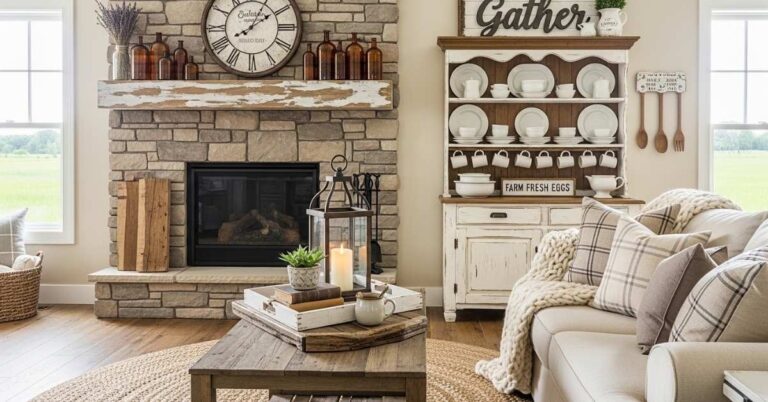
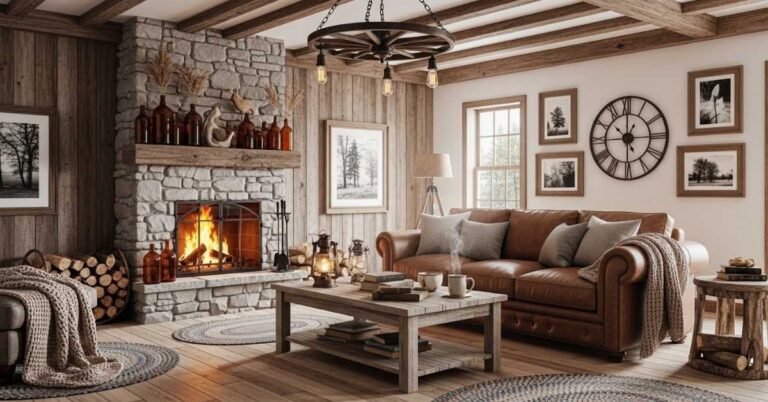
Style a Seasonal Mantel Without Overdoing the Theme
A mantel is the easiest place in a home to overdecorate seasonally. Restraint is what keeps it looking designed rather than festive. The principle: one anchor object (mirror or art), two flanking elements (candles, small vases), and one seasonal accent (a botanical stem, a pinecone cluster, a small lantern).
That’s it. Four to five objects maximum. The seasonal accent is the only thing that changes the rest of the stay. This works in living rooms and bedrooms with fireplaces, and even on floating shelves styled like a mantel. It solves the common problem of seasonal decor that feels chaotic because too many themed objects are competing for attention.
Use Dried Botanicals as Year Round Seasonal Anchors
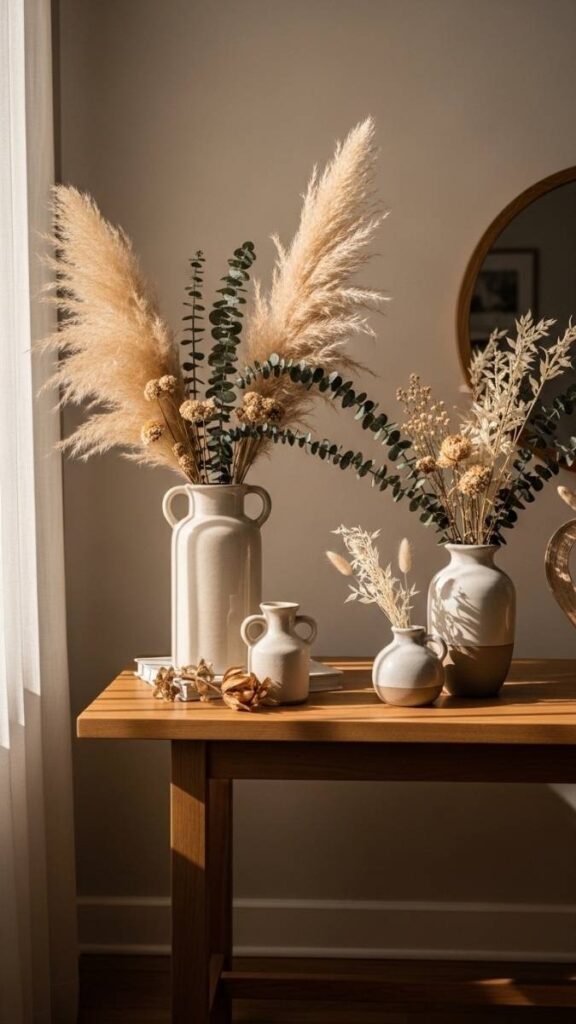
Dried botanicals have an unusual quality: they’re seasonal in feeling but last year-round. Pampas grass, dried lavender, wheat bundles, preserved eucalyptus: these materials age beautifully and carry a quiet seasonal warmth regardless of the time of year.
The setup shifts based on what you pair them with, not the botanical itself. In summer, a dried grass arrangement next to a white ceramic pot and sheer curtains reads airy.
The same arrangement next to a warm wool throw and amber candlelight reads autumn. This is especially practical for anyone who can’t commit to fresh flowers or live plants. It’s low maintenance and visually effective.
Create a Seasonal Moment in an Overlooked Corner
Corners are where seasonal decor works best because they’re contained, low-traffic, and easy to shift without affecting the whole room.
A floor lamp, a small side table, one seasonal object (a plant, a stack of books with a candle, a small sculpture), and a single seasonal accent is enough to make the corner feel deliberately styled.
The rest of the room can stay neutral. This approach works in living rooms and bedrooms and is especially useful in studio apartments where one well-styled corner can carry the seasonal character of the entire space.
Try a Seasonal Dining Chair Moment With Seat Cushions
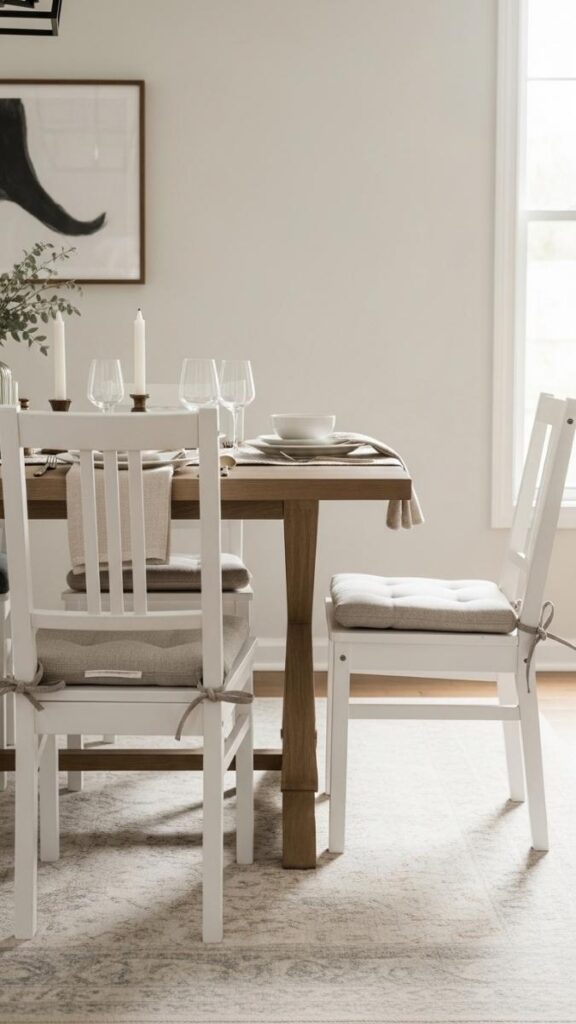
Dining chairs are often the most visually prominent but least decorated element in a dining space. Removable seat cushions offer a seasonal opportunity that most people overlook.
Ties-on cushions in linen for spring and summer, velvet or heavy cotton for fall and winter the swap takes less than ten minutes and changes the character of the entire dining area
. This works especially well in rooms where the dining table is a focal point and where the chairs are a significant visual element. It’s also one of the more practical updates because cushions add comfort alongside seasonal color.
Build a Seasonal Mood on a Budget Shelf
A single floating shelf gives you a dedicated seasonal staging area that costs almost nothing to update. The base setup is a candle, a small plant or dried stem, one ceramic object stays consistent.
The seasonal layer is one object or textile that shifts: a mini pumpkin in fall, a small wrapped gift box in winter, fresh herbs in spring, a shell or stone in summer.
This is a particularly good approach for people who find seasonal decorating overwhelming; it limits the scope to one shelf, one swap, and the rest of the home stays untouched. Small, controlled, and still effective.
Rethink Holiday Decor as Seasonal Decor
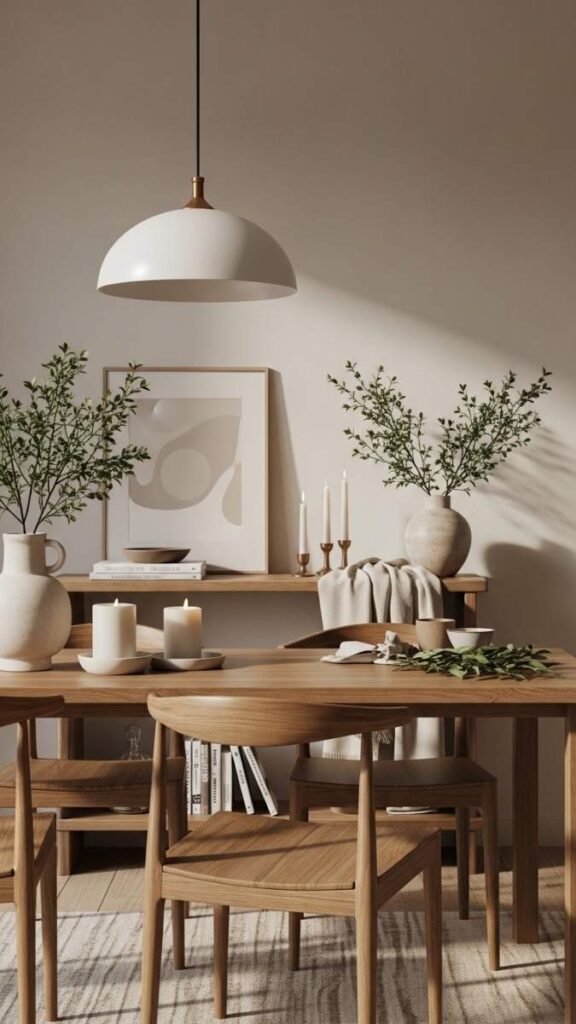
Holiday-specific decor has a short window of relevance. Seasonal decor, done well, can carry the same feeling for three months at a time. Pine branches in a tall vase work from November through January without reading as “Christmas.” Dried orange slices and cloves work across all of November and December.
A quality wool throw in deep green works from October through February. The shift is thinking about the season, not the holiday which means your decor has a longer lifespan and looks intentional rather than occasion-specific. This matters most for smaller spaces where themed decor quickly overwhelms.
Use Plants as Seasonal Decor With Strategic Swaps
The plant on your windowsill or side table can rotate seasonally without requiring a full garden. Spring: a forced bulb (hyacinth, narcissus) in a simple pot. Summer: a leafy tropical or herb in terracotta.
Fall: a dried or preserved arrangement. Winter: a small pine cutting in a glass of water, or a paperwhite bulb just starting to sprout. Each option costs very little, takes up minimal space, and signals the season more naturally than any manufactured decor item. This approach also gives the space biological texture something living (or once-living) that a ceramic or candle can’t replicate.
Style a Seasonal Bathroom With Small, Targeted Swaps
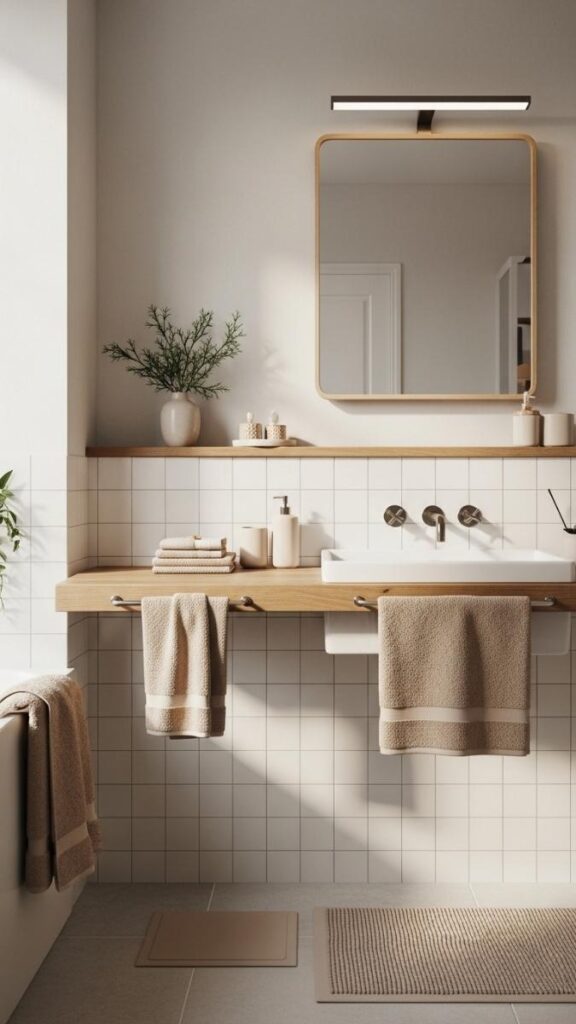
Bathrooms rarely feature in seasonal decor conversations, but they’re actually one of the easiest rooms to update. A seasonal towel color, one plant or stem on the vanity, a seasonal scent (eucalyptus, lavender, citrus), and a small tray object are all it takes. In winter: cream towels, a pine sprig, a warm amber soap.
In summer: white towels, a lemon verbena stem, something citrus-scented. The investment is minimal and the effect is notable especially in bathrooms that guests use. It signals that the whole home is attended to, not just the main living areas.
Add Seasonal Warmth Through Layered Lighting in the Bedroom
Bedroom lighting is almost always the same year-round: overhead on, bedside lamp on when reading. A seasonal lighting layer changes the feel of the space significantly. In fall and winter, swap to warmer bulbs (2700K or lower), add a cluster of battery candles on the dresser, and consider a string of warm lights behind the headboard or along a window ledge.
In spring and summer, maximize natural light by keeping window treatments open and using cooler-toned reading lamps. The shift costs almost nothing, a bulb swap and a $10 set of battery candles but the mood difference between seasons becomes genuinely felt.
Commit to One Seasonal Scent and Let It Lead
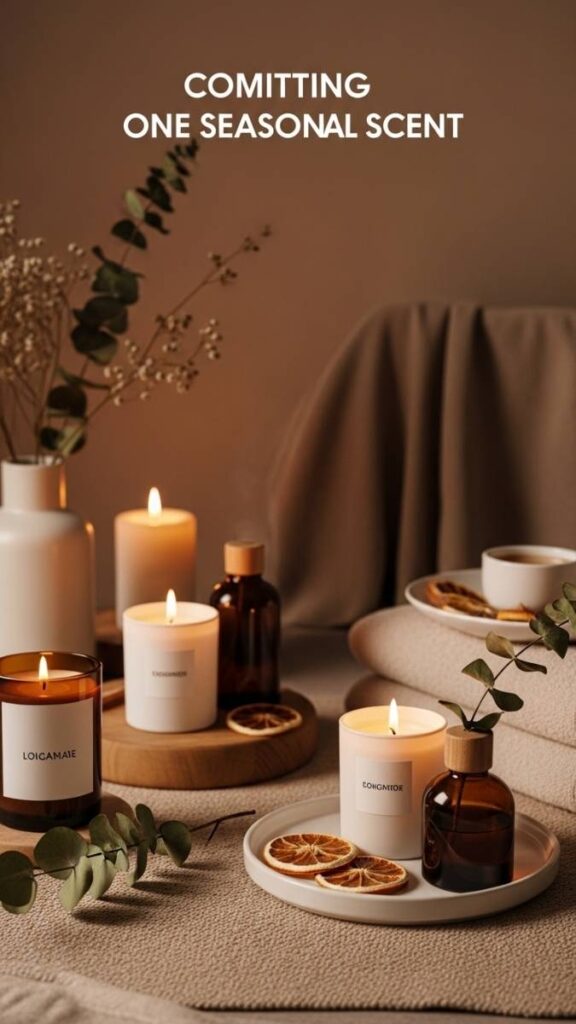
If you do nothing else seasonally, do this: pick one scent per season and use it consistently across your home. A bergamot or linen candle for spring. Citrus and basil for summer. Warm amber or cedarwood for fall. Pine, fir, or clove for winter.
The scent becomes an immediate environmental cue that shifts how the space feels to be in even if nothing visually has changed. This is especially useful for smaller homes or apartments where there’s limited space for decorative objects. Scent works volumetrically in a way visual decor can’t. One candle in a central location can make a studio apartment feel seasonally different without a single swap.
What Actually Makes Seasonal Decor Work in Real Homes
The gap between seasonal decor that looks good in photos and seasonal decor that actually works in a real home comes down to a few consistent principles.
Start with a fixed base.
If your furniture, rugs, and wall treatments are neutral and permanent, seasonal layers can slide in and out without disrupting the visual logic of the room. The problem most people run into is that their base is already decorated and adding seasonal elements creates visual competition rather than harmony.
Work in layers, not categories.
The most effective seasonal setups don’t swap one themed object for another. They add a layer (a texture, a scent, a color accent) that shifts the room’s character without replacing its foundation.
Storage drives sustainability.
If seasonal decor is hard to store, you stop rotating it. The most practical seasonal setups use flat, stackable, compressible items pillow covers, folded throws, rolled rugs that take up minimal closet space between seasons.
One room, one seasonal moment.
You don’t need to update every room every season. Pick one or two rooms that matter most usually the living room and the entryway and let those carry the seasonal character of the whole home.
Seasonal Decor Space Setup Guide
| Idea | Best Space | Primary Benefit | Budget Level | Difficulty |
| Neutral base + accent swaps | Any room | Year-round flexibility | Low | Easy |
| Textile rotation | Living room / bedroom | Texture and warmth shift | Low | Easy |
| Seasonal vase / botanicals | Entry / living room | Immediate visual impact | Very low | Easy |
| Lighting adjustment | Any room | Mood and atmosphere | Very low | Easy |
| Gallery wall with swappable prints | Hallway / living room | Seasonal art without cost | Low | Easy |
| Curtain swap | Living room / bedroom | Room-wide brightness shift | Medium | Medium |
| Layered rugs | Living room / bedroom | Floor texture and warmth | Medium | Easy |
| Mantel styling | Living room | Focal point refresh | Low | Easy |
| Dried botanicals | Any room | Long-lasting seasonal anchor | Low | Easy |
| Seasonal scent | Any room | Atmospheric depth | Very low | Easy |
| Dining cushions | Dining room | Comfort + color update | Low–Medium | Easy |
| Bathroom styling | Bathroom | Whole-home polish | Very low | Easy |
Common Seasonal Decor Mistakes That Make Your Space Feel Cluttered
Over theming individual rooms.
Seasonal decor works as a subtle layer, not a full rebrand. When every surface in a room has a seasonal object on it, the room stops reading as designed and starts reading as festive which wears off quickly. One or two points of seasonal interest per room is the functional limit.
Buying new every season.
This is the most expensive and the least sustainable approach. The decor that works long-term is the decor that adapts neutral objects that change context with what you pair them with, not items that are retired after eight weeks.
Ignoring scale.
A small pillow in a seasonal color on a large sofa does almost nothing. The object needs to be proportionate to the space it’s in. A large statement vase, a full-width textile, a properly sized rug layer these move the visual needle in a way small accessories can’t.
Neglecting lighting.
You can execute a flawless seasonal decor setup and it will fall flat under the wrong light. Warm seasonal decor under cool white light looks mismatched. Bulb temperature is a ten-minute fix that changes everything.
Treating storage as an afterthought.
If you buy seasonal decor without a storage plan, it ends up in boxes you never unpack, or it stays out year-round defeating the point. The best seasonal decor is the kind that’s small enough to store, durable enough to reuse, and versatile enough to work across multiple setups.
FAQ’s
What is seasonal decor and how often should I change it?
Seasonal decor refers to decorative elements, textiles, botanicals, color accents, and lighting that shift with the four seasons to reflect changes in mood, temperature, and light. Most people update four times a year (fall, winter, spring, summer), though a simplified approach rotates just twice: warm-season and cool-season setups.
How do I decorate seasonally without spending a lot of money?
Focus on swappable, low-cost elements: pillow covers, throws, dried botanicals, candles, and seasonal plants. Invest once in quality inserts and neutral bases, then rotate inexpensive covers and accents each season. Avoid buying new themed objects that work with what you own and change the arrangement or pairings instead.
What’s the easiest seasonal decor swap for a small apartment?
A textile swap changing your throw pillow covers and the blanket on your sofa is the fastest, cheapest, and most impactful update for a small space. It requires no additional surface area, costs very little, and stores flat. Add a seasonal candle and you’ve covered two of the most sensory elements (visual and scent) with minimal effort.
How is seasonal decor different from holiday decor?
Holiday decor is occasion-specific and typically has a two-to-four-week window of relevance. Seasonal decor works across a full three-month period and focuses on mood, texture, color, and natural materials rather than holiday symbols. Pine branches read as seasonal for all of winter; a Santa figurine does not.
How do I store seasonal decor without it taking over my closet?
Prioritize items that compress or fold flat: pillow covers, throws, lightweight rugs. Use vacuum storage bags for textiles, and flat bins with lids for small objects. The rule: if a seasonal item can’t be stored in less space than a shoebox, reconsider whether it’s worth owning.
Which rooms benefit most from seasonal decor updates?
The entryway and living room carry the most seasonal weight because they’re high-visibility and used daily. The bedroom is worth updating for comfort (textiles and lighting especially). The dining table benefits from a seasonal centerpiece because it’s styled anyway. Bathrooms are optional but low-effort and often overlooked.
Is it worth buying quality seasonal decor pieces or just buying cheap?
Go for quality on items that stay year-round (the neutral sofa, the jute rug, the ceramic vase) and keep costs low on true seasonal swaps (pillow covers, dried botanicals, candles). The mistake is spending heavily on themed seasonal objects that have a short useful life and limited versatility.
Conclusion
Seasonal decor doesn’t require a complete room overhaul or a dedicated storage room. The ideas that work best in real homes are the ones that layer onto what you already have: a textile here, a scent there, a slight lighting adjustment, a single botanical in a well-placed vase. Small, intentional shifts compound across a room faster than most people expect.
Start with one or two ideas that fit your space and your current setup, not your Pinterest wishlist. If your living room has a sofa and a coffee table, a throw swap and a tray vignette are enough to make the space feel seasonally current. Build from there each year. The most livable seasonal decor is the kind you actually execute, not the kind that stays in your saved folder.