78+ Japandi Bedroom Design Ideas That Actually Work in Real Homes
There’s a reason Japandi has held its ground well into 2026 while other trends have cycled out. It’s not just an aesthetic, it’s a design philosophy that actually solves problems: too much furniture, too little light, Japandi Bedroom Design rooms that feel busy even when they’re tidy. The blend of Japanese minimalism and Scandinavian warmth creates spaces that are both visually calm and genuinely livable.
If your bedroom feels cluttered, disconnected, or like it has no clear mood, Japandi might be the framework you’ve been missing. It’s not about buying an entirely new room, it’s about editing what’s there and being intentional about the rest. For anyone working with a smaller bedroom or a rented space where you can’t change floors or walls, this style is especially forgiving.
This list covers 21 Japandi bedroom design ideas that go beyond the usual “use beige and add a plant” advice; each one is tied to a real spatial or functional outcome.
Low Platform Bed With Exposed Wood Frame
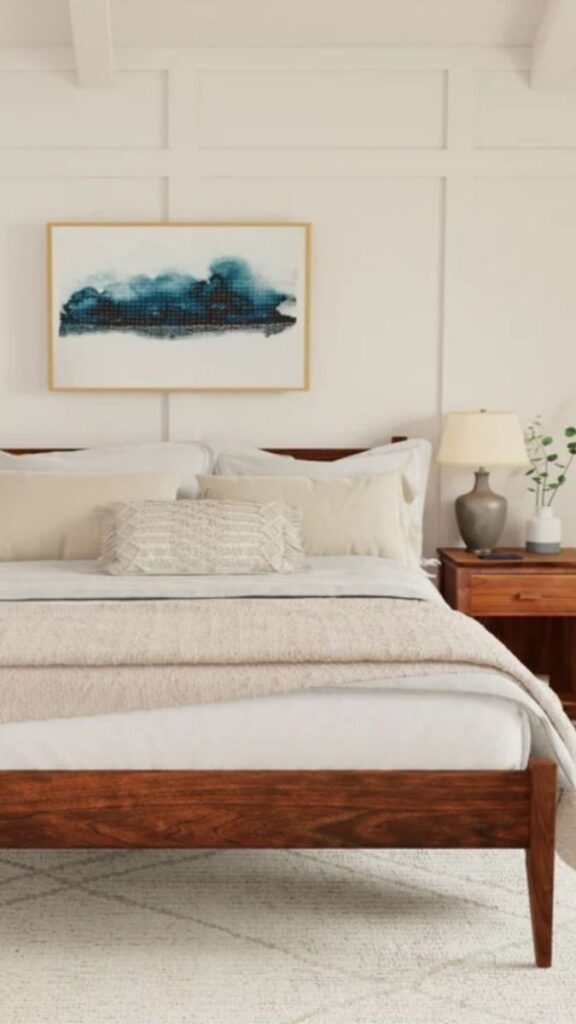
Lowering the visual weight of a bed is one of the most effective ways to make a room feel taller and more open. A platform bed with a visible wood frameoak, walnut, or ashkeeps the lines clean while introducing natural texture. Pair it with linen bedding in oatmeal or muted sage, and the whole setup reads as grounded without being heavy.
This works particularly well in rooms under 150 sq ft, where a tall upholstered bed frame can feel like it’s eating the ceiling. The low profile gives you more visual breathing room above the bed, which is exactly what a compact space needs.
Washi Paper Pendant Light as a Focal Point
Japandi lighting avoids anything cold or clinical. A washi paper pendant, cylindrical, drum-shaped, or subtly pleated diffuses light softly and creates a warm center point in the room without any visual clutter.
Hung at around 60–65 cm above the bed surface, it works as the room’s main light source and eliminates the need for overhead recessed lighting that can feel harsh. In my experience, this one swap does more for the bedroom atmosphere than repainting the walls. It works especially well in rooms without crown molding or architectural detail; it adds interest without competing with anything.
Shoji Inspired Sliding Panels for Closet Doors
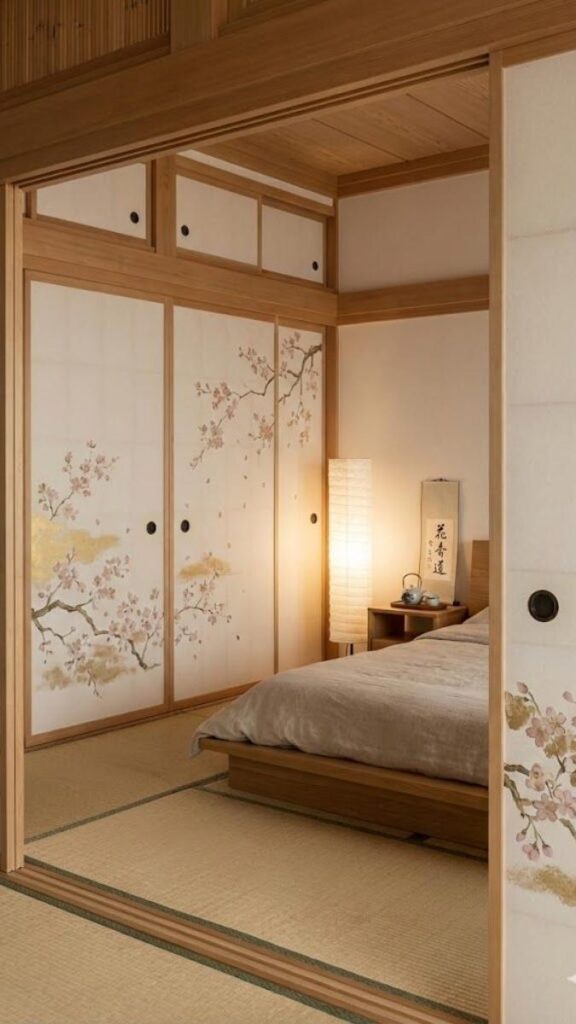
Bifold and swinging closet doors pull focus and take up swing space that compact bedrooms can’t afford. Replacing them with sliding panel doors in a shoji-inspired design, thin wood grid, frosted glass or rice paper dissolves both problems.
The panels stay flush against the wall, the grid pattern adds visual structure, and the translucency allows diffused light to pass through if there’s a window behind them. This is one of the easier renter-friendly renovations too, since many sliding track systems mount without permanent wall damage.
Neutral Linen Curtains Floor to Ceiling
Mounting curtain rods as close to the ceiling as possible and letting the fabric pool slightly at the floor is one of the oldest tricks for making a room feel taller but in Japandi spaces it also serves a texture function.
Linen in a warm white, ecru, or sand tone adds softness without pattern, which keeps the palette coherent. The key is using a rod mounted 5–10 cm below the ceiling line, not directly above the window frame. That shift in height alone changes how the wall reads. This setup works in any size bedroom and is easy to reverse in rented spaces.
Built In or Integrated Floating Shelves at Bed Level
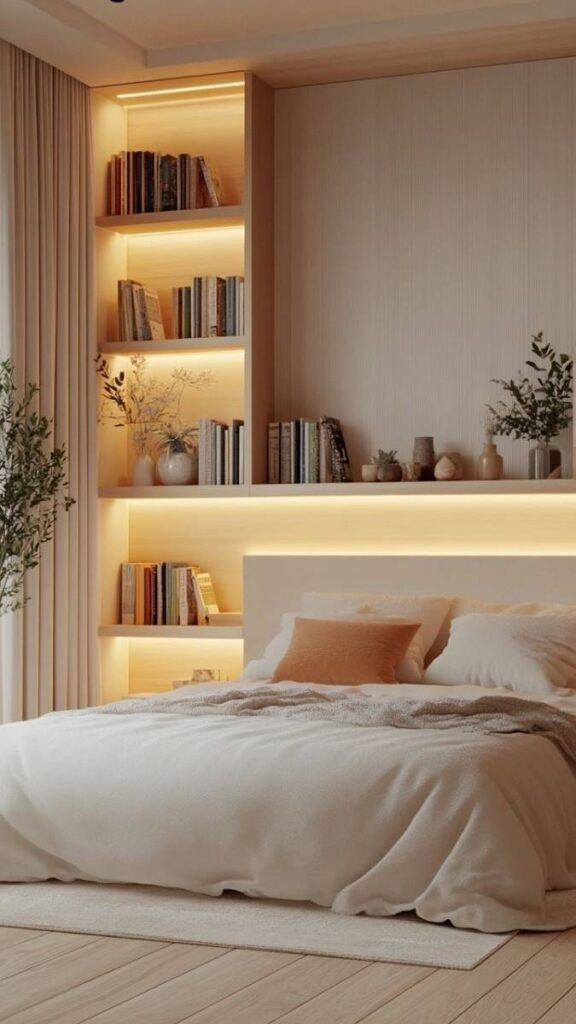
Nightstands with legs can make a room feel more crowded at floor level than it actually is. Floating shelves in the same wood tone as the bed frame eliminate that problem; they visually integrate with the bed and keep the floor open.
Mount them at mattress height on both sides. For Japandi styling, keep objects to three per shelf maximum: a small plant, a book or two, a lamp or candle. More than that and the minimalism breaks down. This approach works well in narrow bedrooms where a traditional nightstand won’t fit cleanly beside the bed.
Read More About: 77+ Japandi Living Room Design Ideas That Balance Calm, Function
Tatami Mat Accent Zone at the Foot of the Bed
One underused Japandi move is treating the floor as intentional design space rather than just the thing below your furniture. A tatami or rush mat placed at the foot of the bed defines a “landing zone”somewhere to sit while dressing, set a bag down, or ground the room with natural texture.
It contrasts beautifully against hardwood or polished concrete and softens the transition between the bed and the rest of the room. If tatami isn’t available, a natural seagrass or jute mat in a rectangular form reads the same way.
A Single Statement Ceramic or Pottery Piece
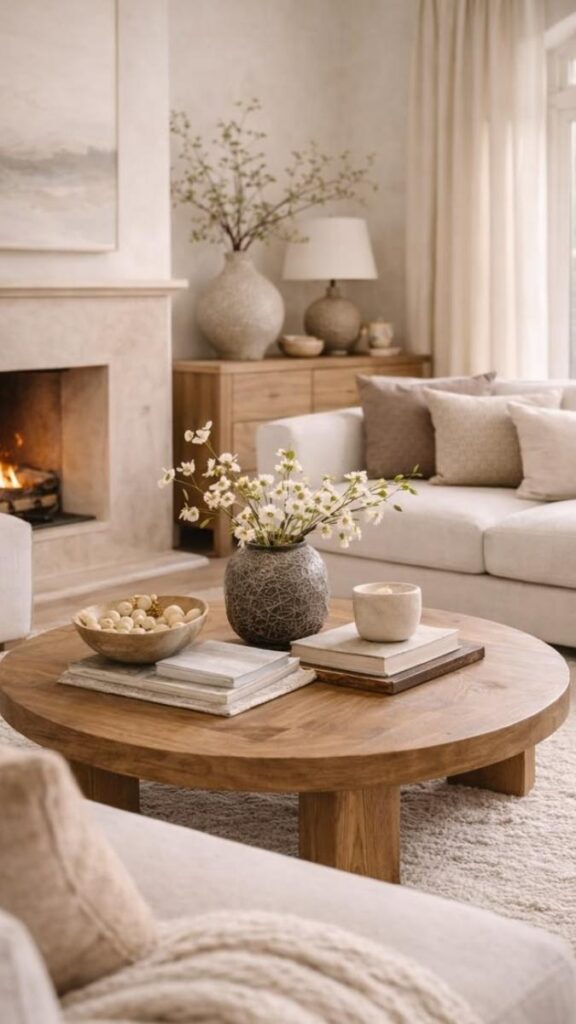
Japandi spaces don’t fill every corner, they curate them. A single large ceramic piece, whether a wide-mouthed vessel, a textured pot, or a sculptural vase, does more for a room than a cluster of smaller decorative objects.
Place it in a floor corner, on a low shelf, or on a bedside surface with enough space around it to breathe. The object becomes a visual pause point rather than part of visual noise. This works especially well in rooms that feel “almost done but not quite”. Often what’s missing isn’t more decor, it’s one well-chosen anchor piece.
Organic Linen Bedding in a Tonal Palette
Bedding is the largest textile surface in any bedroom and sets the dominant tone. In Japandi design, the approach is tonal rather than matching multiple neutrals layered together rather than a single flat color. Think cream base layer, warm taupe blanket, and a muted terracotta throw at the foot of the bed.
The variation in texture between a washed linen duvet and a wool throw is part of the visual interest. This sidesteps the need for decorative pillows or shams, which often add clutter rather than warmth.
A Bare Branch or Dried Botanical Arrangement
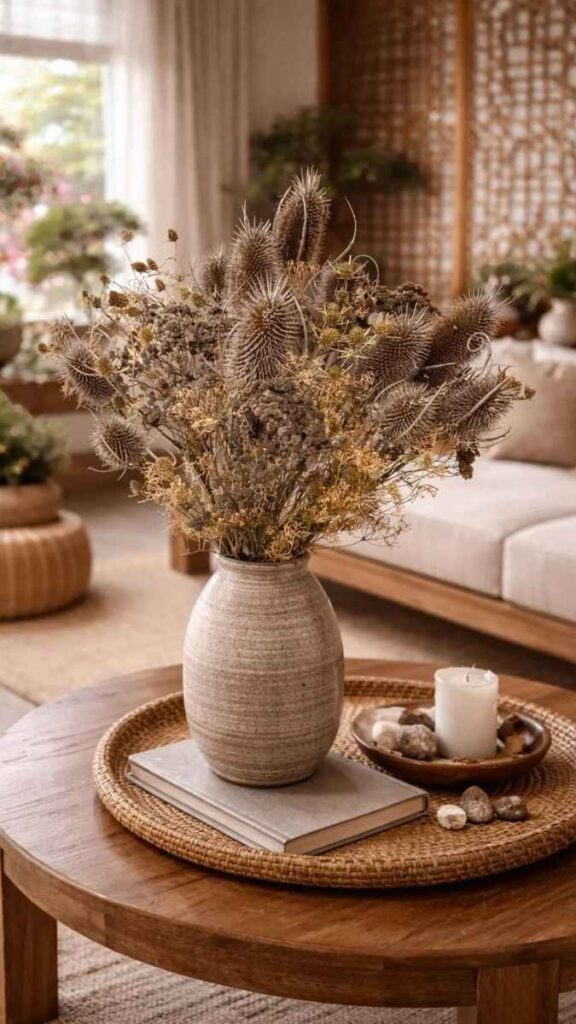
Fresh flowers require maintenance and don’t always suit a Japandi palette. Dried botanical pampas, cotton stems, eucalyptus, bare branches offer the same organic presence with zero upkeep. Tall arrangements in a floor-standing vessel work well in empty corners that would otherwise feel unresolved.
The key is scale: a small arrangement in a corner reads as an afterthought, while a tall grouping that reaches 80–90% of the ceiling height becomes a real design moment. This is one I’d actually recommend trying first because it has the highest visual impact for the lowest cost and effort.
Wood Slat Accent Wall Behind the Bed
A wood slat wall serves as a built-in headboard alternative that also adds acoustic softness and texture to what is often the flattest, most underused surface in a bedroom. Vertical slats in oak or walnut, installed directly to the wall from floor to ceiling or just behind the bed zone, create depth without bulk.
Wall sconces mounted on or beside the slats complete the effect and eliminate the need for table lamps. This works in large and small bedrooms alike, though in smaller rooms it’s worth keeping the slat color light (ash or pine) to avoid closing the space in.
Minimalist Built In Storage With Flat Front Drawers
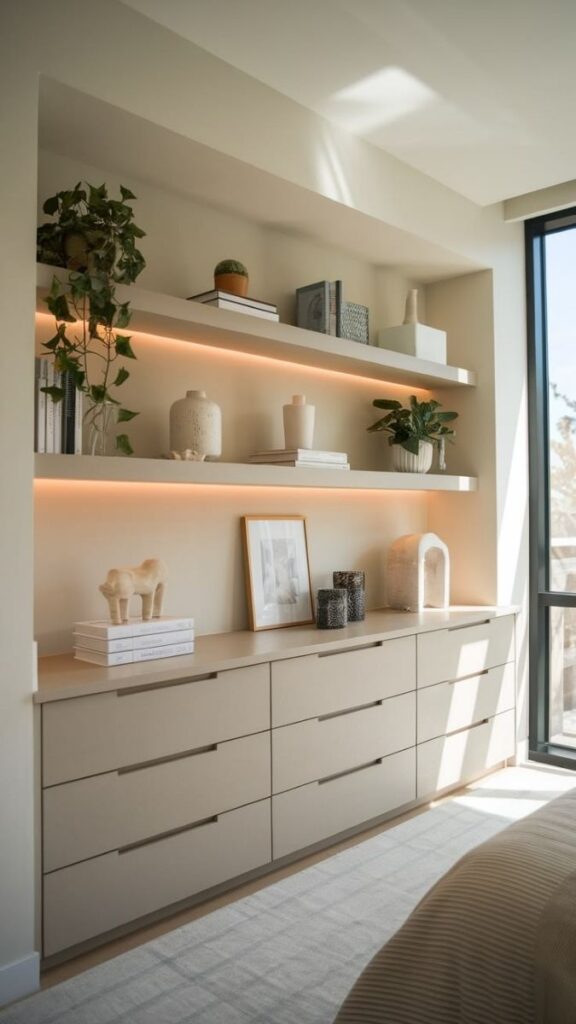
In Japandi design, storage is hidden but not absent. A low dresser or built-in unit with flush-front drawers and minimal or no visible hardware keeps the room’s surfaces clean while providing real function.
The low profile (typically below 90 cm) keeps sightlines open and avoids the “wall of furniture” effect that taller pieces create. In rooms where built-ins aren’t possible, a freestanding piece with the same flat-front treatment achieves the same result, what matters is the absence of ornamental detail on the drawer faces.
Read More About: 76+ Modern Coastal Decor Ideas That Actually Work in Real Homes
Warm Wall Sconces Instead of Overhead Lighting
Overhead lighting in bedrooms creates flat, even illumination that works against the layered warmth Japandi spaces aim for. Replacing or supplementing with wall sconces mounted at about shoulder height when seated in bed creates directional, warmer light that feels intentional.
Swing-arm sconces are especially useful because they double as reading lights without requiring a separate table lamp, which saves surface space on nightstands. Plug-in versions exist for renters, no electrician required.
A Low Bench at the End of the Bed in Natural Wood
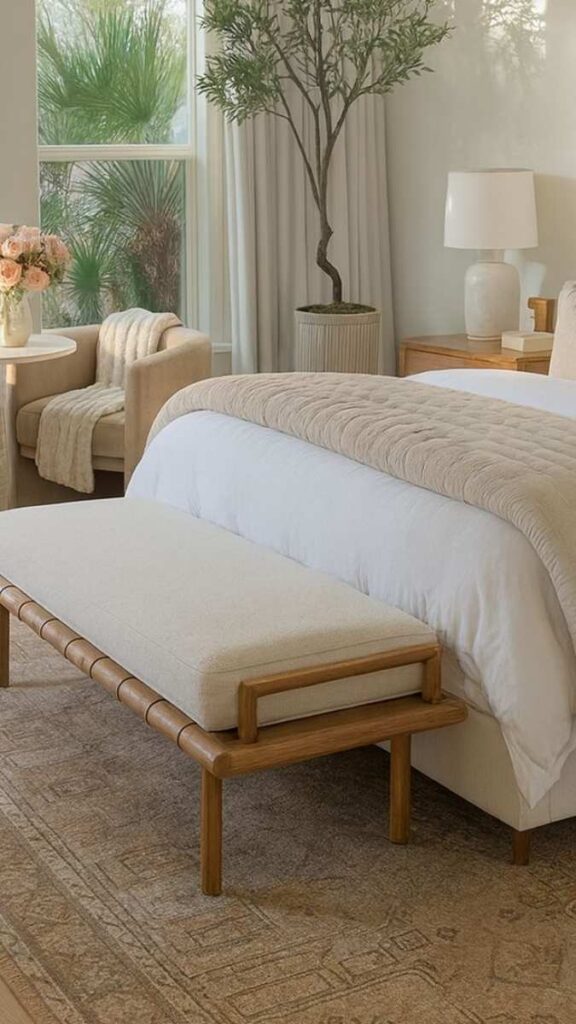
A bench at the foot of the bed is a functional piece that also solves a compositional problem: the end of the bed often looks cut off or incomplete without something to anchor it. A low solid wood benchno spindle, no turned legs, clean lines adds structure and usability without adding visual noise.
It functions as a seat while dressing, a landing spot for bags or folded clothing, and a design anchor for the bed zone. Keep the height low (around 35–40 cm) so it stays in proportion with a platform bed.
Neutral Stone or Concrete Effect Flooring
Flooring is one of the most impactful design elements in any room, and in Japandi spaces, the floor texture often does more work than the walls. Light grey or warm-toned stone-effect tiles (or concrete-style flooring) create a clean base that reads as expansive, especially when laid in large format.
In smaller bedrooms, this type of flooring makes the room feel continuous and open especially when the grout line is kept minimal. Against warm wood furniture and linen textiles, the cool stone reads as deliberate contrast rather than coldness.
Asymmetric Shelf Display With Intentional Negative Space
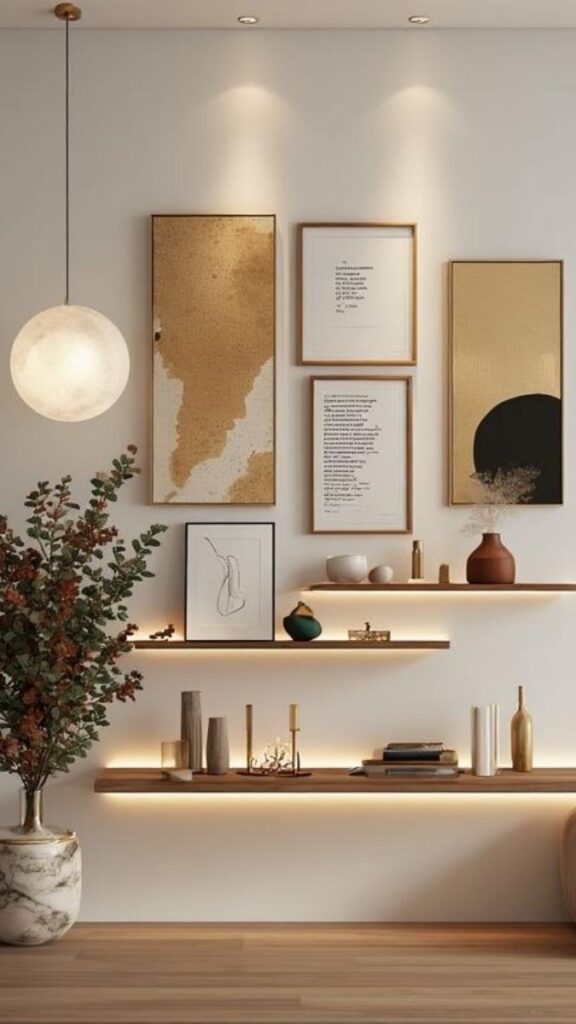
Shelf styling in Japandi is less about filling space and more about framing it. Asymmetric shelving one or two shelves at different heights on a single wall allows for a display that feels curated rather than maxed out.
The rule I’ve found works best: never place objects closer than 15 cm apart, and keep at least 40% of each shelf surface empty. That empty space is doing as much visual work as the objects. This approach works in bedrooms that need visual interest without added pattern or color.
Soft Sage or Warm Clay Accent Wall
Japandi color palettes in 2026 have moved past the pure beige phasesage, muted clay, dusty blush, and warm terracotta are now fully integrated as accent tones. A single matte-finish accent wall behind the bed provides color and depth without introducing pattern.
The key is staying in the muted, low-saturation range: if the color looks vivid on the swatch, it’s probably too saturated for this application. Against natural wood and linen, a muted sage reads as grounded and organic rather than bold.
Kinfolk Style Stacked Books and Objects on the Floor
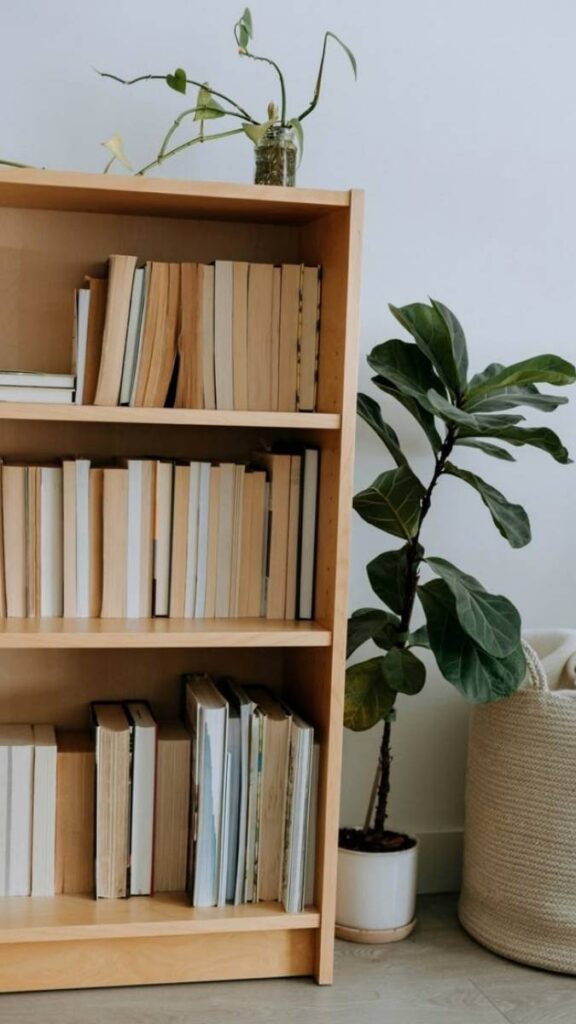
Not every surface needs to be elevated. Placing a small stack of books, a single candle holder, and a low ceramic piece directly on the floor beside the bed is a distinctly Japandi moveit treats the floor as part of the room’s composition rather than empty space below furniture.
Keep the stack to three or four books maximum and position it where it catches natural or ambient light. Honest disclaimer: this is one of those ideas that looks better in real life than in a description, because the informality is part of the appeal.
Sheer Panel Window Treatment for Diffused Light
Heavy blackout curtains have their place (shift workers, urban bedrooms), but in a Japandi setup where light is part of the design, sheer linen panels are often a better fit. They allow diffused natural light through while maintaining privacy, which fills the room with a soft, even glow rather than harsh direct sun.
Paired with a simple wooden or matte black rod and rings, the window treatment disappears into the room rather than competing with it. For rooms needing both options, layering sheers with an outer blackout panel on a double rod is the practical workaround.
Read More About:75+ Farmhouse Lighting Ideas That Make Every Room Feel Warm
Handmade or Artisan Look Throw at the Foot of the Bed

A single high-quality throw does two things simultaneously: it adds tactile warmth to the bed and introduces organic texture without any additional decor. In Japandi spaces, the throw should look made rather than manufactured chunky knit, hand-loomed linen, or a coarse wool weave.
Drape it loosely at the foot of the bed rather than folding it precisely; the relaxed placement is part of the aesthetic and also more honest about how a real bedroom actually works.
Minimal Desk Setup Integrated Into the Bedroom
Multi-use bedrooms/sleeping and working in the same space are increasingly common, and Japandi design handles this better than most aesthetics because it’s inherently about function over decoration.
A wall-mounted floating desk in a corner, matched to the bedroom’s wood tones, keeps the workspace contained and out of the primary sightline from the bed. The key is a clear visual separation: face the desk toward the wall (not toward the bed), and when work is done, clear the surface completely. The desk reads as part of the room’s design rather than an intrusion into it.
A Single Low Profile Indoor Tree or Large Plant
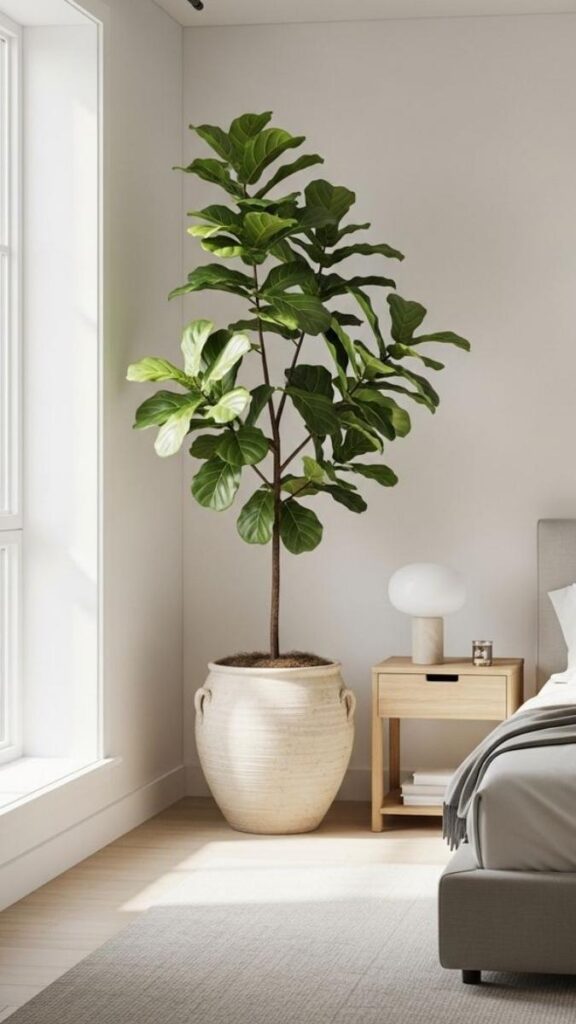
Plants in Japandi bedrooms are almost always singular and sculptural rather than grouped and varied. A single fiddle-leaf fig, olive tree, or white bird of paradise in a large matte ceramic pot occupies a floor corner and adds vertical organic presence without any of the busyness that comes from multiple small plants.
It also does something no decor object can: it creates life in the room, which changes how the space feels over time. Go for a pot that’s low and wide rather than tall and narrow; the lower center of gravity reads as more stable and grounded.
What Actually Makes Japandi Bedroom Design Work
There’s a common assumption that Japandi is just about removing things until the room looks bare. That’s the wrong framework. The approach is actually about editing with intentionkeeping only what has a clear purpose or a clear aesthetic function, and making sure those two things often overlap.
The spaces that work best share a few consistent qualities:
Material coherence.
Wood, linen, ceramic, and stone appear in every successful Japandi bedroom. The reason is contrast: these materials differ in texture and finish, which creates visual interest without the need for pattern or color. If you introduce too many synthetic or shiny materials (lacquered furniture, acrylic accents, polyester bedding), the material story falls apart.
Controlled floor-to-ceiling ratio.
Japandi rooms tend to keep furniture low and leave walls relatively spare. This creates a high ratio of open wall space to furniture, which makes rooms feel larger and quieter. The mistake is filling that vertical space with art, shelving, or mirrors in a way that crowds the walls. One or two carefully placed pieces are enough.
Light as a design element.
Every Japandi bedroom treats light with the same seriousness as furniture. The direction, color temperature, and diffusion of light matters. Warm bulbs (2700K–3000K), directional sources (sconces, floor lamps), and diffused natural light through sheers are the tools. Overhead cool-white lighting is the fastest way to undercut everything else you’ve done.
Japandi Bedroom Style at a Glance
| Setup | Best For | Space Type | Key Problem Solved | Difficulty |
| Low platform bed | Making rooms feel taller | Small to medium bedrooms | Heavy furniture scale | Low |
| Wood slat accent wall | Adding texture and depth | Any size room | Flat, bare walls | Medium |
| Floating shelves as nightstands | Keeping floor clear | Narrow bedrooms | Limited floor space | Low |
| Washi pendant light | Softening overhead light | Rentals, small rooms | Harsh overhead lighting | Low |
| Built-in flat-front storage | Hiding clutter | Medium to large rooms | Visual chaos from open storage | High |
| Wall sconces over table lamps | Layering warmth | Any bedroom | Flat, single-source lighting | Low |
| Floor tatami mat zone | Defining functional floor areas | Bedrooms with empty floor space | Unresolved room zones | Low |
| Sheer linen curtains | Improving light quality | Bright-facing windows | Harsh direct sunlight | Low |
How to Avoid the Most Common Japandi Bedroom Mistakes
Confusing minimal with empty.
A room with nothing in it isn’t Japanese, it’s just unfinished. Every surface and corner should have a resolved relationship with the space around it, whether that’s a single object, a deliberate material, or intentional negative space.
Mixing too many wood tones.
Japandi rooms work best with one dominant wood species and at most a second complementary tone. Mixing three or more wood finishes (light oak floor, dark walnut bed frame, mid-tone pine shelves) creates visual competition that undermines the cohesion the style depends on. Pick one primary and stay consistent.
Over-sourcing “Japandi” products.
Many mass-market items are labeled Japandi but use cheap materials with visible seams, plastic hardware, or cold-toned finishes that don’t sit well in a warm palette. The aesthetic works because of material quality, the texture of real linen versus polyester, the weight of ceramic versus resin. You don’t need expensive pieces, but you do need real materials.
Neglecting the ceiling.
Most people in a bedroom look at the ceiling more than the walls. Exposed bulbs, cheap plastic light fixtures, and harsh overhead lights are all visible from the bed. Even a simple fix swapping a ceiling fixture for a paper pendant makes the space feel more considered from every angle.
Using pattern as a shortcut for warmth.
Japandi warmth comes from material texture and light, not print. Patterned duvet covers, graphic rugs, and printed cushions add visual noise that works against the calm the style is built on. If a room still feels cold after following the material palette, the solution is usually lighting or a missing warm-toned textile not a pattern.
FAQ’s
What exactly is Japandi bedroom design?
Japandi is a design style that blends Japanese minimalism with Scandinavian warmth. In a bedroom context, it means low furniture, natural materials (wood, linen, ceramic), a neutral palette with warm undertones, and a deliberate approach to what’s displayed versus what’s stored away. The goal is a space that feels calm, functional, and lived-in without being cluttered.
How do I start a Japandi bedroom on a budget?
Start with what you already have and edit first remove anything that doesn’t fit the palette (bright colors, shiny surfaces, excess decor). Then swap out key textiles: bedding in neutral linen and a natural fiber throw make the biggest immediate difference. A washi paper pendant or plug-in wall sconces are low-cost additions that shift the room’s feel significantly. Save structural changes like a platform bed or wood slat wall for later.
Does Japandi work in a small bedroom?
It works especially well in small bedrooms. The low furniture profile keeps sightlines open, the limited palette avoids visual overload, and the emphasis on clear floor space makes compact rooms feel more navigable. The key constraint: keep the wood tones light (oak, ash, pine) in small rooms darker tones absorb more light and can make a tight space feel enclosed.
What colors are used in Japandi bedroom design?
The palette is warm neutrals: cream, oatmeal, warm white, warm grey, and soft natural wood tones. Accent colors tend to be muted and earth-derived sage green, clay, dusty terracotta, warm taupe. Avoid cool greys and stark whites; they read as Scandinavian or minimal without the warmth that makes Japandi distinct. High-saturation colors don’t belong in the palette.
Japandi vs. Wabi-Sabi: what’s the difference for a bedroom?
Both share an appreciation for natural materials and imperfection, but they apply differently. Wabi-Sabi leans into visible aging, roughness, and asymmetry, chipped ceramics, distressed wood, and uneven surfaces. Japandi is more polished and livable: materials are natural but refined, and the layout is intentional. In a bedroom, wabi-sabi might feel too raw or unresolved; Japandi gives you the natural warmth with more compositional control.
How many decorative objects should a Japandi bedroom have?
There’s no fixed number, but the guiding principle is that every object should be able to stand alone without others nearby to support it. A single ceramic piece, a dried botanical arrangement, a stack of books each one earns its place by being interesting on its own. If you’re pulling items out to style a surface and then putting half of them back, that’s usually a sign you’ve got too many.
Can Japandi work in a rented bedroom?
Entirely. Most of the impact comes from textiles, lighting, and freestanding furniture, none of which require permanent installation. Plug-in wall sconces, clip-on or hook-mounted sheers, removable peel-and-stick wood panels, and a freestanding low platform bed frame can all replicate the look without touching the walls. The one limitation is flooring: if you’re on wall-to-wall carpet, a large natural-fiber area rug is the practical solution.
Conclusion
Japandi bedroom design works because it solves real problems: scale, clutter, light, and the feeling that a room has no clear mood through consistent material and spatial choices rather than decoration for its own sake. The ideas in this list aren’t about creating an Instagram-ready setup; they’re about making a room that functions better and feels quieter to be in every day.
You don’t need to implement all 21. Pick two or three that match your current space constraints and budget, and focus on getting those right before adding more. A well-executed low bed with the right lighting and bedding will do more for a bedroom than ten small changes applied without a coherent framework. Start there and build from it.